Bordeaux to Tonneins: the Garonne, tobacco and Protestant heritage
A town on the right bank of the Garonne, between Agen and Marmande: born from two rival towns, a Protestant stronghold razed twice, a center for hemp and tobacco with quays steeped in history, about 1 hour and 26 minutes from Bordeaux.
Tonneins at a Glance
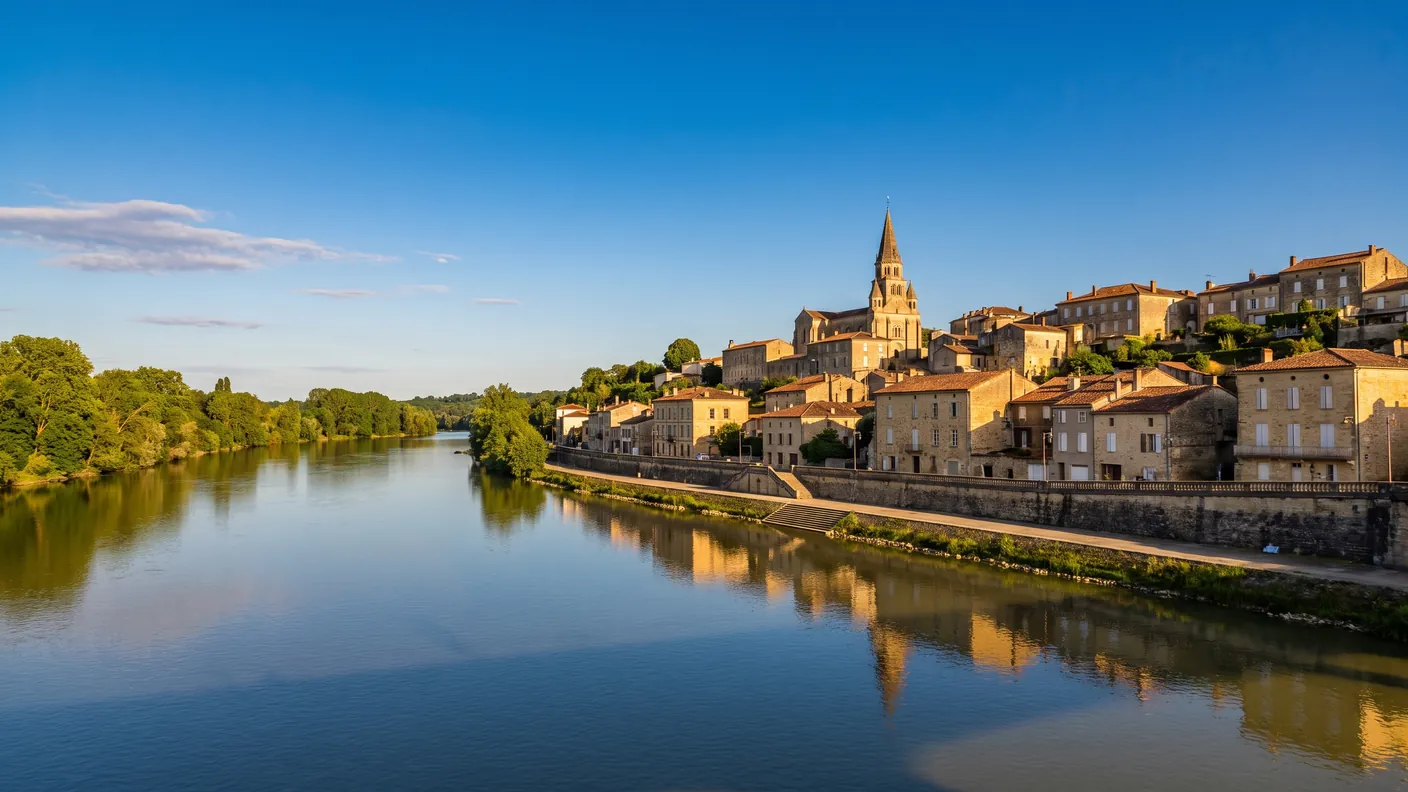
Tonneins is a small town in Lot-et-Garonne, situated on the right bank of the Garonne River, between Agen and Marmande. Originally a Protestant settlement formed by the merger of two rival towns, its character stems from a long industrial history: the cultivation of hemp and tobacco supported a rope factory, a port on the Garonne, and, above all, a large tobacco factory, which for many years was the region’s largest employer. Here you’ll discover riverfront quays, two churches, an astonishing automobile museum, and the history of a town with a strong character—about 1 hour and 26 minutes from Bordeaux. Far from the beaten tourist paths, Tonneins offers the authentic charm of a city on the Garonne that has seen a lot of history.
Here are the key details to know before you go. The website lists a distance of 104 km, a travel time of approximately 1 hour and 26 minutes, and a flat rate starting at €184 for a one-way trip. These figures are reproduced here without recalculation.
| Landmark | Details |
|---|---|
| Department | Lot-et-Garonne (47), Nouvelle-Aquitaine |
| Status | Small town · Marmande district · Val de Garonne |
| Population | 9,459 residents (INSEE 2023) · the residents of Tonnein |
| Area | 34.78 km² · right bank of the Garonne |
| Distance from Bordeaux | about 104 km · about 1 hour and 26 minutes by car |
| Train Station | Tonneins, on the Bordeaux–Agen TER line |
| Don't miss it | The banks of the Garonne, the tobacco factory, the two churches, and the automobile museum |
A word of honesty right off the bat: neither the Church of Saint-Pierre nor Notre-Dame are classified as historic monuments (they are merely listed in the inventory), and while Tonneins was once a major river port and a center for rope-making, there is no evidence that boats were ever built there. These clarifications in no way detract from the richness of a city with a surprisingly rich history.
This guide covers everything you need to know before you visit: where Tonneins is located and what makes it unique, the history of the two merged towns, its past as a Protestant stronghold that was razed twice, the epic story of its tobacco factory, hemp, and the port on the Garonne River, its two churches, its museum of unusual automobiles, the notable sites in the surrounding area, and the easiest way to get there from Bordeaux.
Where is Tonneins located?
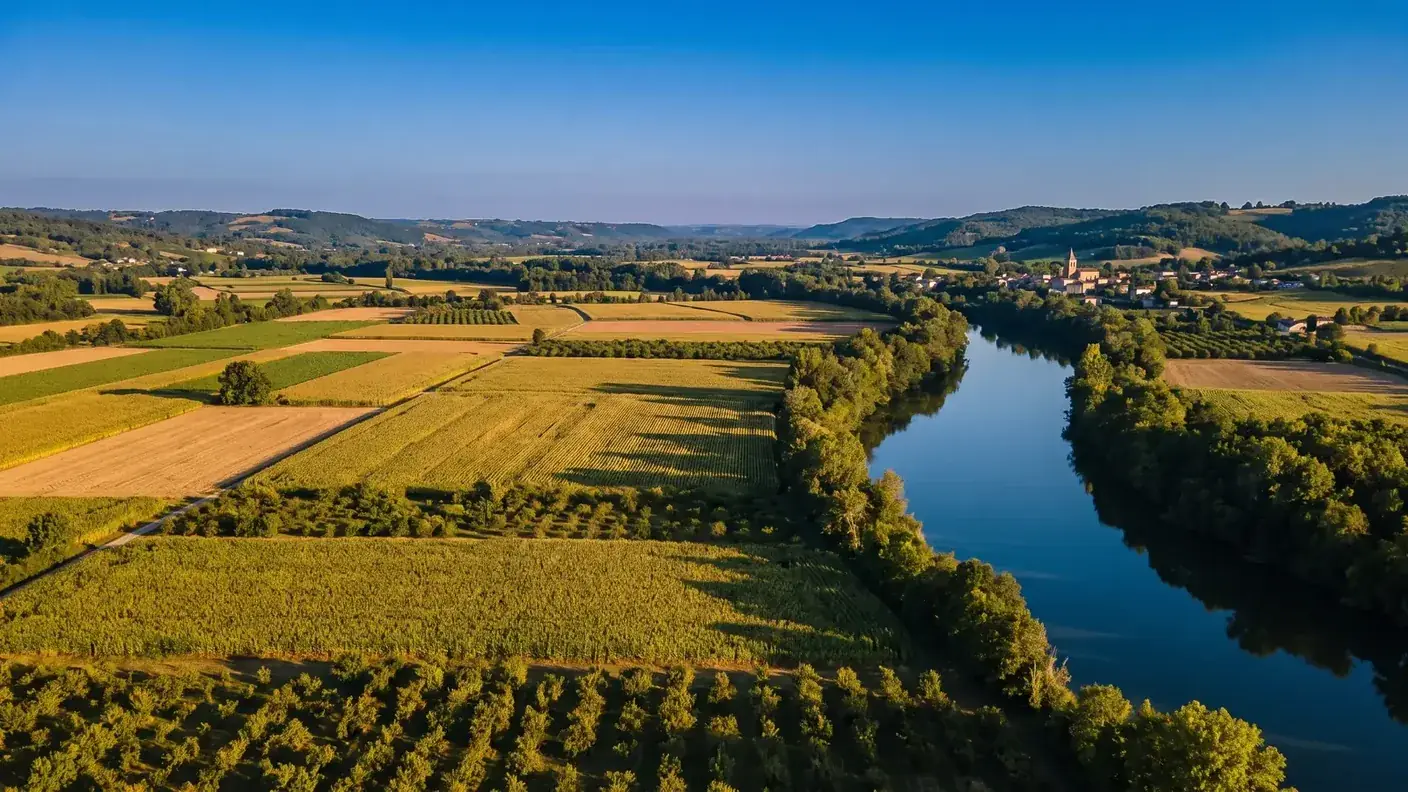
Tonneins is located in Lot-et-Garonne (47), in Nouvelle-Aquitaine, on the right bank of the Garonne River, halfway between Agen and Marmande. The town is part of the Marmande arrondissement, of which Marmande is the subprefecture, and it is the seat of its own canton, the canton of Tonneins. It is part of the Val de Garonne Agglomération. Its coordinates are 44.39° N and 0.31° E; its INSEE code is 47310, and its ZIP code is 47400. It covers an area of 34.78 km² on the river’s broad alluvial plain, a fertile corridor dotted with cornfields, orchards, and—in the past—tobacco and hemp plantations.
A town on the Garonne River
Everything in Tonneins revolves around the Garonne. The river shaped the town—its port, commerce, and industry—it also threatened its heritage (the old church was swept away by riverbank erosion), and it continues to define the landscape. The town lies almost entirely on the right bank, with one exception: the hamlet of Saint-Germain, on the opposite bank. This position as a “bridge town” on the Bordeaux-Agen-Toulouse axis explains its historic role as a crossroads.
Here, the Garonne is wide and majestic, halfway between the Pyrenees and the Gironde estuary; it offers Tonneins its most beautiful views from the quays that overlook it. Over the centuries, the river has also served as a border and a threat: its floods, sometimes devastating, have left their mark on the collective memory, and the slow erosion of the banks eventually washed away one of the city’s ancient sanctuaries. Living in Tonneins means living with the Garonne—for better or for worse, from trade to the worst of the floods.
A small town with a population of nearly 9,500
With a population of 9,459 (2023 census), Tonneins is classified as a “small town.” A note on the figures: you may sometimes see “approximately 10,000 residents,” but that figure refers to the urban area (comprising two municipalities); the municipality itself has 9,459 residents, and its catchment area has approximately 15,700. The population has increased slightly since 2017 (+4.3%), but remains below its 1970s level, when the town was nearing 10,000 residents, driven by its tobacco industry. This recent slight rebound, following the low point of deindustrialization, shows that the town has managed to bounce back—attracted by a pleasant living environment and affordable real estate prices, at a reasonable distance from Agen and Bordeaux. The residents are known as Tonneinquais.
The Two Tonneins: A Town Born from Rival Settlements
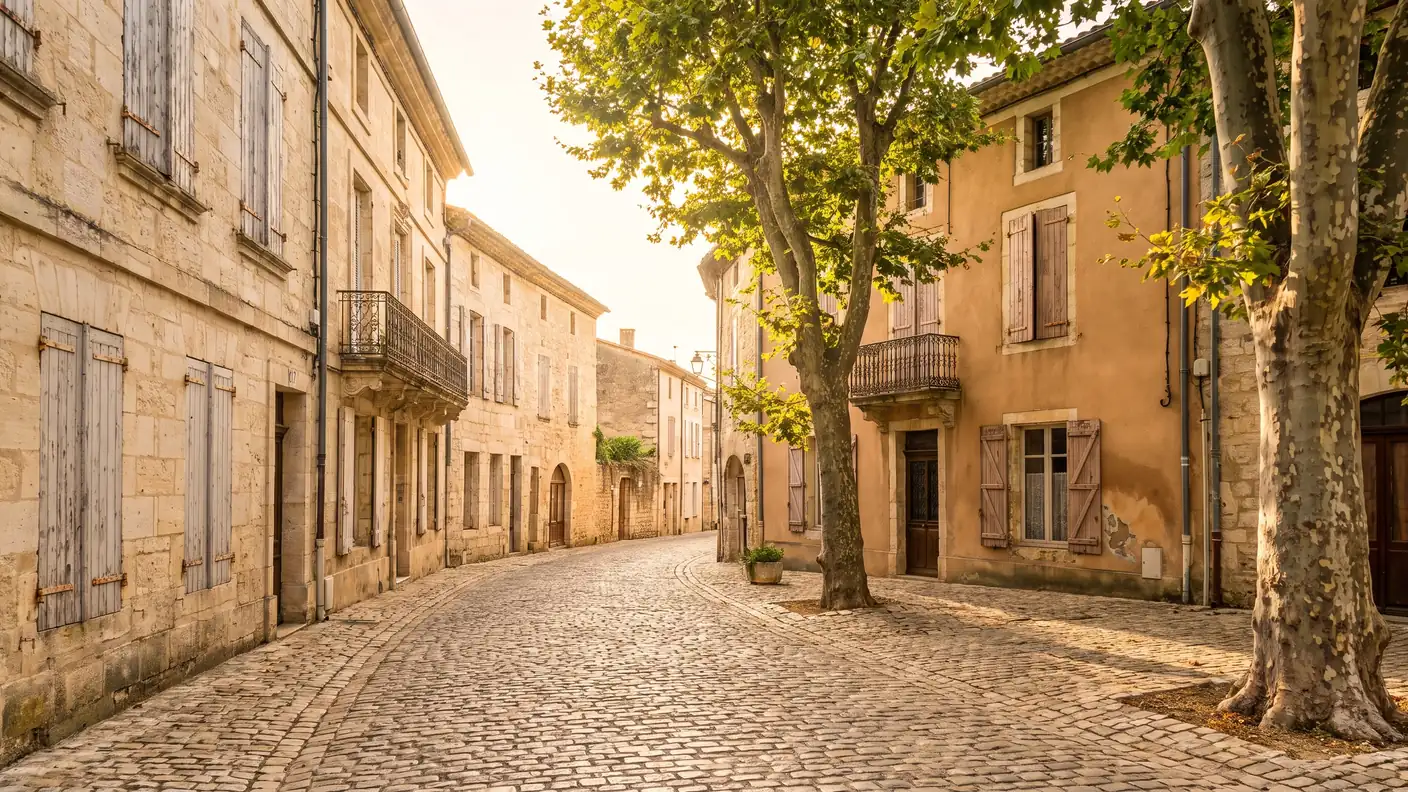
Until the Revolution, Tonneins was not one town, but two. From the Middle Ages until 1790, two distinct fiefdoms shared the site, each with its own lord, castle, church, fortifications, customs—and even its own currency. This is a rare phenomenon that explains many of the distinctive features of the modern city: whereas most medieval towns are organized around a single square and bell tower, Tonneins emerged from the juxtaposition of two autonomous urban entities.
Petit-Tonneins and Grand-Tonneins
The first, Tonneins-Dessus, located upstream, was nicknamed Petit-Tonneins or Bourg Saint-Pierre. The second, Tonneins-Dessous, located downstream, was Grand-Tonneins or Bourg Notre-Dame. Curiously, despite its nickname, it was the “Grand-Tonneins” (Dessous) that was the principal seigneury. Between the two lay a neutral zone, the “entre-deux-bourgs.” Each town minted its own currency, enforced its own customs, and defended its own ramparts: two small, autonomous worlds—neighbors and rivals—spanning just a few hundred meters. One can imagine the rivalries, jealousies, and compromises between these two Siamese-twin communities, condemned to coexist while each asserted its independence. It is an almost novelistic story, one that sets Tonneins apart from all the other towns in the valley.
This duality explains two enduring features of the town: its two churches (Saint-Pierre for the upper village, Notre-Dame for the lower village) and its somewhat fragmented urban layout, lacking a single central square as found in neighboring bastides. It was not until 1790, with the Revolution and the creation of municipalities, that the two Tonneins were finally united into a single town—after centuries of coexistence and rivalry. This unique history, which may seem confusing at first glance, is actually the key to understanding Tonneins: to understand the city, one must remember that it was born from two.
Tonneins, the Protestant Stronghold Razed Twice
In the 16th and 17th centuries, Tonneins was one of the major centers of Protestantism in the Southwest—and paid dearly for it. The Reformation was preached there very early on: as early as 1541, a certain André Mélanchthon, rector of the city’s schools, was spreading the new ideas—an early foothold, barely more than twenty years after Luther’s theses. The city became predominantly Protestant, as did much of the Agenais and Guyenne regions, where the Reformation found fertile ground among the bourgeoisie, merchants, and a portion of the nobility.
His status changed with each edict. In 1598, the Edict of Nantes designated Tonneins as a “wedding venue”; in 1606, it is granted the higher status of "safe place" Protestant—a fortified city whose defense was entrusted to the Reformed. This military status would lead to terrible reprisals against it.
Demolished in 1622, then in 1623
Under Louis XIII, the monarchy set out to dismantle the Protestant strongholds. Tonneins was razed twice in a row, in 1622 and then in 1623, by the royal army—a rare display of relentlessness that speaks to the strategic importance the government attached to the city, before the people of Tonneins patiently rebuilt their town from its ruins. Then came the final blow: the revocation of the Edict of Nantes in 1685, which banned the Reformed faith. About 10% of the population chose exile over forced conversion, dealing a severe blow to the local economy.
A Lasting Huguenot Legacy
From this history, Tonneins has retained a vibrant Protestant identity: there were still about About 300 Protestant families around the year 2000, and a United Protestant Church remains active there. Few small towns in the Southwest bear such a deep Huguenot imprint. This tenacious Protestant tradition, which survived destruction and the Revocation, is as much a part of Tonneins’s identity as its river and its industry—a city forged by faith, work, and water.
| Tonneins Protestant — Key Points | Event |
|---|---|
| 1541 | The Reformation as preached by André Melanchthon, rector of the schools |
| 1598 | Edict of Nantes: Tonneins “wedding venue” |
| 1606 | Tonneins Becomes a Protestant “Place of Safety” |
| 1622 & 1623 | The city was razed twice by the royal army |
| 1685 | Revocation of the Edict of Nantes · ~10% of the population emigrated |
The Tobacco Factory: Three Centuries of History
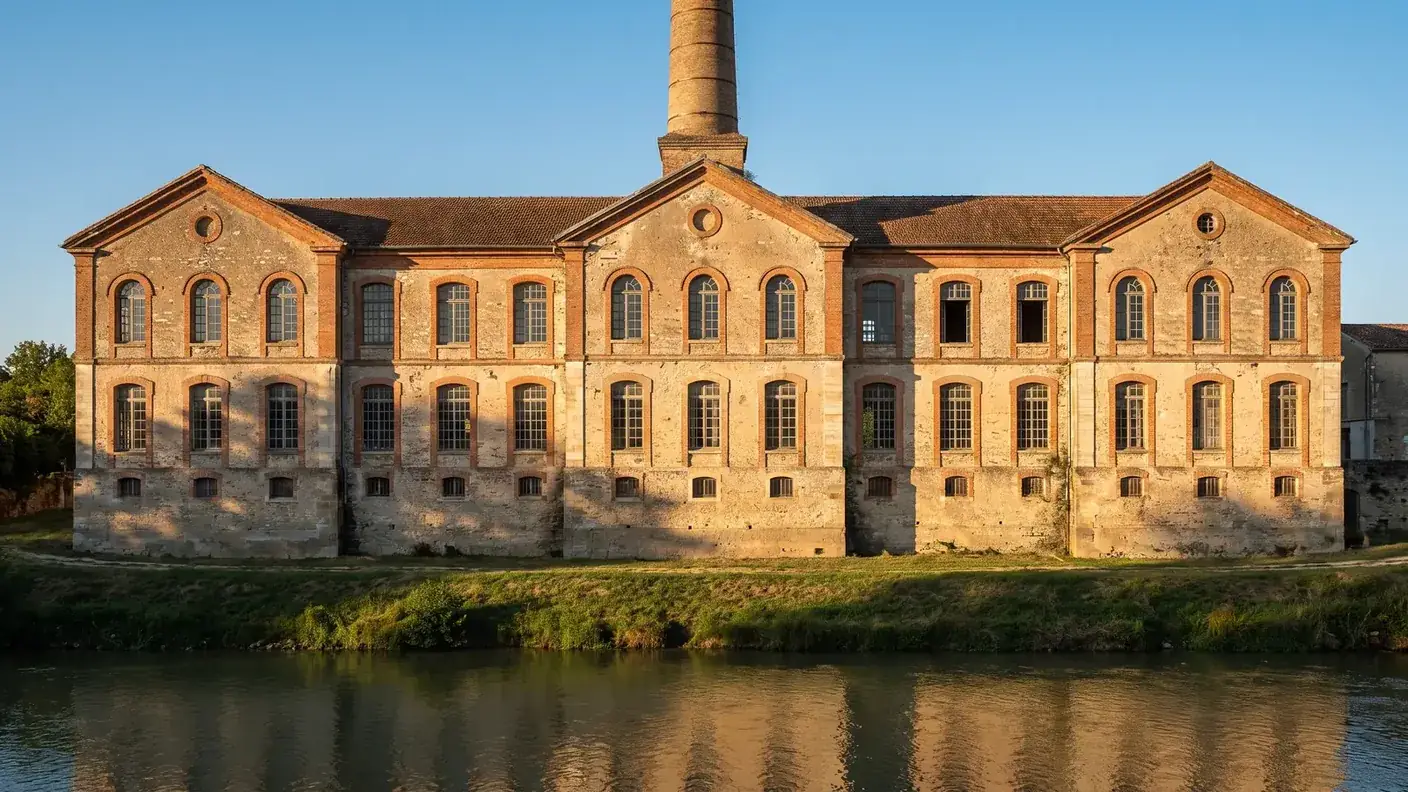
Tobacco is the defining industrial story of Tonneins. For nearly three centuries, the city lived to the rhythm of its tobacco factory. This history shaped its urban layout, its demographics, and its working-class identity. Under the Ancien Régime, a royal tobacco factory was built on the Quai de la Barre beginning in 1721, then expanded in 1736 and 1777.
The proximity of the Garonne River facilitated the delivery of raw materials. Tobacco grown in the valley was processed locally. Under the Ancien Régime, this production was subject to a state monopoly: the royal tobacco factory in Tonneins was a key component of this regulated economy.
The POP entry in the General Inventory indicates that construction began in 1721, expansions in 1736 and 1777, followed by 400 to 500 employees in 1732 and 1,400 to 1,500 in 1789. This official source was consulted on July 24, 2026.
The Largest Employer, Dating Back to the Ancien Régime
The factory was a colossus from the very beginning: it employed 400 to 500 people in 1732, and as many as 1,400 to 1,500 in 1789—by far the city’s largest employer, well before the Industrial Revolution. This shows just how much Tonneins was, even during the Ancien Régime, a true factory town—a rare occurrence for the time. The original factory consisted of three production lines: “rolled tobacco,” “stringing,” and “shredded tobacco”—the latter producing strings of chewing tobacco, the famous “andouilles,” which were grated. A whole vocabulary, a whole body of expertise—now lost—but which built the town’s reputation.
The Gauloises and the End of an Era
Reconstructed from 1866, the modern factory became one of the largest in France in the 20th century. After coming under the auspices of the SEITA, which specializes in dark tobaccos and the famous Gauloises, she was producing 9 to 10 billion cigarettes per year — one of France’s leading companies in the second half of the century — and, at its peak, employed some 1,200 workers. Approximately 20% of jobs The town depended on it, directly or indirectly. An entire population lived according to the factory’s rhythm: the work schedules, the sirens, and generations of male and female workers—since the factory employed many women—shaped the collective memory and very identity of Tonneins.
The end came abruptly. Following the privatization of SEITA in 1995 and its merger with the Spanish company Tabacalera (which created Altadis) in 1999, the closure was announced: 340 jobs cut, and the permanent cessation of production on December 31, 2000. The former buildings of the royal factory on Quai de la Barre are now owned by the municipality, which is planning a redevelopment project. Tonneins, like so many industrial towns, had to reinvent itself after the disappearance of the factory that sustained it—a challenge shared by a whole region of France’s subprefectures, where the closure of a single factory upends employment, demographics, and identity. The city has since diversified its economy, but memories of the “manu” remain vivid, kept alive by those who worked there and by a local history museum.
| The Tonneins Tobacco Factory | Data |
|---|---|
| Creation | Royal Manufactory, Quai de la Barre, from 1721 onward |
| Manpower (Ancien Régime) | 400–500 in 1732 · 1,400–1,500 in 1789 |
| Modern Reconstruction | Starting in 1866 |
| Production (20th century) | Brown tobacco and Gauloises · 9–10 billion cigarettes per year |
| Local weight | Ranked 1st in France · ~20% of the city's jobs |
| Closure | December 31, 2000 (340 jobs eliminated) |
Hemp, the rope-making industry, and the port on the Garonne River
Before tobacco, another plant made Tonneins’s fortune: hemp. On the alluvial plains of the Garonne, a variety of hemp renowned for its strength was cultivated, supplying a major rope-making industry—the production of ropes, which were essential for the navy and river shipping. Under the Ancien Régime, Tonneins’s ropes were in high demand even in Atlantic ports: in the age of sail, good rope was highly prized, and the hemp from the Garonne Valley was among the best.
The Port
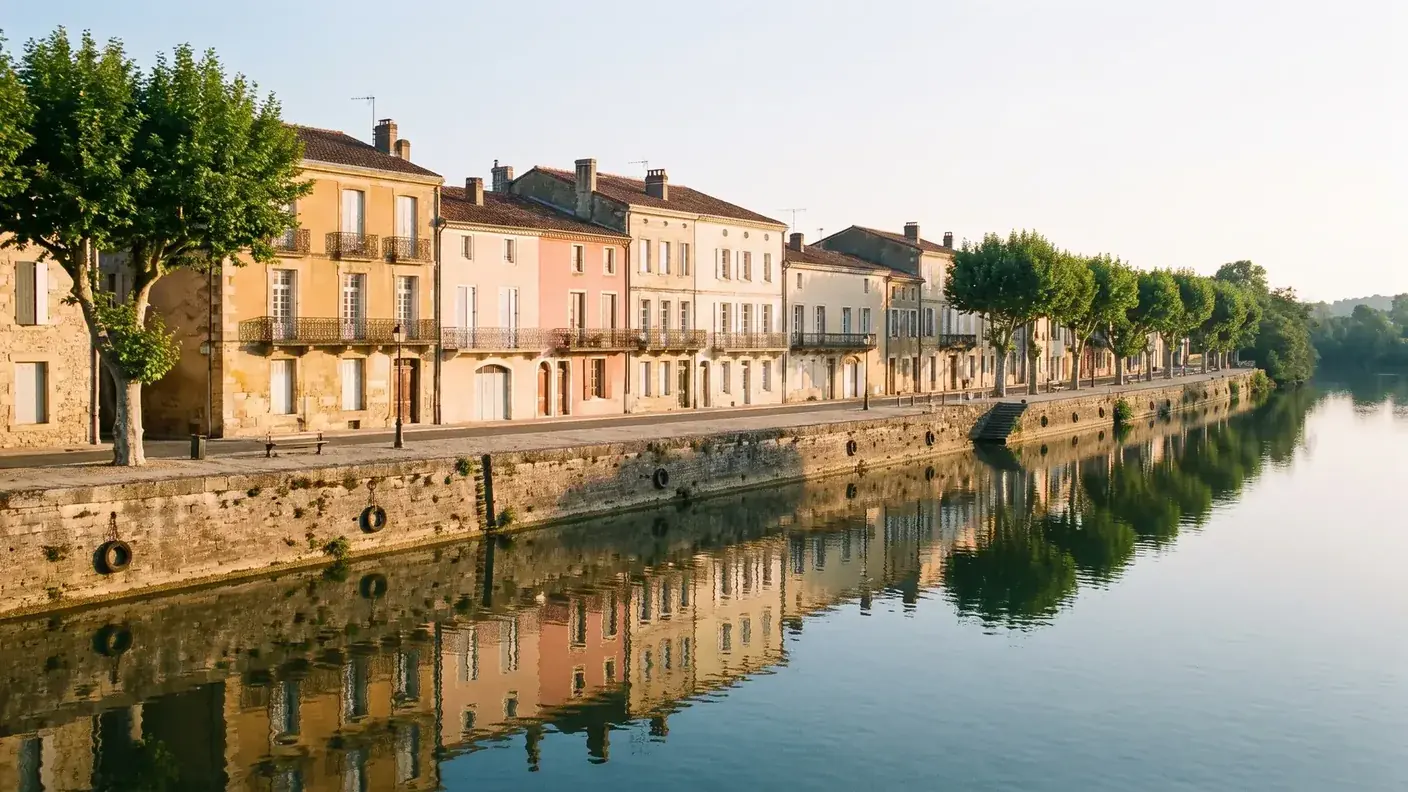
Tonneins was an active port on the middle Garonne River. The gabarres—flat-bottomed boats suited to river travel—loaded and unloaded at the foot of the city. A river-based economy developed along the quays, centered around the boatmen, merchants, and the ferry operator’s office, between Agen and Bordeaux.
Goods
Tobacco, hemp, rope, and other goods were transported downstream to Bordeaux and the estuary; salt, fish, and manufactured goods were transported upstream inland. The hemp and rope trade thus linked Tonneins to the Atlantic ports. Navigation required precise knowledge of the currents and sandbars.
The Decline of Shipping
This port declined in two stages. First, with the Garonne side canal, dug in the 19th century to provide a more reliable waterway than the capricious river, which diverted some of the traffic; then with the railroad, which was even faster and rendered commercial shipping obsolete within a few decades. The once-bustling docks are now a peaceful waterfront promenade lined with plane trees—but they preserve the memory of Tonneins’s golden age of river trade, when the river was the main route for communication and wealth.
To clarify a common misconception: the town was a port and a center for rope-making, but there is no evidence that boats were built there; the documented gabarre shipyards were located downstream, near Langoiran. Tonneins shipped and transshipped goods; it did not manufacture the boats—a distinction that puts everything in its proper perspective.
The Two Churches and the Waterfront Heritage
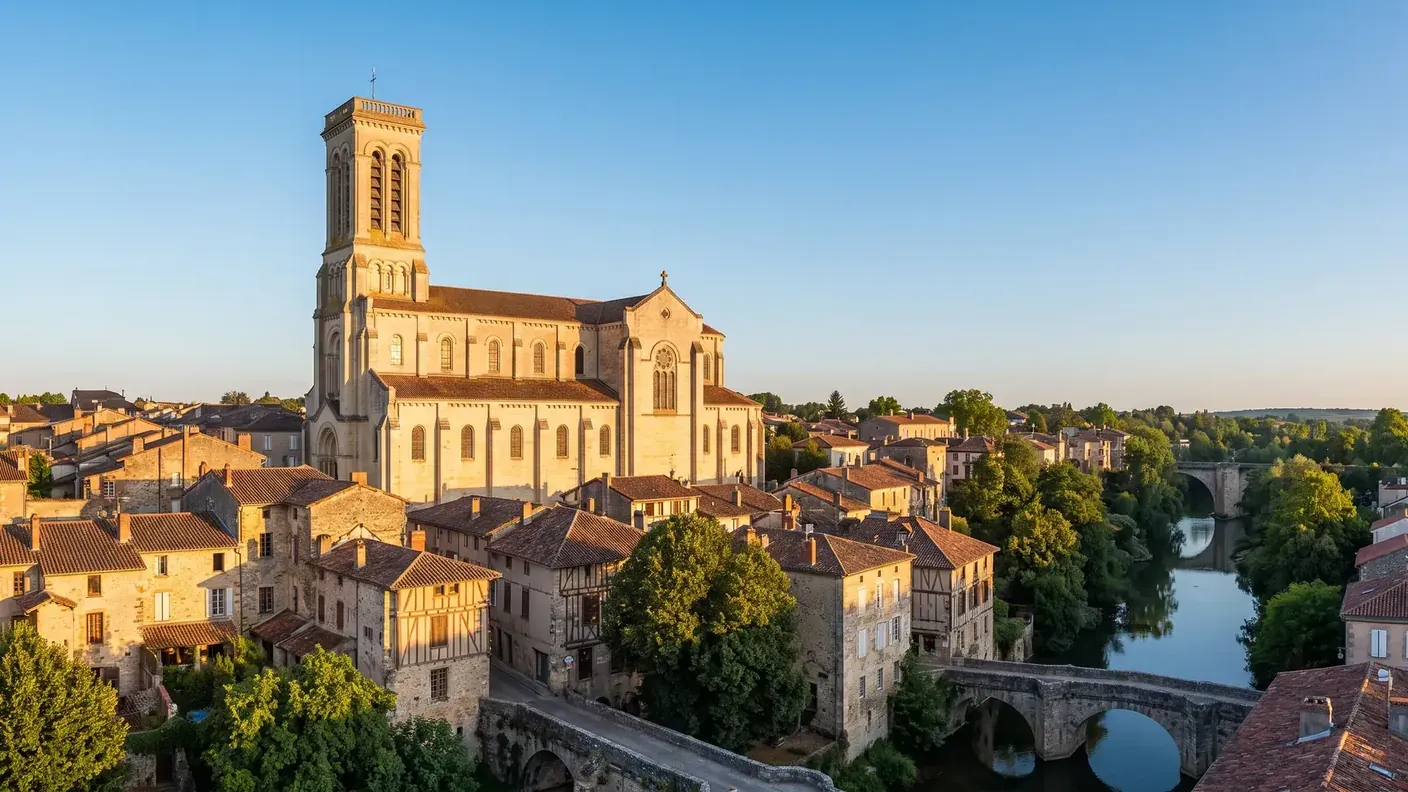
Inherited from the two towns, Tonneins is home to two large parish churches, Saint-Pierre and Notre-Dame. Both are younger than they appear, as the town’s turbulent history—destruction during the Wars of Religion, floods, and river erosion—has claimed the original structures. Having two churches for a town of this size is in itself a curiosity, a direct legacy of the era of the two Tonneins: each town had its own, and the 1790 merger did not eliminate this duplication.
It is also important to remember that Tonneins was for a long time a predominantly Protestant city: for decades, the Reformed Church dominated there, and the two Catholic parishes had to adapt to this religious reality. The buildings we see today, rebuilt in the 19th century, are therefore the result of a turbulent religious history marked by shifts, destruction, and reconstruction, rather than peaceful continuity. This is what gives these two large churches their somewhat solemn appearance: they stand as a stone testament to the resurgence of Catholicism in a city that was once one of the Huguenot strongholds of the Southwest.
Two churches, two reconstructions
The Church of Saint-Pierre, located in the upper part of the village, was rebuilt in 1842–1843 by the architect Lafargue: the old medieval church, where the parish is first mentioned as early as 1153, was then threatened by erosion of the banks of the Garonne River. The Church of Notre-Dame, located in the lower village, has Romanesque origins but was rebuilt in the 18th century (consecrated in 1758) and then extensively rebuilt in 1880–1885 by the architect Jean Jules Mondet, with the façade and bell tower completed around 1894. These two large, imposing 19th-century churches bear witness to the vitality of Tonneins during the industrial era: a town that prospered thanks to tobacco could afford to build vast structures for its two parishes, inherited from the former villages.
A note for heritage enthusiasts: None of these churches are classified or listed as historic monuments—they are merely included in the General Inventory of Cultural Heritage, a documentary registry (the municipality, incidentally, has four churches listed, including Saint-Saturnin d’Unet and Saint-Germain, located in the hamlets). Along the river, the quays and a former ferryman’s house round out this waterfront heritage, which is more evocative than monumental.
Perhaps that is where the true charm of Tonneins lies: not in a single landmark, but in an atmosphere—that of a river and industrial city, shaped by work, faith, and commerce. Visiting it is like reading an open-air book on economic and social history: the riverbanks, the old factory, the two churches, and the historic urban fabric tell the story—better than any guidebook ever could—of what life was like in a small, hardworking town on the Garonne.
A car museum in a chapel
Tonneins is home to an unexpected attraction: a car museum housed in a former chapel. The “National Chapel of Vintage Vehicles” occupies a former 19th-century Neo-Romanesque mortuary chapel in Vénès Park—a setting that is, to say the least, unique for a collection of vintage cars. The idea of bringing together sacred art and mechanics in a single space may seem surprising, but it works: the nave, with its spaciousness and natural light, provides an unexpected showcase for the classic car bodies of yesteryear.
Stained Glass Depicting Cars
The highlight of the tour is its eight stained-glass windows, the work of master glass artist Pierre Bardin: instead of the usual saints, they depict vintage cars—Bugatti, Citroën, Delage, Delahaye, Panhard, Peugeot, Renault, and Simca. Stained-glass windows dedicated to automobiles in a chapel: this is an idea you won’t find anywhere else, and one that captures the slightly offbeat spirit of Tonneins. It’s the kind of unusual stop that adds a touch of spice to a tour, sandwiched between two more traditional monuments.
This museum is a fine example of a certain side of France—one defined by local passions: volunteers, a collection painstakingly assembled, an unlikely location—and the result delights visitors of all ages. For enthusiasts of beautiful machinery as well as the simply curious, it’s a must-see stop—and a lovely symbol of the transformation of a religious heritage site into a memorial of a different kind.
What's there to see around Tonneins?
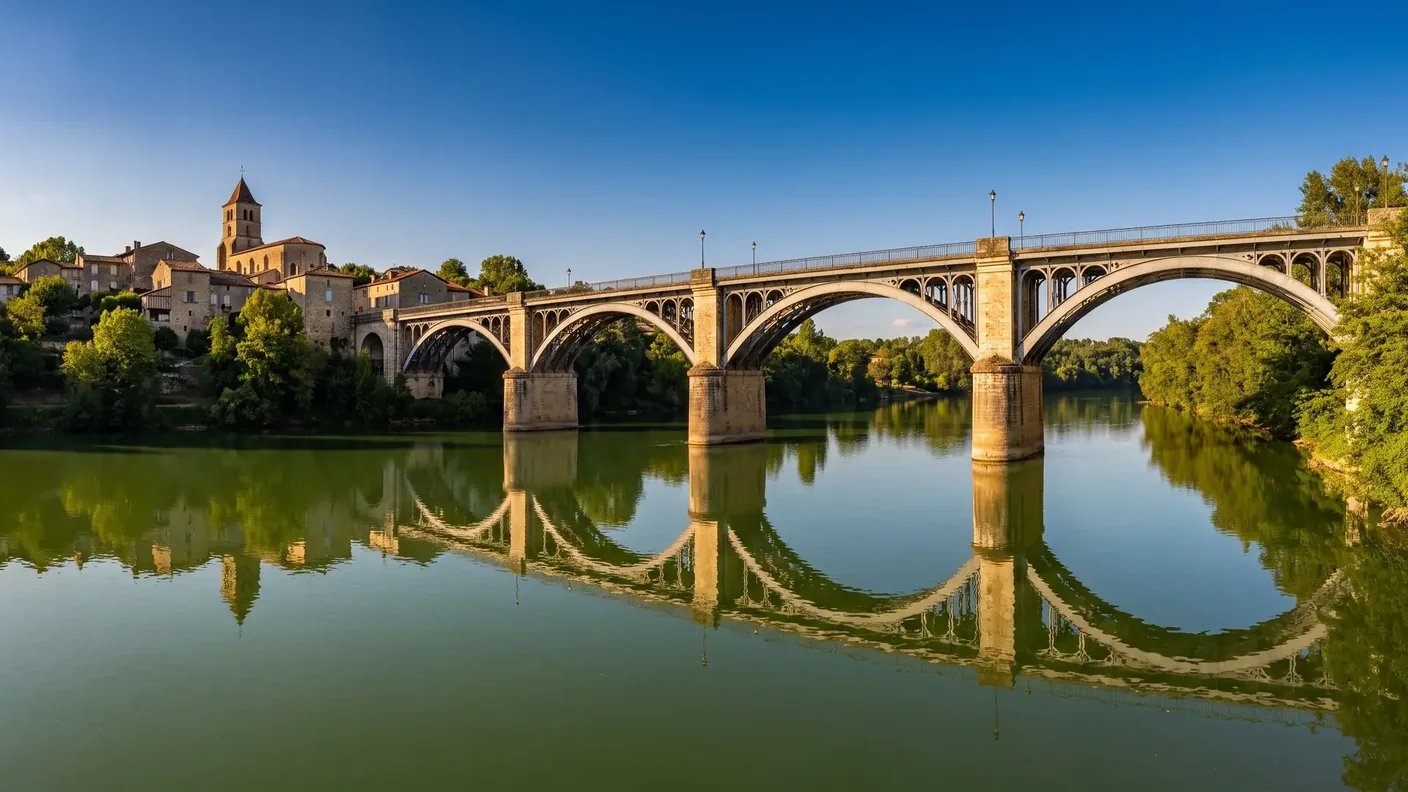
Tonneins is a great starting point for exploring the middle Garonne Valley, among spa towns, vineyards, and river confluences. Distances are short along the river and its canal, and it’s easy to travel from one town to another, from one vineyard to a château, through a landscape of fertile plains and rolling hills.
Riverside Towns and Confluences
Aiguillon, located upstream, occupies a remarkable site at the confluence of the Lot and Garonne rivers — a river junction dominated by an imposing 18th-century castle, the former stronghold of the Dukes of Aiguillon and one of the largest castles in southwestern France. Marmande, downstream, a subprefecture renowned for its tomatoes, is worth a visit for its bastide, Notre-Dame Church, and cloister. Agen, the prefecture, with its famous canal bridge that carries a canal over the Garonne—the second-longest in France—is about 40 kilometers upstream: a must-see in the valley, with its old town and its museum housing five Goyas.
Vineyards and Bastides
The Buzet vineyard (AOC Buzet), in Buzet-sur-Baïse, is very close by: its reds and rosés are well worth a stop at a cooperative winery or a vineyard estate. The Garonne side canal, which runs parallel to the river, offers beautiful walks or bike rides along the water, in the shade of plane trees, stretching for dozens of kilometers.
A little further on, Villeneuve-sur-Lot and its neighboring bastides (Casteljaloux, Nérac, and the Albret region) extend the journey north and west. This entire region along the middle Garonne River offers a microcosm of the riverine, agricultural, and culinary delights of southwestern France—prunes, fresh fruit, wines, and foie gras—all to be savored as you travel along the river. It’s a region still off the beaten path for mass tourism, which is precisely what gives it its charm: here, you take your time, chat with local producers, and enjoy a leisurely lunch, far from the hustle and bustle of the most popular tourist spots.
| About Tonneins | Distance / Marker | Interest |
|---|---|---|
| Spur | ~10 km | Where the Lot and Garonne Rivers Meet, Castle |
| Marmande | ~20 km | Subprefecture, fortified town, tomato |
| Buzet-sur-Baïse | ~15 km | AOC Buzet Vineyard |
| Agen | ~40 km | Prefecture, canal bridge, prune |
| Villeneuve-sur-Lot | ~45 km | A large country house in Lot-et-Garonne |
When is the best time to visit Tonneins?
Tonneins is a pleasant place to visit from spring through fall, when the banks of the Garonne and the canal are at their best. The spring (April–June) brings a burst of green to the valley and offers soft light perfect for strolling along the quays and the side canal, whether on foot or by bike. Thesummer It's warm and sunny: it's the season for markets, events, and swimming in the region, and the shade of the plane trees along the riverbanks is a welcome relief.
Thefall brings a burst of color to the valley and coincides with the grape harvest in neighboring Buzet and the season for local specialties (prunes, fresh fruit, foie gras, porcini mushrooms). It’s a wonderful time to combine cultural heritage and fine dining, when the low-angled sunlight bathes the quays and building facades in a golden glow. Thewinter, which is quieter, lets the city rest, but its landmarks—the waterfront, churches, and the automobile museum—can be explored without the crowds, and local cuisine warms the short days.
A Typical Day in Tonneins
A sample itinerary: In the morning, take a stroll along the banks of the Garonne and explore Old Tonneins, between the two churches and the ruins of the old villages; stop by the automobile museum to see its unique stained-glass windows. For lunch, enjoy a meal featuring local specialties. In the afternoon, head to Aiguillon and the confluence of the Lot and Garonne rivers, or to a Buzet winery for a tasting, before a leisurely return trip along the side canal. With a driver handling the transportation and tastings, this river and gourmet getaway can be enjoyed in a single day starting from Bordeaux.
How to get to Tonneins from Bordeaux
Tonneins is located about 104 km from Bordeaux, which is about a 1-hour, 26-minute drive via the A62 highway. To continue on to Aiguillon, Buzet, or Marmande without taking another form of transportation, a door-to-door itinerary allows you to plan several stops along the way.
The Tonneins train station is part of the Nouvelle-Aquitaine TER network. The station’s official page provides the address, opening hours, accessibility information, and up-to-date departure schedules. Since traffic and construction may change, please check this page for your selected date. Source accessed on July 24, 2026.
The drive is straightforward: from Bordeaux, take the A62 highway toward Toulouse, then exit at Aiguillon or Damazan before heading to Tonneins through the valley. It’s a smooth drive, almost entirely on the highway, with no mountain passes or winding roads, making the travel time very predictable—about 1 hour and 26 minutes during off-peak hours. You can also follow the Garonne River along the departmental roads, which are slower but more scenic, for those who want to take the time to explore the valley, its villages, and its views of the river.
Train or private driver?
Whenever you’re traveling with others or with luggage, or when you want to explore the area around Tonneins (Aiguillon, Buzet, Marmande, the canal), a executive car service is the best option: a direct, door-to-door trip from Bordeaux, with no transfers or schedules to worry about, and the freedom to make stops along the way. You get in at Bordeaux, get out exactly where you want, and the driver can wait or take you to your next destination—a riverbank, a wine cellar, or a river confluence. We offer this route at a fixed price quoted in advance: approximately €211 for the one-way trip, in a Mercedes sedan or van for up to 7 passengers, with a professional driver. You’ll receive a written quote, with no surprises on the meter.
It’s also a convenient option for business travel, family events (weddings, birthdays), or a ride to Bordeaux-Mérignac Airport, which is about 1 hour and 26 minutes away. For groups, a chauffeured transfer is often more cost-effective than the combined cost of multiple train tickets, while offering the convenience of a direct trip. The price, set in advance, remains fixed regardless of traffic or stops—a real advantage for staying within budget.
| Route | Distance | Duration | Landmark |
|---|---|---|---|
| Bordeaux → Tonneins | ~104 km | about 1 hour and 26 minutes | Starting at ~€184 for an executive car service |
| Tonneins → Marmande | ~20 km | ~20 min | subprefecture, train station |
| Tonneins → Aiguillon | ~10 km | ~12 min | Confluence of the Lot and Garonne Rivers |
| Tonneins → Agen | ~40 km | ~35 min | prefecture, canal bridge |
Whether you come for the city’s industrial and Protestant history, to stroll along the banks of the Garonne, to visit the automobile museum, or to explore the vineyards and bastides of the valley, Tonneins rewards those curious to discover an authentic Southwest, far from the crowds.
Whether it’s for Heritage Day in the Garonne Valley, a winery tour, or an event in the Val de Garonne, booking a chauffeured transfer ensures a comfortable and punctual ride—book a driver from Bordeaux → Tonneins or explore all our destinations.
Frequently Asked Questions
Where is Tonneins located?
Tonneins is a small town in Lot-et-Garonne (47), in Nouvelle-Aquitaine, on the right bank of the Garonne River, halfway between Agen and Marmande. The seat of its own canton in the Marmande district, it is part of the Val de Garonne Agglomération, has a population of 9,459, and is located about 104 km southeast of Bordeaux, on the Bordeaux-Agen-Toulouse corridor.
What is the distance between Bordeaux and Tonneins?
About 104 km via the A62 highway, which is about a 1-hour, 26-minute drive. If you book a private chauffeur from Bordeaux, the fare is fixed and provided in advance, starting at about €211 one way (sedan or van, door-to-door price).
Why was Tonneins two cities?
From the Middle Ages until 1790, Tonneins consisted of two distinct seigneuries: Tonneins-Dessus (Petit-Tonneins, the town of Saint-Pierre, upstream) and Tonneins-Dessous (the Grand-Tonneins, the village of Notre-Dame, downstream), each with its own lord, castle, church, fortifications, and even its own currency. Curiously, despite its name, it was “Grand-Tonneins” that was the principal seigneury. The two towns were merged into a single municipality during the Revolution, which explains why the town has two churches today.
What is the Tonneins tobacco factory?
It was a large state-run factory, established as early as 1721 (the Royal Factory on the Quai de la Barre) and for a long time the city’s largest employer—employing as many as 1,400–1,500 people as early as 1789, then employing about 1,200 workers in the 20th century, accounting for nearly 20% of local jobs. After being taken over by SEITA and specializing in Gauloises cigarettes, it produced 9 to 10 billion cigarettes per year, ranking first in France. It closed on December 31, 2000, resulting in the loss of 340 jobs; its buildings are now owned by the municipality.
Why was Tonneins demolished twice?
Because it was a Protestant stronghold. The Reformation had been preached there as early as 1541, and the town became a Protestant “place of safety” in 1606. Under Louis XIII, the royal army dismantled the Protestant strongholds: Tonneins was razed in 1622, then again in 1623, before being rebuilt by its inhabitants. After the revocation of the Edict of Nantes in 1685, about 10% of the population chose exile over forced conversion.
What is there to see at the Tonneins Automobile Museum?
The “National Chapel of Vintage Cars” is housed in a former 19th-century Neo-Romanesque mortuary chapel in Vénès Park and displays vintage cars. What makes it unique: eight stained-glass windows by master glassmaker Pierre Bardin, which, instead of saints, depict vintage automobiles (Bugatti, Citroën, Delage, Delahaye, Panhard, Peugeot, Renault, Simca). An unusual place where the art of stained glass meets a passion for mechanics, and one of the most surprising attractions in all of Lot-et-Garonne.
Are the churches in Tonneins listed as historic landmarks?
No. Neither the Church of Saint-Pierre (rebuilt in 1842–1843) nor the Church of Notre-Dame (rebuilt in 1880–1885) are classified or listed as historic monuments; they are only included in the General Inventory of Cultural Heritage. The municipality has a total of four registered churches.
Is Tonneins related to the Garonne River?
A Deep Connection: Tonneins is a city on the right bank of the Garonne River, which was once one of the busiest ports in the middle valley. Hemp cultivation there supported a rope-making industry, and gabarres transported tobacco and goods down the river to Bordeaux and the estuary. The port declined with the advent of the side canal and then the railroad; the quays, now a promenade lined with plane trees, preserve the memory of this riverine past.
What's there to see around Tonneins?
Aiguillon and the confluence of the Lot and Garonne rivers, with its castle (~10 km), Marmande and its bastide (~20 km), the AOC Buzet vineyards (~15 km), Agen and its canal bridge (~40 km), and the Garonne side canal for walking or biking. A little further away are Villeneuve-sur-Lot and the Albret region. We are in the heart of the middle Garonne Valley, among spa towns, vineyards, and bastides.
Is there a train station at Tonneins?
Yes. The Tonneins station is part of the Nouvelle-Aquitaine TER network. Its official listing includes the address, opening hours, accessibility information, and up-to-date departure times. Since schedules and construction may change, please check the information for your selected date. Source accessed on July 24, 2026.
How many people live in Tonneins?
With a population of 9,459 according to the 2023 census, it is considered a “small town” in Lot-et-Garonne. One sometimes sees “10,000 residents” cited: this figure refers to the urban area (comprising two municipalities), not to the municipality alone, whose catchment area has a population of approximately 15,700. The population, which has been rising slightly since 2017, remains below its 1970s level, when the tobacco industry employed hundreds of Tonneinquais residents.
When is the best time to visit Tonneins?
Spring and early fall are perfect for strolling along the riverbanks and the canal running alongside the Garonne, with soft light and pleasant temperatures. Fall coincides with the grape harvest in nearby Buzet and the season for local specialties (prunes, fruit, foie gras). Summer offers markets and events along the river; winter, quieter, is a time to explore the area’s heritage without the crowds.
Can I book a chauffeured transfer from Bordeaux to Tonneins?
Yes. We offer the Bordeaux → Tonneins route (~104 km, approximately 1 hour 26 minutes via the A62) at a fixed price, starting at approximately €211 one-way, in a Mercedes sedan or van for up to 7 passengers, with a professional driver. The trip is direct, door-to-door, with no transfers, and allows for stops along the way (Aiguillon, a winery in Buzet, Marmande). It’s the ideal solution for groups, for a family event, or for exploring the Garonne Valley afterward without having to worry about driving.
Further Reading
- The Prefecture and its canal bridge, upstream: see the Agen Guide (canal bridge, old town, prunes)
- The Grand Bastide of Lot-et-Garonne: See the Guide to Villeneuve-sur-Lot (Pont-Vieux, prunes)
- The capital of the Albret region, not far away: see the Nérac Guide (Castle of Henry IV, Garenne Park)
- A country house between Marmande and the Duras region: read the guide to Lévignac-de-Guyenne
- Plan your trip: Book a private driver from Bordeaux to Tonneins or explore all our destinations
Sources and References
- Wikipedia — Tonneins — geography, demographics, two Tonneins, Protestantism, heritage
- POP / Mérimée Database — Royal Tobacco Factory (Tonneins) — founded in 1721, Quai de la Barre, workforce, industrial history
- INSEE — Municipality of Tonneins (47310) — 2023 population (9,459 residents), area, urban area
- POP/Mérimée Database — Saint-Pierre Church in Tonneins — rebuilt in 1842–1843; parish first attested in 1153
- TER Nouvelle-Aquitaine — Tonneins Station — service, schedules, stops, connections, and construction updates may vary depending on the date (accessed July 24, 2026)
- POP / Mérimée Database — Notre-Dame Church in Tonneins — Romanesque origins, rebuilt 1880–1885 (J. J. Mondet)
Article updated in July 2026.
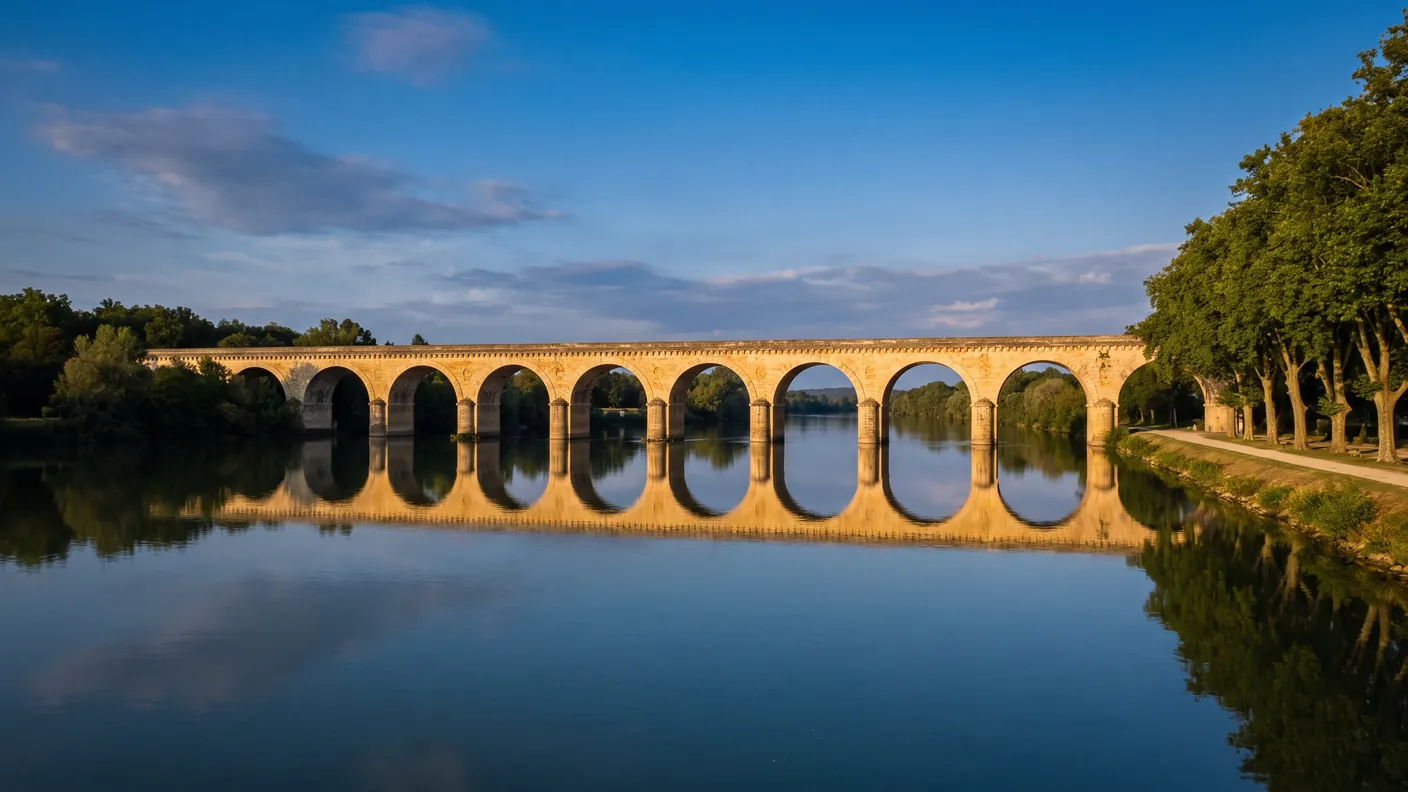
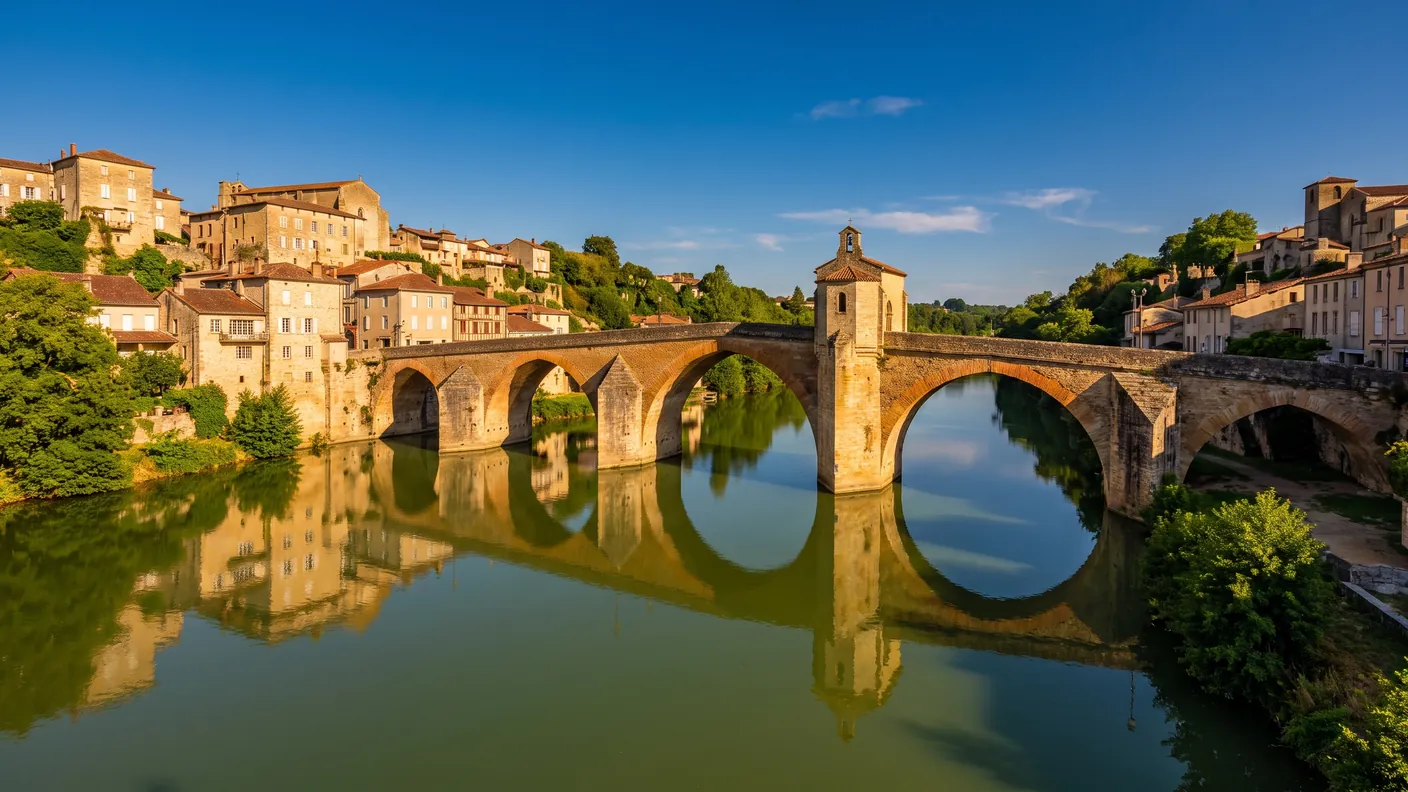
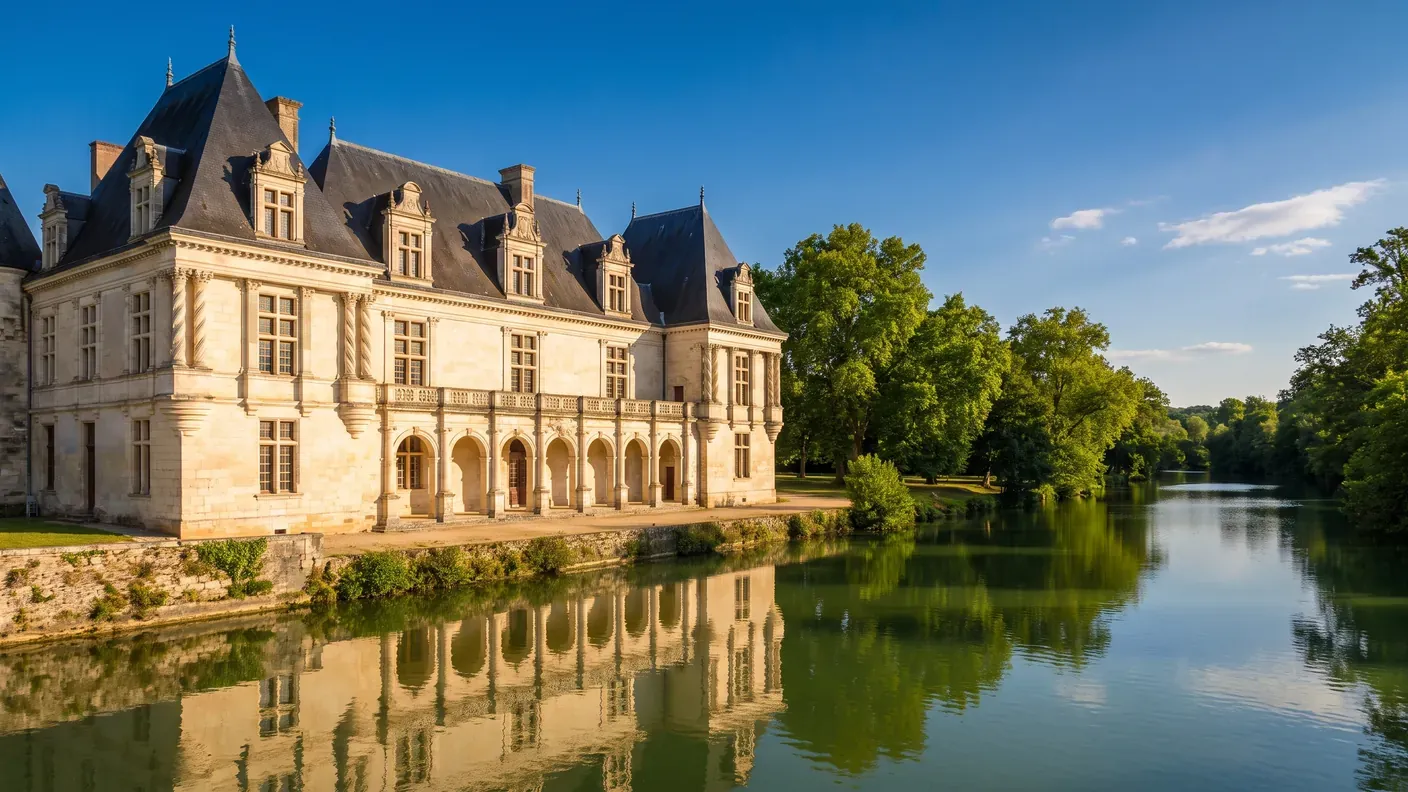
On the way to the Garonne Valley
Direct trip from Bordeaux (about 1 hour 26 minutes) to Tonneins, with stops along the way as desired—Aiguillon, a winery in Buzet, Marmande. Fixed, written quote—no surprises on the meter.