
Bordeaux to Blaye: Vauban’s Citadel
Vauban’s grand citadel, a UNESCO World Heritage Site, stands on the right bank of Europe’s largest estuary : the Gironde estuary, the Blaye vineyards, and a small town of stone and water—less than an hour from Bordeaux, at the crossroads of heritage and wine.
Blaye at a Glance
Blaye is a small town in the Gironde department, the subprefecture of Haute Gironde, situated on the right bank of the Gironde estuary, about 60 kilometers north of Bordeaux. It is world-renowned for its citadel, a fortress built by Vauban in the late 17th century to block access to Bordeaux via the river, now listed as a UNESCO World Heritage Site. As much a town of winemakers as it is a stronghold, Blaye also lends its name to a renowned wine region, the Blaye Côtes de Bordeaux, and opens onto Europe’s largest estuary, where mudflats, islands, and small fishing huts on stilts alternate. With its military heritage, wine, and the open sea, it offers a well-rounded Gironde getaway, less than an hour’s drive from Bordeaux— perfect for a day combining heritage, wine tasting, and waterfront scenery.
Here are the key details to know before you go. Distances are calculated door-to-door from Bordeaux; the fare shown is for a private driver reservation at a fixed price provided in advance, with no meter surprises regardless of traffic or stops along the way.
| Landmark | Details |
|---|---|
| Department | Gironde (33), Nouvelle-Aquitaine |
| Status | Subprefecture · Blaye District · Canton of the Estuary |
| Population | approximately 5.070 residents (INSEE 2023) · the residents of Blay |
| Area | 6.42 km² · on the right bank of the estuary |
| Don't miss it | Vauban's Citadel (UNESCO), the estuary, the vineyards |
| Distance from Bordeaux | about 60 km · about a 55-minute drive |
| Rankings | Citadel listed by UNESCO (Vauban Network, 2008) |
First, a word of clarification: there are a few common misconceptions about Blaye, which this guide corrects, citing sources. The famous citadel is not medieval: it is a classical fortress, built by Vauban beginning in 1685 under Louis XIV, the construction of which, incidentally, razed the old upper town and the former basilica. The famous tomb of Roland—the hero of the Song of Roland, whom legend says was buried in Blaye—belongs to literary myth, not history. Finally, is important to distinguish between two appellations: Blaye Côtes de Bordeaux, which is primarily red, and Côtes de Blaye (or Blaye), which refers mainly to white wines. Every statement in this guide is based on verifiable sources cited at the end of the article.
Here we’ll go over everything you need to know: Blaye’s location on the estuary and its status as a subprefecture, the Vauban citadel Vauban and its UNESCO designation, the “gateway” to the estuary and the river, the lower town and its heritage, the Blaye vineyards and their wines, the city’s history dating back to antiquity, the best ways to enjoy the local cuisine, the notable sites in the surrounding area, the best season to visit, and the easiest way to get there from Bordeaux by chauffeured transfer—all thoroughly researched and verified.
Where is Blaye located?
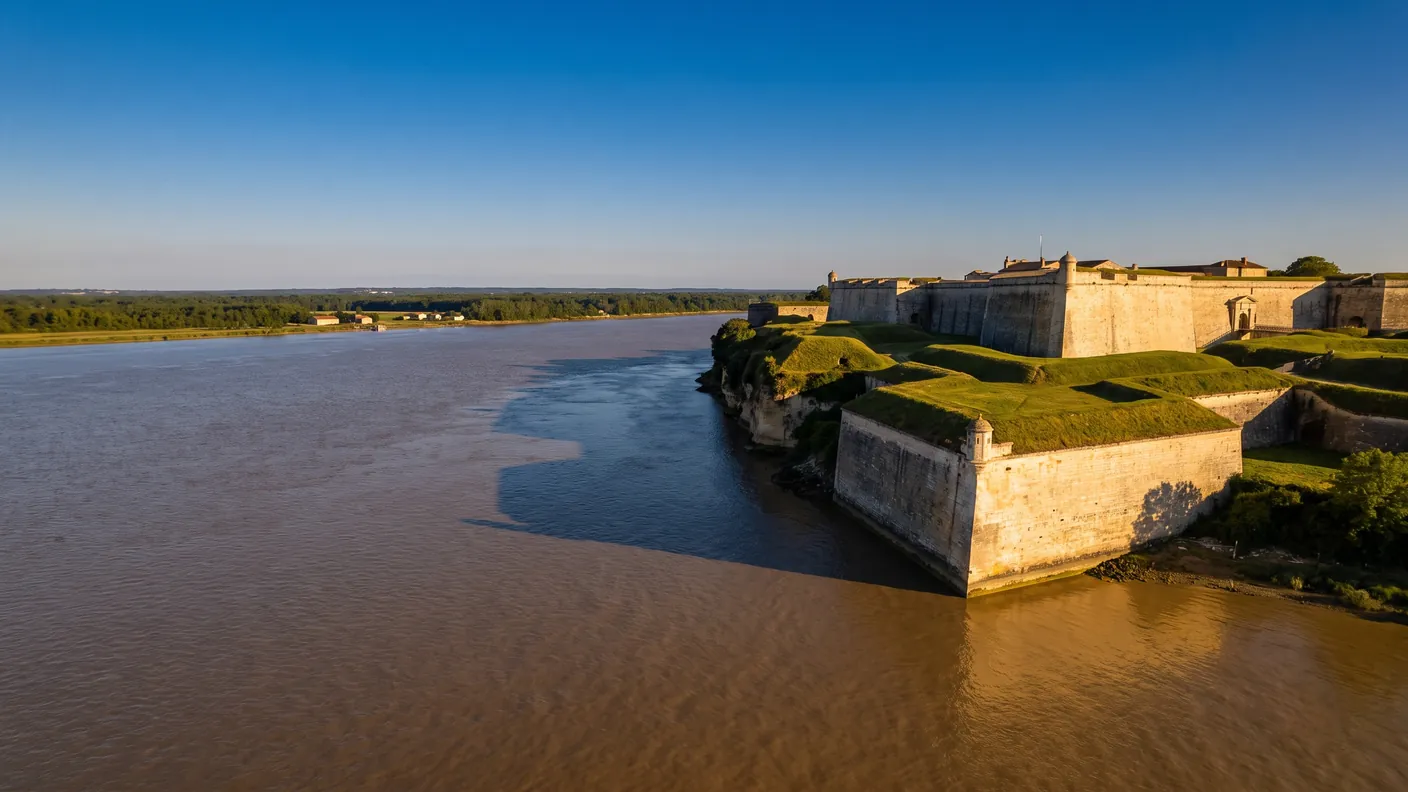
Blaye is located in the northern part of the Gironde department (33), in Nouvelle-Aquitaine, on the right bank of the Gironde Estuary, about 60 kilometers downstream from Bordeaux and across from the Médoc, from which it is separated by the river. It is a commune in the Haute Gironde department, of which it is the subprefecture: it is the seat of the arrondissement of Blaye and the canton of Estuaire, and the seat of the Community of Communes of Blaye. Built along the waterfront, at the foot of and around its citadel, the city overlooks a vast estuary landscape—mudflats, islands, reed beds—and is backed by a hinterland of hillsides covered with vineyards. Its position, acting as a barrier to river access to Bordeaux, explains its entire military history: it was here that the river, still several kilometers wide, could be monitored and defended. Here, you are at once on the water, in the vineyards, and at the gateway to the Médoc.
On the right bank of the estuary
Blaye occupies a unique strategic location: a rocky promontory on the right bank of the Gironde estuary, where the river—formed by the confluence of the Garonne and the Dordogne— widened as it flows toward the ocean. Across the water lies the Médoc and its grand cru wines, which can be reached by the ferry that crosses the estuary between Blaye and Lamarque: a picturesque crossing of the Gironde, popular with cyclists and wine enthusiasts traveling from one bank to the other. It is this sentinel-like position, at the narrowest point of the estuary, that has made Blaye a strategic stronghold since ancient times, blocking the waterway to the port of Bordeaux. The town faces entirely toward the river, its shifting lights and vast skies: people come to Blaye as much for the stone as for the water, and for that feeling of being on the edge of an immense and ever-changing expanse.
A subprefecture of Haute-Gironde
With approximately 5.070 residents According to the 2023 census, Blaye is a small, intimate town, yet it has the status and amenities of a subprefecture : government offices, middle and high schools, the market, the marina, shops. Source: INSEE, municipality 33058. Its residents are called the Blayais. The capital of the Haute Gironde, it is the heart of a region of vineyards and estuaries, nestled between Bourg to the south, the Saintonge to the north, and the Médoc across the river. Life here is shaped by wine—the town is a hub of the vineyards on the right bank of the estuary—and by the river, with its port, fishing huts, and water sports. Having remained off the beaten path of major tourist crowds, Blaye cultivates the quiet charm of a small town full of character, where the imposing citadel and the watery horizon of the estuary lend even the shortest stay a special flavor.
Vauban's Citadel
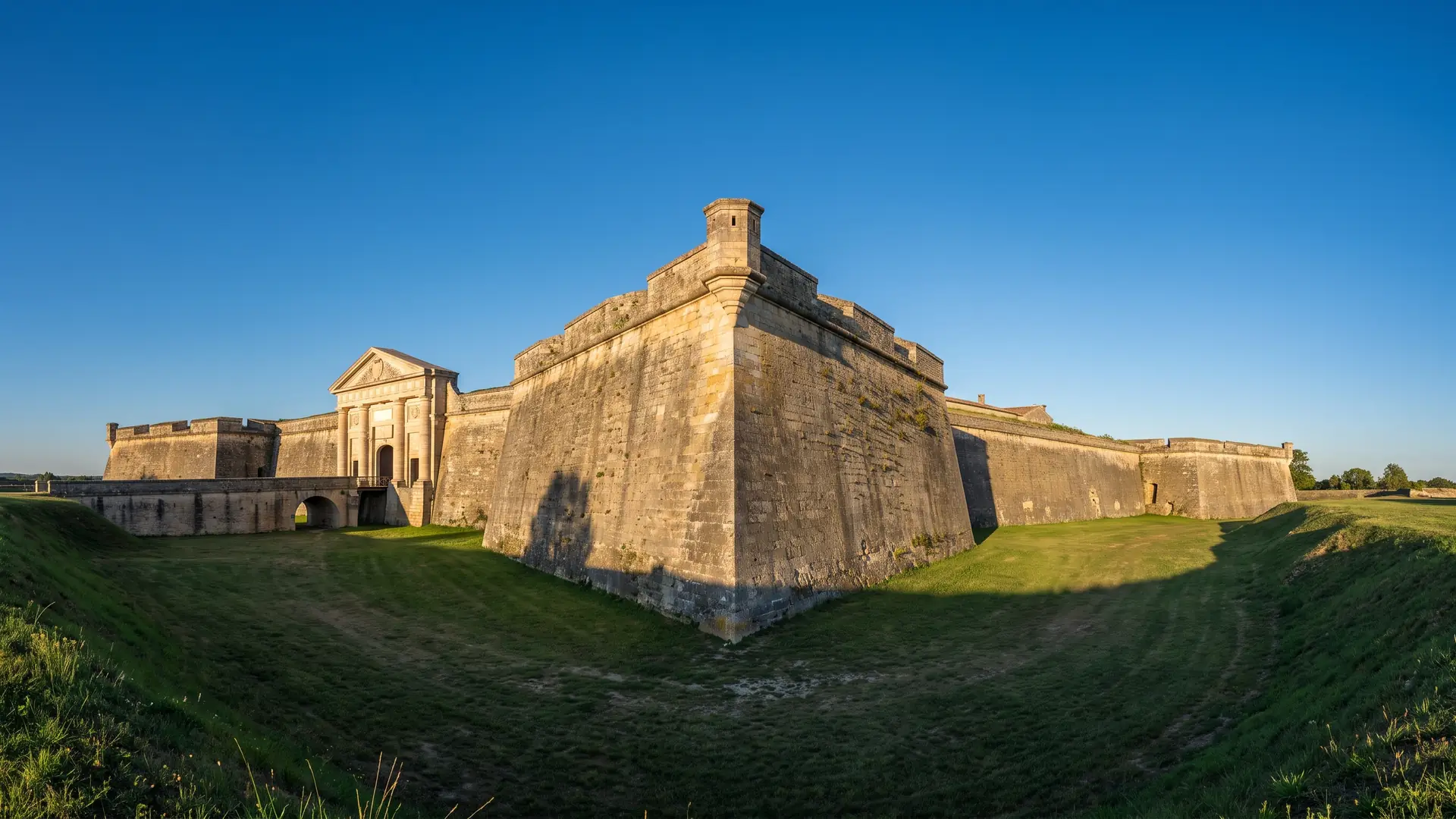
The Blaye Citadel is the city’s most iconic landmark: a massive fortress built by Vauban in the late 17th century to control the estuary and protect Bordeaux, now listed as a UNESCO World Heritage Site. It is the number one reason to visit Blaye, and one of the most beautiful fortified complexes on the Atlantic coast.
A Vauban-era fortress (1685)
The current citadel was built in 1685–1689, during the reign of Louis XIV, edited by Vauban, the Sun King’s renowned military engineer, and based on the plans of engineer François Ferry. Its purpose: to block the estuary to any enemy fleet sailing up toward Bordeaux. Built on a rocky promontory overlooking the river—where the medieval castle of the Rudel, the family of the troubadour Jaufré Rudel—it deploys a formidable apparatus of bastions, curtain walls, semicircular bastions, and monumental gates—including the Porte Dauphine and the Porte Royale— spanning some 25 hectares. Its construction was so vast that it Rasa, the medieval upper old town which occupied the rock, including the former Basilica of Saint-Romain, to clear the firing ranges and the glacis. Within its walls lies a small enclosed town, with its streets, square, Minimes convent, barracks, and houses, which today is home to residents, artisans, and artists: a city within a city, one of a kind.
Designated and listed by UNESCO
The citadel's exceptional value was recognized on July 7, 2008 by registering with the UNESCO World Heritage Site, within the “ network of Vauban's major sites "which brings together twelve iconic fortifications designed by the engineer throughout France. In Blaye, the inscribed property comprises four elements, grouped under the title " Blaye-Cussac-Fort-Médoc "": the citadel, the city walls, Fort Paté, and Fort Médoc, as confirmed by the UNESCO official fact sheet (accessed July 24, 2026). Designated a historic monument, the Blaye Citadel is the heart of a larger defensive system—the “gateway” to the estuary—which has earned it this worldwide recognition. Visitors are free to explore: stroll along the ramparts, where the view of the estuary is breathtaking; wander through its underground passages and courtyards; and discover its museum. It’s a journey back to the golden age of military architecture, in a setting where the geometric precision of the fortifications interacts with the vastness of the river. Few fortresses offer such a marriage of stone and water, and such a sense of space.
| The Citadel of Blaye | Details |
|---|---|
| Manufacturer | Vauban, engineer to Louis XIV |
| Construction | from 1685 onward |
| Role | block the estuary, protect Bordeaux |
| Protection | historic monument · UNESCO 2008 (Vauban Network) |
| Must-See | city walls, monumental gates, walled city, underground passages |
The Estuary Lock and the Gironde
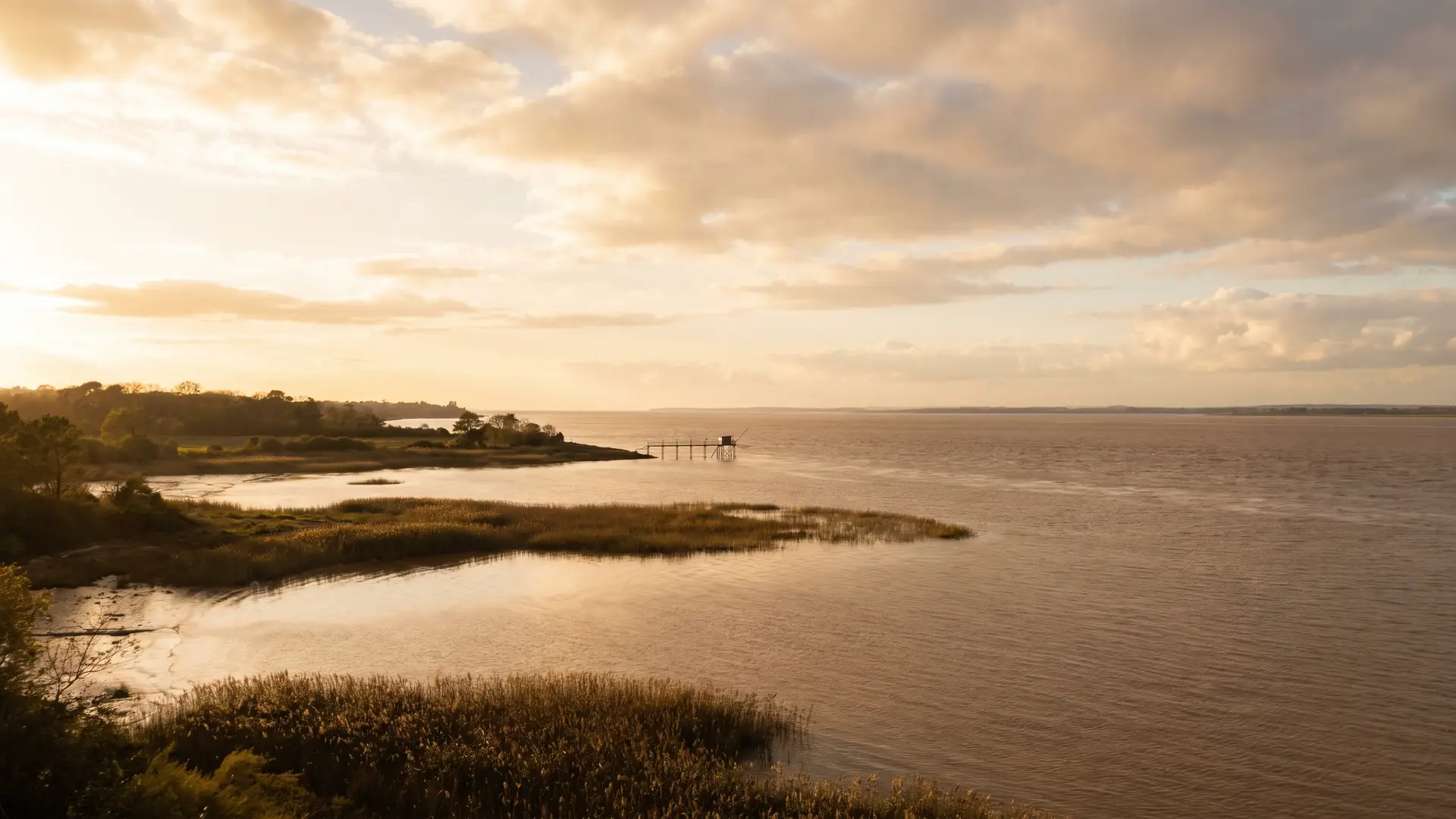
The citadel of Blaye can only be fully understood in relation to the estuary it oversees: together with Fort Paté on its island and Fort Médoc on the opposite bank, the city forms the famous “lock” designed by Vauban to seal off the Gironde, Europe’s largest estuary. Here, the river is a character in its own right.
The Vauban Lock on the Estuary
To prevent any enemy fleet from passing through, Vauban did not limit himself to the citadel: he designed a crossfire triangle spanning the estuary from end to end. The Blaye Citadel, on the right bank, the little Fort Paté (built in 1693 on a small island in the middle of the river) and the Fort Médoc (built in 1691 on the left bank, at Cussac) faced each other, their guns aimed at one another: no ship could pass through this narrows without coming under fire from the three fortifications. This “ estuary lock ", a masterpiece of strategic intelligence, is precisely what earned the site its designation as a UNESCO World Heritage Site. The Network of Vauban's Major Sites officially describes this triptych (accessed July 24, 2026). Today, visitors can view Fort Paté from the ramparts of Blaye and reach Fort Médoc by ferry.
Europe's Largest Estuary
The Gironde Estuary , formed by the confluence of the Garonne and the Dordogne at Bec d'Ambès, is the largest estuary in Europe : approximately 635 square kilometers, some 75 kilometers long, and up to 12 wide, according to the SMIDDEST regional overview (accessed July 24, 2026). It is an exceptional natural environment, with brown, silt-laden waters, where the tide is felt far inland, and where mudflats, islands, marshes, and reed beds alternate. Traditional fishing has left behind a distinctive landscape: the “carrelets ,” wooden huts on stilts equipped with a large net, jutting out over the water along the entire length of the banks. From Blaye, the estuary offers vast, ever-changing skies, sunset views over the Médoc, and the spectacle of the ebb and flow of the tides. It is a landscape of rare grandeur, both wild and inhabited, over which the town and its citadel tower from their lofty heights.
| The Estuary Lock | Riverbank | Role |
|---|---|---|
| Citadel of Blaye | right bank | Vauban's great fortress |
| Fort Paté | on an island in the river | gun turret in the middle of the estuary |
| Fort Médoc | Left Bank (Cussac) | closes the cross-shot, on the Médoc side |
The Lower Town and Its Heritage
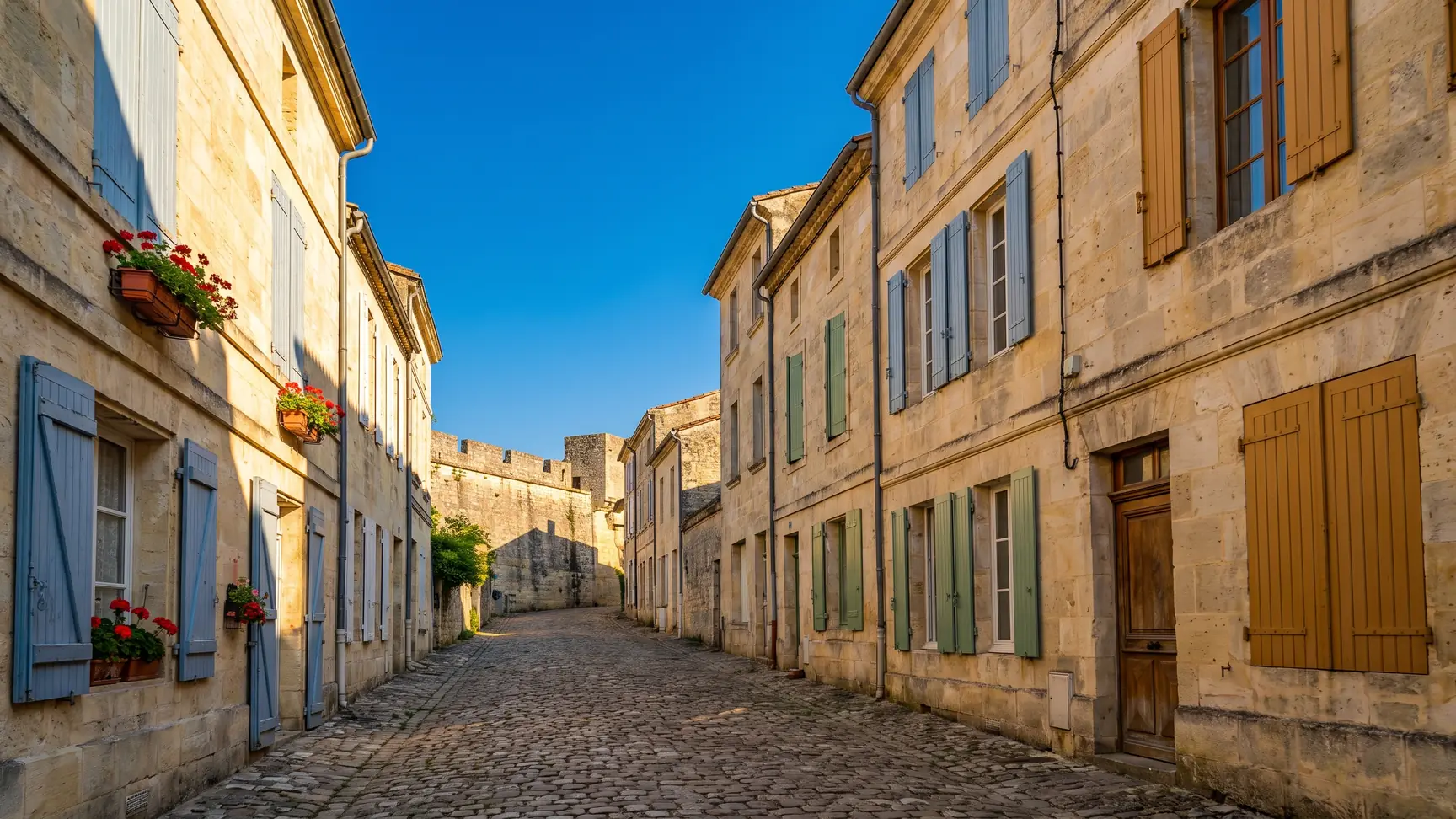
Beyond the citadel, Blaye is a charming little town built of stone, with its lower town at the foot of the ramparts, its harbor, its church, and its historic houses—all waiting to be explored on foot between the river and the fortress. A leisurely stroll that nicely rounds out a visit to the monument.
The Lower Town and the Harbor
Below the citadel lies the lower town, the vibrant heart of Blaye: its streets lined with limestone houses, its squares, its market, its shops, and its cafés. The town has developed here, between the fortified rock and the water, with its harbor—now a marina and boarding point—from which you can take the ferry to the Médoc and from where gabares laden with wine and goods once set sail. Here, you can soak up the peaceful atmosphere of a small estuary town, facing the river. The Church of Saint-Romain, in the lower town, recalls through its patron saint the ancient basilica razed by Vauban, whose memory—along with the legend of Roland’s tomb—remains linked to the place. Strolling between the harbor, the quays, and the narrow streets, before climbing up to the ramparts, is the best way to get to know Blaye.
Strolling Among Stones and Water
Blaye is best enjoyed on foot, at a leisurely pace. From the docks, you make your way to the gates of the citadel and climb the ramparts, where the view takes in the entire estuary, Fort Paté on its island, and the Médoc shore on the horizon: this is the city’s main lookout point, magnificent at sunset. Inside the walls, the walled town offers the surprise of its lively narrow streets, its square, its gardens, and the ruins of the Minimes convent, all in an atmosphere of tranquility that’s almost village-like. You can continue your exploration at the citadel’s citadel, a stroll along the water’s edge to see the fishing huts, or a gourmet stop—the estuary provides lamprey, shad, and eel, local culinary specialties that pair perfectly with the region’s wines. Between the stone fortifications, the vast skies over the river, and the vineyards of the hinterland, Blaye paints a beautifully diverse picture of the Gironde, where one loves to linger.
The Blaye Wine Region
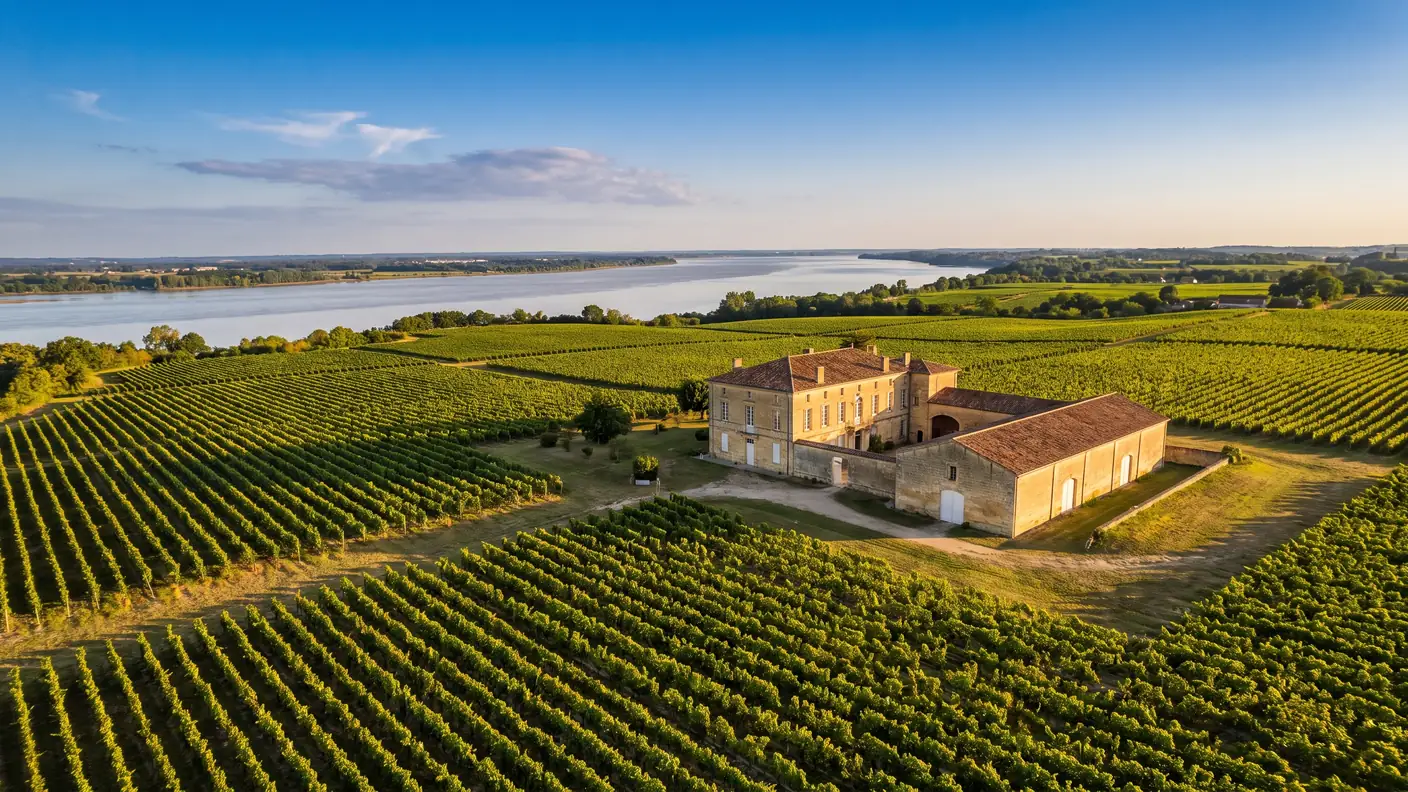
Blaye lends its name to one of the largest vineyards on the right bank: the Blaye Côtes de Bordeaux, an appellation known for its full-bodied red wines, supplemented by whites, on the hillsides overlooking the estuary. Along with the citadel, wine is the second major reason to visit the Blayais region.
Blaye Côtes de Bordeaux
The Blayais wine region covers approximately 6,000 hectares clay-limestone hillsides and gravel ridges, above and behind the estuary. Its primary name, the Blaye Côtes de Bordeaux — recognized by that name by a decree of 2009, successor to the “Premières Côtes de Blaye,” whose AOC dates back to 1936 —, covers on its own some 5,400 hectares and produced in 94% of red wines : Merlot is the dominant variety (about 70%), complemented by Cabernet Sauvignon (about 20%) and Malbec (about 10%), resulting in supple, fruity, and full-bodied wines that offer excellent value for the price. The remaining 6% consists of dry whites (Sauvignon, Sémillon, Muscadelle). The Blayais region, however, was initially renowned for its white : The old appellations that were once dedicated to them have now virtually disappeared, absorbed by the "Grand Rouge." The oceanic climate, tempered by the estuary, and the diversity of the soils give the vineyards a wonderful variety of styles: it is a region of family-run wineries, known for their warm hospitality and reasonable prices—one of the best-kept secrets of the Bordeaux region.
Tasting Blaye Wines
Visitors have plenty of options for tasting local wines. The Maison du Vin de Blaye, located in town, showcases and sells wines from the appellation: a great starting point for comparing the châteaux. The many estates and châteaux of the Blayais region open their doors for cellar tours and tastings, often at family-run operations where you’re welcomed by the winemaker. Every spring, the “ Printemps des Vins de Blaye” festival opens the cellars and attracts some 12,000 wine enthusiasts to tasting tours through the vineyards—the region’s second-largest wine event after Bordeaux Fête le Vin. This is where a private chauffeur really comes into its own: it allows you to combine a visit to the citadel with two or three wineries, without ever having to worry about driving between tastings. Whether a full-bodied red or a crisp white, Blaye wine is the perfect companion for exploring the city and the estuary—a taste of the terroir, at an affordable price.
| The Blaye Wine Region | Details |
|---|---|
| Blayais Wine Region | approximately 6,000 ha · right bank of the estuary |
| Blaye Côtes de Bordeaux | ~5,400 ha · AOC recognized in 2009 (originated in 1936) |
| Wines | 94% reds (Merlot ~70%, Cabernet Sauvignon, Malbec) · 6% dry whites |
| Terroir | clay-limestone and gravel slopes, estuarine climate |
| Event | Blaye Wine Festival (April, ~12,000 visitors) |
The History of Blaye
An ancient port, a Christian sanctuary, the setting of the legend of Roland, the hometown of the troubadour Jaufré Rudel, and the gateway to Bordeaux: Blaye has spanned the centuries at the crossroads of history and myth. A few key milestones shed light on the unique past of this estuary town.
Blavia, a port from ancient times
Blaye has been inhabited since ancient times. Under the name of Blavia — attested as early as the 1st centuryer century —, it appears on the Peutinger Map, the famous Roman road map, as a stop along the route connecting Bordeaux (Burdigala) to Saintes (Mediolanum Santonum): it was already a port and an important crossing point on the estuary. In the early Christian centuries, the city became a site of religious significance, associated with Saint Romain of Blaye, a revered evangelist whose tomb attracted pilgrims: the ancient Saint-Romain Basilica, on the rock, was a stop along the Camino de Santiago. It is at this basilica that the legend, born of the The Song of Roland, links the Roland's Tomb, Charlemagne’s nephew who died at Roncesvalles: a literary myth, not a historical fact, but one that contributed to the place’s medieval prestige. Of this rich past, Vauban’s construction of the citadel unfortunately left only a memory, as it razed the upper town.
Roland, Jaufré Rudel, and the Hundred Years' War
In the Middle Ages, Blaye was the seat of a powerful lordship that produced a famous figure: the troubadour Jaufré Rudel, Prince of Blaye in the 12th century (born around 1110), a champion of “love from afar” (amor de lonh), whose romantic legend—his love for a princess of Tripoli whom he had never seen, whom he set out to join on a crusade in 1146—spanned the centuries and even inspired Edmond Rostand (*La Princesse lointaine*). Like the rest of Guyenne, Blaye subsequently came under English rule following the marriage of Eleanor of Aquitaine to Henry Plantagenet (1152), and its position on the estuary made it a strategic military target during the Hundred Years’ War: Blaye was recaptured by the French in 1452, one year before the Battle of Castillon (1453), which ended the war in Aquitaine and sealed Guyenne’s return to France. A natural gateway to Bordeaux, the Rock of Blaye was subsequently fortified over the centuries, before Vauban began building the citadel there in 1685—the very citadel we admire today: the culmination of two thousand years of history of a sentinel city.
Wine Tasting in Blaye
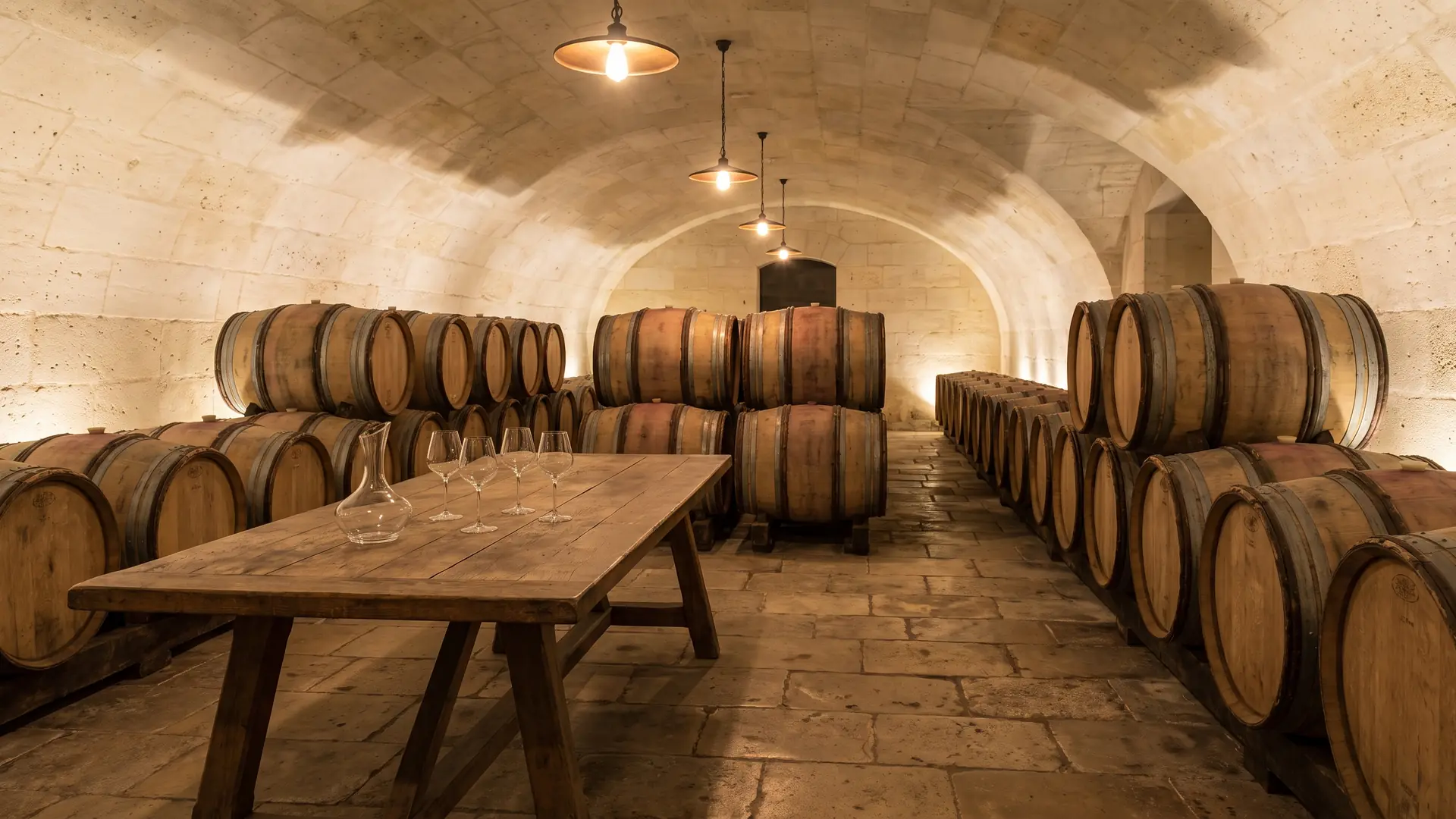
Blaye is a destination for food lovers as much as it is for history buffs: here, you can taste the local wines—full-bodied reds and crisp whites—and the specialties of the estuary, all in the friendly atmosphere of a small town of winemakers and fishermen. Here’s how to make the most of your visit.
The Terroir and the Wines
The Blaye wine region owes its character to its terroir of clay-limestone hillsides and gravel, and to its oceanic climate, tempered by the body of water in the estuary, which protects the vines from extremes. The reds, dominated by Merlot, are round, fruity, and approachable, with the structure provided by the Cabernets; the dry whites, made from Sauvignon and Sémillon, charm with their aromatic freshness. This diversity is what makes a wine tasting in Blaye so appealing: here, you can compare very different styles in a single day and discover high-quality wines at prices much more affordable than on the neighboring Left Bank. Gaining firsthand insight into the connection between the soil, the river, and the glass—at wineries often run by passionate, family-owned producers—is one of the best ways to explore this still-off-the-beaten-path vineyard on the right bank of the estuary.
Where to Eat and What to Try
For wine tastings, the Maison du Vin de Blaye offers an overview of the appellation, and the many châteaux in the Blaye region welcome visitors for tours and tastings, often by appointment. When it comes to dining, the estuary provides its specialties: Bordeaux-style lamprey, shad, eel, and the famous sturgeon—from which a renowned Gironde caviar is now produced locally. These rich and flavorful river delicacies pair naturally with local wines. A chauffeur service makes it possible to organize a full day of wine tourism: a visit to the citadel in the morning, lunch featuring local specialties overlooking the water, followed by tastings at two or three wineries in the afternoon—all without ever having to worry about driving. It’s the perfect way to leisurely enjoy the very best that Blaye has to offer—stone, water, wine, and fine dining.
What's there to see around Blaye?
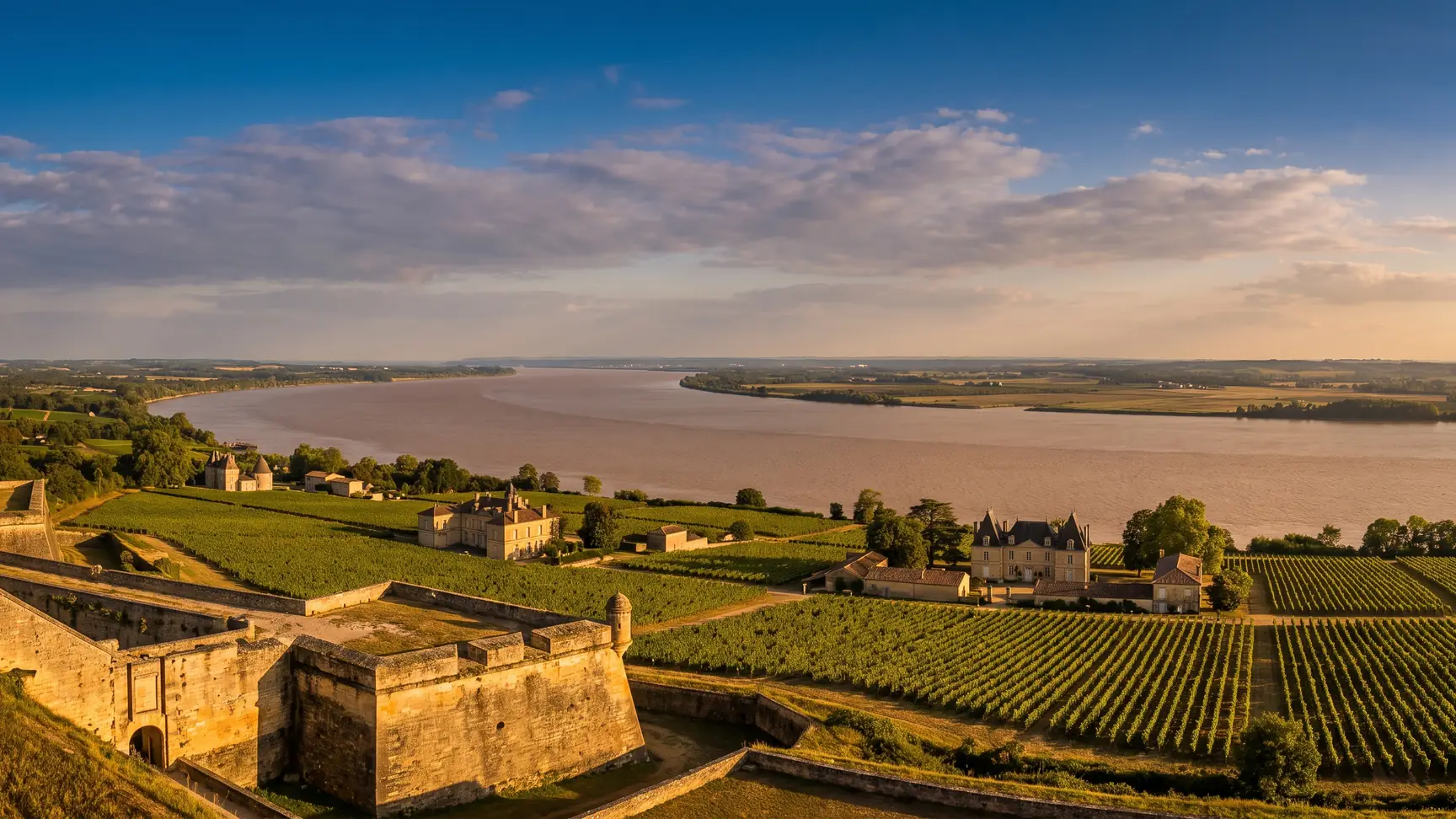
Blaye is an excellent starting point for exploring the Haute Gironde and the estuary: Bourg and its vineyards, the Médoc via the ferry, the Vauban forts, and the Saintonge region are all nearby. Landscapes of water, vineyards, and stone follow one another in quick succession.
The Estuary, Bourg, and the Médoc
Nearby, heading south along the right bank, Bourg (Bourg-sur-Gironde) is worth a visit: this small town perched on the Dordogne, above the confluence, boasts a renowned wine region—the Côtes de Bourg—and a picturesque old town overlooking the river. Across from Blaye, the Médoc and its grand crus are accessible via the ferry that crosses the estuary between Blaye and Lamarque: the perfect opportunity for a memorable crossing and a visit to the left bank, near Margaux and Fort Médoc, the other part of Vauban’s defensive line. To the north lies Haute-Saintonge, a land of cognac and forests, while while the estuary itself, with its islands, fishing huts, and ports, invites you to take a stroll along the water’s edge. A private chauffeur makes it easy to create a custom loop between the two banks, the vineyards, and the fortresses.
Bordeaux and the Vineyards
Blaye is only about 60 kilometers from Bordeaux, making it a wonderful destination for a day trip: you can easily combine the “world city” and its UNESCO-listed waterfront with the citadel on the estuary, another World Heritage site. To the east, the Libourne region— Saint-Émilion, Pomerol, and the surrounding villages—extends the exploration of the great vineyards of the right bank, less than an hour away. To the southwest, the Médoc and its Château Route offer one of the world’s most prestigious wine itineraries. Within a few dozens of kilometers around Blaye, there is an extraordinary concentration of sites: fortresses, the estuary, historic towns, and vineyards that are among the most renowned on the planet. With a driver to connect these stops, you can easily turn your visit to Blaye into a customized tour of the Gironde, at your own pace, without the hassle of driving.
| Around Blaye | Distance | Interest |
|---|---|---|
| Bourg-sur-Gironde | ~15 km | A hilltop town, the Côtes de Bourg wine region |
| Fort Médoc (Cussac) | by ferry | The other part of the Vauban lock |
| Saint-Émilion | ~40 km | UNESCO-designated medieval city, fine wines |
| Bordeaux | ~60 km | UNESCO City, Port of the Moon |
| Estuary & fishing huts | on site | Europe's Largest Estuary |
When is the best time to visit Blaye?
Blaye is worth visiting year-round, but spring and summer—when the light dances across the estuary and the vineyards come to life—are the most beautiful times to visit. The spring covers the hillsides in soft greenery, offers mild days perfect for strolling along the ramparts and the estuary, and hosts the “Printemps des Vins de Blaye,” a major open-cellar festival that beautifully kicks off the season. Thesummer bathed in abundant light: it’s the high season to enjoy the citadel, the terraces overlooking the water, walks along the estuary, and wine tastings at the wineries, in a lively yet never crowded atmosphere. The long evenings offer, from the ramparts, sumptuous sunsets over the Médoc and the estuary—one of the most beautiful sights in the Gironde, not to be missed under any circumstances.
Fall Harvest and Winter
Thefall It’s a magnificent time of year to discover Blaye: the grape harvest brings the Blayais wineries to life, the vine leaves take on shades of gold and purple above the estuary, and the air is filled with the scent of grape must; it’s the perfect time to learn about winemaking and taste the new vintages, while the low-angled sunlight makes the stone of the ramparts look even more stunning. Thewinter, a quieter setting, reveals the citadel and the estuary in a stark yet powerful atmosphere, beneath the vast, ever-changing skies of the Gironde: you have the fortress almost all to yourself, and the river feels like the end of the world. In any season, the mild oceanic climate tempered by the estuary and the beauty of the landscapes—with their waterways and vineyards—make Blaye a rejuvenating getaway for those seeking an authentic taste of Bordeaux, blending heritage, the open sea, and fine wines.
Getting to Blaye from Bordeaux
Blaye is located 60 km from Bordeaux, about a 55-minute drive via the A10 and then the D137. Private transfers start at €103 during the day; rate verified on July 24, 2026. The door-to-door service is ideal for a tour that includes the citadel, the estuary, and the wine estates.
The town does not have a passenger train station: the nearest station is Saint-André-de-Cubzac. From the left bank, the ferry connects Lamarque and Blaye; from Bordeaux, a direct bus avoids this transfer.
Train or chauffeured transfer?
Since there is no direct train service, a private driver (private chauffeur service) is by far the simplest way to reach Blaye and explore the surrounding area: a direct, door-to-door trip from Bordeaux with no or waiting, with the option to make stops as you please along the way. This is particularly valuable for a day combining cultural sites and wine tastings—the citadel, followed by two or three vineyards in the Blaye region— where you’ll want to be able to taste the wines without worrying about driving or parking. We offer this trip at a fixed price provided in advance: expect to pay €116 for the one-way trip, in a Mercedes sedan or van seating up to 8 passengers, with a professional driver. The price, set at the time of booking, remains fixed: it does not depend on traffic, potential traffic jams, or the number of stops requested along the way, unlike a taxi meter.
This is the perfect option for a day of wine tourism with friends, a family visit to the citadel, an event (wedding, birthday party at a château in the Blayais region), or a simple transfer from or to Bordeaux-Mérignac Airport. You can travel alone, as a couple, or in a small group of up to 8 people, with luggage, and request stops in Bourg or at a vineyard along the way. In practice, booking is quick and easy: simply provide the pickup address in Bordeaux and the destination in Blaye, along with the date, desired time, and number of passengers, and you’ll receive a written, fixed-price quote in return. On the day of the trip, the driver picks up the passengers at the agreed-upon address and takes them directly to Blaye, without any detours—a real advantage for enjoying a stress-free day of cultural heritage and wine.
| Route | Distance | Duration | Landmark |
|---|---|---|---|
| Bordeaux → Blaye | ~60 km | ~55 min | Starting at €103 for a private chauffeur service |
| Blaye → Bourg-sur-Gironde | ~15 km | ~20 min | Côtes de Bourg vineyard |
| Blaye → Fort Médoc | by ferry | ~30 min | the Vauban Lock, left bank |
| Blaye → Saint-Émilion | ~40 km | ~45 min | UNESCO World Heritage Site, fine wines |
Whether you come for Vauban’s citadel and its designation as a UNESCO World Heritage Site, for the vastness of the estuary and its fishing huts, for the vineyards and their affordable wines, or for the city’s millennia-old history, Blaye rewards lovers of authentic Bordeaux culture, at the crossroads of stone, water, and vines—a sentinel city of character that, for those who take the time to stop and explore, offers one of the most beautiful combinations of heritage and landscape in all of the Gironde.
Whether it’s for a wine-tasting tour, a visit to the citadel, or an event, booking an executive car service guarantees a comfortable and punctual ride— book a chauffeur service from Bordeaux to Blaye or explore all our destinations.
Frequently Asked Questions
Where is Blaye located?
Blaye is a small town in the Gironde department (33), in Nouvelle-Aquitaine, on the right bank of the Gironde estuary, about 60 kilometers north of Bordeaux and across from the Médoc. It is the subprefecture of Haute Gironde, the seat of the Blaye arrondissement and the Estuaire canton, and has a population of approximately 5.070 (known as Blayais). Built around its famous Vauban citadel, it overlooks the largest estuary in Europe. It is located about a 55-minute drive from Bordeaux (about 60 km).
How far is it from Bordeaux to Blaye?
About 60 km by road, or about a 55-minute drive, via the A10 and then the D137. The private door-to-door transfer starts at €103 during the day, price verified on July 24, 2026. Blaye does not have a passenger train station; the nearest station is Saint-André-de-Cubzac.
What is the Citadel of Blaye?
It is a massive fortress built by Vauban beginning in 1685, under Louis XIV, to control the Gironde estuary and protect Bordeaux from an attack from the sea. Built on a rocky promontory overlooking the river, it features bastions, curtain walls, and monumental gates, and within its walls lies a small walled town that is still inhabited. Its construction razed the old medieval upper town. Since 2008, it has been listed as a UNESCO World Heritage Site, as part of the “network of major Vauban sites.” Visitors are free to explore the ramparts, underground passages, museum, and views of the estuary.
Why is the Blaye Citadel a UNESCO World Heritage Site?
The Citadel of Blaye has been listed as a UNESCO World Heritage Site since 2008, as part of the “Network of Major Sites by Vauban,” which brings together twelve iconic fortifications designed by the king’s engineer. In Blaye, together with Fort Paté (on an island in the river) and Fort Médoc (on the left bank, in Cussac), it forms the famous “estuary lock”: a crossfire system designed by Vauban to prevent any enemy fleet from sailing up the Gironde River to Bordeaux. It is this exceptional defensive system, one of a kind, that justifies its global recognition.
What is the “estuary lock”?
This is the defensive system designed by Vauban to block the Gironde estuary. It consists of three interconnected structures: the Blaye Citadel on the right bank, the small Fort Paté, built on an islet in the middle of the river, and Fort Médoc on the left bank, in Cussac. Their cannons crossed fire to block all passage: no enemy ship could cross this narrows without coming under fire from all three forts. This “lock on the estuary” is one of the reasons Blaye was designated a UNESCO World Heritage Site. You can reach Fort Médoc from Blaye by ferry.
What is the Blaye wine region?
Blaye lends its name to a wine-growing region of approximately 6,000 hectares on the right bank of the estuary. The main appellation, Blaye Côtes de Bordeaux (recognized by this name in 2009, successor to the 1936 Premières Côtes de Blaye), covers some 5,400 hectares and produces 94% red wines—predominantly Merlot (about 70 %), Cabernet Sauvignon, and Malbec—which are supple and full-bodied, offering excellent value for the price, complemented by 6% dry whites (Sauvignon, Sémillon, Muscadelle). The Blaye region was once renowned for its white wines, whose former appellations have now almost disappeared. These wines can be tasted at the Maison du Vin de Blaye and at the many châteaux in the Blaye region, particularly during the “ Printemps des Vins de Blaye” in April (approximately 12,000 visitors).
Is Roland really buried in Blaye?
No: Roland’s tomb in Blaye is a matter of legend, not history. The Song of Roland and medieval tradition linked the ancient Basilica of Saint-Romain in Blaye to the burial site of Roland, Charlemagne’s nephew who died at Roncesvalles, which contributed to the religious prestige of the site, a stop along the pilgrimage routes to Santiago de Compostela. But this is a literary myth. The basilica itself was, in fact, razed to the ground during the construction of the citadel by Vauban. Blaye, however, was indeed the birthplace of a real and famous figure: the troubadour Jaufré Rudel, Prince of Blaye in the 12th century.
Who was Jaufré Rudel?
Jaufré Rudel was a troubadour and lord of Blaye in the 12th century, one of the most famous poets of the Occitan language. He is remembered for having sung of “love from afar” (amor de lonh): according to the romantic legend surrounding his life, he is said to have fallen in love with a princess of Tripoli whom he had never seen, set sail to join her, and died in her arms upon arrival. A poet-prince from Blaye, he embodies the golden age of troubadour poetry and is one of the great historical and legendary figures associated with the city.
What to See in Blaye?
The Vauban Citadel, a UNESCO World Heritage Site, is a must-see : ramparts, monumental gates, a walled city still inhabited today, underground passages, a museum, and views of the estuary. The lower town, at the foot of the fortress, is worth a leisurely stroll, with its harbor (where the ferry to the Médoc departs), its narrow streets, and its Saint-Romain Church. The Gironde Estuary, the largest in Europe, offers sweeping waterfront landscapes of water, its fishing huts on stilts, and magnificent sunsets . Finally, the Blayais vineyards invite you to enjoy a wine tasting. Nearby: Bourg-sur-Gironde, Fort Médoc via the ferry, and Bordeaux just one hour away.
How many people live in Blaye?
Approximately 5.070 residents according to the 2023 census. Source: INSEE, municipality 33058. It is a small town, but it has the status and amenities of a subprefecture: it is the seat of the district of Blaye and the Estuaire canton, in Haute-Gironde. Its residents are known as Blayais. The town is situated in a region of vineyards and estuaries, between Bourg to the south, Saintonge to the north, and the Médoc across the river. Life here is shaped by wine—it is a major center of the vineyards on the right bank of the estuary—and by the estuary itself, with its port and water sports.
Can you visit the Gironde Estuary from Blaye?
Yes. From Blaye, the Gironde Estuary—the largest in Europe (about 635 km²), formed by the confluence of the Garonne and the Dordogne—is visible everywhere. You can admire it from the ramparts of the citadel, you can walk along its banks to see the carrelets (fishing huts on stilts), cross it by ferry to reach the Médoc, and river cruises are available during the season. It is a remarkable natural environment, with high tides, rich in estuarine wildlife (sturgeon, shad, lampreys, birds). The sunsets over the water and the Médoc, as seen from Blaye, are among the most beautiful in the Gironde.
Is there a train station in Blaye?
No, Blaye does not have a passenger train station: the former Estuary Railroad line no longer provides passenger service. The nearest station is Saint-André-de-Cubzac, or Bordeaux for long-distance trains, which then requires a car ride. To reach Blaye—and especially to explore the citadel, the estuary, and the vineyards—hiring a private chauffeur from Bordeaux remains by far the simplest and most flexible solution. You can also, from the Médoc, reach Blaye by taking the ferry that crosses the estuary between Lamarque and Blaye.
Can I book a private driver from Bordeaux to Blaye?
Yes. We offer the Bordeaux → Blaye route (approximately 60 km, about 55 minutes via the A10 and then the D137) at a fixed price, starting at €103 one way, price verified on July 24, 2026. The trip is direct, door-to-door, with optional stops to visit the citadel and the Blaye wine estates. The fixed quote is provided before departure.
Further Reading
- The nearby hilltop town : see the Guide to Bourg-sur-Gironde (the old town on the Dordogne, the Côtes de Bourg), 15 km away
- The UNESCO City of Wine : see the Guide to Saint-Émilion (medieval town, monolithic church, grand cru wines)
- The Médoc, just across the ferry: see the Guide to the Médoc (grands crus, appellations, wine route), the other side of the estuary
- Plan your trip: book a chauffeur service from Bordeaux to Blaye or explore all our destinations
Sources and References
- INSEE — Blaye (33058) — Official Population
- Wikipedia — Blaye — Geography, Demographics, History, Citadel, Vineyards
- Wikipedia — Blaye Citadel — Vauban, 1685; gateway to the estuary; UNESCO, 2008
- UNESCO — Vauban Fortifications — Network of Major Vauban Sites, inscribed in 2008
- Wikipedia — Gironde Estuary — Europe's largest estuary, formed by the Garonne and Dordogne rivers, with fishing huts
- Wikipedia — Blaye / Blaye Côtes de Bordeaux — vineyards, reds and whites, area
Article updated in July 2026.
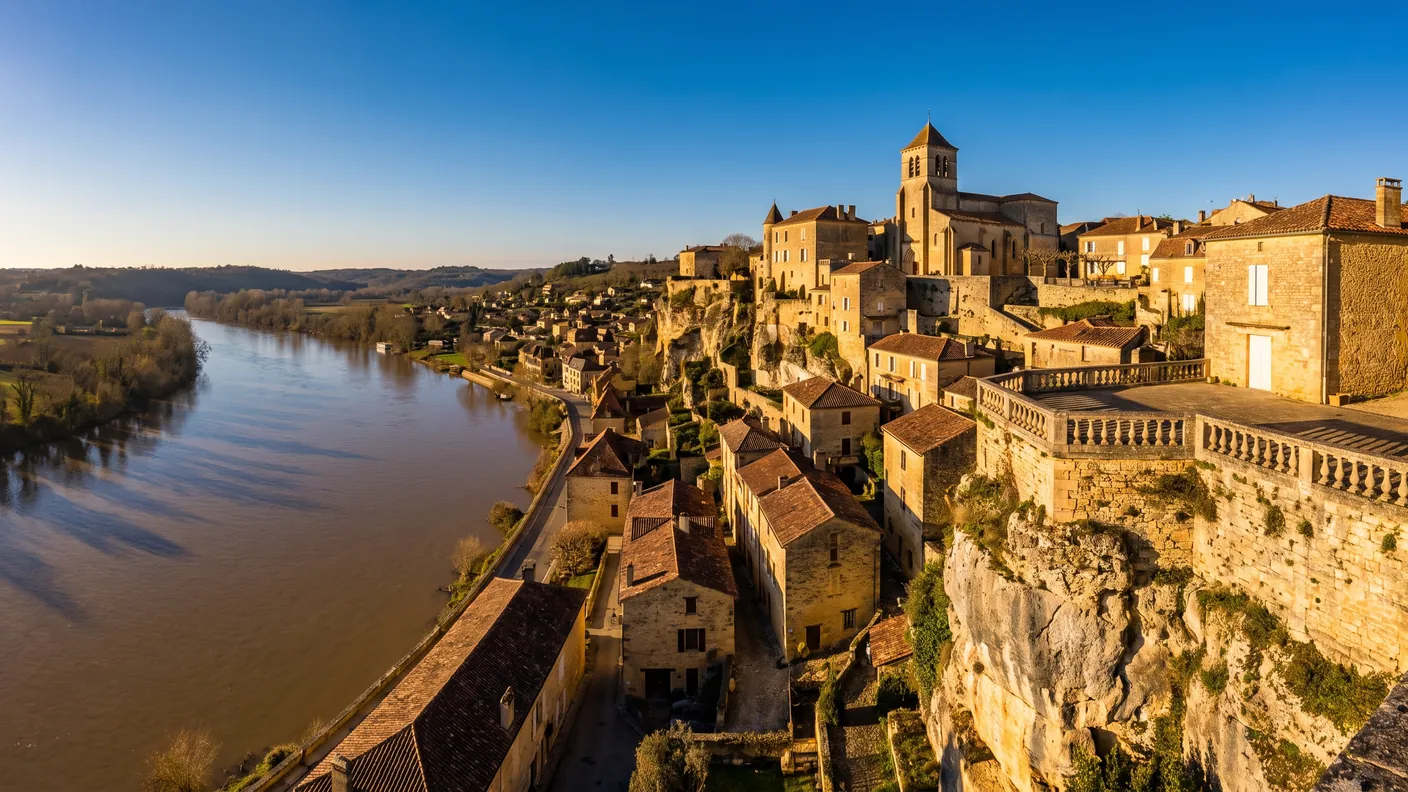
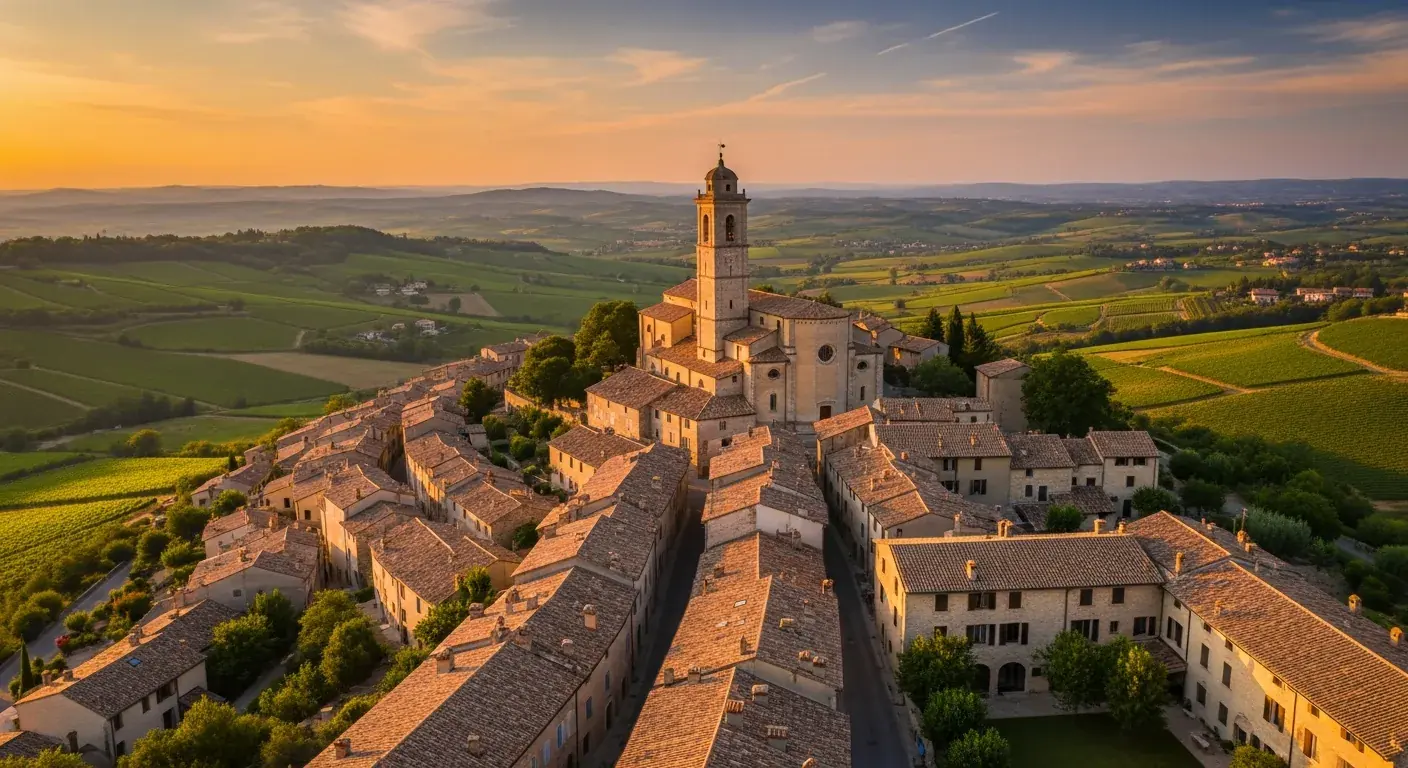
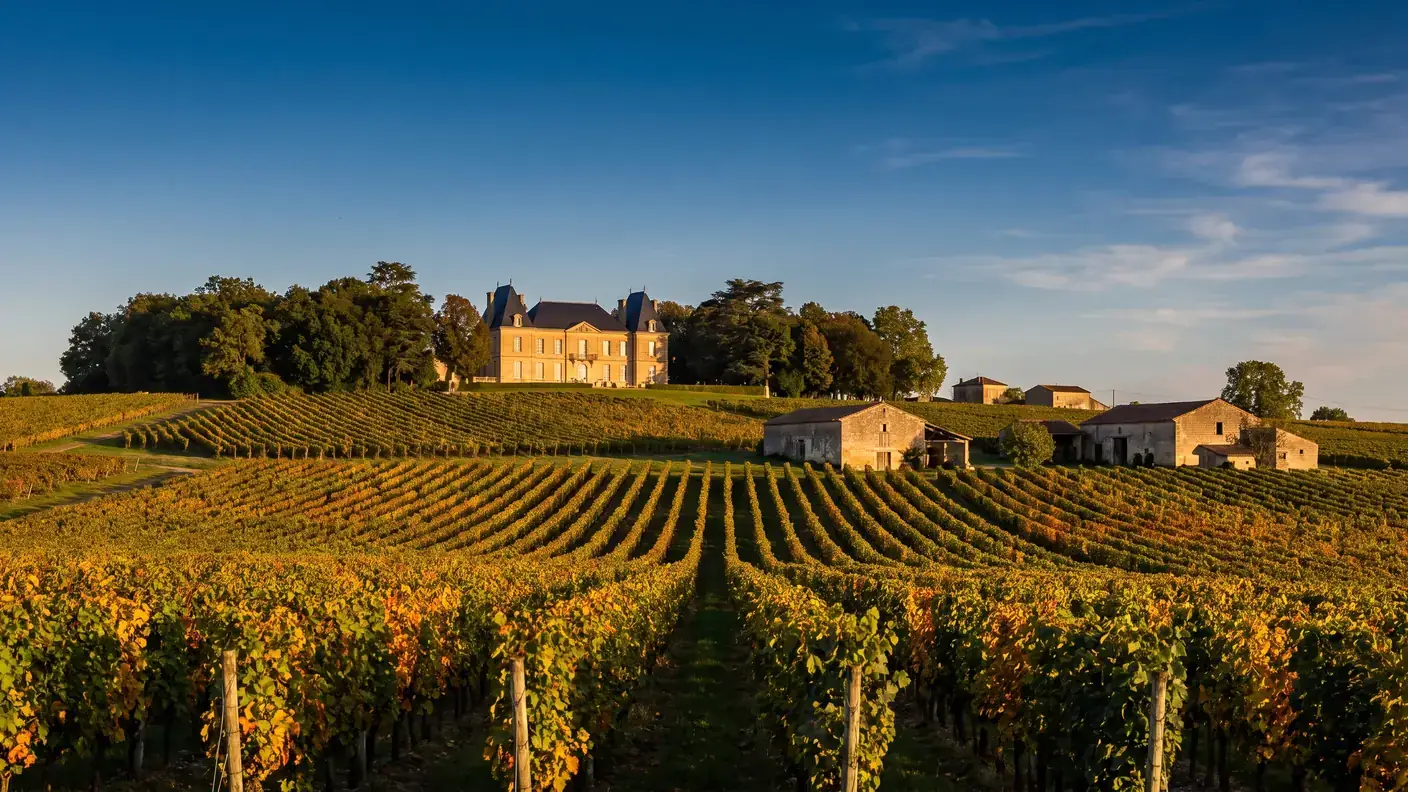
On the way to the Blaye Citadel
Direct trip from Bordeaux (~55 min) to Blaye, its Vauban-era citadel, and the Blayais vineyards, with stops along the way at your discretion—Bourg, the wineries, and the estuary. Written fixed-price quote, with no surprises on the meter.