
Bordeaux to Gardegan-et-Tourtirac: private driver guide
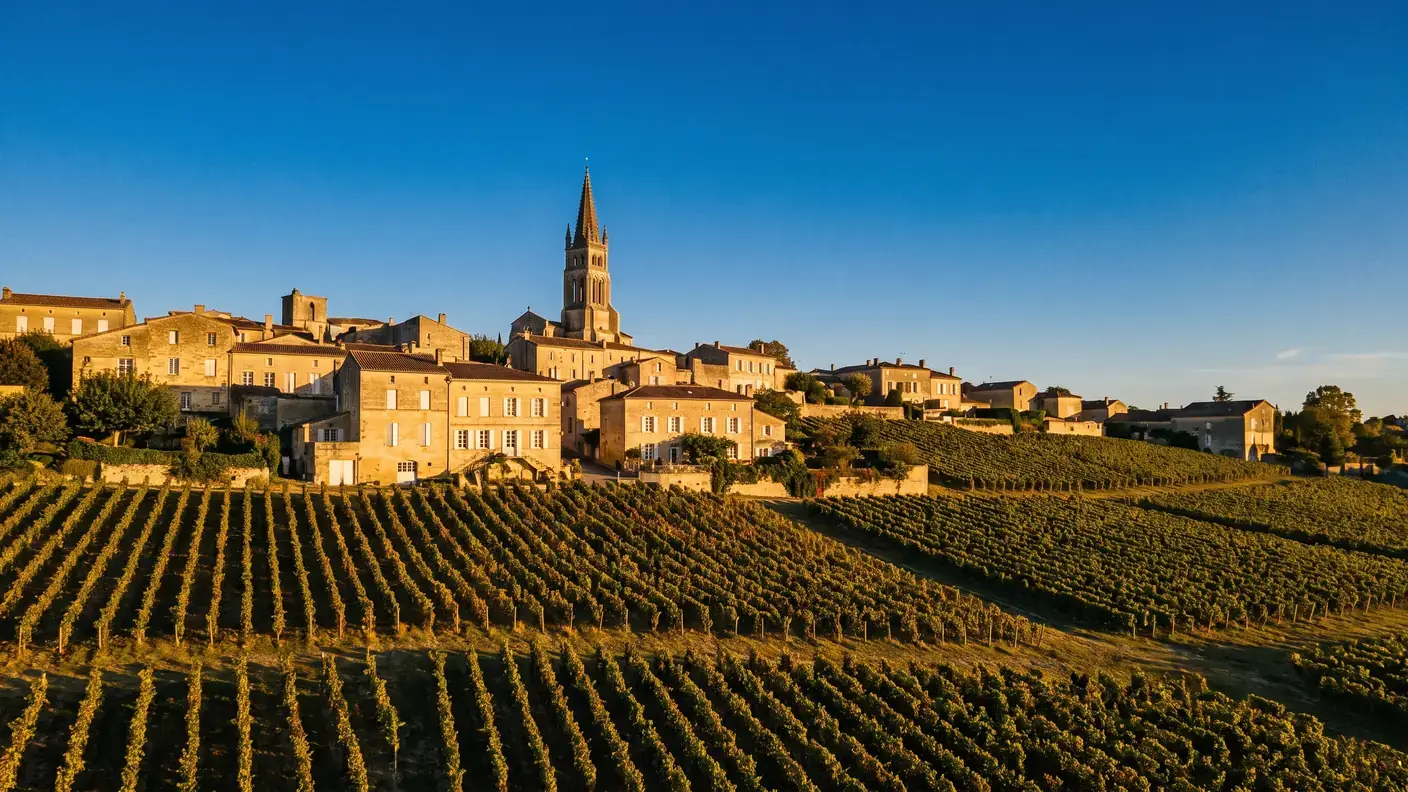
A small wine-growing village in the Libourne region, a few kilometers from Saint-Émilion and Château de Montaigne: two Romanesque churches and two châteaux listed as historic monuments, nestled among the vineyards of the Castillon Côtes de Bordeaux appellation—just over an hour from Bordeaux.
Gardegan-et-Tourtirac at a Glance
Gardegan-et-Tourtirac is a wine-growing town in the Libournais region of Gironde, formed by the merger of two former parishes. It is home to two listed Romanesque churches—Saint-Martin in Gardegan and Saint-Pierre in Tourtirac—as well as the châteaux of Pitray and La Pierrière. Its vineyards are part of the Castillon Côtes de Bordeaux appellation, a red wine appellation neighboring Saint-Émilion. The village is located near the Château de Montaigne and the site of the Battle of Castillon. From Bordeaux, the driving route described on this page is approximately 60 km and takes just over an hour. There is no train station in the town; Castillon-la-Bataille is the nearest one. Visits to wineries and private estates must be confirmed in advance.
Gardegan-et-Tourtirac is a small wine-growing village in the Gironde department, in the Libourne region, a few kilometers from Saint-Émilion and the battlefield of Castillon. This hamlet, with fewer than three hundred residents—formed by the merger of two former parishes—boasts a remarkable heritage for its size: two Romanesque churches and two castles, all designated as historic monuments, scattered among the vineyards of the Castillon Côtes de Bordeaux appellation. Here we are in the heart of wine country, on the border between the Bordeaux and Périgord regions, on hillsides that geologically extend the Saint-Émilion plateau, very close to Michel de Montaigne’s home. It’s a quiet corner of the Gironde countryside, off the beaten path of tourist crowds, yet steeped in history and great wines, just over an hour’s drive from Bordeaux.
Here are the key details you need to know before you go. Distances are calculated door-to-door from Bordeaux; the fare shown is for a private driver reservation at a fixed price provided in advance, with no unexpected meter charges regardless of traffic or stops along the way.
| Landmark | Details |
|---|---|
| Department | Gironde (33), Nouvelle-Aquitaine |
| Status | Rural village · Libourne District · Coteaux de Dordogne Canton |
| Population | approximately 274 residents (INSEE 2023) · the residents of Gardegan |
| Area | 9.58 km² · in the Libournais wine region |
| Don't miss it | Two Romanesque churches, Pitray Castle, and Castillon wine |
| Distance from Bordeaux | about 60 km · a little over an hour's drive |
| Designation | Castillon Côtes de Bordeaux (red wines) |
A word of honesty right off the bat, because even such a small village is burdened by its own stereotypes, and this guide strives throughout to distinguish between what has been verified and what is merely repeated. Gardegan-et-Tourtirac is now part of the Coteaux de Dordogne canton, rather than the Castillon-la-Bataille canton, a division that predates the 2015 cantonal reform. Its four monuments are not “classified” but are listed as historic monuments—two distinct levels of protection that are often mistakenly conflated. Its Château de Pitray, despite its old-world charm, is essentially a 19th-century reconstruction. And its vineyard does not produce cognac: it produces Bordeaux wine under the Castillon Côtes de Bordeaux appellation. The “Saintonge Romanesque” style of its churches refers to a architectural style, not a region of production. Every statement in this guide is based on verifiable sources, cited at the end of the article.
Here’s a rundown of everything you need to know before you come: the location of Gardegan-et-Tourtirac in the Libournais region and its population, its two beautiful Romanesque churches, its two listed castles, Castillon Côtes de Bordeaux wine and the history of its appellation, the village’s history dating back to antiquity, the origin of its two names, the nearby towns of Montaigne and Saint-Émilion, notable sites in the surrounding area, the best time of year to visit, and the easiest way to get there from Bordeaux by private driver—all thoroughly researched, verified, and free of the inaccuracies that sometimes circulate about the village.
Where is Gardegan-et-Tourtirac located?
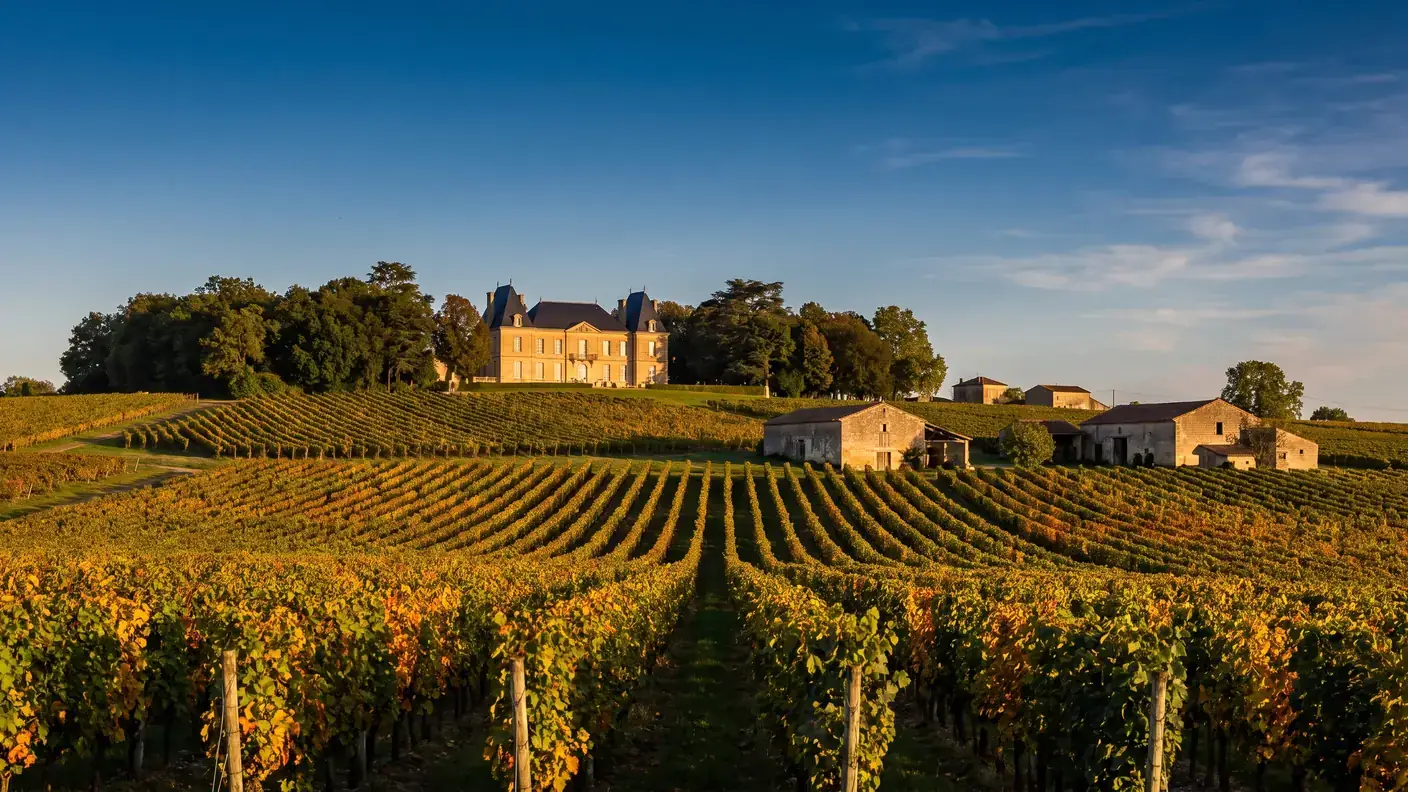
Gardegan-et-Tourtirac is located in the eastern part of the Gironde department (33), in the Nouvelle-Aquitaine region, in the Pays du Libournais, about 20 kilometers east of Libourne and just over 10 kilometers from Saint-Émilion. It is a rural commune belonging to the Libourne arrondissement and the Coteaux de Dordogne canton, and is a member of the Grand Saint-Émilionnais Community of Communes. It covers 9.58 km² of vineyard-covered hillsides, on the border with the Dordogne department and the nearby Périgord region, just a few kilometers from the site of the Battle of Castillon and the town of Castillon-la-Bataille. Its territory is bordered to the east by the Lidoire, a small tributary of the Dordogne that forms the boundary between the Gironde and the Périgord. We are in the heart of a prestigious wine-growing region, in a rolling landscape of vineyards, woods, and châteaux, away from major traffic routes.
A village born from two parishes
Gardegan-et-Tourtirac is, as its compound name suggests, a dual municipality: it was formed around 1800 (in Year IX of the Republic) through the merger of two neighboring former parishes, Gardegan and Tourtirac, each with its own Romanesque church. This history explains the village’s unusually rich heritage, featuring two medieval religious buildings just a few kilometers apart—one in the town of Gardegan and the other in the hamlet of Tourtirac.
This type of merger of small rural parishes, carried out during the Revolution or in the decades that followed, was common in the Gironde countryside, where efforts were made to create more viable municipalities. For today’s visitor, this history means twice as much heritage to discover, spread across the village’s two former centers, during a stroll through the vineyards—a rare attraction for a town of this modest size, and a common thread running through the visit.
A tiny winegrowing village
According to INSEE, based on the 2023 reference population figures published in December 2025, Gardegan-et-Tourtirac has a population of 274. The residents of Gardegan live in a scattered settlement among hamlets, woods, and vineyards. The village’s small size contributes to its tranquility, just a few kilometers from the busier sites of Saint-Émilion.
Two listed Romanesque churches
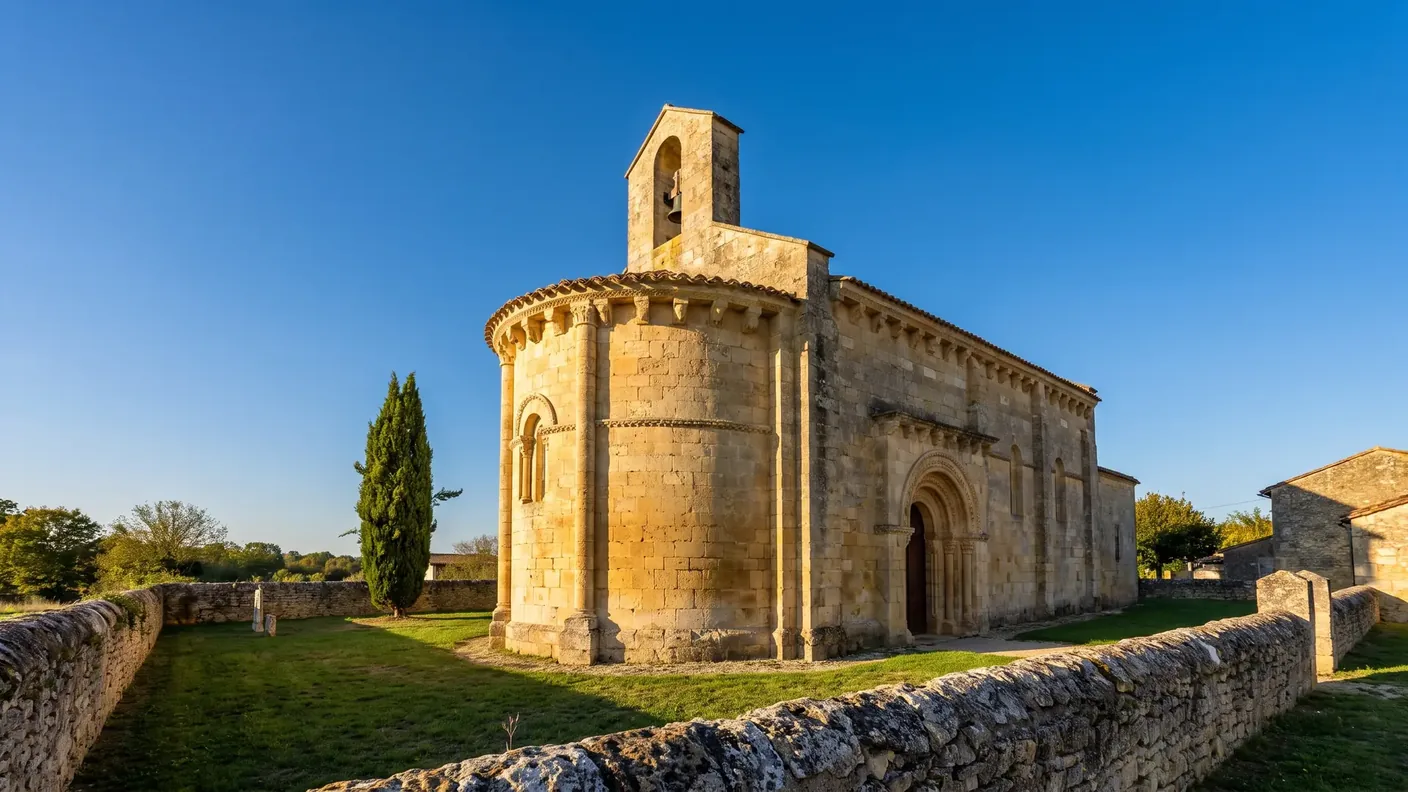
Thanks to its dual origins, Gardegan-et-Tourtirac boasts two beautiful 12th-century Romanesque churches, both listed as historic monuments since 1925—a rare religious heritage for a village with fewer than 300 residents. Built in the style known as “Saintonge Romanesque”—a architectural style that spread from the Saintonge region all the way to the Bordeaux region—they are each worth a visit and, located just a few kilometers apart, showcase two complementary facets of Romanesque art in the Gironde. The first stands out for its sculpture and decoration; the second, for its fortified character, a testament to the turbulent times of the Middle Ages in a region marked by borders and wars.
Saint-Martin Church in Gardegan
According to the Mérimée entry PA00083557 from the Ministry of Culture, the Church of Saint-Martin in Gardegan is a 12th-century Romanesque building that has been listed since 1925. Its façade features a four-arched portal, small columns with capitals, and arcades characteristic of the Saintonge Romanesque style.
Inside, the single nave has a barrel vault, and the flat apse features a pointed-arch window. The animal-themed capitals, the carved modillions, the square bell tower—which was rebuilt in the 17th century—and the bell cast in 1741 round out the monument’s character.
The Fortified Church of Tourtirac
According to the Mérimée entry PA00083558 from the Ministry of Culture, the Church of Saint-Pierre in Tourtirac is a Romanesque building that has been listed since 1925. Fortified during the Middle Ages, it still features an entrance to the bell tower located about three meters above the ground, a layout associated with its defensive function.
Inside, a dome supported by pendentives covers the bay leading to the apse. An inscription dated 1607 attests to a restoration carried out in modern times. Saint-Pierre thus complements Saint-Martin: one exemplifies the fortified nature of the local heritage, the other its sculpted decoration.
Pitray Castle and La Pierrière
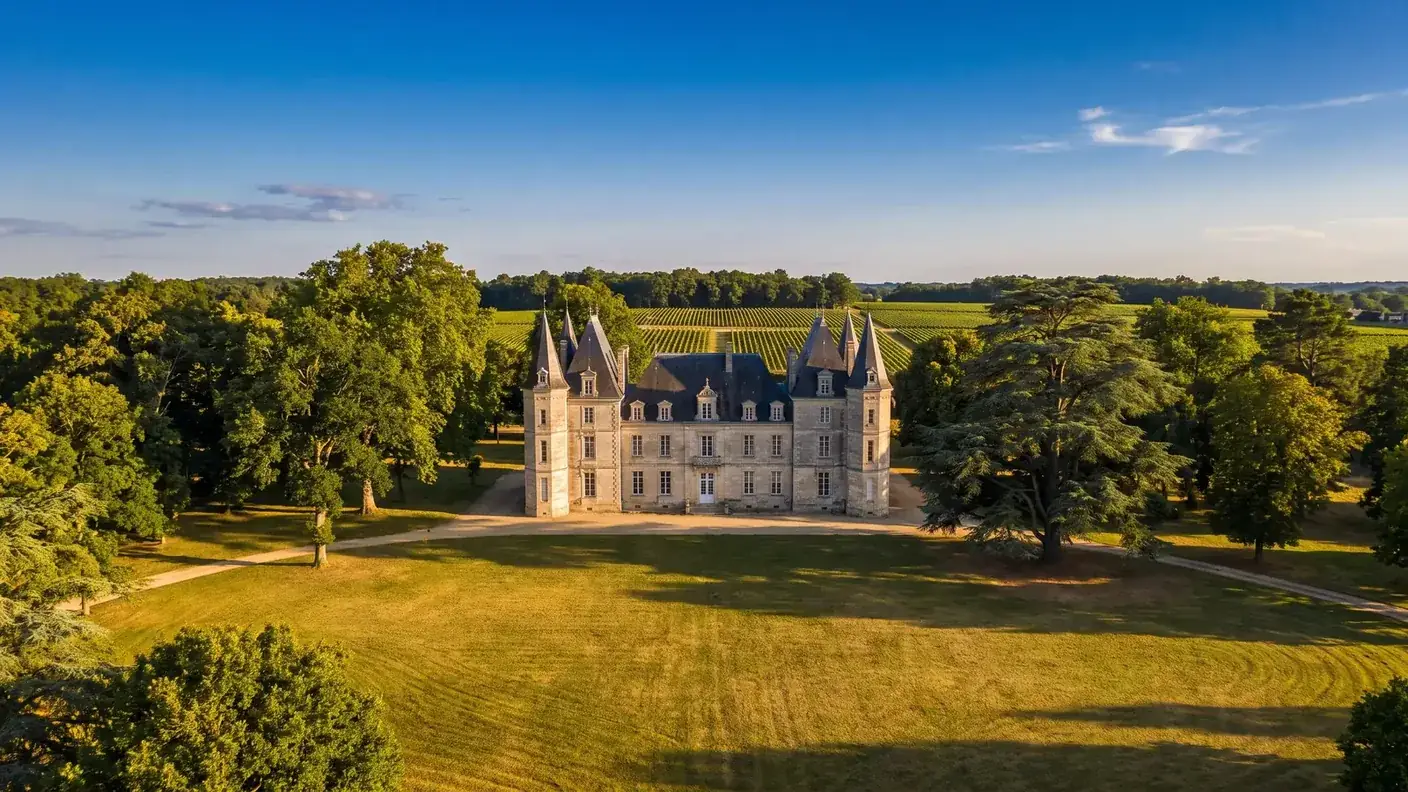
Gardegan-et-Tourtirac is also home to two castles listed as historic monuments: one is a Neo-Renaissance wine-producing estate, and the other is medieval—two facets of the Gironde’s seigneurial heritage. Together with the two Romanesque churches, they form an exceptional ensemble of monuments for a village of this size, and each, each in its own way, centuries of seigneurial and winemaking history—from the medieval guard post tasked with patrolling the border to the grand wine estate rebuilt during the golden age of the Bordeaux vineyards in the 19th century.
Château de Pitray, a large wine estate
According to the Mérimée entry PA33000134 from the Ministry of Culture, the current Château de Pitray is a 19th-century reconstruction, built around 1870 by the Bordeaux architect Alphonse Blanquière. The monument, its park, gardens, and outbuildings have been listed since 2010.
The estate preserves the legacy of an older manor house, but its appearance is primarily a blend of 19th-century Neo-Gothic and Neo-Renaissance styles. It remains a wine-producing estate; therefore, visiting arrangements must be confirmed directly with the estate before your visit.
La Pierrière, a medieval outpost
According to the Mérimée entry PA33000185 from the Ministry of Culture, the Château de La Pierrière features elements built between the 13th and 17th centuries. Its facades, roofs, chapel, and grounds have been listed as Historic Monuments since 2015.
The estate is locally described as a former outpost associated with the Château d'Aiguilhe, but this interpretation should be regarded as merely a local tradition. La Pierrière thus serves as the medieval counterpart to the Château de Pitray, which was largely rebuilt in the 19th century.
| Listed Heritage Sites in Gardegan-et-Tourtirac | Dating · Reference |
|---|---|
| Saint-Martin Church (Gardegan) | 12th-century Romanesque · Listed in 1925 · PA00083557 |
| St. Peter's Church (Tourtirac) | 12th-century Romanesque church, fortified · listed in 1925 · PA00083558 |
| Pitray Castle | Rebuilt c. 1870 · Listed in 2010 · PA33000134 |
| La Pierrière Castle | late 13th century · listed in 2015 · PA33000185 |
Castillon Côtes de Bordeaux Wine
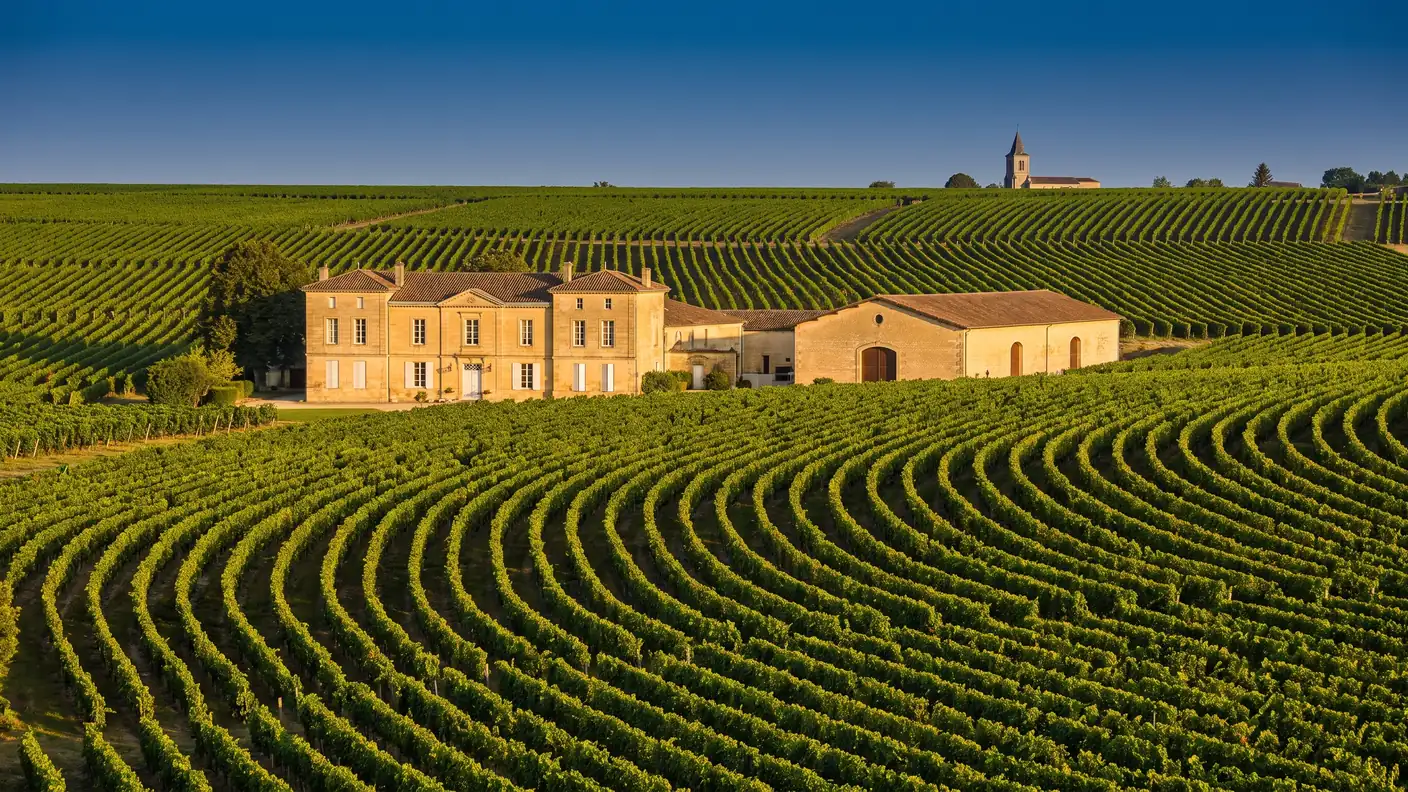
Gardegan-et-Tourtirac is first and foremost a wine-growing region—home to Bordeaux wine, specifically within the Castillon Côtes de Bordeaux appellation, which must be named accurately. This has nothing to do with cognac, despite the similarity in the “Saintongeais” style of its churches: we are in the heart of the Bordeaux wine region, on the clay-limestone slopes of the Castillonnais, a direct extension of the Saint-Émilion plateau. This is precisely one of the areas where you can still taste truly great Bordeaux wines at reasonable prices, without the premium associated with the most prestigious appellations that border it.
The Castillon Côtes de Bordeaux appellation
According to the INAO’s official profile on the Côtes de Bordeaux, Castillon is one of the appellation’s five wine-growing centers. The red wines are primarily made from Merlot, supplemented by Cabernet varieties, in a hilly region near the Dordogne River.
In Gardegan-et-Tourtirac, producers can also make wines under regional appellations in accordance with their specifications. Styles, vintages, and tasting conditions vary from one estate to another; therefore, it is best to make reservations directly with the estates.
An appellation that has changed its name
A useful bit of history, since the name of the appellation has changed over time and is often confusing to wine enthusiasts. Created in 1955 under the name “Bordeaux-Côtes de Castillon,” it became “Côtes de Castillon” in 1989, before taking on its current name, “Castillon Côtes de Bordeaux,” in 2009, when several former “Côtes ” (Castillon, Francs, Blaye, Cadillac) under a common banner intended to make the Bordeaux origin clearer to consumers.
So we still very often see and hear “Côtes de Castillon,” which is simply the former name of the same appellation. Be careful, however, not to confuse it with Saint-Émilion, which it borders but is not part of, nor, of course, with Cognac from the Charente region: the famous “Romanesque style of Saintonge” found in the village churches refers to a regional school of architecture, not a wine appellation. As for the terroir itself, it certainly belongs to the great family of Bordeaux wines.
Tasting a Castillon from the region
For visitors, a stop at a vineyard estate in the Castillonnais region is one of the best ways to discover the authentic Bordeaux, far from the crowds and high prices of Saint-Émilion. Many châteaux in the area open their doors for direct sales and tastings—often by appointment—and visitors are welcomed by winemakers dedicated to promoting an appellation that is still relatively unknown.
This is an opportunity to gain a hands-on understanding of the work in the vineyard and the winery, to taste several vintages, and to leave with a few bottles at a much more affordable price than on the neighboring plateau. This is where having a private chauffeur really pays off: it allows you to visit two or three wineries in a row—in Gardegan, Castillon, and all the way to Saint-Émilion—without ever having to worry about driving between tastings. It’s the comfort and peace of mind of a true wine-tasting day, where you can savor the experience to your heart’s content, without any constraints.
| The appellation, over time | Year |
|---|---|
| "Bordeaux-Côtes de Castillon" | 1955 |
| "Côtes de Castillon" AOC | 1989 |
| "Castillon Côtes de Bordeaux" (current name) | 2009 |
| Wine Type · Grape Variety | Red wines only · Merlot-dominant |
A Story Through the Vineyards
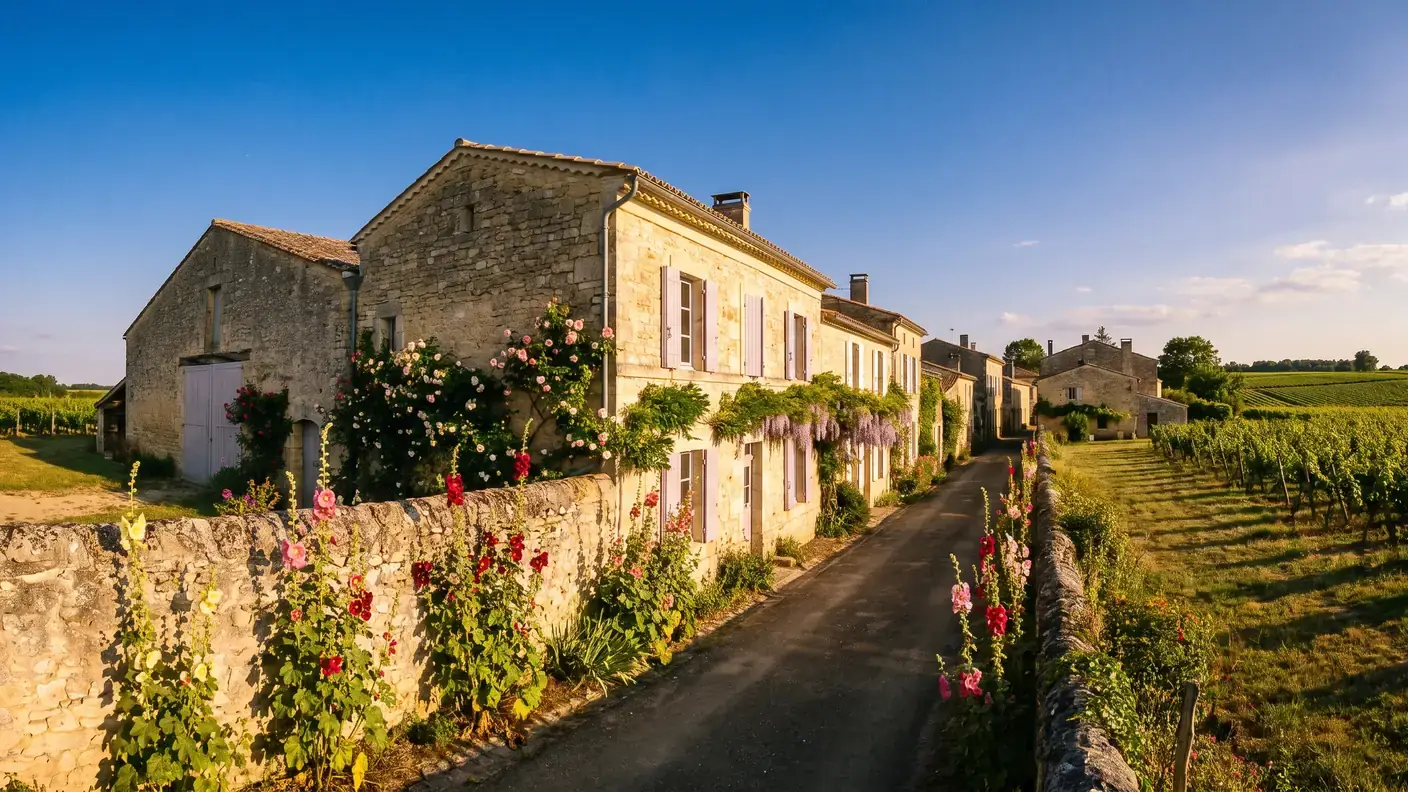
Despite its appearance as a peaceful wine-growing village, Gardegan-et-Tourtirac has a long history, intertwined with that of the great seigneuries of the Libournais region and one of the major turning points in French history. Here are the major milestones, as established by historical sources: from the Gallo-Roman occupation to the merger of the two parishes around 1800, not to mention its immediate proximity to the field where, in 1453, the final battle of the Hundred Years’ War and the end of three centuries of English presence in Guyenne.
From the Gallo-Romans to the Revolution
The area has been inhabited since ancient times: human bones from a Gallo-Roman context, along with pottery shards and a spindle whorl (a small spindle weight for spinning), were unearthed there in 1955, evidence of an ancient settlement on these fertile hillsides well-suited to viticulture. In the Middle Ages, the region, like the rest of Guyenne, came under English rule following the marriage of Eleanor of Aquitaine to Henry Plantagenet in 1152—an English presence that lasted three centuries and left a lasting mark on the region, its wine trade with England, and its fortified landscapes.
The two parishes of Gardegan and Tourtirac, with their churches and manors, endured through the centuries before being merged around 1800—during the Revolution and the Consulate—to form the present-day municipality. A history of villages—unassuming yet deeply rooted in the long history of Guyenne—whose vineyards still bear witness to it today.
On the Eve of the Battle of Castillon
Gardegan-et-Tourtirac is located just a few kilometers from one of the major sites in French history: the battlefield of Castillon. On July 17, 1453, the French king’s army routed the English troops there, including their commander, the famous John Talbot, Earl of Shrewsbury, who was killed there at the end of a long military career. This clash, considered the last major battle of the Hundred Years’ War, brought an end to three centuries of English presence in Guyenne and brought Bordeaux and its region back into the fold of the Kingdom of France.
The superiority of the French artillery, manned by the Bureau brothers, played a decisive role in this victory and heralded a new way of waging war. Every summer, a large-scale outdoor live performance, staged by hundreds of volunteers, reenacts this pivotal episode near Castillon-la-Bataille. Living on the outskirts of this site, as in Gardegan, means living just minutes away from a turning point in national history.
Where do the names Gardegan and Tourtirac come from?
The town’s compound name combines two ancient place names, Gardegan and Tourtirac, whose origins warrant some clarification—and help dispel a legend circulating online. Each tells a very different story: one evokes the surveillance and defense of a region that was long a borderland and a subject of dispute, while the other refers to an agricultural estate dating back to the Gallo-Roman era, like so many places in the Southwest whose names end in -ac. Two words, two layers of history, brought together in a single town.
Gardegan, the “guard”
“Gardegan” evokes the idea of guarding, watching, and surveillance—which fits perfectly with the presence in the town of the Château de La Pierrière, a former military outpost of the Château d’Aiguilhe tasked with monitoring the surrounding area and the thoroughfares. This root is found in many place names that referred to former watchposts or defensive positions, established on high ground or at the borders of fiefdoms. In a region long contested between the kings of France and England, on the edge of the Périgord and along the banks of the Dordogne Valley, these surveillance points were numerous and strategic. The name Gardegan thus preserves, discreetly embedded in its syllables, the memory of a military and frontier past, from a time when these hillsides—now so peaceful—were positions to be held, monitored, and, if necessary, defended against the enemy.
Tourtirac and the Gallo-Roman suffix
"Tourtirac," for its part, belongs to the large family of place names ending in -ac, which are so widespread throughout southwestern France. This suffix, derived from the Gallo-Roman -acum, originally referred to an estate—the property of a man whose name formed the beginning of the place name (in this case, likely a Latin personal name, though the exact form has not been definitively established by scholars). It is exactly the same naming mechanism that gave rise to Cognac, Jarnac, Marmande, and hundreds of other place names in the region.
However, we should dismiss a fanciful theory circulated by certain amateur websites, which claims that Tourtirac is derived from a name of Scandinavian, Viking origin: it has no serious basis and directly contradicts the Gallo-Roman evidence provided by the suffix -ac. The name simply recounts the establishment, nearly two thousand years ago, of a farmstead on these lands that are now home to vineyards—a rural continuity spanning more than twenty centuries, quietly encapsulated in a single word.
The Wider Neighborhood: Montaigne and Saint-Émilion
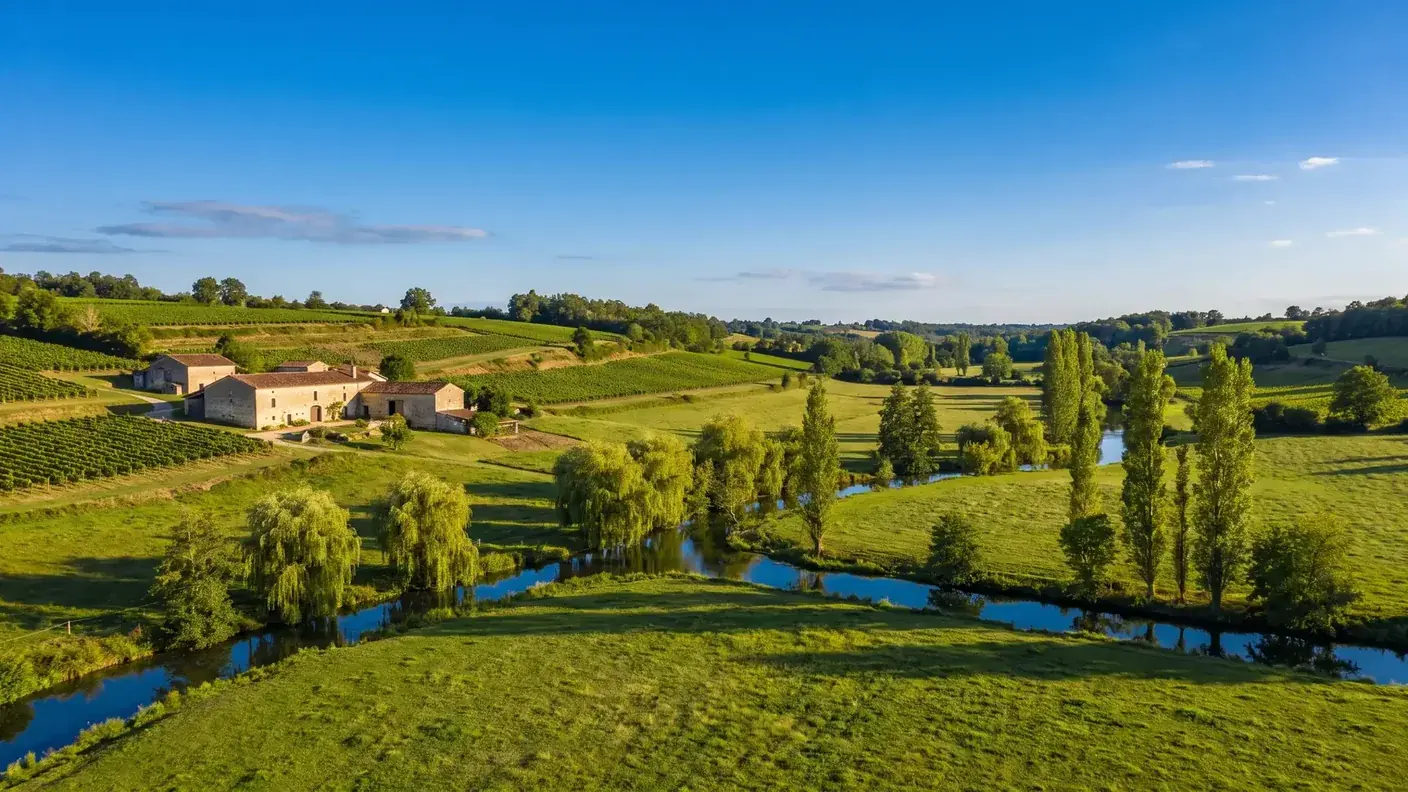
Gardegan-et-Tourtirac’s great fortune lies in its exceptional surroundings: just a few kilometers away are Michel de Montaigne’s home and the town of Saint-Émilion, two major cultural landmarks. The village is thus situated at the crossroads of wine and literature, between the world’s most famous vineyard and the home of one of the greatest thinkers of the French Renaissance—a rare distinction for a town with fewer than three hundred residents, and a compelling reason to make it a base for excursions.
Montaigne Castle, just nearby
To the east, on the other side of the Lidoire River, already in the Dordogne region, stands the Montaigne Castle, in the town of Saint-Michel-de-Montaigne, bordering Gardegan-et-Tourtirac. It was there that he lived, managed his estate, and wrote Michel de Montaigne (1533–1592), the author of the Essays and one of the most free-thinking minds of the Renaissance, the creator of an entire literary genre.
His famous library tower, where he had retreated amid his books to read, meditate, and write, miraculously escaped the fire that destroyed the rest of the castle in 1885: it is listed as a historic monument, and this “library”—with the Greek and Latin inscriptions he had painted on the ceiling beams—can still be visited today. Being the immediate neighbor of Montaigne’s house is a source of rare pride for such a modest village—and a wonderful excursion to combine with a visit to Gardegan and its vineyards.
Saint-Émilion, just a quarter of an hour away
To the west, just over ten kilometers away, lies the vast vineyard of Saint-Émilion, of which the Gardegan hillsides form a natural geological extension. The medieval town of Saint-Émilion, listed as a UNESCO World Heritage Site for its cultural wine-growing landscapes—a world first for a vineyard—is also ranked among the most beautiful villages in France.
Its extraordinary monolithic church, carved in one piece from limestone, its cloister, its steep cobblestone streets, its catacombs, and its grands crus classés make it an unmissable destination for any visit to the region. Gardegan-et-Tourtirac thus offers travelers the best of both worlds: the unspoiled tranquility of an authentic winegrowing village and the immediate proximity to the region’s most renowned wine and cultural sites. This is precisely why it makes for an ideal, peaceful base from which to explore the Libourne and Bergerac regions, while avoiding the crowds during peak hours.
What is there to see around Gardegan-et-Tourtirac?
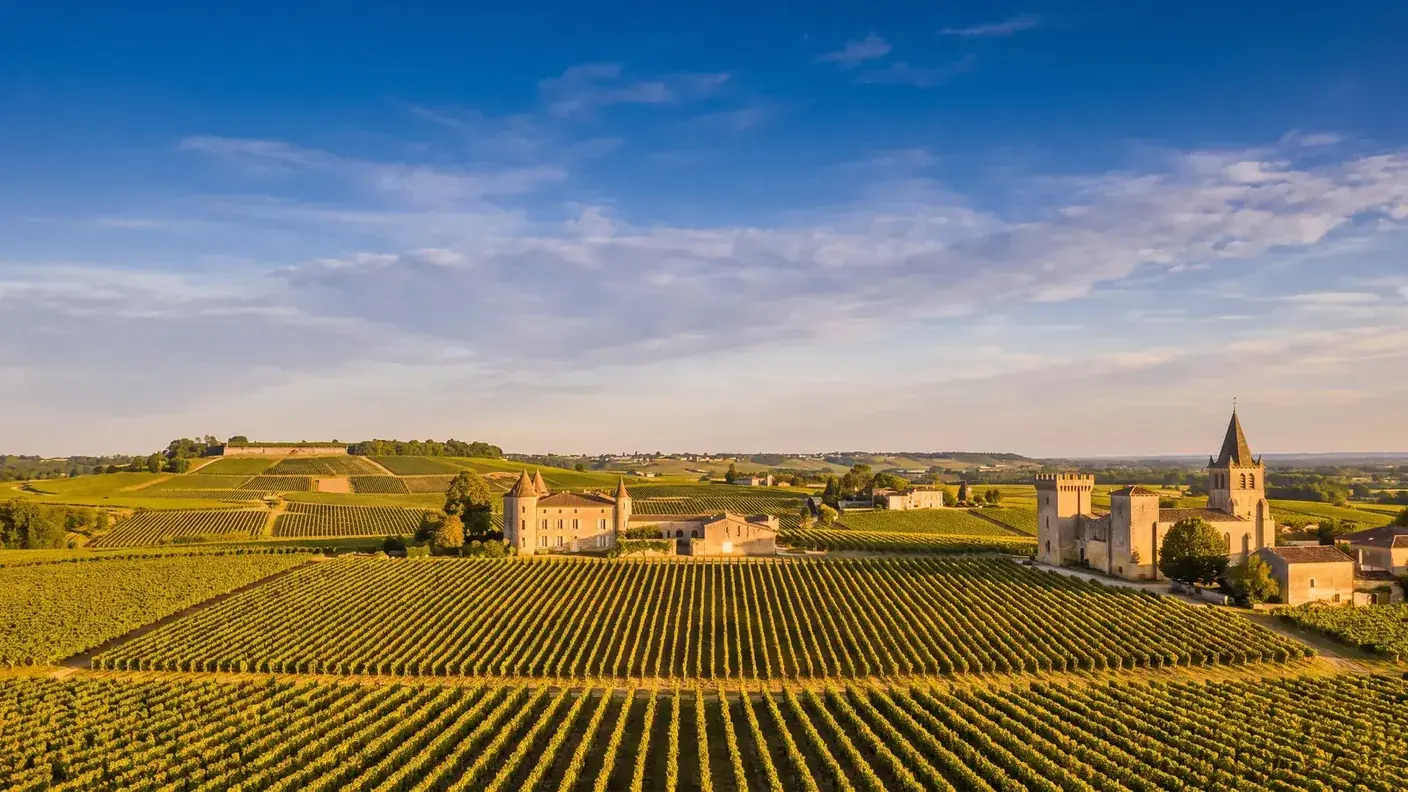
Gardegan-et-Tourtirac is an excellent starting point for exploring the Libournais wine region, the Dordogne Valley, and the neighboring Bergerac region. The distances are short, and you can easily move from a grand cru to a château, from a battlefield to a medieval town, following a tailor-made itinerary—a real advantage for anyone who wants to experience the best of the Gironde countryside without getting scattered or wasting time on the road between visits.
The Vineyards and the Dordogne Valley
All around lies one of the world’s most prestigious wine regions. In addition to Saint-Émilion and its surrounding villages (Montagne, Lussac, Puisseguin, Saint-Georges…), visitors can explore Castillon-la-Bataille and its 1453 battlefield, Libourne, the bustling wine-trading town founded in the 13th century as a bastide on the banks of the Dordogne, and the nearby vineyards of Pomerol, home to legendary and rare wines. History buffs will want to add the many Romanesque churches and medieval bastides that dot the region, a legacy of a prosperous and contested Middle Ages. A whole world of wine, rivers, and history unfolds before visitors within a radius of just a few dozen kilometers. With a private chauffeur, you can easily create a customized itinerary—a grand cru in the morning, a château at noon, a medieval town in the afternoon—according to your desires and at your own pace, without being constrained by schedules.
Toward Bergerac and the Périgord
Following the Dordogne upstream to the east, you quickly leave the Gironde behind and enter the Périgord and the Bergerac region, another great wine-growing area that remains all too little known to the general public. Bergerac, about thirty kilometers away, charms visitors with its old town of half-timbered houses, its lively riverfront, and the literary legacy of Cyrano, whose statue stands watch over a small cobblestone square.
Nearby lie the thriving vineyards of Monbazillac, famous for its golden sweet whites made from botrytized grapes, and Pécharmant, renowned for its full-bodied reds with aging potential. This proximity makes Gardegan-et-Tourtirac an ideal crossroads between two complementary wine regions—Bordeaux and Bergerac—and between two historic provinces, Guyenne and Périgord, separated here only by the modest Lidoire River. It’s more than enough to fill several days of gourmet and cultural excursions, at a leisurely pace.
| Around Gardegan-et-Tourtirac | Distance | Interest |
|---|---|---|
| Montaigne Castle | ~7 km | The Tower of the Montaigne Bookstore |
| Castillon-la-Bataille | ~9 km | The battlefield of 1453 |
| Saint-Émilion | ~13 km | UNESCO-designated medieval city, fine wines |
| Libourne | ~20 km | The Dordogne: A Wine-Trading Town |
| Bergerac | ~30 km | Cyrano, wine, the old town with its half-timbered houses |
When is the best time to visit Gardegan-et-Tourtirac?
Gardegan-et-Tourtirac is worth visiting year-round, but fall—the grape harvest season—and spring, when the vines come back to life, are undoubtedly the most beautiful times to visit. The spring It cloaks the hillsides in fresh, tender greenery and brings mild days, perfect for strolling through the vineyards, stepping inside the two Romanesque churches, and exploring the castles; it’s also a quieter season, before the summer crowds arrive in neighboring Saint-Émilion. Thesummer It bathes the vineyards in warm, abundant light, perfect for wine tastings on the terrace and long walks through the vine rows; it’s the season for the spectacular reenactment of the Battle of Castillon, right nearby, and for the many events and open houses organized at the wineries. From the hillsides, the view stretches far across the sea of vineyards, all the way to the Saint-Émilion plateau, which marks the western horizon.
Thefall is undoubtedly the most beautiful season for anyone who wants to capture the spirit of the place: the grape harvest brings the wineries and vineyard rows to life, the leaves take on shades of gold, rust, and purple, and the air is filled with the scents of grapes and fermenting must. It’s the perfect time to learn about winemaking and taste the new vintages of Castillon Côtes de Bordeaux, which are often offered directly at the estate by the winemakers.
Thewinter, which is quieter and more unpretentious, lets you explore the region’s heritage without the crowds, in the hushed atmosphere of a wine-growing village at rest, when the pruned vines trace their bare, graphic lines across the frost-covered hillsides. In any season, the mild Gironde climate and the beauty of the vineyard landscapes make Gardegan-et-Tourtirac a relaxing getaway for those seeking an authentic and off-the-beaten-path experience in Bordeaux, away from the beaten path and mass tourism circuits.
How to Get to Gardegan-et-Tourtirac from Bordeaux
Gardegan-et-Tourtirac is located about 60 km from Bordeaux, which is a little over an hour’s drive, either via the A89 highway toward Libourne and Périgueux and then along the vineyard roads, or through the Dordogne Valley. Please note right away: the village itself does not have a train station. The nearest train station is Castillon-la-Bataille, a few kilometers away, on the Bordeaux-Bergerac-Sarlat line; however, service in this rural area is limited, and once you arrive, there’s no way to travel from château to château. That’s why, for this type of destination scattered throughout the vineyards, a chauffeur-driven car is the most practical, flexible, and relaxing option, from departure to return.
Train or chauffeur?
To reach Gardegan—and especially to explore the surrounding vineyards—a private chauffeur (chauffeured transfer) offers true freedom: a direct, door-to-door trip from Bordeaux, with no transfers or waiting, and the option to make stops along the way as you please. This is particularly valuable for a wine tour—Saint-Émilion, Castillon, Pomerol, Château de Montaigne—where you’ll want to enjoy tastings without ever having to worry about driving or parking in villages that can sometimes be quite cramped. We offer this route at a fixed price quoted in advance: expect to pay around €143 for the one-way trip, in a Mercedes sedan or a van seating up to 8 passengers, with a professional driver. The price, set at the time of booking, remains fixed: it does not depend on traffic, potential traffic jams on the way out of Bordeaux, or the number of stops requested along the way—unlike a traditional taxi meter.
This is the perfect option for a day of wine tourism with friends, a family heritage tour, an event (a wedding at a château, a birthday, or a seminar), or a simple transfer to or from Bordeaux-Mérignac Airport. You can travel alone, as a couple, or in a small group of up to 8 people, with luggage, and request stops in Saint-Émilion, at Château de Montaigne, or at a vineyard in Castillon along the way. In practice, booking is quick and easy: simply provide your pickup address in Bordeaux and your destination in Gardegan-et-Tourtirac, along with the date, desired time, and number of passengers, and you’ll receive a fixed-price quote in writing, which you can confirm with a single click. On the day of the trip, the driver picks up the passengers at the agreed-upon address and takes them directly to the village, with no detours or unpleasant surprises—a real advantage for enjoying a wine tour in the Gironde with complete peace of mind.
| Route | Distance | Duration | Landmark |
|---|---|---|---|
| Bordeaux → Gardegan-et-Tourtirac | ~60 km | a little over 1 hour | Starting at ~114 € for an executive car service |
| Gardegan → Saint-Émilion | ~13 km | ~18 min | UNESCO World Heritage Site, fine wines |
| Gardegan → Montaigne Castle | ~7 km | ~10 min | the Montaigne Tower |
| Gardegan → Libourne | ~20 km | ~25 min | Wine Country, the Dordogne |
Whether you come for its two Romanesque churches, the châteaux of Pitray and La Pierrière, the Castillon Côtes de Bordeaux wine, or the prestigious proximity of Montaigne and Saint-Émilion, Gardegan-et-Tourtirac is a treat for lovers of authentic Bordeaux, where vineyards, stone buildings, and history converge—a quiet village that, to those who take the time to stop and explore, reveals a wealth of heritage and community spirit that many more popular destinations envy.
Whether it’s for a wine-tasting tour, a heritage tour, or a family event, booking a chauffeur guarantees a comfortable and punctual ride—book a driver from Bordeaux to Gardegan-et-Tourtirac or explore all our destinations.
Frequently Asked Questions
Where is Gardegan-et-Tourtirac located?
Gardegan-et-Tourtirac is a small wine-growing village in the Gironde (33) department, in the Nouvelle-Aquitaine region, in the Libourne area, about 20 kilometers east of Libourne and just over 10 kilometers from Saint-Émilion. Part of the Libourne arrondissement and the Coteaux de Dordogne canton, it has a population of about 274. It is situated on the hillsides of the Castillon Côtes de Bordeaux appellation, very close to the site of the Battle of Castillon and the Château de Montaigne, a little over an hour’s drive from Bordeaux (about 60 km).
What is the distance between Bordeaux and Gardegan-et-Tourtirac?
About 60 km by road—a little over an hour’s drive—via the A89 highway toward Libourne, then along the vineyard roads. If you hire a private chauffeur from Bordeaux, the fare is fixed and provided in advance, starting at around €143 one way (sedan or van, door-to-door price). The village does not have a train station: the nearest one is in Castillon-la-Bataille, a few kilometers away, but it does not allow you to travel between the vineyards from there.
Why does Gardegan-et-Tourtirac have two churches?
This is because the town was formed around 1800 through the merger of two neighboring former parishes—Gardegan and Tourtirac—each of which had its own church. It therefore boasts two 12th-century Romanesque religious buildings, both of which have been listed as historic monuments since 1925: the Church of Saint-Martin, in the village of Gardegan, notable for its portal and carved modillions, and the fortified Church of Saint-Pierre, in the hamlet of Tourtirac. This represents a rare wealth of cultural heritage for a village with fewer than 300 residents.
Is Pitray Castle medieval?
No, not in its current form. Although it was originally a feudal manor (15th–16th centuries), the Château de Pitray we see today is a 19th-century reconstruction, built around 1870 by the Bordeaux architect Alphonse Blanquière for General de Simard de Pitray, in the Neo-Renaissance style. It has been listed as a historic monument since 2010, along with its grounds. It is the centerpiece of a vineyard estate spanning approximately 130 hectares that produces Castillon Côtes de Bordeaux. The town is home to a second château, La Pierrière, which is authentically medieval (late 13th century).
What kind of wine is produced in Gardegan-et-Tourtirac?
Bordeaux wine, from the Castillon Côtes de Bordeaux appellation—not cognac, contrary to what the “Saintonge Romanesque” style of its churches might suggest (it’s a matter of architecture, not region). Castillon Côtes de Bordeaux produces exclusively red wines on the clay-limestone slopes extending from the Saint-Émilion plateau, with Merlot as the dominant grape variety. Château de Pitray, located in the town, is one of the region’s leading estates. Regional Bordeaux and Bordeaux Supérieur wines are also produced there.
What is the Castillon Côtes de Bordeaux appellation?
This is the wine appellation of Gardegan-et-Tourtirac and its surrounding area, near Castillon-la-Bataille, on the right bank of the Dordogne. It produces only red wines on the geological extension of the Saint-Émilion plateau, yielding wines that often offer excellent value for the price. Its name has changed over time: “Bordeaux-Côtes de Castillon” (1955), then “Côtes de Castillon” (1989), and finally “Castillon Côtes de Bordeaux” since 2009. Consequently, the old name, “Côtes de Castillon,” is still frequently seen. It borders Saint-Émilion but is not part of it.
What is there to see in Gardegan-et-Tourtirac?
Its two listed 12th-century Romanesque churches (Saint-Martin in Gardegan, the fortified Saint-Pierre in Tourtirac); its two listed castles (Pitray, a Neo-Renaissance wine-growing estate; La Pierrière, medieval); and the vineyards of the Castillon Côtes de Bordeaux appellation. In the immediate vicinity: the Château de Montaigne (in the neighboring town of Montaigne, in the Dordogne), the site of the Battle of Castillon (1453), Saint-Émilion and its UNESCO-listed vineyards, and Libourne. A true treasure trove of heritage and fine wines.
Is the Château de Montaigne near Gardegan?
Yes, very close by: the Château de Montaigne, where Michel de Montaigne lived and wrote, is located in the neighboring town of Saint-Michel-de-Montaigne, in the Dordogne, about 7 km from Gardegan-et-Tourtirac. Its famous library tower, where the philosopher would retreat to write his Essays, survived the fire of 1885 and is designated a historic monument; it is open to visitors, who can see the aphorisms painted on the ceiling joists. This is a must-see excursion that pairs perfectly with a visit to Gardegan.
Is Gardegan-et-Tourtirac connected to the Battle of Castillon?
The village is located a few kilometers from the site of the Battle of Castillon, fought on July 17, 1453. This battle, considered the last major battle of the Hundred Years’ War, saw the French army crush the English and their commander John Talbot, who was killed there; it brought an end to three centuries of English presence in Guyenne and brought Bordeaux back into the Kingdom of France. Every summer, a large-scale outdoor live performance reenacts this pivotal event near Castillon-la-Bataille.
How many people live in Gardegan-et-Tourtirac?
According to the 2023 census, the village has a population of approximately 274, making it a very small village with a highly dispersed settlement pattern among vineyards and hamlets. The population has been declining slightly after peaking at just over 300 residents in the early 2010s, a trend typical of these rural wine-growing communities. The residents are known as Gardeganais. The municipality was formed around 1800 through the merger of the two former parishes of Gardegan and Tourtirac.
Is there a train station in Gardegan-et-Tourtirac?
No, the village does not have a train station. The nearest station is Castillon-la-Bataille, a few kilometers away, on the Bordeaux-Bergerac-Sarlat line, but service is limited in this rural area and does not allow for travel between the vineyards. To reach Gardegan and, more importantly, explore the surrounding vineyards (Saint-Émilion, Castillon, Montaigne, Pomerol), a chauffeur from Bordeaux remains by far the most flexible option, especially for a wine tour where you’ll want to be able to taste wines at your leisure.
What is there to see around Gardegan-et-Tourtirac?
Montaigne Castle, 7 km away (in the Dordogne); the site of the Battle of Castillon (about 9 km); Saint-Émilion, a medieval town listed as a UNESCO World Heritage Site, and its vineyards (about 13 km); Libourne, the wine town on the Dordogne (about 20 km); the Pomerol vineyards; and, further east, Bergerac and its Monbazillac and Pécharmant wines (about 30 km). We are in the heart of one of the world’s most prestigious wine regions, at the crossroads of the Bordeaux and Périgord regions.
Can I book a private chauffeur from Bordeaux to Gardegan-et-Tourtirac?
Yes. We offer the Bordeaux → Gardegan-et-Tourtirac route (about 60 km, a little over an hour via the A89) at a fixed price, starting at around €143 one way, in a Mercedes sedan or a van seating up to 8 passengers, with a professional driver. The trip is direct, door-to-door, with the option to make stops as desired—ideal for a wine tour (Saint-Émilion, Castillon, Montaigne) where you’ll want to enjoy tastings without worrying about driving. The fixed quote is provided and confirmed in writing before departure.
Further Reading
- The nearby Cité du Vin: see the Saint-Émilion Guide (UNESCO, monolithic church, grand cru wines), 13 km from Gardegan
- A satellite town of Saint-Émilion: see the Montagne-Saint-Émilion Guide (terroir, châteaux, history of the Libournais region)
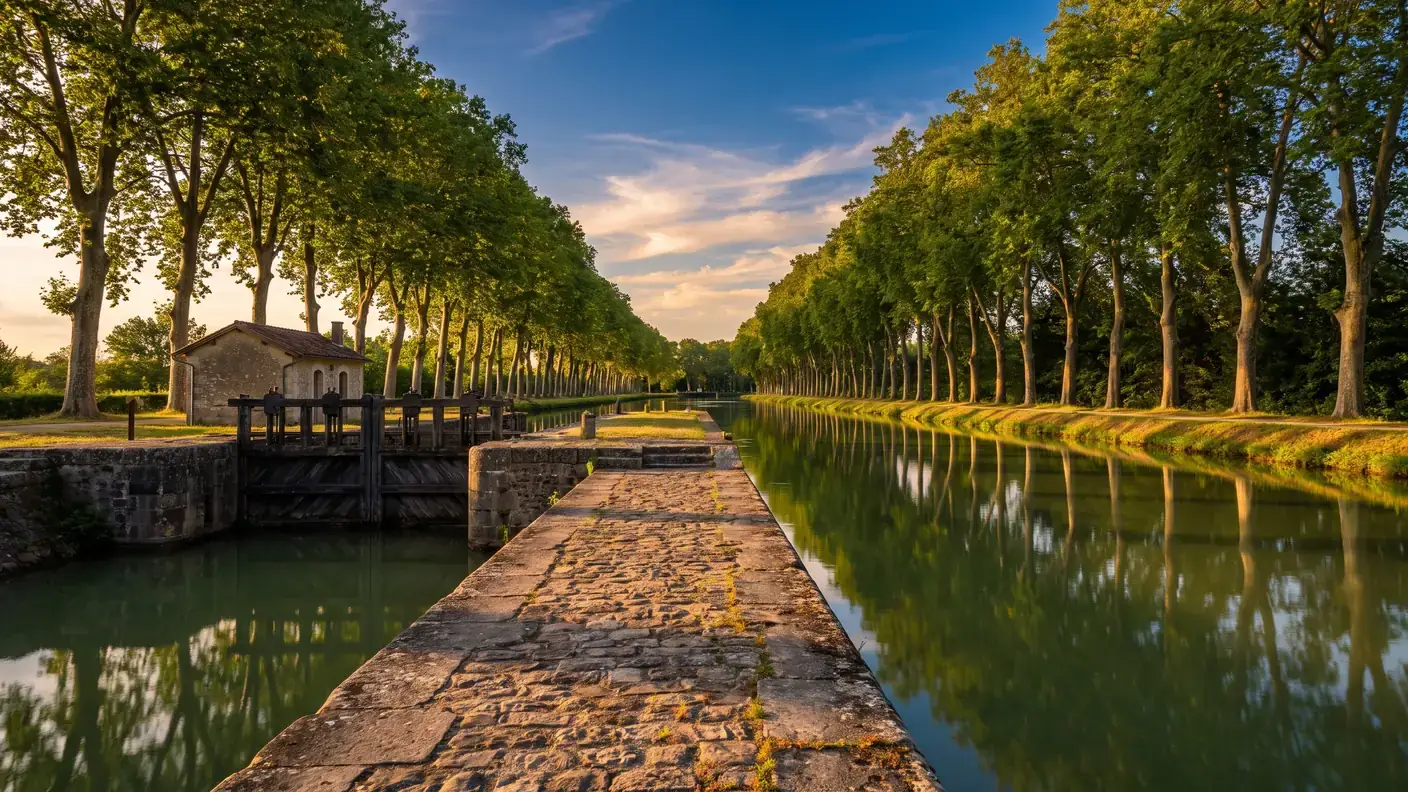
- A village on the Garonne: see the Castets-en-Dorthe Guide (the Garonne Canal, its locks, and the Château du Hamel)
- Plan your trip: Book a chauffeur from Bordeaux to Gardegan-et-Tourtirac or explore all our destinations
Sources and References
- Wikipedia — Gardegan-et-Tourtirac — geography, demographics, heritage, history
- POP/Mérimée Database — Saint-Martin Church — Listed as a Historic Monument (1925), 12th-century Saintonge Romanesque style
- POP/Mérimée Database — Saint-Pierre Church in Tourtirac — Listed as a Historic Monument in 1925
- POP/Mérimée Database — Château de Pitray — Listed as a Historic Monument (2010), rebuilt c. 1870
- POP/Mérimée Database — Château de La Pierrière — Listed as a Historic Monument in 2015
- Wikipedia — Castillon Côtes de Bordeaux — wine appellation, history of the name, region
- INSEE — Municipality of Gardegan-et-Tourtirac (33181) — 2023 population (~274 residents), area
Article updated in July 2026.
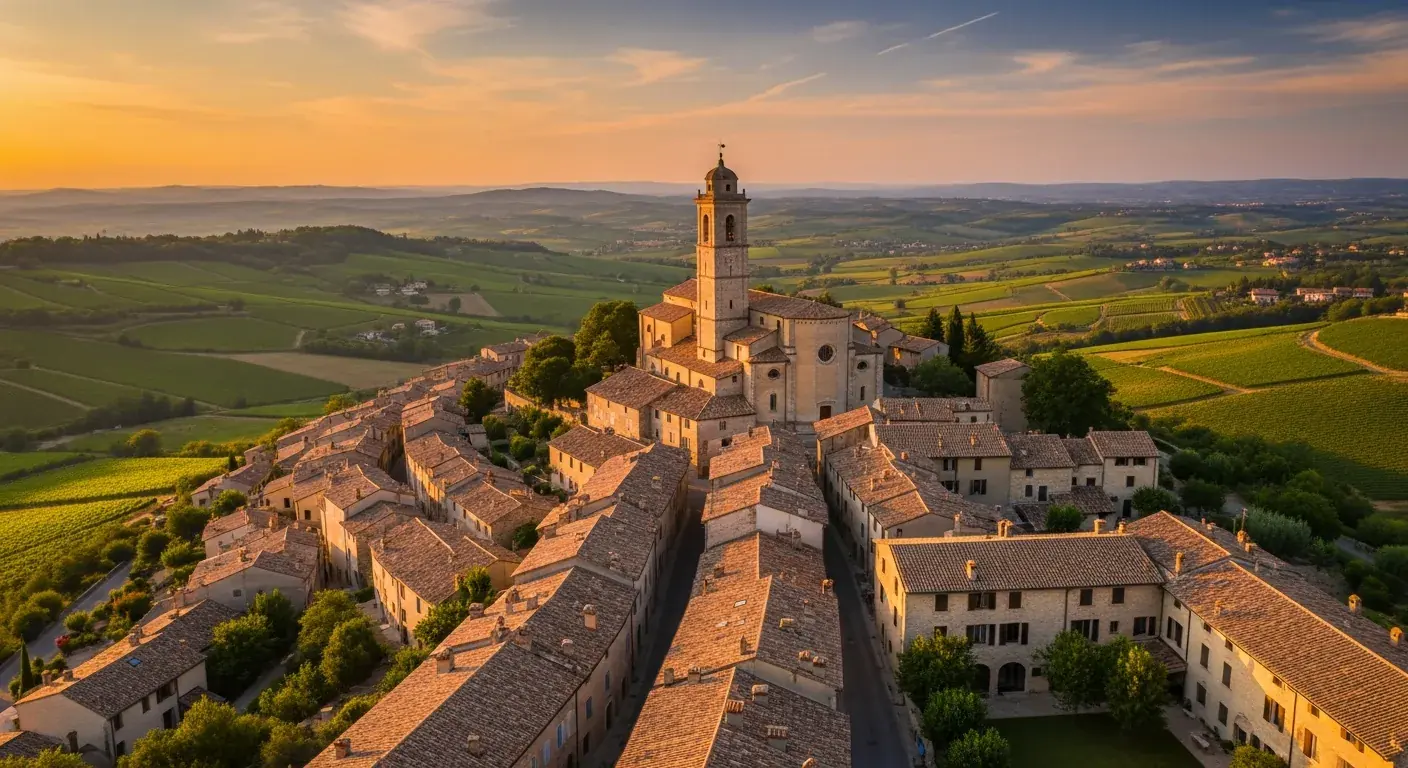
On the way to the Castillon vineyard
Direct trip from Bordeaux (~1 hour) to Gardegan-et-Tourtirac and the vineyards, with stops along the way at your discretion—Saint-Émilion, Château de Montaigne, and an estate in Castillon. Written fixed-price quote, with no unexpected meter charges.