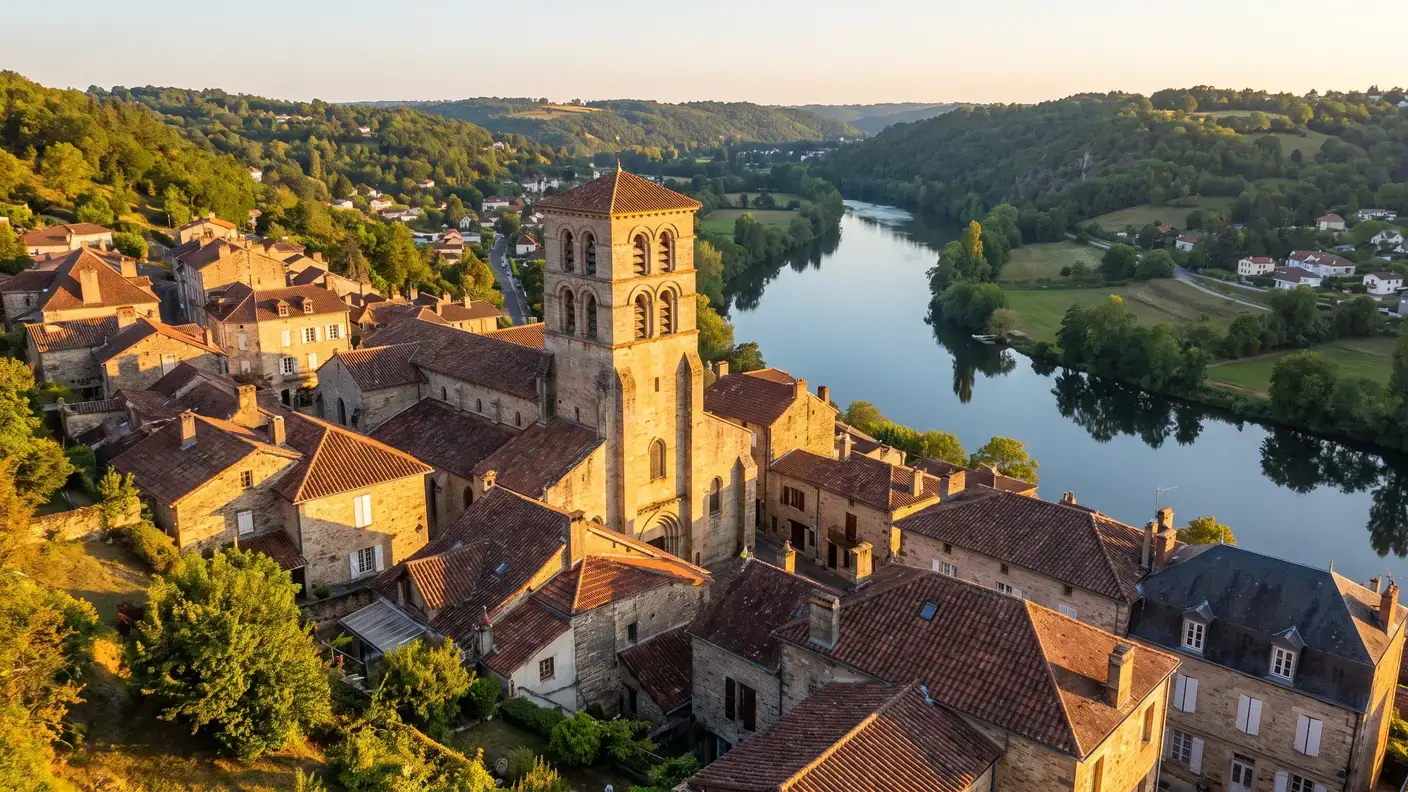
Bordeaux to Brive-la-Gaillarde: markets and rugby heritage
The most populous city in Corrèze: the market made famous by Brassens, the Saint-Martin Collegiate Church, the Renaissance Labenche, the legacy of Edmond Michelet, the Book Fair, and CA Brive, the 1997 European champion—and, all around, Collonges-la-Rouge, Turenne, and Aubazine. Everything you need to know before you come—about 2.5 hours from Bordeaux via the A89.
In a nutshell
- Brive-la-Gaillarde is the subprefecture and the the most populous city in Corrèze: 47,095 residents (2023, +0.38% since 2017), far ahead of Tulle, the prefecture. The INSEE confirms a population of 47,095 in 2023 in its July 9, 2026, publication.
- Its name comes from the Gaulish word *briva*, meaning “bridge”—the Roman road from Lyon to Bordeaux crossed the Corrèze River here—and from *galia*, meaning “strength”: in Occitan, it is called *Briva la Galharda*.
- In 1341, the four consuls lay the foundation for a wall that fivefold The walled area of the city—the “ Gaillarde”—would hold out against the English during the Hundred Years' War.
- The railroad (the station opened on September 30, 1860) turned Brive into a six-pronged railroad hub and doubled its population in twenty years.
- It is the city ofEdmond Michelet, resilient from the very June 17, 1940, who was deported to Dachau — his house has become a national museum of the Resistance.
- Three sites epitomize the city: the Saint-Martin Collegiate Church (designated a historic monument in 1862), the Labenche Museum (a Renaissance mansion dating from 1540), and the Edmond-Michelet Museum.
- Every first weekend in November, the Book Fair—held in the Georges-Brassens Market Hall, the same venue as the “Hécatombe” market— turns Brive into a literary capital.
- CA Brive, the 1997 European rugby champion, is thrilling the crowd at Amédée-Domenech Stadium—the club has been competing in Pro D2 in recent seasons.
- Less than 30 minutes away: Collonges-la-Rouge and Turenne, both designated as "Most Beautiful Villages of France," and Aubazine Abbey, where Coco Chanel grew up.
- It's 212 km and about 2 hours and 30 minutes from Bordeaux via the A89.
Before You Go: What Brive Is Really Like
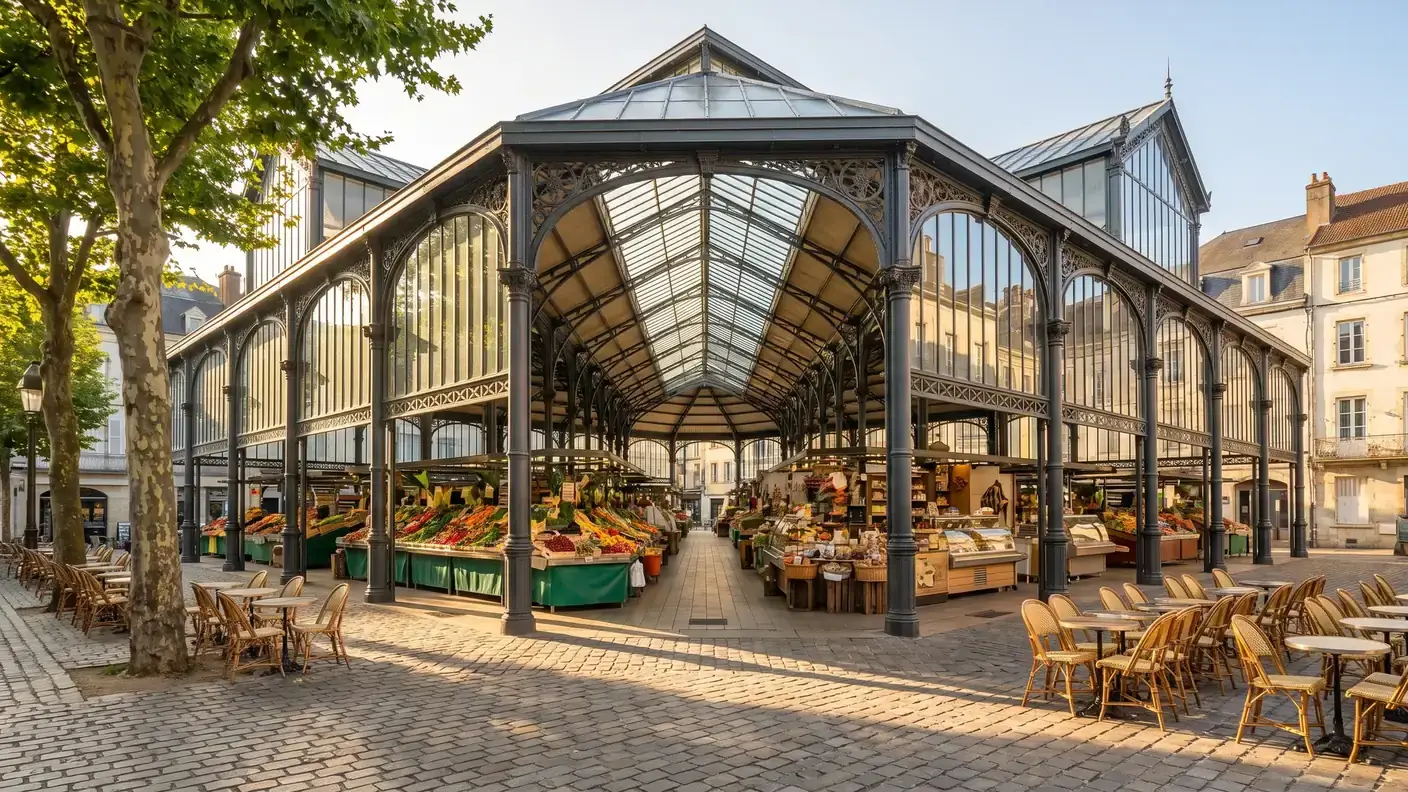
Saturday morning, Place de la Guierle. Under the large market hall, the stalls are overflowing with porcini mushrooms, walnuts, milk-fed veal, and foie gras. An accordionist plays a few bars—inevitably: the market hall is named Georges-Brassens, in homage to the man who made the Brive-la-Gaillarde market the setting for his famous “Hécatombe.” The song’s “maréchaussée” is no longer there ; nor are the feisty old ladies. What remains is the market, the accent, and a city that has carried “gaillardise” on its shoulder for seven centuries.
Brive is an administrative paradox: it is a subprefecture but the most populous city in Corrèze (47,095 residents), three times the size of Tulle, the prefecture. The explanation can be summed up in one word: rail. Since 1860, everything has passed through Brive— trains, fruits and vegetables, and now highways.
It’s nicknamed the “Gateway to the South”: this is where the Limousin ends and the Quercy and Périgord begin. Sarlat, Rocamadour, Collonges-la-Rouge, the Pompadour region—everything is less than an hour away. It’s both a destination in its own right (market, collegiate church, museums, rugby, Book Fair) and the best base camp for exploring the greater inland Southwest region.
This guide covers everything in order—history, heritage, dining, rugby, the surrounding area—as well as practical information, including how to get to Brive from Bordeaux, by car or with a private driver.
One figure illustrates the stakes: Brive’s catchment area encompasses some 80 municipalities—that’s the entire southern part of Corrèze, from the Pompadour region to the edge of the Lot, where people “head down to Brive” for the shopping, high school, the hospital, or rugby. To understand Brive is to understand half of Corrèze.
Brive at a Glance: Geography and Demographics
Brive is located in the southwestern part of the Corrèze department, in a fertile basin crossed by the Corrèze River and surrounded by limestone hills — a gentle landscape that explains why the railroad and later the highways were routed through the area.
| Data | Value |
|---|---|
| Status | Subprefecture of Corrèze (19) |
| Region | New Aquitaine |
| Population | 47,095 residents (2023) — the residents of Brive |
| Rank | The most populous city in Corrèze (ahead of Tulle, the prefecture) |
| River | Corrèze |
| Nickname | “La Gaillarde” — in Occitan, Briva la Galharda |
| Highways | A20 (Paris–Toulouse) × A89 (Bordeaux–Lyon) |
| Distance from Tulle | ≈ 30 km |
| Distance from Bordeaux | 212 km (~2 hours 30 minutes via the A89) |
The city’s demographic trend tells its story: approximately 9,200 residents before the railroad arrived, more than 18,000 twenty years after its arrival, a peak in the 1970s, and then remarkable stability—Brive is today one of the few medium-sized cities in the Massif Central to be gaining residents (+0.38% between 2017 and 2023, while the Corrèze department was losing them).
With a catchment area covering approximately 80 municipalities, the Brive metropolitan area remains the department’s main economic and demographic hub— towns such as Juillac, Objat, and Turenne fall within its sphere of influence.
Where does the name come from? The Gallic bridge that became a fortress
Briva, the bridge over the Lyon-Bordeaux railway line
"Brive" comes from the Gaulish language briva, “the bridge”: the Roman road connecting Lyon to Bordeaux crossed the Corrèze here (the Curretia (ancient). The name first appears in the 6th century in its Latinized form Brivae. A strategic ford, a bridge, a city: it’s a classic formula—and a lasting one.
5th century: Martin the Spaniard and the first basilica
Christian history begins in 5th century around the tomb of Martin the Spaniard, evangelist who was martyred in Brive. The bishop of Limoges Rorice, who was then sending missionaries throughout his territory, had a basilica built over his tomb: the core of what would become the collegiate church of Saint-Martin. A remarkable fact: the excavations at 1986-1988 surprisingly confirmed the account that had been left by Gregory of Tours.
Saint Anthony of Padua, guest of Brive
Franciscan tradition links Saint Anthony of Padua to Brive, where he is said to have stayed in the 1220s: the caves of Saint Anthony, on the outskirts of the city, where he liked to retreat, remain today a sanctuary and a vibrant pilgrimage site.
1341: The wall known as “La Gaillarde”
In 1341, in order to comply with a royal order, the four consuls The people of Brive are undertaking the construction of a large enclosure that five times the size of the fortified area of the city. The rampart is falling at just the right moment: during the Hundred Years' War, Brive withstood the English assaults while so many other towns in the Southwest fell. “Gaillarde” — from Galia, "strength" in Gaulish —: the nickname is attested as early as the 14th century, and the residents are still called the Brivistes (or, affectionately, the Gaillards).
1860: When the Railroad Shaped Modern Brive
A six-pointed railroad star
The fact that Brive surpassed Tulle is largely due to a 19th-century railway decision. The station was opened on September 30, 1860, by the Paris-Orléans Railway Company, on the line coming from Périgueux—the first train, with officials on board, had actually pulled into the station as early as August 31, even though construction was still incomplete. The site in Brive, more favorable topographically than Tulle, became the center of a six-pointed star network: toward Paris (via Limoges or Vierzon), Toulouse (via Capdenac), Bordeaux (via Périgueux), Lyon (via Tulle), Limoges (via Uzerche, completed around 1893), and Nexon.
The population doubles in twenty years
Before the railroad, Brive's population had plateaued at around 9,200 residents; twenty years later, it has more than 18,000. Wide, straight thoroughfares have been cut through the medieval maze, and the basin becomes a export-oriented vegetable and fruit production hub — more than 1 ,000 metric tons of vegetables shipped each year to Paris and Bordeaux, resulting in canneries, confectioneries, distilleries, and banks that still shape the city center.
This railway history explains everything else: its economic importance, the modern highway interchange (A20 × A89), and even its nickname, “Gateway to the South.”
This legacy lives on: the Brive train station remains a hub on the Paris–Toulouse line (with Intercités trains running both day and night, depending on the season), with branches to Limoges, Tulle, Périgueux, and Quercy. Few cities with a population of 47,000 can boast such rail service—thanks to 1860.
Brive and the Resistance: Edmond Michelet and the "Gaillard" Spirit
June 17, 1940: Leaflets Before the Call
If there is one name that is inextricably linked to Brive in the 20th century, it is that ofEdmond Michelet (1899–1970). As early as June 17, 1940 — the day before General de Gaulle’s appeal —, this Catholic resident of Brive slipped leaflets into the city’s mailboxes calling for resistance, quoting Charles Péguy: “Those who do not surrender are right against those who do.” This early commitment ranks him among the very first members of the French Resistance. On November 11, 1942, Brive took to the streets in response to the Resistance’s call—the city would later receive the War Cross 1939–1945.
Dachau and the Return
Arrested by the Gestapo in February 1943, Michelet was deported to Dachau, September 15, 1943. There, he chaired the French Patriotic Committee and helped repatriate the deportees—a fellow prisoner would say of him that he embodied “the image we might have of a saint.” Released on April 29, 1945, he went on to pursue a career in national politics —serving as a minister on several occasions under the Fourth and Fifth Republics—without ever losing touch with his hometown.
The House-Museum on Champanatier Street
After his death in 1970, his home at 4 Rue Champanatier became the Edmond-Michelet Study Center and Museum: nine exhibition rooms on the Resistance and the Deportation, a collection of more than 400 propaganda posters, and the of a man who experienced the concentration camp system from the inside. Granted the status of a national study center in 1976 and managed by the city since 2004, admission is free—and it is visited much like reading a personal account.
Saint-Martin Collegiate Church: Fifteen Centuries at the Heart of the City
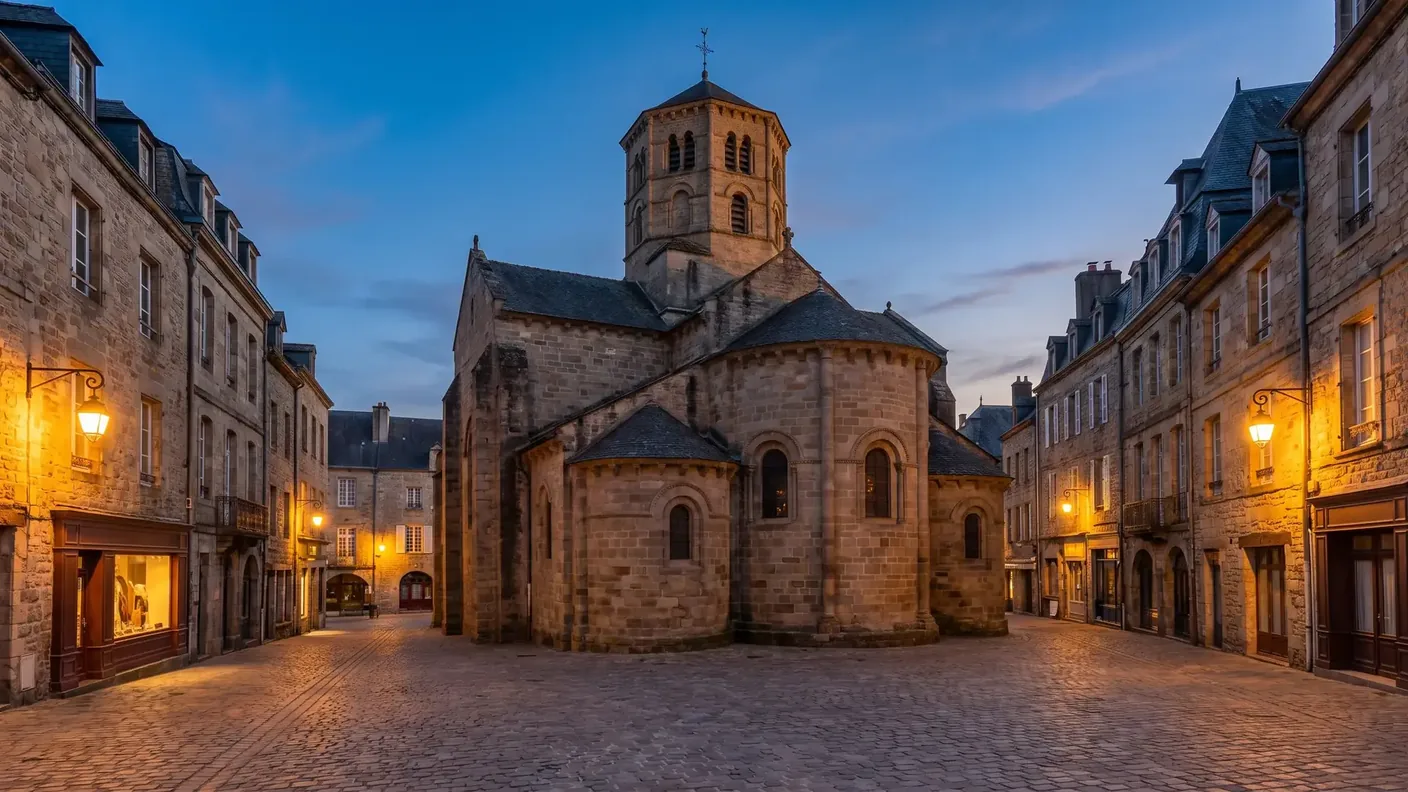
Located right in the heart of the old town—the main streets still radiate out from its forecourt—the Saint-Martin Collegiate Church is the founding monument of Brive and has been listed as a Historic Monument since 1862.
From the 5th-century basilica to the 13th-century nave
The first basilica built over the tomb of Martin the Spaniard at the end of the 5th century; rebuilt after a fire by Bishop Ferréol in the 6th century; establishment of a college of canons following the Rule of St. Augustine in the 11th century; and the current nave, rebuilt in the 13th century. The archaeological crypt, opened following the excavations of 1986–1988, reveals early Christian remains—and proves Gregory of Tours right.
What to Watch
- The 13th-century capitals, carved with hooks, balls, palmettes, and deer;
- The apse and transept, which date back to the Romanesque Canons' Church;
- The baptistery and the archaeological crypt beneath the choir;
- The bell tower Limousin Neo-Romanesque architecture that defines the city's skyline;
- On the keystone, the coat of arms of Brive—the town and its church are one and the same.
The Labenche Museum: A Renaissance Hotel Showcasing 100,000 Years of History
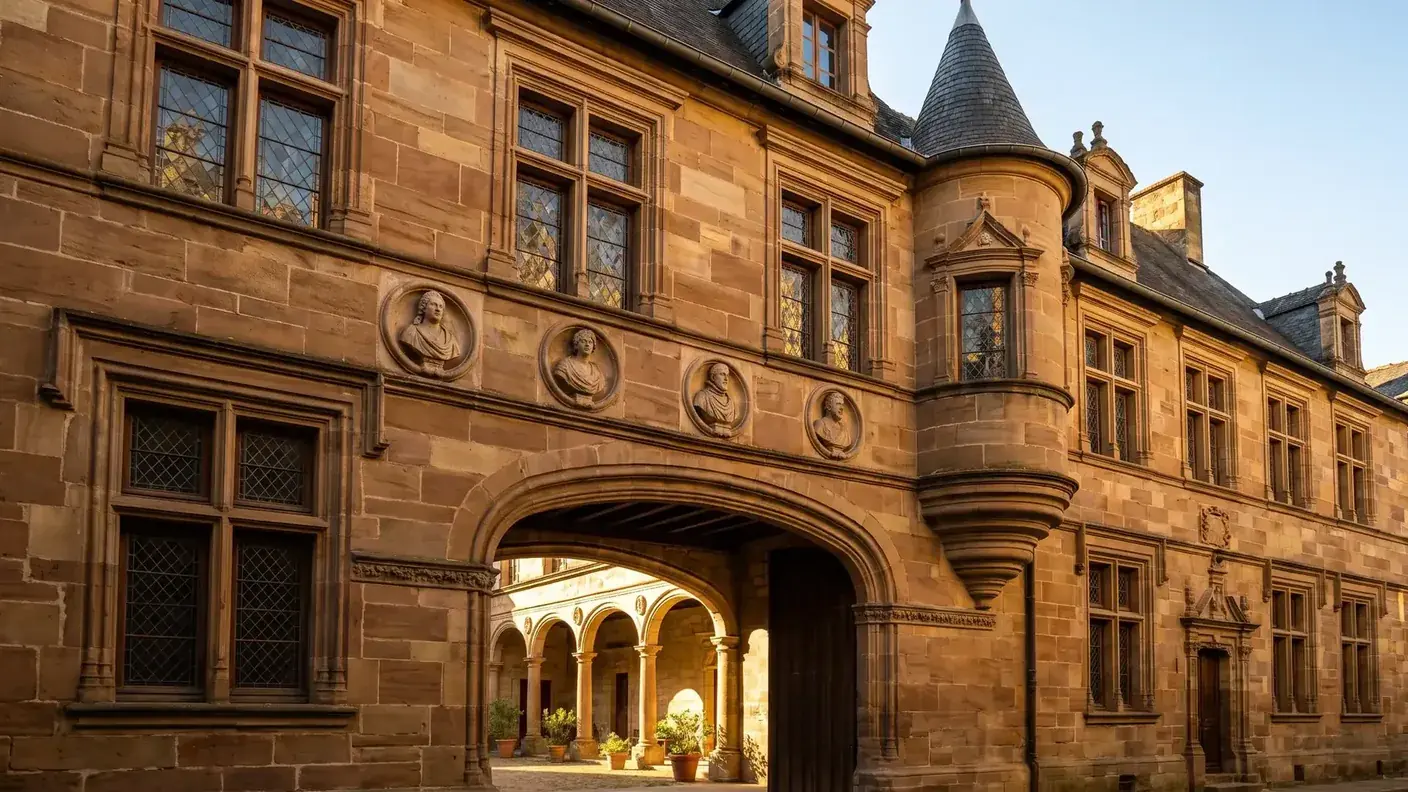
Just a stone's throw from the collegiate church, the Hôtel Labenche—the most beautiful civilian building in Brive, built around 1540 for Jean II de Calvimont, Lord of La Benche—houses the city’s Museum of Art and History, designated a "Musée de France" and founded in 1883 by the local scholarly societies.
The collections are striking in their scope: approximately 60,000 objects, several thousand of which are on display in seventeen galleries, covering 100,000 years of history in the Brive basin—from regional prehistory to ethnography.
- The series of English tapestries from Mortlake (17th century), a collection that is extremely rare in France;
- A piano that once belonged to Claude Debussy;
- Approximately 10,000 pieces natural sciences, with a focus on entomology;
- Archaeology, fine arts, numismatics—and an active policy of online digitization.
The Collegiate Church, Labenche, Michelet: three layers—the Christian Middle Ages, the merchant Renaissance, and the turbulent 20th century. All three can be explored on foot in the historic center, which is entirely pedestrianized in some areas.
The Book Fair: The Literary Capital of the Provinces
The 44th Brive Book Fair will be held from November 6 to 8, 2026, at the Georges-Brassens Hall and the Espace des Trois Provinces. Admission is free. These dates are published on the Fair’s official website, accessed on July 24, 2026.
1973 and then 1982: two births
The Book Fair has two founding dates. 1973: A group of friends led by the publisher and writer Jacques Peuchmaurd sold books under the covered market; the event was inaugurated by Jean Charbonnel, mayor and minister. After a six-year hiatus, the 1982 revival was a major undertaking: 30,000 visitors right from the start, with Jean d’Ormesson serving as the first president. Since then, the event has continued to grow.
The Brive School and the Regional Novel
The Fair is inextricably linked to "The Brive School", this trend in regional fiction that emerged in the late 1970s around Claude Michelet — Edmond’s son —, Gilbert Bordes or Jacques Peuchmaurd: stories set in the French countryside, popular bestsellers of the 1980s and 1990s.
The first weekend in November, at the Brassens Market Hall
Today, the Fair is held every year on the first weekend of November at the Georges-Brassens Market Hall and its adjoining tents: 150 to 170 publishing houses, 300 to 400 authors, prestigious honorary chairs (d’Ormesson, Jérôme Garcin, Philippe Claudel…) and the winners of the Autumn Prizes, who almost always make the trip. It is, by general consensus, the most important general-interest literary fair outside Paris —and a weekend for which you need to book your lodging well in advance.
CA Brive: 1997 European Champion—The Founding Feat
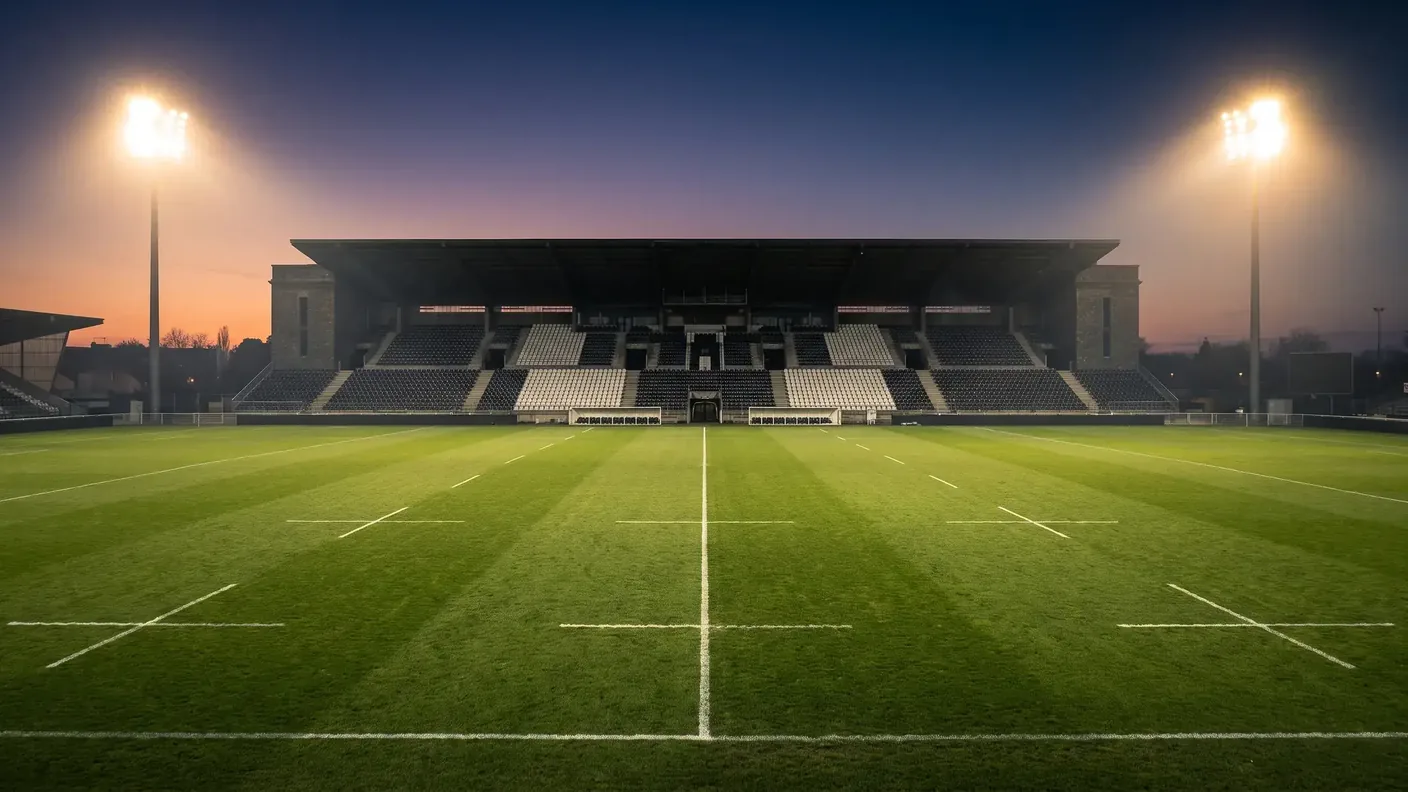
CA Brive, winner of the 1997 European Cup, will compete in Pro D2 for the 2026–2027 season. The club confirmed this in its official season ticket campaign, accessed on July 24, 2026. Matches are played at the Amédée-Domenech Stadium.
A club founded in 1910, a legendary stadium
The Brive Corrèze Limousin Athletic Club, whose rugby division was founded in 1910, has played since 1921 at its home stadium—renamed in 2004 the Amédée-Domenech Stadium, after the international prop from the 1950s and 1960s nicknamed “the Duke.” Rebuilt in the late 1950s and renovated several times since, it has even hosted World Cup matches (Romania vs. Fiji, October 1991).
Cardiff, January 25, 1997: The Summit
CAB has never been French champion— four championship finals, but never the Bouclier— but it has achieved something even better: the 1997 European Cup, won at Arms Park in Cardiff against the Leicester Tigers, 28–9, led by scrum-half Philippe Carbonneau. Euphoria swept through Corrèze: 5,000 fans welcomed the team at the Brive-Laroche airfield. Reaching the final again the following year, Brive cemented its place in European legend—a city of 47,000 residents at the top of the continent.
And today?
After several promotions and relegations between the first and second divisions, the club competed in Pro D2 in 2026–2027—but the passion remains undiminished: in Brive, rugby is a defining feature of the city’s identity, just like the Book Fair or the legacy of the Resistance. On game nights, the entire city heads to the Stadium, dressed in black and white.
Dinner: Purple Mustard, Brassens Market, and Corrèze Cuisine
The "Hécatombe" Market
Georges Brassens never lived in Brive—but his song "Massacre" (“At the Brive-la-Gaillarde market…”) made Brive’s market the most famous in France. The city returned the favor by naming the Georges-Brassens Hall, Place de la Guierle, where the markets of the Tuesday, Thursday, and Saturday mornings The highlights remain: porcini mushrooms and chestnuts in season, milk-fed veal, foie gras, walnuts, and farm-fresh cheeses.
Purple mustard: the legacy of the pope from Corrèze
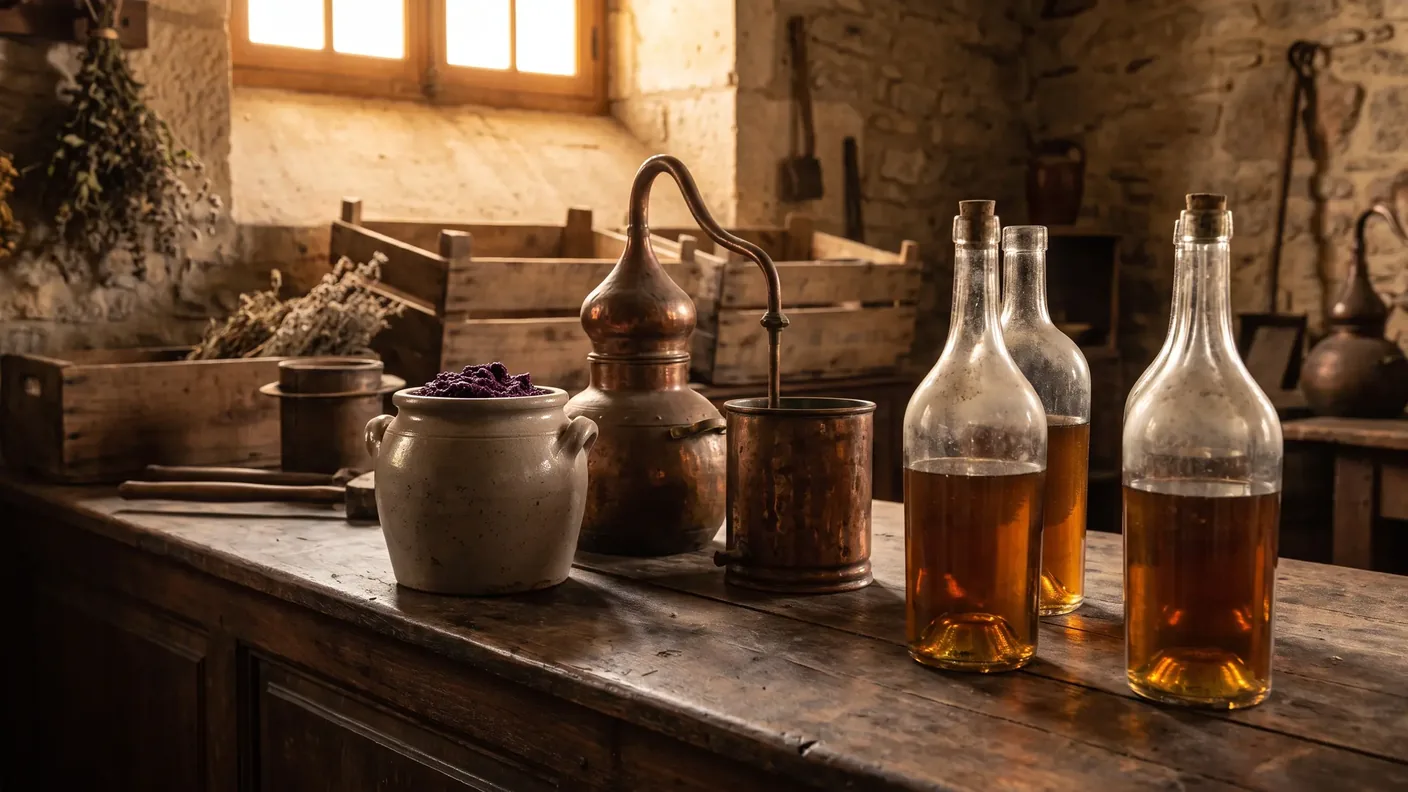
The Brive purple mustard, made with grape must, dates back at least to 14th century and at the table of the Corézian pope of Avignon. Its dark color and mild flavor pair perfectly with veal or blood sausage. The Denoix House, distillery founded in 1839 and certified as a "Living Heritage Company," it still produces them—along with its walnut liqueurs, Quinquinoix and Suprême Denoix, which can be enjoyed on-site amid centuries-old stills.
What to Try
- Milk-fed veal raised with its mother, the pride of the Brive basin (Label Rouge);
- The porcini mushrooms and the truffle from the Causses of Corrèze, the stars of the fall markets;
- The walnut and its oil, between Corrèze and Périgord;
- Liqueurs and aperitifs from Denoix — and some purple mustard as a souvenir;
- The Limousin AOP apple, grown on the plateaus north of the city.
Economy and Transportation: The Hub of the Inland Southwest
The leading economic hub in Corrèze
The Brive metropolitan area accounts for approximately 59% of the department’s salaried employment. Three pillars: industry (food processing, including Blédina; cosmetics, including Sothys; and the mechanical and aerospace ecosystem of Mecanic Vallée), logistics—at the intersection of the A20 (Paris–Toulouse) and the A89 (Bordeaux–Lyon)—and a growing service sector centered on services and digital technology.
Getting around there, getting there
- Train: The station, a historic hub on the Paris–Toulouse line, connects Paris, Toulouse, Limoges, Tulle—and Bordeaux via Périgueux;
- Route: The A20 and A89 intersect just outside the city—Bordeaux is about 2.5 hours away, Toulouse about 2 hours, and Paris about 4.5 hours;
- By plane: The Brive-Vallée de la Dordogne Airport (opened in 2010) offers regular flights to Paris-Orly and seasonal flights;
- Locally: a compact, walkable downtown area, city buses, taxis, and private chauffeur services; since 2023, the Velibeo self-service electric bike network (90 bikes, 19 stations) has rounded out the options.
Near Brive: Collonges-la-Rouge, Turenne, Aubazine
This may be Brive’s strongest selling point: within a 30-minute radius, there are two of the “Most Beautiful Villages of France” and several of the most beautiful sites in the inland Southwest.
Collonges-la-Rouge, the Scarlet Village (20 km)
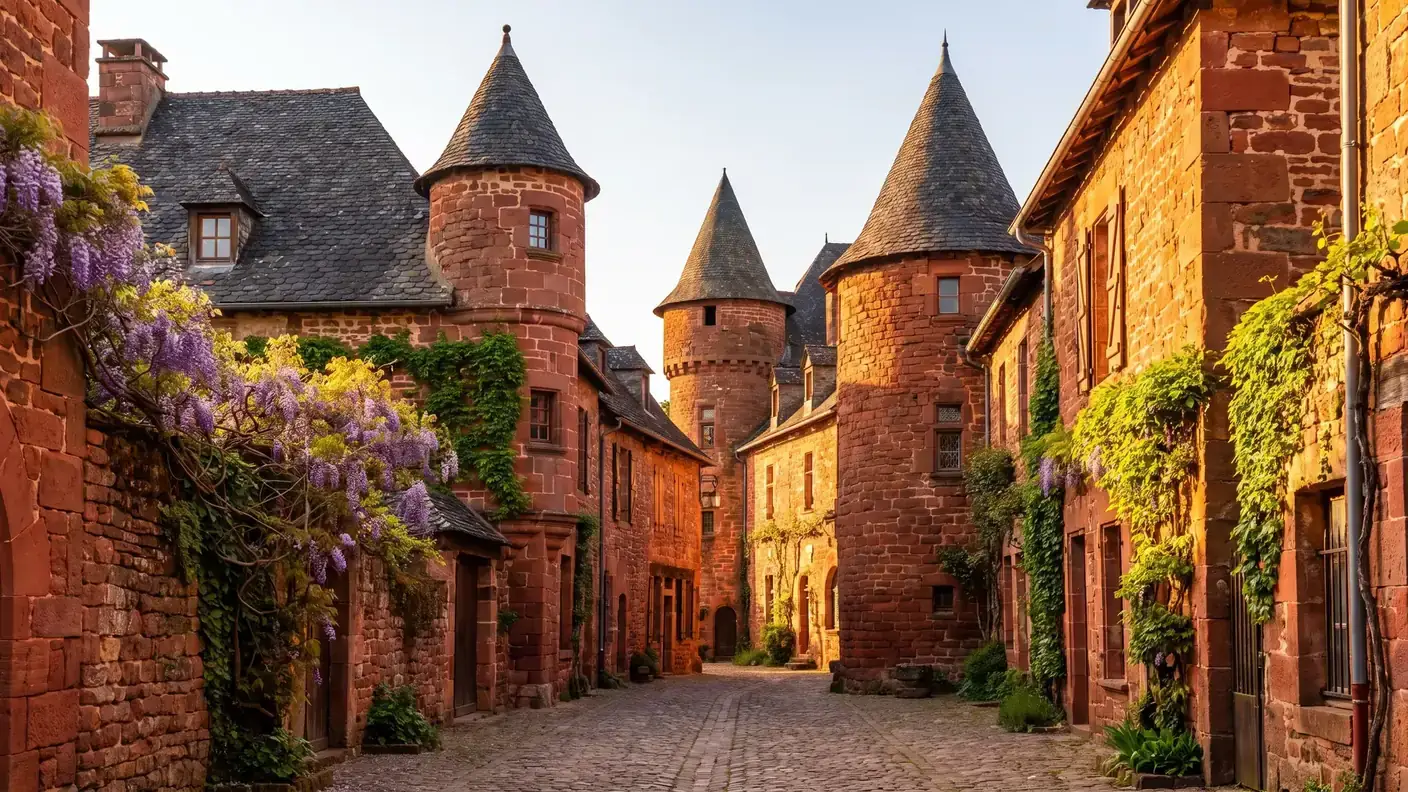
Built entirely of red sandstone and dotted with castles and turrets, Collonges-la-Rouge is a member—and even the birthplace (it was here that the association was founded)—of the Most Beautiful Villages of France. The residential capital of the officers of the Viscounty of Turenne in the 16th century, it’s best visited early in the morning or late in the day to avoid the summer crowds.
Turenne, the hilltop viscountcy (15 km)
Also listed among the Most Beautiful Villages of France, Turenne’s stately homes are nestled beneath the ruins of the Castle of the Viscountcy, which, for a thousand years, held the region in its grip—its inhabitants are still known as the Viscomtins. From the top of the tower, a panoramic view of the entire Brive basin.
Aubazine, Coco Chanel's Abbey (14 km)
The Cistercian Abbey of Aubazine hides an unexpected story: it was in its orphanage that Gabrielle Chasnel—the future Coco Chanel—was a boarder starting in 1895. Some see the geometric stained-glass windows and Cistercian austerity as the inspiration for the double C and the brand’s style… The abbey itself is worth a visit, with its octagonal bell tower and the Monks’ Canal carved into the mountainside.
| Destination | Distance | Why Go There |
|---|---|---|
| Aubazine | ≈ 14 km | Cistercian Abbey, Coco Chanel's Youth |
| Turenne | ≈ 15 km | "Most Beautiful Villages of France," a hilltop viscountcy |
| Collonges-la-Rouge | ≈ 20 km | Most Beautiful Villages of France, red sandstone |
| Juillac | ≈ 24 km | The Périgord-Limousin Ridge — see our guide |
| Pompadour | ≈ 33 km | The Marquise's Castle, Stud Farm |
| Rocamadour (Lot) | ≈ 55 km | The cliffside sanctuary city |
| Sarlat & the Dordogne | ≈ 50–60 km | The Périgord Noir — see our guide |
When to Visit Brive
- First weekend in November: the Book Fair — THE event—book accommodations well in advance;
- Tuesday, Thursday, and Saturday mornings: the markets at the Georges-Brassens Market Hall, year-round;
- Fall: porcini mushrooms, walnuts, milk-fed veal—the best season for Corrèze cuisine;
- CAB Game Nights: The Stadium Experience, in black and white.
| Season | Atmosphere | Strengths | Good to Know |
|---|---|---|---|
| Spring (April–June) | Gentle, green | Nearby villages without crowds, outdoor dining areas | Ideal for Collonges/Turenne |
| Summer (July–August) | Animated | Festivals, parties, a base for exploring the Dordogne-Quercy region | Collonges is crowded during the day |
| Fall (Sept.–Nov.) | The High Season | Porcini Mushroom Markets, Book Fair, Rugby | Our favorite |
| Winter (Dec.–March) | Calm and cheerful | Winter dining, truffles, games at the Stadium | Mists Over the Basin |
How to Get to Brive from Bordeaux
The A89 connects Bordeaux to Brive in one stretch: the journey covers 212 km in about 2 hours and 30 minutes, with fares starting at 332 € during the day for 1 to 3 passengers. These three figures were verified on July 24, 2026, on the corresponding commercial page.
| Option | Travel time from Bordeaux to Brive | Estimated cost | Good to Know |
|---|---|---|---|
| Personal car | ≈ 2 hours 30 minutes (212 km, A89) | Gas + tolls ≈ 45–55 € | End-to-End Highway |
| Private chauffeur service (door-to-door) | ≈ 2 hours 30 minutes | Starting at €332 · one-way | Unscheduled stops (Périgueux, Collonges, etc.) |
| Train | ≈ 2½–3 hours via Périgueux | ≈ 25-45 € | Frequent service to Périgueux |
| Airplane | — | — | No connection between Bordeaux and Brive |
Travel Tips
On the way there, a stop in Périgueux (Saint-Front, Vesunna) is a perfect break along the route. On the way back, leave the A89 to head back down through Collonges-la-Rouge and Turenne, or through the Vézère Valley (Montignac-Lascaux), turning the trip into a scenic tour. With a private chauffeur, you can decide on these detours along the way—a fixed rate guaranteed in writing, starting at €332 one-way for 1 to 3 passengers.
Practical Information
How long will you be there?
One day in town (market + collegiate church + Labenche + Michelet, all on foot). Two days visiting Collonges, Turenne, and Aubazine. Three days or more as a base camp for day trips: the Dordogne Valley, Rocamadour, the Périgord Noir, and the Pompadour region.
Accommodations and Dining
Brive offers the full range of accommodations you’d find in a real city—chain hotels and independent hotels, bed-and-breakfasts in the surrounding villages—at reasonable Corrèze prices, except during the Book Fair weekend, when everything is fully booked weeks in advance. When it comes to dining: Corrèze-style bistros around the market hall, gourmet restaurants in town and in the villages.
Estimated Budget
| Profile | Daily Budget | Accommodations | Catering |
|---|---|---|---|
| Small budget | 45-70 € | Budget hotels, camping | Market + Bistros |
| New Couple | 100-150 € | 3-star downtown hotel | Tables from Corrèze |
| Comfort/Fine Dining | 160-240 € | Charming bed-and-breakfasts, historic homes | Gourmet dining, Denoix as a digestif |
With children
Brive is perfect for families: a flat, compact town center, the free Michelet Museum (great for teens, with a strong emotional impact), market delicacies, and the surrounding villages— Collonges with its fairy-tale turrets, Turenne with its observation tower— which work wonderfully for a treasure hunt. In the summer, the lakes of the Corrèze Causse, a few kilometers to the south, round out the experience.
Frequently Asked Questions
Why is Brive called “La Gaillarde”?
From the Gaulish word *galia*, meaning “strength”: the city is called “gaillarde” because it has been fortified since at least the 14th century. In 1341, its four consuls undertook the construction of a wall that quintupled the enclosed area of the city; during the Hundred Years’ War, Brive withstood English assaults while so many other towns in the Southwest fell. In Occitan, it is called “Briva la Galharda.”
Is Brive larger than Tulle, the prefecture?
Yes, by a wide margin: 47,095 residents in 2023, or about three times the size of Tulle, which nevertheless retains its status as a prefecture. The explanation lies in the railroad: in 1860, the railroad chose Brive over Tulle for topographical reasons, and the city became a six-pointed star whose population doubled in twenty years.
What is the origin of the name “Brive”?
The Gaulish word *briva*, meaning “bridge”: the Roman road connecting Lyon to Bordeaux crossed the Corrèze River (Curretia) at this point. The name appears in its Latinized form, Brivae, as early as the 6th century. The residents are called Brivistes.
Who was Edmond Michelet?
A resident of Brive who joined the Resistance as early as June 17, 1940—the day before the “Appel”—by distributing leaflets quoting Péguy. Arrested in February 1943, deported to Dachau, liberated in April 1945, and later served several terms as a minister. His home at 4 Rue Champanatier is now the Edmond-Michelet Study Center and Museum: nine rooms, more than 400 propaganda posters, free admission.
What should you see first in Brive-la-Gaillarde?
The trio of attractions in the city center, all within walking distance: the Saint-Martin Collegiate Church (designated a historic monument in 1862, with an archaeological crypt), the Labenche Museum housed in a Renaissance mansion dating from 1540 (Mortlake tapestries, a piano by Debussy), and the Edmond-Michelet Museum. Add the market at the Georges-Brassens Hall on a Tuesday, Thursday, or Saturday morning—that’s where the city truly comes to life.
When is the Brive Book Fair held?
Every year on the first weekend of November, at the Georges-Brassens Market Hall: 150 to 170 publishing houses, 300 to 400 authors, the winners of the fall literary prizes—the largest general-interest literary fair outside Paris. Founded in 1973 and relaunched in 1982 with Jean d’Ormesson as its first president, it is inextricably linked to the “Brive School” and the regional novel.
Does CA Brive play in the Top 14?
No: After several promotions and relegations between the top flight and the second division, the club has been competing in Pro D2 in recent seasons. But its record of achievements remains unique for a city of this size: European champions in 1997 against the Leicester Tigers (28–9 in Cardiff), European runner-up in 1998, and four French championship finals. Games are played at Amédée-Domenech Stadium.
Why is the Brive market so famous?
Because of Georges Brassens and his song “Hécatombe” (1952), which depicts a memorable brawl “at the market in Brive-la-Gaillarde.” The city has named its central market hall after him, located on Place de la Guierle. Markets are held there on Tuesday, Thursday, and Saturday mornings—featuring porcini mushrooms, milk-fed veal, walnuts, foie gras, and violet mustard.
What is Brive purple mustard?
A mustard made with grape must—which explains its dark color—whose origins date back at least to the 14th century and to the table of the pope from Corrèze in Avignon. The Denoix distillery, founded in 1839 and certified as an “Entreprise du Patrimoine Vivant” (Living Heritage Company), still produces it right in the city center—the (free) tour is worth it for the still and the house-made walnut liqueurs.
What is there to see around Brive?
Within a 30-minute drive: Collonges-la-Rouge, the village of red sandstone and birthplace of the “Most Beautiful Villages of France” (20 km); Turenne and its hilltop viscountcy, also listed as a “Most Beautiful Village” (15 km); Aubazine Abbey, where Coco Chanel grew up (14 km). A little further away: Pompadour and its stud farm (33 km), Rocamadour (55 km), Sarlat and the Périgord Noir (~1 hour).
How can I get from Bordeaux to Brive without a car?
By train, allow about 2.5 to 3 hours with a frequent connection in Périgueux (€25–45). The Brive-Vallée de la Dordogne Airport does not serve Bordeaux (flights to Paris-Orly). For a direct door-to-door service with stops as desired, an executive car service remains the most flexible option.
How much does a private chauffeur cost from Bordeaux to Brive?
The chauffeur service from Bordeaux to Brive starts at €332 one way for 1 to 3 passengers. The standard route covers 212 km in approximately 2 hours and 30 minutes via the A89; these figures were verified on July 24, 2026. The fixed rate is confirmed in writing prior to departure.
Further Reading
- The Brive region along the ridge: see the Guide to Juillac (Pompadour, Ségur)
- Nearby Périgord Vert: see the Lanouaille Guide
- Continue on to the Limousin region: plan your trip with the guide to Limoges, the capital of the fire arts
- Continue on to the Périgord Noir: see the Sarlat Guide and the Lascaux Guide
- Book your trip from Bordeaux to Corrèze: Fixed-price quote in 30 minutes
Sources and References
- Wikipedia — Brive-la-Gaillarde — history, demographics, cuisine
- Wikipedia — Saint-Martin Collegiate Church — architecture, crypt
- CA Brive — 2026–2027 season — Pro D2 status verified on July 24, 2026
- Brive Book Fair — Official Website — November 6–8, 2026
- Wikipedia — Edmond-Michelet Museum — Resistance and Deportation
- INSEE — Key Statistics for Brive — Population 2023
Article updated in July 2026.
On the Way to La Gaillarde
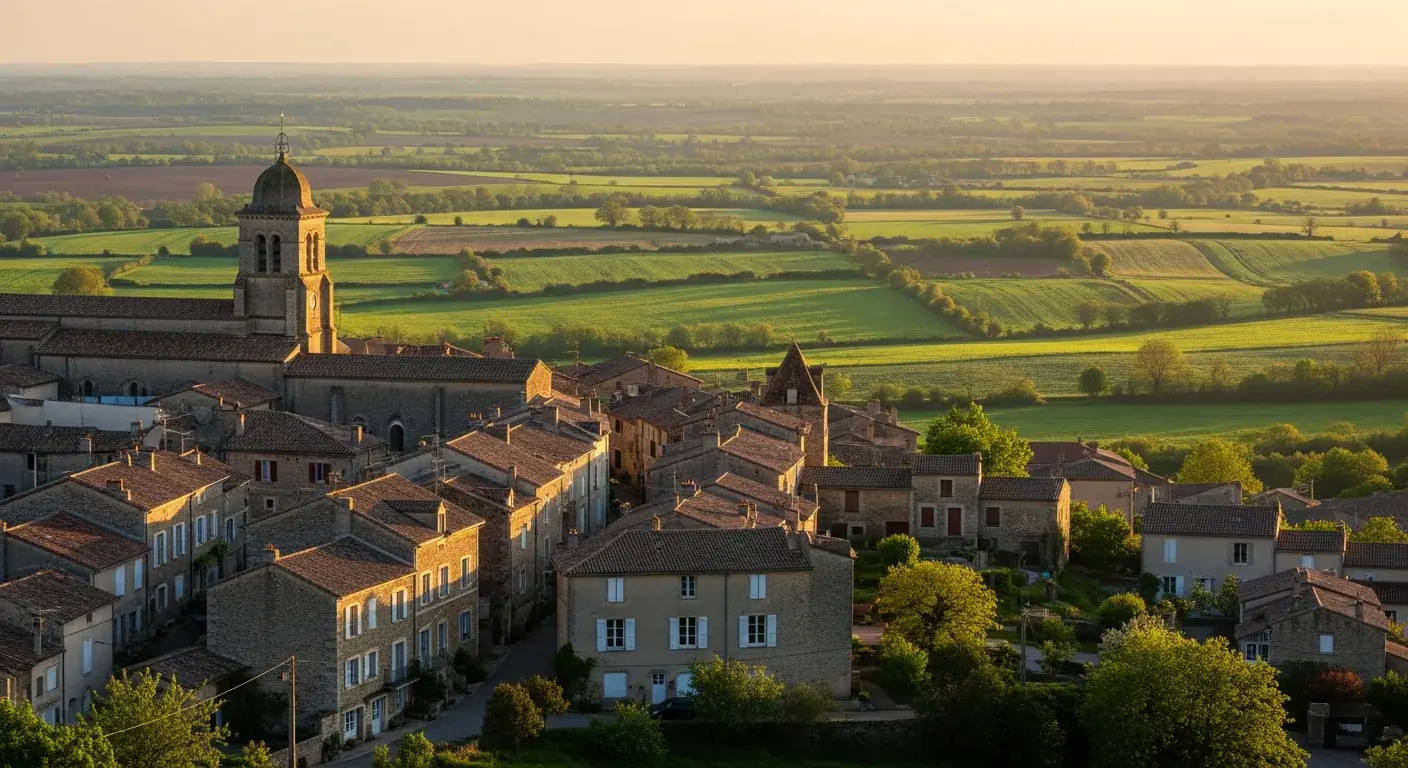
Direct route via the A89 from Bordeaux (~2.5 hours), with stops of your choice along the way—Périgueux, Collonges-la-Rouge, Turenne. Fixed-price quote provided in writing within 30 minutes; sedan or van; English-speaking driver.