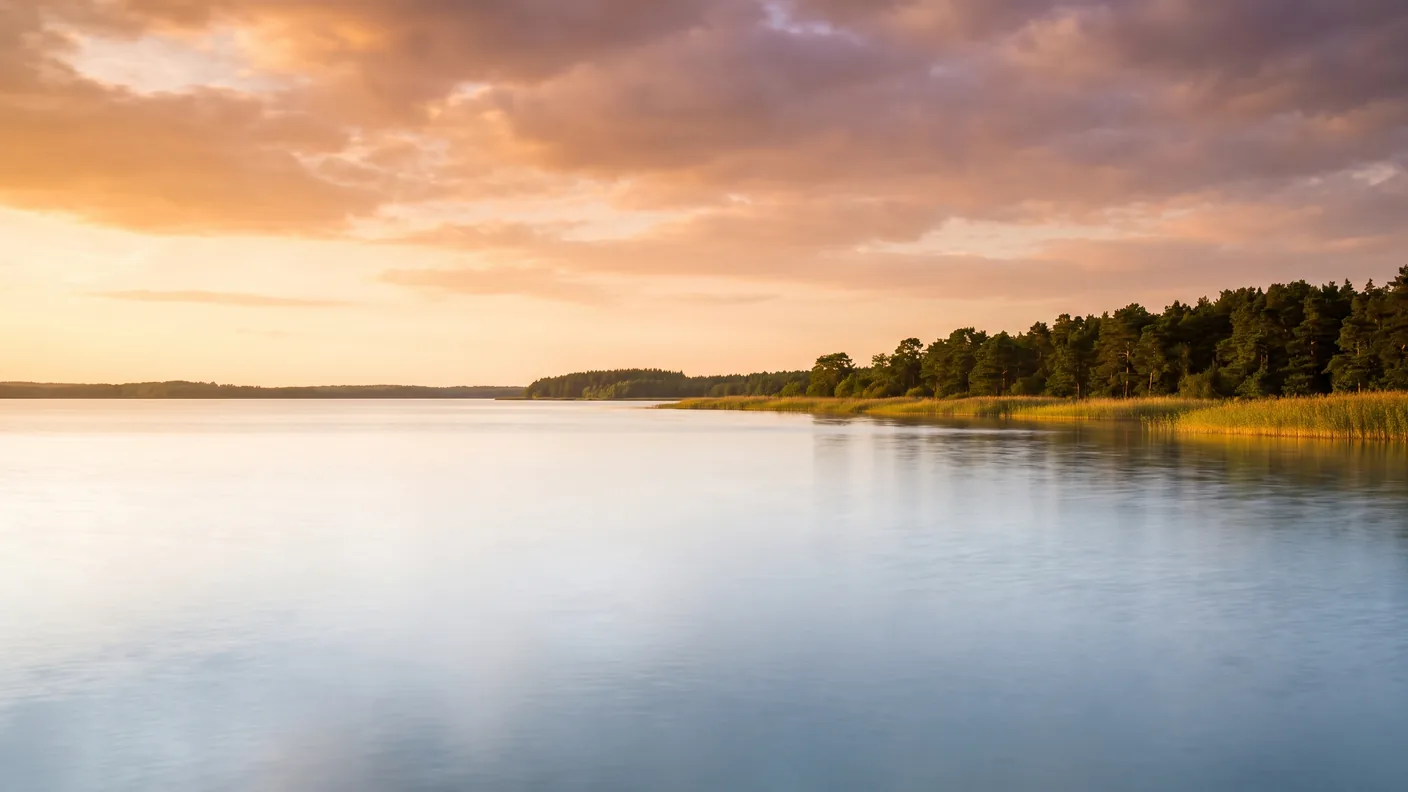
Bordeaux to Carcans: lake and ocean
A vast municipality spanning 175 km², straddling France’s largest natural freshwater lake and the Atlantic Ocean. Carcans-bourg, Maubuisson with its feet in the lake, Carcans-Plage facing the waves, and Bombannes for sailing—five kilometers separate the freshwater from the saltwater, just 58 minutes from Bordeaux.
Carcans at a Glance
Imagine a town so vast that you go from fresh water to salt water in just five kilometers by road. That’s Carcans: 175 km² of sand, pine trees, and water, nestled in the Médoc between two worlds. To the east lies the Hourtin and Carcans Lake, the largest natural freshwater lake entirely located in France; to the west, the Atlantic Ocean rolls in with its waves. Between the two lies a vast expanse of maritime pines, a quiet village, the lakeside resort of Maubuisson with its feet in the lake, the Bombannes water sports center, and the seaside resort of Carcans-Plage facing the waves. This guide carefully distinguishes between verified facts and mere rumors—for there are a number of superlatives and legends circulating around Carcans that should be treated with caution. Here are the essential points to keep in mind before setting out for the lake and the ocean.
Less than an hour from Bordeaux, Carcans offers a rare contrast in the Gironde: that of a vast, nearly unpopulated area, where some 2,400 residents share one of the largest municipalities in the department. People come here to swim in both fresh and saltwater, to sail at Bombannes, to bike through the pine forest, and to enjoy the beaches—whether on lakes or the ocean—that stretch for kilometers. Here, in a table, are the key facts to help you get to know the town before you go.
| Landmark | Details |
|---|---|
| Department | Gironde (33) · Nouvelle-Aquitaine |
| Status | A town in the Médoc region, between the lake and the ocean, part of the Médoc Atlantique community of municipalities |
| Population | ~2,415 residents (INSEE 2023) — the people of Carcans |
| Centers | Carcans-bourg · Maubuisson · Carcans-Plage |
| Area | 175 km² (one of the largest municipalities in Gironde) |
| From Bordeaux | 49 km · 58 min · starting at €93 |
A quick note, too, on something that requires careful handling. We sometimes read “Lake Carcans” as if it belonged solely to that town: this is inaccurate; the body of water is shared with Hourtin. Here and there, it’s described simply as “the largest lake in France”—but that overlooks Lake Geneva, which is shared by France and Switzerland and is actually larger. The village church is said to hold a distinction it does not have, and a “Byzantine” relic is presented as an established fact. We address all these nuances one by one, without detracting from the beauty of the place—Carcans deserves to be known for what it is, nestled between its large lake, its forest, and the ocean.
Where is Carcans located?
Carcans is part of the Médoc, a long peninsula of vineyards, forests, and sandy beaches that encloses the Gironde River between the estuary and the ocean. Administratively, the town falls under the district of Lesparre-Médoc and the canton of Sud-Médoc, and is part of the Médoc Atlantique community of municipalities, whose territory stretches along the coastline toward Lesparre and Soulac. This is an important point to clarify from the outset to avoid a common misunderstanding: Carcans does not belong to the Médullienne community of municipalities, which includes Castelnau-de-Médoc and Saint-Laurent-Médoc, located further inland. Here, we are indeed on the Atlantic coast of the Médoc, between the lake and the ocean.
On the map, Carcans is immediately recognizable by two features. First, its size: 175.4 km²[2], or more than 17,500 hectares, making it one of the largest municipalities in Gironde. Second, its geography, consisting of parallel north-south bands: to the east, the large freshwater lake; in the center, a sea of maritime pines—nearly 11,700 hectares of forest; to the west, the dune ridge and then the Atlantic Ocean. This vast expanse, home to barely 2,400 residents, results in a population density of about 14 people per square kilometer: in other words, it’s practically deserted—a village nestled in the middle of a vast forest. The municipality’s INSEE code is 33097, and its ZIP code is 33121.
This vast expanse is organized around three centers Two distinct areas, connected by the forest. Carcans-bourg, located inland, is the administrative and historic center: the town hall, the church, the town square, and year-round shops. To the east, on the shore of the lake, Maubuisson is a lakeside resort, right on the freshwater shore, with its sandy beaches and family-friendly atmosphere. To the west, facing the waves, Carcans-Plage — also known as Carcans-Océan — is a bustling Atlantic seaside resort in the summer. In addition to these three main areas, there are local neighborhoods such as Le Pouch and, in the national forest along the lake, the large Bombannes recreation area.
This division into distinct areas has a very practical implication for visitors: in Carcans, you have to choose where to stay or be prepared to drive. You don’t stay “in Carcans” as you would in a compact village; you’re either in the village center, in Maubuisson by the lake, or in Carcans-Plage facing the ocean, and each of these areas has its own atmosphere and clientele. Vacationers looking for calm waters and family-friendly beaches head to Maubuisson; surfers and lovers of the open sea head to Carcans-Plage; those who prefer peace and quiet and year-round shops stay in the town center. Understanding this scattered layout is the first step toward planning a successful trip.
How far is it from Bordeaux?
From Bordeaux, it’s a 49-kilometer, 58-minute drive via the most direct routes. Once you arrive, keep in mind that the distances within the area are significant: the town is neither on the lake nor on the ocean. It’s still nearly nine kilometers to Maubuisson and the lake, and about twelve kilometers to Carcans-Plage and the Atlantic Ocean. The distances given here are by road, not as the crow flies—in such a vast, forested area, this distinction is important.
| Route | Distance | Duration |
|---|---|---|
| Carcans-bourg → Maubuisson | ~9 km | ~12 min |
| Carcans-bourg → Carcans-Plage | ~13 km | ~17 min |
| Carcans-Plage ↔ Maubuisson | ~5 km | ~8 min |
| Carcans → Hourtin | ~13 km | ~17 min |
| Carcans → Lacanau-Ville | ~13 km | ~18 min |
| Carcans → Le Porge | ~25 km | ~30 min |
| Carcans → Bordeaux | 49 km | 58 min |
How many people live in Carcans?
According to the latest census, the population of Carcans stands at 2,415 (INSEE 2023 figures).[2] That’s not many—very few, in fact, given the vastness of the area—but the town is growing steadily: it had only 1,134 residents in 1968, and about 2,307 ten years earlier, in 2013. Like many towns along the Aquitaine coast, Carcans attracts new residents drawn to its natural setting—the forest, the lake, and the ocean just a short drive away—as well as its reasonable accessibility from the Bordeaux metropolitan area.
The contrast between the area and the population is striking, and this is undoubtedly the most telling figure in this entire guide. With 175.4 km² and a population of about 2,400, Carcans covers a larger area than inner Paris (105 km²) — though its population is, of course, incomparably smaller. The population density drops to about 14 people per square kilometer, one of the lowest in Gironde. This is truly a “giant municipality”: a handful of residents scattered across a landscape of sand, pine trees, and water as large as a small intermunicipal community elsewhere in France.
This dual existence—a quiet village for ten months of the year, resort towns overrun with tourists in the summer—is common to many towns along the Aquitaine coast, but here it is particularly pronounced due to the vastness of the area. The permanent population is concentrated in the town center and in the forest hamlets, while Maubuisson and Carcans-Plage only really come to life during the summer months, when the influx of tourists far exceeds the number of residents. Nevertheless, steady population growth reflects the long-term settlement of new residents: today’s Carcans is no longer just a village of resin collectors and foresters; it is also a residential town within the Bordeaux metropolitan area, where people come seeking open space, nature, and proximity to the water.
A Giant Municipality by the Numbers
The residents are known as Carcanais and Carcanaises. As for the town’s name, its origin is lost in antiquity: the most common theory suggests it was a Gallo-Roman estate, “Carcanum,” formed by the suffix -anum attached to a Latin personal name—a typical construction for the villae in the region. It is best to view this etymology as a plausible hypothesis rather than an established fact. Here is a summary of the key demographic and territorial figures that define Carcans’ identity.
| Indicator | Value |
|---|---|
| Municipal Population (2023) | ~2,415 residents |
| Population (2013) | ~2,307 residents |
| Population (1968) | 1,134 residents |
| Demonym | Carcanais / Carcanaises |
| Area | 175.4 km² (17,540 ha) |
| Density | ~14 people/km² |
Lake Hourtin and Carcans
If one were to single out just one thing for which Carcans is famous, it would be this—provided it is stated in full. Lake Hourtin and Carcans is the largest natural freshwater lake located entirely within France. Every word in this statement matters, because truncating it makes it false. Lake Geneva is larger, but it is shared by France and Switzerland: France owns only a portion of it. Lake Bourget, often cited, is the largest entirely French natural glacial lake—which is not the same thing. Lake Hourtin-Carcans, on the other hand, meets all three criteria: it is natural, freshwater, and entirely within French territory. Hence the accurate superlative—no more, no less.
Its size is on par with that of the municipality. The body of water stretches about 18 kilometers from north to south and is nearly 5 kilometers wide at its widest point[4]: a small inland sea bordered by pine trees. Its surface area ranges from 5,700 to 5,800 hectares[4] depending on the source—the town’s official data sheet lists 5,800 hectares, tourist brochures tend to round it up to nearly 6,000, while more precise measurements yield about 5,667 hectares. It’s better to consider a range than a figure accurate to the square meter. Shallow, like all lakes behind sand dunes, it reaches a maximum depth of about ten meters (approximately 10.5 m) with an average depth of close to 4.5 meters, at an elevation of barely 14 meters above sea level.
A body of water shared by two municipalities
Here’s a mistake you should avoid: referring to “Lake Carcans” as if it belonged solely to that town. The body of water is shared. Its northern half belongs to Hourtin, the neighboring town, which, incidentally, placed “Hourtin” first in its official name; its southern half—where Maubuisson and the Bombannes estate are located—belongs to Carcans. The two towns therefore share this body of freshwater, and they must always be credited together: it is the Lake of Hourtin and Carcans, never simply “Lake Carcans.” This clarification is not a mere whim—it does justice to both Hourtin and Carcans, and avoids the inaccuracy found in many brochures.
A chain of lakes behind the dunes
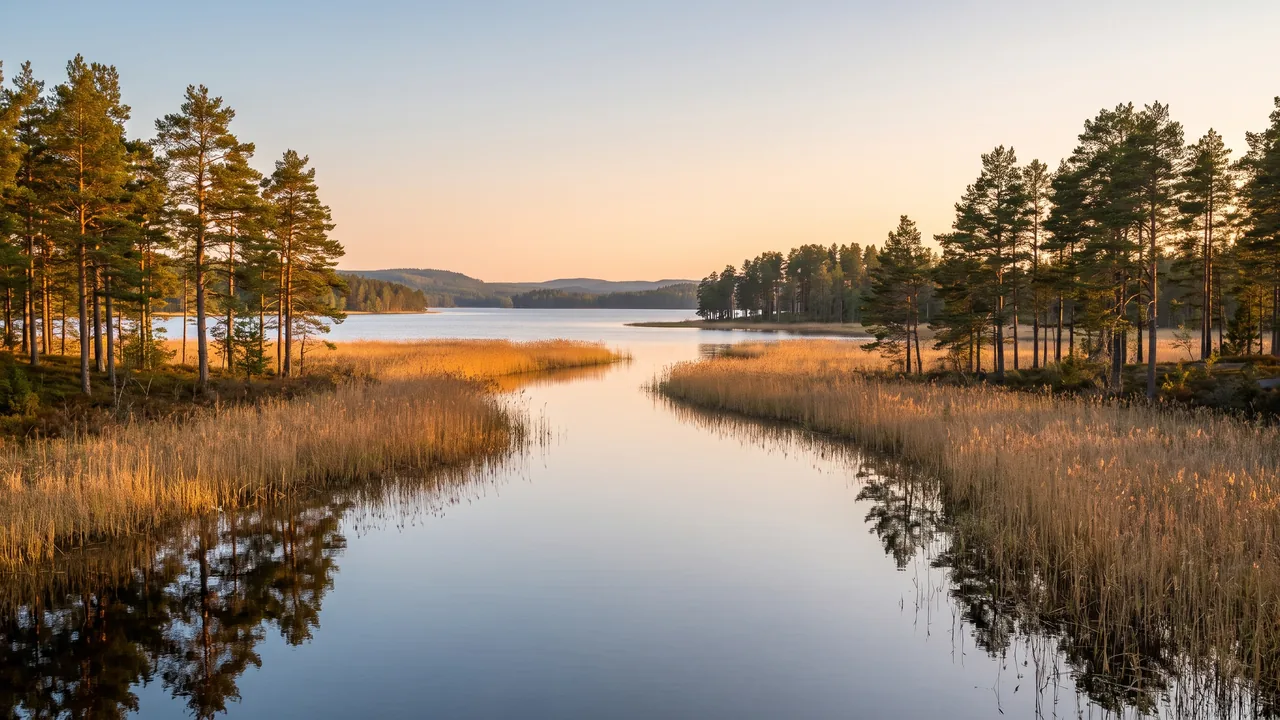
Lake Hourtin-Carcans is not isolated: it is part of the chain of Médoc ponds, a series of bodies of water lined up behind the dune ridge, stretching from Hourtin to the Arcachon Basin. Fed by small streams and crastes—the drainage ditches typical of the Landes region—it connects to the Lacanau pond to the south via the Canal des Étangs, a long waterway that links the lakes through the forest. Locally, a canal dug in 1873 connects Carcans to the hamlet of Le Pouch. On this large, calm, tide-free body of water, visitors can swim in the summer at supervised beaches and enjoy sailing, windsurfing, and stand-up paddleboarding: a water sports playground as vast as it is safe, sheltered from the swells of the nearby ocean.
What strikes you most on the shores of Lake Hourtin-Carcans is the sense of space. At eighteen kilometers long, the lake offers vistas one would expect more from an inlet: at sunset, the water shimmers with silver and gold, the pine trees cast silhouette-like shadows on the shore, and it’s hard to believe that the ocean is roaring just a few kilometers away, on the other side of the forest. This peaceful expanse, with no tides or surf, explains the popularity of low-impact water sports—dinghy sailing, stand-up paddleboarding, and pedal boats—and makes the lake a tranquil alternative to the ocean beach for those who prefer calm waters to rolling waves.
| Feature | Value |
|---|---|
| Status | The largest natural freshwater lake entirely within France |
| Area | ~5,700–5,800 ha |
| Length × width | ~18 km × ~5 km |
| Maximum / Average Depth | ~10.5 m / ~4.5 m |
| Elevation | ~14 m |
| Riverside municipalities | Hourtin (north) and Carcans (south) |
Maubuisson and the Bombannes Estate
Located on the lakeshore, east of the town, Maubuisson is the lakeside face of Carcans: a resort born of freshwater and pine forests. Its history is recent and reads like a chronicle of the conquest of the sand. In 1852, the first forest ranger’s cabin was built in what was then still nothing more than a wilderness of wooded dunes. In 1873, a canal was dug and a path was laid out; in 1926, the road finally reached Maubuisson; and it was in 1954 that the resort itself was established, with its first vacation facilities. In less than a century, a corner of forest by the water has become a vacation destination.
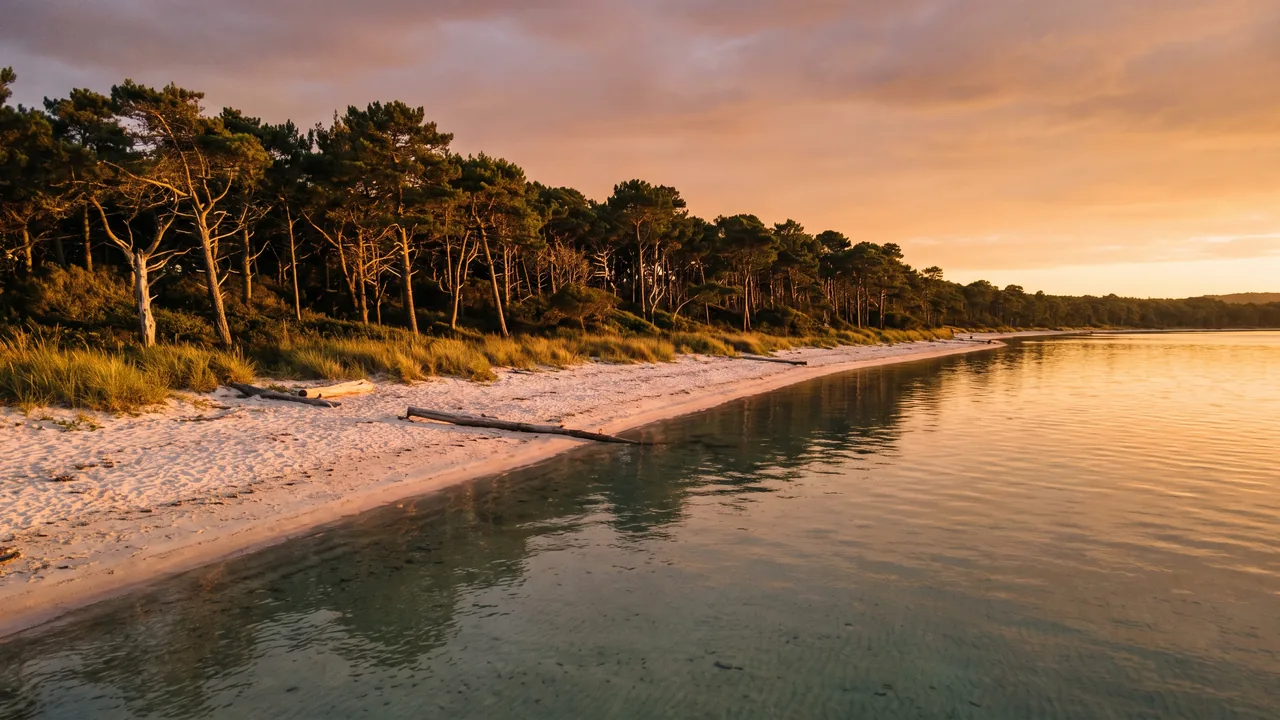
Today, Maubuisson boasts nearly two kilometers of lakefront beach: fine sand along the shore of calm, fresh water, ideal for families. The resort holds the “Station KID” certification, a guarantee of a child-friendly environment, and features two supervised beaches in the summer—one of which is equipped for people with limited mobility, complete with water access chairs (tiralo). Here, there are no waves or currents: the water slopes gently into the shore, making it easy to swim peacefully or rent a paddleboard or pedal boat. It’s the reassuring alternative to the ocean beach, just a few kilometers away on the other side of the forest.
Bombannes, the large water sports complex
At the tip of the lake, in the national forest, lies the Bombannes resort—one of the premier sailing destinations in Nouvelle-Aquitaine. This outdoor recreation center, located on the waterfront about 60 kilometers from Bordeaux, is operated by the UCPA[3], and its history dates back to the 1960s: the first sailing school was established there in 1960, and the outdoor recreation center was officially founded in 1970 by the Gironde General Council. Since then, generations of vacationers have learned to steer and jibe on the lake’s waters.
Bombannes owes its reputation to a natural asset: a remarkably steady thermal wind that picks up in the afternoon with rare consistency, making the water an ideal place to learn. Of course, sailing is a popular activity here, but so are windsurfing, kitesurfing, canoeing and kayaking, stand-up paddleboarding, and wakeboarding—not to mention the resort’s land-based activities: tennis, rock climbing, archery, and a tree-top adventure course. This reliable wind and the vast, sheltered body of water explain why Bombannes regularly hosts national and international regattas. For anyone looking to get started in freshwater water sports, it’s hard to find a better spot on the Aquitaine coast.
Together, Maubuisson and Bombannes form the water sports hub of Carcans and perfectly illustrate the purpose of the large lake: to offer, sheltered from the waves, everything that the nearby ocean makes off-limits to beginners and families. Here, children learn to swim without fear of currents, teenagers try their hand at windsurfing and kitesurfing under the supervision of an instructor, and adults paddle along the water’s edge between two shores lined with pine trees. The lake thus serves as a complement to the Atlantic: when the sea is too rough or the wind too strong on the ocean side, people turn to the lake, where swimming and sailing are almost always possible.
Carcans-Plage and the Ocean
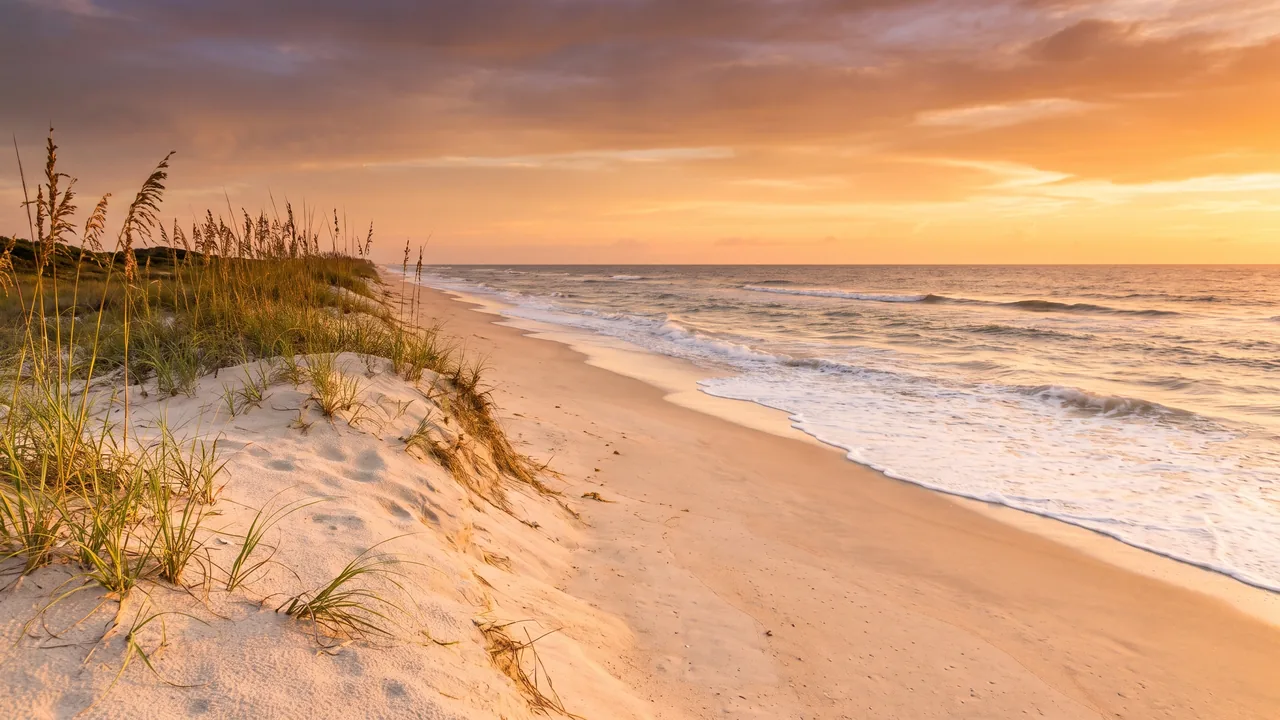
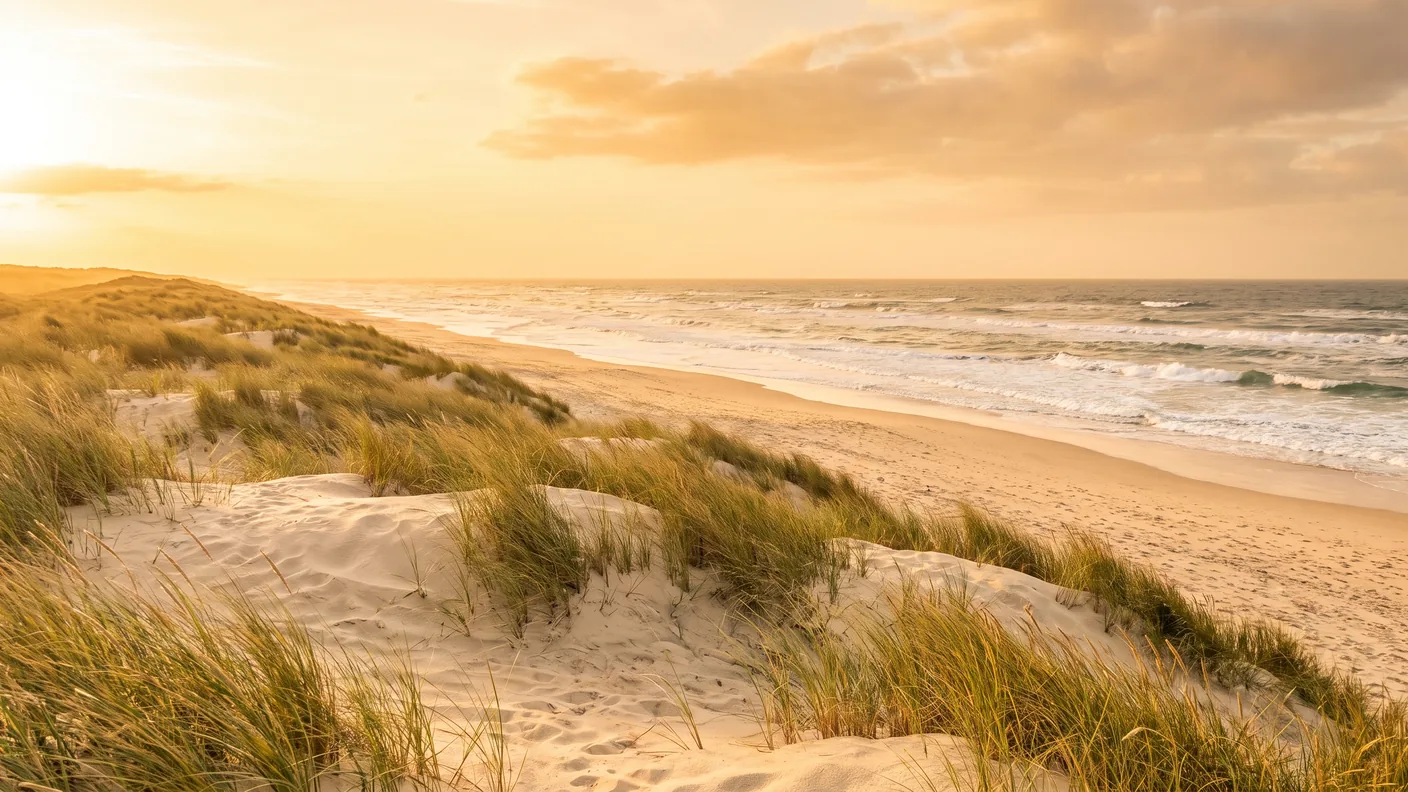
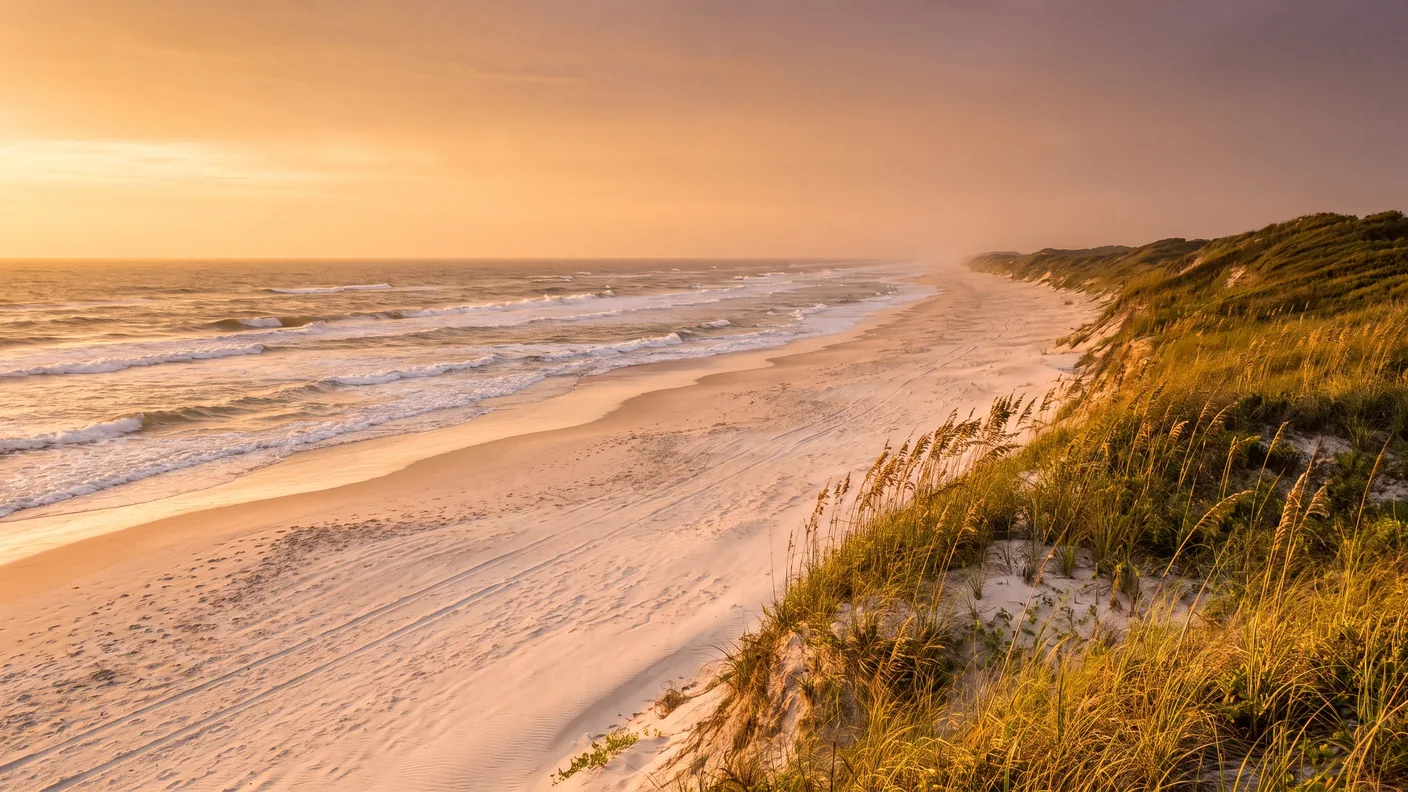
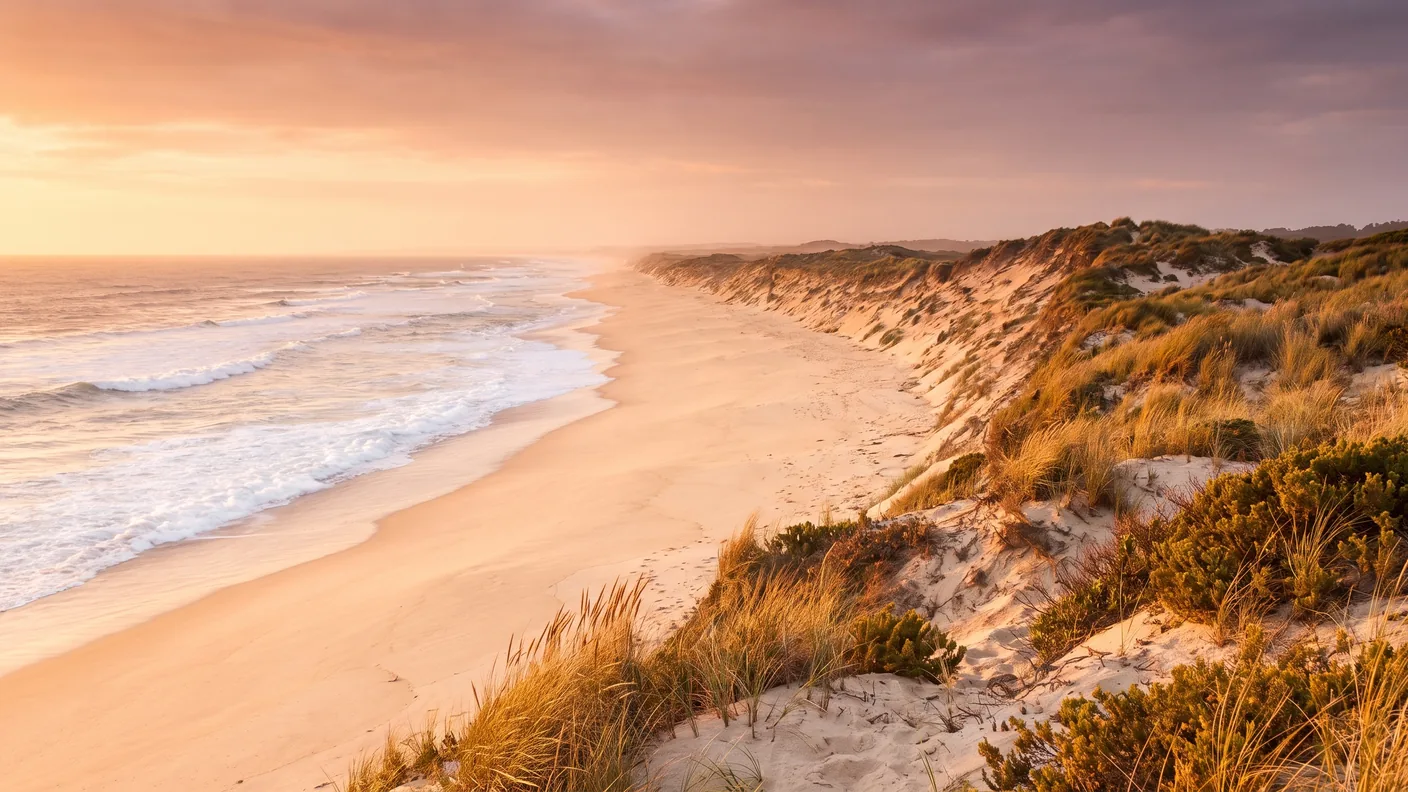
Cross over to the other side of the mountain, traverse the forest from east to west, and there you are, facing the Atlantic. Carcans-Plage—also known as Carcans-Océan—is the town’s seaside resort, facing the open ocean. Here, there’s no more freshwater or tranquil lake scenery: the ocean beach opens up to the rolling waves, backed by a line of dunes, against a backdrop of light-colored sand that stretches as far as the eye can see to the north and south. It’s a classic beach break on the Aquitaine coast, popular with surfers, where the Atlantic swell breaks into steady waves. To the south, the sand stretches for about ten kilometers to Lacanau-Océan, another Gironde surfing hotspot. In the summer, swimming is supervised in areas marked by flags, with lifeguard stations along the waterfront.
Baïnes: Safety First
Like all the ocean beaches in the area, Carcans-Plage is crisscrossed by “baïnes”—depressions carved out by the tide between the sand and an offshore sandbar. Especially at low tide, they create powerful rip currents capable of dragging a swimmer out to sea in a matter of seconds. This is the number one danger along this coast, and it’s no mere theoretical risk. The rule is simple and non-negotiable: swim only in supervised areas, between the flags, during supervised hours. Swim only in the supervised area, between the flags, and during the posted hours. If you get into trouble, stay calm, raise your arm to signal for help, and follow the lifeguards’ instructions. When done safely, ocean swimming remains a great pleasure.
Three bodies of water within a quarter of an hour
This is what makes Carcans so unique, and it’s well worth a visit. In a single day, with almost no driving, you can enjoy three different types of water. In the village, you’re in the heart of farmland and forests, far from any shoreline. In Maubuisson, just a few minutes away, you can swim in the lake’s warm, fresh water. At Carcans-Plage, a little further on, you can brave the salty, churning waters of the ocean. Barely five kilometers separate the lake from the sea—that’s all that stands between a peaceful swim in freshwater and the Atlantic waves. Few places in France offer, within such a small radius, such a choice between lake and ocean—enough to satisfy, on the same day, both those seeking tranquility and wave-chasers.
The resort town of Carcans-Plage, on the other hand, comes alive mainly in the summer. Born from the same reclamation of the sand as Maubuisson, it lines up its seasonal shops, surf schools, and lodging behind the dune, in a simple, family-friendly seaside atmosphere, far from the glitz of certain trendy resorts. Off-season, the waterfront regains its calm and the beach its solitude: you can then walk for kilometers along the wet sand, facing the westerly wind, without encountering a soul. It is this contrast—the bustle of July and August, the silence of the rest of the year—that gives Carcans-Plage its character, as both a vacation resort and a remote corner of the Atlantic.
St. Martin's Church
In the heart of the village stands the Church of Saint-Martin, the Christian heritage of Carcans. Its history is ancient, far older than its present walls would suggest. The first known mention dates back to 1099: that year, the lord of Lesparre donated the church of Carcans to the Benedictine monks of Sainte-Croix Abbey in Bordeaux. The building then became the seat of a small priory, which would remain in existence until the 13th century. For centuries, this country church watched over a parish of resin collectors and farm laborers, tucked away from the main roads.
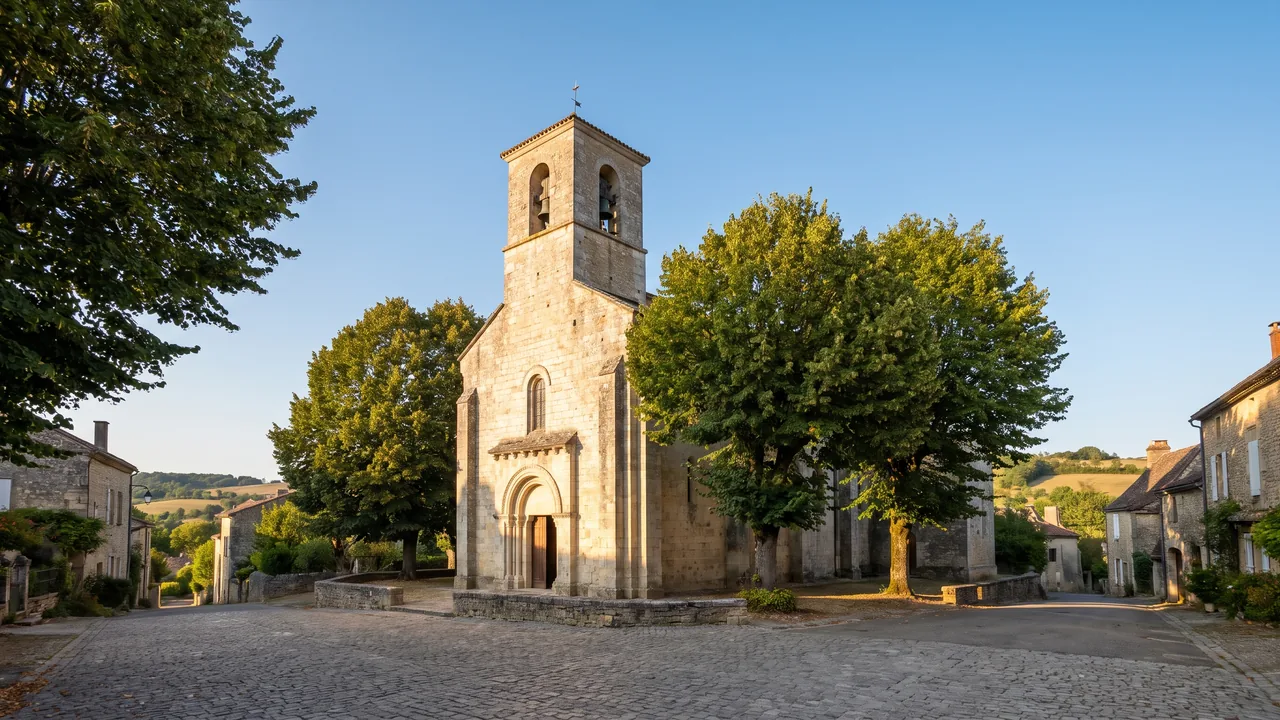
But the church we see today has nothing medieval about it. The current building was completely rebuilt in 1870 in the Neo-Gothic style that was in vogue at the time: pointed arches, vertical lines, and Gothic-inspired decoration reinterpreted for the 19th century. Inside, visitors will notice a polychrome marble altar and a German-made choir organ, installed in 1971. It is, therefore, a relatively new church with an old-fashioned exterior—a common occurrence in the Médoc, where many churches were rebuilt in the 19th century.
A property status to be clarified
Caution is warranted here, as there is a great deal of confusion. The Saint-Martin Church in Carcans is not protected as a historic monument; in fact, the town has no buildings that are either classified or listed. While heritage databases do contain entries for protected Saint-Martin churches, these refer to other municipalities with the same name, and under no circumstances should they be applied to Carcans. Inside, a 17th-century statue of Saint James is worth a look; it is sometimes described as “classified as a Historic Monument,” but this protection is not confirmed in the official database: let us therefore refer to it as a remarkable object, without attributing to it a status it may not have. The church is also a stop along the Way of St. James, on the Soulac route taken by pilgrims heading south toward Santiago de Compostela.
The Legend of the Head of Saint John
There is one story that people in Carcans love to tell, and it should be taken for what it is: a legend. Local tradition speaks of the veneration of a “head of Saint John,” a carved stone said to be “Byzantine” and which some trace back to the 6th century. It is a beautiful tale of popular devotion, passed down from generation to generation—but a hagiographic tradition is not an archaeological dating. No expert analysis supports this Byzantine origin, and there is no reason to regard it as a historical fact. We mention it because it is part of the village’s intangible heritage, presenting it clearly as a belief, not as a certainty. In Carcans, this is often how one should listen to stories: with pleasure, and a touch of detachment.
Carcans Through the Centuries
The history of Carcans is that of a land of sand and forest, long a harsh place to live, but patiently tamed over time. Yet people have lived there for a very long time: prehistory has left numerous traces on the eastern shore of the lake—carved flints, stone axes, arrowheads, harpoons—bearing witness to an ancient settlement along the freshwater shore, where hunting and fishing provided a livelihood. Long before the pine forests and seaside resorts, these shores were already sustaining communities.
The resin collectors and the resin cooperative
For generations, Carcans has lived in step with the pine tree and its resin. Tapping—the art of making incisions in the bark to collect the sap, which is then processed into turpentine and rosin—has provided a livelihood for an entire community of resin tappers. Initially distilled in small artisanal facilities, the resin industry in Carcans grew into a large-scale operation: in 1922, a resin cooperative was founded that served the entire Médoc region. At its peak, it employed about fifteen full-time staff and provided work for 150 to 200 resin tappers in the forest, ten months out of twelve. It is a vivid image of a world in the Landes region that no longer exists: the resin tapper, his knife, and his clay pot at the foot of the pine tree. The cooperative closed its doors in 1985, bringing to a close a long chapter in the local economy.
From the Mill of 1627 to the Storms of the Forest
Other milestones mark the town's long history. The Carcans Mill It is first mentioned on July 15, 1627, in a deed in which the Duke of Gramont, Lord of Lesparre, ceded the fief—proof that a seigneurial and agricultural way of life was already shaping the region. In the 19th century, the major undertaking was stabilizing the dunes: maritime pines were planted on a massive scale to halt the advance of the sand, giving rise to the cultivated forest we know today. This forest, finally, bears the scars of its past. Two storms struck the forest hard a few years apart: Martin, in December 1999, then Klaus, January 24, 2009, felling thousands of trees and serving as a reminder that the Landes pine forest, though created by human hands, remains at the mercy of the Atlantic’s fierce gales.
From this long history, Carcans has retained a rural and forestry-based identity that the seaside resorts have not erased. The inland town center retains its church, its square, and its village atmosphere, while the coastline has turned to tourism. This duality—a rural heart and two facades facing the water—summarizes the entire history of the town: that of a land of sand and resin that, over the course of a century, has become a vacation destination between the lake and the ocean, without ever denying its Landes origins. The resin harvesters are gone, but the forest they once harvested remains the ever-present backdrop of Carcans, from the village center all the way to the dunes.
The pine forest and the dunes
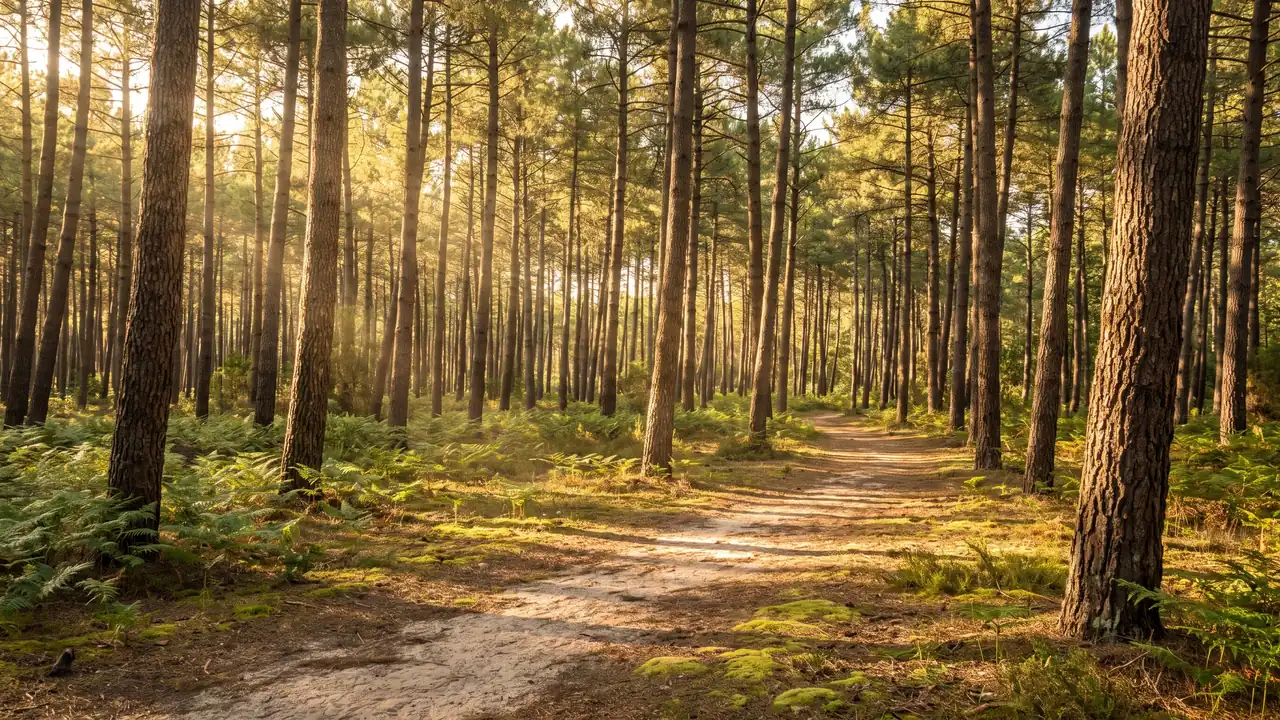
Between the lake and the ocean lies the forest—and what a forest it is. Carcans is, above all, a forest town: nearly 11,720 hectares of maritime pines (Pinus pinaster) cover its territory, accounting for two-thirds of its total area. It is part of the great Landes forest, the largest forest massif in Western Europe, formed by the stabilization of the dunes in the 19th century. Here, the forest is not an eternal landscape but a human creation, planted to hold back the sand and harvested for its wood and resin. The maritime pine, the king of the Landes de Gascogne, stands here in regular rows, the ground carpeted with ferns, heather, and immortelle.
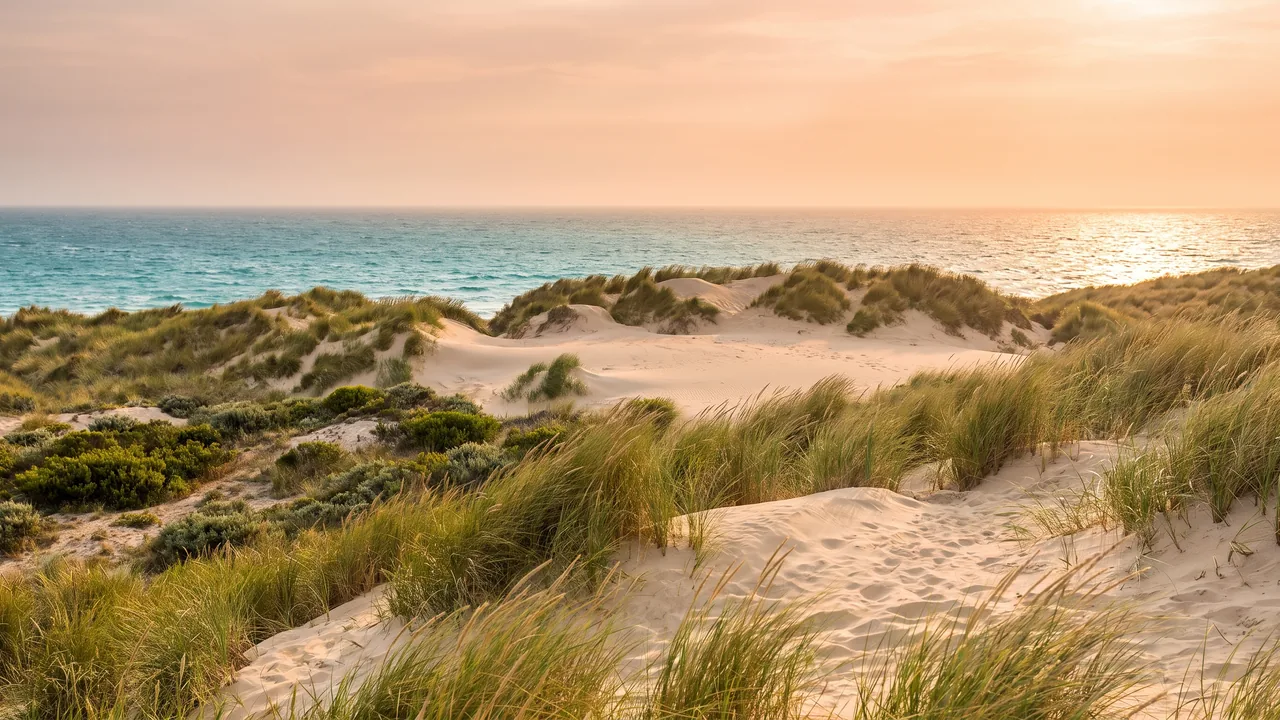
This forest is unique in that it is bordered by fresh water on one side and salt water on the other: to the east, it extends into the lake; to the west, it meets the dunes and then the ocean. It remains a living and fragile ecosystem, subject to the vagaries of dune advancement: along the Atlantic coast, the sand is constantly pushing inland, and constant care must be taken to stabilize the shifting dunes to protect the hinterland. The forest is also at risk of wildfires, like any pine forest, and of storms, which, as we have seen, have already taken a toll on it.
This vast pine forest is more than just a landscape—it also acts as a quiet regulator. It stabilizes the soil, moderates the local climate, provides a habitat for flora and fauna adapted to sandy, nutrient-poor soil, and offers a year-round, wind-sheltered setting for walking, running, and biking. Crisscrossed by straight forest trails, it’s easy to explore on foot or by bike, and it separates the lake from the ocean so effectively that you can go from one to the other without ever leaving its shade. It is the green thread that connects the three facets of Carcans, and undoubtedly the most consistent element of its identity.
Understanding this history changes the way we view the promenade. These rows of tree trunks, so evenly spaced, do not form a primary forest but a commercial forest—planted, maintained, and harvested for its timber and, until recently, for its resin. The sandy soil retains the memory of the dunes it once was, and the uniform horizon line of the pine trees—which we assume to be unchanging—is not even three centuries old. Walking through the Carcans pine forest means traversing a landscape entirely shaped by human hands battling the sand—one of the finest examples of this long-standing conquest in the Landes region.
The dune ridge, a sand barrier
Along the ocean’s edge, between the forest and the waves, stretches the dune ridge: a long barrier of pale sand crowned with marram grass, a deep-rooted grass that holds the sand in place and stabilizes the dune. These shifting dunes, which are naturally mobile, are extremely fragile: visitors should cross them only via designated paths, taking care never to trample the vegetation that holds them in place. It is this thin natural barrier that protects the pine forest and the inland areas from the Atlantic’s onslaught. Preserving it means protecting the beach itself—which is why the paths are marked and foot traffic is channeled along the coastline.
What is there to do in Carcans?
In Carcans, you can enjoy two different kinds of vacations in a single day: the morning at the lake, the afternoon at the ocean. Start with a leisurely swim at the lifeguard-patrolled beaches of Maubuisson, where the freshwater slopes gently into the sea, before renting a paddleboard or trying your hand at sailing at the Domaine de Bombannes, renowned for its steady winds. At lunchtime, head through the forest toward Carcans-Plage to take on the Atlantic swells and, for surfers, catch a few waves in the designated areas. Between swims, the pine forest is perfect for biking along the forest trails and the Vélodyssée, while the markets in Maubuisson and Carcans-Plage set the pace for the summer week. We’ll wrap up the day with a sunset over the lake or the ocean—whichever you prefer. Here are the must-see activities you won’t want to miss.
- The lake beaches—in Maubuisson and Bombannes—are supervised sandy beaches on the shores of a freshwater lake; they are peaceful and family-friendly, and one of them is accessible to people with limited mobility.
- The ocean beach at Carcans-Plage—the Atlantic and its rolling waves, supervised swimming in marked areas, and a renowned surfing spot (watch out for rip currents).
- Sailing and Water Sports in Bombannes — with UCPA: sailing, windsurfing, kitesurfing, canoeing and kayaking, stand-up paddleboarding, and wakeboarding, on a body of water with ideal thermal winds for learning.
- Swimming and stand-up paddleboarding on the lake — the large body of water at Hourtin-Carcans, with no waves or currents, is perfect for swimming, pedal boating, and stand-up paddleboarding.
- Surfing at Carcans-Plage — a classic beach break on the Aquitaine coast, outside the supervised swimming areas.
- Cycling through the pine forest — the Vélodyssée (EuroVelo 1) and forest trails connect the lake and the ocean away from traffic, winding through kilometers of pine trees.
- The markets—in Carcans-Maubuisson on Wednesday mornings (mid-June through mid-September) and on Friday evenings during the summer; in Carcans-Plage on Monday mornings and on Thursday evenings during the summer.
- The Origin'All Festival in Bombannes—a lakeside music festival held in early September, which has been organized since 2015 in the estate's wooded setting.
Summary of Activities
| Activity | Where | Good to Know |
|---|---|---|
| Swimming in Fresh Water | Maubuisson, Bombannes | Lifeguard-patrolled beaches with no waves — a beach accessible to people with disabilities |
| Ocean Swimming | Carcans-Plage | Monitored areas only — watch out for rip currents |
| Sailing & Boating | Bombannes (UCPA) | Consistent thermal winds, ideal for beginners |
| Surfing | Carcans-Plage | Beach break, outside swimming areas |
| Bicycle | Pine Forest & Vélodyssée | Forest trails between the lake and the ocean |
| Markets | Maubuisson & Carcans-Plage | Mornings + evening hours during the summer |
Cycling deserves a special mention, as it is undoubtedly the most beautiful way to explore the two sides of Carcans. The bike paths wind through the pine forest, flat and shaded, and connect to the Vélodyssée, the major Atlantic coastal bike route (EuroVelo 1) that runs along the coast from Hourtin to Lacanau and beyond. In just one morning, you can go from the lake beaches to the ocean dunes without ever getting back in the car, following the forest trails. One final reminder, however: at the ocean, rip currents are very real, and you should always swim between the flags during lifeguard hours.
Around Carcans
Carcans is an excellent base from which to explore the northern Gironde coastline. About fifteen minutes to the north, Hourtin shares the large freshwater lake with Carcans: there you’ll find the opposite shore of the lake, a long ocean beach, and a lively little marina. To the south, at a similar distance, Lacanau combines its own lake, the ocean, and its reputation as the surfing capital. A little further on, Le Porge boasts a wide ocean beach at the edge of the Landes pine forest. From Carcans, it’s less than thirteen kilometers to both Lacanau-Ville and Hourtin—an ideal location for exploring this entire coastline of lakes and beaches.
The “French paradox” originated on the shores of the lake
To conclude, here’s an anecdote that links this coastline to the nearby vineyards. Serge Renaud, a physician and nutritionist, is considered the father of the “French paradox”—that now-famous observation that moderate red wine consumption is associated with better heart health, which did so much to boost the global reputation of Bordeaux wines. Yet this researcher from the Médoc passed away in Maubuisson, on the shores of the great lake. It’s a lovely connection: in the same Médoc region, the great wines of the Garonne meet the freshwater beaches of the Atlantic, and the science of wine blends with lakeside vacations.
| Destination | Distance | What You'll Find There |
|---|---|---|
| Hourtin | ~13 km | The other side of the lake, the ocean beach, and the harbor |
| Lacanau | ~13 km | Lake, ocean, and surfing hotspot |
| Le Porge | ~25 km | A large ocean beach and a Landes pine forest |
| Arcachon Bay | ~1-hour drive | Oysters, villas, Dune du Pilat |
| Bordeaux | 49 km | The City and Its Vineyards |
This central location is one of Carcans’ greatest assets. If you stay here for a few days, you can effortlessly switch up your activities: a morning on the lake shared with Hourtin, an afternoon of surfing in Lacanau, a full day at the wild beach in Le Porge, and why not a trip further south to the Arcachon Basin? To help you explore further, our neighboring guides provide detailed information on each of these getaways: Lacanau and its surf beaches, Le Porge and its expansive ocean beach, and the Arcachon Basin, with its oysters and the Dune du Pilat.
Getting to Carcans from Bordeaux
From Bordeaux, the trip to Carcans is 49 km and takes about 58 minutes, according to the published estimate. Since the town is spread out across the village center, Maubuisson, Bombannes, and Carcans-Plage, please specify your exact drop-off location when making your reservation. The price for a sedan accommodating 1 to 3 passengers starts at €119 during the day.
The road itself is already part of the journey. You leave the city behind, drive through the Médoc region with its vineyards and villages, then head deep into the pine forest: light filters through the trees, the landscape becomes uniform and soothing, and you can feel the air change as you approach the water. From Carcans, it’s easy to explore the entire northern coastline, with both Lacanau-Ville and Hourtin less than thirteen kilometers away: the town serves as a central hub for anyone wanting to visit the lakes and beaches over several days.
How much does the ride cost?
Transfers from Bordeaux to Carcans start at €93 during the day for a sedan that can accommodate 1 to 3 passengers. This price is fixed and confirmed in writing before departure: no meter, no surprises upon arrival. Surcharges apply at night, on weekends, and on holidays; for groups of more than four people, a van is provided. Pickups from Bordeaux-Mérignac Airport, drop-offs in Maubuisson or Carcans-Plage, and day packages—lake in the morning, ocean in the afternoon—are available upon request with a no-obligation quote.
| Route | Distance / Duration | Rate |
|---|---|---|
| Bordeaux → Carcans | 49 km · 58 min | starting at €93 |
| Bordeaux → Maubuisson | based on a quote | based on a quote |
| Bordeaux → Carcans-Plage | based on a quote | based on a quote |
| Bordeaux-Mérignac Airport → Carcans | based on a quote | based on a quote |
| Lake + Ocean Day | based on a quote | based on a quote |
Why hire a private driver?
The argument is practical. A day in Carcans often involves several stops—the lake in the morning, the ocean in the afternoon—and just as many parking spots to find during peak season, when Maubuisson and Carcans-Plage are fully booked. A chauffeur service departing from Bordeaux solves the problem: you book, hop in, enjoy the forest scenery without having to drive, and go from the lake to the ocean without ever having to look for a parking spot. On the way back, with sand between your toes and legs heavy from the sun, you can let yourself be driven back stress-free. It’s, quite simply, the most relaxing way to experience both sides of Carcans in a single day.
Frequently Asked Questions
Where is Carcans located?
Carcans is a commune in the Médoc region of Gironde, on the department’s Atlantic coast, between Lake Hourtin and Lake Carcans to the east and the Atlantic Ocean to the west. It is part of the Médoc Atlantique community of municipalities and is organized into three areas: Carcans-bourg inland, Maubuisson on the lake, and Carcans-Plage facing the ocean. With an area of 175 km², it is one of the largest municipalities in Gironde. Bordeaux is approximately 49 km away, or a 58-minute drive.
How much does a trip from Bordeaux to Carcans cost with an executive car service?
Transfers from Bordeaux to Carcans start at €93 during the day for a sedan accommodating 1 to 3 passengers. The price is fixed and confirmed in writing before departure—no meter, no surprises. Surcharges apply at night, on weekends, and on holidays, and a van is available for groups of more than four people. Pickups from Bordeaux-Mérignac Airport, drop-offs in Maubuisson or Carcans-Plage, and day packages—lake followed by ocean—are available upon request with a no-obligation quote.
What is the largest natural freshwater lake in France?
This is Lake Hourtin and Carcans, in Gironde: the largest natural freshwater lake located entirely within France. The full description is important. Lake Geneva is larger, but it is shared by France and Switzerland; Lake Bourget is the largest natural glacial lake entirely within France, which is different. Lake Hourtin-Carcans, on the other hand, is natural, freshwater, and entirely within French territory. It stretches about 18 km in length and covers some 5,700 to 5,800 hectares.
Is Lake Carcans the same as Lake Hourtin?
Yes: it is a single body of water, shared between the two municipalities—hence its official name, Lake Hourtin and Carcans. Its northern half belongs to Hourtin, while its southern half, along with Maubuisson and Bombannes, belongs to Carcans. Therefore, you should avoid referring to it simply as “Lake Carcans”: the two municipalities share this body of freshwater, which is the largest natural freshwater lake located entirely within France. It can be accessed from both Hourtin and Maubuisson, on the Carcans side.
What is there to do in Carcans?
In Carcans, you can go from fresh water to salt water in a single day. In the morning, go for a swim or try stand-up paddleboarding on the supervised beaches of Lake Maubuisson, or enjoy sailing and water sports at the Domaine de Bombannes with the UCPA. In the afternoon, head to Carcans-Plage for the ocean, supervised swimming, and surfing—while staying alert for rip currents. In between, explore the pine forest by bike along the Vélodyssée and forest trails. In the summer, the markets in Maubuisson and Carcans-Plage liven up the week.
How many people live in Carcans?
Carcans has a population of approximately 2,415 according to the 2023 INSEE census, compared to 2,307 in 2013 and just 1,134 in 1968: the population is growing steadily. Its residents are known as Carcanais and Carcanaises. The contrast with the area is striking: 175 km² for barely 2,400 people, or a density of about 14 inhabitants per square kilometer—one of the lowest in Gironde. Carcans is thus larger in area than inner-city Paris, yet its tiny population is scattered throughout the forest.
Is swimming dangerous at Carcans-Plage?
At the ocean, yes, you have to be careful. Carcans-Plage is an Atlantic beach with rip currents—powerful back currents that can drag a swimmer out to sea in a matter of seconds. The rule is simple: swim only in supervised areas, between the flags, during summer lifeguard hours. If you get into trouble, stay calm, raise your arm to signal for help, and follow the lifeguards’ instructions. On the lake side, in Maubuisson, swimming is much calmer, with no waves or currents.
What is Bombannes?
Bombannes is a large outdoor recreation area located in the national forest, on the shores of Lake Hourtin-Carcans, about 60 kilometers from Bordeaux. Operated by the UCPA, it offers sailing, windsurfing, kitesurfing, canoeing and kayaking, stand-up paddleboarding, and wakeboarding, as well as land-based activities such as tennis, rock climbing, and archery. Its main attraction is a remarkably steady thermal wind, ideal for learning to sail, which has earned it the distinction of hosting national and international regattas.
What is Maubuisson?
Maubuisson is the lakeside resort in Carcans, located on the shores of the large freshwater lake to the east of the town. Established in the mid-20th century—the resort was founded in 1954—it features nearly two kilometers of sandy beach along calm, shallow waters, ideal for families. It holds the “Station KID” certification and features two beaches with lifeguards in the summer, one of which is accessible to people with limited mobility and equipped with wheelchair ramps for entering the water. It offers a peaceful alternative to the ocean beach, located just a few kilometers away.
Is the Saint-Martin Church in Carcans a historic landmark?
No. The Church of Saint-Martin in the town center, first mentioned in 1099 but completely rebuilt in 1870 in the Neo-Gothic style, is not protected as a Historic Monument—in fact, the municipality has no buildings that are classified or listed. Be careful not to confuse it with others: there are protected Saint-Martin churches, but they are located in other municipalities with the same name. Inside, a 17th-century statue of Saint James is a notable feature, though its classification has not been confirmed in official records. The church is a stop on the Way of St. James, along the Soulac route.
Can you go swimming in the lake at Carcans?
Yes, and that’s one of the great pleasures of the town. Lake Hourtin and Carcans offer, in Maubuisson and Bombannes, sandy beaches that are supervised in the summer, bordering fresh, calm, and current-free water with a gentle slope—perfect for children. You can swim, ride a pedal boat, and go stand-up paddleboarding in complete peace. That’s the beauty of Carcans: the lake for peaceful swimming, and the ocean just five kilometers away for wave lovers—you can choose either one on the same day.
What is there to see around Carcans?
Carcans is ideally located for exploring the northern Gironde coastline. About thirteen kilometers away, Hourtin shares the large lake and also offers an ocean beach and a marina. At a similar distance, Lacanau combines a lake, the ocean, and surfing. A little further away, twenty-five kilometers away, Le Porge boasts a long ocean beach at the edge of the pine forest. Further south still, the Arcachon Basin offers its oysters, villas, and the Dune du Pilat. From Carcans, it’s easy to explore this entire coastline of lakes and beaches.
When is the best time to visit Carcans?
Summer brings supervised swimming at the lake and the ocean, sailing in Bombannes, night markets, and a seaside atmosphere—but also crowds and parking lots that fill up quickly. Spring and fall offer deserted beaches, a magnificent forest, and soft light—ideal for biking and hiking—though caution is advised regarding rip currents at the ocean year-round. In winter, Carcans returns to being a village nestled among the pine trees, between the lake and the dunes, for those who love the wild and quiet coastline off-season.
Further Reading
- Book your private chauffeur: Check our rates and book a ride from Bordeaux to Carcans—fixed price, no obligation.
- Explore the coast: discover all our destinations from Bordeaux.
- The Surf Coast : Discover the Lacanau Guide, its lake, its ocean, and its surf spots.
- The large ocean beach: continue with the Guide to Le Porge, its beach, and its Landes forest.
- The Nearby Bay: Read the Guide to the Arcachon Bay, its oysters, and the Dune du Pilat.
Sources and References
- Town of Carcans / Médoc Atlantique Tourist Office — lake, beaches, Bombannes, markets
- INSEE — Municipality of Carcans (33097) — Demographics, Area
- UCPA Bombannes — Water Sports Center, Sailing, Activities
- DIRM South Atlantic — Carcans and Hourtin Lakes — Area and Length
- Mérimée Database / POP (Ministry of Culture) — verification of historic preservation status (none confirmed)
Article updated on .
On the way to the lake and the ocean
Direct transfer from Bordeaux (58 min) to Maubuisson, Bombannes, and Carcans-Plage. Fixed-price quote in writing, with no obligation.