Bordeaux to Carcans-Plage: Atlantic beach and surf
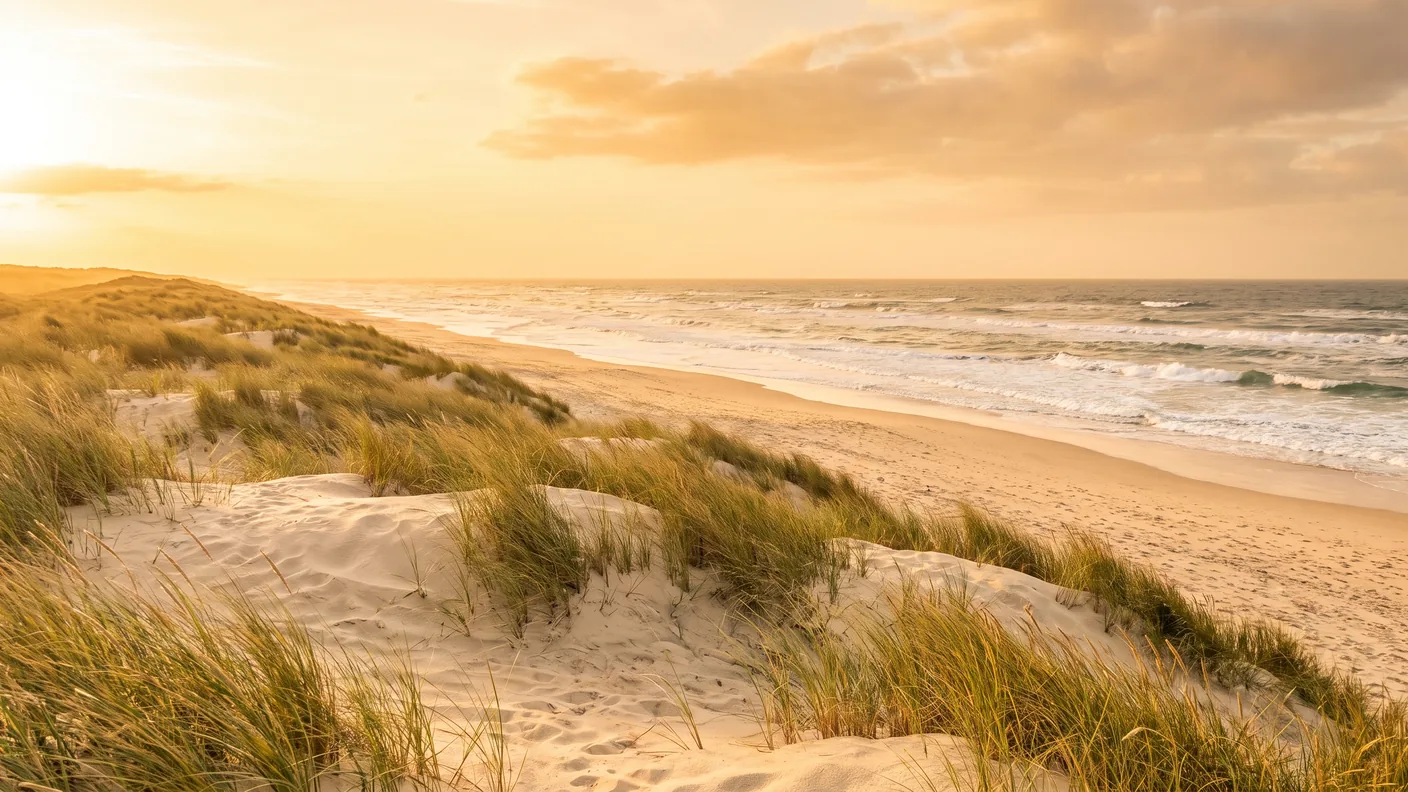
The Carcans ocean resort—not to be confused with Maubuisson, its neighbor right on the lake. A long sandy beach at the edge of a pine forest, two lifeguard-patrolled beaches, a calm beach break, and a dynamic dune managed by the ONF—the Atlantic Ocean just 1 hour and 10 minutes from Bordeaux.
Carcans-Plage at a Glance
Carcans-Plage—or Carcans-Océan—is the Atlantic coastline of the town of Carcans, 1 hour and 10 minutes from Bordeaux. It features a long sandy beach at the foot of a pine forest, two lifeguard-patrolled beaches, a beach break known for being calm, and a dynamic dune that the ONF allows to evolve naturally. It’s often confused with Maubuisson, the town’s other resort: but Maubuisson overlooks Lake Hourtin-Carcans, while Carcans-Plage is right on the ocean. Five kilometers of forest separate the freshwater from the saltwater. Here, swimming is a challenge: rip currents make the Atlantic dangerous year-round, and swimming is only allowed between the flags. This guide distinguishes between verified facts and common assumptions—what pertains to the ocean resort, what belongs to the lake, and what makes for an easy day at the beach from Bordeaux. For information on the town, the lake, and Bombannes, see our article on Carcans.
| Landmark | Details |
|---|---|
| Type of venue | Oceanfront resort town in the municipality of Carcans (Gironde, 33, Médoc) |
| Not to be confused with | Maubuisson, a lakeside resort in the same municipality (on the shore of the lake) |
| Local Distances | ~13 km from the town of Carcans, ~5 km from Maubuisson |
| Must-Sees | Supervised ocean beach, surfing, dunes managed by the ONF |
| From Bordeaux | 65 km · 1 hr 10 min · starting at €124 |
Carcans-Plage, a resort that grew out of seaside tourism, has retained a human scale: no large, concrete boardwalk, but rather streets that lead to the dunes, seasonal shops, and the ocean as its only horizon. Everything here revolves around the beach and the forest. It is this simplicity—and the lake’s immediate proximity—that defines its identity and sets it apart from the more urbanized resorts along the coast. People come here for the Atlantic; they stay for the light filtering through the pine trees and the tranquility of the late afternoons.
Where is Carcans-Plage located?
Carcans-Plage, also referred to as Carcans-Océan on maps and signs, is the Atlantic coastline of the town of Carcans, in the heart of the Médoc region in Gironde. It is a string of villas and residences nestled between the maritime pine forest and the dune ridge, opening directly onto the ocean. The resort is located about 13 kilometers from the town of Carcans—the municipality’s historic village, which remains inland—and just 5 kilometers from Maubuisson, which can be reached via Departmental Road D207. This proximity has led to persistent confusion: while the two resorts belong to the same municipality, they do not face the same body of water at all.
It’s important to make a key distinction here, as it determines how you’ll spend your day there. Carcans-Plage overlooks the Atlantic Ocean, with its waves, tides, and currents. Maubuisson, its neighbor, is a lakeside resort situated on the shores of Lake Hourtin-Carcans: there are no waves here, just calm, fresh water. And neither Carcans-Plage nor Maubuisson should be confused with the lake itself, which is officially named Lake Hourtin-Carcans. Another common misunderstanding: Carcans-Océan is not Lacanau-Océan. The latter is indeed a neighboring ocean resort, but it belongs to a different municipality, about ten kilometers to the south. For everything related to the municipality of Carcans, the lake, and the Bombannes base, please refer to our article on Carcans.
How far is it from Bordeaux?
From Bordeaux, it’s about 65 kilometers and a 1-hour, 10-minute drive to Carcans-Plage. The route winds through the Médoc region, then heads into the Landes Forest before reaching the coast. The distance may seem modest on paper, but the final stretch winds through the pine forest and ends at beach access roads that are intentionally restricted: parking logistics often play a bigger role in planning a day trip than the distance itself, especially in the middle of summer. It’s therefore better to think in terms of time and access constraints rather than just distance.
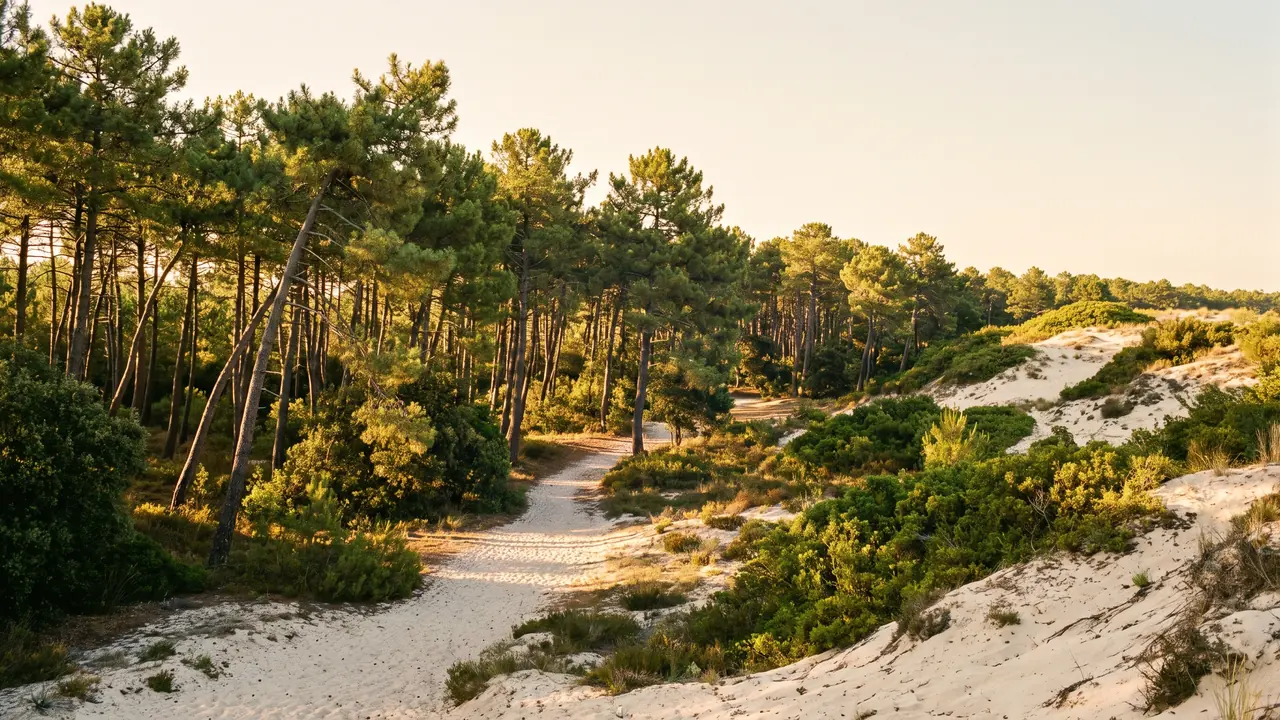
On this journey, you gradually leave behind the hustle and bustle of the city and enter a completely different rhythm. The vineyards of the Médoc give way to pine trees, the light changes, and you can sense the ocean even before you see it. It’s a quick change of scenery: in 1 hour and 10 minutes, you go from the city to the open sea. Whether for a simple day at the beach or a weekend getaway, this proximity makes Carcans-Plage one of the most accessible Atlantic getaways from Bordeaux—and one of the easiest to plan on a beautiful summer morning.
Carcans-Plage, Maubuisson, Carcans: Which Is Which?
To avoid getting lost, keep in mind that the municipality of Carcans comprises three distinct areas. The town of Carcans is the original village, located inland. Maubuisson is the lakeside resort, popular for its freshwater swimming and the nearby Bombannes recreation center. Finally, Carcans-Plage is the ocean resort—the one described in this guide. Five kilometers of forest separate the freshwater of Maubuisson from the saltwater of Carcans-Plage: a transition that takes just a few minutes by car or bike, and which is what makes a stay here—between the lake and the Atlantic—so charming.
| From Carcans-Plage | Approximate distance |
|---|---|
| Maubuisson (Lake Station) | ~5 km via the D207 |
| The Village of Carcans | ~13 km |
| Lacanau-Océan (another municipality) | ~10–12 km south |
| Hourtin-Plage | to the north, along the coast |
| Bordeaux | 65 km (1 hr 10 min) |
The ocean beach and swimming
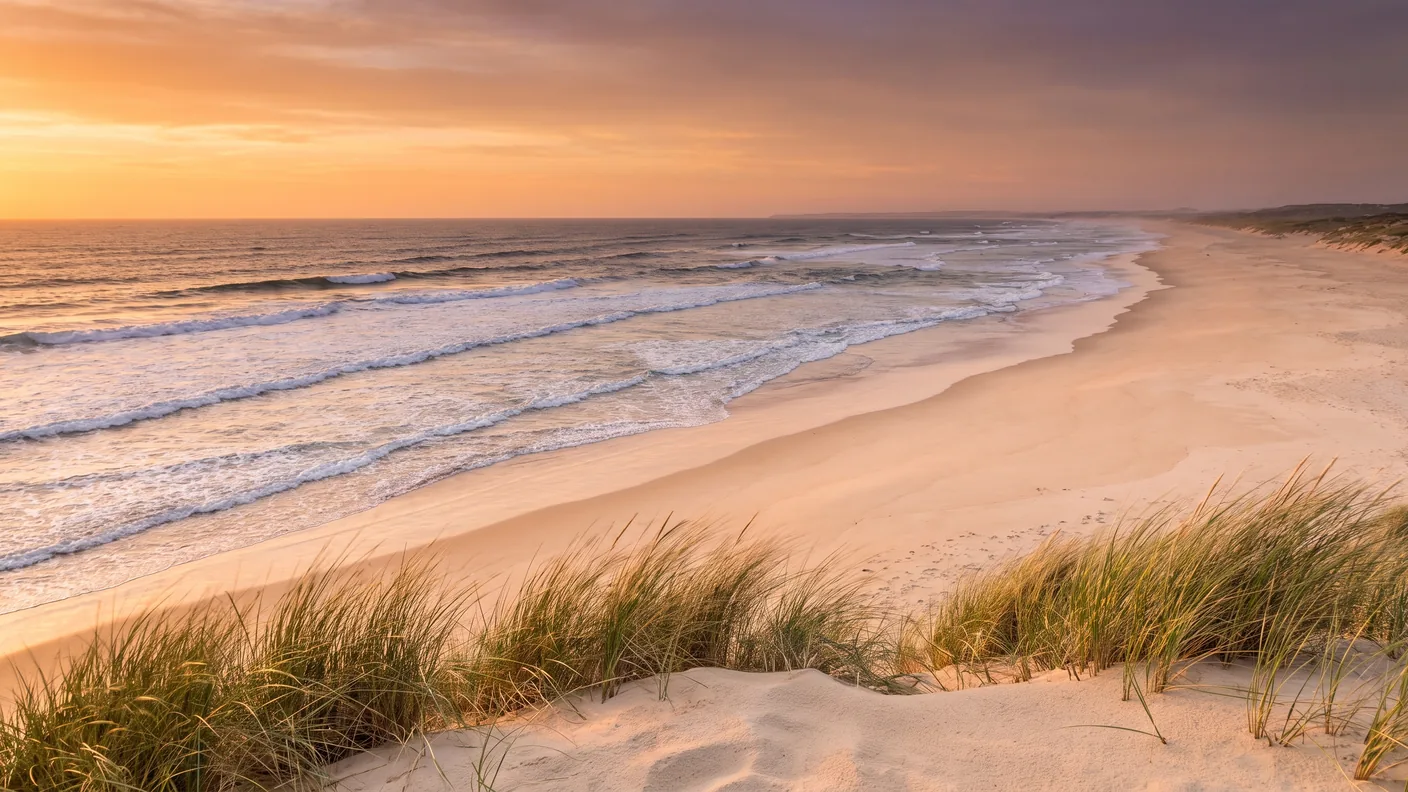
Carcans Beach is a long, unbroken stretch of sand, stretching from the edge of the pine forest to the breaking waves of the Atlantic. Here, the beach literally meets the forest: you go from the shade of the pine trees to the vast open expanse of the foreshore in just a few dozen meters, with no urban transition and no concrete boardwalk. This stretch of coastline explains the prevailing sense of space, even at the height of summer. Visitors naturally congregate around the developed access points; you just need to walk a short distance in either direction to find a stretch of sand all to yourself.
Swimming takes place at two supervised ocean beaches.[1] The South Beach is the main one: that’s where the lifeguards are on duty and where the only lifeguard station is located, at the top of the beach. The North Beach is a second swimming area, open and supervised during peak season when visitor numbers warrant it. Outside these marked and patrolled areas, swimming is unsupervised—a crucial point on a coastline where the currents are treacherous and where the help of lifeguards can make all the difference.
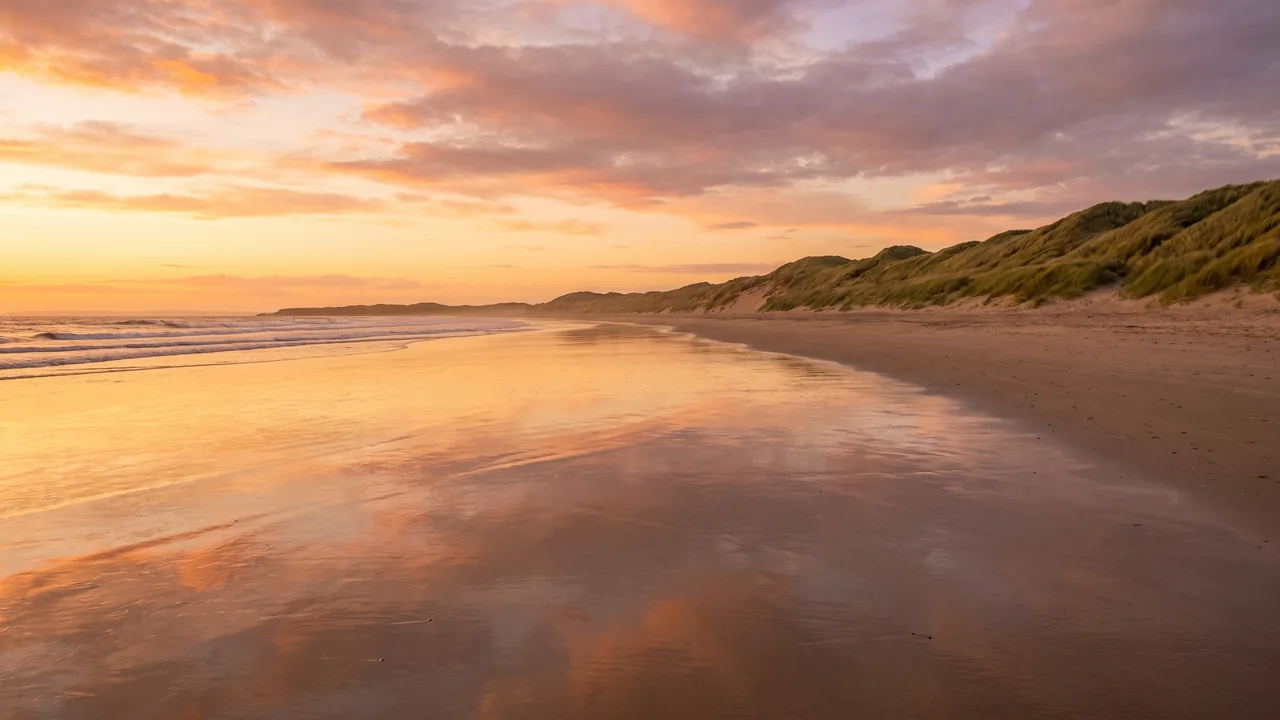
The rhythm of the tides shapes the day. At low tide, the foreshore reveals itself as a wide strip of damp sand, perfect for walking and playing; at high tide, the ocean laps at the base of the dune and the beach narrows. This ebb and flow is more than just a backdrop: it determines the location of swimming areas and the formation of currents. So we always keep an eye on sea conditions and the lifeguards’ instructions, as they adjust the supervised swimming area throughout the day.
This lack of heavy development gives the beach an almost untamed feel. Both north and south of the access points, the sand stretches as far as the eye can see, bounded only by the dunes and the forest. It’s a rare luxury on such a popular coastline: the chance to find solitude just a few minutes’ walk away, to listen to the surf without the hubbub, and to rediscover the feeling of an ocean that’s still somewhat untouched. This unspoiled natural setting, as much as the waves themselves, is what keeps regular visitors coming back season after season.
Around the main entrances, the resort is home to most of the seasonal amenities: places to eat, drink, and enjoy the day without having to leave. This is where the summer heart of Carcans-Plage beats, while the rest of the coast remains in its natural state. This clear layout makes it easy to spot key landmarks right away: the lifeguard station, at the top of South Beach, serves as a guide for first-time visitors.
Two supervised beaches: South and North
The distinction between the two beaches is not insignificant. The South Beach is where most of the services and lifeguard coverage are concentrated: it’s the default destination, the one people instinctively head toward. The North Beach provides additional capacity during the height of summer, with the opening of a second swimming area that helps alleviate crowding. Be careful, however, not to confuse these ocean beaches with the supervised beach at Bombannes: the latter borders the lake on the Maubuisson side and is a freshwater swimming area—nothing like the waves and currents of the Atlantic.
- South Beach: main beach, lifeguards, single lifeguard station at the top of the beach
- North Beach: Second swimming area, supervised when a second swimming zone opens at the height of the season
- Outside marked areas: no supervision; swimming is strongly discouraged
- Bombannes Supervised Beach: lakeside (on the shore of the lake), not to be confused with the ocean
Is the beach accessible to people with limited mobility?
Yes. Carcans-Plage has three beach access points, including one specifically designed for people with limited mobility. The lifeguard station provides “tiralos”—amphibious beach chairs that allow users to enter the water or move across soft sand. It’s a good idea to check with the lifeguards on site regarding availability times and terms of use, as this service is available only during lifeguard hours. The marked trails that cross the dunes also make it easier to reach the sand without trampling the vegetation.
| Landmark | Details |
|---|---|
| Weekends and holidays (May–June) | South Beach (lifeguard-patrolled), typical hours: ~12:00 p.m.–6:30 p.m. |
| July 1 – August 31 | South Beach (lifeguarded), typical hours: ~11 a.m.–7 p.m. |
| Seasonal Peak | Opening of a Second Swimming Area (North Beach) |
| First-Aid Station | Unique, at the top of South Beach |
| Accessibility | 3 beach access points + 1 accessible access point; ask for them at the lifeguard station |
Baines and Safety
On the Côte d'Argent, the beauty of the ocean should never make us forget how dangerous it can be. In Carcans, as along the entire Médoc coastline, the main danger has a name: the rip current. It’s a phenomenon that’s almost invisible to those unfamiliar with it, and every summer it traps swimmers who are otherwise comfortable in the water. Understanding the rip current, knowing how to spot it, and following a few simple rules are the keys to your safety. This isn’t just a technical detail for surfers—it’s the first thing you need to know before stepping into the water.
Why is the ocean dangerous in Carcans?
A baïne is a basin carved into the sand by the action of the current, wind, and swell.[2] At low tide, this basin holds water that appears calm, shallow, and almost warm—a veritable natural swimming pool that’s incredibly tempting for families. That’s where the danger lies—precisely in this appearance of tranquility. When the tide comes in, the water pooled in the baïne rushes back out to sea, creating a powerful outgoing current capable of sweeping an adult past the sandbars in a matter of moments.
This mechanism makes the ocean dangerous year-round, not just at the height of summer. The currents flowing over sandbars can catch even strong swimmers off guard, because you’re not fighting against waves but against a mass of moving water. Trying to swim back to the beach against the current is the most dangerous reflex: you’ll exhaust yourself without making any progress. The right thing to do if you feel yourself being swept away is not to panic, to signal your presence by raising an arm, and to let the current carry you until lifeguards intervene—which, once again, means swimming only where they are on duty.
How can you swim safely?
The rule is simple and non-negotiable: swimming is permitted only between the flags, within the marked area supervised by lifeguards, during lifeguard hours. This zone is moved every day depending on sea conditions and the location of rip currents, specifically to avoid the most treacherous spots. Outside this zone, there are no lifeguards on duty and rescue is not guaranteed. Be especially wary of areas of calm water at low tide: this smooth water, so inviting in appearance, is often a sign of a rip current.
These guidelines apply to everyone, including experienced swimmers and well-trained athletes. The ocean doesn’t discriminate based on skill level—it punishes carelessness. When you arrive at the beach, take the time to check the flags, ask the lifeguards for advice, and observe where others are swimming—this is the best habit to develop. A successful swim in Carcans starts with proper preparation—and once you’ve adopted this caution, you can fully enjoy the ocean.
- Swim only in the area marked by flags, when lifeguards are on duty.
- Please observe the lifeguard hours at South Beach (and North Beach during peak season)
- Be wary of calm, shallow areas at low tide: these are often eddies
- If there is a current, do not fight it head-on: signal your presence and let the current carry you while you wait for help
- Supervise children at all times, even in shallow water
Surfing in Carcans-Océan
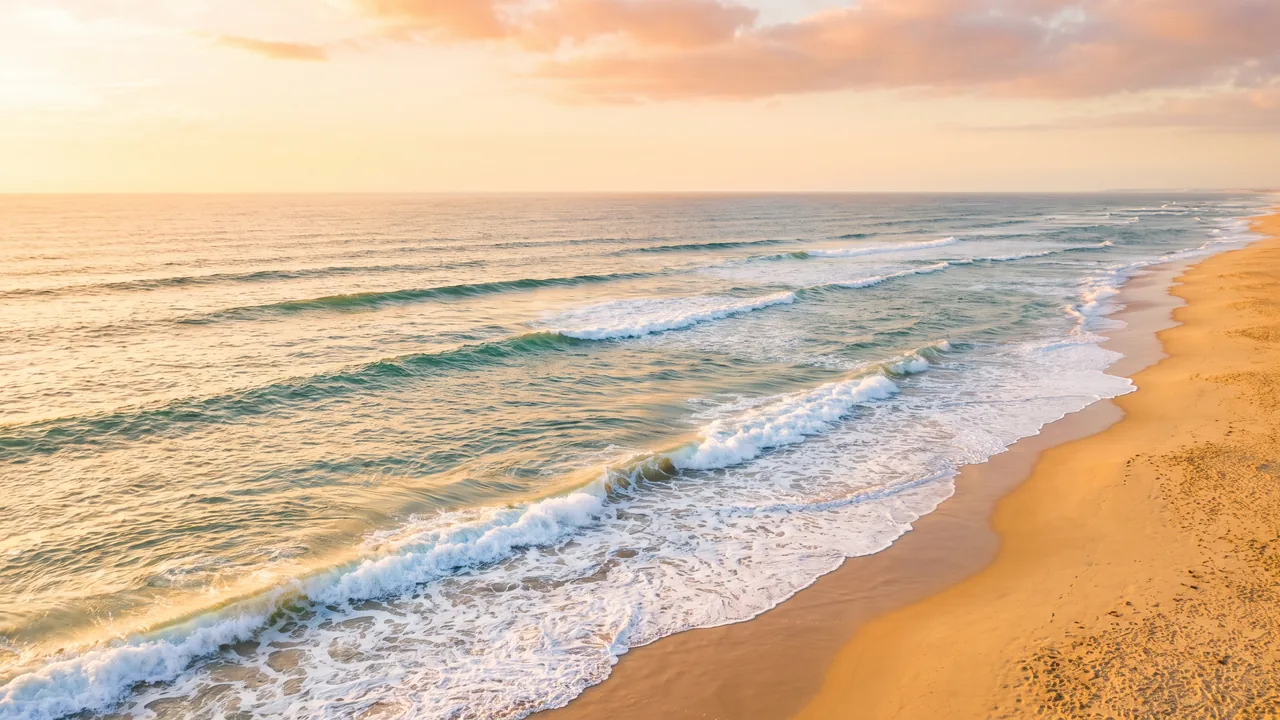
Carcans-Océan is a popular surf beach with a consistent beach break—that is, waves that break over sandbars, without rocks or reefs. This type of seabed, which is more forgiving than a reef, makes it a spot that’s considered suitable for all skill levels: from first steps on a foam board to more challenging sessions for experienced surfers. The same Atlantic swell that makes swimming challenging here is a delight for surfers from spring through fall.
Above all, Carcans-Océan has a reputation for being a quieter spot than its neighbors. On the Côte d’Argent, where some resorts are very popular, Carcans stands out as a laid-back alternative: there’s more space in the lineup, a less rushed atmosphere, and the same backdrop of dunes and pine trees as just a few kilometers to the south. For a beginner who wants to learn without the crowds, as well as for a surfer looking for space, this is a major draw—and one of the reasons why many regulars remain loyal to it.
Where can I learn to surf?
Several schools certified by the French Surfing Federation offer beginner and advanced lessons in Carcans-Océan.[3] The most iconic is the Carcans Océan Surf Club, which has been operating since 1984 and is located at the foot of the dune: it offers lessons for children as young as 6, welcomes surfers with disabilities, and is open from April through October. Other organizations are clustered around it, rounding out the offerings along the beach—from the surf truck parked at the south parking lot to the year-round schools. During peak season, it’s best to book your session in advance, as spots fill up quickly.
A session almost always begins on shore, with safety instructions and an overview of the water conditions: identifying eddies, understanding currents, and choosing the right time during the tide. That’s also what people come to a school for—not just the technique, but knowledge of an ocean that can’t be taken for granted. Instructors tailor the session to the swell and the tide, and the introductory session takes place in a designated area, away from hazards, making supervised instruction the safest way to discover surfing here.
- Carcans Océan Surf Club (COSC): Since 1984, at the foot of the dune, lessons for ages 6 and up, welcoming surfers with disabilities, from April through October
- Inspir'Ocean: FFS-certified surf school
- Barsou Surf School: You can spot it by its surf truck parked in the south parking lot
- La Sud: Surf School on the Beach
- Les Loubines: A Club for Beginners and Advanced Players
Why Carcans rather than another resort?
The choice often comes down to the atmosphere. Carcans-Océan offers waves comparable in quality to those at neighboring resorts along the Côte d’Argent, but with fewer crowds and a setting that has remained very natural, without a concrete-lined waterfront. It’s this combination—accessible waves, plenty of space at the peak, and a backdrop of dunes and pine trees—that appeals to regulars and families alike. Keep in mind, however, that the same safety rules apply to both surfing and swimming: rip currents and undertows are present here as well, so stay alert to the supervised area—even when you have a board under your arm.
The surfing season is quite long, just like the schools, which are open from April through October. Spring and fall, which are quieter, often offer ideal conditions for improving your skills, away from the summer crowds. In summer, gentler swells and warmer water are perfect for beginners and children, who ride their first waves on foam boards. Each season has its own atmosphere, but the backdrop of dunes and forest remains the same, as does the need to stay vigilant around the ocean.
The Dunes, the ONF, and Flexible Management
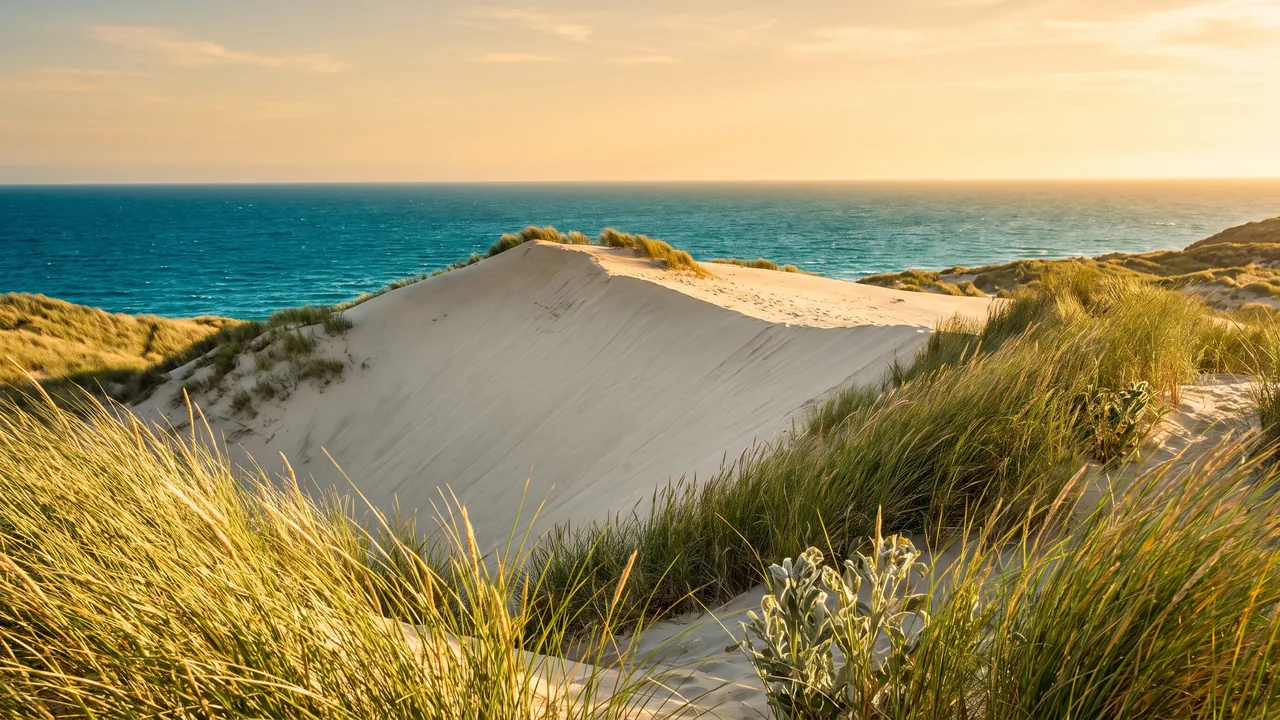
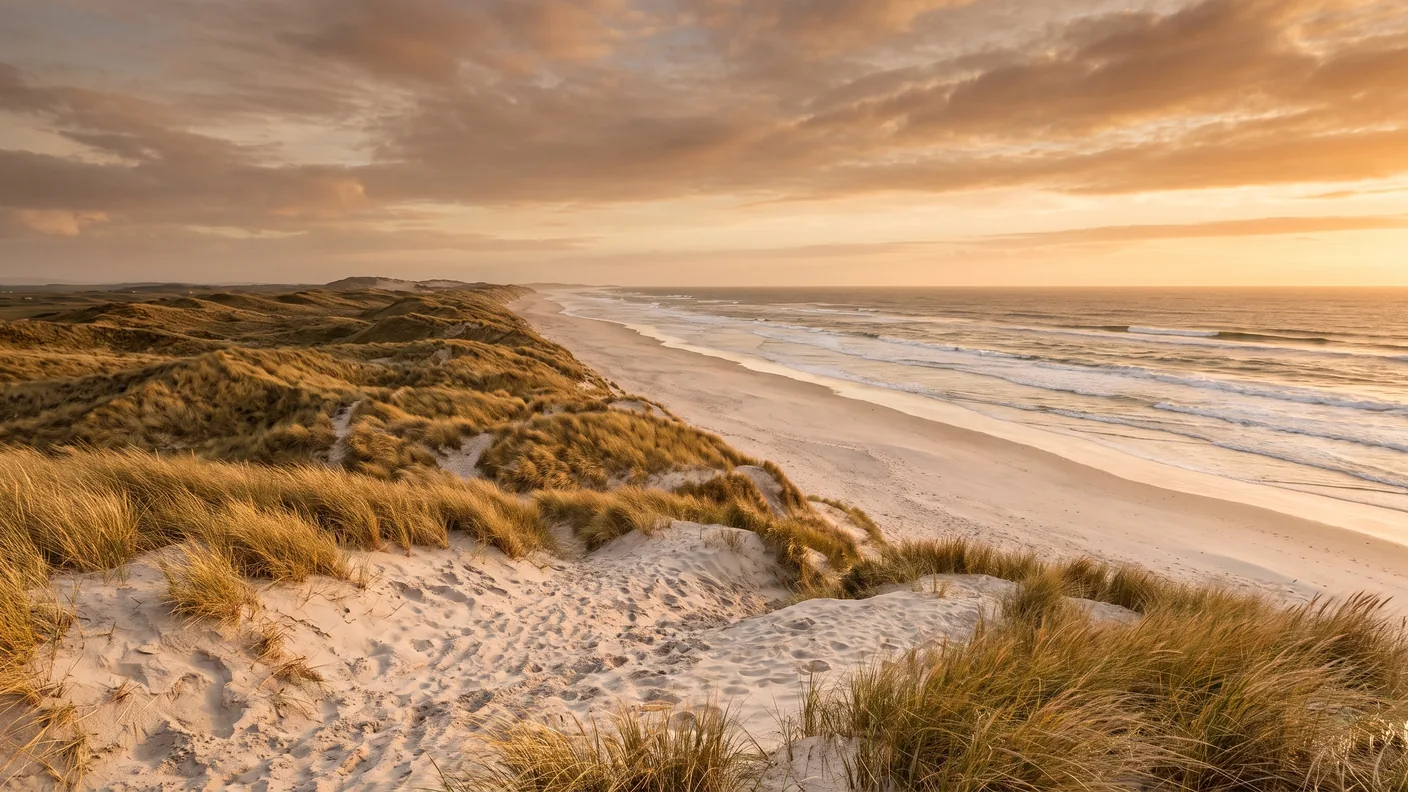
Behind the beach rises the dune, a wall of pale sand crowned with marram grass. Far from being merely a postcard-perfect backdrop, this dune ridge is a living natural structure, monitored and maintained by the National Forestry Office (ONF). Along the entire Aquitaine coastline, the ONF manages approximately 400 kilometers of state-owned dunes and some 90,000 hectares of dune forests—a considerable natural heritage, of which the Carcans dune is just one link, but an exemplary one in terms of how these environments are protected today.
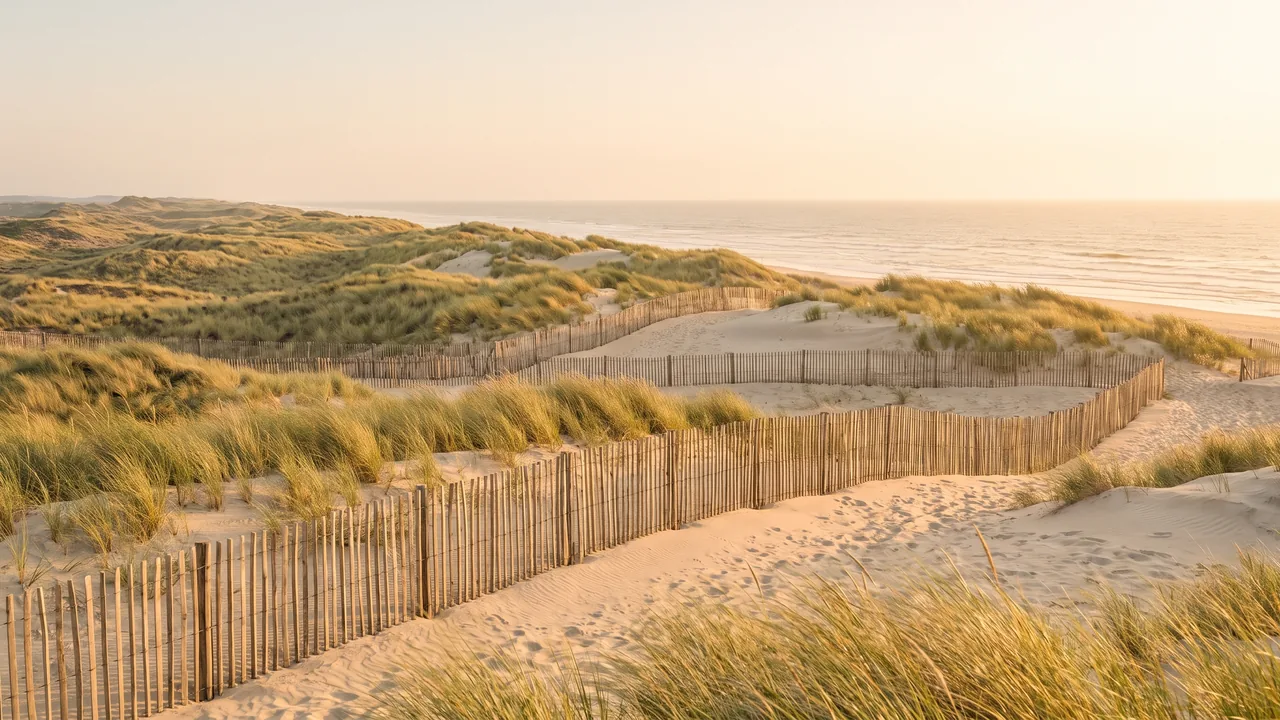
The ONF’s work combines monitoring, public outreach, and ecological engineering. To slow the wind and retain sand, windbreaks—such as coconut-fiber nets and wooden fences—are installed, and branches are laid out; but above all, marram grass is planted—a grass with long roots that anchors the dune and helps it regenerate after strong winds. The goal is not to freeze a landscape in time, but to maintain a natural barrier between the ocean and the forest—one capable of withstanding storms and protecting the inland areas.
What is flexible dune management?
This is where Carcans really stands out. Since 2016, the resort has been one of the pilot sites—along with La Teste-de-Buch—for an approach known as flexible, or adaptive, dune management.[4] The idea breaks with the old reflex of stabilizing everything at all costs. In areas where erosion has thinned the dune ridge, the decision is now to let the dune “transit”—that is, to move with the wind and “breathe”—rather than forcibly keeping it in a fixed location that no longer reflects the reality of the coastline.
This approach may seem counterintuitive, but it is based on sound logic. A dune that is free to move better retains its sand and continues to serve as a natural barrier against the ocean; fixing it in place where it is thinning out would, in the long run, weaken it. Flexible management therefore views the movement of sand as an ally rather than an enemy, and adapts infrastructure—access points, plantings, windbreaks—rather than fighting head-on against erosion that cannot be stopped. It is a minor revolution in approach, and Carcans serves as one of its real-world testing grounds.
What are ganivelles and marram grass used for?
The wooden slat fences—those barriers made of wooden slats driven into the sand—are neither decorative features nor bike racks. They mark fragile areas, channel foot traffic, and indicate sections that must not be crossed under any circumstances. Walking outside the designated paths tramples the beach grass, loosens the sand, and accelerates erosion: a seemingly harmless action, but when repeated by thousands of visitors, it undoes the patient work of the ONF. Respecting the markings and staying on the designated paths means you’re directly contributing to the preservation of the beach and its dunes.
Observing the dune is also a way of reading the recent history of the coastline. Winter storms erode the coastline; in some years, the sea advances by several meters, and the forest retreats by the same amount. In the face of this change, flexible management is not a sign of resignation but a deliberate strategy: working with nature rather than trying to contain it at all costs. The attentive visitor is treated to a living spectacle, where every sand dune crest and every tuft of marram grass tells the story of the ongoing dialogue between the wind, the ocean, and the people who watch over this coastal barrier.
- Oyat: a grass planted to stabilize the sand and restore the dune
- Ganivelles: wooden barriers that mark off sensitive areas and control access
- Windbreaks (coconut fiber netting, branches): slow down the wind and hold back the sand
- Flexible management (pilot site since 2016): the dune is allowed to shift where it has thinned out
- Visitor guidelines: Stay on the designated paths; do not climb over the fences.
Access and Parking
Going to the beach in Carcans-Plage requires a little advance planning, especially during peak season. Access roads are intentionally limited to protect the dunes, and parking is subject to specific rules during the summer months. Being well-prepared helps you avoid driving around in circles on a busy day, when every parking spot is in high demand. The overall logic is clear: fewer cars near the sand means more space for pedestrians, bicycles, and the dune itself.
Parking may be subject to a fee during the high season in certain areas of Carcans-Plage and Maubuisson. The dates, times, zones, and any free parking periods are subject to change: please check the guidelines published by the City of Carcans before you leave.
Where can I park in Carcans-Plage?
Park in the designated parking lots and areas behind the dune, near the beach access points. These access points—three in total, plus one designed for people with limited mobility—are designed to preserve the dune system: you reach the sand via marked paths, without crossing the dune at random points. During peak season, parking spots fill up quickly and traffic gets heavier on the last few kilometers; arriving early in the morning is still the best way to park without stress and enjoy the beach before the crowds arrive.
Another strategy is to leave the car behind. Since the resort is accessible on foot and by bike, and the lake is only five kilometers away, many visitors opt for sustainable transportation once they arrive. Bike paths lead to the beach, helping to avoid the scramble for parking spots during peak hours. That’s the whole spirit of the resort and how it’s managed: fewer cars at the edge of the dunes, more space to walk, bike, and breathe, in an environment we’re striving to preserve.
Is parking paid year-round?
No, and this is a misconception that is often repeated. Paid parking applies only from May 1 to September 30. Outside of this period, parking in Carcans-Plage is free. Moreover, the revenue collected during the season is not an end in itself: it funds the maintenance of roads and beaches, as well as erosion control, while making more room for pedestrians and cyclists. It is also a deliberate measure to relieve congestion around the dune during peak hours and make the resort more pleasant to visit.
| Period / Reference Point | Parking |
|---|---|
| May 1 – September 30 | Paid parking from 9 a.m. to 7 p.m., 7 days a week (Carcans-Plage and Maubuisson areas) |
| Off-season (October–April) | Free |
| Daily Free Access | 30 free minutes, once a day |
| Pricing | 2 fare zones; annual pass available |
| Earmarked Revenue | Roads, Beaches, and Erosion Management |
From the Lake to the Ocean by Bike
One of Carcans’s greatest attractions is that you can experience both the ocean and the lake in a single day. The Vélodyssée—the EuroVelo 1 cycling route that runs along the entire French Atlantic coast—passes through Carcans-Maubuisson and connects the ocean at Carcans-Plage to Lake Hourtin-Carcans via trails winding through the pine forest.[5] Around Maubuisson, approximately 120 kilometers of bike paths crisscross the forest, sheltered from traffic. This allows you to go from saltwater to freshwater without ever leaving the shade of the trees.
In practical terms, the transition between the two bodies of water takes just a few minutes. People often say that “five kilometers separate saltwater from freshwater”: that’s the distance between the ocean beach and Maubuisson via the D207, which is about an eight-minute drive. By bike, the forest trails offer a shaded, car-free alternative that’s very popular with families with children. Many vacations here are built around this alternation: the waves and the fresh ocean air in the morning, a peaceful swim in the lake in the afternoon—or the other way around, depending on the weather and the tides.
From the beach to the lake: how many kilometers?
Distance by bike is easy to remember. From Maubuisson and the Bombannes base to the ocean, it’s about 4 to 5 kilometers—a leisurely 20-minute bike ride. To the south, Lacanau-Océan is about 10 to 12 kilometers from Carcans-Plage via a trail that winds through the pine trees. And for the more ambitious, the section connecting Hourtin-Plage to Lacanau-Océan, via Carcans, covers 34 kilometers along the coast—a wonderful day’s bike ride from one ocean resort to the next.
- Maubuisson / Bombannes ↔ ocean: ~4–5 km, about 20 minutes by bike
- Ocean Beach ↔ Maubuisson via the D207: ~5 km, about 8 min by car
- Carcans-Plage ↔ Lacanau-Océan: ~10–12 km of trail through the pine trees
- Hourtin-Plage ↔ Lacanau-Océan (via Carcans): ~34 km route
- Around Maubuisson: ~120 km of bike trails through the forest
This network does more than just connect two swimming spots. It opens up to dozens of kilometers of forest, where you’ll encounter just as many families out for a stroll as long-distance cyclists following the Vélodyssée from stage to stage, from north to south along the Atlantic coast. Cycling here means exploring the coastal Médoc at your own pace, in the shade of the pine trees, with the freedom to head toward the ocean or the lake, depending on your mood at the moment. For many visitors, cycling quickly becomes the most natural—and most enjoyable—way to get around.
The Market and Activities
Life in a seaside resort also revolves around its market, and Carcans-Océan is no exception. It’s held at Place Marcel Prévôt, in the heart of the resort, just a stone’s throw from the beach. During peak season, it’s a hub for local produce, colorful stalls, and a summery atmosphere—the perfect opportunity to put together a beach picnic or take a leisurely stroll in the cool air before heading to the ocean. Beach bars and restaurants round out the offerings during the summer, letting you extend your day right there.
When is the market held?
The Carcans-Plage market takes place on Monday mornings, from mid-June to mid-September. During the summer months, there’s also a night market on Thursday evenings in July and August—perfect for a leisurely stroll after a day at the beach. Be careful not to confuse it with the Carcans-Maubuisson market, on the lake side, which is held on Wednesday mornings and as a night market on Friday evenings. Two towns, two markets, two separate schedules: it’s best to know this so you don’t go on the wrong day.
Beyond the market stalls, these events set the pace for the season and bring residents and vacationers together. The night market, in particular, extends the summer evenings: visitors stroll through it after a day at the beach, browsing among artisans and small-scale producers, in the relaxed, family-friendly atmosphere of a quiet resort town. It’s a great time to get a feel for the place, sample local specialties, and leisurely plan the next day’s activities—ocean or lake, depending on the tide and the weather.
- Carcans-Plage Market (Place Marcel Prévôt): Monday mornings, from mid-June to mid-September
- Carcans-Plage Night Market: Thursday evenings in July and August
- Carcans-Maubuisson Market (lake side): Wednesday morning
- Maubuisson Night Market: Friday evening
- Beach bar and restaurant open during the season
What is there to do in Carcans-Plage?
People come to Carcans-Plage primarily for the ocean, but the resort offers much more than just swimming. You can spend the morning on the sand at Plage Sud, which is monitored by lifeguards, then head over to Lake Maubuisson a few kilometers away in the afternoon to enjoy its calm, fresh water. You can take your first surfing lesson at a beach break known for being beginner-friendly, under the guidance of a certified school. You can hop on a bike and ride from the ocean to the freshwater lake along the Vélodyssée’s forest trails, in the shade of the pine trees. You can stroll through the market at Place Marcel Prévôt on a summer Monday morning, or enjoy the night market on Thursday evenings. Finally, you can walk along the dunes, observe the work of the ONF, and appreciate the fragility of this living coastline. The one rule that’s never up for debate is safety in the water.
- Swim in the supervised area (South Beach, North Beach during peak season)
- Take a surfing lesson at an accessible beach break with an FFS-certified school
- Ride your bike from the ocean to the lake along the Vélodyssée (~5 km to Maubuisson)
- Stroll through the market at Place Marcel Prévôt (Monday mornings; open late on Thursday evenings during the summer)
- Enjoy the beach, which is accessible to people with disabilities (special access, beach wheelchairs available at the lifeguard station)
- Walk through the dunes and the pine forest, staying within the fenced-off areas
- Combine the ocean (Carcans-Plage) and lakes (Maubuisson, Bombannes) in a single day
| Desire | On site |
|---|---|
| Supervised Swimming | South Beach (main), North Beach during peak season |
| Surfing | Accessible beach break, FFS schools (COSC since 1984, Barsou, La Sud...) |
| Bicycle | Vélodyssée, ~5 km from the ocean to Lake Maubuisson |
| Market | Place Marcel Prévôt, Monday mornings and Thursday evenings (summer) |
| Accessibility | 3 entrances, including 1 accessible entrance; please direct them to the first-aid station |
| Co-ed Day | The ocean in the morning, Lake Maubuisson in the afternoon |
There is one rule that applies to all these activities: in the ocean, you may only swim between the flags, within the supervised area, and during supervised hours. Rip currents and strong currents make the Atlantic a challenging body of water year-round, and no view, no matter how beautiful, is worth taking a risk. With this caution in mind, Carcans-Plage can be enjoyed to the fullest—from sunrise over the pine trees to the last swim before heading home.
Around Carcans-Plage
Carcans-Plage isn’t a dead end: the resort is part of a string of coastal and lakeside destinations that are easy to combine. Just a short distance away, Maubuisson and its lake beach, along with the vast Bombannes recreation center, offer the perfect contrast to the ocean—gentle swimming, water sports, and plenty of shade. The town of Carcans, further inland, retains the character of a Médoc village, with its shops and year-round life, far from the summer bustle of the seaside.
What's there to see in the area?
To the south, Lacanau-Océan—note that this is a different town—extends the Côte d'Argent with its beaches and livelier waterfront, about ten kilometers away. To the north lies Hourtin-Plage, another ocean resort in the Médoc region. And for everything related to the town of Carcans, Lake Hourtin-Carcans, and the Bombannes base, our article on Carcans goes into detail. You can also compare neighboring resorts using our guides to Lacanau-Océan and Le Porge-Océan, two other gateways to the Gironde’s Atlantic coast.
This cluster of sites is all within a very short radius, allowing for all kinds of combinations. You can spend the morning surfing in Carcans, have lunch in the village, go for a swim at Lake Maubuisson, and end the day on the beach watching the sun dip into the Atlantic. The coastal Médoc lends itself to these flexible itineraries, where the ocean and freshwater are never more than a few minutes apart: this is precisely what makes a stay in Carcans-Plage so special, nestled between two bodies of water and beneath the pine trees.
| Location | Distance | What You'll Find There |
|---|---|---|
| Maubuisson | ~5 km | Lake Beach, Bombannes Recreation Area (see the article on Carcans) |
| The Village of Carcans | ~13 km | The village and local businesses |
| Lacanau-Océan | ~10–12 km south | Nearby ocean station (in another municipality) |
| Hourtin-Plage | to the north | Another oceanographic station in the Médoc |
| Bordeaux | 65 km | Transfer pickup point |
Getting to Carcans-Plage from Bordeaux
The drive from Bordeaux to Carcans-Plage is about 65 kilometers and takes 1 hour and 10 minutes, passing through the Médoc region and then the forest. The route is straightforward, but the resort isn’t without its challenges: limited beach access, paid parking during the season, and scarce parking spots during peak hours. These are all minor inconveniences that can put a damper on a family day out, so it’s best to plan ahead before you leave.
How much does the ride cost?
Transfers between Bordeaux and Carcans-Plage start at €124 during the day for a sedan carrying one to three passengers. This is a fixed rate confirmed in writing before departure: no meter, no surprises upon arrival. A surcharge may apply at night, on weekends, and on holidays. For groups of more than four passengers, a van will be provided, based on a quote. Trips to Maubuisson, to the town of Carcans, or from Bordeaux Airport are also priced based on a quote, depending on the distance and time of day.
This starting rate includes door-to-door service: pickup at the address of your choice in Bordeaux or at the airport, a comfortable vehicle, and a direct route with no detours or mandatory stops. The advertised price is what you pay, regardless of traffic conditions along the way. For a group, a family loaded down with beach gear, or a same-day round trip, this budget transparency is often just as important as comfort when making a decision—you know in advance how much the trip will cost.
| Route | Distance | Duration | Starting at |
|---|---|---|---|
| Bordeaux → Carcans-Plage | 65 km | 1 hour 10 minutes | starting at 124 € |
| Bordeaux → Maubuisson (lake) | — | — | based on a quote |
| Bordeaux → the town of Carcans | — | — | based on a quote |
| Bordeaux Airport → Carcans-Plage | — | — | based on a quote |
| Return from Carcans-Plage | 65 km | 1 hour 10 minutes | based on a quote |
Why hire a private driver?
It’s not just a matter of convenience. In Carcans-Plage, parking becomes paid from May 1 through September 30, and spots near the dunes fill up quickly during the busiest times of the day. A driver drops you off right at the beach entrance, so you don’t have to drive around looking for a spot or feed the parking meter. On the way back, the driver returns at the agreed-upon time: you can enjoy your day without the hassle of parking and make the most of the ocean, surfing, or the lake before heading back to Bordeaux, feeling relaxed.
Frequently Asked Questions
Are Carcans-Plage and Carcans-Océan the same place?
Yes. Carcans-Plage and Carcans-Océan refer to the same seaside resort: the Atlantic coastline of the town of Carcans, in the Médoc region. Both names appear on maps and signs. It is located about 13 kilometers from the town of Carcans and 5 kilometers from Maubuisson. It should not, however, be confused with Lacanau-Océan, which is an ocean resort belonging to a different municipality, about ten kilometers further south.
How is it different from Maubuisson?
The difference lies in the water. Carcans-Plage overlooks the Atlantic Ocean, with its waves and currents. Maubuisson, the other resort in the town of Carcans, is situated on the shores of Lake Hourtin-Carcans: there, you’ll find calm, freshwater swimming, and the nearby Bombannes Recreation Center. About five kilometers of forest separate the two. Many visitors enjoy the ocean in the morning and the lake in the afternoon. For more on the town and the lake, see our article on Carcans.
Is swimming supervised at Carcans-Plage?
Yes, on two ocean beaches. The South Beach is the main one: it has lifeguards and a single first-aid station at the top of the beach. The North Beach is a second swimming area, which is supervised during peak season with the opening of a second swimming zone. Outside these marked areas and during non-supervised hours, swimming is not supervised. On this coast, you should only swim between the flags—never anywhere else.
What is a rip current, and why is it dangerous?
A sand trap is a basin carved into the sand by currents, wind, and swells. At low tide, it holds calm, shallow water, deceptive like a natural pool. As the tide comes in, the water flows out toward the open sea, creating a strong outgoing current capable of sweeping even a strong swimmer beyond the sandbars. This is why the ocean remains dangerous year-round in Carcans. Swim only in the supervised area, between the flags.
Can you surf in Carcans-Océan?
Yes, that’s actually one of the things it’s known for. Carcans-Océan offers a consistent beach break over sandbars, described as suitable for all skill levels. The resort is also known for being quieter than some of its more popular neighbors along the Côte d’Argent. Several schools certified by the French Surfing Federation offer lessons there, including the Carcans Océan Surf Club, which has been active since 1984 at the foot of the dune. Both surfing and swimming require the same safety precautions when it comes to currents.
Where can I learn to surf in Carcans-Plage?
Several FFS-certified schools offer introductory lessons. The most iconic is the Carcans Océan Surf Club (COSC), located at the foot of the dune since 1984: lessons for children as young as 6, welcoming surfers with disabilities, open from April through October. There’s also Inspir’Ocean, Barsou Surf School—recognizable by its surf truck in the south parking lot—La Sud, and Les Loubines. It’s best to book in advance during peak season, as slots fill up quickly.
Is parking paid in Carcans-Plage?
Parking may be subject to a fee during the high season in certain areas of Carcans-Plage and Maubuisson. The dates, times, zones, and any free parking periods are subject to change: please check the guidelines published by the City of Carcans before you leave.
Is the beach accessible to people with limited mobility?
Yes. Carcans-Plage has three beach access points, one of which is equipped for people with limited mobility. The lifeguard station, located at the top of South Beach, provides “tiralos”—amphibious beach chairs that allow users to approach or enter the water. Check with the lifeguards on site for rental hours and conditions. This equipment is available during beach patrol hours.
Why are the dunes marked with wooden fences?
The wooden fences—these barriers driven into the sand—mark the fragile areas of the dune and guide foot traffic; they are neither decorations nor bike racks. The ONF manages this dune ridge by planting marram grass and installing windbreaks. Since 2016, Carcans has been a pilot site for flexible management: where erosion thins the dune, it is allowed to shift so that it can continue to serve as a barrier. Staying on the designated access paths protects the beach.
Can you ride a bike from the lake to the ocean?
Yes, very easily. The Vélodyssée (EuroVelo 1) passes through Carcans-Maubuisson and connects the ocean to the lake via forest trails, with about 120 kilometers of trails around Maubuisson. From Maubuisson and Bombannes to the ocean, it’s about 4 to 5 kilometers—a 20-minute ride. To the south, Carcans-Plage connects to Lacanau-Océan via a 10- to 12-kilometer trail through the pine trees. This is one of the resort’s greatest pleasures: moving from fresh water to salt water while staying in the shade.
When is the Carcans-Plage market held?
The Carcans-Plage market is held at Place Marcel Prévôt on Monday mornings from mid-June to mid-September. In July and August, there’s also a night market on Thursday evenings. Be careful not to confuse it with the market in Carcans-Maubuisson, on the lake side, which takes place on Wednesday mornings and as a night market on Friday evenings. Two towns, two markets, two separate schedules. Beach bars and restaurants round out the offerings during the season.
How much does a trip from Bordeaux to Carcans-Plage cost with a chauffeur service?
The Bordeaux → Carcans-Plage route is available starting at €124 during the day for a sedan carrying one to three passengers. The price is fixed and confirmed in writing before departure; no meter is used. A surcharge may apply at night, on weekends, and on holidays; for more than four passengers, a van will be provided based on a quote. Trips to Maubuisson, the town of Carcans, or from Bordeaux Airport are priced based on a quote. The distance is approximately 65 kilometers, and the drive takes about 1 hour and 10 minutes.
Is it better to drive there or have someone drop you off?
It all depends on the season. In the summer, beach access points are limited, and parking is metered from 9 a.m. to 7 p.m., with spots filling up quickly. Getting a ride there saves you from having to drive around looking for a spot and dealing with the parking meter, especially on a busy day. During the off-season, parking is free again, so it’s less of an issue. In any case, it’s best to arrive early and plan your return time in advance.
Further Reading
- Book your transfer from Bordeaux to Carcans-Plage: fixed-price quote, confirmed in writing, with no obligation.
- All our destinations departing from Bordeaux and the surrounding area.
- Carcans: Lake Hourtin-Carcans, the ocean, and Bombannes — the town guide.
- Lacanau-Océan: beaches, surfing, and the waterfront.
- Le Porge-Océan: Gressier Beach and surfing.
Sources and References
- City of Carcans — Beach Information — Lifeguard Services, Swimming, and Access
- Médoc Atlantique — Beach Safety — Supervised Areas and Rip Currents
- Médoc Atlantique — Surfing — Spots and Schools in Carcans-Plage
- ONF — Dune and Erosion Management — Adaptive Management, Fence Panels, Beach Grass
- The Vélodyssée — Hourtin-Plage / Lacanau-Océan — stage via Carcans-Plage
Article updated on .
Heading for the Atlantic
Direct transfer from Bordeaux (1 hour 10 minutes) to the ocean beach in Carcans. Fixed-price quote in writing, with no obligation.