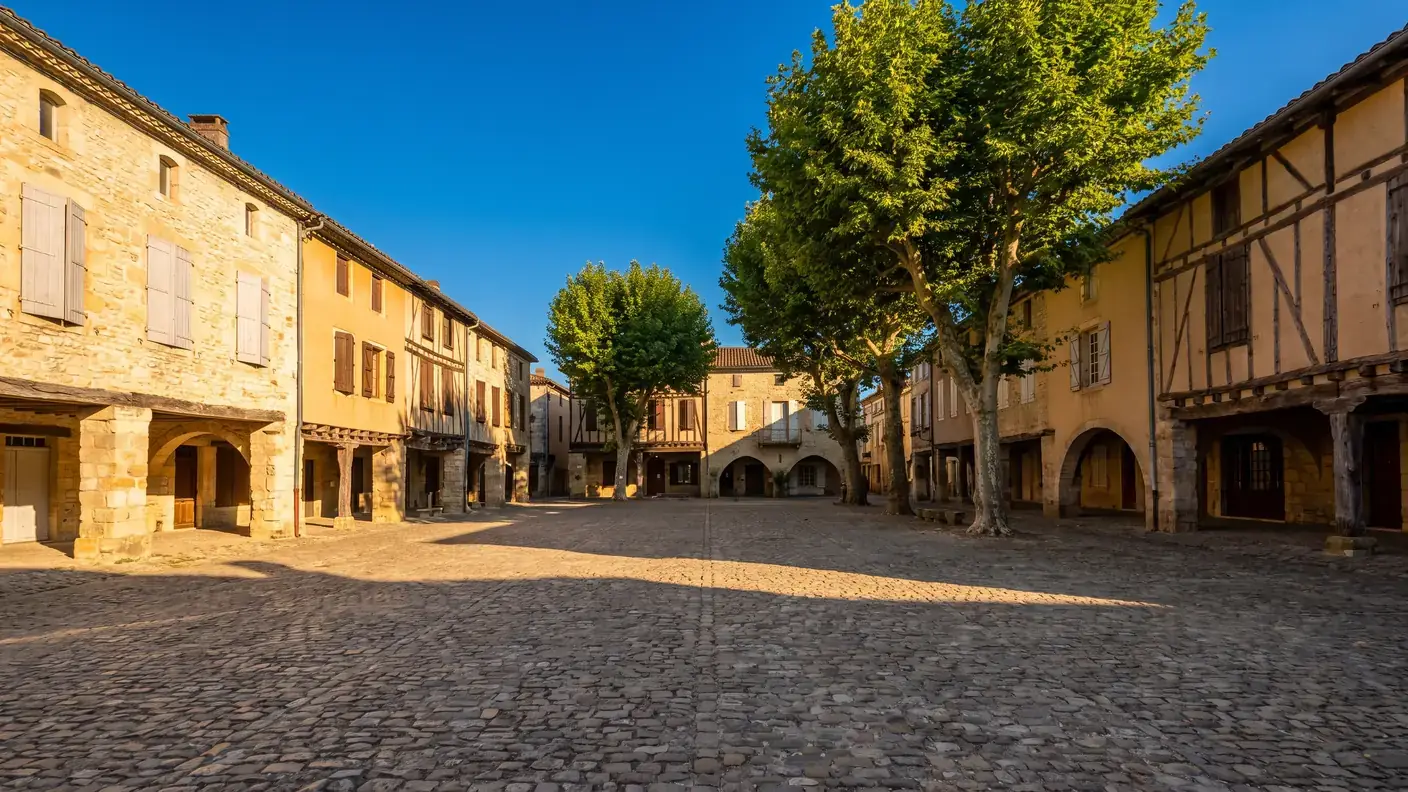
Bordeaux to Castillonnès: a 13th-century bastide
A bastide in the Haut-Agenais region, overlooking the Dropt Valley: founded in 1259 by Alphonse de Poitiers, it still features its Place des Cornières, its market hall, its ramparts, and a mansion built with wealth from sugar from the West Indies, located 2 hours and 15 minutes from Bordeaux.
Castillonnès at a Glance
Castillonnès is a bastide in Lot-et-Garonne founded on September 10, 1259, through a paréage initiated by Alphonse de Poitiers. [1]Perched above the Dropt Valley, it still features its Place des Cornières, its covered walkways, and a market hall dating from the early 20th century—not from the Middle Ages. [6]The Church of Saint-Pierre houses a 17th-century altarpiece listed as a cultural artifact, which was transferred from Agen Cathedral around 1846. [4]The Hôtel de Cours de Thomazeau, built around 1770–1775 and listed as a historic monument, bears witness to the wealth generated by sugar from the West Indies. The bastide had a population of 1,346 in 2023, no longer has a passenger train station, and is located about 147 km from Bordeaux. On Tuesdays, its market brings the town to life; it also serves as a convenient base for visiting Eymet, Issigeac, Bergerac, and Monbazillac. The detailed references at the end of the article distinguish the neo-medieval market hall from the heritage sites that are actually protected.
Here are the key details to know before you go. The distance, travel time, and fare information are taken from the Bordeaux–Castillonnès service page; the fares apply to a private driver reservation from Bordeaux, with a fixed price provided in advance.
| Landmark | Details |
|---|---|
| Department | Lot-et-Garonne (47), Nouvelle-Aquitaine |
| Status | Bastide · Haut-Agenais · Val du Dropt canton |
| Population | 1,346 residents (INSEE 2023) · the residents of Castillonné |
| Area | 19.4 km² · on the Dropt River, between Bergerac and Agen |
| Distance from Bordeaux | about 147 km · 2 hours and 15 minutes by car |
| Nearest train station | Bergerac — nearby TER station; no station in Castillonnès |
| Don't miss it | Place des Cornières, the market hall, the church and its altarpiece, the Hôtel de Thomazeau |
A word of honesty right off the bat, because Castillonnès blends authentic heritage with scenery: its charming market hall isn’t medieval but dates from the 20th century, and the treasure of its church—a massive, listed altarpiece—doesn’t come from here but from Agen Cathedral. These details, once you know them, make the visit even more enjoyable.
This guide covers everything you need to know before visiting: where Castillonnès is located and what makes it unique, the history of its founding as a bastide, its Place des Cornières and market hall, the Saint-Pierre Church and its altarpiece, the ramparts and the old town, the Hôtel de Cours de Thomazeau, its unique features (the movie theater and sister city partnerships), the notable sites in the surrounding area, and the easiest way to get there from Bordeaux.
Where is Castillonnès located?
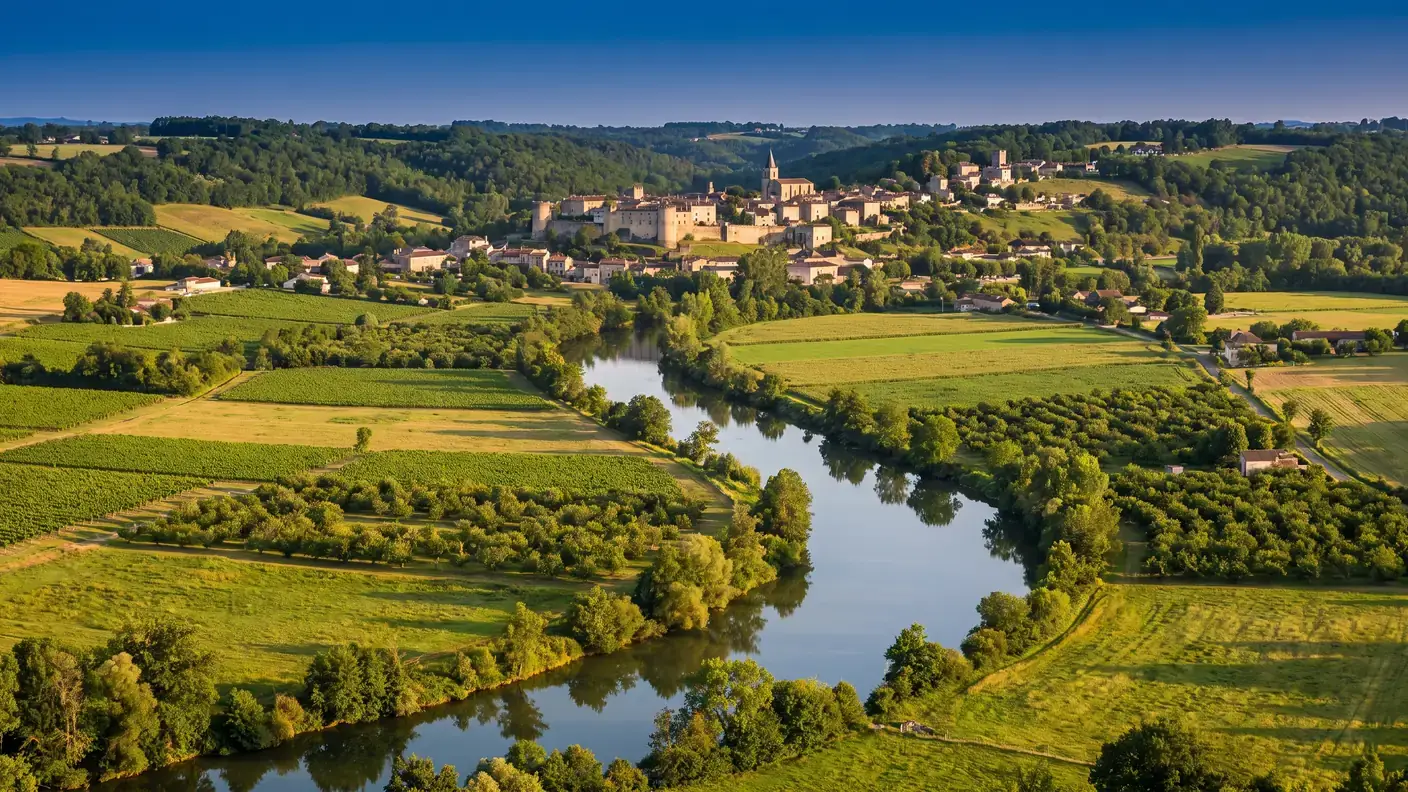
Castillonnès is located in Lot-et-Garonne (47), in Nouvelle-Aquitaine, in the northern part of the department, in the Haut-Agenais region, on a promontory overlooking the Dropt Valley. The town lies on National Route 21, the main road connecting Bergerac in the north to Agen in the south. Its coordinates are 44.65° N and 0.59° E; its INSEE code is 47057, and its ZIP code is 47330. It covers an area of 19.4 km² and is part of the “Bastides en Haut-Agenais Périgord” community of municipalities—a name that aptly describes its location at the junction of Lot-et-Garonne and the Dordogne. The Dropt, the river flowing below, has carved out a fertile valley, now crisscrossed by fields, orchards, and vineyards, which the bastide overlooks from its hilltop vantage point.
Closer to Bergerac than to its prefecture
Here’s an interesting geographical fact: Castillonnès is much closer to Bergerac (about 26 km, in the Dordogne) than to Agen, its prefecture (about 64 km). Culturally as well as geographically, this small bastide looks just as much toward the Périgord Pourpre and its vineyards as it does toward the Agenais. The Dropt, the river that flows at its feet, actually has its source in the Dordogne and flows toward the Garonne, connecting a whole string of bastides. This border location—between two departments, two terroirs, two “regions”—is by no means trivial: it explains the town’s heritage, its cuisine, and even the Castillonnès accent, which draws on both the Agenais and the Périgord.
An aging rural town
With 1,346 residents (2023 census), Castillonnès is classified as a “rural town.” Its population is declining slowly—it has lost about 5% of its residents since 2017, after peaking at nearly 1,500 around 2006—and it is aging: nearly half of the residents are 65 or older. This is the character of a small country town, removed from major traffic flows, that thrives on its market, agriculture, and low-key tourism. The residents are known as the Residents of Castillonné. This isn't a village that turns into a museum in the summer: it's a real, vibrant town, with its shops, school, and services—which is precisely what makes it so authentic. You'll run into more locals than tourists there, even in the height of the season.
A Bastide Founded by a Paréage Agreement in 1259
Castillonnès is a bastide—that is, a new town founded in the Middle Ages according to a regular layout and as part of a political project. His birth is precisely dated: an agreement signed on September 10, 1259, on the initiative ofAlphonse of Poitiers, Count of Poitiers and Toulouse, brother of King Louis IX—Saint Louis. [1] The same prince founded, in the same region and during the same period, the bastides of Villeneuve-sur-Lot and Monflanquin. It is worth noting, in passing, a minor scholarly dispute: some sources mention a paréage in March 1259, but the most reliably established date—and the one most commonly accepted—remains September 10, 1259.
A three-way tie
The partnership agreement—a contract establishing a joint venture to found and administer the city—brings together three parties, with a precise division of responsibilities that has been preserved in the archives. TheAbbé de Cadouin, Élie, cedes two-thirds of the land; the Brothers Bertrand and Arnaud de Mons, local lords, the remaining third; and the entire arrangement was formalized in the name of Alphonse de Poitiers by his seneschal of Agenais, Guillaume de Bagnols. The site was not uninhabited: it had been under the jurisdiction of Cadouin Abbey since the mid-12th century, at the confluence of the Douyne and the Dropt.
This three-way partnership—a powerful prince, an abbey, and local lords—says it all about the spirit of the bastides: pooling land, revenue, and power to create a new town from scratch. Everyone benefited: the prince expanded his authority and tax revenues, the abbey increased the value of its lands, and the lords shared in the profits. The inhabitants, for their part, gained security and freedoms—a deal that, in the 13th century, readily attracted newcomers to a Southwest that was still to be settled.
In this regard, Alphonse de Poitiers was one of the greatest city-builders of his time: we owe him dozens of bastides throughout the greater Southwest, from the Agenais to the Quercy, passing through the Rouergue. The younger brother of Saint Louis and, by marriage, Count of Toulouse, he administered his vast estates with formidable efficiency, establishing new towns as markers of his power and tax authority. Castillonnès is one of these creations—modest in size, yet perfectly representative of this ahead-of-its-time regional development policy.
Like all bastides, Castillonnès was subsequently granted its charters of privileges: a charter of customs was granted to it by Alphonse de Poitiers in August 1266, modeled after that of Monflanquin. These charters established the rights and duties of the inhabitants—tax exemptions, market regulations, local justice, and municipal freedoms—and constituted the town’s true civic birth certificate. As early as 1269, the new bastide became the seat of a bailiwick—an administrative district—a sign of its rapidly growing importance within the Haut-Agenais region: barely ten years after its founding, Castillonnès was already a significant center.
A bastide layout adapted to the terrain
We always imagine bastides as perfect checkerboards. Castillonnès challenges this cliché: built on a rocky outcrop, its layout had to adapt to the terrain. The streets, running parallel and perpendicular to one another, converge on the central square, but the town as a whole follows the contours of the hill rather than ignoring them. It is a bastide, yes, but a hilltop bastide, designed with defense in mind—a fact that its subsequent history would amply justify. This blend of a theoretically regular layout and the constraints of the terrain is common in the bastides of the Haut-Agenais region, which are often perched high: far from an abstract checkerboard laid out on a plain, they adapt to the ridges, slopes, and valleys, and this is also what gives them their distinctive silhouette in the landscape.
The founding of this town was part of a broader movement: in the 13th century, hundreds of bastides were established in the Southwest to organize the region, populate the countryside, and develop trade, offering residents attractive privileges. Castillonnès is a typical example of this, and its history can be summarized in a few key dates:
| Timeline | Event |
|---|---|
| c. 1150 | The site is part of Cadouin Abbey (at the confluence of the Douyne and Dropt rivers) |
| September 10, 1259 | Deed of Paréage Establishing the Bastide (Alphonse de Poitiers) |
| August 1266 | Charter of Customs Granted to the Residents |
| 1269 | Castillonnès becomes the seat of the bailiwick |
| 1312-1315 | Fortification of the bastide under English rule |
| Hundred Years' War | The country house changes hands seven times |
| 1961 | Filming of “All the Gold in the World” (René Clair) |
Place des Cornières and the market hall
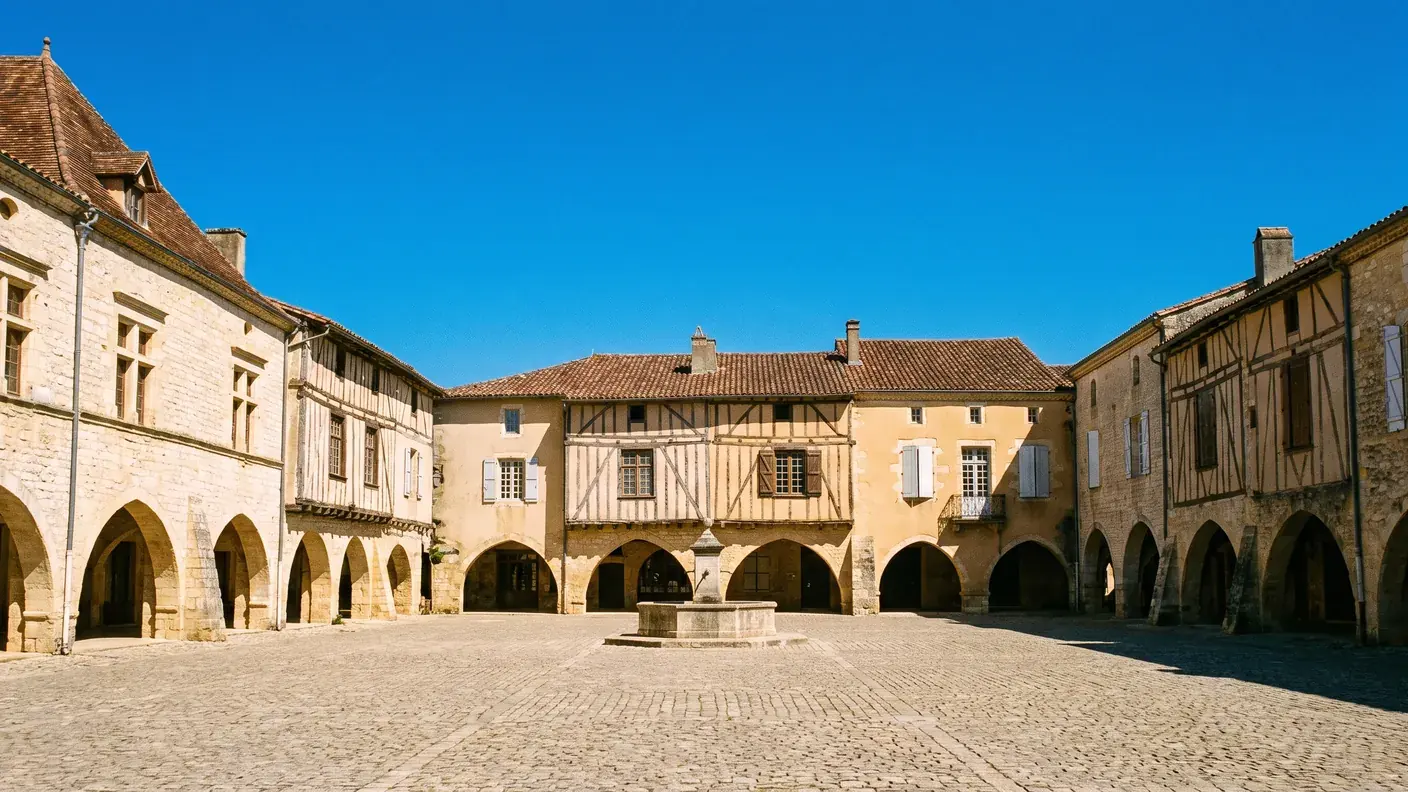
The heart of Castillonnès is its central square, the Place des Cornières, lined with “couverts”—the arcaded galleries under which merchants once sought shelter. This is the defining feature of every bastide: a square, surrounded by houses built on arcades, where the market was held—and still is held. Here, it takes place on Tuesdays, under the arcades, just as it has for centuries. The word “cornières” refers specifically to these arcaded corners: from one bastide to another, people refer to them as “cornières,” “couverts,” “garlandes,” or “embans,” but the principle is the same—to provide merchants and shoppers with shelter from the sun and rain all around the market square.
A market hall that's younger than it looks
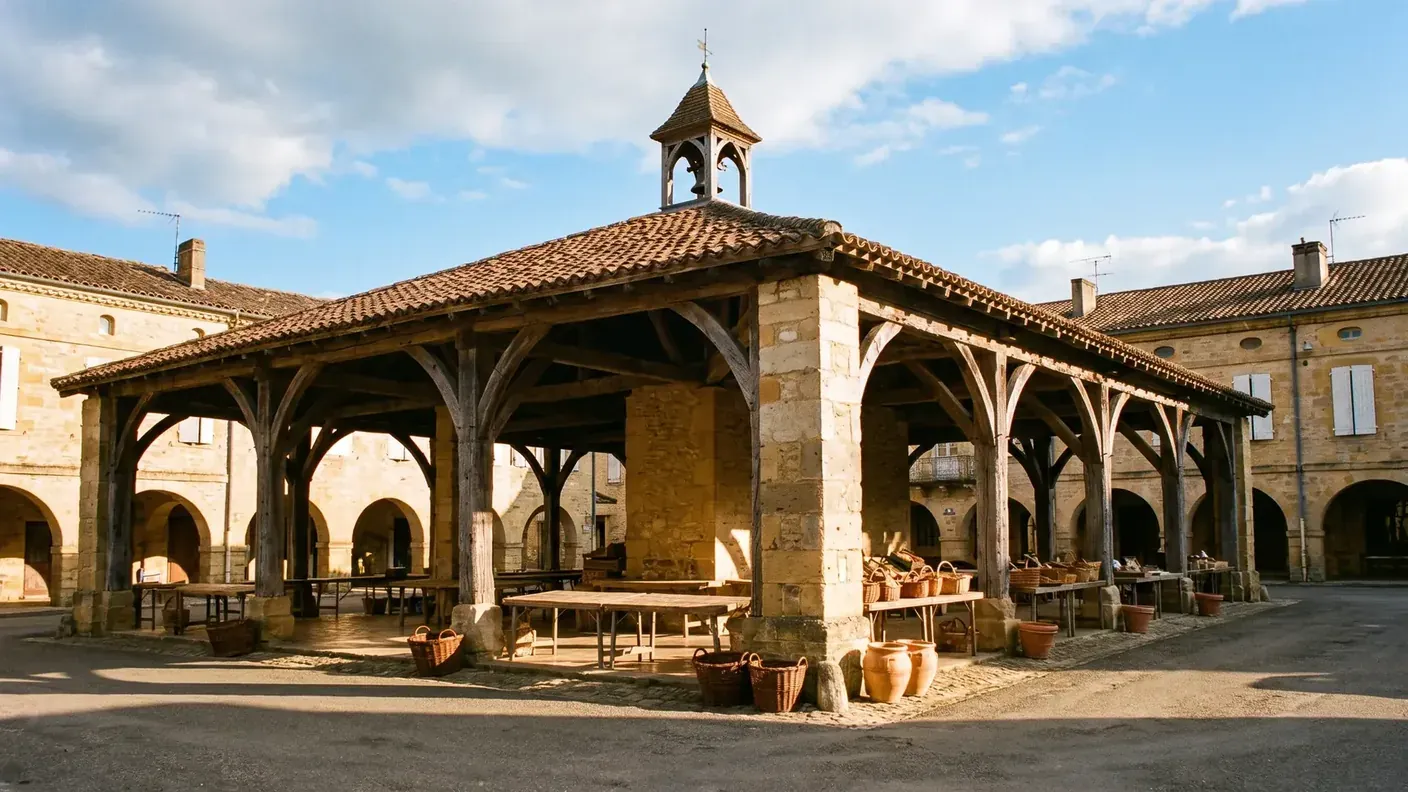
In the center stands a indoor hall, with a wooden frame and a tile roof, topped by a small bell tower and a pepper shaker watchtower which give it a medieval look. But it's just a look: contrary to what the decor might suggest, this market hall is not a trace of the bastide. It was built in early 20th century by a local carpenter, in a “troubadour” style that charmingly evokes the Middle Ages. [6] It’s a perfectly deliberate faux-antique structure, and one of the most photogenic in the area. Be aware of a common misconception: it is sometimes said to have a “clock tower,” but no source confirms the existence of one in Castillonnès—the correct term is indeed “bell turret,” and the watchtower is part of the Neo-Gothic decorative style that was popular in the early 20th century.
There’s nothing surprising about this: villages everywhere have embellished their town squares over time, and many of the market halls we admire today actually date from the 19th or 20th century, reflecting a romantic fascination with the Middle Ages. The market hall in Castillonnès is now an integral part of the town’s charm—but the record needed to be set straight, as many guidebooks mistakenly present it as a medieval monument. Beneath its arcades, however, the atmosphere on market days is anything but artificial: it is indeed the living legacy of seven centuries of trade.
Under the Canopies: The Tuesday Market
Place des Cornières really comes alive on Tuesday mornings, market day. Under the arcades and around the market hall, stalls set up shop—featuring farm-fresh produce, fruits from the Dropt Valley, and specialties from the Southwest—and the small town regains the vibrancy of days gone by, when bastides were first and foremost trading centers. This is the best time to visit Castillonnès: here, more than at any monument, you can truly grasp what a bastide was used for and why its covered market square occupies the exact center of town.
St. Peter's Church and its altarpiece from Agen
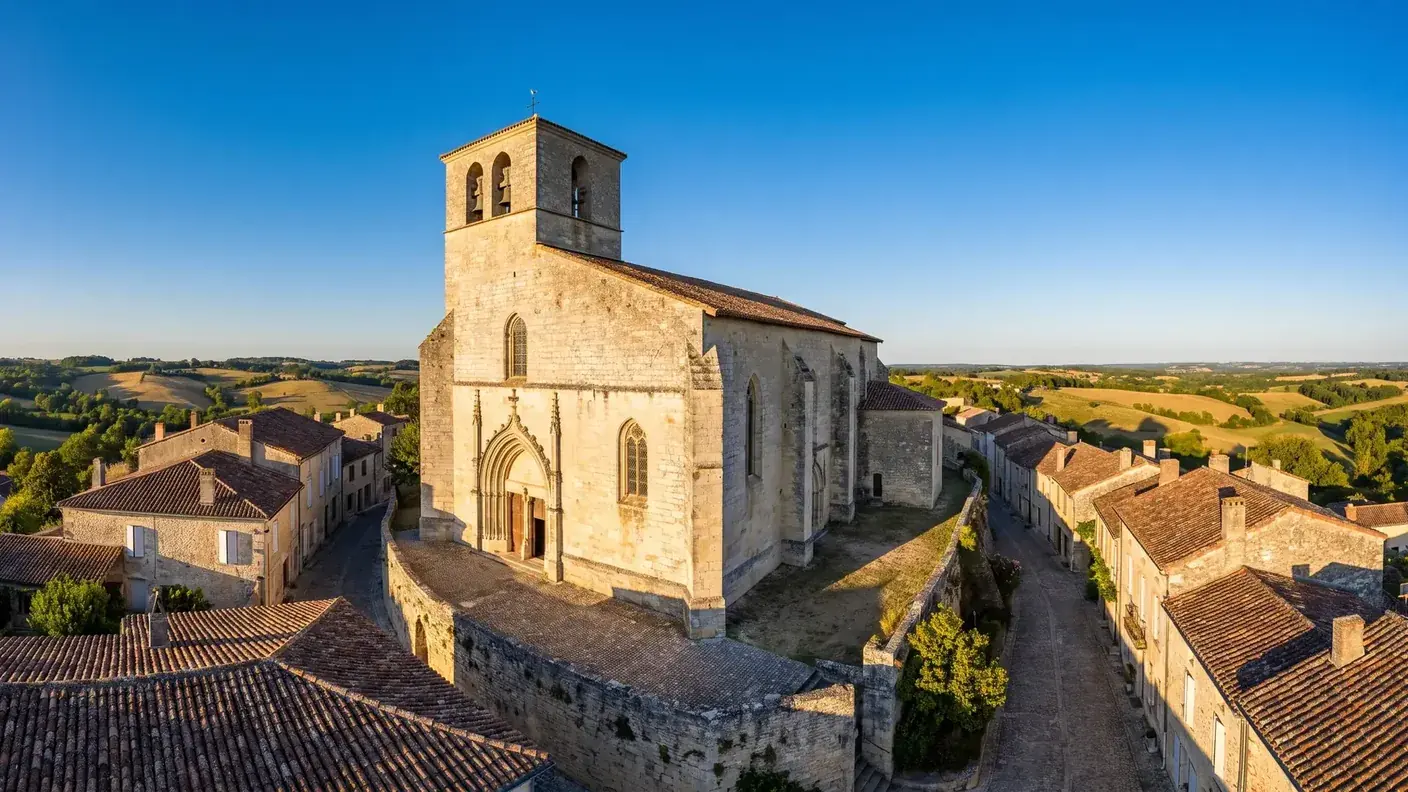
The parish church of Castillonnès is dedicated to Saint Peter. As is often the case in the bastides of the Haut-Agenais region, which were ravaged by wars, the building has suffered greatly—the church was even destroyed once during the Hundred Years’ War—and its current architecture blends different eras, the result of successive reconstructions. It’s worth noting a common misconception: its patron saint is simply “Saint Peter,” not “Saint Peter-ès-Liens” as is sometimes written. But it’s not the building itself that makes its reputation—it’s what it houses.
A monumental altarpiece transferred from Agen Cathedral
The church houses a 17th-century high altarpiece that is truly a museum-quality piece: a monumental work approximately 12 meters high by 6 meters wide, divided into three sections, and listed as a protected cultural object since 1959. Its history is unique: this altarpiece was not originally made for Castillonnès. It comes from Saint-Étienne Cathedral in Agen, from where it was transferred around 1846. [4]A Baroque masterpiece, washed up by the vagaries of history in a modest church in a bastide town. Such relocations of works of art were common in the 19th century, when major cathedrals were being renovated: what was deemed outdated in Agen found a new lease on life in Castillonnès, along with a church that suited it perfectly. Standing before its twelve meters of gilded and carved wood, one appreciates the—delightful—disproportion between the setting and the artwork itself.
A useful note for heritage enthusiasts: it is the altarpiece that is protected (as a movable cultural property), not the building itself, which is neither listed nor designated as a historic monument. The church is therefore worth visiting primarily for this interior treasure, which is currently undergoing restoration—a collection that, on its own, makes it worth stepping inside.
This distinction—a protected altarpiece, a non-protected building—illustrates a little-known aspect of France’s cultural heritage: protection as a historic monument sometimes applies to a building, and sometimes to a simple object it houses. In Castillonnès, the true “monument” officially recognized is this altarpiece, along with the Hôtel de Cours de Thomazeau. Here is the status of their protection:
| Protected Heritage | Protection | Year |
|---|---|---|
| Altarpiece of the High Altar (St. Peter's Church) | Classified under "Objects" | 1959 |
| Thomazeau's Hôtel de Cours | Listed as a historic monument | 1996 |
| St. Peter's Church (the building) | No MH protection | — |
| Place des Cornières Market Hall | None (20th-century building) | — |
The city walls and the fortified town
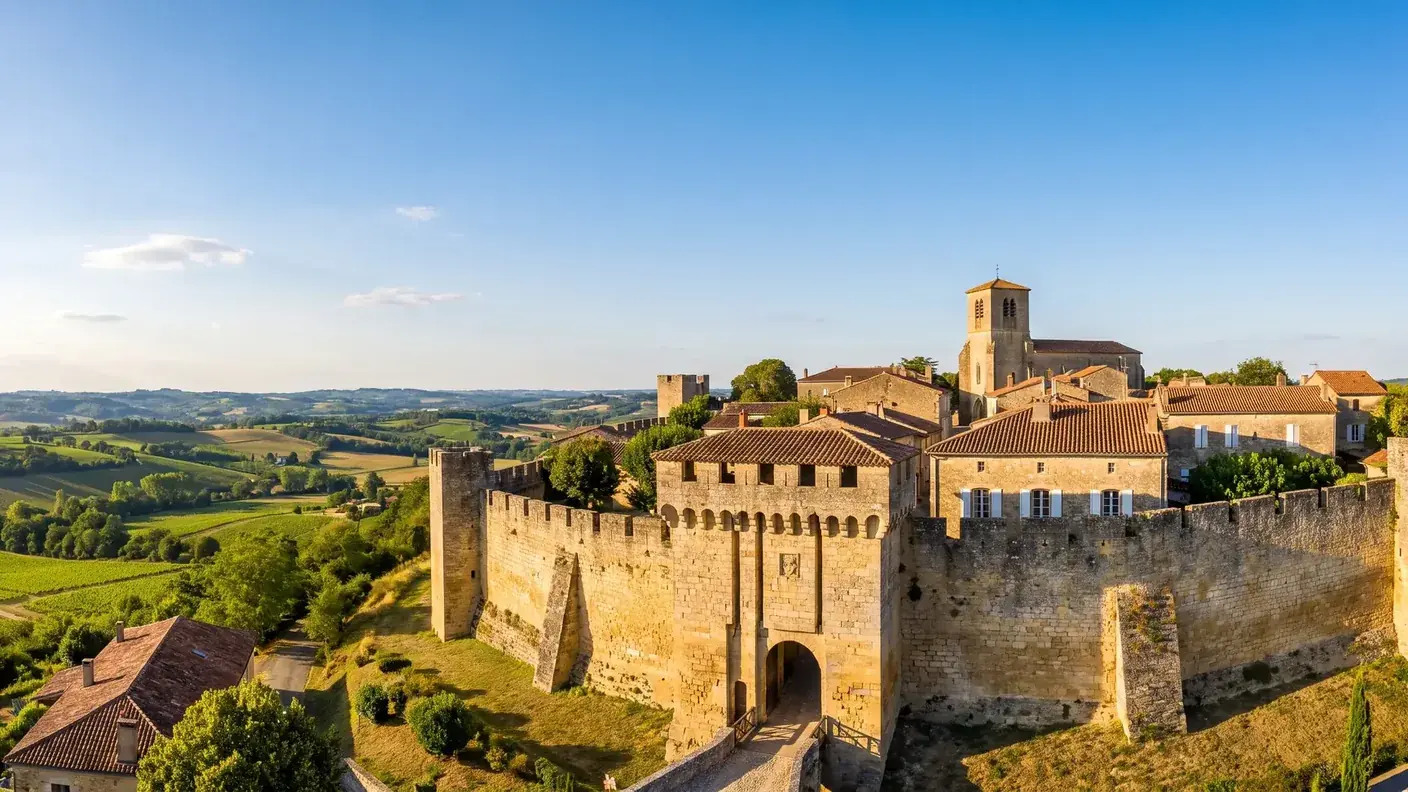
Castillonnès still preserves beautiful remnants of its medieval city walls: postern gates, sections of the ramparts, and city gates. You’ll discover them as you wander through the narrow streets—the 14th-century postern gates along the Promenade de la Moutte, the 16th-century city walls on Rue de la Paix, and two historic city gates, the Porte des Valets and the Porte Guirlity. These elements, scattered throughout the town, serve as landmarks along a walking tour: in Castillonnès, the ramparts aren’t visited as a closed-off monument, but are encountered at street corners, integrated into the houses.
Fortified under the English kings-dukes
Surprisingly, the bastide was not fortified when it was founded, but a about fifty years later, between 1312 and 1315, while the Agen region had come under English rule. This financing perfectly illustrates the Anglo-Gascon paréage system: The town paid for the walls, King-Duke Edward II paid for the gates. To each his share, just as on the first day of the bastide. The fact that the King of England, who was also Duke of Aquitaine, financed the gates of a bastide founded by the brother of the King of France speaks volumes about the feudal tangle of the medieval Southwest, where allegiances overlapped and where a single town could fall under the authority of two rival crowns.
These fortifications were certainly not unnecessary. A strategic location in the Haut-Agenais region, on the shifting border between French and English territories, Castillonnès was fiercely contested during the Hundred Years’ War: the bastide is said to have changed hands seven times during the conflict. From this turbulent history, it has retained the silhouette of a stronghold, overlooking the valley.
One must imagine what this border was like: the Agen region, a territory contested between the kings of France and the kings of England (who were also dukes of Aquitaine), shifted from one side to the other depending on the outcome of battles and truces. A bastide like Castillonnès, perched high and fortified, served as a strategic stronghold: holding it meant controlling a section of the Dropt Valley and a portion of the road between Bergerac and Agen. Hence the sieges, the captures, and the recaptures—and the church, destroyed once before being rebuilt. Walking today along the Promenade de la Moutte, past the postern gates, is to follow the path of this medieval defensive line.
The Old Town and Thomazeau's Hôtel de Cours
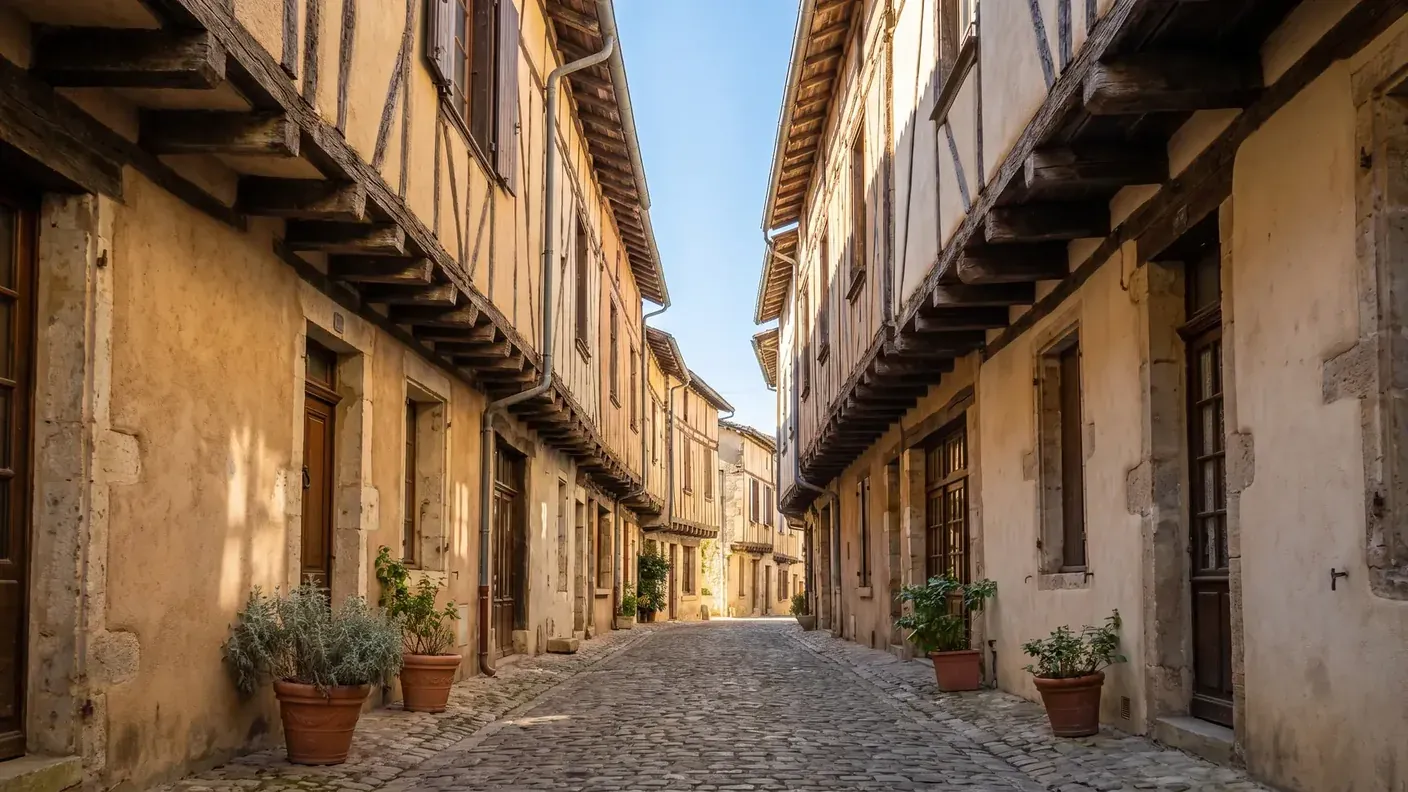
Beyond its town square, Castillonnès is best explored on foot, through a maze of narrow streets lined with historic houses. Stone and half-timbered facades, corbelled floors, ornate doors: the old town has retained its medieval scale, stretching from the Place des Cornières to the remains of the ramparts. It’s a short but rich walk, where every street tells a piece of history—and where, when you look up, you can see the layers of centuries, from medieval half-timbering to beautiful classical facades.
A mansion built on sugar from the West Indies
The most beautiful residence in the city is the Hôtel de Cours de Thomazeau, an elegant mansion built around 1770–1775 on Rue du Petit-Paris, on the ruins of a medieval castle. It was built by the de Cours de Thomazeau family, whose fortune came from… sugarcane in Martinique: a reminder, right in the heart of the Haut-Agenais region, of 18th-century colonial trade. The mansion has been listed as a historic monument since 1996—a partial listing that protects the facades and roofs, the terrace and its wrought-iron railing, the street-facing fence and its wrought-iron gate, the two parlors, and the main staircase. All these elements bear witness to the refinement of civil architecture during the Age of Enlightenment.
A story has been making the rounds in the region: In December 2014, during construction work, it was discovered that in a wall of the hotel, a silk pouch containing 45 gold coins, dating back to the time of Philip II of Spain and Henry IV. A true hidden treasure, just like in fairy tales—proof that history still holds surprises within these old stones.
The fact that this hotel was built with a fortune amassed from sugar in the West Indies speaks volumes about the economy of the 18th century: prominent provincial families invested in Caribbean plantations, and the return on that capital led to the construction of beautiful stone mansions, even in the small towns of the Haut-Agenais region. The Hôtel de Cours de Thomazeau in Castillonnès stands as a testament to a France open to the Atlantic and its trade—a history less glamorous than it seems, but one that explains the presence here of a private mansion of such high quality.
Movies and Sister Cities: The Unusual Side of Castillonnès
This small country town also has a lighter side to its history, blending cinema and friendships from afar. Behind its medieval façade, Castillonnès boasts two unexpected features for a town of its size: a history as a movie set and sister-city relationships that carry its name far beyond the Dropt Valley.
Castillonnès Takes on the World of Film
In 1961, the great filmmaker René Clair—one of the masters of French cinema and a member of the Académie française—chose Castillonnès (and the neighboring bastide town of Monflanquin) as the location for part of his film *Tout l'or du monde*, a satire on consumer society starring Bourvil and Alfred Adam. The film tells the story of a farming village’s resistance against developers seeking to transform it into a tourist resort—a theme that resonates beautifully with the bastide’s preserved authenticity. For the duration of the shoot, the town square and narrow streets of Castillonnès became a movie set, and this brief interlude remains a source of local pride to this day.
Friendships from Alsace to Quebec
Castillonnès maintains two sister-city relationships that reflect its recent history. The first, with Soultzeren in Alsace, established in 1976, has a moving historical origin: it commemorates the welcome extended to Alsatian refugees in Lot-et-Garonne during World War II, when part of the population of the Haut-Rhin was evacuated to the Southwest. A bond forged in adversity, maintained ever since by successive generations. The second, very recent (May 2024), links the town to Trois-Pistoles, Quebec, through an association that brings together seven municipalities in the Dropt Valley. From the Agen countryside to North America, this small bastide town fosters a spirit of connection—proof that a village of 1,300 residents can have surprisingly broad horizons.
What is there to see around Castillonnès?
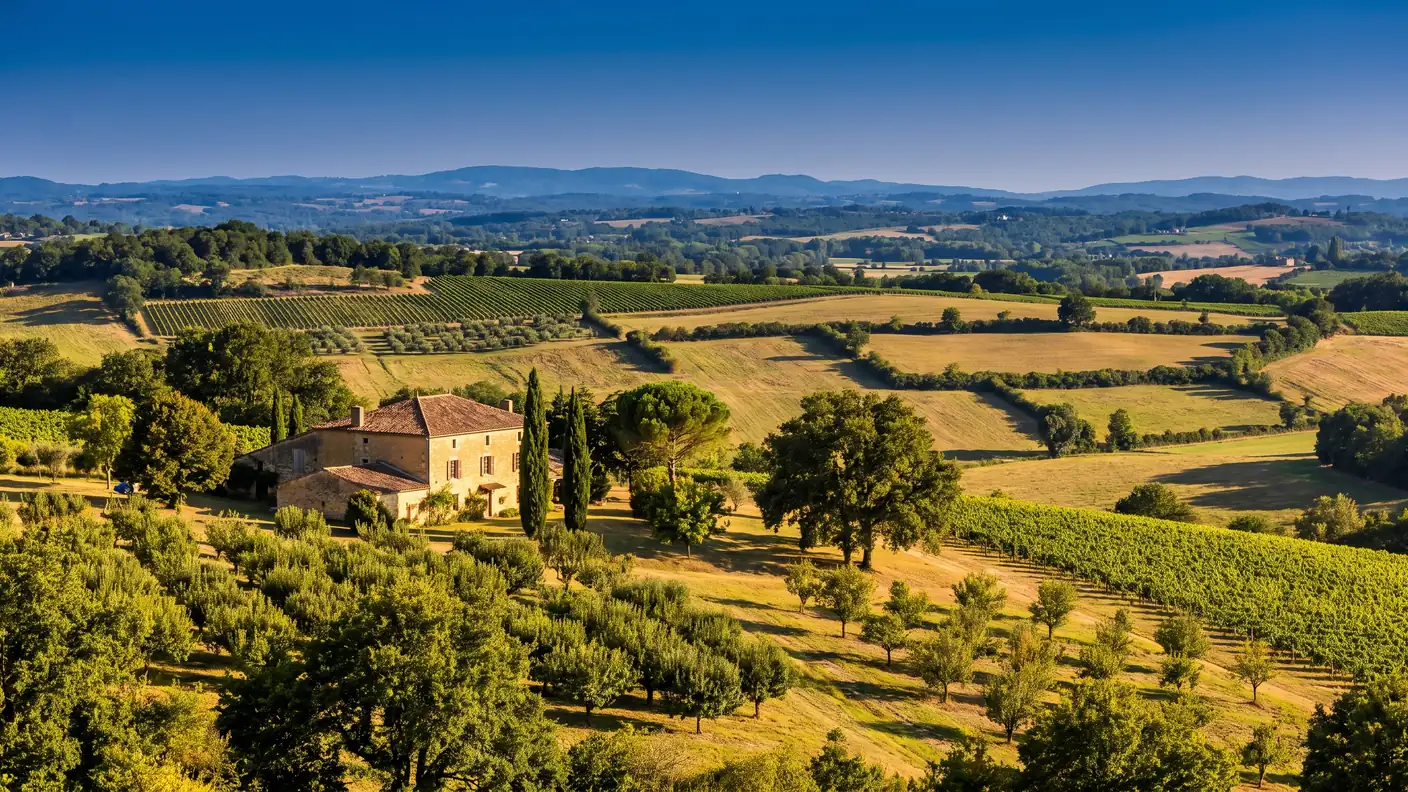
Castillonnès lies at the heart of a region dotted with bastides and medieval villages, straddling the departments of Lot-et-Garonne and Dordogne. The Dropt Valley is dotted with a veritable string of them—Castillonnès, as well as Villeréal, Monpazier a little further on, and Eymet—and the Bergerac wine region is just a few minutes away. Stay in Castillonnès and explore the surrounding area: the distances are short, the country roads are pleasant, and each village has its own unique character.
Medieval fortified towns and cities
Nearby Eymet is a superb “royal” bastide in the Périgord Pourpre, with a covered plaza on all four sides—one of the most complete in the region. Issigeac, just nearby, is not a bastide but a medieval town with a circular “snail-shell” layout, famous for its Maison des Têtes and its Palais des Évêques: the contrast with the grid-like layout of the bastides, just a few kilometers away, is striking. Villeneuve-sur-Lot, the major bastide of Lot-et-Garonne (to which Castillonnès belongs administratively), rounds out this tour of medieval new towns. Together, these three towns offer a vivid lesson in medieval urban planning.
Wine and Gastronomy
As for the vineyards, Monbazillac and its Renaissance château (designated a historic monument) produce one of the world’s most famous sweet wines, while nearby Bergerac boasts its old town, its riverbanks along the Dordogne, and its wine appellations. That’s the charm of Castillonnès: it’s situated at the junction of two terroirs—the Agenais, known for its prunes, and the Périgord, known for its wine—all within easy tasting distance. In a single day, you can visit a bastide, a medieval village, and a sweet wine cellar, without ever having to drive far: it’s one of the finest concentrations of heritage and gastronomy in the Southwest.
Nature lovers will also enjoy the scenery of the Dropt Valley itself: a small, tranquil river that once powered numerous mills and now feeds recreational ponds and lakes. The entire region—with its bastides, vineyards, orchards, and waterways—is perfect for slow tourism, away from the crowds—the kind of getaway that’s all the more enjoyable when shared with others, without having to worry about driving.
| Around Castillonnès | Distance / Marker | Interest |
|---|---|---|
| Eymet | nearby | "Royal" country house in the Purple Périgord |
| Issigeac | ~15 km | Medieval "snail-shaped" town |
| Bergerac | nearby | Old Town, vineyard, TER train station |
| Monbazillac | ~25 km | Sweet wine, Château Renaissance |
| Villeneuve-sur-Lot | ~30 km | A large country house in Lot-et-Garonne |
When is the best time to visit Castillonnès?
Castillonnès is a pleasant place to visit from spring through fall, with a highlight every Tuesday: the market under the awning. As is often the case in the Southwest, every season has its charms, but not all are equally appealing depending on what you’re looking for—heritage, nature, vineyards, or entertainment. The spring (April–June) transforms the Dropt Valley into a sea of blooming orchards and offers ideal light for strolling through the bastide and along the countryside; temperatures are mild, perfect for walking. Thesummer It’s warm and bright: it’s the height of the tourist season in the neighboring Périgord, the perfect time for night markets and wine tastings at the surrounding vineyards, and the Place des Cornières offers the welcome shade of its awnings.
Thefall It’s stunning in this land of vineyards and plum trees: it’s harvest season in Monbazillac and Bergerac, where the grapes for the great sweet wines are being picked on the golden hillsides. The colors of the Dropt Valley—ranging from gold to purple—make the trip well worth it. Thewinter, now quieter, allows the bastide to rest, but its historic sites—the square, the market hall, the church, and the ramparts—can be explored without the crowds, in low-angled light that highlights the stone.
For a day trip from Bordeaux, a Tuesday in spring or fall is ideal: arrive in time for the market under the cornières, stroll through the narrow streets, and visit the altarpiece and the Hôtel de Thomazeau; in the afternoon, head on to the bastide town of Eymet, the town of Issigeac, or a Monbazillac winery for a sweet wine tasting. With a driver handling the transportation, the day flows smoothly without the hassle of driving—tastings included—allowing you to fully enjoy this concentration of heritage and local character on the border of the Agenais and the Périgord.
Getting to Castillonnès from Bordeaux
Castillonnès is located about 147 km from Bordeaux, a 2-hour and 15-minute drive. From Bordeaux, take the A62 (the Deux Mers Highway) and then the departmental roads through the Dropt Valley—the RN21, meanwhile, is the local highway that runs through the bastide from north to south, between Bergerac and Agen. Contrary to what is sometimes reported, you do not travel from Bordeaux “via the RN21”: this national highway connects Limoges to Tarbes via Périgueux and Bergerac, and you only reach it once you’ve arrived in the Dropt Valley.
Castillonnès no longer has a train station: the Marmande-Bergerac line, which opened in 1930, served the town for only about twenty years before closing to passenger traffic in 1953. Two trains a day, barely two decades of service: Castillonnès’s brief stint with rail service was short-lived, as was the case in many small rural towns that the train merely touched upon before the age of the automobile. The TER stations to consider today are those in Bergerac and Agen. Suffice it to say that, without a car, reaching this rural bastide is complicated—buses are infrequent, and multiple transfers are required—hence the advantage of a chauffeur service.
The convenience of door-to-door service
This is where an executive car service really comes into its own: a direct, door-to-door trip from Bordeaux with no transfers, giving you the freedom to explore the Dropt Valley and the Bergerac region afterward—Eymet, Issigeac, Monbazillac, and Bergerac. From Bordeaux, we offer this trip at a fixed price quoted in advance: approximately €322 one-way, in a Mercedes sedan or van seating up to 8 passengers, with a professional driver. You’ll receive a written quote with no hidden meter charges—ideal for groups or for enjoying wine tastings in the Bergerac region without worrying about the return trip.
| Route | Distance | Duration | Landmark |
|---|---|---|---|
| Bordeaux → Castillonnès | ~147 km | 2 hours and 15 minutes | Starting at ~€259 for a private chauffeur service |
| Castillonnès → Bergerac | local trip | depending on traffic | nearest TER station |
| Castillonnès → Eymet | local trip | depending on traffic | Périgord Pourpre country house |
| Castillonnès → Agen | ~64 km | ~1 hour | Lot-et-Garonne Prefecture |
The appeal of a door-to-door tour is best experienced with a group, or whenever you want to sample wines from the Bergerac region. You head up to Bordeaux, then down to Place des Cornières, and the driver can wait or take you on to the next stops—an orchard, a country house, a winery—something no regular bus route offers in this part of the countryside. The price, set in advance, remains the same regardless of traffic or the number of stops.
Whether it’s for a heritage and vineyard tour, a Tuesday market, or an event in the Haut-Agenais region, booking a private chauffeur guarantees a comfortable and punctual ride—book a driver from Bordeaux to Castillonnès or explore all our destinations.
Frequently Asked Questions
Where is Castillonnès located?
Castillonnès is a bastide in Lot-et-Garonne (47), in Nouvelle-Aquitaine, in the Haut-Agenais region, situated on a promontory overlooking the Dropt Valley, on the border with the Périgord. With a population of 1,346, it lies on the RN21 between Bergerac and Agen, about 147 km southeast of Bordeaux.
How far is it from Bordeaux to Castillonnès?
Approximately 147 km by road (A62 then local roads), or a 2-hour, 15-minute drive. With a chauffeured transfer from Bordeaux, the fare is fixed and provided in advance, starting at approximately €322 one way (sedan or van, door-to-door price).
When was the bastide of Castillonnès founded?
On September 10, 1259, through a paréage agreement initiated by Alphonse de Poitiers, Count of Poitiers and Toulouse, brother of Saint Louis. The agreement involved the abbot of Cadouin (two-thirds of the lands) and the monks of Mons (one-third). The charter of customs was granted in 1266.
What is the Place des Cornières?
This is the town’s central square, lined with arcades where the market is held every Tuesday. It is the historic heart of Castillonnès. In the center stands a covered market hall with a spire—picturesque, but built in the early 20th century, not medieval.
Is the market hall in Castillonnès medieval?
No. Despite its old-fashioned appearance, complete with a bell turret and a watchtower shaped like a pepper shaker, the market hall was built in the early 20th century by a local carpenter in the “troubadour” style. It is not a remnant of the bastide, but a deliberate neo-medieval design that has become an iconic feature of the square.
What is there to see in the church in Castillonnès?
Its treasure is a 17th-century altarpiece for the high altar—a monumental work (approximately 12 meters high by 6 meters wide)—that has been listed as a cultural property since 1959. Remarkably, it was not originally designed for Castillonnès: it comes from Saint-Étienne Cathedral in Agen, from where it was transferred around 1846.
What is the Hôtel de Cours de Thomazeau?
It is the most beautiful mansion in Castillonnès, built around 1770–1775 by a family that had made its fortune in the sugarcane trade in Martinique, on the ruins of a medieval castle. It has been listed as a historic monument since 1996. In 2014, a pouch containing 45 antique gold coins was discovered inside one of its walls.
Does Castillonnès have any connection to the film industry?
Yes: In 1961, René Clair filmed part of his movie *Tout l'or du monde* there, starring Bourvil, and also used the nearby country house in Monflanquin. The town square and narrow streets of Castillonnès served as the setting for this satire of consumer society.
What is there to see around Castillonnès?
Eymet, a stunning bastide in the Périgord Pourpre region; Issigeac with its medieval “snail-shaped” layout; Bergerac and its old town, the Monbazillac vineyards and their Renaissance château, and Villeneuve-sur-Lot, the grand bastide of Lot-et-Garonne. We are in the heart of a region of bastides and vineyards.
Is there a train station in Castillonnès?
No. The Marmande-Bergerac line, which had served the city since 1930, closed to passenger traffic in 1953. The TER stations to consider are Bergerac and Agen. For a direct door-to-door trip from Bordeaux, without any transfers or schedules to keep track of, a private chauffeur remains by far the most convenient option in this rural area.
Is Castillonnès closer to Bergerac or to Agen?
Bergerac rather than Agen, even though Agen is its prefecture. Castillonnès, in the Haut-Agenais region on the border with the Dordogne, on the RN21 between the two cities, looks just as much toward the Périgord Pourpre and its vineyards (Bergerac, Monbazillac) as it does toward the Agenais. In fact, the nearest TER train station is in Bergerac.
When is the best time to visit Castillonnès?
Spring and fall, for soft light and the colors of the Dropt Valley; fall coincides with the grape harvest in neighboring Bergerac and seasonal cuisine (foie gras, sweet wines). A Tuesday is the perfect day to enjoy the market under the covered arcades of the Place des Cornières, the highlight of the week. Summer offers night markets and tastings, while winter brings tranquility and cultural heritage without the crowds.
Can I book a private driver from Bordeaux to Castillonnès?
Yes. We offer the Bordeaux → Castillonnès route (~147 km, 2 hrs 15 mins) at a fixed price, starting at approximately €322 one-way, in a Mercedes sedan or a van seating up to 8 passengers. The trip is direct, door-to-door, with optional stops along the way (Eymet, Issigeac, a winery in Monbazillac).
Further Reading
- The Grand Bastide of Lot-et-Garonne: See the Guide to Villeneuve-sur-Lot (bastide on the Lot River, Pont-Vieux, prunes)
- The "English-style" country house in the Purple Périgord, nearby: see the Eymet Guide (arcaded square, medieval castle)
- A bastide and a vineyard in the Bergerac region: see the Monestier Guide (unfinished bastide, golf, and wine)
- Plan your trip: Book a chauffeur service from Bordeaux to Castillonnès or explore all our destinations
Sources and References
- Cœur de Bastides Tourist Office — Castillonnès — founded in 1259, featuring a Baroque altarpiece and a 20th-century market hall
- POP/Mérimée Database — Hôtel de Cours de Thomazeau — Listed as a Historic Monument in 1996 (PA47000003), dated ca. 1770–1775
- INSEE — Municipality of Castillonnès (47057) — 2023 population (1,346 residents), area, municipal data
- Fondation du Patrimoine — Castillonnès Altarpiece — 17th-century altarpiece (~12×6 m), designated a cultural property in 1959, originally from Agen Cathedral
- Wikipedia — *All the Gold in the World* (René Clair, 1961) — a film shot in part in Castillonnès
- Cœur de Bastides Tourist Office — Castillonnès Profile — Place des Cornières, market hall (20th century), market, heritage sites
Article updated on .
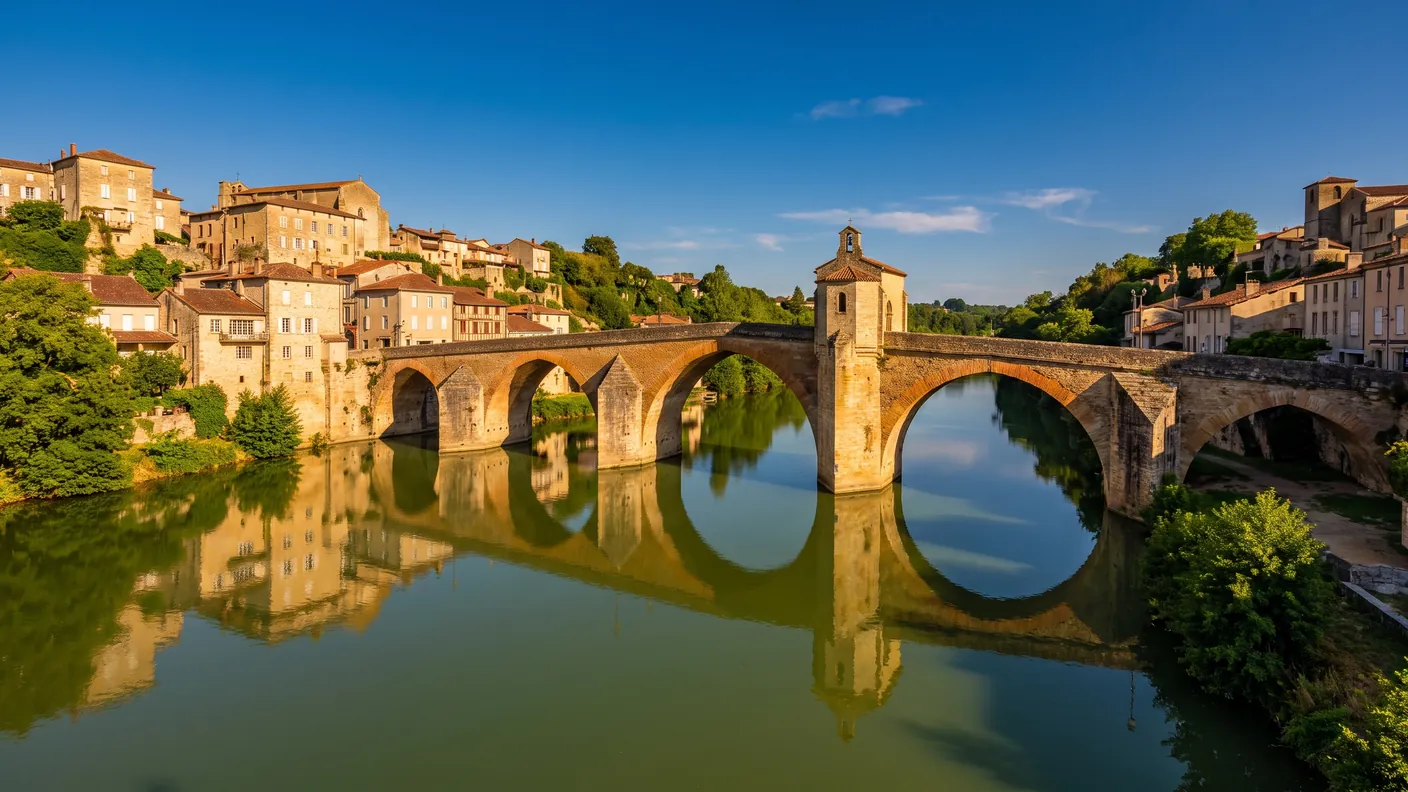
On the way to the Dropt Valley
Direct trip from Bordeaux (~2 hrs 15 mins) to Castillonnès, with stops along the way as desired—Eymet, Issigeac, and a Monbazillac winery. Written fixed-price quote, with no unexpected charges based on the odometer.