
Bordeaux to Eauze: Roman Elusa and the home of Armagnac
The capital of Armagnac and the ancient capital of Novempopulania: the Gallo-Roman treasure trove of 28,054 coins, the Domus of Cieutat, the cathedral built with bricks from Elusa, and the wine cellars of Bas-Armagnac—about 1 hour and 58 minutes from Bordeaux.
Eauze at a Glance
Eauze is the capital of Armagnac: a small town in the Gers department of Gascony, heir to ancient Elusa—the Roman capital of the province of Novempopulania—and guardian of a Gallo-Roman treasure trove of 28,054 coins, on display at the local Treasury Museum. Located in the heart of Bas-Armagnac, the most renowned region for Gascon brandy, the town is home to the headquarters of the industry association (the BNIA) and lives to the rhythm of the vineyards, markets, and festivals. People come here for the archaeology—the Domus of Cieutat, the Treasure Museum, and the nearby Villa of Séviac, all part of the “Elusa, Ancient Capital ”—, for Saint-Luperc Cathedral, built with bricks from the Roman city, and for the Gascon way of life, from the July ferias to the winter “marché au gras.”
About 1 hour and 58 minutes from Bordeaux lies a little-known and fascinating capital city, which this guide will help you discover, backed by verified facts.
Here are the key details to know before you go. Distances are calculated door-to-door from Bordeaux; the fare shown is for a private driver reservation at a fixed price provided in advance, with no unexpected meter charges regardless of traffic or stops along the way.
| Landmark | Details |
|---|---|
| Department | Gers (32), Occitanie · Condom District |
| Title | capital of Armagnac · main city of Lower Armagnac |
| Antiquity | Elusa, capital of Novempopulania (Late Roman Empire) |
| River | the Gélise (a tributary of the Baïse) |
| Population | 4,108 residents (INSEE 2023) |
| Distance from Bordeaux | about 146 km · about 1 hour and 58 minutes by car |
First, a quick note to give you a sense of where Eauze is located. The town is located in the Gers department (32), in the Occitanie region, within the Condom district, of which it is one of the main centers (it currently serves as the administrative center for the Armagnac-Ténarèze canton). It has a population of 4,108 (INSEE 2023)—a figure on the rise, which is noteworthy for a small rural town—whose residents are known as Élusates, named after the ancient city. Its official title, as claimed by the town itself, is “capital of Armagnac and ancient capital.” Every piece of information in this guide is based on verifiable sources—Wikipedia, the Mérimée database, INSEE, INAO/BNIA, and official websites—cited at the end of the article. We’d also like to take this opportunity to debunk some common misconceptions (no, the treasure isn’t made of gold coins; no, Eauze isn’t a bastide).
Here’s a rundown of everything you need to know: Eauze’s location in the Gers and the Bas-Armagnac region, Elusa, the ancient capital, and its Elusates, the Eauze treasure and its 28,054 coins, Saint-Luperc Cathedral and its fascinating history, the old town and the legacy of Queen Margot, Armagnac and its golden sands, practical things to do in Eauze (markets, ferias, the greenway), the surrounding area (Barbotan-les-Thermes, Montréal-du-Gers, Larressingle), the best time of year to visit, and the easiest way to get there from Bordeaux—all thoroughly researched and verified.
Where is Eauze located?
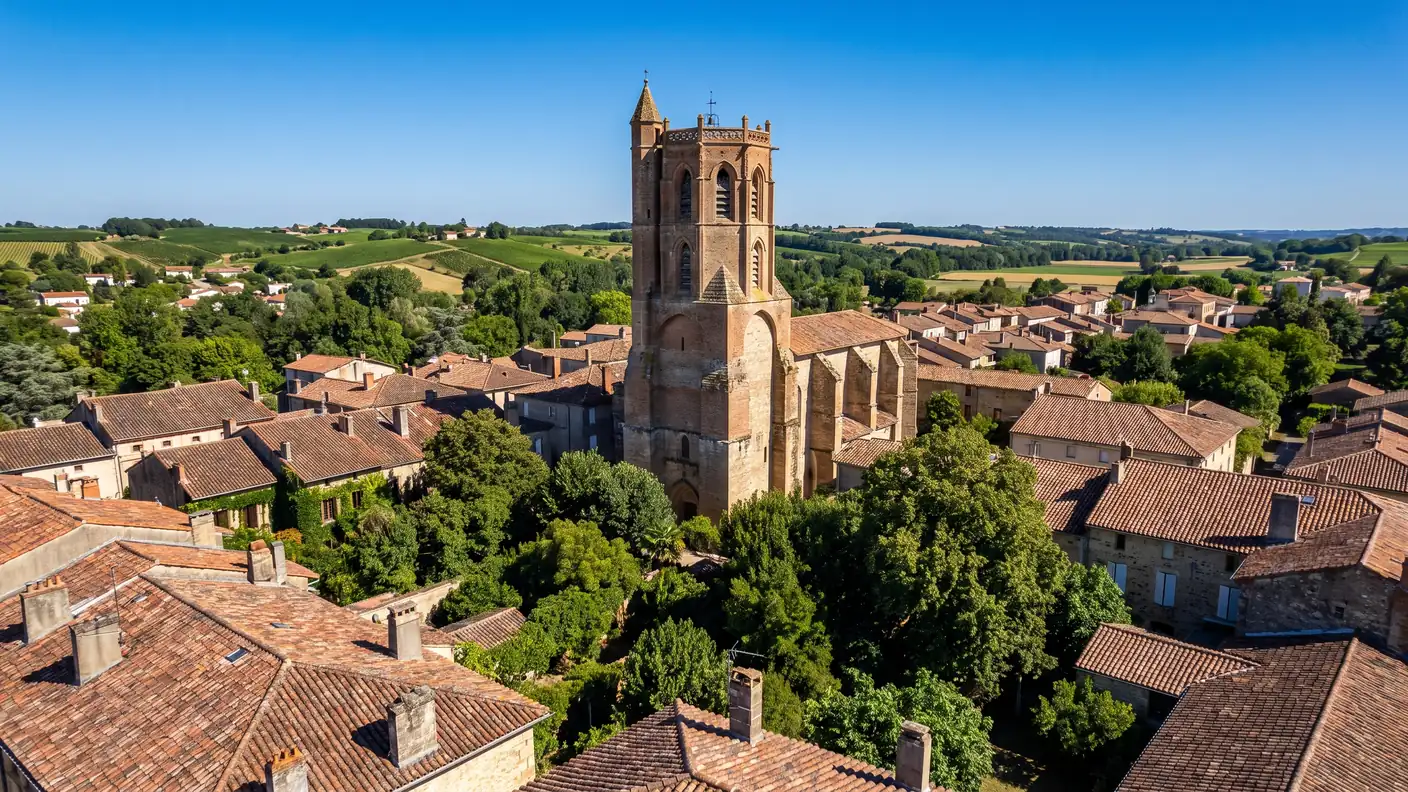
Eauze is located in the western part of the Gers department (32), in the Occitanie region, in the heart of Gascony and Lower Armagnac, on the small Gélise River. The town lies at the center of a region of rolling hills, vineyards, oak groves, and farms with dovecotes—the Bas-Armagnac, straddling the western part of the Gers and the eastern part of the Landes. The Gélise River, which flows through the town, heads north to join the Baïse River at Lavardac: Eauze thus belongs, through its waterways, to the same watershed as Condom and Nérac. Located between Condom (to the northeast), Nogaro (to the southwest), and the spa town of Barbotan-les-Thermes (about 18 km to the west), approximately 1 hour and 58 minutes from Bordeaux via the A65 highway, Eauze is the western gateway to the Gers region of Gascony—a rural, unspoiled, and gourmet-friendly area where ancient history lies just beneath the vineyards.
The Capital of Armagnac
The title is well-deserved: Eauze is officially recognized as the capital of Armagnac—which is how the town describes itself—and it is the main town of Bas-Armagnac, the western region of the appellation. The institutional confirmation is clear: the BNIA, the National Interprofessional Office of Armagnac, is headquartered in Eauze, at the Maison du Vignoble Gascogne Armagnac on Route de Manciet. This is therefore where the heart of the industry beats: major trade events, the eaux-de-vie competition (founded in 1947 as the first “Foire aux grandes eaux-de-vie d’Armagnac”), and the distillation festivals. Surrounding the town, the hillsides are planted with Ugni Blanc, Baco, and Folle Blanche vines, which, after passing through the still, produce Gascony’s oldest brandy.
A stay in Eauze means staying right at the heart of Armagnac production—and in the midst of a region that’s perfect for exploring, with open cellars and steaming stills during the season.
A small town with a growing population
According to INSEE, Eauze has 4,108 residents according to the 2023 census, compared with 3,918 in 2017. Average annual growth stood at 0.8% over this period, a rate higher than that of France as a whole. The residents are known as Élusates, a name derived from the ancient city of Elusa.
The town remains the hub of services and commerce for the Bas-Armagnac region of the Gers: its Thursday market, schools, bullring, and other facilities serve the surrounding villages. The name given to its residents, “Élusates,” is a direct reference to the Aquitani people who settled in the region before the Roman era and to the ancient city of Elusa.
Elusa, the ancient capital of Novempopulania
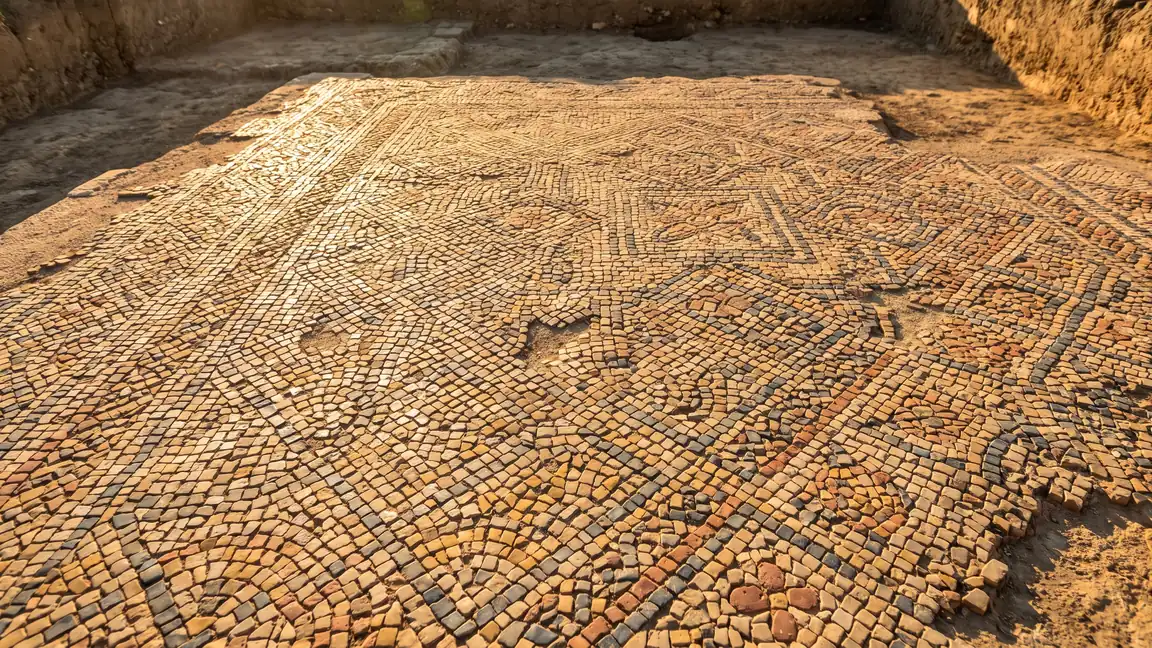
Eauze is the successor to Elusa, the capital of the Aquitanian tribe of the Élusates, which became the capital of Novempopulania—the Roman province of the Southwest—during the Late Roman Empire—a prestigious past brought to life by the “Elusa Capitale antique” archaeological complex ” brings back to life. One of the great Roman cities of Gascony.
The Élusates, a people of Aquitaine
Before Rome, the country belonged to the Elected Officials, a people Aquitanian — who spoke a Proto-Basque language, not a Celtic one: they should not be referred to as “Gauls”; this distinction is important to historians. Defeated in 56 B.C. by Publius Crassus, a lieutenant of Caesar (after which, Caesar writes, “most of Aquitaine surrendered”), they came under Roman control. The city of Elusa was created ex nihilo at the beginning of the firster in the first century C.E., not at the current city center, but about one kilometer to the east, in what is now the neighborhood of Cieutat — So the modern downtown is not the ancient site—another common misconception that needs to be corrected.
The city flourished along the main road through Aquitaine, built monuments, stately homes, and city walls, and became one of the major cities of Roman southwestern France—before experiencing an even more remarkable rise.
Capital of Novempopulania
Around 285, the emperor's reform Diocletian separates a new province from Aquitaine: the Novempopulanie, the “land of the nine peoples” (which actually numbered twelve), roughly covering the area that would later become Gascony. Its metropolis — its capital — was Elusa. Be careful with the timeline, which is often misrepresented: this status as a capital dates back to Late Roman Empire (end of III-IV century), not from the city's founding. Elusa was also one of the first dioceses of Gaul: its bishop, Mamertin, attended the Council of Arles as early as 314, and a provincial synod was held in Eauze in 551. The ancient city declined during the Early Middle Ages—most likely destroyed during the invasions of the 5th century —, and its metropolitan see was transferred to Auch around 829.
Today, the “Elusa Capitale antique” complex (founded in 2008) brings this past to life: the Cieutat domus and the Treasury Museum in Eauze, and the Séviac villa in Montréal-du-Gers.
| Elusa, the ancient capital | Details |
|---|---|
| People | the Elusates, Aquitani (proto-Basques, not Celts) |
| Roman city | Founded in the 1st century, in the Cieutat neighborhood (1 km to the east) |
| Apogee | capital of Novempopulania (Late Roman Empire, c. 285) |
| Diocese | as early as 314 (Council of Arles) · Synod of Eauze in 551 |
| Today | "Elusa: Ancient Capital": domus + museum + Séviac |
The Treasure of Eauze
On October 18, 1985, a salvage excavation near the old Eauze train station unearthed one of the largest Gallo-Roman treasures in France: 28,054 coins—mostly silver—and about fifty pieces of jewelry and precious objects, buried around 261 A.D. The treasure is on display at the site, in the Musée du Trésor.
120 kilograms of silver buried around 261
According to the official website of Elusa Capitale Antique, the Eauze hoard consists of 28,054 coins and about 50 pieces of jewelry and precious objects. Unearthed in 1985, this collection had been deliberately buried around 261 and is now on display at the Eauze Archaeological Museum.
The collection therefore does not consist of “28,000 gold coins”: it consists of 28,003 silver and billon coins—4,706 deniers and 23,297 antoniniani—45 bronze coins, and only 6 gold coins, totaling approximately 120 kilograms of metal. The coins were distributed among four leather bags placed in a pit approximately 50 centimeters in diameter.
The jewelry and artifacts include, among other items, gold necklaces adorned with gemstones and pearls, a rare coin necklace, a gold phylactery, rings, bracelets, cameos, and knives with ivory handles. The burial took place during the crisis of the 3rd century; the emergency excavation was led by Daniel Schaad near the old train station.
The Treasure Museum and the Mystery of Libo
The treasure has not left Eauze—neither for Toulouse nor for the Louvre: it has been on display since 1995 to the "Le Trésor d'Eauze" Archaeological Museum, Place de la République, designated a “Musée de France” and under the scientific supervision of the departmental conservation office (that of Flaran). Visitors can explore the coins, jewelry, and the context of the ancient city. A riddle accompanies the tour: the name “ Libo ", engraved on silver spoons from the hoard, refers to the likely owner—a wealthy notable from Elusa who, amid the turmoil of the 3rd century, buried his fortune… and never returned to claim it. Seventeen centuries later, his treasure is the pride of the city, which showcases it as one of the most significant treasures discovered in France over the past forty years.
Supplemented by the Domus of Cieutat Next door—a grand 2,700-square-meter urban residence excavated from 2001 to 2012, whose interpretation center is housed in the former train station—it makes Eauze a premier archaeological destination.
| The Treasure of Eauze | Details |
|---|---|
| Discovery | October 18, 1985, emergency excavation (D. Schaad) |
| Currencies | 28,054 (28,003 silver/billon, 45 bronze, 6 gold) · ~120 kg |
| Jewelry | about fifty (a gold necklace, a gold amulet, etc.) |
| Landfill | based on the beginning of 261 A.D. |
| Exhibition | Musée du Trésor, Eauze (designated a Musée de France since 1995) |
St. Luperc Cathedral
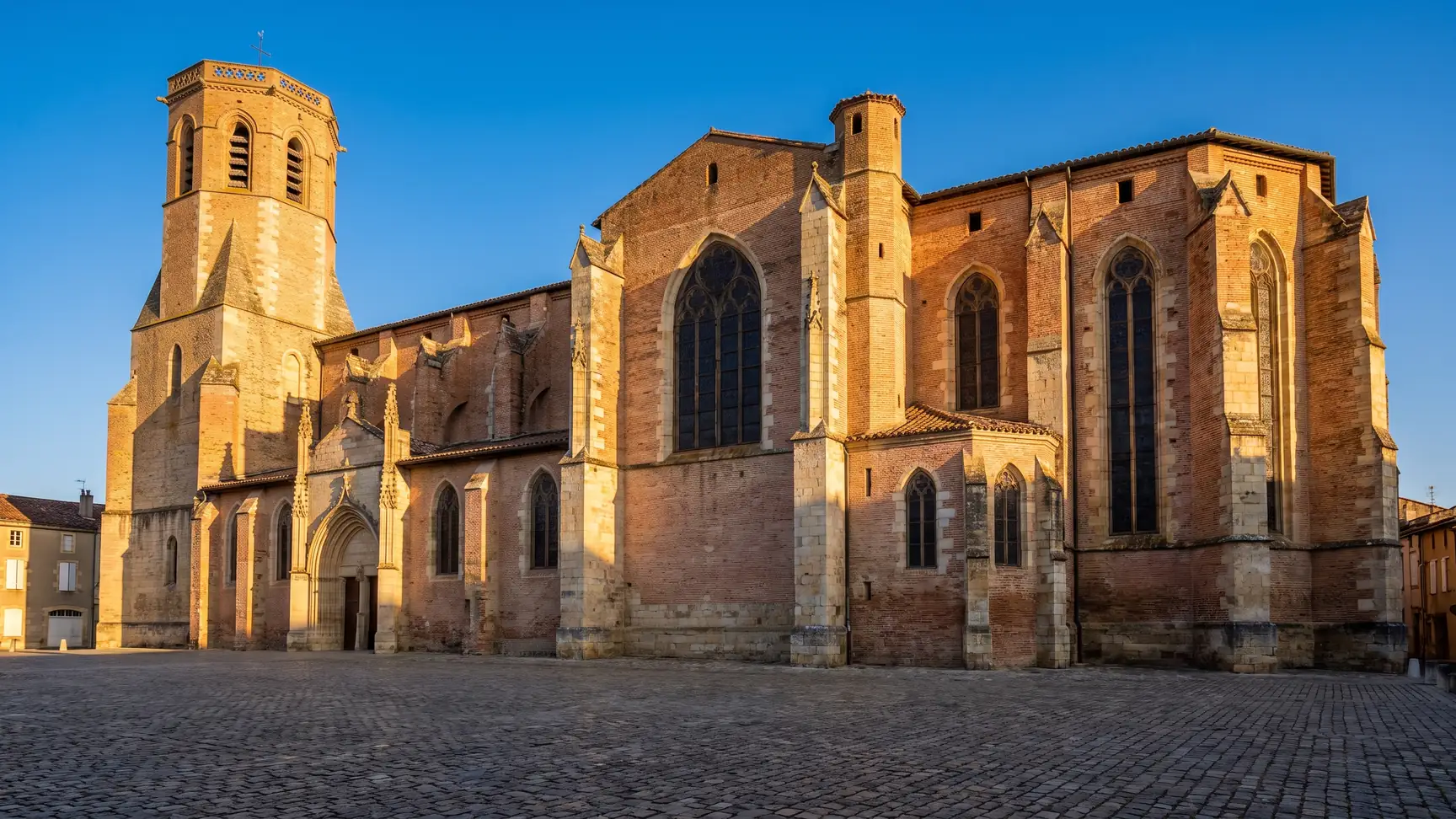
According to the Ministry of Culture’s POP/Mérimée entry, construction of the Church of Saint-Luperc began in 1464 at the request of Prior Jean Marre and was completed around 1500. The building, listed as a historic monument since January 4, 1945, is the most prominent heritage landmark in the center of Eauze.
Jean Marre's construction site, built with Elusa
Construction begins in 1464, at the request of Jean Marre, prior of Eauze and vicar general of Auch, and was completed around 1500 (some sources place the end of construction in the 16th century). He was an outstanding builder: after becoming bishop of Condom in 1497, he also initiated the reconstruction of Condom Cathedral—two Gascon “cathedrals” built under the same man’s direction. The building is a fine example of Southern Gothic: a single nave, approximately 10.70 meters wide and 22 meters high, flanked by chapels set between the buttresses, with a polygonal apse. Its uniqueness has been strikingly evident since the 1972 restoration, which stripped away the plaster: the walls combine stone with a massive amount of reused rubble and bricks salvaged from the ruins of Elusa —
The medieval church is literally built using the ancient capital. This monumental reuse encapsulates the history of Eauze, where each era has built upon—and with—the one that came before.
A cathedral without a bishop
Why “cathedral,” when Eauze hasn’t had a bishop for eleven centuries? The ancient bishopric of Eauze—one of the first in Gaul—disappeared in IX century: Devastated by invasions, the fief was merged with that of Auch around 829, some six hundred years before the construction of the present church. It has therefore never been a bishop's seat: it was in 1865 that the Archbishop of Auch granted it the title of cathedral, in an honorary capacity, in memory of the defunct ecclesiastical metropolis. Another point of clarification: the church is registered as a historic monument (decree of January 4, 1945)—and not “listed,” as is sometimes stated. As for its 19th-century stained-glass windows Dating from the 19th century, they are the work of a local native who proudly signed his name “J.-B. Anglade” Élusate »;
The old stained-glass windows, however, are not by Arnaud de Moles, the master of Auch, despite a widely held attribution. A church that is a palimpsest—one to be studied as much as admired.
Armagnac Square and Queen Margot
The heart of Eauze is Place d’Armagnac, the old market square lined with arcades and historic houses, where the house known as “Jeanne d’Albret’s House” preserves the memory of a royal visit in 1579 — that of Henry of Navarre and Queen Margot. A monastic town that has become a culinary capital.
A monastic town—not a fortified town
Let’s clear up a common misconception: Eauze is not a bastide. After the fall of Elusa, the medieval town was reborn around 980 around a Cluniac priory dedicated to Saint Luperc, on the hill—a monastic settlement, therefore, predating the bastide movement by three centuries, which received its charters in 1352 through a paréage agreement between the Count of Armagnac and the prior. Three major settlements thus succeeded one another in the town: the protohistoric oppidum of Esberous, the ancient city of Elusa on the plain, and finally the hilltop medieval town—a stratigraphy spanning two thousand years of Gascon history.
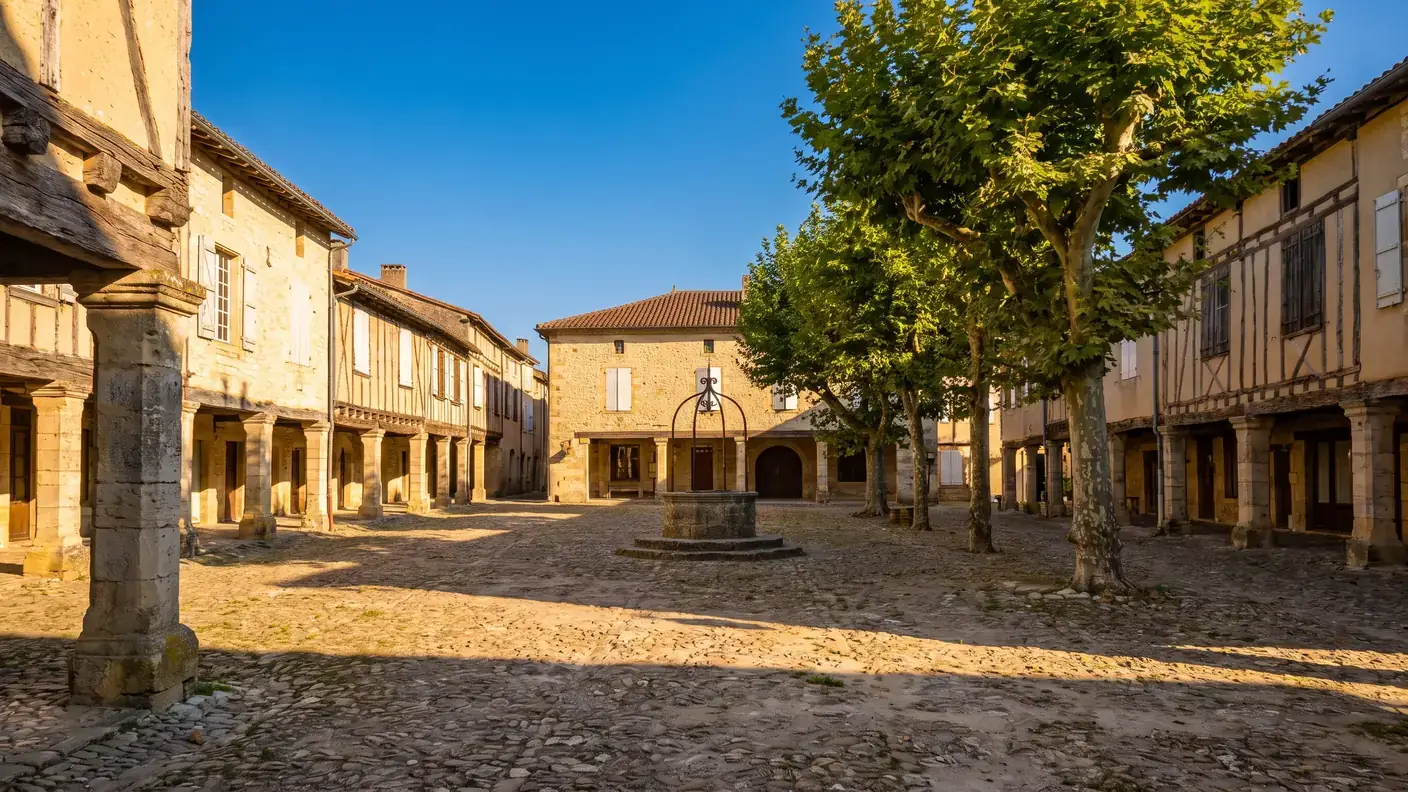
The heart of this town is Place d'Armagnac, the former market square (once known as “Place de l'Église”), lined with arcades and half-timbered houses, facing the cathedral: It is here, on market days, that the heart of the capital of Armagnac beats, in a setting that has hardly changed since the Renaissance.
1579: Queen Margot in Eauze
In June 1579, Henri of Navarre—the future Henri IV—stayed in Eauze with his wife Marguerite de Valois, known as Queen Margot. The couple is associated with the half-timbered house on Place d’Armagnac, traditionally known as the “House of Jeanne d’Albret,” although there is no documented record of her ever having stayed there.
In his Theses digitized by the National Library of France, Marguerite recounts that her husband suffered from “a high, persistent fever” for seventeen days and that she kept vigil over him. This firsthand account explains why the article focuses on the royal visit of 1579 rather than that of Jeanne d’Albret.
In practice, the house is located on Place d’Armagnac, across from the cathedral. Its 15th-century façade The 19th-century building has been listed as a historic monument since 1929; the daisies carved into the wooden pillars serve as a local reminder of this forced stay. The tour consists of viewing the facade from the public area.
Bas-Armagnac and the golden sands
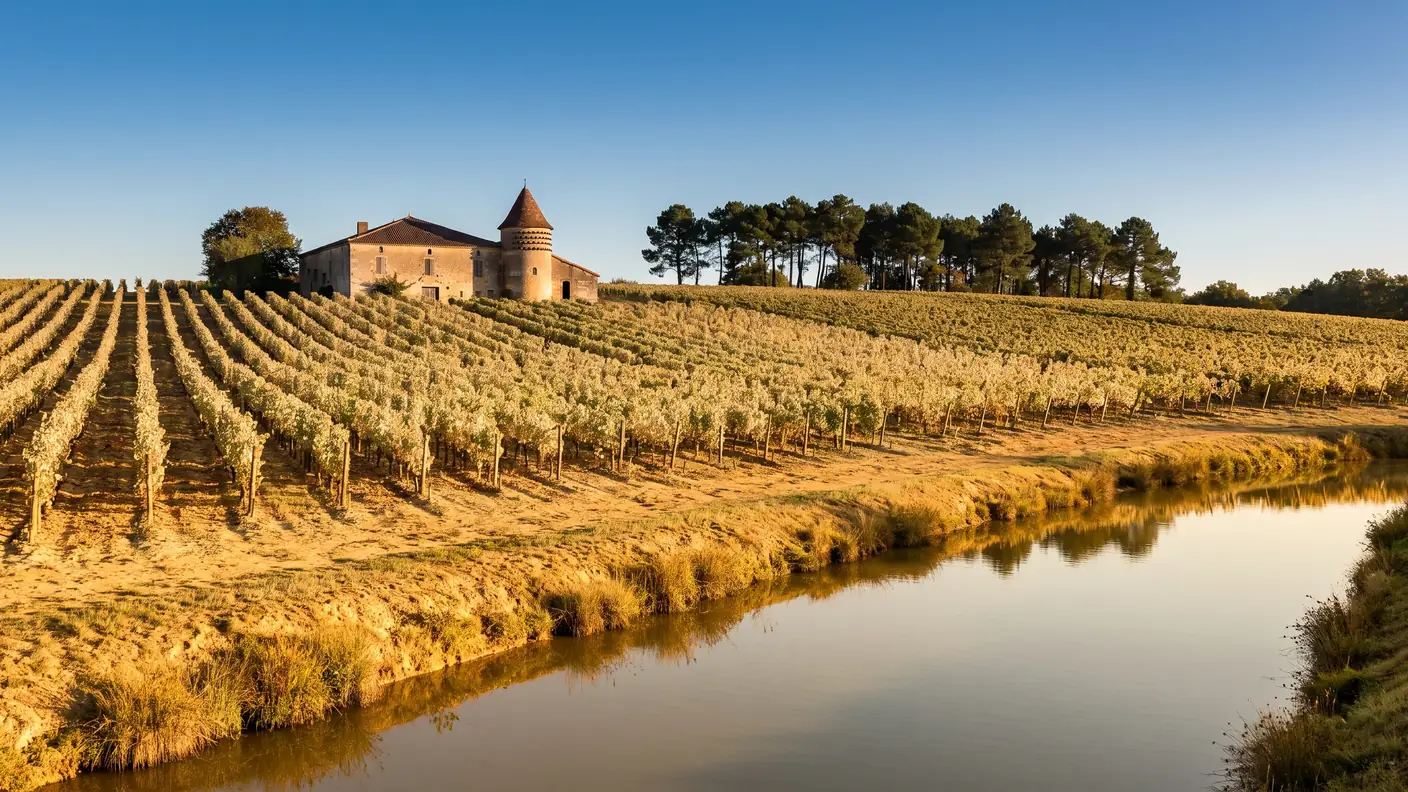
Eauze is the heart of Bas-Armagnac, the westernmost and most renowned appellation of Gascon brandy—the “black Armagnac” of oak groves and golden sands—whose boundaries were defined in 1909 and granted AOC status in 1936. The premier terroir of France’s oldest brandy.
The "Cru des Sables Fauves"
The Armagnac region is divided into three subregions: Bas-Armagnac in the west, Armagnac-Ténarèze in the center, and Haut-Armagnac in the east. Bas-Armagnac—which accounts for 67% of the total area and is both the largest AND the most renowned—is nicknamed “black Armagnac”: not because of the color of the brandy, but because of its oak groves that darken the landscape (by contrast, the limestone-rich Haut-Armagnac is called “white”). Its signature terroir: fawn-colored sands—ancient marine sands deposited during the Miocene epoch, when the sea covered Gascony—that have been reddish-brown due to iron oxidation. They are said to produce the finest and most aromatic brandies, with their famous notes of prune. As for dates, let’s be precise: the demarcation of the three crus dates back to the decree of May 25, 1909—
signed by President Armand Fallières, himself an Armagnac producer in Mézin! — and the AOC established by the decree of August 6, 1936. These are two distinct acts that are all too often conflated.
The BNIA, the Competition, and the Flame
Eauze's prominence is institutional: the city is home to the headquarters of the BNIA, the National Interprofessional Office for Armagnac, located at the “Maison du Vignoble Gascogne Armagnac” on Route de Manciet—the shared headquarters for the entire industry. It also houses the large contest spirits, the successor to the “Armagnac Grand Spirits Fair” founded in 1947 by Joseph Miquel and revived in 1960 with the BNIA. And when the season for the distillation — from October through January–February —, the country literally bursts into flames: it’s the “ Flame of Armagnac ", when the wine cellars open their doors at the foot of the steaming still, with tastings included; Eauze has its own event, "Eauze s'enflamme," in late November.
Around the city, the estates of Bas-Armagnac welcome visitors year-round to tour the cellars and sample the vintages—the perfect opportunity to discover, glass in hand, why this small region of red sand produces one of the world’s finest brandies.
What is there to do in Eauze?
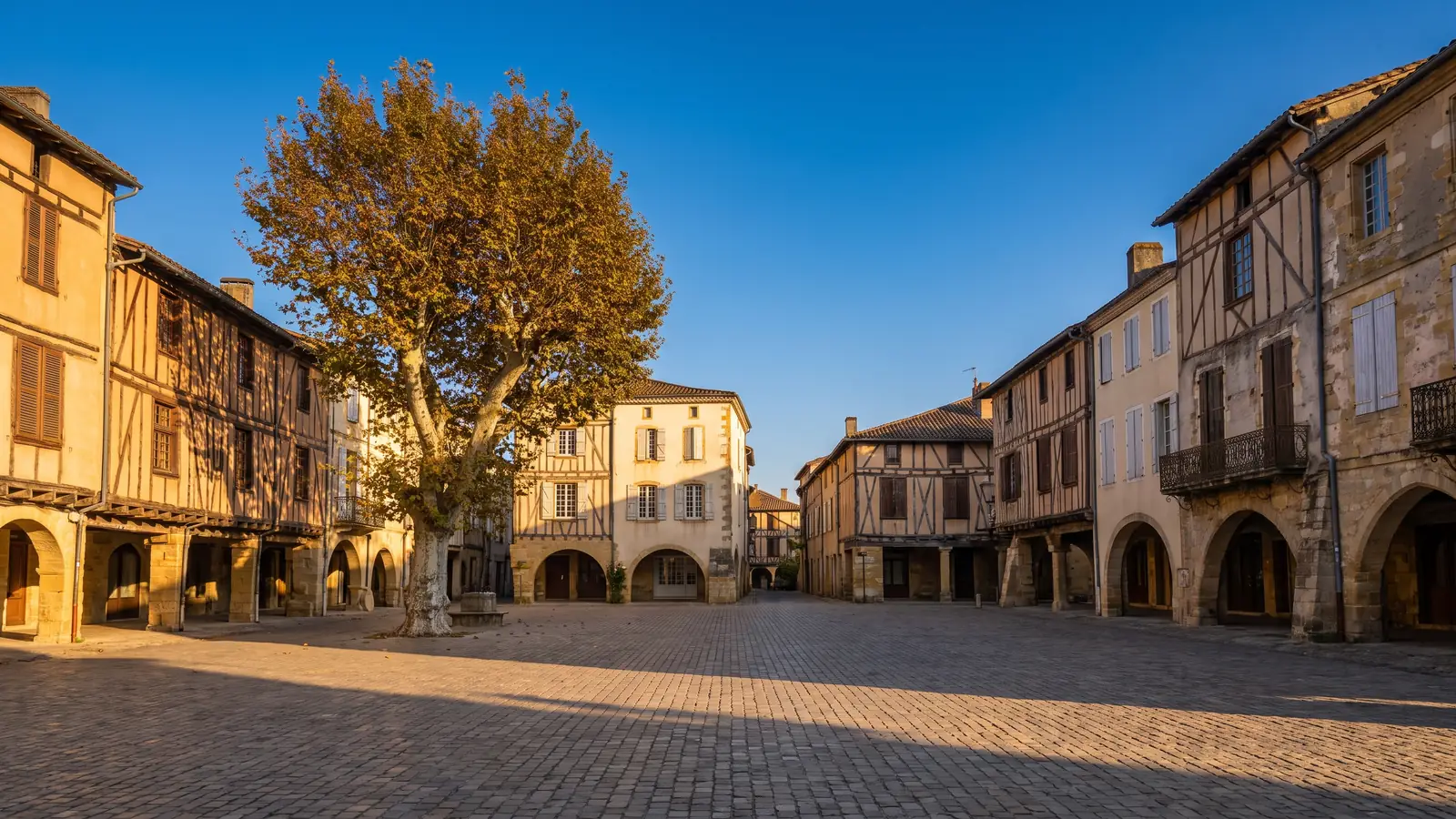
In Eauze, you can step back in time at the three sites of “Elusa Capitale antique” (the Treasury Museum, the Domus of Cieutat, and the Villa of Séviac—open from April 15 to November 1), stroll through the big Thursday morning market, enjoy the July festivals (the feria on the first weekend, the Roman Festival of Elusa on the third), cycle along the Armagnac Greenway, and sample wines at the Bas-Armagnac cellars. Here, in concrete terms, are the real, tried-and-true activities that fill a day—or a weekend—in the capital of Armagnac, combining archaeology, Gascon markets, and local specialties. Winter has its own special event: the Sunday morning “gras” market, held in the Belle-Marie market hall, where the sale of fattened ducks begins at the stroke of 10 a.m. A complete Gascon experience, tailored to the season.
- Visit the Treasury Museum — Place de la République: the 28,054 coins and jewels of the Eauze Treasure, designated a “Musée de France” (Elusa sites open from April 15 to November 1)
- Explore the Domus of Cieutat—the magnificent 2,700-square-meter Gallo-Roman residence and its interpretation center housed in the former Eauze train station
- Stroll through the Thursday morning market—one of the busiest in the Gers—from Place du 19-Mars to Place d'Armagnac; a gourmet market is held on Sunday mornings in July and August
- The Winter Fattened Duck Market — Sunday mornings at the Belle-Marie Market Hall, from November through March: fattened ducks and duck livers sold at 10 a.m. when the bell rings, Gascon-style breakfasts
- July festivals — the Eauze Feria on the first weekend (bodegas, bandas, Nimeño II bullring); the Roman Festival of Elusa on the third weekend (gladiators, dramatized tours of the domus)
- Cycling along the Armagnac Greenway—the Cazeneuve to Eauze section (8 km, shared with the GR65 pilgrimage route to Santiago de Compostela); the Armagnac rail bike trail on the old railroad line between Nogaro and Sorbets
- Taste tastings in the cellars of Bas-Armagnac—estates open to the public around Eauze; during the distillation season (Oct.–Feb.), the “Flamme de l'Armagnac” at the foot of the still
Gascon Markets and Flavors
Eauze is a town in markets. The big event is on Thursday morning: one of the busiest markets in the Gers, stretching from the Place du 19-Mars-1962 all the way to the Place d'Armagnac, at the foot of the cathedral—farmers, poultry, melons, cheeses, and a genuine Gascon accent guaranteed. The winter, from early November through late March, in addition to the livestock market On Sunday mornings, under the Belle-Marie market hall: the sale of fattened ducks and duck livers begins “at the stroke of the bell,” at 10:00 a.m. sharp, and you can sit down right there for a Gascon breakfast. The summer, in July and August, a Sunday morning gourmet market brings together about twenty producers at Place d'Armagnac. Round out your visit with the local specialty shops and the cellars in the surrounding area of Bas-Armagnac —
Tastings of Armagnac, Floc, and Gascony wines—and Eauze has established itself as one of the top culinary destinations in the Gers, no matter the season. Having a designated driver makes the whole experience completely stress-free: you taste, you shop, and you don’t drive.
Elusa, the Greenway, and the Festivals
The active side is just as rich. The three sites of “ Elusa, Ancient Capital "— the Cieutat Treasury Museum and Domus in Eauze, and the Séviac Villa in Montréal-du-Gers — are open to visitors from April through early November and make for a wonderful day of archaeology. Cyclists will be in their element: the Armagnac Greenway, on the former Condom-Riscle railroad line, features an 8-kilometer stretch from Cazeneuve to Eauze, which is shared by the GR65 to Santiago de Compostela (Eauze is a stop on the Via Podiensis); more unusual, a bike-train runs along 12 kilometers of the old railway line, between Nogaro and Sorbets.
And in July, the town hosts two major events: the feria on the first weekend, with its bodegas and the Nimeño II bullring, and the Roman Festival of Elusa (formerly the “Roman Gallop”) on the third weekend, featuring gladiators and an ancient village set up around the domus. For swimming, head to Lake Uby in Barbotan (16 km).
| Activity | Where / When | Good to Know |
|---|---|---|
| Treasure Museum + Domus | Eauze · April 15–November 1 | Elusa, Ancient Capital (along with Séviac) |
| Thursday Market | downtown, Thursday morning | one of the most popular in the Gers |
| Fat Market | Belle-Marie Hall · Sunday mornings, Nov.–March | auction at 10 a.m. |
| Eauze Fair | First weekend in July | wineries, bands, Nimeño II bullring |
| Elusa Roman Festival | Third weekend in July | gladiators, a theatricalized domus |
| Armagnac Greenway | Cazeneuve → Eauze (8 km) | shared route with the GR65 |
Barbotan, Montreal, and the villages of Bas-Armagnac
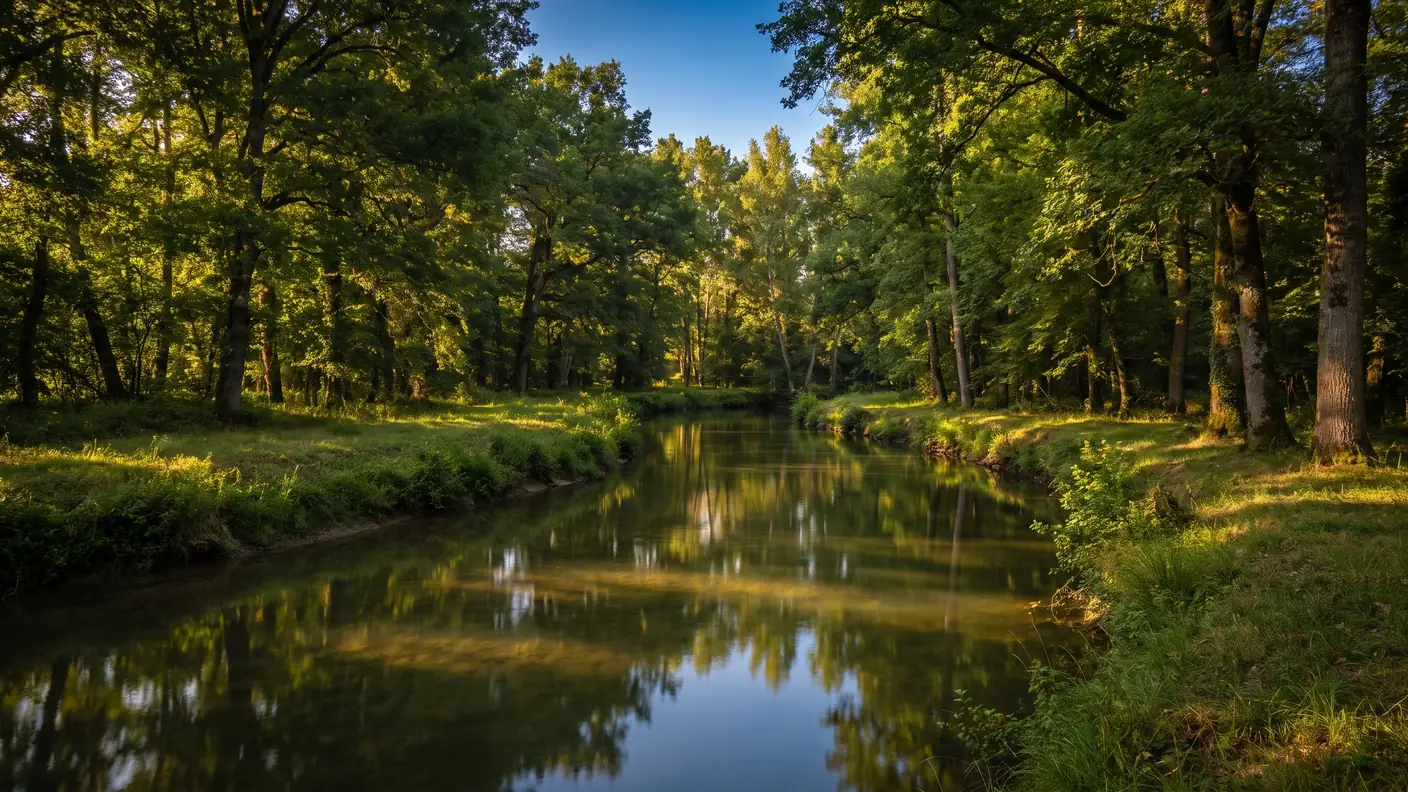
Around Eauze, the Bas-Armagnac region is home to the spa town of Barbotan-les-Thermes and its Lake Uby, Montréal-du-Gers and the Villa de Séviac, as well as the most beautiful villages of the neighboring Ténarèze region—Fourcès and Larressingle. A region of spa-goers, archaeology, and fortified towns.
Barbotan-les-Thermes and Lake Uby
About 18 kilometers to the west, Barbotan-les-Thermes (in the municipality of Cazaubon) is the Gers’ premier spa town, specializing in rheumatic and phlebological conditions: spa guests and visitors flock there during the season to this charming, flower-filled village with its gentle Landes charm. Right next door, Lake Uby offers swimming, a beach, and water sports—it’s the Élusates lake, just a quarter of an hour from the city. To the south, Nogaro boasts its racetrack and amphitheater; to the west, in the neighboring Landes region, Labastide-d’Armagnac (29 km) is a charming bastide dating back to 1291, famous for its remarkable Notre-Dame-des-Cyclistes Chapel, a national cycling shrine where the jerseys of champions line the walls. With its thermal baths, lake, and bastides, the western Gers offers a diverse hinterland that perfectly complements a stop in Éluzates—all within a half-hour drive.
Montréal-du-Gers, Séviac, and the Ténarèze
To the northeast, the road to Condom is lined with wonders. Montréal-du-Gers (15 km), first Gers bastide (founded on March 30, 1255, by Alphonse de Poitiers) and named “France’s Most Beautiful Village,” overlooks the Gallo-Roman villa at Séviac — the third site of Elusa, the ancient capital: a magnificent 4th-century residence century, with approximately 625 m² of mosaics restored in situ and designated a historic monument. Further on, Fourcès, the only circular bastide in the Gers, and Larressingle, the tiny 13th-century fortified town century (213 residents… and some 133,000 visitors a year!), round out the tour of the villages. Condom, the capital of Ténarèze, with its cathedral and bronze Musketeers, is half an hour away. From Eauze, you can explore the entire northwestern Gers region in all directions—archaeology in the morning, bastides in the afternoon, and wine cellars on the way back: Gascony right at your fingertips.
| Around Eauze | Distance | Interest |
|---|---|---|
| Barbotan-les-Thermes / Lake Uby | ~18 km | spa, swimming, beach |
| Montréal-du-Gers / Séviac | ~15 km | The first fortified town in the Gers (1255), mosaics of Séviac |
| Fourcès | ~20 km | the only circular bastide in the Gers |
| Larressingle | ~25 km | 13th-century fortified town, known as the “Little Carcassonne of the Gers” |
| Condom | ~30 km | cathedral, The Three Musketeers, cruises on the Baïse |
| Labastide-d'Armagnac | ~29 km | Bastide of 1291, Notre-Dame-des-Cyclistes |
When is the best time to visit Eauze?
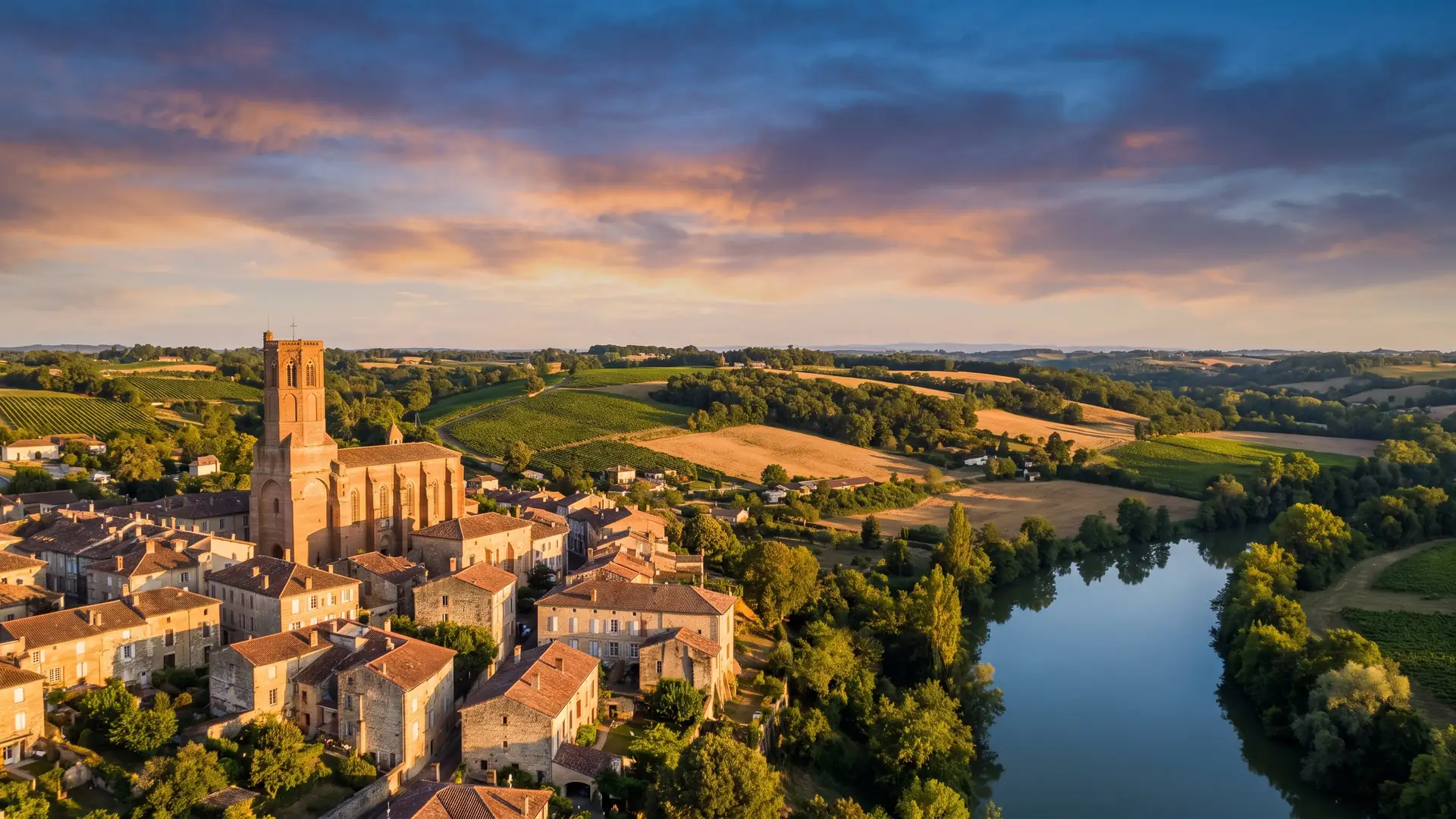
Eauze has four distinct seasons: ancient sites from April through November, festivals in July, distillation and its “Flamme” from October through February, and the “marché au gras” throughout the winter. There’s always a good reason to visit the capital of Armagnac.
The Seasons in the Capital of Armagnac
The Eluzate calendar follows its own rhythm. From April through early November, the three sites of Elusa Capitale Antique are open: this is the archaeological season, ideal in the spring and fall, when the light bathes the vineyards in golden hues. July is the month of festivals: the feria on the first weekend—with bodegas, bandas, and packed arenas—followed by the Roman Festival of Elusa on the third weekend, when gladiators and ancient artisans take over the domus. Fall and winter belong to Armagnac: from October to February, distillation is in full swing and the “Flamme de l’Armagnac” opens the cellars at the foot of the still — Eauze hosts its event in late November —, while, from November through March, the Sunday “gras” market delights visitors at the Belle-Marie market hall.
Add to that the Thursday market, which takes place every week of the year, and it becomes clear that Eauze has no off-season: every time of year has its own character, its own flavor, and its own special event.
A Typical Day in Bordeaux
About 1 hour and 58 minutes from Bordeaux, Eauze is perfect for a day trip. In the morning: the Trésor Museum and the Domus of Cieutat—allow a good two hours for both sites, which are closely linked and complement each other. At noon: a Gascon lunch in town, or a picnic along the banks of the Gélise. In the afternoon, take your pick: the Villa de Séviac in Montréal-du-Gers to round out the ancient trilogy, a tour of the villages (Fourcès, Larressingle), a tasting at a Bas-Armagnac winery, or, in the summer, a swim at Lake Uby. If you visit on a Thursday, switch the order: market in the morning, sites in the afternoon. Return to Bordeaux in the early evening, the trunk stocked with Armagnac, Floc, and preserves. With a driver, the itinerary can be tailored to your liking, tastings included—the ideal way to experience Bas-Armagnac without worrying about mileage or how many glasses you’ve had.
Getting to Eauze from Bordeaux
Eauze is located about 146 km from Bordeaux, which is about a 1-hour, 58-minute drive: Take the A62 highway, then the A65 (Langon interchange), exit 2 “Captieux,” then the N524 through the Landes Forest and the Bas-Armagnac region, via Gabarret and Barbotan, to Eauze. A fun fact about the route: this N524 Langon-Bazas-Captieux-Gabarret-Eauze is the “oversized vehicle route” created to transport sections of the Airbus A380—you’re literally following the path of these giant planes. An alternative scenic route passes through Agen, Nérac, and Condom—longer but with more points of interest along the way. There’s no train service, however: the Eauze station has been closed to passengers since the 1930s–1940s, and the nearest stations (Agen, Auch, Mont-de-Marsan) are a good hour’s drive away.
For a getaway combining archaeology and Armagnac, a door-to-door service with a driver is the simplest and most flexible option.
Train or chauffeur service?
To get to Eauze and, above all, to explore the Bas-Armagnac region—the sites of Elusa, Séviac, and Barbotan, as well as the villages and wine cellars—hire a Executive car service, chauffeur service in Bordeaux offers true freedom: a direct, door-to-door trip from Bordeaux with no transfers, and the option to make stops as you please—in Captieux, Barbotan, or at a vineyard. This is especially valuable for a wine-tasting getaway, where you’ll want to be able to sample Armagnac and Floc without having to drive afterward, in complete safety. We offer this route at fixed price provided in advance: Allow about 332 € For the one-way trip, in a Mercedes sedan or a van seating up to 8 passengers, with a professional chauffeur. The price, set at the time of booking, remains fixed: it does not depend on traffic or stops, unlike a taxi meter.
This is the perfect option for a day of archaeology (the Treasure, the domus, Séviac), an Armagnac getaway with tastings, a wellness retreat or spa stay in Barbotan, the July festivals, or an event in the Gers. You can travel alone, as a couple, or in a small group of up to 8 people, with your luggage and local purchases (Armagnac, Floc, preserves, foie gras from the market), and request stops wherever you’d like. In practice, booking is quick and easy: simply provide your departure address in Bordeaux and your destination in Eauze (or the estate, hotel, or Barbotan thermal baths), along with the date, desired time, and number of passengers, and you’ll receive a written, fixed-price quote in return. On the day of the trip, the driver picks up the passengers at the agreed-upon address and takes them directly to Bas-Armagnac, without any detours.
| Route | Distance | Duration | Landmark |
|---|---|---|---|
| Bordeaux → Eauze | ~146 km | ~1:58 | Starting at €252 for a private chauffeur service |
| Eauze → Barbotan-les-Thermes | ~18 km | ~20 min | hot springs, Lake Uby |
| Eauze → Montreal / Séviac | ~15 km | ~15 min | Bastide 1255, mosaics |
| Eauze → Condom | ~30 km | ~30 min | cathedral, The Three Musketeers |
Whether you come for the Gallo-Roman treasure and the ancient capital of Novempopulania, for the cathedral built with bricks from Elusa, for the Gascon markets and ferias, or for the Bas-Armagnac wine cellars and its “Flamme d’hiver,” Eauze has something to offer history buffs and food lovers alike—the capital of Armagnac, less than two hours from Bordeaux.
Whether it’s for an archaeology day trip, an Armagnac getaway, or a spa vacation in Barbotan, booking a private chauffeur guarantees a comfortable and punctual ride—book a driver from Bordeaux to Eauze or explore all our destinations.
Frequently Asked Questions
Where is Eauze located?
Eauze is a small town in western Gers (32), in the Occitanie region, in the Condom district, in the heart of Gascony and Lower Armagnac, on the small Gélise River. It has a population of 4,108 (INSEE 2023)—the residents are known as Élusates, named after the ancient city of Elusa—and officially bills itself as the “capital of Armagnac”: the BNIA, the industry association for Armagnac, has its headquarters there. The town is surrounded by Condom (30 km), Barbotan-les-Thermes (~18 km), Montréal-du-Gers (15 km), and Nogaro. From Bordeaux, it’s about 146 km, or a 1-hour, 58-minute drive via the A62, then the A65 (Captieux exit), and the N524. With a chauffeured transfer, the transfer is door-to-door.
How far is it from Bordeaux to Eauze?
About 146 km by road, or about 1 hour and 58 minutes: take the A62 highway, then the A65 (Langon interchange), exit 2 “Captieux,” then the N524 via Gabarret and Barbotan to Eauze—the “wide-load route” created for Airbus A380 convoys. With a professional chauffeur, the fare is fixed and provided in advance, starting at €332 one way (sedan or van, door-to-door price). Please note: Eauze has not had a passenger train station since the 1930s–1940s (the former station now houses the Elusa Interpretation Center); the nearest train stations (Agen, Auch, Mont-de-Marsan) are still a good hour away. Once there, a vehicle is essential for exploring the surrounding area—so a private driver is particularly well-suited for this.
What is the Eauze Treasure?
One of the greatest Gallo-Roman treasures ever discovered in France: 28,054 coins—28,003 in silver and billon (4,706 denarii and 23,297 antoniniani), 45 bronze coins and 6 gold coins, weighing approximately 120 kg—accompanied by some fifty pieces of jewelry and precious objects (gold necklaces, an extremely rare coin necklace, a gold phylactery, cameos, and knives with ivory handles). Buried around A.D. 261, during the Crisis of the Third Century, it was unearthed on October 18, 1985, during a salvage excavation led by Daniel Schaad, near the old train station. The name “Libo,” engraved on silver spoons, refers to its probable owner, who never returned to claim it. It has been on display since 1995 at the Musée du Trésor, on Place de la République, in Eauze itself.
What is Elusa?
Elusa is the ancient city from which Eauze traces its origins—and from which its inhabitants, the Élusates, derive their name. Capital of the Aquitanian tribe of the Élusates (who spoke a Proto-Basque language, not “Gaulish”), defeated in 56 B.C. by Crassus, Caesar’s lieutenant, the city was founded in the 1st century about one kilometer east of the current center, in the Cieutat neighborhood. Around 285, Diocletian’s reform made it the capital of Novempopulania, the Roman province of the Southwest; it was also one of the first bishoprics in Gaul (as early as 314). Destroyed in the Early Middle Ages, it was reborn as a medieval town. Today, the “Elusa Capitale antique” complex includes the Domus of Cieutat, the Treasury Museum, and the Villa of Séviac (Montréal-du-Gers).
Why doesn't the cathedral in Eauze have a bishop?
Because the bishopric of Eauze had ceased to exist... six centuries before the current church was built. The ancient episcopal see—one of the first in Gaul, attested as early as 314—was destroyed by invasions and merged with that of Auch around 829. The Church of Saint-Luperc, meanwhile, was built beginning in 1464 at the initiative of Prior Jean Marre (the future bishop of Condom), in the Southern Gothic style, with extensive reuse of bricks and rubble stone taken from the ruins of Elusa — as revealed by the 1972 restoration. In 1865, the Archbishop of Auch restored to it, in a purely honorary capacity, the title of “cathedral,” in memory of the vanished metropolitan see. The building has been listed (but not classified) as a historic monument since January 4, 1945.
What is there to do in Eauze?
In practice: visit the Trésor Museum (Place de la République) and the Domus of Cieutat—two of the three sites of “Elusa Capitale antique,” open from April 15 to November 1, along with the Villa of Séviac in Montréal-du-Gers; stroll through the large Thursday morning market, one of the busiest in the Gers; in winter (Nov.–March), experience the Sunday morning “marché au gras” at the Belle-Marie market hall, with the auction starting at 10 a.m.; in July, the feria (first weekend, Nimeño II arena) and the Roman Festival of Elusa (third weekend, gladiators at the domus); cycle along the Armagnac Greenway (Cazeneuve → Eauze, 8 km, shared with the GR65) or try the Nogaro rail bike; go swimming at Lake Uby in Barbotan (16 km);
and enjoy them in the cellars of Bas-Armagnac—during the “Flamme de l'Armagnac” festival during the distillation season (Oct.–Feb.).
Is Eauze really the capital of Armagnac?
Yes—that is its official title, which the city claims (“capital of Armagnac and ancient capital”) and which is confirmed by the following institutions: the BNIA, the National Interprofessional Office of Armagnac, is headquartered in Eauze at the Maison du Vignoble Gascogne Armagnac. The town is the hub of Bas-Armagnac, the western region — accounting for 67% of the appellation’s area and the most renowned, nicknamed “black Armagnac” for its oak groves (not for the color of the brandy!), with its terroir of fawn-colored sands. It hosts the major eaux-de-vie competition, a continuation of the fair established in 1947, as well as the “Flamme de l’Armagnac” event during the distillation season. An important distinction: the demarcation of the crus dates back to 1909 (the Fallières Decree), while the AOC designation dates from 1936—two separate acts.
Who stayed at Jeanne d'Albret's house in Eauze?
The documented royal stay is not that of Jeanne d’Albret—there is no evidence to support it, and the Mérimée database simply refers to the building as the “15th-century house” (the façade was designated a historic monument in 1929): so the house is referred to as the “so-called” house of Jeanne d’Albret. However, in June 1579, Henri de Navarre—the future Henri IV—stayed there with his wife Marguerite de Valois, “Queen Margot.” The king fell ill with “a severe, persistent fever” which, as Marguerite recounts in her Memoirs, “lasted seventeen days”—she kept vigil over him without removing her clothes. In memory of this forced stay, daisies were carved into the wooden pillars of the house, which can still be seen on the Place d’Armagnac, across from the cathedral.
What's there to see around Eauze?
Within a half-hour drive: Barbotan-les-Thermes (~18 km), the spa town of the Gers, and its Lake Uby (swimming, beach); Montréal-du-Gers (15 km), the first bastide in the Gers (1255) and a “Most Beautiful Village in France,” featuring the Gallo-Roman villa at Séviac with its ~625 m² of mosaics—the third site of the ancient capital of Elusa; Fourcès (20 km), the only circular bastide in the Gers; Larressingle (25 km), the tiny 13th-century fortified town (213 residents, ~133,000 visitors per year); Condom (30 km), capital of the Ténarèze region, with its cathedral and statue of the Musketeers; and, on the Landes side, Labastide-d’Armagnac (29 km) and its remarkable Notre-Dame-des-Cyclistes Chapel. Archaeology, thermal baths, bastides, and wine cellars: the Gascon grand slam.
When is the best time to visit Eauze?
Every season has its own charm. From April through early November, the three sites of Elusa Capitale Antique are open—spring and fall offer the most beautiful light over the vineyards. July is the month of festivals: the feria on the first weekend (wineries, bands, the Nimeño II bullring), and the Roman Festival of Elusa on the third weekend (gladiators, ancient village). From October through February, it’s distillation season: the “Flamme de l’Armagnac” opens the cellars at the foot of the still—Eauze hosts its event in late November—and, from November through March, the Sunday morning “gras” market brings the Belle-Marie market hall to life (auction begins at 10 a.m.). The large Thursday market, meanwhile, remains a constant throughout the year. In short: there’s no off-season in the capital of Armagnac—just different reasons to visit.
Can I book a chauffeur service from Bordeaux to Eauze?
Yes. We provide transportation from Bordeaux to Eauze (approximately 146 km, about 1 hour and 58 minutes via the A62, taking the A65 to the Captieux exit, then the N524) at a fixed price, starting at €332 one-way, in a Mercedes sedan or van seating up to 8 passengers, with a professional chauffeur. The trip is direct, door-to-door, with optional stops—in Barbotan-les-Thermes, Montréal-du-Gers, or at a Bas-Armagnac wine cellar. This is the ideal option for a day of exploring archaeological sites (the Treasure, the domus, Séviac), an Armagnac getaway with tastings (without having to drive yourself), a spa stay in Barbotan, or the July festivals. You can bring along luggage and local purchases. The fixed price is provided and confirmed in writing before departure, with no unexpected charges. Once there, the driver takes you from site to site, ensuring a stress-free experience.
Further Reading
- The capital of Ténarèze: see the Condom Guide (the cathedral, the Musketeers, Armagnac)
- The Bastide of Séviac: see the Guide to Montréal-du-Gers (the bastide founded in 1255, the Gallo-Roman villa)
- Flaran Abbey: see the Valence-sur-Baïse Guide (the Cistercian abbey, the bastide founded in 1274)
- The capital of Gascony: see the Guide to Auch (the UNESCO-listed cathedral, d'Artagnan)
- Plan your trip: Book an executive car service from Bordeaux to Eauze or explore all our destinations
Sources and References
- Wikipedia — Eauze — Gers, capital of Armagnac, Elusa/Novempopulania, population 4,108 (2023), Gélise, GR65
- Elusa, Ancient Capital — Eauze Treasure Museum — 28,054 coins, pieces of jewelry, and precious objects, along with the date of their burial
- Elusa, Ancient Capital — Official Website — Domus of Cieutat, Treasury Museum, Villa of Séviac, Hours and Festivals
- Mérimée Database — Saint-Luperc Church (PA00094791) — early 1464 (Jean Marre), designated a historic monument on January 4, 1945
- BNIA — armagnac.fr — headquartered in Eauze, three crus, light brown sands, boundaries established in 1909 / AOC 1936
- INSEE — Regional Comparison Tool, Eauze (32119) — Population and Trends, 2017–2023
Last editorial review: .
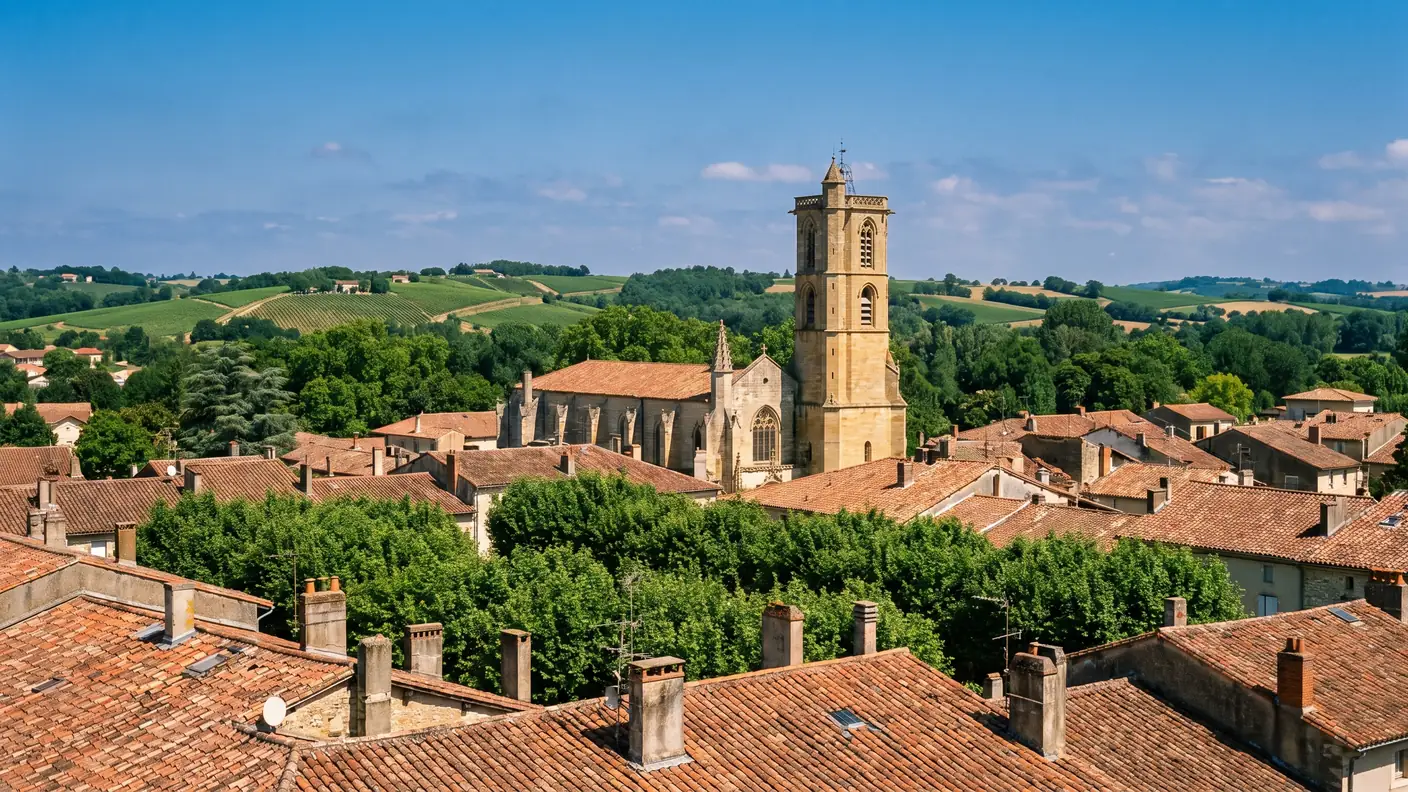
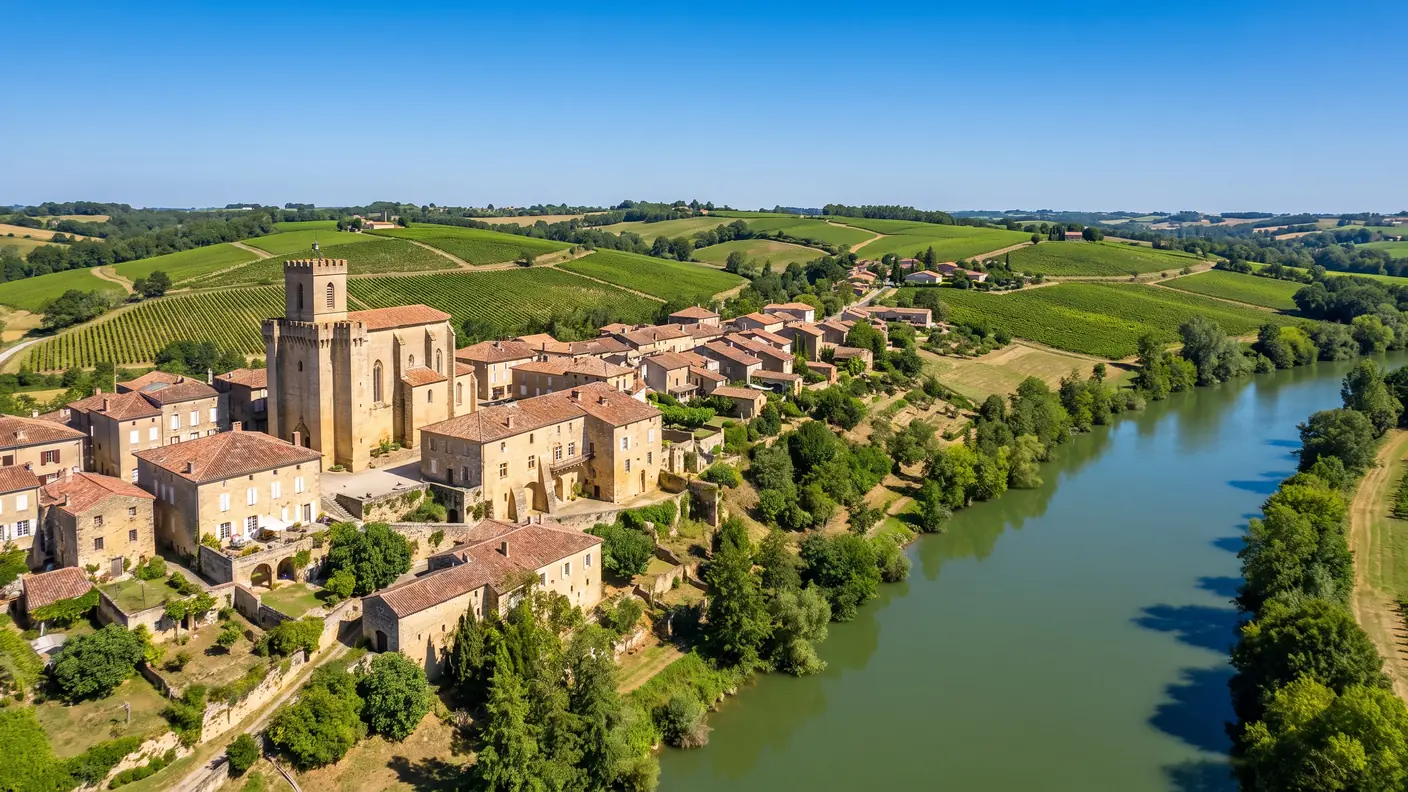
On the way to the capital of Armagnac
Direct route from Bordeaux (~1 hr 58 min) to Eauze and the Bas-Armagnac region, with optional stops—Barbotan, Montréal-du-Gers, and a wine cellar. Written fixed-price quote, with no unexpected charges based on the odometer.