Nérac, Henry IV's Castle and the Albret Region
The capital of the Albret region, on the Baïse River: Henry IV’s castle and its Renaissance gallery, the historic Petit Nérac district, the Garenne Park (a designated historic site), and the history of the Reformation—just 1 hour and 41 minutes from Bordeaux.
Nérac at a Glance
Nérac is a subprefecture of Lot-et-Garonne, situated on the Baïse River in the heart of the Albret region. INSEE recorded 6,992 residents in 2023 [source]. The castle, the Pont-Vieux, the Church of Saint-Nicolas, and the Parc de la Garenne are documented in the official records of the Ministry of Culture.
Here are the key details to know before you go. Driving distances are calculated door-to-door; rates are based on booking a private driver from Bordeaux, with a fixed price provided in advance.
| Landmark | Details |
|---|---|
| Department | Lot-et-Garonne (47), Nouvelle-Aquitaine |
| Status | Subprefecture · Capital of the Albret region |
| Population | 6,992 residents (INSEE 2023) · the Néracais |
| Area | 62.68 km² · on the Baïse River, in Gascony |
| Distance from Bordeaux | about 128 km · 1 hr 41 min drive |
| Nearest train station | Agen (~26 km) — no passenger train station at Nérac |
| Don't miss it | The Castle of Henry IV, the Petit Nérac, Garenne Park, the Baïse River |
Let’s be honest from the start: the “Henri IV” castle now has only one wing left of its original four, and the famous “poule au pot” of the good King Henri is a myth created long after his death. As we go along, we’ll untangle the history behind the legend—without taking anything away from the town’s charm.
This guide covers everything you need to know before you visit: where Nérac is located and what makes it unique, the history of the Château des Albret, the epic story of Henry IV and the Reformation, the old Petit Nérac district, the Church of Saint-Nicolas, the Pont-Vieux and the Baïse River, the Garenne Park (a designated historic site), the surrounding villages and countryside, the best time to visit, and the easiest way to get there from Bordeaux.
Where is Nérac located?
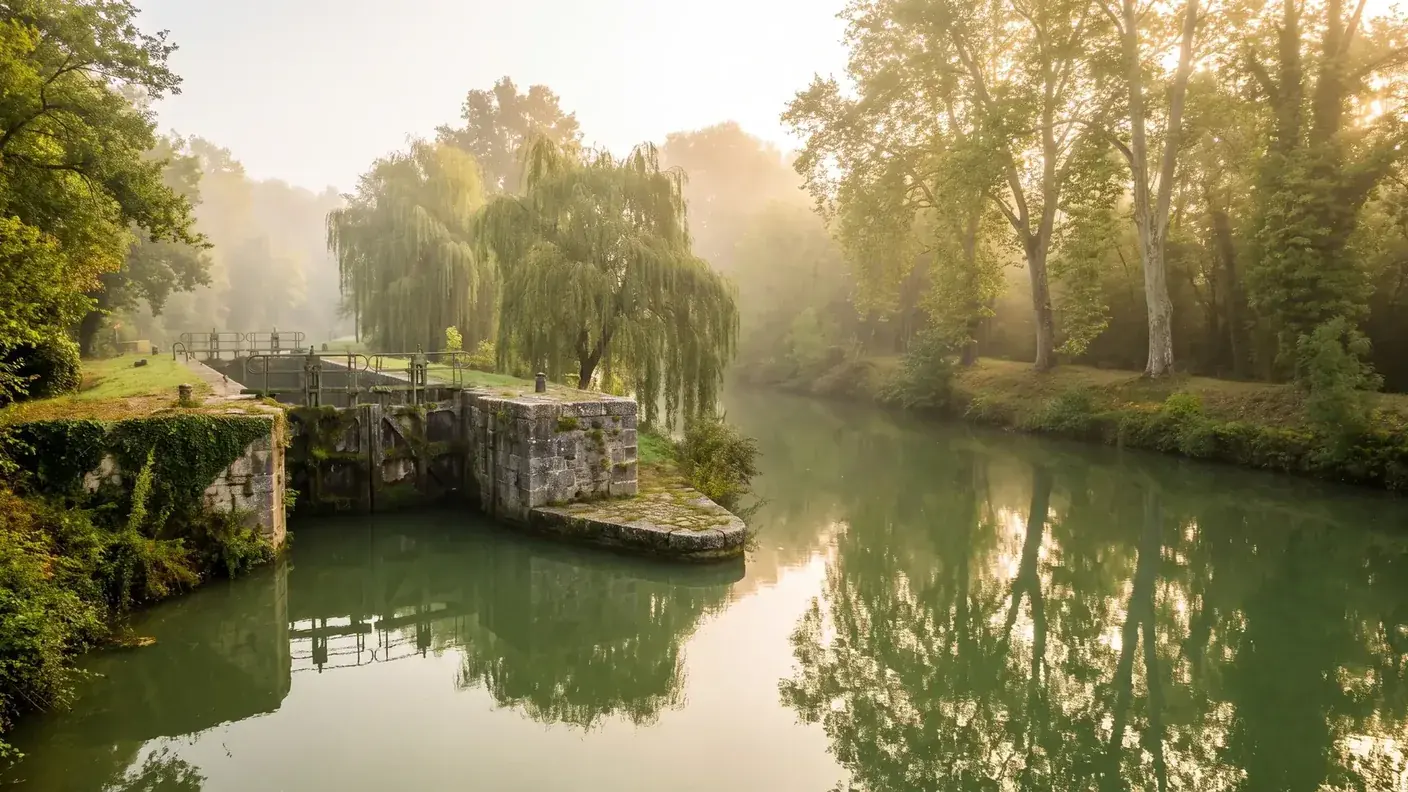
Nérac is a subprefecture of Lot-et-Garonne (47) in the Nouvelle-Aquitaine region, located on both banks of the Baïse River in the Albret region, on the border of Gascony. The town is located in the southwestern part of the department, about 30 kilometers southwest of Agen. Its coordinates are 44.14° N and 0.34° E; its INSEE code is 47195, and its ZIP code is 47600. It covers an area of 62.68 km²—a vast municipality comprising hillsides, vineyards, and forests as much as the town itself. The Baïse, a tributary of the Garonne, flows through it; the Gélise borders it to the west. This setting—a green, steep-sided river, wooded hillsides, and a mild climate—has shaped Nérac: a town of water and hills, on the edge of Gascony’s vineyards and the forests of the Landes region. Agen, the prefecture and the nearest train station, is only about 26 km away—a half-hour drive.
A subprefecture with fewer than 7,000 residents
Nérac has 6,992 residents according to the 2023 census—a remarkably stable figure: the town has hovered around 7,000 residents since the 1960s, with no significant decline (it has even gained about 2.4% of its population since 2017). Notably, it is one of the smallest subprefectures in France in terms of population: it owes this administrative status to its past as a capital, rather than to its current size. The residents are known as the Néracais.
It is precisely this modest population that gives Nérac its charm: a town on a human scale, steeped in history, where you can explore its heritage on foot in half a day, between the two banks of the Baïse. Here you’ll find the authentic Southwest, away from the major tourist crowds, in a region of vineyards (Buzet), Armagnac, and fine cuisine.
The Albret Region: A Name Steeped in History
Nérac is the historic capital of the Albret region, the Gascon territory that gave its name to one of the kingdom’s most powerful families. The Albrets, first lords and later kings of Navarre, expanded their domain through marriages and inheritances until one of them, Henri, became king of France under the name Henri IV. The Albret region is no longer an administrative entity, but it retains a strong identity: a distinct region, a community of municipalities that bears its name, and a legacy—that of a small court which, for a single generation, rivaled Paris.
Nérac Castle: One Wing for an Entire Dynasty
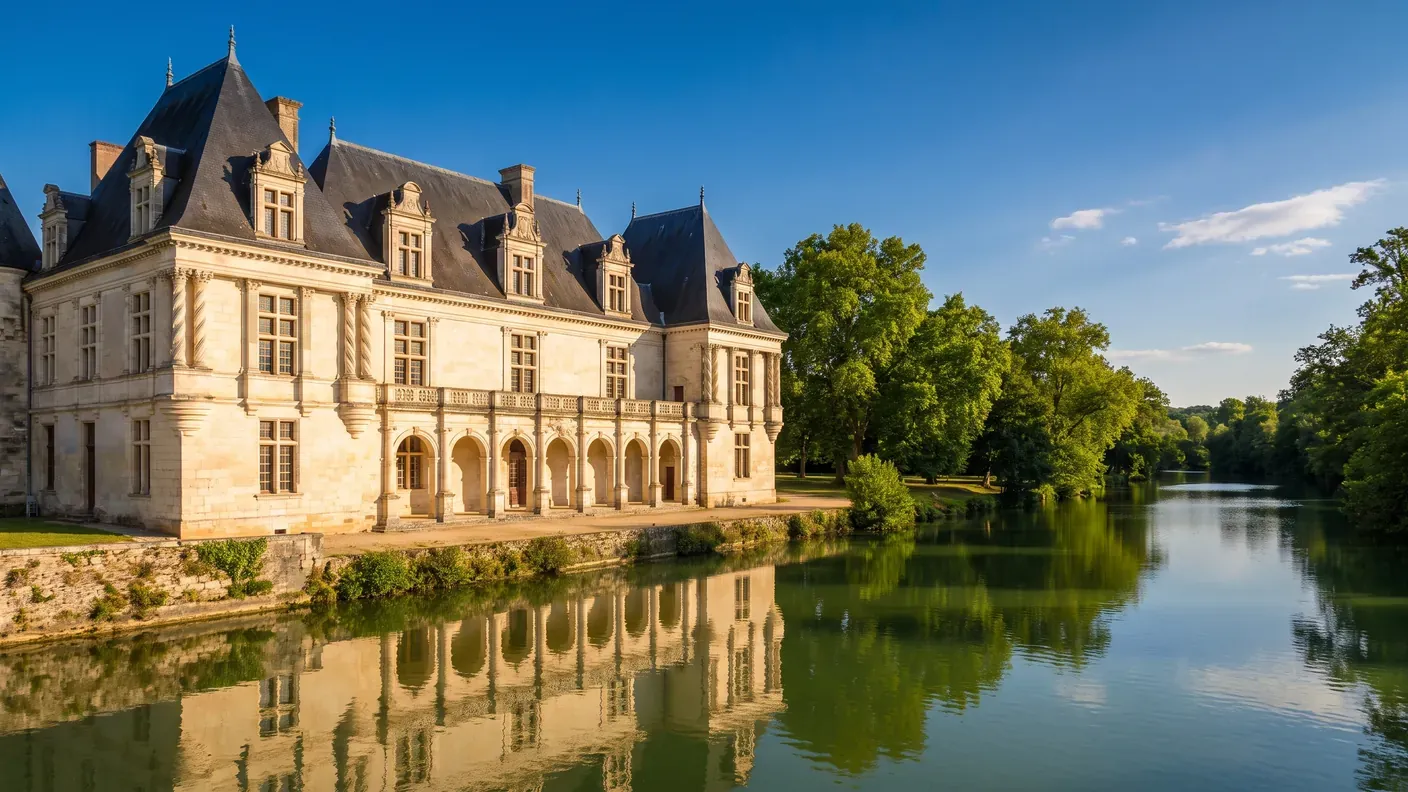
The Ministry of Culture describes the castle as the former residence of Henry IV and a municipal museum. Its description notes that it consisted of four wings surrounding a courtyard at the time of the Revolution, that only one wing remains, and that it has been a listed historic site since 1862 [official source].
A Renaissance gallery with twisted columns
The complex was rebuilt between the 14th and 16th centuries: Alain d'Albret oversaw the construction of the three large wings beginning in 1491. The surviving wing opens onto an elegant gallery with twisted columns—these spiraling columns, a masterpiece of the early Renaissance—one of the jewels of the region’s civil architecture. The protected decorative elements include capitals adorned with figures of people and animals, as well as the rib-vaulted rooms of the former Albret treasury.
Imagine the entire complex: four wings enclosing a main courtyard, surrounded by galleries, in the style of the great châteaux of the Loire Valley of that era. It was within this quadrangle that the Court of Navarre was housed. After the Revolution, due to a lack of maintenance and to salvage the stone, three wings were demolished in the early 19th century—a fate shared by many castles of that era. That the north wing survived, with its gallery intact, is nothing short of a miracle: it alone restores to us the elegance of the entire complex that is now gone.
The castle has been designated a historic monument since 1862, and its current use is listed as a museum in the POP entry. Visitors should check with the manager for opening hours and exhibition details.
The most cultured court in the kingdom
These walls once housed an exceptional court. The surviving north wing housed the apartments of the Queen of Navarre. Before Henry IV, the castle was home to the court of Marguerite d’Angoulême, sister of Francis I and author of the Heptaméron, a center of humanism and tolerance; then that of her daughter Jeanne d’Albret, her son Henri of Navarre, and his wife Marguerite de Valois, “Queen Margot.” Rarely has such a small town brought together so many major figures of the French Renaissance.
This dynastic continuity is what makes Nérac unique: here, visitors are not simply touring an isolated monument, but the birthplace of a lineage that has shaped the history of France. The castle’s protected status underscores this—it is one of the very first buildings in the country to be designated a historic landmark:
| Nérac Castle | Data |
|---|---|
| Builder of the Great Wings | Alain d'Albret, from 1491 onward |
| Style of the Remaining Wing | Renaissance, gallery with twisted columns |
| What Remains | 1 of 4 wings (the north wing)—the others were dismantled during the Revolution |
| Protection | Listed as a historic monument since 1862 (one of the first lists in France) |
| Today | Henri IV Castle-Museum (municipal museum since 1934) |
Henry IV, Jeanne d'Albret, and the Reformation
The Ministry of Culture’s entry establishes the heritage connection between the Château de Nérac, Henry IV, and the d’Albret family [source]. However, details regarding the court, the Reformation, and the negotiations of 1579 require a separate institutional historical source; they are not presented here as having been verified by the heritage description.
Jeanne d'Albret, the Protestant Queen
Conversion dates, denominational decisions, and their local implementation must be linked to official records or a paginated historical study. In the absence of verified institutional references in the current file, this guide does not provide details on them.
The Court of Henry of Navarre and the “War of the Lovers”
The official title “Former Castle of Henry IV” attests to the site’s historical association with the monarch [POP]. The lengths of his stays and the precise workings of the court are not documented without a specific historical source.
In 1578–1579, Catherine de’ Medici and her daughter Marguerite de Valois stayed at Nérac to negotiate with Henry: this was the Nérac conference, which has gone down in history as "Lovers' War", as diplomatic negotiations were intertwined with feasts, balls, and romantic intrigues. Henry had luxurious furnishings and prestigious horses brought in to impress his formidable mother-in-law. Rarely have high politics and revelry been so closely intertwined—and it was indeed at Nérac that the outcome was decided.
The Nérac treaty is a historical subject distinct from the castle’s preservation file. Its date, content, and role must be supported by an official edition of the text or an archival reference prior to detailed publication.
Once he became king, Henri left the Southwest for Paris, and Nérac lost his court. The saying has stuck: “When the gates of Paris opened for Henri, those of fame closed for Nérac.” The king never forgot his homeland: he liked to sign off “To Nérac” and jokingly called himself "The Miller of Barbaste", after the nearby Moulin des Tours, which belonged to him.
This complex history can be summarized in a few key dates, from the Reformed queen to the king of France:
| Timeline | Event |
|---|---|
| 1491 | Alain d'Albret raises the castle's grand wings |
| 1560 | Jeanne d'Albret converted to Calvinism |
| 1561 | Calvinism Becomes the Official Religion of Béarn |
| 1577-1585 | Henri of Navarre holds court at Nérac |
| 1578-1579 | Nérac Conference (“War of the Lovers”) |
| 1579 | Signing of the Treaty (Edict) of Nérac |
| 1589 | Henry of Navarre becomes King of France (Henry IV) |
| 1598 | The Edict of Nantes, of which Nérac was a milestone |
Le Petit Nérac: A Boat Tour Through the Old Town
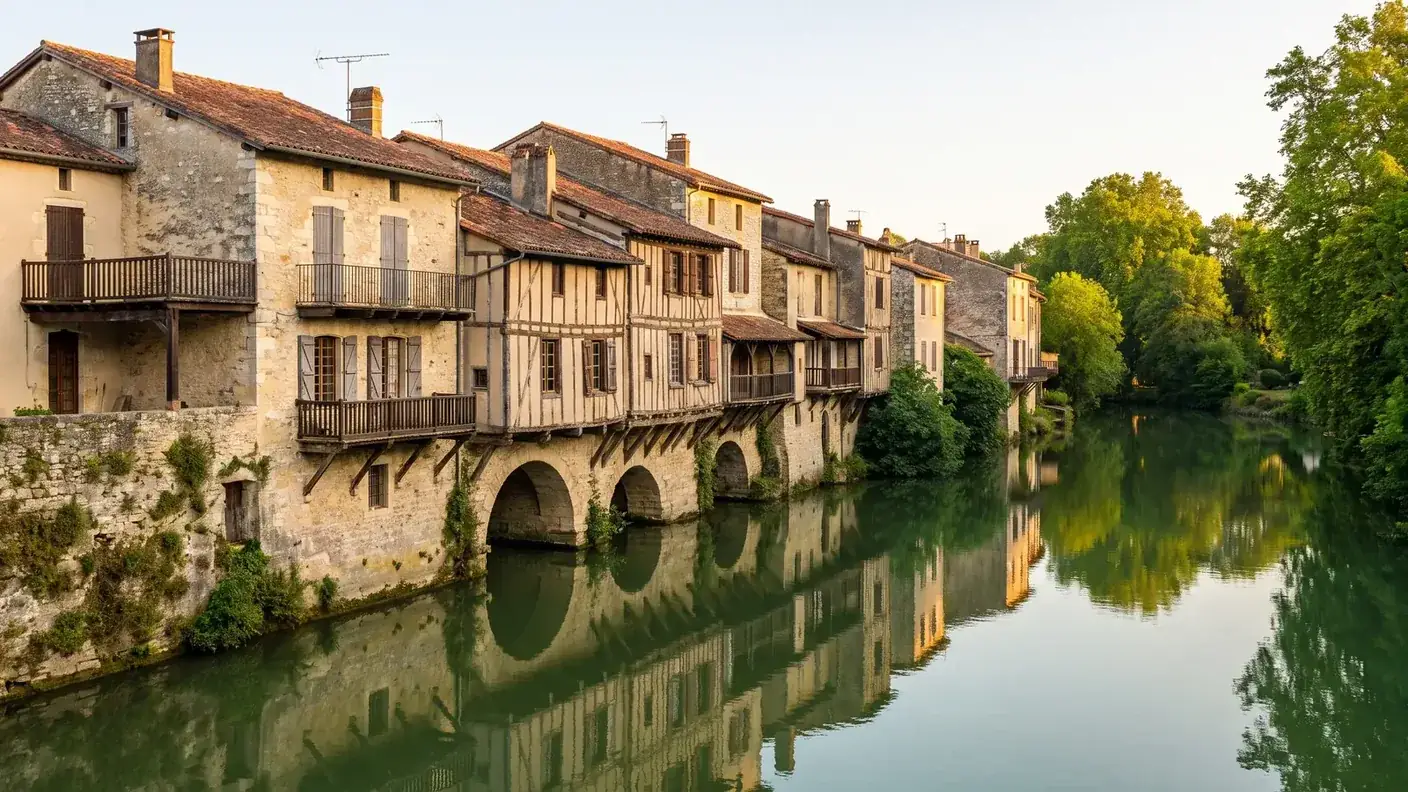
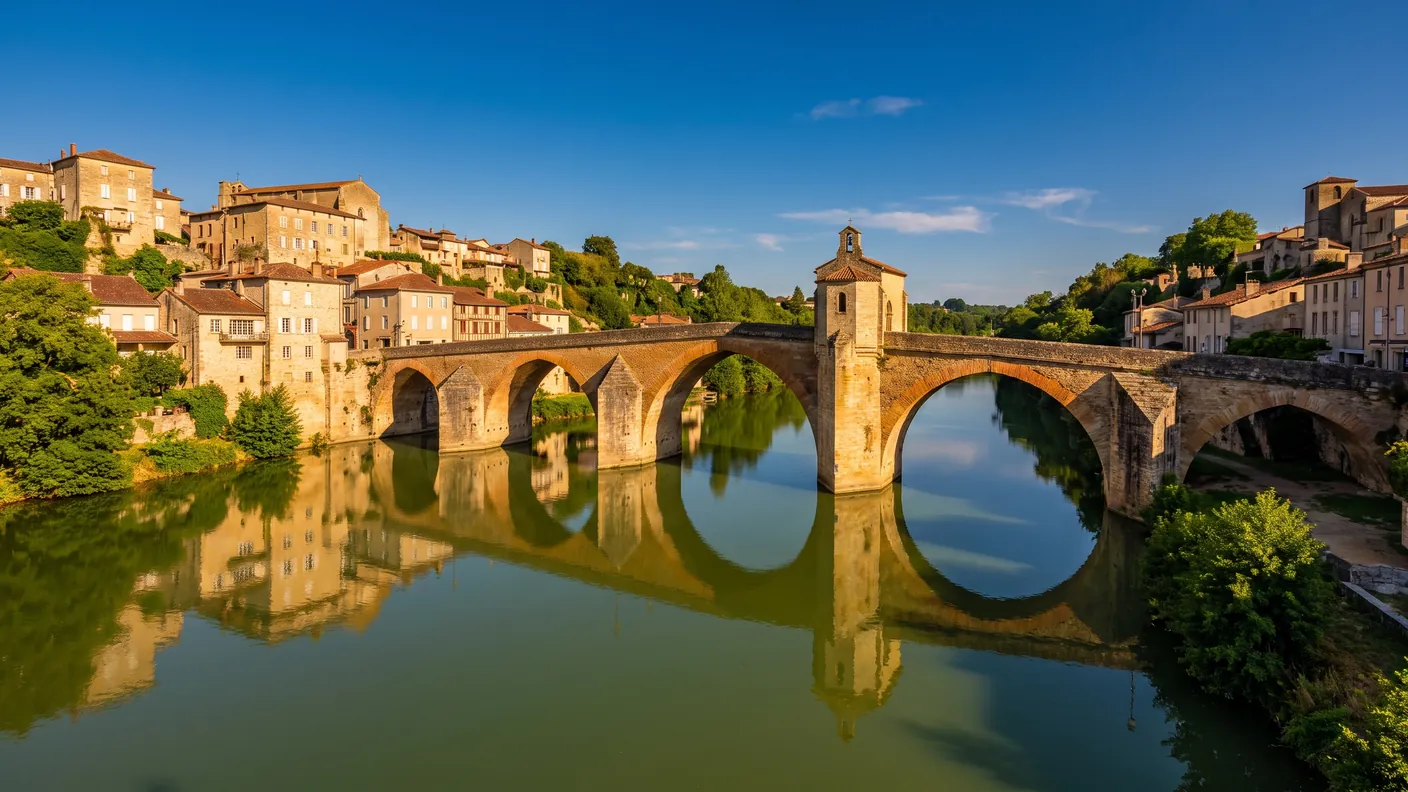
Le Petit Nérac is the city’s old quarter, on the left bank of the Baïse, across from the castle that overlooks the right bank. It is the historic and most picturesque part of the city: a row of old houses lining the waterfront, with stone and half-timbered facades reflected in the calm river. Some of the buildings date back to the 12th century, and much of their half-timbering dates from the 16th century. This is the postcard-perfect Nérac, the one you see in every photo of the city: the row of houses reflected in the Baïse, the Pont-Vieux, and the bell tower of Saint-Nicolas rising above the rooftops.
Narrow streets, riverbanks, and half-timbered buildings
Strolling through Petit Nérac is like stepping back in time: narrow alleys, stairways, shaded riverbanks, and that special light reflected off the Baïse River. The neighborhood faces the castle across the Pont-Vieux—a face-to-face encounter between the city of merchants and the city of princes that encapsulates the entire history of Nérac. Each facade tells the story of an era: stone arches from the Middle Ages, corbelled walls and half-timbering from the Renaissance, and ornate doors from the classical periods.
The quality of this area has been officially recognized: in 2008, Nérac became France’s 100th protected district, a designation (now known as “remarkable heritage site”) that safeguards the architectural coherence of the historic center. Nothing is built or renovated there without respecting the harmony of the historic buildings—which explains the beautiful uniformity of old Nérac.
It is in these narrow streets that the city’s working-class heart still beats: workshops, waterfront terraces, and the landing stage for the gabarres. The contrast with the aristocratic opposite bank, dominated by the castle, is striking. Here, more than anywhere else, one can appreciate the dual nature of Nérac: a court city and a river city, princes on one side, boatmen and merchants on the other, united by a stone bridge.
This neighborhood owes everything to the Baïse River: river trade sustained it for centuries, when flatboats would load and unload right at the foot of the houses. The end of commercial navigation in the mid-20th century could have spelled its doom; tourism and heritage preservation saved it. Today, the Petit Nérac is a well-preserved setting where it’s lovely to stroll at the end of the day, when the low-angled light gilds the facades and the river becomes a mirror—one of those places where you suddenly understand why a city is worth the detour.
St. Nicholas Church, a Neoclassical-style building
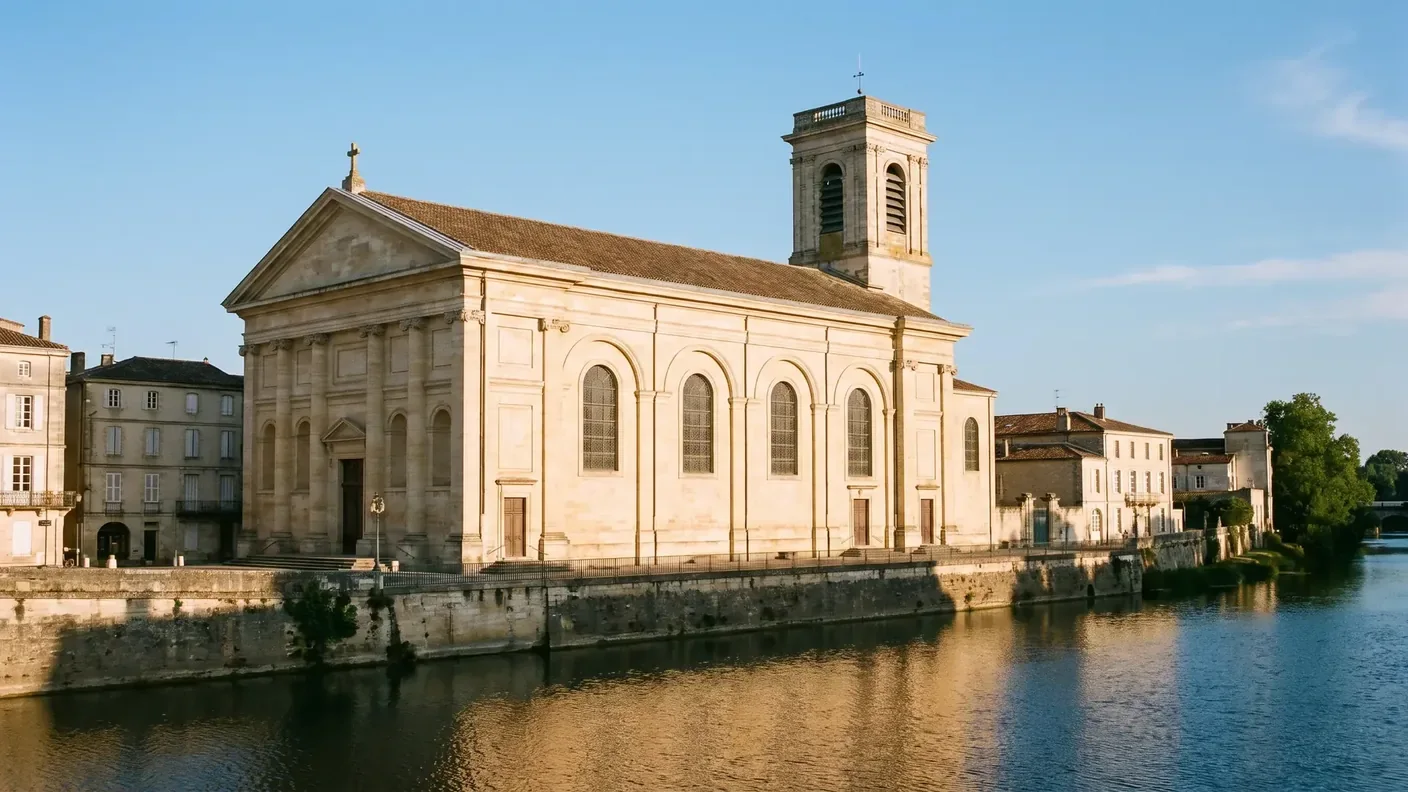
The Ministry of Culture's fact sheet dates the main Saint Nicholas campaigns to the second half of the 18th century and the 19th century. It documents the consecration in 1787, the decoration in 1856, and the designation on November 14, 1988 [source].
A Ship of the Enlightenment
It was built relatively late: the cornerstone was laid in 1758, and the church was consecrated in 1787, on the eve of the Revolution. It replaced a much older structure—a priory church consecrated as early as 1096, which had been entrusted with the relics of Saint Nicholas. Thus, beneath the nave of the Enlightenment, there is a thousand-year history of continuous worship at this site. Its interior decoration and stained-glass windows date primarily from 1856, during the Second Empire, a period when major religious buildings were lavishly adorned. The overall effect—bright and understated—offers a striking contrast to the nearby medieval alleyways.
St. Nicholas Church was designated a historic monument on November 14, 1988 (reference PA00084194), on the same day as the Pont-Vieux and the old castle, as part of the coordinated recognition of Nérac’s heritage sites. It is a fine example of religious architecture from the Age of Enlightenment, a rarity in a region dominated by Romanesque and Gothic styles.
This grouped listing from November 14, 1988, implicitly outlines the Nérac heritage trail: the castle perched on the hill, the Pont-Vieux spanning the river, and the church overlooking Petit Nérac. Three monuments, three eras—Renaissance, modified Gothic, and Neoclassical—recognized together as a cohesive whole. This is the best way to explore the city: follow this triangle, from one bank of the Baïse to the other.
| Monument | Style / Period | MH Protection | Reference |
|---|---|---|---|
| Nérac Castle | Renaissance (North Wing) | Classified in 1862 | PA00084192 |
| St. Nicholas Church | Neoclassical (18th century) | Listed in 1988 | PA00084194 |
| Pont-Vieux | Gothic, 19th-century adaptation | Class of 1988 | PA00084200 |
The Pont-Vieux and the Baïse, the “Little Amazon”
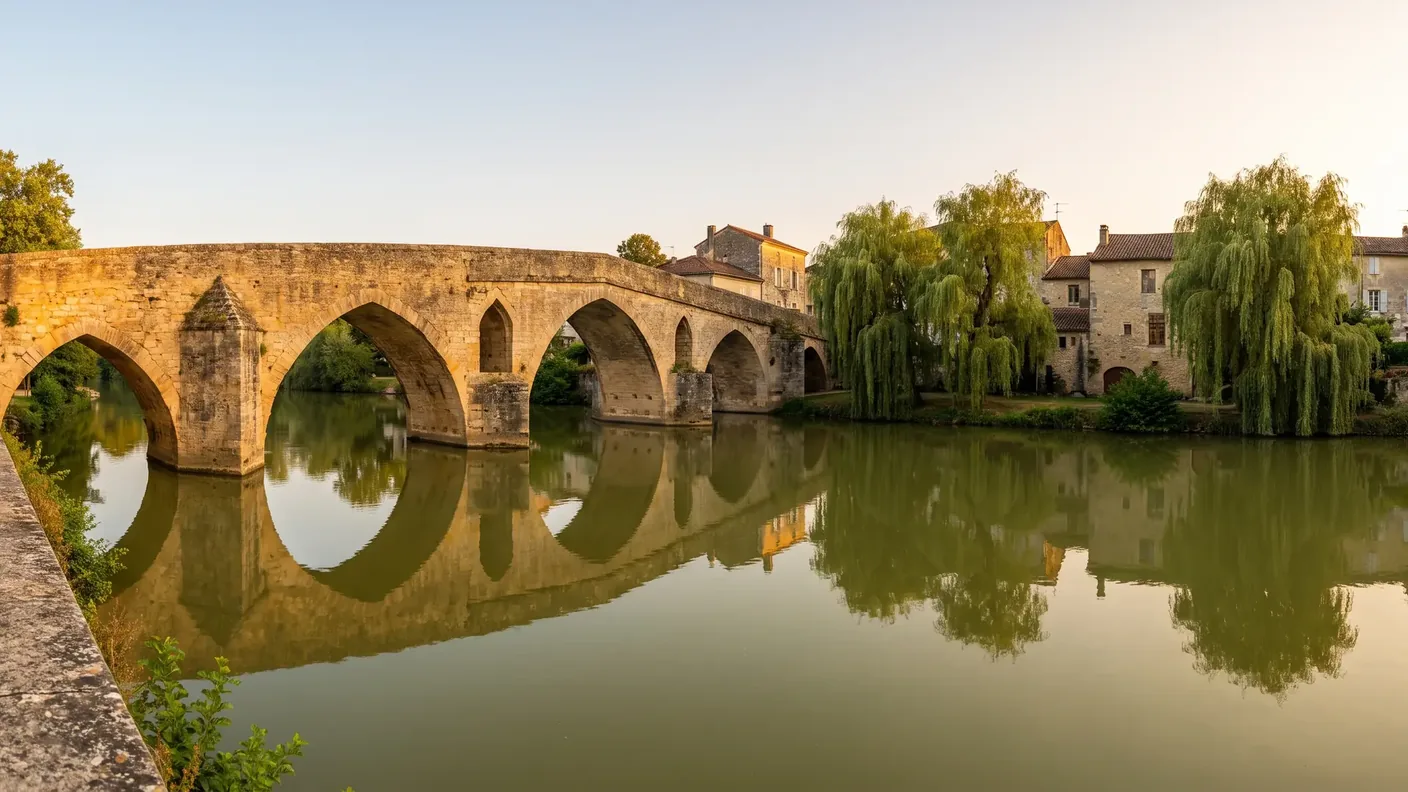
The Pont-Vieux spans the Baïse River and connects the Upper Town to the Petit Nérac. The Ministry of Culture’s entry dates it to the 15th–16th centuries, documents its renovations from 1830 to 1838, and notes its designation as a historic monument on November 14, 1988 [source].
A medieval bridge remodeled for navigation
One detail that its picturesque charm tends to obscure: the Pont-Vieux is not an intact medieval bridge. It was remodeled around 1830–1838—one of its arches was rebuilt in the 19th century—to raise the deck and allow the Baïse River to become navigable again all the way to Condom. This detail speaks volumes about the river’s importance to Nérac.
A river that was long associated with industry, now a tourist destination
The Baïse—nicknamed “the Little Amazon” for its lush vegetation—originates far to the south, on the Lannemezan Plateau, and flows nearly 188 kilometers before joining the Garonne. A direct tributary of the great river, it was developed for navigation: as early as the beginning of the 17th century, under Sully, Henry IV’s chief minister, five weirs were replaced by locks (at Buzet, Vianne, Lavardac, Bapaume, and Nérac). It was this network of locks that enabled the river to facilitate trade by connecting Nérac to the Garonne, and thus to Bordeaux and the Atlantic. It is sometimes claimed that the Baïse was “canalized by Haussmann in 1850”: this is a baseless promotional myth—the actual improvements date back to Sully.
For a long time, the river carried goods—Armagnac brandy and flour from Gascony—until commercial traffic ceased in January 1952. Today, the lower reaches of the Baïse are navigable for recreational boating. Cruises depart from Quai de la Baïse in Nérac aboard traditional-style boats such as “Le Prince Henry,” built in 1994 to the plans of an 18th-century couralin. It is a fine way to see the town from the water.
The gabarre cruise is one of the most beautiful experiences Nérac has to offer: you set off from the Quai de la Baïse, pass through a lock—always a spectacular moment, as the boat rises or falls between the stone walls—and glide along the water between the lush green banks, with the castle and the Petit Nérac passing by from a unique perspective. The dense vegetation, almost tropical in places, fully justifies the nickname “Little Amazon.” It’s slow, peaceful, and a complete change of scenery, just a stone’s throw from downtown.
The Baïse River is inextricably linked to the identity of Nérac: it has both separated and connected the two cities, fueled commerce, shaped the Parc de la Garenne, and inspired its legends. Here are some key landmarks:
| La Baïse at a Glance | Data |
|---|---|
| Nature | A direct tributary of the Garonne (left bank) |
| Length | ≈ 188 km · source on the Lannemezan Plateau |
| Nickname | "The Little Amazon" (lush vegetation) |
| Layout | Locks dating from the early 17th century (under Sully) |
| Commercial traffic | Ended in January 1952 |
| Today | Navigable downstream; gabarre cruises departing from Nérac |
La Garenne Park, Aquitaine's first designated historic site
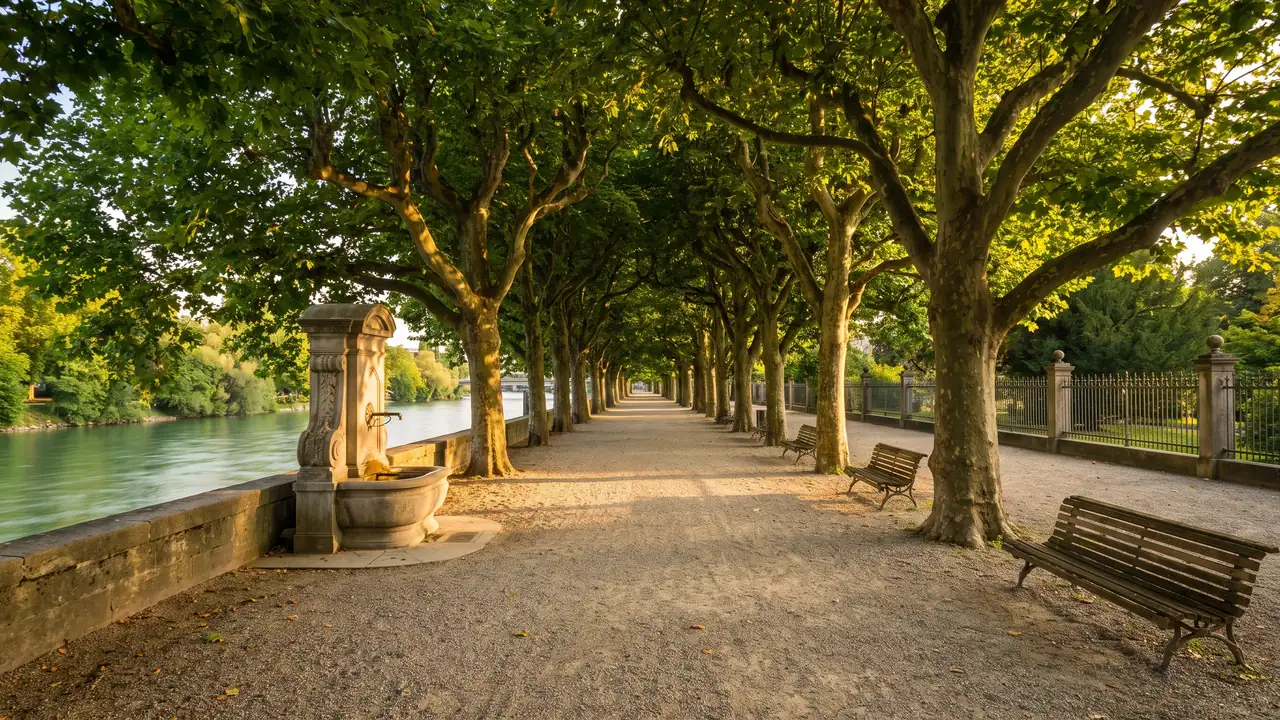
The Parc de la Garenne stretches along the Baïse River, across from the castle. According to the Ministry of Culture’s entry, it was designated as a historic site on July 23, 1909 [source]. Please check local access conditions before your visit.
You can stroll beneath a majestic avenue known as the “3,000-Step Avenue”, which runs along the river for nearly a kilometer, shaded by plane trees, chestnut trees, oaks, and cedars. The heart of the park is home to English oaks between 150 and 200 years old, and the site supports rich biodiversity—dozens of bird species and several bat species, including the greater mouse-eared bat. It is the green lung of Nérac, an ideal place to cool off in summer.
The fact that this park—and not a coastline or a mountain—is Aquitaine’s first designated historic site speaks volumes: as early as 1909, this regal promenade was deemed valuable enough to be protected from any harm. Even today, walking beneath its two-hundred-year-old trees means treading the very ground where Marguerite de Valois and the court of Henry of Navarre once walked—a garden steeped in history as much as in nature.
Two fountains, a history, and a legend
The park is home to two famous fountains. The Fontaine du Dauphin, dating from 1602, commemorates the birth of the future Louis XIII, son of Henry IV: a way of marking in stone the rise of the House of Albret to the French throne. The Fontaine de Fleurette—actually a grotto adorned with a white marble statue, inaugurated in 1896—evokes a famous Nérac legend that is well worth a closer look.
Local tradition links Fleurette to the young Henri of Navarre. The connection sometimes suggested between the expression “conter fleurette” and the English word “flirt” is not supported by any etymological source cited in this guide.
This story should be taken for what it is: a romantic tale, fueled by the reputation of Henri IV, the “Vert Galant,” as a ladies’ man. All sources present it in the conditional tense: “it is said that….” But it’s part of the spirit of the place: standing before Fleurette’s white marble grotto, carved in 1896, you can really sense that Nérac cherishes its legend as much as its history—and that’s just fine. A park has every right to have its ghosts.
What to see and try around Nérac?
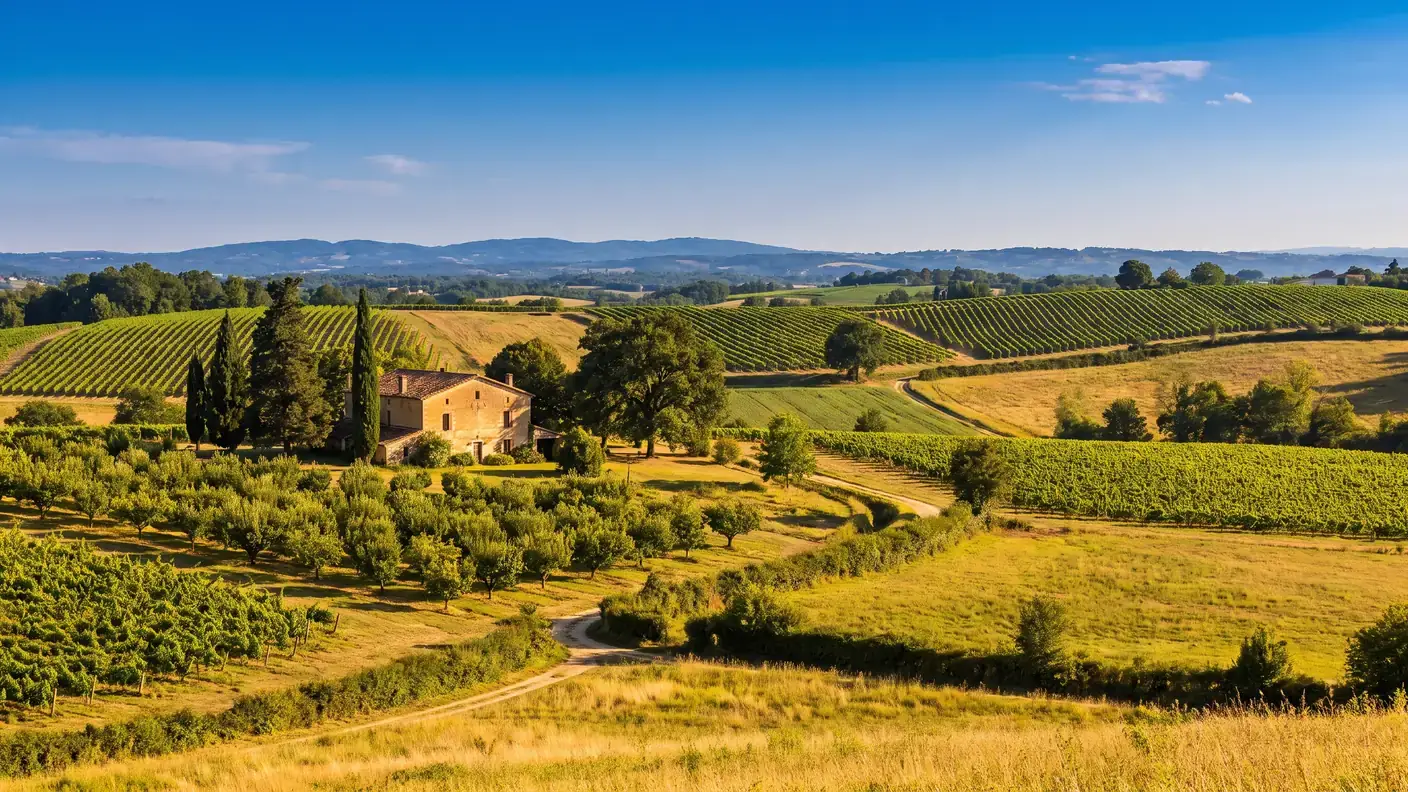
Nérac is the heart of the Albret region, a land of vineyards, Armagnac, and charming villages. Stay in Nérac and explore the Gascon countryside—distances are short, and in just a few minutes you can go from a mill dating back to the time of Henry IV to an Armagnac distillery or a Buzet winery.
Villages and Heritage
Barbaste, just a few kilometers away, is home to the famous Moulin des Tours—a medieval fortified mill with four towers that once belonged to Henry IV, “the miller of Barbaste”—located next to a Romanesque bridge over the Gélise River. Mézin, the former capital of the cork industry, is home to the Cork and Cork Stopper Museum, which chronicles this forgotten industry, and is located in the Armagnac region. Condom, about twenty kilometers to the south, already in the Gers department, is the capital of Armagnac, with its Gothic cathedral and wine cellars. These villages, connected by small country roads, make up an ideal day trip: you’ll journey from the history of Henry IV to the vineyards, from cork to brandy, without ever having to drive very far.
Albret's Table
The Albret region is a land of fine cuisine. It is home to Buzet, a neighboring wine appellation (in Buzet-sur-Baïse); Armagnac, France’s oldest brandy; and the famous foie gras of southwestern France. A tasting at a Buzet winery or an Armagnac distillery is the perfect gourmet way to round out a day exploring local heritage.
As for the “poule au pot” attributed to Henry IV— “I want every peasant to have his own on Sundays”—this is actually a myth created after the fact: the phrase does not appear in any text before 1661, half a century after the king’s death in 1610. It was attributed to “Good King Henry” to embody his legend as a ruler close to the people. That doesn’t stop poule au pot from being an excellent regional dish, to be enjoyed without hesitation—preferably at Nérac, where the legend was born.
| About Nérac | Distance / Marker | Interest |
|---|---|---|
| Barbaste | ~5 km | Henri IV's Moulin des Tours, Romanesque bridge |
| Buzet-sur-Baïse | ~15 km | AOC Buzet Vineyard |
| Mézin | ~15 km | Museum of Cork and Corkscrews, Armagnac |
| Condom (Gers) | ~23 km | Capital of Armagnac |
| Agen | ~26 km | Prefecture, nearest TER-TGV station |
When is the best time to visit Nérac?
Nérac is worth visiting any time of year, but spring and summer bring out the best in this riverside town and its park. Spring (April–June) brings La Garenne and the banks of the Baïse to life, with soft light that’s perfect for strolling through the Petit Nérac and visiting the castle. Summer is warm and bright: it is the main season for gabarre cruises on the Baïse, and the shade of La Garenne’s tall, two-hundred-year-old trees offers welcome relief during the hottest hours. Summer markets and events bring the historic center to life, and the waterfront terraces invite you to pause. It is also the best time to combine heritage, nature, and tastings of Albret’s local specialties in a single day.
Autumn adorns the hillsides of Albret with rich colours—it is also harvest season in Buzet and a time for fine dining (foie gras, new Armagnac). Winter is quieter, but you can explore its historic sites—the castle, the Pont-Vieux, the church, and the narrow streets—without the crowds.
A Typical Day at Nérac
Here’s an example of a full day: arrive in the late morning, tour the Henri IV Castle-Museum and its Renaissance gallery; enjoy a lunch featuring local specialties at Le Petit Nérac, on the banks of the Baïse. In the afternoon, take a gabarre cruise on the river (boarding at the Quai de la Baïse), followed by a stroll under the tall trees of the Parc de la Garenne, with a detour to the Fontaine de Fleurette. At the end of the day, head to Barbaste and its Moulin des Tours, or a Buzet winery for a tasting. With a driver handling the transportation, you can fit all of this into a single day, including the return trip to Bordeaux.
How to get to Nérac from Bordeaux
According to the information currently published on this page, Nérac does not have a regular passenger station. To travel by public transportation, search for the route available on your departure date and check with rail and bus operators for any connections via Agen. Routes, stops, and frequencies may vary depending on the day and season.
This is where a chauffeur service comes into its own: a direct, door-to-door trip from Bordeaux, with no transfers and the option to stop along the way. The trip is offered at a fixed price quoted in advance: approximately €255 one way, in a Mercedes sedan or van seating up to 8 passengers, with a professional chauffeur and no meter-based surprises.
The appeal of a door-to-door tour is best experienced with a group. You board in Bordeaux and get off in front of the Nérac château; and for those who want to explore the Albret region—Barbaste, a winery in Buzet, Condom, and Armagnac—the driver can wait or take you on a tour of these stops, something no regular bus route allows.
| Route | Distance | Duration | Landmark |
|---|---|---|---|
| Bordeaux → Nérac | ~128 km | 1 hour 41 minutes | Starting at ~€217 for a private chauffeur service |
| Nérac → Agen (train station) | ~26 km | ~30 min | Nearest TER-TGV station |
| Nérac → Condom | ~23 km | ~25 min | capital of Armagnac (Gers) |
| Nérac → Barbaste | ~5 km | ~10 min | Henri IV's Tours Mill |
Whether you're planning a day of exploring local heritage and cuisine, a trip, or a transfer to Bordeaux-Mérignac Airport, you can view the route from Bordeaux to Nérac and its listed fare, or explore all our destinations.
Frequently Asked Questions
Where is Nérac located?
According to theINSEE, Nérac is a subprefecture in Lot-et-Garonne with a population of 6,992 residents in 2023. It is located on the Baïse River, in the heart of the Albret region, about 128 km from Bordeaux.
What is the distance between Bordeaux and Nérac?
Approximately 128 km by road, or a 1-hour, 41-minute drive, depending on traffic. A chauffeured transfer from Bordeaux is offered at a fixed rate provided in advance, starting at approximately €255 one way (sedan or van, door-to-door price).
Why is Nérac associated with Henry IV?
Nérac was the capital of the Albret family, to which Henry IV belonged. The future king of France, Henry of Navarre, held court there from 1577 to 1585 in the family castle. His mother, Jeanne d’Albret, had turned the city into a bastion of Protestantism. It was also in Nérac that a treaty between Henri de Navarre and Catherine de’ Medici was signed in 1579.
What remains of Nérac Castle?
The Ministry of Culture states that only one wing remains of the four structures that were visible during the Revolution. The former castle of Henry IV has been designated a historic monument since 1862 and currently serves as a museum [source].
What is Garenne Park?
This is a large historic park along the Baïse River, across from the castle, which once served as a promenade for the kings of Navarre. Protected since 1909, it was the first site to be designated a historic landmark in the Aquitaine region. Visitors can stroll along the “Alley of 3,000 Steps,” among oak trees ranging from 150 to 200 years old, passing by the Dauphin Fountain (1602) and the Fleurette Fountain.
Who was Fleurette in Nérac?
Fleurette is the heroine of a legend from Nérac: a young girl, the daughter of the king’s gardener, who was in love with Henry of Navarre and is said to have drowned herself in the Baïse River out of despair. Local tradition links Fleurette to the young Henry of Navarre. The connection sometimes suggested between the expression “conter fleurette” and the English word “flirt” is not supported by any etymological source cited in this guide.
What is the Petit Nérac?
This is the old neighborhood of Nérac, on the left bank of the Baïse River, across from the castle. A row of historic houses (some dating back to the 12th century, with 16th-century half-timbering) lines the waterfront. In 2008, Nérac became France’s 100th historic preservation district, which protects the harmony of this historic center.
Is the Baïse navigable at Nérac?
Yes, on its lower reaches, for recreational boating. The Baïse, a tributary of the Garonne, was equipped with locks as early as the beginning of the 17th century under Sully. Commercial traffic ceased in 1952, but today you can board at Nérac, on the Quai de la Baïse, for a sightseeing cruise on a gabarre.
Is the story of Henry IV's "poule au pot" true?
No: it’s a later myth. The famous phrase—wishing that every peasant might have a chicken stew on Sundays—does not appear in any text before 1661, half a century after the death of Henry IV in 1610. It was attributed to “Good King Henry” after the fact. Poule au pot remains, nonetheless, an iconic regional dish.
What's there to see around Nérac?
Barbaste and its Henri IV Mill (~5 km), the AOC Buzet vineyards, Mézin and its Cork Museum, Condom, the capital of Armagnac (~23 km, in the Gers), and Agen, the prefecture, ~26 km away. The Albret region is a land of vineyards, Armagnac, and foie gras.
Is there a train station at Nérac?
According to the information currently published on this page, Nérac does not have a regular passenger station. To travel by public transportation, search for the route available on your departure date and check with rail and bus operators for any connections via Agen. Routes, stops, and frequencies may vary depending on the day and season.
When is the best time to visit Nérac?
Spring and summer are the perfect times to enjoy La Garenne Park and boat cruises on the Baïse River; early fall is ideal for the fall colors, the Buzet grape harvest, and fine dining. The area’s historic sites—the castle, the Pont-Vieux, and the Petit Nérac—are enjoyable to visit year-round.
Can I book a private driver from Bordeaux to Nérac?
Yes. We offer the Bordeaux → Nérac route (~128 km, 1 hr 41 min) at a fixed price, starting at approximately €255 one-way, in a Mercedes sedan or a van seating up to 8 passengers. The trip is direct, door-to-door, with optional stops along the way (Barbaste, a winery in Buzet, Condom).
Further Reading
- The neighboring prefecture on the Garonne: see the Agen Guide (canal bridge, old town, museum with five Goyas)
- The Bastide and the Land of Prunes: See the Villeneuve-sur-Lot Guide
- A bastide town in the Gers, in the Armagnac region: see the Guide to Montréal-du-Gers (Villa de Séviac)
- Plan your trip: Book a chauffeured transfer from Bordeaux to Nérac or explore all our destinations
Sources and References
- Ministry of Culture, POP database — former castle of Henry IV — Château, Museum, and Park of La Garenne, accessed July 24, 2026
- Ministry of Culture, POP database — Saint-Nicolas Church — history and historic monument status, accessed July 24, 2026
- Ministry of Culture, POP database — Old Bridge over the Baïse — history and historic monument designation, accessed July 24, 2026
- INSEE — Municipality of Nérac (47195) — 2023 population and municipal data, accessed July 24, 2026
Article updated in July 2026.
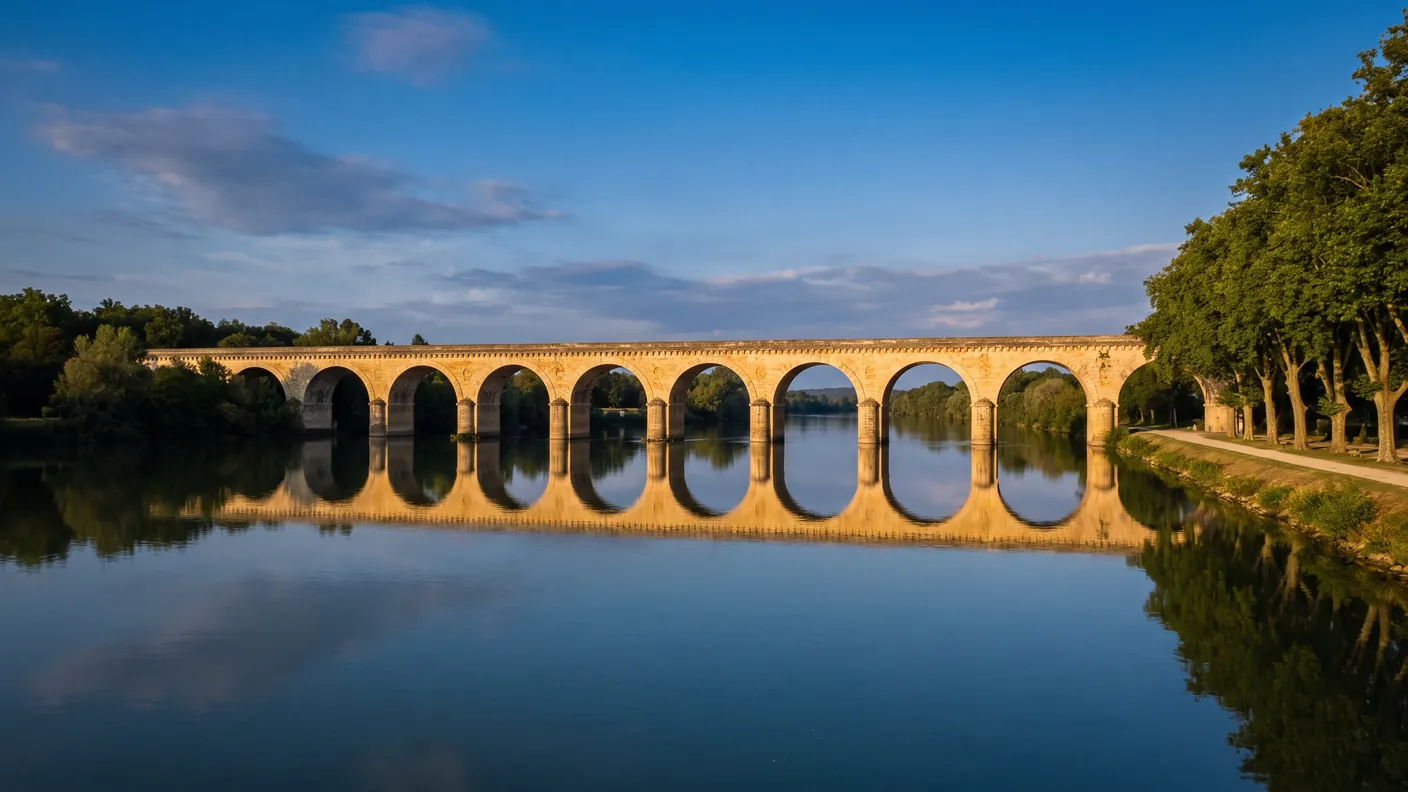
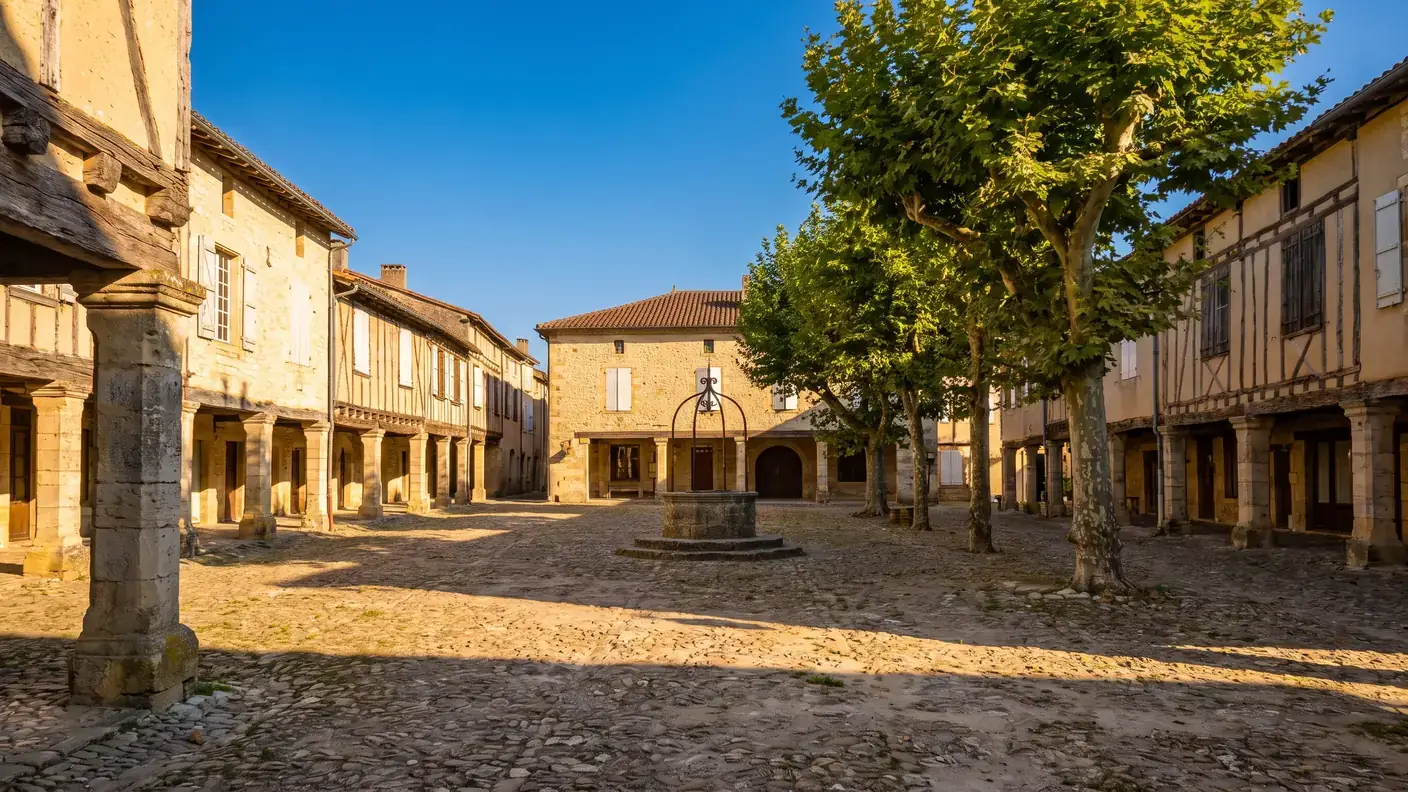
On the Way to the Albret Region
Direct trip from Bordeaux (~1h41) to Nérac, with stops along the way as desired—Barbaste, a winery in Buzet, Condom. Written fixed-price quote, with no surprises on the meter.