
Bordeaux to Fronsac: private driver guide
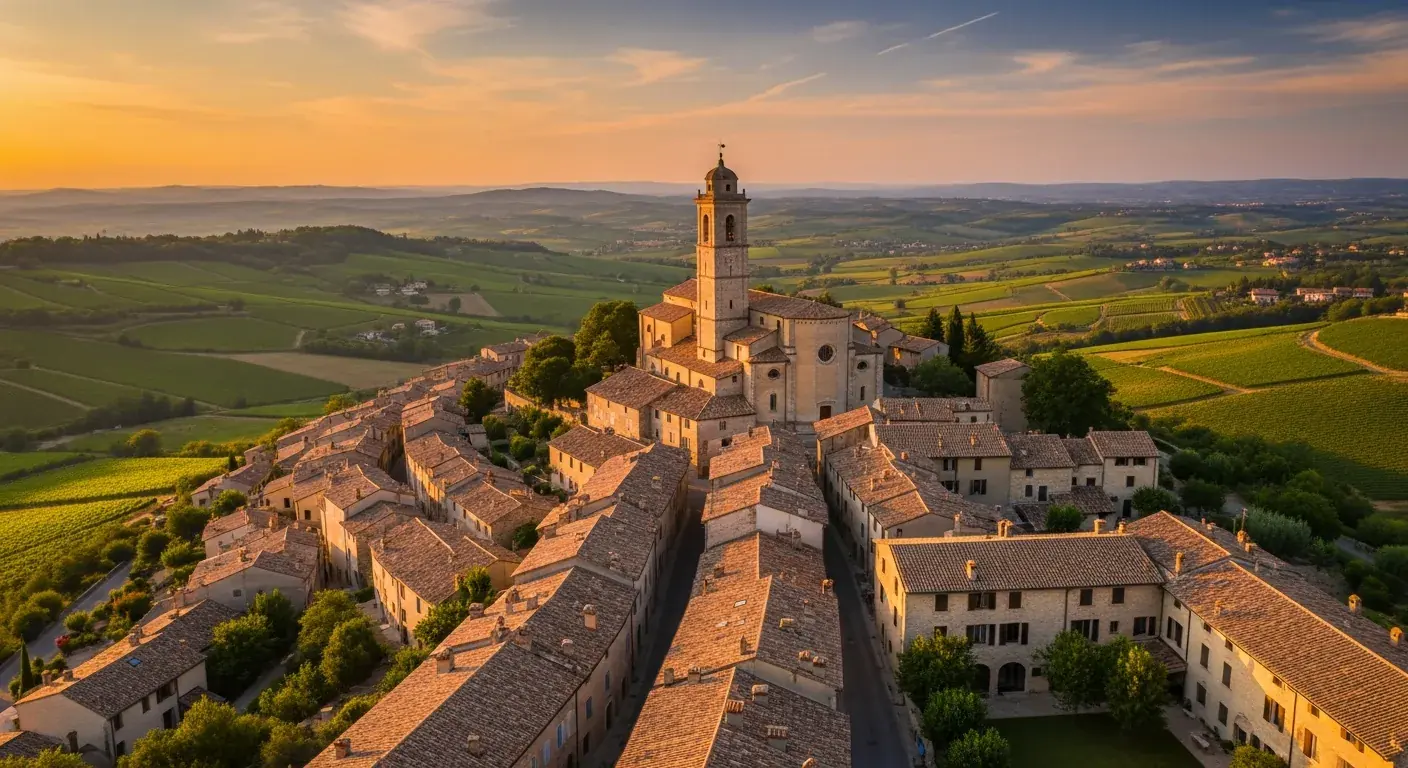
The panoramic hill overlooking the Dordogne, steeped in two thousand years of history—from Charlemagne to the Duchy of Richelieu: the Romanesque church and the fine wines of Fronsac and Canon-Fronsac, at the gateway to Pomerol and Saint-Émilion, less than an hour from Bordeaux.
Fronsac at a Glance
Fronsac is a wine-growing village in the Libournais region of Gironde, built on a hill overlooking the Dordogne River. It is located about 37 km from Bordeaux and in the immediate vicinity of Libourne, Pomerol, and Saint-Émilion. The hill offers a panoramic view of the valley and bears the legacy of a former duchy linked to the Richelieu family. The village lends its name to the red wine appellations of Fronsac and Canon-Fronsac, where Merlot dominates the clay-limestone slopes. The Church of Saint-Martin, a listed historic monument, rounds out the cultural tour. Fronsac does not have a train station; Libourne is the nearest one. For a day of wine tasting, the wineries should be contacted in advance, and hiring a chauffeur-driven car ensures you won’t have to drive yourself.
Fronsac is a small wine-growing village in the Gironde department, in the Libourne region, perched on a hill overlooking the Dordogne Valley, a few kilometers northwest of Libourne and about 40 kilometers northeast of Bordeaux. Despite its small size, it is a place with a rich history and a distinguished name: its hill, occupied since the time of the Gauls, served as a camp for Charlemagne, then became the seat of an illustrious duchy—the very same held by Cardinal Richelieu—where Marshal Richelieu built a famous “folly.” Above all, Fronsac lends its name to two renowned appellations on the right bank, Fronsac and Canon-Fronsac, Merlot-based red wines produced on the molasse hillsides. With its panoramic views, rich history, and great wines, just outside Saint-Émilion and Pomerol, this is a Gironde getaway of rare richness for such a small village, less than an hour from Bordeaux.
Here are the key details to know before you go. Distances are calculated door-to-door from Bordeaux; the fare shown is for a private driver reservation at a fixed price provided in advance, with no unexpected meter charges regardless of traffic or stops along the way.
| Landmark | Details |
|---|---|
| Department | Gironde (33), Nouvelle-Aquitaine |
| Status | Wine-growing village · Libourne district · Libournais-Fronsadais canton |
| Population | approximately 1,130 residents (INSEE 2023) · the residents of Fronsadais |
| Area | 15.29 km² · on a hill overlooking the Dordogne |
| Don't miss it | The hill and its panoramic view, the vineyard, the Romanesque church |
| Distance from Bordeaux | about 37 km · about 47 min by car |
| Appellations | Fronsac and Canon-Fronsac (red wines from the right bank) |
A word of clarification right off the bat: Fronsac has such a rich history that it lends itself to oversimplifications, which this guide corrects with supporting sources. The famous “folly” of Marshal de Richelieu on the hill was not the cardinal's castle: it is an 18th-century country house, built by a distant descendant, famous for its galant parties. The medieval castle that once crowned the hill has disappeared. Finally, it is important to distinguish between two similar terms: the Fronsac and Canon-Fronsac appellations, which is more limited in scope, focusing on the best vineyards. Every statement in this guide is based on verifiable sources, which are cited at the end of the article.
Here we’ll go over everything you need to know: Fronsac’s location on its hilltop and its population, the thousand-year history of this strategic hill, the Duchy of Fronsac and Richelieu’s “folly,” the Fronsac and Canon-Fronsac appellations and their terroir, the Romanesque Church of Saint-Martin, wine discovery and tasting, the village’s history, notable sites in the surrounding area, the best time of year to visit, and the easiest way to get there from Bordeaux by private driver—all thoroughly researched and verified.
Where is Fronsac located?
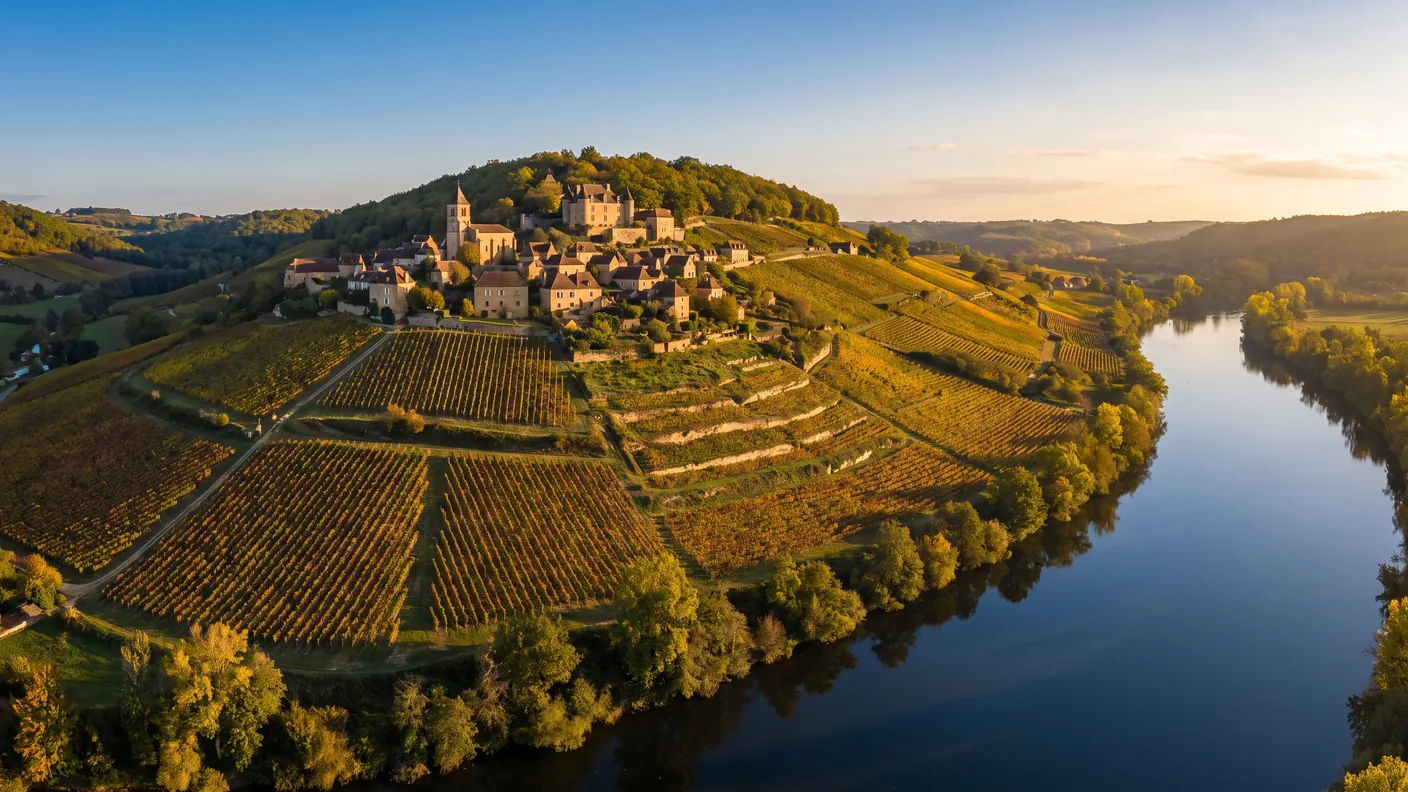
Fronsac is located in the eastern part of the Gironde department (33), in the Nouvelle-Aquitaine region, in the Libournais area, on a hill overlooking the right bank of the Dordogne River, a few kilometers northwest of Libourne and about 40 kilometers northeast of Bordeaux. It is a small municipality in the Libourne arrondissement and the Libournais-Fronsadais canton, and a member of the Fronsadais Community of Municipalities, of which it is the historic heart. Its location is remarkable: built on a hill rising above the plain, not far from the confluence of the Dordogne and the Isle, it overlooks a vast landscape of vineyards and rivers. This commanding position, both strategic and panoramic, explains its entire history—camps, castles, a duchy—and is what gives it its charm today. Surrounding the village are the renowned hillsides of the Fronsac and Canon-Fronsac appellations, at the gateway to Libourne, Pomerol, and Saint-Émilion, in the heart of the great right-bank wine region.
On the hilltop, overlooking the Dordogne
The Fronsac hill is the heart of the region: a limestone and molasse outcrop rising to about 76 meters, overlooking the Dordogne River and offering one of the most beautiful panoramic views in the Libourne region. From up there, the view takes in the river valley, vineyards stretching as far as the eye can see, Libourne, and all the way to Saint-Émilion on the horizon. This position as a natural lookout point, overlooking the crossing over the Dordogne and the road to Bordeaux, has made the hill a strategic site throughout history: people have settled there, fortified it, and fought over it since ancient times. Today, the hill is home to the village, its church, a few mansions, and the vineyards of the finest wines: climbing the Fronsac hill means both contemplating a magnificent landscape and walking on ground steeped in more than two thousand years of history. It is the heart and symbol of the place.
A small village, a big name
According to INSEE, 2023 data published in July 2026, Fronsac has 1,130 residents. Its residents are known as Fronsadais, just like the surrounding wine-growing region. The village is less well-known than Saint-Émilion, but its name refers to both a former duchy and two recognized wine appellations, set amid a landscape of rolling hills and vineyards.
The Fronsac Mound: Two Thousand Years of History
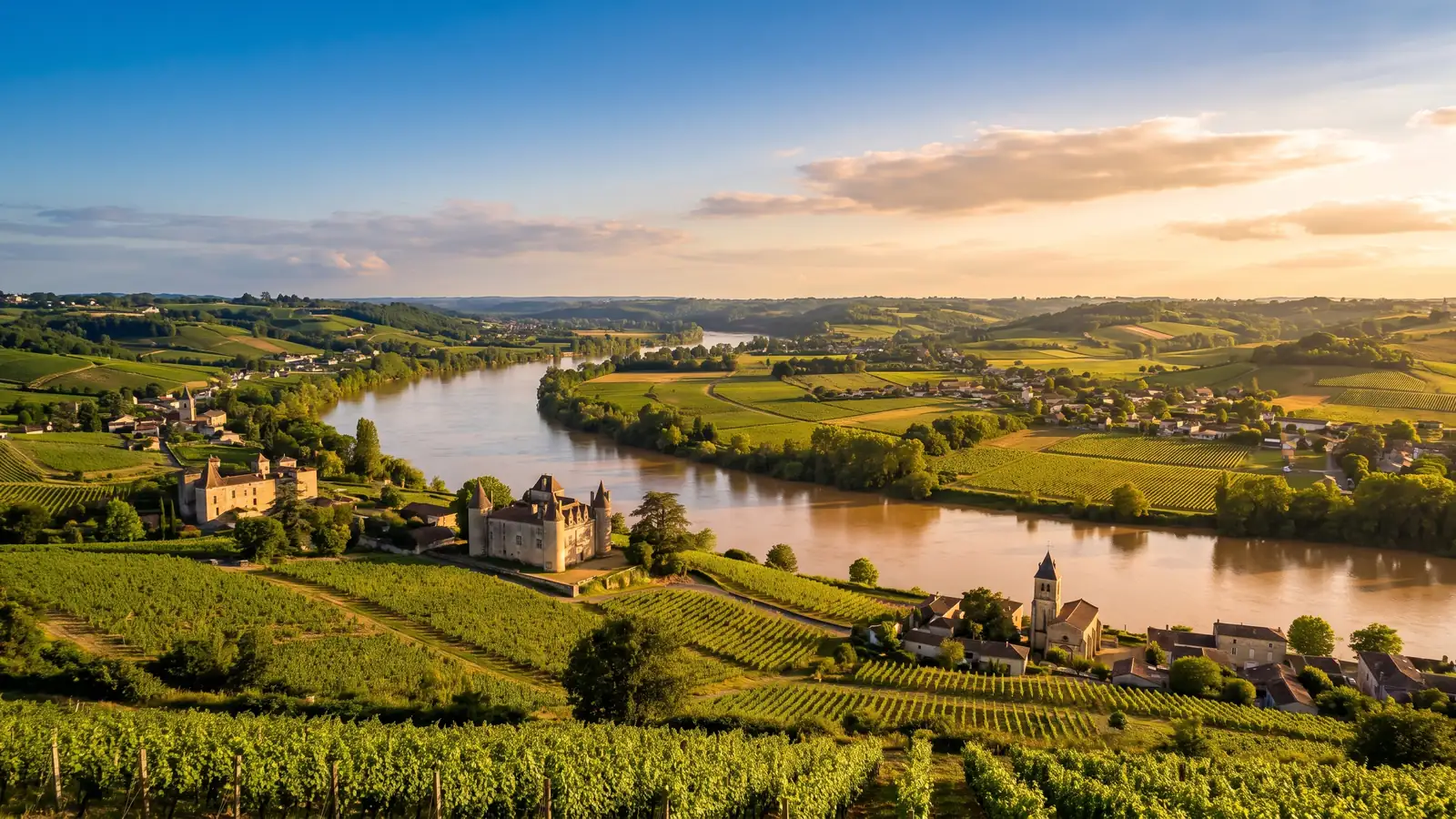
The Fronsac hill is a strategic vantage point that has become a lookout over the vineyards. According to the INAO's official fact sheet on the Fronsac appellation, the site preserves the memory of ancient fortifications and the camp attributed to Charlemagne. Today, its hills overlook the confluence of the Isle and the Dordogne rivers.
From the Gauls to Charlemagne
The hill's commanding position has made it, since the earliest times, a place that has been occupied and contested. Tradition has it that the Gauls had agreed on it, that the Romans built an altar there, and above all, that Charlemagne, in 769, established a fortified camp to keep watch over the valley and defend the region against the Dukes of Aquitaine—a defining moment in local history. In 849, the hill was plundered by the Vikings, led by Chief Hasting, who were traveling up the Dordogne River. In the Middle Ages, the mound was home to a powerful fortified castle, seat of a seigneury that later became a duchy, which controlled the river crossing and the road to Bordeaux. This fortified castle was razed to the ground in the early 17th century (around 1623, during the reign of Louis XIII), but the legacy of this strategic and princely stronghold—occupied continuously since antiquity—is what gives Fronsac its profound historical significance.
The Libournais Lookout
Beyond its military history, the hill is today, above all, a magnificent lookout point. From its summit, at an elevation of about 76 meters, the view stretches far across the Dordogne Valley, the vineyards of the Libourne region, the town of Libourne, and—on a clear day—all the way to the bell towers of Saint-Émilion and Pomerol. The hill overlooks the confluence of the Isle and Dordogne rivers, which lie very close by: it is this location—at the crossroads of the two valleys and on the road to Bordeaux—that explains its continuous military and commercial significance since ancient times—from the Gallic market to the Carolingian fortress. It offers one of the most beautiful panoramic views of the vineyards on the right bank, breathtaking at sunset.
This prime location is also what makes the vineyard so exceptional: the well-exposed and well-drained slopes of the hill are among the appellation’s finest terroirs. Climbing the Fronsac hill, strolling through the vineyards, and gazing out at the river and the vineyards stretching out at its feet is the essential experience of a visit: at a glance, you can see why this place has always been so coveted, and why its wines are so renowned.
| The Fronsac Mound | Landmark |
|---|---|
| Antiquity | Gallic site (market) and later Roman site (altar) |
| 769 | Charlemagne's fortified camp |
| 849 | Viking raid (Hastings) |
| Middle Ages | fortified castle, seat of the duchy (now defunct) |
| Today | viewpoint overlooking the Dordogne, premium vineyard |
The Duchy of Fronsac and Richelieu's Folly
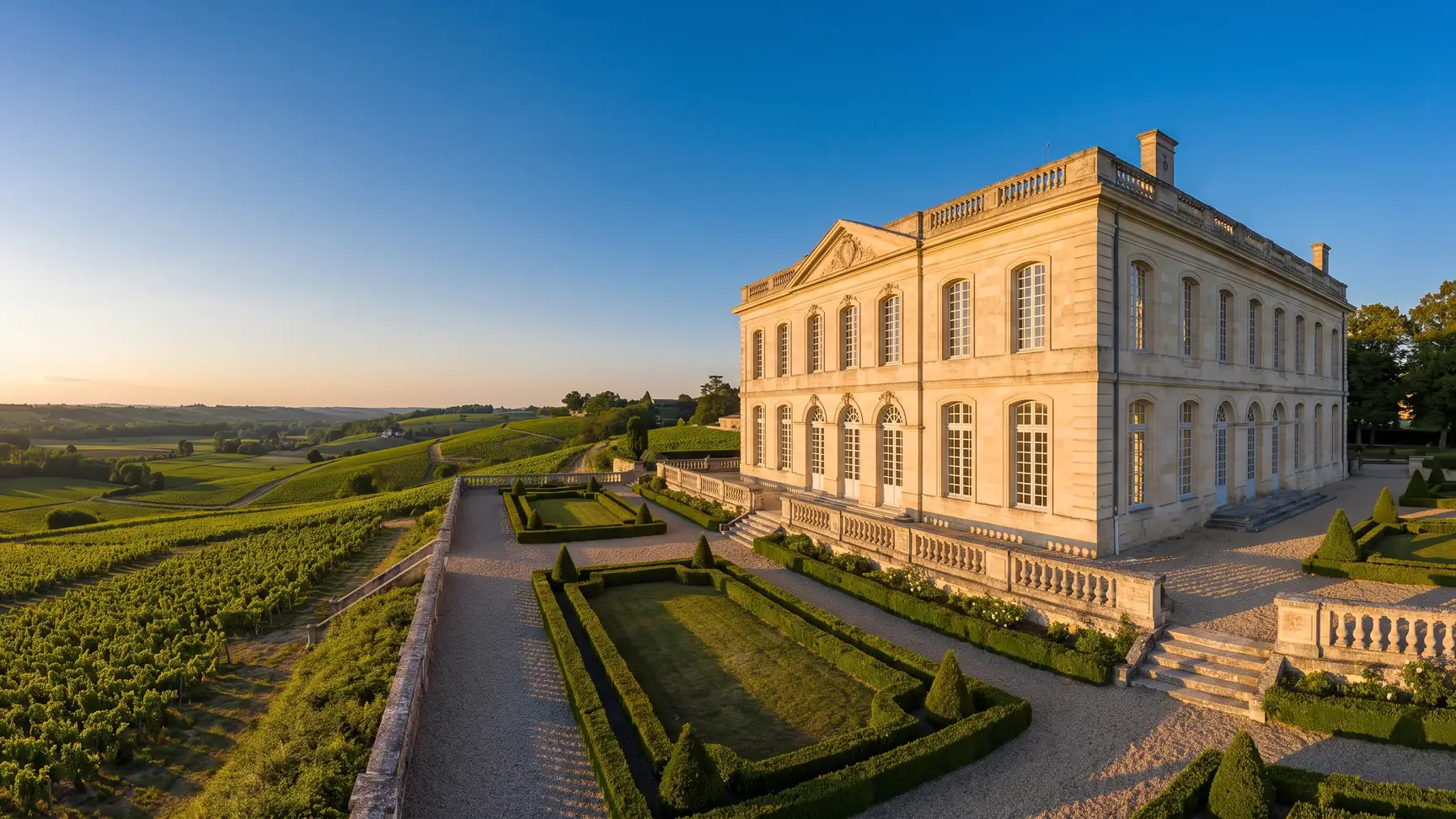
The name Fronsac is linked to an illustrious duchy and to the Richelieu family: the cardinal was Duke of Fronsac, and his grandnephew, Marshal Richelieu, built a “folly” there in the 18th century that was famous for its parties. A glittering chapter in French history, set on this small hill in the Gironde region.
An Illustrious Duchy and Peerage
The seigneury of Fronsac, inherited from the fortified castle on the hill, was elevated to a duchy of the peerage, one of the most prestigious titles in the kingdom. Thus, the great Cardinal Richelieu, the all-powerful minister of Louis XIII, included among his titles that of Duke of Fronsac: the “Cardinal-Duke of Richelieu and Fronsac.” The duchy then passed to his family, the du Plessis de Richelieu. The fact that this modest hill in the Gironde gave its name to one of the greatest statesmen in French history speaks volumes about its prestige and long history. The Duchy of Fronsac, with its lands, vineyards, and château, was among the most envied estates in the region: a great name in the French aristocracy, born on this hill overlooking the Dordogne, a far cry from the image of a simple winegrowers’ village.
The Madness of Marshal Richelieu
The most colorful figure in this story is the Marshal-Duke of Richelieu (1696–1788), the cardinal’s grandnephew, a brilliant military officer, courtier, and notorious libertine, one of the most famous figures of the 18th century. As Duke of Fronsac, he had a "madness" — a pleasure residence with extravagant architecture —, which served as the setting for romantic gatherings which have remained legendary, and whose fame carried the reputation of Fronsac wines all the way to the Court of Versailles. The folly was razed during the Revolution; today, the hilltop is home to a private wine estate, Château de Fronsac, on the very site of Richelieu’s former residence, but the memory of those festivities still lingers on the hill, overlooking the panoramic view of the valley. Between the cardinal-minister and the libertine marshal, the Duchy of Fronsac has thus been linked to two of the most fascinating figures in French history—an unexpected legacy for this small wine-growing village.
Fronsac and Canon-Fronsac
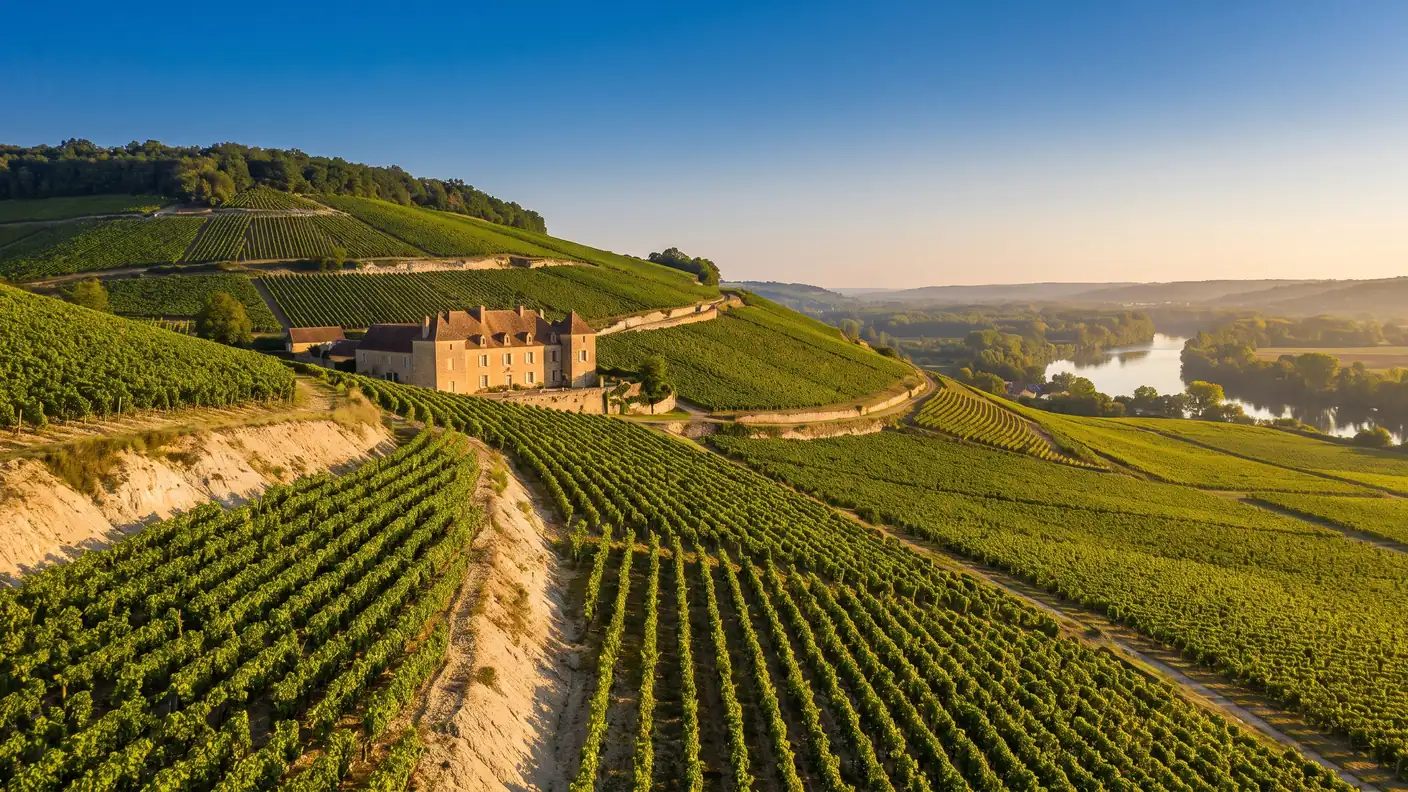
Fronsac lends its name to two renowned appellations on the right bank: Fronsac and, on the finest hillsides, Canon-Fronsac—Merlot red wines grown on the molasse slopes overlooking the Dordogne. Along with the hill and its history, the wine is the main reason to visit Fronsac.
Two appellations on the right bank
According to the INAO, the wine region comprises two neighboring official appellations: Fronsac and Canon Fronsac. Both produce red wines dominated by Merlot. Canon Fronsac is concentrated around the Canon hill, while Fronsac covers a larger wine-growing area at the confluence of the Isle and Dordogne rivers.
Cabernet varieties complement the Merlot on clay and limestone slopes resting on the Fronsadais molasse. The wine profiles vary depending on the slopes, aspect, and soil types. This diversity makes a comparative tasting at the producers’ estates—to be arranged by appointment—well worth the effort.
The Fronsac AOC was recognized by a 1937 decree (initially under the name “Côtes de Fronsac,” renamed Fronsac in 1976), and the Canon-Fronsac AOC in 1939: two historic appellations, neither of which—notably—has ever established a château classification, unlike the Médoc or Saint-Émilion.
The Molasse Terroir
What gives Fronsac wines their quality and uniqueness is their distinctive terroir: the steep hillsides overlooking the Dordogne rest on Fronsadais molasse, a soft clay-limestone rock, topped in places by Asterian limestone—the same rock found on the Saint-Émilion plateau. This geology, combined with the steep slopes, good drainage, and sun exposure, gives the wines structure, depth, and a lovely minerality. Depending on whether a château is situated on the heights of Canon-Fronsac or on the broader slopes of Fronsac, its wines gain either finesse or power: this is the full diversity of this small, high-quality vineyard. Long somewhat overshadowed by their neighbors in Saint-Émilion and Pomerol, Fronsac wines are now experiencing a remarkable revival, driven by passionate winemakers: these are wines of character, often offering excellent value for money, waiting to be rediscovered right here in the region.
| Fronsac and Canon-Fronsac | Details |
|---|---|
| Fronsac AOC | The Fronsadais Hills · Merlot Reds |
| Canon-Fronsac AOC | the best slopes around the hill · more limited |
| Grape Varieties | Predominantly Merlot, blended with Cabernets · reds only |
| Terroir | clay and limestone slopes on the Fronsadais molasse |
| Decrees | Fronsac 1937 (formerly Côtes de Fronsac, renamed in 1976) · Canon-Fronsac 1939 |
The Romanesque Church of Saint-Martin
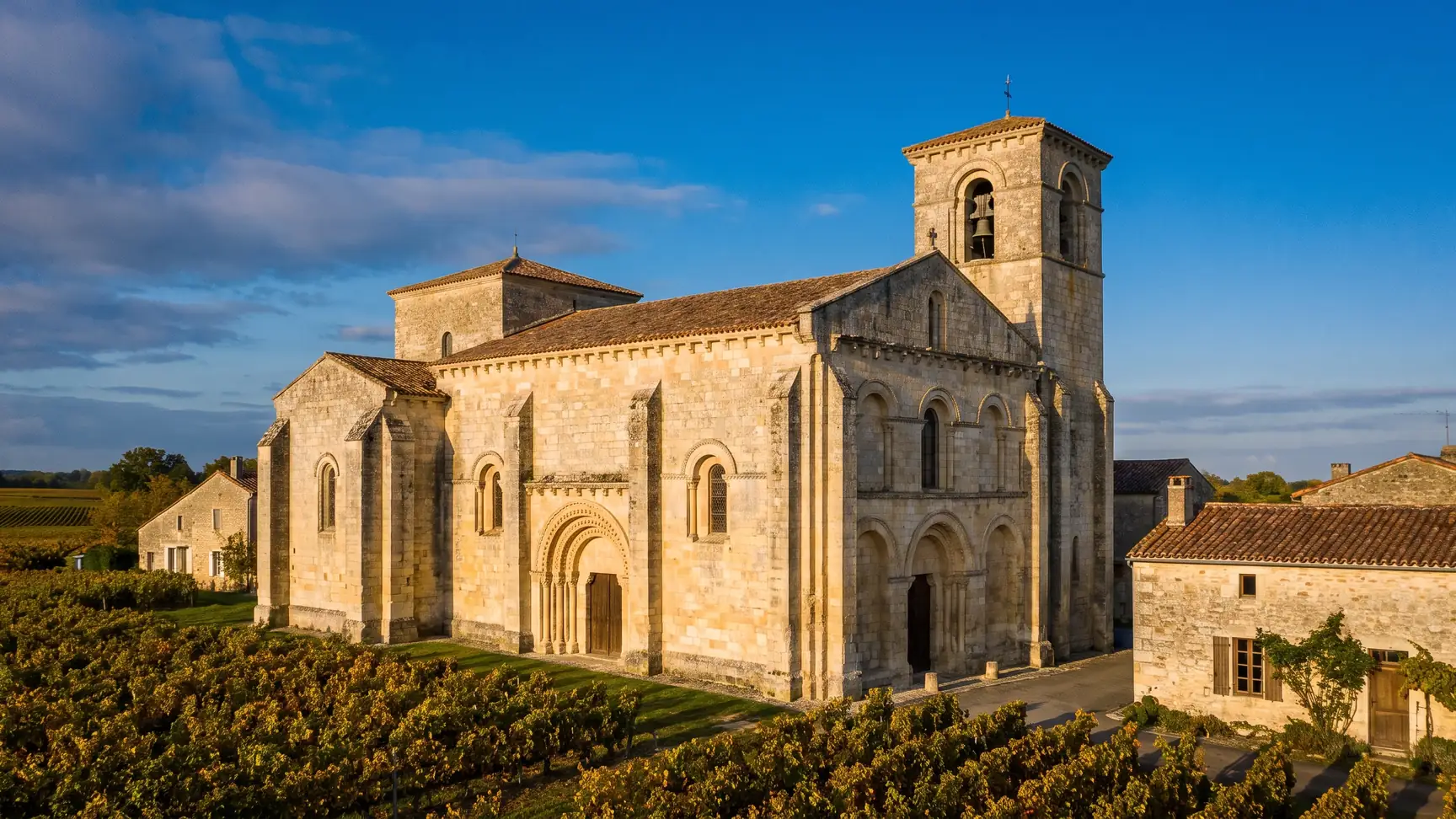
In the heart of the village, the Romanesque Church of Saint-Martin—listed as a historic monument—is Fronsac’s most important historic landmark and a fine example of Gironde Romanesque architecture. It’s a must-see heritage site, located between the hill and the wine cellars.
A listed Romanesque gem
According to the Ministry of Culture’s Mérimée entry PA00083358, the Church of Saint-Martin in Fronsac is a building of Romanesque origin that has been listed as a Historic Monument since 1925. Renovated between the 14th and 16th centuries, it notably features a 15th-century bell tower and a side aisle dating from 1462.
The north facade features pilasters and a double row of rafters, while the apse still has ornate windows. This church is the village’s main heritage landmark, situated among the hill, the historic homes, and the wine cellars.
The Village's Heritage
Surrounding the church, the village of Fronsac retains its old streets, stone houses, and the charm of a hilltop wine-growing village. On the hill and its surroundings stand several châteaux and mansions, including those that evoke the ducal duchy’s opulent past and Richelieu’s extravagance, as well as the grand wine estates that have made the appellation famous. The landscape itself—the hill, the vineyard-covered slopes, and the Dordogne Valley—is a heritage in its own right, one of the most beautiful in the Libournais region. Strolling through Fronsac, climbing to the lookout point, walking along the vineyards, and exploring the church and châteaux is the perfect way to capture the spirit of the place: that of a small village where history, nature, and wine come together with rare intensity. A quintessential piece of the Bordeaux region, perched on a hill overlooking the river.
Wine Tasting in Fronsac
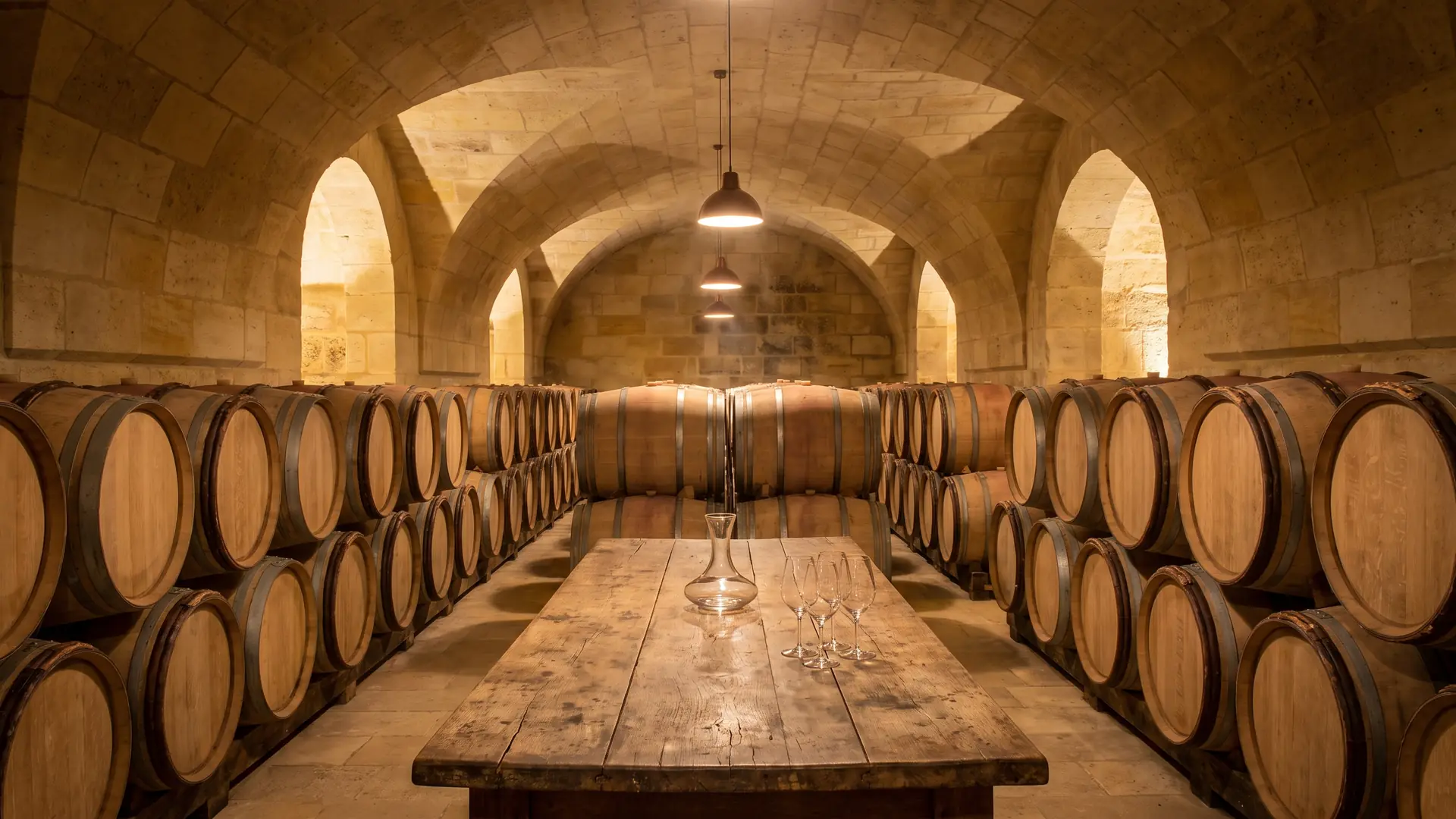
Fronsac is an ideal stop on a wine-tasting tour: here, you can sample full-bodied red wines right at the vineyard, in a warm and authentic atmosphere, far from the crowds of neighboring Saint-Émilion, with the panoramic view of the hilltop as an added bonus. Here’s how to make the most of it.
The Terroir and the Wines
Fronsac wines owe their character to their terroir of steeply sloping molasse hillsides with excellent exposure overlooking the Dordogne River. Merlot, the dominant variety, produces wines that are deep in color, full-bodied, and generous, with well-integrated tannins, often with excellent aging potential; the Cabernets contribute structure and freshness. Depending on whether a château is situated on the heights of Canon-Fronsac or on the slopes of Fronsac, its wines gain either finesse or fullness. This diversity, within a vineyard on a human scale, is what makes a tasting in Fronsac so fascinating: here, you can compare styles, understand the connection between the molasse soil, the slope, and the glass, and discover high-quality wines at prices far more reasonable than those of the neighboring grands crus. A vineyard region undergoing a renaissance, where the winemakers offer a warm and passionate welcome in a magnificent setting.
Where to Enjoy
To sample the wines of Fronsac and Canon-Fronsac, visitors are spoiled for choice among the many châteaux in the Fronsac region, which open their doors for cellar tours and tastings—often at family-owned estates where you’re welcomed by the winemaker, frequently with a superb view of the valley. The local wine center and the cellars also offer opportunities to discover and compare the wines. This is where a private chauffeur really comes into its own: it allows you to string together visits to the hilltop, the church, and two or three estates—in Fronsac and then on to Pomerol or Saint-Émilion—without ever having to worry about driving between tastings. It’s the ideal way to spend a charming day of wine tourism, exploring one of the most beautiful and authentic terroirs on the right bank, set against a backdrop of rolling hills and the river.
The History of Fronsac
Once the estate of Charlemagne, a duchy and peerage, and the birthplace of the concept of “cru”: Fronsac has stood the test of time atop its hill, at the crossroads of history and wine. A few key milestones shed light on this small village’s unique past.
From Fortified Camp to Duchy
The history of Fronsac is the history of its hill. Occupied since ancient times by the Gauls and then the Romans, it became, in 769, a fortified camp of Charlemagne—a defining moment in local history. In the Middle Ages, like the rest of Guyenne, the region experienced a long period of English rule following the marriage of Eleanor of Aquitaine to Henry Plantagenet (1152), and the hill, crowned by a mighty fortified castle, commanded the crossing of the Dordogne River. The seigneury, which later became a ducal peerage, distinguished itself over the centuries, eventually lending its title to Cardinal Richelieu, Duke of Fronsac. This speaks to the importance of this place, far greater than its size would suggest: a strategic stronghold and a prominent name in the aristocracy, situated on a hill overlooking the river and the road to Bordeaux.
The Triumph of the Vineyard
While the mound has shaped the military and princely history of Fronsac, it is the wine which shaped its modern history. As early as the 18th century, the wines of Fronsac and Canon-Fronsac enjoyed a strong reputation, among the most highly regarded in the Libourne region; it is even said that the concept of “cru” first appeared here. During the heyday of Marshal Richelieu, the Fronsac region was renowned as much for its wines as for its festivals. During the 19th and 20th centuries, though somewhat overshadowed by the meteoric rise of neighboring Saint-Émilion and Pomerol, the vineyard has preserved its expertise, before experiencing, in recent decades, a remarkable renewal in quality. Today, Fronsac fully embraces its dual treasures—its history and its wines—proud of its hilltop, its duchy, and its vineyards, at the crossroads of a glorious past and a wine-growing renaissance.
What is there to see around Fronsac?
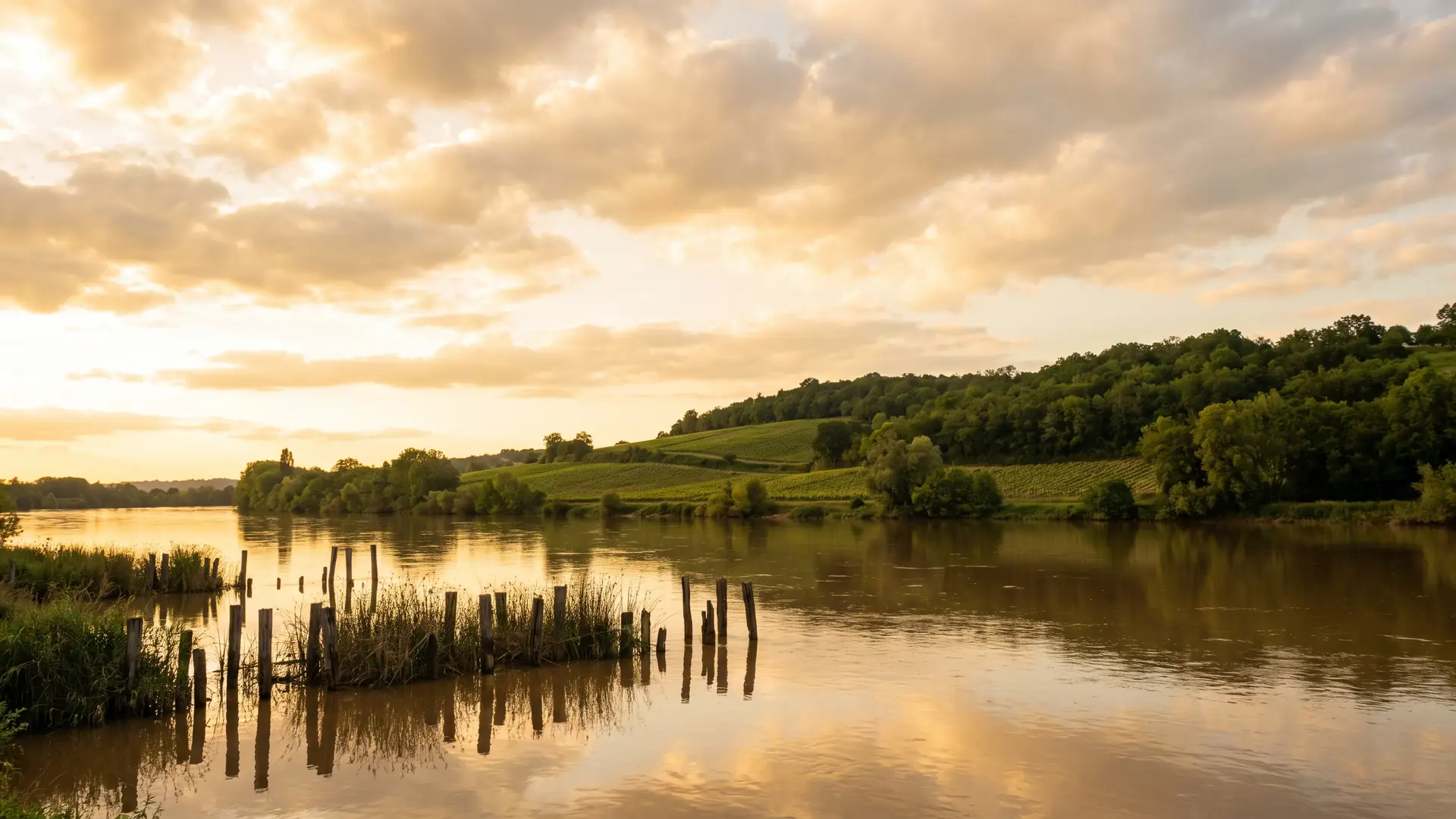
Fronsac lies at the heart of the Libournais region: Libourne, Pomerol, Saint-Émilion, and the greatest vineyards of the Right Bank are all just a few kilometers away. The distances are short, and you can quickly move from one legendary cru to another.
Libourne, Pomerol, and Saint-Émilion
Very close by, a few kilometers to the southeast, Libourne, the major wine-trading town on the Dordogne, is a lively bastide founded in the 13th century. Right next to it lie the most prestigious vineyards on the right bank: Pomerol, home to legendary wines such as Pétrus, among the most expensive wines in the world; and Saint-Émilion, the medieval town listed as a UNESCO World Heritage Site, with its monolithic church, cobblestone streets, and grand cru wines—an absolute must-see, about ten kilometers away. You’ll also find nearby Lalande-de-Pomerol and the surrounding villages of Saint-Émilion. With a private chauffeur, it’s easy to plan a customized loop from Fronsac through these renowned wine regions, moving from one tasting to the next without worrying about driving. This is one of the village’s greatest assets: its location, right in the heart of the most famous vineyards on the right bank.
The Dordogne Valley
Beyond its grand crus, the Fronsac region invites you to follow the Dordogne River. Traveling downstream toward the west, you reach Bourg and Blaye, on the estuary, home to Vauban’s citadel, a UNESCO World Heritage Site. Traveling upstream toward the east, you’ll reach Castillon-la-Bataille, with its vineyards and the battlefield of the final battle of the Hundred Years’ War (1453), followed by the Bergerac region and the Périgord. Fronsac is thus an excellent starting point for exploring the entire Dordogne Valley and its vineyards, stretching from the estuary to the Périgord. With a driver to take you between these stops, you can easily turn your visit to Fronsac into a tailor-made tour of the Gironde, combining fine wines, heritage, and river landscapes at your own pace, without the hassle of driving or finding parking.
| Around Fronsac | Distance | Interest |
|---|---|---|
| Libourne | ~6 km | The Dordogne: A Wine-Trading Town |
| Pomerol | ~8 km | Vineyard of legendary wines (Pétrus) |
| Saint-Émilion | ~12 km | UNESCO-designated medieval city, fine wines |
| Bourg-sur-Gironde | ~30 km | Hilltop Town, Côtes de Bourg |
| Castillon-la-Bataille | ~20 km | Vineyard, battlefield of 1453 |
When is the best time to visit Fronsac?
Fronsac is worth visiting year-round, but spring and summer—when the light dances across the Dordogne and the vineyards come to life—are the most beautiful times to visit. The spring covers the hillsides in soft greenery, offers mild days perfect for climbing the hill, admiring the view, visiting the church, and exploring the vineyards, and sees the estates reopen for tastings. Thesummer bathed in abundant light: it’s the perfect time of year to stroll through the hilltop village, take in the views, walk along the river, and visit the wineries, all in a friendly yet never crowded atmosphere. From the hilltop, the long evenings offer sumptuous sunsets over the Dordogne and the vineyards—one of the most beautiful sights on the right bank, far more peaceful than in neighboring Saint-Émilion. It’s the perfect season to experience all the charm of Fronsac.
Fall Harvest and Winter
Thefall is undoubtedly the most beautiful season to explore Fronsac: the grape harvest brings the Fronsac region’s wineries to life, the vine leaves take on shades of gold and purple on the hillsides of Le Tertre, and the air is filled with the scent of grape must; it’s the perfect time to learn about winemaking and taste the new vintages, while the low-angled sunlight bathes the valley in a sublime glow from the lookout point. Thewinter, a quieter setting, reveals the village, the hill, and the river in a peaceful, uncluttered atmosphere beneath the vast skies of the Gironde: visitors can explore the historic sites and take in the panoramic views without the crowds, in the contemplative atmosphere of a place steeped in history. In every season, the mild oceanic climate, the beauty of the hill, and the quality of the wines make Fronsac a rich and relaxing getaway, less than an hour from Bordeaux, in the heart of the great vineyards of the Right Bank.
Getting to Fronsac from Bordeaux
Fronsac is located about 37 km from Bordeaux, which is about a 47-minute drive via the A89 highway toward Libourne, a town located nearby. Note: The A89 highway crosses the Dordogne River within the town via the Mascaret Viaduct. Fronsac does not have a train station; the nearest one is in Libourne, a few kilometers away, on the line from Bordeaux to Bergerac and Sarlat. Fronsac also had its own tram station, part of the Tramways Électriques du Libournais network, between 1913 and 1949, though it no longer exists. However, the train does not allow you to explore the area around the hill, the church, and the scattered vineyards, nor does it make it easy to travel on to Pomerol or Saint-Émilion. For a visit from Bordeaux that combines scenic views, history, and wine tastings, a private car with a driver is the most practical and flexible option.
Train or chauffeur?
To get to Fronsac—and especially to explore the surrounding vineyards—hire a Private Chauffeur, Chauffeured Transfer in Bordeaux offers true freedom: a direct route from Bordeaux, door-to-door, with no transfers or waiting, and the option to make stops along the way as you please. This is particularly valuable for a day of wine tourism—the hill and the church, followed by two or three wineries in Fronsac, Pomerol, or Saint-Émilion—where you’ll want to be able to taste the wines without worrying about driving. We offer this route at fixed price provided in advance: Allow about 93 € For the one-way trip, in a Mercedes sedan or a van seating up to 8 passengers, with a professional driver. The price, set at the time of booking, remains fixed: it does not depend on traffic, potential traffic jams, or the number of stops requested along the way, unlike a taxi meter.
This is the perfect option for a day of wine tourism and cultural exploration, a tour of the vineyards with family or friends, an event (such as a wedding or birthday celebration at a château in the Libourne region), or a simple transfer to or from Bordeaux-Mérignac Airport. You can travel alone, as a couple, or in a small group of up to 8 people, with luggage, and request stops in Libourne, Saint-Émilion, or at a vineyard along the way. In practice, booking is quick and easy: simply provide your pickup address in Bordeaux and your destination in Fronsac, along with the date, desired time, and number of passengers, and you’ll receive a fixed-price quote in writing. On the day of the trip, the driver picks up the passengers at the agreed-upon address and takes them directly to Fronsac, without any detours—a real advantage for enjoying a stress-free day of wine and scenic views.
| Route | Distance | Duration | Landmark |
|---|---|---|---|
| Bordeaux → Fronsac | ~37 km | ~47 min | Starting at ~€83 for an executive car service |
| Fronsac → Libourne | ~6 km | ~10 min | wine market town |
| Fronsac → Pomerol | ~8 km | ~12 min | Pétrus vineyard |
| Fronsac → Saint-Émilion | ~12 km | ~18 min | UNESCO World Heritage Site, fine wines |
Whether you come for the panoramic view from the hill and its thousand-year history, for the duchy and Richelieu’s “folie,” for the Romanesque church, or for the great wines of Fronsac and Canon-Fronsac, Fronsac is a treat for lovers of authentic Bordeaux, where history, landscape, and vineyards converge—a small village with a grand past that, for those who take the time to stop and explore, offers one of the most beautiful combinations of heritage and terroir on the Right Bank.
Whether it’s for a wine-tasting tour, a visit to the vineyard, or an event, booking a chauffeur guarantees a comfortable and punctual ride—book a driver from Bordeaux to Fronsac or explore all our destinations.
Frequently Asked Questions
Where is Fronsac located?
Fronsac is a small wine-growing village in the Gironde department (33), in the Nouvelle-Aquitaine region, in the Libournais area, perched on a hill overlooking the Dordogne Valley, a few kilometers northwest of Libourne and about 40 kilometers northeast of Bordeaux. Part of the Libourne arrondissement and the Libournais-Fronsadais canton, it has a population of about 1,130 (known as Fronsadais) and is part of the Fronsadais Community of Communes. Famous for its panoramic hilltop setting and its wine appellations, it is located about a 47-minute drive from Bordeaux (approximately 37 km).
What is the distance between Bordeaux and Fronsac?
About 37 km by road, or about a 47-minute drive, via the A89 highway toward Libourne (the village is very close by). By private chauffeur from Bordeaux, the fare is fixed and provided in advance, starting at approximately €93 one way (sedan or van, door-to-door price). Fronsac does not have a train station: the nearest one is in Libourne, a few kilometers away, but the train does not allow you to explore the area between the hilltop and the local wineries, nor to travel on to Pomerol or Saint-Émilion.
What is the Fronsac mound?
This is the hill, about 76 meters high, on which the village of Fronsac is built, overlooking the Dordogne Valley. This hill, occupied since the time of the Gauls and Romans, served as a fortified camp for Charlemagne in the 8th century (in 769), and later, during the Middle Ages, became the site of a mighty fortified castle and a duchy. Plundered by the Vikings in 849, this strategic site overlooking the river has weathered two thousand years of history. Today, it is a magnificent viewpoint overlooking the vineyards and the Dordogne River—one of the most beautiful panoramas on the right bank—and the heart of the terroir of Fronsac’s great wines.
What is the connection between Fronsac and Richelieu?
Fronsac was a duchy-pairie, one of the most prestigious titles in the kingdom, and it was Cardinal Richelieu, the all-powerful minister of Louis XIII, who held it: he was known as the “Cardinal-Duke of Richelieu and Fronsac .” Later, his grandnephew, the Marshal-Duke of Richelieu (1696–1788)—a brilliant military leader and notorious libertine—had a “folly” built on the hill ”—a pleasure residence with extravagant architecture—which remains famous for its romantic parties. The small Gironde village of Fronsac has thus been linked to two of the greatest figures in French history.
What is Fronsac wine?
Fronsac lends its name to two renowned appellations on the right bank: the Fronsac AOC, on the hillsides of the Fronsadais region, and the smaller Canon-Fronsac AOC, reserved for the finest slopes around the hilltop. Both produce exclusively red wines, dominated by Merlot, on a terroir of clay and limestone hillsides resting on the Fronsadais molasse. These are deep-colored, full-bodied, and elegant wines, renowned for their aging potential, prized since the 18th century, and currently experiencing a resurgence. Often offering excellent value for the price, they rank among the finest and most authentic wines of the Right Bank.
What is the difference between Fronsac and Canon-Fronsac?
These are two neighboring appellations within the same vineyard region. The Fronsac AOC covers all the hillsides of the Fronsac region. The Canon-Fronsac AOC, smaller and more prestigious, is reserved for the finest slopes around the Fronsac hill and the Canon hillock, on the highest-quality molasse and limestone terroirs. Both produce Merlot-based red wines, but Canon-Fronsac is generally considered the heart of the vineyard in terms of quality, with wines that are more refined and concentrated. In practice, both appellations offer excellent Right Bank wines at prices far more reasonable than those of the neighboring Saint-Émilion or Pomerol grands crus.
What to See in Fronsac?
First and foremost, the Fronsac hill: the panoramic hilltop overlooking the Dordogne, steeped in two thousand years of history (Charlemagne’s camp, the castle, the duchy), and offering one of the most beautiful views on the right bank. The Romanesque Church of Saint-Martin, listed as a historic monument. The castles and mansions that evoke the duchy and Richelieu’s extravagance. And, of course, the vineyards, which you can explore through wine tastings at the many estates in Fronsac and Canon-Fronsac. Nearby: Libourne, Pomerol, and Saint-Émilion are all just a short distance away. Fronsac is a treasure trove of history, scenery, and great wines.
How many people live in Fronsac?
Approximately 1,130 residents according to the 2023 census. It is a small village, but its name—which evokes an illustrious duchy and two renowned wine appellations—resonates far beyond its size. Its residents are known as Fronsadais, after the small region that surrounds it, the Fronsadais, of which it is the historic center. Life here revolves around wine and the landscape: the grape harvest, the wine cellars, tastings, and visitors who come to admire the panoramic view from the hilltop. More low-key than neighboring Saint-Émilion, Fronsac exudes the charm of an authentic hilltop wine-growing village with a rich history and great wines.
Is there a beautiful view in Fronsac?
Yes. The Fronsac hill, about 76 meters high, offers one of the most beautiful panoramic views of the Libourne region and the right bank. From its summit, the view takes in the Dordogne Valley, vineyards stretching as far as the eye can see, the town of Libourne, and, on a clear day, all the way to the bell towers of Saint-Émilion and Pomerol. It’s a superb sight, especially at sunset, and much quieter than in Saint-Émilion. This vantage point also contributes to the vineyard’s quality: the hill’s slopes, which are well-exposed and well-drained, are among the appellation’s finest terroirs. Climbing the hill is the essential experience of any visit to Fronsac.
What is there to see around Fronsac?
Libourne, the major wine market town on the Dordogne, just a few kilometers away. The most prestigious vineyards on the right bank are nearby: Pomerol, home to legendary wines such as Pétrus, and Saint-Émilion, the medieval town listed as a UNESCO World Heritage Site, with its monolithic church and grand cru wines (~12 km). Lalande-de-Pomerol and the outlying villages of Saint-Émilion are also nearby. Following the Dordogne River, you can reach Bourg and Blaye on the estuary, or Castillon-la-Bataille and the Périgord. Fronsac, right in the heart of the Libournais region, is an excellent base from which to explore all these renowned wine destinations.
Can I book a chauffeur from Bordeaux to Fronsac?
Yes. We offer the Bordeaux → Fronsac route (approximately 37 km, about 47 minutes via the A89) at a fixed price, starting at around €93 one way, in a Mercedes sedan or a van seating up to 8 passengers, with a professional driver. The trip is direct, door-to-door, with the option to make stops as desired—ideal for a day of wine tourism combining a visit to the hilltop village, the church, and tastings at the great neighboring vineyards (Fronsac, Pomerol, Saint-Émilion), where you’ll want to taste the wines without worrying about driving. The fixed-price quote is provided and confirmed in writing before departure, with no surprises on the meter.
Further Reading
- The legendary vineyard nearby: see the Guide to Pomerol (Pétrus, iron-rich soil, legendary wines), 8 km away
- The UNESCO City of Wine: see the Saint-Émilion Guide (medieval town, monolithic church, grand cru wines)
- The City of Henry IV: see the Coutras Guide (the Battle of 1587, the confluence of the Isle and Dronne rivers)
- Plan your trip: Book a private chauffeur from Bordeaux to Fronsac or explore all our destinations
Sources and References
- Wikipedia — Fronsac (Gironde) — geography, demographics, hill, duchy, vineyard
- Wikipedia — Fronsac AOC — vineyard, Merlot, molasse, reputation
- Wikipedia — AOC Canon-Fronsac — restricted appellation, finest slopes
- POP/Mérimée Database — Saint-Martin Church in Fronsac — Romanesque church, listed as a historic monument in 1925
- INSEE — Municipality of Fronsac (33174) — Population in 2023 (~1,130 residents), area
Article updated in July 2026.
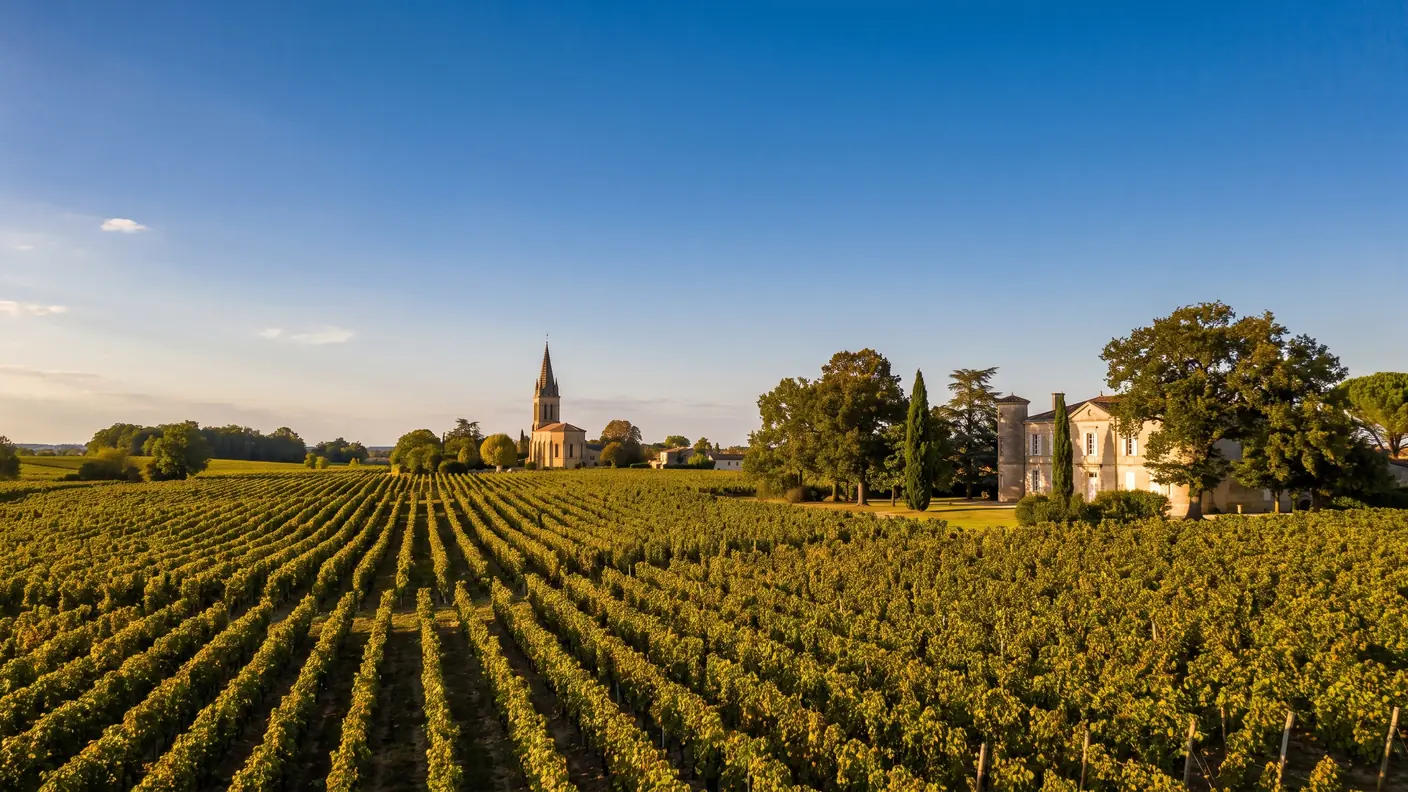
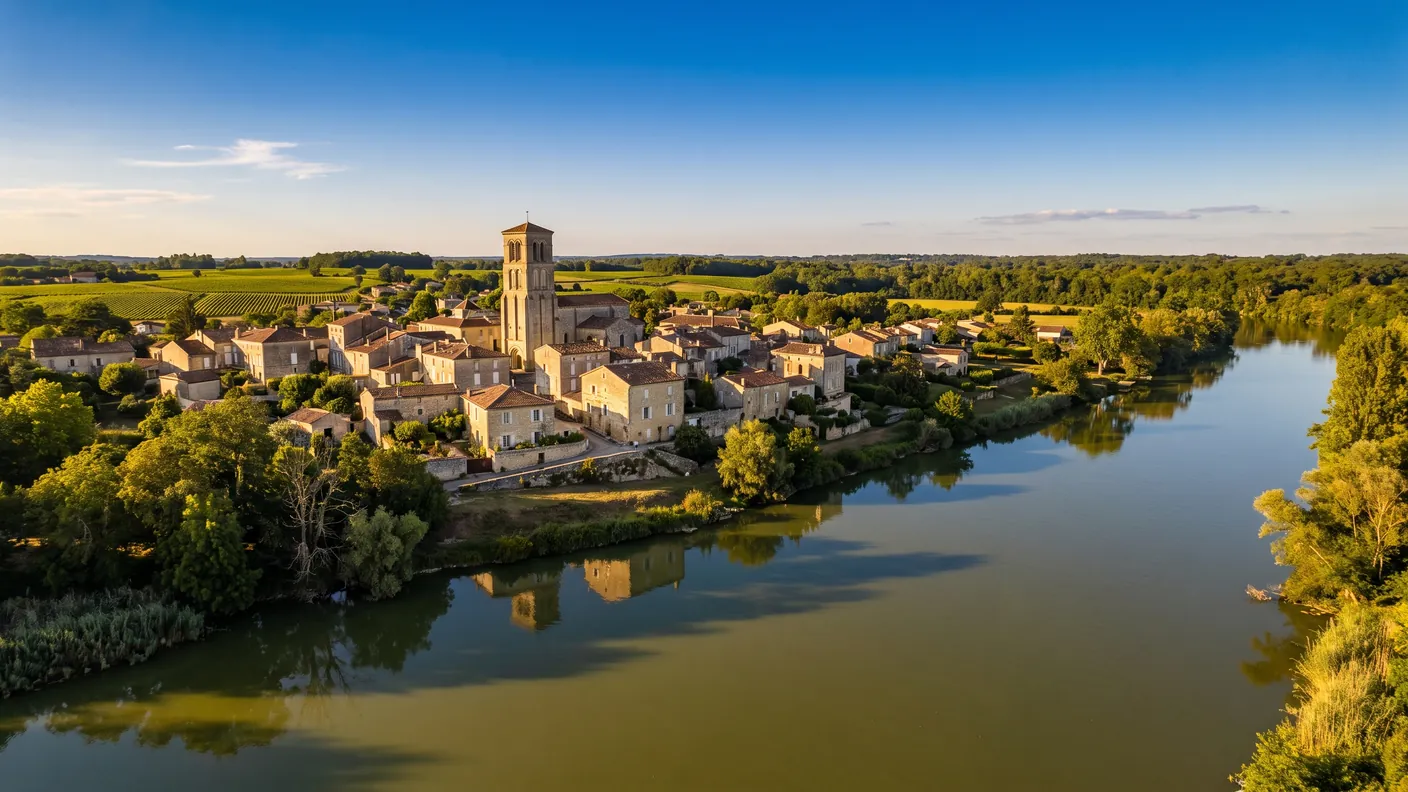
On the way to the Fronsac hill
Direct trip from Bordeaux (~47 min) to Fronsac, its panoramic hilltop, and the vineyards on the right bank, with stops along the way at your discretion—Pomerol, Saint-Émilion, and the wineries. Written fixed-price quote, with no unexpected charges.