
Bordeaux to Pomerol: Pétrus and Great Merlot
A small vineyard with a grand name, one of the world’s most prestigious appellations: Pétrus and its legendary wines, the unique terroir of the “crasse de fer,” with no official classification—just outside Saint-Émilion, less than an hour from Bordeaux.
Pomerol at a Glance
Pomerol is a tiny village in the Gironde department, in the Libourne region, just northeast of Libourne, but its name is one of the most prestigious in the world of wine. This unassuming vineyard plateau, with no real village center or spectacular château, produces one of the most sought-after and expensive appellations on the planet: Pomerol, home to Pétrus and several legendary wines. Its secret: a unique terroir, dominated by Merlot, on clay soils containing the famous “crasse de fer.” Here, there are no official classifications, no crowds: just meticulously tended vineyards, a modest church inherited from the Hospitallers, and the quiet prestige of the greatest wines of the Right Bank. On the outskirts of Saint-Émilion, less than an hour from Bordeaux, Pomerol is a pilgrimage site for wine lovers—a small village with a name that speaks volumes.
Here are the key details to know before you go. Distances are calculated door-to-door from Bordeaux; the price listed is for a private driver reservation at a fixed rate provided in advance, with no unexpected meter charges regardless of traffic or stops along the way.
| Landmark | Details |
|---|---|
| Department | Gironde (33), Nouvelle-Aquitaine |
| Status | Wine-growing village · Libourne district · Libournais-Fronsadais canton |
| Population | approximately 610 residents (INSEE 2023) · the Pomerolais · official municipal data accessed on July 24, 2026 |
| Area | 6.24 km² · a plateau covered with vineyards |
| Don't miss it | The vineyard, the church, the legendary wines (Pétrus) |
| Distance from Bordeaux | about 43 km · about a 50-minute drive |
| Designation | Pomerol (Merlot reds · unclassified) |
First, a word of clarification: Pomerol is the subject of many misconceptions, which this guide corrects with supporting sources. Unlike the Médoc or Saint-Émilion, the Pomerol appellation has no official classification: the hierarchy of wines there is determined by reputation and the market, not by decree. The famous Pétrus is therefore not a “Premier Grand Cru Classé”—that title does not exist in Pomerol. The village itself is tiny and scattered: there is no picturesque town to visit, as there is in Saint-Émilion, but rather a plateau of vineyards dotted with unassuming estates. Finally, most of the grand cru estates are not open to the public. Every statement in this guide is based on verifiable sources, cited at the end of the article.
Here we’ll go over everything you need to know: the location of Pomerol in the Libourne region, the appellation and its lack of classification, the unique terroir of the “crasse de fer,” the legendary wines and Pétrus, the church inherited from the Hospitallers and the Croix de Gay, the history of the region and its wine, a tasting guide, notable sites in the surrounding area, the best time of year to visit, and the easiest way to get there from Bordeaux by private chauffeur—all thoroughly researched and verified.
Where is Pomerol located?
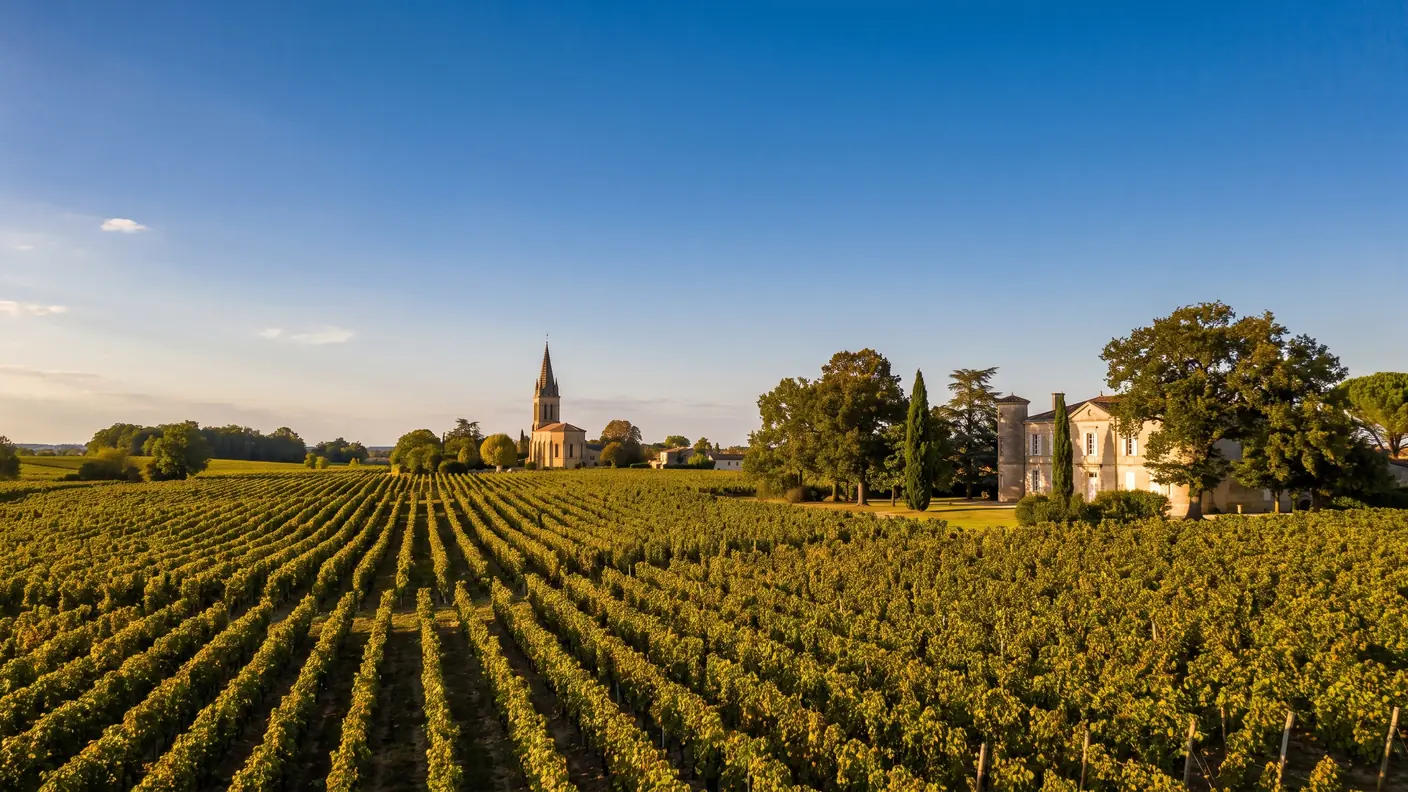
Pomerol is located in the eastern part of the Gironde department (33), in the Nouvelle-Aquitaine region, in the Libournais area, immediately northeast of Libourne, about 50 kilometers northeast of Bordeaux. It is a very small municipality in the Libourne district and the Libournais-Fronsadais canton, and a member of the Libournais Urban Community. Its tiny territory (barely more than six square kilometers) is almost entirely covered with vineyards: it is a gently rolling plateau with no real town center, where houses and properties are scattered among the rows of vines. Here we are in the heart of the great right-bank wine region, between Libourne to the west, Saint-Émilion to the east, and Lalande-de-Pomerol to the north, in one of the world’s most prized terroirs. Discreet, almost secret, Pomerol must be earned: it does not present itself to the eye like a city, but reveals itself to the connoisseur, glass in hand.
A plateau of vineyards, no village
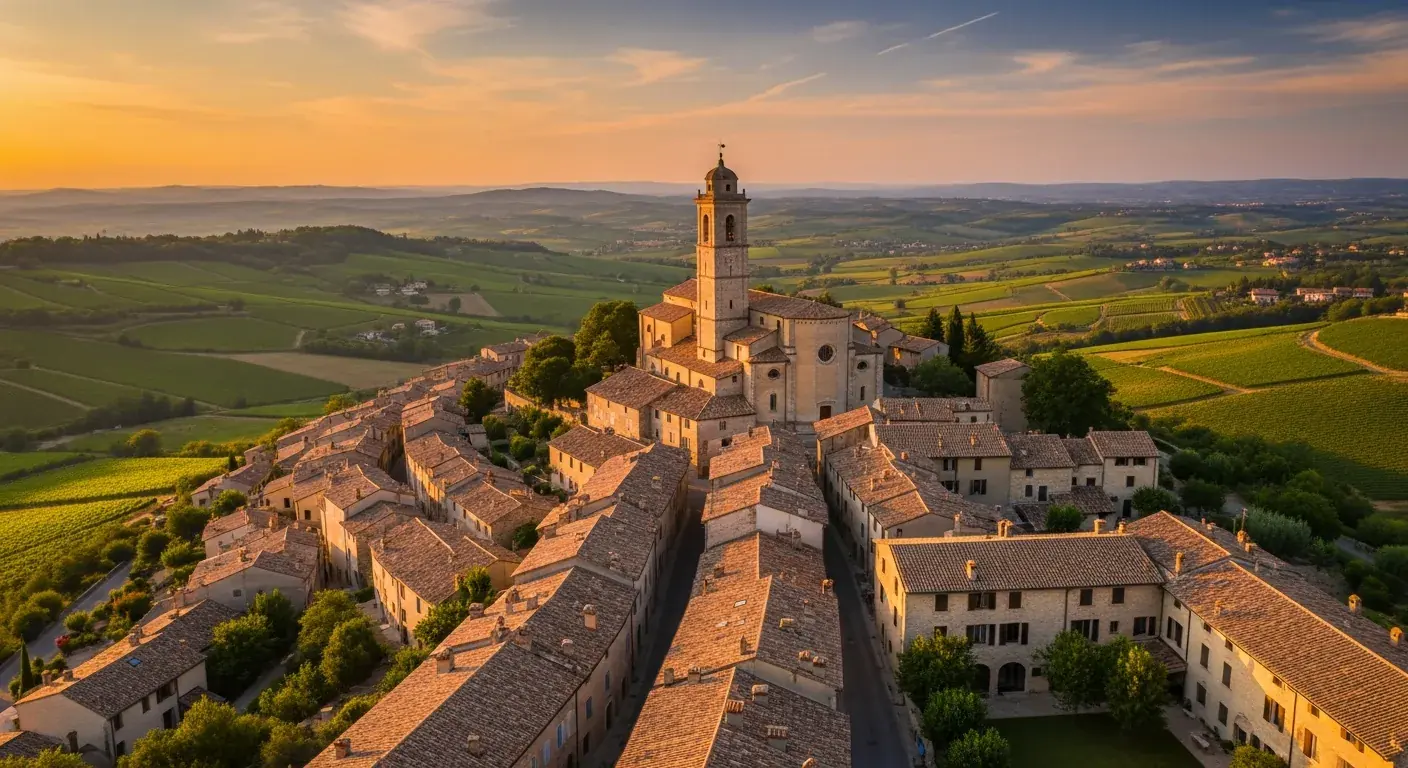
What immediately stands out about Pomerol is the absence of a picturesque village. Unlike Saint-Émilion with its medieval town or Fronsac with its hilltop village, Pomerol has no compact town center, narrow streets, or town square: it is a rural community with scattered settlements, where the landscape consists almost entirely of vineyards. On this flat plateau, meticulously tended down to the very last row, the properties—often simple manor houses or unassuming wineries—are tucked away among the vines, without ostentation. Only the church spire rises above this sea of vines, serving as a landmark. This discretion mirrors the wines: everything here is about restraint, quiet excellence, and refinement without fanfare. Don’t come to Pomerol looking for a postcard-perfect setting, but rather for a terroir: the landscape is the vineyard itself, and its beauty is the austere and precious beauty of a truly great vineyard.
The smallest of the major appellations
With approximately 610 residents According to the 2023 census, with an area of just over six square kilometers, Pomerol is one of the smallest municipalities in the Libournais region: a tiny speck on the map of the Gironde department. Its residents are called the Pomerolais (Pomirau in Gascon). And yet, this tiny territory is home to one of the the world's most famous wine regions : approximately 780 hectares of vineyards that produce some of the most sought-after and expensive wines on the planet. That is the paradox of Pomerol: worldwide fame born on a tiny rural plateau, with no monuments or cities, far from the tourist trails. Life there revolves exclusively around the wine and the vineyards, in a quiet, studious countryside setting, far removed from the hustle and bustle of nearby Saint-Émilion. A big name, a small place: that’s what makes Pomerol so unique.
The designation Pomerol
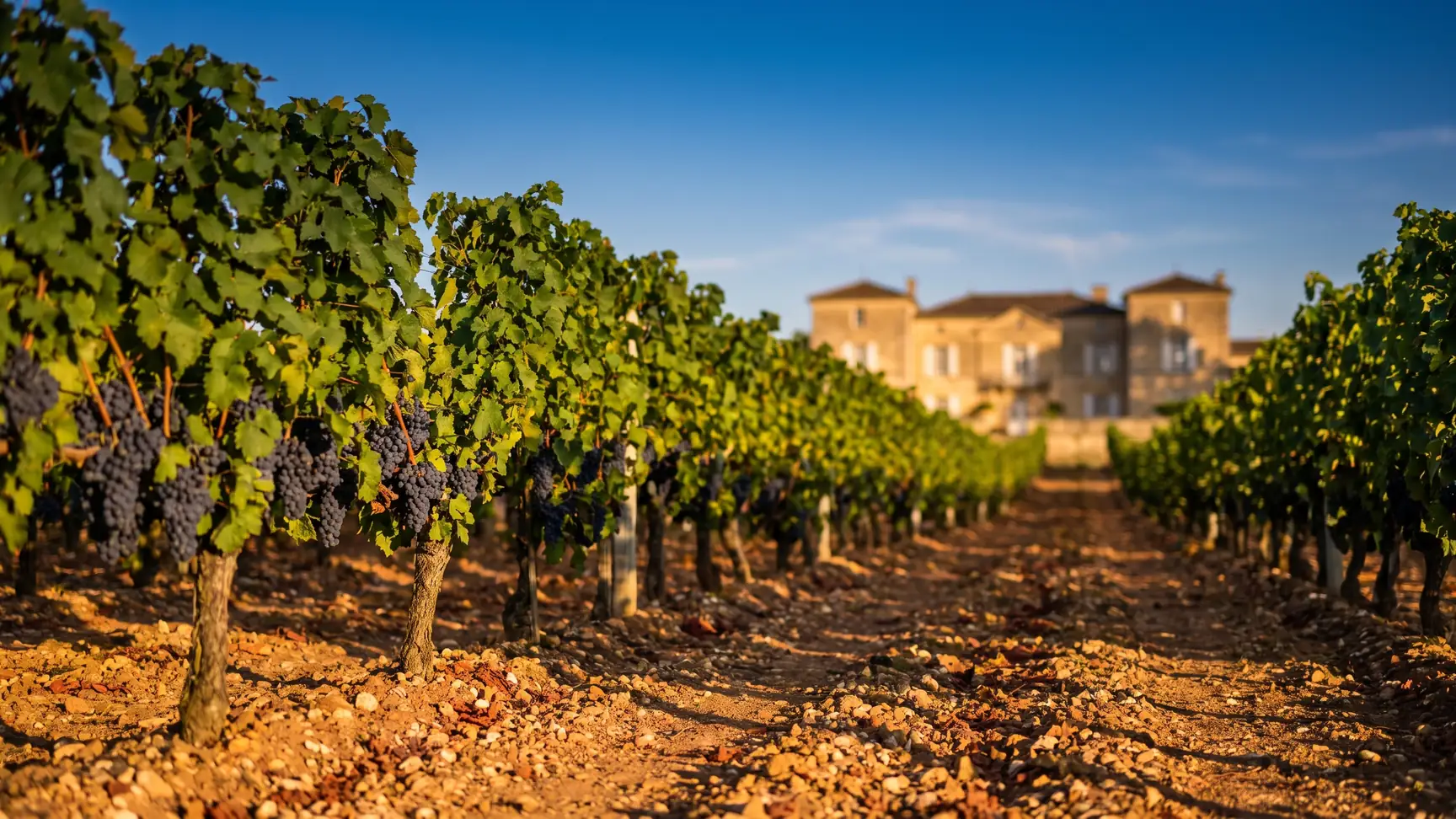
Pomerol is one of the world’s most prestigious appellations: a Merlot-dominated red wine produced on a unique terroir of iron-rich clay, which is notable for having no official classification. It is at the heart of the estate’s identity and the only real reason to visit it.
A truly great wine without a classification
The Pomerol AOC covers approximately 780 hectares of vineyards, comprising some 140 estates, on the commune’s plateau and a strip of land in Libourne (official INAO fact sheet, accessed July 24, 2026). Its most distinctive feature—unique among the most prestigious appellations—is that it has no official classification: whereas the Médoc has its 1855 classification and Saint-Émilion has its grands crus classés, Pomerol has never established an official hierarchy of its wines (the only classification ever attempted—for tax purposes in 1943—was abolished as early as 1944). The reputation of the châteaux has been built solely on quality and market performance over time. The result is a de facto hierarchy, known to connoisseurs, in which a few names—Pétrus at the top—reach the highest heights, without any official title to distinguish them. This absence of a ranking is part of the myth of Pomerol: here, it is the wine—and the wine alone—that has built the legend, in the utmost discretion. An aristocracy of taste, without an official coat of arms.
Merlot and iron scale
The secret behind Pomerol’s wines lies in their terroir, one of the most distinctive in the Bordeaux region. The plateau rests on gravel and, above all, clay, with—at the heart of the finest section (the “boutonnière”)—a distinctive layer rich in iron oxide, the famous “crasse de fer” (or “machefer”). It is on these iron-rich clays that Merlot, the flagship grape variety of Pomerol, truly shines: producing wines of incomparable richness, depth, and velvety smoothness, with a silky texture and remarkable length. Cabernet Franc (known here as “bouchet”) often rounds out the blend, adding freshness and structure. This unique alchemy between Merlot and the iron-rich clay explains the inimitable style of the great Pomerol wines: powerful and velvety, yet with great finesse, capable of aging for decades. A tiny terroir, yet among the most precious in the world.
| The designation Pomerol | Details |
|---|---|
| Area | approximately 780 hectares · ~140 properties |
| Type of wine | Red only · Merlot-dominant + Cabernet Franc (Bouchet) |
| Terroir | gravel and clay · “iron scum” (iron oxide) |
| Rankings | none (unlike the Médoc and Saint-Émilion) |
| Flagship Vintages | Pétrus, Le Pin, Vieux Château Certan, Lafleur… |
The buttonhole: the secret behind great wines
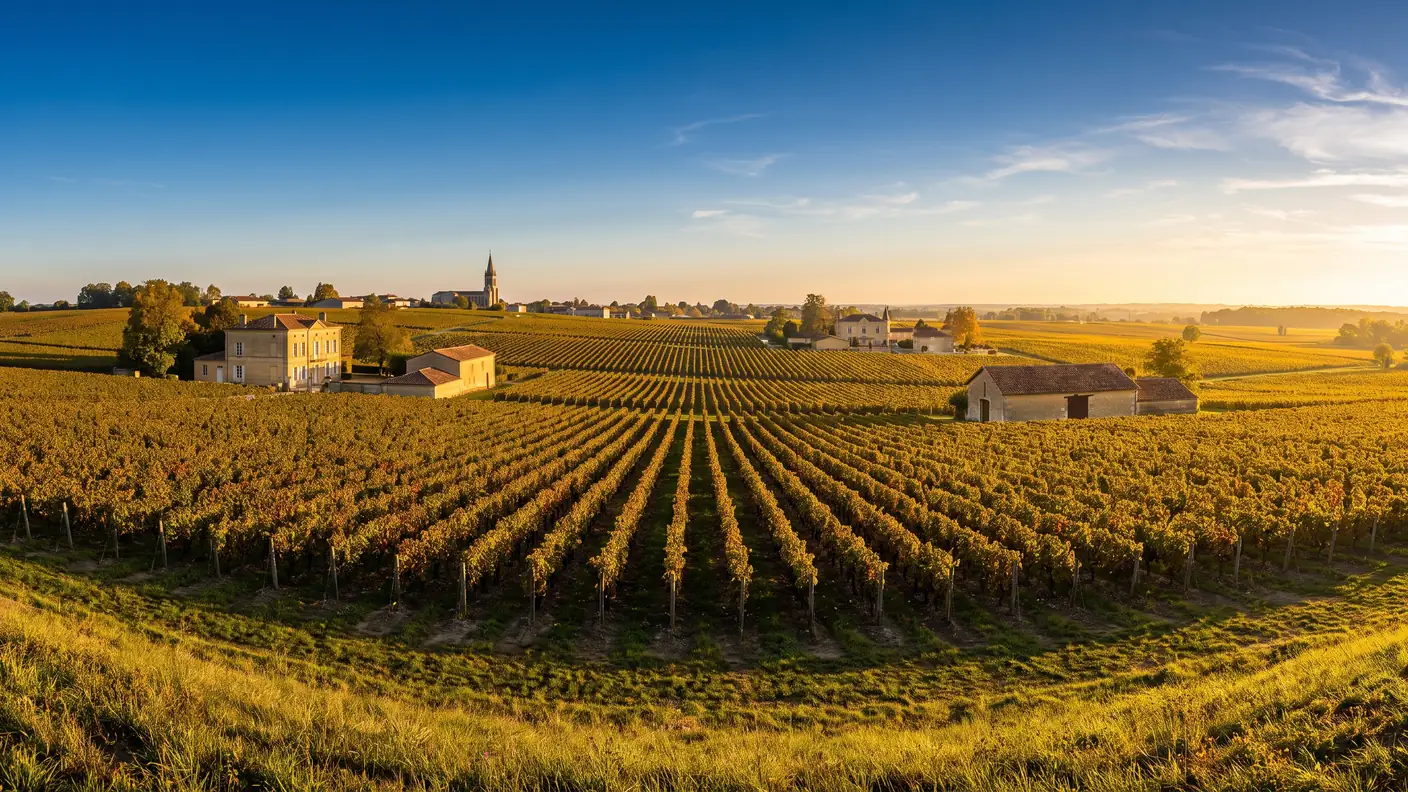
Behind the fame of Pomerol lies a subtle geography: a few hectares of clay in the heart of the plateau—the “boutonnière”—make all the difference and explain why this tiny terroir produces exorbitantly priced wines. To understand the soil is to understand Pomerol.
Iron, clay, and Merlot
At Pomerol, everything happens in the subsoil. The plateau, which appears uniform on the surface, conceals a mosaic of soil types: gravel layers of varying depths, sand, and above all, clays that—in the center of the plateau—become particularly rich and compact. It is there, on this “buttonhole” of blue clay mixed with iron-rich silt, that the greatest wines are born: Merlot finds a cool, water-regulating soil there, which yields grapes of exceptional concentration and complexity. Just a few hectares are enough to make the difference between a very good Pomerol and a legendary vintage: it’s a matter of meters, of clay veins, of the subsoil. This extreme precision of the terroir, where every plot matters, is what makes Pomerol a source of fascination for wine enthusiasts and winemakers around the world. Here, the genius of the place is literally underground.
A Vineyard Like No Other
Pomerol also stands out for the size of its estates. Unlike the vast estates of the Médoc, the châteaux of Pomerol are often very small—just a few hectares, sometimes less—which explains the rarity and high price of their wines: some estates produce only a few thousand bottles per year. These are frequently family-run operations, where the vines are tended with extreme care, by hand, plot by plot. This attention to detail, combined with the exceptional terroir, places the great Pomerol wines at the very pinnacle of the Bordeaux wine hierarchy—and indeed, the world. No prestigious city, no ostentatious châteaux: at Pomerol, the greatness lies entirely in the glass, the result of a tiny terroir and masterful craftsmanship. It is the triumph of discretion and excellence on a plot of land that, at first glance, seems unremarkable—and yet is one of the most coveted on Earth.
Pétrus and the Legendary Wines
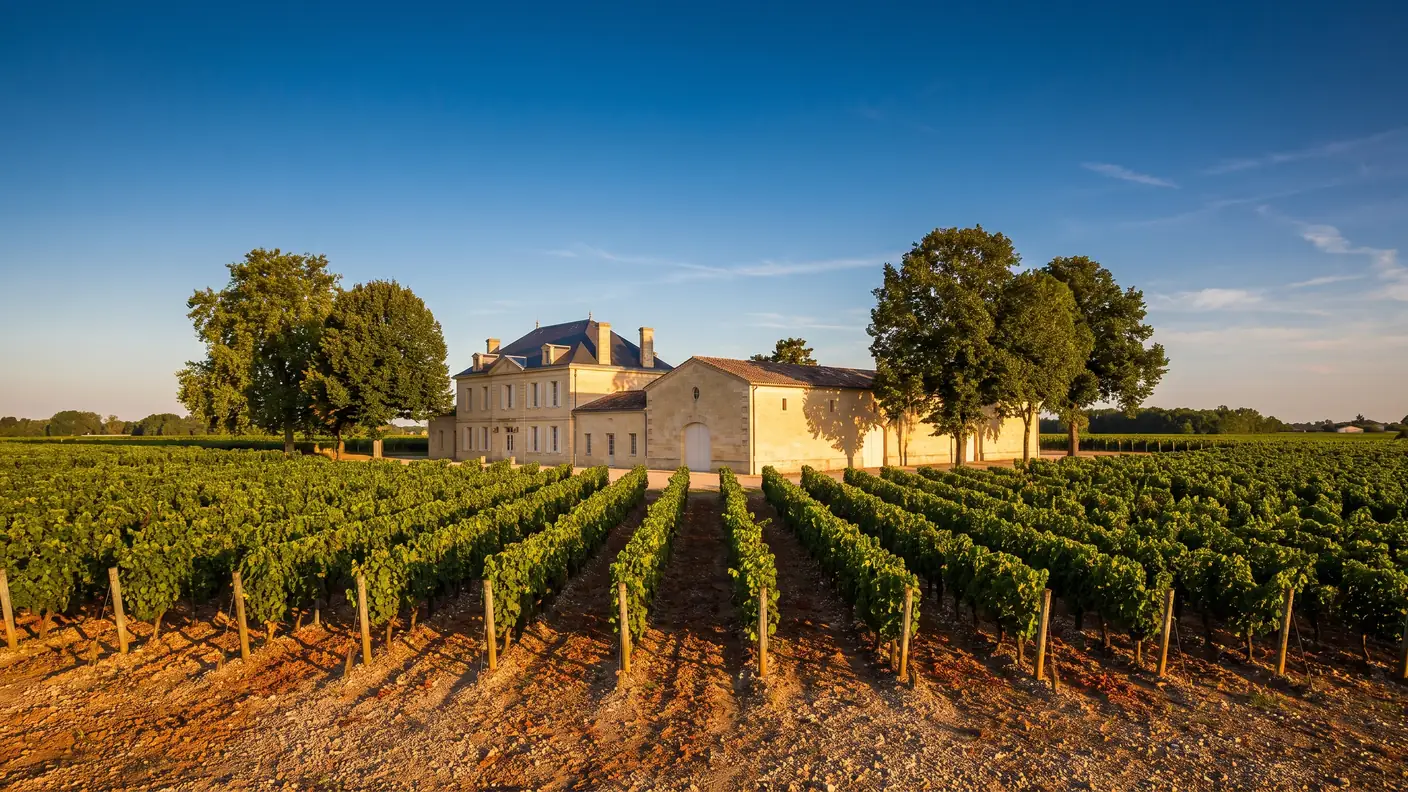
Pomerol is home to some of the world’s most famous and expensive wines, starting with the legendary Pétrus: legendary vintages, produced in minuscule quantities, and highly coveted by all. This is what has earned this small plateau in the Gironde its worldwide reputation.
Pétrus, Le Pin, and the Legends
The most famous of the Pomerol crus is undoubtedly Pétrus, a tiny estate planted almost entirely with Merlot on the clay-rich heart of the plateau, whose wine is considered one of the greatest in the world: rare, sought-after, and exorbitantly priced. Alongside it, other names captivate wine lovers: Le Pin, a cult micro-cru born in the 1980s; the venerable Vieux Château Certan; Lafleur, L’Évangile, Trotanoy, La Conseillante, and many others. Each of these estates, often very small, produces an exceptional wine, crafted plot by plot. What sets Pomerol apart is that these legends do not flaunt themselves: you could drive past Pétrus or Le Pin without noticing them, so modest are the properties. It is this discretion, combined with extreme quality and rarity, that accounts for all the mystery and prestige of the appellation, where the greatest wines are born in the most humble of settings.
Rarity and Price of the Large Pomerol Models
Produced in limited quantities and highly sought after in several markets, certain Pomerol wines command high prices that vary depending on the estate, vintage, origin, and specific sale. Any comparison involving specific figures must therefore be dated and attributed. Pétrus, in particular, has become a legend—a symbol of luxury and excellence—whose name extends far beyond the circle of wine enthusiasts. This almost legendary status makes Pomerol a pilgrimage site for enthusiasts from around the world, who come to tread—if only with their eyes—the soil from which these exceptional wines are born. But this should not overshadow the fact that the appellation also boasts many more accessible, excellent, and often lesser-known wines that allow you to discover Pomerol’s unique style without breaking the bank. The legend of the big names, the quality of them all: that is the secret balance of this small, world-renowned vineyard.
| A few vintages from Pomerol | Landmark |
|---|---|
| Pétrus | The Most Famous · Merlot on Clay Soil |
| Le Pin | a cult-favorite micro-vintage that first appeared in the 1980s |
| Vieux Château Certan | one of the oldest and most venerable estates |
| Lafleur, The Gospel, Trotanoy… | other exceptional vintages that are highly sought after |
| Commonality | no official classification · very small quantities |
The Church and the Legacy of the Hospitallers
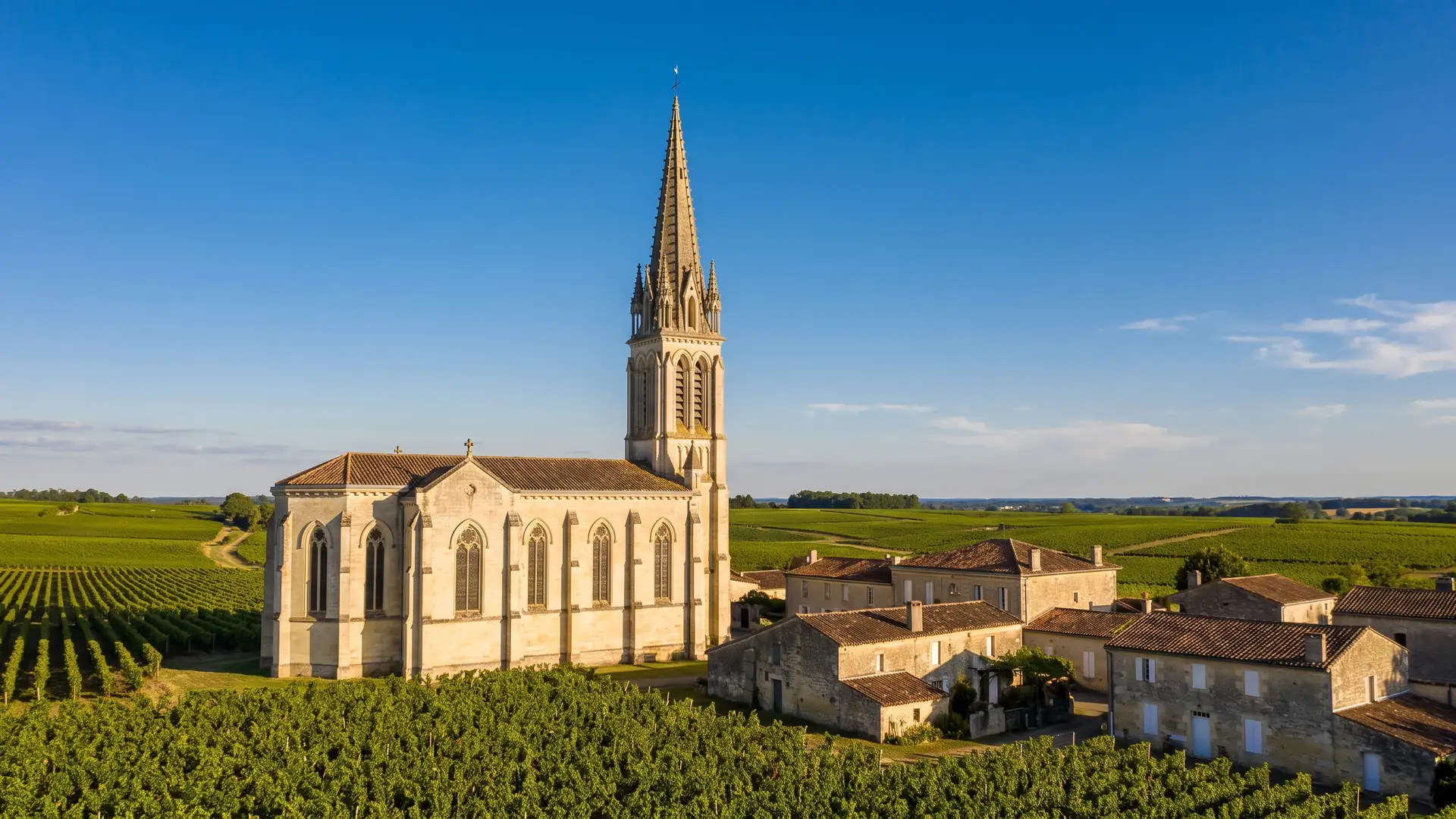
Nestled among the vineyards, the church of Pomerol, with its tall spire, evokes a unique medieval past: the village was once the seat of a commandery of the Knights Hospitaller, located along the Way of St. James. It is the main heritage landmark of this wine-growing plateau.
The Commandery of Saint John
Pomerol's history is closely tied to the order of the Order of Saint John of Jerusalem (the future Knights of Malta). As early as 12th century, the order establishes a commandery : According to tradition, Guillaume de Ségur and his brothers gave them the lands in the Barbanne area to establish the order. The Hospitallers, who welcomed and protected pilgrims on their way to Santiago de Compostela, made Pomerol a stop along the Way of St. James. It is to them that we owe the construction of thechurch of the village, the spiritual heart of the commandery. This history of hospitality, the Way of St. James, and the Middle Ages constitutes the oldest layer of Pomerol’s history, predating its fame as a wine-growing region by far: eight centuries ago, the small plateau was already a place of passage and devotion, at the crossroads of the routes along the right bank.
The Church and the Cross at Gay
Thechurch The current Pomerol, which traces its origins to the Hospitaliers, has weathered many ups and downs: it was partially demolished in the 19th century and was rebuilt in 1899 designed by architect Hosteing, its tall spire has become a landmark on the plateau, visible from afar above the vineyards; its choir was further renovated in 1971. Not far away, the Gay Cross, a stone wayside cross believed to date from the 16th century, standing in the middle of the vineyards, is registered listed as a historic monument since 1987 (Official Mérimée Record PA00083668, accessed July 24, 2026) — it is, in fact, the only historic monument in the town: a “cross with a crossbar,” one of those landmarks that once marked the paths of pilgrims and peasants. These two modest monuments—the church and the cross—constitute the bulk of Pomerol’s built heritage: unassuming, like everything else here, yet steeped in the memory of the Hospitallers and pilgrims, now under the absolute dominion of the vineyards.
The Story of Pomerol
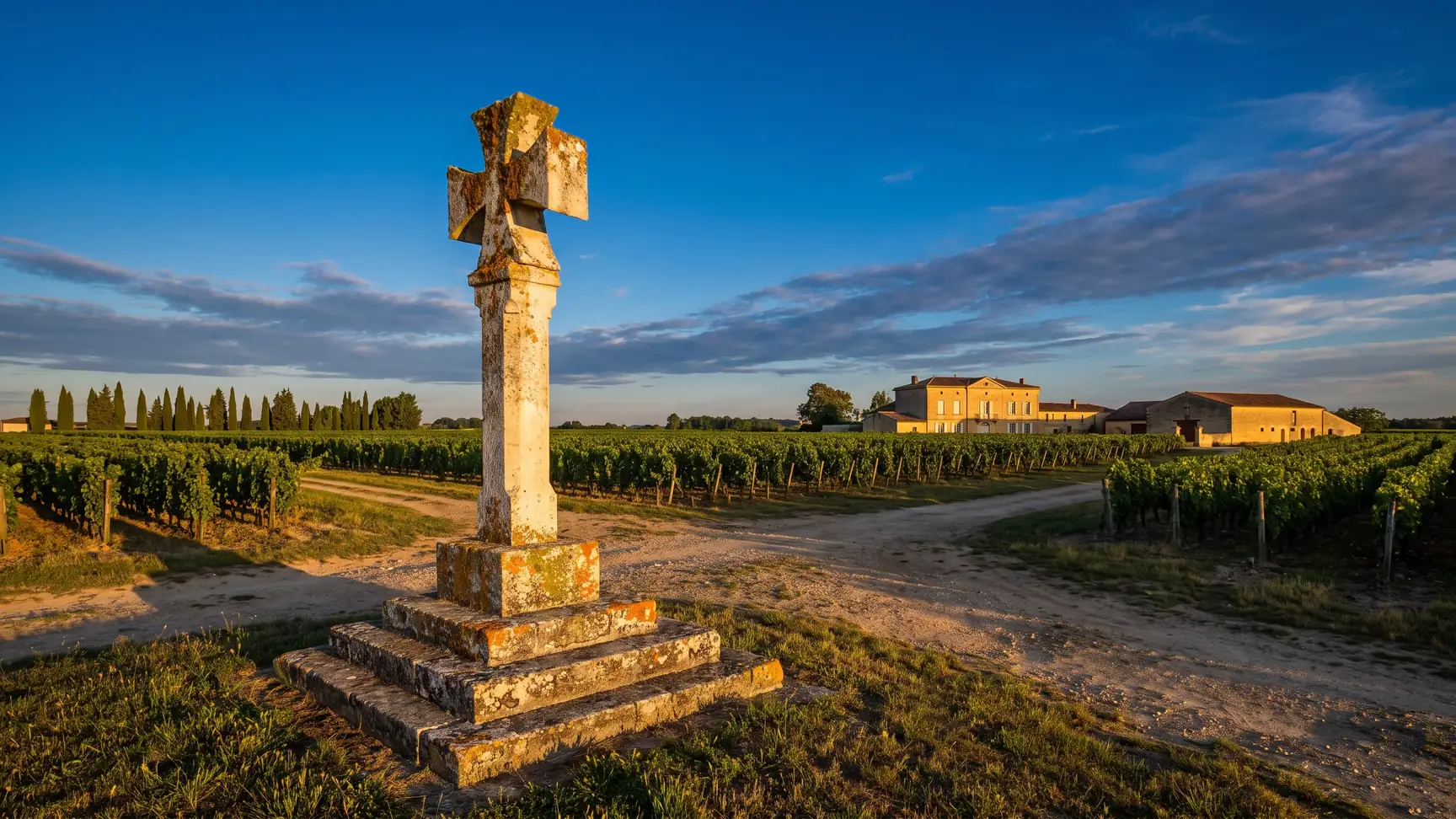
From the medieval Hospitallers to modern-day wine-growing glory, Pomerol has a unique history, in which wine did not triumph until relatively late, but did so with unparalleled brilliance. A few key milestones shed light on the past of this small plateau.
Hospitaliers on the Way to Santiago de Compostela
The name Pomerol is thought to derive from the Latin *pomum*, meaning “pome fruit”—which specifically includes grapes—and which, in hindsight, sounds like a predestination; during the Gallo-Roman period, the site was known as Pomerus or Pomarus, part of the vicus of Condat, the predecessor of Libourne. The site has been inhabited for a long time, but it gained significance in the Middle Ages with the establishment of the Hospitaller commandery in the 12th century and its role as a stopover on the pilgrimage routes to Santiago de Compostela. Like the entire Libourne region, the area experienced the long English domination of Guyenne, followed by the wars that ravaged the region. For centuries, Pomerol remained a modest agricultural and wine-growing region, overshadowed by its neighbors. Nothing at the time foreshadowed that this small plateau would become one of the most prestigious names in the world of wine: its history is one of slow maturation, of a well-kept secret, before achieving a fame that was as belated as it was dazzling.
The Late Glory of Wine
Winegrowing in Pomerol dates back at least to the 12th century, with the Hospitallers: an 18th-century document records that by the 19th century, there is evidence that white grape varieties were being replaced by Malbec, Cabernet Franc, and the Merlot, which came to dominate after the phylloxera epidemic. But it was above all in the 19th and 20th centuries that the name gained its worldwide fame ; the Pomerol AOC was officially recognized by a decree dated December 8, 1936. Little by little, thanks to the exceptional quality of its iron-rich clay soil and the hard work of passionate winemaking families, Pomerol rose to the top, until wines like Pétrus became, in the 20th century, into global legends, fetching astronomical prices. This rise—without any official classification or prestigious appellation, driven solely by the terroir and hard work—is unique in the history of wine. Today, Pomerol thrives exclusively on this winemaking glory, with a discretion befitting its prestige: the small plateau of Les Hospitaliers has become one of the most coveted locations in the wine world, without ever losing any of its modesty.
Discover Pomerol Wines
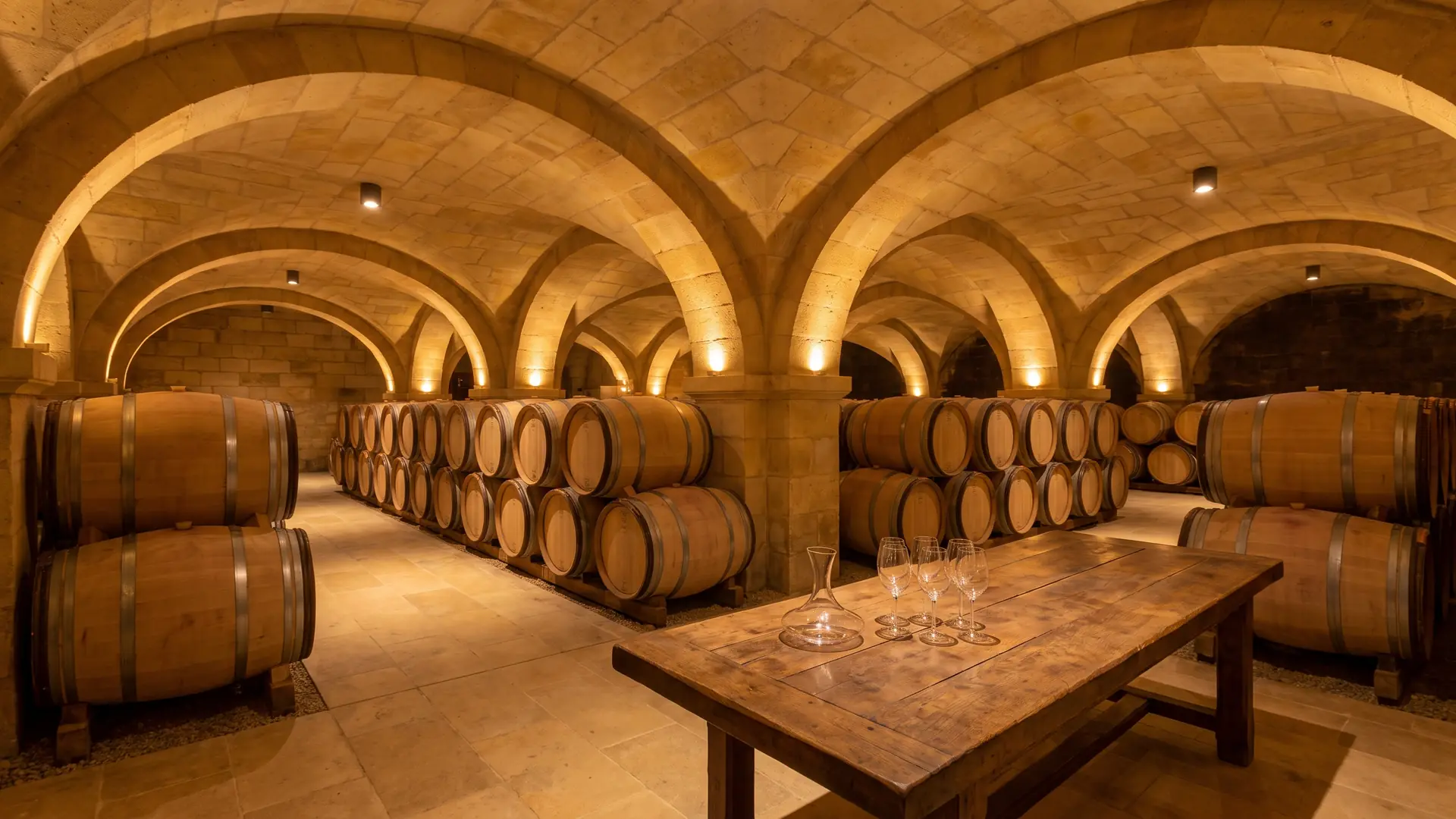
Exploring Pomerol requires some preparation: the grand crus aren’t easily visited on your own, but you can get a feel for the appellation through more accessible wineries, the Maison du Vin in Libourne, and a well-guided tasting. Here’s how to approach this legendary wine region.
A Little-Known Vineyard
Let’s be honest: Pomerol isn’t a mass-market wine tourism destination. Here, there are no towns to visit, no large wineries open to the public like in the Médoc: most of the grand cru estates—tiny and highly sought-after—do not welcome visitors, or only by appointment and upon recommendation. The plateau is best explored with your eyes, admiring the vineyards and glimpsing the legendary estates behind their discreet gates. It’s a pilgrimage for the discerning wine lover, rather than a typical tourist visit. But this exclusivity is also part of the charm and mystery of Pomerol: you don’t simply “consume” this place; you approach it with respect, as if it were a sanctuary of wine. For wine lovers, driving across the Pomerol plateau and passing by legendary names is an experience in itself—the thrill of traversing one of the world’s greatest terroirs.
Where to Enjoy
To sample Pomerol wines without necessarily having to visit the private estates, visitors have several options. Some more accessible fields Wineries in the appellation welcome visitors for tours and tastings, often by appointment: this is an opportunity to discover the Pomerol style—this velvety, full-bodied Merlot—at reasonable prices. At Libourne very soon, the trading houses and wine shops also offer the opportunity to taste and purchase wines from the appellation. This is where a private chauffeur really comes into its own: he allows you to explore the Pomerol plateau, visit a winery by appointment, and then continue on to Saint-Émilion or Fronsac for a tasting, without ever having to worry about driving. This is the best way to experience this legendary wine region: with a guide behind the wheel, at your own pace, combining a pilgrimage to the great estates with the discovery—glass in hand—of the wines of the Right Bank.
What's there to see around Pomerol?
Pomerol is located in the heart of the Right Bank’s finest vineyards: Saint-Émilion, Libourne, Fronsac, and Lalande-de-Pomerol are all just a few kilometers away. In just a few minutes, you go from a legendary wine region to a UNESCO World Heritage Site.
Saint-Émilion, Libourne, and Lalande
Pomerol's most prestigious neighbor is Saint-Émilion, a few kilometers to the east: the medieval city, a UNESCO World Heritage Site, with its extraordinary monolithic church Carved into the rock, with its cobblestone streets, cloister, and grand cru wines—an absolute must-see that perfectly rounds out your exploration of Pomerol. Also nearby, Libourne, the major wine-trading town on the Dordogne, a lively 13th-century bastide, the center of the wine trade on the Right Bank. To the north, just across the Barbanne stream, lies Lalande-de-Pomerol, a neighboring and related appellation known for its high-quality, more affordable Merlot wines. With a chauffeur service, you can easily plan a customized loop tour through these renowned wine regions via Pomerol, enjoying a series of visits and tastings without worrying about driving.
Fronsac and the Right Bank
To the west of Libourne, the Fronsadais region and its hill, along with the Fronsac and Canon-Fronsac appellations, offer another, more rolling and panoramic view of the great vineyards of the right bank. All around lie the satellite villages of Saint-Émilion—Montagne, Lussac, and Puisseguin—and, following the Dordogne River, you reach the estuary, Bourg, and Blaye, or, to the east, Castillon and the Périgord. Pomerol is thus situated at the very center of an extraordinary concentration of renowned vineyards, all within a very small area: in a single day, with a driver, you can easily explore several legendary appellations and a UNESCO World Heritage Site. That’s the appeal of a base like Pomerol: you’re right in the heart of the most prestigious terroir on the right bank, just minutes from the biggest names in wine, within a tiny radius yet one of incredible richness.
| About Pomerol | Distance | Interest |
|---|---|---|
| Libourne | ~3 km | The Dordogne: A Wine-Trading Town |
| Saint-Émilion | ~6 km | UNESCO-designated medieval city, fine wines |
| Lalande-de-Pomerol | ~2 km | A neighboring appellation, an approachable Merlot |
| Fronsac | ~8 km | Panoramic Hill, Fronsac & Canon-Fronsac |
| Montagne-Saint-Émilion | ~8 km | The largest of the satellites |
When is the best time to visit Pomerol?
Pomerol is open to visitors year-round, but fall—the grape harvest season—and spring, when the vines come back to life, are the most evocative times to visit. The spring It blankets the plateau in fresh greenery and offers mild days, perfect for strolling through the vineyards, exploring the church and the cross at Gay, and visiting the open wineries; it’s also a quiet season, before the summer crowds arrive in neighboring Saint-Émilion. Thesummer It bathes the vineyard in warm, abundant light, perfect for strolls among the rows and wine tastings: the plateau, now covered with vigorous vines, reveals its full grandeur, and as you wander through it, you come to appreciate the understated beauty of this great terroir. It’s also the perfect time of year to combine Pomerol with a visit to Saint-Émilion and the other vineyards on the Right Bank, all nearby, as you enjoy the mild, long days.
Fall Harvest and Winter
Thefall is undoubtedly the most fascinating season at Pomerol: the grape harvest here is a time of rare intensity, because every cluster, on this exceptional terroir, is precious; the cellars come alive, the air fills with the scents of grapes and must, and you can sense, amid the excitement on the estates, that some of the world’s greatest wines are taking shape right here. The vine leaves take on shades of gold and purple across the plateau, enhancing the beauty of the landscape. Thewinter, with its more unadorned appearance, reveals the vineyard’s structure—its bare rows etched into the clay—in a peaceful and contemplative atmosphere, where one gains an even deeper understanding of the intimate connection between the soil and the wine. In every season, the mild oceanic climate and the quiet prestige of the location make Pomerol a unique getaway for those seeking to experience, up close, one of the absolute pinnacles of the global wine world.
How to get to Pomerol from Bordeaux
Pomerol is located about 43 km from Bordeaux, which is about a 50-minute drive via the A89 highway toward Libourne, whose vineyards are nearby. Please note: Pomerol does not have a train station; the nearest one is in Libourne, a few kilometers away, on the line from Bordeaux to Bergerac and Sarlat. However, the train does not allow you to explore the Pomerol plateau, with its scattered estates, nor does it make it easy to travel on to Saint-Émilion or Fronsac. For a visit from Bordeaux to explore this lesser-known vineyard and its prestigious neighbors, a chauffeur-driven car is the most practical and flexible option.
Train or private chauffeur?
To get to Pomerol—and especially to explore its vineyards and the surrounding area—hire a Chauffeur service, executive car service in Bordeaux offers true freedom: a direct, door-to-door trip from Bordeaux, with no transfers or waiting, and the option to make stops along the way as you please. This is especially valuable for a day of wine tourism—the Pomerol plateau and its legendary wines, followed by Saint-Émilion, Fronsac, or a winery by appointment—where you’ll want to be able to taste the wines without worrying about driving. We offer this route at fixed price provided in advance : Allow about 100 € For the one-way trip, in a Mercedes sedan or a van seating up to 8 passengers, with a professional driver. The price, set at the time of booking, remains fixed: it does not depend on traffic, potential traffic jams, or the number of stops requested along the way, unlike a taxi meter.
This is the perfect option for a day of wine tourism and cultural exploration, a pilgrimage through the grand cru regions with fellow enthusiasts, a special event (such as a wedding or birthday celebration at a château in the Libourne region), or a simple transfer to or from Bordeaux-Mérignac Airport. You can travel alone, as a couple, or in a small group of up to 8 people, with luggage, and request stops in Libourne, Saint-Émilion, or at a vineyard along the way. In practice, booking is quick and easy: simply provide your departure address in Bordeaux and your destination to Pomerol, along with the date, desired time, and number of passengers, and you’ll receive a fixed-price quote in writing. On the day of the trip, the driver picks up the passengers at the agreed-upon address and takes them directly to Pomerol, without any detours—a real advantage for enjoying a stress-free day exploring the greatest wine regions of the Right Bank.
| Route | Distance | Duration | Landmark |
|---|---|---|---|
| Bordeaux → Pomerol | ~43 km | ~50 min | Starting at ~€89 for a private chauffeur service |
| Pomerol → Libourne | ~3 km | ~8 min | wine market town |
| Pomerol → Saint-Émilion | ~6 km | ~10 min | UNESCO World Heritage Site, fine wines |
| Pomerol → Fronsac | ~8 km | ~12 min | Tertre, Fronsac & Canon-Fronsac |
Whether you come for the legend of Pétrus and its legendary vintages, for the unique terroir of the “crasse de fer,” for the Church of the Hospitaliers and the Croix de Gay, or for its proximity to Saint-Émilion, Pomerol is a treat for lovers of fine wines, where terroir, history, and legend converge—a small plateau with a grand name that, for those who take the time to explore it, offers the rare thrill of walking through one of the world’s most prestigious vineyards.
Whether it’s for a wine-tasting tour, a grand cru pilgrimage, or an event, booking an executive car service guarantees a comfortable and punctual ride—book a driver from Bordeaux → Pomerol or explore all our destinations.
Frequently Asked Questions
Where is Pomerol located?
Pomerol is a tiny wine-growing village in the Gironde (33) department, in the Nouvelle-Aquitaine region, in the Libournais area, immediately northeast of Libourne and about 50 kilometers northeast of Bordeaux. Part of the Libourne district and the Libournais-Fronsadais canton, it has a population of about 610 (known as Pomerolais) spread over just over six square kilometers, almost entirely covered in vineyards. World-renowned for its appellation and legendary wines such as Pétrus, it is located about a 50-minute drive from Bordeaux (approximately 43 km).
What is the distance between Bordeaux and Pomerol?
About 43 km by road, or about a 50-minute drive, via the A89 highway toward Libourne (the Pomerol vineyard is very close by). If you hire a chauffeured transfer from Bordeaux, the fare is fixed and provided in advance, starting at around €100 one way (sedan or van, door-to-door price). Pomerol does not have a train station: the nearest one is in Libourne, a few kilometers away, but the train does not allow you to explore the plateau afterward, visiting the scattered estates, nor to continue on to Saint-Émilion or Fronsac.
What does the designation Pomerol mean?
It is one of the world’s most prestigious red wine appellations, located on a small plateau of about 780 hectares in the Libournais region, home to some 140 estates. It produces exclusively red wines, dominated by Merlot and complemented by Cabernet Franc (known as “bouchet”), grown on a unique terroir of gravel and clay containing the famous “crasse de fer” (iron oxide). Its most distinctive feature: Pomerol has no official classification, unlike the Médoc or Saint-Émilion. The hierarchy of wines here is determined solely by reputation, with names like Pétrus at the top. These are powerful, velvety wines of great finesse.
Why is Pétrus so famous?
Pétrus is the most famous cru in Pomerol and one of the most sought-after wines on the international market. It is a tiny estate, planted almost entirely with Merlot on the clay-rich heart of the Pomerol plateau—the famous “buttonhole” of iron-rich clay—which produces a wine of exceptional richness and velvety smoothness. Produced in very small quantities and in extremely high demand, Pétrus commands astronomical prices and has become a global legend, a symbol of luxury and excellence. Remarkably, this prestige has been built without any official classification, based solely on the quality of the terroir and the winemaking.
Does Pomerol have a ranking of wines?
No, and that is what sets it apart. Unlike the Médoc, with its 1855 classification, and Saint-Émilion, with its regularly revised grands crus classés, the Pomerol appellation has never established an official classification of its châteaux. The hierarchy of wines has developed naturally over time, based on reputation and market demand. As a result, there is a de facto hierarchy—well known to wine enthusiasts—in which names like Pétrus, Le Pin, and Vieux Château Certan rank at the top, yet no official title distinguishes them. This lack of a classification is part of the Pomerol legend: here, it is the wine alone that has created the legend.
What is Pomerol's "crasse de fer"?
"Crasse de fer" (iron-rich hardpan) is a distinctive layer of soil, rich in iron oxide, found in the clay subsoil of the finest section of Pomerol, at the heart of the plateau—the "boutonnière." It is on these iron-rich clays that Merlot, the appellation’s flagship grape variety, truly shines, producing wines of incomparable richness, depth, and velvety smoothness. This layer of iron-rich soil, combined with the clay, is one of the secrets behind the great Pomerol wines: just a few hectares of this precious terroir are enough to make the difference between a very good wine and a legendary vintage—a tiny terroir, yet one of the most sought-after in the world.
What's there to see at Pomerol?
Pomerol is not a picturesque town like Saint-Émilion: it is a plateau covered in vineyards with scattered settlements and no real town center. People come here mainly for the vineyards themselves—among the most prestigious in the world—and for the thrill of walking through this legendary terroir, passing by iconic estates (Pétrus, Le Pin, Vieux Château Certan…). The architectural heritage is limited to the village church, with its tall spire—a remnant of a Commandery of the Knights Hospitaller—and the Croix de Gay, a 16th-century wayside cross listed as a historic monument. Nearby, Saint-Émilion and its UNESCO-listed town, as well as Libourne, are just a short distance away.
Can we visit the castles in Pomerol?
It’s possible, but Pomerol isn’t a mass-market wine tourism destination. Most of the grand cru estates—tiny and in high demand—don’t welcome visitors, or only do so by appointment and upon recommendation. The plateau is best explored with your eyes, admiring the vineyards and imagining the legendary estates hidden behind their discreet gates. However, some more accessible estates do host tastings—often by appointment—and you can taste and purchase wines from the appellation in nearby Libourne. a private chauffeur is ideal for exploring the plateau, visiting an estate by appointment, and continuing on to Saint-Émilion or Fronsac.
How many people live in Pomerol?
With a population of about 610 according to the 2023 census, spread over just over six square kilometers, it is one of the smallest municipalities in the Libournais region—a tiny area almost entirely covered in vineyards. Its residents are known as the Pomerolais (Pomirau in Gascon). And yet, this tiny territory is home to one of the world’s most famous wine appellations, with about 780 hectares of vineyards producing some of the most expensive wines on the planet. That is the paradox of Pomerol: worldwide fame born on a tiny rural plateau, with no monuments or cities, off the beaten path, where everything revolves around wine.
What is the connection between Pomerol and the Hospitaliers?
In the 12th century, the Order of the Hospitallers of Saint John of Jerusalem (the future Knights of Malta) established a commandery in Pomerol: according to tradition, Guillaume de Ségur and his brothers donated the lands in the Barbanne area to them to found it. The Hospitallers, who welcomed pilgrims on their way to Santiago de Compostela, made Pomerol a stop along the Way of St. James, and it is to their order that we owe the construction of the village church. This medieval past—marked by hospitality and the pilgrimage to Santiago—constitutes the oldest layer of Pomerol’s history, predating its fame as a wine-producing region by many centuries. The current church, rebuilt in 1899, stands as its legacy.
Can I book a chauffeur service from Bordeaux through Pomerol?
Yes. We offer the Bordeaux → Pomerol route (approximately 43 km, about 50 minutes via the A89) at a fixed price, starting at around €100 one way, in a Mercedes sedan or a van seating up to 8 passengers, with a professional driver. The trip is direct, door-to-door, with the option to make stops as desired—ideal for a day of wine tourism combining the Pomerol plateau, its legendary wines, and the neighboring vineyards of Saint-Émilion or Fronsac, where you’ll want to enjoy wine tastings without worrying about driving. The fixed-price quote is provided and confirmed in writing before departure, with no unexpected charges based on the odometer.
Further Reading
- The nearby hill: see the Fronsac Guide (the panoramic hill, the duchy, Fronsac & Canon-Fronsac), 8 km away
- The UNESCO City of Wine: see the Saint-Émilion Guide (medieval town, monolithic church, grand cru wines), 6 km away
- A satellite village of Saint-Émilion: see the Guide to Montagne-Saint-Émilion (the largest of the satellite villages)
- Plan your trip: Book an executive car service from Bordeaux to Pomerol or explore all our destinations
Sources and References
- Wikipedia — Pomerol — geography, demographics, Hospitallers, church, Cross of Gay
- Wikipedia — AOC Pomerol — ~780 ha, Merlot, iron-rich soil, unclassified, Pétrus
- POP/Mérimée Database — Gay Cross — 16th-century wayside cross, designated a historic monument in 1987
- Wikipedia — Pétrus — Pomerol's legendary vintage, Merlot, record prices
- INSEE — municipality of Pomerol (33328) — population in 2023 (~610 residents), area
Article updated in July 2026.
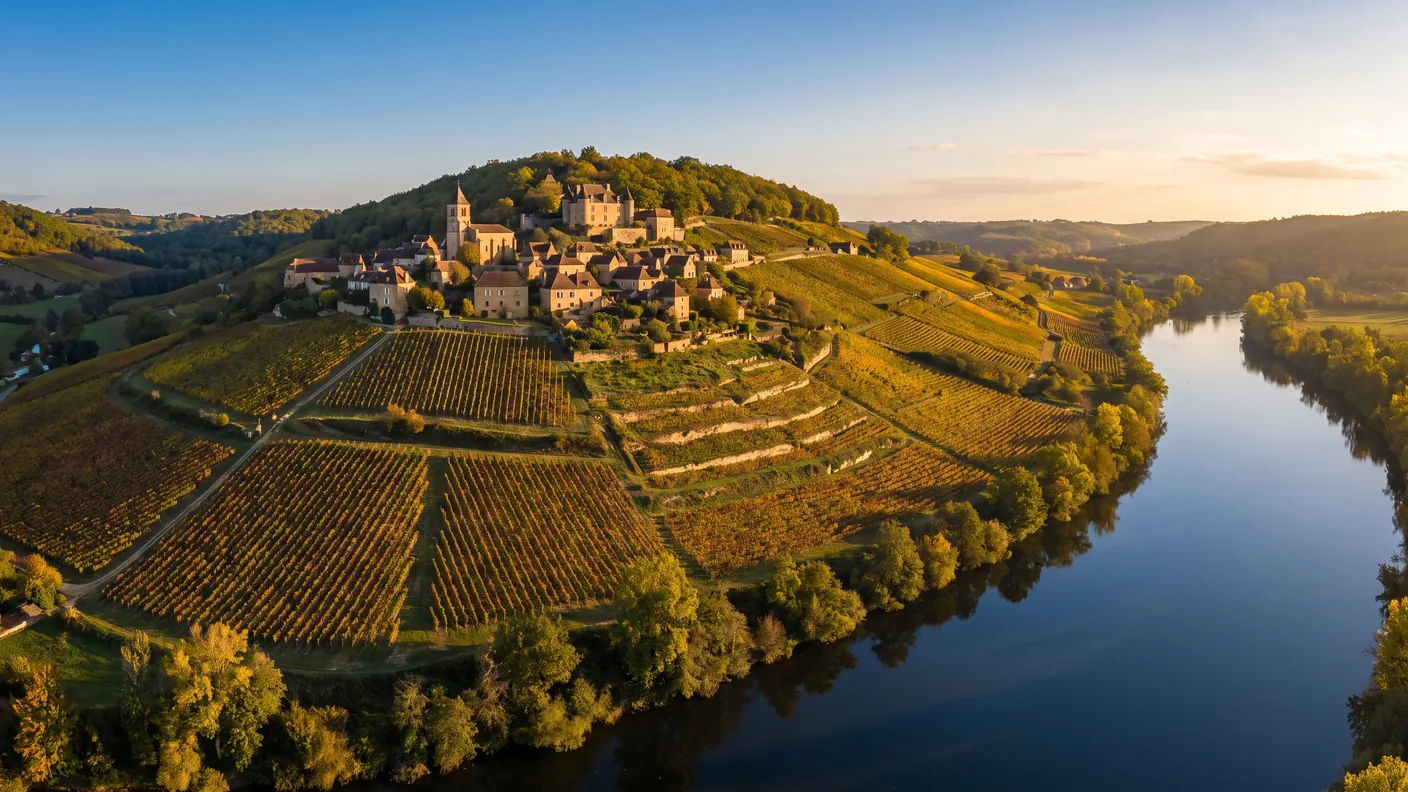
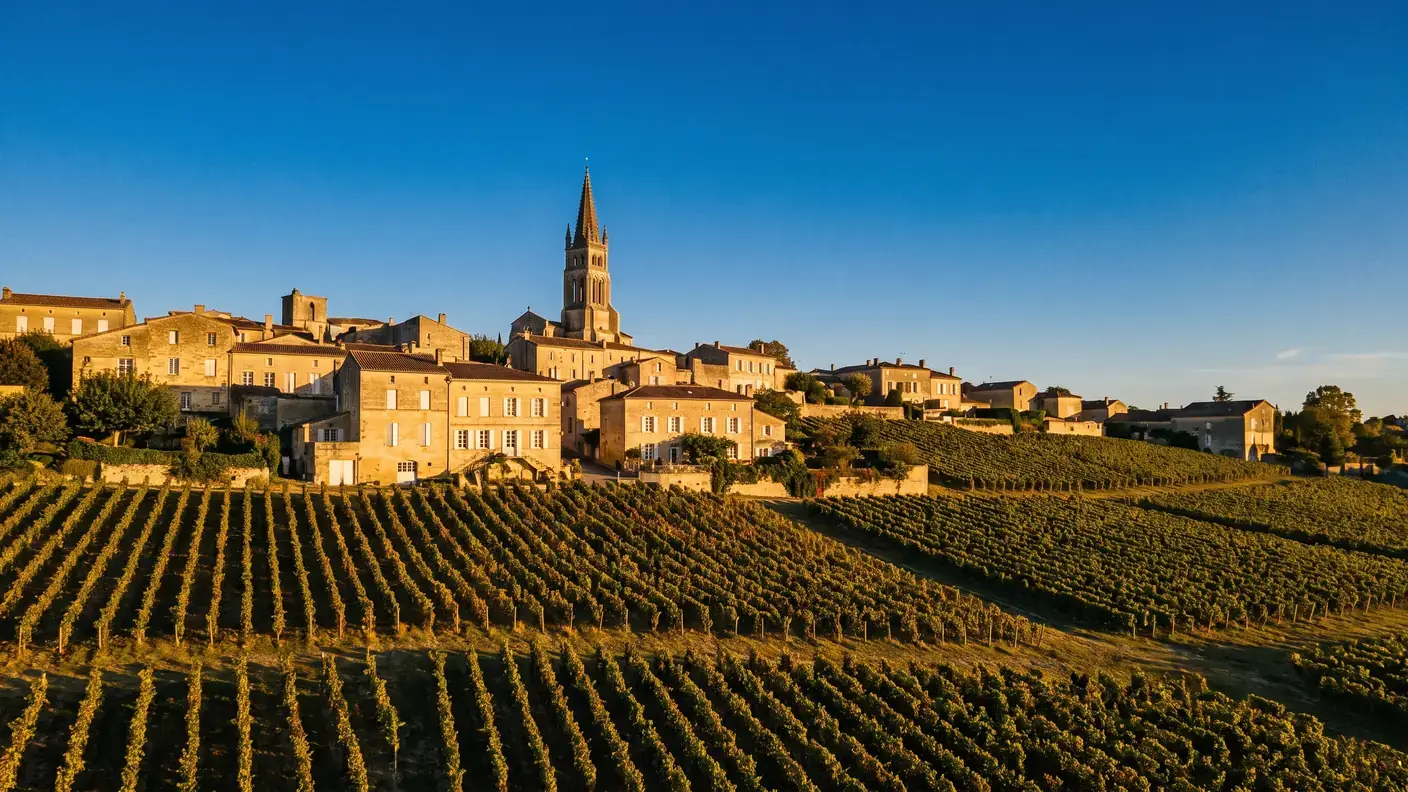
On the way to the Pomerol vineyard
Direct trip from Bordeaux (~50 min) to Pomerol, home to legendary wines and the Right Bank, with stops along the way as desired—Saint-Émilion, Fronsac, and the vineyards. Fixed, written quote—no surprises on the meter.