Bordeaux to Gensac: private driver guide
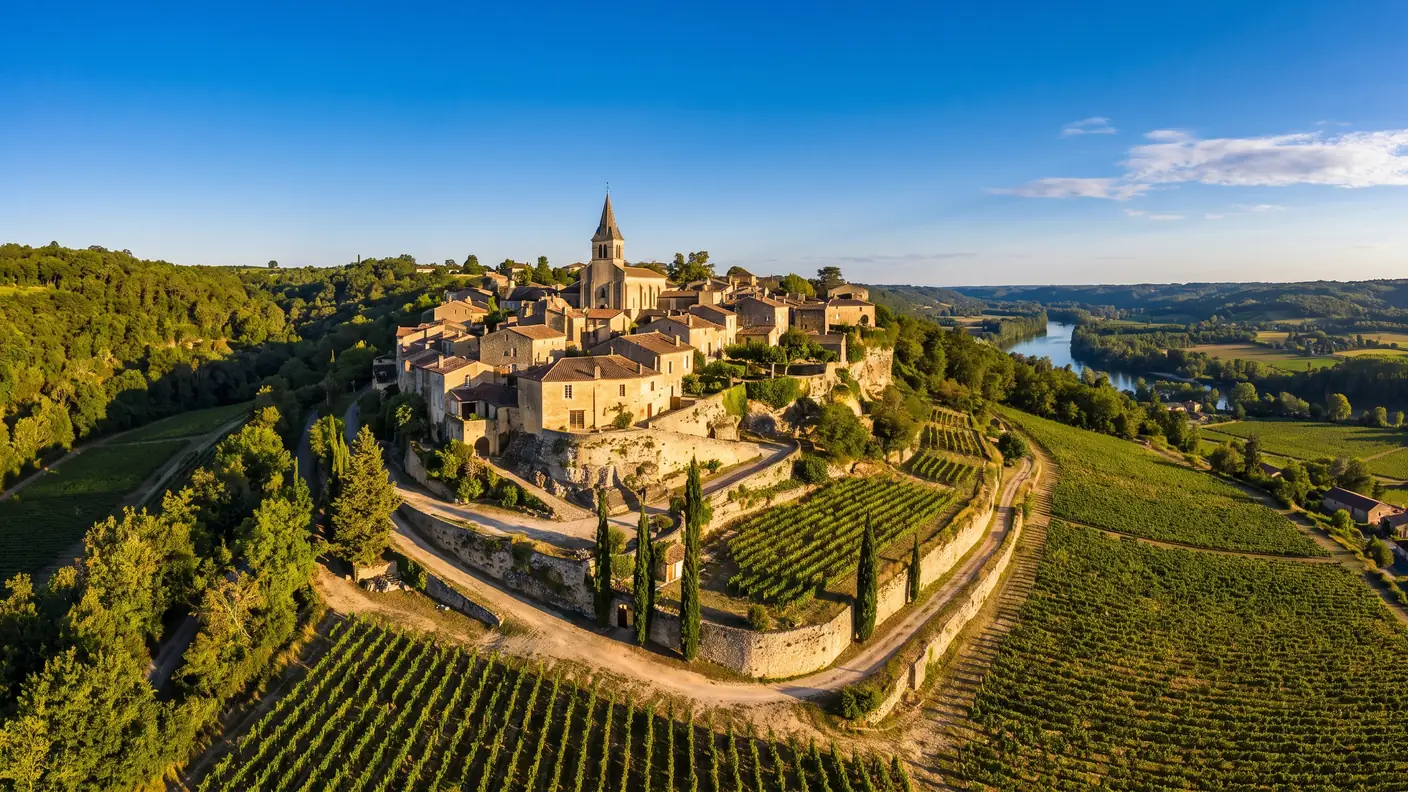
A medieval village perched on a rocky outcrop, overlooking the hillsides of the Dordogne: Gensac, with its panoramic view of three valleys, its half-timbered streets, its Notre-Dame Church, and the Sainte-Foy Côtes de Bordeaux vineyards—and your private door-to-door transfer from Bordeaux, without having to rent a car.
Gensac at a Glance
Gensac is a small hilltop village in the Gironde region, perched on a rocky outcrop overlooking the hillsides of the Dordogne, about 68 km east of Bordeaux and a few kilometers from Castillon-la-Bataille. It features a maze of medieval alleyways and half-timbered houses, the Church of Notre-Dame, and a renowned panoramic view of three valleys, in the heart of the Sainte-Foy Côtes de Bordeaux wine region. This guide distinguishes fact from fiction: Gensac is not a bastide; its church is Notre-Dame (not “Saint-André”) and is not a listed historic site; its medieval castle has disappeared—only a section of the wall remains—and the village overlooks three valleys, not two. We then outline the easiest way to get there from Bordeaux: a private door-to-door transfer, without renting a car.
Here are the key details to know before you go. Distances are calculated door-to-door from Bordeaux; the fare listed is for a private driver reservation at a fixed price provided in advance, with no meter charges—regardless of traffic or stops. The historical, tourist, wine-related, and event information in this version is based on the six references listed at the end of the article; variable schedules should be confirmed with the relevant organization.
| Landmark | Details |
|---|---|
| Village | Gensac (Gironde, Libourne District) |
| Location | a rocky outcrop overlooking the Durèze, the Soulège, and the Dordogne Valley |
| Residents | 687 residents of Gensac (2023) · 9.38 km² |
| Must-See | the hilltop village, the Notre-Dame Church, the panoramic view, the vineyards of Sainte-Foy Côtes de Bordeaux |
| Distance from Bordeaux | about 68 km · about 1 hour and 15 minutes by car |
According to the INSEE's official comparison tool, published on July 9, 2026, Gensac has 687 residents in 2023. This figure is based on the RP2023 census and supersedes any estimates or secondary demographic data presented here.
Where is Gensac located?
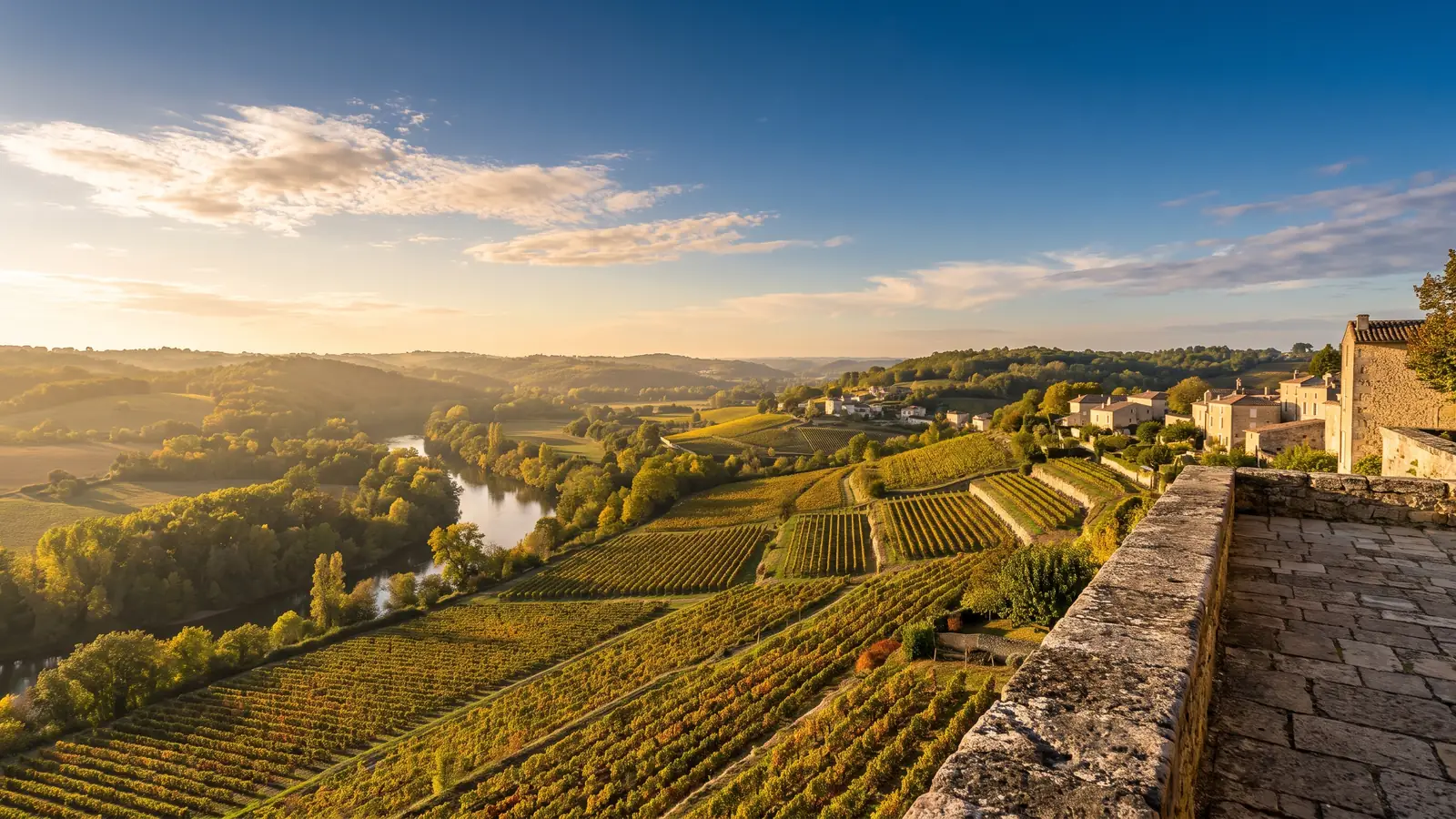
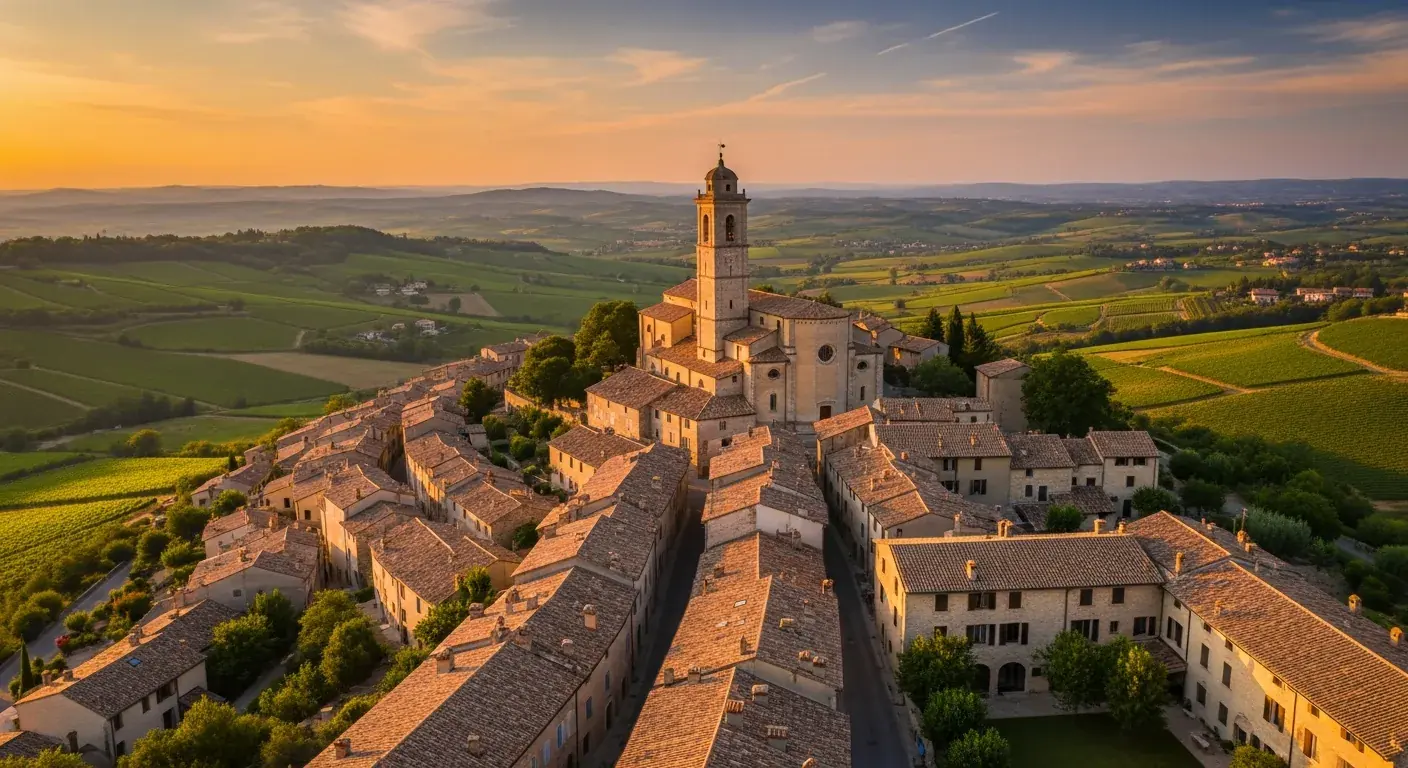
Gensac is located in eastern Gironde, on a rocky spur overlooking the hillsides of the Dordogne, a few kilometers southeast of Castillon-la-Bataille. It is a land of vineyards, hillsides, and valleys: the village sits atop a tapered hill “shaped like a ship’s bow,” from which the view stretches far across the countryside. It is flanked by two small rivers—the Durèze to the west and the Soulège to the east—and its panorama encompasses three valleys: those of the Durèze, the Soulège, and the Dordogne. Administratively, Gensac is part of the Libourne district, the Coteaux de Dordogne canton, and the Castillon-Pujols community of municipalities. Culturally, it lies on the fringes of the Entre-deux-Mers and the Pays Foyen regions, on the edge of the Périgord. A perched, panoramic location, just over an hour from Bordeaux.
A spur "shaped like a ship's bow"
What makes Gensac unique is its location. The old village is built on a rocky promontory that historical sources poetically describe as “shaped like a ship’s prow”: a hill tapering like the bow of a ship, cutting through the countryside and overlooking the surrounding valleys. It is this strategic position that explains its long history as a stronghold: a moat was carved into the rock, and towers and walls were erected there. Today, the reward is an exceptional panorama—one of the most beautiful in the area—over the vineyard-covered hillsides, the two rivers, and, in the distance, the Dordogne Valley. The village itself nestles below and on the slopes of the rocky outcrop, with its sloping alleyways, vaulted passageways, and historic houses. It is a place made for strolling and contemplation, where every street corner offers a glimpse of the landscape.
At the gateway to the Périgord, near Castillon
Gensac occupies a pivotal location at the eastern edge of the Gironde wine region. The nearest town is Castillon-la-Bataille, less than ten kilometers to the north: it was there that the final battle of the Hundred Years’ War was fought in 1453. To the east, the vineyards stretch toward the Pays Foyen and Sainte-Foy-la-Grande, then on toward the Périgord and the Bergerac region. To the west, the route leads up to the prestigious Saint-Émilion, just under half an hour away. A counterintuitive but useful detail: although located far to the east, Gensac is actually closer to Bordeaux (about 68 km) than Sainte-Foy-la-Grande, since the direct route goes through Castillon. This border location, between the grand cru vineyards and the Périgord, makes Gensac an ideal base for exploring the authentic Gironde, far from the crowds—a village perched like a lookout point over the vineyards.
The hilltop village and its ruins
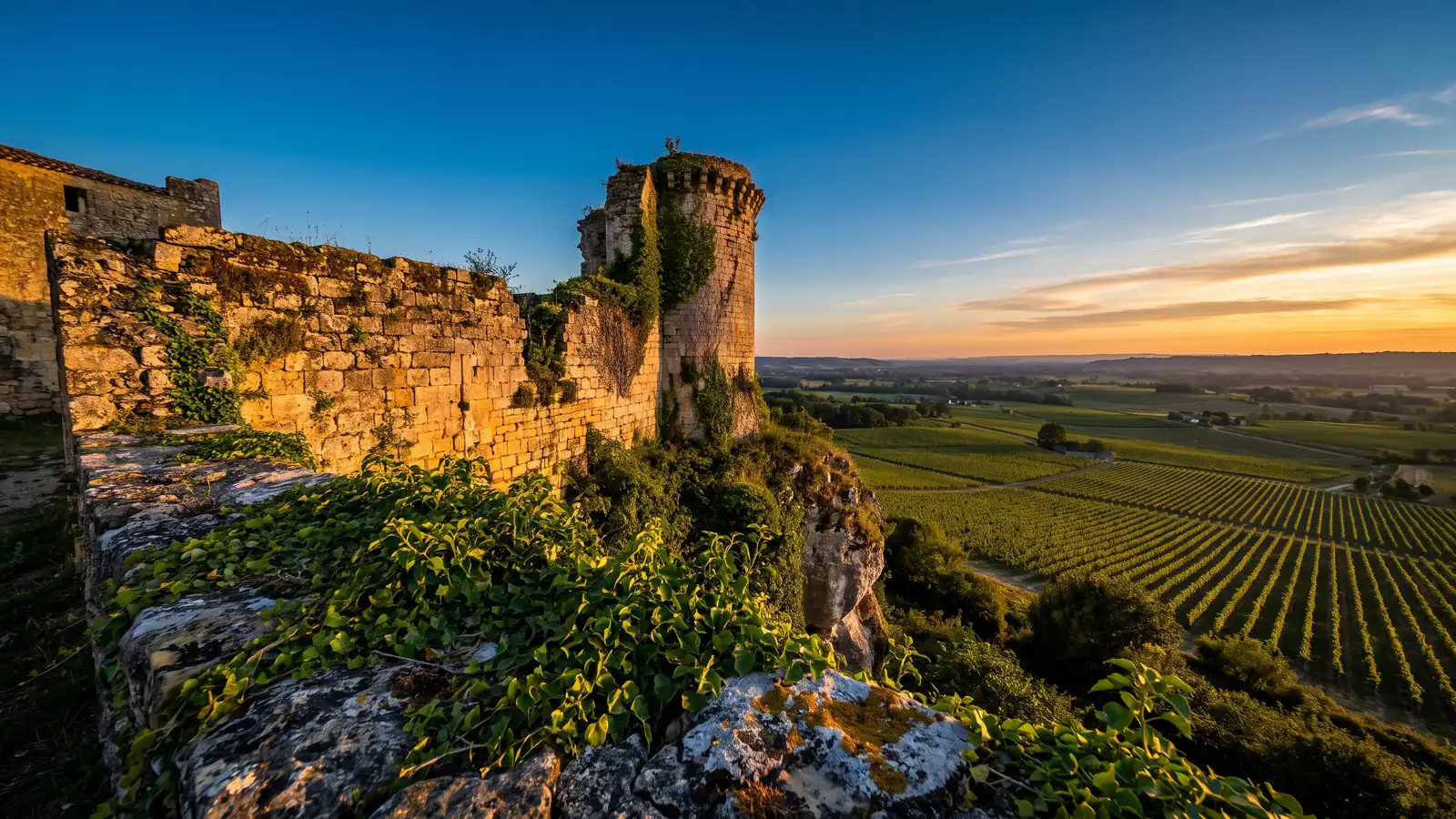
Gensac is first and foremost a hilltop village best explored on foot: medieval alleyways, 15th- and 16th-century half-timbered houses, vaulted passageways, and the remains of ramparts. Almost nothing remains of its fortified castle—but its history is etched in the village’s stones. Here’s what we can actually see, and what we have to imagine.
A vanished castle, repurposed into homes
One sometimes reads that visitors to Gensac can see “a medieval castle with two towers.” This needs to be qualified: this castle, perched on the promontory, has almost entirely disappeared—especially after the Revolution—and its stones were used to build the village’s houses. Of the original mighty fortress—two towers, a wall of cut stone, a moat carved into the rock, a drawbridge flanked by two towers, and even underground stables hewn from the rock— all that remains today is a section of wall near the Church of Notre-Dame and the remains of a postern gate. So one does not “visit” an intact castle: one reads in the fabric of the village the memory of a dismantled stronghold, whose ramparts provided the building material for the homes. It is an open-air history lesson, where the military past has blended into the living environment.
Narrow streets, half-timbered buildings, and vaulted passageways
The joy of Gensac is stroll in its old town. The sloping alleyways wind their way between old houses, including several 15th- and 16th-century half-timbered buildings, some arched passageways and carved doors. Here and there, a section of rampart, a thick wall, or a stone staircase serve as reminders of the village’s fortified past. The village has retained its medieval atmosphere without feeling stagnant or like a museum: it is a truly vibrant village, with its town square, town hall, shops, and market. Local tradition offers a few curiosities that we present for what they are—street legends: the “ Cat House ", where a knight is said to have been killed, or the " Calvin's pulpit ", a "cul-de-lampe" so nicknamed, though there is no documented connection to the reformer. These are nicknames from oral tradition, to be enjoyed as such, not as historical facts.
Notre-Dame Church and Its Medieval Portal
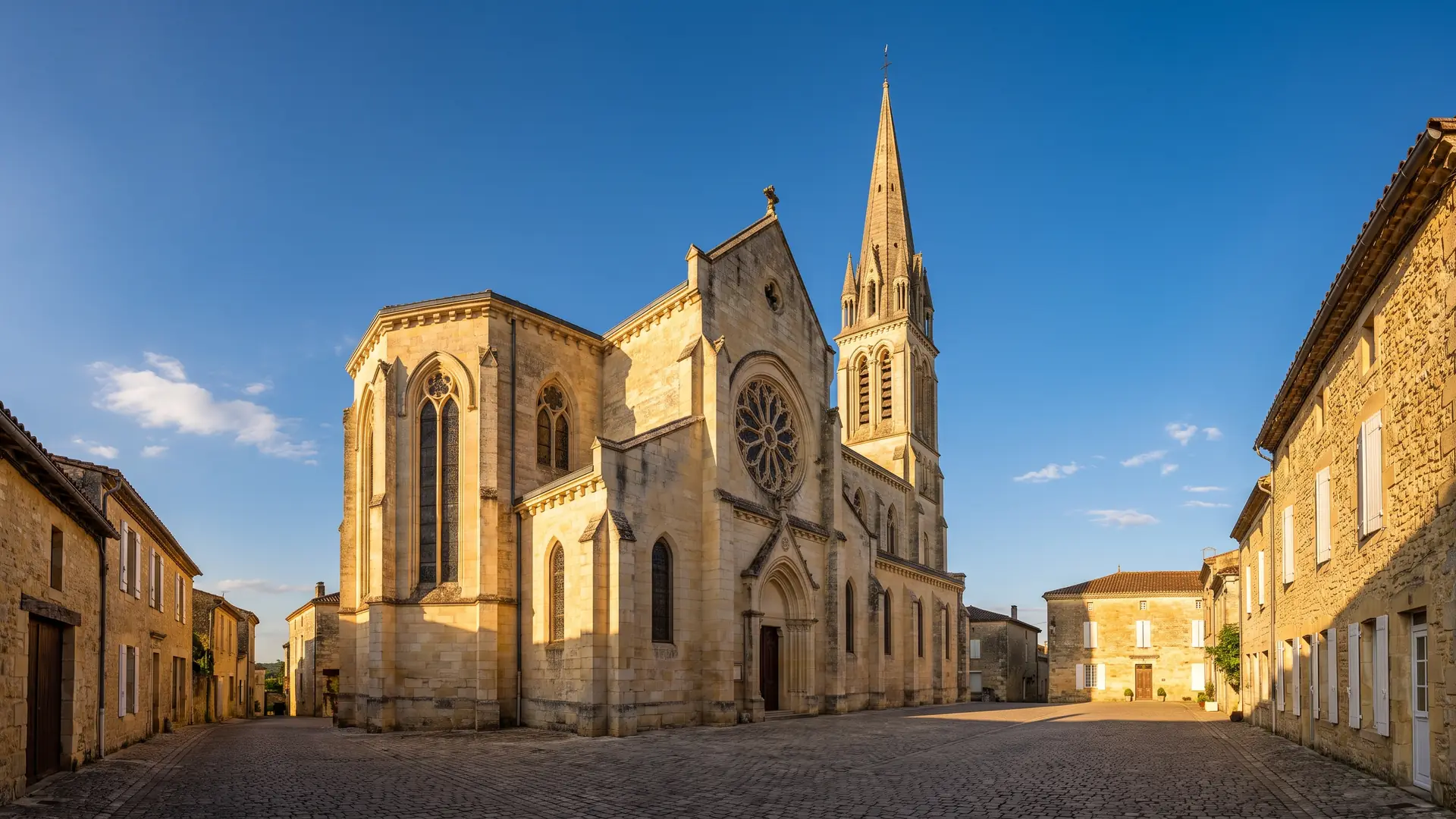
The official municipal newsletter for January 2026 identifies the building as the Notre-Dame Church, located at 1 rue du Couvent. It thus confirms the building’s name and location; the building is not listed here as a historic monument.
A Neo-Gothic building with a medieval element
Contrary to what is sometimes reported, the church in Gensac is called Notre-Dame — not “Saint-André” — and she is not classified Historic Monument: These two errors stem from an unreliable general description, which we are correcting. Built on Romanesque foundations, the church has been completely rebuilt in the Neo-Gothic style between 1867 and 1878 (designed by architect Mondet), on the site of the former ruined building, of which only the base of the apse remains. Its main appeal lies elsewhere: it houses an authentic 13th-century portal, salvaged from a ruined church and reused in 19th-century reconstruction — a genuine medieval fragment set within a modern building. It also preserves a 18th-century lectern. The blend of different eras in a single monument is what gives it its charm and, in its own way, tells the story of the village’s long history.
The painted decoration and the painting of Saint James
Inside, the church has a wonderful surprise in store: the choir is adorned with a rich wall decoration painted in 1897 by the painter from Bordeaux Léon Millet — a colorful ensemble typical of late 19th-century religious art, which adorns the neo-Gothic architecture with patterns and gilding. The church also houses an oil on canvas depicting St. James, dating from the late 17th or early 18th century—a nod to the pilgrimage routes to Santiago de Compostela that crisscrossed the region. These subtle details are worth a look for anyone who steps inside the building (during opening hours, which vary). For a village with fewer than seven hundred residents, this interior heritage—a medieval portal, dated painted decorations, and an antique painting—is far from insignificant, and beautifully rounds out a visit to this hilltop site.
Gensac, an Anglo-Gascon stronghold
In the Middle Ages, Gensac was a stronghold of English Guyenne, held by the powerful House of Albret, until the Battle of Castillon (1453), which brought it under the control of the Kingdom of France. Its name, however, dates back to antiquity. Here are the verified milestones of this long history.
A name derived from a Gallo-Roman estate
Like many villages in the Bordeaux region, Gensac owes its name to a Gallo-Roman estate. The place name is derived from the Latin personal name Gentius followed by the suffix -acum: “the estate of Gentius.” The older form is found Genzago as early as the 11th century. The village then grew up around its rocky promontory, a natural defensive site that commanded the valley. In the Middle Ages, a fortified castle was built there, complete with two towers, a wall, and a moat carved into the rock—a stronghold of which only ruins remain today. This continuity—from an ancient agricultural estate to a medieval fortress and then to a wine-growing village—is characteristic of the Dordogne Valley region, where history is evident in both the landscape and the place names.
The Albret Family, the English, and the End of the Hundred Years' War
In the Middle Ages, Gensac belonged to the Duchy of Aquitaine, which was then under the control of the kings of England: it's a piece of land Anglo-Gascon, where a company of Gascon horsemen maintains a garrison in the citadel. The lordship passed very early on to the House of Albret — as soon as 1324, by Mathe d'Albret, wife of Élie Rudel, Lord of Gensac—that prominent family from the Southwest from which the future Henry IV would emerge. Gensac remained on the English side until the Battle of Castillon, July 17 1453: This English defeat—the last of the Hundred Years' War—returned Guyenne to the King of France. In 1473, Louis XI returned the land to the Lord of Albret. The village, long contested, retains from this turbulent history its silhouette as a stronghold and its atmosphere of a medieval market town, in the heart of a region marked by the Franco-English border.
Not a country house: what we often read
Several claims are circulating about Gensac that deserve to be corrected, with supporting sources—that is the very purpose of a guide that distinguishes fact from fiction. The bastide, the church, the vanished castle, the three valleys, and the distance to Bordeaux: here, point by point, is what’s true and what’s false, so you can plan your visit based on accurate information.
Neither a country house nor a castle open to visitors
Gensac is sometimes described as a medieval “bastide.” This is inaccurate: municipal records (a compoix from 1634) show that the central “square” was a communal meadow surrounded by houses, not a planned bastide square. Gensac is a hilltop castrum village, not a new town with a regular layout. Similarly, visitors are invited to see “a castle with two towers”; however, this castle no longer exists, as its stones were used to build the village; all that remains is a section of wall and a postern gate. Finally, the church is indeed called Notre-Dame (and not “Saint-André”) and is not listed as a historic monument—the entries found under that name actually refer to other municipalities with the same name (Gensac-sur-Garonne in Haute-Garonne, Génissac in Gironde). Such mix-ups are common; we prefer verified facts.
Three valleys—and closer than you might think
Two final points to note, this time of a geographical nature. We read that Gensac overlooks “the Durèze and the Dordogne”: in reality, the village is flanked by two rivers—the Durèze to the west and the Soulège to the east—and its view takes in three valleys (Durèze, Soulège, Dordogne). We mustn’t forget the Soulège. Furthermore, Gensac is often described as being “halfway between Castillon and Sainte-Foy”: this commonly repeated phrase is misleading when traveling by road, as the village is much closer to Castillon-la-Bataille (less than ten kilometers) than to Sainte-Foy-la-Grande. And contrary to what one might expect, Gensac is closer to Bordeaux (about 68 km) than Sainte-Foy-la-Grande (about 94 km), even though Sainte-Foy is further east: the quickest route goes through Castillon. These are all useful points of reference for planning your visit.
The wine: Sainte-Foy Côtes de Bordeaux
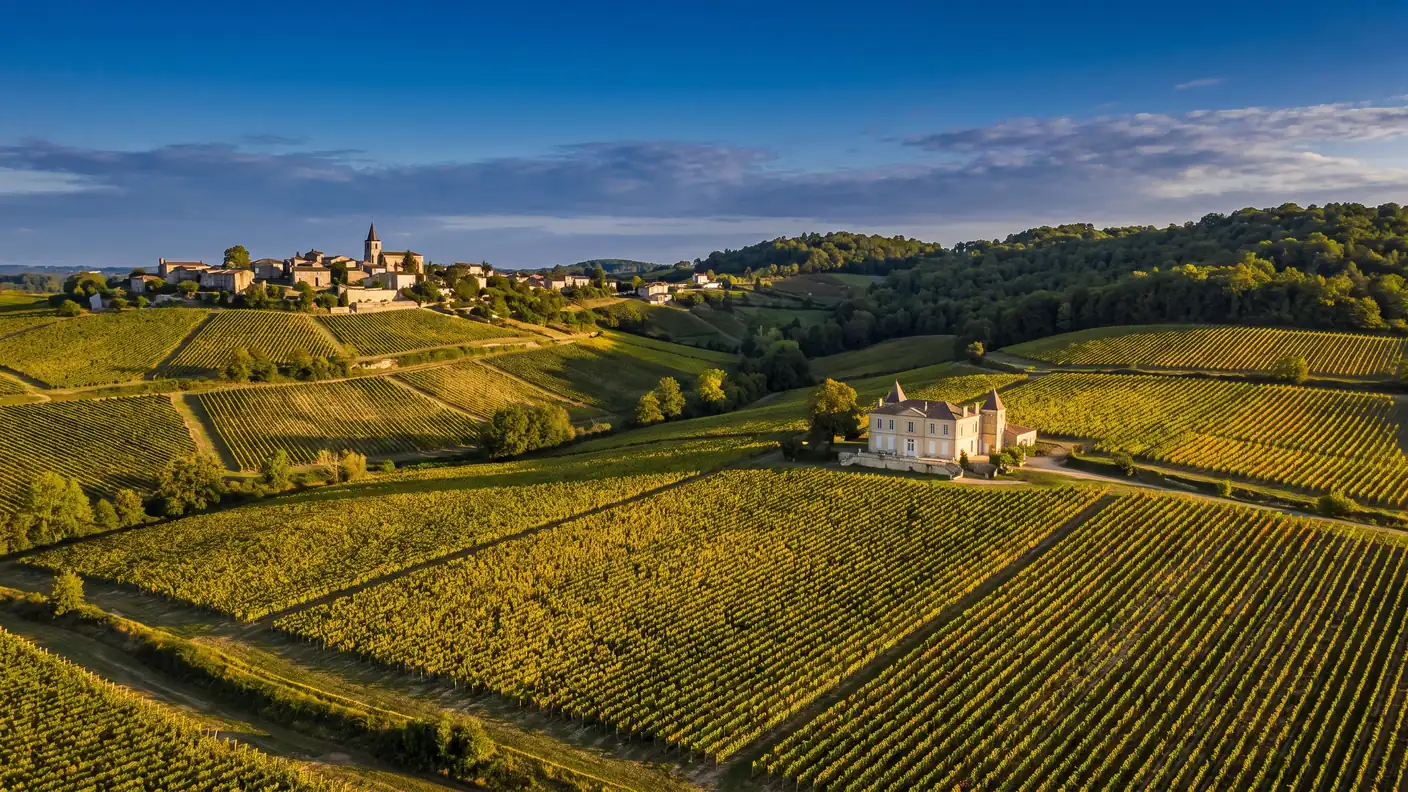
Gensac is a winegrowing village: its hillsides are part of the Sainte-Foy Côtes de Bordeaux appellation, the easternmost vineyard region in the Bordeaux area, on the edge of the Périgord. It is a terroir of hillsides and diversity, situated between Saint-Émilion and Monbazillac. Here’s what makes it unique.
The last Bordeaux wine region before the Périgord
The Sainte-Foy Côtes de Bordeaux appellation is located at the eastern edge of the Gironde wine region, around Sainte-Foy-la-Grande, on the slopes of the Dordogne. It has borne this name since 2016 as a complementary geographical appellation to Côtes de Bordeaux (it was known as “Sainte-Foy-Bordeaux” from 1937 to 2015). The region encompasses 19 municipalities, including Gensac. Its richness lies in its diversity: it produces reds, dry whites, and—more rare for Bordeaux—sweet and dessert whites. Nestled between Saint-Émilion to the west and the sweet wines of Monbazillac (already in the Périgord) to the east, this region enjoys a mild microclimate, ideal for late harvests. It is the last Bordeaux terroir before the Périgord—a vineyard with character, where wines and prices vary by estate, making it ideal for a wine-tasting getaway away from the crowds.
Enjoy a tasting at the foot of the village
On the hillsides surrounding Gensac, family-run wineries welcome visitors for tastings, often by appointment. This is a chance to sample the full range of the appellation—a red for aging, a dry white, and a sweet wine to round out the meal—to chat with the winemakers, and to take home a few bottles. Many offer direct sales, and there are bed-and-breakfasts nestled among the vineyards in the area. The village itself, with its market and shops, rounds out this gourmet getaway. The advantage of a private transfer here is clear: you’re driven from one estate to the next, you can taste to your heart’s content, and you return to Bordeaux or your lodging stress-free, without worrying about driving or navigating the many kilometers of winding wine roads. Opening hours and visit policies, which vary by estate, should be confirmed directly with each winemaker before arriving.
| Wine in Gensac | Details (according to sources) |
|---|---|
| Designation | Sainte-Foy Côtes de Bordeaux (known as Côtes de Bordeaux since 2016) |
| Area | 19 municipalities at the eastern edge of the Bordeaux wine region |
| Colors | red wines, dry white wines, sweet white wines, and dessert wines |
| Neighborhood | between Saint-Émilion (~26 km) and Monbazillac / the Périgord |
| Good to Know | Wine tastings at the vineyards, often by appointment |
What is there to do in Gensac and the surrounding area?
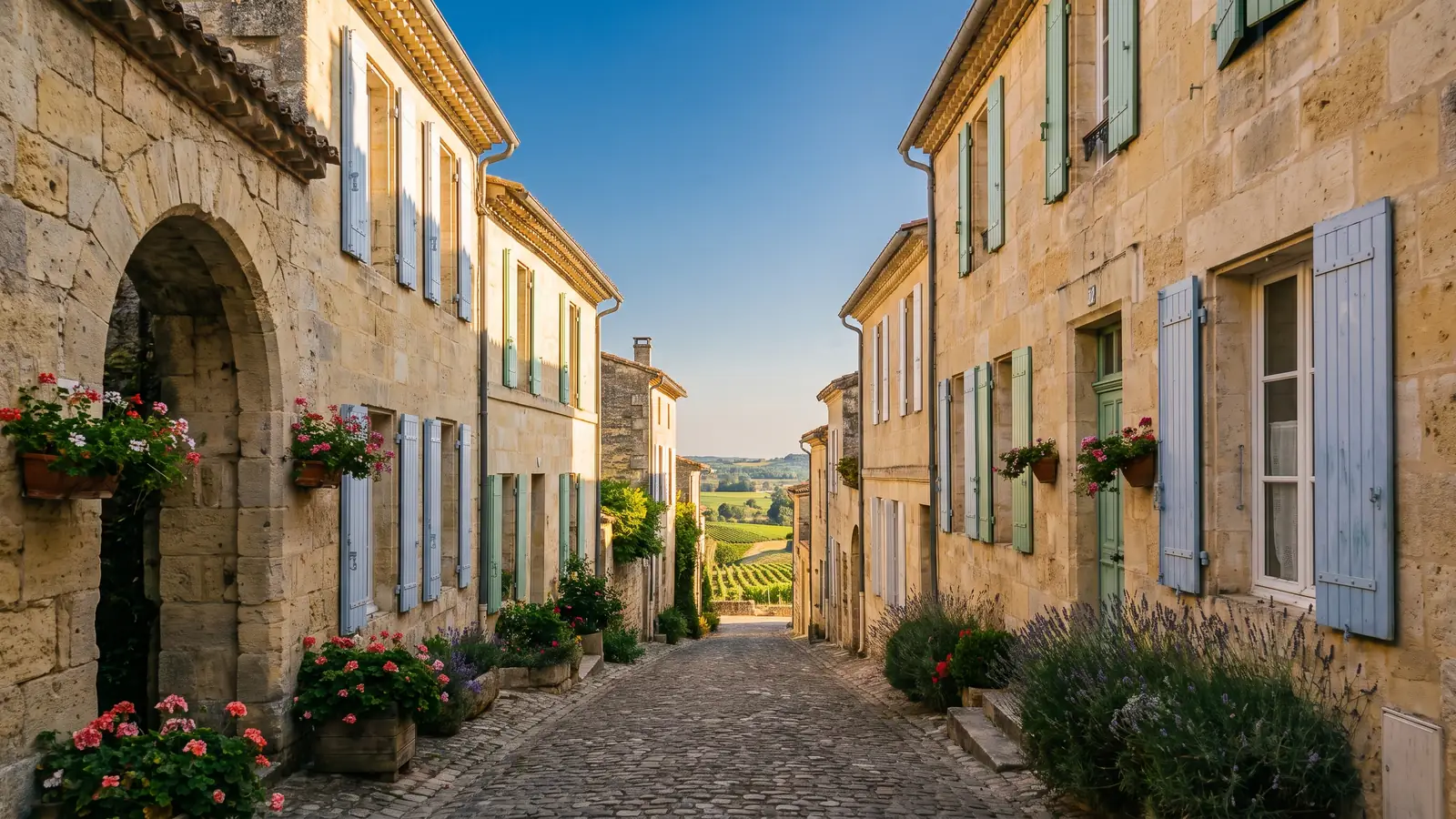
In Gensac, you can stroll through the medieval village and take in the panoramic views, shop at the market on Friday mornings, go hiking between Durèze and Soulège, and venture out to Castillon-la-Bataille to see its spectacular nighttime show. The village even has its own festivals, including the unusual Festival du Mouton Ivre. Here is a concrete list of real, verified activities for a stay here, both in the village and in the immediate surroundings.
- Stroll through the hilltop village—medieval alleyways, half-timbered houses, vaulted passageways, the remains of ramparts, and a panoramic view of three valleys
- The Gensac Market — Friday mornings (year-round, ~8 a.m.–1 p.m.), in the center of the village
- Hiking trails — three marked loops starting from the village, including “Between Durèze and Soulège” (10.7 km, ~3 hours 30 minutes)
- The Drunken Sheep Festival — an event celebrating wool; check with the Gensac town hall for upcoming dates
- The Gensac Festival — chamber music concerts in the church and neighboring villages, late July–early August
- The show “The Battle of Castillon” — about 10 km away (Belvès-de-Castillon): a grand summer nighttime spectacle (600 volunteers, 40 horses)
- Canoeing on the Dordogne River—nearby (Pessac-sur-Dordogne, Port-Sainte-Foy), downstream trips
The village, the market, and the trails
The first delight of Gensac is the village itself: take the time to stroll up its narrow streets, walk along the remains of the ramparts, and stop at the lookout points that offer views of the vineyards and valleys. The Friday morning market, in the center of town, sets the pace for the week and brings together local producers. For hikers, three marked trails start from the village, including the beautiful “Between Durèze and Soulège” loop (10.7 km, about 3 hours 30 minutes, +141 m elevation gain), which connects the two valleys through vineyards and woods, and a short heritage walk through the medieval village. It’s a gentle form of tourism, on foot, at the pace of the hillsides—ideal for a day in the countryside, punctuated by a wine tasting at a vineyard. The evening light on the panorama, seen from the village’s heights, is one of the highlights of a visit.
The Drunken Sheep and the Battle of Castillon
The January 2026 issue of the municipal newsletter looks back on the Drunken Sheep Festival and its wool-related activities. No upcoming dates are listed in the verified section, so please check the town hall’s calendar before planning your visit.
In the summer, the Gensac Festival also features chamber music concerts in the church and neighboring villages. In Belvès-de-Castillon, the evening show “La Bataille de Castillon” reenacts the battle of 1453; dates and admission details must be confirmed on the organizer’s website.
| Activity | Where / When | Good to Know |
|---|---|---|
| Hilltop Village & Panoramic View | on site | medieval alleyways, view of three valleys |
| Gensac Market | village center · Friday morning | farmers, year-round |
| Hike: “Between Durèze and Soulège” | leaving the village | 10.7 km, ~3 hours 30 minutes, marked loop trail |
| Drunken Sheep Festival | Gensac · dates to be confirmed | Wool Festival |
| Battle of Castillon (play) | ~10 km · summer | Nighttime mural, 600 volunteers |
What's there to see around Gensac?
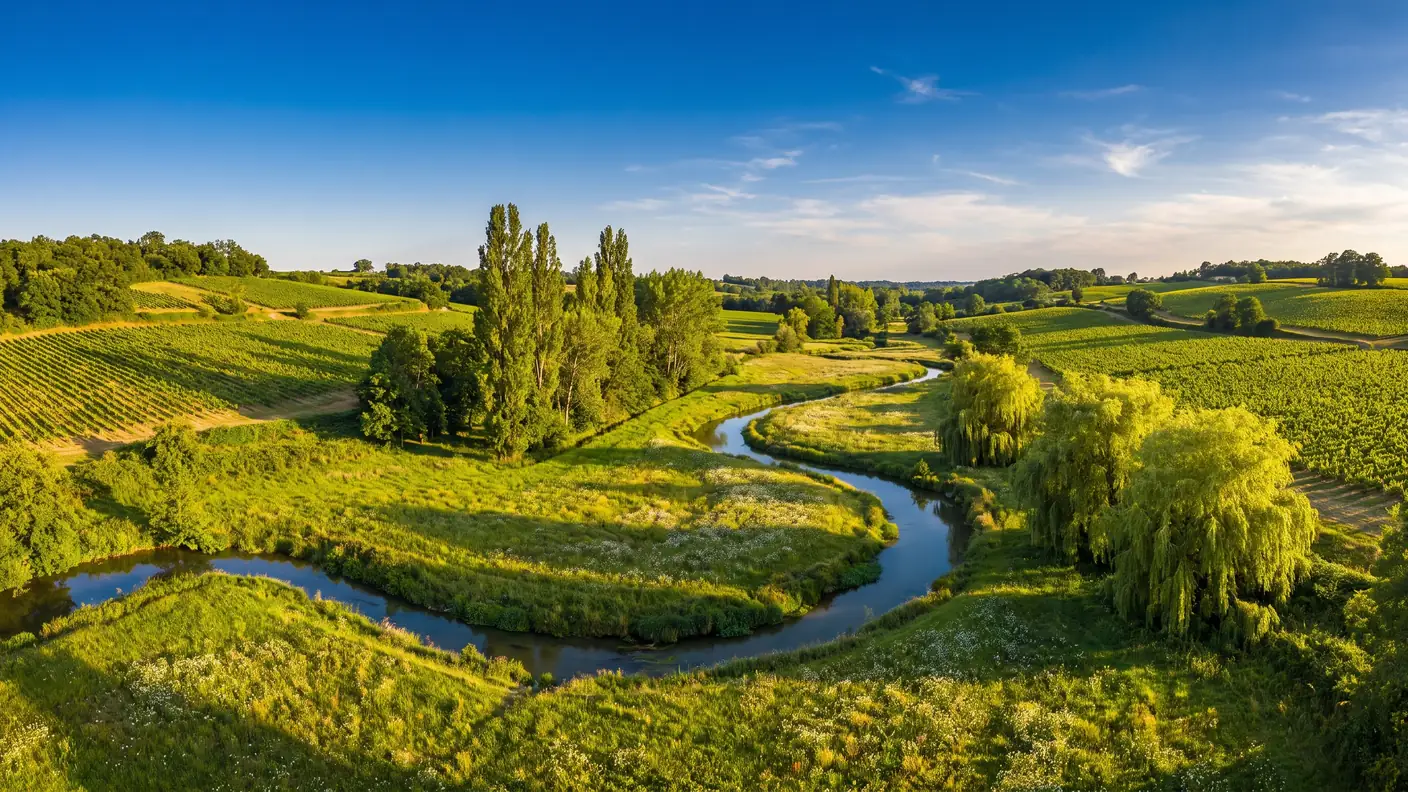
Near Gensac, you’ll find the battlefield of Castillon, the medieval town of Saint-Émilion (a UNESCO World Heritage Site), the fortified town of Sainte-Foy-la-Grande, and the Pays Foyen region, at the gateway to the Périgord. The village is ideally situated between the grand cru wine regions and the Dordogne Valley: here are the must-see attractions, all of which can be visited on a day trip.
Castillon-la-Bataille and Saint-Émilion
Less than ten kilometers away, Castillon-la-Bataille is inextricably linked to the final battle of the Hundred Years’ War, fought on July 17, 1453: the French victory there brought an end to three centuries of English rule over Guyenne. Every summer, a grand nighttime spectacle brings this history to life in nearby Belvès-de-Castillon. The town also serves as a gateway to the Castillon Côtes de Bordeaux wine region. About half an hour west lies the jewel of the region, Saint-Émilion (~26 km): a medieval town listed as a UNESCO World Heritage Site, with its famous monolithic church carved into the rock, its cobblestone streets, its macarons, and its world-renowned wines. It’s one of the region’s most beautiful destinations, easily combined with a visit to Gensac for a single day dedicated to wine and cultural heritage.
Sainte-Foy, the Pays Foyen, and the Périgord
To the east, the Dordogne Valley leads to the Foyen Region and to Sainte-Foy-la-Grande, elegant Bastide dating from 1255 on the riverbank, famous for its large Saturday market and its arcaded square. All around lies the Sainte-Foy Côtes de Bordeaux vineyard, which it shares with Gensac, before the vineyards give way, on the opposite bank and a little further east, to orchards and the villages of the Purple Périgord — Bergerac and Monbazillac aren't far away. From Gensac, you can also head to the Dordogne for a canoe trip nearby (the village itself is on the Durèze, not on the river), starting from Pessac-sur-Dordogne or Port-Sainte-Foy. This diversity—grand crus, a bastide, the river, and the gateway to the Périgord—makes Gensac a discreet and central base, best explored with a private driver so you don’t have to worry about driving between tastings.
When is the best time to visit Gensac?
Gensac and the hillsides of the Dordogne are best enjoyed from spring through fall, when the landscape is green, the wineries welcome visitors, and festivals bring the village to life. The spring (May–June) offers vibrant vineyards, soft light, and pleasant trails—the Festival du Mouton Ivre can also liven up the season once its dates are confirmed by city hall. Thesummer (July–August) is peak season: the Friday market, tastings, chamber music concerts, hikes between Durèze and Soulège, and above all the grand nighttime spectacle of the Battle of Castillon, just a stone’s throw away, from July 16 to August 15, 2026—it’s also the hottest time of year, when the coolness of the valleys is a welcome relief. Thefall (September–October) is perhaps the most beautiful time of year: the season of grape harvest, golden light on the hillsides, the crowds have thinned out. The mild climate of the Dordogne Valley makes Gensac a pleasant place to visit for much of the year; a weekend is enough to experience the best it has to offer.
| Season | Atmosphere | Ideal for |
|---|---|---|
| Spring (May–June) | green vineyards, soft light, Mouton Ivre | hiking, food tastings, panoramic views |
| Summer (July–August) | High season, festivals, Castillon show | family, parties, Friday market |
| Fall (Sept.–Oct.) | grape harvest, golden light, tranquility | wine tourism, walks, photography |
Getting to Gensac from Bordeaux
Gensac is about 68 km from Bordeaux, or about a 1-hour-and-15-minute drive. The route heads east through Libourne and Castillon-la-Bataille, then along the hillsides of the Dordogne. The village does not have a train station; the nearest stations are Castillon-la-Bataille and Sainte-Foy-la-Grande, both of which are served by direct trains from Bordeaux.
| Route | Distance | Duration | Details |
|---|---|---|---|
| Bordeaux → Gensac | ~68 km | ~1 hour 15 minutes | Starting at ~€129 for a chauffeured transfer |
| Bordeaux-Mérignac Airport → Gensac | ~78 km | ~1 hour 20 minutes | pickup at the terminal |
| Castillon-la-Bataille Station → Gensac | ~14 km | ~16 min | Direct TER train from Bordeaux |
| Gensac → Saint-Émilion | ~26 km | ~30 min | UNESCO Medieval City |
By car, it takes about 1 hour and 15 minutes to reach Gensac from Bordeaux: the route follows the Dordogne Valley through Libourne and Castillon-la-Bataille, then climbs toward the Gensac spur. By train, there are two stations near the village, both on the Libourne–Buisson line (which extends toward Bergerac and Sarlat), with direct connections from Bordeaux-Saint-Jean: Castillon-la-Bataille (about 14 km away) and Sainte-Foy-la-Grande (about 15 km away). From either station, there’s a final stretch to cover by car, as there’s no direct local transportation to the hilltop village. That’s the whole point of a private transfer: door-to-door service that eliminates the need for transfers and drops you off right in the narrow streets of Gensac or at the estate of your choice, then picks you up at the agreed-upon time.
Whether you’re planning a wine-tasting getaway, a hike through the vineyards, or an evening at a show in Castillon, booking a private chauffeur guarantees a comfortable and punctual ride—book a driver from Bordeaux to Gensac or explore all our destinations.
Frequently Asked Questions
Where is Gensac located?
Gensac is a small hilltop village in the Gironde, in the eastern part of the department, perched on a rocky outcrop overlooking the hillsides of the Dordogne. It lies a few kilometers southeast of Castillon-la-Bataille and about 68 km east of Bordeaux, in the heart of the Sainte-Foy Côtes de Bordeaux wine region. Flanked by two rivers, the Durèze and the Soulège, its panoramic view takes in three valleys. Administratively, it belongs to the Libourne arrondissement, the Coteaux de Dordogne canton, and the Castillon-Pujols community of municipalities; culturally, it lies on the edge of the Entre-deux-Mers and the Pays Foyen regions, at the gateway to the Périgord. From Bordeaux, it’s about a 1-hour-and-15-minute drive; the village does not have a train station, but Castillon-la-Bataille, 14 km away, is served by direct trains.
How much does a transfer from Bordeaux to Gensac cost?
We offer a fixed-price transfer from Bordeaux to Gensac, starting at approximately €160 one way (about 68 km, approximately 1 hour and 15 minutes by car), in a Mercedes sedan or a van seating up to 8 passengers, with a professional driver. The trip is direct, door-to-door: we’ll pick you up at the airport, Saint-Jean train station, or your hotel in Bordeaux, and drop you off right in the streets of Gensac or at the winery of your choice, with your luggage. The fixed-price quote is provided and confirmed in writing before departure, with no unexpected meter charges. This is particularly convenient for a wine-tasting getaway in the Sainte-Foy Côtes de Bordeaux vineyards, a hike through the hillsides, or an evening at the Battle of Castillon reenactment—especially since the hilltop village has no train station.
Is Gensac a bastide?
No, contrary to what is sometimes written. Gensac is a hilltop castrum village, built around a fortified rocky promontory, and not a bastide—that is, a new town with a regular layout founded in the Middle Ages. Municipal records, including a compoix from 1634, show that the village’s central “square” was in fact a communal meadow surrounded by houses, not a planned bastide square with arcades. This confusion stems from generic tourist brochures. Gensac derives its character from its perched location, shaped “like the bow of a ship,” its medieval alleyways, its 15th- and 16th-century half-timbered houses, and the ruins of its fortified castle. It is a medieval hillside village with its own unique atmosphere, but not a bastide in the strict sense of the term.
Can we visit Gensac Castle?
There is no longer a castle to visit in Gensac, contrary to what some descriptions suggest. The medieval fortress, perched on the promontory—with two towers, a wall of cut stone, a moat carved into the rock, and a drawbridge—has almost entirely disappeared, especially after the Revolution: its stones were reused to build the village houses. All that remains today is a section of wall near the Church of Notre-Dame and the ruins of a postern gate. So while you aren’t visiting an intact castle, you can still sense the memory of a dismantled stronghold in the fabric of the old village. It’s a discovery to be made on foot, as you wander through the narrow streets, vaulted passageways, and viewpoints overlooking the valleys—the charm of a medieval hillside village rather than a closed-off monument.
What is the name of the church in Gensac?
The church in Gensac is called Notre-Dame—not “Saint-André,” as is sometimes mistakenly stated in unreliable sources. It is not listed as a historic monument (the entries found under that name refer to other towns with the same name). Originally built in the Romanesque style, it was completely rebuilt in the Neo-Gothic style between 1867 and 1878 on the site of the former ruined building. Its main point of interest is that it houses an authentic 13th-century portal, salvaged from a ruined church and reused in the 19th-century construction—a genuine medieval fragment. It also houses an 18th-century lectern and, in the choir, rich wall decorations painted in 1897 by Léon Millet of Bordeaux, as well as an old painting of Saint James. This is a remarkable heritage for a village with fewer than 700 residents.
What is there to do in Gensac?
People come to Gensac first and foremost for its hilltop village: to stroll through the medieval alleyways, walk along the remains of the ramparts, and enjoy the panoramic view of three valleys. The market is held on Friday mornings in the village center. Three marked hiking trails start from the village, including the “Entre Durèze et Soulège” loop (10.7 km). Gensac also hosts festivals: the Festival du Mouton Ivre, dedicated to wool, and the Festival de Gensac, devoted to chamber music; their upcoming dates must be confirmed with the organizers. Nearby, about ten kilometers away, the spectacular nighttime reenactment of the Battle of Castillon livens up summer evenings, and you can canoe down the Dordogne nearby. Not to mention the wine tastings at the Sainte-Foy Côtes de Bordeaux vineyards. It’s enough to fill a lovely weekend in the countryside.
What is Gensac wine?
Gensac is part of the Sainte-Foy Côtes de Bordeaux appellation, the easternmost vineyard region in the Bordeaux area, on the edge of the Périgord. Since 2016, it has been a complementary geographical appellation to the Côtes de Bordeaux (it was known as Sainte-Foy-Bordeaux from 1937 to 2015), encompassing 19 municipalities around Sainte-Foy-la-Grande. Its distinctive feature is its diversity: the region produces reds and dry whites, but also—more rarely for Bordeaux—sweet and dessert whites, thanks to a mild microclimate conducive to late harvests. The wines, tasting conditions, and prices vary by estate; please contact each estate before your visit. The family-owned estates on the slopes of Gensac welcome visitors for tastings, often by appointment. Hiring a private chauffeur allows you to visit several estates without worrying about driving back.
How many valleys does Gensac overlook?
Three valleys, not two as is often stated. The hilltop village is flanked by two rivers—the Durèze to the west and the Soulège to the east—and its panoramic view takes in the valleys of the Durèze, the Soulège, and, further away, the Dordogne. The Soulège is frequently omitted from descriptions, which mention only “the Durèze and the Dordogne.” The Durèze, like the Soulège, is a small tributary that flows into the Dordogne; these lush valleys, dotted with meadows and vineyard-covered hillsides, also offer hiking trails, including the “Between the Durèze and the Soulège” loop that connects the two. It is this perched location between three valleys that gives Gensac its exceptional panorama—one of the most beautiful in the area—and explains its former role as a stronghold commanding the countryside.
How far is it from Bordeaux to Gensac?
About 68 km by road, or about a 1-hour-15-minute drive. The route heads east on the highway, passing through Libourne and Castillon-la-Bataille, then climbs toward the Gensac spur. Here’s a counterintuitive fact: although Gensac is located far to the east of the Gironde department, it is closer to Bordeaux (about 68 km) than Sainte-Foy-la-Grande (about 94 km), because the direct route goes through Castillon. For a chauffeur, the fare is fixed and provided in advance, starting at approximately €129 one way. The village does not have a train station: the nearest ones are Castillon-la-Bataille (~14 km) and Sainte-Foy-la-Grande (~15 km), both served by direct trains from Bordeaux-Saint-Jean. From the train station, an executive car service takes over to reach the hilltop village, as there is no direct local transportation.
How do I get to Gensac by train?
Gensac does not have a train station, but there are two stations on either side of the village, both served by direct trains from Bordeaux-Saint-Jean: Castillon-la-Bataille (about 14 km away) and Sainte-Foy-la-Grande (about 15 km away). They are located on the Libourne–Buisson line, which extends toward Bergerac and Sarlat, with regular TER Nouvelle-Aquitaine service. From either station, you’ll need to cover the final stretch by car, as there is no direct public transportation to the hilltop village. This is where a private transfer really comes in handy: you get off the train at Castillon or Sainte-Foy, and a driver takes you the last few kilometers, door-to-door, to the narrow streets of Gensac or your chosen winery. It’s also the best way to explore the surrounding vineyards afterward without renting a car.
What is the Drunken Sheep Festival in Gensac?
The January 2026 issue of the municipal newsletter describes the Festival du Mouton Ivre as a friendly gathering centered around wool and knitting. The date of the next event isn’t listed here: check the town calendar before heading out.
When is the best time to visit Gensac?
Preferably from spring to fall. Spring (May–June) offers vibrant vineyards, soft light, and beautiful trails; it’s also when the Festival du Mouton Ivre takes place in late June. Summer (July–August) is peak season: the Friday market, wine tastings, chamber music concerts, hikes between Durèze and Soulège, and above all, the grand nighttime spectacle of the Battle of Castillon nearby (July 16 through August 15 in 2026). Fall (September–October) is perhaps the most beautiful time of year: it’s harvest season, the light gilds the hillsides, and the crowds thin out. The mild climate of the Dordogne Valley makes Gensac pleasant for much of the year. A weekend is enough to experience the highlights: the hilltop village, the vineyards, and the panoramic view of the three valleys—all just over an hour from Bordeaux.
Further Reading
- The neighboring wine-growing village on the Dordogne: see the Eynesse Guide (hillsides and Château du Barrail)
- The nearby Cité du Vin: see the Saint-Émilion Guide (UNESCO-designated medieval town and fine wines)
- A country house in the Entre-deux-Mers region: see the Castets-en-Dorthe Guide (the Garonne Canal)
- Understanding our rates and vehicles: see the "Book a Driver" page (sedan & van, fixed-price quote)
- Plan your trip: Book a private chauffeur from Bordeaux to Gensac or explore all our destinations
Sources and References
- Wikipedia — Gensac (Gironde) — a hilltop village shaped like a “ship’s bow,” population 687. (2023), Durèze + Soulège + Dordogne, castle no longer standing (section of wall remaining), Albret family from 1324, etymology: Gentius
- Gironde Tourisme — Gensac — a hilltop medieval village, 15th- and 16th-century half-timbered houses, remains of ramparts, 3 hiking trails (including the "Between Durèze and Soulège" trail)
- Sainte-Foy Côtes de Bordeaux — appellation — the name used for the Côtes de Bordeaux since 2016 (formerly Sainte-Foy-Bordeaux, 1937–2015); 19 communes; red and white wines—dry, sweet, and dessert wines
- Gensac Town Hall — January 2026 municipal newsletter — official recap of the Drunken Sheep Festival; check with the town for the next date
- The Battle of Castillon — a theatrical performance — a summer nighttime spectacle in Belvès-de-Castillon (~10 km), 600 volunteers, 40 horses; 2026: July 16–August 15
- Wikipedia — Battle of Castillon (1453) — the final battle of the Hundred Years' War, July 17, 1453; a French victory that restored Guyenne to the King of France
Article updated in July 2026.
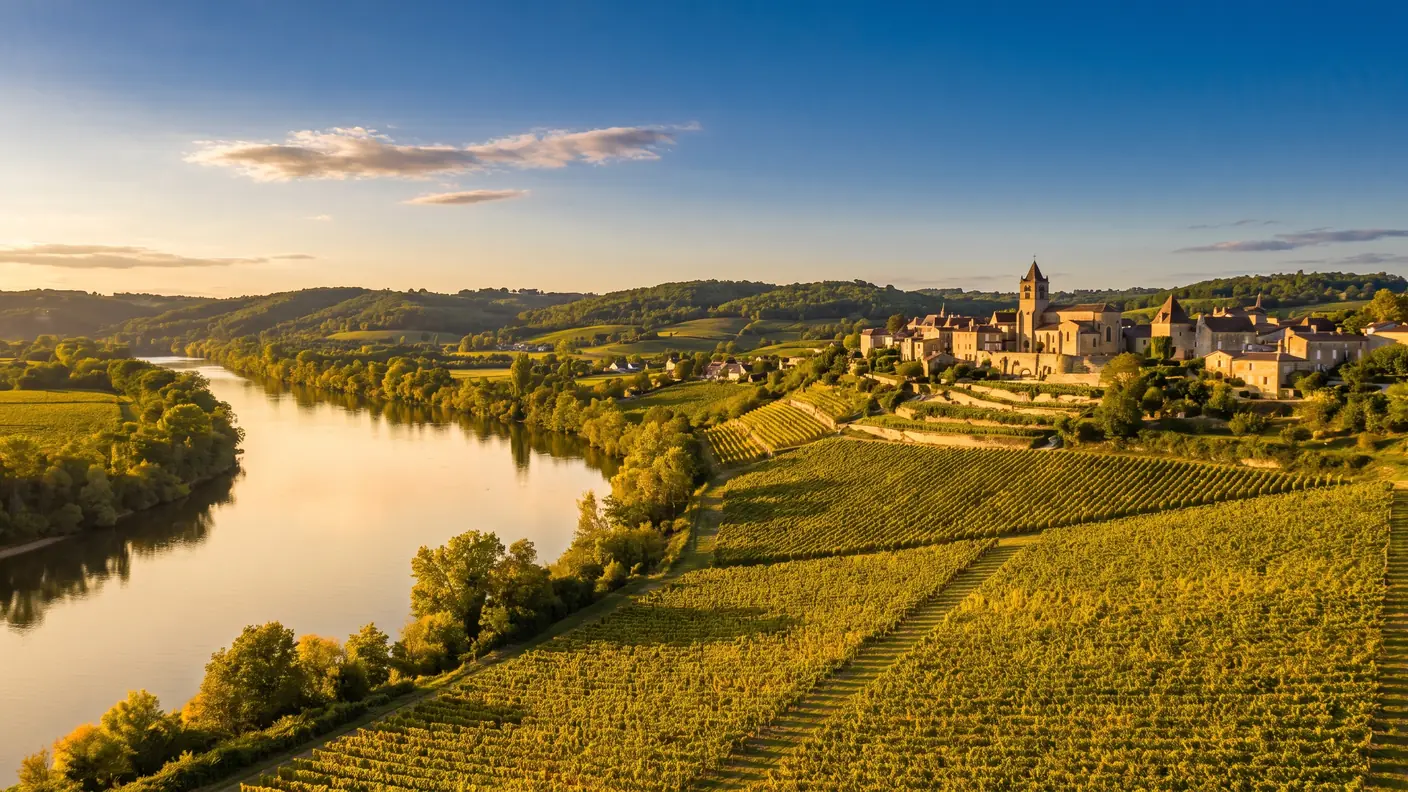
Off to the hills of the Dordogne
Direct transfer from Bordeaux (~1 hour 15 minutes) to the hilltop village of Gensac and the Sainte-Foy Côtes de Bordeaux vineyards—from the airport, train station, or hotel to the village, including luggage. Fixed, written quote—no surprises on the meter.