Bordeaux to Eynesse: private driver guide
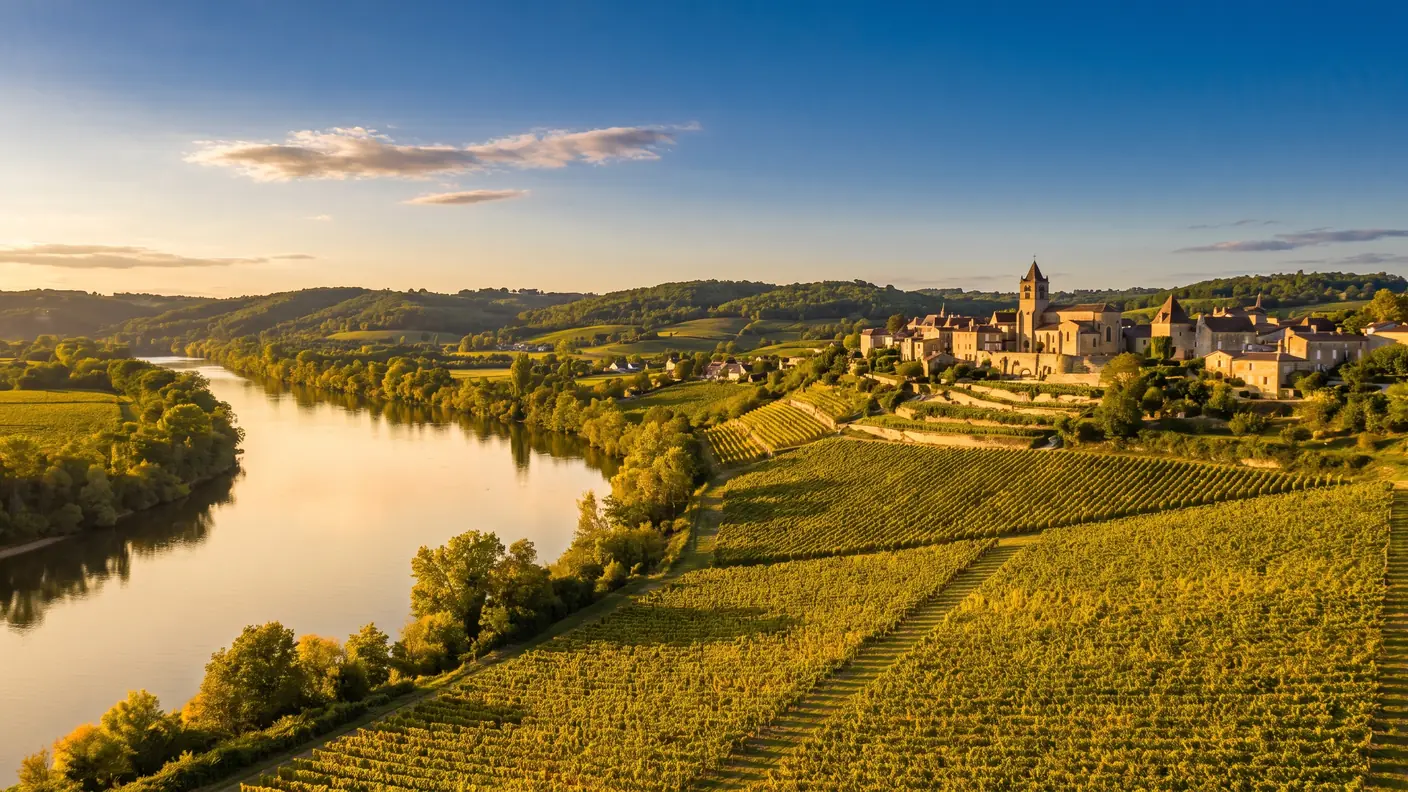
A wine-growing village in the Pays Foyen region, on the left bank of the Dordogne, at the gateway to the Périgord: Eynesse, with its Château du Barrail—a listed historic monument—its Sainte-Foy Côtes de Bordeaux vineyards, and its protected river—plus your private door-to-door transfer from Bordeaux, with no need to rent a car.
Eynesse at a Glance
Eynesse is a wine-growing village in the Pays Foyen region of Gironde, nestled on the hillsides along the left bank of the Dordogne River. It is located about 73 km from Bordeaux and 7 km from Sainte-Foy-la-Grande. Its heritage sites include the Château du Barrail, a listed historic monument, the Saint-Pierre Church, and vineyards that are part of the Sainte-Foy Côtes de Bordeaux appellation. The Dordogne River runs along the northern edge of the town and offers canoeing opportunities; the wineries are generally open to visitors by appointment. Eynesse does not have a train station; the nearest one is in Sainte-Foy-la-Grande. For a direct trip from Bordeaux, the linked commercial page lists the fixed “baké” fare and available vehicles.
Eynesse is a small wine-growing village in the Gironde department, in the Pays Foyen region, nestled on the hillsides along the left bank of the Dordogne River, about 73 km east of Bordeaux and just seven kilometers from Sainte-Foy-la-Grande. There is a vineyard there in the Sainte-Foy Côtes de Bordeaux appellation, the Château du Barrail—a residence dating from the 15th to the 18th century listed as a historic monument—and a long riverside facade protected under the Natura 2000 program. This guide distinguishes between verified information and repeated claims: Eynesse is indeed on the left bank of the Dordogne (not the Right); its château is listed, not fully classified, and the village has never had a “port” but rather a seigneurial toll. We then outline the easiest way to get there from Bordeaux: a private door-to-door transfer, without having to change trains or rent a car.
| Landmark | Details |
|---|---|
| Village | Eynesse (Gironde, Libourne District) |
| Location | Pays Foyen, hillsides on the left bank of the Dordogne, 7 km from Sainte-Foy-la-Grande |
| Residents | 581 Eynessois (2023) · 7.59 km² |
| Must-See | Château du Barrail (listed as a historic monument), Sainte-Foy Côtes de Bordeaux vineyard, Dordogne (Natura 2000) |
| Distance from Bordeaux | about 73 km · about 1 hour and 20 minutes by car |
Here are the key details to know before you go. Distances are calculated door-to-door from Bordeaux; the price listed is for a private driver reservation at a fixed rate provided in advance, with no unexpected meter charges regardless of traffic or stops along the way. Information on cultural heritage sites is verified using the Mérimée database, INSEE, and the Pays Foyen tourist office; schedules and services, which are subject to change, should be confirmed on site.
Where is Eynesse located?
According to INSEE, based on the 2023 reference population figures published in December 2025, Eynesse has 581 residents. The village is located in the Pays Foyen region, on the southern slope of the Dordogne Valley, seven kilometers from Sainte-Foy-la-Grande. It is part of the Libourne arrondissement, the Réolais et Les Bastides canton, and the Pays Foyen community of municipalities.
The Pays Foyen and the left bank of the Dordogne
Eynesse is part of the Pays Foyen, a small region in eastern Gironde centered around Sainte-Foy-la-Grande, at the junction of the Bordeaux wine region and the Périgord. One point deserves to be clarified, as the opposite is often stated: the village is on the left bank of the Dordogne, not the right. The river flows here from east to west and marks the northern boundary of the municipality; the village is spread out on the southern hillside—that is, on the left bank—facing the Périgord, which begins on the opposite bank. These south-facing slopes are the vineyard’s terroir: they descend gently toward the river, over gravel mixed with clay and limestone. It is a peaceful and bountiful landscape, nestled between the water and the vineyards, away from major thoroughfares—one of the most tranquil rural areas in the Gironde.
A border village at the gateway to the Périgord
Eynesse is a border village in more ways than one. The Dordogne River separates him from the Périgord, nearby: Bergerac is only about thirty kilometers to the east, and the vineyards gradually give way to the orchards and meadows of the Bergerac region. To the west, the Bordeaux vineyards reclaim their territory, with Castillon-la-Bataille about twenty kilometers away, followed by Saint-Émilion. This border location is what gives the place its charm: you’re still in Gironde, within the Bordeaux wine region, but already in a gentle, rolling countryside that heralds the Périgord Southwest. The tiny village lives in tune with the river and the seasons of the vineyard. For visitors, it’s a lovely, peaceful stopover, perfect to combine with a visit to Sainte-Foy-la-Grande and its market, or with a canoe trip down the Dordogne.
The Château du Barrail and the church
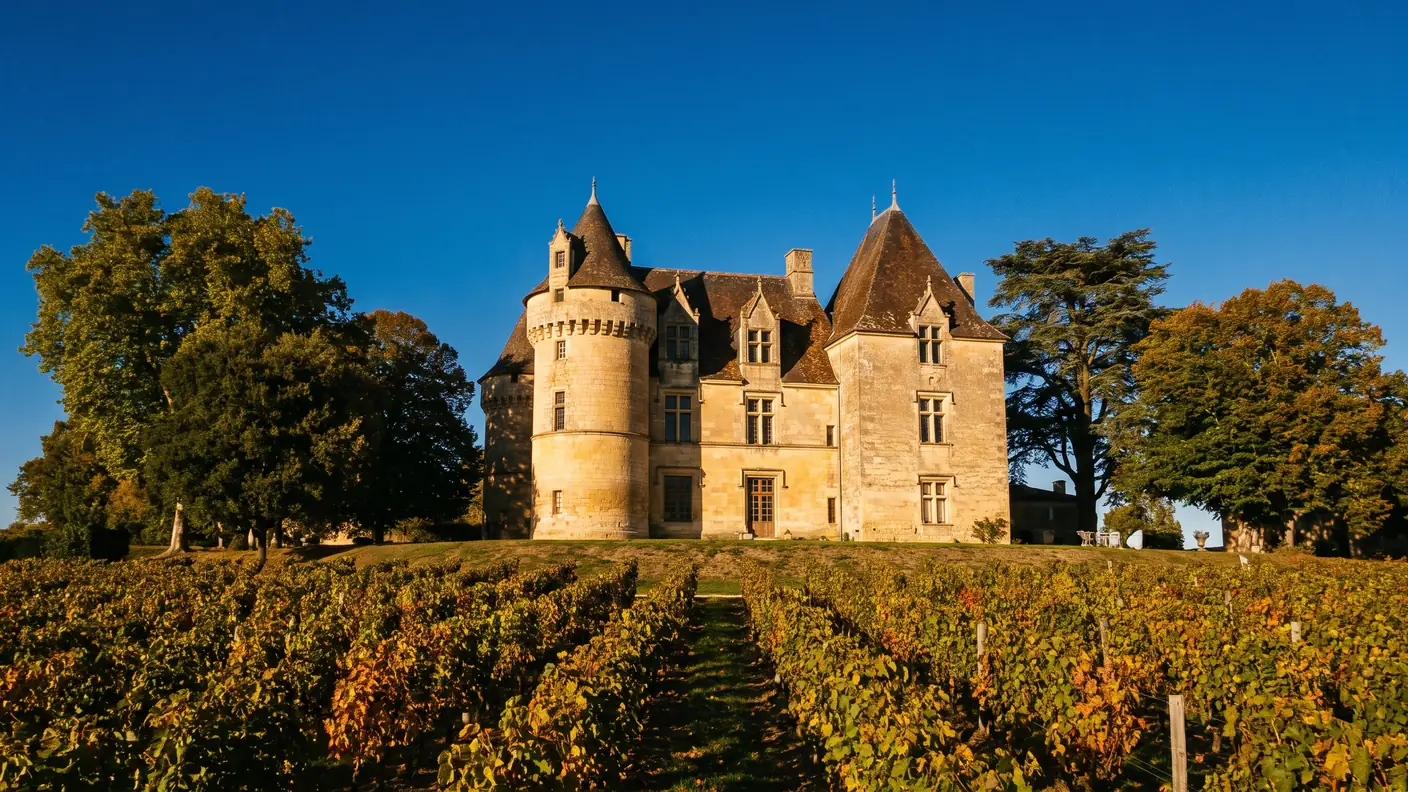
Eynesse's architectural heritage is centered primarily on the Château du Barrail, a residence dating from the 15th to the 18th century listed as a historic monument, and the Saint-Pierre parish church. The village also preserves the memory of a second castle, the Castle of Picon, which no longer exists. Here is what the sources say, without adding anything further.
The Château du Barrail, listed as a Historic Monument
According to the Ministry of Culture’s Mérimée entry PA00083543, the Château du Barrail is a 15th-century manor house that was expanded in the 16th century and subsequently remodeled in the 18th century. It has been protected as a historic monument since 1972 for the gatehouse and since 1987 for several other parts of the château.
The description specifically mentions the facades, roofs, spiral staircase, and chimneys. The castle also features a tower known as the “bow tower,” shaped like a ship’s prow. This privately owned property can be admired from the outside; since no regular tours are documented, the guide does not list any visiting hours.
St. Peter's Church and Picon Castle
The village has its own St. Peter's Parish Church. The sources provide no date, style, or specific patron for it; we therefore stick to the essentials, without attributing to it a “Romanesque character” that is not supported by any evidence. Eynesse also had a second medieval castle, the Picon Castle — named after its lord —, destroyed during the Wars of Religion and then rebuilt in the 17th century. What we know for certain about the area’s feudal past stems from the very name “Barrail”: in Old Gascon, a "barrail" is a dam. The Lord of Barrail held a toll fee on the Dordogne and the right to build dams there—a river tax reflected even in the place names. We will therefore not refer to a “port” at Eynesse, for which there is no documentation, but rather to a seigneurial toll on the river.
Eynesse: From a Gallo-Roman Villa to a Vineyard
Eynesse is a very ancient place: its name dates back to a Gallo-Roman villa, and its soil has yielded Neolithic tools as well as ancient amphorae. The village’s place names and heritage bear the marks of a long history of agriculture and river life, dating back well before today’s vineyards. Here are the verified facts.
A name that dates back to ancient times
The history of Eynesse dates back to antiquity. Its Gallo-Roman origins are attested by the archaeological artifacts discovered in the town: Neolithic tools and amphorae from the Gallo-Roman period. The name itself preserves this history: it derives from Ainitia, a Gallo-Roman villa (an agricultural estate), formed from the Latin personal name Ainus followed by the suffix -itia—meaning “the estate of Ainus.” The Occitan form of the name is Aineça, and the shift from “ai-” to “ei-” began as early as the 14th century. Thus, more than fifteen centuries before the current vineyards were planted, Eynesse was already a rural estate on the banks of the Dordogne—a rare continuity for such a small village.
Lords, Tolls, and the Order of Malta
In the Middle Ages, the village was mentioned as “Enassa” in the 13th century, and the Château du Barrail is already cited there. At that time, the territory was divided among several local lords; tradition—though the sources are cautious on this point—suggests that it also fell under the jurisdiction of the Order of Malta (the Knights Hospitaller of St. John)—a “probable” fact that we present as such, without drawing a definitive conclusion. The lords of Barrail derived part of their income from the river: they collected a toll there and were authorized to build dams—that famous system of river taxation, traces of which are preserved in the castle’s name. For a long time, the Dordogne was a veritable commercial and fiscal highway: in the 18th century, there were dozens of crossings and tolls on the river and its tributaries. The last mill in Eynesse disappeared around 1840, marking the end of this water-based economy.
A Cemetery with Unexpected Figures
A surprising detail for a village of 581 residents: the cemetery in Eynesse is home to a few figures whose fame extends far beyond the local area. There lies the grave of the explorer and engineer Armand Reclus, brother of the famous geographer Élisée Reclus, who was involved in studies of the Panama Canal—a man whose career spanned from the isthmuses of Central America to the harbors of the French Republic. Also buried there are the physician and sinologist Jean-Jacques Matignon and the engineer Paul Rivoyre. For such a small village on the banks of the Dordogne, this concentration of extraordinary lives is truly astonishing, and serves as a reminder that the wine-growing villages of the Southwest often extended their influence far beyond their hillsides in the 19th century. It is one of those curiosities one would never suspect while passing through Eynesse.
Left Bank, listed château: what we often read
A few common misconceptions about Eynesse deserve to be corrected—not to nitpick, but because a guidebook must be accurate. We often read that Eynesse is “on the right bank,” that its castle is “listed,” and that there used to be a “port” there: three statements that require some clarification, with supporting sources.
Left Bank, not Right Bank
Eynesse is often instinctively associated with the “right bank” of the Dordogne (the right bank is the major wine-growing region of Castillon and Saint-Émilion). This is inaccurate in this case: the Dordogne flows from east to west and borders the northern part of the town, so the village, situated on the southern hillside, is actually on the left bank. The Sainte-Foy Côtes de Bordeaux appellation, to which the area belongs, is itself described as being on the “left bank of the Dordogne.” Similarly, the Château du Barrail is listed as a Historic Monument (in 1972 and 1987), not “classified”: these are two distinct levels of protection under French law, and the distinction matters. Finally, Eynesse has never had a documented “port”: what is documented is a seigneurial toll on the river, hence the name “Barrail” (barrage).
Sainte-Foy Côtes de Bordeaux, the name used today
According to the INAO specifications approved in 2016, Sainte-Foy has, since this reform, been a complementary geographical designation of the Côtes de Bordeaux AOC. The common name is therefore Sainte-Foy Côtes de Bordeaux, while “Sainte-Foy-Bordeaux” is a historical name for the appellation. The specifications include Eynesse within the relevant geographic area.
The wine: Sainte-Foy Côtes de Bordeaux
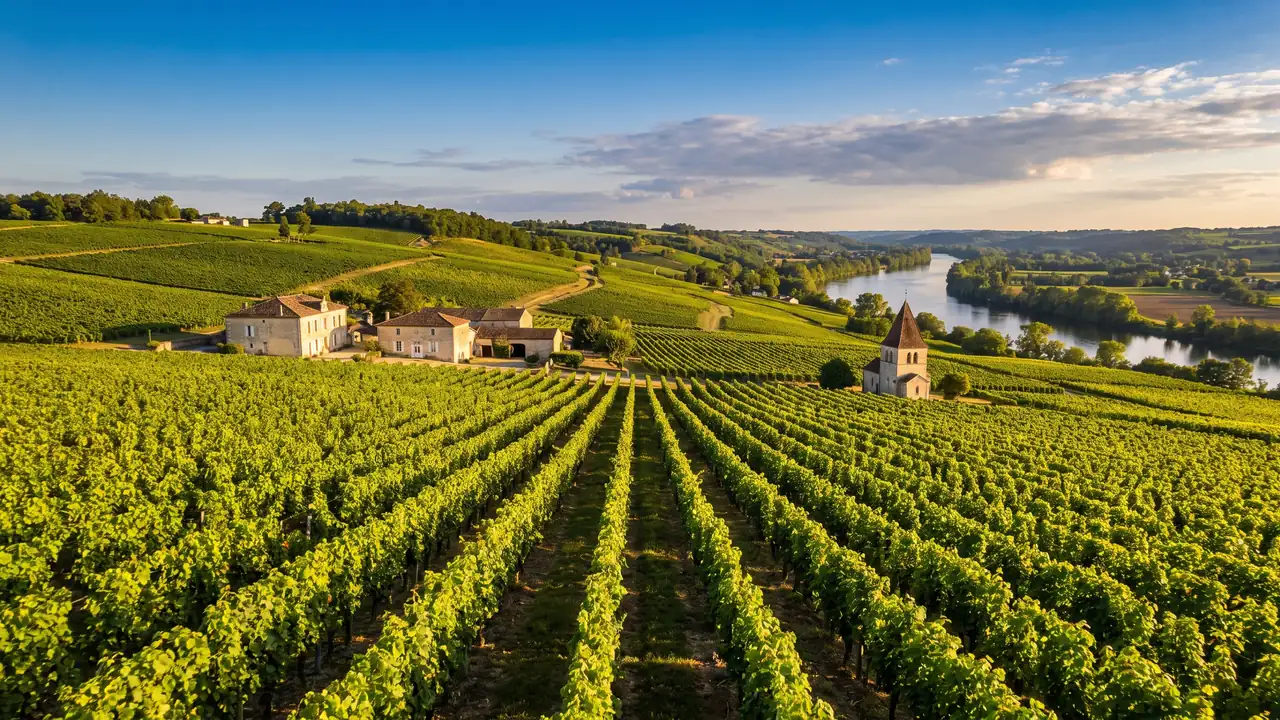
Eynesse is a winegrowing village: its south-facing hillsides, overlooking the Dordogne River, are part of the Sainte-Foy Côtes de Bordeaux appellation—the easternmost vineyard region in the Bordeaux area. It is a terroir of gravel mixed with clay and limestone, situated between Saint-Émilion to the west and the Bergerac region to the east. This is what makes it unique.
The easternmost vineyard in the Bordeaux region
The appellation Sainte-Foy Côtes de Bordeaux is located at the eastern end of the Gironde wine region, on both banks of the Dordogne River around Sainte-Foy-la-Grande. Since 2016, it has officially been a wine appellation of the Côtes de Bordeaux, bringing together 19 municipalities. What makes it unique is its diversity: Not only are they produced there, but also red, but also some dry whites and, more rarely for Bordeaux, some sweet, smooth white wines, as well as rosés. Nestled between Saint-Émilion and the sweet wines of Monbazillac (already in the Périgord), this region enjoys a mild microclimate that is ideal for late harvests. In short, it is the last Bordeaux region before the Périgord — a great reason to take a wine-tasting getaway away from the crowds on the Right Bank. With a private driver, you can visit several wineries without worrying about driving back.
A Tasting Tour of the Vineyards
On the hillsides of Eynesse and neighboring towns, family-run wineries are happy to welcome visitors for tastings, often by appointment. This is your chance to sample the appellation’s full range—a red for aging, a crisp dry white, and a sweet wine to round out the meal—and to take home a few bottles at prices much more affordable than those in the neighboring prestigious appellations. Many estates offer direct sales, and some even provide guest rooms or guided walks through the vineyards. Be sure to call ahead before visiting, especially during the off-season. Here again, a private transfer is a real advantage: you’re driven from one estate to the next, you can taste to your heart’s content, and you return to Bordeaux or your lodging stress-free. Since opening hours and reception policies vary, be sure to check directly with each winemaker.
| Wine in Eynesse | Details (according to sources) |
|---|---|
| Designation | Sainte-Foy Côtes de Bordeaux (known as Côtes de Bordeaux since 2016) |
| Area | 19 municipalities at the eastern edge of the Bordeaux wine region |
| Colors | reds, dry whites, sweet and dessert whites, rosés |
| Terroir | south-facing slopes, gravel mixed with clay and limestone |
| Good to Know | Wine tastings at the vineyards, often by appointment |
The Dordogne, a Protected River
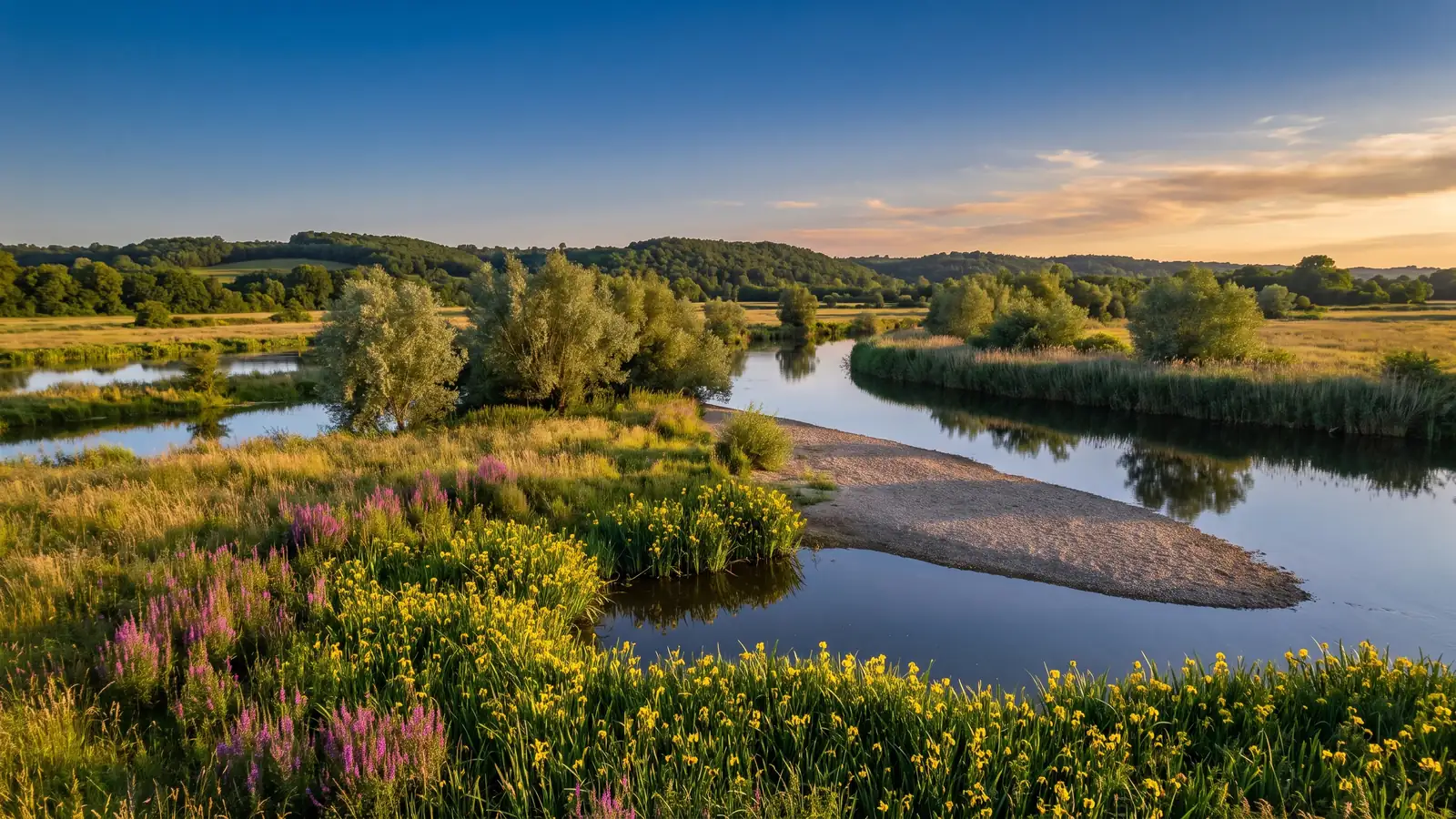
The northern part of Eynesse is home to the Dordogne, one of the best-preserved rivers in Nouvelle-Aquitaine: it is protected under both the Natura 2000 network and as a ZNIEFF. It is a ribbon of water, wooded banks, and wet meadows, ideal for walking, nature observation, and canoeing. Here’s what this riverfront has to offer.
A stretch of river with double protection
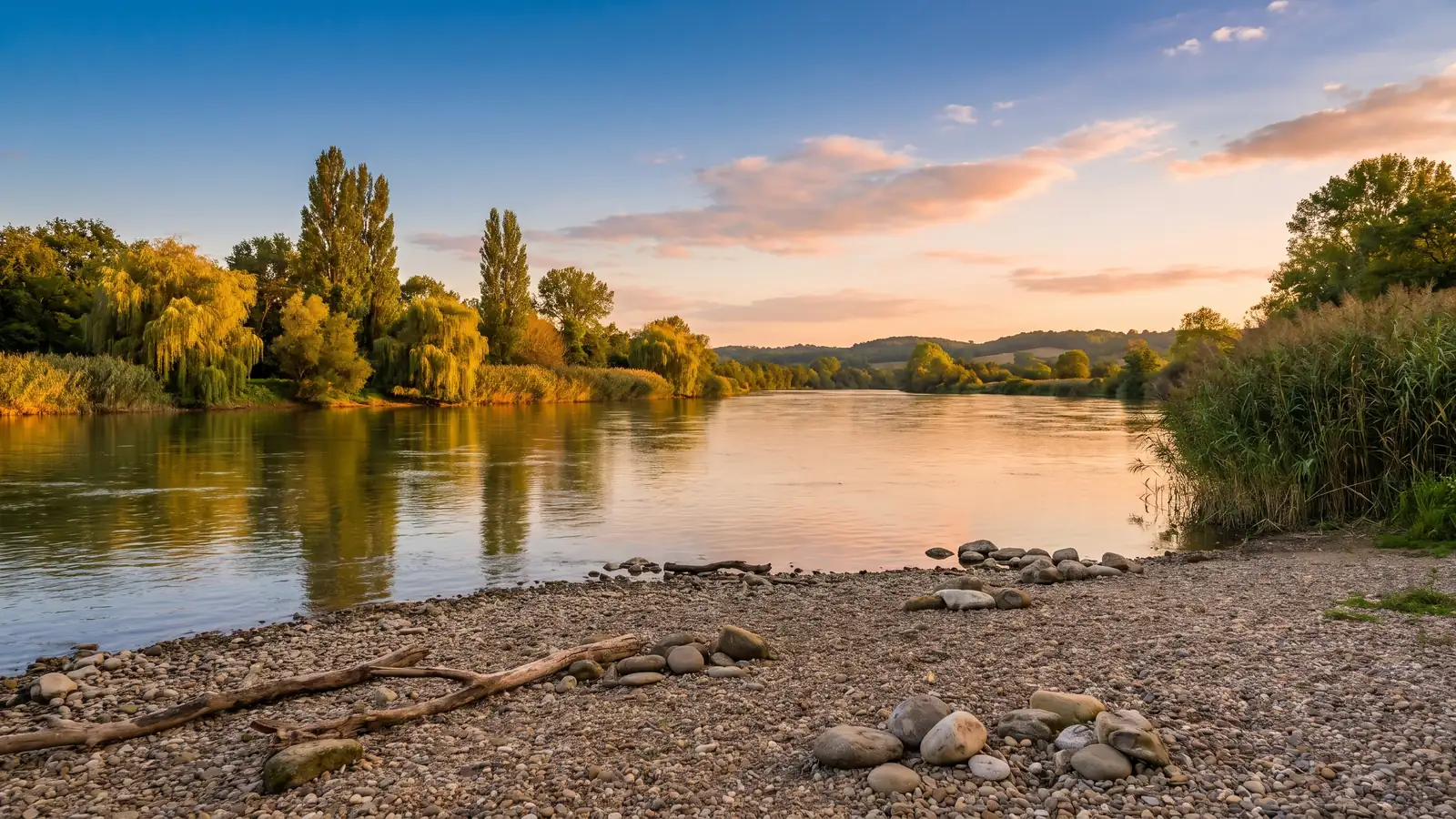
The Dordogne runs along the entire northern edge of the town, and it is no ordinary river. The area is covered by the site Natura 2000 “The Dordogne” and by a Type II ZNIEFF of the same name—two protected areas that safeguard the biodiversity of an exceptional waterway, one of the best-preserved in the region and a refuge for migratory fish and a rich variety of riparian wildlife. For visitors, this translates into wild shores, reed beds, willow groves, and floodplains where you can take a peaceful stroll, watch for birds, and have a picnic by the water. The river, wide and peaceful here, separates the Gironde vineyards from the foothills of the Périgord—a landscape of great serenity, especially in the evening light. This is one of the great charms of a stay in Eynesse: the natural beauty of the Dordogne, just a stone’s throw from the vineyards.
Canoeing on the Dordogne River
The best way to explore the river is to canoe down it. Eynesse is a recognized boarding and disembarking point: for example, you can paddle from Eynesse to Pessac-sur-Dordogne—a distance of about eight kilometers (allow nearly two hours)—with a shuttle service organized by the local club. It’s a family-friendly and accessible outing on calm waters, nestled between vineyard-covered hillsides and wooded riverbanks, with beautiful views of the hilltop villages and the historic wine-trading port of Eynesse. Stand-up paddleboarding is also popular in the area. A private chauffeur can drop you off at the starting point and pick you up at the finish, so you don’t have to worry about coordinating two cars—the perfect logistics for a day on the water. Check the operating hours and water levels with the Pays Foyen canoe centers before you go.
What to Do in Eynesse and the Pays Foyen Region?
In Eynesse, you can canoe down the Dordogne, taste the Sainte-Foy Côtes de Bordeaux wines at the vineyards, and explore the Pays Foyen region: the large market in Sainte-Foy-la-Grande, the tower where Montaigne wrote the Essays, and the nighttime reenactment of the Battle of Castillon. Here, in concrete terms, are the actual, verified activities you can enjoy during a stay here. Since the village is tiny, most of these take place just a few minutes away, in the immediate vicinity—we’ll specify this each time.
- Canoeing down the Dordogne—from Eynesse to Pessac-sur-Dordogne (~8 km, ~2 hours), with a shuttle service, on calm waters between vineyards and wooded riverbanks
- The Sainte-Foy-la-Grande Market — about 7 km away: Saturday mornings (8 a.m.–1 p.m.), Place Gambetta, approximately 200 vendors, voted “the most beautiful market in Gironde” in 2021
- The bastide of Sainte-Foy-la-Grande—founded in 1255 by Alphonse de Poitiers, with its arcaded square and neatly laid-out narrow streets
- Montaigne Castle—about 6 km away (Saint-Michel-de-Montaigne): the tower of the library where Montaigne wrote the *Essays*, designated a Historic Monument
- The show “The Battle of Castillon” — about 25 km away (Belvès-de-Castillon): a grand summer nighttime spectacle featuring 600 volunteers and 40 horses
- Taste the wines of Sainte-Foy Côtes de Bordeaux—at the wineries on the hillsides, often by appointment (reds, dry whites, sweet whites)
- Exploring the Pays Foyen by Bike — Quiet Country Roads and E-Bike Rentals Through the Tourist Office
Along the River and Through the Vineyards
The two main attractions of Eynesse are the water and the vineyards. Along the river, canoeing down the Dordogne is the star attraction: suitable for families, the trip connects Eynesse to Pessac-sur-Dordogne in about two hours, with a shuttle back. On the hillsides, the Sainte-Foy Côtes de Bordeaux wineries open their cellars for tastings, often by appointment—a chance to sample age-worthy reds and sweet whites at very reasonable prices. You can combine both in a single day: canoeing in the morning, a winery tour in the afternoon. Exploring the Pays Foyen by bike along small roads rounds out the experience, with electric bikes available for rent at the tourist office. It’s a slow and authentic way to travel, far from the crowds, made pleasant by the valley’s mild climate for much of the year.
Markets, a country town, and a spectacular show
The must-see event in the area is the Saturday market in Sainte-Foy-la-Grande, seven kilometers away: On Place Gambetta, some 200 vendors make it one of the most renowned markets in southwestern France—it was voted “the most beautiful market in Gironde” in 2021 and ranks among France’s top markets. Sainte-Foy itself is a bastide founded in 1255 by Alphonse de Poitiers, brother of Saint Louis, featuring a square lined with arcades. Six kilometers away, in Saint-Michel-de-Montaigne, visitors can climb the Montaigne Tower, the only original remnant of the castle where the philosopher wrote the *Essays*—it is designated a Historic Monument. And in the summer, about twenty kilometers away, the nighttime spectacle “The Battle of Castillon” reenacts, with 600 volunteers and 40 horses, the 1453 battle that brought the Hundred Years’ War to an end. That’s enough to fill several days, without ever straying far.
| Activity | Where / When | Good to Know |
|---|---|---|
| Canoeing on the Dordogne River | Departure from Eynesse | to Pessac-sur-Dordogne (~8 km, ~2 hours), shuttle bus |
| Sainte-Foy Market | ~7 km · Saturday morning | Place Gambetta, ~200 exhibitors |
| Montaigne Tower | ~6 km | The Essais Tower, a listed historic monument |
| Battle of Castillon (play) | ~25 km · summer | Nighttime mural, 600 volunteers |
| Wine Tasting | Hillsides of Eynesse | Sainte-Foy Côtes de Bordeaux, by appointment |
What is there to see around Eynesse?
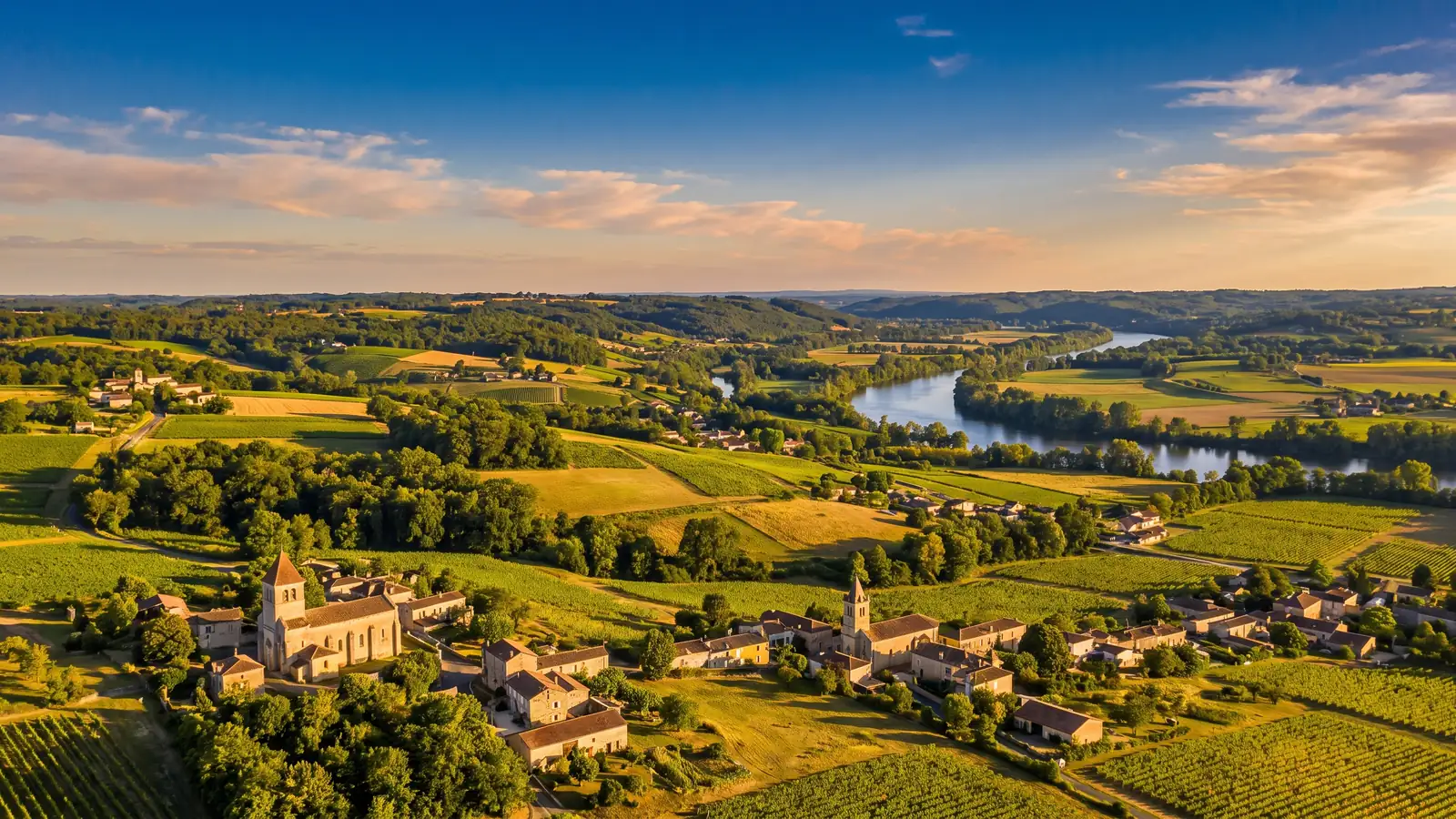
Near Eynesse, you’ll find the bastide town of Sainte-Foy-la-Grande, the Château de Montaigne, the site of the Battle of Castillon, Bergerac, and the Périgord Pourpre region, and, a little further away, Saint-Émilion. The village is ideally situated between the Bordeaux vineyards and the Périgord: here are the must-see attractions, all of which can be visited on a day trip.
Sainte-Foy-la-Grande, Montaigne, and Castillon
The immediate neighbor, Sainte-Foy-la-Grande (7 km) is an elegant Bastide dating from 1255 On the banks of the Dordogne: a square lined with arcades, neat little streets, half-timbered houses, and—on Saturdays—one of the region’s most beautiful markets. Six kilometers away, the Montaigne Castle, in Saint-Michel-de-Montaigne, houses the famous Bookstore Tour where the philosopher wrote the Essays between 1571 and 1592 — a literary pilgrimage site, set on a beautiful vineyard estate. To the west, Castillon-la-Bataille (~23 km) brings to mind the final battle of the Hundred Years' War, on July 17, 1453, which restored Guyenne to the King of France; every summer, a grand nighttime spectacle reenacts this event in Belvès-de-Castillon. Three major sites, blending history and literature, less than half an hour from Eynesse.
Bergerac, the Périgord, and Saint-Émilion
On the other side of the Dordogne lies the Périgord. Bergerac, about thirty kilometers to the east, is a charming town in the valley: a medieval old town, riverbanks, a statue of Cyrano, and the Bergerac wine region—Monbazillac and its sweet wines are not far away. This marks the beginning of the “Purple Périgord,” a region of vineyards and fortified towns. Heading west, back toward Bordeaux, you reach the prestigious Saint-Émilion (about 40 kilometers away), a medieval town listed as a UNESCO World Heritage Site, with its monolithic church and its grand cru wines. Eynesse is thus a discreet base from which to explore, on one side, the right bank of Bordeaux, and on the other, the gateway to the Périgord—two worlds connected by the Dordogne River. A chauffeur who knows the region will be able to tailor an itinerary just for you, structured around wine tastings and sightseeing.
When is the best time to visit Eynesse?
Eynesse and the Pays Foyen are best enjoyed from spring through fall, when the Dordogne Valley is lush and green, the estates welcome visitors, and canoeing and the markets are in full swing. The spring (May–June) and the early summer offer vibrant vineyards, a river that’s still cool, and mild days—perfect for canoeing and biking. Thesummer (July–August) is peak season: the Sainte-Foy market is packed on Saturdays, there are river trips down the Dordogne, wine tastings, and the spectacular reenactment of the Battle of Castillon on summer evenings—it’s also the hottest time of year, when the cool river is a welcome relief. Thefall (September–October), finally, is perhaps the most beautiful time of year: it's the season of grape harvest, the light bathes the hillsides in gold, and the crowds thin out. The sweet and syrupy white wines—the region’s specialty—are harvested late, as part of the late-harvest process. No matter the time of year, the valley’s mild climate—one of the most temperate in the Gironde—makes Eynesse a pleasant place to visit for much of the year. A weekend is all it takes to experience the best it has to offer.
| Season | Atmosphere | Ideal for |
|---|---|---|
| Spring (May–June) | green vineyards, a cool river, tranquility | canoeing, biking, first tastings |
| Summer (July–August) | peak season, market, Castillon show | family, canoeing, lively evenings |
| Fall (Sept.–Oct.) | grape harvest, golden light, tranquility | wine tourism, walks, photography |
Getting to Eynesse from Bordeaux
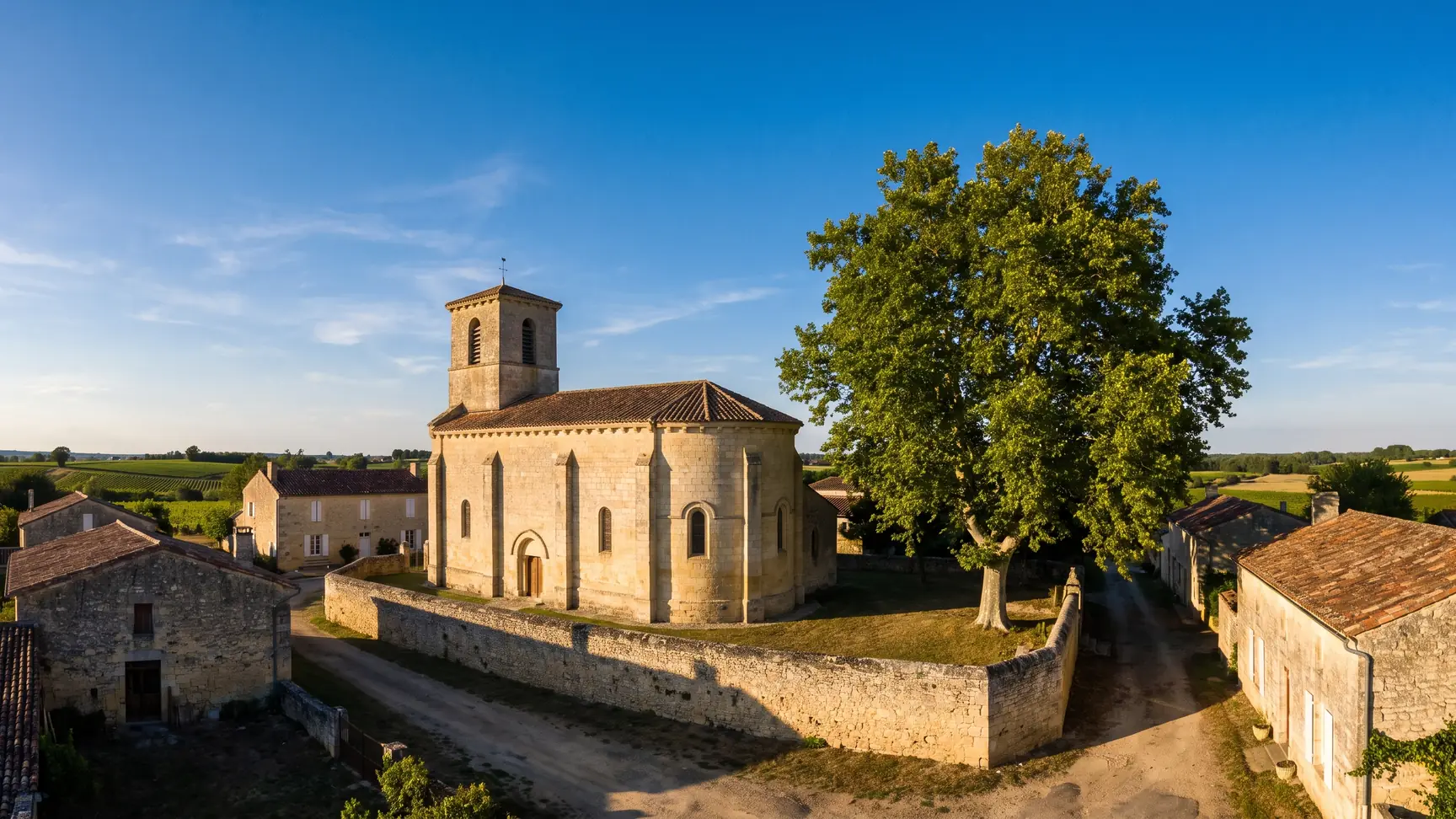
Eynesse is about 73 km from Bordeaux, or about a 1-hour-20-minute drive. The fastest route heads east on the highway and then through the Dordogne Valley, toward Castillon-la-Bataille and Sainte-Foy-la-Grande. The village does not have a train station: the nearest one is in Sainte-Foy-la-Grande, seven kilometers away—and, good news, it’s served by direct trains from Bordeaux.
| Route | Distance | Duration | Details |
|---|---|---|---|
| Bordeaux → Eynesse | ~73 km | ~1 hour 20 minutes | Starting at ~€145 for a chauffeur service |
| Bordeaux-Mérignac Airport → Eynesse | ~85 km | ~1 hour 25 minutes | pickup at the terminal |
| Sainte-Foy-la-Grande Station → Eynesse | ~7 km | ~11 min | Direct TER train from Bordeaux |
| Eynesse → Bergerac | ~30 km | ~37 min | Purple Périgord, Monbazillac |
By car, it takes just over an hour to reach Eynesse from Bordeaux: the route follows the Dordogne Valley through Libourne and Castillon-la-Bataille, then winds through the hills of the Pays Foyen. By train, it’s surprisingly easy: the Sainte-Foy-la-Grande station (7 km away) is on the Nouvelle-Aquitaine TER line between Bordeaux and Bergerac – Sarlat line, with direct connections from Bordeaux-Saint-Jean in under an hour, according to the current TER Nouvelle-Aquitaine schedule, which should be checked before departure. Recently renovated, this station makes Eynesse an easy destination to reach by combining train and private chauffeur: get off at Sainte-Foy, where an executive car service takes over for the final seven kilometers to the village, as there is no direct local transportation. It’s also the ideal solution for exploring the Pays Foyen region afterward without a car.
Whether it’s for a wine-tasting getaway, a day of canoeing on the Dordogne, or a pickup timed to coincide with your train arrival, booking a chauffeur guarantees a comfortable and punctual ride—book a driver from Bordeaux to Eynesse or explore all our destinations.
Frequently Asked Questions
Where is Eynesse located?
Eynesse is a small wine-growing village in the Gironde, in the far east of the department, in the Pays Foyen region. It is situated on the hillsides of the left bank of the Dordogne (the southern slope of the valley), about 73 km east of Bordeaux and just seven kilometers from Sainte-Foy-la-Grande, its market town and train station. Administratively, it belongs to the Libourne arrondissement, the Réolais et Les Bastides canton, and the Pays Foyen community of municipalities. It is a border village: the Dordogne River separates it from the Périgord region, with Bergerac just about thirty kilometers away. From Bordeaux, it’s about a 1-hour-20-minute drive, or you can take a direct train to Sainte-Foy followed by a short transfer.
How much does a transfer from Bordeaux to Eynesse cost?
We offer a fixed-price transfer from Bordeaux to Eynesse, starting at approximately €165 one way (about 73 km, approximately 1 hour and 20 minutes by car), in a Mercedes sedan or a van seating up to 8 passengers, with a professional driver. The trip is direct, door-to-door: pickup at the airport, Saint-Jean train station, or your hotel in Bordeaux, and drop-off directly at your desired address in Eynesse, including luggage. The fixed quote is provided and confirmed in writing before departure, with no unexpected meter charges. This is particularly convenient for a wine-tasting getaway in the Pays Foyen, a day of canoeing on the Dordogne, or for reaching your accommodations without renting a car—especially since the village doesn’t have a train station.
Is Eynesse on the right bank or the left bank of the Dordogne?
On the left bank, contrary to what is often reported. The Dordogne River flows here from east to west and borders the entire northern edge of the town; the village is spread out on the southern slope—that is, on the left bank—facing the Périgord region, which begins on the opposite bank. It is frequently confused with the wine-growing “right bank” of Castillon and Saint-Émilion, but geographically, Eynesse is indeed on the left bank. The local appellation, Sainte-Foy Côtes de Bordeaux, is itself described as a vineyard on the “left bank of the Dordogne.” This kind of detail is part of what this guide verifies: Eynesse is a village on a south-facing hillside, overlooking the river and the nearby Périgord region.
Can we visit the Château du Barrail in Eynesse?
The Château du Barrail, built in the 15th century and remodeled in the 16th and 18th centuries, is listed as a Historic Monument (not “classified”): The designation took place in two stages: in 1972 for the gatehouse, and then in 1987 for the main castle building, its spiral staircase, and its fireplaces. However, it is privately owned, and no source mentions regular public access: it can therefore be admired from the outside, without having to worry about opening hours. The castle features a curious “bow-shaped” tower, shaped like the prow of a ship. Its name preserves the memory of a seigneurial toll on the Dordogne River (“barrail” means “dam” in Old Gascon).
What is Eynesse wine?
Eynesse is part of the Sainte-Foy Côtes de Bordeaux appellation, the easternmost vineyard region in the Bordeaux area, on the border with the Périgord. Since 2016, it has been a complementary geographical appellation to the Côtes de Bordeaux, encompassing 19 municipalities around Sainte-Foy-la-Grande. Its distinctive feature is its diversity: the region produces reds and dry whites, but also—more rarely for Bordeaux—sweet and dessert whites, as well as rosés, grown on south-facing slopes in gravel soils mixed with clay and limestone. Family-owned wineries offer tastings—often by appointment—at prices much more affordable than those in the neighboring prestigious appellations. A private chauffeur allows you to visit multiple wineries without worrying about driving back.
What is there to do in Eynesse?
People come to Eynesse for the Dordogne River and the wine. The main attraction is a canoe trip down the river, starting from the village and heading toward Pessac-sur-Dordogne (about 8 km, 2 hours, with a shuttle). You can also taste the Sainte-Foy Côtes de Bordeaux wines at the vineyards on the hillsides, often by appointment. Since the village is very small, it’s a great base for exploring the Pays Foyen region: the large Saturday market in Sainte-Foy-la-Grande (7 km, one of the most beautiful in Gironde), the tower where Montaigne wrote the Essays (6 km), and, in the summer, the nighttime reenactment of the Battle of Castillon (25 km). The Pays Foyen is also great for exploring by bike, with e-bikes available for rent at the tourist office. It’s the perfect way to spend a peaceful weekend.
Is there a market in Eynesse?
There is no regular market in Eynesse itself, but the area’s main market is very close by: the market in Sainte-Foy-la-Grande, seven kilometers away, is held on Saturday mornings (from about 8 a.m. to 1 p.m.) at Place Gambetta, with some 200 vendors. It is one of the most renowned markets in southwestern France—voted “the most beautiful market in Gironde” in 2021 and listed among France’s great exceptional markets. You’ll find products from the Pays Foyen and neighboring Périgord: fruits, vegetables, cheeses, wines, and foie gras. It’s a must-do outing during a stay in Eynesse, best combined with a visit to the bastide of Sainte-Foy, founded in 1255. A driver can take you there and bring you back, with the trunk full of your purchases.
Is it possible to go canoeing in Eynesse?
Yes, it's one of the village's main attractions. Eynesse is a recognized boarding and disembarking point on the Dordogne River: for example, you can paddle from Eynesse to Pessac-sur-Dordogne—a distance of about eight kilometers (nearly two hours)—with a return shuttle organized by the local club. The river is calm, and the trip is family-friendly, winding through vineyard-covered hillsides and wooded riverbanks protected under the Natura 2000 program. Stand-up paddleboarding is also available in the area. A chauffeur can drop you off at the starting point and pick you up at the finish, which eliminates the need to arrange for two cars. Be sure to check the operating hours and water levels with the Pays Foyen canoe centers.
How far is it from Bordeaux to Eynesse?
About 73 km by road, or about a 1-hour-20-minute drive (not to be confused with the often-cited “68 km east of Bordeaux,” which refers to the distance as the crow flies). The route follows the Dordogne Valley through Libourne and Castillon-la-Bataille, then up the hillsides of the Pays Foyen. For a private chauffeur, the fare is fixed and provided in advance, starting at approximately €145 one way. The village does not have a train station, but the station at Sainte-Foy-la-Grande, seven kilometers away, is served by direct trains from Bordeaux-Saint-Jean that take less than an hour: so you can take the train to Sainte-Foy and then hire a chauffeur for the final few kilometers to Eynesse.
How do I get to Eynesse by train?
Eynesse does not have a train station, but the station in Sainte-Foy-la-Grande, seven kilometers away, is very well served. It’s located on the TER Nouvelle-Aquitaine Bordeaux–Bergerac–Sarlat line, with direct connections from Bordeaux-Saint-Jean in less than an hour, according to the current TER Nouvelle-Aquitaine schedule, which should be checked before departure. Recently renovated, this station makes Eynesse an easy destination to reach by combining train and private chauffeur: get off at Sainte-Foy, where a chauffeured transfer takes over for the final seven kilometers to the village, as there is no direct public transportation. It’s also the best way to explore the Pays Foyen—wine tastings, canoeing, the market—without having to rent a car.
Is Eynesse close to Sainte-Foy-la-Grande and Bergerac?
Yes, Eynesse is practically right next to Sainte-Foy-la-Grande, just seven kilometers away (about ten minutes): in fact, the village is served by the Sainte-Foy post office (zip code 33220). Sainte-Foy is the area’s market town and railway station, with its beautiful bastide dating from 1255 and its Saturday market. Bergerac, on the other side of the Dordogne River in the Périgord region, is about thirty kilometers to the east (roughly 37 minutes away): it marks the beginning of the Périgord Pourpre region and the Monbazillac vineyards. This border location, between the Gironde and Dordogne departments, is what makes Eynesse such an attractive base for your stay. A chauffeur allows you to easily explore both regions without worrying about driving.
When is the best time to visit Eynesse?
Preferably from spring through fall. Spring (May–June) features vibrant vineyards and mild days, perfect for canoeing and biking. Summer (July–August) is peak season: the Sainte-Foy market on Saturdays, canoe trips down the Dordogne, wine tastings, and, on summer evenings, the spectacular Battle of Castillon reenactment nearby. Fall (September–October) is perhaps the most beautiful time of year: it’s harvest season (the region’s sweet white wines are harvested late), the light bathes the hillsides in gold, and the crowds thin out. The climate of the Dordogne Valley, one of the mildest in the Gironde, makes Eynesse pleasant for much of the year. A weekend is enough to experience the essentials: the river, the vineyards, and the villages of the Pays Foyen.
Further Reading
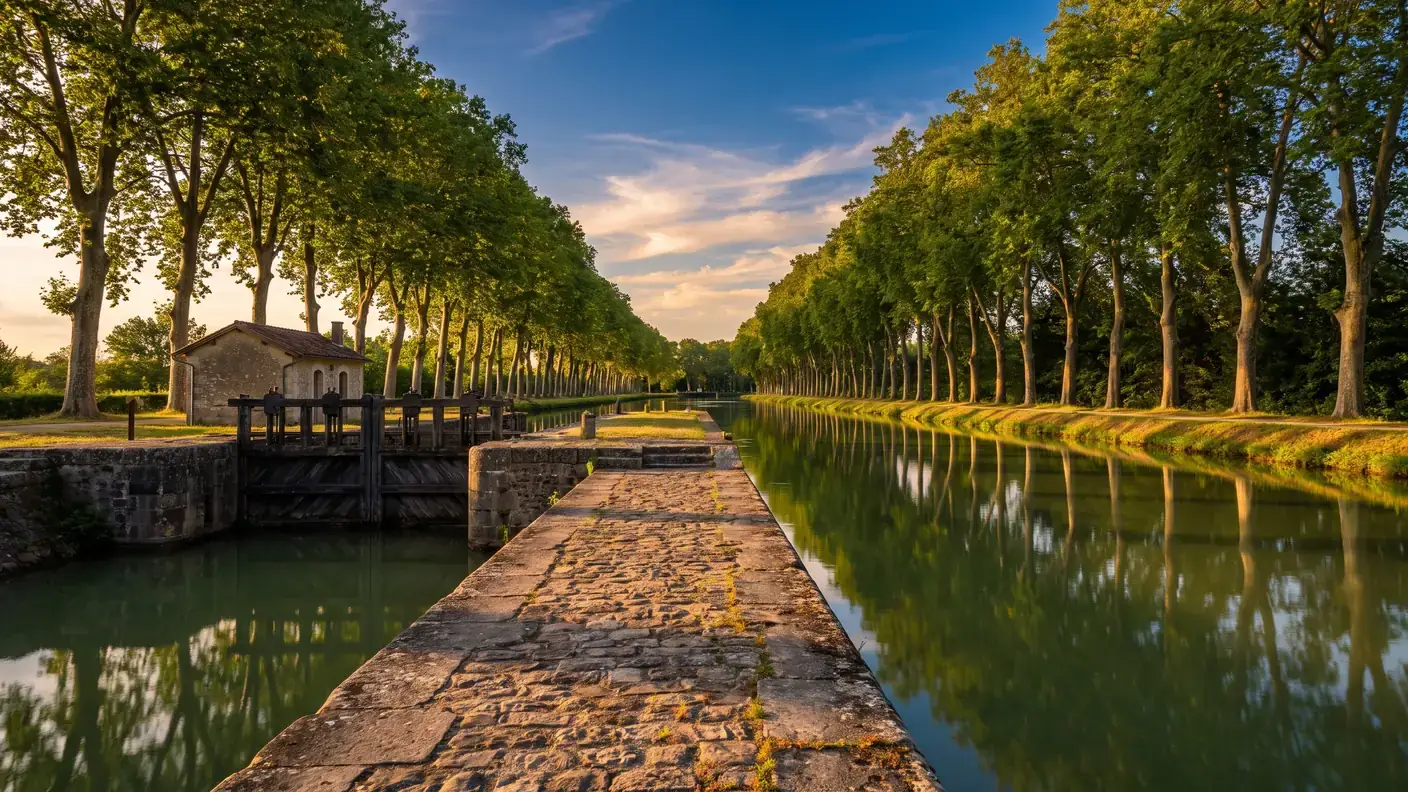
- The neighboring bastide on the Garonne: see the Castets-en-Dorthe Guide (the Garonne Canal and its locks)
- The nearby battlefield: see the Guide to Gensac (a hilltop village on the slopes of the Dordogne)
- The nearby Cité du Vin: see the Saint-Émilion Guide (UNESCO-designated medieval town and fine wines)
- Understanding our rates and vehicles: see the "Book a Driver" page (sedan & van, fixed-price quote)
- Plan your trip: Book a private chauffeur from Bordeaux to Eynesse or explore all our destinations
Sources and References
- Wikipedia — Eynesse — Gironde, Pays Foyen, south slope/left bank of the Dordogne, population 581 (2023), Château du Barrail, etymology: Ainitia/Ainus, Natura 2000
- POP Mérimée — Château du Barrail (PA00083543) — Listed as a Historic Monument: gatehouse (facades/roofs) April 19, 1972; castle (facades, roofs, spiral staircase, fireplaces) December 22, 1987
- Sainte-Foy Côtes de Bordeaux — appellation — the name used for the Côtes de Bordeaux since 2016 (decree of November 10, 2016), 19 municipalities, reds/whites (dry/sweet/semi-sweet/dessert wines)/rosés
- Pays Foyen Tourist Office — canoeing on the Dordogne (Eynesse → Pessac-sur-Dordogne), Sainte-Foy market on Saturdays, exploring the Pays Foyen by e-bike
- Wikipedia — Sainte-Foy-la-Grande — a bastide founded in 1255 by Alphonse de Poitiers, with a Saturday market and a TER train station (Bordeaux-Bergerac-Sarlat line) located about 7 km from Eynesse
- The Battle of Castillon — a performance — a summer nighttime spectacle at the Domaine de Castegens, Belvès-de-Castillon (~25 km), 600 volunteers, 40 horses
Article updated in July 2026.
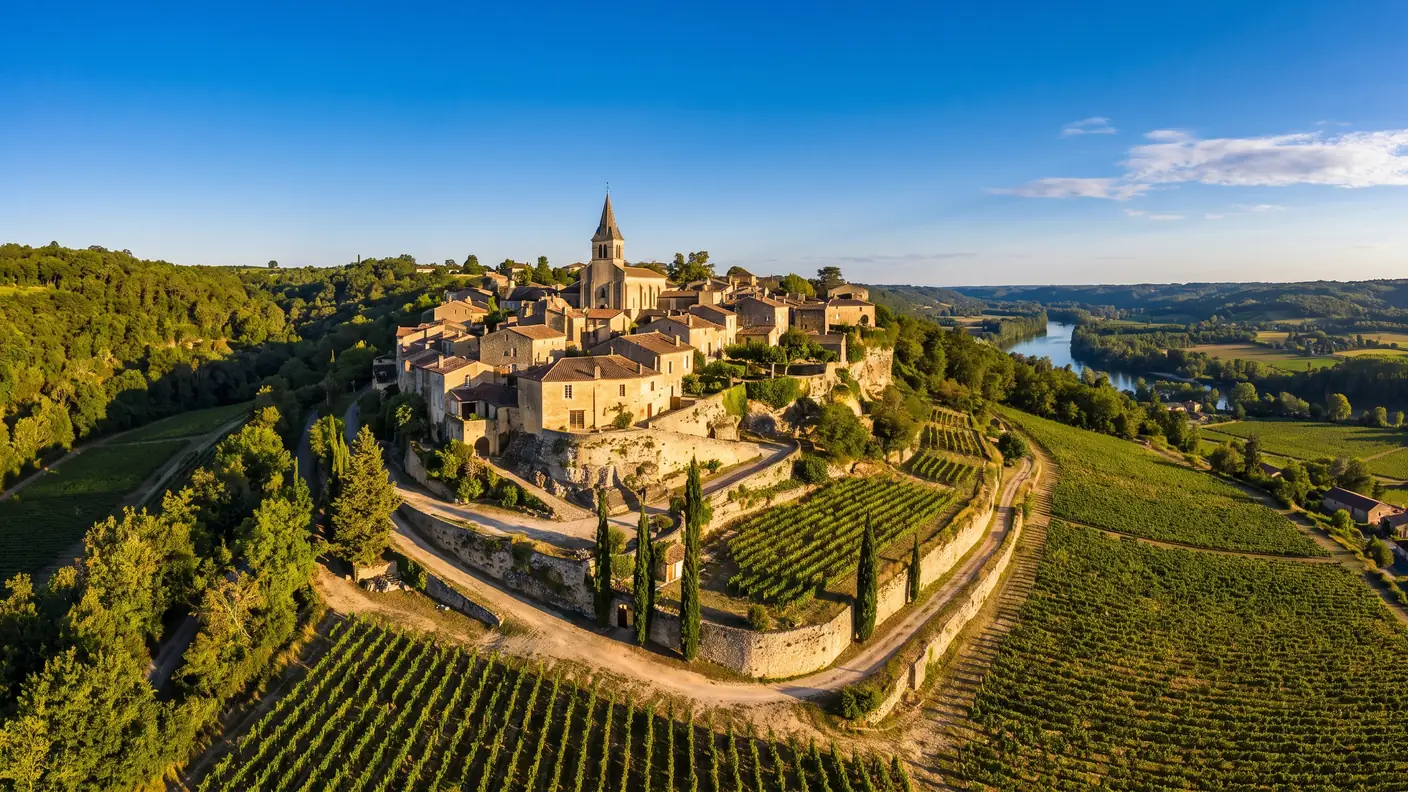
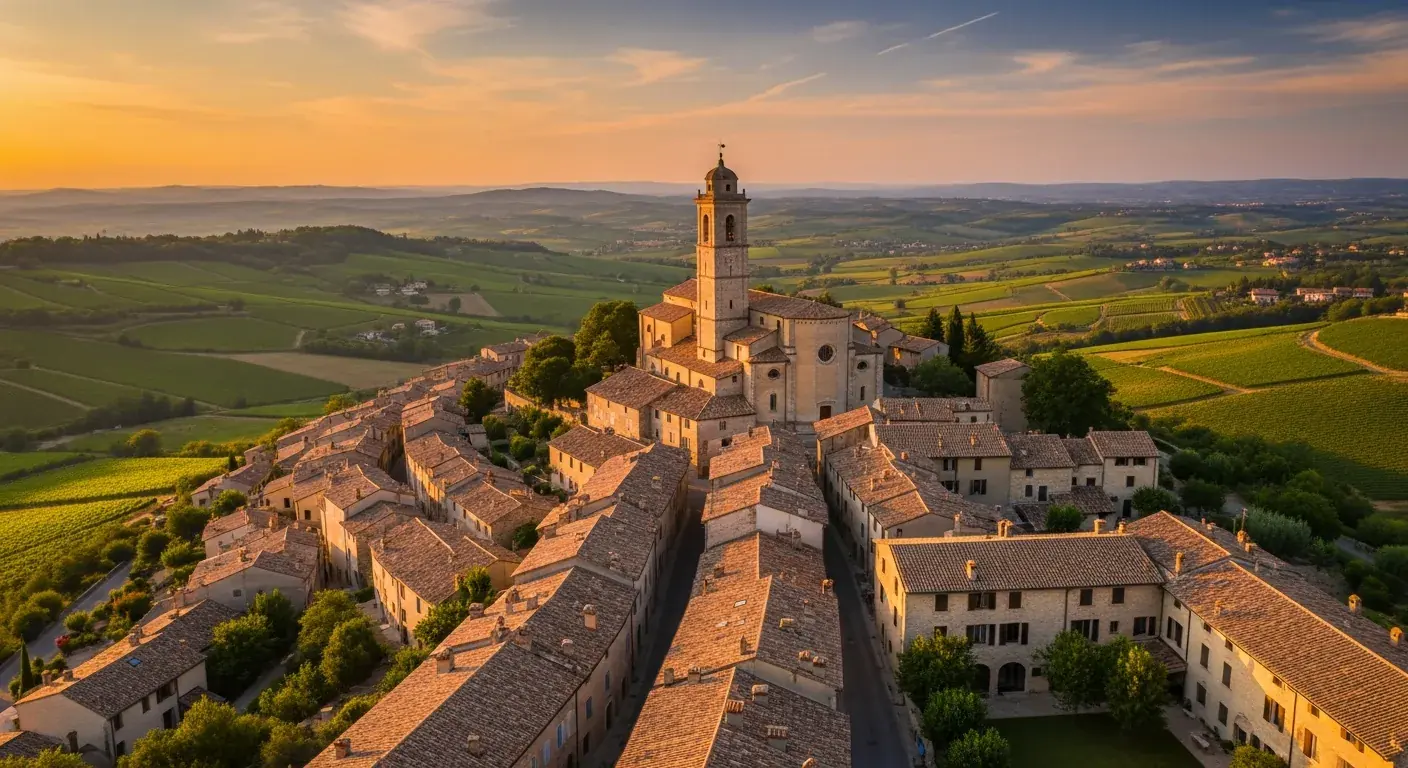
On the Way to the Foyen Region
Direct transfer from Bordeaux (~1 hour 20 minutes) to Eynesse and the Dordogne hillsides—from the airport, train station, or hotel to the village, including luggage. Fixed-price quote in writing, with no unexpected meter charges.