Bordeaux to La Couronne: abbey and Charente papermaking heritage
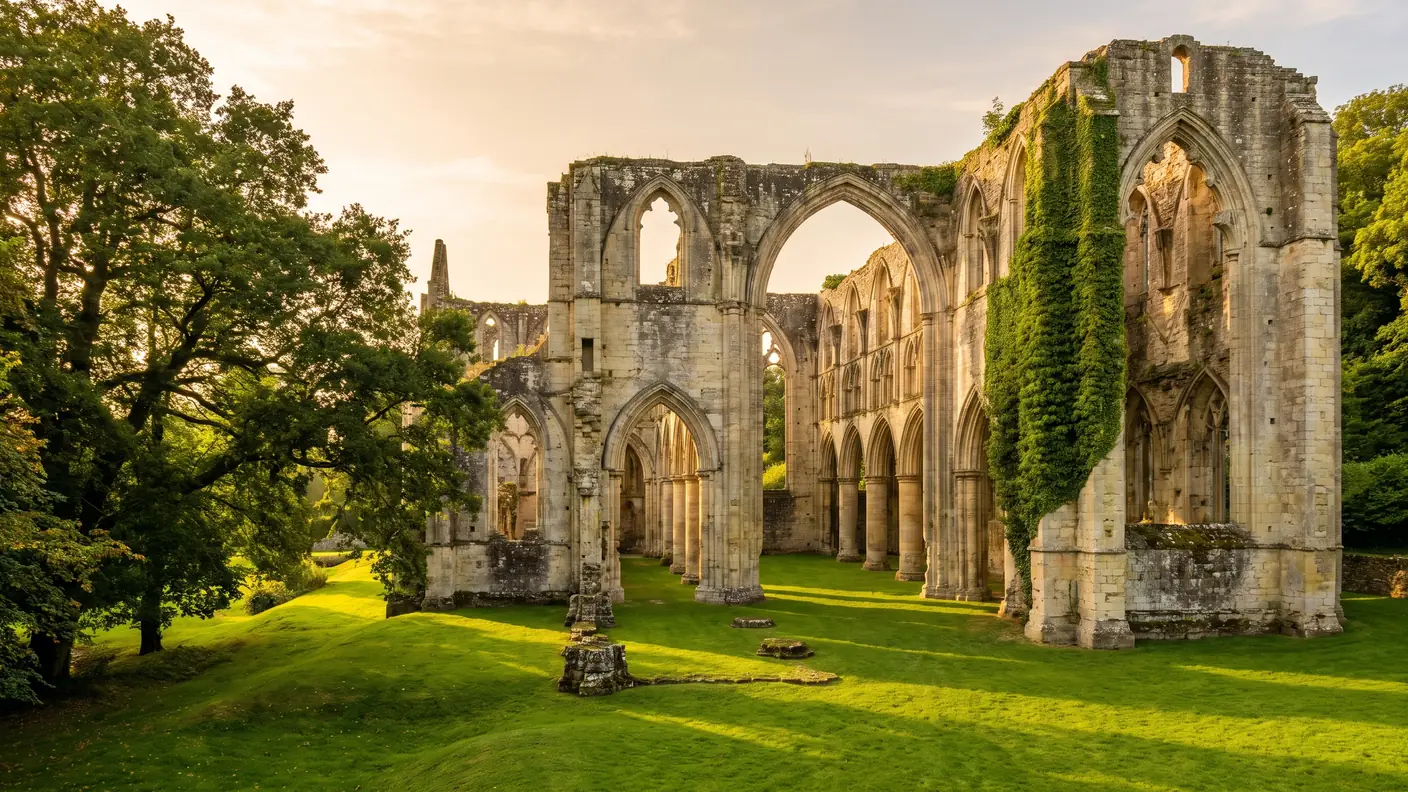
The Gothic ruins of a large Augustinian abbey and one of the birthplaces of paper-making in the Angoumois region, just a few minutes from Angoulême. Formerly known as “La Palud,” which took its name from the marshes, La Couronne hides a little-known heritage site south of the upper town—1 hour and 40 minutes from Bordeaux.
La Couronne at a Glance
La Couronne (Charente) is a municipality within Greater Angoulême, located just south of the upper town of Angoulême. There, you can visit the Gothic ruins of a large abbey of Canons Regular of St. Augustine, founded in 1118, where visitors can trace the history of a little-known industrial past: the town was one of the main centers of papermaking in the Angoumois region, right up to the famous “Le Nil” cigarette paper. Formerly a marsh village known as “La Palud,” it took its name from its monastery. Add the Renaissance-style Château de l’Oisellerie—now an agricultural high school—the vineyards of the Fins Bois du Cognac appellation, and the woods of the Forêt des Moines, and you have a peaceful heritage getaway just ten minutes from Angoulême. Allow ~113 km from Bordeaux, about 1 hour and 40 minutes via the A10/N10, or as soon as 203 € by private car, door-to-door.
| Landmark | Details |
|---|---|
| Department | Charente (16) · Nouvelle-Aquitaine |
| Status | A municipality in the Greater Angoulême area, south of Angoulême |
| Population | ≈ 7,765 residents (Couronnais) · 4th largest in the metropolitan area |
| Must-Sees | Notre-Dame Abbey (ruins) · Château de l'Oisellerie · Paper-making heritage |
| Terroir | Cru des Fins Bois from the Cognac appellation |
| From Bordeaux | ≈ 113 km · ~1 hr 40 min via the A10/N10 · starting at 203 € |
People often drive past La Couronne without noticing it, their attention drawn to the nearby silhouette of Angoulême. It’s a shame, because this town in the inner suburbs is home to one of the most surprising sites in the Charente: a ruined medieval abbey whose high arches open up to the sky, a history of papermaking dating back to the 16th century, and a Renaissance castle converted into a winemaking school—all nestled amid Cognac vineyards and woods. The very name of the town is misleading: it evokes neither a royal crown nor a relic, but simply a rise of land above the marshes.
This guide tells you everything you need to know before you come: exactly where La Couronne is located and what sets it apart from Angoulême, the history of its Augustinian abbey and its ruins, its extraordinary paper-making heritage, its other listed monuments, the Cognac region that surrounds it, what you can actually do there—and how to arrive well-rested from Bordeaux, without worrying about parking or connecting transportation. Every fact cited here has been verified using the official sources listed at the end of the article; we’ll also debunk the most persistent myths about the city along the way.
Where is La Couronne located?
La Couronne is a municipality in the Charente (16) — the Angoulême and Cognac department, not to be confused with the neighboring Charente-Maritime department — in the Nouvelle-Aquitaine region. It is part of the Angoulême district and the urban community of the Greater Angoulême, of which it is one of the main municipalities; it also serves as the administrative center for its canton. Its INSEE code is 16113, its ZIP code is 16400. Its 28.82 km², with elevations ranging from 31 to 137 meters, are home to approximately 7,765 residents (2023 census, INSEE), known as Couronnais and Couronnaises—which makes it the 4th most populous municipality in the Angoulême metropolitan area, behind Angoulême, Soyaux, and Ruelle-sur-Touvre. The city lies immediately south-southwest of Angoulême, forming its first suburban outpost.
The name of the town deserves some attention, as it gives rise to persistent confusion. It’s easy to imagine a royal crown, or even a relic connected to the crown of thorns—but that’s not the case. The etymology is purely topographic: Latin Corona or Coronella refers to a “small hill,” a modest patch of dry land rising up in the middle of the marshes. In fact, the town was originally called "La Palud" — the marshes — and adopted the name of its abbey only at the end of the 18thth century, to the point where today it literally bears the name of its monastery. Be careful of the homonym, too: this La Couronne in Charente has nothing to do with the Couronne / Cap Couronne, Martigues, a Mediterranean seaside resort in the Bouches-du-Rhône department. Here, we're right in the heart of the Angoumois region.
The town is crisscrossed by a network of small streams that carve out green valleys at the foot of the Cuesta d'Angoulême: the Boëme, the main one; the Charreau—masculine form: “le Charreau,” not to be confused with the neighboring town of Claix—and the Eaux-Claires, which form part of the boundary with Angoulême. Added to these are the Vieille Boëme and the Fontaine du Roc stream, making up a hydrographic network of approximately 26 kilometers. Two wooded areas complete the picture: the Forêt des Moines and the Bois Brûlé. It is precisely this water that made La Couronne’s fortune: it powered its paper mills for centuries.
How far is it from Bordeaux?
From Bordeaux, allow about 113 km and 1 hour and 40 minutes by car, via the A10 highway and then the N10 toward Angoulême. La Couronne is located just south of the city, on the road leading toward Périgueux and the Southwest: you’ll leave the main roads to reach the abbey and the village without having to drive through all of Angoulême. The nearest major city is still Angoulême, just 7.5 km, or about 10 minutes — a peaceful place to stay in La Couronne while enjoying the sights and amenities of the Charente prefecture. The table below summarizes the actual driving distances from the town.
| From La Couronne | Driving distance | Duration |
|---|---|---|
| Angoulême | ≈ 7.5 km | ~11 min |
| Cognac | ≈ 44 km | ~45 min |
| Saintes | ≈ 72 km | ~1 hr 10 min |
| Bordeaux | ≈ 113 km | ~1 hr 40 min |
Notre-Dame Abbey in La Couronne
The town’s most prominent landmark—the one that gave it its name—is the Abbey of Notre-Dame de La Couronne. This is where we must correct the first common misconception: contrary to what is often written, it is neither a Benedictine nor a Cistercian abbey, but an abbey of Canons Regular of St. Augustine—the Augustinians, a community of clerics living according to a rule. The foundation is dated to the exact day: the cornerstone was laid on May 12, 1118, by Lambert and the monks who had come from La Palud, and the taking of possession of the sanctuary took place on March 12, 1122[1], in the presence of Vulgrin II, Count of Angoulême, the Bishop of Périgueux, and the Bishop of Angoulême. Lambert was its first abbot. That covers its origins; what followed was a period of grandeur, followed by a slow decline.
An Abbey of Canons Regular of St. Augustine
It is important to distinguish between two structures that are often confused. The early church, the original one, was founded in 1118 and occupied as early as 1122. But the ruins we see today—the tall arches opening up to the sky—do not date from that first construction phase: they are the remains of the grand Gothic abbey church built later, with the choir and nave constructed between 1171 and 1194 and was dedicated in 1201 by the Archbishop of Bordeaux. It is often said, for the sake of brevity, that “the ruins date from 1118–1122”: this is inaccurate; they date from the late 12thth and very early 13thth centuries. A 12thth-century canon returning today would not recognize the church of his youth.
Gothic ruins, not Romanesque ones
Another important point: the abbey church is sometimes described as “Romanesque.” In reality, its remains are primarily characteristic of the early Western Gothic style—the so-called Angevin or Plantagenet Gothic—which was then making its way into western France. La Couronne is even cited as one of the points where this style first appeared in the region. So don’t confuse it with the Cathedral of Saint-Pierre in Angoulême, which is indeed Romanesque, with its famous sculpted façade: located just a few kilometers apart, the two buildings represent two distinct periods and two different aesthetic styles of medieval art in the Charente region. This is also what makes a combined visit so interesting: moving from the ruined Gothic abbey church to the intact Romanesque cathedral is like traversing a century of architectural history.
The abbey's history took a turn in the modern era. Like so many other sanctuaries in the Charente region, it was plundered by the Protestants during the Wars of Religion, on two occasions: May 22 1562, then in 1568. Sold as a national asset during the Revolution, it was subsequently subjected to an unenviable fate: as early as 1807, its stone was worked as a quarry. It is this slow dismantling that explains the state of ruin in which the abbey church and cloister find themselves today. What visitors see today is not a contrived “romantic ruin,” but the skeleton of a grand edifice that was patiently dismantled to be rebuilt elsewhere—until protection as a Historic Monument put an end to the plundering.
A property jointly owned by Lafarge and the Department
The abbey has been designated a Historic Monument since February 17, 1904 (POP, Instruction Sheet PA00104347), in connection with the ruins of the abbey church; the listing was subsequently expanded to include an inscription in 1928 (18thth-century façades and gate), an inscription in 1999, and a designation in 2001 covering several parcels. One detail that often surprises visitors is that the site is now shared between two owners. The cement manufacturer Lafarge, located next door, owns the residence and monastic buildings; the Charente Department owns the cloister and the abbey church and organizes tours of them. Thus, the ruins of one of the largest monasteries in Aquitaine literally adjoin an industrial site—a juxtaposition of eras that is truly rare.
One last thing, which deserves to be told properly: the legend that Isabelle of Angoulême, Queen of England through her marriage to John Lackland, is buried at the abbey. Local tradition holds this to be true, but historians dispute it: Isabelle died and was buried at Fontevraud Abbey in 1246, alongside the Plantagenets. It’s fun to mention this tradition while visiting, as long as you present it for what it is—a story passed down through local memory, not an established fact. The table below summarizes the key dates that should not be confused.
| Step | Date | Good to Know |
|---|---|---|
| Groundbreaking Ceremony | May 12, 1118 | Lambert, the first abbot, and the monks of La Palud |
| Taking Possession | March 12, 1122 | In the presence of Count Vulgrin II and two bishops |
| Grand Gothic Abbey Church | 1171–1194, dedicated in 1201 | Choir and nave; early Gothic style on the west side |
| Protestant Looting | 1562 and 1568 | Religious Wars |
| National asset, then quarry | Revolution, beginning in 1807 | Removal of the stones |
| Historic Monument designation | February 17, 1904 | + listings in 1928 and 1999 · designation in 2001 |
The cloister and the ruins
What remains of the abbey possesses the solemn beauty of great structures left unfinished by the passage of time. Here you can see tall Gothic arches opening up to the sky, broken columns, and the foundations of the cloister, all set amid lawns overgrown with grass and flowers, surrounded by trees. The visit is peaceful, far from the crowds: this is one of the highlights of La Couronne—that feeling of discovering a grand monument almost all to yourself. You wander from one pillar to the next, looking up at the vanished vaults, and the sheer scale of the ruins is enough to imagine what the abbey church must have been like in its heyday. The cloister and abbey church section, owned by the Charente Department, is the part open to visitors.
One of the largest abbey churches in Aquitaine
According to historical descriptions, the 12thth-century abbey church was considered one of the largest in Aquitaine—though this was seen more as a reputation of the time than as a certified measurement. It was said to have three naves of equal height and five shrines, an unusual scale that reflected the status of the Augustinian community and its wealth. This grandeur also explains the extent of the ruins: the larger the building, the more cut stone it provided for those who wished to build elsewhere. Today, these generous proportions can still be glimpsed in the spacing of the supports and the span of the surviving arches.
The abbey was not just a church: it was a complete monastic complex that had been remodeled over the centuries. The monastic buildings were remodeled between 1750 and 1778, with the creation of a classical main courtyard—these 18thth-century façades are included in the Historic Monument designation. The community itself changed its status: in 1644, the abbey came under the Congregation of Saint Genevieve, that of the canons known as the “Genovefains,” a reform that temporarily revitalized monastic life before the trials of the Revolution.
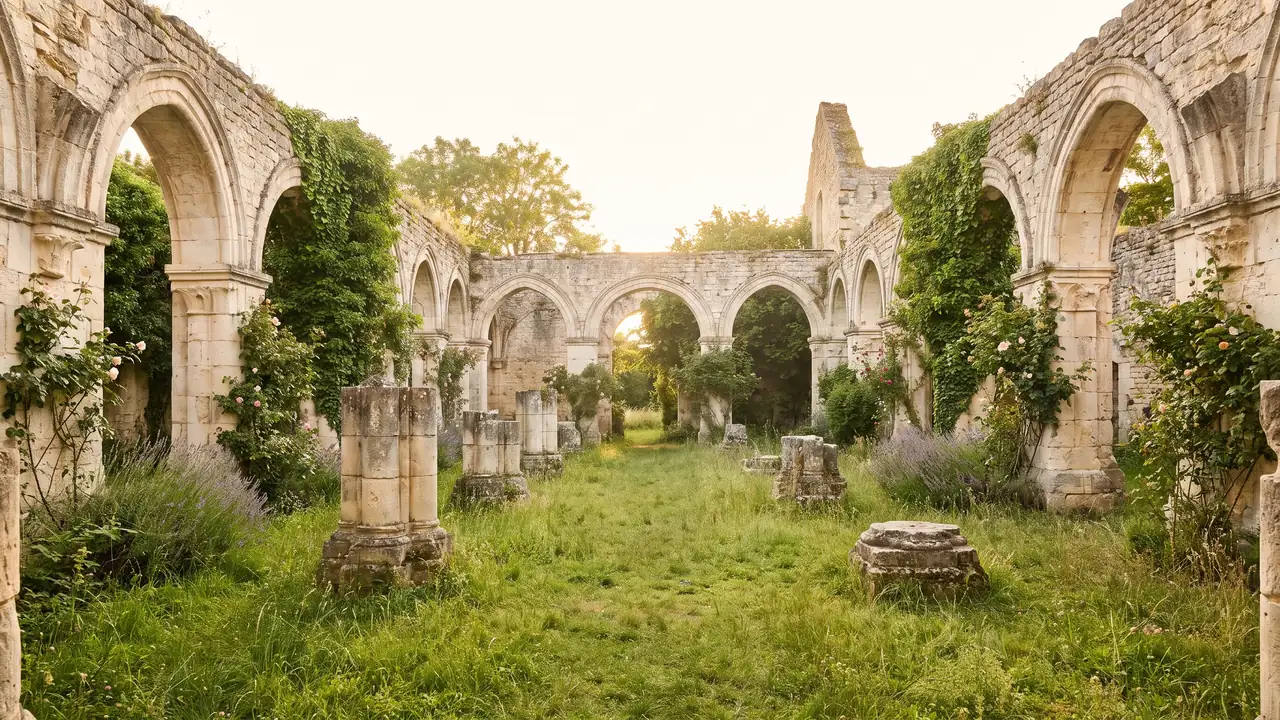
Here's an anecdote—to be taken with a grain of salt, since it comes from an unverified local source: the bell tower is said to have collapsed around 1450, during the Hundred Years' War. Whether true or embellished, the story vividly illustrates the fragility of a grand edifice battered by wars, even before the pillaging of the 16thth century and the revolutionary dismantling. Between the supposed collapse of the bell tower, the two Protestant looting episodes, and its conversion into a quarry, the abbey church of La Couronne has experienced nearly every form of ruin—which makes what still stands all the more precious, as well as what the 1904 preservation order helped to save at the last minute.
La Couronne, the paper capital of the Angoumois region
While the abbey is the medieval face of La Couronne, paper is its industrial soul—and one of the most astonishing chapters in the history of the Charente region. The town was one of the major centers of papermaking in the Angoumois region, an industry that brought prosperity to the area from the 16thth to the 20thth century. A paper mill was operating by 1533 on the Boëme River at Pont-des-Tables; in 1555, the paper mill at Cothiers opened, on the Charreau River—that is, nearly five centuries of paper production at the same location. The clear river water, essential for processing the pulp, and the proximity to Angoulême, a river port for exports, had made this corner of the Angoumois region a paper-making hub long before the industrial era.
Cothiers: Five Centuries of Paper Manufacturing
The scale of the phenomenon is quite surprising. In the 17th century, the parish had about thirty paper vats; and in 1789, nineteen of the thirty-three vats in the Angoumois region were located in La Couronne—meaning that more than half of the region’s production was concentrated in this single town. Generations of paper-making families succeeded one another—Seguin, Gaudichaud, Perrot, Carroy, Lacroix, Laroche, and Laroche-Joubert—exporting their paper as far as England and Spain. The Cothiers paper mill, on the Charreau River, embodies this continuity better than anything else: in operation since 1555, it has endured through the centuries to become, in the industrial era, the heart of a world-class enterprise.
"Le Nil" Cigarette Paper
This is where one of the most famous names in the French paper industry comes into the picture: “Le Nil”, the cigarette paper made by Joseph Bardou and Sons of Perpignan, whose trademark was registered on May 13, 1887. Around 1880, paper manufacturing was entrusted to the Lacroix paper mills in La Couronne; and the Cothiers site became the property of J. Bardou-Le Nil starting in 1943. The name “Le Nil” itself refers to the export of Charente paper to the East for “Levantine” tobacco—a thread linking the rivers of the Angoumois region to the markets of Egypt. Be careful of two common misconceptions, however, before walking away with a nice story that’s a bit off the mark.
First clarification: The “Le Nil” Paper Museum is not located at La Couronne, but in Angoulême, in the Saint-Cybard neighborhood, on the banks of the Charente River. La Couronne is simply the site of the Cothiers industrial complex, where the paper was manufactured; the museum itself is housed in a former factory in Angoulême, a few kilometers away. Second clarification: “Le Nil” and “JOB” are not the same brand. They are two distinct brands from Perpignan, originating from two branches of the Bardou family: JOB is associated with Jean Bardou; Le Nil is associated with Joseph Bardou and his son. Only “Le Nil” is linked to La Couronne, through the Cothiers site. The distinction may seem overly complicated; yet it is significant for anyone interested in the history of industry.
From the paper mill to the Lafarge cement plant
Paper was followed by cement. The Lafarge cement plant in La Couronne was founded in 1928; its rotary kiln dates from 1930[2], modernized in 1975. The industrial history came to a gradual close: the cessation of the firing of the clinker in 2017 (the site would then become a grinding facility), and then the dismantling of the tower, kiln, and chimneys from April 2022. The site, which employed approximately 120 workers, is listed in the General Heritage Inventory (POP, record IA00066265) — a listing, not protection as a Historic Monument; this clarification is useful because another entry in the POP database (the lime kiln IA00042933) actually refers to La Couarde-sur-Mer, on the Île de Ré, and not to La Couronne. A company legend—to be taken with a grain of salt—has it that the cement plant was founded following a train breakdown in 1928 that supposedly revealed ideal limestone and clay deposits: a charming legend, but one that cannot be verified.
| Website / Brand | Key Date | Good to Know |
|---|---|---|
| Pont-des-Tables paper mill | as early as 1533 | On the Boëme |
| Cothiers paper mill | as early as 1555 | In Le Charreau, ~5 centuries in the same place |
| The Golden Age of the Paper Industry | 1789 | 19 of Angoumois’s 33 paper vats were in La Couronne |
| "Le Nil" Paper | registered trademark May 13, 1887 | Production was entrusted to the Lacroix paper mills in Cothiers, Bardou-Le Nil, beginning in 1943 |
| Lafarge Cement Plant | Founded in 1928 | Clinker production ended in 2017 · dismantling began in April 2022 |
L'Oisellerie and Other Landmarks
The abbey is not the only listed monument in La Couronne. The municipality is home to several remarkable buildings—a Renaissance castle, a medieval church, and a paper mill—whose dates of listing are often confused and must be clearly distinguished. A quick overview before going into detail: the abbey was listed in 1904, the Church of Saint-Jean-Baptiste in 1903, the Château de l’Oisellerie in 1911, and the Maison Lacroix in 2013. Four dates, four monuments: enough to gauge the wealth of heritage in a town that is mistakenly believed to have no history.
The Château de l'Oisellerie, Now an Agricultural High School
The most charming of these monuments is undoubtedly the Château de l'Oisellerie. Construction began in 1498 under Arnauld Calluaud, and the building—which was remodeled in the 16thth and 17thth centuries—is a fine example of Renaissance architecture in the Angoumois region. It has been classified as a Historic Monument since 1911. But the Oisellerie has a second life that gives it its unique charm: today, it houses an agricultural and viticultural high school. A Renaissance manor house transformed into a school for winemakers, right in the heart of the Fins Bois cognac region: this phrase alone sums up this quintessentially Charentean blend of heritage and local character. Students learn about viticulture and brandy right where lords once entertained their guests.
Saint John the Baptist and the Lacroix House
The St. John the Baptist Church, in the village, has been designated a Historic Monument since 1903. It is, by one year, the oldest form of protection in the town, predating even that of the abbey. The Lacroix House, also known as Cothiers Mill, has been listed since 2013. It is named after the prominent Lacroix paper-making family, the very same family entrusted with the production of “Le Nil” paper. This historic mill serves as a testament to just how inextricably linked the history of paper and the built heritage of La Couronne are. Finally, beware of a geographical confusion: Saint-Michel Church, built in 1137, is not located in La Couronne, but in the neighboring town of Saint-Michel—even though it was built by monks from the Abbey of La Couronne, which explains the misunderstanding.
The Terroir: Fins Bois Cognac
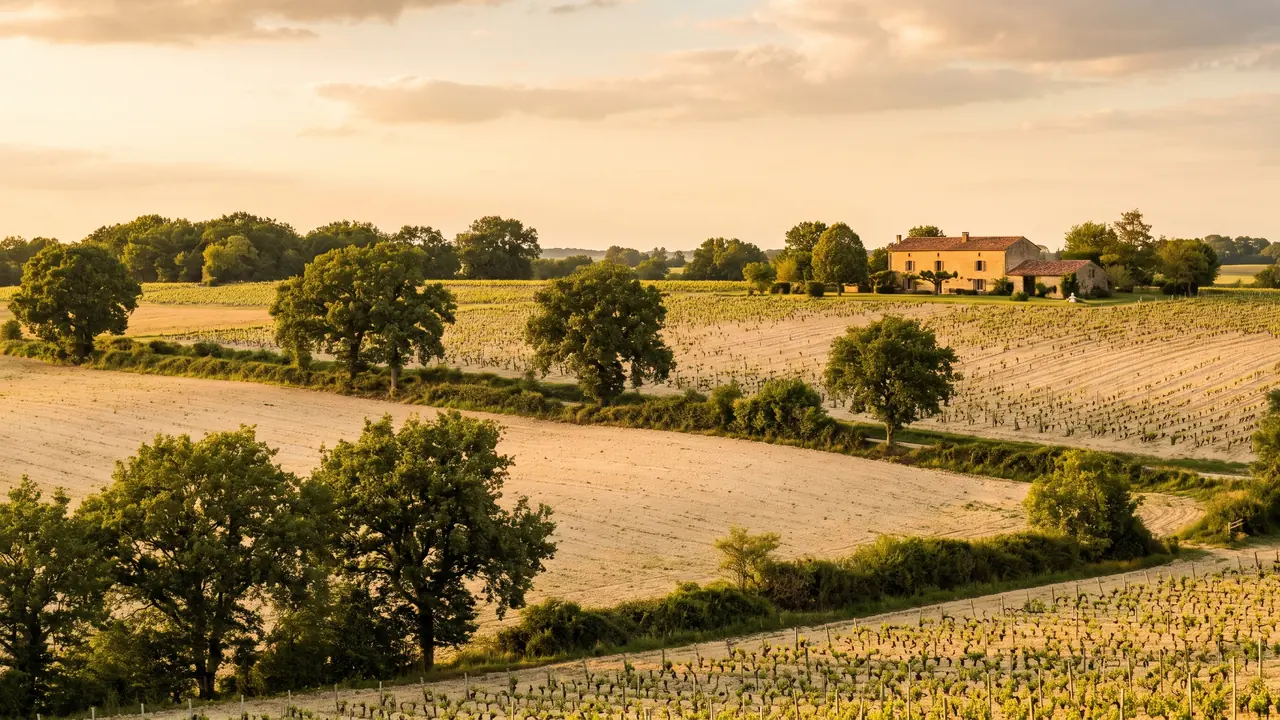
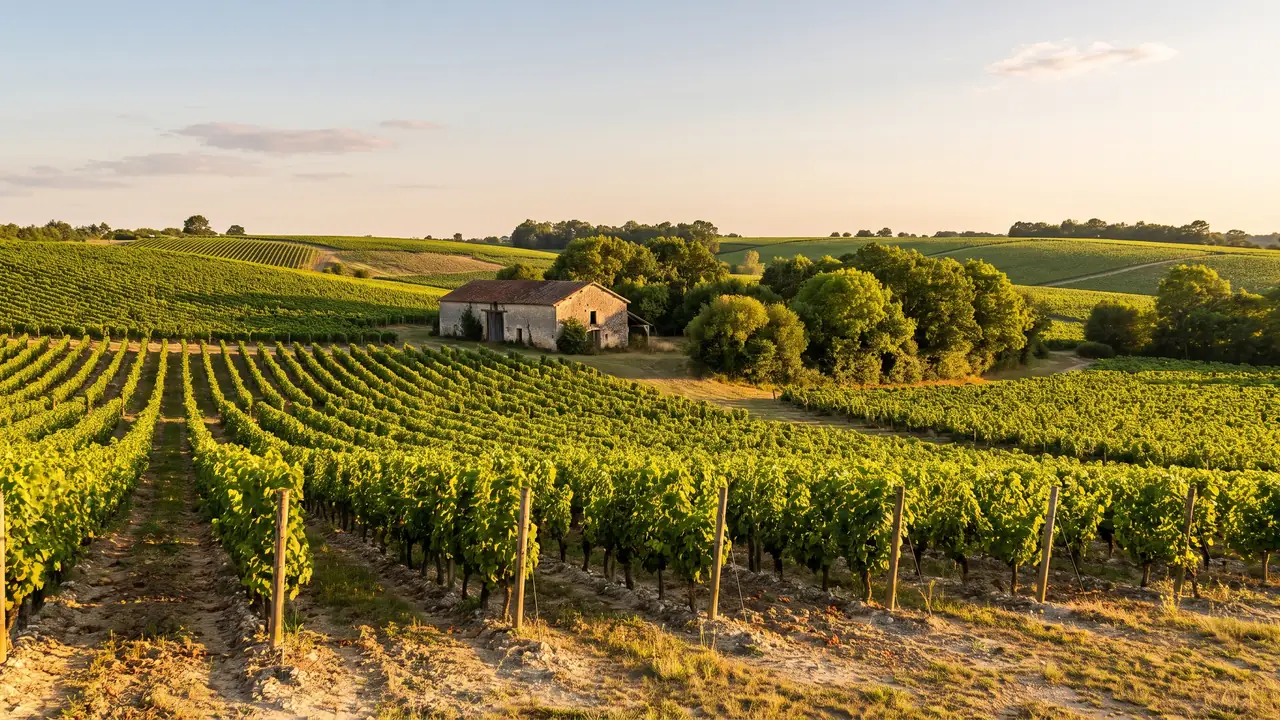
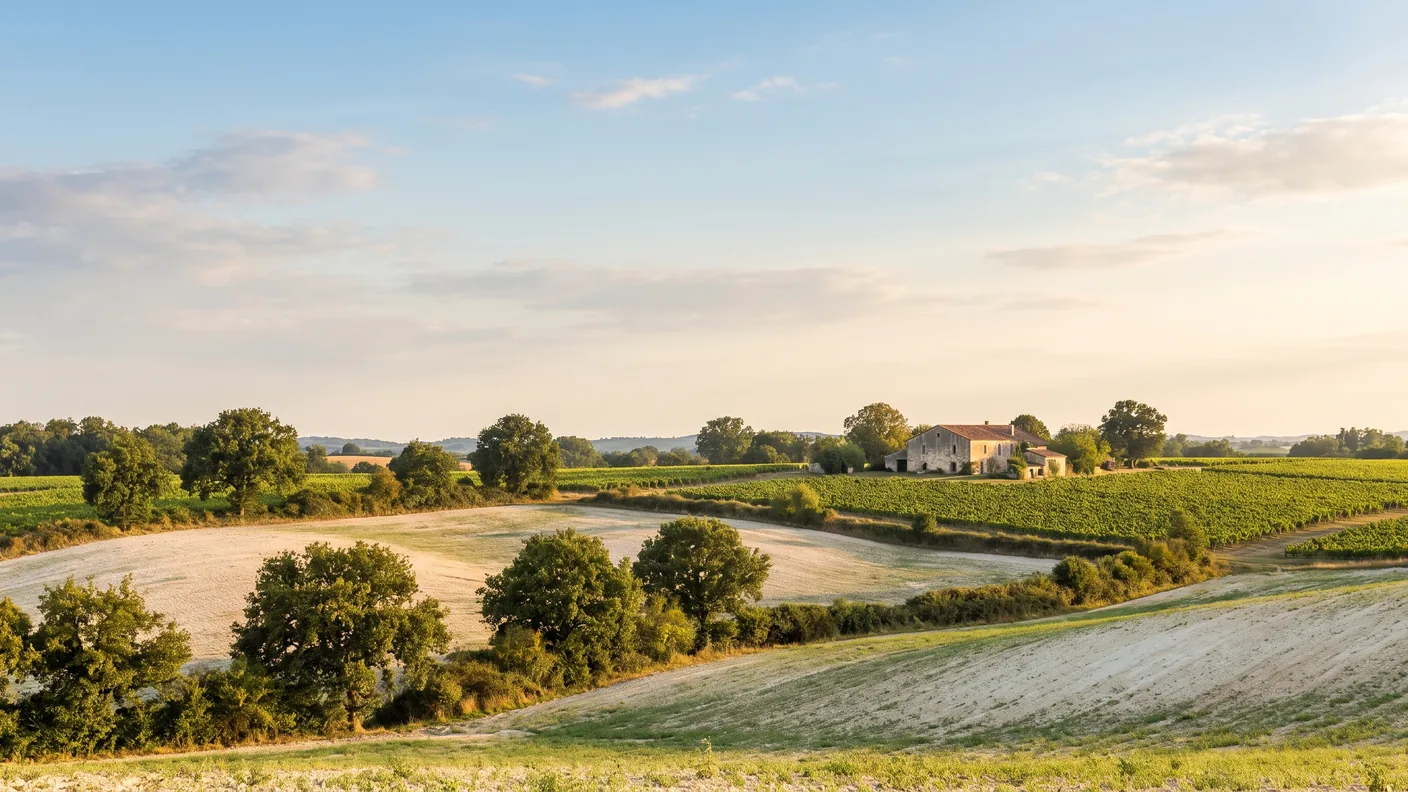
La Couronne is not just a land of rocks—it is also a land of vineyards. The town is located in the Fins Bois cru of the Cognac appellation (BNIC, Crus du Cognac), one of the six zones into which the Charente vineyards are divided based on soil type. It’s no coincidence that Château de l’Oisellerie trains future winemakers here: brandy is part of the landscape. Around the village, rows of vines climb the chalky hillsides and border the woods and rivers, in that quintessentially Charente blend of heritage, nature, and terroir that gives the Angoumois its character. A visit to La Couronne naturally leads to a stop at a local winery.
The Six Cognac Crus
The Cognac appellation is divided into six crus, ranked according to soil type and its influence on the eau-de-vie. At the heart of the region, Grande Champagne and Petite Champagne produce fine cognacs with great aging potential, grown on the most calcareous soils. Next comes Les Borderies, the smallest cru, renowned for the roundness of its eaux-de-vie; followed by the three peripheral crus: Les Fins Bois, Les Bons Bois, and Les Bois Ordinaires. The Fins Bois—the region of La Couronne—is the largest of the six crus, a vast ring encircling the Champagne regions and supplying a major portion of the cognacs used in blends, which are often more supple and ready to drink sooner.
Fins Bois and Pineau des Charentes
The Charente vineyards don’t just produce cognac. These same lands are also home to Pineau des Charentes, a fortified wine created by blending fresh grape must with cognac brandy, served chilled as an aperitif in white, rosé, or red varieties. Discovering the La Couronne region means sampling both: the noble brandy that is cognac, and the more accessible, fruitier Pineau, which accompanies it at the table. Many estates in the Fins Bois region offer tastings and cellar tours. To delve deeper into the world of brandy and its producers, you can continue on to the town of Cognac, about a three-quarter-hour drive away.
What is there to do in La Couronne?
In La Couronne, just outside Angoulême, you can enjoy a wonderful day without ever having to go far. The highlights are divided into two parts: in the town itself—the abbey ruins, the Château de l’Oisellerie, the Church of Saint-Jean-Baptiste, the woods, and the rivers—and in Angoulême, just ten minutes away, to see the Romanesque cathedral, the ramparts, and the Cité de la bande dessinée. It’s a good idea to start with a peaceful visit to the abbey church and cloister, on the Département side, before strolling along the Boëme River or through the Forêt des Moines. In the afternoon, head to Angoulême to explore the Les Halles market, wander through the upper town and its painted walls, or stay in the Angoumois region for a Fins Bois cognac tasting. Here’s a little tidbit that highlights the town’s long-standing commercial heritage: as early as 1651, Louis XIV granted La Couronne six annual fairs and a Tuesday market. Here are some concrete ideas to help you plan your day.
- Visit the ruins of Notre-Dame Abbey: the cloister and the Gothic abbey church, on the Charente side, where you can stroll peacefully among the lawns.
- Visit the Château de l'Oisellerie: this Renaissance manor (construction began in 1498; listed as a historic monument in 1911), now an agricultural and viticultural high school, is best admired from the outside, surrounded by vineyards.
- Walk past the Church of Saint John the Baptist: designated a Historic Monument in 1903, located in the town center, it is the oldest protected site in the municipality.
- Take a stroll through the Forêt des Moines and the Bois Brûlé: two wooded areas perfect for a walk in the shade, along the Boëme and the Eaux-Claires.
- Tracing the history of paper: Visit the site in Cothiers, on the Charreau River, where the famous “Le Nil” cigarette paper was manufactured.
- Shop at the Halles d'Angoulême market: the nearest large daily covered market, about ten minutes away, for products from the Charente region.
- Head to Angoulême: the Romanesque Saint-Pierre Cathedral, the ramparts of the Upper Town, the International Comics Festival, and the murals, about 7.5 km away.
- Tasting a Fins Bois cognac: at a local estate near La Couronne, with Pineau des Charentes as an aperitif.
| Activity | Where | Good to Know |
|---|---|---|
| Ruins of Notre-Dame Abbey | La Couronne | Cloister + Abbey Church, Department side |
| Oisellerie Castle | La Couronne | Agricultural high school, exterior; listed in 1911 |
| Forêt des Moines / Bois Brûlé | La Couronne | Walks Along the Boëme River |
| Les Halles Market | Angoulême (~10 min) | Nearest large daily covered market |
| Cathedral, city walls, Comic Book City | Angoulême (~7.5 km) | Carved Romanesque facade, Upper Town |
| Fins Bois Cognac Tasting | About La Couronne | Largest wine region; Pineau des Charentes |
How long should I stay?
A half-day For the most part, La Couronne alone is enough—the abbey, the Oisellerie, and a walk in the forest. But since Angoulême is only ten minutes away, it would be a shame not to spend the other half of the day there: the cathedral, the ramparts, the Cité de la BD, and the murals alone are well worth half a day. By combining the two, you get a full day This is an ideal day trip from Bordeaux, leaving in the morning and returning in the late afternoon. If you’d like to include a cognac tasting or continue on to Cognac itself, plan to spend the night there, in the peaceful Angoumois region.
La Boëme, the Eaux-Claires, and the Woods
La Couronne is ideal for both leisurely walks and heritage tours. The gentle terrain, rivers, and woods create a landscape of green valleys at the foot of the Cuesta d’Angoulême—this Turonian-era limestone escarpment, which has been cut into in places by former quarries. It is a land of quiet streams and woodlands, where you can walk in the shade of oak and chestnut trees, just a few minutes from the urban bustle of Angoulême. This contrast between the perched upper town and the gentle Couronnais valleys is what gives the town its charm, and serves as a reminder that it was indeed this water that once powered the paper mills.
La Boëme and Les Eaux-Claires
The main river is the Boëme, a tributary of the Charente about 23 kilometers long, which flows into the Charente at Nersac. Flowing alongside it are the Charreau—which is indeed a stream (masculine in French), not to be confused with the neighboring town of Claix, which is not a river—and the Eaux-Claires, which is about 14 kilometers long and forms part of the border with Angoulême. Added to these is the Vieille Boëme. These tranquil waterways, lined with meadows and willow trees, are perfect for strolls along the water’s edge; their wet valleys, in fact, explain the town’s former name, “La Palud” (the marshes), before the land was gradually drained and developed.
The Monks' Forest and the Burnt Wood
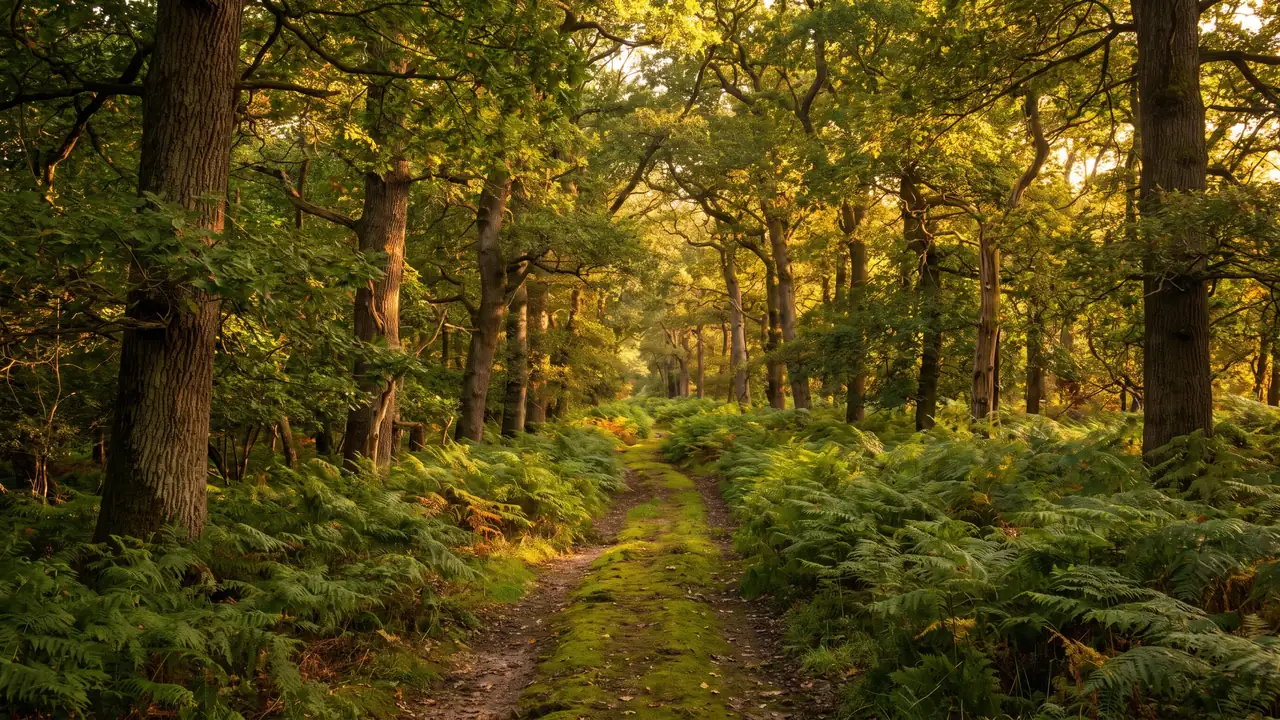
On the forest side, two woodlands invite you to take a walk: the Forêt des Moines—whose name obviously evokes the abbey and its monks—and the Bois Brûlé. Here you’ll find beautiful oak and chestnut groves, carpeted with ferns and shaded trails—perfect for a family stroll or a cool break in the summer. These woods are the ideal complement to a visit to the abbey: after the contemplative experience of the ruins, a stroll through the forest prolongs the sense of calm that is the true charm of La Couronne. There’s nothing spectacular or overly marked here—rather, it’s nature close at hand, on a human scale, providing a green setting for the heritage site.
Angoulême, just ten minutes away
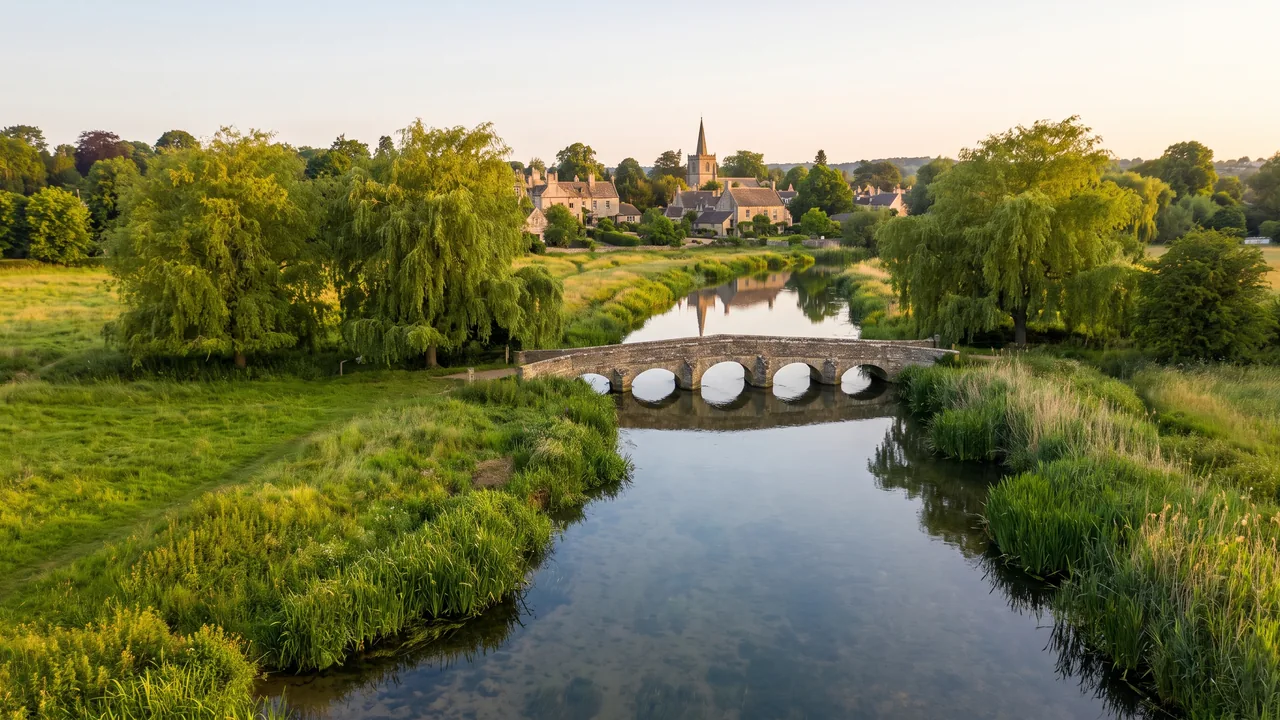
The main advantage of La Couronne is its close proximity to Angoulême—just 7.5 km away, about ten minutes. The capital of the Charente department, a hilltop town perched on a plateau above the Charente River, surrounded by ramparts atop a cliff about 80 meters high, has a population of nearly 42,000 and offers everything a small town lacks: major monuments, museums, covered markets, and festivals. The ideal way to enjoy your stay is therefore to stay in the peaceful surroundings of La Couronne and explore Angoulême from there, rather than the other way around. The distance chart at the end of this section also shows that Cognac and Saintes are within easy reach of the same base.
Angoulême, the Comic Book Capital
Angoulême is worth visiting first and foremost for its Saint-Pierre Cathedral, a Romanesque masterpiece whose construction began around 1110 under Bishop Girard II; consecrated in 1128, it features a famous sculpted façade in four registers—a veritable “comic book in stone”—whose frieze is inspired by the Song of Roland, a nave with cupolas, and was designated a Historic Monument as early as 1840 before being restored by Paul Abadie between 1852 and 1879—the same architect who later designed the Sacré-Cœur in Montmartre. The city is also the world capital of comics: its International Comics Festival, whose first edition was held from January 25 to 27, 1974, attracts some 200,000 visitors every January, and the International City of Comics and Images is open to visitors year-round, while giant murals transform the city into an open-air museum. It is also in Angoulême, in the Saint-Cybard neighborhood, that the “Le Nil” Paper Museum is located—and not in La Couronne.
Cognac and Saintes
Beyond Angoulême, La Couronne extends into the Charentes region. Cognac is about 44 km (~45 min) away: the town of brandy, with its grand houses and cellars blackened by angelica fungus, is a natural extension of the exploration of the Fins Bois region. Further west, Saintes, about 72 km (~1 hr 10 min) away, boasts a Roman amphitheater, an ancient arch, and Romanesque shrines. To plan these stops, you can consult our Angoulême Guide, right nearby, or our Cognac Guide. From the peaceful base at La Couronne, it’s easy to plan a two- or three-day itinerary through the Charente.
| Destination | Distance | Must-See |
|---|---|---|
| Angoulême | ≈ 7.5 km | Romanesque cathedral, city walls, Comic Book City |
| Cognac | ≈ 44 km | Distilleries, wine cellars, local terroir |
| Saintes | ≈ 72 km | Roman amphitheater, arch, Romanesque art |
| Bordeaux | ≈ 113 km | Transfer pickup location |
How to get to La Couronne from Bordeaux
The easiest way to explore La Couronne and the Angoulême region from Bordeaux is to take the direct route via the A10 and then the N10. With a private driver, you’ll depart from your home or Bordeaux-Mérignac Airport and arrive right at the foot of the abbey—or in the nearby upper town of Angoulême—without having to worry about parking or train connections. While the La Couronne train station did reopen on December 10, 2023, with five round-trips daily on the Angoulême-Bordeaux line, from the Gironde region, a door-to-door transfer remains the most flexible option for visiting the abbey, the woods, and Angoulême all in the same day.
How much does the ride cost?
The route from Bordeaux to La Couronne covers about 113 km in 1 hour 40 minutes via the A10/N10. Our rates begins at 203 € During the day, for a sedan carrying up to 3 passengers, a fixed price confirmed in writing before departure—no meter, no surprises upon arrival. The exact quote depends on the specific pickup address, the time of day (a surcharge applies at night, on weekends, and on holidays), and the vehicle selected; request a quote online for a quick response. Since Angoulême is only ten minutes away, a detour to the Upper Town, the cathedral, or the Cité de la BD can easily be added to your day, based on a quote.
| Route | Distance | Duration | From |
|---|---|---|---|
| Bordeaux → La Couronne | ≈ 113 km | ~1 hr 40 min | 203 € |
| Bordeaux-Mérignac Airport → La Couronne | ≈ 118 km | ~1 hr 35 min | based on a quote |
| Angoulême Extension | ≈ 7.5 km | ~11 min | based on a quote |
Why hire a chauffeur service?
An executive car service makes your day special: You can read, relax, or plan your visit during the ride; we’ll drop you off as close as possible to the La Couronne Abbey, then take you to the upper town of Angoulême, where the narrow streets and ramparts make parking difficult. No need to hunt for parking, no train schedules to keep track of, and no designated driver to worry about after a cognac tasting: we’ll pick you up wherever and whenever you’d like. This service is ideal for both a family heritage getaway and a business trip to the Angoulême metropolitan area. The vehicle is clean, air-conditioned, equipped with water, and driven by a uniformed driver, and you travel at your own pace.
Frequently Asked Questions
How much does a private chauffeur cost from Bordeaux to La Couronne?
The trip from Bordeaux to La Couronne (approximately 113 km, 1 hour 40 minutes via the A10/N10) starts at 203 € during the day for a sedan carrying up to 3 passengers. The price is fixed, confirmed in writing before departure, with no meter. The exact amount depends on the pickup address, the time of day, and the vehicle selected; a surcharge applies at night, on weekends, and on holidays.
How long does it take to get from Bordeaux to La Couronne?
Allow about 1 hour and 40 minutes by car—113 km via the A10 highway and then the N10 toward Angoulême. La Couronne is located just south of the city, allowing you to arrive directly at the abbey without having to drive through all of Angoulême—making for a comfortable day trip from the Gironde.
Was the La Couronne Abbey Benedictine or Cistercian?
Neither. It is an abbey of Canons Regular of St. Augustine—the Augustinians—a common source of confusion. Founded in 1118 by Lambert, its first abbot, and monks from La Palud, it took possession of its sanctuary in 1122, in the presence of Vulgrin II, Count of Angoulême, and two bishops.
Why is the city called La Couronne?
The name has nothing to do with a royal crown or a relic. It comes from the Latin *Corona* or *Coronella*, meaning “small hill”: a patch of dry land rising from the marshes. The town was originally called “La Palud” (the marshes) and, at the end of the 18th century, took the name of its abbey, Notre-Dame.
Do the ruins of the abbey date back to 1118?
No. The construction from 1118 to 1122 refers to the original church. The ruins that visitors see are those of the great Gothic abbey church, whose choir and nave were built between 1171 and 1194 and which was consecrated in 1201. They are examples of early Western Gothic architecture, not Romanesque like the cathedral in Angoulême.
Can we visit La Couronne Abbey?
Yes. The site is now divided: the cement manufacturer Lafarge owns the residential quarters and the monastic buildings, while the Charente Department owns the cloister and the abbey church, which are open to visitors. Visitors can admire the tall Gothic arches opening up to the sky, the fluted columns, and the peaceful cloister set among the lawns. The abbey has been designated a Historic Monument since 1904.
Is Isabelle of Angoulême buried at La Couronne Abbey?
This is a local legend, disputed by historians. Isabelle of Angoulême, Queen of England, died in 1246 and was buried at Fontevraud Abbey, alongside the Plantagenets, and not at La Couronne. This tradition may be mentioned on site, provided it is presented as a story passed down through local memory and not as an established fact.
Why is it said that La Couronne was the "paper capital"?
Because the town was one of the major centers of the paper industry in the Angoumois region. A paper mill had been operating on the Boëme River as early as 1533, and the one in Cothiers as early as 1555; and in 1789, nineteen of the thirty-three paper vats in the Angoumois region were located in La Couronne, accounting for more than half of regional production, which was exported as far as England and Spain.
Was "Le Nil" paper manufactured at La Couronne?
Yes, in part. “Le Nil” cigarette paper (a brand owned by Joseph Bardou and Sons, Perpignan, registered in 1887) was manufactured around 1880 by the Lacroix paper mills in La Couronne; the Cothiers site belonged to J. Bardou-Le Nil as early as 1943. Please note: the “Le Nil” Paper Museum is located in Angoulême, in the Saint-Cybard neighborhood, not in La Couronne.
What is the Château de l'Oisellerie?
This Renaissance castle in La Couronne was begun in 1498 by Arnauld Calluaud and designated a Historic Monument in 1911. Today, it houses an agricultural and viticultural high school, right in the heart of the Fins Bois cognac region. A Renaissance manor house turned into a school for winemakers: this phrase sums up the Charente region’s blend of heritage and terroir.
Is La Couronne located in the Cognac vineyards?
Yes. The town is located in the Fins Bois cru of the Cognac appellation, the largest of the six crus that make up the Charente wine region. The Château de l'Oisellerie trains future winemakers there. Visitors can also sample Pineau des Charentes, a fortified wine created by blending grape must with Cognac brandy.
What's there to see around La Couronne?
Angoulême is just 7.5 km (~10 min) away: the Romanesque Saint-Pierre Cathedral with its sculpted façade, the ramparts of the Upper Town, the Cité Internationale de la BD, and murals. Further away, Cognac is ~44 km away and Saintes is ~72 km away. La Couronne is an ideal base for a peaceful stay and for exploring Angoulême and the Charentes region.
Can the driver combine La Couronne and Angoulême in a single day?
Absolutely. Angoulême is only about ten minutes away from La Couronne. Many customers spend the morning at the abbey and in the woods of La Couronne, then the afternoon at the cathedral, the ramparts, and the Angoulême Comic Book City, with the same driver handling transportation, parking, and scheduling.
Further Reading
- The Comic Book Capital: See the Angoulême Guide (the Romanesque cathedral, the city walls, and the Cité de la BD, 10 minutes from La Couronne)
- Just outside Angoulême: see the Champniers Guide (the Romanesque church and the Charente countryside, north of the metropolitan area)
- The Land of Brandy: See the Cognac Guide (brandy houses and the 6 crus, about 45 minutes from La Couronne)
- Book your trip: book online or browse all our destinations
Sources and References
- City of La Couronne — Abbey, History, Heritage
- Mérimée Database / POP (Ministry of Culture) — Listed Abbey (PA00104347), Oisellerie, Saint-Jean-Baptiste
- Angoulême Tourism / Greater Angoulême — Angoulême and Surrounding Areas, Events Calendar
- New Aquitaine Heritage — Angoumois Paper Mills, Cothiers, Cement Plant
- Mérimée Database / POP — Lafarge Cement Plant (IA00066265) — Industrial Heritage Inventory
- INSEE — Municipality of La Couronne (16113) — Demographics
- BNIC — National Interprofessional Cognac Office — Fins Bois vintage
Article updated in July 2026.
Our Latest Guides
Off to the Angoulême region
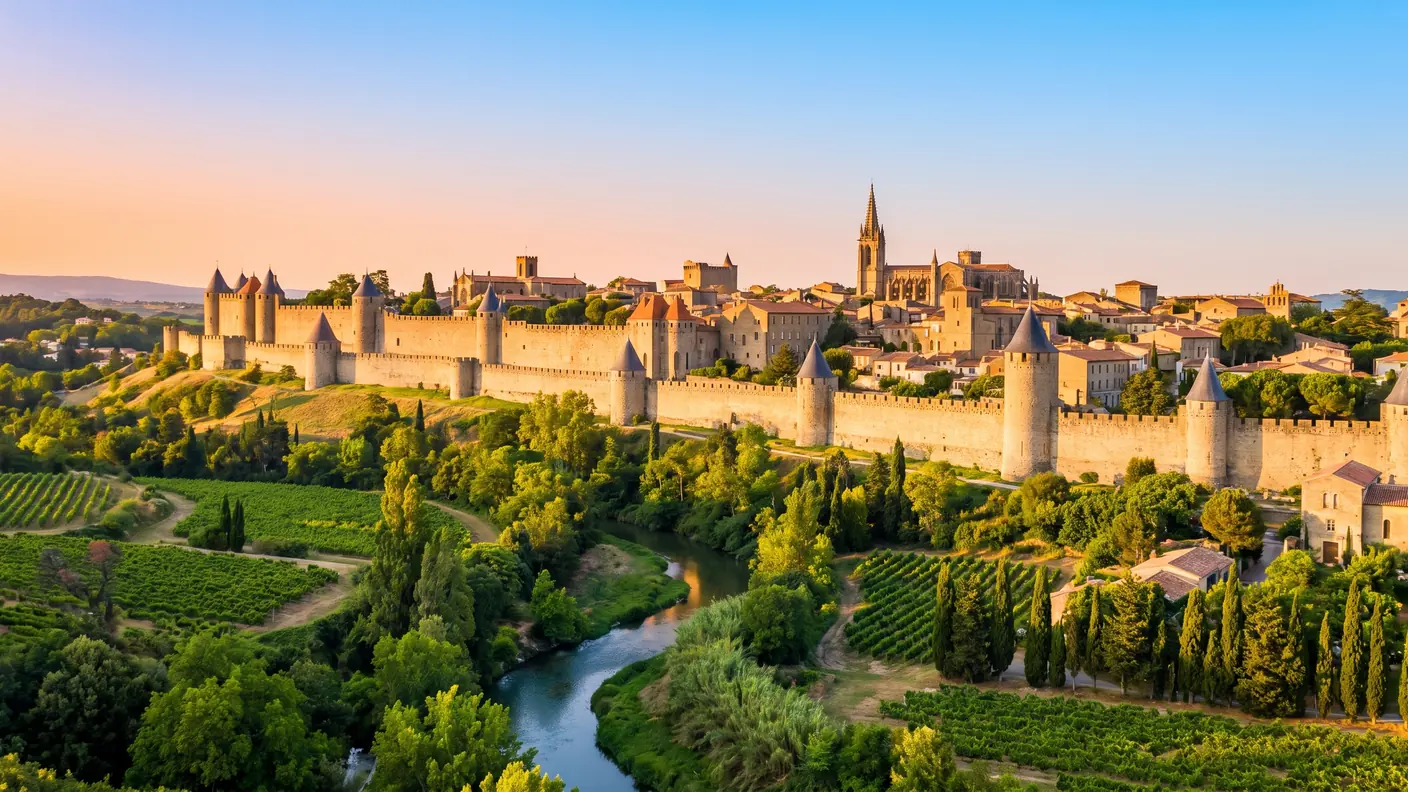
Direct transfer from Bordeaux (~1 hr 40 min via the A10/N10) to La Couronne Abbey, with Angoulême just ten minutes away. Written, fixed-price quote with no obligation.