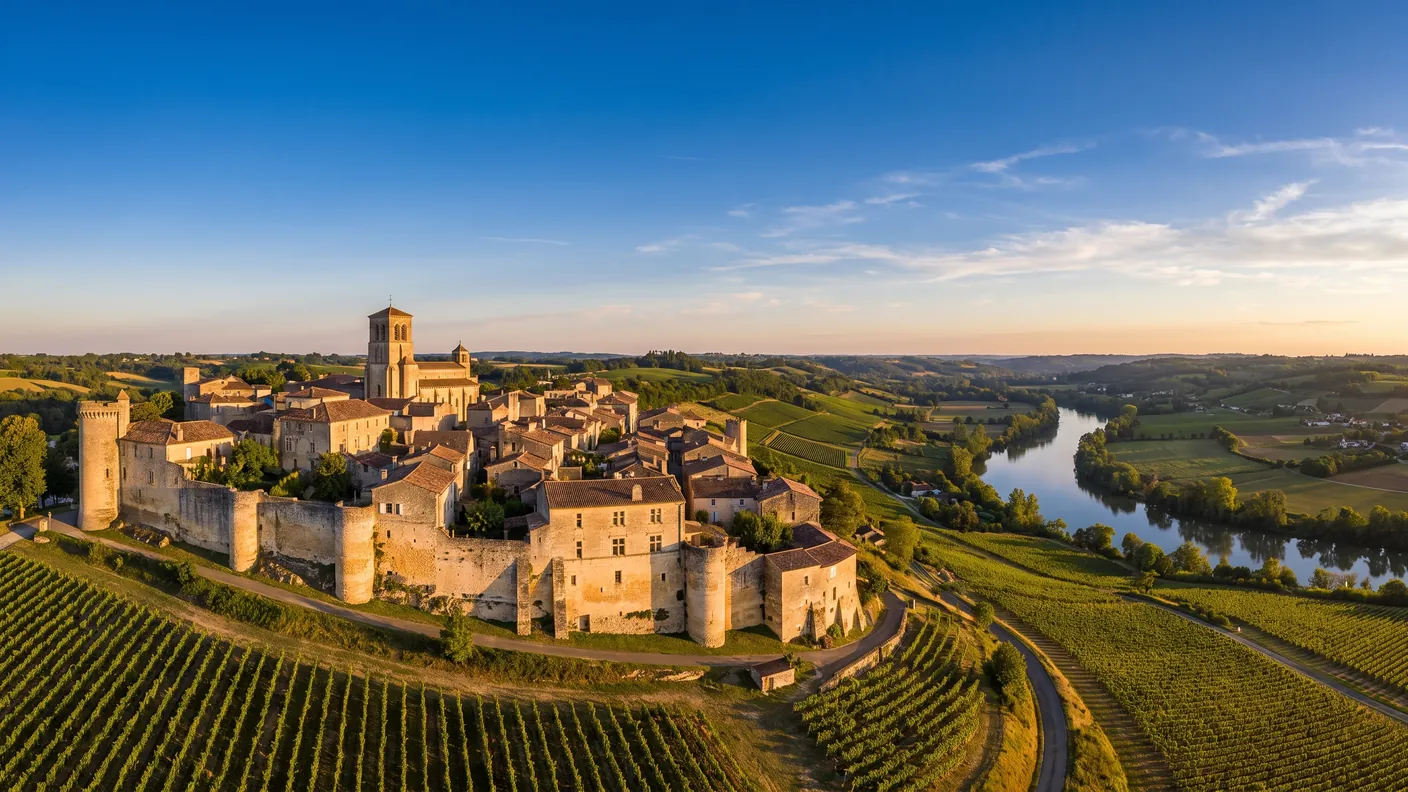
Bordeaux to Saint-Macaire: a medieval town above the Garonne
A stunning walled medieval town on the right bank of the Garonne, across from Langon: Saint-Macaire, with its ramparts and three fortified gates, its arcaded Mercadiou Square, its listed Romanesque church, and its cloister—plus your private door-to-door transfer from Bordeaux, without having to rent a car.
Saint-Macaire at a glance
Saint-Macaire is a stunning medieval town in the Gironde department, on the right bank of the Garonne River, across from Langon, about 52 km southeast of Bordeaux. Surrounded by ramparts, it has preserved its fortified gates, the arcaded Mercadiou Square, its Romanesque and Gothic church, and its cloister—a medieval complex of rare coherence.
This guide distinguishes between verified claims and mere repetition: Saint-Macaire does not hold any of the major tourism designations (“Most Beautiful Villages,” “Petites Cités de Caractère,” etc.), but is based on very real landmarks; its Saint-Sauveur Church is a listed historic site, while its cloister is a registered historic site; its painted decorations are murals (not frescoes); and the Château de Malromé, where Toulouse-Lautrec died, is located in the neighboring town of Saint-André-du-Bois, not in Saint-Macaire itself. Next, we’ll show you the easiest way to get there from Bordeaux: a private door-to-door transfer, without renting a car.
Here are the key details to know before you go. Distances are calculated door-to-door from Bordeaux; the price listed is for a private driver reservation at a fixed rate provided in advance, with no unexpected meter charges regardless of traffic or stops along the way. Information on cultural heritage sites is verified using the Mérimée database, INSEE, and the Sud-Gironde tourist office; visiting hours for monuments may vary and should be confirmed on site.
| Landmark | Details |
|---|---|
| City | Saint-Macaire (Gironde, Langon District) |
| Location | a medieval town on the right bank of the Garonne, across from Langon |
| Residents | 1,981 residents (2023) · the Maquariens |
| Must-See | the ramparts and three gates, Mercadiou Square, the Church of Saint-Sauveur (a listed building), and the cloister |
| Distance from Bordeaux | about 52 km · about 54 min by car |
Where is Saint-Macaire located?
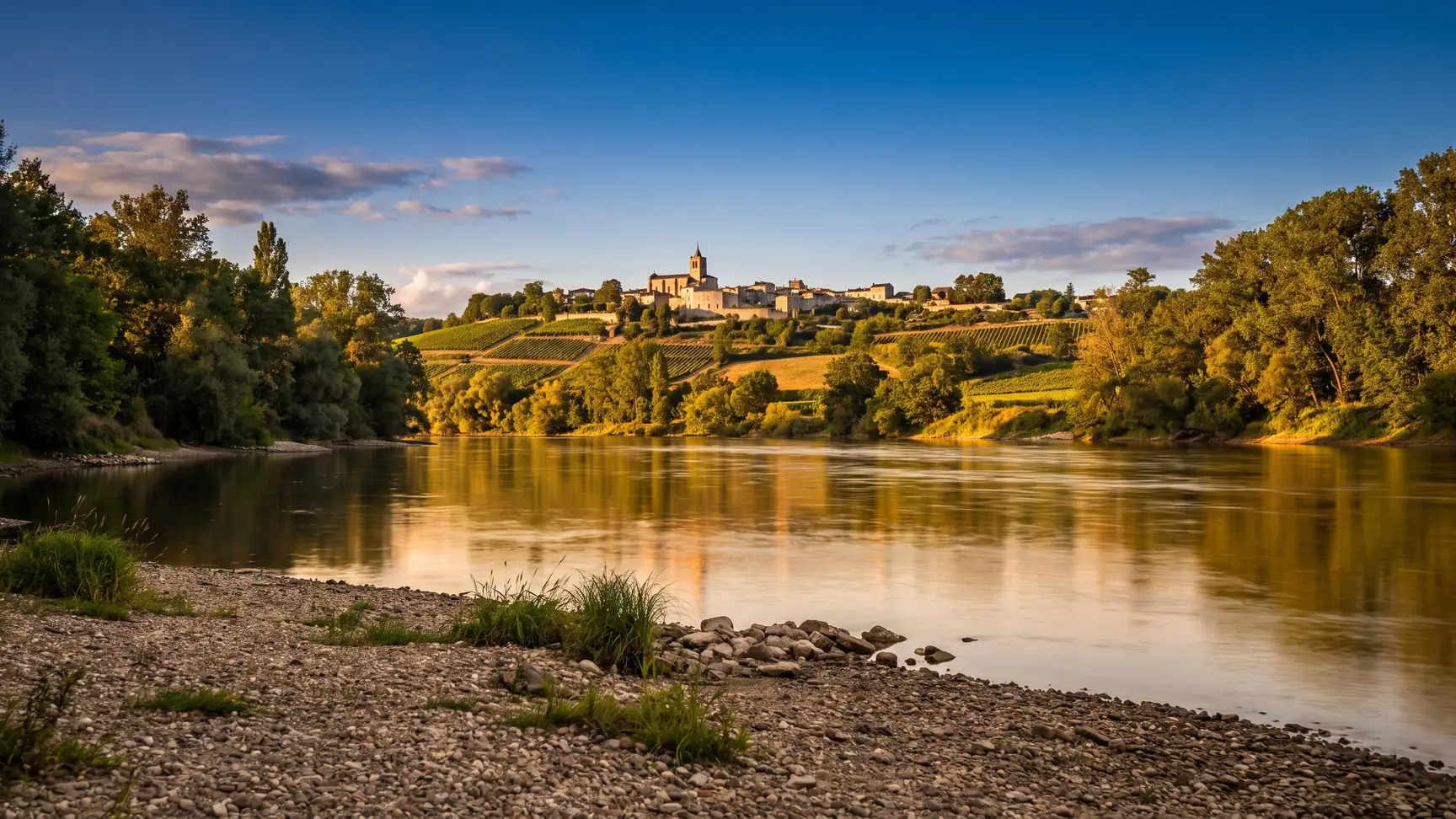
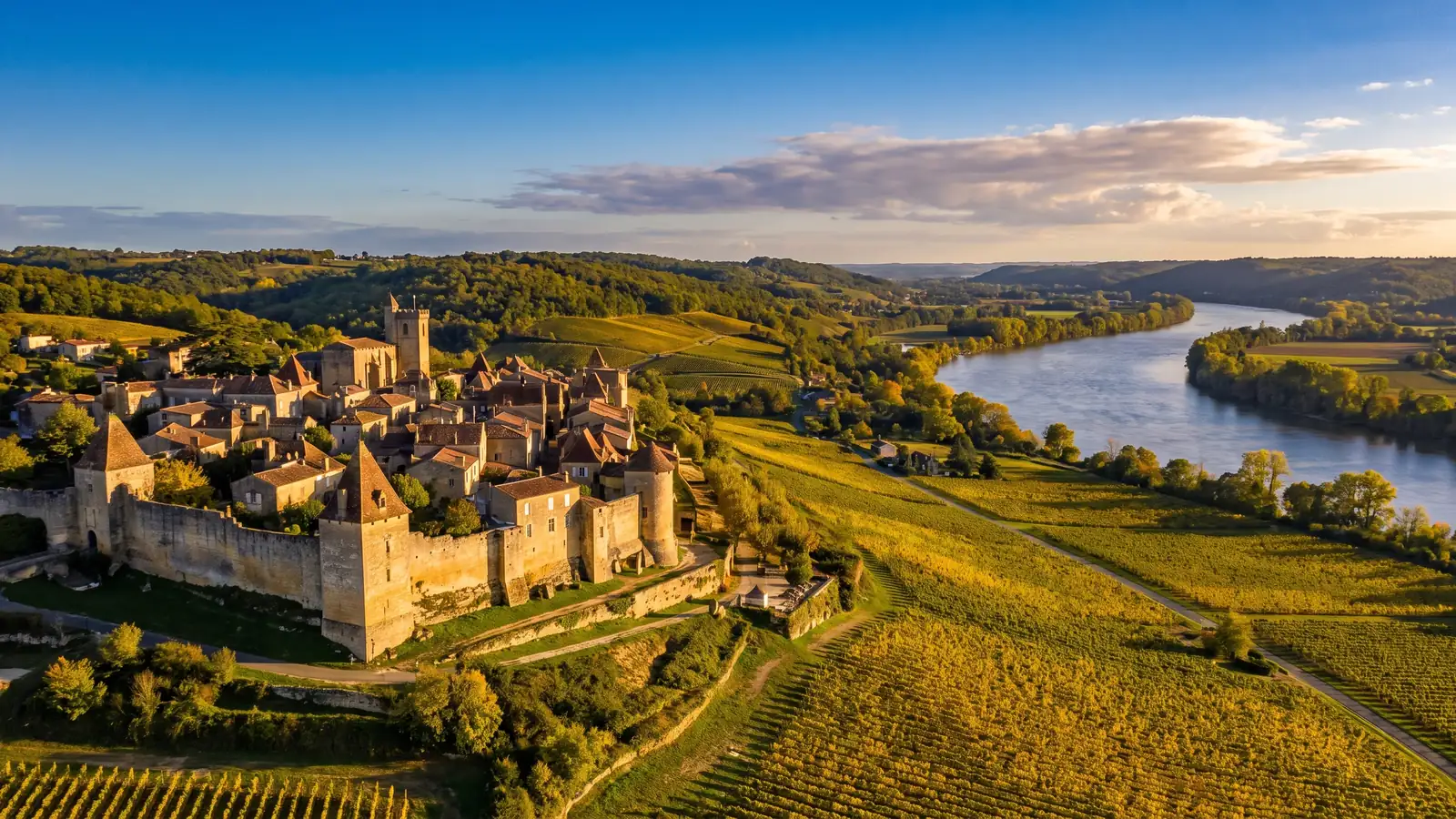
Saint-Macaire is located in the southeastern part of the Gironde department, on the right bank of the Garonne River, directly across from Langon, from which it is separated only by the river. It is a region of vineyards, hillsides, and rivers: the Garonne Valley, the hills of Entre-deux-Mers and Sud-Gironde, and the great Bordeaux wine region that stretches along both banks. The town, with a population of 1,981, is perched on a hill overlooking the river, set back from its bank—a defensive position that explains its ramparts. It is part of the Langon district.
We are here at the crossroads of several prestigious wine regions: Graves and Sauternes on the opposite bank, Entre-deux-Mers to the north, and Réolais to the east. This crossroads location, between the river and the hillsides, brought prosperity to the city in the Middle Ages—and today makes it an ideal base for exploring the wine-growing region of southern Gironde, about 54 minutes from Bordeaux.
A town above the Garonne, across from Langon
Saint-Macaire is built on a promontory overlooking the Garonne, on its right bank, directly across from Langon—its neighbor and major gateway city on the opposite bank, just three and a half kilometers away, connected by a bridge. This location, both on the river and on high ground, was key to its history: in the Middle Ages, the city thrived on river trade—particularly the export of wine to Bordeaux and England—and was protected behind its ramparts.
Today, this same location offers visitors an exceptional setting: a medieval town built of golden stone, nestled behind its walls, with the Garonne River at its feet and vineyards all around. It’s easily accessible from Bordeaux, and in just a few minutes you can reach Langon, the Graves wine region, and—a little further south—Sauternes and its exceptional sweet wines. It’s the perfect base for a trip focused on heritage and wine.
In the heart of the wine-growing region of southern Gironde
The town is located in the heart of the Sud-Gironde, one of Bordeaux’s richest wine-growing regions. On the left bank of the Garonne, directly across, lie the Graves (great dry whites and reds) and, further south, the prestigious vineyards of Sauternes and Barsac, home to some of the world’s finest sweet wines. On the right bank, around Saint-Macaire, wines are produced from the small Côtes de Bordeaux Saint-Macaire appellation, as well as wines from the Entre-deux-Mers region. To the east, the valley leads to La Réole, another beautiful town on the Garonne.
It is a land of winemakers and stone villages, where history and wine intertwine on every hillside. For visitors, Saint-Macaire is the ideal starting point for a journey through this little-known part of southern Gironde, taking in medieval towns, castles, and fine wines, all just minutes apart.
A medieval town surrounded by ramparts
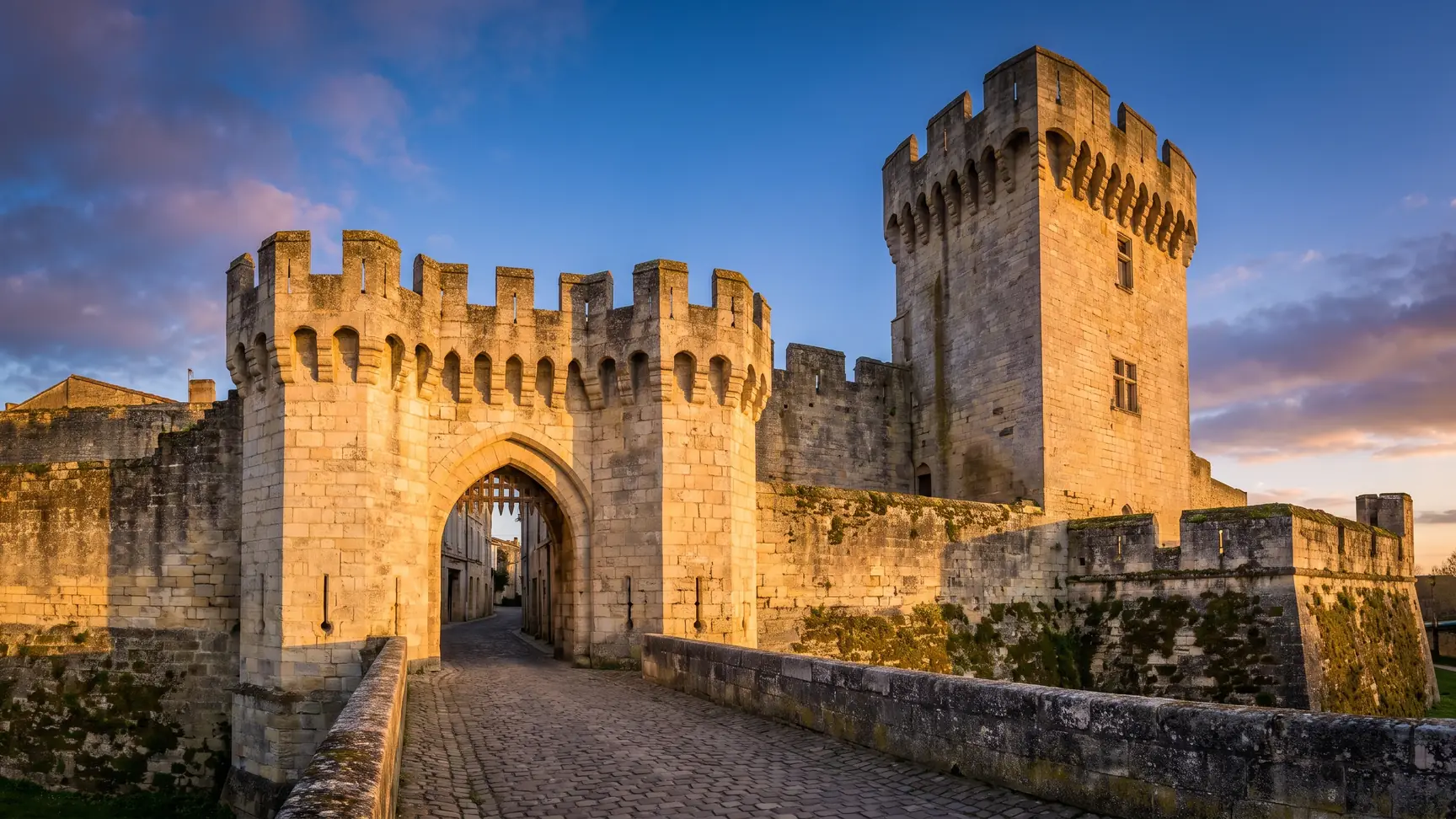
Saint-Macaire has preserved an exceptional medieval ensemble: ramparts from the 13th and 14th centuries, three fortified gates and the arcaded Place du Mercadiou. It is one of Gironde’s best-preserved medieval towns. That is what the sources establish, without embellishment.
The ramparts and the three gates
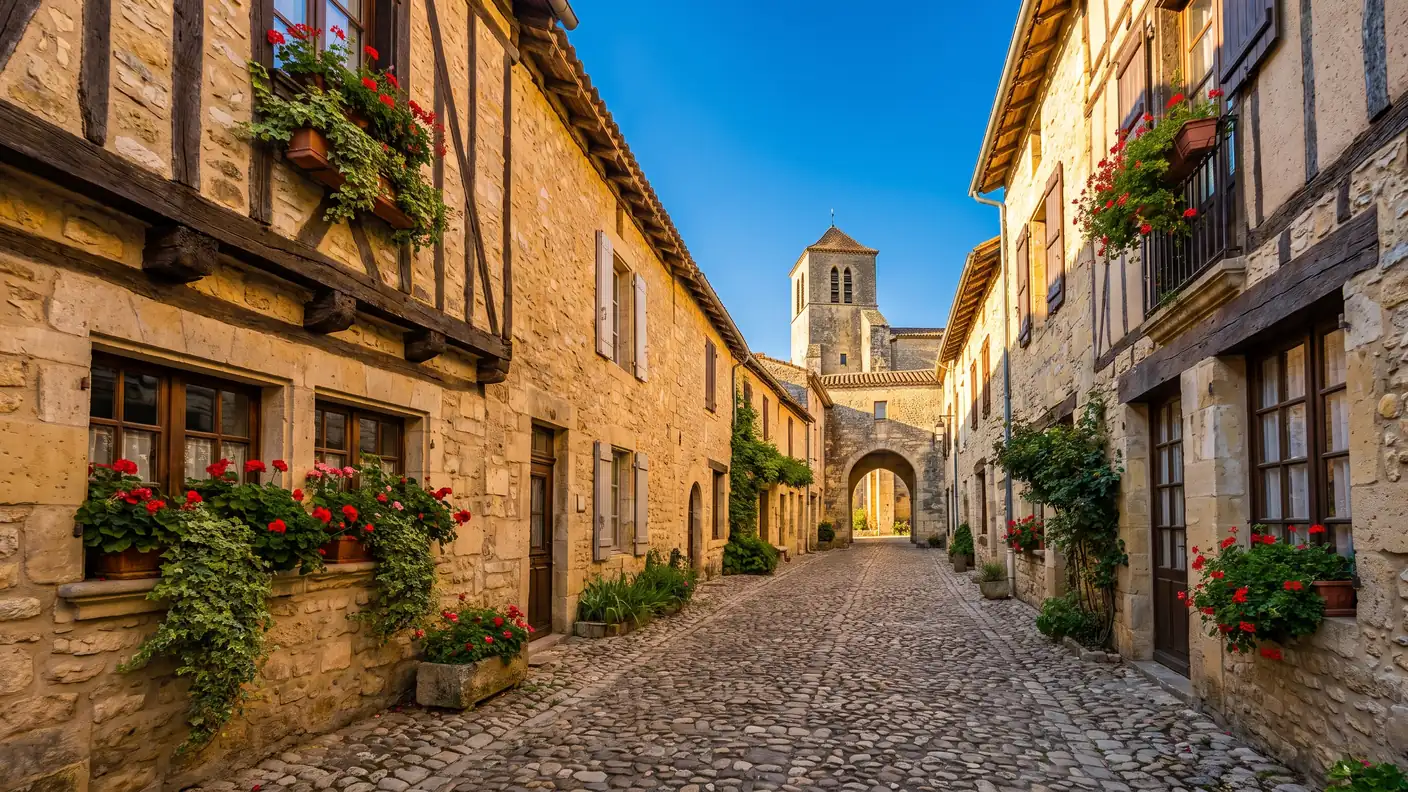
The town is enclosed by an urban curtain wall and 13th- to 14th-century towers, protected as historic monuments. Visitors enter through three medieval gates that still stand, each with its own character: the Benauge Gate, the oldest, dating to the 12th century; the Thuron Gate; and the Rendesse Gate. Passing through one leads into a maze of cobbled medieval lanes, lined with golden-stone houses, Gothic and Renaissance residences, vaulted passages and old shops.
The city has retained its medieval layout and atmosphere, without feeling stagnant or like a museum: it is a vibrant city, with its residents, shops, and artisan workshops, all housed in beautiful historic homes. It’s a joy to stroll through the city, your eye constantly drawn to a carved detail, a Gothic doorway, or a glimpse of the Garonne River.
Mercadiou Square and its arcades
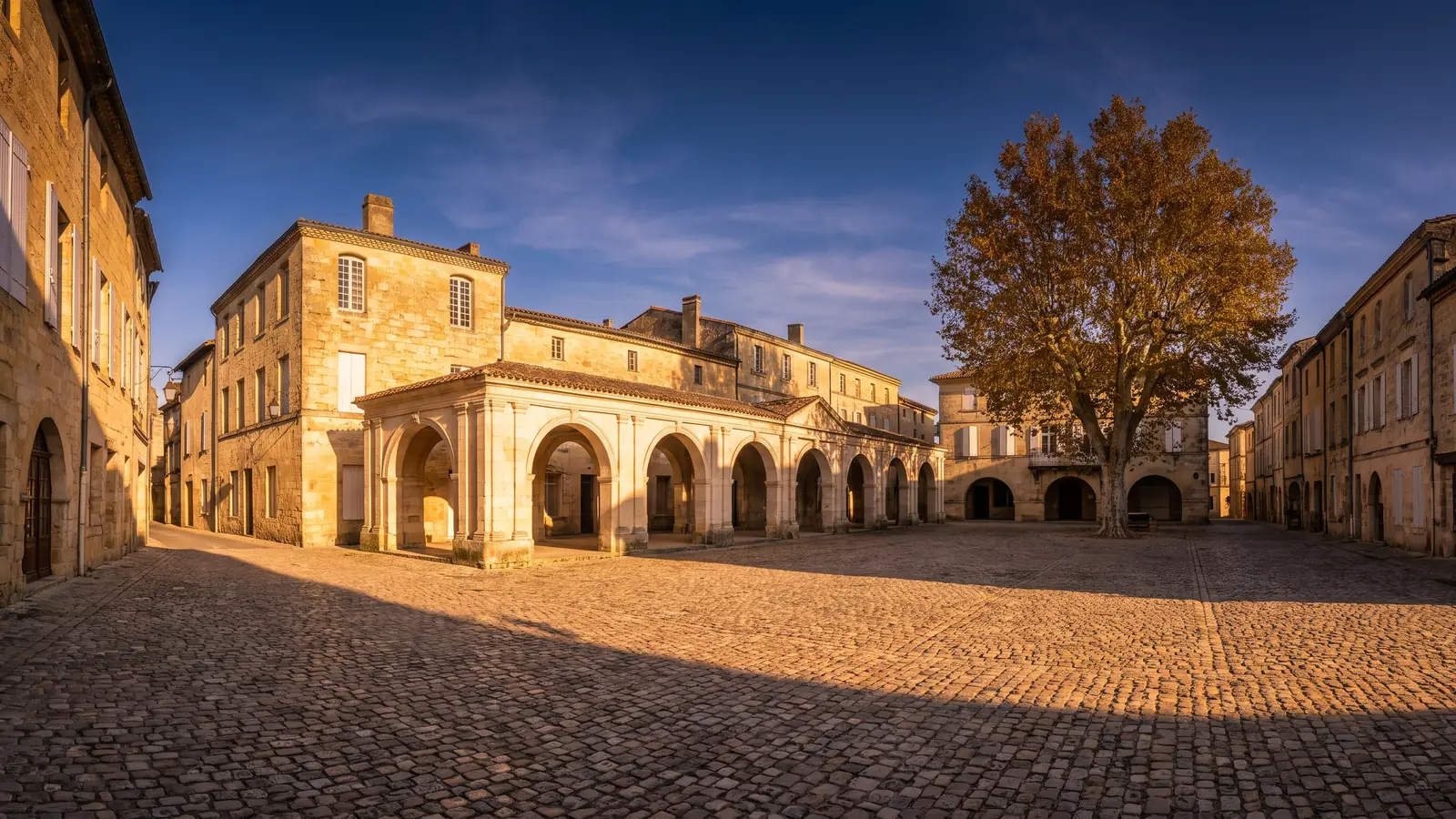
At the heart of the town, Place du Mercadiou is the former medieval market square; its Occitan name means “God’s market”. Beautiful twin arcades once sheltered traders and stalls, while ornate Gothic and Renaissance houses date from the 13th to the 16th centuries. This is one of Gironde’s finest medieval squares, ideal for a café terrace break. The surrounding lanes lead to the church, cloister, gates and views across the Garonne valley.
The city reveals itself slowly, on foot, as you look up at the facades and artisans’ signs. It’s an open-air history book, where every stone tells the story of this merchant city’s prosperous past, long centered on the river and the wine trade. A chauffeur service can drop you off at the foot of the ramparts, without having to worry about parking.
Saint-Sauveur Church and Its Cloister
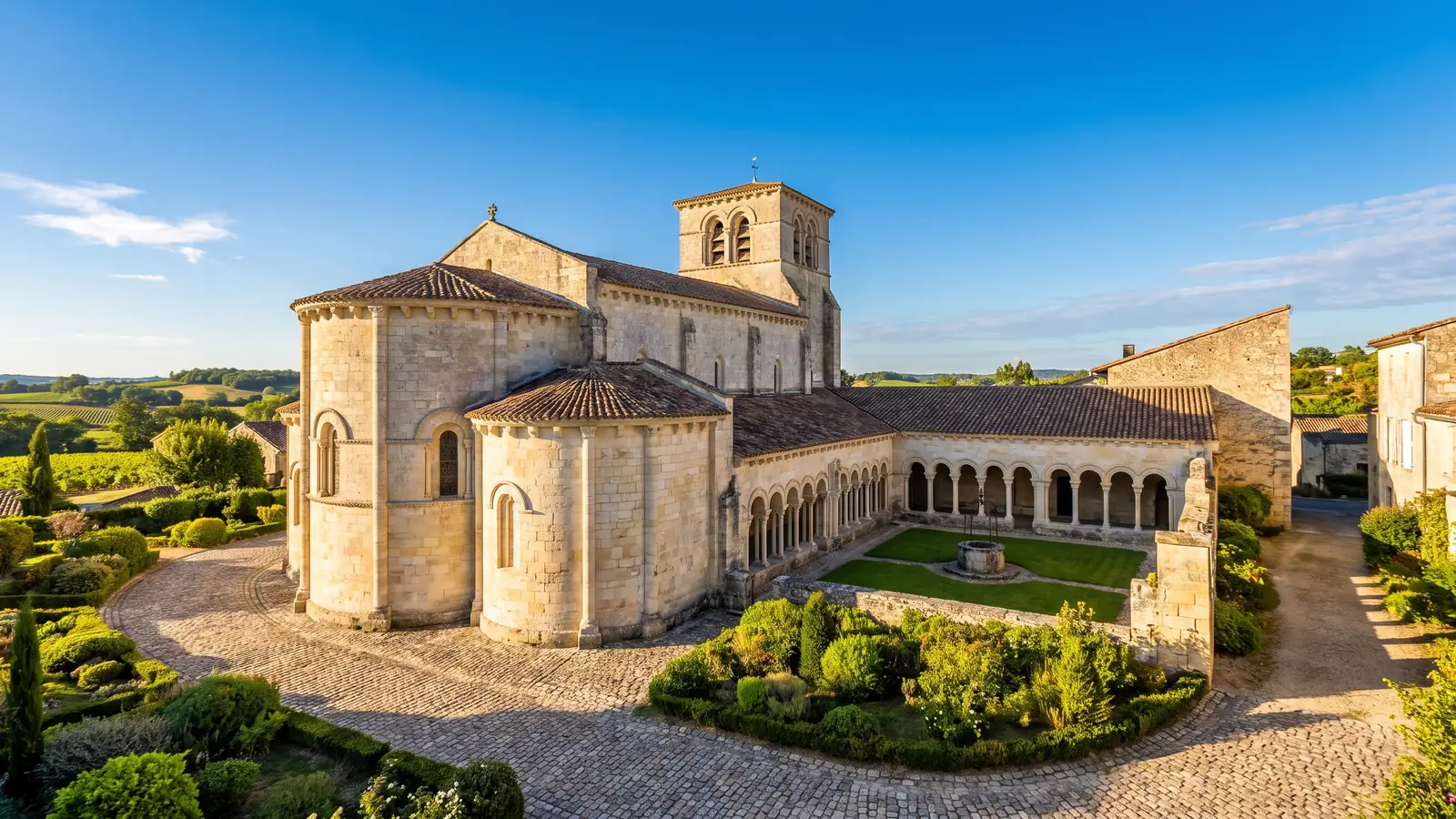
The Romanesque and Gothic Church of Saint-Sauveur, a listed historic monument, and its cloister—a former Benedictine priory—are the jewel of the city. A religious complex of great richness, adorned with medieval murals. Here is what the sources document, distinguishing between the two categories of protection.
A historic church, blending Romanesque and Gothic styles
The Church of Saint-Sauveur, sometimes called Saint-Sauveur-et-Saint-Martin, is Saint-Macaire’s principal monument. Its Romanesque nave dates from the 12th century, beneath Gothic vaults built between the 13th and 15th centuries; the long building campaign explains the contrast in style. The hexagonal bell tower dates from the 15th century. Its most distinctive feature is the trefoil chevet: three polygonal Romanesque apses arranged like a cloverleaf on a Latin cross plan, with a single four-bay nave.
The church was classified as a historic monument on the 1840 list, making it one of Gironde’s earliest protected churches. Inside are remarkable medieval murals, painted in the late 13th or early 14th century on the vaults of the apse and crossing. They should not be confused with true frescoes and were retouched in the 19th century.
The cloister of the former priory
Beside the church, the Saint-Sauveur Cloister survives from the former Benedictine priory to which the church belonged. Its galleries, columns and semicircular arches date partly from the 12th century and partly from the 15th. Set around a garden in the heart of the town, it is a calm, contemplative place. The cloister was listed as a historic monument in 1925, while the church was classified: two distinct levels of protection.
Together, the church and the cloister form one of the most beautiful medieval religious complexes in southern Gironde, bearing witness to the monastic life that animated the city for centuries. A visit here—best combined with a tour of the ramparts and the Place du Mercadiou—immerses visitors in the heart of the Gironde’s medieval past—a rare heritage site, just minutes away from the great vineyards.
From Ligéna to the City of Saint Macaire
An ancient town that became a medieval trading center, Saint-Macaire owes its name to a Greek monk and its prosperity to the wine trade on the Garonne River. Its long history, from antiquity to the Middle Ages, is etched into its stones. Here are the verified facts.
Ligéna, the “City of Strangers”
Saint-Macaire is an ancient settlement. The Roman town was called Ligéna, from the Latin Aliénigena, “city of foreigners”, suggesting a population of traders and travellers consistent with its position as a port on the Garonne. Its present name comes from Saint Macarius, a Greek monk of the 5th century, from the Greek Makarios, “the Blessed”, whose cult took root here.
In the Middle Ages, the town developed around its Benedictine priory and church, becoming a prosperous city that thrived on river trade—particularly the export of wine to Bordeaux and England, at a time when Guyenne was under English rule. Its wealth is still evident in the beautiful Gothic and Renaissance mansions on the Place du Mercadiou and in the narrow streets. It was this commercial prosperity, rooted in the river and the vineyards, that shaped the city we visit today.
A town in English Guyenne
Like the rest of this part of Gironde, Saint-Macaire long belonged to English Guyenne. For almost three centuries, from the 12th to the 15th century, the region formed part of the Duchy of Aquitaine under the kings of England. As a stronghold and trading port, the town played a role in the wine trade serving the English market, including Bordeaux’s famous “claret”. Its ramparts and gates, built in the 13th and 14th centuries, recall a period when the Franco-English frontier crossed Guyenne and towns needed defences.
The end of the Hundred Years' War in 1453 brought the region back into the Kingdom of France. From this turbulent past, Saint-Macaire has retained its character as a walled town, with its walls and medieval atmosphere magnificently preserved—one of the finest examples of medieval Gironde, best explored on foot, alley by alley.
Tourism Labels and Historic Monuments
Several claims are circulating about Saint-Macaire that warrant correction, backed by sources—which is the whole point of a reliable guide. The labels, the protective features, the decor, and Toulouse-Lautrec’s castle: here’s what’s true and what’s false.
No major labels, but listed monuments
Saint-Macaire is sometimes described as one of the “Most Beautiful Villages in France,” a “Most Beautiful Detour,” or a “Small Town of Character.” In reality, the town holds none of these tourism designations—no official source lists it as such. This in no way detracts from its beauty: it is built around very real, protected monuments, which is worth more than any designation. However, it’s important not to confuse the different levels of protection: the Saint-Sauveur Church is classified (since the 1840 list), while the cloister is merely listed (since 1925); the ramparts and towers are also protected.
Likewise, the church’s painted decoration consists of medieval murals, dating from the late 13th to the early 14th century, not true frescoes in the technical sense. They were retouched in the 19th century. These often-overlooked distinctions reveal Saint-Macaire for what it is: an authentic medieval town rich in protected monuments.
Toulouse-Lautrec: Malromé, not Saint-Macaire
A geographical confusion also needs to be cleared up. Saint-Macaire is sometimes associated with the painter Henri de Toulouse-Lautrec. It is true that he died in 1901 at the Malromé Castle — but this castle is located in the neighboring town of Saint-André-du-Bois (about two kilometers away), and not in Saint-Macaire itself. Furthermore, the artist is not buried there: he is buried at the Verdelais Cemetery, just nearby. Malromé Castle, which belonged to the painter’s mother and is open to visitors, remains a lovely day trip from Saint-Macaire, as does the Basilica of Verdelais, a pilgrimage site where Toulouse-Lautrec is buried.
But we must give each town its due: the castle is in Saint-André-du-Bois, the tomb is in Verdelais, and the medieval town is in Saint-Macaire. It is these details—verified, without any approximations—that distinguish a reliable guide from a copied text. A driver familiar with the area will be able to take you to each of these places.
The wine: Côtes de Bordeaux Saint-Macaire
Saint-Macaire lends its name to a small, little-known appellation of white wines, the Côtes de Bordeaux Saint-Macaire, located in the heart of a region rich in the Garonne’s finest terroirs. It is a modest vineyard, yet one surrounded by prestige. Here’s what makes it so special.
A little-known appellation for white wines
The Côtes de Bordeaux Saint-Macaire appellation, established by decree in 1937, is one of the smallest AOCs in Gironde: it covers only about 20 hectares of vineyards, involving some 15 winegrowers, spread across about 10 municipalities on the right bank of the Garonne. It is reserved for white wines—dry, semi-sweet, and sweet—in the tradition of the sweet wines of the Garonne Valley.
This is a hidden gem of a vineyard—one that shouldn’t be overestimated: it’s a far cry from the major appellations in terms of volume, but that’s precisely what gives it its charm—the charm of artisanal production, to be discovered among the few winemakers who keep the tradition alive. The surrounding area also produces Entre-deux-Mers wines, and on the opposite bank, the great Graves and Sauternes. Saint-Macaire is thus at the heart of an exceptional wine-growing crossroads, where exclusivity meets prestige.
Tasting Between Two Shores
Saint-Macaire's great wealth, when it comes to wine, stems from its situation. In just a few minutes, we go from the lesser-known white wines of the Côtes de Bordeaux Saint-Macaire to the prestigious sweet wines of Sauternes and Barsac, on the opposite bank, and the full-bodied dry white and red wines of the Bass, around Langon. It’s an ideal playground for wine enthusiasts: in a single day, you can explore the medieval town, enjoy a wine tasting at a small winery in Saint-Macaire, and tour a grand château in Sauternes.
Many wineries in the region host tastings—often by appointment—and offer direct sales. The appeal of a private transfer is clear here: you can be driven from one winery to another, from one bank of the river to the other, taste to your heart’s content, and return stress-free to Bordeaux or your accommodations. Opening hours and visitation policies vary and should be confirmed directly with each winemaker.
| Wine at Saint-Macaire | Details (according to sources) |
|---|---|
| Designation | Côtes de Bordeaux Saint-Macaire (dry, semi-sweet, and sweet white wines), 1937 decree |
| Size | one of the smallest AOCs in Gironde (~20 ha, ~15 winegrowers, 10 municipalities) |
| Around | Sauternes & Graves (left bank), Entre-deux-Mers (right bank) |
| To be combined with | Medieval town + wine tasting + Sauternes, all in one day |
| Good to Know | Wine tastings at the vineyards, often by appointment |
What is there to do in Saint-Macaire and the surrounding area?
In Saint-Macaire, you can stroll through the medieval town, with its ramparts, gates, and arcaded square; visit the church and cloister; and venture out to Langon, Sauternes, Verdelais, and Toulouse-Lautrec’s Château Malromé. These are the actual, verified activities in the area. The focus of the tour is the town itself; the rest takes place in the immediate surroundings—we specify this each time.
- Stroll through the medieval town—the ramparts and the three fortified gates (Benauge, Thuron, Rendesse), the cobblestone streets, and the Gothic and Renaissance houses
- Mercadiou Square—the former medieval market square with its twin arcades, one of the most beautiful in the Gironde
- Saint-Sauveur Church and the Cloister — the listed church with its trefoil apse and murals, and the cloister of the former Benedictine priory
- Malromé Castle—in Saint-André-du-Bois (~2 km): the home where Toulouse-Lautrec died, which is open to visitors
- Verdelais — its basilica, a place of pilgrimage, where Toulouse-Lautrec is buried
- Langon and Sauternes—the neighboring town (on the left bank) and the prestigious sweet wine region, just a few minutes away
- Taste wines from the region—Côtes de Bordeaux Saint-Macaire, Graves, and Sauternes—at the wineries (often by appointment)
The City, the Church, and the City Walls
A visit to Saint-Macaire begins with a leisurely stroll through the medieval town: you pass through one of the three fortified gates, walk up the cobblestone alleys between the golden-stone houses, and emerge onto the magnificent Place du Mercadiou with its arcades, before visiting the Church of Saint-Sauveur, with its trefoil apse, murals, and cloister. You can also walk along the ramparts and look for vantage points overlooking the Garonne Valley.
The town, home to many artisan workshops housed in beautiful historic mansions, is perfect for a leisurely, curious exploration, with your eye constantly drawn to some new detail. Allow at least two hours to explore it, and be sure to take a break at a sidewalk café on the square. It’s one of the most charming places to visit in southern Gironde, and one of the best-preserved—a true journey back to the Middle Ages in Gironde.
Toulouse-Lautrec, Sauternes, and the Garonne
The area around Saint-Macaire offers some wonderful day trips. Nearby, in Saint-André-du-Bois (~2 km), Malromé Castle—where Henri de Toulouse-Lautrec died in 1901 and which belonged to his mother—is open to visitors: the mansion, wine cellars, and grounds invite you to follow in the painter’s footsteps. A few kilometers away, Verdelais and its basilica—a Marian pilgrimage site—are home to the artist’s grave in its cemetery. On the other bank of the Garonne, Langon (the neighboring town) serves as the gateway to the prestigious vineyards of Sauternes and Barsac—home to some of the world’s finest sweet wines—and the Graves region.
From Saint-Macaire, you can plan an itinerary that combines art, history, and fine wines—the medieval town in the morning, a Sauternes château in the afternoon. A local chauffeur service will take you from one site to the next, freeing you from the hassle of driving and parking, and allowing you to enjoy the tastings at your leisure.
| Activity | Where / Distance | Good to Know |
|---|---|---|
| Medieval Town & City Walls | on site | 3 Doors, Place du Mercadiou, alleyways |
| Saint-Sauveur Church & Cloister | on site | listed church, cloverleaf-shaped apse, murals |
| Château Malromé (Toulouse-Lautrec) | ~2 km (Saint-André-du-Bois) | The house where the painter died is open to visitors |
| Verdelais | nearby | basilica, Toulouse-Lautrec's grave |
| Sauternes & Langon | ~10 km / across from Langon | Great sweet wines, Graves |
What is there to see around Saint-Macaire?
Near Saint-Macaire, you can explore Langon and the Sauternes vineyards, Château Malromé and Verdelais—following in the footsteps of Toulouse-Lautrec—and La Réole, another beautiful town on the Garonne. The town is ideally situated at the crossroads of several prestigious wine regions: here are the must-see destinations, all accessible on a day trip.
Langon, Sauternes, and the Graves
Directly opposite, across the Garonne, Langon is the principal town of southern Gironde. Its market, railway station and shops make it a gateway to the Graves and Sauternes vineyards. A few kilometres farther south lie the prestigious sweet-wine estates of Sauternes and Barsac, where grand châteaux pour luminous golden wines. Around Langon, the Graves complete the picture with distinguished dry whites and reds. It is one of Bordeaux’s richest wine landscapes, within easy reach of the medieval town.
This way, you can go from history to the vineyards in a single day: the ramparts of Saint-Macaire in the morning, a château in Sauternes in the afternoon. A chauffeured transfer makes it easy to cross the river and travel from one vineyard to another without having to worry about driving.
Malromé, Verdelais, and La Réole
The area is also rich in artistic heritage. In nearby Saint-André-du-Bois, the Château de Malromé—where Toulouse-Lautrec died—is open to visitors, offering a chance to follow in the footsteps of the painter and his mother; in Verdelais, the basilica—a major pilgrimage site—houses his tomb. These two sites, just a few minutes apart, make for a lovely “Toulouse-Lautrec” excursion from the city. To the east, traveling upriver along the Garonne, La Réole is another magnificent medieval town, a former royal city, with steep narrow streets, an abbey church, and a Romanesque town hall—one of the most beautiful in the area.
Across the surrounding hillsides, wine-growing villages of southern Gironde and Entre-deux-Mers, bastides and châteaux follow one another. A local chauffeur who knows the region can shape an itinerary around heritage, artistic history and fine wines, without the inconvenience of driving or parking.
When is the best time to visit Saint-Macaire?
Saint-Macaire is open to visitors year-round, but is best enjoyed from spring through fall, when the town is bathed in light and the nearby vineyards are in full swing. Spring (April–June) is ideal: the soft light highlights the golden stone of the ramparts and facades, the terraces of Place du Mercadiou come alive, and the days are perfect for strolling and sampling local delicacies.
The summer (July–August) is the peak season: the city hosts markets, events, and festivals, and the shade provided by the narrow streets and arcades is a welcome relief during the hottest part of the day; this is also the time for visiting châteaux and wine tastings in the Graves and Sauternes regions. The fall (September–October) is perhaps the most beautiful time of year: it's the season of grape harvest — including late-harvest wines from Sauternes —, the light bathes the stones and vineyards in a golden glow, and the crowds begin to thin out.
Even winter has its charm, when the town falls quiet and mist gathers over the river, although some monuments and estates reduce their opening hours. Whatever the season, allow at least half a day for Saint-Macaire. A weekend makes room for Sauternes, Malromé, Verdelais and a few carefully paced tastings.
| Season | Atmosphere | Ideal for |
|---|---|---|
| Spring (April–June) | golden stone, terraces, gentleness | strolling, city, tastings |
| Summer (July–August) | markets, events, shaded alleyways | family, castles, Sauternes |
| Fall (Sept.–Oct.) | grape harvest, golden light, tranquility | wine tourism, sweet wines, photo |
How to get to Saint-Macaire from Bordeaux
Saint-Macaire is about 52 km from Bordeaux, or about a 54-minute drive. The route heads southeast on the highway toward Langon, then crosses the Garonne River to reach the town on the right bank. The nearest train station is Langon, 3.5 kilometers away on the opposite bank, served by direct trains from Bordeaux.
| Route | Distance | Duration | Details |
|---|---|---|---|
| Bordeaux → Saint-Macaire | ~52 km | ~54 min | Starting at ~€99 for a professional chauffeur |
| Bordeaux-Mérignac Airport → Saint-Macaire | ~60 km | ~55 min | pickup at the terminal |
| Langon Station → Saint-Macaire | ~3.5 km | ~5 min | Direct TER train from Bordeaux |
| Saint-Macaire → Sauternes | ~10 km | ~15 min | great sweet wines |
By car, it takes about 54 minutes to reach Saint-Macaire from Bordeaux: the route follows the highway southeast to the Langon area, then crosses the Garonne River. By train, the nearest station is Langon (3.5 km away, on the opposite bank), on the TER Nouvelle-Aquitaine Bordeaux–Agen line, with direct connections from Bordeaux-Saint-Jean. The Langon station is located on the opposite bank; check the TER Nouvelle-Aquitaine and Modalis websites for connections and the final few kilometers on your chosen date.
That is the advantage of a private transfer: door-to-door service avoids connections, drops you at the foot of Saint-Macaire’s ramparts and, if requested, continues to Sauternes, Malromé or a wine estate before returning to Bordeaux at the agreed time. For a cultural and wine-focused escape, it is the simplest and most relaxed option—especially if you want to taste the region’s wines without driving.
Whether you’re exploring a medieval town, taking a wine-tasting trip to Sauternes, or spending a day following in the footsteps of Toulouse-Lautrec, booking a door-to-door car service guarantees a comfortable and punctual ride—book a driver from Bordeaux to Saint-Macaire or explore all our destinations.
Frequently Asked Questions
Where is Saint-Macaire located?
Saint-Macaire is a medieval town in the Gironde department, in the southeastern part of the department, on the right bank of the Garonne River, directly across from Langon. It is perched on a hill overlooking the river, about 52 km from Bordeaux—a drive of approximately 54 minutes. Administratively, it is part of the Langon arrondissement. The town, with a population of 1,981, lies at the crossroads of several prestigious wine-growing regions: the Graves and Sauternes on the opposite bank, the Entre-deux-Mers to the north, and the Réolais to the east. It is one of the best-preserved medieval towns in Gironde, surrounded by ramparts, with its gates, arcaded square, and historic church.
The nearest train station is Langon, 3.5 km away on the other bank: a private transfer from Bordeaux is the easiest way to get there for a day trip.
How much does a transfer from Bordeaux to Saint-Macaire cost?
We offer transfers from Bordeaux to Saint-Macaire at a fixed price, starting at approximately €126 one way (about 52 km, about 54 minutes by car), in a Mercedes sedan or a van seating up to 8 passengers, with a professional driver. The trip is direct, door-to-door: pickup at the airport, Saint-Jean train station, or your hotel in Bordeaux, and drop-off right at the foot of the medieval city walls. The fixed quote is provided and confirmed in writing before departure, with no unexpected meter charges.
This is especially convenient for a cultural and wine-tasting getaway in southern Gironde: the driver can take you from Saint-Macaire to Sauternes, Château Malromé, Verdelais, or a winery, and then bring you back to Bordeaux. For groups, this is often the simplest and most economical way to get to the city.
Is Saint-Macaire one of the “Most Beautiful Villages in France”?
No. Contrary to what is sometimes reported, Saint-Macaire does not hold any of the major tourism designations—neither “Most Beautiful Villages of France,” nor “Most Beautiful Detours of France,” nor “Small Towns of Character”: no official source lists it as such. This in no way detracts from its beauty—quite the contrary: the town boasts very real monuments that are protected as Historic Monuments, which is worth more than any designation.
It has preserved an exceptional medieval complex—13th- and 14th-century ramparts, three fortified gates, the arcaded Mercadiou Square, the listed Saint-Sauveur Church, and the cloister of the former Benedictine priory. It is one of the best-preserved medieval towns in Gironde, offering a true journey back to the Middle Ages, best explored on foot. We prefer to describe it this way, honestly, rather than attributing a label to it that it does not hold.
What is there to see in the medieval town of Saint-Macaire?
The city has preserved a medieval complex of rare coherence. You enter through one of the three fortified gates—the Porte de Benauge (the oldest, dating from the 12th century), the Porte du Thuron, and the Porte Rendesse—which still stand within the 13th- and 14th-century ramparts. The heart of the town is the magnificent Place du Mercadiou, the former market square, lined with twin arcades and Gothic and Renaissance houses. Next, visit the Church of Saint-Sauveur, a designated Historic Monument, notable for its trefoil apse and medieval murals, as well as the cloister of the former Benedictine priory.
Cobbled alleys, vaulted passageways, historic homes, and artisans’ workshops round out the experience. Allow at least two hours to explore the town, and be sure to include a break at an outdoor café and a side trip to Sauternes or Château Malromé.
Are the church and cloister of Saint-Macaire listed as historic landmarks?
The Church of Saint-Sauveur has been listed as a Historic Monument since the 1840 list—making it one of the very first protected churches in Gironde. The cloister, however, is only registered (by decree of 1925): these are two distinct levels of protection that should not be confused. The church, which is Romanesque (12th-century nave) beneath Gothic vaults (13th–15th centuries), is distinguished by its trefoil apse—three polygonal Romanesque apses—and by its remarkable medieval murals (late 13th–early 14th century), which should not be called “frescoes” in the strict sense and were retouched in the 19th century.
The cloister, a remnant of the former Benedictine priory, dates in part to the 12th and 15th centuries. Together, they form one of the most beautiful medieval religious complexes in southern Gironde, just a few minutes from the great vineyards.
What is there to do in Saint-Macaire?
First, take a leisurely stroll through the medieval town: the ramparts, the three fortified gates, the cobblestone alleys, the arcaded Mercadiou Square, the listed Saint-Sauveur Church, and its cloister. The town, home to many artisan workshops, is best explored slowly, on foot. Nearby, just a few minutes away, you can visit Malromé Castle (in Saint-André-du-Bois), where Toulouse-Lautrec died; in Verdelais, the basilica houses the painter’s tomb. On the other bank of the Garonne, Langon serves as the gateway to the prestigious vineyards of Sauternes and Graves.
This way, you can combine a visit to the medieval city, a “Toulouse-Lautrec” tour, and a tasting of fine sweet wines—all in a single day. Not to mention the lesser-known wines of the Côtes de Bordeaux Saint-Macaire appellation. It’s the perfect way to spend a wonderful weekend—filled with history, art, and wine—just about 54 minutes from Bordeaux.
Is Toulouse-Lautrec related to Saint-Macaire?
Partly, but we need to be precise. Henri de Toulouse-Lautrec died in 1901 at Château Malromé—but this château is located in the neighboring town of Saint-André-du-Bois (about 2 km away), not in Saint-Macaire itself. Furthermore, the painter is not buried there: he is interred at the nearby Verdelais Cemetery, where his grave can be visited, near the basilica. Château Malromé, which belonged to his mother, Countess Adèle de Toulouse-Lautrec, is open to visitors (the mansion, wine cellars, and grounds).
These two sites—Malromé in Saint-André-du-Bois and the tomb in Verdelais—make for a lovely “Toulouse-Lautrec” excursion from Saint-Macaire, just a few minutes away. But credit where credit is due: the medieval town is in Saint-Macaire, the castle is in Saint-André-du-Bois, and the tomb is in Verdelais. A chauffeured car can take you to these various sites.
What kind of wine does Saint-Macaire make?
Saint-Macaire lends its name to a small, little-known appellation, the Côtes de Bordeaux Saint-Macaire, established by decree in 1937: It is one of the smallest AOCs in Gironde, with only about twenty hectares planted by some fifteen winegrowers across roughly ten communes on the right bank of the Garonne. It is reserved for white wines—dry, semi-sweet, and sweet. Production is artisanal in nature and can be discovered at the few wineries that continue this tradition.
But the region’s true wealth lies in its location: in just a few minutes, you can go from these lesser-known whites to the prestigious sweet wines of Sauternes and Barsac on the opposite bank, and to the great Graves wines around Langon. Saint-Macaire is thus at the heart of an exceptional wine-growing crossroads. An executive transfer allows you to travel from one estate to another, from one bank to the other, without having to worry about driving.
What is the distance between Bordeaux and Saint-Macaire?
About 52 km by road, or about a 54-minute drive (the “47 km” sometimes cited is a straight-line distance). The route heads southeast on the highway toward Langon, then crosses the Garonne River to reach the city on the right bank. If you take a chauffeur-driven transfer, the fare is fixed and provided in advance, starting at about €99 one way. The Langon train station is located on the opposite bank; check the connections and the final kilometers for your chosen date on the TER Nouvelle-Aquitaine and Modalis websites.
That's why a private transfer is especially convenient here: it drops you off right at the foot of the ramparts, then takes you to Sauternes or the vineyards, before bringing you back to Bordeaux.
Is Saint-Macaire close to Sauternes?
Yes, very close: Sauternes is about ten kilometers from Saint-Macaire, on the other bank of the Garonne River—just a quarter of an hour’s drive. This proximity makes Saint-Macaire an ideal base for exploring the prestigious sweet wine region—Sauternes and Barsac—home to the world’s greatest sweet wines, where you can discover grand châteaux and taste these golden wines. Right across from Saint-Macaire, on the opposite bank, Langon also serves as a gateway to the Graves wine region, with its great dry whites and reds.
This way, you can combine, all in one day, a tour of the medieval town of Saint-Macaire, a wine tasting at a château in Sauternes, and a visit to the Graves region. A pre-booked car service familiar with the area can put together a customized itinerary for you that takes in these different wine regions, easily crossing the river without any worries about driving or parking.
When is the best time to visit Saint-Macaire?
Preferably from spring through fall, although the city can be visited year-round. Spring (April–June) is ideal: the soft light highlights the golden stone of the ramparts, the terraces on Place du Mercadiou come alive, and the days are perfect for strolling and sampling local delicacies. Summer (July–August) is peak season, with markets, events, and festivals, and the welcome shade of the narrow streets and arcades; it’s also the time to visit the châteaux in the Graves and Sauternes regions.
Fall (September–October) is perhaps the most beautiful time of year: it’s harvest season (especially the late harvest in Sauternes), the light bathes the stone buildings and vineyards in a golden glow, and the crowds thin out. Winter has its own charm, with the town quiet and peaceful, but some monuments and estates have reduced opening hours. Plan on at least half a day for the town, or a weekend if you want to include Sauternes, Malromé, Verdelais, and a few wine tastings.
How do you get to Saint-Macaire without a car?
If you don’t have a car, the easiest option is a private transfer, which picks you up at the airport, the Saint-Jean train station, or your hotel in Bordeaux and drops you off right at the foot of the city walls—about 52 km and 54 minutes from Bordeaux. By public transportation, take the Bordeaux–Agen TER train to Langon Station. Langon Station is located on the opposite bank; check TER Nouvelle-Aquitaine and Modalis for connections and the final few kilometers on your chosen date.
A dedicated chauffeur eliminates the need for this transfer and also allows you to explore Sauternes, Château Malromé, Verdelais, or a vineyard afterward, before bringing you back to Bordeaux at the agreed-upon time. This is the most relaxing option for a cultural and wine-tasting getaway in southern Gironde, especially if you want to enjoy wine tasting without having to drive.
Further Reading
- The neighboring village on the Garonne: see the Langoiran Guide (the fortified castle and the Garonne Valley)
- The nearby abbey, a UNESCO World Heritage Site: see the Guide to La Sauve-Majeure Abbey (Romanesque masterpiece)
- The nearby Cité du Vin: see the Saint-Émilion Guide (UNESCO-designated medieval town and fine wines)
- A nature getaway near Bazas: Check out the guide to Lake Curton before planning your visit to the site
- Understanding our rates and vehicles: see the "Book a Driver" page (sedan & van, fixed-price quote)
- Plan your trip: Book a door-to-door transfer from Bordeaux to Saint-Macaire or explore all our destinations
Sources and References
- Wikipedia — Saint-Macaire (Gironde) — a medieval town on the right bank of the Garonne, across from Langon, population 1,981. (2023), 13th–14th-century ramparts, 3 gates, Place du Mercadiou, etymology: Ligéna/Saint Macaire
- INSEE — Municipality of Saint-Macaire (33435) — 2023 municipal population: 1,981 residents (accessed July 24, 2026)
- TER Nouvelle-Aquitaine — schedules and traffic conditions — check train connections for the selected date (accessed July 24, 2026)
- Modalis — Route Planner for Nouvelle-Aquitaine — Multimodal connections and last-mile options to be verified for the selected date (accessed July 24, 2026)
- POP Mérimée — Saint-Sauveur Church & Cloister of Saint-Macaire — Saint-Sauveur Church, listed as a Historic Monument (1840 list), trefoil-shaped apse, murals; cloister of the former Benedictine priory, designated a historic monument (1925)
- Wikipedia — Saint-Macaire Priory — 12th-century Romanesque church with 13th–15th-century Gothic vaults, 15th-century hexagonal bell tower, and late 13th–early 14th-century murals (retouched in 1825)
- Sud-Gironde Tourist Office — the medieval town of Saint-Macaire, ramparts and gates, Place du Mercadiou, Langon, Sauternes, Château Malromé, Verdelais
- Wikipedia — Château Malromé — in Saint-André-du-Bois (~2 km), the home where Toulouse-Lautrec died (1901); the painter is buried in Verdelais, not in Malromé or Saint-Macaire
- Wikipedia — Côtes de Bordeaux Saint-Macaire (AOC) — a small AOC for white wines (dry, semi-sweet, sweet), established by decree in 1937, ~20 ha, ~15 winegrowers, 10 municipalities — one of the smallest in Gironde
Article published on .
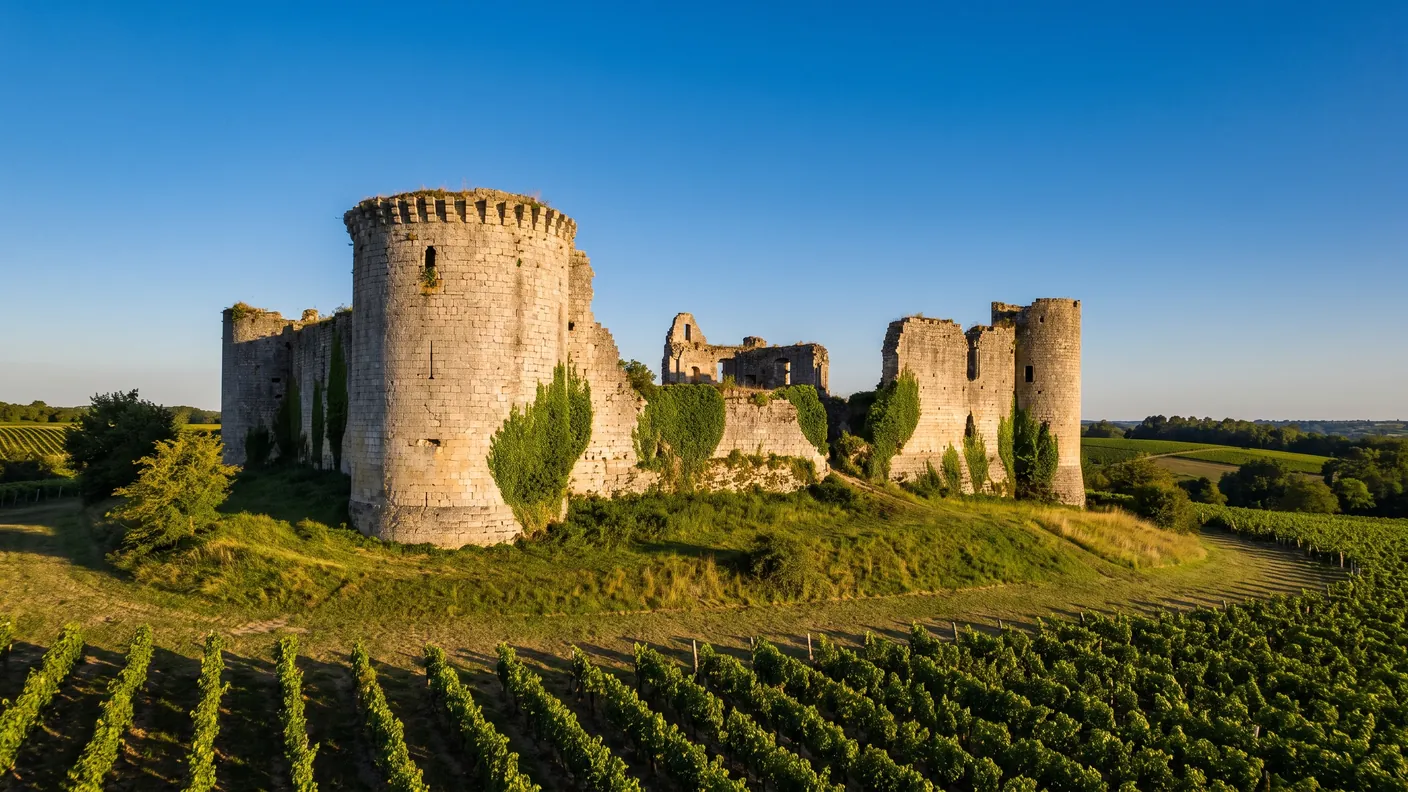
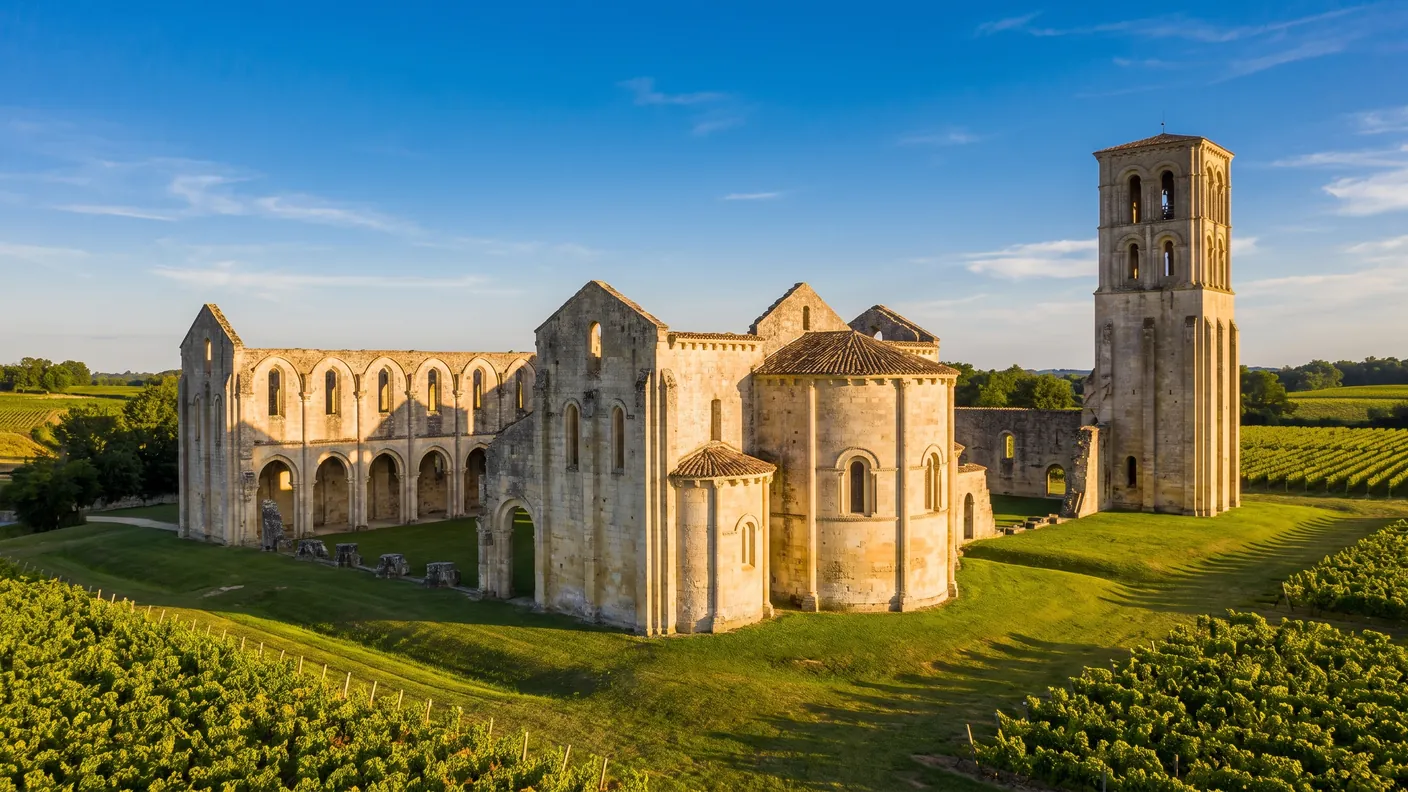
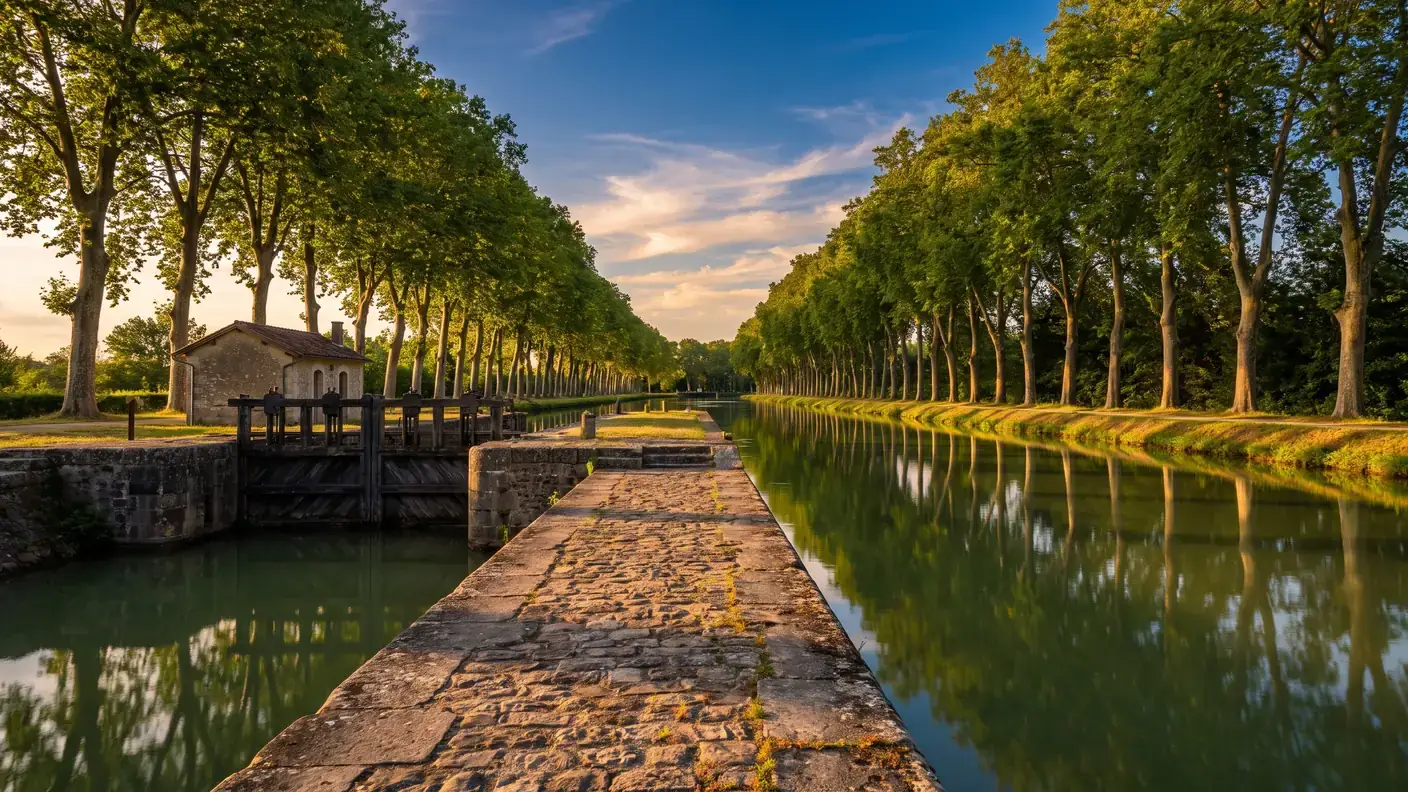
On the way to the medieval town
Direct transfer from Bordeaux (~54 min) to the medieval town of Saint-Macaire on the Garonne River—from the airport, train station, or hotel to the city walls, then on to Sauternes, Malromé, or the vineyards. Fixed, written quote—no surprises on the meter.