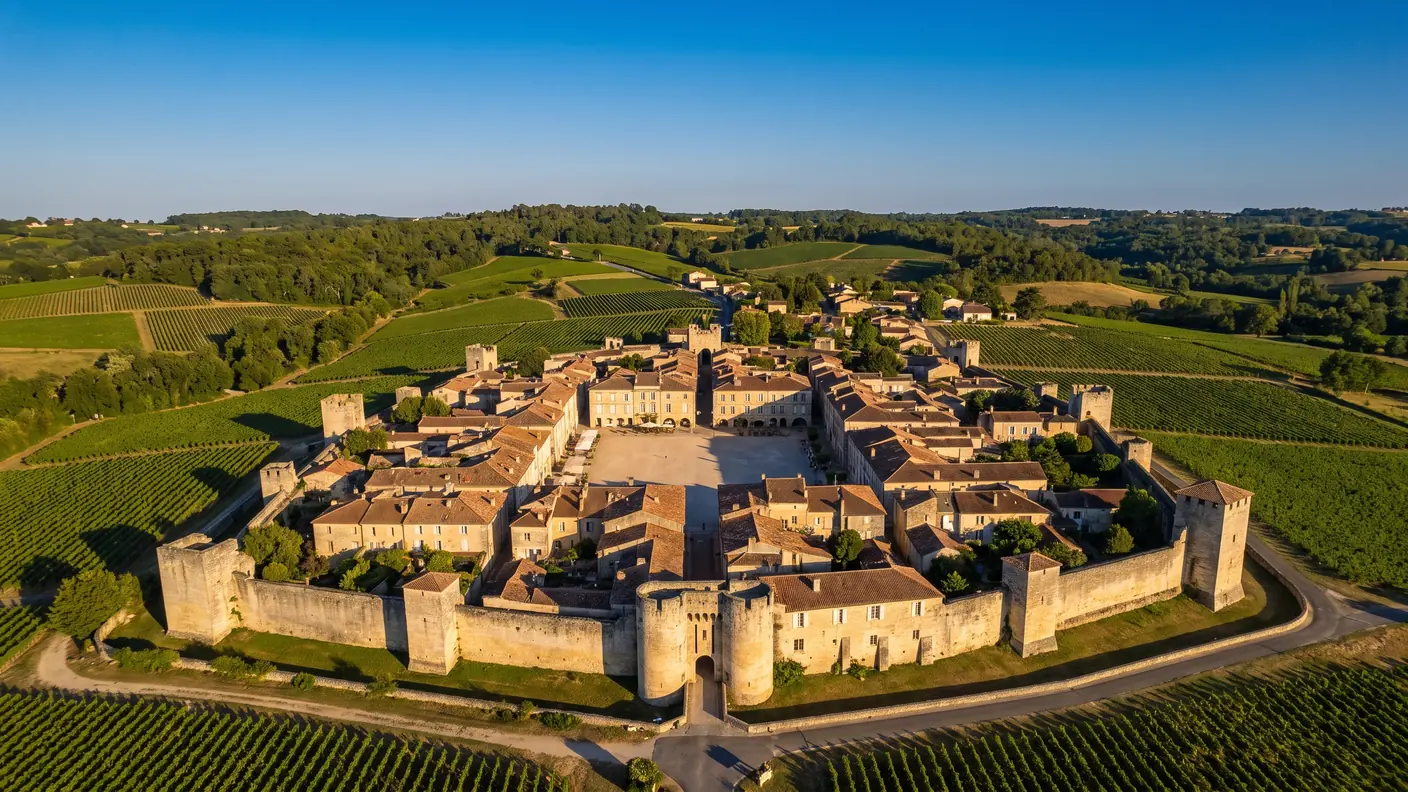
Bordeaux to Sauveterre-de-Guyenne: the bastide with four gates
Sauveterre-de-Guyenne has preserved its four fortified gates, a complex that has been designated a Historic Monument since 1892. An English-style town founded in 1281 in the heart of the Entre-deux-Mers region, featuring a square lined with arcades and a greenway—plus your private door-to-door transfer from Bordeaux, without having to rent a car.
Sauveterre-de-Guyenne at a Glance
Sauveterre-de-Guyenne is a medieval country house in the Gironde region, in the heart of the Entre-deux-Mers area, about 52 km southeast of Bordeaux. Sauveterre-de-Guyenne has retained its four fortified gates, a complex that has been designated a Historic Monument since 1892. Founded in 1281 by Edward Ier Founded by the Duke of Aquitaine, who was then Duke of England, this medieval “new town” has retained its grid-like layout, its large arcaded square, and its four historic gates, situated at the four cardinal points.
This guide distinguishes between verified and repeated information: Sauveterre does not have an old covered “market hall”; its ramparts were dismantled in 1838 (only the four gates remain); and its Notre-Dame Church is a Neo-Gothic reconstruction of which only the 14th-century apsee century is classified. However, it is the Terminus of the Roger-Lapébie Greenway, making it an ideal destination for cycling. Next, we’ll show you the easiest way to get there from Bordeaux: a private door-to-door transfer, without renting a car.
Here are the key details to know before you go. Distances are calculated door-to-door from Bordeaux; the fare listed is for a private driver reservation at a fixed price provided in advance, with no unexpected meter charges regardless of traffic or stops along the way. Information on cultural heritage and demographics has been verified using Wikipedia, the Mérimée database, INSEE, and the city hall; schedules are subject to change and should be confirmed on site.
| Landmark | Details |
|---|---|
| City | Sauveterre-de-Guyenne (Gironde, Langon District) |
| Location | a country house in the Entre-deux-Mers region, between the Dordogne and the Garonne |
| Residents | 1,885 residents of Sauveterre (2023) |
| Must-See | the four fortified gates, the arcaded square, and the Roger-Lapébie greenway |
| Distance from Bordeaux | 52 km · about 1 hour and 8 minutes by car |
Where is Sauveterre-de-Guyenne located?
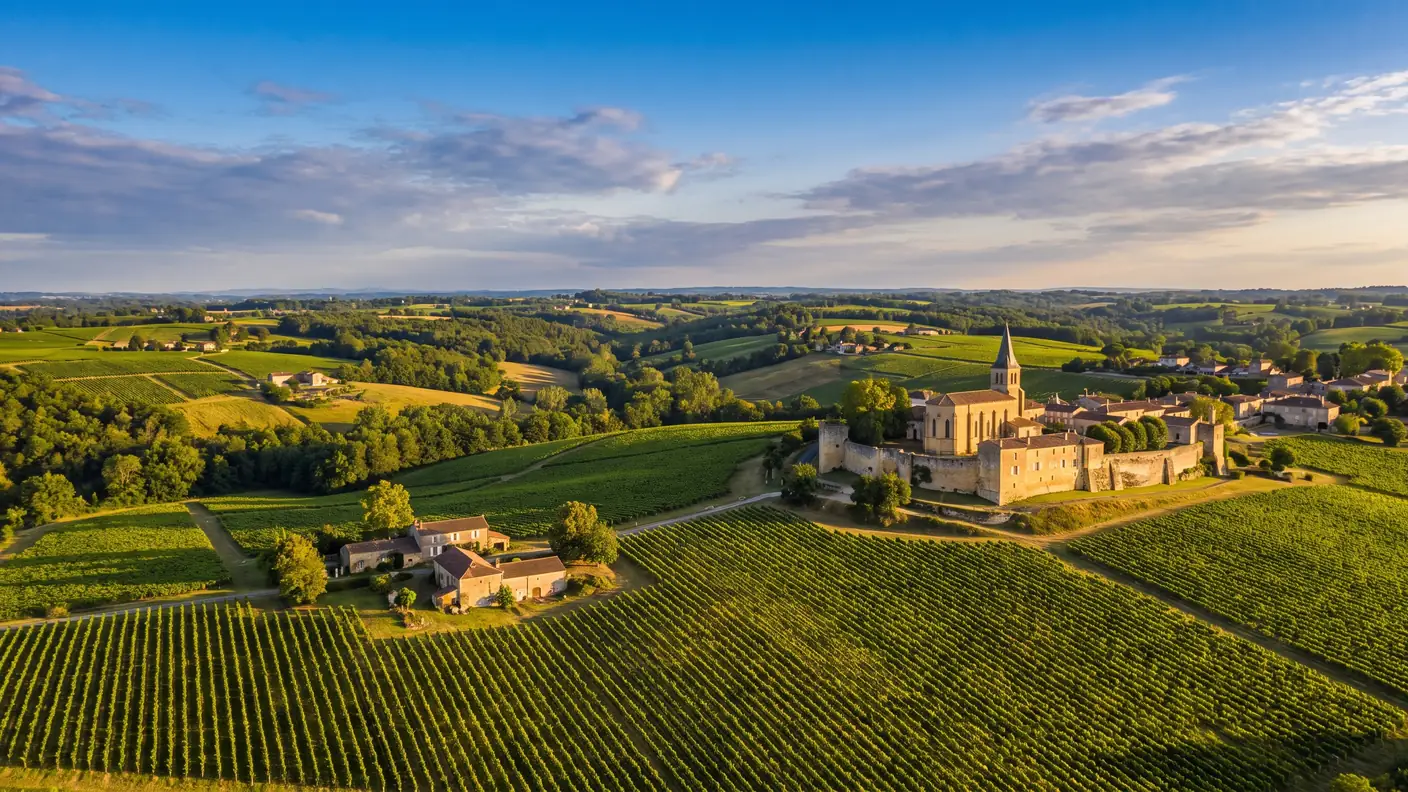
Location: Sauveterre-de-Guyenne is located in the southeastern part of the Gironde department, on a plateau 52 km from Bordeaux. The bastide has a population of 1,885 and is part of the Langon district and the Réolais-et-des-Bastides canton.
Definition of Entre-deux-Mers: This region of vineyard-covered hills stretches from the Dordogne River in the north to the Garonne River in the south. Its landscape features vineyards, hills, stone villages, fortified towns, and abbeys.
Implications for your visit: Its central location makes it easy to reach the bastide town of La Réole, as well as the vineyards of Entre-deux-Mers and Saint-Émilion. The standard driving route from Bordeaux is 52 km and takes about 1 hour and 8 minutes; please schedule your visits to the vineyards in advance.
A country house in the heart of the Entre-deux-Mers region
Sauveterre is situated in the heart of the Entre-deux-Mers region, on a rolling plateau covered with vineyards. This location, equidistant from the Dordogne and the Garonne, was key to its history: in the Middle Ages, the bastide—a new town built from scratch—served as a checkpoint and market in the heart of a prosperous agricultural region, on a shifting border between English and French territories.
Today, this same central location offers visitors an exceptional setting: a small medieval stone town, with its large arcaded square, its four gates, and its intact geometric layout, nestled in the midst of a sea of vineyards. It’s easily accessible from Bordeaux, and the wine châteaux of Entre-deux-Mers, La Réole-sur-Garonne, and Saint-Émilion are just a few minutes away. It’s the perfect base for a heritage and wine-tasting getaway in the countryside, far from the crowds.
A wine-growing region nestled between two rivers
Sauveterre’s great wealth lies in its terroir. The town is located in the heart of the Entre-deux-Mers AOC, the appellation for dry white wines that has made the region famous, as well as in the Bordeaux and Bordeaux Supérieur appellations for reds. All around, the hillsides are covered with vineyards, dotted with châteaux, fortified towns, Romanesque churches, and abbeys—a rich heritage dating back to the Middle Ages. It is a land of winemakers where you can taste wines at the vineyards—often by appointment—and where every village tells a story.
From Sauveterre, you can plan an itinerary through this little-known part of Entre-deux-Mers, taking in bastides, abbeys, and grand cru wines, all just a few minutes apart. The bastide, with its shops, market, and restaurants, makes an excellent base. A private driver allows you to explore from one estate to another without worrying about driving or parking—ideal for enjoying wine tastings at your leisure.
An English country house founded in 1281
Sauveterre-de-Guyenne is a bastide, that is, a new town built from scratch in the Middle Ages: it was founded in 1281 by Edward Ier of England, King of England and Duke of Aquitaine. It is one of the finest examples of this type of medieval urban planning in the Gironde. Here is what the sources say, without adding anything further.
What is a bastide?
A country house is a new town founded in the 13th centurye-XIVe for centuries in the Southwest, following a regular layout and for reasons that were both economic (to create a market and populate a territory) and political (to assert authority over a disputed region). Sauveterre was founded in 1281 by Edward Ier from England — English monarch, but also Duke of Aquitaine, because that entire region of the Southwest was then under the jurisdiction of the British Crown. The privileges (the charter of privileges granted to the residents) followed in 1283.
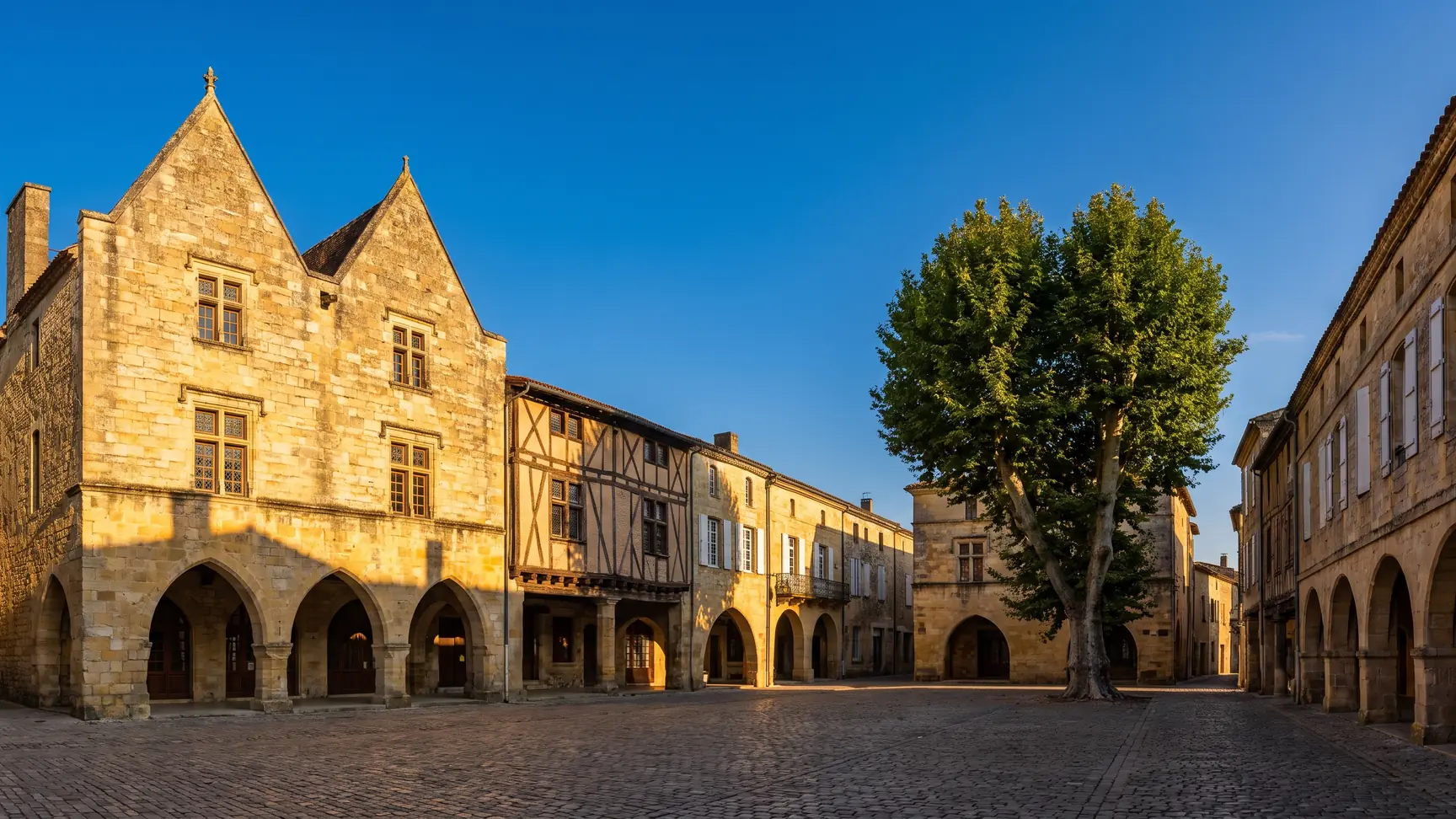
Like all bastides, Sauveterre was laid out in a grid pattern: streets intersecting at right angles, organized around a central square—the Place de la République—surrounded by arcades. It is this geometric layout—still perfectly visible today—that gives the town its charm and makes it such an interesting place to visit: walking through it feels like exploring a city conceived as a single, cohesive whole more than seven centuries ago.
The arcaded square, the heart of the bastide
The heart of Sauveterre is its large square with arcades, Place de la République—the former market square, around which the entire bastide is laid out. It is bordered byarcades (medieval and modern “arcades”) that sheltered merchants and market stalls, and stone houses. It is there that the market, each Tuesday morning, carrying on a seven-century-old tradition of commerce. The spacious, bright square is the perfect spot to take a break at an outdoor café between strolls through the grid-like streets.
All around, the straight narrow streets lead to the four gates and the ruins of the medieval town. Here you’ll discover old houses, passageways, the church, and the peaceful atmosphere of a small town in the Entre-deux-Mers region—lively yet timeless. A chauffeur service can drop you off right at the square—no need to worry about parking—so you can take a leisurely stroll.
The Four Fortified Gates
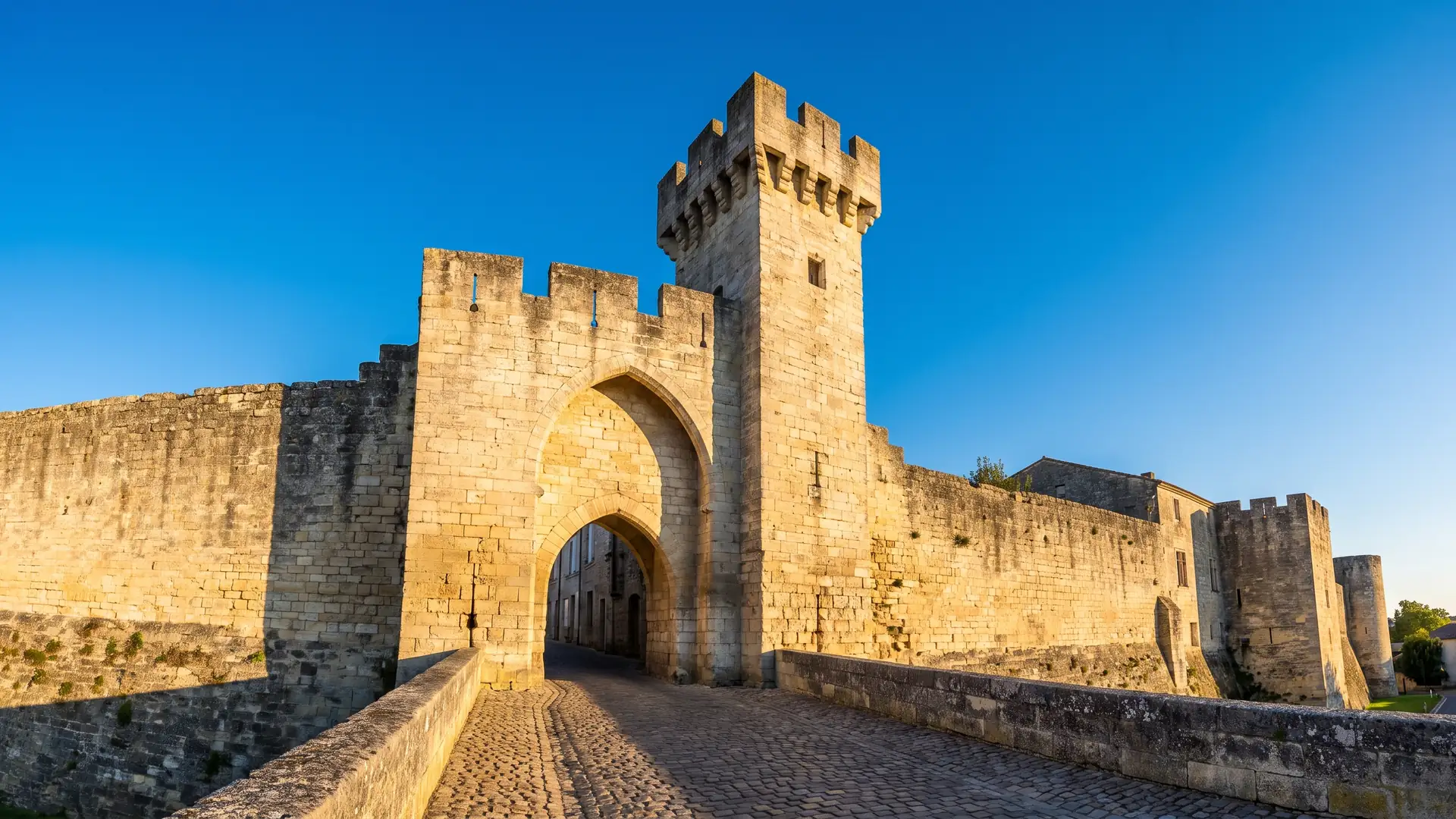
Sauveterre-de-Guyenne has preserved its four fortified gates, a complex that has been designated a Historic Monument since 1892. This is its heritage treasure and what makes it unique. Here is what the sources specifically document.
Four doors facing the four cardinal directions
The bastide originally featured a wall with four gates—one at each cardinal point—controlling the four entrances to the town. Unusually, all four still stand: the Saubotte Gate, the Font Gate, the Saint-Romain Gate, and the Saint-Léger Gate. They have been listed as Historic Monuments since 1892 (Ministry of Culture, POP, entry accessed on July 24, 2026).
You enter the bastide by passing through one of these stone arches. The POP information sheet notes that the Saubotte Gate still has its staircase and vaulted rooms, that Saint-Léger now has only one story, and that the Lafon Gate—or Réole Gate—has been partially demolished. Walking around the gates reveals the layout of the bastide.
Demolished ramparts, preserved gates
Just to clarify, since this is often a source of confusion: Sauveterre has not preserved its ramparts. The curtain walls (the walls connecting the gates) were dismantled in 1838; only the four gates have been preserved and subsequently designated as historic landmarks. Therefore, one should not imagine a town entirely enclosed by walls like Carcassonne, but rather a bastide whose four monumental gates, standing alone, mark the entrances to the old medieval layout. This distinction reveals the true nature of the place: an authentic and rare heritage site that must be described with precision.
Similarly, theNotre-Dame Church This nearby building, often described as a medieval monument, is in fact a 19th-century Neo-Gothic reconstructione century of which only the14th-century apsee century It is historic and has been designated a historic site (since 1920). It is these distinctions—verified, without any approximations—that set a reliable guide apart from a simply copied text. This makes the visit all the more enriching, because you know exactly what you’re looking at.
| Door | Position | Details |
|---|---|---|
| Saubotte Gate | northwest | the largest, ~17 m, 2 guardrooms |
| Porte de la Font | southwest | Designated a Historic Monument (1892) |
| Saint-Romain Gate | southeast | Designated a Historic Monument (1892) |
| Saint-Léger Gate | northeast | Designated a Historic Monument (1892) |
A country estate contested by the English and French crowns
A frontier bastide in the heart of English Guyenne, Sauveterre was contested by the two crowns, changing sides several times during the Hundred Years’ War before becoming French in 1451. Its turbulent history is etched into its stones. Here are the verified facts.
A frontier town in English Guyenne
Founded by the King of England, Sauveterre was long part of English Guyenne: for nearly three centuries, from the 12th to the 15th century, this entire region of the Gironde was part of the Duchy of Aquitaine, which was under the control of the kings of England. The bastide—a fortified town and market center on a shifting border—found itself on the front lines during the Hundred Years’ War. Its history was particularly turbulent: the town changed sides several times during the Hundred Years’ War before becoming French in 1451, two years before the Battle of Castillon, which would seal the end of English Aquitaine. From this past as a contested town, Sauveterre has retained its character as a walled bastide, with its gates and defensive layout magnificently preserved. This is what makes it a rare testament today to the urban planning and history of the Middle Ages in the Gironde region, best explored on foot, gate by gate.
"Terre sauve": The Meaning Behind a Name
The name Sauveterre speaks for itself: it comes from Occitan Save the Earth, « safe haven " or "land of salvation." A salvation, in the Middle Ages, was a place ofasylum and franchises : a market town where residents enjoyed special protections and freedoms, often under the authority of a lord or sovereign. The name thus reflects the town’s original purpose: to offer refuge and privileges in order to attract residents and populate the region—a logic typical of the founding of bastides.
The suffix “de Guyenne,” meanwhile, refers to its affiliation with Guyenne, the former name of Aquitaine under English rule (a corruption of the word “Aquitaine” itself). Thus, even in its name, Sauveterre-de-Guyenne carries the memory of its history: a “safe haven” founded by the kings of England in the heart of their Duchy of Aquitaine. It is these roots that we rediscover as we stroll through the bastide.
Gates, ramparts, church: what we often read
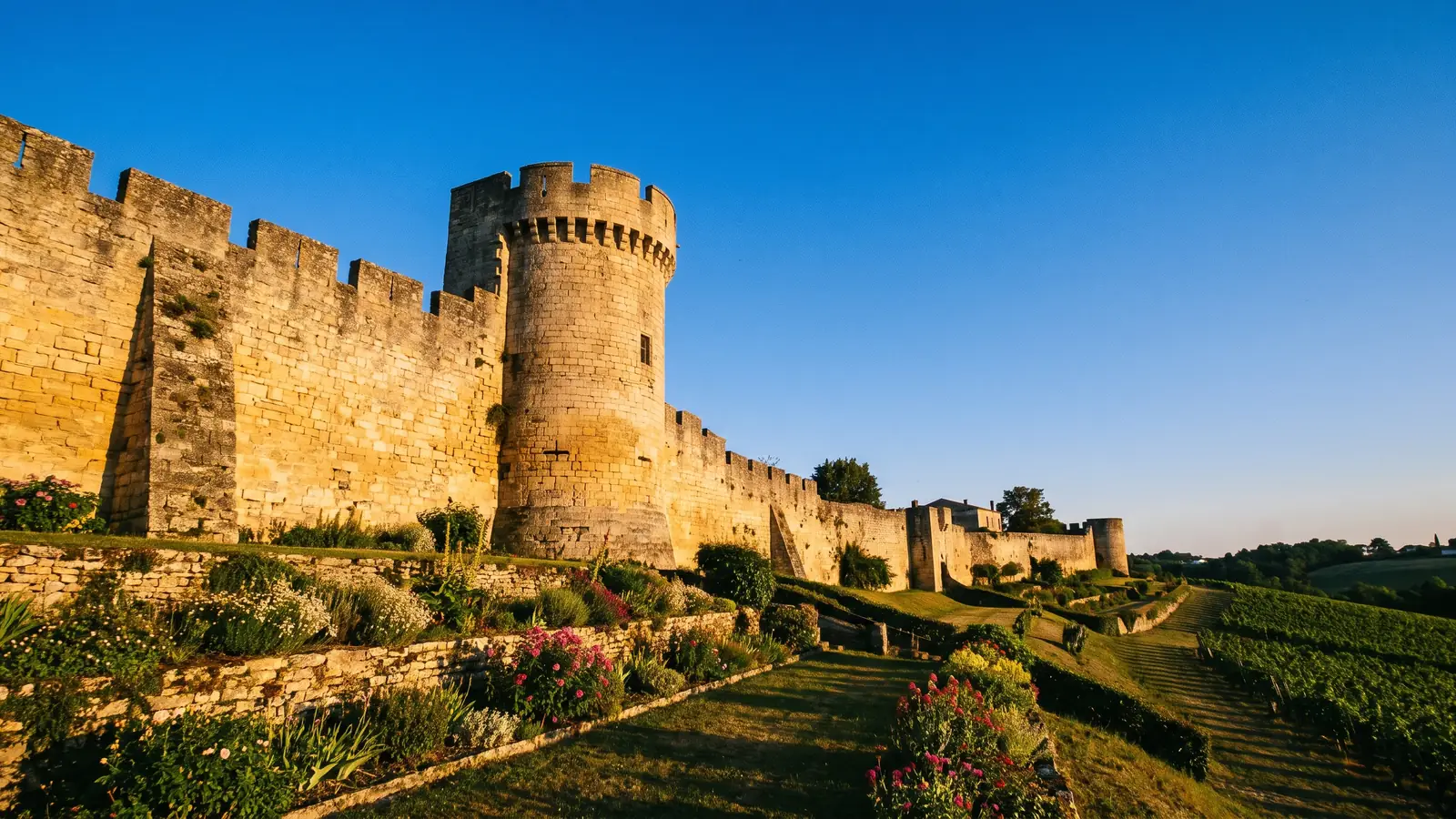
Several claims are circulating about Sauveterre that deserve to be corrected, with supporting sources—which is the whole point of a reliable guide. The ramparts, the market hall, the church, the gates: here is what is true and what is false.
No intact city walls, no old market hall
We sometimes imagine Sauveterre as a city that is entirely surrounded by ramparts, as if it were an intact fortified city. This is inaccurate: the The walls were torn down in 1838, and these are the only four-door that remain. Sauveterre-de-Guyenne has retained its four fortified gates, a complex that has been designated a Historic Monument since 1892. Similarly, one sometimes reads that the square has a “ hall "Historic covered market: there are no sources documenting a permanent hall-style building in Sauveterre. The square is home to the Tuesday morning market, but that's space for arcades that this is what it is, and not some old market hall. These details matter: they reveal the true nature of the place—a bastide whose greatest treasure is its map and its doors, not a reconstructed wall. An honest guide prefers to describe exactly what is there, rather than adding imaginary monuments.
Notre-Dame Church: Only the apse is old
Another clarification: theNotre-Dame Church de Sauveterre is often described as a listed medieval monument. In reality, the current building is largely a 19th-century Neo-Gothic reconstructione century : only theapse, dating from XIVe century, is actually medieval, and that is she alone which is ranked designated as a Historic Monument (by a decree of 1920). It should therefore not be described as a Romanesque or Gothic church that is entirely original.
Similarly, the four gates have been classified (and not merely “listed”) since 1892—a higher level of protection that should be properly noted. These distinctions, often overlooked, are precisely what sets a reliable guide apart from a superficial text. And they in no way detract from Sauveterre’s appeal: an authentic English bastide to be explored with a full understanding of its history. Sauveterre-de-Guyenne has preserved its four fortified gates, a complex that has been designated a Historic Monument since 1892.
The Roger-Lapébie Greenway
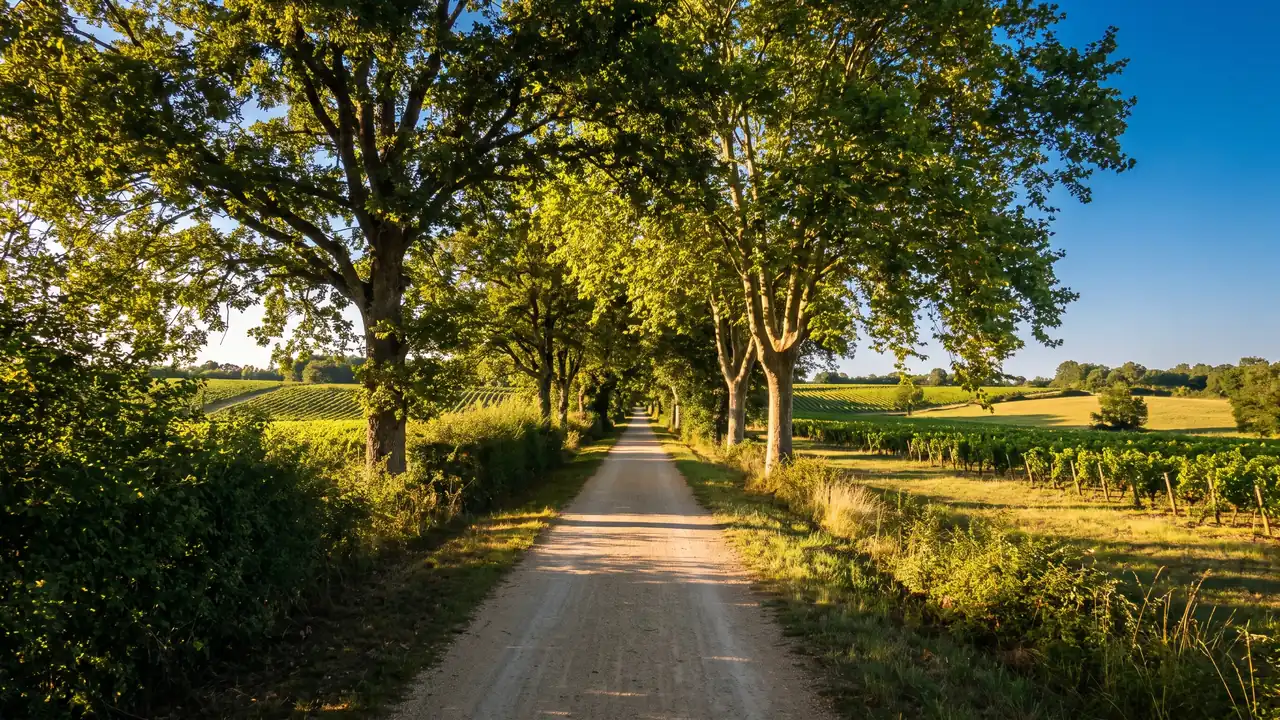
Sauveterre-de-Guyenne is the terminus of the Roger-Lapébie Greenway, a safe bike path built on a former railroad track that connects to the Bordeaux metropolitan area over a distance of about 50 kilometers. It is one of the town’s major attractions and a unique reason to visit. Here is what the sources confirm.
From Bordeaux to the country house, by bike, without a car
The Roger-Lapébie Greenway is a bike path developed by the Gironde Department along the route of a former railroad track. It connects the Bordeaux metropolitan area (the Latresne district, southeast of Bordeaux) to Sauveterre-de-Guyenne, which serves as its terminus. Its length ranges from approximately 50 to 57 kilometers depending on the starting point chosen (the Sauveterre town hall lists 54 km from downtown Bordeaux). Reserved for non-motorized traffic—bicycles, inline skaters, pedestrians, and people with limited mobility—it winds through the vineyard-covered hills of the Entre-deux-Mers region in a stunning setting, completely sheltered from motor vehicle traffic. It is named after Roger Lapébie, a cyclist from the Gironde region who won the 1937 Tour de France. Today, it is one of the region’s most beautiful greenways, highly popular with families and cycling tourists.
The connection between Bègles and Sauveterre-de-Guyenne is documented in the Atlas of Sensitive Natural Areas of the Gironde Department, accessed on July 24, 2026. The exact distance depends on the starting point; plan your route using the official map rather than relying on a single figure.
Outbound by bike, return by private transfer
This greenway offers a unique way to explore Sauveterre: bike the outbound leg from Bordeaux through the vineyards, then take a private shuttle back with your bikes—or do it the other way around. It’s the perfect way to spend a beautiful day: a bike ride through the Entre-deux-Mers region on the way there (allow several hours, depending on your pace), a tour of the bastide, and lunch in the town square, followed by a quick and comfortable return by car, without having to ride the same distance back.
For families, groups, or anyone who wants to enjoy the scenery at their own pace, a executive car service with the necessary equipment can handle the return trip with your bikes, from Sauveterre to Bordeaux or to your lodging. This is one of the destination’s main attractions: it lends itself to an active yet leisurely exploration, combining cycling, cultural heritage, and wine, with the flexibility of a customized transfer for the remainder of the journey.
What is there to do in Sauveterre-de-Guyenne?
At Sauveterre-de-Guyenne, you can stroll through the bastide and its four gates, enjoy the arcaded square and its Tuesday market, we set off by bike on the Roger-Lapébie greenway, and we explore the abbeys and wine-producing châteaux of the Entre-deux-Mers region. Here, specifically, are the actual, verified activities in the area. The focus of the tour is the bastide itself; the rest takes place in the surrounding area—we’ll specify this each time.
- The Tour of the Four Gates—Saubotte, de la Font, Saint-Romain, and Saint-Léger, located at the four cardinal points of the bastide and designated as Historic Monuments
- Place de la République—the large, square plaza lined with arcades, the heart of the bastide, perfect for taking a break on a terrace
- The Tuesday morning market—in the arcaded square, featuring local products from the Entre-deux-Mers region
- The Roger-Lapébie Greenway—a safe bike path to Bordeaux (~50 km), through the vineyards; option to bike there and return by shuttle
- Taste the wines of Entre-deux-Mers—dry whites (AOC Entre-deux-Mers) and reds (Bordeaux)—at the region’s châteaux (often by appointment)
- The nearby abbeys—Blasimon and Saint-Ferme, medieval abbeys in the Entre-deux-Mers region, just a few kilometers away
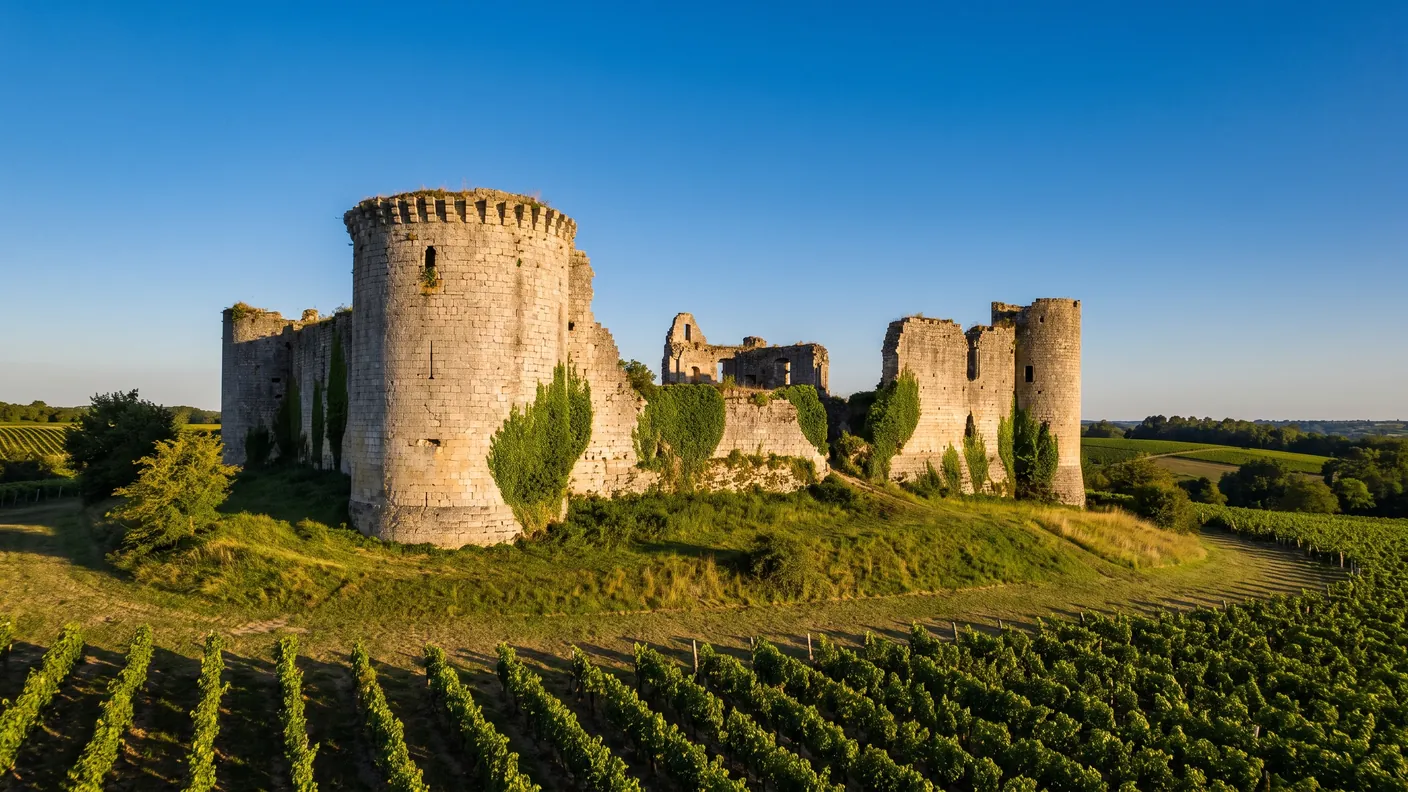
- Castelmoron-d'Albret—just nearby, reputed to be the smallest village in France, surrounded by its ramparts
The country house, the gates, and the market
A visit to Sauveterre is, first and foremost, a stroll In the country house: we do the Tower of the Four Gates — The most impressive Saubotte, from La Font, Saint-Romain, and Saint-Léger —, we head up the grid-patterned streets, you come out onto the large Place de la République and its arcades, you'll discover the church and the old houses. The Tuesday morning, the square comes alive with market : This is the best time to visit, amid the stalls selling local products, in the lively atmosphere of a small town in the Entre-deux-Mers region. Plan on a good hour or two to explore the bastide, combined with a break on a terrace and, why not, a wine tasting at a nearby château. The bastide, on a human scale, is best explored slowly, on foot, and is particularly well-suited for a family visit or a peaceful getaway in the countryside, far from the hustle and bustle of Bordeaux.
By bike, to the estate and the abbey
The area around Sauveterre invites you to explore further. The Roger-Lapébie Greenway allows for a bike ride through the vineyards, in both directions, on a safe, car-free trail—one of the most beautiful in the region. As for wines, the area is in the heart ofEntre-deux-Mers AOC (dry whites) and also produces reds from Bordeaux : many castles welcome for tastings, often by appointment, with direct sales. When it comes to heritage sites, you can go as far as the abbeys Medieval Sites of the Entre-deux-Mers — Blasimon and Saint-Ferme, very close by — or as far as Castelmoron-d'Albret, reputed to be the smallest village in France, nestled within its ramparts. A chauffeured transfer who knows the area will be able to put together a customized itinerary for you, taking in bastides, abbeys, villages, and fine wines, without the hassle of driving or parking. Visiting hours and conditions vary and must be confirmed on site.
| Activity | Where / When | Good to Know |
|---|---|---|
| The 4 Doors & the Seat | on site | Sauveterre-de-Guyenne has retained its four fortified gates, a complex that has been designated a Historic Monument since 1892. |
| Market | Place de la République, Tuesday morning | Local Products from Entre-deux-Mers |
| Roger-Lapébie Greenway | Terminus at Sauveterre | ~50 km from Bordeaux, without a car |
| Tastings | castles in the area | AOC Entre-deux-Mers, by appointment |
| Abbayes & Castelmoron | a few kilometers away | Blasimon, Saint-Ferme, the smallest village |
What's there to see around Sauveterre?
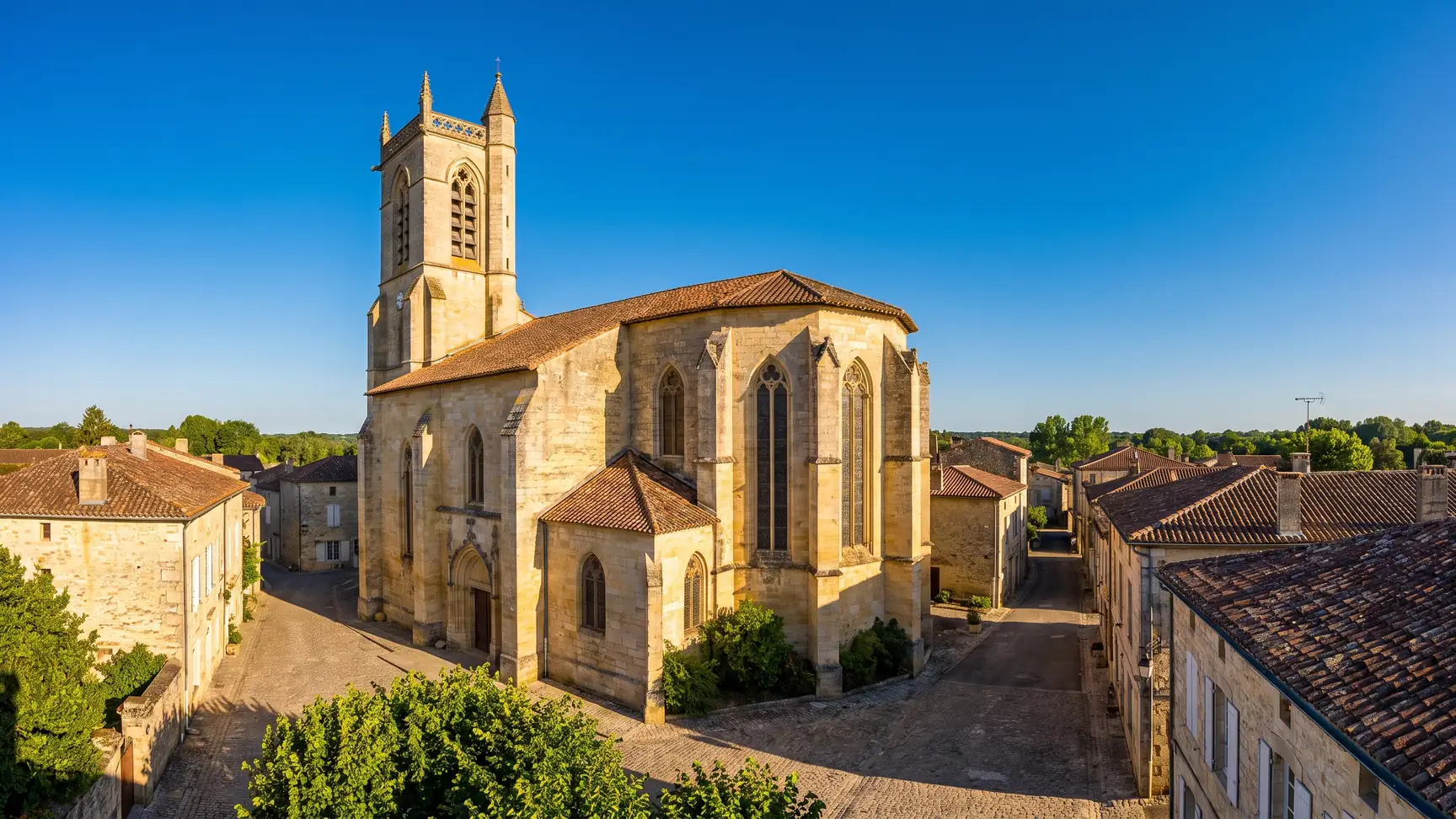
Around Sauveterre, you can explore the medieval abbeys of the Entre-deux-Mers region, the small fortified village of Castelmoron-d'Albret, the town of La Réole on the Garonne River, and the vineyards of Saint-Émilion. The bastide is ideally situated at the crossroads of several wine regions: here are the must-see destinations, all within easy reach for a day trip.
Abbeys, villages, and the town of La Réole
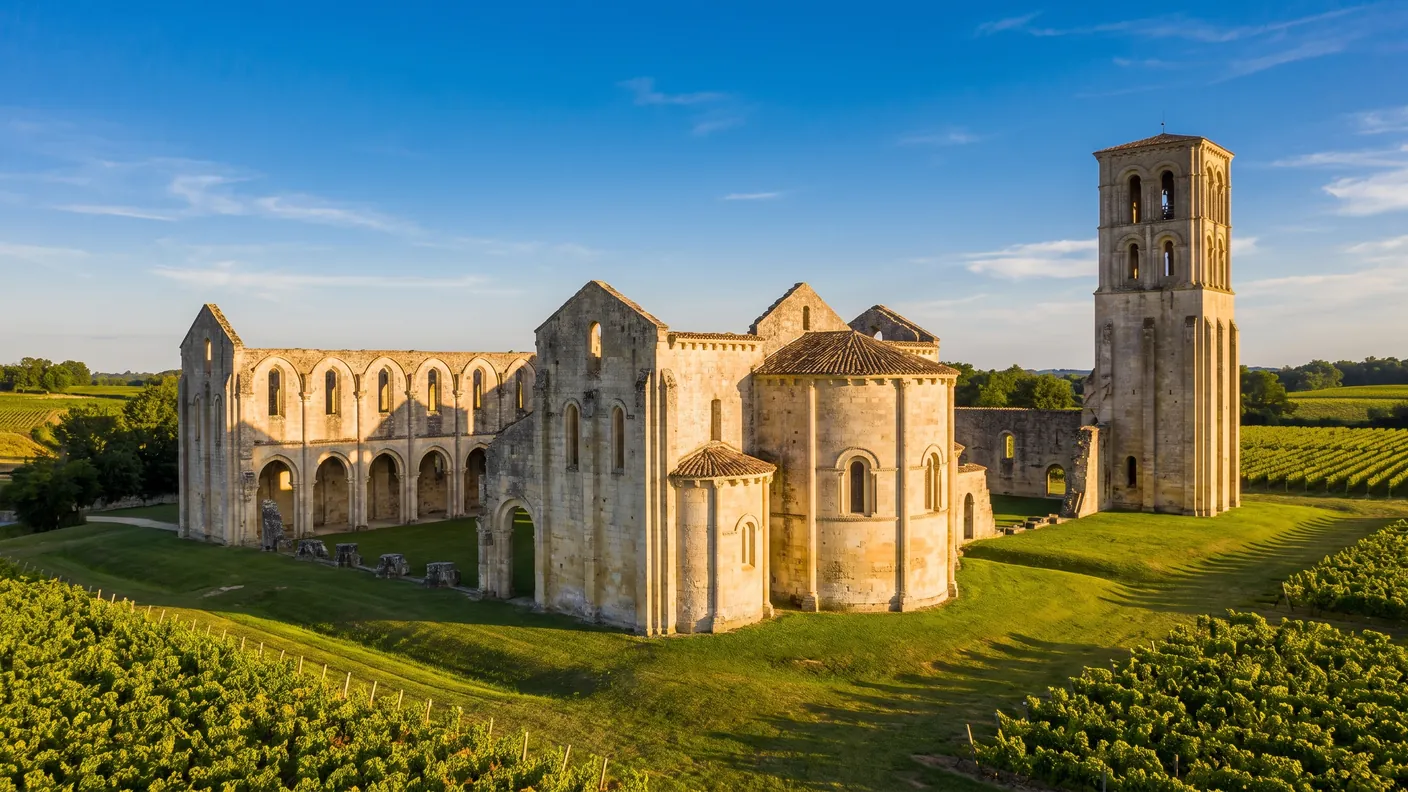
The Entre-deux-Mers region is home to abbeys and charming villages. Near Sauveterre, you can visit the ancient medieval abbeys of Blasimon and Saint-Ferme, which bear witness to the monastic life that flourished in the region during the Middle Ages along the pilgrimage routes to Santiago de Compostela. Just a few kilometers away, Castelmoron-d’Albret—said to be the smallest village in France—nestled within its ramparts, is well worth a visit for its timeless atmosphere.
To the south, on the Garonne River, La Réole (about 15 km away) is a magnificent medieval town—a former royal city—with steep, narrow streets, an abbey church, and a historic Romanesque town hall—one of the most beautiful in the area. These sites, scattered around the bastide, form a rich itinerary that combines history, architecture, and vineyard landscapes. A private chauffeur who knows the region will take you from one to the next, freeing you from the hassle of driving and parking, and giving you plenty of time to explore at your leisure.
The Vineyard and Saint-Émilion
Sauveterre lies at the heart of a large wine-growing region. All around stretch the hillsides of the Entre-deux-Mers, home to dry white wines, dotted with châteaux that welcome visitors for tastings. To the north lies the Saint-Émilion wine region, a medieval town listed as a UNESCO World Heritage Site. This makes it easy to combine visits to bastides, abbeys, and wineries with a tour of Saint-Émilion. From Bordeaux, the standard travel time to Sauveterre is approximately 1 hour and 8 minutes.
When is the best time to visit Sauveterre-de-Guyenne?
Sauveterre-de-Guyenne is open to visitors year-round, but is especially enjoyable from spring through fall, when the country house is bathed in light and the greenway and vineyards are in full bloom. The spring (April–June) is ideal: the soft light highlights the golden stone of the gates and the square, the terraces come alive, the greenway is perfect for biking, and the natural beauty of the Entre-deux-Mers region is breathtaking. Thesummer (July–August) is the peak season: markets, events, and festivals enliven the bastide, and the shade of the arcades is a welcome relief during the hottest part of the day; it’s also the best time for bike rides and wine tastings at the châteaux. Thefall (September–October) is perhaps the most beautiful time of year: it's the season of grape harvest, the light bathes the stones and the vineyards in a golden glow, and the crowds begin to thin out.
Even thewinter It has its charm, with the quiet country house, but some shops and estates are shortening their hours, and the greenway is getting cooler. The market at the Tuesday morning is still a highlight. Plan on spending at least half a day in Sauveterre and exploring its gates; a weekend trip allows you to also visit the greenway, the surrounding area, and the vineyards. The regular train ride from Bordeaux takes about 1 hour and 8 minutes.
| Season | Atmosphere | Ideal for |
|---|---|---|
| Spring (April–June) | golden stone, terraces, serenity | country house, biking, wine tastings |
| Summer (July–August) | markets, entertainment, shaded arcades | family, greenway, castles |
| Fall (Sept.–Oct.) | grape harvest, golden light, tranquility | wine tourism, photography, cultural heritage |
Getting to Sauveterre from Bordeaux
Sauveterre-de-Guyenne is 52 km from Bordeaux, or about a 1-hour, 8-minute drive. These figures are taken from the corresponding sales page. The route heads southeast through the Entre-deux-Mers region. The bastide does not have a train station; the nearest one is in La Réole.
| Route | Distance | Duration | Details |
|---|---|---|---|
| Bordeaux → Sauveterre-de-Guyenne | ~52 km | ~1 hr 08 min | Starting at ~99 € for a private chauffeur service |
| Bordeaux-Mérignac Airport → Sauveterre | ~60 km | ~1 hr 5 min | pickup at the terminal |
| Sauveterre → La Réole | ~15 km | ~18 min | nearest TER station |
| Sauveterre → Saint-Émilion | ~28 km | ~35 min | UNESCO World Heritage Site, fine wines |
Through the road, you can get to Sauveterre from Bordeaux in about 1 hour 8 minutes for 52 km. There is no train station in Sauveterre: La Réole is the nearest station to consider, after which you’ll need local transportation. A private transfer avoids this transfer and drops you off directly at the bastide. Any additional stops will be confirmed in the quote.
Whether you’re exploring a medieval bastide, enjoying a day of cycling along the greenway, or taking a wine-tasting getaway in the Entre-deux-Mers region, booking a door-to-door chauffeur guarantees a comfortable and punctual ride—book a driver from Bordeaux → Sauveterre-de-Guyenne or explore all our destinations.
Frequently Asked Questions
Where is Sauveterre-de-Guyenne located?
Sauveterre-de-Guyenne is a medieval bastide in the Gironde department, in the heart of the Entre-deux-Mers region, between the Dordogne and Garonne rivers. It is located 52 km from Bordeaux, which is about 1 hour and 8 minutes according to the website. The town has a population of 1,885 and features four listed fortified gates. It does not have a train station, so a bus connection is required.
How much does a transfer from Bordeaux to Sauveterre-de-Guyenne cost?
The transfer from Bordeaux to Sauveterre-de-Guyenne is listed starting at 99 € for 52 km and approximately 1 hour and 8 minutes, consistent with the sales page. The route is direct, and the quote is confirmed in writing. A return trip with bicycles requires vehicle configuration and luggage volume to be confirmed prior to booking.
What is a bastide, and why is Sauveterre considered one?
A bastide is a new town built from scratch during the Middle Ages, in the 13th and 14th centuries, in southwestern France, according to a regular layout—a grid of streets organized around a central square with arcades. Bastides were established for economic reasons (to create a market, to populate a territory) and political reasons (to assert authority). Sauveterre-de-Guyenne was founded in 1281 by Edward I of England, King of England and Duke of Aquitaine, and was granted its privileges in 1283. It has retained its grid layout, its large square with arcades (Place de la République), and above all its four fortified gates, making it one of the best-preserved bastides in Gironde. Walking through it feels like exploring a town designed as a single, cohesive whole more than seven centuries ago—that’s the charm of the visit.
Why is Sauveterre-de-Guyenne famous for its doors?
Sauveterre-de-Guyenne has preserved its four fortified gates, a complex that has been designated a Historic Monument since 1892. The bastide had a gate at each cardinal point: the Saubotte Gate (northwest), the Font Gate (southwest), the Saint-Romain Gate (southeast), and the Saint-Léger Gate (northeast). All four still stand and have been designated Historic Monuments since 1892. The most imposing, the Saubotte Gate, rises to a height of about 17 meters and housed two guardrooms. However, the ramparts (the walls connecting the gates) were dismantled in 1838: only the gates themselves were preserved. Walking around all four gates is the best way to understand the layout of the bastide and appreciate what makes it so unique.
Who founded Sauveterre-de-Guyenne?
Sauveterre-de-Guyenne was founded in 1281 by Edward I of England, King of England and Duke of Aquitaine. At that time, this entire region of southwestern France—Guyenne, the former name for Aquitaine—was under the rule of the English crown. The kings of England, in their capacity as Dukes of Aquitaine, founded numerous bastides there to populate and control the territory. Privileges (the charter of franchises granted to the inhabitants) were granted in 1283. The town’s name comes from the Occitan phrase *salva terra*, meaning “safe land” or “land of salvation”: a *sauveté*, that is, a place of asylum and privileges. A frontier bastide in the heart of English Guyenne, Sauveterre was subsequently fiercely contested, changing sides several times during the Hundred Years’ War before becoming French in 1451.
What is the Roger-Lapébie Greenway?
The Roger-Lapébie Greenway is a safe bike path developed by the Gironde Department along the route of a former railroad track. It connects the Bordeaux metropolitan area (Latresne district) to Sauveterre-de-Guyenne, where it ends, over a distance of about 50 kilometers (approximately 50 to 57 km depending on the starting point; the city hall lists it as 54 km from downtown Bordeaux). Reserved for non-motorized traffic—bicycles, inline skaters, pedestrians, and people with limited mobility—it winds through the vineyard-covered hills of the Entre-deux-Mers region, away from motor vehicle traffic. It is named after Roger Lapébie, a cyclist from the Gironde region who won the 1937 Tour de France. It offers a unique way to explore the bastide: ride your bike one way from Bordeaux, then take a private shuttle back with your bikes—or do it the other way around.
What is there to do in Sauveterre-de-Guyenne?
First, take a leisurely stroll through the bastide, walk around the four gates, and enjoy the arcaded square. You can then set off by bike on the Roger-Lapébie greenway or visit a vineyard by appointment. The abbeys of Blasimon and Saint-Ferme, La Réole, and the Saint-Émilion vineyards offer great ways to extend your stay. From Bordeaux, the distance is 52 km, and the trip takes about 1 hour and 8 minutes.
Are the church and the gates of Sauveterre designated historic landmarks?
The four fortified gates have been classified as Historic Monuments since 1892—a classification, not merely a listing, which corresponds to the highest level of protection. The Church of Notre-Dame, on the other hand, warrants some clarification: the current building is largely a 19th-century Neo-Gothic reconstruction, and only the apse, dating from the 14th century, is truly medieval and listed (by decree of 1920). It should therefore not be presented as a Romanesque or Gothic church that is entirely original. Similarly, the ramparts that connected the gates were dismantled in 1838: only the four gates remain. These distinctions, often overlooked, are important: they reveal the true nature of Sauveterre’s heritage, a bastide whose greatest treasure is its checkerboard layout and its four listed gates.
What is the distance between Bordeaux and Sauveterre-de-Guyenne?
The sales page lists the distance as 52 km and the travel time as approximately 1 hour and 8 minutes, starting at 99 € for a one-way trip. The fare is confirmed before departure. There is no train station in Sauveterre; road transportation is required for the final leg of the journey. For a return trip with bicycles, please specify the number and type of bicycles, as well as any luggage, when making your request.
Is it possible to bike from Bordeaux to Sauveterre?
Yes, it’s actually one of the most enjoyable ways to explore it. The Roger-Lapébie Greenway, a safe, car-free bike path, connects the Bordeaux metropolitan area to Sauveterre-de-Guyenne over a distance of about 50 kilometers, winding through the vineyard-covered hills of the Entre-deux-Mers region. Plan on several hours of cycling, depending on your pace. Many visitors bike there, tour the bastide, and have lunch in the town square, then take a private shuttle back with their bikes to avoid biking the same distance in the opposite direction. A driver with the necessary equipment can handle this return trip, from Sauveterre to Bordeaux or to your lodging. This is an ideal option for families, groups, and anyone who wants to enjoy the scenery without any hassle, combining the effort of cycling on the way there with the comfort of a shuttle on the way back.
What's there to see around Sauveterre-de-Guyenne?
The bastide is ideally located in the heart of the Entre-deux-Mers, a region rich in heritage. Nearby, you can visit the ancient medieval abbeys of Blasimon and Saint-Ferme, located along the Camino de Santiago, and the village of Castelmoron-d'Albret—said to be the smallest village in France—nestled within its ramparts. To the south, on the Garonne River, La Réole (about 15 km away) is a magnificent medieval town—a former royal city—with steep, narrow streets and a remarkable abbey church. To the north, just under half an hour away, lies the prestigious Saint-Émilion wine region (about 28 km), a UNESCO World Heritage Site renowned for its grand cru wines. All around, the hillsides of the Entre-deux-Mers region are covered with vineyards and châteaux that welcome visitors for wine tastings. A chauffeured car who knows the region can tailor an itinerary just for you, taking in bastides, abbeys, villages, and fine wines.
When is the best time to visit Sauveterre-de-Guyenne?
From spring to fall, preferably. Spring (April–June) is ideal: the soft light highlights the golden stone of the gates and the square, the terraces come alive, and the greenway is perfect for biking. Summer (July–August) is peak season, with markets, events, and festivals, and the welcome shade of the arcades; it’s also the best time for bike rides and wine tastings at the châteaux. Fall (September–October) is perhaps the most beautiful time: it’s harvest season, the light gilds the stone buildings and vineyards, and the crowds thin out. Winter has its own charm, with the bastide quiet and peaceful, though some shops and estates have reduced hours. The Tuesday morning market is a highlight in any season. Plan on at least half a day for the bastide, or a weekend if you want to include the greenway, the abbeys, and the vineyards.
Further Reading
- The nearby Garonne Canal: see the Castets-en-Dorthe Guide (the Garonne Canal and its locks)
- The nearby vineyard, a UNESCO World Heritage Site : see the Guide to Saint-Émilion (Medieval town and fine wines)
- The nearby medieval town: see the Saint-Macaire Guide (city walls and arcaded square on the Garonne)
- Understanding our rates and vehicles: see the "Book a Driver" page (sedan & van, fixed-price quote)
- Plan your trip: Book a chauffeur service from Bordeaux to Sauveterre-de-Guyenne or explore all our destinations
Sources and References
- Wikipedia — Sauveterre-de-Guyenne — a bastide founded in 1281 by Edward I of England, with a grid-like layout, four gates designated as historic monuments in 1892, population 1,885. (2023), changed sides several times, came under French control in 1451
- POP Mérimée — Former Gates of Sauveterre-de-Guyenne — four main gates listed as Historic Monuments since 1892; accessed July 24, 2026
- Wikipedia — Notre-Dame de Sauveterre-de-Guyenne Church — a Neo-Gothic church rebuilt in the 19th century; only the 14th-century apse is designated a historic monument (1920)
- Gironde Department — Atlas of Sensitive Natural Areas — Roger-Lapébie departmental bike path connecting Bègles to Sauveterre-de-Guyenne; accessed July 24, 2026
- Entre-deux-Mers Tourist Office — the bastide town of Sauveterre, its arcaded square, Tuesday market, the abbeys of Blasimon and Saint-Ferme, Castelmoron-d'Albret, and the Entre-deux-Mers AOC
- INSEE — Sauveterre-de-Guyenne (33511) — municipal population: 1,885 residents (2023), up +5.43% since 2017; demonym: Sauveterriens
Article published on .
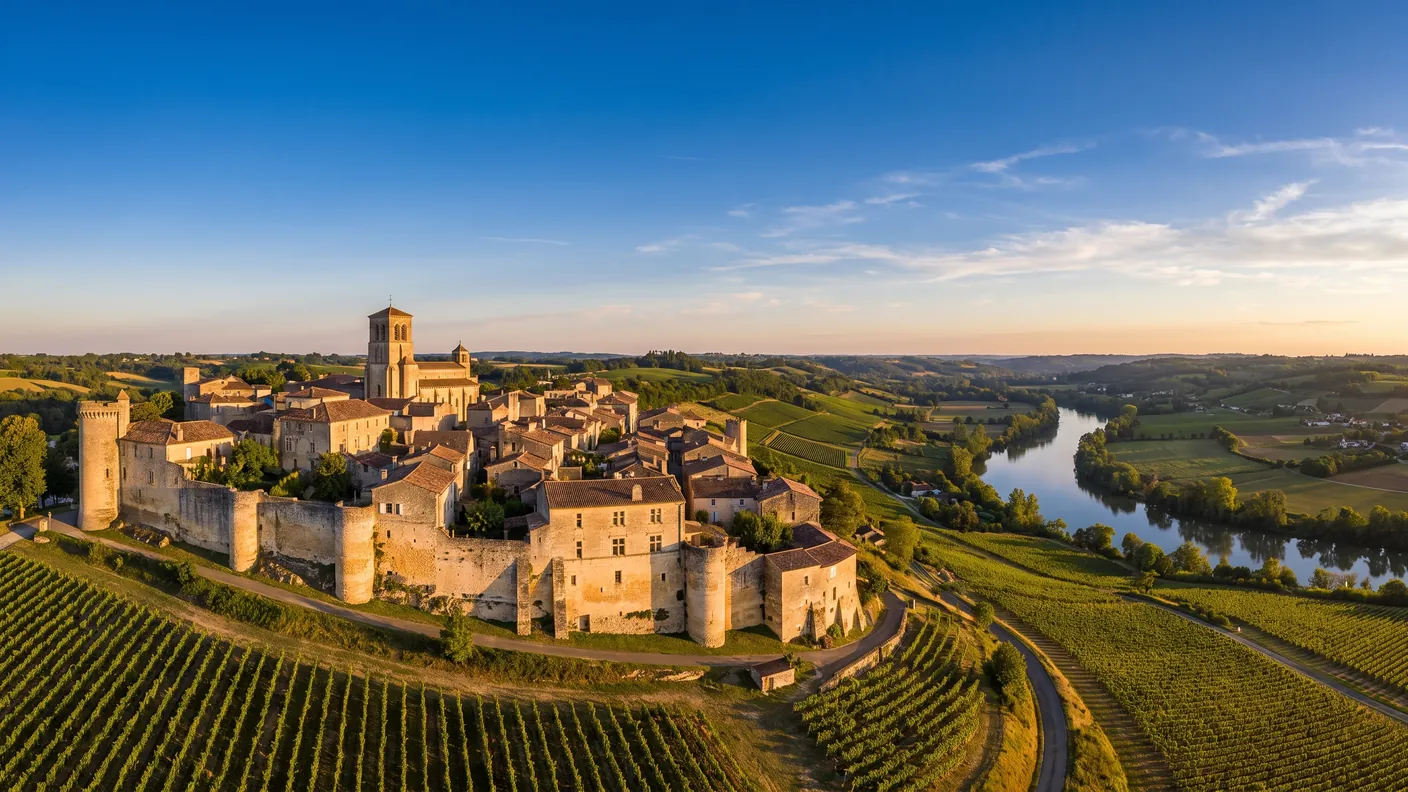
On the way to the bastide with four gates
Direct transfer from Bordeaux (52 km, approximately 1 hour 8 minutes) to the bastide of Sauveterre-de-Guyenne, in the heart of the Entre-deux-Mers region. Any additional stops and bike transport are confirmed in the quote, with a fixed price in writing.