Bordeaux to Rochefort: royal dockyard, Corderie and Hermione
Europe’s longest industrial facade, the last remaining transshipment bridge still in operation, and the frigate that carried La Fayette to America. A new city commissioned by Colbert in 1666, Rochefort keeps the Sun King’s maritime ambition alive—less than two hours from Bordeaux.
Rochefort at a glance
Rochefort is a new town in Charente-Maritime, founded in 1666 by Louis XIV and Colbert to house the kingdom’s arsenal and shipyard. Contrary to what the name “Rochefort-sur-Mer” might suggest, it is not a seaside town, but a river city situated on the Charente River, fourteen kilometers inland from the mouth—a location chosen to shield it from English fleets. Visitors can explore the Corderie Royale, Europe’s longest industrial facade; the dry docks where the frigate Hermione was rebuilt; France’s last remaining operational transporter bridge; and the house-museum of the writer Pierre Loti. A subprefecture with a population of approximately 23,460, designated a “City of Art and History” and classified as a “Grand Site de France” in 2020, Rochefort is just under a two-hour drive from Bordeaux. This guide unravels its history, describes its monuments, and tells you how to get there by private driver—without confusion or misconceptions.
| Landmark | Details |
|---|---|
| Department | Charente-Maritime (Nouvelle-Aquitaine) · subprefecture |
| Status | City of Art and History · Grand Site de France (2020) |
| Population | approximately 23,460 residents (municipality, INSEE) |
| Foundation | a new city founded in 1666 by Louis XIV and Colbert |
| Must-Sees | Corderie Royale · Hermione · transporter bridge · Pierre Loti's house |
| From Bordeaux | ~155 km · 1 hr 44 min drive (A10) · starting at 259 € |
Few French cities bear the mark of a political design quite so clearly. While most cities grew slowly around a church, a ford, or a market, Rochefort was planned and laid out with a straightedge on the king’s orders for a single purpose: to build, arm, and repair the kingdom’s warships. This origin explains everything—the grid-like layout, the sheer scale of the buildings, and the alignment of the docks along the Charente River. Three and a half centuries later, the arsenal no longer builds ships, but the city has transformed its military past into a heritage site unique in Europe, one that is remarkably well-preserved and showcased.
The information above is verified using data from INSEE, the Ministry of Culture’s Mérimée database (Historic Monuments classifications), the Rochefort Océan tourist office, and information sheets from the Corderie Royale and the Hermione-La Fayette Association. Road distances are recalculated door-to-door; the rate indicated corresponds to a chauffeur service reservation at a fixed price provided in advance. We’d also like to point out the most common misconceptions about Rochefort—regarding its imaginary seaside, the age of its dry docks, or the location of Pierre Loti’s death—so you don’t end up repeating them.
Where is Rochefort located?
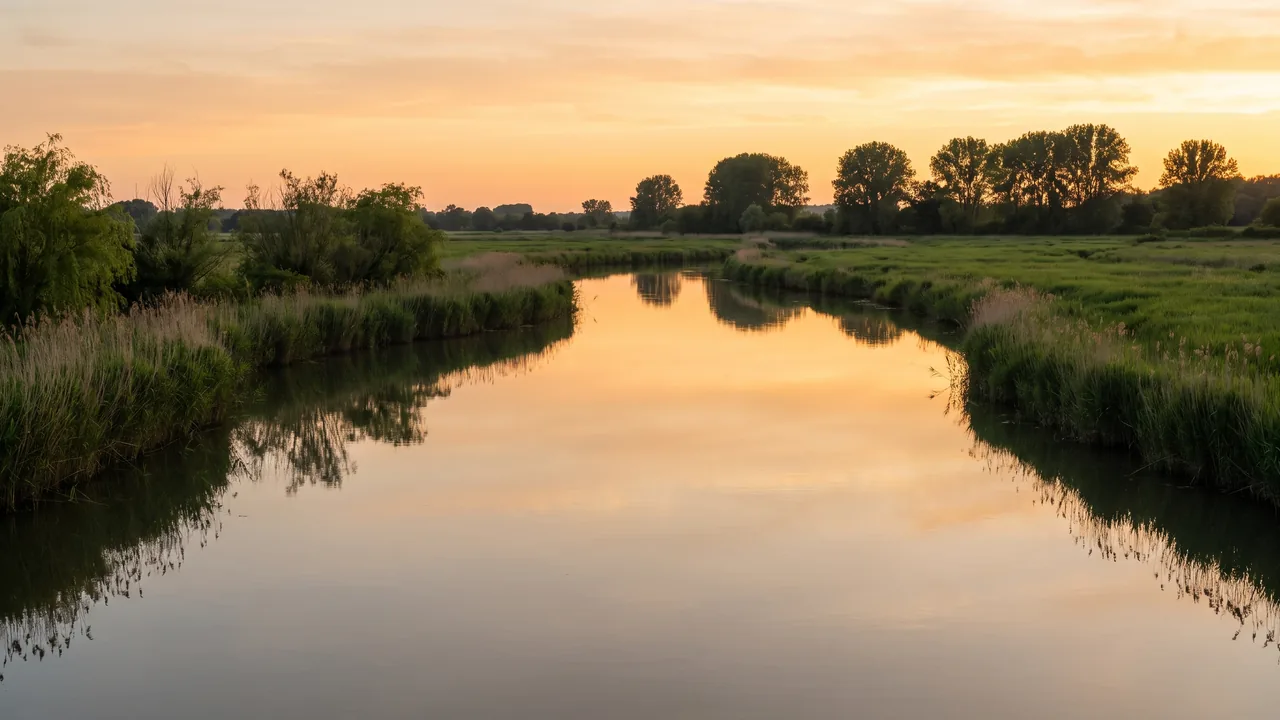
Rochefort is located in Charente-Maritime, in the southern part of Nouvelle-Aquitaine, on the right bank of the Charente River—and that’s the catch: despite being commonly referred to as “Rochefort-sur-Mer,” the town is not on the coast, but lies about fourteen kilometers inland from the river’s mouth, in its penultimate bend. This location is by no means a coincidence. When Louis XIV and Colbert chose the site in 1666 to build an arsenal there, they wanted a military port safe from a surprise attack by the English navy, protected by the river’s meanders and mudflats: an enemy ship sailing up the Charente would have been exposed for a long time before reaching the arsenal. Rochefort is thus, by nature and by design, a riverine arsenal city, the subprefecture of its department, located about 155 kilometers north of Bordeaux.
A river city, not a coastal city
The Charente River, which flows through Rochefort, is a true river: 381 kilometers long, with its source in Chéronnac, in Haute-Vienne, at an elevation of about 295 meters, and its mouth in the Bay of Biscay, between Fouras and Port-des-Barques. Its watershed covers more than 10,549 km². But what makes it unique are its meanders: the river winds so generously that it travels 381 actual kilometers to cover only about 160 kilometers as the crow flies—its bends more than double the distance. Rochefort is situated in one of these last major meanders, on the right bank, about fifteen kilometers from the sea. Looking at a map, it’s easy to see why Colbert deemed the site impregnable: to reach it from the ocean, one had to travel up a long stretch of slow-moving water, surrounded by marshes, under fire from the batteries. The city has therefore never had a beach or a waterfront; it has docks, a river, and mudflats.
Don't confuse Rochefort
The name Rochefort is quite common, and confusion often arises. The most famous namesake is Rochefort in Belgium, in the province of Namur, known for its Trappist beer and its abbey: it has absolutely no connection to the town in Charente. We should also be careful not to confuse it with Rochefort-sur-Loire, Rochefort-du-Gard and the other municipalities with the same name. The Rochefort in Charente-Maritime takes its name from a medieval settlement, Roccafortis — the “strong rock.” Before the arsenal was built, the site was just a modest hamlet: it is estimated to have been about 500 residents in the early 17th century. And so the city was born ex nihilo Thanks to royal decree, it transformed in just a few decades from a riverside village into one of Europe’s major military ports. Its youth explains its geometric regularity, so different from the labyrinthine layout of older cities.
How far is it from nearby cities? Rochefort is beautifully situated in the heart of the Charentes-Maritimes region: La Rochelle is very close to the north, Saintes to the east on the Charente River, Royan to the south toward the Gironde estuary, and Cognac further inland. Here are the actual driving times, calculated door-to-door.
| From Rochefort | Distance | Travel time |
|---|---|---|
| La Rochelle | ~37 km | ~36 min |
| Royan | ~42 km | ~45 min |
| Saintes | ~45 km | ~35 min |
| Cognac | ~76 km | ~1 hr 5 min |
| Bordeaux | ~155 km | ~1 hr 44 min |
The Corderie Royale, Europe's longest facade
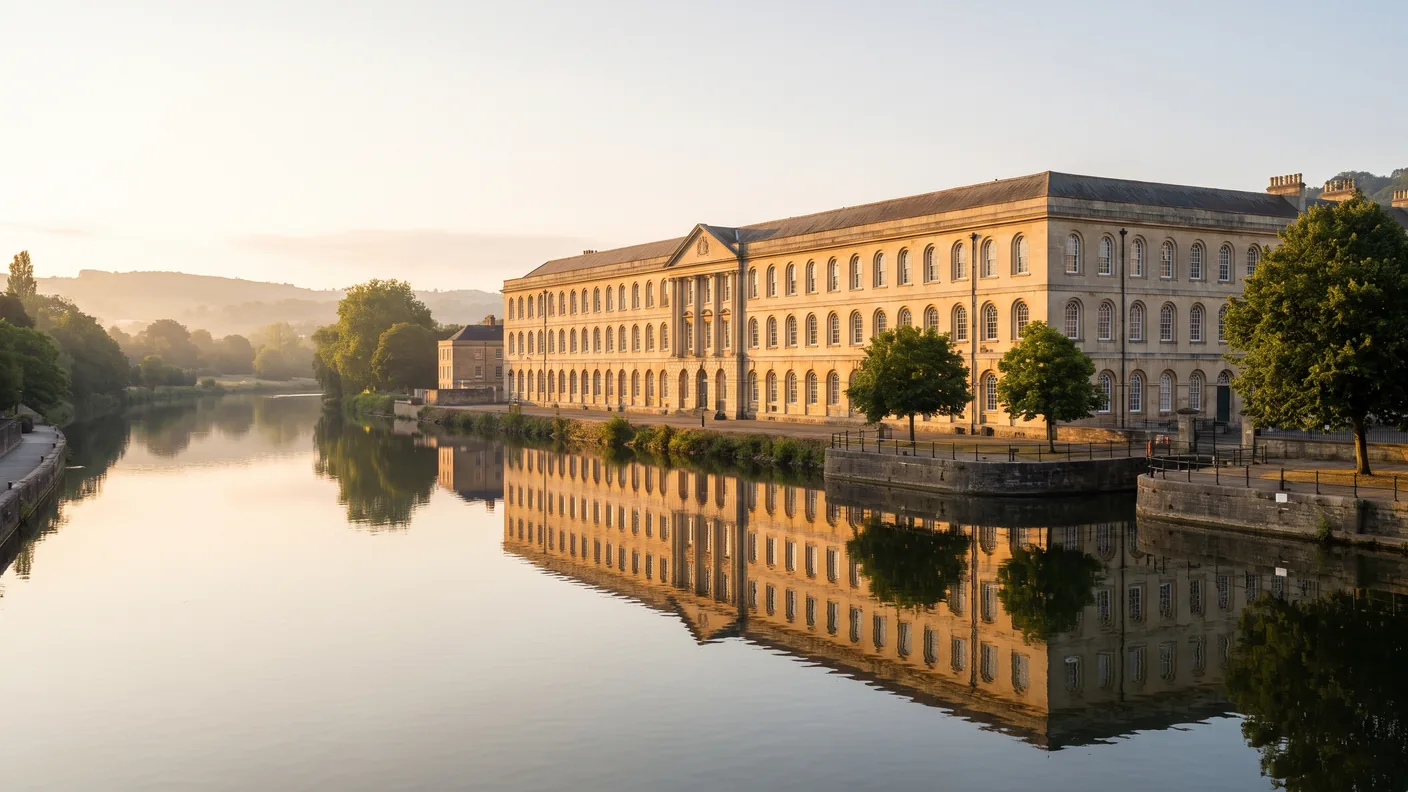
The Corderie Royale is the iconic landmark of Rochefort: built from 1666 to 1669 under Colbert’s leadership, based on plans by architect François Blondel, it features a 374-meter-long facade — 373 meters according to the official listing by the Historic Monuments authority — and is only 8 meters wide, making it the longest industrial building in Europe until the 20th century. Its length is no accident: ropes for the Royal Navy were manufactured here, and space was needed to produce them in a single continuous length. The first building in the arsenal to be put into service, as early as 1670, the Corderie produced ropes for the fleet for nearly two centuries. Today, it is the most visited site in Rochefort, with more than 100,000 visitors per year.
The longest industrial building in Europe
The ship’s excessive size was dictated by a specific technical constraint. Naval rope is manufactured by “stranding”—twisting together—strands along their entire length in a single operation: it was therefore impossible to make a rope longer than the workshop itself. Yet the Sun King’s great ships required vast quantities of rope: it is estimated that a single ship of the line could require up to one hundred kilometers of rope in total, and the Rope Factory made it possible to twist mooring lines of nearly 200 meters in one continuous stretch. Hence this seemingly endless gallery, a long facade of light-colored stone punctuated by tall windows. To give you a sense of scale: with its 374 meters, the Corderie Royale is longer than the Eiffel Tower is tall (324 meters). You walk through it as if it were a covered avenue, and once you reach the end, it’s hard to clearly make out where you started.
The challenge was not only to extend the building, but to ensure it remained stable. The ground at Rochefort—marshy and waterlogged—could not support a structure of this mass as it was: the foundations risked sinking unevenly, causing the facade to crack. The builders then came up with an ingenious solution: to set the Corderie on a submerged oak raft—a wooden platform embedded in the damp ground that distributes the load and prevents the building from sinking. This counterintuitive principle is the same one that protects Venice’s wooden piles: wood that is constantly wet does not rot and becomes a stable foundation. Three and a half centuries later, the facade still stands, proving the accuracy of their calculations.
From the 1944 Fire to the International Center for the Sea
La Corderie nearly disappeared. Contrary to popular belief, it was not destroyed during the Revolution: the building stood the test of time alongside the arsenal until the latter closed. It was in 1944 that he was set on fire by German troops It was abandoned, and for a long time it remained a charred ruin. The city of Rochefort bought it back in 1973 and undertook a major restoration project, which continued until 1988. Since the mid-1980s, the restored building has been home to the International Center for the Sea, a museum space dedicated to ropes, the navy, and the history of the arsenal. Here, visitors can learn about rope-making techniques, life at the arsenal, and the world of shipbuilding—all within the very setting where the king’s rope-makers once worked along the Charente River.
Recognition as a cultural heritage site followed. The Corderie Royale is Designated a Historic Monument on October 10, 1967 — and not June 2 of the same year, an erroneous date that is sometimes cited. The designation covers not only the main building but also its outbuildings: the water tower, the fountain, and the guardhouse that accompany it. This status of ranking, the highest level of protection in France, designates the Corderie as a monument and nothing else registered In the inventory. Here are the key figures and dates for the building, to give you a clearer picture.
| Feature | Value |
|---|---|
| Construction | 1666–1669 (Colbert · architect François Blondel) |
| Length | 374 m (as commonly reported) · 373 m (according to the Historic Monuments listing) |
| Width | 8 m |
| Record | the longest industrial building in Europe until the 20th century |
| Commissioning | 1670 (first building in the arsenal) |
| Fire | 1944 (German troops) |
| MH Ranking | October 10, 1967 |
| Today | International Maritime Center · >100,000 visitors per year |
The Arsenal and the Dry Docks
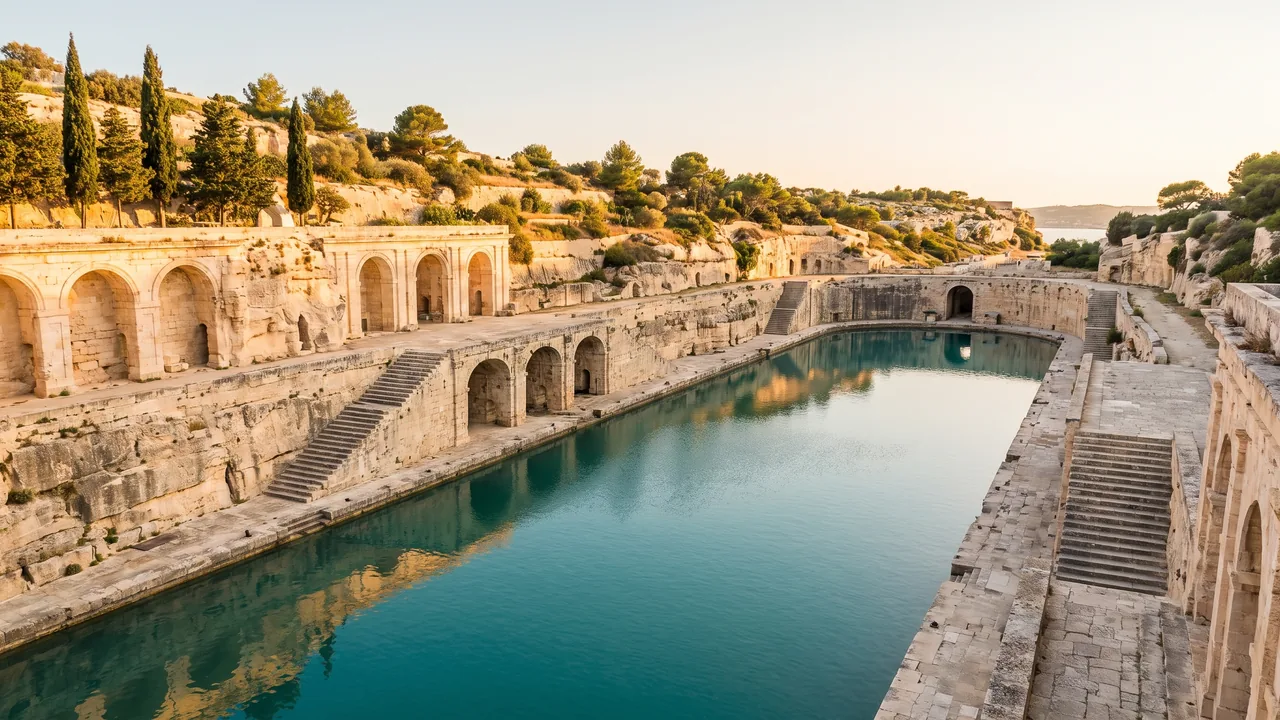
La Corderie is just one part of a much larger complex: the Rochefort arsenal, also founded in 1666 by Louis XIV and Colbert, which became the kingdom’s main arsenal. For more than two and a half centuries, warships were built, outfitted, and repaired there: workshops, warehouses, dry docks, and quays—an entire military industrial complex stretched along the Charente River. The arsenal ceased operations in 1926, and the French Navy permanently left the site in 1927; the site therefore no longer serves a military function and is now open to the public as a heritage and museum complex. At the heart of this heritage, the dry docks—where ship hulls were refitted—are among the most impressive structures.
Repair docks, stone dry docks
A dry dock is a basin that can be drained to allow work to be done on a ship’s hull while it is out of the water: the ship is brought into the dock, the gate is closed, the water is drained, and the hull then rests on blocks, accessible from all sides. Rochefort has had three such dry docks, built over the course of nearly two centuries. The oldest, known as the old dry dock, was dug from 1669–1671 on the studies of engineer Le Vau. It holds a unique place in the history of technology: it is the first masonry dry dock built in France, built based on an English model—since England already had masonry dry docks. We must therefore be careful not to present it as “the oldest in the world,” a false yet persistent claim: it is a French milestone, inspired by expertise from across the Channel.
Next came the most ambitious one: the Louis XV double dry dock, a massive project carried out by 1683–1725 based on a design by Pierre Arnoul—a project that took forty-two years to complete. Its technical innovation makes it a landmark in naval engineering: two adjoining dry docks sharing a single lock, an innovative layout that allows for the maneuvering of two ships. It was in this Louis XV slipway that the replica of the Hermione was rebuilt in modern times—and not in the old, neighboring slipway, contrary to what is sometimes reported. A third slipway, known as Napoleon III, was built between 1853 and 1861, during the age of steam. In terms of protection, the old design and the Louis XV design are Listed as Historic Monuments since May 9, 1989, whereas the Napoleon III style is registered since March 7, 1988.
A useful clarification regarding the arsenal’s status, as there are many misconceptions: protection under the Historic Monuments designation does not cover “the entire arsenal.” It applies to specific elements—the Rope Walk, the dry docks, and certain buildings. The monumental Porte du Soleil, the arsenal’s ceremonial entrance dating from the second quarter of the 19th century, is merely listed (and not classified) as a Historic Monument, by decree of June 11, 1928. Confusing “listing” with “classification,” or extending protection to the entire site, are two mistakes to avoid.
The National Maritime Museum
The arsenal is also home to one of the branches of the National Maritime Museum, housed in the Hôtel de Cheusses, a historic residence at the heart of the site. This is the place to learn about the history of the military port: ship models, navigational instruments, naval sculptures, and records of the expeditions that set sail from Rochefort. The museum perfectly complements the Corderie and the dry docks, providing the human and technical narrative of what life was like in a royal arsenal—the comings and goings of shipwrights, rope-makers, officers, and engineers. For visitors, the Corderie–dry docks–museum complex forms the historic heart of Rochefort, which takes a good half-day to explore. Here is a summary of the three dry docks and their dates.
| Dry dock | Dates | MH Status |
|---|---|---|
| Old dry dock (first masonry dock in France) | 1669-1671 | listed on May 9, 1989 |
| Louis XV double dry dock | 1683-1725 | listed on May 9, 1989 |
| Napoleon III dry dock | 1853-1861 | registered on March 7, 1988 |
The Hermione, La Fayette's frigate
The most famous vessel in the fleet is a frigate: the Hermione, launched at Rochefort on April 28, 1779, which carried the Marquis de La Fayette to America, where he was fighting against England. A 12-gun frigate of the Concorde class, armed with 26 12-pounder cannons and 8 6-pounder cannons, she is part of the legend of Franco-American relations. La Fayette embarked on her on March 10, 1780 — not to Rochefort itself, but to Port-des-Barques, a neighboring town closer to the mouth of the river—, set sail on March 20 and landed at Boston, April 28, 1780, under the command of Latouche-Tréville. The original frigate met a sudden end: it was wrecked on September 20, 1793 on the Four Plateau, off the coast of Le Croisic, in Loire-Atlantique—a long way from Rochefort, in other words.
The frigate that carried La Fayette
The fate of the Hermione hinges on a fascinating coincidence of timing: the frigate was launched on April 28, 1779, and La Fayette arrived in Boston on April 28, 1780 — exactly one year later, to the day. The voyage had major political significance: the young marquis brought back to the American insurgents the promise of decisive French military support, which would play a major role in the outcome of the War of Independence. The Hermione, a fast and well-armed ship, was the instrument of this behind-the-scenes diplomacy. Its construction, at the time, had been carried out at breakneck speed: it was built in about six months, a remarkable pace that attests to the industrial might of the Rochefort arsenal at the height of its activity. Keep this figure in mind: it takes on its full meaning when compared to the time it would take, two centuries later, to rebuild it exactly as it was.
Seventeen years for a replica
Because the Hermione we visit today is not the original, which was lost in 1793, but a replica Rebuilt in Rochefort — a crazy project led by the association Hermione-La Fayette, founded in 1992. The hull and framework were entrusted to the company Asselin, in Thouars, in the Deux-Sèvres department, and the ship was rebuilt in the arsenal’s Louis XV dry dock. The keel was laid on July 4, 1997, and the launch took place on September 7, 2014: that is, nearly seventeen years of construction, compared with six months for the original. This contrast speaks volumes about the gap between the 18th-century shipbuilding industry century-old structure and a contemporary artisanal reconstruction, carried out using period techniques and materials, on a modest budget and with extensive use of rediscovered craftsmanship. The replica measures more than 65 meters, door three-masted and 2,100 m² of sail area, with an all-oak hull.
A replica designed for sailing
The replica is an ocean-going vessel built for sailing. Notably, it completed a transatlantic crossing in 2015. Its location, shipyard, public access, and sailing schedule are subject to change: please check the Hermione-La Fayette Association’s news section before your visit.
| Original frigate | Replica | |
|---|---|---|
| Launch / Launching | April 28, 1779 | September 7, 2014 |
| Construction Time | ~6 months | ~17 years old (keel laid in 1997) |
| Cannons | 26 of 12 pounds + 8 of 6 pounds | 22 cannons |
| Wing | — | 2,100 m² · 3 masts |
| Conclusion / Highlights | Shipwreck on Sept. 20, 1793 (off the coast of Le Croisic) | 1 Transat in 2015, return to Brest on August 10 |
The Martrou Transporter Bridge
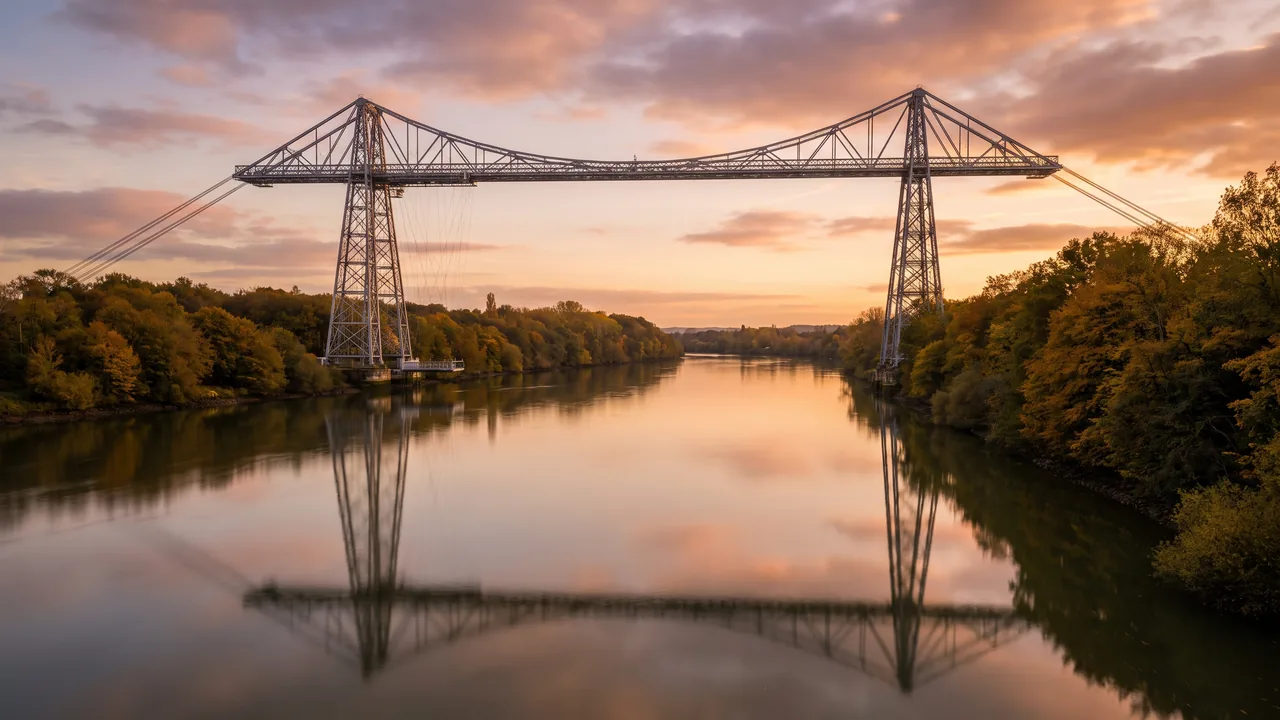
On the outskirts of the city, the Martrou transporter bridge spans the Charente River with its intricate steel latticework: built between March 1898 and July 1900 by engineer Ferdinand Arnodin and inaugurated on July 29, 1900, it is the last transporter bridge still in operation in France. Note the date: 1898 marks the start of construction, not the inauguration, which took place on July 29, 1900. The structure was designed to allow people to cross the river without obstructing the passage of large sailing ships: instead of a low deck, it suspends a gondola from a carriage rolling beneath a beam positioned very high, 50 meters above the water. It ceased regular service in 1967, was designated a Historic Monument in 1976, and was restored from 2016 to 2020.
How Does a Transshipment Bridge Work?
The design is as ingenious as it is anachronistic. On a conventional bridge, the deck connects the two banks at a certain height; but in Rochefort, it was necessary to allow the masts of large ships heading up to the arsenal to pass through without forcing cars and pedestrians to climb an excessively steep ramp. Arnodin therefore adopted the solution of the ferry: a horizontal beam, the deck, runs along 50 meters high between two towers; beneath it runs a trolley from which hangs, suspended by cables, a gondola which travels just above the water, carrying passengers and vehicles from one bank to the other. The crossing takes about 75 seconds. The dimensions are mind-boggling: a deck measuring 175.50 meters long, pylons of 66.25 meters, a range of 129 meters above the river. You cross the Charente suspended in a cabin, like in a horizontal cable car from the early 20th century.
The last one still in operation in France, saved from demolition
A clarification is in order, since rumors spread quickly: the Martrou Bridge is not “the oldest transporter bridge in the world”. The first of its kind is the Biscay Bridge (or Vizcaya), in Portugalete, Spain, open from 1893; Arnodin himself had, in fact, built the one at Rouen in 1898, which predates Rochefort. The correct statement is therefore that the Martrou Bridge is the last transporter bridge still in operation in France — a crucial distinction. Its recent history is nothing short of a heritage miracle: after regular service ceased in 1967, it was supposed to be demolished, before his Designated a Historic Monument on April 30, 1976, doesn't save him. A great restoration work carried out from 2016 to 2020 has restored it to its former glory: the gondola once again crosses the Charente River, offering visitors one of the most unique experiences in Rochefort—crossing a river aboard a century-old engineering masterpiece.
| Feature | Value |
|---|---|
| Construction | March 1898 → July 1900 |
| Inauguration | July 29, 1900 |
| Engineer | Ferdinand Arnodin |
| Height of the apron | 50 meters above the Charente River |
| Length of the apron | 175.50 m |
| Height of the towers | 66.25 m |
| Scope | 129 m |
| Crossing the gondola | ~75 seconds |
| MH Ranking | April 30, 1976 · restored 2016–2020 |
Pierre Loti and His House-Museum
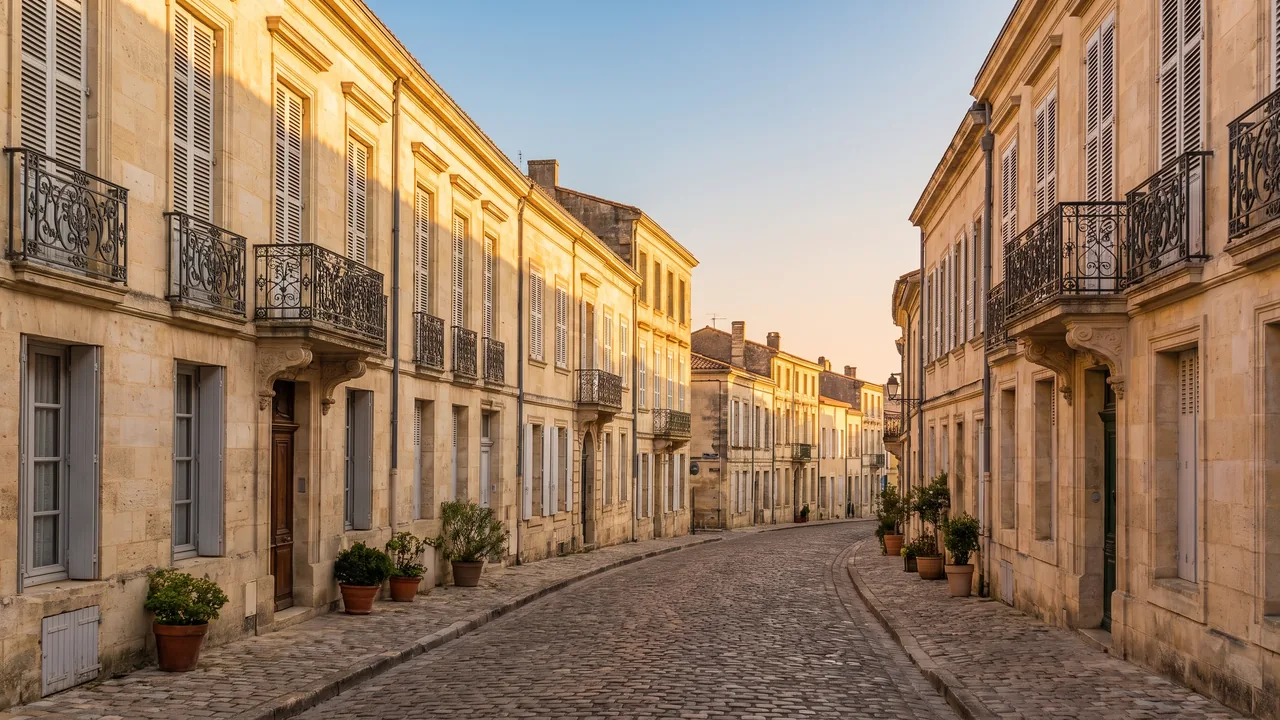
Rochefort is also the birthplace of Pierre Loti, one of the most famous travel writers of the Belle Époque, who was born here on January 14, 1850. His real name was Louis-Marie-Julien Viaud; he was both a naval officer and a best-selling novelist, elected to the Académie française in 1891—at the age of forty-one, and over Émile Zola. One point deserves to be corrected right away, as the mistake is widespread: Pierre Loti is not not dead at Rochefort. It's there born, but passed away at Hendaye, June 10, 1923, and was buried on the island of Oléron, in the “House of the Ancestors.” What visitors can see at Rochefort is its birthplace, which has been turned into a museum—an extravagant place that he himself transformed into a backdrop for his travels.
Naval officer and member of the Academy
Julien Viaud's double life sheds light on his entire body of work. He enrolled at the Naval Academy in October 1867, he had a distinguished career as an officer—rising to the rank of naval captain in 1898 — which took him to the four corners of the world, each stop inspiring novels renowned for their exoticism. Writing under the pseudonym of Pierre Loti, he enjoyed immense fame during his lifetime. As the ultimate recognition, he was elected to the Académie française on May 21, 1891, to seat 13 (inducted on April 7, 1892), defeating Émile Zola, who received only 18 votes—a choice that caused quite a stir, as the Academy preferred the elegant sailor to the leading figure of Naturalism. Loti was forty-one years old at the time.
A model home: Turkish living room, mosque, Gothic-style room
The Pierre Loti's House, at numbers 139–141 on the street that now bears his name, is one of the most astonishing places in Rochefort. Behind a plain facade, the writer has created, room by room, a labyrinth of decorations brought back from his travels: a Turkish living room (1877), a Arab Chamber, a Gothic hall, and above all, a true mosque, built with 16th-century materials century that he lived in to report from Damascus. Each room is a stage, evoking a world apart, where Loti hosted costume parties that have become legendary. The house was donated to the city in 1969, open as museum in 1973, designated a Historic Monument in 1990 and certified Maison des Illustres in 2011. It is a cabinet of curiosities on the scale of a mansion, where the imagination of the great traveler has been captured in stone, wood, and drapery.
One detail makes the visit all the more special today: the house has remained closed from 2012 to 2025, while it undergoes extensive restoration. It has reopened on June 10, 2025 — a date chosen deliberately, as it is the exact anniversary of Loti’s death; he passed away on June 10, 1923. After thirteen years of closure and a construction project 13.5 million euros (including 6 million provided by the government, under the direction of architect Elsa Ricaud), the house-museum is once again open to the public. Anyone planning a visit should keep this recent reopening in mind: for more than a decade, this gem was hidden from view, and it is only now welcoming visitors once again.
The Ladies of Rochefort
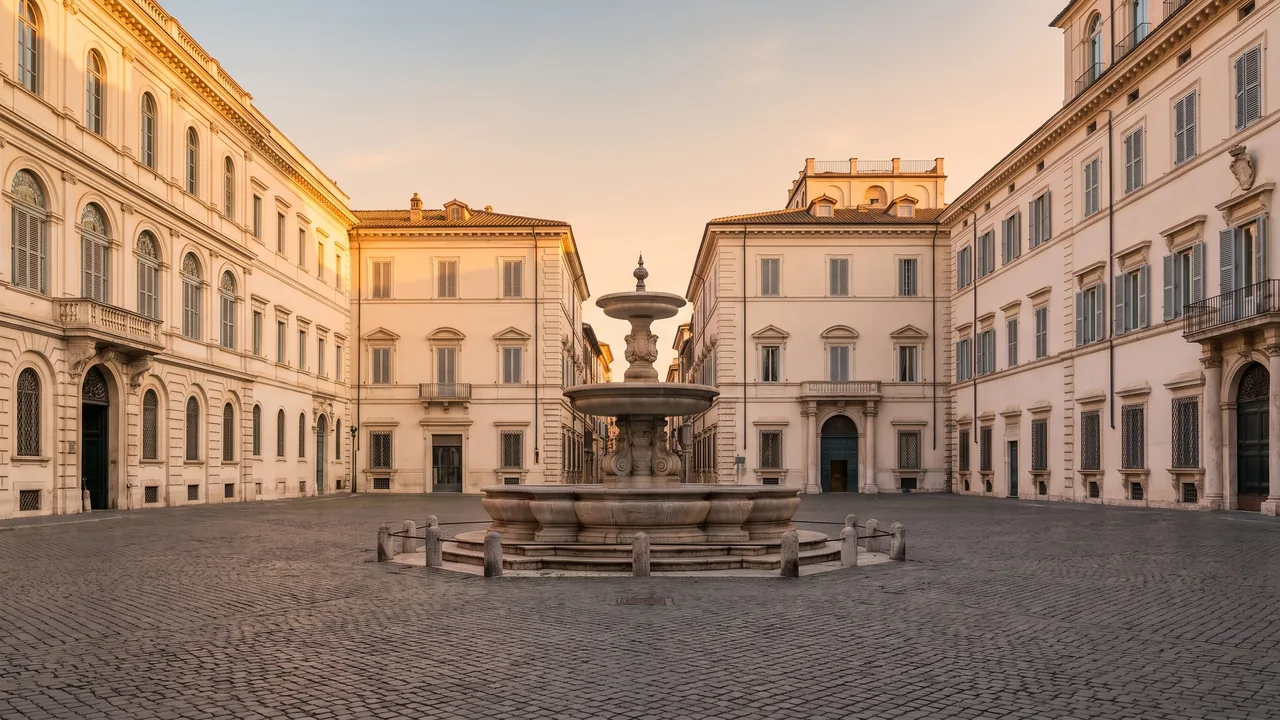
For many, Rochefort first brings to mind a Technicolor musical: *Les Demoiselles de Rochefort*, a film by Jacques Demy with music by Michel Legrand, released on March 8, 1967. Filmed on location from May 31 to August 27, 1966, around Place Colbert and the transporter bridge, it cemented the city’s place in the history of French cinema. The film stars two real-life sisters: Catherine Deneuve and Françoise Dorléac, who play the twins Delphine and Solange, alongside Gene Kelly, Danielle Darrieux, Michel Piccoli, and Jacques Perrin. The film was nominated for an Oscar for Best Original Score (at the 1969 ceremony). Rochefort appears in the film bathed in pastel colors, its squares and facades transformed into a setting of perpetual celebration.
Deneuve and Dorléac: Sisters on Screen and in Real Life
Much of the film's charm comes from its cast: the two heroines, Delphine and Solange, are played by Catherine Deneuve and Françoise Dorléac, sisters on screen as well as in real life. This fictional twin relationship, brought to life by two actresses who are actually sisters, lends the singing scenes a sense of chemistry that nothing could ever fake. But in hindsight, a tragic shadow looms over this lightheartedness: just a few months after the film’s release, Françoise Dorléac died in a car accident on June 26, 1967, on the A8 highway, in Villeneuve-Loubet. The youngest of the Deneuve sisters was twenty-five years old. The contrast between the film’s sunny carefreeness and this shattered life lends the Young Ladies a bittersweet aura that has only grown stronger over the decades.
Place Colbert Today
The film's main setting, the Colbert Square, remains the beating heart of Rochefort—a beautiful, classic square lined with 18th-century facades century, with its central fountain. Two elements here serve as a link between the city of yesterday and the myth of cinema. First, a curiosity: a tide table It displays the tide conditions on the Charente River in real time, a constant reminder that Rochefort is a city of rivers and the ocean. Next, a recent tribute: a sculpture of the Two Young Ladies, a work by Franck Ayrolles, was inaugurated there in 2022, immortalizing Demy's singing twins in bronze. The transshipment bridge, another star of the film, thus draws a connection between the 1900 work and the 1967 feature film: two landmarks of Rochefort—one made of steel, the other of film—that the city celebrates side by side.
Spa town, cruises, and Fort Boyard
Beyond its major monuments, Rochefort is also known as a destination for wellness and sea voyages: it has been a spa town since 1953 and serves as the departure point for cruises to Fort Boyard and Île d’Aix. Between a saltwater treatment, a trip out to sea, a stroll through the markets, and exploring the monuments, there’s plenty to fill a full day—or even a two- or three-day stay. The city, compact and flat, is easy to explore on foot, and its designation as a “Grand Site de France,” awarded in 2020, ensures a well-maintained environment. Here’s what makes up a visit, beyond the Corderie, the Hermione, and the transporter bridge.
A spa town since 1953
It's often overlooked: Rochefort is a spa town since 1953, and one of the leading centers in France in its specialty. It ranks among the major French spa resorts—the 7 of France — and has been a major spa destination since 1953. This spa industry has given the town a second life—one that is slower-paced and more focused on wellness and relaxation—which stands in contrast to the military hustle and bustle of its past. For the passing visitor, the appeal is indirect but real: the spa industry sustains a network of hotels, residences, and shops, and gives Rochefort the peaceful atmosphere of a spa town, where one can stroll leisurely between two monuments.
Cruises to Fort Boyard and Île d'Aix
Since Rochefort is connected to the sea by the Charente River, it is an excellent starting point for coastal cruises. From a dock near the Corderie Royale, boats travel down the river and then head out to sea toward the famous Fort Boyard—the imposing maritime fortress—and Île d’Aix, where they make a stop. Cruises to Fort Boyard and Île d’Aix are offered seasonally; check dates and times with the operator. This is an opportunity to appreciate, from the water, the defensive geography envisioned by Colbert: the winding river, the forts, and the islands blocking access to the arsenal. A half-day at sea is the perfect complement to a land-based tour of the city.
Otherwise, daily life in Rochefort revolves around its markets. Check the official Rochefort market calendar for market days and locations during your stay. Beware of a historical pitfall: the dates “March 4, July 11, November 11” found in old texts refer to the seigneury’s fairs in 1599, not the current market. Here are the main dates you need to know.
| Appointment | When | Good to Know |
|---|---|---|
| Market | official schedule to review | Check the dates and locations for your stay |
| Sea Cruises | depending on the season | Check the dates and times with the operator |
| Hot Springs | all year round | A major spa destination since 1953 |
| Monuments | all year round | Rope-making workshop, ship repair slipways, the Hermione, the transporter bridge, Loti's house |
How long should you stay? One day is enough to see the main sights—the Corderie, the arsenal, the Hermione, the transporter bridge, and a stroll around Place Colbert. But to enjoy a cruise to Fort Boyard, Pierre Loti’s house, and a market, it’s best to spend the night there and spread your exploration over two days. Since the city is flat and compact, you can get around on foot once you arrive; the driver who brought you from Bordeaux can drop you off as close as possible to the Corderie and pick you up at the same spot.
Around Rochefort: marshes, the sea, and the Charentes
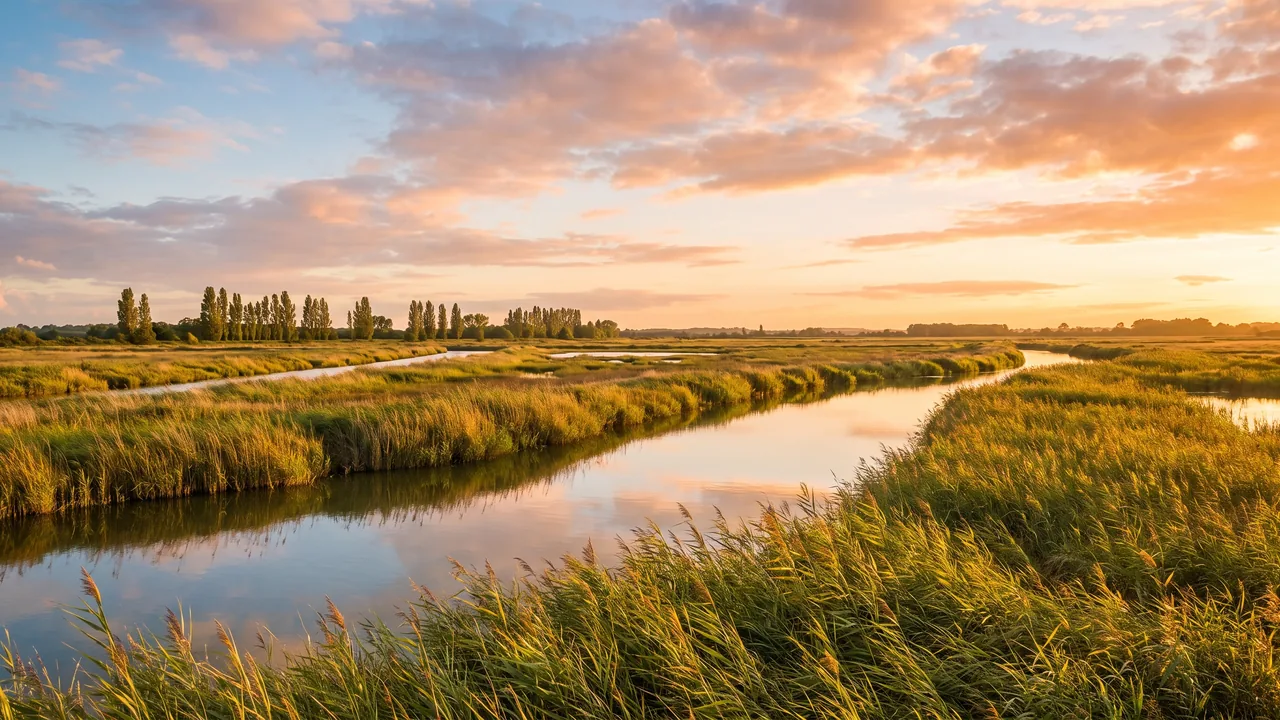
Rochefort is surrounded by a unique landscape—the Charente marshes—and is ideally situated to serve the Charentes region: La Rochelle to the north, Saintes to the east, Royan to the south, and Cognac further inland, all within an hour and a half. Visitors coming to see the naval base would be remiss not to extend their stay: within a small radius, the area is home to some of the most popular sites along the Atlantic coast and in the Charente hinterland. Let’s start with the marshes surrounding the city, then expand our exploration to the neighboring towns.
The Marshes and Nearby Towns
Vast marshes stretch out around Rochefort—a wetland landscape of canals, reed beds, and floodplains, a remnant of the mudflats that once protected the arsenal. This flat, sun-drenched landscape, crisscrossed by water, offers beautiful walks and is home to an abundance of birdlife; it serves as a reminder that Rochefort was born at the junction of the river and the sea, in an amphibious in-between space. Beyond that, the major destinations of the Charente region are all nearby. La Rochelle and its Old Port are about 37 km away; Saintes, the ancient Gallo-Roman city on the Charente River, is some 45 km away; Royan and the Gironde estuary are about 42 km away; and the city of Cognac, the capital of brandy, is nearly 76 km away. For more information: see our guides to La Rochelle, Saintes, and Cognac.
Finally, a word about the Charente the river itself, which connects all these places like a thread: this river of 381 kilometers However, it covers only about 160 kilometers as the crow flies between its source and the sea—its meanders more than double the distance. Originating in Chéronnac, in Haute-Vienne, it flows through Cognac and Saintes before reaching Rochefort and emptying into the Bay of Biscay, between Fouras and Port-des-Barques. Following its course, from upstream to downstream, is like tracing the entire history of the Charentes—from the cognac in the cellars to the ships in the arsenal. Here are the verified distances from Rochefort.
| Destination | Distance / Time | Must-See |
|---|---|---|
| La Rochelle | ~37 km · ~36 min | Old Port, the three towers, the aquarium |
| Royan | ~42 km · ~45 min | seaside resort, Gironde Estuary |
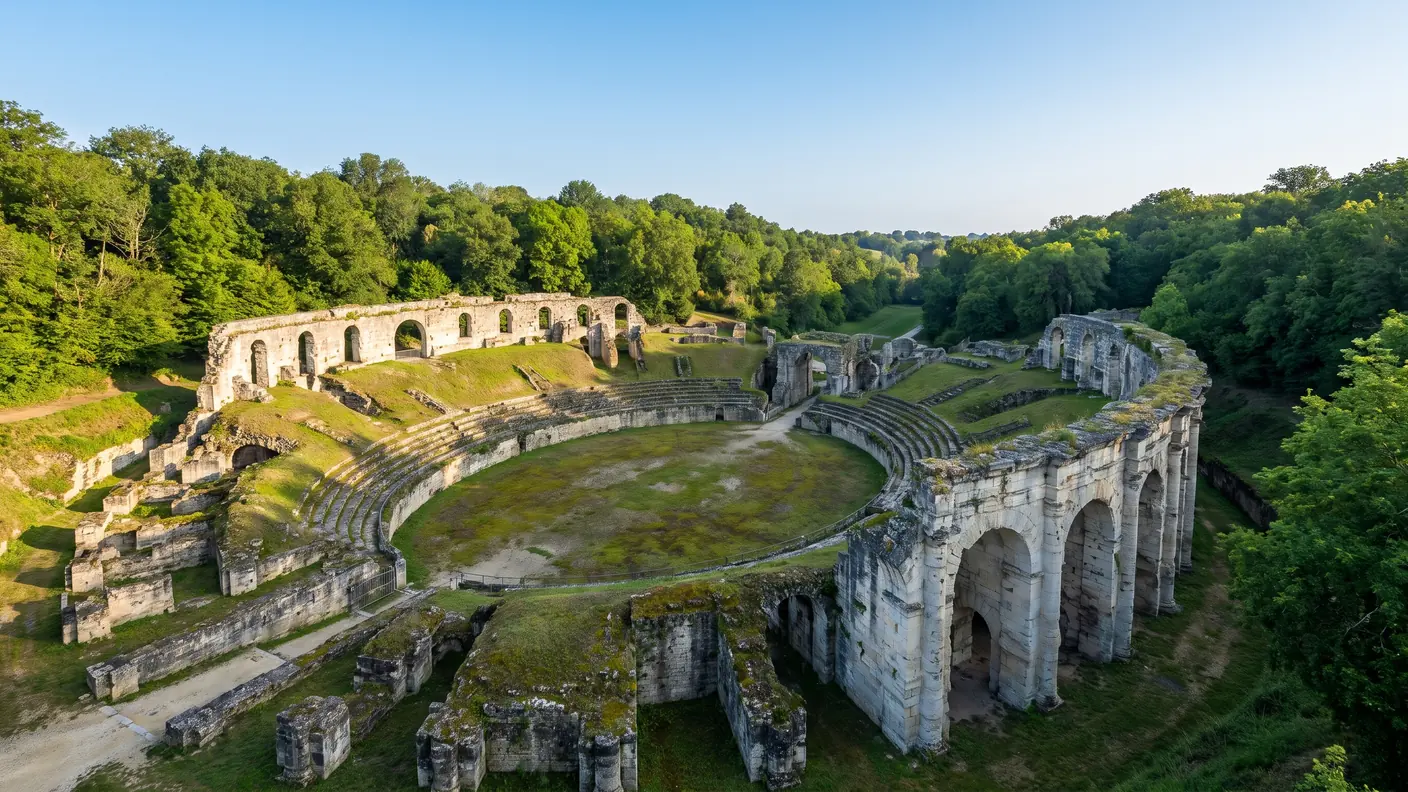
| Saintes | ~45 km · ~35 min | Roman amphitheaters and arch, Abbaye aux Dames |
| Cognac | ~76 km · ~1 hr 5 min | Major Cognac Houses, Château de Cognac |
| Bordeaux | ~155 km · ~1 hr 44 min | departure point for the private transfer |
Travel to Rochefort from Bordeaux
A private transfer from Bordeaux to Rochefort costs 259 € during the day in the Eco class (1 to 3 passengers), with a fixed price provided in advance, for approximately 155 km and a 1-hour, 44-minute drive via the A10. The route heads north from Bordeaux, follows the A10 highway, then turns toward the Charente coast all the way to Rochefort, door-to-door: your address in Bordeaux—or Mérignac Airport, or Saint-Jean Train Station—to the Corderie Royale, including luggage. A surcharge applies at night, on weekends, and on holidays. Here are the detailed rates and an honest comparison with other ways to get here.
How much does the ride cost?
The fare for a ride with an executive car service depends on the pickup location, the time of day, and the number of passengers, but it is always a fixed rate and confirmed in writing before the ride—no meter, no unpleasant surprises upon arrival. The standard route, Bordeaux → Rochefort, starts at 259 € during the day in the Eco class for 1 to 3 passengers, covering approximately 155 kilometers and a 1-hour, 44-minute drive. From Bordeaux-Mérignac Airport, the fare is based on a quote, depending on the terminal and landing time. And if you’d like to combine Rochefort with nearby La Rochelle, the extension is also calculated based on a quote. A van seating up to 8 passengers is available upon request for groups or families—handy for visiting the Corderie and the Hermione with a group without worrying about parking.
| Route | Distance / Duration | Rates |
|---|---|---|
| Bordeaux → Rochefort | ~155 km · ~1 hr 44 min | Starting at 259 € (Eco line, 1–3 passengers) |
| Mérignac Airport → Rochefort | direct route | based on a quote |
| Rochefort Extension + La Rochelle | ~37 additional km | based on a quote |
Why hire a chauffeured transfer?
You can also reach Rochefort by train, via the Charentes coastal line, but this involves transfers and lacks the flexibility of door-to-door service. The private chauffeur offers three concrete advantages for this type of visit. First, the comfort: You leave from your home or the airport and arrive at the base of La Corderie, with no transfers and no need to lug your luggage around. Then, the program freedom: Rochefort, the Hermione, the transporter bridge, a cruise to Fort Boyard, a detour to La Rochelle or Saintes—the itinerary can be tailored to your schedule, and the driver will be waiting for you at each stop. Finally, the budgetary stability: The price is announced and set before departure, allowing you to plan with peace of mind. To prepare for your visit, check out our page reservation or browse All of our destinations : The Corderie de Colbert is just an hour and 45 minutes down the highway.
Frequently Asked Questions
How much does a trip from Bordeaux to Rochefort cost with a professional chauffeur?
A private transfer from Bordeaux to Rochefort starts at 259 € during the day in the Eco class (1 to 3 passengers), with a fixed price provided in advance—no meter and no surprise surcharges. The trip covers approximately 155 km in 1 hour and 44 minutes via the A10, door-to-door: from your home, Mérignac Airport, or Saint-Jean Train Station to the Corderie Royale, including luggage. A surcharge applies at night, on weekends, and on holidays. A van seating up to 8 passengers is available upon request, and the extension to La Rochelle is priced based on a quote.
Where is Rochefort located?
Rochefort is a subprefecture of Charente-Maritime, in Nouvelle-Aquitaine, on the right bank of the Charente River, about 155 km north of Bordeaux (a 1-hour, 44-minute drive). Despite its name, “Rochefort-sur-Mer,” it is not a seaside town, but a river town located about fourteen kilometers inland from the river’s mouth, in one of its final meanders. This location, chosen by Colbert in 1666, protected the royal arsenal from attacks by the English navy. It should not be confused with Rochefort in Belgium, famous for its Trappist beer.
Why was Rochefort founded?
Rochefort is a new town, founded in 1666 by Louis XIV and Colbert to house an arsenal and a royal shipyard. The site, then a modest hamlet of about 500 inhabitants called Roccafortis, was chosen for its strategic position on the Charente River: sheltered from enemy fleets, yet connected to the sea by the river. Rochefort quickly became the kingdom’s main arsenal, where warships were built, outfitted, and repaired. This history explains its geometric layout and the grandeur of its buildings, such as the Corderie Royale.
What is the Corderie Royale?
The Corderie Royale is the iconic landmark of Rochefort: a building constructed from 1666 to 1669 under Colbert, based on plans by François Blondel, to manufacture ropes for the Navy. With a facade measuring 374 meters (373 meters according to the official description) and 8 meters wide, it was the longest industrial building in Europe until the 20th century—longer than the Eiffel Tower is tall. Destroyed by fire in 1944 and restored by the city beginning in 1973, it now houses the International Center for the Sea and welcomes more than 100,000 visitors a year. It has been designated a Historic Monument since October 10, 1967.
Why is the Corderie Royale so long?
Because ropes were made there in a single continuous length, and a cable cannot be longer than the workshop where it is produced. The king’s large ships required vast amounts of rope—up to a hundred kilometers in total for a single vessel—and the rope factory was capable of producing mooring lines nearly 200 meters long without any splices. Hence its 374-meter-long facade. To stand on marshy ground, the building was constructed on a submerged oak raft that distributes the load and prevents it from sinking, a method comparable to the pilings used in Venice.
What is a dry dock, and which one was used for the Hermione?
A dry dock is a basin that is drained to allow work to be done on a ship’s hull. Rochefort has three of them. The old dry dock (1669–1671) was the first masonry dry dock built in France, modeled after an English design—so it is not “the oldest in the world.” The double dry dock known as the Louis XV (1683–1725) is where the replica of the Hermione was rebuilt. A third, known as the Napoleon III, dates from 1853–1861. The old dry dock and the Louis XV dry dock have been designated Historic Monuments since 1989.
What is the Hermione, and how is it connected to La Fayette?
The Hermione was a frigate launched at Rochefort on April 28, 1779, which carried the Marquis de La Fayette to America during the war against England. La Fayette embarked on March 10, 1780, in Port-des-Barques, a neighboring town, and disembarked in Boston on April 28, 1780—exactly one year to the day after the ship’s launch. The original frigate was wrecked on September 20, 1793, off the coast of Le Croisic. A faithful replica was rebuilt in Rochefort by the Hermione-La Fayette Association and launched on September 7, 2014. The replica is an ocean-going vessel built for sailing. Notably, it completed a transatlantic crossing in 2015. Its location, shipyard, public access, and sailing schedule are subject to change: please check the Hermione-La Fayette Association’s news before your visit.
How long did it take to rebuild the Hermione?
Nearly seventeen years, compared to about six months for the original frigate in the 18th century. The Hermione-La Fayette Association, founded in 1992, laid the keel on July 4, 1997; the launch took place on September 7, 2014. The hull and framework were built by the Asselin company in Thouars, and the ship was reconstructed in the shipyard’s Louis XV dry dock. The replica is over 65 meters long, has three masts and 2,100 m² of sail area, and is armed with 22 cannons. In 2015, it made a transatlantic crossing following in La Fayette’s footsteps, returning to Brest on August 10.
Is the Rochefort transporter bridge the oldest in the world?
No. The Martrou transporter bridge, built between 1898 and 1900 by engineer Ferdinand Arnodin and inaugurated on July 29, 1900, is the last transporter bridge still in operation in France, but not the oldest in the world. The first of its kind is the Biscay Bridge in Portugalete, Spain, which opened in 1893, and Arnodin also built the one in Rouen in 1898. The Rochefort Bridge, designated a Historic Monument in 1976 after nearly being demolished, was restored from 2016 to 2020. Its gondola crosses the Charente River 50 meters below the bridge deck in about 75 seconds.
Did Pierre Loti die in Rochefort?
No: Pierre Loti (whose real name was Julien Viaud) was born in Rochefort on January 14, 1850, but he died in Hendaye on June 10, 1923, and was buried on the island of Oléron. A naval officer and travel writer, elected to the Académie française in 1891 over Émile Zola, he had transformed his childhood home in Rochefort into an extravagant setting—featuring a Turkish parlor, an Arabian bedroom, a Gothic hall, and even a real mosque built with 16th-century materials brought back from Damascus. This house-museum, designated a Historic Monument in 1990, is open to visitors in Rochefort.
Can we visit Pierre Loti's house?
Yes, it recently reopened. Pierre Loti’s house, located on Rue Pierre-Loti in Rochefort, was closed from 2012 to 2025 for extensive restoration. It reopened on June 10, 2025—a date chosen because it marks the exact anniversary of the writer’s death on June 10, 1923—after thirteen years of closure and a renovation project costing 13.5 million euros. Visitors can explore the travel-themed decor collected by Loti: a Turkish parlor, a mosque, an Arab-style bedroom, and a Gothic-style room. The house has been designated a Historic Monument since 1990 and has held the “Maison des Illustres” designation since 2011.
Where was the movie *Les Demoiselles de Rochefort* filmed?
In Rochefort itself, from May 31 to August 27, 1966, primarily around Place Colbert and the transporter bridge. Directed by Jacques Demy with a score by Michel Legrand, this musical film was released on March 8, 1967. It starred Catherine Deneuve and Françoise Dorléac—sisters on screen as well as in real life—as the twins Delphine and Solange, alongside Gene Kelly, Danielle Darrieux, Michel Piccoli, and Jacques Perrin. The film was nominated for an Oscar for Best Original Score. On Place Colbert, a sculpture of the two “Demoiselles” by Franck Ayrolles was unveiled in 2022.
What is there to do in Rochefort and the surrounding area?
In Rochefort, visitors can explore the Corderie Royale and the International Maritime Center, the shipyard and its dry docks, the Martrou transporter bridge, and Pierre Loti’s house; For the frigate, check the latest news and details on how to tour the Hermione. The city has been a major spa destination since 1953. Cruises to Fort Boyard and Île d’Aix are available depending on the season; check dates and schedules with the operator. Consult the official Rochefort market calendar for market days and locations during your stay. Nearby, La Rochelle (~37 km), Saintes (~45 km), Royan (~42 km), and Cognac (~76 km) are all less than an hour and a half away.
Further Reading
- The nearby Old Port: see the La Rochelle Guide (the three towers and the port, ~37 km away)
- The Rome of Aquitaine: see the Saintes Guide (Roman amphitheater and arch on the same stretch of the Charente River)
- The Capital of Brandy: See the Cognac Guide (the major houses and the six crus)
- Book your trip: book online or browse all our destinations
Sources and References
- Rochefort Ocean — cruises, boat trips, and hikes in the Fort Boyard region — seasonal offers and schedules · accessed July 24, 2026
- City of Rochefort — Market — Days, Hours, and Location · Accessed July 24, 2026
- Rochefort Ocean — Thermal Treatments in Rochefort — Thermal Activities and Treatments · Accessed July 24, 2026
- Corderie Royale — International Maritime Center — history, tours
- The Hermione — Hermione-La Fayette Association, News and Events — Ship Status, Shipyard, and Access · accessed July 24, 2026
- Mérimée Database / POP (Ministry of Culture) — Historic Monuments Designations
- INSEE — Municipality of Rochefort (17299) — Demographics
- Pierre Loti House — City of Rochefort — house-museum, reopening in 2025
Article updated on July 24, 2026.
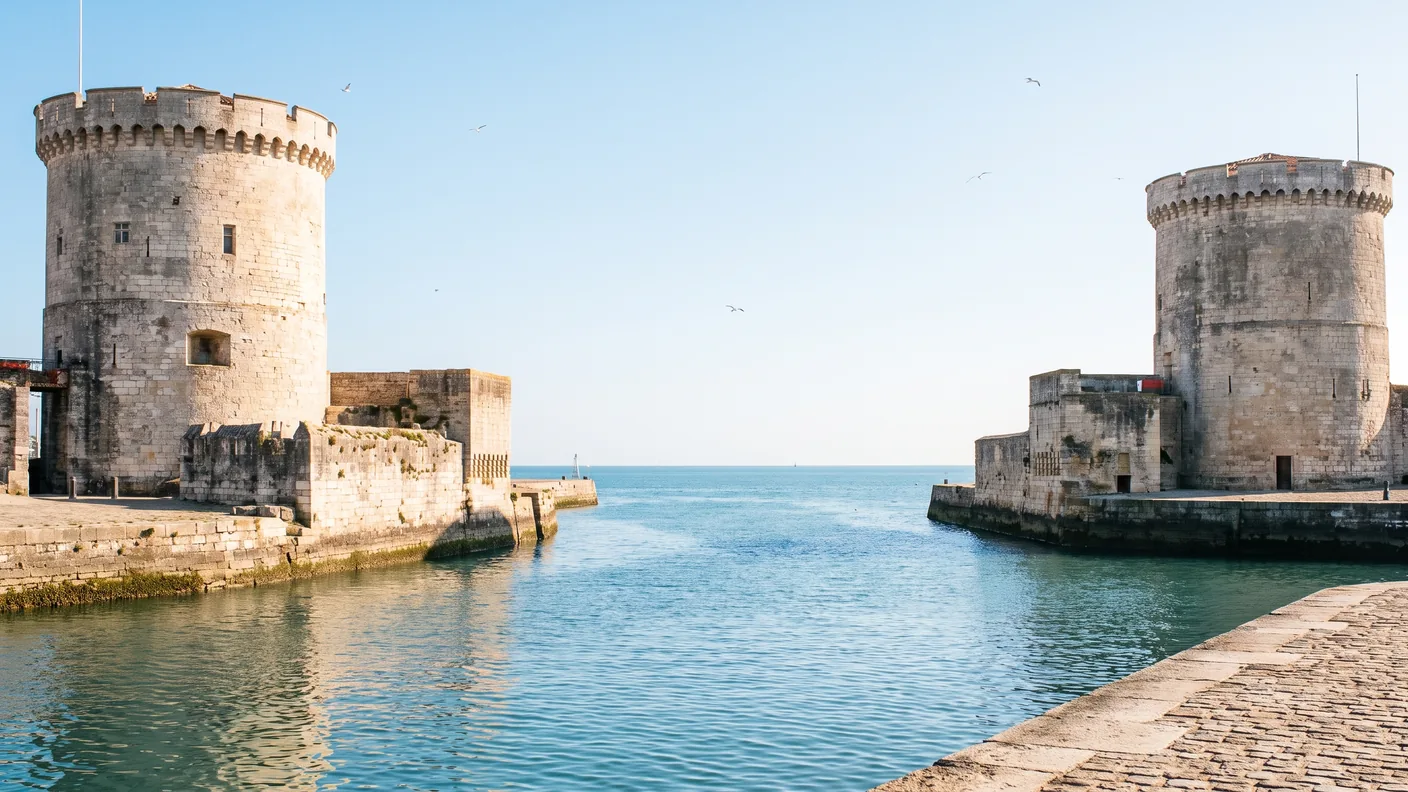
On the way to the Colbert Arsenal
Direct transfer from Bordeaux (~1 hr 44 min via the A10) to the Corderie Royale, the Hermione, and the transporter bridge. Written, fixed-price quote with no obligation.