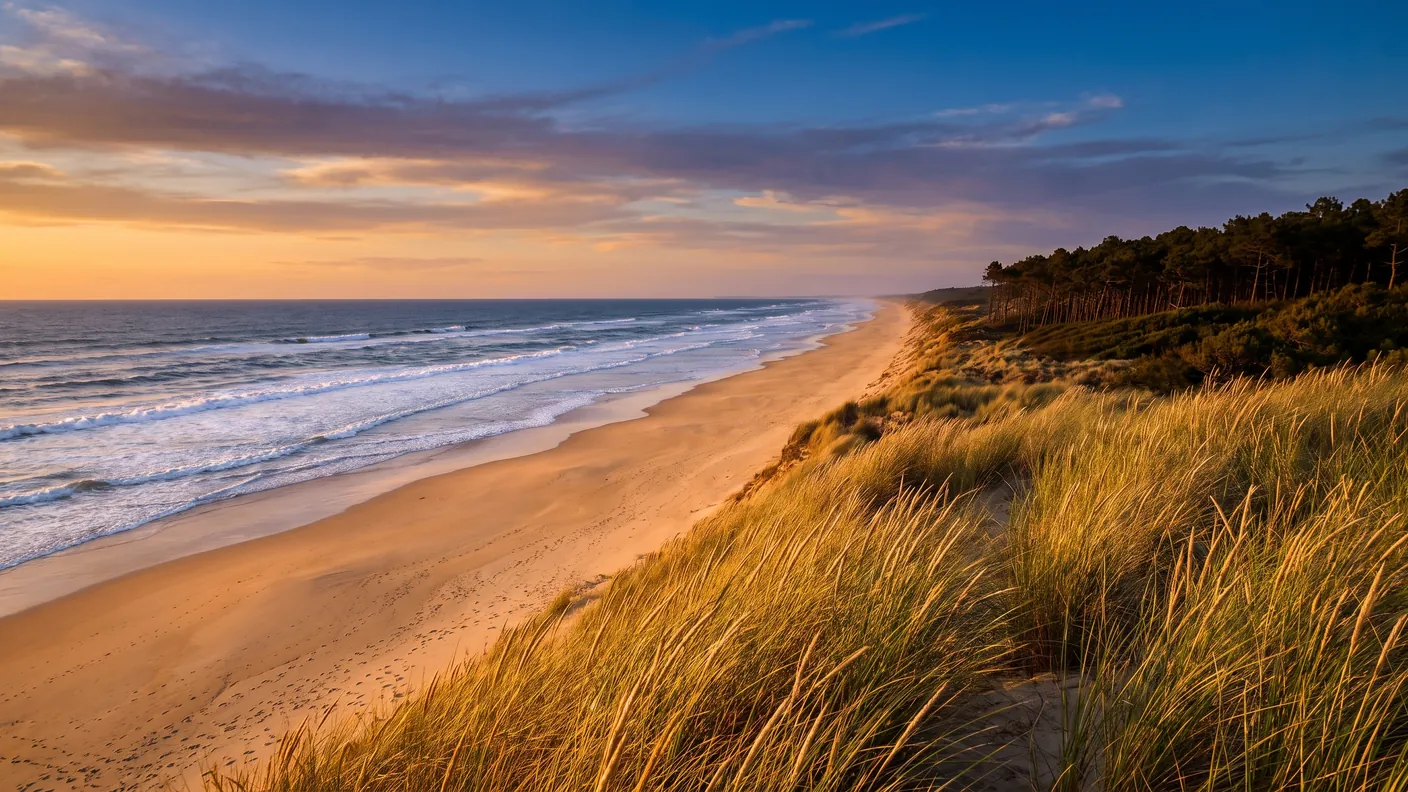
Bordeaux to Labenne: beach, forest and the Marais d’Orx
A long ocean beach, a pine forest, and a bird sanctuary created from an imperial polder: Labenne, on the southern coast of the Landes region between Capbreton and Bayonne, its Labenne-Océan resort, and the Orx Marsh Nature Reserve—plus your private door-to-door transfer from Bordeaux, with no parking worries.
Labenne at a glance
Labenne is a town on the southern coast of the Landes region, between Capbreton and Bayonne, about 173 km south of Bordeaux—two sides in one: the inland village and the seaside resort of Labenne-Océan, with its long beach and pine forest. Its treasure is a natural gem: the Marais d’Orx National Nature Reserve, a former polder from the Second Empire that has once again become a sanctuary for migratory birds, with the white spoonbill as its emblem. This guide distinguishes fact from fiction: the church in Labenne is not a listed historic monument (the only listed monument is the moving war memorial), the little train of yesteryear was a railroad (not a “tram”), and the marsh spans three municipalities, not just Labenne. We then present the easiest way to get there: a private door-to-door transfer, including beach access and luggage.
Here are the key details to know before you go. Distances are calculated door-to-door from Bordeaux; the fare listed is for a private driver reservation at a fixed price provided in advance, with no unexpected meter charges. The data has been verified using sources from INSEE, the Marais d’Orx Nature Reserve, the Conservatoire du littoral, the Mérimée database, the tourist office, and Wikipedia; beach hours and lifeguard schedules, which may vary, should be confirmed on site.
| Landmark | Details |
|---|---|
| City | Labenne (Landes, Dax District) |
| Location | the southern coast of the Landes region, between Capbreton and Bayonne |
| Residents | 7,183 Labennais (2023) |
| Must-See | Labenne-Océan Beach, the Orx Marsh Nature Reserve, the pine forest |
| Distance from Bordeaux | about 173 km · about 2 hours and 4 minutes by car (A63) |
Where is Labenne located?
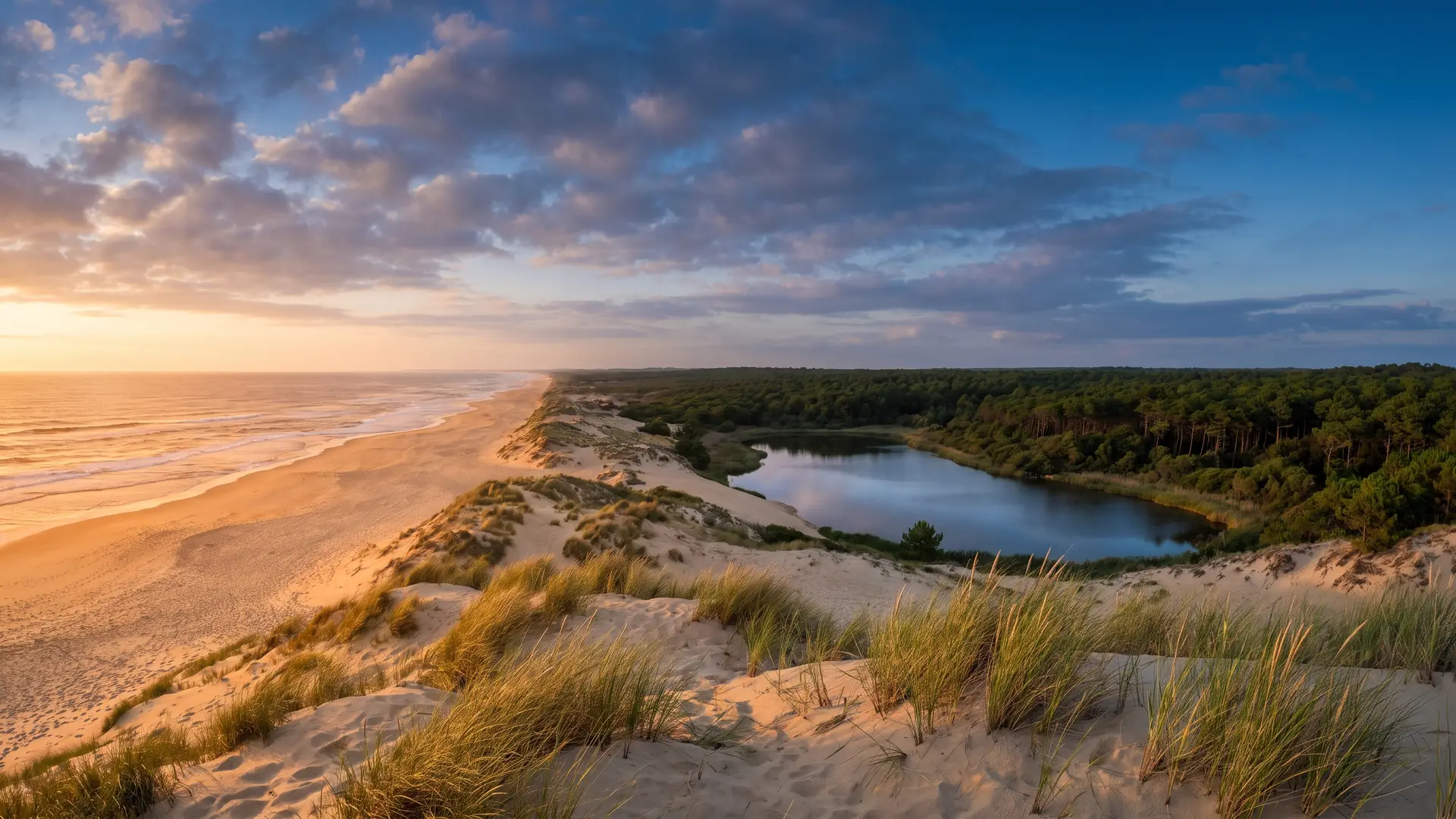
Labenne is located at the southernmost tip of the Landes coast, between Capbreton (6 km away) and Bayonne (17 km away), at the gateway to the Basque Country. It is a municipality with two centers: the town, in the interior, crisscrossed by roads and railways, and Labenne-Océan, the seaside resort on the Atlantic coast—about 3 kilometers of coastline of fine sand, backed by a maritime pine forest which covers nearly half of the territory (about 1,300 hectares). The municipality, with a population of 7,183 — the Labennais —, is part of the Dax district and the Maremne-Adour-Côte-Sud (MACS) community of municipalities. Its growth has been spectacular: from 1,422 residents in 1968 to more than 7,000 today, driven by the appeal of the coastline. Labenne thus embodies everything that makes the southern coast of the Landes special: the ocean and its waves, the pine forest and its bike paths, and exceptional natural scenery, including the Orx Marshes. Just 2 hours and 4 minutes from Bordeaux, it's both a beach resort and a nature destination.
Two locations: the town center and Labenne-Océan
The municipality can be understood in two parts. The town Labenne, located inland, is the historic and administrative center: the town hall, shops, Saint-Nicolas Church, the market at Place de la République, and a train station on the Bordeaux–Hendaye line. Three kilometers to the west, Labenne-Océan is the seaside resort, born in the early 20th century in the wooded dunes: villas beneath the pine trees, a promenade along the ocean, a lifeguard station, surf schools, campgrounds, and vacation rentals. Between the two lies the maritime pine forest, a legacy of the land reclamation in the Landes region in the 19th century and the past resin collector of the town. This duality of town and ocean is typical of the southern coast of the Landes: people live year-round inland, while the coast is bustling with visitors in the summer. For visitors, this is a real perk—beach in the morning, market or marshes in the afternoon—and private transportation makes it easy to combine these activities.
At the gateway to the Basque Country
Labenne is strategically located: it is one of the last municipalities in the Landes department before the Basque Country. Bayonne and the mouth of the Adour is only 17 kilometers to the south; Biarritz and the Basque Coast is just under half an hour away. To the north, the neighboring resort of Capbreton (6 km) and its port, then Hossegor and its marine lake (10 km) extend the surfers' coastline. Inland, Dax and its thermal spas are about 40 minutes away. Labenne is thus situated at the crossroads of two worlds—the Landes coast and the Basque Country—making it an ideal base for exploring southern Aquitaine. With a private transfer, you can easily explore the area: beaches in the morning, lunch in Capbreton, a visit to the Orx Marshes, an evening in Bayonne—the distances are short and the roads are pleasant. A driver who knows the area will tailor the itinerary to your preferences, sparing you the hassle of finding parking in areas that are often packed during the summer.
Labenne-Océan, the beach, and surfing
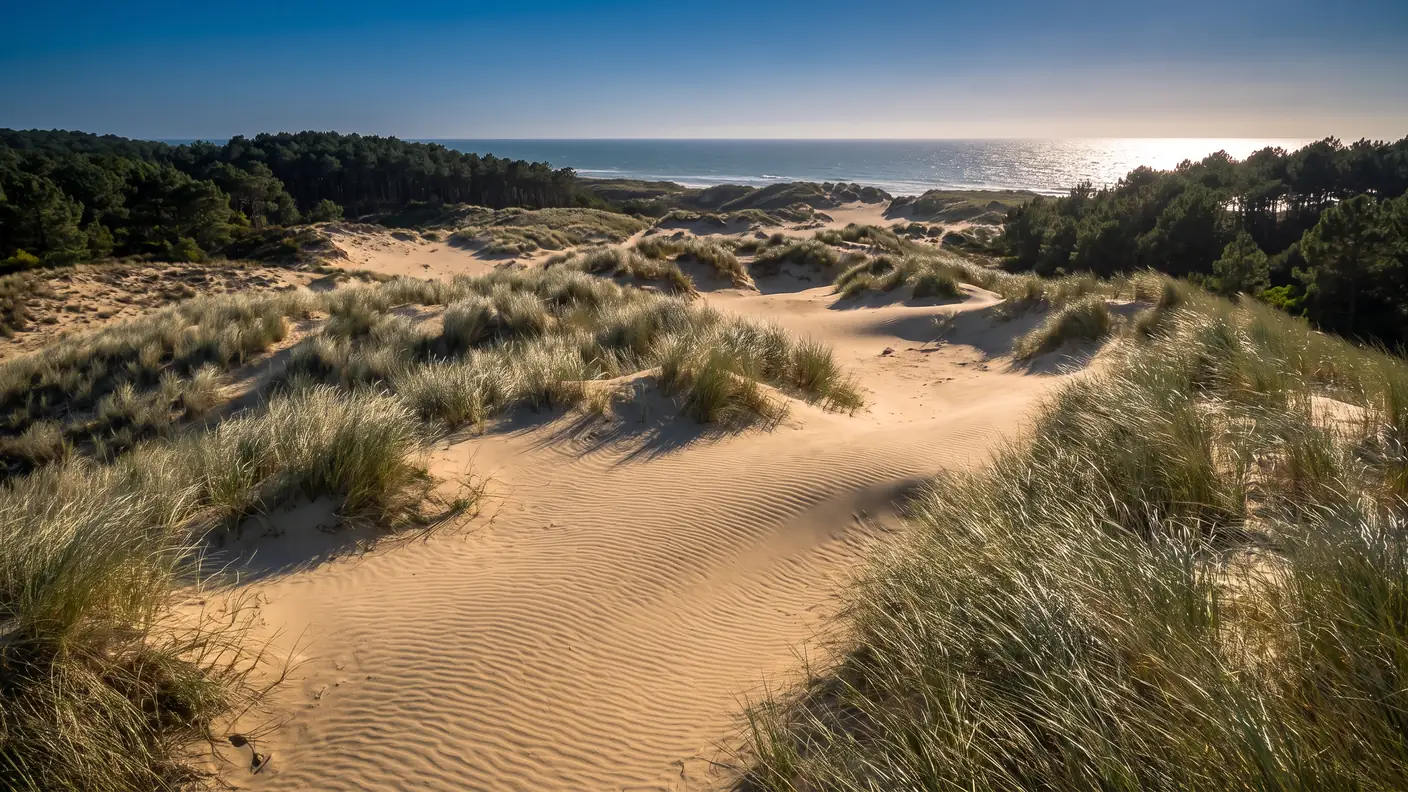
Labenne-Océan boasts about 3 kilometers of fine sandy beach, which is patrolled during peak season and renowned as a great spot for learning to surf at low tide—a location frequented by surf schools from all along the southern coast. It’s the quintessential family-friendly beach resort. This is what sources confirm.
A long ocean beach, patrolled during the summer
The beach at Labenne-Océan stretches for around three kilometres, with fine sand at the foot of the dunes and a backdrop of pine forest — the classic landscape of the Landes coast. Like every ocean beach here, it is lifeguarded during the main season; dates change each year, so check the official Landes Atlantique Sud website before swimming. The oceanfront esplanade, seasonal shops and campsites among the pines give the resort a relaxed, family-friendly atmosphere: less showy than its neighbours, but every bit as appealing. Take the usual care along this powerful Atlantic coastline, where baïnes can create dangerous rip currents, and swim only in supervised zones during lifeguard hours. This setting of ocean, dunes and pinewoods gives Labenne-Océan its distinctive character: a broad, unspoilt beach on a welcoming scale.
The Beginner's Surf Course
Labenne-Océan hosts surf schools, but the conditions at the spot vary depending on the swell, wind, tide, and the position of the sandbars. For beginners, choose a supervised lesson and follow the instructions from the lifeguard station; low tide alone does not guarantee easy conditions. In the summer, the resort also offers its Gascon traditions: the “intervaches” games at Labenne-Océan—a fun, family-friendly variation on the Landes bullfighting culture, without the killing—which we mention for informational purposes. Between surfing lessons, bike rides through the pine forest, and beach games, Labenne-Océan offers a full day at the beach. The schedules for the schools and activities vary and should be confirmed on-site.
Marais d’Orx, a Bird Sanctuary Born from an Imperial Polder
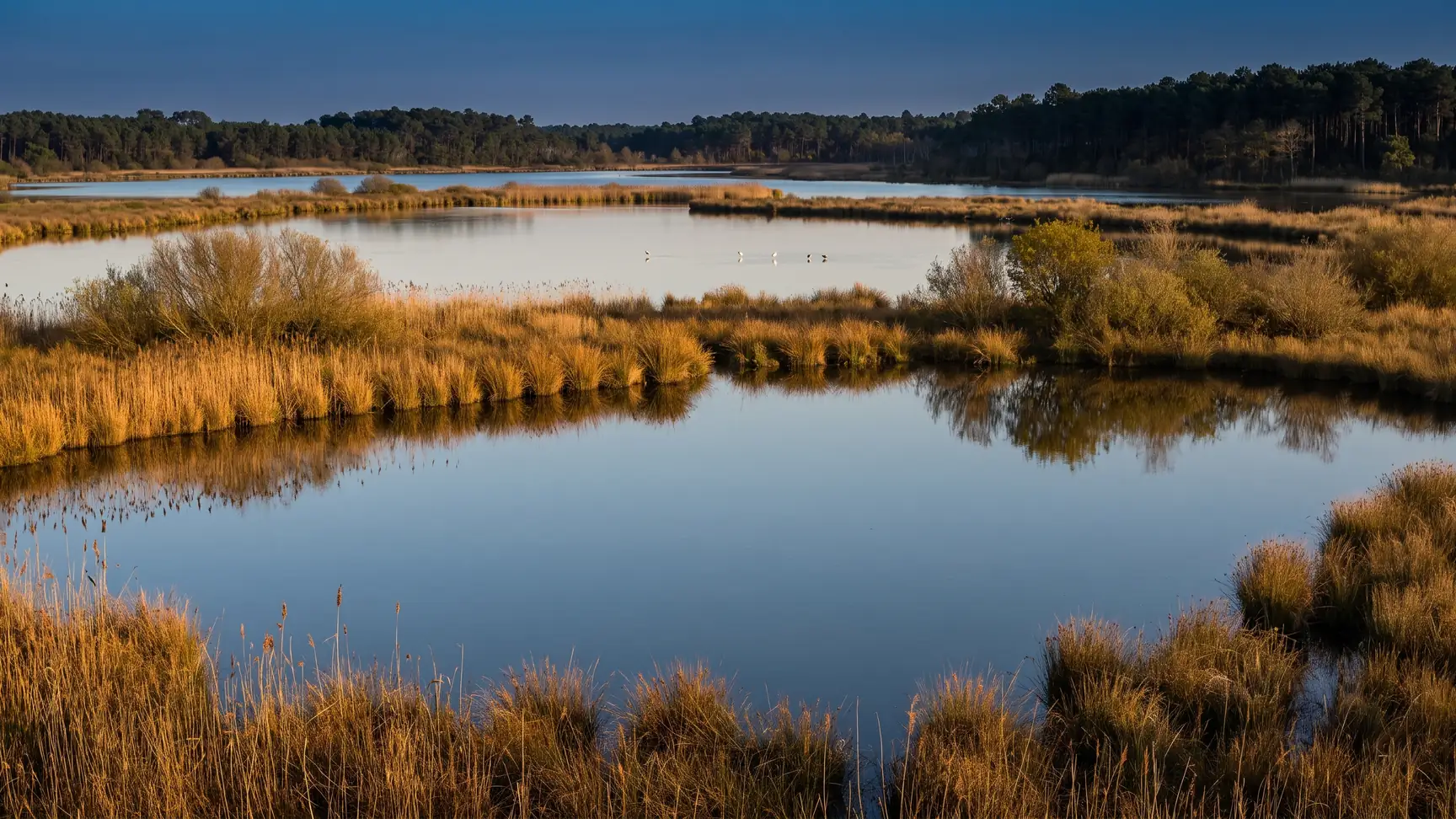
The Marais d'Orx National Nature Reserve, in Labenne, is a 774-hectare sanctuary for migratory birds (Nature Reserve, 2022–2031 Management Plan; Conservatoire du littoral)—a former polder drained during the Second Empire that has since reverted to marshland, with the Eurasian spoonbill as its emblem. It is the municipality’s premier nature site and one of the most beautiful along the coast. Here is its verified history.
A marsh shaped by two empires
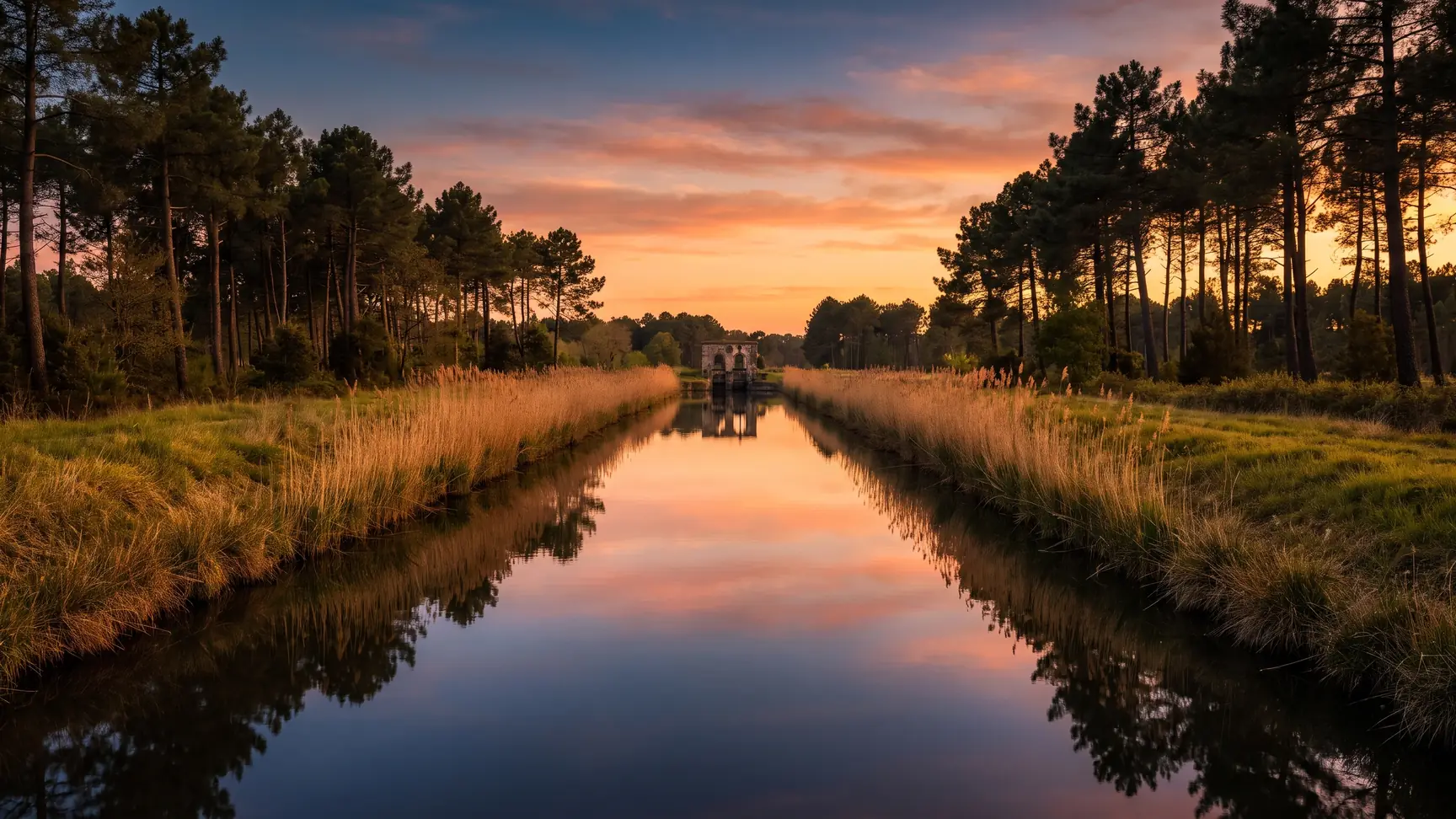
The history of the Orx Marshes is an imperial saga. Originally, a vast marsh covering approximately 1,200 hectares. Napoleon I ordered the marsh to be drained in 1808; major construction began around 1850, with a 22-kilometer belt canal and kilometers of ditches and trenches. In 1858, Napoleon III bought the estate and gave it to the Count Walewski — Napoleon I's illegitimate son. Powerful pumps were installed in 1863 to keep the polder dry, creating agricultural land covering approximately 1,000 hectares, which was cultivated until the 20th century (especially corn). Then, in 1984, after the oil crisis made pumping prohibitively expensive, the polder was abandoned, and water returned naturally. The Coastal Conservation Agency bought the site in 1989 (with the help of WWF-France), launching “what was at the time the largest renaturation project ever undertaken in France.” An interesting detail: the pumps from 1863, bearing the imperial eagle still visible, still serve a purpose—today, they regulate water levels to support biodiversity.
250 to 300 species of birds, free admission
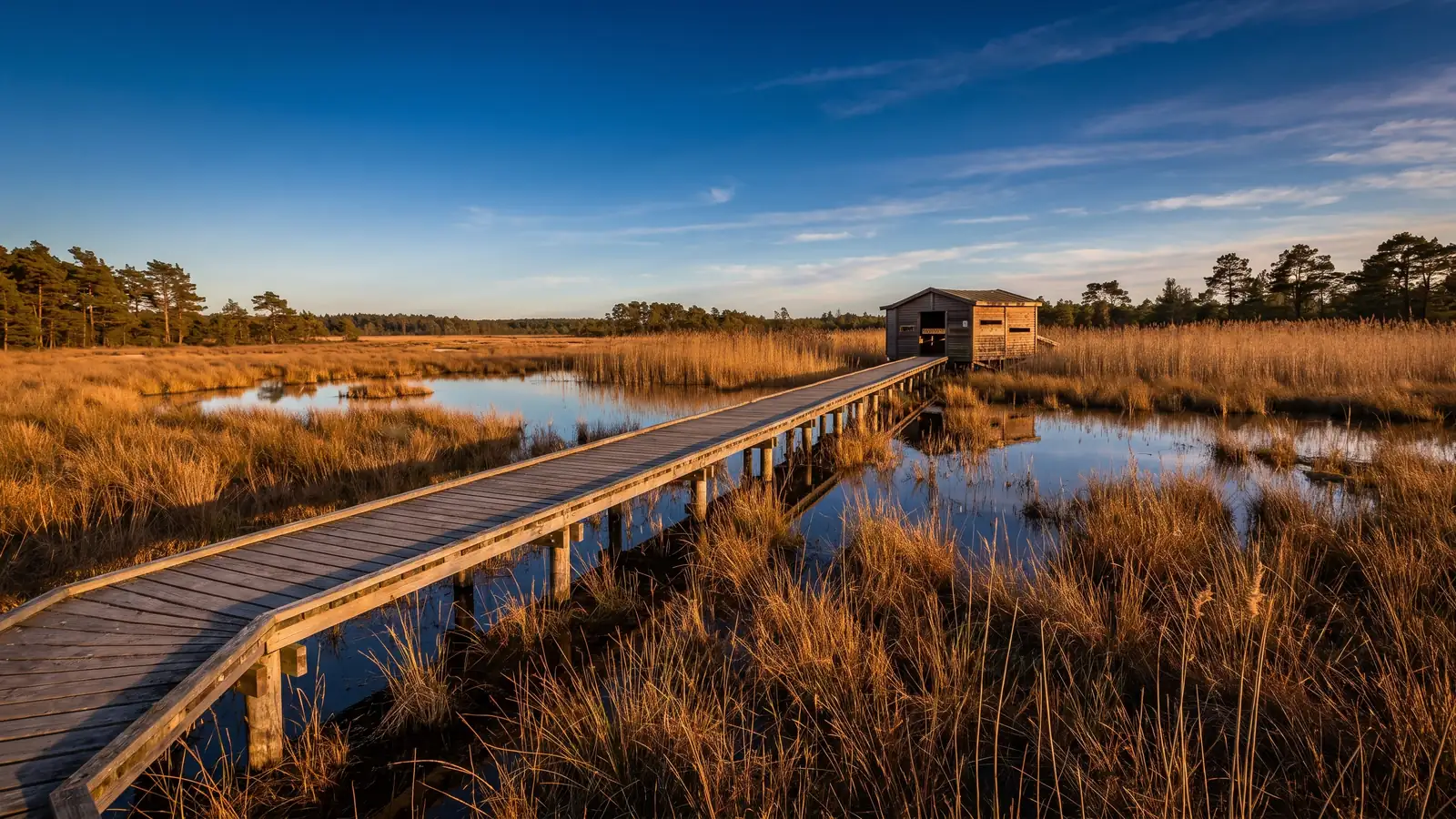
Became national nature reserve by decree dated February 8, 1995, the Orx Marsh Reserve covers approximately 775 hectares across three municipalities (Labenne, Orx, and Saint-André-de-Seignanx; visitors are welcomed on the Labenne side). It is a major transit point for migrants: the following were recorded there nearly 250 to 300 species of birds, including the white spatula, the reserve’s emblem, as well as the osprey, the Eurasian curlew, the greylag goose, and cranes. A marvel for visitors: the reserve is “ Open to everyone, free of charge, and at any time ". Since the Maison du Marais, two circuits flow freely through each other on foot (No bicycles or dogs allowed): the Marais Dam (6.4 km round trip, wooden walkways, levees, four observation decks—including the Pump House Observation Deck, one of which is accessible to people with limited mobility) and the Marais Burret (6 km).
A viewing platform can be reached at the end of a 300-meter wooden boardwalk that extends into the marsh. Designated as a Ramsar Site (wetland of international importance) and a Natura 2000 site, the reserve is the ideal nature excursion to enjoy at the end of a trip from Bordeaux. Guided tours (€10 for adults, €5 for children) and binocular rentals (€5) are available.
| The Orx Marsh | Details (according to sources) |
|---|---|
| Reserve | RNN designated in 1995, ~775 ha (Labenne, Orx, Saint-André-de-Seignanx) |
| History | Second Empire-era polder, pumps from 1863 (imperial eagle), reflooded in 1984 |
| Birds | nearly 250 to 300 species; Eurasian spoonbill, the emblem |
| Tour | Free, at any time; 2 walking trails (6 and 6.4 km), 4 observation decks |
| Good to Know | On foot only (bicycles and dogs prohibited); Ramsar and Natura 2000 designations |
The Pine Forest and the Legacy of the Resin Collectors
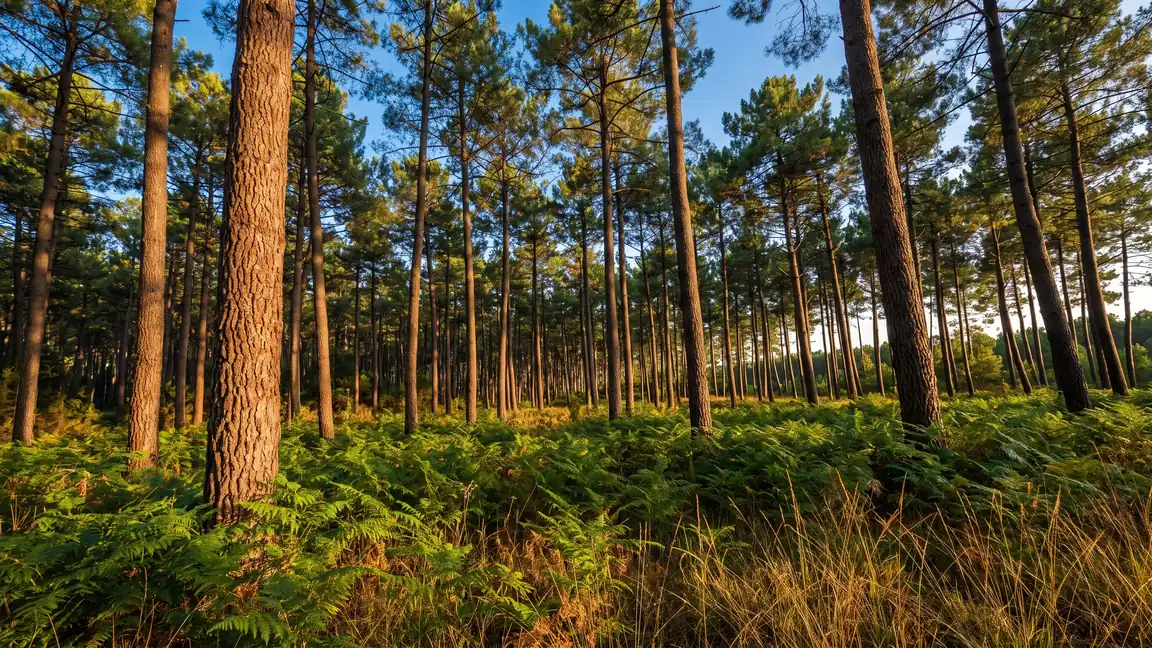
Nearly half of Labenne is covered by maritime pine forest—a legacy of the great land reclamation project in the Landes region and a history of resin harvesting, as commemorated by the town’s only historic monument: a moving war memorial. Here is what the sources reveal.
A land of pine trees and resin collectors
The maritime pine forest covers nearly 1,300 hectares in Labenne — about half the municipality. This landscape is the result of the great land reclamation of the Landes in the 19th century, when the dunes were stabilized and the marshes drained through large-scale maritime-pine planting. Labenne then depended on resin tapping: local resin workers incised the pines to collect resin, which was processed into turpentine and rosin — an economy that prospered until the mid-20th century. The forest, its shaded cycle paths and the town’s living memory remain from that era. Today, the pinewoods are an inviting place to explore: the Vélodyssée — the French section of EuroVelo 1 linking Roscoff and Hendaye — crosses Labenne on a greenway (the Capbreton–Bayonne stage), while numerous trails wind between the ocean and the marsh.
The resin collector putting away his tools
Labenne’s resin-tapping past left the town a deeply moving landmark: the municipality’s only listed monument (POP, Mérimée record PA40000084). Near the church, the First World War memorial, sculpted by Lucien Danglade and erected between 1925 and 1927, depicts a resin worker setting aside his tapping tools to take up a rifle — the tragedy of a village whose resin workers went to war, captured in a single statue. It has been listed as a Historic Monument since 2014. One common error is worth correcting: Saint-Nicolas Church itself has no Historic Monument protection and should not be described as listed. This human-scale memorial eloquently recalls the Labenne of old: a forest and resin-producing village marked by the Great War. It is a brief but powerful visit to combine with the town centre and its market. Those who know where to look can still see the legacy of resin tapping in the scars on old pines in the municipal forest.
From Resin to Beach Tourism
Once a village of resin collectors, Labenne has become a seaside resort, and its population has increased fivefold in half a century—from 1,422 residents in 1968 to more than 7,000 today. A story of transformation, set against the backdrop of forest, sea, and marshes. Here are the verified facts.
The little forest train (not a streetcar)
In the early 20th century, Labenne was the terminal station of a small forest railway — and not a “tram,” as is sometimes written. The Labenne route in Seignosse (17 kilometers), opened on 1 February 1912, served Capbreton, Hossegor, and Seignosse; its traffic was mainly forestry-based (wood and resin from the pine forest). Its steam locomotives were equipped with spark arrestors so as not to set the forest ablaze—a detail that speaks volumes about the ever-present danger posed by the pine forest. Passenger service ceased in 1950, and the line closed permanently in 1957. This period also saw the birth of Labenne-Océan and the opening of its St. Theresa Chapel, inaugurated on 1 December 1932. The 20th century marked Labenne's transition from the resin-based economy to that of seaside tourism — a shift that explains its rapid population growth.
A Reminder of the Atlantic Wall
Labenne also harbors, within its dunes, a darker memory: that of the World War II. From 1942–1944, the German occupiers set up a radar station of the Atlantic Wall — detection systems (Mammut, Freya, Würzburg) and bunkers, some of which still stand today in the sand, remarkably well-preserved. We mention this here strictly based on the facts, as a milestone in the history of the coastline, without romanticizing it. These concrete ruins, scattered throughout the wooded dunes, bear witness to an era when this tranquil coast was a fortified front line. Today, Labenne has returned to its peaceful roots as a family resort and a haven for nature. From resin to radar, from the imperial polder to the bird sanctuary, the town offers a fast-paced glimpse into the eventful history of the Landes coastline—a history you’ll encounter on your walks between the beach, the forest, and the marshes. A chauffeur service familiar with the area will be able to shed light on the key stops along the way.
Church, tram, marsh: what we often read
Several claims are circulating about Labenne that warrant correction, backed by sources—which is the whole point of a reliable guide. The heritage sites, the little train, the marsh: here’s what’s true and what’s false.
Just one historic monument, a railroad
Contrary to what is sometimes reported, Saint-Nicolas Church in Labenne is neither classified nor listed as a Historic Monument. The town’s only listed monument is its First World War memorial (listed in 2014), depicting a resin worker setting down his tools to take up a rifle. Another correction: the former narrow-gauge train was a railway, not a tram. The Labenne–Seignosse railway (1912–1957) was steam-powered and used mainly to carry timber. Finally, the celebrated ganaderia does not exist here: in summer, Labenne-Océan hosts “intervaches,” a playful, non-lethal form of the Landes bullfighting tradition. These details reveal Labenne’s true character: a town of forest and ocean whose heritage is more natural than monumental.
The marshland spanning three municipalities, and the Vélodyssée bike path that runs through it
A few clarifications about the Orx Marsh and cycling. The Orx Marsh Nature Reserve is not limited to Labenne: it extends to three municipalities (Labenne, Orx, and Saint-André-de-Seignanx), although the Maison du Marais and the visitor center are located on the Labenne side. Its designated area covers approximately 775 hectares (not to be confused with the Conservatoire du littoral’s property, which covers approximately 1,006 hectares, or with the historic agricultural polder, which covers approximately 1,000 hectares). The polder was not “drained by Napoleon III” all at once: it was a project that spanned the entire Second Empire (Decree of Napoleon I in 1808, structural work around 1850, purchased by Napoleon III in 1858). As for the bike, the Vélodyssée (EuroVelo 1) crosses Labenne on the greenway—it doesn’t just “stop” there. These distinctions—verified with the nature reserve, the Conservatoire du littoral, and the Mérimée database—set a reliable guide apart from a vague description. They highlight Labenne’s true strength: exceptional natural surroundings, documented with precision.
What is there to do in Labenne?
At Labenne, you can enjoy Labenne-Océan Beach and its waves perfect for learning to surf, we freely explore the Orx Marsh Nature Reserve and its observation points, we bike along the Vélodyssée through the pine forest, and we venture out to Capbreton, Hossegor, and Bayonne. Here, in concrete terms, are the real, verified activities available in this town nestled between the ocean, the forest, and the marshes.
- Labenne-Océan Beach — ~3 km of sand, lifeguarded during peak season; a great spot for beginners to learn to surf at low tide (certified surf schools)
- The Orx Marsh Nature Reserve—open to everyone, free of charge: 2 walking trails (6 and 6.4 km), 4 observation decks, spoonbills, and migratory birds
- The Vélodyssée (EuroVelo 1) — a greenway through the pine forest, Capbreton→Bayonne leg, bike rentals available
- The War Memorial—the town’s only Historic Monument: “The Resin Collector Putting Down His Tools” (listed in 2014)
- The Labenne market—local produce—Thursdays from 4:00 p.m. to 8:00 p.m. (Place de la République); in the summer, Friday mornings at Labenne-Océan + evening hours
- "Intervaches" games—summer at Labenne-Océan, a fun, non-lethal take on the bullfighting tradition
- Capbreton and the Gouf—the port and the Gouf de Capbreton (underwater canyon), 6 km away; Hossegor, 10 km away
Beach, Surfing, and Biking
A typical day at the beach combines the beach, surfing, and biking. We settle in on the long beach at Labenne-Océan—swimming in the supervised area during lifeguard hours, because the ocean and its rip currents are unforgiving— we try our hand at surfing at low tide with one of the certified schools (Labenne is renowned for its instruction), then we hop on a bike along the Vélodyssée, the greenway that winds through the pine forest toward Capbreton to the north or Bayonne to the south. In between, the forest bike trails and beach games keep young and old alike entertained. In the summer, Labenne-Océan comes alive with its markets (Friday mornings, evening markets) and its “intervaches” games. It’s a family-friendly, active resort—less crowded than its neighbors but just as beautiful—embodying the most authentic spirit of the southern Landes coast. An executive car service, dropping you off and picking you up at the beach, saves you the hassle of summer parking.
The Orx Marsh Reserve
Labenne’s other major activity is nature-based: the Orx Marsh Reserve, which is open to everyone free of charge at any time. From the Maison du Marais, you can follow one of two trails on foot—the Marais Barrage (6.4 km, featuring the Pump House Observatory and a 300-meter footbridge) or the Marais Burret (6 km)— binoculars around your neck, on the lookout for white spoonbills, cranes, ospreys, and the hundreds of species that stop here. The wooden observation decks let you get close to the birds without disturbing them (reminder: bicycles and dogs are not allowed on the reserve’s trails). It’s an ideal outing at sunrise or sunset, when the light is soft and the birds are active—and a lovely way to end a day at the beach. Guided tours (€10 / €5) offer a deeper exploration of the area. A chauffeured transfer can drop you off at the Maison du Marais and pick you up after the loop, with no schedule constraints. Access and visiting conditions may vary and should be confirmed with the reserve.
| Activity | Where / When | Good to Know |
|---|---|---|
| Beach & Surfing | Labenne-Océan | Supervised during peak season; a great spot for beginners at low tide |
| Orx Marsh Nature Reserve | Maison du Marais, on foot | Free, 2 trails (6–6.4 km), 4 observation decks |
| Vélodyssée | greenway through the pine forest | Capbreton to Bayonne leg, bike rentals |
| Market | Thursday, 4:00 p.m.–8:00 p.m., Place de la République | + Friday morning in the summer at Labenne-Océan |
| Capbreton / Gouf | 6 km away | harbor, underwater canyon, Hossegor 10 km away |
What's there to see around Labenne?
From Labenne, you can reach Capbreton and its harbor in 10 minutes, Hossegor and its marine lake in a quarter of an hour, Bayonne and the Basque Country in 20 minutes, and Dax and its thermal spas in 40 minutes. The town lies at the crossroads of the surfers’ coast and the Basque Country: here are the must-see destinations, with the actual driving distances.
Capbreton, Hossegor, and the Gouf
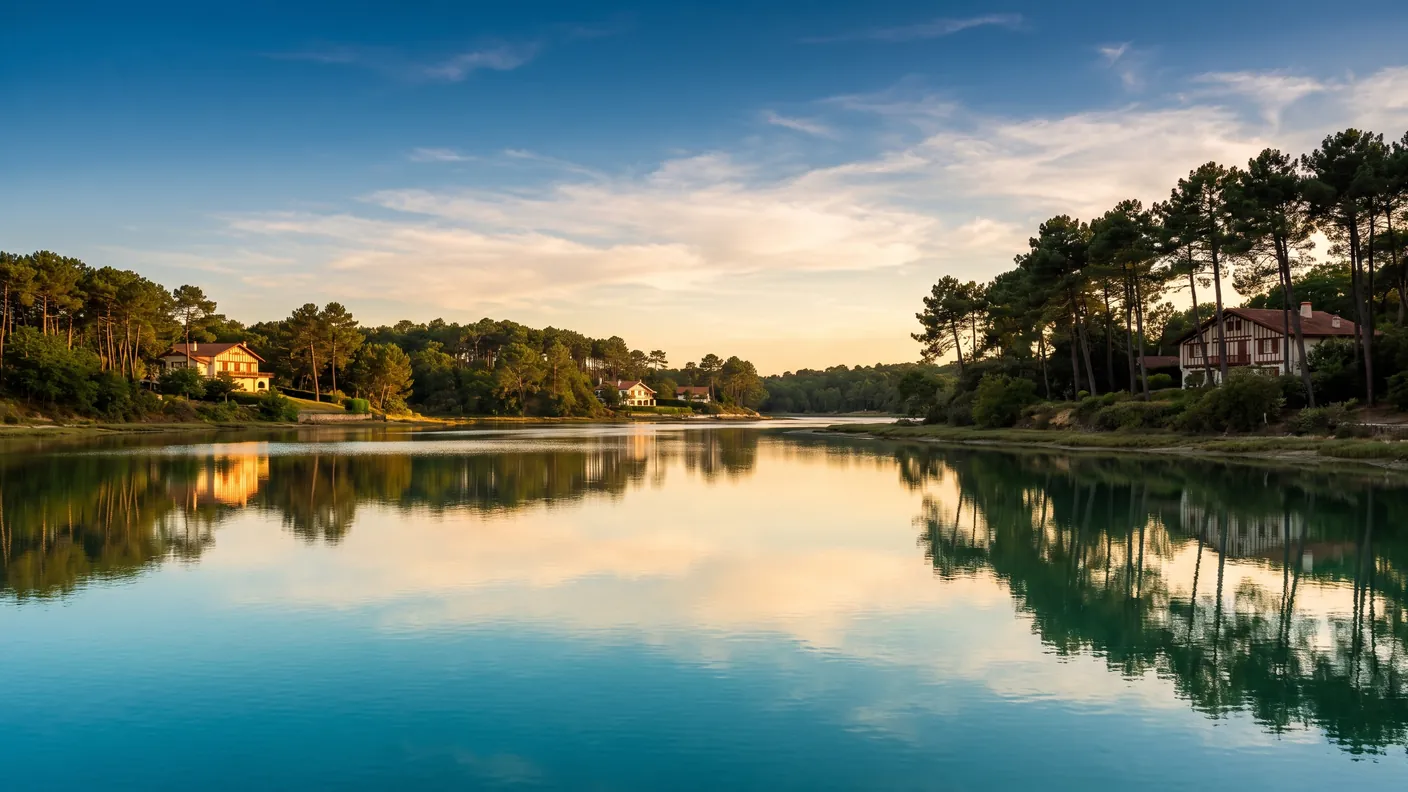
To the north, the surfers' coast begins right away. At 6 km (10 minutes), Capbreton — the only port in the Landes region — boasts its fish market, its jetty, and its bustling docks; offshore lies the famous Capbreton Gouf, a underwater canyon which starts at just 300 meters from the shore (already 50 meters deep) and plunges further down to abyssal depths—it is this trench that concentrates the swell and gives the coast its powerful waves. At 10 km (15 minutes), Hossegor and its marine lake, its La Gravière Beach, and its Basque-Landes architecture make up the chic coastal resort, the surfing capital of Europe. These two neighboring towns, when combined with Labenne, make up the heart of the southern Landes coast—beaches, a harbor, a lake, a pine forest, and surfing. A private chauffeur lets you visit these resorts—which are often packed in the summer—without the nightmare of finding parking.
Bayonne, the Basque Country, and Dax
To the south, the Basque Country is within easy reach. Bayonne (17 km, 20 minutes) boasts its market halls along the Nive River, its Gothic cathedral, its red half-timbered houses, and its chocolate; beyond that, Biarritz and the Basque Coast open up to the open sea. Inland, about 40 minutes away, Dax—France’s premier spa destination, with its 64°C hot spring and Art Deco trio—offers a getaway of a completely different kind. Labenne is thus situated at the crossroads of two worlds: the Landes coast and the Basque Country, the sea and the thermal springs. This makes it an ideal base for exploring southern Aquitaine, especially since its train station (on the Bordeaux–Hendaye line) and its proximity to the A63 make it easily accessible. With a private transfer, you can customize your itinerary—beach, marshes, harbor, Basque town—without worrying about driving or parking, and return to Bordeaux at the agreed-upon time.
When is the best time to visit Labenne?
Labenne is best visited from spring through fall, for its beach and natural surroundings—but the Orx Marsh Reserve, which is open year-round and free of charge, also makes it a great off-season destination. The summer (July–August) is the peak beach season: lifeguard-patrolled beaches, surf schools, night markets, beach games and entertainment organized by Labenne-Océan—the classic Landes vacation vibe, complete with the crowds that come with it (book early, and let the driver handle the car to avoid parking hassles). The spring (April–June) and the fall (September–October) are perhaps the best times to visit: quieter beaches, the ocean still—or already—warm enough for swimming, and above all bird migration At the Orx Marshes—spring and fall are the prime seasons for birdwatching, when spoonbills, cranes, and shorebirds stop over.
The winter has its own austere charm: deserted beaches battered by Atlantic storms, a pine forest shrouded in mist, and the Orx Marsh, home towintering birds (geese, ducks) — naturalists will find plenty to enjoy here, and the reserve remains freely accessible. No matter the season, the late Thursday afternoon (4:00 p.m.–8:00 p.m.) is when the Labenne local farmers’ market takes place. Plan on spending a day in the town (beach in the morning, marshes in the afternoon), or a weekend if you want to include Capbreton, Hossegor, and Bayonne. Just 2 hours and 4 minutes from Bordeaux, Labenne offers the dual charm of the southern Landes coast—the ocean and nature—which is just as appealing in summer as it is during the quieter seasons. A professional chauffeur makes every trip simple, with no need to worry about parking.
| Season | Atmosphere | Ideal for |
|---|---|---|
| Summer (July–August) | lively beach, surfing, night markets | family, beginner surfing lessons, resort |
| Spring / Fall | quiet beaches, bird migrations | Orx Marshes, birdwatching, biking |
| Winter | deserted beaches, marshes where birds spend the winter | naturalists, storms, forest |
How to get to Labenne from Bordeaux
Labenne is about 173 km from Bordeaux, or about a 2-hour, 4-minute drive via the A63. The town also has a train station on the Bordeaux–Hendaye line. For a day at the beach or in nature, a private door-to-door transfer is the simplest solution—especially in the summer, when resorts get crowded.
| Route | Distance | Duration | Details |
|---|---|---|---|
| Bordeaux → Labenne | ~173 km | ~2:04 | Starting at ~€294 for a door-to-door car service |
| Bordeaux-Mérignac Airport → Labenne | ~175 km | ~2:04 | pickup at the terminal |
| Labenne → Capbreton | ~6 km | ~10 min | port, Capbreton Bay |
| Labenne → Bayonne | ~17 km | ~20 min | Gateway to the Basque Country |
Through the road, you can reach Labenne from Bordeaux in 2 hours and 4 minutes via the A63, which runs along the Landes coastline through the pine forest. In train, Labenne has a train station on the line Bordeaux–Hendaye, served by TER trains—convenient for a car-free trip, but with the constraints of train schedules and the need to cover the last kilometer to the beach or the marshes. That’s where the private transfer makes all the difference: door-to-door, it drops you off directly at Labenne-Océan, the Maison du Marais, or your rental—beach gear included—and can then continue on to Capbreton, Hossegor, or Bayonne. Best of all, it saves you the parking nightmare In the summer, when resort parking lots fill up first thing in the morning. Whether it’s a family day at the beach, a bird-watching trip to the marshes, or a getaway to the coast, this is the simplest and most relaxing option. For groups, it’s often the most economical choice, too.
Whether you're heading to Labenne-Océan Beach, the Orx Marsh Nature Reserve, or taking a trip along the surfers' coast, booking a chauffeur-driven car guarantees a comfortable and punctual ride—book a driver from Bordeaux to Labenne or explore all our destinations.
Frequently Asked Questions
What is the difference between the town and Labenne-Océan?
Labenne is divided between the town center—located inland, near the train station and local services—and Labenne-Océan, at the end of Avenue de l’Océan, near the beach and seasonal accommodations. The Maison du Marais d’Orx is a third, separate drop-off point: be sure to check the exact address before your trip.
How much does a transfer from Bordeaux to Labenne cost?
We offer a fixed-price transfer from Bordeaux to Labenne, starting at approximately €391 one way (about 173 km, approximately 2 hours and 4 minutes via the A63), in a Mercedes sedan or a van seating up to 8 passengers, with a professional driver. The trip is direct, door-to-door: pickup at your home, at Mérignac Airport, or at Saint-Jean Train Station, and drop-off at Labenne-Océan, at the Maison du Marais, or at your rental property, including beach luggage. The fixed-price quote is provided and confirmed in writing before departure, with no surprise meter charges. It’s the ideal option for a family day at the beach or a nature outing: the driver can take you to Capbreton, Hossegor, or Bayonne, and—most importantly—save you the hassle of summer parking, which is often full by morning in the resort towns. For groups, this is often the simplest and most economical solution.
What is the Orx Marsh Reserve?
It is a national nature reserve covering approximately 775 hectares, located in Labenne (and in the neighboring municipalities of Orx and Saint-André-de-Seignanx), designated as such in 1995—a major sanctuary for migratory birds, of which the Eurasian spoonbill is the emblem. Its history is remarkable: a former marsh drained to create agricultural polders during the Second Empire (decree of Napoleon I in 1808, purchased by Napoleon III in 1858, with pumps from 1863 bearing the imperial eagle—which are still in use today)—it was abandoned in 1984 and reverted to marshland, before being repurchased by the Conservatoire du littoral in 1989. Nearly 250 to 300 species of birds have been recorded there (spoonbills, cranes, ospreys, etc.). The reserve is open to everyone, free of charge and at all hours: from the Maison du Marais, two walking trails (6 and 6.4 km) lead to four observation points, including one at the end of a 300-meter footbridge. Bicycles and dogs are prohibited; guided tours are available.
Can you surf at Labenne?
Yes—and Labenne-Océan is even known as one of the best spots for beginners on the southern coast of the Landes. At low tide, its sandbars create waves that are more accessible than the powerful beach breaks at nearby Hossegor: it’s the “green trail” of surfing, where state-certified schools from all along the coast (Tiki Surf School, Go and Surf, among others) are happy to take their beginners there. If you want to learn to surf on the “surfers’ coast” without tackling Hossegor’s barrels right away, this is the ideal spot. The beach is patrolled during peak season (lifeguard station; check dates annually). Please note, as is the case everywhere along this coast: the Atlantic Ocean off the Landes is powerful, with dangerous rip currents—swimming is permitted only in the supervised area during lifeguard hours. An executive transfer can drop you off and pick you up at the beach, boards and luggage included, without any parking worries.
How do I get to the Orx Marsh from Labenne?
Visitors are welcomed at the Maison du Marais, on the Labenne side. The reserve can only be explored on foot: two free trails, 6 and 6.4 km long, lead to the observation points, and dogs are not allowed. From the village or Labenne-Océan, plan a separate trip to this entry point rather than heading directly to the beach.
Is the church in Labenne a listed building?
No—this is a common correction. The Saint-Nicolas Church in Labenne is not protected as a historic monument; it has neither been classified nor listed. The only historic monument in the town is its World War I memorial, listed in 2014: sculpted by Lucien Danglade and erected between 1925 and 1927, it depicts a resin collector setting down his tapping tools to pick up a rifle—a deeply moving image that encapsulates the sacrifice of a village of resin collectors. This life-size monument, located near the church, speaks more eloquently than anything else about what Labenne once was: a village of forests and resin, marked by the Great War. Labenne’s heritage is thus more natural than monumental—the town’s true riches are its beach, its pine forest, and the Orx Marsh Nature Reserve, one of the most beautiful natural sites along the Landes coast.
What is the distance between Bordeaux and Labenne?
About 173 km by road, or approximately 2 hours and 4 minutes via the A63, which runs along the Landes coastline through the pine forest. For a pre-booked car service, the fare is fixed and provided in advance, starting at about €294 one way. By train, Labenne has a station on the Bordeaux–Hendaye line, served by TER trains—convenient, but with schedule constraints and the need to cover the last kilometer to the beach or the marshes. A private transfer offers the advantage of door-to-door service: you’ll be dropped off directly at Labenne-Océan, the Maison du Marais, or your rental property—beach gear included—and then have the freedom to explore Capbreton (6 km), Hossegor (10 km), or Bayonne (17 km). Best of all, it saves you from the hassle of summer parking, which is often full by morning. For a day at the beach or in nature with the family, it’s the simplest and most relaxing option; for groups, it’s often the most economical.
Is the Orx Marsh free to visit?
Yes—the Marais d'Orx Nature Reserve is “open to everyone, free of charge, and at any time,” according to the manager. From the Maison du Marais (on the Labenne side), there are two trails you can explore on foot at your own pace: the Marais Barrage trail (6.4 km round trip, featuring the Pump Observatory and a 300-meter wooden boardwalk) and the Marais Burret trail (6 km). Four observation decks allow visitors to get close to the birds without disturbing them, including one accessible to people with limited mobility. Please note: Bicycles and dogs are prohibited on the reserve’s trails to preserve the tranquility of the wildlife. For a more in-depth experience, the reserve offers guided tours (€10 for adults, €5 for children ages 6–16) and binocular rentals (€5). The best seasons for birdwatching are spring and fall (migration); winter brings overwintering birds (geese, ducks). It’s an ideal outing at sunrise or sunset, perfect to combine with a morning at the beach.
How much time should I set aside for a day at Labenne?
In one day, you can spend the morning split between the beach and Labenne-Océan, then spend the afternoon at the Orx Marshes, where the trails take several hours to complete. Add Capbreton or Bayonne only if you cut back on one of these visits. The town center, the beach, and the Maison du Marais are three separate locations: plan your travel time between them in advance.
What's the best season for birdwatching?
Spring and fall are the best times to observe bird migration at the Orx Marsh. Winter also attracts many overwintering birds, while summer offers a combination of birdwatching and beach activities, though it tends to be more crowded. The reserve is open year-round; check its official information before choosing a trail or guided tour.
Was there a streetcar in Labenne?
No, it was a steam railroad—this confusion is common. The Labenne line to Seignosse (17 kilometers), which opened on February 1, 1912, served Capbreton, Hossegor, and Seignosse; its traffic consisted mainly of forestry cargo (wood and resin from the pine forest). Its steam locomotives were equipped with spark arrestors to prevent the forest from catching fire—a detail that speaks to the constant danger posed by the Landes pine forest. Passenger service ceased in 1950, and the line closed permanently in 1957. Around the same time, Labenne-Océan was established, along with its Sainte-Thérèse Chapel (inaugurated on December 1, 1932). This small forest train is part of the town’s history, which shifted in the 20th century from a resin-based economy to one centered on seaside tourism — a shift that explains its rapid population growth (from 1,422 residents in 1968 to more than 7,000 today). The Vélodyssée bike route, in fact, partly follows former railway rights-of-way of this type along the coast.
Further Reading
- The nearby resort and its saltwater lake: see the Hossegor Guide (surfing capital and saltwater lake, 15 min away)
- The spa town in the Landes region: see the Dax Guide (Fontaine Chaude at 64 °C, about 40 min away)
- The Prefecture of the Three Rivers: see the Mont-de-Marsan Guide (Lacataye Keep and sculpture)
- Understanding our rates and vehicles: see the "Book a Driver" page (sedan & van, fixed-price quote)
- Plan your trip: Book a dedicated chauffeur from Bordeaux to Labenne or explore all our destinations
Sources and References
- Wikipedia — Labenne — a town on the southern coast of the Landes region, population 7,183 (2023), consisting of the town center and Labenne-Océan, with approximately 1,300 hectares of forest and a history of resin harvesting; Labenne–Seignosse railway line (1912–1957); German radar station (1942–44)
- Orx Marsh Nature Reserve — RNN established in 1995, ~775 ha in Labenne/Orx/Saint-André-de-Seignanx, open to the public free of charge at all times; 2 trails (Marais Barrage, 6.4 km; Marais Burret, 6 km), 4 observation points; Second Empire-era polder, pumps dating from 1863
- POP Mérimée — Labenne War Memorial — the town’s only historic monument: a resin collector setting down his tapping tools to pick up a rifle (sculptor Lucien Danglade, 1925–1927), designated a historic monument on October 21, 2014
- Coastal Conservation Agency — Orx Marshes — an area of approximately 1,006 ha acquired in 1989 (in partnership with WWF-France), managed by a joint association since 2004; the Eurasian spoonbill, the reserve’s emblem; designated as a Ramsar Site and a Natura 2000 site
- South Atlantic Landes Tourist Office — Labenne-Océan Beach, patrolled during peak season; a great spot for beginners to learn to surf at low tide; certified surf schools; markets; “intervaches” games in the summer
- Wikipedia — Capbreton Gouf — an underwater canyon beginning about 300 m from the Capbreton shore (where the depth is already 50 m), one of the few that starts so close to the coast; this explains the power of the waves in the area
Article updated in July 2026.
Heading to the southern coast of the Landes
Direct transfer from Bordeaux (~2 hours 4 minutes via the A63) to Labenne, its beach, and the Orx Marshes—from your home, airport, or train station to Labenne-Océan or the Maison du Marais, including luggage, then on to Capbreton, Hossegor, or Bayonne. Fixed-price written quote—no surprise meter charges.