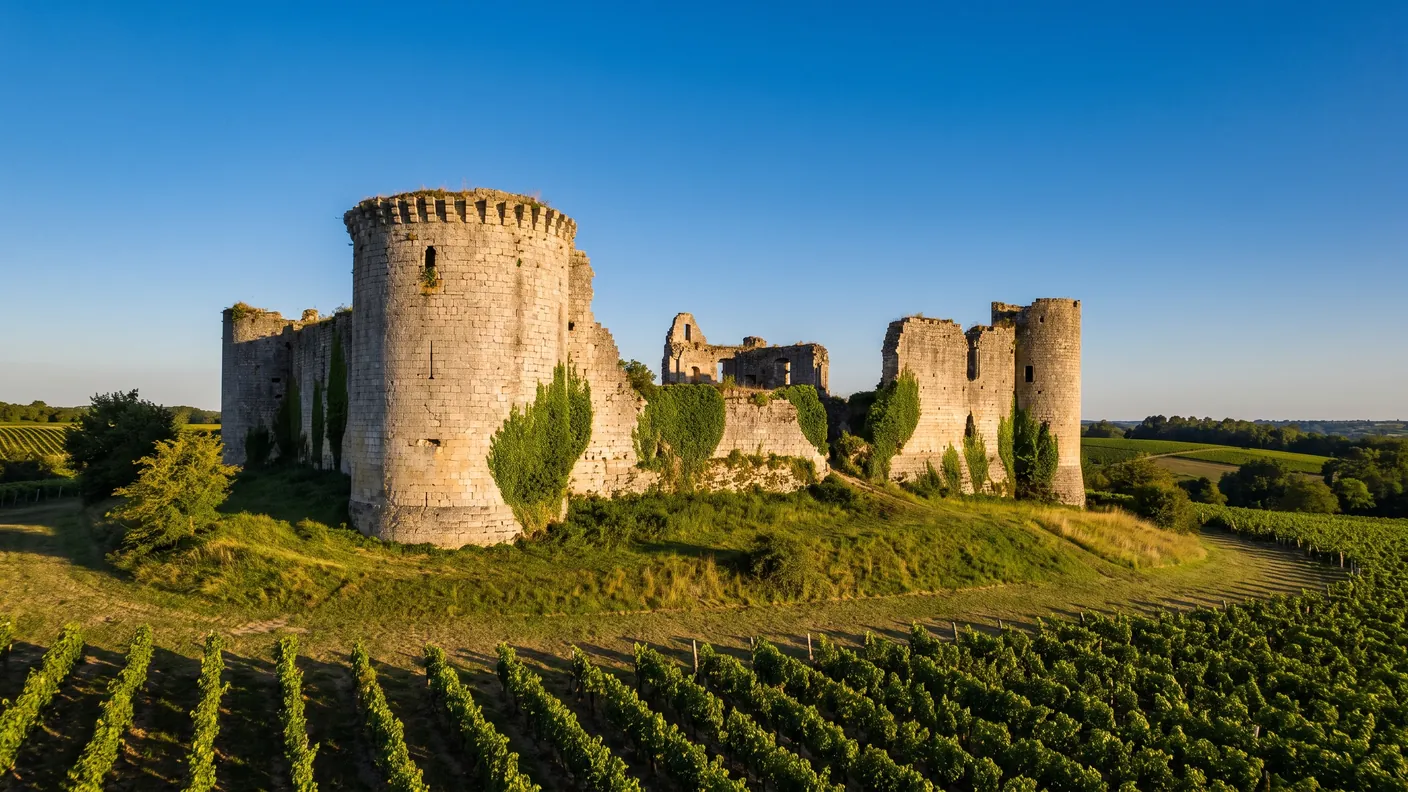
Bordeaux to Langoiran: fortress and Garonne Valley
A village in the Entre-deux-Mers region on the right bank of the Garonne, dominated by an imposing medieval castle: Langoiran, with its grand 14th-century keep, its listed Romanesque church, its fishing port, and its Cadillac Côtes de Bordeaux wines—and your private door-to-door transfer from Bordeaux, without having to rent a car.
Langoiran at a glance
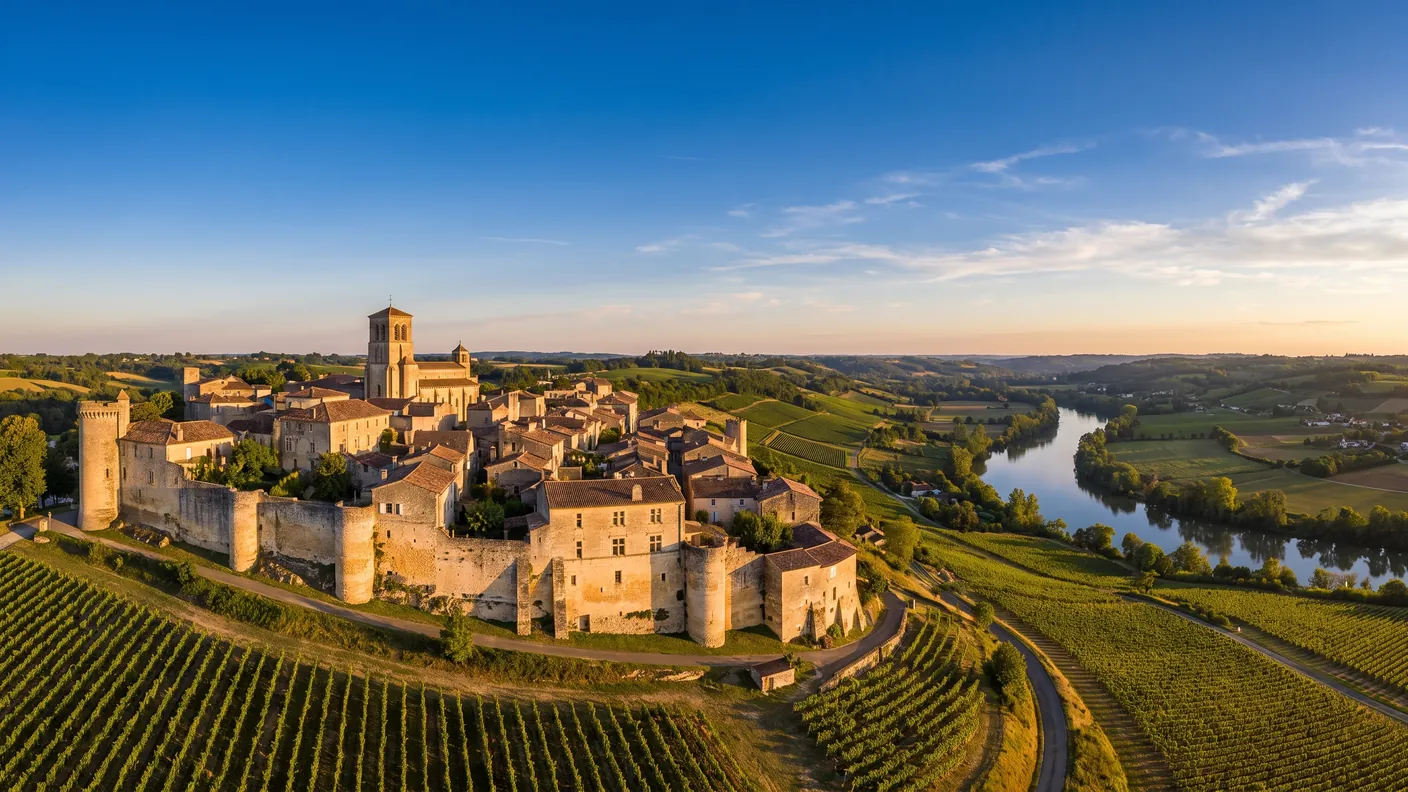
Langoiran is a village in the Entre-deux-Mers region, on the right bank of the Garonne River, about 25 km southeast of Bordeaux, dominated by the ruins of its imposing medieval castle. It features a château with one of the widest keeps in France, a listed Romanesque church, a historic fishing quarter along the river, and Cadillac Côtes de Bordeaux vineyards. This guide distinguishes verified facts from common misconceptions: the château dates from the 13th to the 14th centuries (not the 12th), and the 1881 iron bridge was built by Fives-Lille “according to Eiffel’s principles” (not “by Eiffel”). The current appellation is Cadillac Côtes de Bordeaux (the former “Premières Côtes” name is no longer used), and Saint-Léonce Church is not a listed monument. Next, we explain the easiest way to get there from Bordeaux: a private door-to-door transfer, without renting a car.
Here are the key details to know before you go. Distances are calculated door-to-door from Bordeaux; the fare listed is for a private driver reservation at a fixed price provided in advance, with no unexpected meter charges regardless of traffic or stops along the way. Information on cultural heritage sites has been verified using the Mérimée database and the Entre-deux-Mers tourist office; population figures are based on data from INSEE. Visiting hours for the château, which are organized by a local association, should be confirmed directly with the association.
| Landmark | Details |
|---|---|
| Village | Langoiran (Gironde, Langon District) |
| Location | Entre-deux-Mers, on the right bank of the Garonne, about 11 km from Cadillac |
| Residents | 2,215 Langoirannais (municipal population, 2023)[INSEE 2023] |
| Must-See | the fortified castle (14th-century keep, designated a historic monument), the Romanesque church, and the port on the Garonne River |
| Distance from Bordeaux | about 25 km · about a 40-minute drive |
Where is Langoiran located?
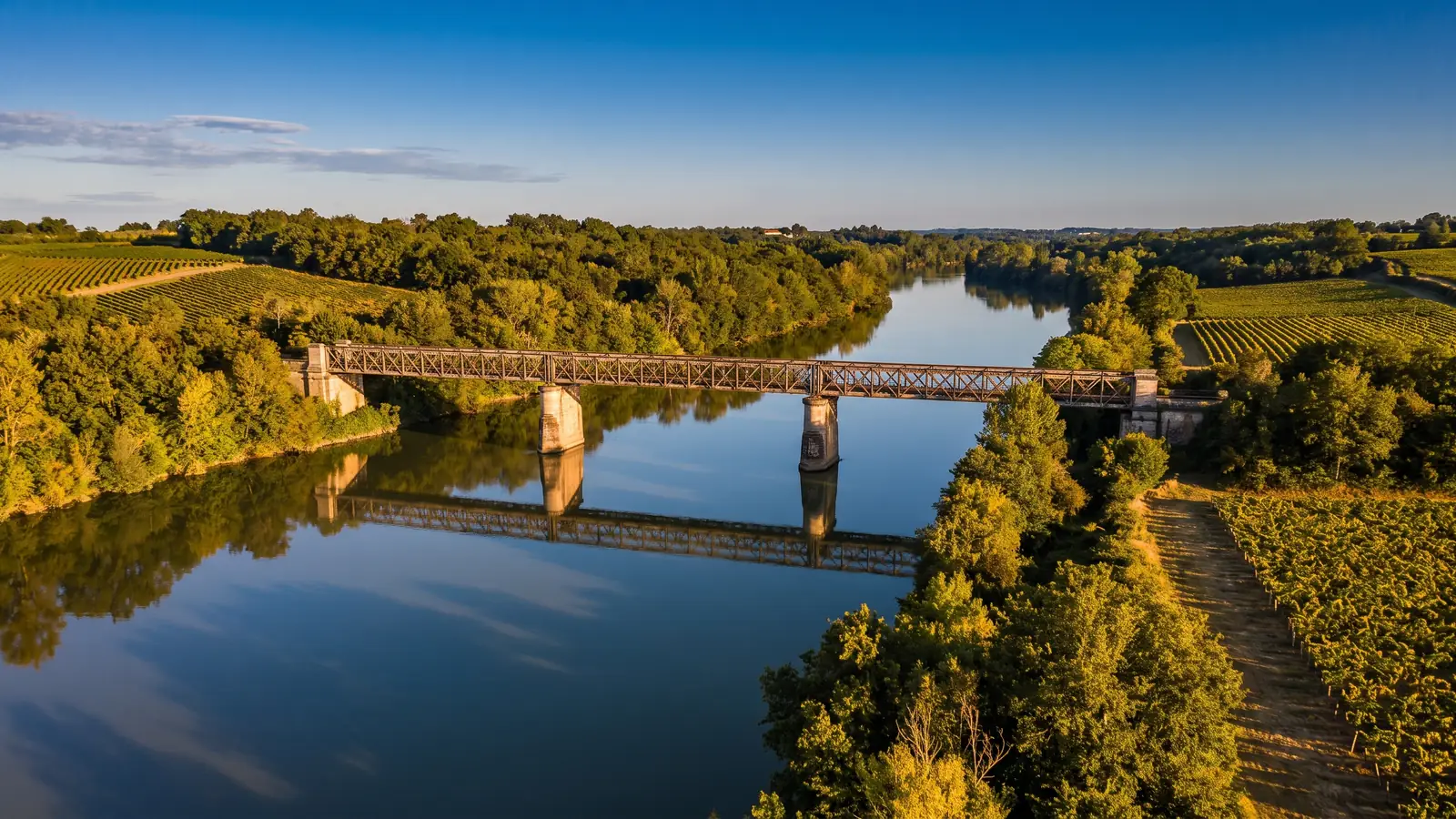
Langoiran is located east of Bordeaux, in the Entre-deux-Mers region, on the right bank of the Garonne River, halfway between Bordeaux and Cadillac. It is a land of vineyards, hillsides, and rivers: the vast Entre-deux-Mers vineyard, the sun-drenched hills overlooking the valley, and the Garonne River, which is still subject to ocean tides at this point. The village, with a population of 2,215, is spread out between the riverbank—the former fishermen’s quarter, with its harbor—and the upper town, crowned by the ruins of the castle. It is part of the Langon district, the Entre-Deux-Mers canton, and the Portes de l’Entre-Deux-Mers community of municipalities. This is a quiet wine-growing region, about forty minutes from Bordeaux, yet already fully immersed in the peaceful atmosphere of the Garonne Valley, nestled between the hillsides and the riverbank.
On the right bank of the Garonne
Langoiran occupies a pivotal location between the Entre-deux-Mers plateau and the Garonne River. The wide and majestic river runs along the village’s southwestern edge; at this point, it is still tidal, subject to the influence of the estuary’s tides—a detail that has shaped the life of the port and its fishermen. The sun-drenched hillsides above the valley are planted with vineyards, while the old village clings to the slopes, nestled between the water’s edge and the castle hill. Across the river, on the opposite bank, lie the vineyards of the Graves; upstream, Cadillac and its sweet wines; downstream, Bordeaux, just under half an hour away. This valley setting—combining wine-growing and river life—is what gives Langoiran its charm: here you can soak up the peaceful atmosphere of the Garonne, far from the hustle and bustle, yet just a stone’s throw from the city.
A village nestled between the river and the hillside
Langoiran is unique in that it is a two-level village. Down below, on the banks of the Garonne, the old fishing district features a row of historic houses lining the water’s edge, surrounding a small harbor dating back to the 16th century—a reminder of a time when the river was the main trade route to Bordeaux. Up above, the upper village (or Haut-Langoiran) is dominated by the ruins of the fortified castle and the Romanesque Church of Saint-Pierre. Between the two lie the vineyard-covered hillsides. This layout, typical of villages in the Garonne Valley, offers visitors two distinct atmospheres: the waterfront, with its riverbanks and iron bridge on one side; and the hilltop, with its medieval ruins and panoramic views on the other.
It’s an invitation to take a leisurely stroll through historic sites, vineyards, and along the river, about forty minutes from Bordeaux. You’ll happily wander from the top to the bottom of the village, from the panoramic view of the ruins to the tranquility of the riverbanks, stopping to admire an old facade or a winemaker’s shop—the kind of place where you can take your time, far from the well-trodden tourist trails.
The fortified castle and its large keep
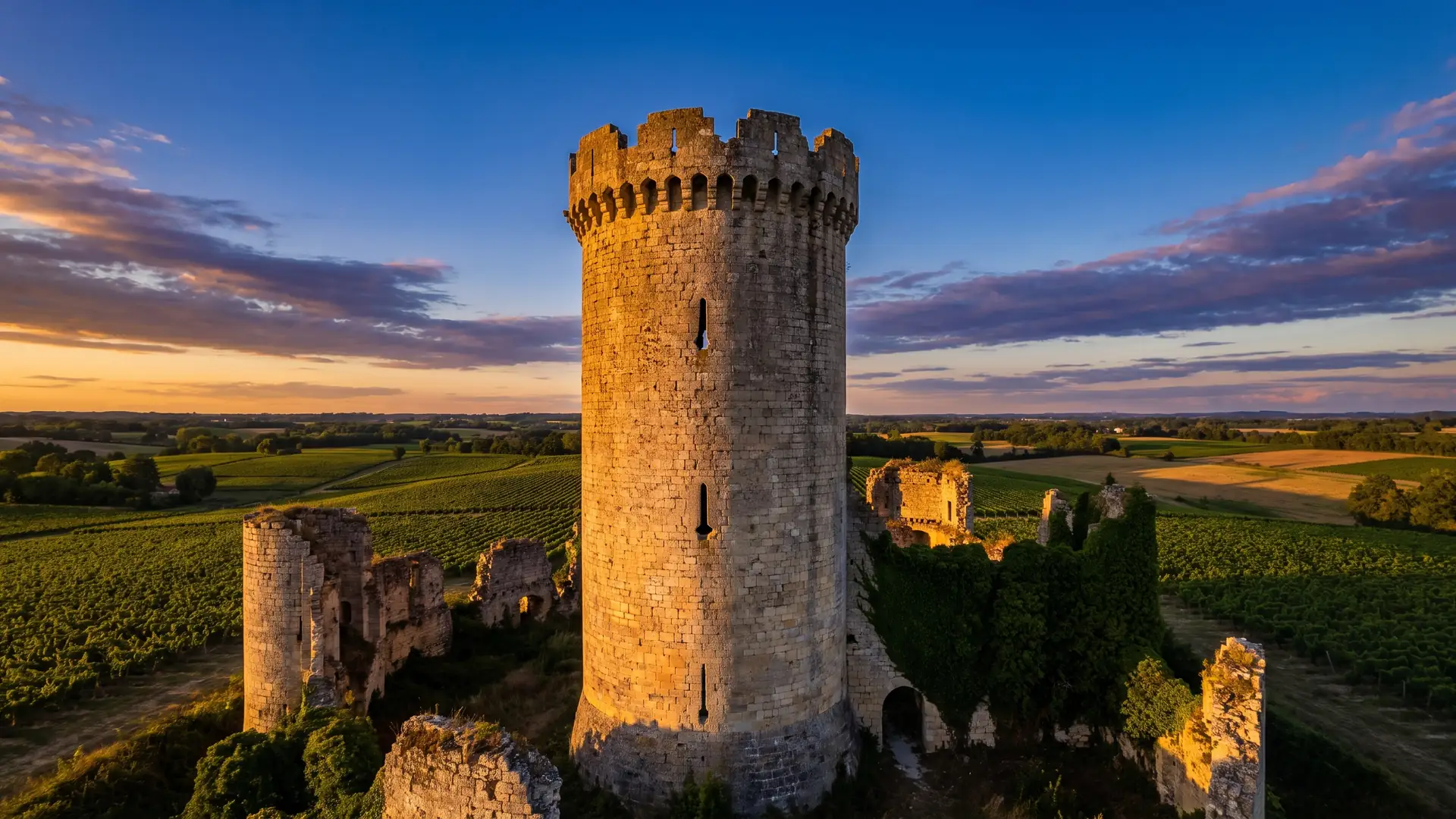
Built between the 13th and 14th centuries, Langoiran’s fortified castle overlooks the valley with one of the widest keeps in France. Listed as a Historic Monument and managed by a nonprofit organization, it is the village’s most iconic landmark. Here is what the sources say, without embellishment.
One of the widest keeps in France
Langoiran Castle was built in the 13th century by the Seguin d’Escoussans family, then expanded through the 17th century. Its centerpiece is a cylindrical 14th-century keep, one of the widest in France. This great round tower contains three octagonal rooms, stacked, vaulted and connected by a spiral staircase. Gothic windows provide light, and traces remain of murals depicting Saint Michael and Saint Peter. A major medieval fortress, the castle was burned in 1649 during the Fronde and fell into ruin in the 1650s and 1660s.
The site remained abandoned until a restoration programme began in 1972. It has been listed as a Historic Monument since the decree of 19 May 1892[POP 2026] — a long-standing designation that reflects the importance of these ruins in the Gironde landscape. In the Middle Ages, the fortress commanded the valley and monitored traffic on the Garonne, then a major trade route. Its elevated position between the river and the plateau made it a strategic stronghold in Guyenne, a region long contested by the kings of France and England, the latter also holding the title of Duke of Aquitaine.
A living castle, brought to life by a nonprofit organization
Far from being a dormant ruin, Château de Langoiran is a living monument, brought to life by the Les Amis du château de Langoiran association, which oversees maintenance, restoration and public access. Throughout the year, the association organizes guided tours, performances and medieval festivals, and even hosts weddings in this exceptional setting overlooking the Garonne Valley. Opening hours and the event schedule vary by season, so it is best to check with the association before visiting.[Château, juillet 2026] The visit rewards you with the keep, vaulted rooms, frescoes and, above all, a panoramic view over vineyard-covered hillsides and the river. A chauffeur service can drop you at the foot of the castle, avoiding the search for parking in the narrow streets of the upper village.
Churches, a mill, and a fishing port
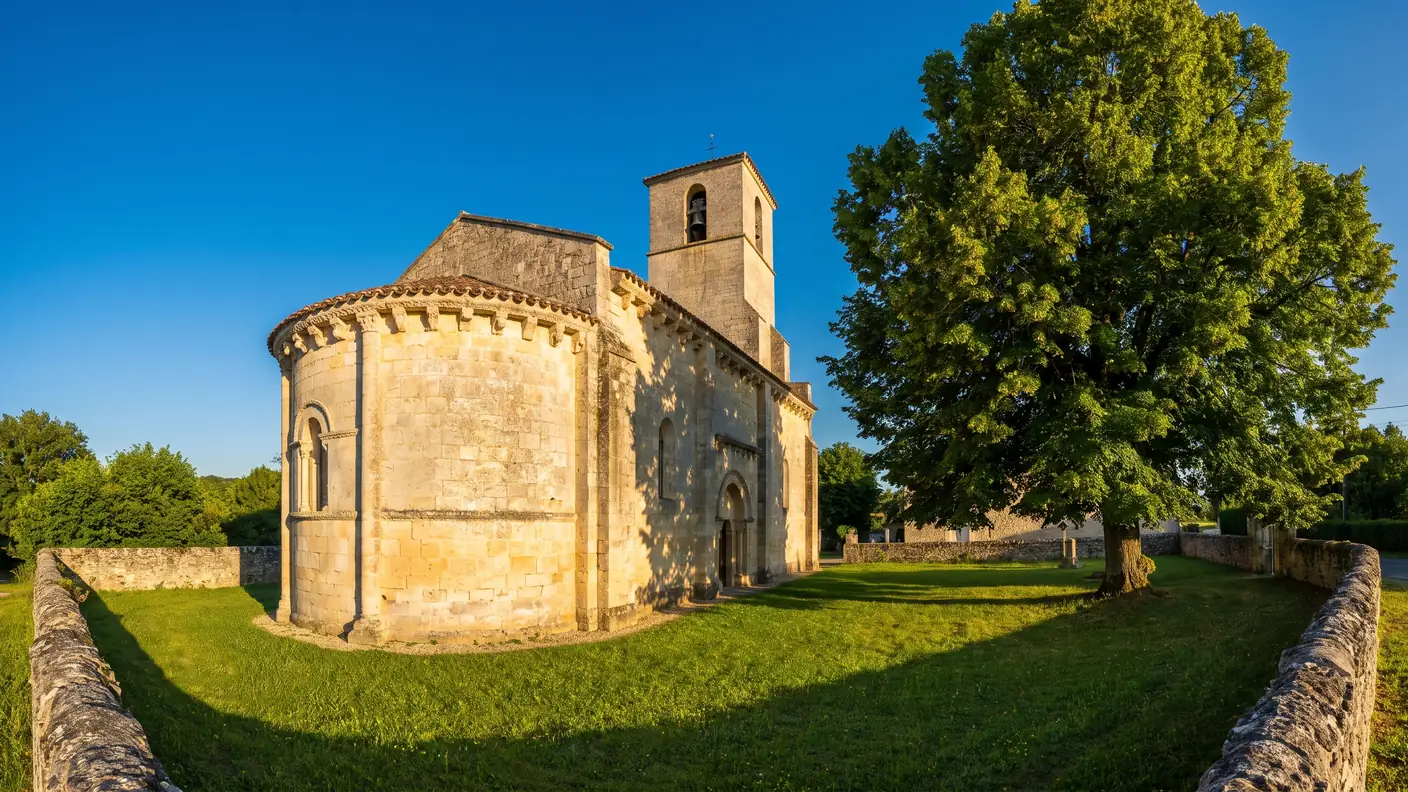
Beyond the castle, Langoiran is home to two churches, a fortified mill, and a former fishing port—a diverse heritage nestled between the hillside and the banks of the Garonne. Here is what the sources document, carefully distinguishing between what is protected and what is not.
Two churches, one of which is a listed Romanesque church
Langoiran has two churches, one in each part of the village. In the upper village, the Church of Saint-Pierre-ès-Liens is a fine Romanesque building, notable for its Saintonge-style apse; it has been listed as a Historic Monument since 1908. Below, near the river, Saint-Léonce Church dates from the late 19th century. It is sometimes attributed to Paul Abadie, architect of the Sacré-Cœur in Paris. To remain faithful to the verified sources, the building is attributed to an architect named Abadie, without claiming with certainty that this was the celebrated Paul Abadie. Contrary to another repeated claim, Saint-Léonce is not listed as a Historic Monument; that protection applies to the Romanesque church in the upper village. These distinctions form part of the verification behind this guide.
The Gaillardon Mill and the Harbor
Langoiran’s heritage extends beyond the castle. On the hillside stands the fortified Gaillardon Mill, a defensive mill dating from the 14th to 15th centuries, complete with murder holes. It is a rare example of a fortified mill and was documented by the scholar Léo Drouyn as early as 1865. It is not listed as a Historic Monument, but remains a striking part of the landscape. Below, beside the Garonne, the former fishing quarter and its port, lined with houses dating from the 16th century, recall the river’s central role in village life. The 1881 steel bridge toward Portets on the left bank is also worth seeing. Built by Fives-Lille according to Gustave Eiffel’s engineering principles (not by Eiffel himself), this fine 19th-century structure bears witness to the valley’s industrial growth.
Château, bridge and appellation: claims worth checking
Several claims are circulating about Langoiran that need to be corrected, with supporting sources—which is the whole point of a reliable guide. The castle, the bridge, the appellation, the church: here’s what’s true and what’s false.
A castle from the 13th–14th centuries, not the 12th
Langoiran Castle is sometimes dated to the “12th century.” This is inaccurate: construction began in the 13th century under the Seguin d’Escoussans family, and its famous cylindrical keep dates to the 14th century; the castle was then extended through the 17th century. The correct range is therefore the 13th to 14th centuries. Likewise, the 1881 steel bridge is often described as “built by Eiffel,” but it was actually built by Fives-Lille according to Gustave Eiffel’s engineering principles. This matters: it was not designed by Eiffel himself. Finally, neither Gaillardon Mill nor Saint-Léonce Church is listed as a Historic Monument; only the Romanesque church of Saint-Pierre-ès-Liens has been listed, since 1908. These often-overlooked details distinguish a verified guide from copied material.
Cadillac Côtes de Bordeaux, formerly “Premières Côtes”
When it comes to wine, a clarification is in order. Langoiran is often associated with the “Premières Côtes de Bordeaux” appellation. This is an old name that is no longer used for red wines from the region: since a 2009 decree, the appellation for reds has been Cadillac Côtes de Bordeaux.[INAO 2026] Langoiran is also one of the communes within the Cadillac AOC, which is reserved for sweet white wines. We therefore say “Cadillac Côtes de Bordeaux” (for reds) and “Cadillac” (for sweet wines), not “Premières Côtes de Bordeaux.” This little-known change in appellations often leads to confusion: we prefer to use the current names. It in no way detracts from the quality of the wines from these well-exposed slopes above the Garonne, nor from the pleasure of a tasting at the region’s estates—on the contrary, it’s an opportunity to discover a distinctive vineyard at prices far more affordable than those of the big names.
The wine: Cadillac Côtes de Bordeaux
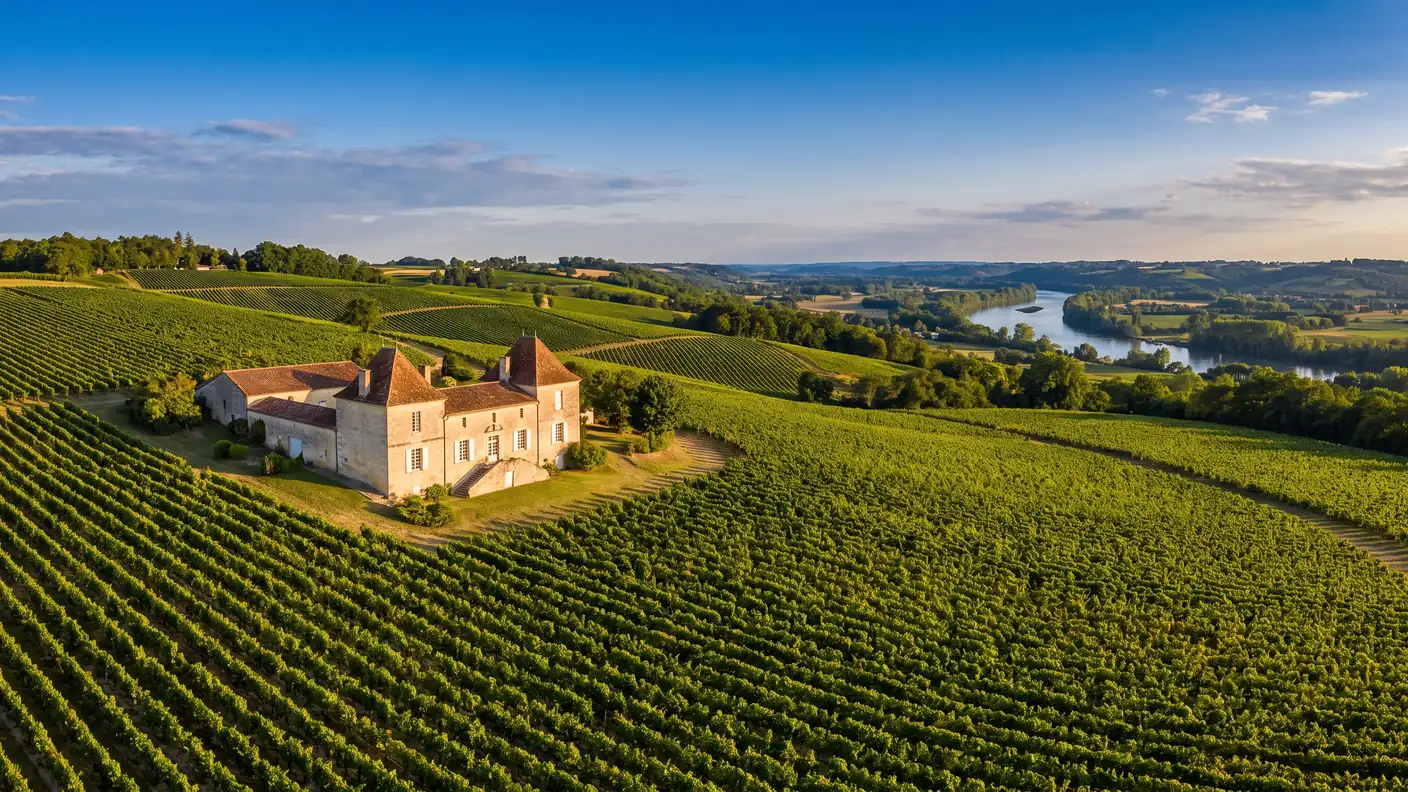
Langoiran is a winegrowing village: its well-exposed hillsides overlooking the Garonne produce red wines under the Cadillac Côtes de Bordeaux appellation and sweet white wines under the Cadillac appellation. It is a terroir of clay-limestone hillsides, situated between the river and the Entre-deux-Mers plateau. Here’s what makes it unique.
Hillside Reds and Sweet Wines
The hillsides of Langoiran, which overlook the right bank of the Garonne, offer excellent exposure for the vineyards. The region primarily produces red wines under the Cadillac Côtes de Bordeaux appellation (created in 2009): Merlot and Cabernet wines that are full-bodied and well-suited for aging, often at very affordable prices. Langoiran is also part of the Cadillac AOC region, reserved for sweet white wines—these sweet, golden wines, cousins of Sauternes, made from late-harvest grapes on the river’s right bank. This dual character—hillside reds and sweet wines—is what makes the terroir so rich. The family-run estates in the area are happy to welcome visitors for tastings, often by appointment: a chance to sample the local selection, chat with the winemakers, and take home a few bottles at prices much more reasonable than those of the neighboring grand appellations.
Wine Tasting in the Garonne Valley
The Garonne Valley, around Langoiran, is a beautiful wine-tourism destination that remains unspoiled by mass tourism. In a single day, you can visit the castle, stroll along the riverbank, and then head to a vineyard on the hillside for a wine tasting. A little further upstream, Cadillac—which gave its name to the appellations—is worth a visit for its château and its Maison des Vins; there, you can discover the full range of Cadillac Côtes de Bordeaux and sweet wines. Many estates in the area offer direct sales, and some operate bed-and-breakfasts nestled among the vineyards. The advantage of a private transfer is clear here: you’re driven from one estate to the next, you can taste to your heart’s content, and you return to Bordeaux or your lodging stress-free. Since opening hours and visitor policies vary by estate, be sure to confirm them directly with each winemaker before your visit.
| Wine in Langoiran | Details (according to sources) |
|---|---|
| Appellations | Cadillac Côtes de Bordeaux (reds) · Cadillac (sweet whites) |
| Terroir | clay-limestone hillsides overlooking the right bank of the Garonne |
| Grape Varieties | Merlot, Cabernet (reds) · Sémillon, Sauvignon (sweet) |
| Good to Know | "Premières Côtes de Bordeaux" = former name, replaced by Cadillac Côtes de Bordeaux |
| Good to Know | Wine tastings at the vineyards, often by appointment |
What is there to do in Langoiran and the surrounding area?
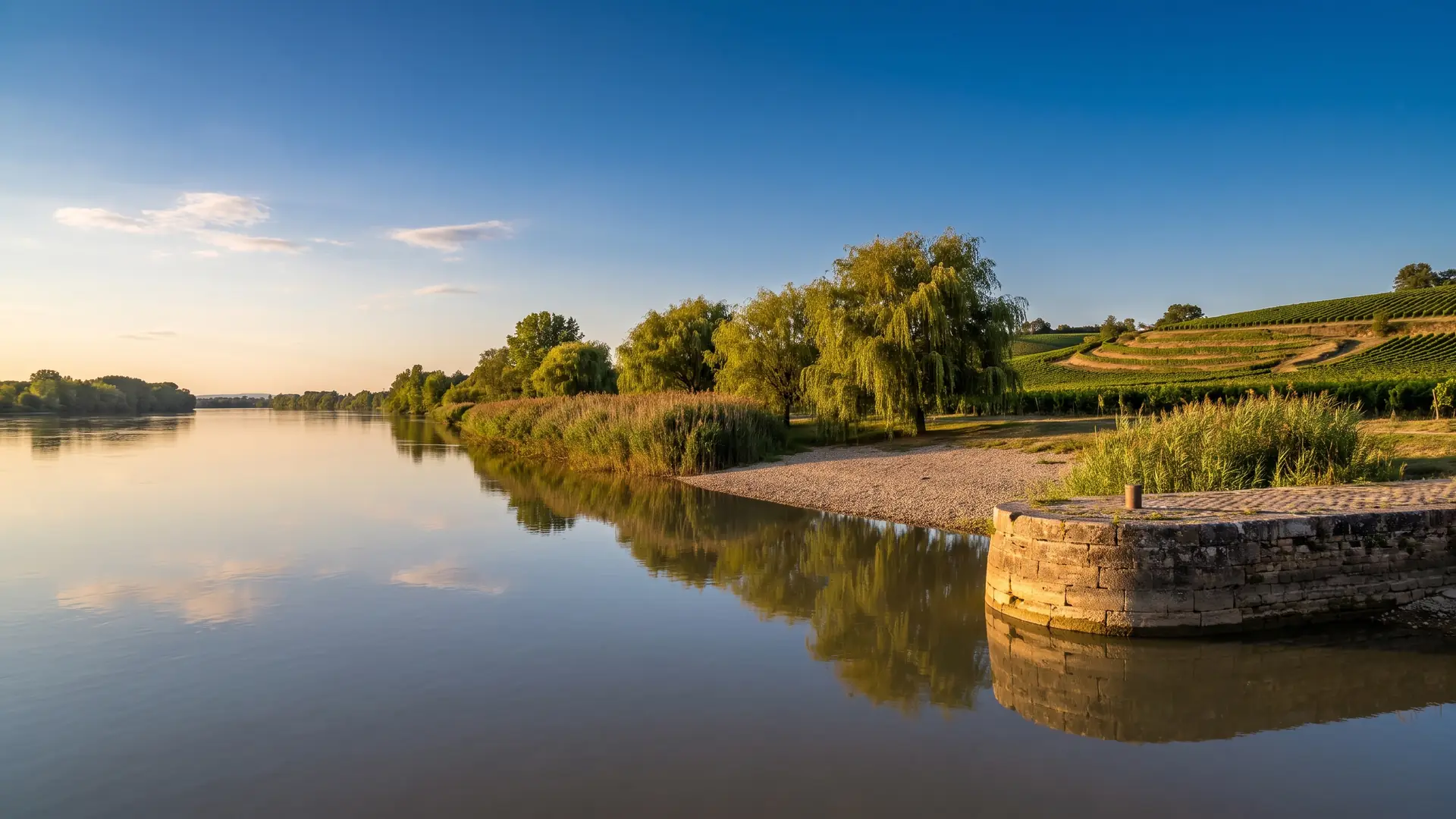
In Langoiran, visitors can tour the fortified castle and its keep, take a stroll along the banks of the Garonne, sample wines from the hillsides, and explore nearby Cadillac, Créon, and the Abbey of La Sauve-Majeure. Here is a concrete list of the actual, verified activities in the area. Since the village is primarily known for its heritage and wine-growing, some of the recreational activities take place in the immediate vicinity—we specify this each time.
- Visit the Langoiran castle—with its large 14th-century keep, vaulted halls, and frescoes—run by the association Les Amis du château (tours, medieval festivals; check opening hours)
- Visit the Romanesque Church of Saint-Pierre-ès-Liens—located in the upper part of the village, designated a Historic Monument, with its Saintonge-style apse
- Take a stroll along the banks of the Garonne—the old fishermen's quarter, the harbor, and the metal bridge built in 1881
- Taste wines from the hillsides—Cadillac Côtes de Bordeaux (reds) and Cadillac (sweet wines)—at the wineries (often by appointment)
- Cadillac — about 11 km away: its castle, its wine center, and its sweet wines
- The Roger-Lapébie Greenway—the major bike path of the Entre-deux-Mers region, accessible from Créon along a former railroad track
- La Sauve-Majeure Abbey—a Romanesque gem listed as a UNESCO World Heritage Site, about 20 minutes away
The Castle, the River, and the Vineyard
A visit to Langoiran begins with its fortified castle, where you can climb the large keep to admire the vaulted rooms, the frescoes, and the panoramic view of the valley (the castle is open to the public by the association; please check the hours). You then head down toward the Garonne River: the old fishermen’s quarter, the small harbor, the riverbanks, and the iron bridge from 1881 make for a peaceful stroll along the water’s edge, amid willows and reeds. In between, the vineyard-covered hillsides invite you to sample the wines: local wineries open their cellars for tastings of Cadillac Côtes de Bordeaux reds and sweet wines.
This is a slow, authentic form of tourism, set to the rhythm of the Garonne Valley, which the mild climate of the Gironde makes enjoyable for much of the year. You’ll enjoy this unspoiled countryside all the more when you let yourself be driven around, free from the worries of driving or parking in the narrow streets of the upper town. In the summer, the nearby markets and open-air cafés along the Garonne add to the pleasure of your stop, with local products and the valley’s friendly atmosphere.
Cadillac, Créon, and La Sauve Abbey
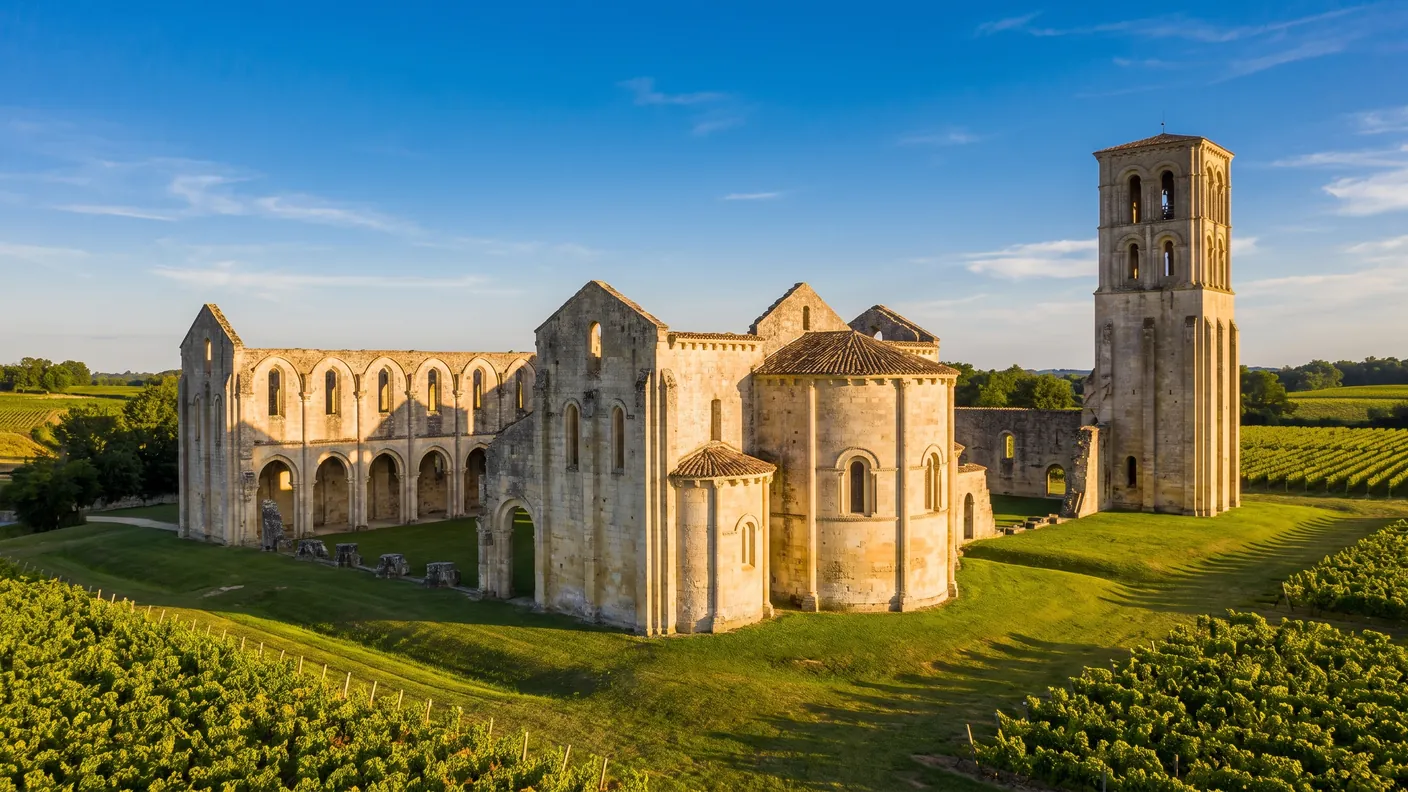
Around Langoiran, the Entre-deux-Mers region and the Garonne Valley offer wonderful getaways. Upstream, about ten kilometers away, Cadillac—which gave its name to the wine appellations—is worth a visit for its ducal castle, its ramparts, and its Maison des Vins, where you can sample the region’s sweet wines and reds. On the plateau, about twenty minutes away, the Abbey of La Sauve-Majeure boasts magnificent Romanesque ruins, designated a UNESCO World Heritage Site—one of the region’s major attractions. Nearby, the bastide town of Créon and its arcaded square mark the heart of the Entre-deux-Mers region, and it is from there that you can join the Roger-Lapébie greenway, the major bike path that crosses the wine-growing plateau. From Langoiran, this makes for a weekend that combines castles, Romanesque art, vineyards, and riverside scenery—all without ever straying too far.
| Activity | Where / When | Good to Know |
|---|---|---|
| Langoiran Castle | on site | 14th-century keep, nonprofit organization, check opening hours |
| Saint-Pierre Romanesque Church | upper village | Listed as a historic monument, Saintonge-style apse |
| Garonne Riverbanks & Harbor | on site | Fishermen's Quarter, bridge built in 1881 |
| Wine Tasting | Langoiran and the surrounding area | Cadillac Côtes de Bordeaux, by appointment |
| La Sauve-Majeure Abbey | ~20 min | Romanesque ruins, UNESCO |
What is there to see around Langoiran?
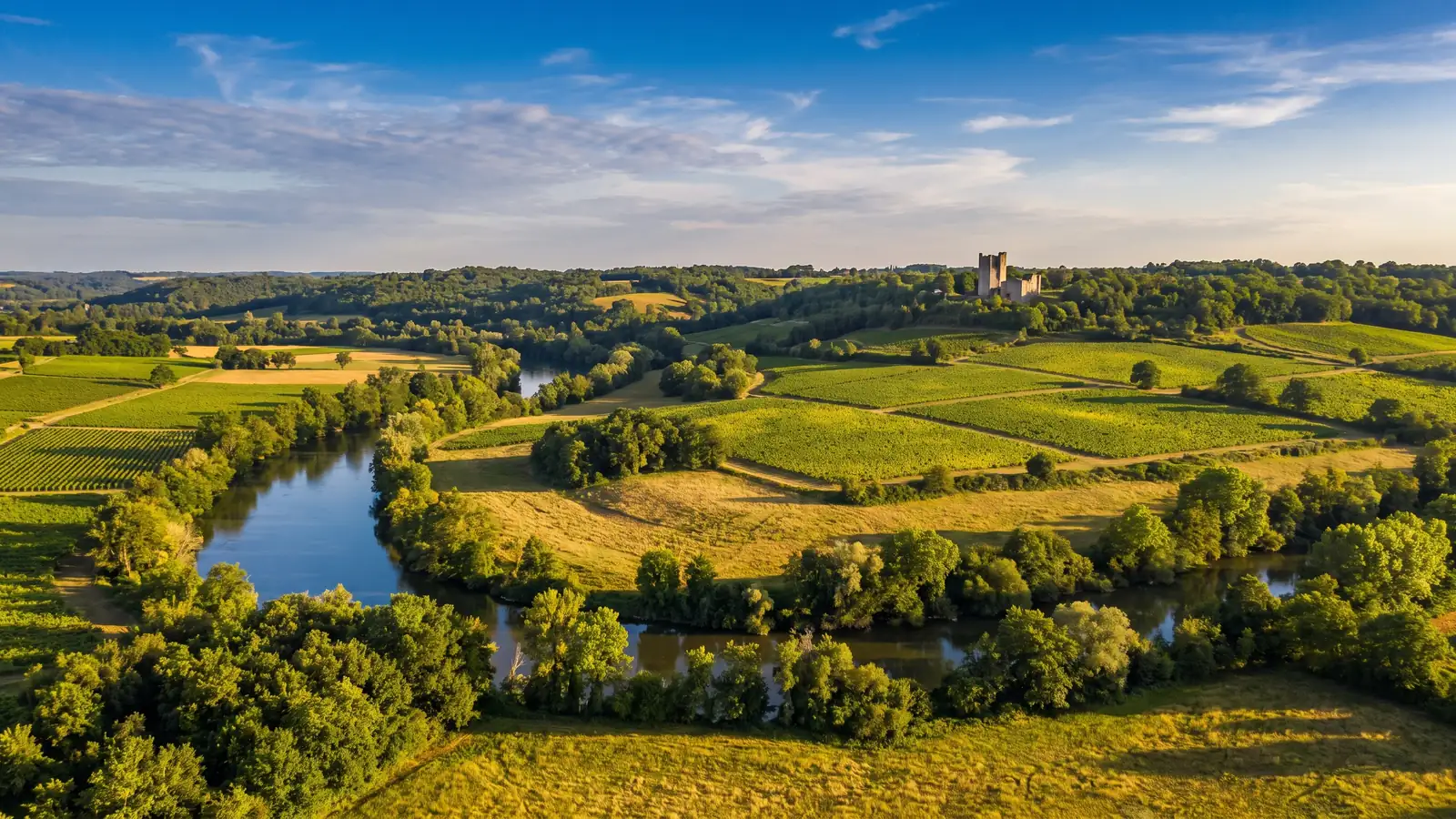
Near Langoiran, you’ll discover Cadillac and its sweet wines, the Abbey of La Sauve-Majeure, the bastide town of Créon, and, on the opposite bank, the vineyards of Graves and Sauternes. The village is ideally situated in the Garonne Valley, between the hillsides and the river: here are the must-see attractions, all of which can be visited on a day trip.
Cadillac, La Sauve, and Créon
About ten kilometers upstream along the Garonne, Cadillac is a gateway to the area. Its imposing ducal castle, dating from the 16th and 17th centuries, its ramparts and its Maison des Vins make it an essential stop among the region’s sweet-wine vineyards. On the plateau, about twenty minutes away, La Sauve-Majeure Abbey preserves UNESCO-listed Romanesque ruins that should not be missed. The bastide of Créon, in the heart of Entre-deux-Mers, completes the route with its arcaded square and greenway. Between the Garonne Valley and the wine-growing plateau, castles, abbeys, bastides and wine villages lie only minutes apart. An executive car service with local knowledge can tailor a loop around your visits.
The Garonne Valley and the Graves
The Garonne Valley, around Langoiran, is a wonderful place to explore. On the right bank, the hillside road winds from village to village—Rions with its medieval ramparts, Béguey, Loupiac with its sweet wines—all the way to Saint-Macaire, a superb walled medieval town, and Langon. On the opposite bank, accessible via the Langoiran Bridge or the Cadillac Bridge, lies the prestigious Graves wine region and, further south, Sauternes, home to some of the world’s finest sweet wines. From Langoiran, you can explore both banks of the river and their contrasting terroirs—the reds and sweet wines of the right bank, and the great whites and reds of the Graves on the left. That’s the beauty of having a base on the banks of the Garonne and a chauffeured transfer to take you from one vineyard to another without worrying about driving or crossing bridges.
When is the best time to visit Langoiran?
Langoiran and the Garonne Valley are best enjoyed from spring through fall, when the vineyards are green, the château comes alive, and the wineries welcome visitors. The spring (April–June) offers vibrant hillsides, soft light on the castle ruins, and perfect days for sightseeing, strolling along the river, and sampling local delicacies. The summer (July–August) is the peak season: this is often the time of medieval festivals and activities at the castle, as well as tastings and walks along the Garonne—the coolness of the riverbanks and ruins is a welcome relief during the hottest parts of the day.
The fall (September–October) is perhaps the most beautiful time of year: it's the season of grape harvest (including late harvests for sweet wines), the light bathes the hillsides in gold, and the crowds thin out. The winter, which is quieter, is reserved for the most curious visitors—so it’s best to check the opening hours, which are often limited during the off-season. No matter the time of year, the valley’s mild climate makes Langoiran pleasant for much of the year. A weekend trip allows you to also visit Cadillac, La Sauve Abbey, and enjoy a few wine tastings.
| Season | Atmosphere | Ideal for |
|---|---|---|
| Spring (April–June) | green hillsides, soft light | castle, banks of the Garonne, wine tastings |
| Summer (July–August) | medieval festivals, entertainment | family, interactive castle, walks |
| Fall (Sept.–Oct.) | grape harvest, golden light, tranquility | wine tourism, sweet wines, photo |
How to get to Langoiran from Bordeaux
Langoiran is about 25 km from Bordeaux, or about a 40-minute drive. The route heads southeast through the Garonne Valley on the right bank. The village does not have a train station: access is by road, which makes a private transfer particularly convenient for a day trip to the Entre-deux-Mers region, especially if you want to taste the local wines without having to drive back.
| Route | Distance | Duration | Details |
|---|---|---|---|
| Bordeaux → Langoiran | ~25 km | ~40 min | Starting at ~€59 for a private chauffeur |
| Bordeaux-Mérignac Airport → Langoiran | ~35 km | ~45 min | pickup at the terminal |
| Langoiran → Cadillac | ~11 km | ~15 min | château, sweet wine |
| Langoiran → La Sauve-Majeure | ~11 km | ~20 min | UNESCO-listed Romanesque Abbey |
By car, it takes about 40 minutes to reach Langoiran from Bordeaux: the route follows the Garonne Valley along the right bank, through the hillsides of the Entre-deux-Mers region. The village has no train station, and public transportation is limited; that’s why a private transfer is particularly well-suited here, especially for a day trip. You’ll be picked up at the airport, Saint-Jean train station, or your hotel in Bordeaux, and driven directly to Langoiran—to the foot of the château, along the river, or to a vineyard, depending on your preferences. The driver can then take you to Cadillac, the Abbey of La Sauve-Majeure, or the vineyards, and bring you back to Bordeaux at the agreed-upon time. For a day spent exploring châteaux, vineyards, and the banks of the Garonne—just a stone’s throw from the city—this is the simplest and most relaxing option—especially if you want to enjoy wine tasting without having to drive.
Whether you’re visiting a medieval castle, taking a wine-tasting trip through the Garonne Valley, or spending a day exploring both banks of the river, booking a professional chauffeur guarantees a comfortable and punctual ride—book a driver from Bordeaux to Langoiran or explore all our destinations.
Frequently Asked Questions
Where is Langoiran located?
Langoiran is a village in the Gironde department, east of Bordeaux, in the Entre-deux-Mers region, on the right bank of the Garonne River. It lies halfway between Bordeaux and Cadillac, about 25 km from the city (a little under 40 minutes by car). The village stretches from the riverbank—the old fishermen’s quarter and its harbor—up to the upper part of town, crowned by the ruins of its fortified castle. Administratively, it belongs to the Langon district, the Entre-Deux-Mers canton, and the Portes de l’Entre-Deux-Mers community of municipalities. It is a wine-growing town with 2,215 residents, set amid a landscape of hillsides and valleys. The village does not have a train station: a private transfer from Bordeaux is the easiest way to get there for a day trip.
How much does a transfer from Bordeaux to Langoiran cost?
We offer a fixed-price transfer from Bordeaux to Langoiran, starting at approximately €75 one way (about 25 km, about a 40-minute drive), in a Mercedes sedan or van seating up to 8 passengers, with a professional driver. The route is direct, door-to-door: pickup at the airport, Saint-Jean train station, or your hotel in Bordeaux, and drop-off at your desired location in Langoiran—at the foot of the castle, along the Garonne River, or at a winery. The fixed-rate quote is provided and confirmed in writing before departure, with no unexpected meter charges. This is particularly convenient for a cultural and wine-tasting getaway in the Garonne Valley: the driver can take you from Langoiran to Cadillac, to the Abbey of La Sauve-Majeure, or through the vineyards, then bring you back to Bordeaux.
Can we visit the Langoiran castle?
Yes. The fortified castle of Langoiran, of which imposing ruins remain, dominated by a large 14th-century cylindrical keep, is a living monument, brought to life by the association “Les Amis du château de Langoiran.” The association is responsible for its upkeep and operation, and organizes tours, performances, medieval festivals, and even weddings there. Visitors can explore the keep—one of the widest in France—its three octagonal vaulted halls, its frescoes of Saint Michael and Saint Peter, and a beautiful panoramic view of the Garonne Valley. The castle, listed as a Historic Monument since 1892, was destroyed by fire in 1649 and restored beginning in 1972. Opening hours and the event schedule vary by season: it’s best to check with the association before visiting. A door-to-door car service can drop you off right at the foot of the castle, so you don’t have to worry about parking.
When was the Langoiran Castle built?
The Château de Langoiran dates from the 13th and 14th centuries, not the 12th as is sometimes stated. Its initial construction dates back to the 13th century, under the Seguin d’Escoussans family, and its famous cylindrical keep—one of the widest in France—was built in the 14th century; the complex was expanded through the 17th century. This medieval fortress was set ablaze in 1649 during the Fronde uprisings and fell into ruin in the 1650s and 1660s, before restoration work began in 1972. The castle has been listed as a Historic Monument since May 19, 1892. Its large keep houses three superimposed octagonal rooms, vaulted and connected by a spiral staircase, adorned with Gothic windows and traces of frescoes. It is the iconic landmark of Langoiran and is best visited with the association that manages it.
What is the Langoiran wine?
Langoiran primarily produces red wines under the Cadillac Côtes de Bordeaux appellation on its well-exposed clay-limestone slopes above the Garonne River: full-bodied and affordable Merlot and Cabernet wines. The village is also part of the Cadillac AOC region, reserved for sweet white wines—cousins of Sauternes—made from late-harvest grapes on the river’s right bank. Note: Langoiran is often associated with the “Premières Côtes de Bordeaux,” but this is an outdated name that is no longer in use—the current appellation for reds is Cadillac Côtes de Bordeaux (since 2009). The family-run estates in the area host tastings, often by appointment, at prices much more affordable than those of the major appellations. Hiring a chauffeur-driven car allows you to visit several of them without worrying about driving back.
What is there to do in Langoiran?
Visitors come first and foremost for the fortified castle and its large 14th-century keep, which is brought to life by the association *Les Amis du château* (guided tours, medieval festivals). Visitors can also explore the Romanesque Saint-Pierre-ès-Liens Church in the upper town, a designated Historic Monument, and take a stroll along the banks of the Garonne in the old fishermen’s quarter, near the port and the iron bridge built in 1881. When it comes to wine, the estates on the hillsides open their cellars for tastings of Cadillac Côtes de Bordeaux reds and sweet wines. The surrounding area offers plenty to explore: Cadillac and its château (~11 km), the UNESCO-listed Abbey of La Sauve-Majeure (~20 min), the bastide town of Créon, and the Entre-deux-Mers greenway bike path. It’s enough to fill a wonderful weekend, with châteaux, Romanesque art, vineyards, and riverside scenery—all just half an hour from Bordeaux.
Was the Langoiran Bridge built by Eiffel?
Not exactly. The Langoiran steel bridge, which spans the Garonne River toward Portets on the left bank, was built in 1881 by the Fives-Lille company, based on Gustave Eiffel’s engineering principles—but it was not designed by Eiffel himself. This distinction is important: many steel bridges from that era were inspired by Eiffel’s techniques without being his own work. It is nonetheless a beautiful 19th-century structure, a testament to the industrial boom of the Garonne Valley, and offers a lovely view of the river. It adds to the charm of the waterfront in Langoiran, along with the old port and the fishermen’s quarter, which together make up one of the prettiest spots in the village along the river. It’s this kind of detail—Fives-Lille, not Eiffel—that we verify, to ensure an accurate guide rather than a hastily copied text.
What is the distance between Bordeaux and Langoiran?
About 25 km by road, or about a 40-minute drive. The route heads southeast along the Garonne Valley on the right bank, through the hills of the Entre-deux-Mers region. With an executive transfer, the fare is fixed and provided in advance, starting at approximately €75 one way (sedan or van, door-to-door price). The village has no train station, and public transportation is limited; this is why a private transfer is particularly well-suited here, especially for a day trip. You’ll be picked up at the airport, Saint-Jean train station, or your hotel, and driven directly to Langoiran. The driver can then take you to Cadillac, the Abbey of La Sauve-Majeure, or the vineyards, and bring you back to Bordeaux at the agreed-upon time.
Is Langoiran close to Cadillac?
Yes, very close: Cadillac is about 11 km upstream along the Garonne River, a 15-minute drive. In fact, it was Cadillac that gave its name to the region’s wine appellations—Cadillac Côtes de Bordeaux for the reds, and Cadillac for the sweet whites. The small town is worth a visit for its imposing 16th- and 17th-century ducal castle, its ramparts, and its Maison des Vins, where you can discover the full range of local wines. You can easily combine, all in one day, a visit to the fortified castle of Langoiran, a stroll along the banks of the Garonne, a wine tasting at a vineyard on the hillsides, and an exploration of Cadillac. A pre-booked car service familiar with the area can tailor an itinerary for you that connects these sites, pacing the visits and tastings just right, so you don’t have to worry about driving or parking.
What's the best time of year to visit the châteaux, vineyards, and the Garonne River?
Spring and fall offer the most pleasant conditions: soft light, colorful hillsides, and moderate crowds. Summer features more events, while the château’s hours may be reduced during the off-season. Before you go, be sure to check the opening hours on the château’s website. The fall grape harvest also lends a special charm to the vineyard landscapes.
Is Langoiran accessible without a car from Bordeaux?
Yes, but Langoiran does not have a train station. With buses, you have to check schedules and connections; a dedicated chauffeur provides a direct ride from the airport, the Saint-Jean train station, or a hotel in Bordeaux. They can drop passengers off at the château, the port, or a vineyard, then pick them up at the agreed-upon time, without any parking restrictions.
Is Langoiran close to La Sauve-Majeure Abbey?
Yes: La Sauve-Majeure Abbey is only about 20 minutes from Langoiran, on the Entre-deux-Mers plateau. It is one of the region’s most beautiful Romanesque sites—the magnificent ruins of a Benedictine abbey founded in 1079, designated a UNESCO World Heritage Site as part of the Routes of Santiago de Compostela. You can easily combine, all in one day, a visit to the fortified castle of Langoiran, a stroll along the banks of the Garonne, a wine tasting at a hillside vineyard, and a tour of the abbey. Nearby are also the bastide town of Créon and the town of Cadillac, with its castle and sweet wines. A door-to-door transfer familiar with the area can tailor an itinerary for you that takes in these sites, at your own pace for sightseeing and tastings, without the hassle of driving or finding parking.
Further Reading
- The nearby abbey, a UNESCO World Heritage Site: see the Guide to La Sauve-Majeure Abbey (Romanesque masterpiece)
- The nearby medieval town: see the Saint-Macaire Guide (city walls, cloister, and arcaded square)
- The nearby Cité du Vin: see the Saint-Émilion Guide (UNESCO-designated medieval town and fine wines)
- Understanding our rates and vehicles: see the "Book a Driver" page (sedan & van, fixed-price quote)
- Plan your trip: Book a private driver from Bordeaux to Langoiran or explore all our destinations
Sources and References
- INSEE — Municipality of Langoiran (33226) — 2023 municipal population: 2,215 residents
- Wikipedia — Langoiran — Gironde, Entre-deux-Mers, right bank of the Garonne, population 2,215. (2023), ~25 km southeast of Bordeaux, ~11 km from Cadillac, steel bridge built in 1881 (Fives-Lille)
- Wikipedia — Château de Langoiran — 13th–14th centuries (Seguin d'Escoussans), 14th-century cylindrical keep (one of the widest in France), designated a historic monument on May 19, 1892, destroyed by fire in 1649, restored since 1972
- Friends of the Château de Langoiran — an organization that maintains and runs the château, offering tours, performances, medieval festivals, and weddings
- POP Mérimée — Château de Langoiran — a medieval fortress listed as a Historic Monument (1892); Saint-Pierre-ès-Liens Church, listed as a Historic Monument in 1908
- INAO — AOP Côtes de Bordeaux Cadillac — Official Profile and 2026 Specifications for the Appellation
- Entre-deux-Mers Tourist Office — Langoiran Castle, Garonne Valley, Cadillac, La Sauve-Majeure Abbey, Roger-Lapébie Greenway, wine tastings
Article updated in July 2026.
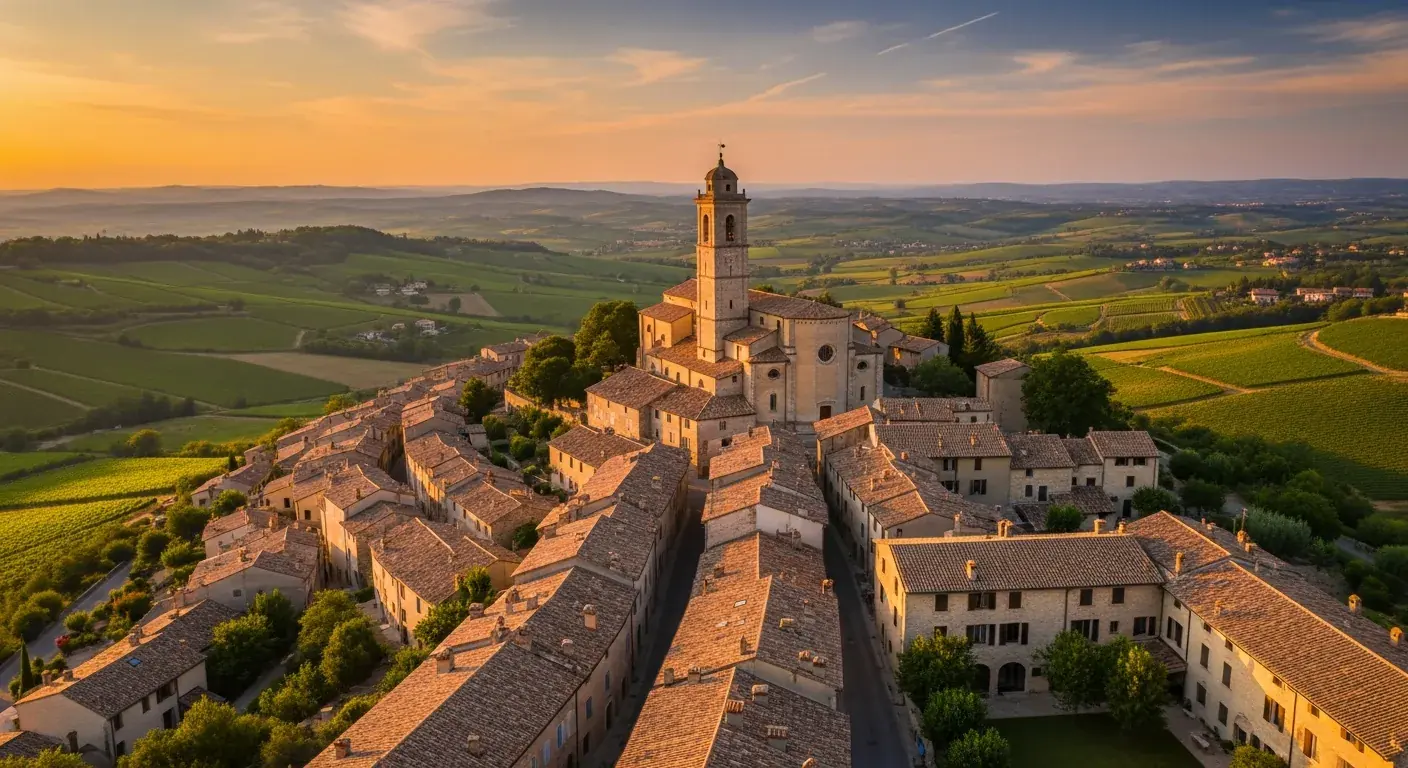
On the way to the Garonne Valley
Direct transfer from Bordeaux (~40 min) to Langoiran, its fortified castle, and the Garonne Valley—from the airport, train station, or hotel to the village, then on to Cadillac, La Sauve Abbey, or the vineyards. Fixed, written quote—no surprises on the meter.