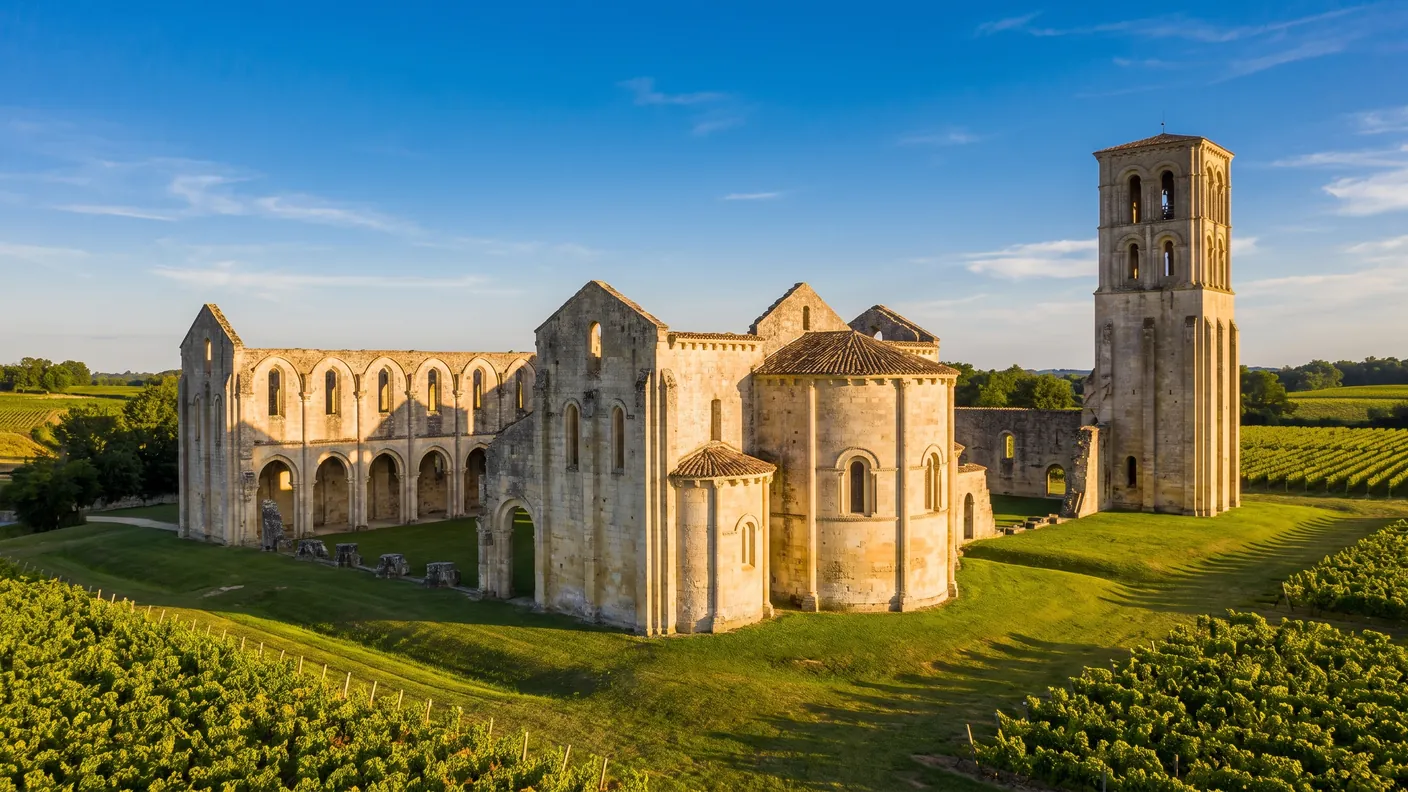
Bordeaux to La Sauve-Majeure: a UNESCO Romanesque abbey
A masterpiece of Romanesque art, now in ruins, nestled among the vineyards of Entre-deux-Mers, 47 minutes from Bordeaux: La Sauve-Majeure Abbey (1079), a listed historic site and a UNESCO World Heritage Site on the Way of St. James, featuring its apse, bell tower, and 80 carved capitals—plus your private door-to-door transfer from Bordeaux.
La Sauve-Majeure Abbey at a Glance
The Abbey of La Sauve-Majeure is a masterpiece of Romanesque art, now in ruins, situated in the heart of the Entre-deux-Mers vineyards, about 29 km east of Bordeaux, in the town of La Sauve, near Créon. Founded in 1079, listed as a Historic Monument, and designated a UNESCO World Heritage Site as part of the Routes of Santiago de Compostela, it features a remarkable Romanesque apse, a bell tower that visitors can climb, and more than 80 carved capitals. This guide distinguishes between verified and repeated information: the abbey appeared as early as 1840 on the first list of Historic Monuments, but its official classification dates from the decrees of 1929 and 2002 (POP, entry PA00083832); its inscription on the UNESCO list dates back to 1998 (UNESCO, Routes of Santiago de Compostela in France); the on-site museum focuses on lapidary art (carved stones), not “sacred art”; finally, the village’s Saint-Pierre Church is a separate monument from the abbey. Next, we’ll outline the easiest way to get there from Bordeaux: a private door-to-door transfer.
Here are the key details to know before you go. Distances are calculated door-to-door from Bordeaux; the price listed is for a private driver reservation at a fixed rate provided in advance, with no unexpected meter charges regardless of traffic or stops along the way. Information on cultural heritage sites is verified using the Mérimée database, the Centre des monuments nationaux (which manages the site), INSEE, and the Entre-deux-Mers tourist office; visiting hours and admission fees, which may vary, should be confirmed directly with the site.
| Landmark | Details |
|---|---|
| Website | La Sauve-Majeure Abbey (municipality of La Sauve, Gironde) |
| Location | Entre-deux-Mers, near Créon, in the heart of the wine-growing region |
| Status | Designated a Historic Monument · UNESCO 1998 (Routes of Santiago de Compostela) · Managed by the CMN |
| Must-See | the Romanesque apse, the octagonal bell tower (157 steps), and more than 80 carved capitals |
| Distance from Bordeaux | about 29 km · about 47 min by car |
Where is La Sauve-Majeure Abbey?
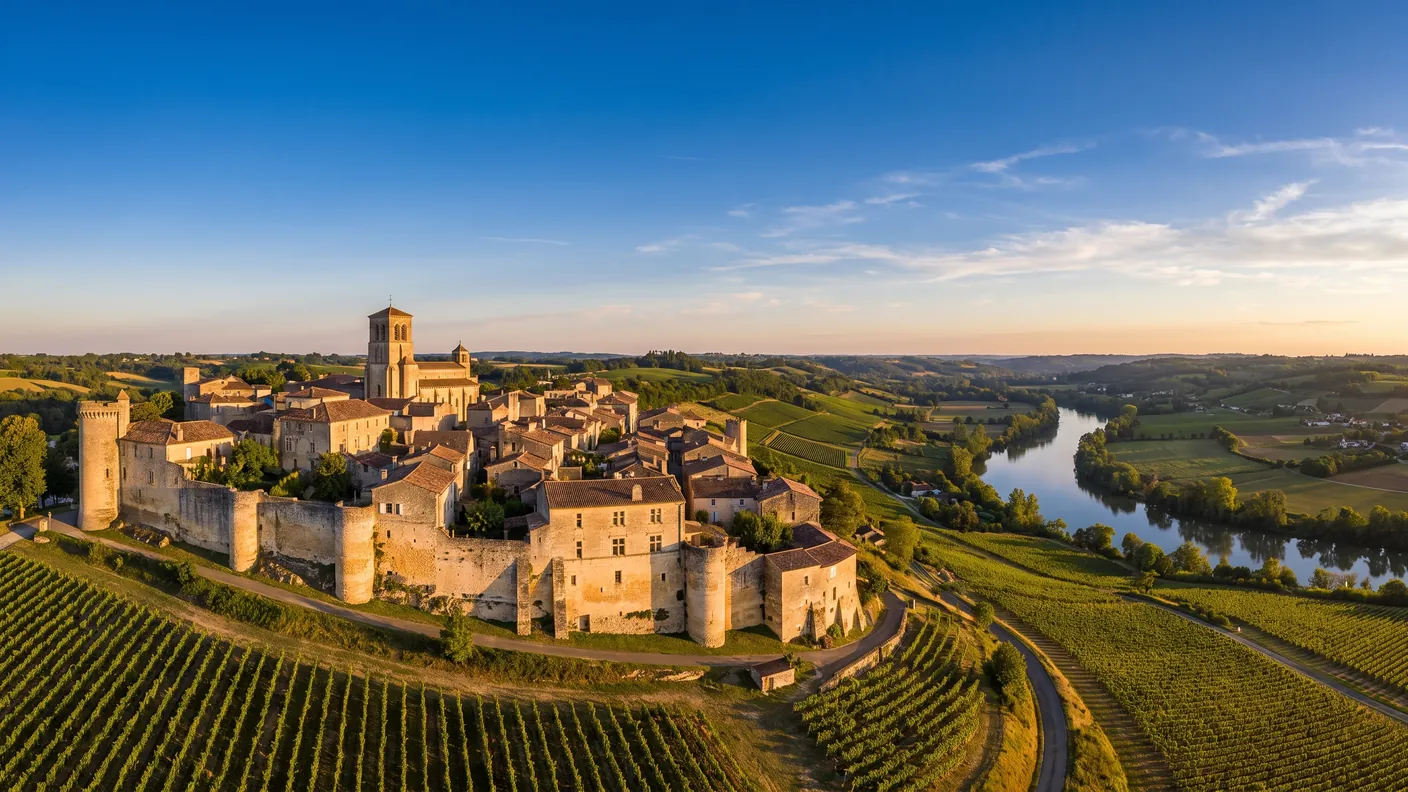
The Abbey of La Sauve-Majeure is located east of Bordeaux, in the Entre-deux-Mers region, in the town of La Sauve, a few hundred meters from the village of Créon. It is a region of vineyards, hillsides, and stone villages: the vast wine-growing plateau nestled between the Garonne and the Dordogne, renowned for its dry white wines and rolling hills. La Sauve, a town with a population of 1,589 according to the cited demographic source, is home to the abbey in the midst of this gentle, rolling landscape, about 47 minutes from Bordeaux. It falls under the jurisdiction of the Bordeaux arrondissement and the Créon sector’s community of municipalities. Here, you’re in the heart of an authentic and unspoiled Entre-deux-Mers region, off the beaten tourist path yet just a stone’s throw from the city—an ideal location for a one-day heritage getaway featuring Romanesque art, vineyards, and medieval villages.
In the heart of the Entre-deux-Mers region
The site is part of the Entre-deux-Mers, a vast wine-growing plateau flanked by two rivers—the Dordogne to the north and the Garonne to the south. It is one of the largest regions for dry white wines in Bordeaux, but also a land of fortified towns, abbeys, and mills, dotted with stone villages nestled in the valleys. La Sauve is located at its heart, near Créon, one of the region’s bastides, and just a few kilometers from the prestigious Saint-Émilion. The gentle, rolling hillside terrain is ideal for both vineyards and leisurely walks—in fact, the famous Entre-deux-Mers greenway bike path runs right through this area. For visitors, the abbey is the jewel of a quiet and bountiful region, where you can take the time to stroll, savor local flavors, and step back in time—all just 47 minutes from the city of Bordeaux.
A stop on the Camino de Santiago
La Sauve-Majeure is not an abbey like any other: in the Middle Ages, it was a major stop along the pilgrimage routes to Santiago de Compostela. Pilgrims would stop here before tackling the long crossing of the Landes region toward Spain—hence the importance and wealth of this monastery. It is for this reason that the abbey has been listed as a UNESCO World Heritage Site (since 1998), as part of the French segment of the “Routes of Santiago de Compostela.” Walking among its ruins today means treading where, nearly a thousand years ago, medieval pilgrims once walked, amidst vineyards that have lost none of their charm. Even today, hikers follow these pilgrimage routes, backpacks on their backs, stopping at La Sauve just as their medieval predecessors did—a rare and moving continuity. This Jacobean legacy permeates the entire region, dotted with small Romanesque churches that once marked the route to Santiago de Compostela—a spiritual and artistic heritage of great coherence, with the abbey as its crowning jewel.
A Masterpiece in Ruins
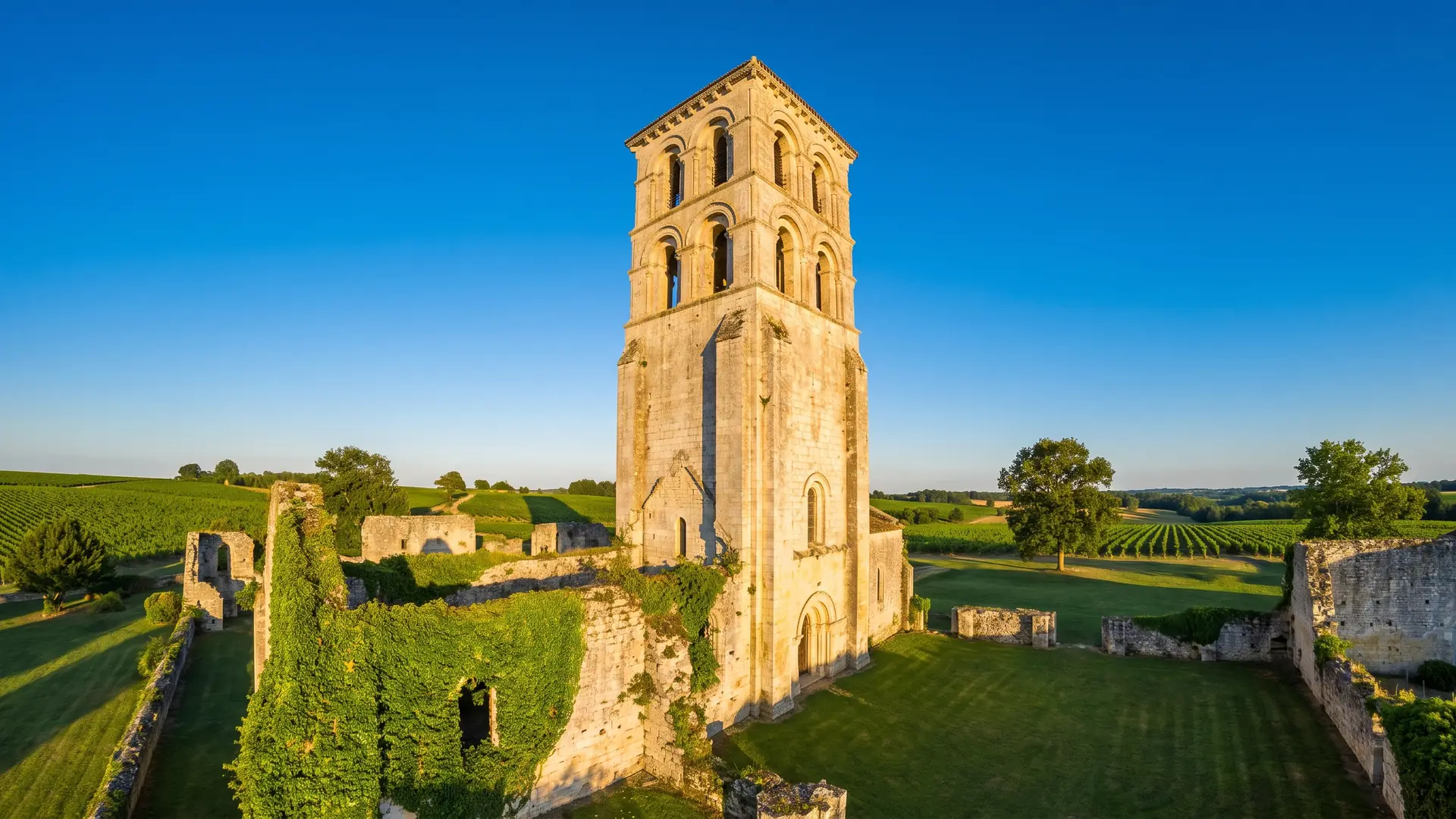
Founded in 1079, the Abbey of La Sauve-Majeure was one of the most powerful in the region; today, superb Romanesque ruins remain—the apse, the north arm of the transept, and the bell tower—along with more than 80 carved capitals. It is one of the major sites of Romanesque art in the Gironde. Here is what the sources say, without adding anything further.
An abbey founded in the “Great Forest”
The abbey was founded in 1079 by Gérard de Corbie, with the support of William VIII, Duke of Aquitaine, in a cleared glade of the former Silva Major—the “Great Forest,” which gave the place its name (“ La Sauve,” from silva, meaning “forest”). As a Benedictine abbey, it enjoyed considerable influence: at its peak, it had some 300 monks and up to 51 priories and dependencies, some of which extended as far as England. Its abbey church, consecrated in 1231, was built in the Romanesque style on a Latin cross plan, with a nave consisting of five bays. After the Revolution, its decline was abrupt: its property was confiscated in 1793 and the site was converted into a prison; the church’s vaults collapsed in 1809; and the site was then used as a stone quarry for some forty years. The ruins we visit today are what the pickaxe spared—and they are already magnificent.
The apse, the bell tower, and the carved capitals
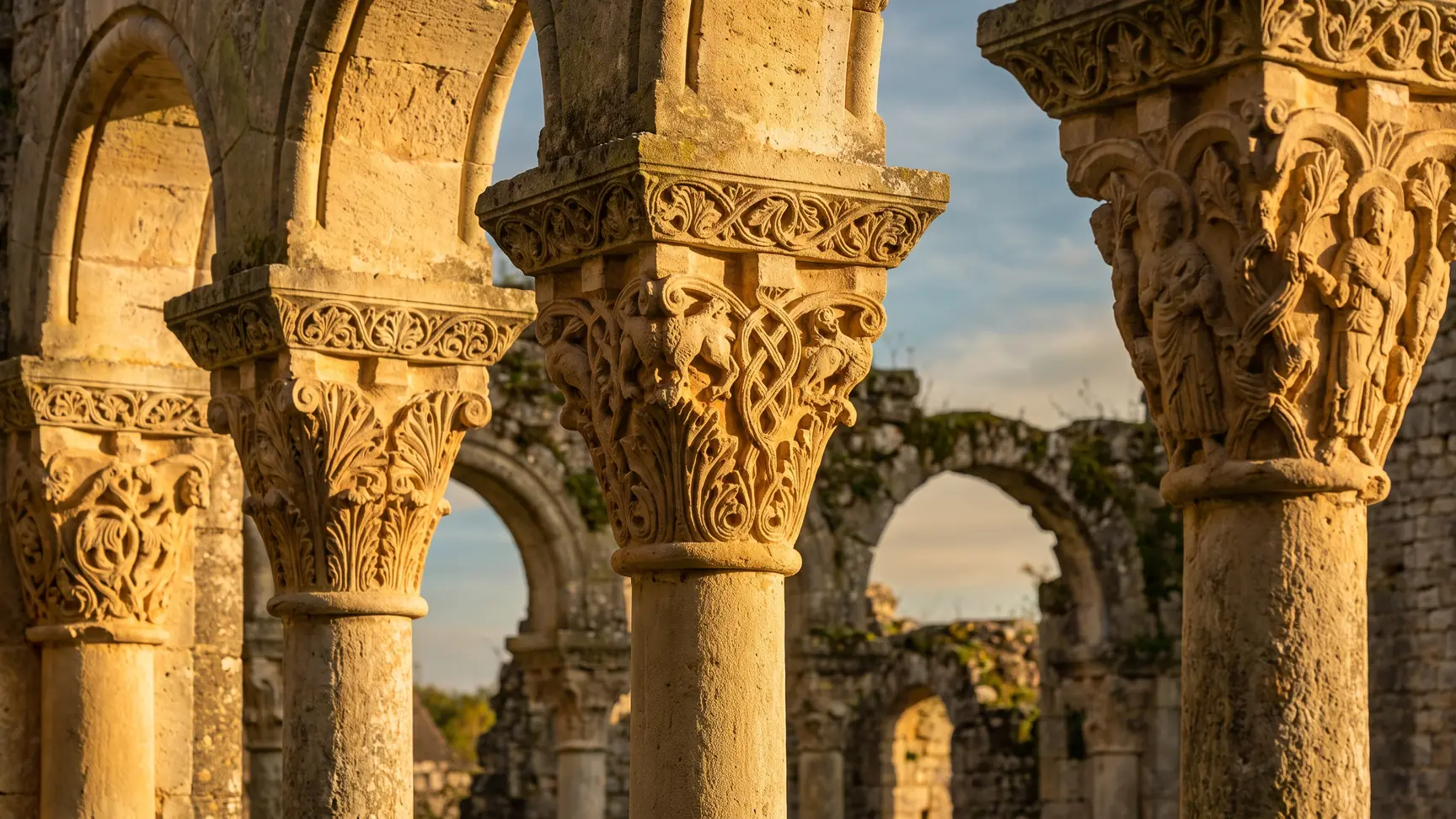
All that remains of this once-immense abbey are ruins of great beauty. The Romanesque chevet — the apse and its three windows — is a masterpiece of 12th-century art, just like the north arm of the transept. Still standing is the octagonal bell tower of the 13th century, whose 157 steps can be climbed to take in a panoramic view of the valleys, forests, and vineyards of the Entre-deux-Mers—a superb viewpoint that’s not to be missed. But the real treasure of La Sauve is its carved capitals: more than 80 are still visible (out of about a hundred originally), adorned with biblical scenes, foliage, and a fantastical bestiary populated by monsters. A lapidary museum, housed in a former chapel on the site, displays other carved stones—capitals, modillions, keystones—collected during restoration work. The monument, managed by the Centre des monuments nationaux, is open to visitors (admission fee applies; Official Visitor Information) : an exceptional open-air venue.
Saint Gerard and the Greatness of La Sauve
The abbey’s founder, Gérard de Corbie, was canonized a century after his death; the abbey itself exerted a powerful influence throughout the region before falling into decline during the Revolution. It is a story of greatness and decline, typical of the great abbeys of the Middle Ages. Here are the verified facts.
Gérard de Corbie, a Founder Who Became a Saint
The history of La Sauve-Majeure is inextricably linked to its founder, Gérard de Corbie. A Benedictine monk from Picardy, he founded the abbey in 1079 and led it until his death in 1095. Buried on the premises, he is venerated for his holiness, and his canonization was granted in 1197 by Pope Celestine III; from then on, he was known as Saint Gérard. Under his leadership and that of his successors, the abbey became one of the most powerful in southwestern France, heading a network of 51 priories that extended as far as England (to Burwell). It passed to the Maurist Congregation in 1667.
This grandeur explains the scale of the ruins: one does not build such a church—or such a community—without considerable wealth—that of a monastery situated at the crossroads of pilgrimage routes and at the heart of a bountiful region. The abbey exerted its influence over a vast estate, collected rents and tithes, and maintained its own scriptorium and school; it attracted monks, artisans, and pilgrims, turning the site into a small monastic town long before the present-day village took shape around its walls.
From Prison to the Stone Quarry
The abbey’s decline was as dramatic as its former grandeur. During the French Revolution, in 1793, its property was confiscated as national assets and the buildings were converted into a prison. Without maintenance, the church vaults collapsed in 1809, leaving the structure exposed to the elements. Worse still, the site was used as a stone quarry for around forty years, as residents and contractors removed building materials. This prolonged deterioration reduced the magnificent abbey church to ruins. The turning point came in the 19th century: the site appeared on France’s first list of Historic Monuments in 1840, before being formally classified by decrees issued in 1929 and 2002. Since 1960, the Centre des monuments nationaux has overseen its preservation and opened it to visitors, securing the future of this Romanesque gem.
Listed Status and UNESCO: What the Sources Say
A few clarifications are in order regarding the Abbey of La Sauve-Majeure—not to quibble, but because a guide must be accurate. Its protected status, the nature of the museum, and the village church: here is the truth and the fiction, backed by sources.
Classified in 1929 and 2002; UNESCO-listed in 1998
It is often stated that the abbey has been “listed since 1840.” This requires some clarification: in 1840, it appeared on the first list of Historic Monuments of France (the famous Mérimée list), which is not a listing decree in the modern sense. Its formal designation as a historic monument resulted from decrees issued in 1929 and then in 2002. Another point of reference: its inscription on the UNESCO World Heritage List dates back to 1998, as part of the “Routes of Santiago de Compostela in France”—the abbey is one of its components. Finally, the museum visitors see on site is a lapidary museum (dedicated to carved stone: capitals, modillions, keystones), not a “museum of sacred art.” These distinctions, which are often overlooked, reveal the true nature of the site: a long-protected Romanesque masterpiece on the Routes of Santiago de Compostela.
The abbey and the village church, two historic sites
One final note, which will come in handy when you’re there: the abbey and the Saint-Pierre Church in the village of La Sauve are two separate monuments. The abbey, now in ruins, is the major site listed as a historic monument and inscribed on the UNESCO World Heritage List, managed by the Centre des monuments nationaux. Saint-Pierre Church, on the other hand, is the village’s parish church, still in use today and classified as a Historic Monument in its own right (since 1920): a lovely Romanesque building, not to be confused with the abbey church. When visiting La Sauve, you can see both—the majestic ruins of the abbey, followed by the village church, just a few minutes’ walk away. This is the kind of detail we verify, so that readers know exactly what they’re going to discover. In fact, throughout the Entre-deux-Mers region, you’ll come across many of these small Romanesque churches that once lined the pilgrimage routes to Santiago de Compostela: together with the abbey, they form a remarkably cohesive ensemble, bearing witness to medieval piety and the passage of pilgrims. A driver familiar with the area will be able to take you to both sites and recommend villages and estates worth visiting in the surrounding area.
Wine from the Entre-deux-Mers region
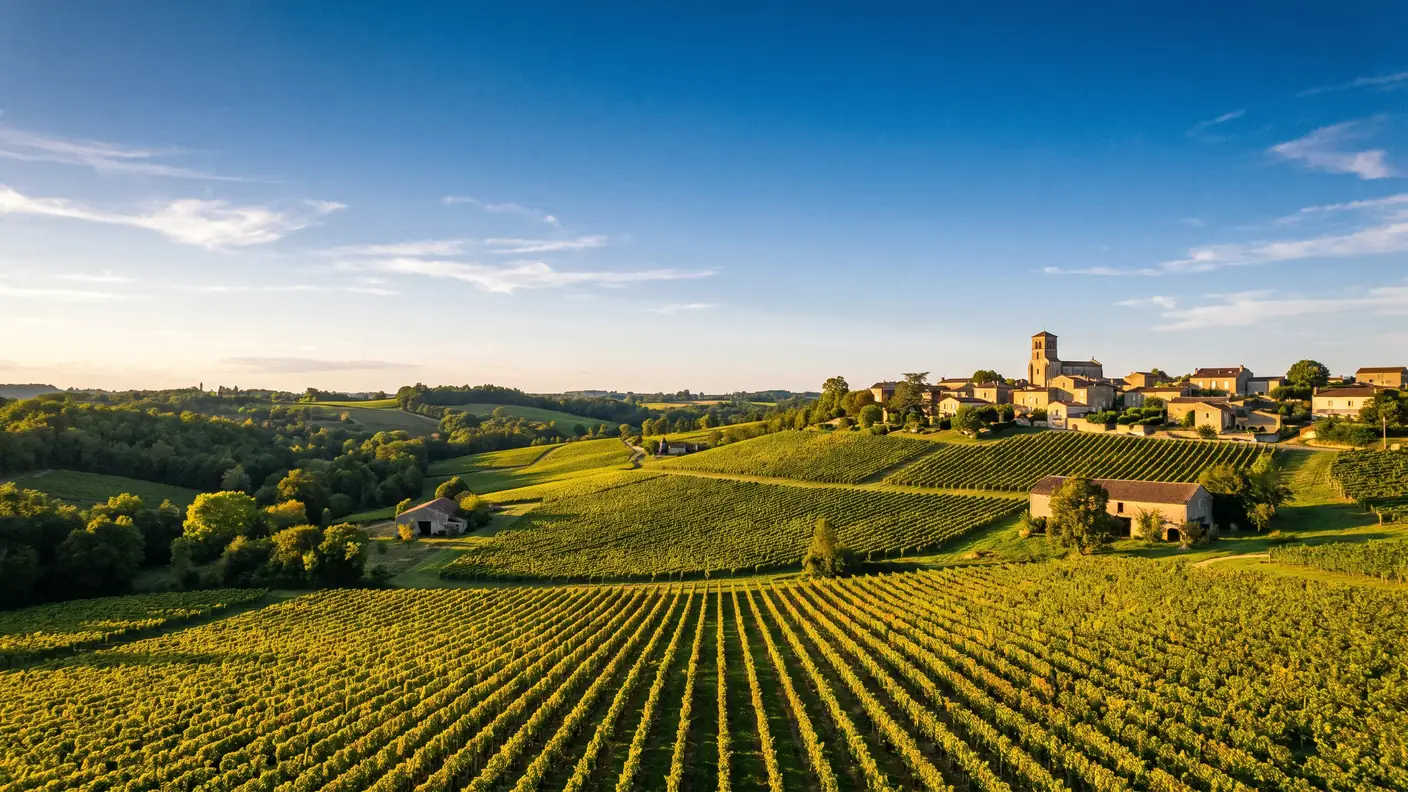
The La Sauve-Majeure Abbey stands in the heart of the Entre-deux-Mers wine region, Bordeaux’s largest region for dry white wines. This region of limestone hillsides, nestled between the Garonne and Dordogne rivers, is the perfect setting to round out a visit to the abbey with a wine tasting. Here’s what makes it so special.
The Land of the "Blancs Secs" of Bordeaux
Entre-deux-Mers is, par excellence, the region of Bordeaux’s dry white wines: the appellation, reserved for whites, covers the entire plateau between the two rivers. Around La Sauve, the hillsides are planted with Sauvignon, Sémillon, and Muscadelle for the whites, while other plots produce reds under the Bordeaux and Bordeaux Supérieur appellations. It is a traditional, welcoming, and accessible wine region, with prices far more reasonable than those of the major neighboring appellations on the right bank. The family-run estates in the area are happy to open their cellars for tastings, often by appointment: a chance to savor the freshness of an Entre-deux-Mers white after visiting the abbey, and to leave with a few bottles. Many estates offer direct sales, and some also provide vineyard tours or guest rooms.
Tasting Tours Around the Abbey
The proximity of the abbey and the vineyards makes La Sauve an ideal stop for a weekend of wine tasting and exploring local heritage. In a single day, you can visit the ruins and the stone sculpture museum, climb the bell tower, then head to a nearby winery for a tasting, before strolling through the nearby bastide town of Créon. The area also boasts some wonderful producers and markets where you can find local Gironde specialties. The benefits of a private transfer are clear here: you’re driven from one site to the next, you can enjoy the wine tasting without worrying about the kilometers of winding vineyard roads, and you return to Bordeaux or your lodging stress-free. Opening hours and visit policies vary by estate and should be confirmed directly with each winemaker. That’s the charm of Entre-deux-Mers: a rich heritage and a bountiful vineyard, just 47 minutes from the city.
| Wine in the La Sauve Area | Details (according to sources) |
|---|---|
| Designation | Entre-deux-Mers (dry whites) · Bordeaux and Bordeaux Supérieur (reds) |
| Terroir | the limestone hillsides of the plateau, between the Garonne and the Dordogne |
| Grape Varieties | Sauvignon, Sémillon, Muscadelle (whites) · Merlot, Cabernet (reds) |
| Good to Know | wine tastings at nearby wineries, often by appointment |
| To be combined with | Abbey + wine tasting + Créon country house, all in one day |
What is there to do in La Sauve-Majeure and the surrounding area?
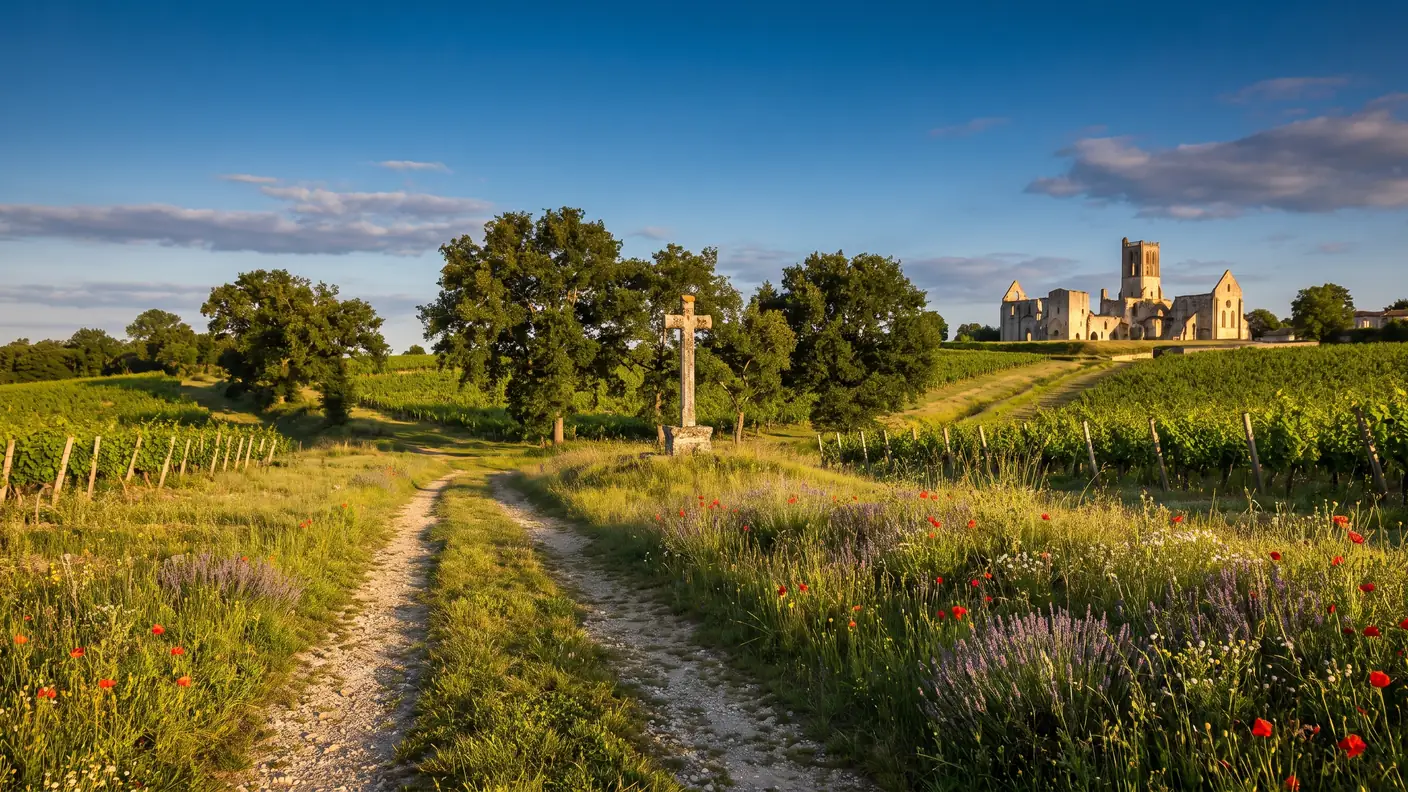
In La Sauve-Majeure, you can visit the Romanesque abbey and its stone sculpture museum, climb the bell tower, and explore the Entre-deux-Mers region: the bastide town of Créon, the greenway bike path, wine tastings, and, further afield, Saint-Émilion. Here, in concrete terms, are the actual, verified activities in the area. Since the site is first and foremost a historic monument, a good portion of the recreational activities take place in the immediate vicinity—we make a point of noting this each time.
- Visit the Abbey of La Sauve-Majeure—the Romanesque apse, the 80 carved capitals, and the stone sculpture museum (admission ~€7, managed by the Centre des monuments nationaux; free for those under 26)
- Climb the bell tower—157 steps to a panoramic view of the valleys and vineyards of Entre-deux-Mers
- The town of Créon—just a few minutes away: its arcaded square, its market, the heart of the Entre-deux-Mers region
- The Roger-Lapébie Greenway—the major bike path of the Entre-deux-Mers region (Latresne-Sauveterre), accessible from Créon, along a former railroad track
- Taste the wines of Entre-deux-Mers—dry whites and Bordeaux Supérieur—at nearby wineries (often by appointment)
- The village's Saint-Pierre Church—the Romanesque parish church of La Sauve, designated a Historic Monument, just a short walk from the abbey
- Saint-Émilion—the medieval town listed as a UNESCO World Heritage Site and its fine wines, just half an hour away
The abbey, the bell tower, and the museum
The highlight of any visit is, of course, the abbey itself. Managed by the Centre des monuments nationaux, it is open to visitors (admission fee: around €7; free for those under 26—check current hours). Here you can admire the Romanesque apse, the remains of the nave, and, above all, the famous carved capitals, which are best viewed up close: biblical scenes, foliage, and fantastical creatures showcase the full scope of medieval imagination. The stone carvings museum, housed in a former chapel, rounds out the experience with additional carved stones. The highlight of the visit: climbing the bell tower’s 157 steps to a 360° panoramic view of the vineyards, woods, and valleys of the Entre-deux-Mers—one of the most beautiful views in the area.
From up there, you can take in the gentle, rolling landscape of the plateau, dotted with church steeples and tiled roofs, and you gain a better understanding of the abbey’s significance in this region. The late-afternoon light, which bathes the old stones and rows of vines in a golden glow, is the best time for both photography and contemplation. Allow a good hour and a half to see everything, and be sure to combine your visit with a stop at the village church and a wine tasting.
Créon, the Greenway, and Saint-Émilion
Around the abbey, the Entre-deux-Mers region has no shortage of attractions. Nearby, the bastide town of Créon, founded in the 14th century, boasts a square lined with arcades and a market—a lively town that serves as the heart of the region. Créon is also a convenient starting point for the Roger-Lapébie greenway, the major bike path that connects Latresne to Sauveterre-de-Guyenne over nearly 50 kilometers, built on a former railroad line through the wine-growing plateau—one of the most beautiful bike routes in Gironde, family-friendly and car-free. For wine lovers, the prestigious Saint-Émilion, a medieval town listed as a UNESCO World Heritage Site, is half an hour to the northeast. And all around, the villages and abbeys of the Entre-deux-Mers region—Sauveterre-de-Guyenne, Rauzan, Blasimon—make up a rich heritage trail. It’s enough to fill an entire weekend, without ever straying too far.
| Activity | Where / When | Good to Know |
|---|---|---|
| Abbey + Stone Sculpture Museum | on site | CMN, admission ~€7, free for those under 26 |
| Bell Tower (Panorama) | on site | 157 steps, view of the Entre-deux-Mers |
| Créon's Country House | a few minutes away | arcade-lined square, market |
| Roger-Lapébie Greenway | since Créon | Latresne-Sauveterre Bike Path |
| Saint-Émilion | ~30 min | UNESCO World Heritage Site, fine wines |
What is there to see around La Sauve-Majeure?
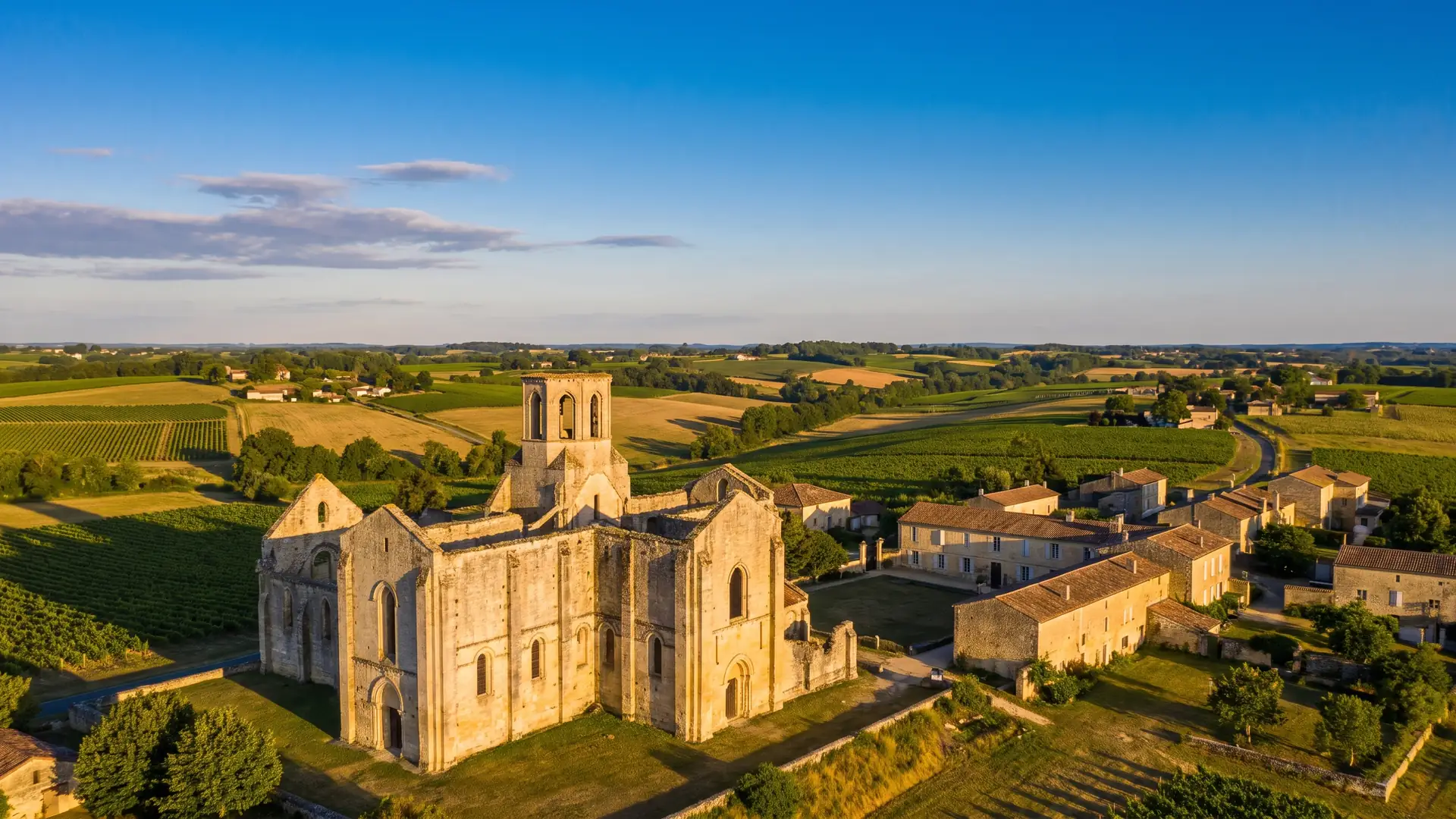
Near La Sauve-Majeure, you can explore the bastide town of Créon, the villages and abbeys of the Entre-deux-Mers region, the Saint-Émilion vineyards, and the Garonne Valley. The site is ideally located in the heart of a region rich in heritage: here are the must-see attractions, all of which can be visited on a day trip.
Créon, Sauveterre, and the Abbeys
The immediate neighbor, Créon, is a bastide founded in 1315 by the King of England—Duke of Aquitaine: with its arcaded square, regular layout, and lively market, it is the beating heart of the Entre-deux-Mers region. Further to the southeast, Sauveterre-de-Guyenne is another beautiful bastide, with all four of its medieval gates still standing. The area is also rich in abbeys and Romanesque churches: in addition to La Sauve-Majeure, you’ll discover Blasimon Abbey, nestled in a valley, and the countless small churches that once marked the pilgrimage routes to Santiago de Compostela. It’s a highly cohesive heritage itinerary, blending Romanesque art, bastides, and vineyards, where every village has its own church, castle, or mill to offer. A chauffeur service familiar with the region can tailor a custom loop for you, pacing the tour around sightseeing and wine tastings.
Saint-Émilion and the Garonne Valley
To the northeast, just half an hour away, lies the jewel of the region: Saint-Émilion—a medieval town listed as a UNESCO World Heritage Site, with its stunning monolithic church carved into the rock, its cobblestone streets, its cloisters, and its world-renowned fine wines. To the south, the Garonne Valley unfolds with its rolling hillsides and hilltop villages—Langoiran and its fortified castle, Cadillac and its sweet wines, and Saint-Macaire and its walled medieval town. From La Sauve, you can explore in every direction: vineyards, history, and the river—all just minutes apart. That’s the beauty of having a base in the heart of the Entre-deux-Mers region—and an executive car service to enjoy it all without worrying about driving or parking, which can often be difficult in Saint-Émilion during peak season.
When is the best time to visit La Sauve-Majeure Abbey?
La Sauve-Majeure Abbey and the Entre-deux-Mers region are open to visitors year-round, but are best enjoyed from spring through fall, when the vineyards are green and the light shines beautifully on the old stones. The spring (April–June) is ideal: the hillsides are turning green, the soft light highlights the Romanesque ruins, and the days are perfect for sightseeing, climbing the bell tower, and biking along the greenway. The summer (July–August) is peak season: the site is open, wine tastings are in full swing, and the coolness of the open-air ruins is a welcome relief during the hottest parts of the day—be sure to bring a hat and water for the climb up the bell tower. The fall (September–October) is perhaps the most beautiful time of year: it's the season of grape harvest, the light bathes the stones and the vineyards in a golden glow, and the crowds begin to thin out. Even the winter It has its charm, with the ruins shrouded in mist, but it’s best to check the opening hours, which are often limited. No matter when you visit, plan on spending at least half a day at the abbey and its surroundings. A weekend trip allows you to add Créon, Saint-Émilion, and a few wine tastings to your itinerary.
| Season | Atmosphere | Ideal for |
|---|---|---|
| Spring (April–June) | green hillsides, soft light | tour, bell tower, greenway bike route |
| Summer (July–August) | peak season, tastings | family, recent ruins, wine tourism |
| Fall (Sept.–Oct.) | grape harvest, golden light, tranquility | photography, heritage, tastings |
How to reach La Sauve-Majeure Abbey from Bordeaux
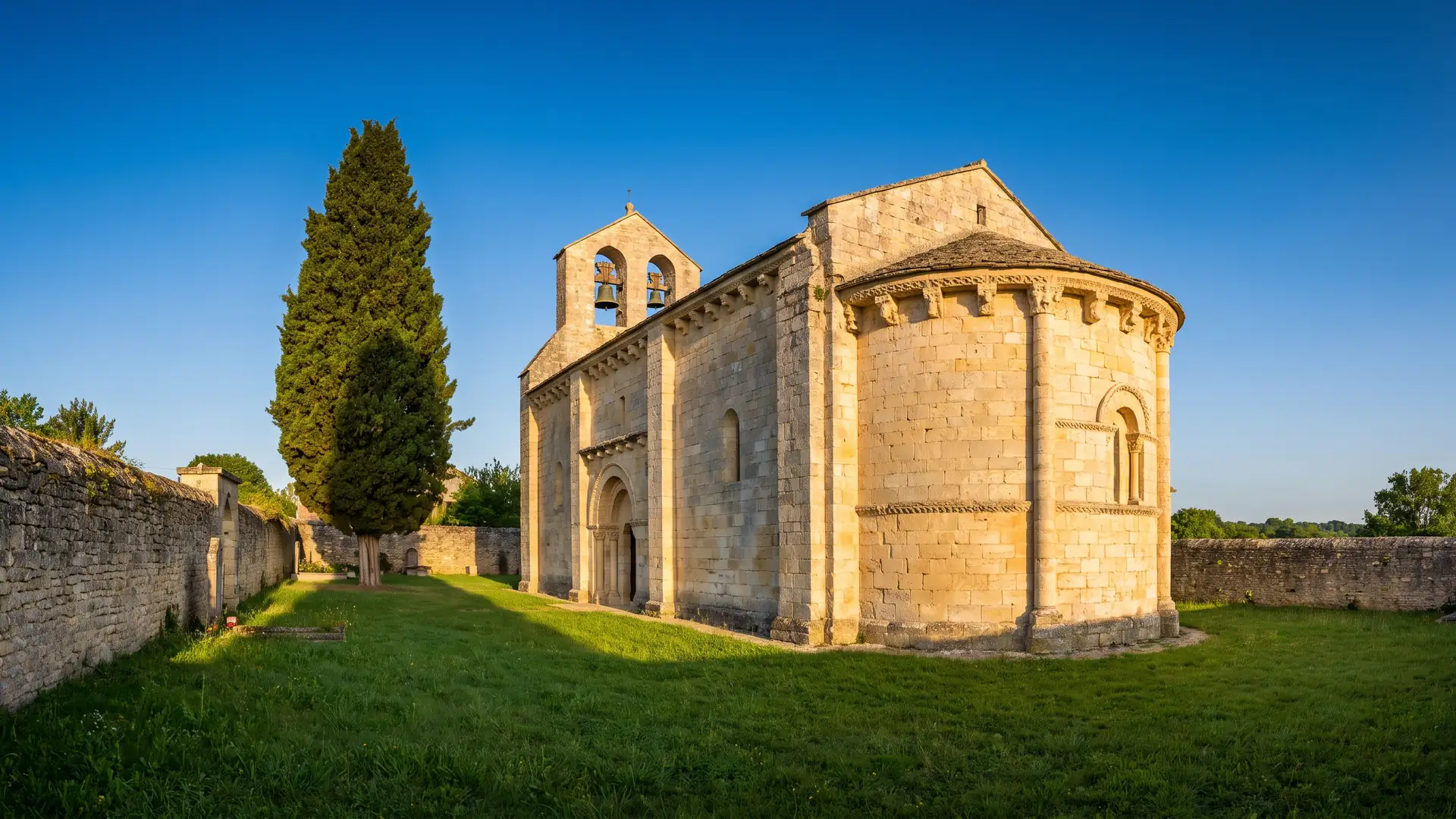
The Abbey of La Sauve-Majeure is about 29 km from Bordeaux, or about a 47-minute drive. The route heads east through the Entre-deux-Mers valley or plateau, toward Créon. There is no train station at the site; access is by road, making private transportation particularly convenient for a day trip.
| Route | Distance | Duration | Details |
|---|---|---|---|
| Bordeaux → La Sauve-Majeure | ~29 km | ~47 min | Starting at ~71 € for a chauffeured transfer |
| Bordeaux-Mérignac Airport → La Sauve | ~38 km | ~40 min | pickup at the terminal |
| La Sauve → Créon | ~2 km | ~5 min | country house, market, greenway |
| La Sauve → Saint-Émilion | ~25 km | ~30 min | UNESCO Medieval City |
By car, it takes 47 minutes to reach the abbey from Bordeaux: the route heads east from the city and then through the hills of the Entre-deux-Mers region, toward Créon, just a stone’s throw from the site. There is no train station in the immediate vicinity of the abbey, and public transportation options are limited—which is why a private transfer is particularly well-suited for this trip. You’ll be picked up at the airport, Saint-Jean train station, or your hotel in Bordeaux and driven directly to the abbey, with no need to worry about parking. The driver can then take you to the bastide town of Créon, to a vineyard, or as far as Saint-Émilion, depending on your preferences, and then bring you back to Bordeaux at the agreed-upon time. For a one-day heritage getaway just a stone’s throw from the city, this is the simplest and most relaxing option—especially if you want to enjoy wine tastings without worrying about driving.
Whether you’re visiting a Romanesque gem, taking a wine-tasting trip to Entre-deux-Mers, or spending a day on the Camino de Santiago, booking a private chauffeur guarantees a comfortable and punctual ride—book a driver from Bordeaux to La Sauve-Majeure or explore all our destinations.
Frequently Asked Questions
Is the bell tower open to the public?
The climb up the bell tower consists of 157 steps. It therefore requires the ability to climb a steep staircase; check the day’s access conditions with the Centre des monuments nationaux. However, the ground-level tour allows you to explore the apse, the capitals, the ruins, and the stone sculpture museum without having to make the climb.
How much does a transfer from Bordeaux to La Sauve-Majeure cost?
We offer a fixed-price transfer from Bordeaux to the Abbey of La Sauve-Majeure, starting at approximately €79 one way (about 29 km, about a 47-minute drive), in a Mercedes sedan or van seating up to 8 passengers, with a professional driver. The trip is direct, door-to-door: pickup at the airport, Saint-Jean train station, or your hotel in Bordeaux, and drop-off directly at the abbey, with no need to worry about parking. The fixed quote is provided and confirmed in writing before departure, with no unexpected meter charges. This is particularly convenient for a cultural and wine-tasting getaway in the Entre-deux-Mers region: the driver can take you from the abbey to the bastide of Créon, to a winery, or all the way to Saint-Émilion, then bring you back to Bordeaux. For groups, this is often the simplest and most economical option.
Is La Sauve-Majeure Abbey a UNESCO World Heritage Site?
Yes: The Abbey of La Sauve-Majeure has been listed as a UNESCO World Heritage Site since 1998 as part of the “Routes of Santiago de Compostela in France,” of which it is one of the components. In the Middle Ages, it was indeed a major stop on the route to Santiago de Compostela, where pilgrims would rest before crossing the Landes region. The abbey is also classified as a Historic Monument: it appeared as early as 1840 on the first list of Historic Monuments of France, and was formally classified by decrees in 1929 and 2002. It is a masterpiece of Romanesque art, founded in 1079, of which the apse, the bell tower, and more than 80 carved capitals remain. The site is managed by the Centre des monuments nationaux and is open to visitors (admission fee applies).
Can we visit La Sauve-Majeure Abbey and climb the bell tower?
Yes. The abbey, managed by the Centre des monuments nationaux, is open to visitors: there is an admission fee (around €7; free for those under 26—check the current hours and rates with the site). Visitors can explore the Romanesque apse, the remains of the nave, the stone sculpture museum, and, above all, the famous Romanesque capitals, adorned with biblical scenes and fantastical creatures. The highlight of the visit is climbing the 13th-century octagonal bell tower—157 steps up—to a panoramic view of the valleys, forests, and vineyards of the Entre-deux-Mers region—one of the most beautiful views in the area. Allow a good hour and a half to see everything. A professional chauffeur can drop you off directly at the site and then take you for a wine tasting at a nearby estate, without having to worry about parking.
Who founded La Sauve-Majeure Abbey?
The abbey was founded in 1079 by Gérard de Corbie, a Benedictine monk from Picardy, with the support of William VIII, Duke of Aquitaine. It was established in a cleared glade within the former Silva Major, the “Great Forest,” which gave the place its name (“La Sauve,” from the Latin silva, meaning “forest”). Gérard de Corbie led the abbey until his death in 1095; buried on the premises, he was canonized in 1197 by Pope Celestine III and became Saint Gérard. Under his leadership, the abbey flourished considerably: it was home to as many as 300 monks and a network of 51 priories that extended as far as England. This grandeur explains the scale of the ruins that can be visited today, following the abbey’s decline during the Revolution and its long period of deterioration in the 19th century.
Is it possible to visit the abbey and Créon on the same day?
Yes. The abbey and its museum take about an hour and a half to explore; Créon is just a few minutes away and rounds out the day with its bastide and greenway. Save the wine tasting at a vineyard for a third stop—by appointment—so as not to cut short your exploration of the carved capitals and the bell tower.
How far is La Sauve-Majeure Abbey from Bordeaux?
About 29 km by road, or about a 47-minute drive. The route heads east from the Bordeaux metropolitan area and then through the hills of Entre-deux-Mers, toward Créon, just a stone’s throw from the site. With a door-to-door car service, the fare is fixed and provided in advance, starting at about €71 one way. There is no train station in the immediate vicinity of the abbey, and public transportation options are limited; this is why a private transfer is particularly well-suited here, especially for a day trip. You’ll be picked up at the airport, Saint-Jean train station, or your hotel, and driven directly to the abbey. The driver can then take you to Créon, a winery, or Saint-Émilion, and bring you back to Bordeaux at the agreed-upon time.
Are the abbey and the church in the village of La Sauve the same landmark?
No, these are two separate monuments that should not be confused. The Abbey of La Sauve-Majeure is the large ruinous site, classified as a Historic Monument and listed by UNESCO, managed by the Centre des monuments nationaux: it is the Romanesque masterpiece that visitors tour (admission fee applies). Saint-Pierre Church, on the other hand, is the parish church of the village of La Sauve, still in use today and classified as a Historic Monument in its own right (since 1920): a lovely Romanesque building, just a few minutes’ walk from the abbey. When visiting La Sauve, you can see both—the majestic ruins of the abbey, followed by the village church. A driver familiar with the area will be able to take you to both and point out the villages and estates worth exploring in the surrounding Entre-deux-Mers region.
What kind of wine is available around La Sauve-Majeure?
The abbey stands in the heart of the Entre-deux-Mers wine region, Bordeaux’s largest region for dry white wines. Around La Sauve, the limestone hillsides are home to Sauvignon, Sémillon, and Muscadelle grape varieties for dry white wines under the Entre-deux-Mers appellation, as well as red wines under the Bordeaux and Bordeaux Supérieur appellations. It is a traditional, welcoming, and affordable wine region, with prices much lower than those of the neighboring grand appellations. The family-run estates in the area are happy to open their cellars for tastings, often by appointment: a chance to enjoy a crisp white wine after visiting the abbey and to leave with a few bottles. It’s easy to combine a visit to the monument with one or two stops at wineries in a single day. A chauffeur-driven car lets you enjoy the experience without worrying about driving back.
How much time should I allow for a visit to the abbey?
Allow about an hour and a half to explore the ruins, the carved capitals, and the stone sculpture museum; allow more time if you climb the 157 steps of the bell tower. Hours, admission prices, and any restrictions vary by season: check with the Centre des monuments nationaux before you go, especially in winter or during inclement weather.
How can I reach La Sauve-Majeure Abbey without a car?
That’s precisely the advantage of a private transfer. The abbey, located in La Sauve, has no train station in the immediate vicinity, and public transportation from Bordeaux is limited (just a few buses, with transfers). Renting a car for just one day is expensive and inconvenient. With an executive transfer, you’ll be picked up in Bordeaux (at the airport, Saint-Jean train station, or your hotel) and driven directly to the abbey in 47 minutes, without having to worry about parking or navigating the small roads of the Entre-deux-Mers region. Once there, the driver can wait for you or come back to pick you up and take you to the bastide of Créon, a winery, or all the way to Saint-Émilion. This is the simplest and most relaxing option for a cultural and wine-tasting getaway, especially if you want to enjoy wine tastings without having to drive.
Is La Sauve-Majeure Abbey worth visiting from Bordeaux?
Absolutely. Just 47 minutes from Bordeaux, the Abbey of La Sauve-Majeure is one of the region’s most beautiful Romanesque sites: a 12th-century masterpiece, a listed historic site, and a UNESCO World Heritage Site, set amid the gentle rolling hills of vineyards. Visitors can admire the Romanesque apse, more than 80 carved capitals—among the finest in the Gironde—and climb the bell tower for a superb panoramic view of the Entre-deux-Mers region. This visit pairs perfectly with a stop at the bastide town of Créon, a tasting of dry white wines, and, a little further on, Saint-Émilion. It’s the perfect one-day heritage and wine-tasting getaway, away from the crowds and easily accessible. To enjoy it to the fullest, without worrying about driving or parking, a private transfer from Bordeaux is the ideal option—especially if you want to taste the local wines.
Can I combine La Sauve-Majeure Abbey with Saint-Émilion?
Yes, that's right: Saint-Émilion is only a half-hour drive from the abbey, to the northeast. So you can visit two UNESCO World Heritage sites in a single day—the Abbey of La Sauve-Majeure (as part of the Way of St. James) and the Saint-Émilion wine-growing region (a cultural landscape). In the morning, visit the abbey, its carved capitals, and its bell tower; in the afternoon, stroll through the medieval town of Saint-Émilion, with its monolithic church and fine wines. You can also add a visit to the bastide town of Créon and a wine tasting at a vineyard in the Entre-deux-Mers region. A pre-booked car service is ideal for this type of tour: they’ll take you from one site to the next without worrying about parking—which is often difficult in Saint-Émilion during peak season—and allow you to enjoy wine tastings without having to drive afterward.
Further Reading
- The neighboring village on the Garonne: see the Langoiran Guide (the fortified castle and the Garonne Valley)
- The nearby medieval town: see the Saint-Macaire Guide (city walls, cloister, and arcaded square)
- The nearby Cité du Vin: see the Saint-Émilion Guide (UNESCO-designated medieval town and fine wines)
- Understanding our rates and vehicles: see the "Book a Driver" page (sedan & van, fixed-price quote)
- Plan your trip: Book a dedicated chauffeur from Bordeaux to La Sauve-Majeure or explore all our destinations
Sources and References
- Wikipedia — La Sauve-Majeure Abbey — founded in 1079 by Gérard de Corbie, ~300 monks, 51 priories, church consecrated in 1231, 80+ carved capitals, apse + octagonal bell tower, decline (1793/1809/quarry)
- Centre des monuments nationaux — La Sauve-Majeure Abbey — site managed by the CMN since 1960; admission fee (~€7; free for those under 26); bell tower (157 steps, panoramic view); lapidary museum
- POP Mérimée — La Sauve-Majeure Abbey (PA00083832) — listed as early as 1840 on the first list of historic monuments; designated by decrees in 1929 and 2002
- UNESCO — The Routes of Santiago de Compostela in France — La Sauve-Majeure Abbey, inscribed on the World Heritage List in 1998 as part of the Routes of Santiago de Compostela
- Wikipedia — La Sauve — a commune in the Gironde department, in the Entre-deux-Mers region, population 1,589 (2023), near Créon; the village’s Saint-Pierre Church, designated a historic monument in 1920, is distinct from the abbey
- Entre-deux-Mers Tourist Office — Abbey, Créon Bastide, Roger-Lapébie Greenway (Latresne-Sauveterre), wine tastings, Camino de Santiago routes
Article published on .
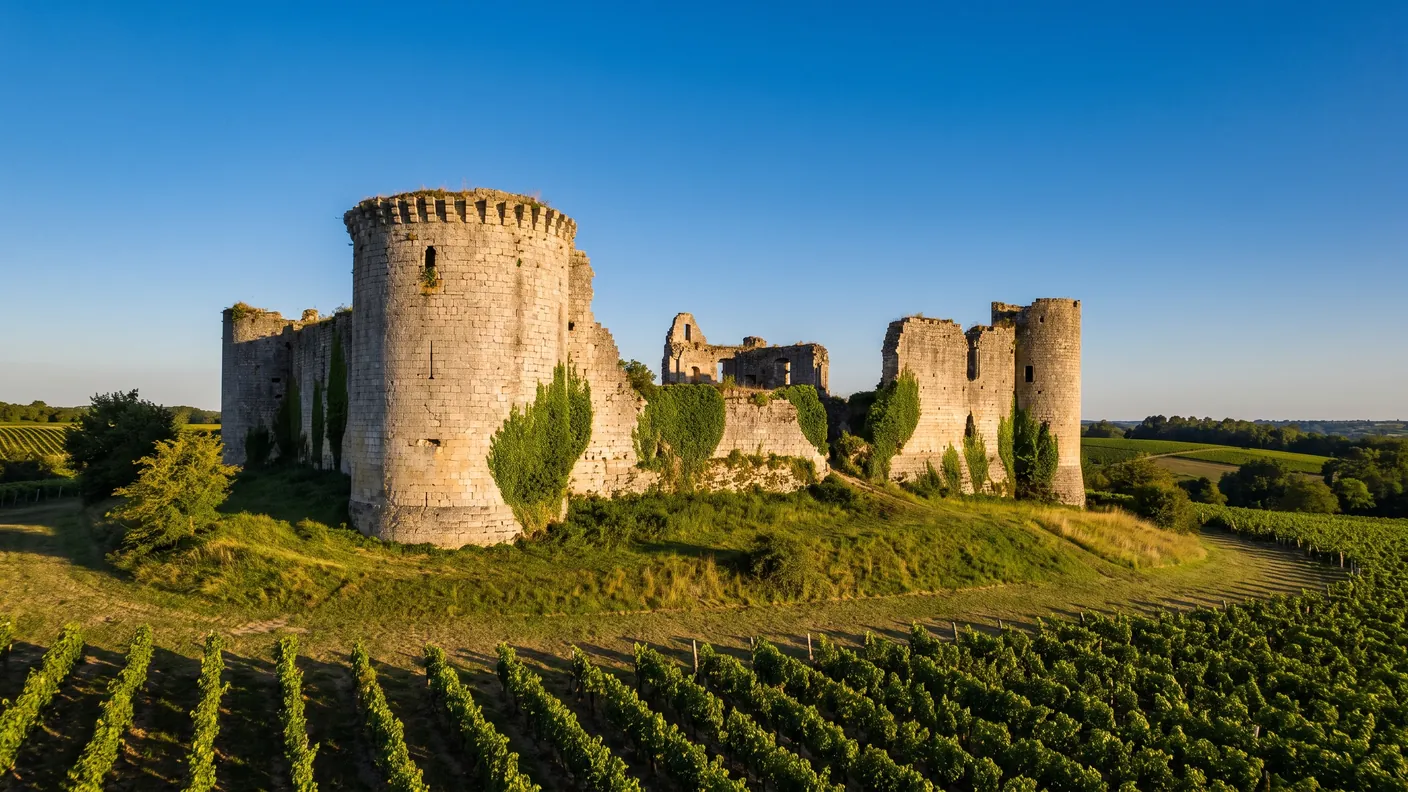
On the way to the abbey and the Entre-deux-Mers region
Direct transfer from Bordeaux (~47 min) to the Abbey of La Sauve-Majeure, in the heart of the Entre-deux-Mers wine region—from the airport, train station, or hotel to the abbey, then on to Créon, a vineyard estate, or Saint-Émilion. Fixed, written quote—no unexpected meter charges.