
Bordeaux to Lasseube: Jurançon vineyards and the Béarn foothills
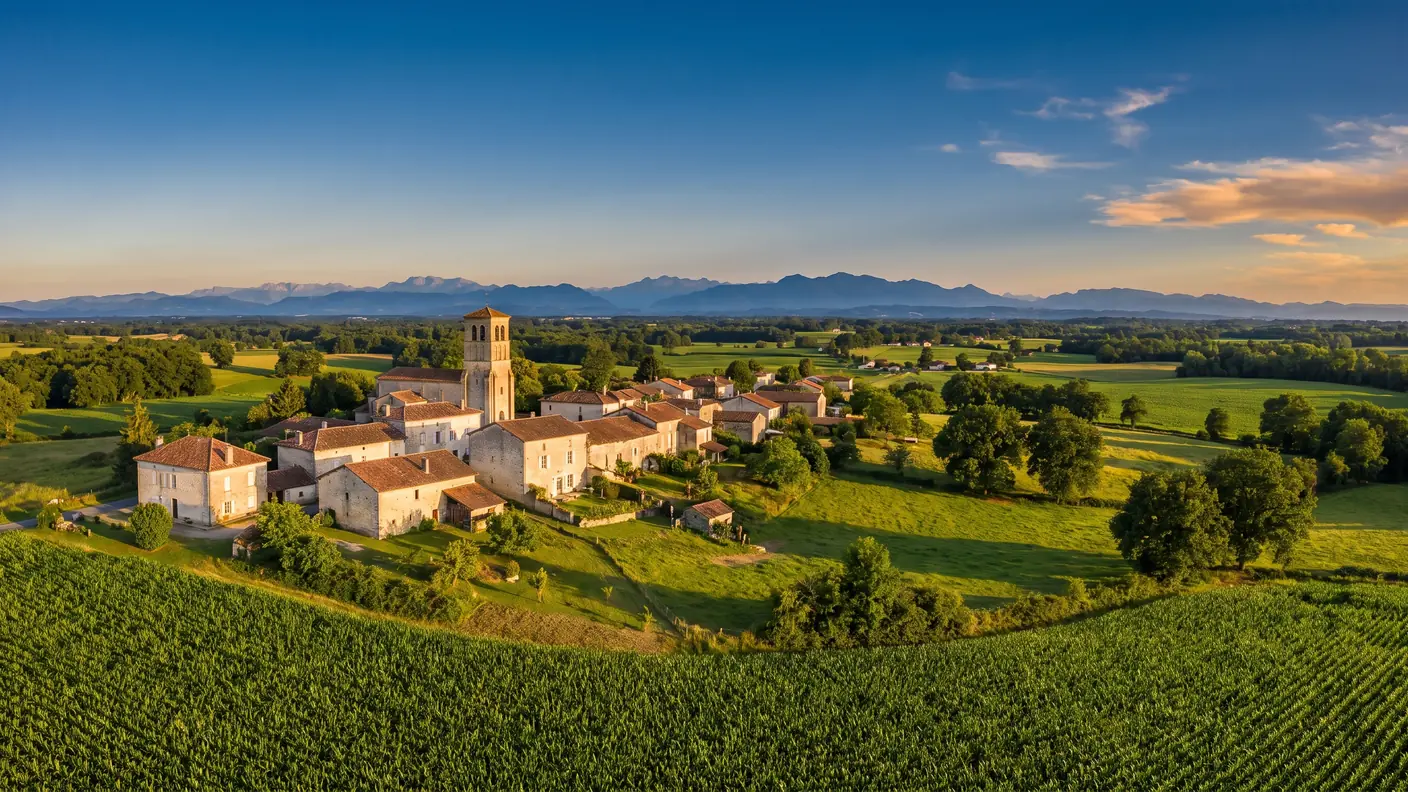
A village in Béarn at the foot of the Pyrenees, in the heart of the Jurançon wine region: the Church of Sainte-Catherine, houses built of pebbles, a landscape of vineyards and forests facing the Pyrenees, between Pau and Oloron—2 hours and 34 minutes from Bordeaux.
Lasseube at a glance
Lasseube is a town in the Béarn region, located between Pau and Oloron-Sainte-Marie, in the heart of the Jurançon wine region. The village features the Church of Sainte-Catherine, pebble-built houses, and a landscape of vineyards and forests. From Bordeaux, the standard route covers 228 km in 2 hours and 34 minutes via the A65, with a flat rate starting at 379 €
The Camaralet from Lasseube is a rare local grape variety. The Béarn name “La Seuva” refers to the forest that was cleared to make way for the medieval village. Lasseube does not have a train station; Pau and Oloron-Sainte-Marie are the nearest rail hubs.
Essential facts
Lasseube is a village in Béarn, in the Pyrénées-Atlantiques department, about 20 kilometers southwest of Pau, in the Pyrenean foothills, in the heart of the Jurançon wine region. Nestled in the hills between the two mountain streams, this large rural village—whose very name means “the forest”—cultivates vineyards, raises livestock, and preserves a beautiful 16th-century church century, its traditional Béarn pebble-built houses, and its market hall. A new village founded in the Middle Ages through the clearing of the Escout Forest and granted a charter of privileges in 1376, Lasseube is one of the twenty-five municipalities of the Jurançon appellation, this great white wine from Béarn, both dry and sweet. Just 2 hours and 34 minutes from Bordeaux, between Pau and Oloron, at the foot of the Pyrenees, it’s an authentic, peaceful wine-growing retreat in one of the most beautiful terroirs of southwestern France, far from the crowds.
Here are the key details to know before you go. Distances are calculated door-to-door from Bordeaux; the fare shown is for a private driver reservation at a fixed price provided in advance, with no unexpected meter charges regardless of traffic or stops along the way.
| Landmark | Details |
|---|---|
| Department | Pyrénées-Atlantiques (64), Nouvelle-Aquitaine |
| Béarn name · demonym | La Seuva · The People of Lasseubois |
| Population | 1,735 residents (municipal population, 2023) [INSEE 2026] |
| Area | 48.60 km² · elevation ranging from 170 to 416 m · municipality classified as a mountain area in 2019 [FENICS 2023] |
| Don't miss it | The Jurançon vineyards, the Church of St. Catherine, the pebble-stone houses |
| Distance from Bordeaux | about 228 km · about 2 hours and 34 minutes by car |
| Around | Pau, Oloron-Sainte-Marie, Monein, the Pyrenean foothills |
A quick note to start with, to put Lasseube in context. The village is located in Béarn, in the foothills of the Pyrenees, between Pau and Oloron—not in the neighboring Basque Country. Its name, La Seuva in the Béarn dialect, does not come from a saint or a lord, but from the Latin *silva*, meaning “forest”: the village grew out of land cleared from the woods, and nearly half of its vast territory is still forested today. Contrary to what is sometimes written, Lasseube was not founded by a Gaston of Béarn, nor in 1385: it owes its charter of privileges to a certain Jean de Sommers, in 1376. Finally, its church is not dedicated to Saint Peter, but to Saint Catherine (also known as the Church of the Assumption). Every statement in this guide is based on verifiable sources, cited at the end of the article.
Here’s a rundown of everything you need to know: the location of Lasseube in Béarn and the foothills, the Jurançon wine region of which it is a part, the Church of Sainte-Catherine and its heritage, the Béarn village and its pebble-built houses, the history of the place and its charter from 1376, the natural landscape of the hills and mountain streams, the Béarn region’s culinary traditions, nearby attractions, the best time of year to visit, and the easiest way to get there from Bordeaux by chauffeur service—all thoroughly researched and verified.
Where is Lasseube located?
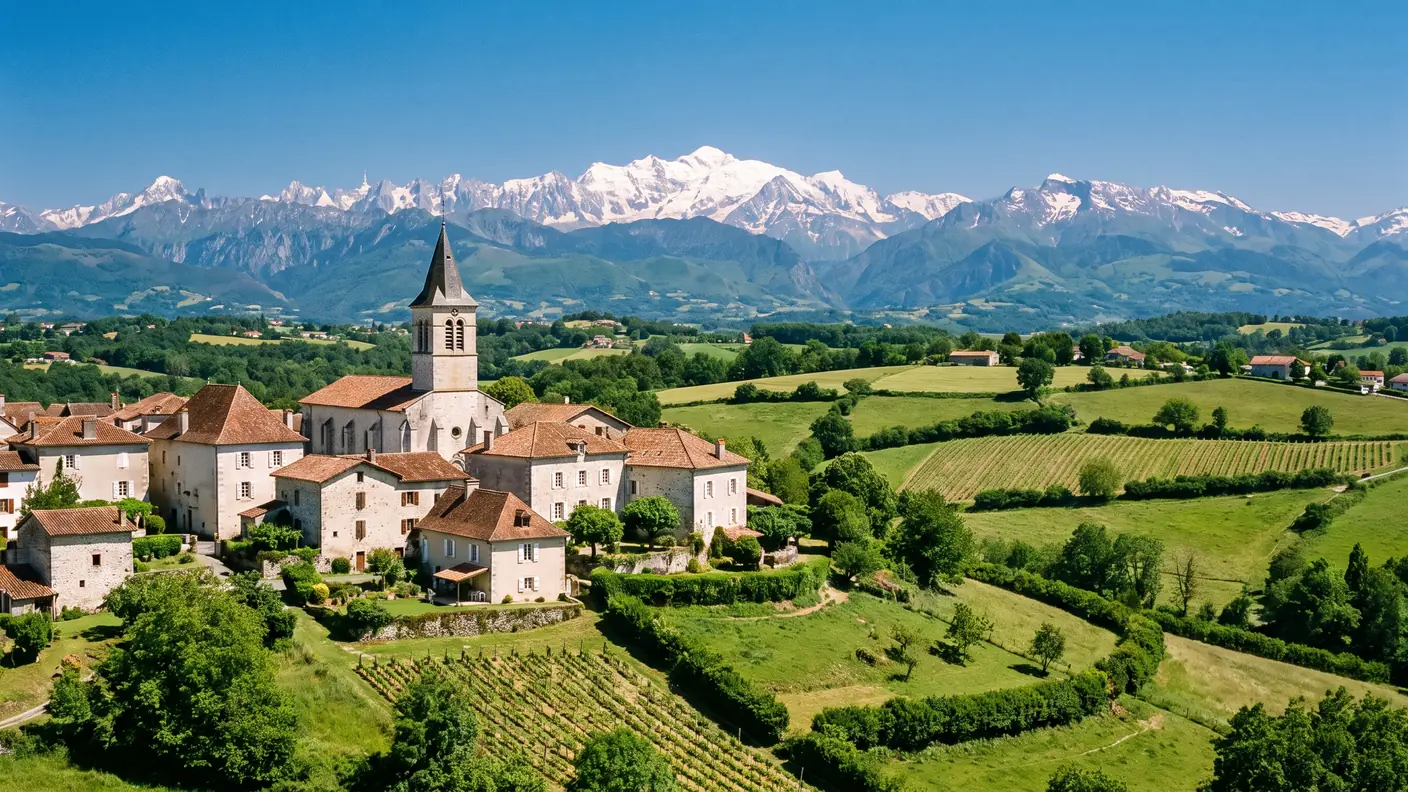
Lasseube is located in Béarn, in the southern part of the Pyrénées-Atlantiques department (64), in Nouvelle-Aquitaine, about 19 km southwest of Pau by road and 13 km from Oloron-Sainte-Marie, in the Pyrenean foothills. The village lies in a small basin at the confluence of the Baïse and Baysole valleys, in the region known as the “hills between the two gaves”—between the Gave de Pau and the Gave d’Oloron. Its vast territory, covering 48.6 km², ranges in elevation from 170 to 416 meters, qualifying it as a mountain area. Part of the Oloron-Sainte-Marie district, Lasseube is a rural and sprawling commune, with settlements scattered among the village center, hamlets, and farms, set amid a landscape of rolling hills, vineyards, meadows, and woods. On the horizon rise the Pyrenees, very close by, which provide the village with its setting and its light.
Between Pau and Oloron, in the foothills
Lasseube is beautifully situated at the crossroads of two regions of Béarn: the plain of Pau, the former capital, about 20 minutes to the northeast, and the mountain of Oloron-Sainte-Marie, at the gateway to the Pyrenean valleys, a quarter of an hour to the southwest. The village is in the heart of the Piedmont, this range of hills that runs along the foot of the Pyrenees, between the plain and the first hills. It is a region of hillsides and valleys, crisscrossed by small streams such as the Baïse — not to be confused with its larger namesake in the Gers department —, which joins the Gave de Pau further north. This location, nestled between two towns and perched on the hills, offers Lasseube a gently rolling landscape, views of the Pyrenees, and an ideal base for exploring the entire Béarn region. A well-preserved rural village in the heart of a region of vineyards and meadows.
A large rural village
With approximately 1,735 residents in the 2023 census — the Lasseubois —, Lasseube is a significant village both in terms of population and area: its 48.6 km² make it one of the largest municipalities in the region, with a very scattered settlement pattern (the population density is only 36 inhabitants per km²). The town center, clustered around its church and market hall, is home to shops and services, while farms and houses are scattered throughout the hills. Its stable population makes its living from agriculture—vineyards, livestock, and corn—but also benefits from its proximity to Pau, for which Lasseube has become a popular residential community. The village has retained its rural and Béarn character, its traditions, its community life, and its festivals, all while enjoying the relaxed lifestyle of the foothills. Far from the hustle and bustle, Lasseube offers the quiet charm of a true Béarn village, nestled among vineyards, hills, and mountains.
Lasseube and the Jurançon vineyards
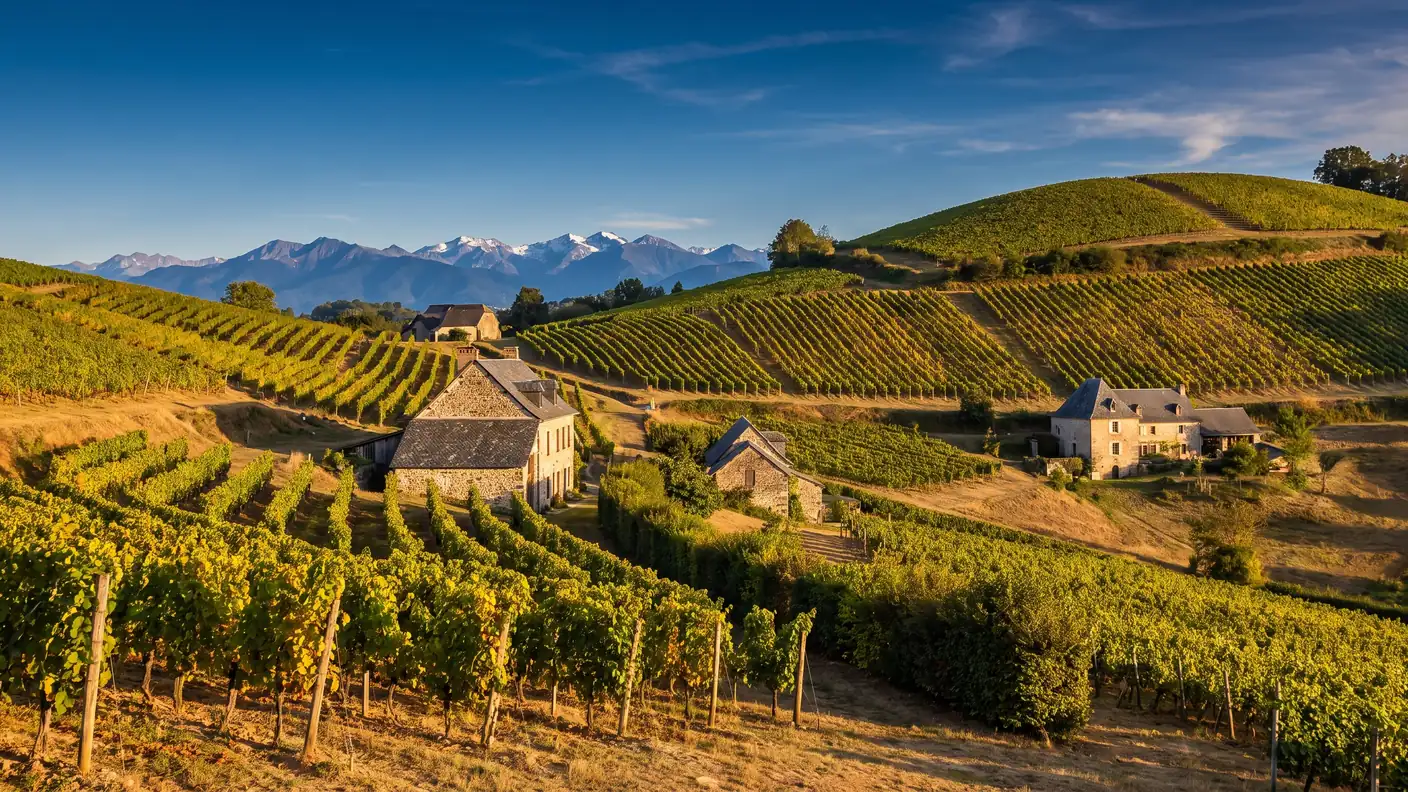
Lasseube is one of the twenty-five communes in the Jurançon appellation, home to this great white wine from Béarn, produced on the slopes of the Pyrenean foothills and available in both dry and sweet styles. [INAO 2026]The village lies at the heart of one of the most beautiful wine-growing regions in southwestern France.
A great white wine from Piedmont
Jurançon is one of France's great white wines and one of its oldest appellations: the AOC was recognized as early as December 8, 1936. It comes from the steep hillsides of the Pyrenean foothills, between Pau and Oloron, where the vines—often planted on terraces or “hautains” to avoid frost—ripen in the autumn sun facing the mountains. Two main types of wine are produced here: dry Jurançon, lively and mineral, and sweet Jurançon, made from grapes left to overripen on the vine and renowned for its rich aromas—a wine for celebrations and dessert, long served at the tables of kings. Lasseube, with its hillsides, is an integral part of the appellation, alongside villages such as Monein, Gan, and Jurançon itself. Exploring this vineyard, from estate to estate, discovering these distinctive wines and the hillside landscapes facing the Pyrenees, is one of the great pleasures of a visit to Lasseube.
Camaralet, a grape variety from Lasseube
The Lasseube terroir has even given its name to a grape variety: Camaralet de Lasseube, an old, rare, and temperamental variety from Béarn that is included among the authorized grape varieties for the Jurançon and Béarn vineyards. [INAO 2026]This speaks to the long history and rich tradition of winemaking in the village. For Lasseube is not only part of the Jurançon region: it also falls within the Béarn AOC (which produces reds, rosés, and whites) and the Ossau-Iraty AOP zone, home to the famous sheep’s-milk cheese of the Pyrenees. White wine, red wine, and sheep’s-milk cheese: Lasseube is distinguished by three appellations, a perfect illustration of the richness of the Béarn foothills’ terroir. Added to this are livestock farming, corn cultivation, and even fish farming, all made possible by the purity of the mountain streams. An agricultural and gourmet village, deeply rooted in its terroirs, where vineyards and livestock farming have been the lifeblood and pride of its residents for centuries.
| The Terroirs of Lasseube | Details |
|---|---|
| AOC Jurançon | Great white wine, dry & sweet · One of the 25 communes · AOC since 1936 |
| Camaralet Grape Variety from Lasseube | An old Béarn grape variety native to this region, rare and temperamental |
| Béarn AOC | red, rosé, and white wines from Piedmont |
| Ossau-Iraty AOP | Pyrenees sheep cheese region |
| Other Productions | livestock farming, corn, fish farming (purity of mountain streams) |
St. Catherine's Church
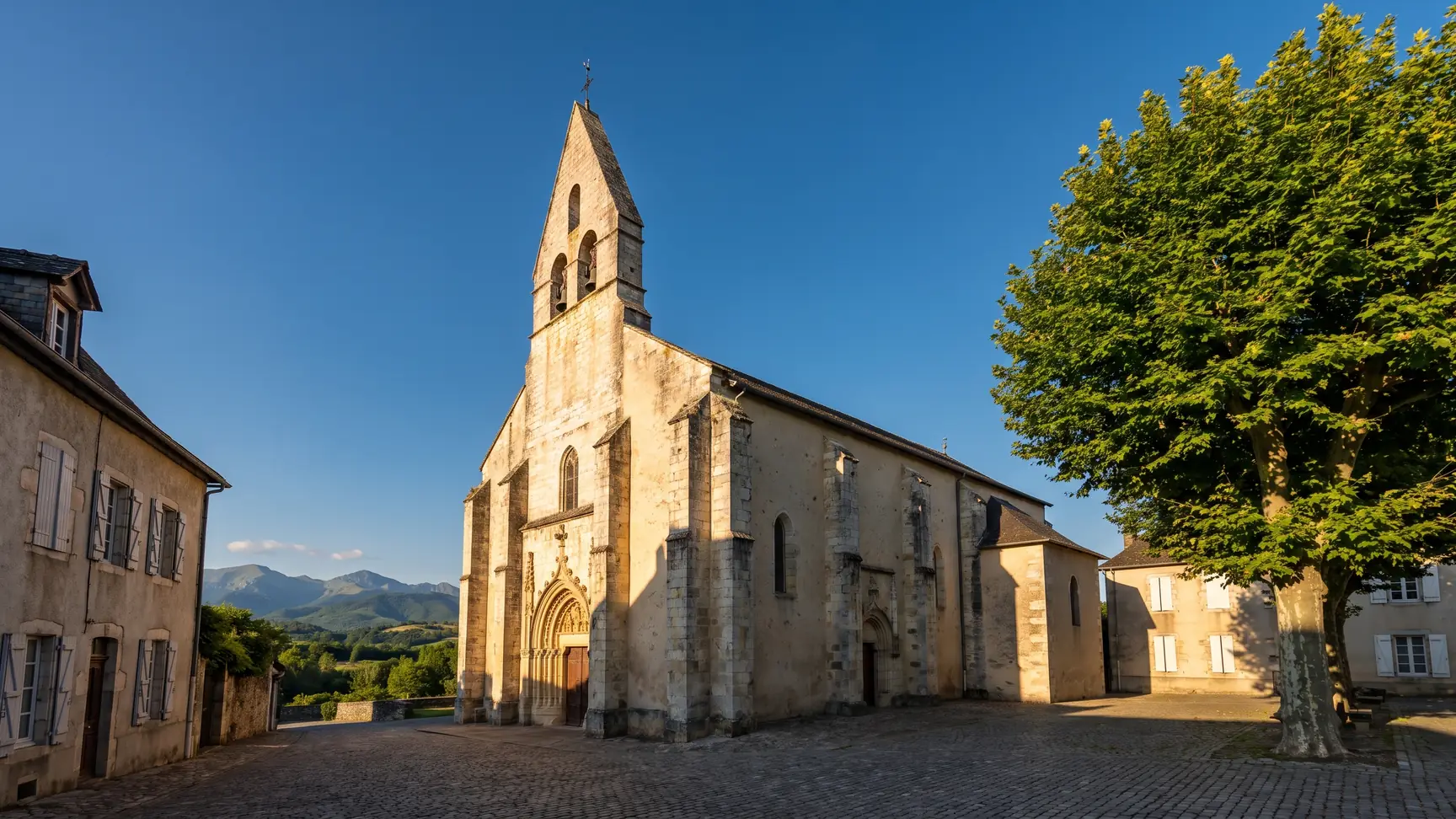
The main landmark in Lasseube is its church, dedicated to Saint Catherine (also known as the Church of the Assumption): a 16th-century building whose facades and roofs are listed as historic monuments. A beautiful village church, a stop along the Camino de Santiago.
A 16th-century church listed as a historic monument
St. Catherine's Church — dedicated to Saint Catherine, not Saint Peter, and also listed in the French Historic Monuments database as the “Church of the Assumption” — is the historic and spiritual heart of Lasseube. The current building dates from the 16th century, but a document from 1376—the very year the village was founded—already mentions a church on the site. Its facades and roofs have been listed as a historic monument since a decree dated July 2, 1987. [POP 2026] The church features a wide nave flanked by a north aisle opening through three semicircular arches, a polygonal apse and, serving as a bell tower, a two-bay bell wall extended by a bell gable—a silhouette typical of churches in the foothills. On the south facade, beneath the porch, a 16th-century portal, adorned with floral carvings, frames a niche that is now empty. A fine example of religious architecture from the Béarn region, on a village scale.
Listed furniture and the Way of St. James
Inside, the church still houses remarkable furnishings, listed as historic monument objects since 1975: a 17th-century altarpiece, a tabernacle, a statue of St. James the Greater and an 18th-century Madonna and Child. The presence of Saint James is no coincidence: Lasseube is located on a secondary route to Santiago de Compostela, one of the routes leading down to Oloron and the Somport Pass, before crossing the Pyrenees into Spain. Like so many villages in Béarn, Lasseube has welcomed pilgrims on their way to Santiago de Compostela since the Middle Ages. This is yet another testament to the age and spiritual richness of the place. Modest in size but rich in history and furnishings, the Church of St. Catherine is well worth a visit; it stands in the heart of the village, between the pebble-built houses and the market hall.
The village in Béarn and its pebble-stone houses
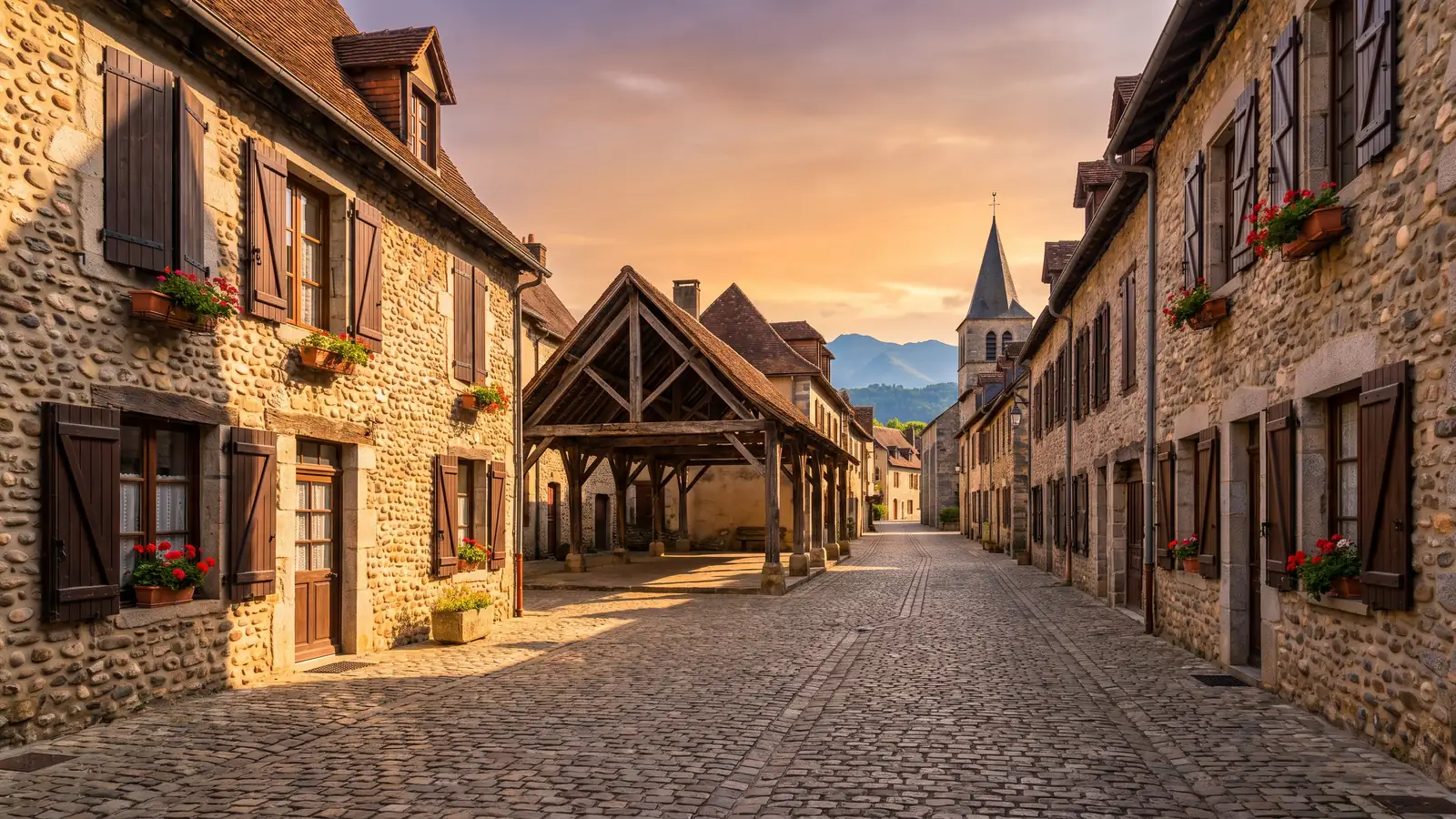
Centered around its church, Lasseube retains the charm of a true Béarn village: pebble-built houses, a covered market hall, fountains, and narrow streets come together to form a modest and authentic setting. The unassuming heritage of a charming village in the foothills.
The Pebble Houses of the Gave
The defining feature of the architecture in Lasseube, as in the entire Piedmont region, is its pebble-stone houses. In the absence of quarries for cut stone, the people of Béarn traditionally built their walls using round pebbles gathered from the beds of mountain streams, embedded in mortar and sometimes arranged in a herringbone pattern, beneath wide, steep roofs covered with tiles or slate. These sturdy and picturesque houses, with facades speckled with gray pebbles, are one of the defining features of the Béarn’s built landscape, and Lasseube offers fine examples of them in its village and hamlets. Strolling through its streets and squares allows you to discover this typical rural heritage, shaped by the region’s geography—the river, the mountains, and the forest. It’s the understated charm of a village that has preserved its historic character, its traditional building materials, and its soul, far from modern reconstructions and mass tourism. A true Béarn village, as if frozen in its laid-back way of life.
The market hall, the fountains, and the sculptor Gabard
In the heart of the town, the covered market hall on Rue de la République hosts the weekly market and serves as a reminder of the village’s tradition of trade and commerce since its founding. Lasseube also boasts beautiful public fountains, some of which were created by the Béarn sculptor Ernest Gabard (Pau, 1879–1957), one of the region’s great artists and the creator of numerous statues and fountains throughout Béarn. These elements—the market hall, the fountains, the washhouses, and the old houses—make up the modest yet charming heritage of a village that has managed to stay true to itself. Here, there are no grandiose monuments or spectacular sites, but rather the tranquil beauty of an authentic Béarn village, with its church, market hall, fountains, and cobblestone houses, nestled among hills, vineyards, and forests, facing the Pyrenees. It is this understated charm, combined with the richness of the Jurançon region, that makes a stop in Lasseube—far off the beaten path—truly worthwhile.
The Story of Lasseube
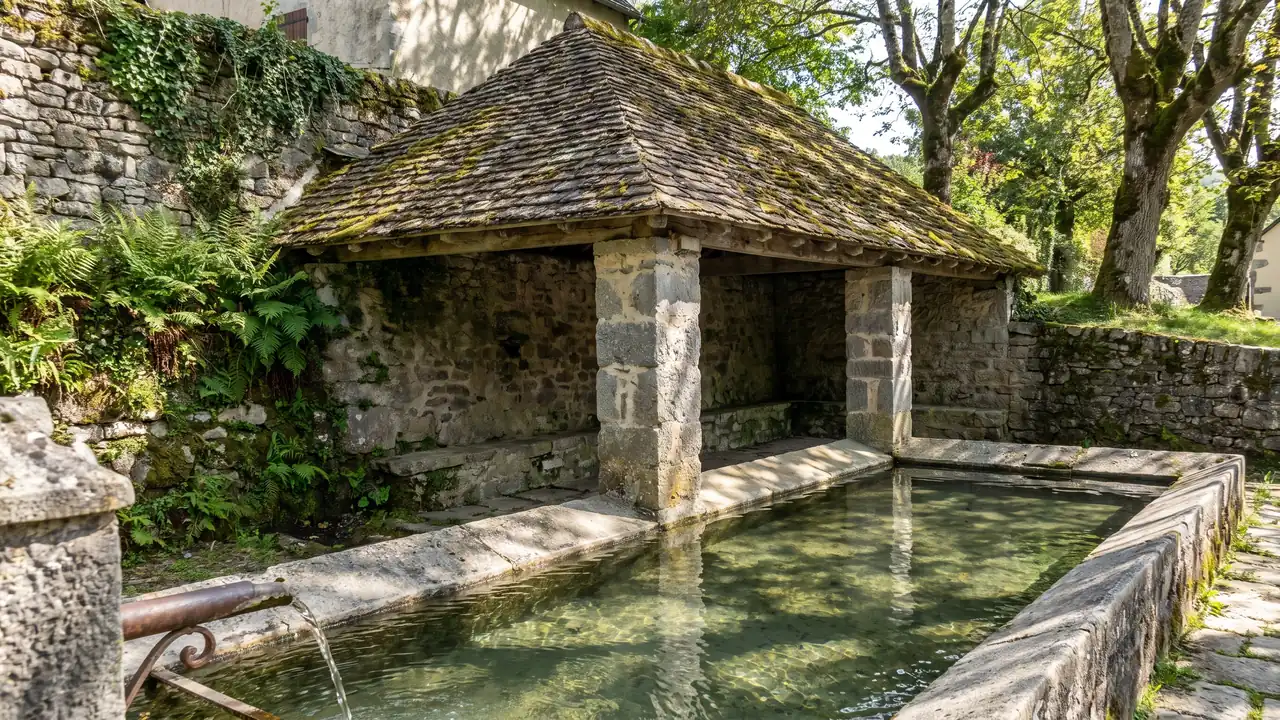
The name Lasseube reveals its origin: “the forest.” The village was founded in the Middle Ages when the Escout Forest was cleared; it was granted a charter of privileges in 1376 and grew rapidly thanks to the freedoms it afforded. Its history is deeply rooted in the land and forests of Béarn.
La Seuva, a village carved out of the forest
The name of Lasseube — La Seuva in Béarnais — comes from Latin silva, “forest.” It appears in evocative archaic forms: Sylvæ in 1305, La Seube d'Escout in 1385. The village was literally “carved out of the forest”: it grew out of a land clearing in the seigneurial forest of Escout, on lands belonging to the barony of Lescun. According to local history, a certain Jean de Sommers granted the new village a charter in 1376, giving its inhabitants “privileges, liberties, and exemptions,” modeled after the nearby charter of Herrère. These liberties attracted settlers—the “poublans”—and the village grew so rapidly that within a few decades it rivaled much older settlements. It was therefore not a “bastide” in the classical sense, nor the work of a Gaston de Béarn, but a new franchise village, born of the forest and the desire to settle the region—a story typical of medieval Béarn.
From the Census of Phoebus to Corisande of Andoins
In 1385, the great census of households in the viscounty of Béarn, ordered by the famous Gaston Fébus, recorded Lasseube: the young village then had twelve households and was part of the bailiwick of Oloron—proof that it had already taken root. Be careful not to confuse the two: the date 1385 refers to the census, not the village’s founding, which dates back to the charter of 1376. Subsequently, Lasseube experienced the vicissitudes of Béarn’s history. Local history records that in 1582, Corisande d’Andoins—Diane d’Andoins, Countess of Guiche, a famous friend of the future King Henry IV, the “Child of Béarn”—secured tax exemptions for the residents of Lasseube. The seigneury was sold in 1617. These episodes—involving charters, censuses, and prominent figures from Béarn—attest to the village’s deep roots in the history of Béarn, that long-independent principality of which Henry IV, upon becoming King of France, was the most illustrious son. Lasseube, a village of forests and privileges, stands as a modest yet faithful witness to this history.
The hills, the mountain streams, and the forest
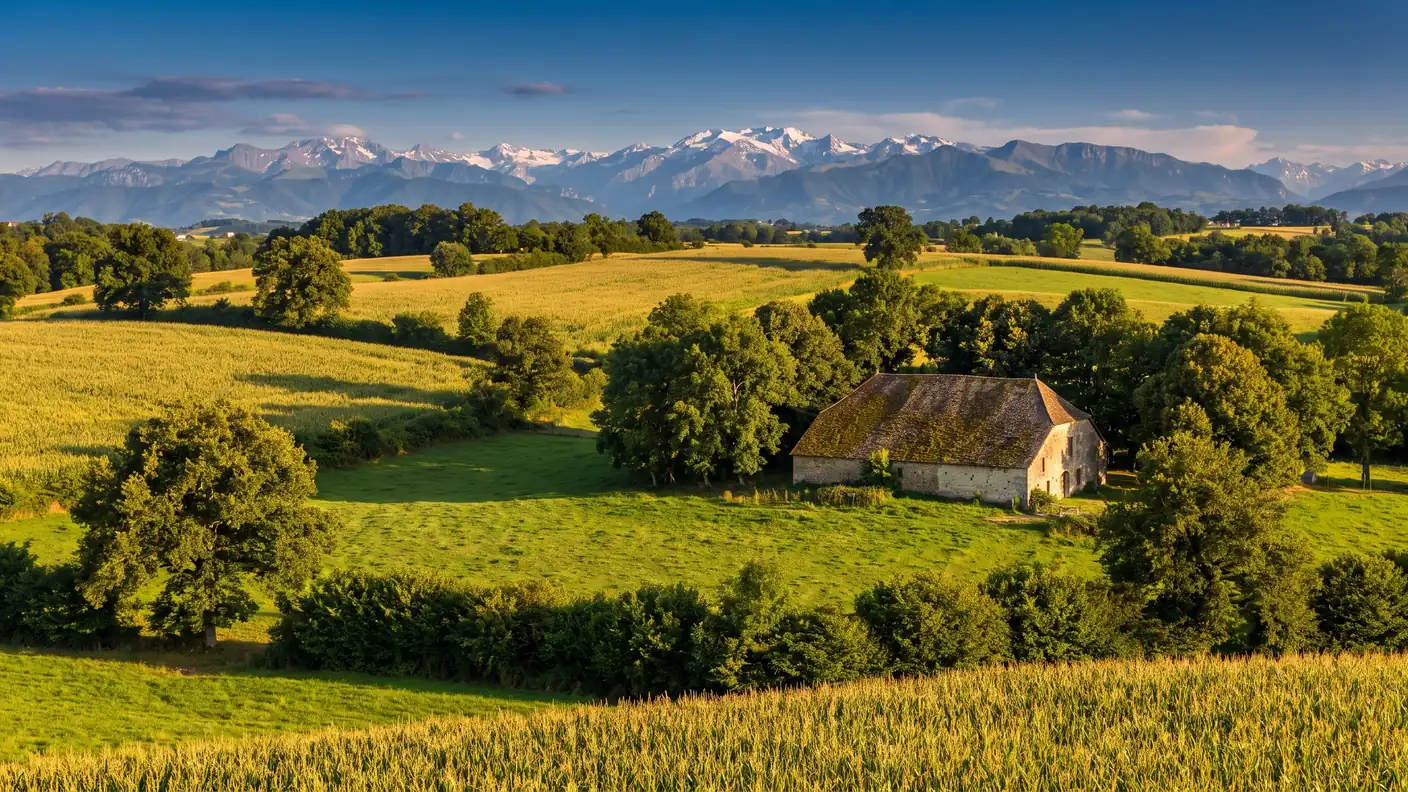
Lasseube is nestled amid a landscape of hills, mountain streams, and forests typical of the Béarn foothills: nearly half of its territory is forested, true to its name. A rolling, lush natural setting, halfway between the plains and the mountains.
The hills between the two mountain streams
The territory of Lasseube is part of the hills between the two gaves — between the Gave de Pau and the Gave d'Oloron —, a rolling foothill region that stretches along the base of the Pyrenees. It is a region of hillsides, valleys, and small streams: the village itself lies in a basin at the confluence of the valleys of the Baïse and the Baysole, two streams that, further north, feed into the Gave de Pau. The elevation, ranging from 170 to 416 meters, creates a gentle yet distinct landscape, which has earned the town the designation of mountain area. This hilly landscape—with vineyards on the sun-drenched slopes, meadows for grazing livestock, and woods in the valleys—is incredibly serene, with the Pyrenees always visible on the horizon. This is the charm of the Béarn foothills: neither the plain nor the high mountains, but a rolling, green, and inhabited in-between, shaped by centuries of agriculture.
A village that lives up to its name: La Forêt
True to its name, Lasseube remains a village of forest: recent land-use data show that nearly 41 % of its vast territory is still covered with woodland, with the rest divided among meadows, vineyards, and croplands. Oak, chestnut, and other deciduous trees line the hollows and slopes of the hills, creating a lush, cool setting. This bountiful natural environment is home to a rich variety of flora and fauna and lends itself to walking, hunting, and foraging, in keeping with the rural traditions of Béarn. The pure waters of the mountain streams and brooks have even enabled the development of fish farming, a quiet yet telling indicator of the quality of the environment. Nestled among the Jurançon vineyards, the pastures where herds graze, and the woods that gave it its name, Lasseube is part of a preserved and vibrant landscape at the foot of the Pyrenees, where humans and nature have long coexisted in harmonious balance.
The Culinary Delights of Béarn
Around Lasseube, you can savor the full Béarn way of life: Jurançon wine, Ossau-Iraty cheese, garbure soup, poule au pot, and duck make up a generous spread at the foot of the Pyrenees. A gourmet getaway in the heart of the foothills.
Jurançon at the Table
Lasseube’s greatest culinary delight is, of course, Jurançon. The dry, lively, and mineral-rich variety pairs perfectly with fish, sheep’s-milk cheese, and mountain cuisine; the sweet version, rich and fragrant, is enjoyed as an aperitif, with foie gras, or with dessert—it’s a celebratory wine, said to have been used to baptize the future Henry IV. Alongside the wine, the Béarn region offers a generous and rustic cuisine: garbure, a thick soup made with cabbage, vegetables, and confit—the region’s signature dish; poule au pot, a favorite of the good King Henry; duck and foie gras; mountain charcuterie; and Ossau-Iraty sheep’s-milk cheese—Lasseube lies within its appellation—often served with black cherry jam. A warm and flavorful regional cuisine, just like Béarn itself.
Markets and Farms in the Piedmont
To sample all of this, there’s nothing quite like the local markets and farms. The market in Lasseube, held in the market hall, and especially the large neighboring markets in Pau, Oloron, and Monein, are brimming with local products from the Béarn region: sheep’s-milk cheeses, cured meats, duck, vegetables, honey, and, of course, Jurançon wines. The many wineries in the foothills are happy to welcome visitors for tastings and direct sales, set against the stunning backdrop of the hillsides facing the mountains. Farm-inns and local restaurants let you sit down to a bowl of garbure or a plate of charcuterie, washed down with a glass of Jurançon. This abundance, this warmth, and this quality make Béarn—and Lasseube at its heart—a true paradise for lovers of authentic, good food, far from the tourist trails. Stopping in Lasseube also means treating yourself to this gourmet getaway at the foot of the Pyrenees.
| The region around Lasseube | Details |
|---|---|
| Jurançon | A great white wine from Béarn, dry and sweet |
| Ossau-Iraty | sheep's-milk cheese from the Pyrenees (AOP) |
| Garbure & Chicken Stew | Iconic dishes from the Béarn region |
| Duck & Cold Cuts | Specialties from the Southwest and the mountains |
| Markets | Lasseube, Pau, Oloron, Monein |
What's there to see around Lasseube?
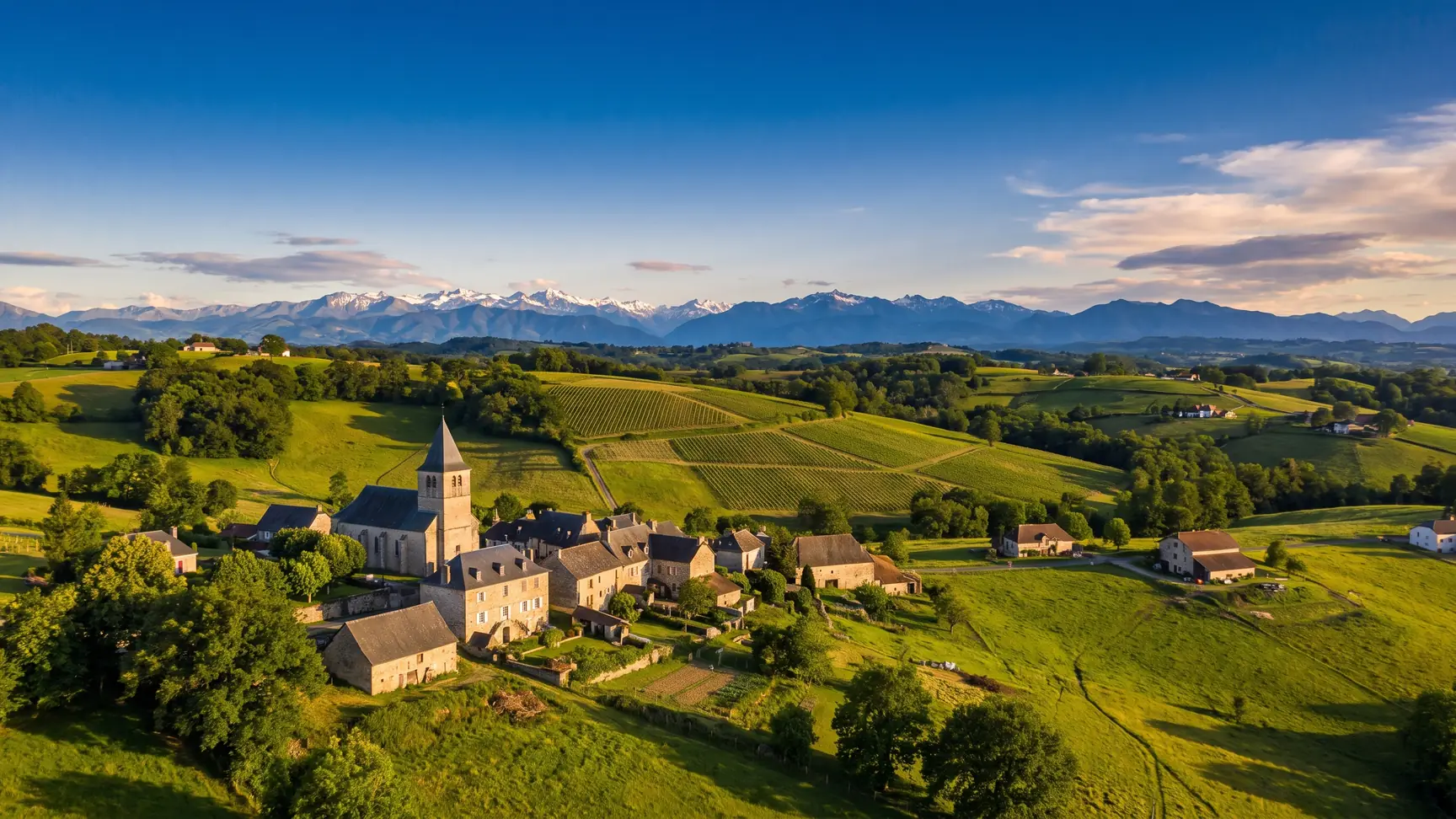
Lasseube is an ideal base for exploring the Béarn region: Pau, Oloron, the Jurançon vineyards, and the valleys of the Pyrenees are all within easy reach. A rare blend of city, vineyards, and mountains.
Pau, Oloron, and the vineyards
Nearby, Pau, the former capital of Béarn, is well worth a visit for the castle where Henry IV was born, its Boulevard des Pyrénées and its panoramic view of the mountain range, and its elegance as a spa and resort town. On the opposite side, Oloron-Sainte-Marie, just a quarter of an hour away, boasts two Romanesque churches (including the UNESCO-listed Sainte-Marie Cathedral), berets and chocolate, and serves as the gateway to the great Pyrenean valleys. Between the two lies the Jurançon wine region, of which Lasseube is a part: a beautiful wine route leads from estate to estate, passing through Monein (home to the largest Gothic church in Béarn, Saint-Girons), Gan, and Jurançon itself. With a driver, it’s easy to plan a day from Lasseube that combines cultural heritage, wine tastings, and scenic views—without worrying about driving on the narrow hillside roads or getting behind the wheel after a tasting.
The Pyrenees, Within Reach
From Lasseube, the Pyrenees are all nearby. Via Oloron, you can reach the major valleys of Aspe and Ossau, along with the majestic Pic du Midi d'Ossau, the mountain passes leading to Spain, the lakes, and the Pyrenees National Park. To the east, Lourdes and the Hautes-Pyrénées aren't far away; to the west, the inland Basque Country around Mauléon and Saint-Jean-Pied-de-Port is just waiting to be explored. The mountains, hiking, winter skiing, summer pastures, and Pyrenean villages are all within easy reach of Lasseube, which combines the tranquility of the wine-growing foothills with proximity to breathtaking landscapes. This location—nestled between the plains, vineyards, and mountains—makes the village an ideal base for exploring all of Béarn and the Pyrenees at your own pace. With a driver to take you between these stops, you can easily turn a stay at Lasseube into a wonderful tour of Béarn.
| Around Lasseube | Distance | Interest |
|---|---|---|
| Pau | ~19 km | Former capital of Béarn, castle of Henry IV |
| Oloron-Sainte-Marie | ~13 km | UNESCO Cathedral, beret, Gateway to the Valleys |
| Monein | ~15 km | Route du Jurançon, Saint-Girons Church |
| Ossau Valley | ~50 km | Pic du Midi d'Ossau, mountain |
| Lourdes | ~55 km | Sanctuary, Hautes-Pyrénées |
When is the best time to visit Lasseube?
Lasseube is open to visitors year-round, but spring, summer, and especially fall—the Jurançon grape harvest season—are the most pleasant times to visit. Spring bathes the foothills in a vibrant green, brings the hillsides to life, and offers mild days—perfect for exploring the vineyards, the villages, and the snow-capped foothills of the Pyrenees. Summer bathes the hills in beautiful light: it’s the season for markets, village festivals, and outdoor cafés, with a warm, welcoming atmosphere but without the crowds of the coast, along with the welcome coolness of the hills and the shade of the woods. The long evenings are perfect for enjoying local cuisine and wine tastings at the vineyards. It’s also the season for major Béarn festivals, which bring every village to life with joyful energy and song.
Fall Harvest and Winter
Fall is a magnificent season in Lasseube: it’s the time of the Jurançon grape harvest—sometimes delayed, for the sweet wines, until the first frosts—the vineyards take on shades of gold and purple, and the countryside bursts with stunning colors, all under the gentle warmth of a still-mild climate. It’s also the season for fine dining—garbure soup, duck, and sheep’s-milk cheeses from the mountain pastures that have made their way back down to the valley. Winter, a quieter season, reveals the snow-capped Pyrenees as a backdrop to the village and offers the chance to explore the region’s heritage and estates without the crowds, with the ski resorts of the neighboring valleys within easy reach. In every season, the mild climate, the beauty of the hillsides and mountains, and the bounty of the region make Lasseube an authentic and gourmet getaway in the heart of Béarn, just 2 hours and 34 minutes from Bordeaux.
Getting to Lasseube from Bordeaux
Lasseube is located 228 km from Bordeaux, a 2-hour, 34-minute drive. The recommended route takes the A65 to Pau, then heads toward the foothills and the Jurançon vineyards. A car or executive car service offers the most direct access, as there are no trains serving the village.
The Pau and Oloron-Sainte-Marie train stations are the closest, but you’ll still need to take a bus from there. A chauffeur-driven vehicle also allows you to visit the village, the wineries, Pau, or Oloron without having to drive yourself after a wine tasting.
Train or private chauffeur?
To visit Lasseube and, above all, to explore the Jurançon vineyards and the Béarn region, a chauffeured transfer from Bordeaux offers true freedom: a direct, door-to-door trip from Bordeaux, with no transfers or waiting, and the option to make stops along the way—in Pau, at the vineyards, or in a village. This is especially valuable for a day of wine tourism, when you want to be able to taste wines without having to drive, or for a weekend combining village life, vineyards, Pau, Oloron, and the valleys. We offer this route at a fixed price provided in advance: allow about 503 € for the one-way trip, in a Mercedes sedan or a van seating up to 8 passengers, with a professional chauffeur. The price, set at the time of booking, remains fixed: it does not depend on traffic, potential traffic jams, or the number of stops requested along the way, unlike a taxi meter.
This is the perfect package for a day of wine tasting in Jurançon, a culinary and cultural getaway, a family outing, an event (wedding, reunion in Béarn), or a simple transfer to or from the Bordeaux-Mérignac or Pau-Pyrénées airports. You can travel alone, as a couple, or in a small group of up to 8 people, with luggage, and request stops at the wineries, in Pau, or in Oloron. In practice, booking is quick and easy: simply provide your departure address in Bordeaux and your destination in Lasseube, along with the date, desired time, and number of passengers, and you’ll receive a fixed-price quote in writing. On the day of the trip, the driver picks up the passengers at the agreed-upon address and takes them directly to Lasseube, without any detours—a real advantage, especially for a wine-tasting trip.
| Route | Distance | Duration | Landmark |
|---|---|---|---|
| Bordeaux → Lasseube | ~228 km | ~2:34 | Starting at ~379 € for a private chauffeur service |
| Lasseube → Pau | ~19 km | ~25 min | capital of Béarn |
| Lasseube → Oloron-Sainte-Marie | ~13 km | ~20 min | UNESCO cathedral, beret |
| Lasseube → Monein | ~15 km | ~20 min | Jurançon Route |
Whether you come for the Jurançon vineyards, the Church of Sainte-Catherine and the pebble-stone houses, the history of a village born from the forest, or the cuisine and landscapes of the foothills, Lasseube is a treat for lovers of authentic Béarn at the foot of the Pyrenees—a peaceful and charming village that, for those who take the time to stop by, opens the doors to one of the most beautiful wine-growing regions in southwestern France.
Whether it’s for a day in the vineyards, a gourmet getaway, or an event, booking a professional chauffeur guarantees a comfortable and punctual ride—book a driver from Bordeaux → Lasseube or explore all our destinations.
Frequently Asked Questions
Where is Lasseube located?
Lasseube is a village in Béarn, in the Pyrénées-Atlantiques (64), in Nouvelle-Aquitaine, about 19 km southwest of Pau by road and 13 km from Oloron-Sainte-Marie, in the Pyrenean foothills. The village lies in a small basin in the Baïse Valley, in the region of the hills between the two gaves, in the heart of the Jurançon wine region. This large municipality, covering 48.6 km² and classified as a mountain area, has a population of approximately 1,735 (INSEE 2023), known as the Lasseubois. From Bordeaux, it’s about 228 km and a 2-hour, 34-minute drive via the A65 to Pau, then along the Jurançon Road.
What is the distance between Bordeaux and Lasseube?
It’s about 228 km by road, or roughly a 2-hour, 34-minute drive. The easiest route is to take the A65 highway (Bordeaux–Pau) to Pau, then the road heading southwest toward Lasseube and Jurançon. If you hire a private driver from Bordeaux, the fare is fixed and provided in advance, starting at approximately €503 one way (sedan or van, door-to-door price). Lasseube does not have a train station: the nearest ones are in Pau and Oloron, but the train does not serve the village and does not allow you to explore the vineyards and the foothills, which are best discovered with a driver.
Is the wine from Lasseube a Jurançon?
Yes. Lasseube is one of the twenty-five municipalities within the Jurançon appellation, the great white wine of Béarn, which has held AOC status since 1936. It is produced on the slopes of the Pyrenean foothills, between Pau and Oloron, and comes in two styles: dry Jurançon (lively and mineral) and sweet Jurançon (rich, made from overripe grapes), a famous celebratory wine. Lasseube is part of the appellation area and has even lent its name to a grape variety, the Camaralet de Lasseube. The village also falls within the AOC Béarn and AOP Ossau-Iraty appellation areas. It is a beautiful wine-growing region, best explored by visiting the various estates set against the backdrop of the Pyrenees.
What to see in Lasseube?
The main landmark is the 16th-century Church of St. Catherine (also known as the Church of the Assumption), whose facades and roofs are listed as Historic Monuments, and which houses classified furnishings (a 17th-century altarpiece and a statue of St. James). The village has retained its Béarn charm: pebble-built houses, a covered market hall, and fountains (some of which were created by the sculptor Ernest Gabard). But the main appeal of Lasseube is its location in the heart of the Jurançon wine region, set amid a stunning landscape of rolling hills, vineyards, and forests with a view of the Pyrenees. Add to that the proximity of Pau and Oloron, Béarn cuisine, and the nearby mountains, and you have the perfect getaway.
Where does the name Lasseube come from?
The name Lasseube—La Seuva in the Béarnais dialect—comes from the Latin word *silva*, meaning “forest.” It appears in older forms such as *Sylvæ* (1305) or *La Seube d’Escout* (1385). The village was indeed founded through the clearing of the seigneurial forest of Escout, on lands belonging to the barony of Lescun: it was literally “won from the forest.” The name remains apt, since even today, nearly 41% of the municipality’s territory is forested. Contrary to popular belief, the suffix “-seube” does not refer to a saint or a lord, but rather to the forest from which the village originated.
Is Lasseube a bastide?
Not in the traditional sense of the term. One sometimes reads that Lasseube is described as a “Béarn bastide,” but authoritative sources do not classify it as a bastide. Rather, it is a new village founded on the basis of charters, established through the clearing of the Escout Forest and granted, in 1376, a charter conferring upon its inhabitants “privileges, freedoms, and exemptions,” modeled after the nearby charter of Herrère—a common strategy for attracting settlers and populating the region. It was not founded by a Gaston of Béarn: the date of 1385 often cited refers to the census of households ordered by Gaston Fébus, in which Lasseube had twelve households, and not to the date of its founding.
To which saint is the church in Lasseube dedicated?
St. Catherine’s Church—the church is also listed as the Church of the Assumption in the Historic Monuments database. It is therefore not St. Peter’s Church, contrary to what is sometimes stated. The current building dates from the 16th century (a document from 1376 already attests to a church on the site), and its facades and roofs have been listed as Historic Monuments since 1987. It features a bell wall with two openings, a chevet with cut-off corners, and a carved south portal. Inside, the remarkable furnishings have been classified as historic monuments since 1975: a 17th-century altarpiece, a statue of Saint James the Greater, and a Virgin and Child. The village is, in fact, located on a secondary route to Santiago de Compostela.
What is the Lasseube camaralet?
The Camaralet de Lasseube is a grape variety—that is, a type of grapevine—named after the village. It is an old Béarn variety—rare and distinctive—that is included among the authorized grape varieties for the Jurançon and Béarn wine regions. The fact that a grape variety bears the name Lasseube attests to the long history and rich tradition of local winemaking. The village is an integral part of the Jurançon appellation—one of the great white wines of southwestern France—and also falls within the Béarn AOC region. This is one of the hallmarks of Lasseube’s winemaking identity, in the heart of the Pyrenean foothills.
What's there to see around Lasseube?
There are many in Béarn and the Pyrenees. Pau, the former capital, with the Castle of Henry IV and the Boulevard des Pyrénées (~19 km). Oloron-Sainte-Marie, with its UNESCO-listed cathedral, berets, and chocolate, is the gateway to the valleys (~13 km). The Jurançon wine region and its estates, including Monein (home to the largest Gothic church in Béarn), Gan, and Jurançon. And, further afield, the great Pyrenean valleys (Ossau, Aspe) with the Pic du Midi d’Ossau, Lourdes, and the Hautes-Pyrénées, or the inland Basque Country. Lasseube, nestled between the plains, vineyards, and mountains, is an ideal base for exploring all of Béarn.
When is the best time to visit Lasseube?
All year round, but spring, summer, and especially fall are the most pleasant. Spring dresses the foothills in vibrant green and offers mild days, ideal for exploring the vineyards and villages, with the snow-capped Pyrenees on the horizon. Summer is the season for markets, village festivals, and outdoor cafés, with the cool breeze from the mountains. Fall, the Jurançon grape harvest season, is magnificent and a feast for the palate: the vineyards turn golden, and it’s the time for garbure soup and summer mountain cheeses. Winter, a quieter season, reveals the snow-capped mountains and offers the chance to explore the vineyards without the crowds, with the ski resorts just a short distance away.
Can I book a chauffeur service from Bordeaux to Lasseube?
Yes. We offer the Bordeaux → Lasseube route (approximately 228 km, about 2 hours and 34 minutes via the A65 and Pau) at a fixed price, starting at approximately €503 one-way, in a Mercedes sedan or van seating up to 8 passengers, with a professional chauffeur. The trip is direct, door-to-door, with the option to make stops as desired—ideal for a day of wine tasting in Jurançon (where you’ll want to taste without having to drive) or a getaway to Béarn (the village, Pau, Oloron, the valleys). You can bring luggage and purchases. The fixed quote is provided and confirmed in writing before departure, with no surprises on the meter.
Further Reading
- The gateway to the nearby Pyrenees: see the Oloron-Sainte-Marie Guide (the mountain streams, the UNESCO-listed cathedral, the beret), 13 km away
- The neighboring Basque Country: see the Bayonne Guide (the UNESCO-listed cathedral, chocolate, the Vauban ramparts)
- The capital of Béarn: see the Pau Guide (the Castle of Henry IV, the Boulevard des Pyrénées), 19 km away
- Plan your trip: Book an executive car service from Bordeaux to Lasseube or explore all our destinations
Sources and References
- INSEE — Lasseube Regional Comparison Tool — Municipal Population 2023, published on July 9, 2026
- Municipality and Department — FENICS Action Plan — Area, Mountain Zone Classification, and Agricultural Profile
- Ministry of Culture, POP — Church of the Assumption — 16th-century building; facades and roofs listed in 1987
- INAO — Jurançon AOP — specifications, production area, and authorized grape varieties
- Lasseube Municipality — Village and Heritage — Local History, Vineyards, and St. Catherine’s Church
Article updated in July 2026.
Our Latest Guides
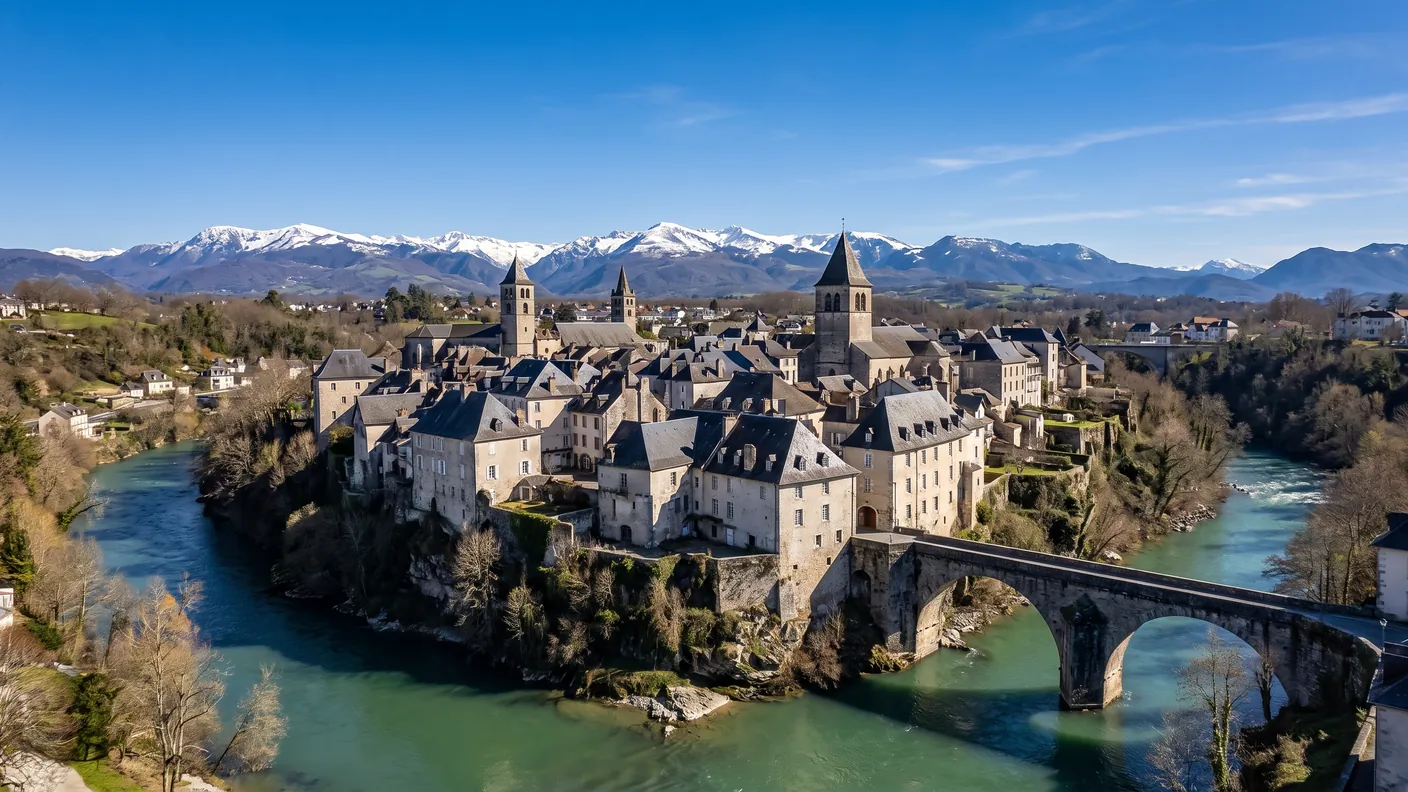
Off to Jurançon
Direct trip from Bordeaux (~2 hours 34 minutes) to Lasseube and the Jurançon vineyards, with stops along the way at your convenience—Pau, Oloron, and the wineries. Fixed, written quote—no surprises on the meter.