
Oloron-Sainte-Marie, Gateway to the Pyrenees
A town in Béarn at the confluence of the gaves, at the foot of the Pyrenees: the former Sainte-Marie Cathedral, part of the UNESCO World Heritage Site of the Routes of Santiago de Compostela; Laulhère berets; and Lindt chocolate—just over two and a half hours from Bordeaux.
Oloron-Sainte-Marie at a Glance
Oloron-Sainte-Marie is a town in Béarn, a subprefecture of the Pyrénées-Atlantiques department, located at the confluence of the Gave d'Aspe and the Gave d'Ossau. According to INSEE, it had a population of 10,684 in 2023 [source]. The Sainte-Marie Cathedral is part of the UNESCO World Heritage Site “Routes of Santiago de Compostela” [source]. Laulhère and Lindt also provide information about their local presence on their official websites.
Here are the key details to know before you go. The distance, travel time, and fare are based on the rates listed for the Bordeaux–Oloron-Sainte-Marie commercial transfer: 246 km, 2 hours and 50 minutes, and €399.
| Landmark | Details |
|---|---|
| Department | Pyrénées-Atlantiques (64), Nouvelle-Aquitaine |
| Status · Demonym | Subprefecture, district seat · Oloronais |
| Population | 10,684 residents (INSEE 2023) [source] |
| Elevation | from 194 m to 1,280 m · at the confluence of the mountain streams |
| Don't miss it | St. Mary's Cathedral (UNESCO) [source], Holy Cross Church, the beret |
| Distance from Bordeaux | about 246 km · about 2 hours and 50 minutes by car |
| Around | Pau, the Aspe and Ossau valleys, the Somport, the Basque Country |
A quick note to put Oloron-Sainte-Marie in context. The city was formed in the 19th century, when two long-standing rivals merged in 1858: Sainte-Marie, the episcopal town on the plain centered on its cathedral, and Oloron (the Sainte-Croix neighborhood), the viscount’s town perched on a promontory between two mountain streams. Hence the compound name. It should not be confused with Orthez, the other major town in Béarn, further north. Oloron is neither a seaside resort nor a static “museum town”: it is a lively, industrious mountain town, steeped in history yet oriented toward its valleys. Every statement in this guide is based on verifiable sources, cited at the end of the article.
Here we’ll go over everything you need to know: Oloron’s location in Béarn at the confluence of the gaves, the Sainte-Marie Cathedral and its UNESCO-listed portal, the Sainte-Croix Church and the Upper Town, the history of the two towns, the beret and the Laulhère company, Lindt chocolate and the people of the Pyrenees, the valleys and mountain passes of the Pyrenees, the best time of year to visit, nearby attractions, and the easiest way to get there from Bordeaux with a chauffeur service—all thoroughly researched and verified.
Where is Oloron-Sainte-Marie located?
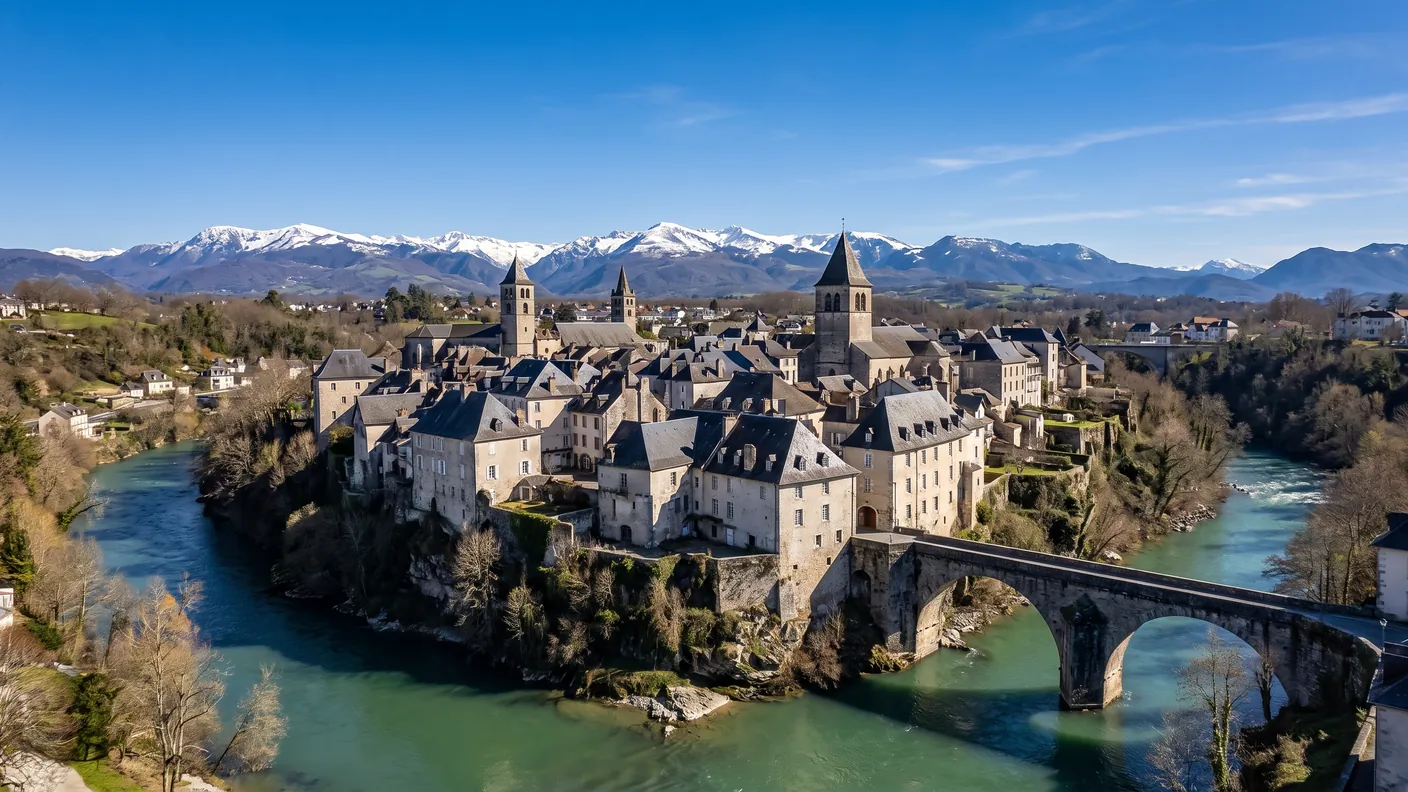
Oloron-Sainte-Marie is located in Béarn, in the southern part of the Pyrénées-Atlantiques department (64), about 30 kilometers from Pau. INSEE classifies it as a subprefecture and publishes its municipal data [source]. The Sandre lists the Gave d’Oloron as flowing through the municipality [source], at the confluence of the Pyrenean valleys of Aspe, Ossau, and Barétous.
At the confluence of the mountain streams, at the foot of the Pyrenees
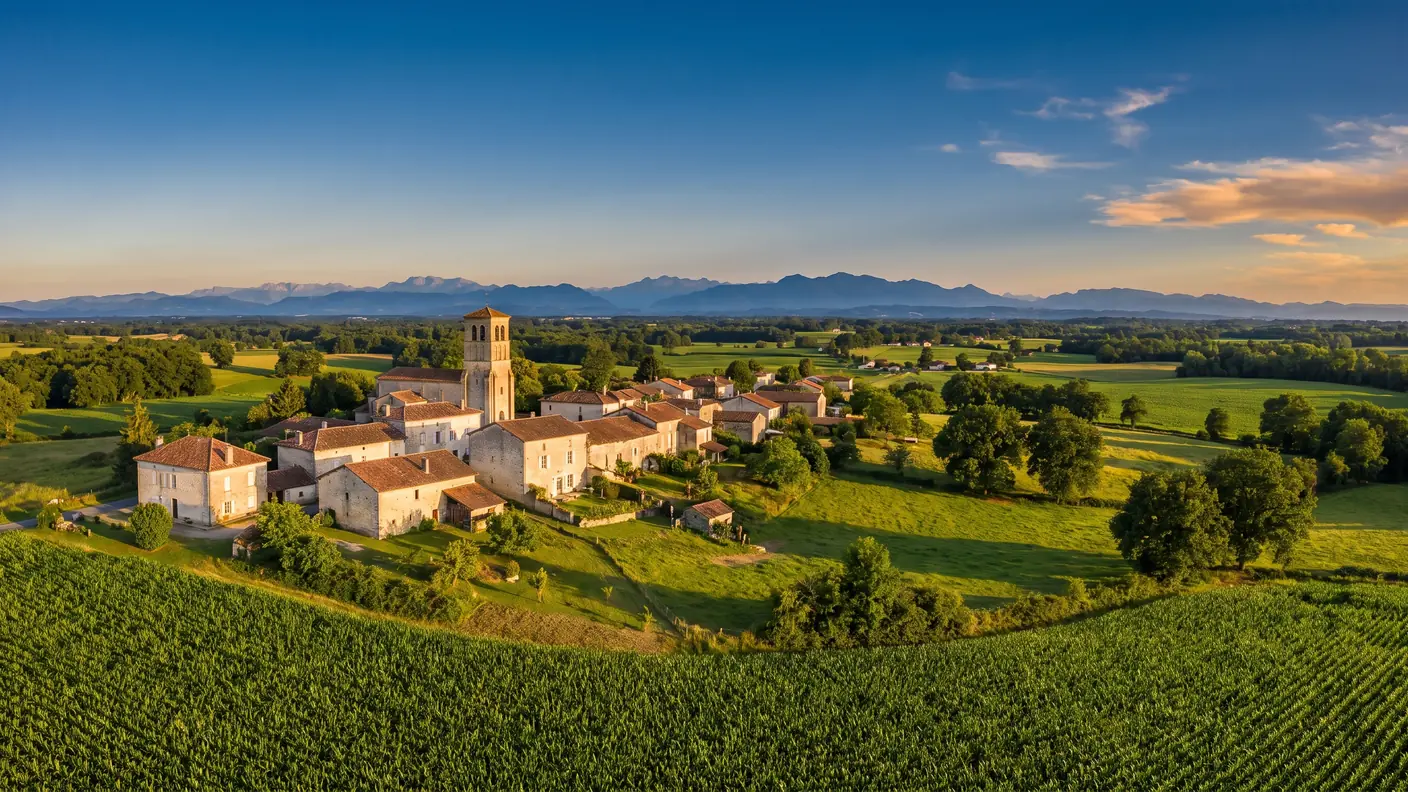
What really sets Oloron apart is its location beside the water and at the foot of the mountains. In the city itself, the Gave d'Aspe and the Gave d'Ossau, each flowing from its own valley, merge to form the Gave d'Oloron, itself a tributary of the Gave de Pau. The town developed on the hills and riverbanks around this confluence. The Pyrenees rise close by on the horizon, with Oloron serving as one of their gateways: from here, roads wind through the valleys toward the mountain passes and Spain. This landscape of rushing water and mountains explains Oloron’s charm—a cool, green town where the sound of the gaves is ever-present and vast Pyrenean scenery lies only a short drive away.
A subprefecture with a population of 10,700
According to INSEE, Oloron-Sainte-Marie had a population of 10,684 in 2023 [source]. The city maintains industrial activity, as documented by the companies themselves: Laulhère operates its beret workshops there, and Lindt France has its French chocolate manufacturing facility there. These sources should be consulted first for information that is subject to change.
The confluence of the mountain streams
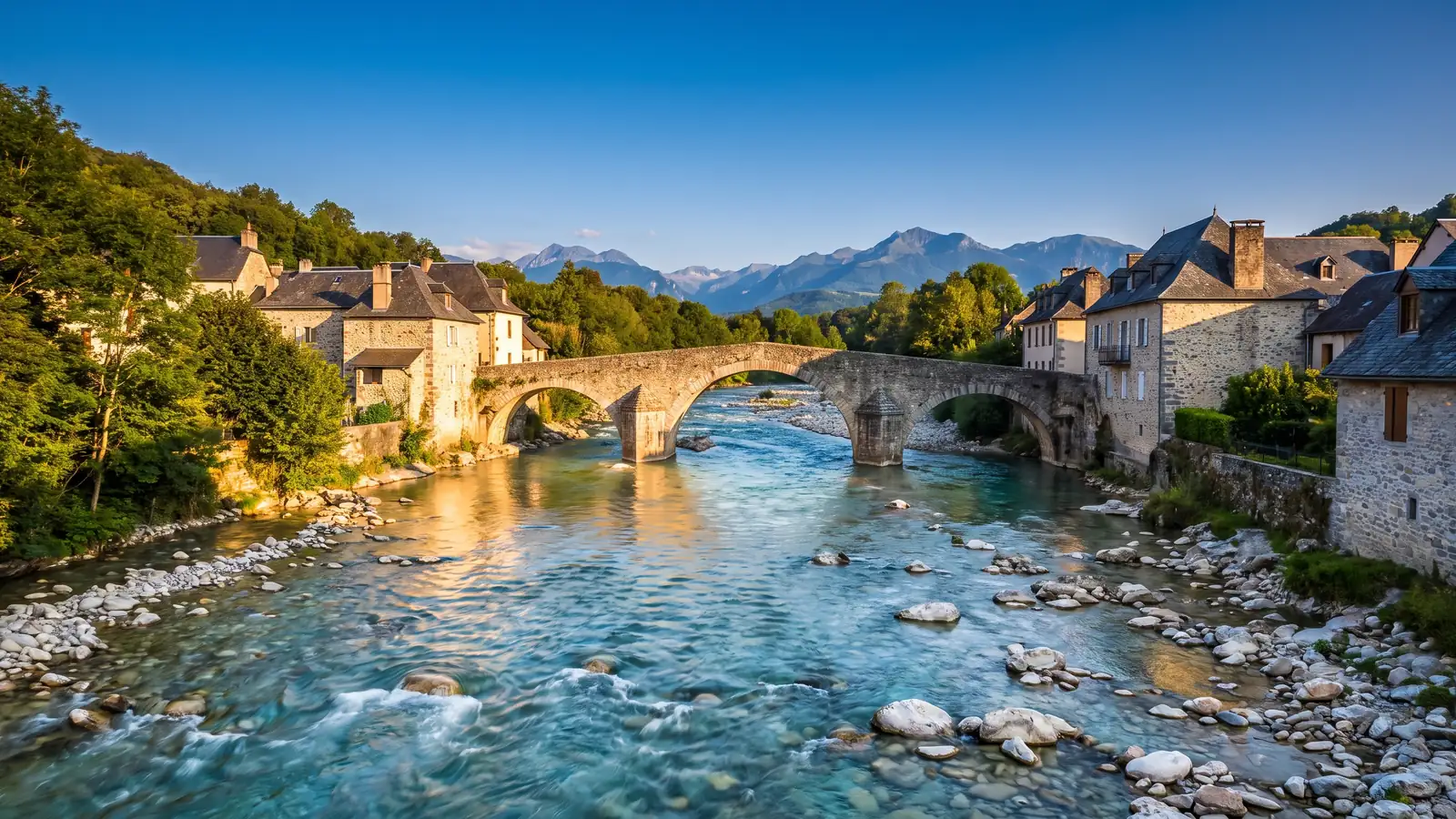
The Sandre records a monitoring station on the Gave d'Oloron at Oloron-Sainte-Marie. Within the city, the Gave d'Aspe and the Gave d'Ossau converge to form this watercourse [source]. The riverbanks and bridges offer a view of this landscape, though the river’s ecological quality cannot be judged solely by the appearance of the water.
Two mountain streams for one river
The word “gave”, specific to the Béarn and Bigorre regions, refers to a mountain torrent that has become a river. In Oloron, two of these converge: the Gave d’Aspe, flowing from the Aspe Valley and the Somport Pass, and the Gave d’Ossau, flowing down from the Ossau Valley and the Pic du Midi. At their confluence, in the heart of the city, they form the Gave d’Oloron, which then flows northward to join the Gave de Pau, then the Adour, and finally the ocean. These fast-flowing, clear waters rush over pebble beds between wooded banks and old stone bridges. They give Oloron its freshness, its constant background murmur, and much of its charm. Strolling along the gaves, from one bridge to the next, between the lower and upper towns, is one of the most enjoyable ways to explore the city.
Whitewater, the realm of the salmon
Sandre provides a site profile and related public data for the Gave d'Oloron [source]. This guide does not interpret this data as a general assessment of the water’s “purity.” For information on fishing, species found in the river, permitted fishing seasons, and access conditions, please consult the relevant local authorities before your trip.
St. Mary's Cathedral, a Romanesque masterpiece
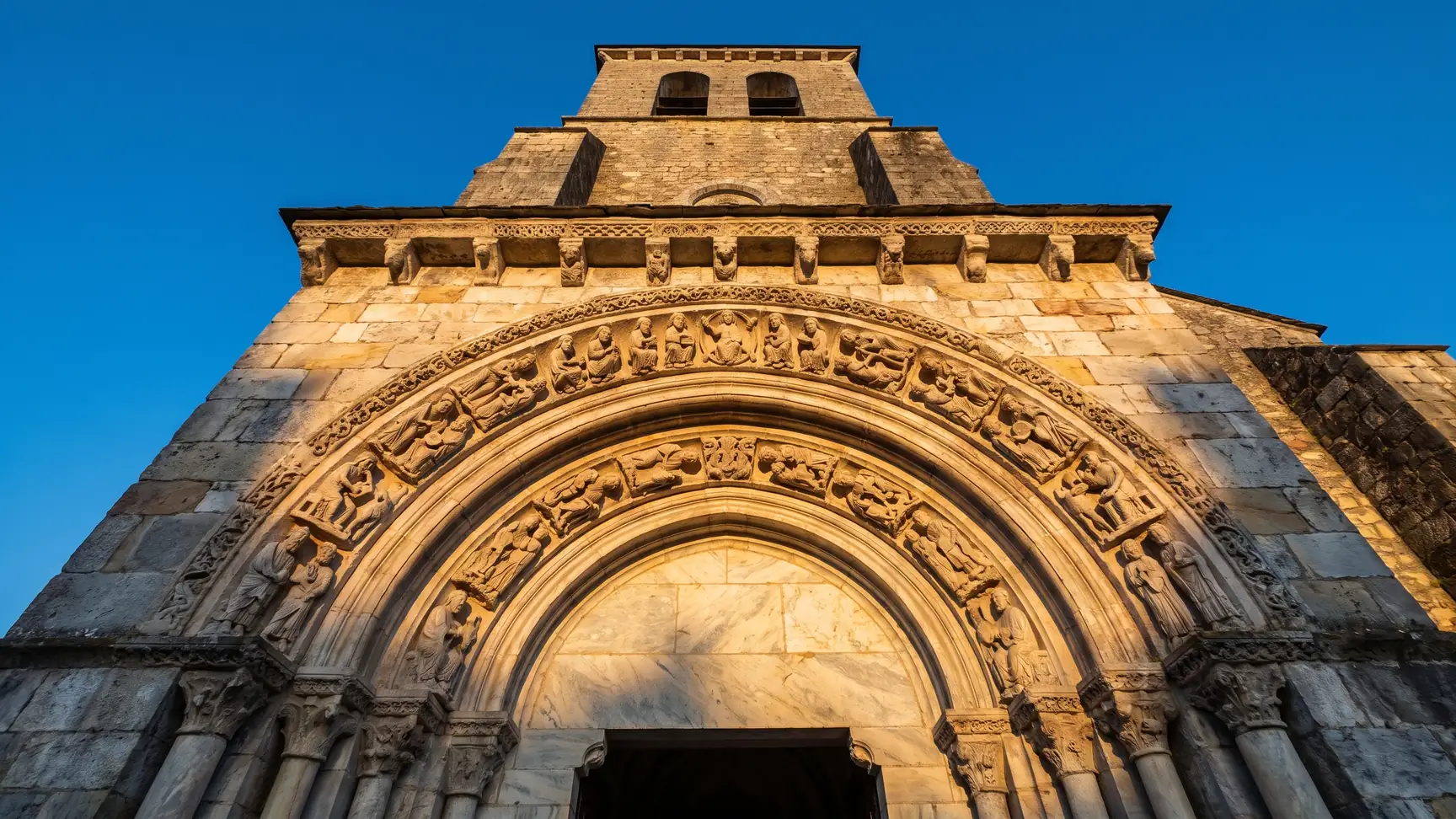
UNESCO includes the Cathedral of Sainte-Marie in Oloron as part of the serial property “Routes of Santiago de Compostela in France,” inscribed in 1998. The Ministry of Culture’s POP database documents separately its designation as a historic monument and its Romanesque portal [UNESCO] [POP].
A carved gate listed as a UNESCO World Heritage Site
St. Mary's Cathedral is listed as a World Heritage Site along with the Routes of Santiago de Compostela in France [source]. Its POP entry notes, in particular, that it was designated a historic monument in 1939 and describes the Romanesque portal [source]. These two official references clearly distinguish between its UNESCO status and its national protection status.
The Descent from the Cross and the Elders of the Apocalypse
The decoration on this portal resembles a medieval picture book. The tympanum—a rare feature for a church portal—depicts the Descent from the Cross; on either side, two soldiers sculpted in the round gaze at the scene. The archways framing the portal depict the twenty-four elders of the Apocalypse gathered around the Paschal Lamb, as well as the “works of the months”—scenes from daily life in medieval Béarn: the preparation of salmon, the pig feast, and the cooper’s craft. At the base of the portal, two figures of chained men have long been interpreted, by tradition, as defeated Saracens, alluding to the crusades of Gaston IV; art historians today, however, see them instead as men bound by the Old Law, awaiting their deliverance at the door of the Church. The work of anonymous sculptors—one of whom is nicknamed “the Master of Oloron”—this ensemble is one of the pinnacles of Pyrenean Romanesque sculpture, best appreciated by taking the time to decipher every detail.
| Oloron's Two Romanesque Gems | Details |
|---|---|
| St. Mary's Cathedral | Early 12th-century Romanesque portal · Designated a historic monument in 1939 · UNESCO World Heritage Site in 1998 (Santiago de Compostela) |
| Portal Tympanum | The Descent from the Cross, a rare subject for a church portal |
| Archivolts | The 24 Elders of the Book of Revelation and the Tasks of the Months |
| Church of the Holy Cross | circa 1080 · Mozarabic ribbed dome · designated a historic monument in 1846 |
| Upper Town | Sainte-Croix Headland, a former Roman oppidum |
The Church of the Holy Cross and the Upper Town
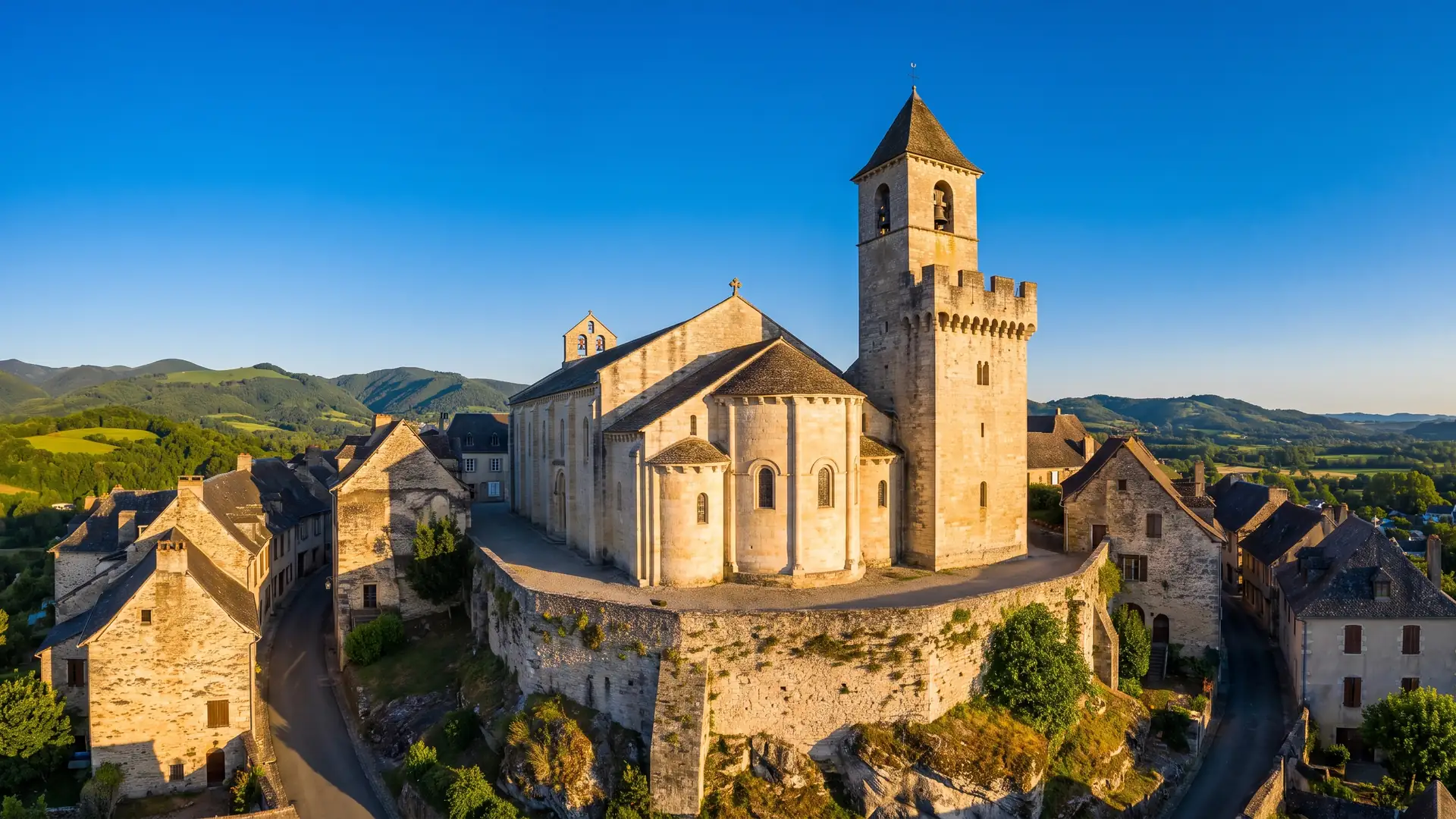
The Ministry of Culture’s POP database dates the main construction phase of the Sainte-Croix Church to the Middle Ages and confirms its designation as a historic monument in 1846. This official record establishes the building’s heritage status in the upper town of Oloron-Sainte-Marie [source].
A dome from Spain
The Mérimée entry identifies Sainte-Croix as a church owned by the municipality. It indicates that the building dates from the Middle Ages and was listed in 1846 [source]. More detailed architectural interpretations should be verified using scientific documentation or by consulting the monument’s custodian.
The Sainte-Croix Headland, the city’s birthplace
The Church of Sainte-Croix stands atop the promontory overlooking the confluence of the mountain streams: it was here, on the site of an ancient Roman oppidum, that the viscounts of Béarn refounded the town of Oloron in the 11th century. This neighborhood, the oldest in the city, forms the upper town, with its narrow alleys and old stone houses, offering views of the rivers, rooftops, and mountains. The parish church of Oloron until 1102—the year construction began on the new Sainte-Marie Cathedral in the lower town—Sainte-Croix is the cradle and starting point of Oloron’s entire urban history. Strolling through this hilltop neighborhood, around the church, through the maze of ancient alleyways, takes you back to the city’s origins and allows you to enjoy its most beautiful views, from Romanesque architecture to panoramic vistas of the mountain streams and the Pyrenees. It’s one of the great pleasures of a visit to Oloron.
Two Cities, One History
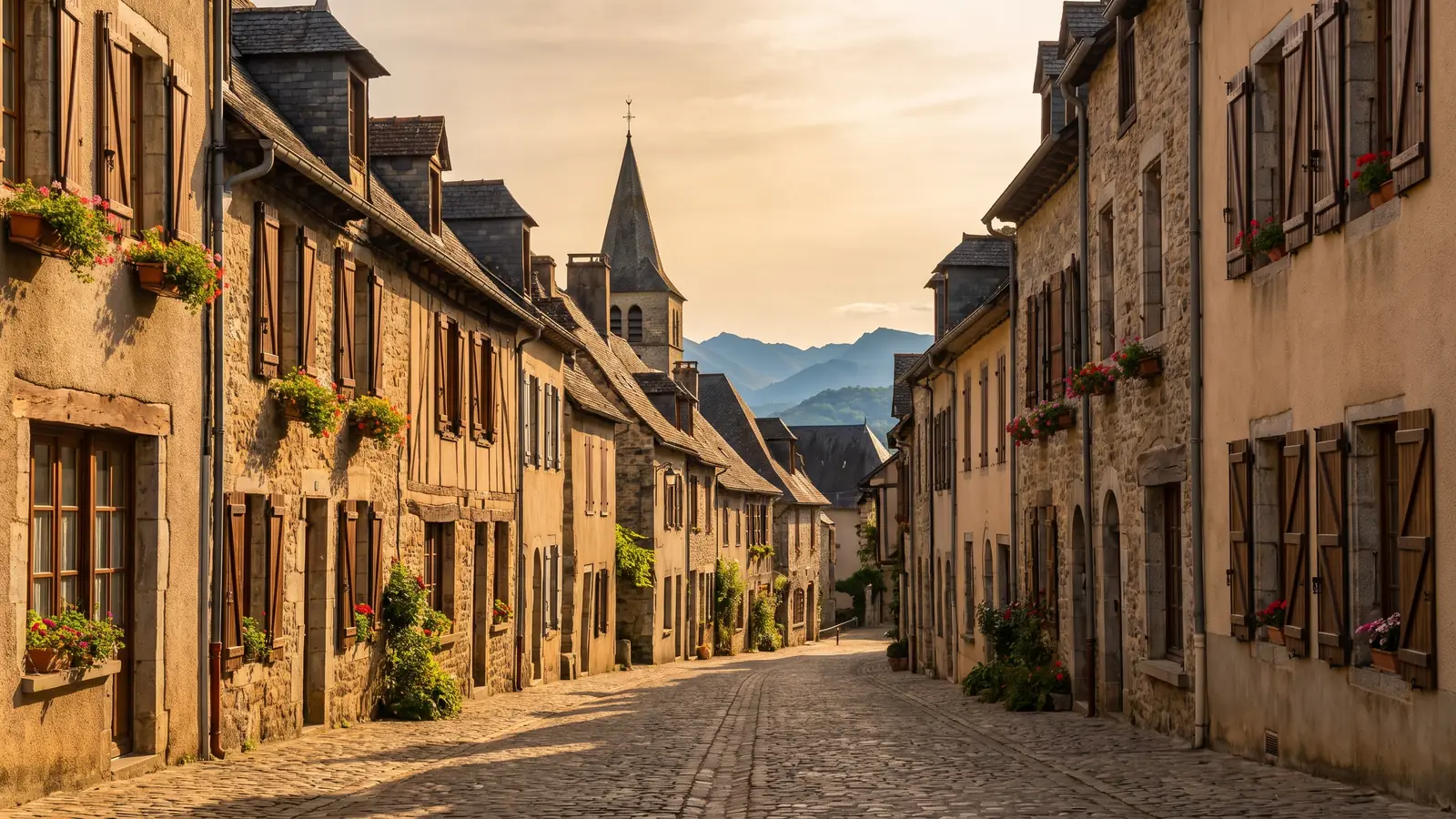
Oloron-Sainte-Marie has its roots in two towns: the ancient Roman settlement of Iluro, refounded in the 11th century by the viscounts of Béarn, and Sainte-Marie-l’Épiscopale—longtime rivals before they merged in 1858. A thousand-year history, unfolding between the Gaves.
From Roman Iluro to the Town of Centulle V
The history of Oloron begins with the Romans: at this confluence, they founded the city of Iluro, whose name—of Aquitanian origin—is said to mean “the city of waters” (ili, meaning “city,” and ur, meaning “water”)—a fitting name for a city born between two rivers. As a stop along the route to Somport and Spain, the city subsequently endured the upheavals of the Early Middle Ages. Its rebirth dates to 1080: that year, Centulle V, Viscount of Béarn, known as “the Younger,” rebuilt and repopulated the town on the Sainte-Croix promontory, the ancient oppidum, and granted it a charter of settlement—a document setting out privileges and customs that would become the famous “For d’Oloron,” later reinforced in 1220. This marked the birth of medieval Oloron, a viscount’s town and commercial center oriented toward its valleys and trade with nearby Spain.
Two rival cities, united in 1858
For nearly eight centuries, Oloron consisted of two distinct and often rival towns, separated by the Gave d'Aspe. On the promontory stood Sainte-Croix, the viscount's town—feudal and mercantile, heir to Iluro. On the plain opposite stood Sainte-Marie, the episcopal town, which grew around the cathedral and the bishops’ authority. Oloron had been the seat of a diocese since the 5th century; its first known bishop, Saint Grat, attended the Council of Agde in 506. The diocese shaped the town’s development for centuries. The two towns officially merged in 1858 to form the municipality ofOloron-Sainte-Marie—hence its compound name. The diocese had been abolished in 1801 and incorporated into Bayonne. This dual origin—episcopal and viscountal—explains Oloron’s rich heritage, which includes two historic districts and two major Romanesque churches, each carrying the legacy of one of the former towns.
Oloron, the "Beret Capital"
Laulhère operates its workshops in Oloron-Sainte-Marie and traces its local history back to 1840, following the company’s founding in 1838. The company itself describes the steps involved in manufacturing its berets in the Béarn region [official source]. This verifiable presence explains the current connection between Oloron and this craftsmanship.
Laulhère: A Tribute to the French Beret
Laulhère's history page states that the company was founded in 1838 and began manufacturing berets in 1840. It also describes the processes carried out in its Oloron-Sainte-Marie workshops, from shaping to finishing [source]. Since production and visitor information are subject to change, please verify them directly with the company.
The Beret Museum in Nay
To fully understand the history of this headwear, visitors are encouraged to round out their trip to Oloron with a visit to the Beret Museum, which is located not in Oloron itself, but in Nay, another small town in the Béarn region about thirty kilometers away, between Oloron and Lourdes. Housed in a former factory, it traces the history of beret-making using vintage machinery that is still in working order, and is the only museum of its kind in the world. The itinerary is logical and informative: in Oloron, the active workshop, with Laulhère still in production today; in Nay, the museum, which preserves the memory of the craft. The two towns, half an hour’s drive apart, thus form a short Béarn beret tour, blending industrial heritage and tradition. A driver can easily take you between them in a single day, adding other highlights of the Béarn region along the way—a convenient way to grasp the full history of this quintessentially French symbol.
Chocolate: Lindt and the Pyrenees
Lindt France states that its chocolates for the French market are manufactured at its plant in Oloron-Sainte-Marie. This company source confirms the local manufacturing facility [official source]. Production figures, headcount, and site access requirements must be verified at the time of the visit.
A Century of Chocolate, from Rozan to Lindt
Lindt France lists Oloron-Sainte-Marie as its French chocolate manufacturing facility [source]. This official reference establishes the current industrial connection but does not, on its own, confirm all the detailed accounts regarding previous companies. Dates, production capacity, headcount, and tour details should therefore be verified through the company’s official channels.
A treat to take home
The location of the production facility has been confirmed by Lindt France [source]. This guide does not guarantee the availability of products for purchase or tours; please check the practical details directly with the company. Oloron is also a great starting point for exploring the products of the Béarn region, including cheeses, Jurançon wines, and regional cuisine.
| A Century of Chocolate in Oloron | Landmark |
|---|---|
| Today | Lindt's French manufacturing site in Oloron-Sainte-Marie [source] · Please check with the company for practical information |
Gateway to the Valleys and the Pyrenees
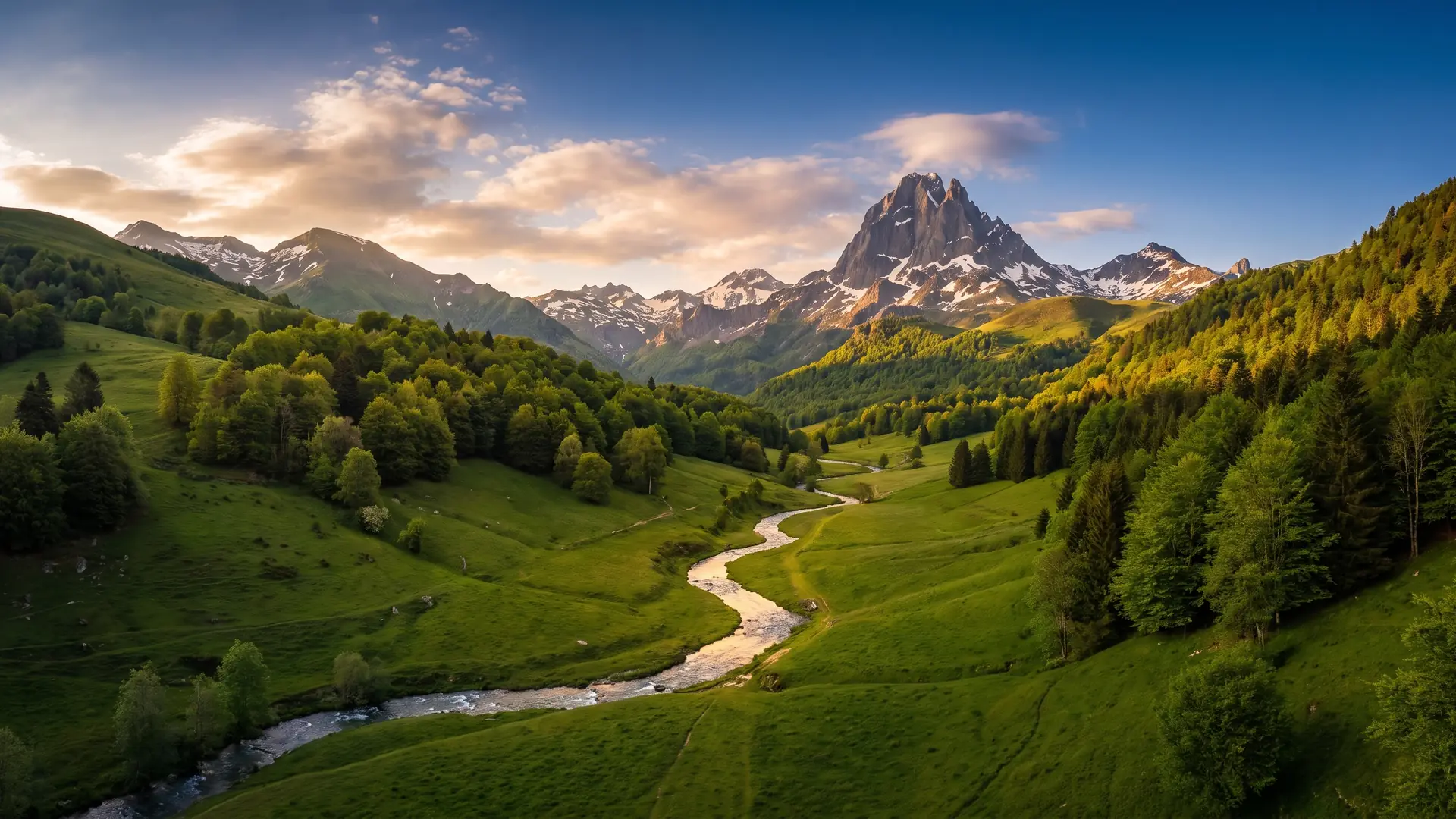
Oloron is the gateway to the great valleys of Haut-Béarn—Aspe, Ossau, and Barétous—and to the mountain passes leading to Spain. In just a few minutes, you can leave the town behind and find yourself among the most beautiful landscapes in the Pyrenees. Its location makes it an ideal base for mountain adventures.
Aspe, Ossau, Barétous: the three valleys
Three major Pyrenean valleys converge on Oloron. The Aspe Valley follows the Gave d'Aspe toward the Somport Pass (1,632 m) and Spain, along a road lined with villages and natural sites; an 8.6-km-long road tunnel opened there in 2003, and a railway line—now partially reopened—once connected Pau to Canfranc. The Ossau Valley, to the east, leads to the majestic Pic du Midi d'Ossau (2,884 m), the iconic peak of Béarn, and the Pourtalet Pass. Finally, the less familiar Barétous Valley also meets Oloron from the west. Each has its own character, mountain pass, and scenery. All three begin only a few kilometers from the town: that is the appeal of this “gateway to the Pyrenees.”
The National Park and the Routes to Santiago de Compostela
High above these valleys lies the Pyrenees National Park, established in 1967, which protects the highest and wildest landscapes of the mountain range, spanning the Pyrénées-Atlantiques and Hautes-Pyrénées departments: the Pic du Midi d’Ossau is one of its crown jewels. Hiking, mountain wildlife (chamois, vultures, marmots), high-altitude lakes, and summer pastures for sheep: from Oloron, the mountains offer endless variety. The town is also a stop on the pilgrimage routes to Santiago de Compostela: it lies on the Via Tolosana, the Arles route, which descended from Toulouse and Auch toward Oloron, then crossed the Somport Pass to reach Aragon and Spain. It is this history as a stop on the Way of St. James that earned the Sainte-Marie Cathedral its UNESCO designation. A town of mountain streams, valleys, mountain passes, and pilgrimage, Oloron embodies the very spirit of the Béarn Pyrenees, blending the great outdoors with a rich history.
| The Three Valleys of Haut-Béarn | Pass toward Spain | Landmark |
|---|---|---|
| Aspe Valley | Somport Pass (~1,632 m) | Gave d'Aspe · Road Tunnel (2003) |
| Ossau Valley | Pourtalet Pass (~1,794 m) | Pic du Midi d'Ossau (2,884 m) |
| Barétous Valley | Pierre-Saint-Martin Pass (~1,760 m) | A quieter valley opening onto Oloron |
What to See Around Oloron and When to Visit
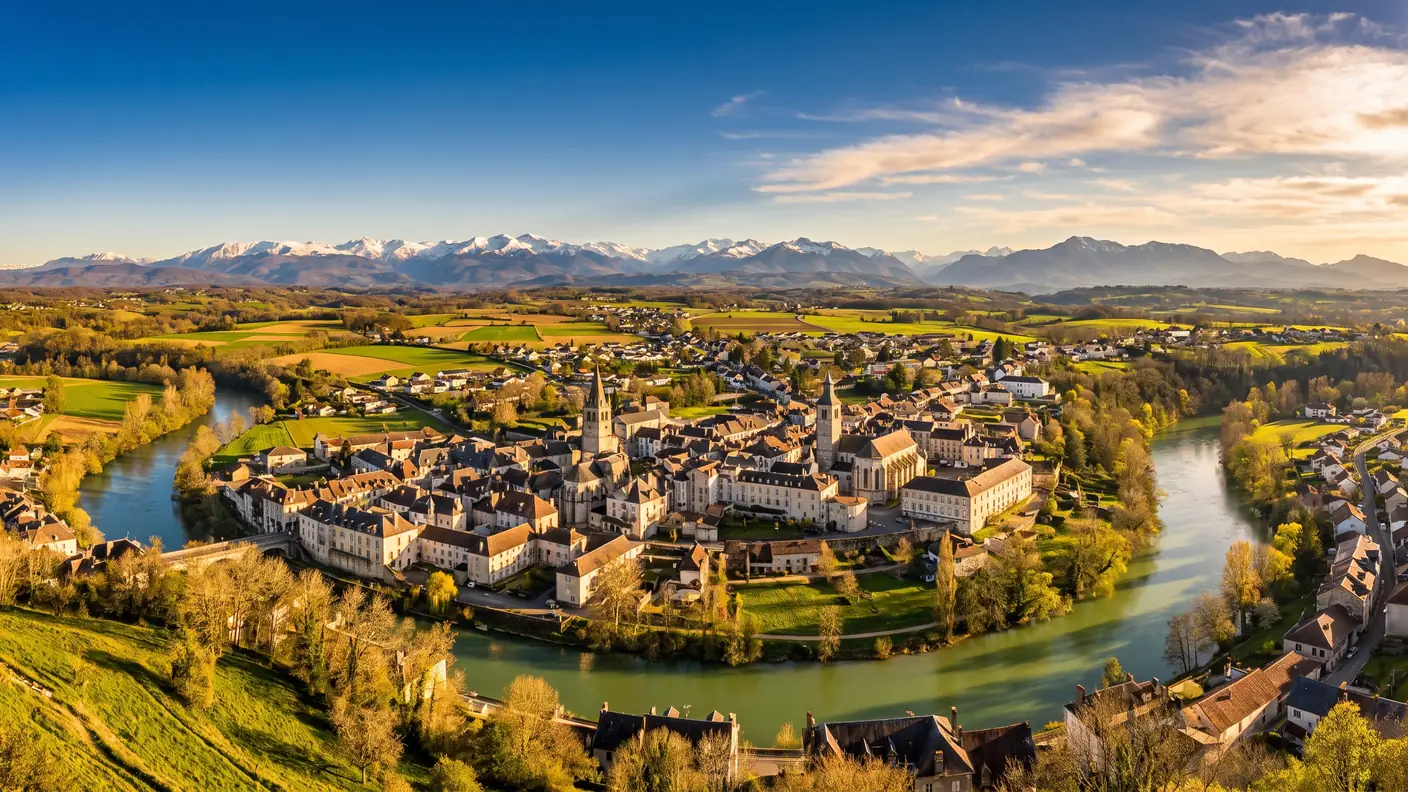
Oloron is an ideal base for exploring Béarn and the Pyrenees: Pau, the valleys, the Somport Pass, as well as the Basque Country and the Jurançon region are all within easy reach. A rare blend of plains, vineyards, and mountains.
Pau, Jurançon, and the Basque Country
About thirty kilometers away, Pau, the former capital of Béarn, is well worth a visit for its castle (where Henry IV was born), its famous Boulevard des Pyrénées and its view of the mountain range, as well as its elegance as a spa town. Between Pau and Oloron lie the Jurançon vineyards, with slopes planted on the foothills, which produce great white wines—both dry and sweet—and the village of Lasseube is part of this region. To the west, the inland Basque Country (Mauléon, capital of Soule; the Aldudes Valley; Saint-Jean-Pied-de-Port) and the coast (Bayonne, Biarritz) await exploration. To the east, Lourdes and the Hautes-Pyrénées are not far away. Oloron, at the center of it all, is the perfect base for planning wonderful days exploring heritage sites, vineyards, mountains, and fine dining. With a driver, you can easily connect these destinations without worrying about mountain roads or parking.
| Around Oloron | Distance | Interest |
|---|---|---|
| Pau | ~35 km | Former capital of Béarn, castle of Henry IV |
| Aspe Valley · Somport | ~40–60 km | Mountains, mountain passes, and tunnels on the way to Spain |
| Lasseube (Jurançon) | ~15 km | Jurançon vineyards, foothills of Béarn |
| Nay | ~35 km | Beret Museum, between Oloron and Lourdes |
| Saint-Jean-Pied-de-Port | ~65 km | Basque Country, the Camino de Santiago |
When is the best time to visit Oloron?
Oloron is worth visiting at any time of year, but spring and summer are especially appealing: the mountain streams run full, the valleys turn green, the mountain passes open, and the town comes alive with markets and festivals. Summer brings welcome coolness beside the gaves and at higher elevations, away from the heat of the plains. Autumn paints the mountain forests in rich colours and coincides with the grape harvest in neighboring Jurançon. Winter is quieter, with snow-capped Pyrenees as the town’s backdrop, uncrowded Romanesque heritage, and nearby ski resorts within easy reach. In any season, the mild climate, mountain scenery, and rich heritage make Oloron a rewarding stopover, just over two and a half hours from Bordeaux.
How to get to Oloron-Sainte-Marie from Bordeaux
Oloron-Sainte-Marie is located about 246 km from Bordeaux, which is about a 2-hour-and-50-minute drive; the easiest route is to take the A65 highway (the Bordeaux-Pau highway) to Pau, then the road leading down toward Oloron and the valleys (about 30 minutes). Oloron does have a train station, served by the TER from Pau (the Aspe Valley line), but traveling there by train from Bordeaux requires a transfer in Pau, and, more importantly, does not allow you to explore the valleys, the mountain passes and villages of Haut-Béarn, which are often poorly served by public transportation. For a trip from Bordeaux to explore this city of mountain streams and mountains and its surroundings, a car with a driver is by far the most practical and flexible option, especially if you plan to extend your trip to Pau, the Jurançon region, the valleys, or the Basque Country.
Train or chauffeur service?
For Oloron—and especially for exploring Haut-Béarn and the Pyrenees—a chauffeur service from Bordeaux offers a direct, door-to-door journey with no transfers or waiting, plus the option to stop in Pau, the Jurançon region, or a valley along the way. This is particularly useful for a day trip or weekend combining the town, valleys, a mountain pass, or a resort. The route is offered at a fixed price provided in advance: allow about 461 € € for the one-way trip in a Mercedes sedan or a van seating up to 8 passengers, with a professional chauffeur. The price set at booking remains fixed regardless of traffic or requested stops, unlike a taxi meter.
This is the perfect option for a heritage and nature getaway, a family trip, a ski vacation in the valleys, an event, or a simple transfer to or from the Bordeaux-Mérignac, Pau-Pyrénées, or Biarritz airports. You can travel alone, as a couple, or in a small group of up to 8 people, with luggage or mountaineering gear, and request stops in Pau, the Jurançon region, or one of the valleys. In practice, booking is quick and easy: simply provide your departure address in Bordeaux and your destination in Oloron, along with the date, desired time, and number of passengers, and you’ll receive a fixed-price quote in writing. On the day of the trip, the driver picks up the passengers at the agreed-upon address and takes them directly to Oloron, without any detours—a real advantage for exploring Béarn with peace of mind.
| Route | Distance | Duration | Landmark |
|---|---|---|---|
| Bordeaux → Oloron-Sainte-Marie | ~246 km | ~2 hours 50 minutes | Starting at ~399 € for a private chauffeur service |
| Oloron → Pau | ~35 km | ~40 min | capital of Béarn |
| Oloron → Somport Pass | ~60 km | ~1 hour | Aspe Valley, Spain |
| Oloron → Nay (Beret Museum) | ~35 km | ~40 min | between Oloron and Lourdes |
Whether you come for Sainte-Marie Cathedral and its UNESCO-listed portal, for Sainte-Croix Church and its Moorish dome, for berets and chocolate, or for the mountain streams and valleys of the Pyrenees, Oloron-Sainte-Marie is a treat for lovers of heritage, nature, and authentic craftsmanship—a town of character, at the confluence of rivers and at the foot of the mountains, that opens the doors to Haut-Béarn.
For a cultural getaway, a day in the mountains, or an event, a chauffeur service provides a comfortable, punctual journey—book a driver from Bordeaux → Oloron-Sainte-Marie or explore all our destinations.
Frequently Asked Questions
Where is Oloron-Sainte-Marie located?
Oloron-Sainte-Marie is a subprefecture of the Pyrénées-Atlantiques department, in the Béarn region. Sandre documents the Gave d'Oloron within the municipality [source]. According to INSEE, the population was 10,684 in 2023 [source]. From Bordeaux, the posted travel time covers approximately 246 km in 2 hours and 50 minutes.
What is the distance between Bordeaux and Oloron-Sainte-Marie?
It’s about 246 km by road, or roughly a 2-hour, 50-minute drive; the easiest route is to take the A65 highway to Pau, then the road to Oloron. For a private driver from Bordeaux, the listed rate is fixed, starting at €399 one way. Oloron has a train station, but the train from Bordeaux requires a transfer in Pau.
Why is Oloron Cathedral a UNESCO World Heritage Site?
What is the Church of the Holy Cross in Oloron?
The Sainte-Croix Church is located in the upper town of Oloron-Sainte-Marie. The Ministry of Culture’s POP database indicates that its main construction phase dates back to the Middle Ages and confirms that it was listed as a historic monument in 1846 [source]. Check local information for visiting hours and conditions.
Why is Oloron said to be the "capital of the beret"?
Laulhère states that its company was founded in 1838, that beret production began in 1840, and that its workshops are located in Oloron-Sainte-Marie [official source]. This long history of industrial production explains why the town is associated with the beret. Visiting arrangements must be confirmed with the company.
Is there really a Lindt factory in Oloron?
Lindt France states that its French chocolate manufacturing plant is located in Oloron-Sainte-Marie [official source]. Information regarding production, staffing, the store, and tours is subject to change: please check with the company before visiting.
What is the Gave d'Oloron?
Sandre records the Gave d'Oloron monitoring station at Oloron-Sainte-Marie and publishes its data [official source]. Within the city, the river is formed by the confluence of the Gave d'Aspe and the Gave d'Ossau. This guide does not assess ecological quality based solely on the water's appearance.
What's there to see around Oloron-Sainte-Marie?
Highlights across Haut-Béarn and the Pyrenees include the Aspe Valley toward the Somport Pass and Spain, the Ossau Valley toward the Pic du Midi d’Ossau (2,884 m), and the Barétous Valley. Pau, the former capital of Béarn, lies about 35 km away, with its castle and Boulevard des Pyrénées. The nearby Jurançon wine region includes Lasseube, while Nay is home to the Beret Museum. Further afield lie the inland Basque Country, the coast at Bayonne and Biarritz, and Lourdes. Oloron is a well-placed base for exploring the region’s heritage, vineyards, mountains, and cuisine.
Is Oloron a good base for exploring the Pyrenees?
Yes, it’s one of the best. Oloron-Sainte-Marie marks the entrance to three major valleys in Haut-Béarn: the Aspe Valley (Somport Pass, road tunnel to Spain), the Ossau Valley (Pic du Midi d’Ossau, Pourtalet Pass), and the Barétous Valley (Pierre-Saint-Martin Pass). In just a few minutes, you can leave the city behind for the high mountains, lakes, summer pastures, and the Pyrenees National Park, established in 1967. Hiking, skiing, salmon fishing, and mountain wildlife: from Oloron, everything is within easy reach. The town thus combines the charm of a small historic town with immediate access to the Pyrenees’ most beautiful landscapes.
Should Oloron be confused with Orthez?
In fact, people sometimes confuse the two major cities of Béarn. Oloron-Sainte-Marie is located to the south, at the foot of the Pyrenees, at the confluence of the Gave d’Aspe and the Gave d’Ossau: it is the city of the two Romanesque churches, the beret, and chocolate—the gateway to the valleys. Orthez lies further north, on the Gave de Pau; it is the former capital of Béarn and is famous for its medieval fortified bridge. Both are subprefectures of the Pyrénées-Atlantiques department and are worth visiting, but they are indeed two distinct towns. Oloron owes its compound name to the 1858 merger of two former towns: Oloron (Sainte-Croix) and Sainte-Marie.
Can I book a private driver from Bordeaux to Oloron-Sainte-Marie?
Yes. The transfer from Bordeaux to Oloron-Sainte-Marie covers approximately 246 km in 2 hours and 50 minutes, with a starting price of €461 one-way. It is available in a sedan or a van seating up to 8 passengers, with a professional chauffeur. The quote is provided and confirmed in writing before departure.
Further Reading
- The nearby vineyard: see the Lasseube Guide (Jurançon, the pebble houses, the foothills), 13 km away
- Chocolate and Romanesque art: see the Bayonne Guide (the UNESCO-listed cathedral, chocolate, the Vauban ramparts)
- The capital of Béarn: see the Pau Guide (the Castle of Henry IV, the Boulevard des Pyrénées), 35 km away
- A Major Destination in the Pyrenean Foothills: Planning a Stop in Lourdes and the Marian City
- Plan your trip: check the Bordeaux → Oloron-Sainte-Marie transfer and the listed rates, or explore all our destinations
Sources and References
- INSEE — Regional Comparison Tool, municipality of Oloron-Sainte-Marie (64422) — 2023 population; accessed July 24, 2026.
- UNESCO — The Routes to Santiago de Compostela in France — inscription as a serial property; accessed July 24, 2026.
- Ministry of Culture, POP — Sainte-Marie Church — Romanesque portal and listing dated March 7, 1939; accessed July 24, 2026.
- Ministry of Culture, POP — Sainte-Croix Church — listed in the 1846 register; accessed July 24, 2026.
- Laulhère — History of the Company and Oloron-Sainte-Marie Workshops — Founding, Beret Manufacturing, and Establishment; accessed July 24, 2026.
- Lindt France — Chocolate Production Sites — Oloron-Sainte-Marie Factory; accessed July 24, 2026.
- Sandre — Gave d'Oloron station at Oloron-Sainte-Marie — national reference system and station data; accessed July 24, 2026.
Article updated in July 2026.
Our Latest Guides
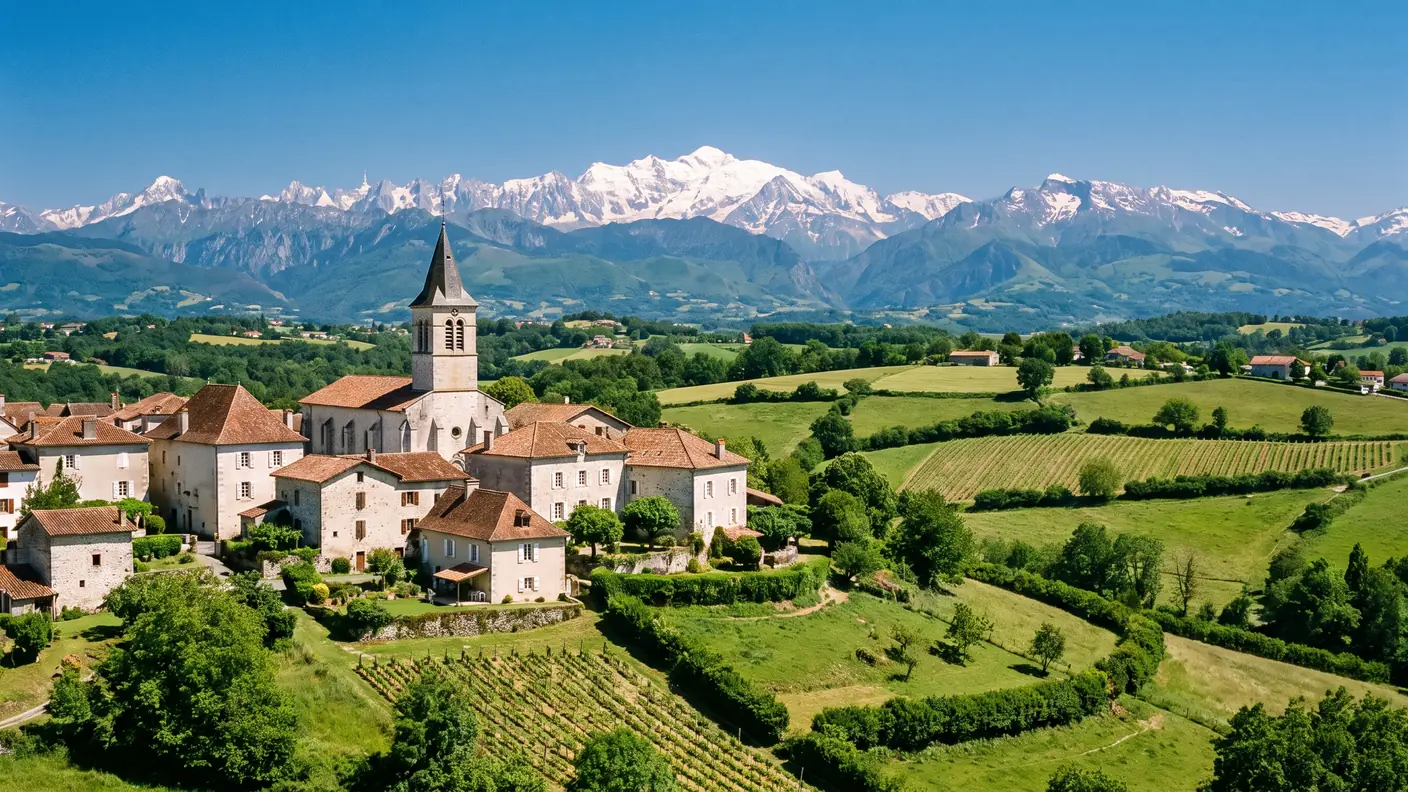
On the Way to Haut-Béarn
Direct trip from Bordeaux (~2 hours 50 minutes) to Oloron-Sainte-Marie and the Pyrenees, with stops along the way as desired—Pau, Jurançon, the valleys. Written fixed-price quote, with no unexpected charges.