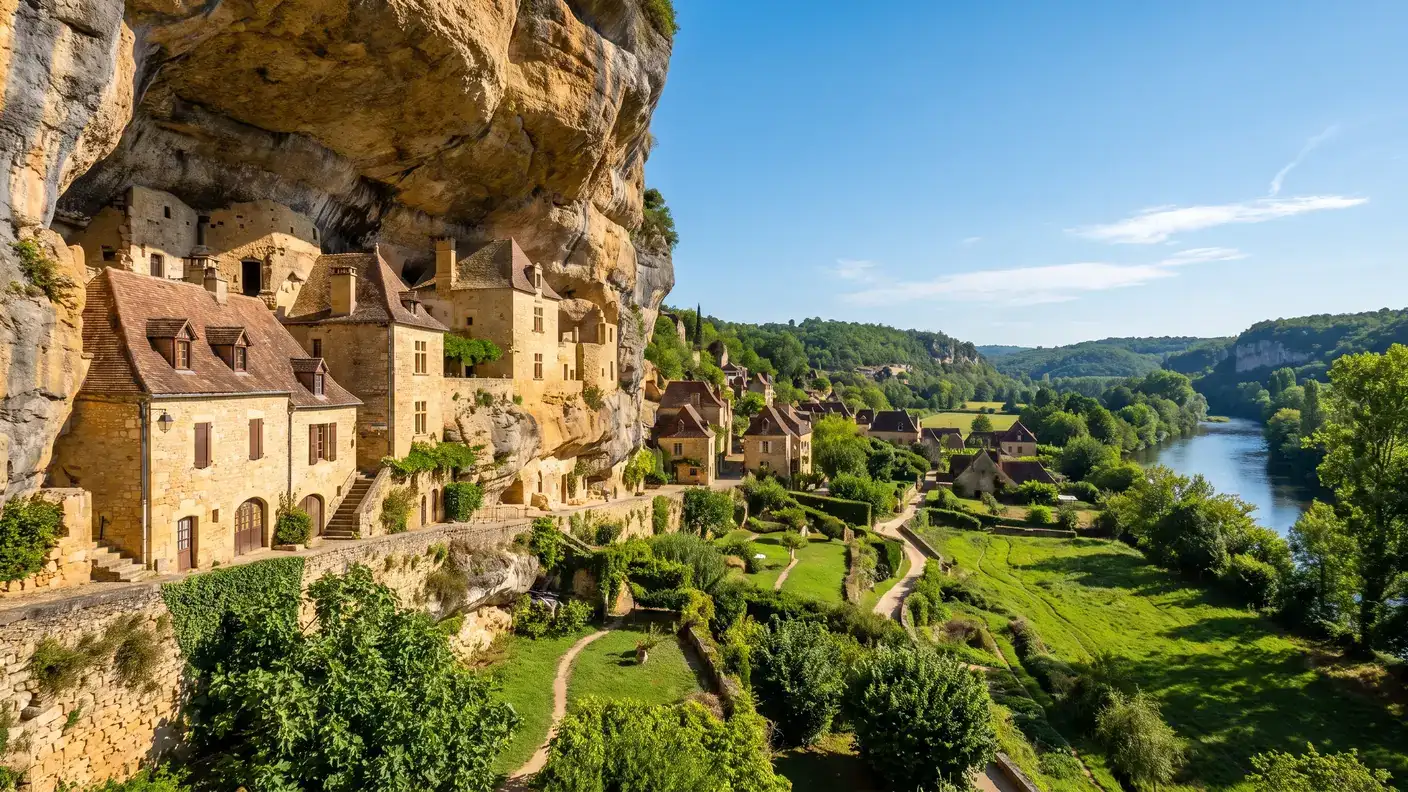
Discover Les Eyzies, capital of prehistory
The village where humanity recognized itself: Cro-Magnon, discovered in 1868; Font-de-Gaume and its polychrome bison, with limited[5] daily admissions; the National Museum of Prehistory; and the sites in the valley, about 2 hours and 15 minutes from Bordeaux.
Les Eyzies at a Glance
Les Eyzies is a commune in the Vézère Valley, in the Dordogne, known for the discovery of Cro-Magnon skeletons in 1868 and for its concentration of prehistoric sites. Font-de-Gaume preserves original polychrome paintings; the Combarelles site features mainly engravings. The National Museum of Prehistory is housed in the Château de Tayac above the village. Nearby, Rouffignac, Cap Blanc, Commarque, La Roque Saint-Christophe, and Lascaux round out the itinerary. Access to the caves is subject to visitor quotas, reservation schedules, and, at times, conservation considerations: official information available on the day of your visit should take precedence over this guide. From Bordeaux, the route is approximately 175 km and a 2-hour, 15-minute drive. From downtown Bordeaux, the Eco fare starts at 295 € one-way for one to three passengers, with a fixed price confirmed in writing. Two additional city-center fare markers are 303 and 339 € for sedan service. There is a train station serving the town, but the trip from Bordeaux requires a transfer, and the outlying sites are scattered throughout the valley.
Key Figures and Locations
- Les Eyzies is home to an exceptional collection of protected prehistoric heritage sites, listed in the national POP[13] database.
- It was here, in March 1868, that the skeletons of the Cro-Magnon man were unearthed, the first scientifically recognized[2] fossil remains of Homo sapiens.
- Font-de-Gaume, discovered on September 12, 1901, is described by the Centre des monuments nationaux as the last polychrome decorated cave open to the public; the number of visitors admitted each day is limited[5].
- The National Museum of Prehistory (founded in 1918) houses approximately 6 million artifacts[6], one of the largest Paleolithic collections in France.
- The valley has given its name to four prehistoric cultural periods recognized worldwide, the Mousterian, the Micoquian, the Tayacian, and the Magdalenian, based on sites located within 12 km of the town.
- Nearby: Rouffignac and its 158 mammoths, the carved frieze at Cap Blanc, the “forgotten fortress” of Commarque, and La Roque Saint-Christophe, all within 15 km.
- The 15 sites that make up the “Prehistoric Sites and Decorated Caves of the Vézère Valley” have been listed by UNESCO since 1979[11]; the local masterpiece, the Venus of Laussel, can be viewed… at the Musée d’Aquitaine in Bordeaux.
- From downtown Bordeaux: 175 km, about 2 hours and 15 minutes, Eco service starting at €295, door-to-door.
Before You Go: What Les Eyzies Really Is
In Les Eyzies, because of the unique nature of the caves, you must first check the official ticket office: Font-de-Gaume and Les Combarelles limit daily admissions for conservation[5] reasons. Make a reservation before finalizing your itinerary, then plan your visit to the museum and other sites around the time slot you’ve secured.
Les Eyzies is a paradox: a small town of 1,134 residents, nestled at the confluence of the Vézère and Beune rivers, that has played as significant a role in the history of science as any capital city. It was here that Cro-Magnon remains were discovered; it was here that French prehistory was defined between 1863 and 1918; and it was here that UNESCO designated one of its most unique sites as early as 1979. The town is home to numerous protected prehistoric monuments and sites, which can be viewed in the national POP[13] database.
This guide separates fact from fiction: the true story of the 1868 discovery (a road construction site, not a railroad), the pioneers Lartet, Breuil, and Peyrony, the detailed guide to Font-de-Gaume and the Combarelles, quotas, reservation schedule, pitfalls, the museum with 6 million objects, and the array of excursions within 15 km. All information has been verified against official sources, including road distances.
One logistical detail to keep in mind right away: the village has a train station, but there are no direct trains from Bordeaux, and the sites are scattered within a 15-km radius. If you’re not driving, check out the shuttle service from Bordeaux: the driver will take you around the valley without any transfers.
A Village at the Foot of the Cliffs: The Geography of a Capital City
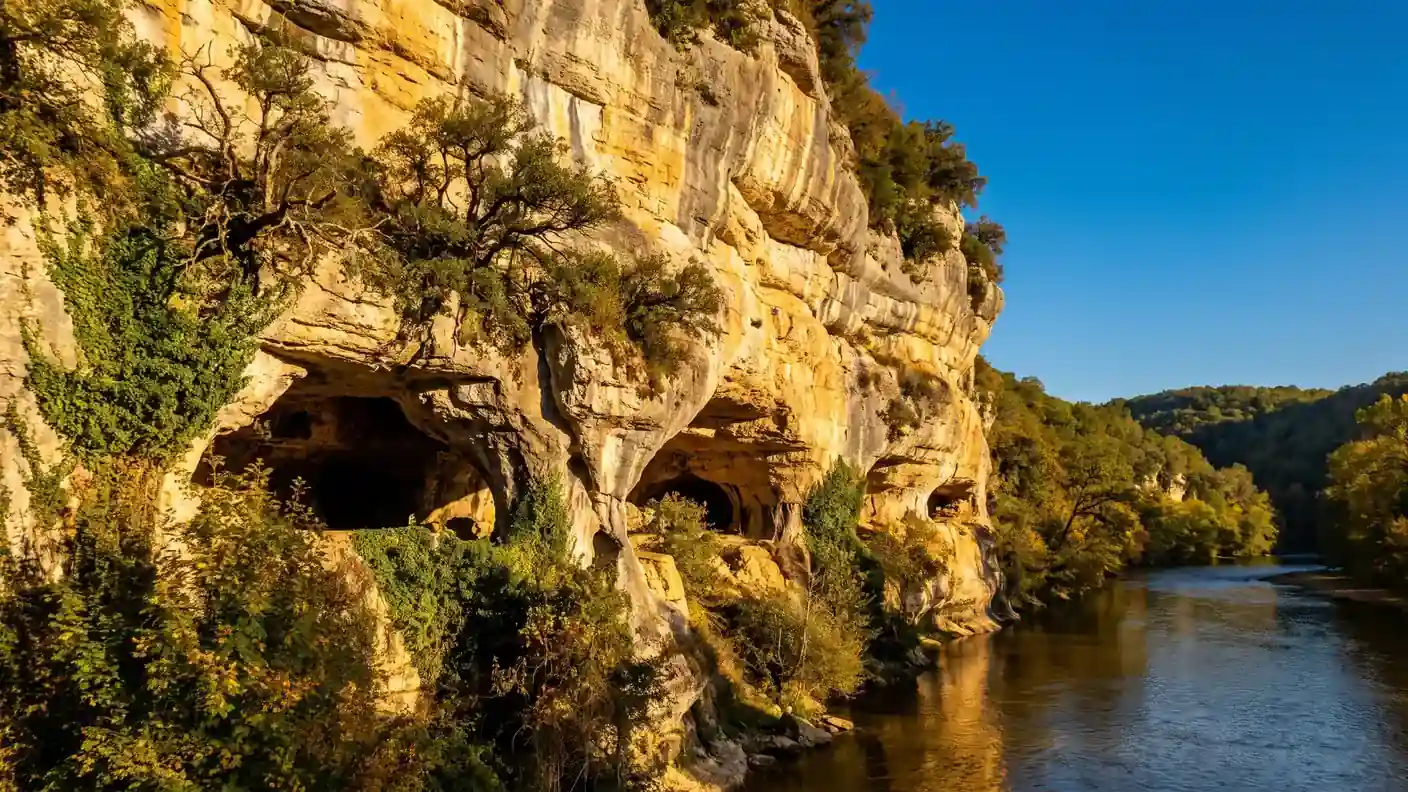
The village stretches along the left bank of the Vézère River, at its confluence with the Beune River, at the foot of Upper Cretaceous (Coniacian-Santonian) limestone cliffs. This soft rock, carved into caves and shelters by erosion, explains it all: For more than 400,000 years, Neanderthals and later Homo sapiens have sought shelter here, and today’s houses continue to nestle against the cliff, forming a troglodytic settlement that is still very much alive.
| Data | Value |
|---|---|
| Official Name | Les Eyzies (new municipality, Dordogne) |
| Status | Merger effective January 1, 2019: Les Eyzies-de-Tayac-Sireuil + Manaurie + Saint-Cirq |
| Population | 1,134 residents (2023) · Eyzicois |
| Area | 53.37 km² (population density ~21 people/km²) |
| Elevation | 54 m to 245 m |
| Waterways | Vézère, Grande Beune, Petite Beune (51 km of waterways) |
| Protected Heritage | Many prehistoric monuments and sites listed in POP[13] |
| UNESCO | The heart of the “Prehistoric Sites and Decorated Caves of the Vézère Valley” (1979)[11] |
| Distance from Bordeaux | 175 km (2 hours 15 minutes via the A89) |
A name that has changed four times
"Les Eyzies" is a recent name for a very old story. The town was known as Tayac from 1790; Les Eyzies was then just a hamlet (first mentioned as “las Ayzias” in 1484). In 1905, buoyed by the burgeoning fame of its deposits, Tayac renamed itself “Les Eyzies-de-Tayac”; in 1973, the merger with Sireuil lengthened the name; and on January 1, 2019, the merger with Manaurie and Saint-Cirq finally simplified it to “Les Eyzies.” The fortified church and the castle of Tayac carry on the name of the original village.
The population trend follows the same pattern as in the rest of rural Périgord, peaking at 1,450 residents in 1856, a long decline, followed by a recent recovery driven by newcomers (net migration of +1.2% per year). A sign of the times: the intermunicipal association was named “Land of Cro-Magnon” until 2013, when it became the Vallée de l'Homme Community of Communes, with Les Eyzies as its headquarters. And the village has been twinned since 1994 with Puente Viesgo, the other major cave art site, in the Spanish region of Cantabria.
Once you're there, everything is within walking distance: the GR 6 runs through the town, passing by Font-de-Gaume, Les Combarelles, and near Commarque; the GR 36 along the Cro-Magnon rock shelter and the Pataud rock shelter. The village also takes pride in the present: it earned one flower in the 2025 “Villes et Villages Fleuris” awards and hosted the 50th National Speleology Congress in June 2025, a choice of location that was by no means random. A little meteorological trivia: the Dordogne’s all-time high temperature of 43 °C was recorded here on August 4 and 5, 2003.
March 1868: The Discovery That Changed Our View of Humanity
A road construction project, not a railroad
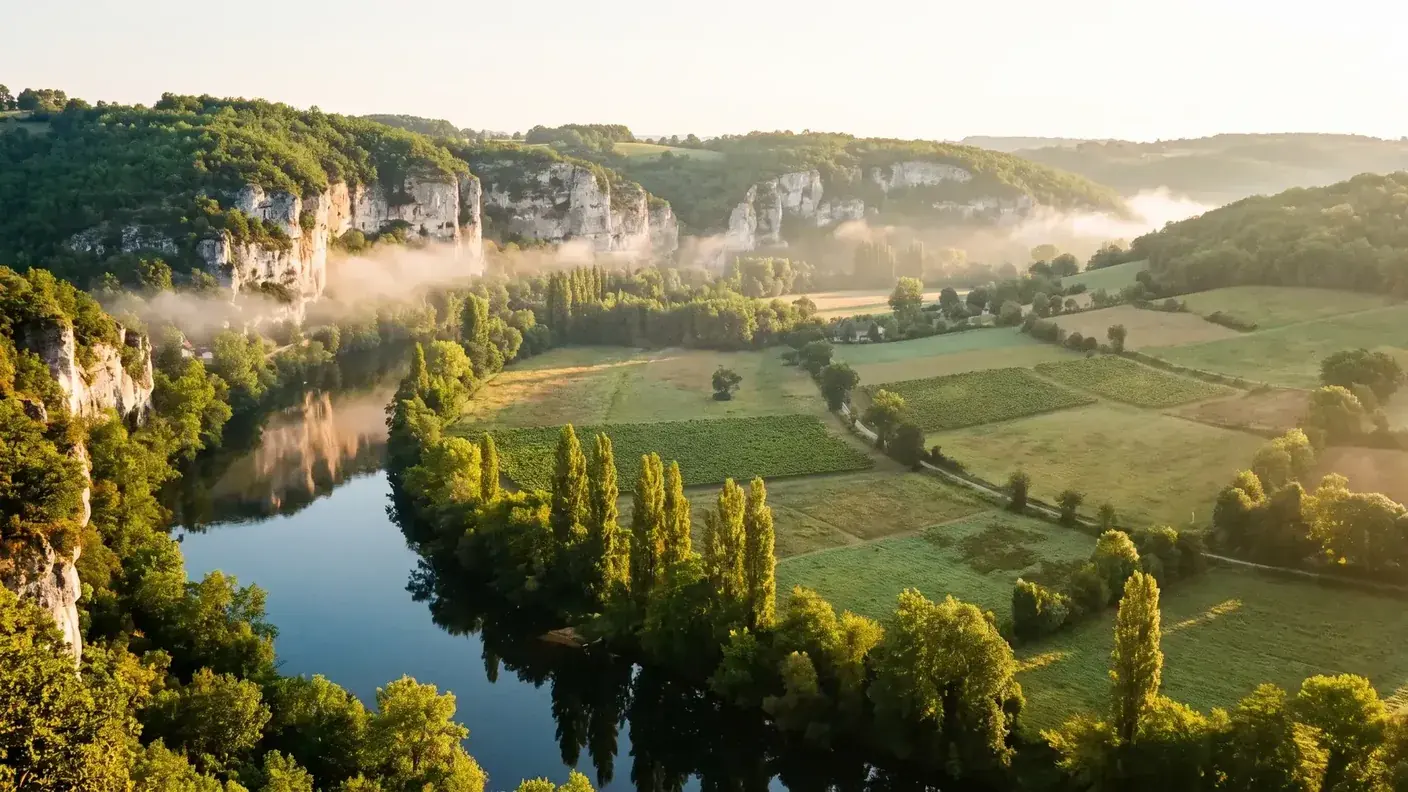
Let's first correct the misconception that everyone keeps repeating: the skeletons were not found during the construction of the railroad. The line was opened in August 1863. In late March 1868, workers on a road construction site between the hamlet of Les Eyzies and the village of Tayac were collecting stones at the base of the cliff in the area known as Cro-Magnon ("cros" means "hollow" in Occitan) when they uncovered human bones beneath a scree slope.
The Minister of Public Education, Victor Duruy, then commissioned the 27-year-old geologist Louis Lartet. His father, Édouard, a leading figure in the field, considered himself too old and entrusted the excavation to him. Louis methodically examined the site and presented his findings on April 16, 1868.
A 31,000-year-old burial site
The excavation has yielded the remains of at least five individuals, modern re-examinations of the approximately 120 preserved bones have identified at least four adults and four children, as some of the bones unearthed by the workers were lost. The most famous, Cro-Magnon 1, nicknamed “the Old Man,” actually died at around age 40; a 2018 French study (using CT scans and 3D reconstruction) attributes the lesions on his skull to type 1 neurofibromatosis, a genetic disorder. The men stood approximately 1.70 to 1.77 m tall, giants for their time.
The context is that of an intentional burial: bones stained with red ochre, approximately 300 pierced periwinkle shells, ivory pendants, and carved flint. In 2002, Dominique Henry-Gambier dated one of these shells using radiocarbon dating: 27,680 ± 270 years BP, or 31,000 to 32,000 years in actual years, an Early Gravettian burial, one of the oldest known ceremonial burials of modern humans in Europe.
Why This Discovery Changed Everything
Cro-Magnon provides the first fossil remains of anatomically modern humans scientifically recognized as such; the “Red Lady” of Paviland, unearthed in Wales as early as 1823, had been mistaken for a Roman burial. Twelve years after the discovery of Neanderthal remains (1856), this find proved, through the combination of skeletons, ornaments, and extinct fauna, that modern humans existed during the time of the mammoths. Nine years after *On the Origin of Species*, the debate over the age of humanity shifted irrevocably.
A legacy to be handled with care: paleogenetics (Fu et al., Nature, 2016) shows that Cro-Magnon populations account for only about 15% on average of the genetic heritage of modern Europeans, a minor contribution, largely overshadowed by Neolithic and Bronze Age migrations. The skeletons, meanwhile, are housed at the Musée de l’Homme in Paris.
In fact, science is still studying these bones: the complete description of the Cro-Magnon 1 skull was not published until 1967, by Henri Vallois, a century after its discovery, and DNA analyses have since assigned it to mitochondrial haplogroup T2b1. Incidentally, the discovery put the term “Cro-Magnon race” to rest in favor of Homo sapiens: we are the Cro-Magnons. Not to be confused with Neanderthals, an extinct species from which modern non-Africans carry only 1.8 to 2.6% of their genes.
As for the shelter itself, located a few hundred meters from the train station and designated a historic monument only in 1957, it was renovated and opened to the public in 2014 by a private owner, and then acquired by the government in November 2024 with the Sorcerer’s Cave, after five years of negotiations. It is closed while it is being renovated by the Centre des monuments nationaux: check to see if it has reopened before planning your visit.
Lartet, Breuil, Peyrony: The Pioneers of Prehistory
Édouard Lartet, the lawyer who dated prehistoric fauna
Édouard Lartet (1801–1871), a lawyer from the Gers region who turned to paleontology, is considered one of the founders of the discipline. His career began in 1833 when a shepherd paid him… with a mastodon tooth. At age 7, he received personal praise from Napoleon I himself at the high school in Auch; at 35, he unearthed the first fossilized monkey jawbone in Sansan, defying Cuvier’s fixism. On March 19, 1860, one year after Darwin, he defended the antiquity of humankind before the Academy of Sciences; his paper was never even published, blocked by the permanent secretary, Élie de Beaumont. In 1861, he proposed the first chronology of prehistory based on faunal remains: the Age of the Cave Bear, the Age of the Elephant and Woolly Rhinoceros, the Age of the Reindeer, and the Age of the Aurochs.
With the English patron Henry Christy (a fortune made in the hat-making industry), he excavated Le Moustier, La Madeleine, Laugerie-Haute, Laugerie-Basse, and Le Pech-de-l'Azé in 1863–1864. In May 1864, at La Madeleine, the team unearthed five fragments of an engraving of a mammoth on mammoth ivory, a long-extinct animal drawn by those who had seen it alive: the decisive proof of their contemporaneity, presented at the 1867 World’s Fair and now housed at the National Museum of Natural History. Their shared legacy was Reliquiae Aquitanicae, published in installments from 1865 to 1875; both authors died before it was completed.
The site gave rise to the term “Magdalenian”, coined around 1869–1872 by Gabriel de Mortillet, who also coined the term “Mousterian” and, in 1864, founded the journal Materials for a Positive and Philosophical History of Humanity. The valley eventually gave its name to four prehistoric cultures: Mousterian, Micoquian, Tayacian, and Magdalenian, all based on sites located within 12 km of the town.
Abbé Breuil, the “Pope of Prehistory”
Henri Breuil (1877–1961), ordained as a priest in 1900, devoted his life to cave art: his hand-drawn sketches, created under acrobatic conditions, documented dozens of caves. Recognized as France’s first “professional prehistorian” from 1910, he inspired the Collège de France to create its first chair in Prehistory expressly for him in 1929. In Les Eyzies, in September 1901, he co-authenticated the Combarelles and Font-de-Gaume caves; in August 1915, he discovered yet another decorated cave beneath the castle of Commarque.
Denis Peyrony, the Teacher-Builder
The third figure, the most local: Denis Peyrony (1869–1954), a schoolteacher appointed to Les Eyzies in 1891. A co-discoverer of the two caves in 1901 and an excavator at La Ferrassie and Le Moustier, he negotiated the state’s purchase of the Château de Tayac (1913, 10,000 francs) and founded the National Museum of Prehistory there in 1918, becoming its first curator. In December 1912, he also saved the Poisson rock shelter from being cut up, a story revisited below.
The village even had its own pioneer in the fine arts: the painter Tsugouharu Foujita spent time in Les Eyzies from 1915 to 1919, and again in 1939; one of his views of the village is housed at the Reims Museum of Fine Arts. Between Lartet, Breuil, Peyrony, and its illustrious visitors, the small village on the Vézère River was, for half a century, one of the most vibrant intellectual hubs in France.
Font-de-Gaume and the Combarelles: see the originals
September 1901 remains the wildest two weeks in the history of prehistory: on September 8, Denis Peyrony, Louis Capitan, and Henri Breuil identified the engravings at Combarelles; on September 12, alerted by the excavator Armand Pomarel, they identified the paintings at Font-de-Gaume, a cave that the village children used as a playground, as evidenced by the graffiti. It was designated a historic monument in 1902.
Font-de-Gaume: The Last Polychrome Bison in the World
The National Monuments Center describes it as “the last polychrome cave open to the public”, Lascaux closed in 1963, and Altamira now admits only five people per week, selected by lottery. For conservation reasons, the number of visitors admitted daily is very limited[5]. The gallery features more than 200 figures, including the frieze of five bison walking along their natural ledge and the famous scene of two reindeer facing each other, with the male licking the forehead of the kneeling female. In 2026, a study published in PNAS provided the first direct dating results: a bison painted between 13,200 and 13,500 years ago.
Les Combarelles: 600 engravings in a one-meter-wide tunnel
1.6 km away, the Combarelles are the opposite of Font-de-Gaume: no colors (moisture has washed away the paint over the past 15,000 years), but 600 to 800 intricate engravings intertwined along 249 meters of meandering passages one meter wide, more than 100 horses, reindeer, mammoths, and about fifty schematic human figures. The number of visitors is also limited for conservation[5] reasons. A third gallery, Combarelles III, was not discovered until 2005, and Combarelles II was not designated a historic monument until November 2025.
Booking: The 2026 Guide (The Real One)
Quotas, ticket sales start dates, prices, free admission, and closing days are subject to change for conservation reasons. Please check the official ticket office of the Centre des monuments nationaux on the day of your reservation; the information provided there takes precedence over this guide.
| Key Point | What You Need to Know |
|---|---|
| Reservation | Online only (sites-les-eyzies.fr), NO in-person sales since 2021 |
| Calendar | Tickets for each month go on sale ~15 days before the start of the month, watch closely for the release date, as summer slots sell quickly. |
| Rates | €13 per cave · Free for those under 18 and EU citizens aged 18–25 · Combined cave and museum ticket: €18 |
| Days | Closed on Saturdays (all CMN sites in Les Eyzies) and on certain holidays |
| On site | Ticket office in the Font-de-Gaume lobby · arrive 30 minutes early · 30 minutes inside FdG |
| Temperature | 14 °C in Font-de-Gaume, 12 °C in Les Combarelles, be sure to bring a warm layer even in August |
The CMN manages a total of eight sites in Les Eyzies, the two caves, the Abri du Poisson, Cap Blanc, plus four archaeological sites (Le Moustier, La Ferrassie, Laugerie-Haute, La Micoque) open for private guided tours. Conservation is the top priority: at Font-de-Gaume, the 78-person capacity limit has stabilized the climate to the point that biocidal treatments have been suspended, “the cave can recover overnight,” explains the curator. In May 2023, the cave was fully digitized in 3D (CMN Numérique program), serving as a lifeline for the artworks.
The National Museum of Prehistory: 6 million artifacts in the cliff
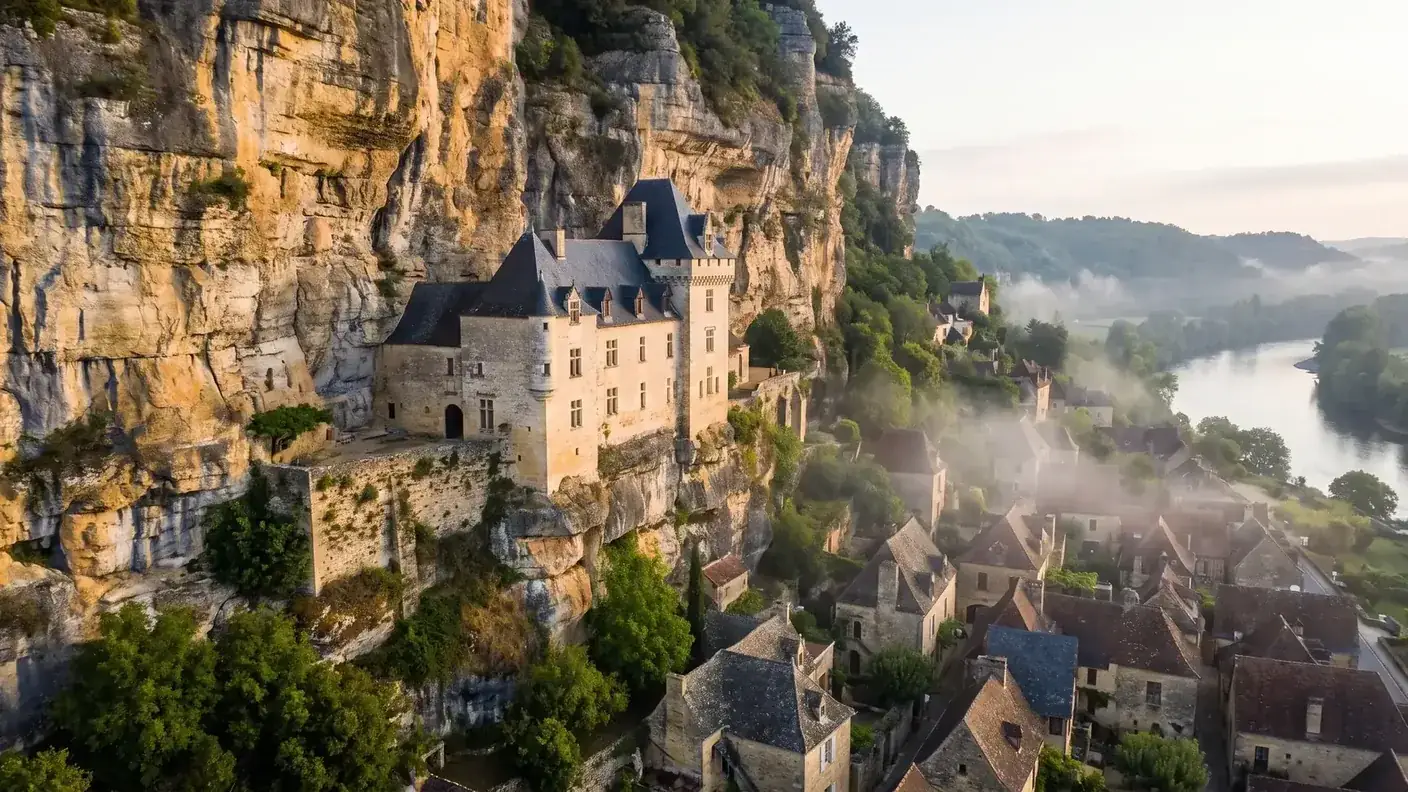
It’s impossible to understand Les Eyzies without its museum. Founded in 1918 by Denis Peyrony in the Château de Tayac, a building clinging to the cliff that nearly disappeared: sold in 1804 as a quarry for cut stone, saved in 1846 by a family related to the Barons of Beynac, and purchased by the government in 1913, it was inaugurated on September 30, 1923, then expanded in 2004 with an extension designed by Jean-Pierre Buffi, carved into the rock: more than 3,600 m² of new space.
The numbers are staggering: approximately 6 million artifacts in the collection, one of the largest Paleolithic collections in France, and the world’s premier collection of Paleolithic art on stone blocks, of which only about 12,500 are on display, or 0.2% of the collection. Allow a good two hours for the tour. 2026 prices: €10 (reduced rate €8.50), free for visitors under 18 and on the first Sunday of every month; a combined ticket for the CMN cave and museum costs €18 and is valid for 15 days.
On the terrace stands the village’s emblem: Paul Dardé’s “The Primitive Man” (1931), a 3-meter-tall, 5-metric-ton sculpture carved from a single block of stone. A deliberate irony: the statue depicts a Neanderthal… whom everyone nicknames “the Cro-Magnon” because of the nearby rock shelter.
Two must-see attractions: the Prehistory Interpretation Center (2010), a modern visitor center with free admission, perfect for exploring the valley with kids, and the Pataud rock shelter, owned by the National Museum of Natural History, which was first excavated in 1953 by the American Hallam Movius (Harvard): its stratigraphic sequence dates back ~34,000 years; its small museum features an ibex engraved on the ceiling… which can be seen in a mirror; and its star artifact is a Neanderthal biface reused by Cro-Magnons 85,000 years later.
Laugerie, Grand Roc, Abri du Poisson: the town’s other treasures
Laugerie-Haute and Laugerie-Basse: A Timeline Etched into the Ground
Beneath the same cliff upstream from the village, two giant rock-shelters have served as benchmarks for the discipline. Laugerie-Haute (180 m long, excavated beginning in 1863) preserves the only complete Solutrean sequence in Europe, and served as the setting for the final volumes of Jean M. Auel’s Children of the Earth series. Laugerie-Basse, a benchmark for Magdalenian portable art with some 600 objects, including the “Woman with a Reindeer”, yielded the “Indecent Venus” around 1864, the very first Paleolithic human statuette ever discovered, the one that, ironically, gave rise to the name “Venus” (it is now in the Musée de l’Homme). The classic rock shelter, surrounded by troglodytic dwellings, can be visited along with the adjacent Abri des Marseilles.
Le Grand Roc: The Mineral Forest
Located in the same cliff face, theGrand Roc Cave contains no paintings; it is a purely geological gem, discovered on April 29, 1924, by Jean Maury, who spent two years blasting a 40-meter tunnel to open it to the public. Inside lies a “mineral forest” of gravity-defying stalagmites and extremely rare calcite triangles found in only two other tourist caves in France (Proumeyssac and l’Aguzou). An administrative curiosity: it is the only unadorned cave among the valley’s 15 UNESCO sites, a 2014 report suggested removing it from the list, but it remains on it. Admission €9.50, combined ticket with Laugerie-Basse for €15.30 (~2 hours for both), “storm lamp” tour on select evenings, 76 steps, the two sites welcomed 58,000 visitors in 2022.
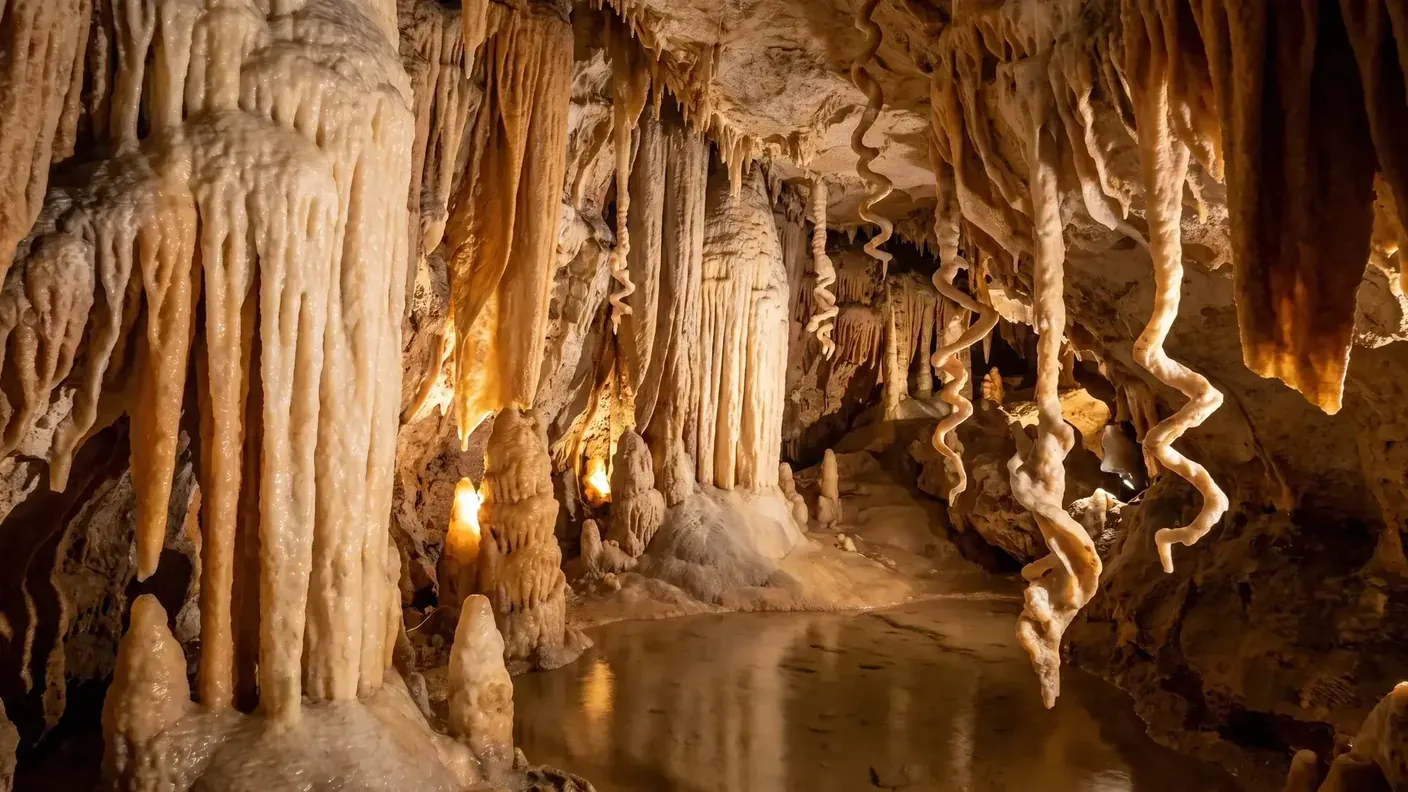
The Poisson Shelter and the Scandal of 1912
On the ceiling of a small shelter discovered in 1892 by Paul Girod, the salmon, however, was not identified until 1912 by Jean Marsan, a life-size male fish (1.05 m) carved in bas-relief approximately 25,000 years ago: fish account for only 1% of the world’s cave art (about ten figures have been recorded), and this one is the most famous. That same year, 1912, a Berlin museum attempted to purchase and cut out the ceiling: the holes left by the crowbars are still visible. Peyrony alerted the authorities on December 9; the prefect had the cave sealed on the 11th; and its rapid designation as a protected site on March 29, 1913, helped lay the groundwork for the legal protection of France’s prehistoric heritage. Long accused, the Swiss dealer Otto Hauser has been exonerated by recent research. A black hand impression was discovered there again in 1975. Visits to the CMN are extremely rare (about a thousand visitors per year) and require a reservation.
La Micoque, the Sorcerer, and the Associated Villages
La Micoque, the valley’s oldest site (~470,000 years old), has given its name to two cultural periods, the Micoquian and the Tayacian, with this intriguing paradox: the stratigraphic level that defined the Micoquian has never been found in recent excavations. The site can only be visited as part of a CMN-guided tour by reservation, just like Laugerie-Haute, Le Moustier, and La Ferrassie, four sites “for connoisseurs” departing from the Font-de-Gaume ticket office. At Saint-Cirq, the Sorcerer’s Cave and its rare engraved human figure have been closed since their acquisition by the government in late 2024, pending their takeover by the CMN. In Manaurie, the small Carpe-Diem cave is also closed, leaving only the Roucaudou manor house and the Romanesque church with its bell tower. And everywhere, heritage in the open air: the Fortified Romanesque Church of Tayac (12th century, 3-meter-thick walls, listed since 1895), the private Tayac Castle overlooking the village, and the cave dwellings that are still inhabited.
Around Les Eyzies: Seven Wonders Within 15 km
This is the village’s other “superpower”: within a 15-kilometer radius, there is a concentration of decorated caves, castles, and troglodytic cliffs, the valley boasts 147 Paleolithic sites and 25 decorated caves, including 15 UNESCO World Heritage sites (1979), all of which have been designated a “Grand Site de France” since 2020. Road distances verified from the village center.
Rouffignac Cave (14 km / 20 min)
"The Cave of the Hundred Mammoths" actually contains 158 of them, about one-third of all the mammoths depicted in European Paleolithic art, drawn some 13,000 years ago using manganese oxide sourced from… 450 km away. Visitors travel the 8 km of galleries by electric train (1 hour 10 minutes, 13 °C). First described in 1575 by François de Belleforest, the cave was not officially recognized until 1956, following a famous national controversy, the “War of the Mammoths.” 2026 prices: €12 for adults, €8 for children; online reservations are now available (slots open approximately 5 weeks in advance); otherwise, arrive early in the summer.
Cap Blanc Shelter (8 km / 11 min)
The sculpted masterpiece of the Magdalenian period: a 13-meter-long high-relief frieze, featuring horses (including one 2.15 meters tall) and bison, still marked with ochre: it was all once painted. In 1911, the skeleton of a young woman, the “Lady of Cap Blanc,” was found there… sold in 1926 to the Field Museum in Chicago, where it is on display under the name “Magdalenian Girl” (a replica is on site). CMN site: €9, online reservation required, closed on Saturdays.
Commarque Castle (11 km + 600 m on foot)
The “forgotten fortress” in the Beune Valley: a 12th-century castrum founded at the request of the abbots of Sarlat, with a keep raised in 1380, captured by the English in 1406, abandoned in the 18th century, and used for a time as a stone quarry, then purchased in 1968 by a descendant, Hubert de Commarque, who spent ten years acquiring the shares held by the heirs of a German prince (his children took up the torch in 2023). Beneath the keep lies an ornate cave discovered by Breuil in August 1915, featuring rare Magdalenian bas-reliefs (closed for conservation; presented in a room with a 3D film). Admission: €10.50; access via a beautiful 600-meter forest trail.
Across from the castle, on the other bank of the Beune River: Laussel, with its medieval castle and the shelter where the “Venus with the Horn” was unearthed in December 1911, funded by the Bordeaux physician Jean-Gaston Lalanne and excavated by his workers. The affair even inspired a crime novel: in February 1912, the foreman fraudulently sold a second Venus statue to the Ethnological Museum in Berlin; he was sentenced to six months in prison, and the “Berlin Venus” likely disappeared under the bombs in May 1945. The microgeography is spectacular: from the Commarque Cave, Laussel is 340 meters away and Cap Blanc is 550 meters away, four treasures within a 600-meter radius.
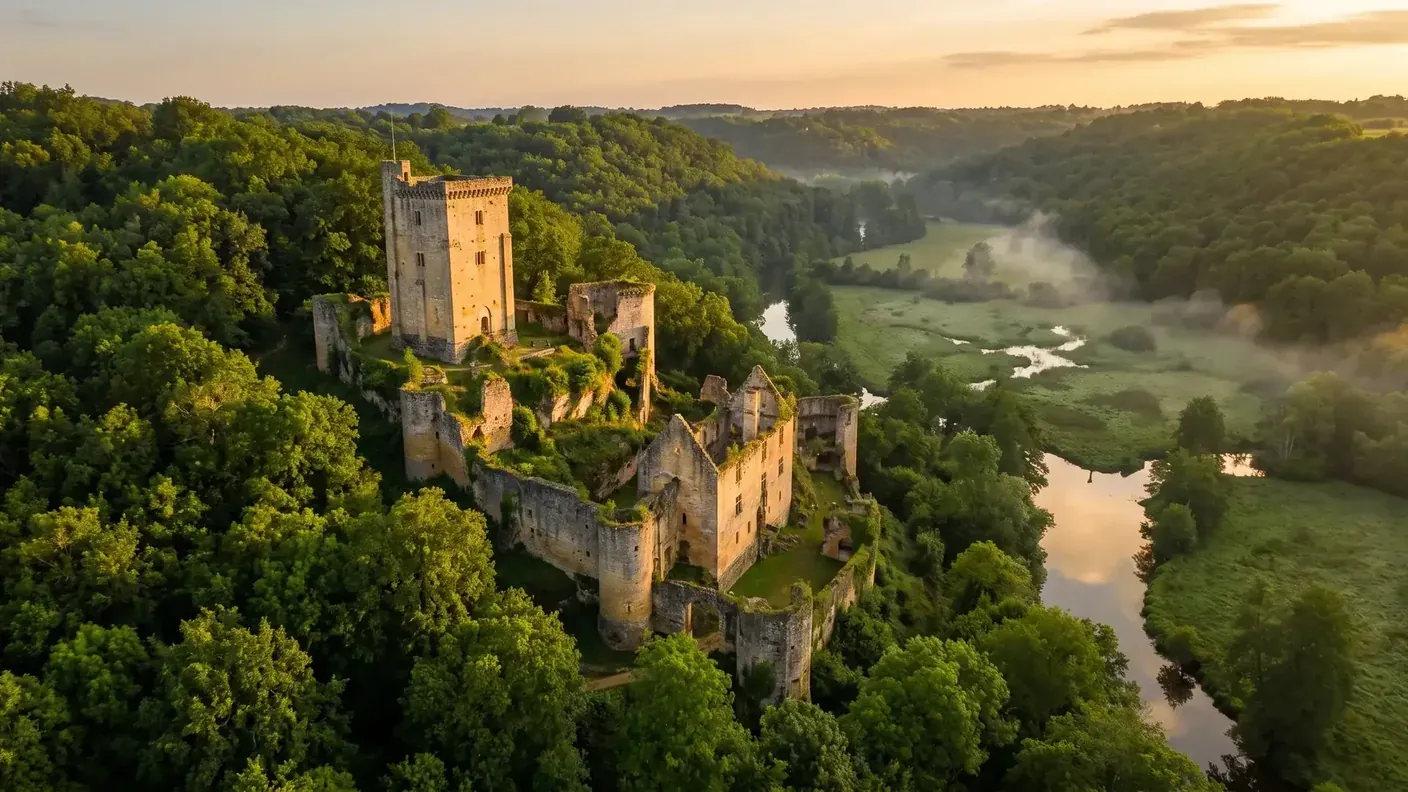
La Roque Saint-Christophe (10.5 km / 12 min)
A kilometer of cliff face carved into five terraces, 80 to 100 meters above the Vézère River: inhabited from prehistoric times through the Renaissance, serving as a refuge against the Vikings and later during the Hundred Years’ War, and razed in 1588. ~150,000 visitors per year, and 400 meters from the Moustier site, which gave its name to the Mousterian period, where the Neanderthal skeleton discovered in 1907 was eventually sold to Berlin, while the “Moustier 2” infant lay forgotten in the storerooms of the Musée des Eyzies until 1996.
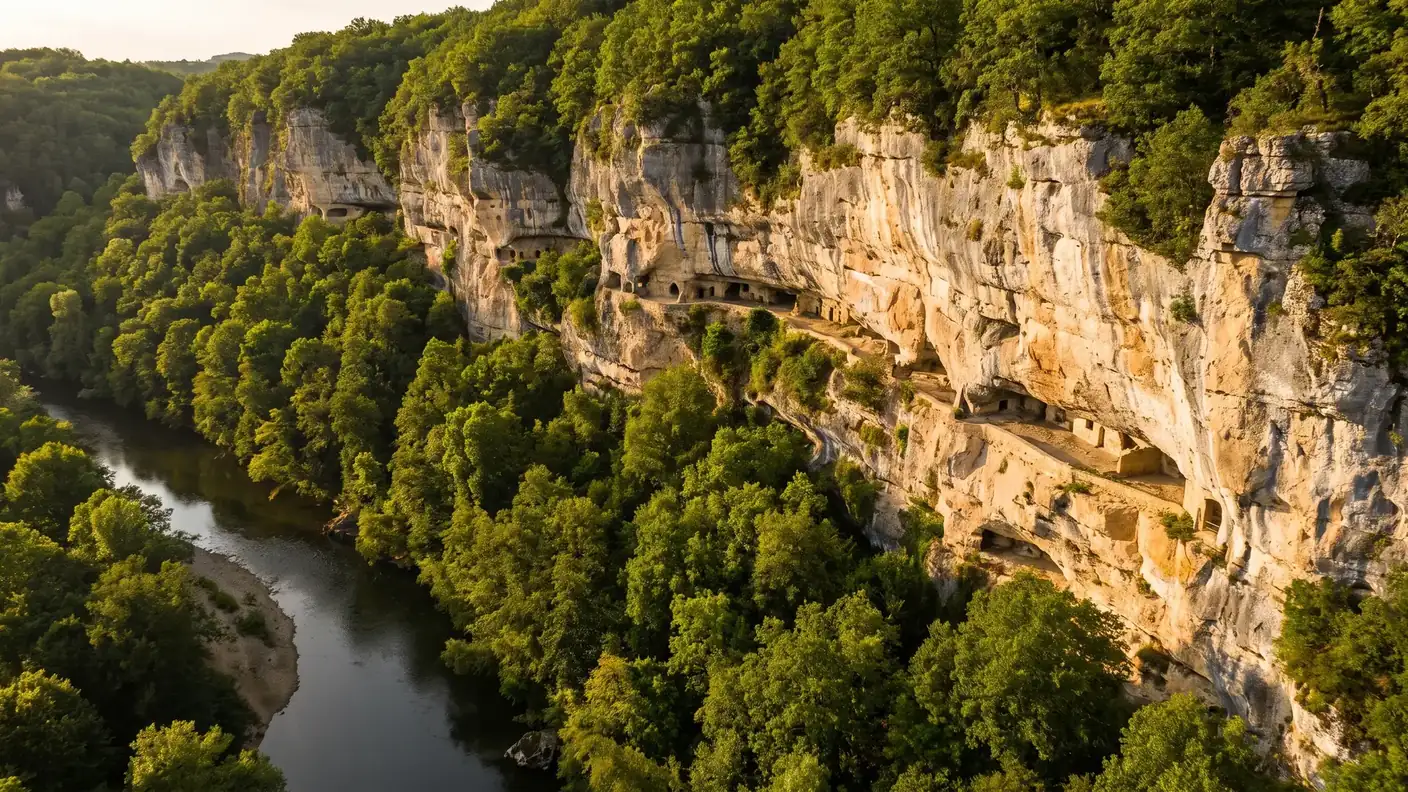
Tursac: La Madeleine, Reignac, Préhisto Parc (9–10 km)
On the opposite bank, Tursac has three stops: the site of La Madeleine, the eponymous Magdalenian site, where a mammoth engraving was discovered in 1864 and, later, the burial of a child adorned with more than 1,100 shells, overlooked by a 9th-century medieval cave village, featuring a chapel carved into the rock and a 12th-century communal oven still in use (scenes from the series Fortune of France were filmed there in 2023); the Reignac Fortified House, “France’s last intact cliff-top castle,” inhabited until 1931, with a keystone bearing the inscription "Inmota manebit" since 1667 ("it will remain unchanged"); and Prehisto Park: 30 scenes and 100 characters recreated across 5 hectares of forest, under the scientific supervision of the Museum.
Le Bugue and Proumeyssac (10–15 km)
Downstream: the market town of Le Bugue and its family-run trio, the Aquarium of the Périgord Noir (France's largest private freshwater aquarium, with more than 6,000 fish), the 1900s-era village of the Bournat (8 hectares, ~150,000 visitors per year), and especially the Proumeyssac Cave, a 42-meter-deep “crystal cathedral” and the 6th most popular tourist attraction in the Dordogne, visitors can descend in a gondola, just as they did in 1907 (€24.70). Our Guide to Coux-et-Bigaroque provides details on this sector.
| Field Trip | Road | The Argument |
|---|---|---|
| The Sorcerer's Cave (St-Cirq) | 5.9 km · 9 min | Closed since 2024 (government takeover), to be continued |
| Cap Blanc | 8.1 km · 11 min | 13-meter-long carved frieze, CMN €9 |
| La Madeleine (Tursac) | 9.4 km · 14 min | Cave Village + the eponymous deposit |
| Le Bugue | 10 km · 13 min | Aquarium, Bournat, markets |
| La Roque-Saint-Christophe | 10.5 km · 12 min | Cliffside City, 5 levels |
| Commarque Castle | 11 km · 15 min + 600 m | Forgotten Fortress, €10.50 |
| Rouffignac | ≈14 km · 20 min | 158 mammoths on an electric train, €12 |
| Proumeyssac (Audrix) | 14.3 km · 19 min | "Crystal Cathedral" Abyss |
| Sarlat-la-Canéda | 21.6 km · 23 min | Capital of the Périgord Noir |
| Lascaux IV (Montignac) | 26.4 km · 29 min | Complete facsimile edition, €23 |
Fancy a dip? There are two canoe rental companies based at the Eyzies bridge: the classic routes start in Tursac (9 km, ~2 hours) or La Roque Saint-Christophe (13 km) and pass along the base of the cliffs. For Sarlat and Lascaux, see our dedicated guides, Sarlat and Lascaux.
When to Come: The Quota Strategy
| Period | Crowd | For | Against |
|---|---|---|---|
| April–June | Moderate | All sites are open; green valley; quotas are available | Combarelles, which are sometimes flooded in the spring |
| July–August | Maximum | Canoeing, long evenings, everything open | Limited daily admissions: check the official[5] ticket office |
| September–October | Sweet | Golden light, peaceful settings, the best view | The Pataud Shelter closes in mid-October |
| November–March | Minimum | Font-de-Gaume is almost private; free admission on the first Sunday of the month (Nov–Mar) | Rouffignac and several closed sites |
The variable that controls everything isn't the weather, but the official ticket schedule: capacity, ticket sales start dates, and terms and conditions are subject to change for conservation reasons. Please check the Centre des monuments nationaux box office before scheduling other visits[5]. Best Overall Window: late May–June and September.
From Bordeaux: 175 km toward the Homme Valley
From downtown Bordeaux, Les Eyzies is 175 km away, or about 2 hours and 15 minutes via the A89 and then local roads. The town has an active[14] train station, but the prehistoric sites are scattered throughout the valley, often outside the town center. The door-to-door transfer therefore eliminates the need to change transportation between arrival and visits to outlying sites.
| Mode | Duration | Estimated cost | Details |
|---|---|---|---|
| Car | 2 hours and 15 minutes | Varies depending on the vehicle and tolls | A89, then D710/D47 via Le Bugue, or D706 via Rouffignac |
| Chauffeur Service, Downtown Bordeaux, Eco | 2 hours and 15 minutes | Starting at €295 · one-way | Door-to-door, fixed price confirmed |
| Chauffeur Service, Airport, Eco | Not listed | 303 · one-way | Rate different from the downtown departure rate |
| Chauffeur Service, Downtown Bordeaux, Sedan | 2 hours and 15 minutes | €295 · one-way | Pricing separate from the Eco line |
| Train (TER) | ~2.5–3 hours | ~25–30 € | Connections in Périgueux or Le Buisson, no direct service |
| Airplane | Not listed | Not listed | Bergerac (56 km) or Brive (59 km), then about a 1-hour drive |
By train: a historic station, but no direct service
The Les Eyzies Train Station lies on the Niversac-Agen line, which opened on August 3, 1863. In 1867, it was the 67th station from Paris, and the town was still called Tayac, so the station predates the village’s current name. It is served by the Périgueux-Agen TER trains, with direct service from Périgueux in about 35 minutes. From Bordeaux, you'll need to transfer at Périgueux or Le Buisson: allow 2½ to 3 hours in total. It’s a nice symbol: the train station is just a few hundred meters from the Cro-Magnon shelter. But keep in mind that without a car, only the town center, the museum, and Font-de-Gaume (600 m) are within walking distance.
With a chauffeur service: explore freely
From downtown Bordeaux, a one-way trip starts at €295 in Eco service for one to three passengers. The other two fare markers are 303 and €339 for sedan service, with a fixed price confirmed in writing. This is the option that best suits the area’s geography: door-to-door service to your accommodations, with the freedom to make stops along the way in Saint-Émilion or Périgueux, and the ability to visit the valley’s attractions one after another without worrying about summer parking. See the transfer to Les Eyzies: written response within 30 minutes, 8-seat van available, English-speaking driver.
Practical Information: Planning Your Prehistoric Trip
How much time should I set aside?
One day is enough to cover the three main sites, Font-de-Gaume (if tickets are available), the National Museum, and either the Pataud or Grand Roc rock shelters. Two days allow you to add Rouffignac, Cap Blanc, and Commarque. From a base camp, 3 to 4 days will let you take in the entire valley, including Lascaux and Sarlat, without ever driving more than 30 minutes. The smart way to plan: book your cave tour slots first, then build the rest of your itinerary around them.
Sleeping, Eating, Getting Supplied
The village has thrived on tourism for a century and a half: hotels line the main avenue, cave-style bed-and-breakfasts are located in the hamlets, and campgrounds are situated along the Vézère River, be sure to book early between June and September. For dining options, the village’s offerings are complemented by those in Le Bugue (13 min) and Sarlat (23 min). Pack these essentials: a warm layer (12–14 °C in all the caves), sturdy shoes (76 steps at the Grand Roc, Commarque trail), and your downloaded tickets, cell service is spotty between the cliffs.
| Profile | Daily budget (excluding transportation) | The Program |
|---|---|---|
| Small budget | ≈ 50-70 € | Campground, free public restroom, museum open on the first Sunday of the month, village + GR 6 |
| Comfort | ≈ 120-170 € | Hotel in the village, Font-de-Gaume + museum (combined ticket: €18), Rouffignac, canoeing |
| Premium | ≈ 220-300 € | Charming B&B, the 2 CMN Caves, Commarque, dinner in Sarlat |
Good to Know
- On Saturdays, the entire CMN is closed in Les Eyzies (Font-de-Gaume, Combarelles, Cap Blanc), so plan to visit Rouffignac, the museum, or the castles on that day.
- Children: Rouffignac (train), Préhisto Parc, PIP, and Le Thot are safe bets; Les Combarelles (narrow tunnel, 45 min) is better suited for teens.
- For people with limited mobility: Le Grand Roc (76 steps) and Commarque (trail) are difficult to navigate; the museum and the PIP are accessible.
- The Cro-Magnon Shelter and the Sorcier Cave were acquired by the government in November 2024. Public access to these sites may change as the National Monuments Center takes them over: please check the official site information before visiting.
- Markets: Le Bugue (Tuesday and Saturday mornings) and Sarlat (Wednesday and Saturday) are the two major markets in the area.
Frequently Asked Questions
Why is the Cro-Magnon man called that?
Named after the hamlet where the skeletons were discovered in March 1868, in Les Eyzies: “cros” means “hollow” in Occitan (the rock shelter at the foot of the cliff), while the second element remains a matter of debate, either “grand” or a person’s name. The name of a hamlet in the Périgord region thus became the common name for the first Homo sapiens in Europe.
Who discovered the Cro-Magnon skeletons?
Workers building a road between Les Eyzies and Tayac (not the railroad, which opened in 1863) uncovered the bones; the geologist Louis Lartet, 27, commissioned by Minister Victor Duruy, then conducted a scientific excavation of the site and presented the results on April 16, 1868.
Why is Les Eyzies known as the “world capital of prehistory”?
How can I make a reservation at Font-de-Gaume in 2026?
Quotas, ticket sales start dates, admission fees, free admission days, and closing days are subject to change for conservation reasons. Please check the official ticket office of the Centre des monuments nationaux on the day of your reservation; the information provided there takes precedence over this guide. Online reservations are required when indicated on the official information sheet.
Font-de-Gaume or Les Combarelles: Which One Should You Choose?
Font-de-Gaume for its colors: ~200 figures, including polychrome bison, the last polychrome cave open to the public. Les Combarelles for its seclusion: hundreds of delicate engravings in a narrow passage; daily admissions are limited for conservation[5] reasons. The two sites are 1.6 km apart; ideally, you should visit both.
Can we visit the Cro-Magnon shelter?
The Cro-Magnon Shelter and the Sorcier Cave were acquired by the government in November 2024. Public access to these sites may change as the National Monuments Center takes them over: please check the official site information before visiting.
Is the National Museum of Prehistory worth a visit?
Yes, this is the flagship attraction: ~6 million artifacts (12,500 on display), the world’s largest collection of Paleolithic rock art, housed in a 16th-century castle perched on a cliff. €10 (free for visitors under 18 and on the first Sunday of every month); combined cave and museum ticket: €18. Allow 2 hours.
Is Rouffignac a good place for children?
It’s the ultimate family cave: you explore it by electric train (1 hour and 10 minutes, 4 km round trip) past 158 mammoths. €12 for adults, €8 for children (ages 5–12); not recommended for children under 3 (you can’t leave before the tour ends). Bring a fleece: 13 °C. Online reservations are recommended; otherwise, arrive early in the summer.
Where can you see the Venus of Laussel?
At the Aquitaine Museum… in Bordeaux. The “Venus with the Horn,” a Gravettian bas-relief dating from approximately 25,000 years ago and discovered in 1911 in Laussel (across from the Château de Commarque), was added to the museum’s collection in 1960 as part of the Lalanne collection. Travel tip: See the original in Bordeaux, then visit its original setting in the Beune Valley.
Is Lascaux close to Les Eyzies?
Lascaux IV is 26.4 km away, or about a 30-minute drive (not 45 km, as is sometimes stated). The classic two-day itinerary: Font-de-Gaume and the museum in Les Eyzies, followed by the complete replica of Lascaux IV in Montignac (€23, time-stamped tickets).
Can you get to Les Eyzies by train from Bordeaux?
Yes, but there’s no direct service: TER from Bordeaux to Périgueux (~1 hr 10 min), then from Périgueux to Les Eyzies (~35 min), or via the Buisson train station, allow 2 hr 30 min to 3 hr. The train station is in the town center, 600 m from Font-de-Gaume; however, Rouffignac, Commarque, and La Roque Saint-Christophe are inaccessible without a car or a driver.
How much does a private driver cost from Bordeaux to Les Eyzies?
From downtown Bordeaux, allow 175 km, approximately 2 hours and 15 minutes and Eco service from 339 € for one to three passengers. The other listed fare markers are 303 and 339 € for city-center sedan service, with a fixed price confirmed in writing prior to booking. An 8-seat van is available, with stops along the way as desired (Saint-Émilion, Périgueux), and day trips to the Vézère Valley available upon request.
When is the best time to visit Les Eyzies?
Late May through June and September: All sites are open, cave tour slots can be reserved without a struggle, and the valley is stunning. Summer works out well if you book Font-de-Gaume as soon as tickets go on sale (~15 days before the start of the month). In winter, admission is free on the first Sunday… but Rouffignac and several other sites are closed.
Further Reading
- The world's most famous cave: see the Lascaux Guide (Lascaux IV, tickets, history)
- The capital of the Périgord Noir: see the Sarlat Guide
- The valley's fortified abbey: see the Saint-Amand-de-Coly Guide
- Proumeyssac and the nearby Dordogne: see the Coux-et-Bigaroque Guide
- Plan Your Trip: Organize Bordeaux → Les Eyzies or explore All of our destinations
Sources and References
- The Town of Les Eyzies, History and Municipal Services
- Ministry of Culture, Cro-Magnon Shelter, discovered in March 1868
- National Museum of Natural History, Cro-Magnon 1, Fossil and Context of Discovery
- Ministry of Culture, Archaeology in France, National Files
- National Monuments Center, Practical Information, Reservations, Preservation, and Limited Admission
- National Museum of Prehistory, Opening Report, Museum Collections
- Prehistory Interpretation Center, Visitor Center, Resources and Access
- National Museum of Natural History, Pataud Shelter, Tour and Collections
- Rouffignac Cave, Official Website, Reservations and Tours
- Commarque Castle, Official Website, Directions and Tours
- UNESCO, Prehistoric Sites of the Vézère Valley, Boundaries of the 15 inscribed elements
- INSEE, Complete Les Eyzies dataset, municipal data
- POP, Ministry of Culture, Protected Architectural Heritage
- TER Nouvelle-Aquitaine, Les Eyzies Station, Access and Services
- Ministry of Culture, National Museum of Prehistory, Status and Resources
Updated on .
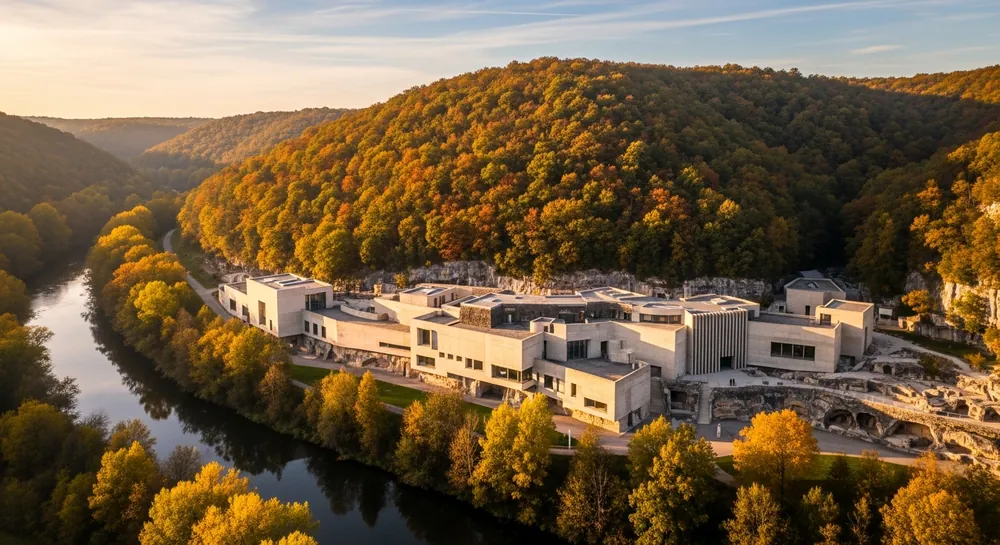
On the Way to the Vallée de l'Homme
From downtown Bordeaux: 175 km, about 2 hours and 15 minutes, and Eco packages starting at 339 €, with optional stops in Saint-Émilion or Périgueux. Fixed-price quote in writing within 30 minutes; choose from Eco, sedan, or 8-passenger van options; English-speaking driver.