Bordeaux to Saint-Amand-de-Coly: the fortified abbey of the Périgord Noir
One of the Most Beautiful Villages of France: a 30-meter abbey-keep built after Cluny refused to grant permission, fortified with 10 bastions, bombarded for six days in 1575, saved by 400 villagers—and Lascaux just a quarter of an hour away. Get the full picture before you visit—it’s about 2 hours and 15 minutes from Bordeaux.
Saint-Amand-de-Coly at a Glance
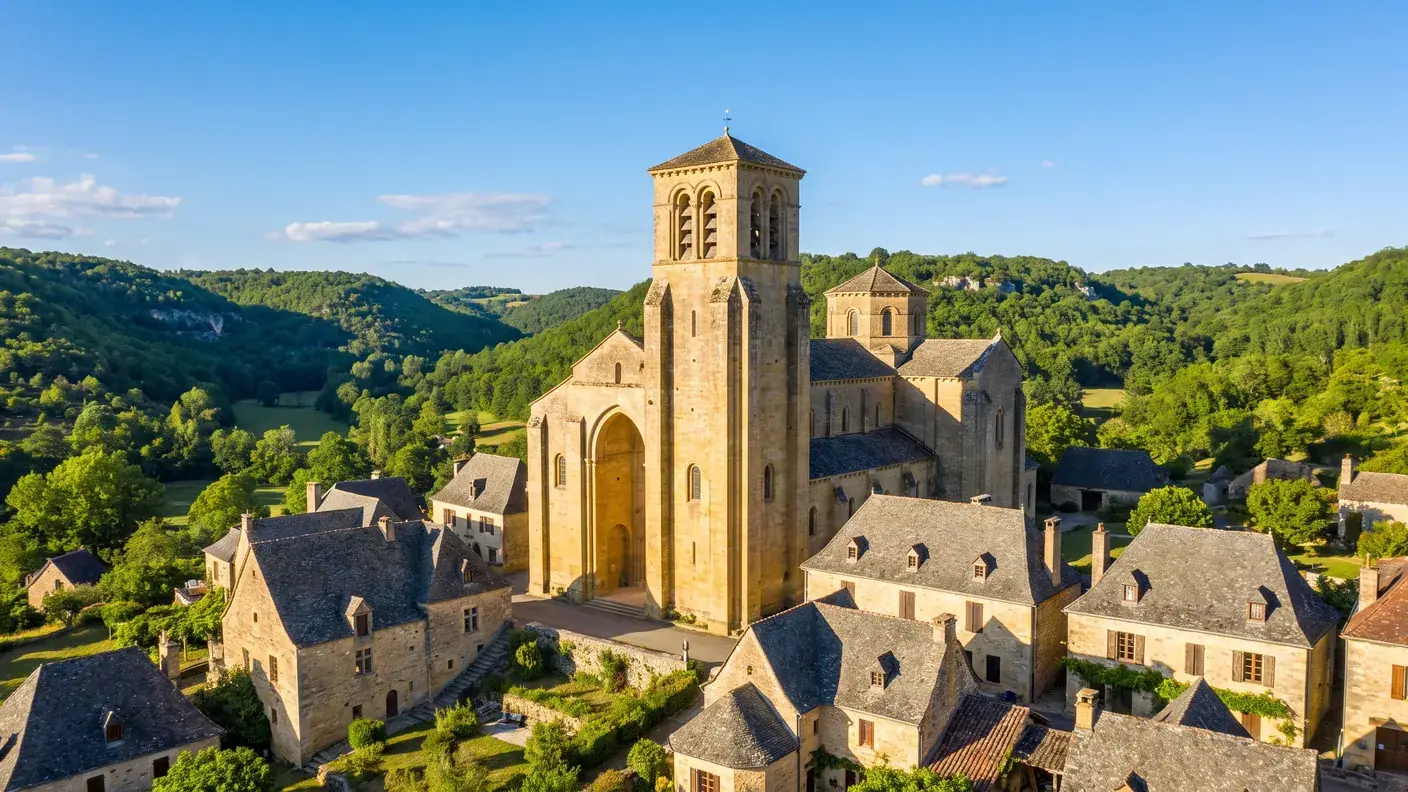
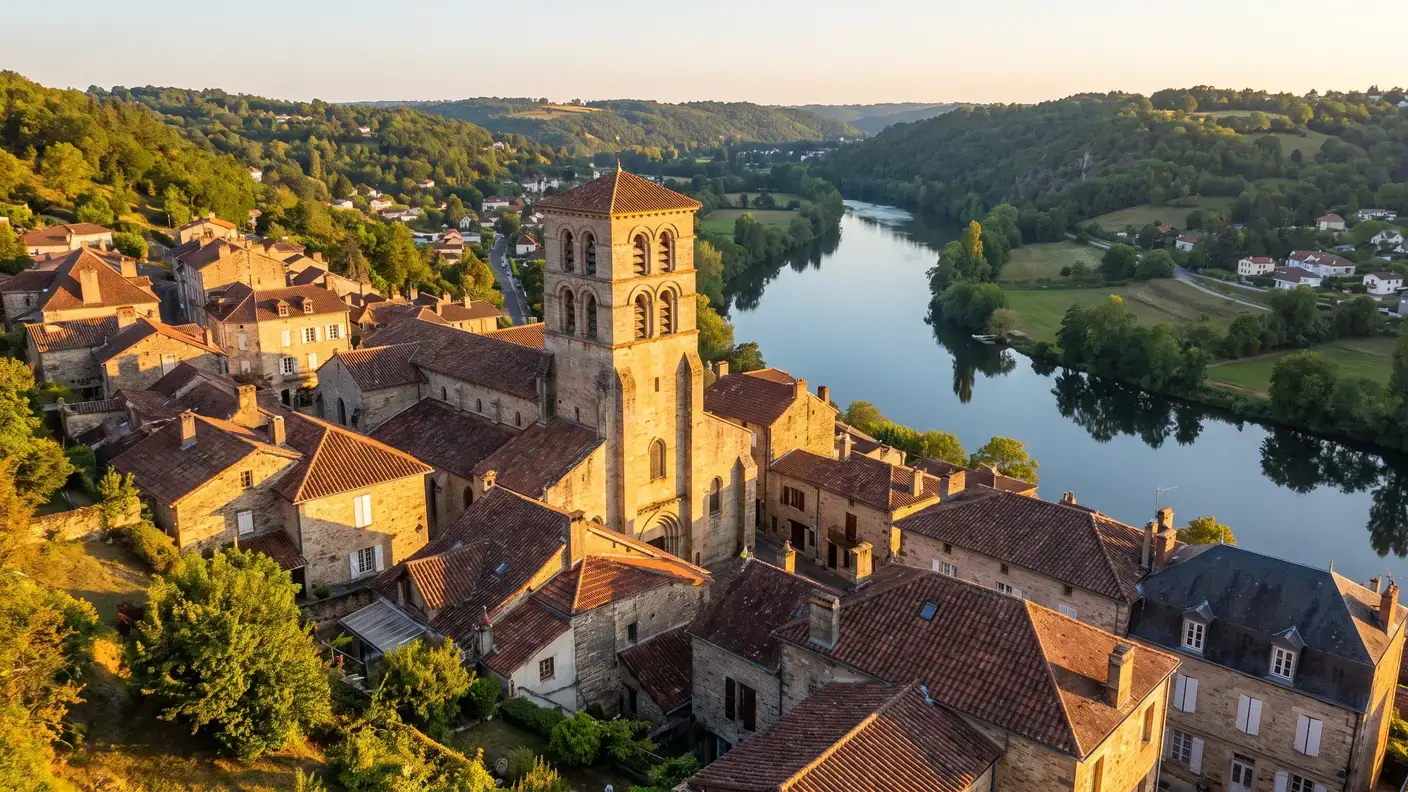
Saint-Amand-de-Coly is a village in the Périgord Noir region that has been part of the new municipality of Coly-Saint-Amand since 2019. Its main landmark is a Romanesque Augustinian abbey church converted into a fortress: its battlements, parapet walk, vaulted chamber, and ramparts are a reminder of the conflicts that have shaped the history of the Périgord. The village, designated as one of the Most Beautiful Villages of France, features houses built of light-colored stone and roofs made of slate. Your visit can extend to Coly, Montignac, and Lascaux IV, located about 10 km away.
From Bordeaux, the journey is approximately 185 km and 2 hours and 15 minutes by car. The village does not have a train station. The nearest train stations are Condat - Le Lardin or Terrasson, followed by a short drive to the village. The listed price for a private chauffeur service starts at 308 € one way. Schedules, admission tickets, and local transportation options should be verified with the respective operators before departure.
- Coly-Saint-Amand is a new municipality formed on January 1, 2019, through the merger of two villages, Coly and Saint-Amand-de-Coly — 640 residents in 2023, an increase of nearly 13% since the merger.
- Its crowning jewel: the 12th-century fortified abbey church, 30 meters high, considered “the most beautiful fortified church in the Périgord”—10 bretèches, a parapet walk, and a vaulted chamber above the main arch.
- Saint-Amand-de-Coly is one of the 10 “Most Beautiful Villages of France” in the Dordogne; the village and its surroundings have been a designated site since 1970.
- In 1304, Bertrand de Got, Archbishop of Bordeaux, visited the abbey—and shortly thereafter learned of his election: he became Pope Clement V.
- In 1575, it took six days of cannon fire to dislodge the Protestant garrison entrenched in the fortified church.
- Lascaux IV is 9.7 km away (a 15-minute drive), Sarlat is 22 km away, and Terrasson and its Jardins de l'Imaginaire are 16 km away.
- The abbey church offers free admission for most of the year; three guided tours ranging from €6 to €9.50 (May–October).
- From Bordeaux: 185 km, about 2 hours and 15 minutes by car — starting at €308 with a private driver, door-to-door.
Before You Go: What Saint-Amand-de-Coly Really Is
9:15 p.m. on an August evening, beneath the vaulted ceiling. The cello from the Périgord Noir Festival begins a Bach suite. The golden stones of Les Eyzies echo every note—the tourist office calls it “unparalleled acoustics,” and no one in the nave would disagree. Outside, night falls over the slate-roofed houses. Above the vaulted ceilings, hidden from view, lie a parapet walk, ten battlements, and a vaulted chamber. You are sitting in a church that was once also a fortress.
Saint-Amand-de-Coly is, first and foremost, a striking contrast: an abbey church 48 meters long and 30 meters high, nestled at the bottom of a small valley, in the middle of a village with barely more than 400 residents. The INSEE classifies the town as “rural with a highly dispersed population,” far from the pull of any city. Wikipedia simply describes it as “off the main roads.” That’s exactly what makes the trip worthwhile: you don’t just pass through Saint-Amand-de-Coly—you go there.
This guide explores the verifiable aspects of this rich history: the legend of the three 6th-century hermits, the funerary scroll that provides the first written evidence in 1046-1048, the Augustinian abbey founded after Cluny refused to establish a branch there, the militarization of the 13th–14th centuries, the siege of 1575, the restoration efforts of the 19th century—and the village as it is today, with its tours, places to visit, and excursions. With Lascaux just a quarter of an hour away, it’s one of the finest base camps in the Périgord Noir.
The village has neither a train station nor a direct bus route: the nearest train station is 14.5 km away. If you don't drive, hiring a chauffeur service from Bordeaux is still the easiest way to get there—about a 2-hour, 15-minute drive, with stops along the way as you please.
One municipality, two villages: the 2019 merger
Established by prefectural decree dated September 21, 2018, effective as of January 1, 2019, the new municipality of Coly-Saint-Amand comprises Coly and Saint-Amand-de-Coly, which have become delegated municipalities. The county seat—and the town hall—is located in the village of Saint-Amand-de-Coly. The entire area falls under the jurisdiction of the canton of Vallée de l’Homme (entirely incorporated by decree of March 5, 2020) and the community of municipalities of the Vallée de l’Homme.
A sign of this dual identity: each village has retained its own ZIP code—24290 on the Saint-Amand side, 24120 on the Coly side (the Terrasson area). The two villages are 5.6 km apart by road, about a dozen minutes’ drive along winding roads through the walnut groves.
| Data | Value |
|---|---|
| Official Name | Coly-Saint-Amand (new municipality, Dordogne) |
| Status | Merger on January 1, 2019 — 2 delegated municipalities |
| Population | 640 residents (2023) — ~422 on the Saint-Amand side, 218 on the Coly side |
| Area | 34.41 km² (26.40 + 8.01) — population density ~18.6 people/km² |
| Elevation | 105 m to 284 m |
| Waterways | the Coly River (10.13 km) and its tributary, the Chironde |
| INSEE codes / ZIP codes | 24364 · 24290 (Saint-Amand) and 24120 (Coly) |
| Label | Saint-Amand-de-Coly, “Most Beautiful Villages of France” |
| Distance from Bordeaux | 185 km (~2 hours and 15 minutes via the A89) |
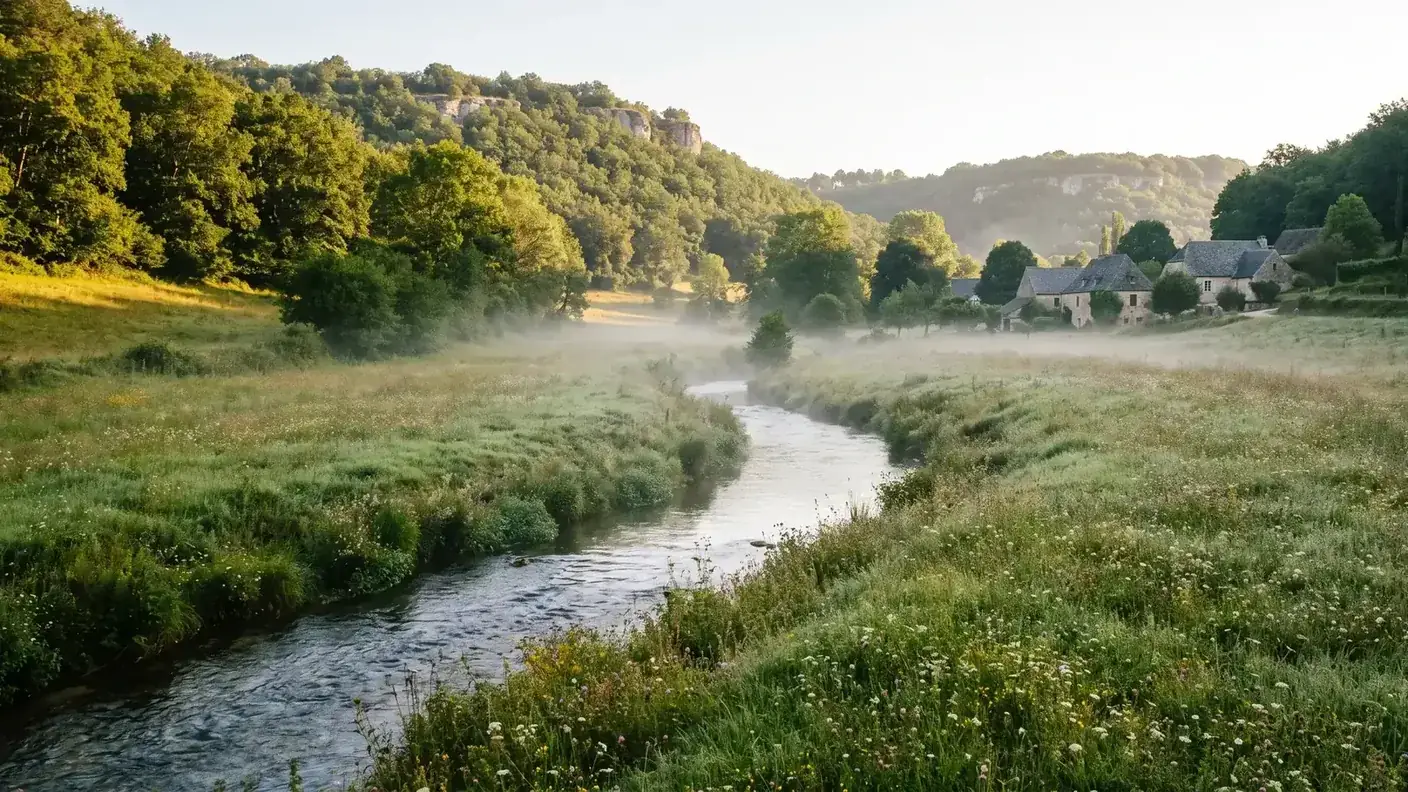
The setting is that of the "valley corridors" of the Périgord Noir—the term is taken from the *Atlas of the Landscapes of the Dordogne* (2020): wooded limestone plateaus of the Jurassic and Cretaceous, cut through by narrow valleys where villages and walnut groves nestle. The Coly, 10.13 km from its source at La Cassagne, runs along the town’s border for only about 3.5 km to the north before joining the Vézère at Condat. Its tributary, the Chironde, which flows along it from south to northeast for 7.5 km, until the two rivers meet at the foot of the village of Coly.
A Demographic Anomaly
INSEE's official population figures reveal an unusual trend in rural areas: 567 residents at the time of the merger (2019), 608 in 2021, 629 in 2022, 640 in 2023 (INSEE) — that is, +12.9% over four years, even though both municipalities were each in decline before the merger. To be fair, it should be noted that the first actual census for the new municipality was conducted in 2022; previous figures were estimates. But even when compared to the combined population of the two villages in 2018 (579), the increase remains clear.
The contrast with the past is staggering: Saint-Amand-de-Coly had a population of 1,151 in 1851—nearly three times the size of the current town. Rural depopulation emptied the valley for a century. The Vézère Valley and its tourism-based economy are slowly repopulating it.
In terms of nature, there are two protected sites of interest: the old, disused railroad tunnel on the Condat–Sarlat line is home to seven species of bats (designated a protected biotope and a Natura 2000 site), and the Terrasson plateau—designated a ZNIEFF—is home to about twenty key plant species, including the monkey orchid and the martagon lily.
From the Hermits to the Oliba Roll: Five Centuries of Mist
Around 558: Three hermits in Genuliacus
Tradition—as recorded in the Vita sancti Sori and the Vita sancti Amandi—dates the story to around 558, during the reign of Clotaire I. Three monks—Sour (a native of Auvergne born around 500), Amand (a young nobleman from Limousin, his disciple), and Cyprien, settled as hermits on the Merovingian estate of Genuliacus—which is not a neighboring hamlet but the ancient name of Terrasson itself: the Place de Genouillac, in the current city center, preserves this memory.
In 585, according to tradition, King Gontran visited Sour and granted land to its community. Upon the old hermit’s death shortly thereafter, Amand withdrew to a cave in the neighboring valley—the site of what would become Saint-Amand-de-Coly, 16 km by road from Terrasson. He is said to have died there at the end of the 6th century (reliable sources use the conditional tense). A community formed around his memory. His feast day is still celebrated on June 25.
An interesting detail: each of the three companions left his name on the map of the Dordogne—Sour at the abbey church Saint-Sour de Terrasson, built around his tomb. Amand at Saint-Amand-de-Coly. And Cyprien, who left to establish his own hermitage in the Dordogne Valley, in Saint-Cyprien.
857: The Normans sail up the Vézère River
The first settlement did not survive the 9th century: it is believed to have been destroyed in 857 by the Normans, whose fleets were then sailing up the Vézère—the river flows just 5 km from the valley. The site then disappeared from historical records for more than a century.
The 10th century: a renaissance originating in Cluny?
The restoration likely took place in the first half of the 10th century—perhaps at the personal instigation of Odon, abbot of Cluny, whose visit in 937 to the mother abbey of Saint-Sore in Terrasson is documented, which was then being plundered by the counts of Périgord. In an ironic twist of history, this monastery, rebuilt with Cluniac assistance, would soon come into conflict with Cluny itself.
1046–1048: A funerary scroll as the first evidence
The first written record of Saint-Amand is a remarkable document: the Abbot Oliba's funeral scroll. Upon the death of this great Catalan figure—abbot of Ripoll and Cuxa, bishop of Vic, founder of Montserrat, who died on October 30, 1046 —, his communities draft a memorial encyclical that circulates from monastery to monastery, with each house visited adding a few lines to it. It is during this circulation that “ San Amando ", affiliated with Genouillac: proof that the monastery existed as a dependency of Saint-Sore. According to sources, the mention dates from 1046, 1047, or 1048.
Between the trio's legendary arrival (around 558) and this traveling scroll, there is therefore a gap of nearly five hundred years without any written evidence—a classic feature of French monastic foundations, where legend always precedes the archives. The name of the village, on the other hand, appears only in 1364 (“Sanctus Amandus prope Montinhacum”). During the Revolution, the town was briefly renamed "Amand-le-Vallon" (1792-1795).
The Augustinian Abbey: Grandeur, Wars, and Renaissance
1101: Born in defiance of Cluny
The founding event was a local schism. In 1101, the powerful Abbey of Saint-Martial in Limoges imposed the Cluniac Benedictine reform on Saint-Sore de Terrasson. Some of the monks refused this takeover, adopted the Rule of the Canons of Saint Augustine, and settled in Saint-Amand. The abbey’s Augustinian identity—canons who live in community but also provide pastoral care to the surrounding parishes—thus literally emerged in opposition to Cluny (local history).
Around 1124: Abbot Guillaume, the first builder
The first known abbot was named Guillaume. The town’s official website refers to him as “the first builder, shortly before 1124”: it was during his abbacy that construction of the present church began. He died between 1125 and 1130 and was buried in the church—and his Latin epitaph, a rhyming poem, is still inscribed on the north wall of the north transept chapel:
“Discat qui nescit: vir nobilis hic requiescit… salvet ut abbatem W. per pietatem.” — Let the ignorant take note: a noble man rests here… may God save Abbot William through his piety.
13th century: the heyday — 19 churches and priories
At the height of its power, the abbey controlled as many as 19 dependent churches and priories, spread across the dioceses from Périgueux to Cahors and Limoges—to the point that, by the mid-13th century, there were no longer enough canons to conduct services everywhere. At the same time, the abbey was placed under the direct authority of the papacy, a status that removed it from the jurisdiction of the local bishops.
October 1304: The Future Pope's Visit
The local guides’ favorite anecdote—and it’s a Bordeaux story. In 1304, the abbey was visited by Bertrand de Got, Archbishop of Bordeaux. Shortly after his visit to the valley, he learned of his election to the See of St. Peter: he became Clement V, the first Pope of Avignon—the very same man who, around the same time, purchased the castrum of Bigaroque, 40 km away (see our guide to Coux-et-Bigaroque).
1347–1449: The Hundred Years' War ruins everything
The Périgord played “the painful role of a border region” between the kingdoms of France and England, and the abbey fell into ruin along with it. By 1347, only seven monks remained. In 1358, the Dauphin Charles—the future Charles V—reinforced the rights of Abbot Hélie de Marcillac, since “the abbot and his canons have barely enough to live on because of the war.” In 1411, Pierre de Fleury, captain of Montignac, drove the English out of the fort at Coly and handed it over to the abbot “on the condition that he repair the monastery’s fortifications.”
The 1449 inventory, cited by the town hall, paints a grim picture: “Saint-Amand is half-demolished, the cloister is destroyed, and large breaches have opened up in the fortifications. Only one monk remains; divine worship has ceased. ” The reconstruction, supported by Jean de Bretagne, lieutenant general to Charles VII, brought back 12 canons in 1483. The choir was once again usable in 1484. The cloister and the chapter house, which had been burned down, were never rebuilt.
1575: Six Days of Cannon Fire
During the Wars of Religion, a Protestant force led by Jean de Cugnac seized the fortified church. The seneschal of Périgord failed to retake it. Henri de Noailles, nephew of the commendatory abbot, had to fetch cannons from Brive and bombard the abbey church for six days to finally take it. The building, which underwent a hasty restoration in 1597, never truly recovered.
1738: The Quiet End
The number of monks dwindled, and Louis XV authorized the dissolution of the abbey in the mid-18th century—the monastic positions were abolished on December 19, 1738. The property was sold during the Revolution, the church became a simple parish church, and the archives were lost when the abbey castle that the abbots owned in Coly was destroyed. One buyer even demolished part of the structures.
1872–2021: A Century and a Half of Rescue Operations
The revival was led by a parish priest. From 1872 to 1875, Father Carrier mobilized about 400 volunteer parishioners to clear the buried church—more than 4,600 m³ of earth and rubble were removed. The path that circles the monument still bears his name.
The church is designated a Historic Monument in 1886. Next comes the roof structure, rebuilt in 1894 by Anatole de Baudot (a student of Viollet-le-Duc), one meter of rubble removed from the choir vault in 1919, eight meters of earth cleared from the north wall in 1921–1923, and the large slate roof installed in 1947, the defensive platforms consolidated in 1962, and the listing of the entire complex (church, enclosure, floors) by order of the July 5, 1965 (POP/Mérimée Instructions).
The most recent development: a five-phase restoration campaign, from September 2015 to December 2021—more than one million euros raised by a village of 400 residents through a public fundraising campaign. In 2024, the village celebrated the abbey church’s 900th anniversary with concerts, theater performances, and large-scale projections on the façade.
The Fortress Church: The Complete Defensive Arsenal
The militarization of the abbey church is dated by the General Inventory of Nouvelle-Aquitaine (excavations by Jean-Luc Piat, 2000) to 13th century, “against the backdrop of the conflict between the Capetians and the Plantagenets over control of Guyenne,” and then reinforced during the Hundred Years' War. The whole thing was called the "Fort Saint-Amand" — and that's no exaggeration.
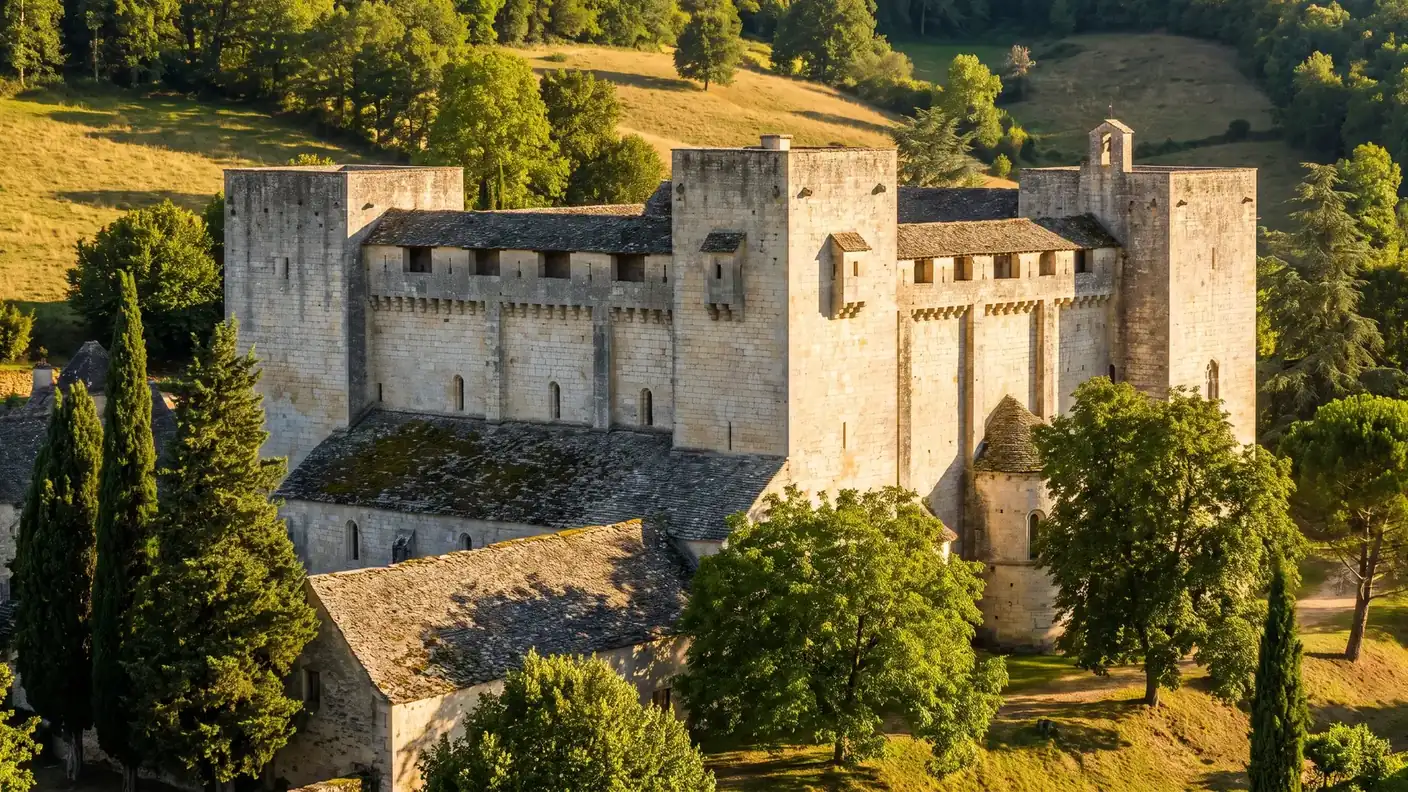
The arsenal listed in the General Inventory and by the city hall:
- Ten battlements designed according to the “hourd” system, distributed throughout the upper sections—the exact number is given in the official Inventory report (2011).
- A parapet walk that runs around the building at the base of the slate roofs, connected to a walkway along the outer edge of the vaults.
- A vaulted chamber built above the large pointed arch of the bell tower porch—the 30-meter-tall keep.
- The apse, topped by a watchtower, and the ends of the transept, raised to form observation walls.
- Archery slits and shooting openings cut into the thick walls, and hidden staircases leading to the attic and defensive positions.
- Consoles and corbels designed to support flying buttresses—particularly at the top of the facade arch, to support the portal.
- A 300-meter perimeter covering approximately 5,660 m², with thick walls of ~2.5 m in some places, thickets of opus spicatum (fishbone) and punctuated by flanking towers, each with three gates (Salignac, Larnaudie, and a third facing the main gate).
| Device | Verified detail |
|---|---|
| Bretèches | 10, Hourd System (General Inventory, 2011) |
| Bell Tower-Keep | ~30 m (28.60 m as measured), vault above the arch |
| Pointed arch on the facade | 21.20 m to the underside of the roof, 6 m wide, 2.80 m deep |
| Parapet Walk | complete, at the base of the slate roofs |
| Pregnant | 300 m of ramparts, ~5,660 m², walls ~2.5 m thick |
| Doors | 3: Salignac (south), Larnaudie (destroyed), across from the gate |
| Lookout | lookout post at the chancel + screen walls of the transept |
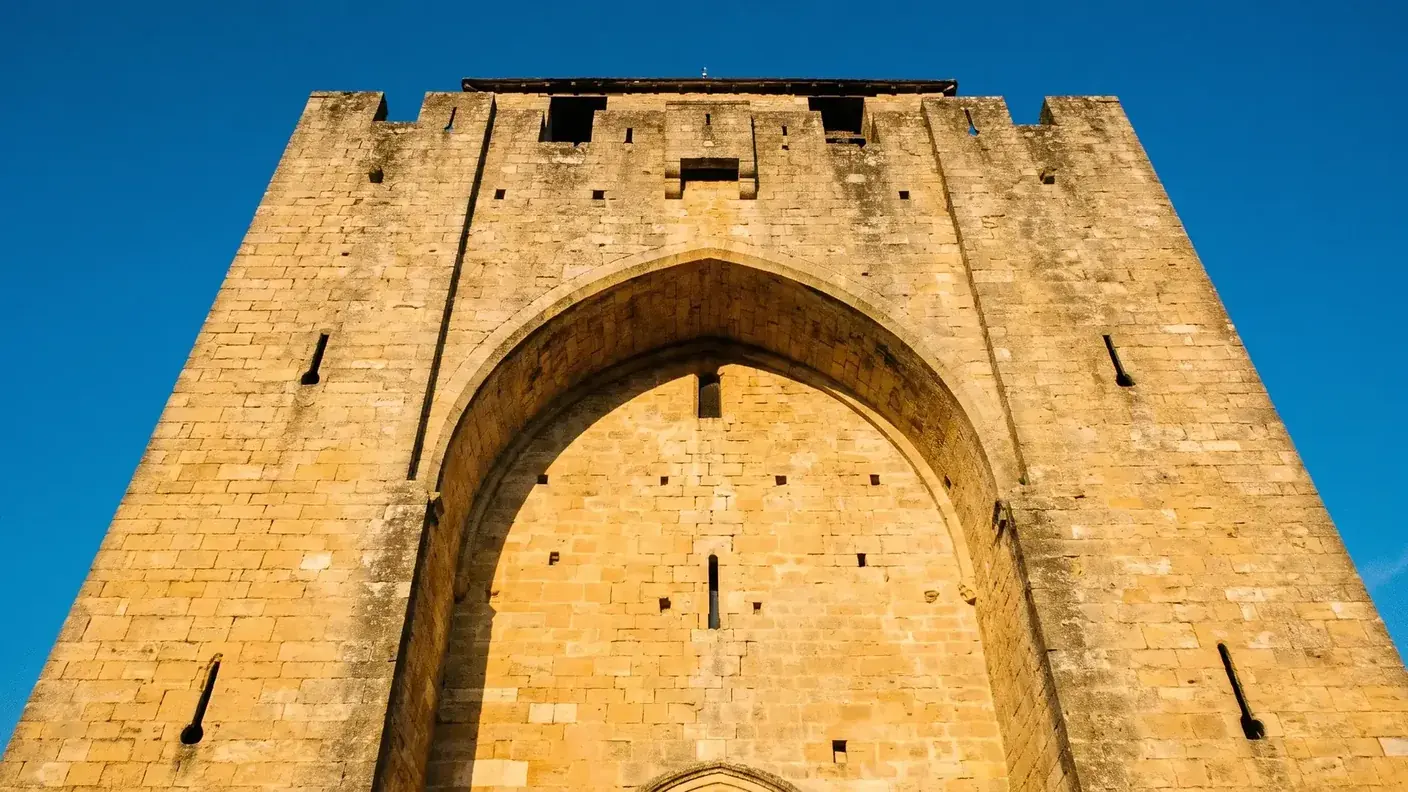
A nuance that locals acknowledge: “The defensive nature is more psychological, since such large windows serve as veritable entry points for any enemy,” notes one observer—and indeed, the fortress fell to six days of cannon fire in 1575. The eastern wall, moreover, still bears reddened stones, evidence of a fire documented near the flanking tower. In the 18th and 19th centuries, more prosaically, grapevines grew right inside the ramparts.
To put the building in context: in the Dordogne, only a few churches can hold a candle to it—Paunat, with its defense chamber above the vaults; Tayac in Les Eyzies; and Trémolat. And unlike the famous keep-church at Rudelle (in the Lot), whose current battlements are partly the creation of restorer Paul Gout in the 1890s, the bulk of Saint-Amand’s fortifications is authentically medieval. The phrase “considered the most beautiful fortified church in the Périgord”—used verbatim by the town hall, the tourist office, and Plus Beaux Villages de France—is well deserved.
Visiting the Abbey Church: What to See, Including Practical Information
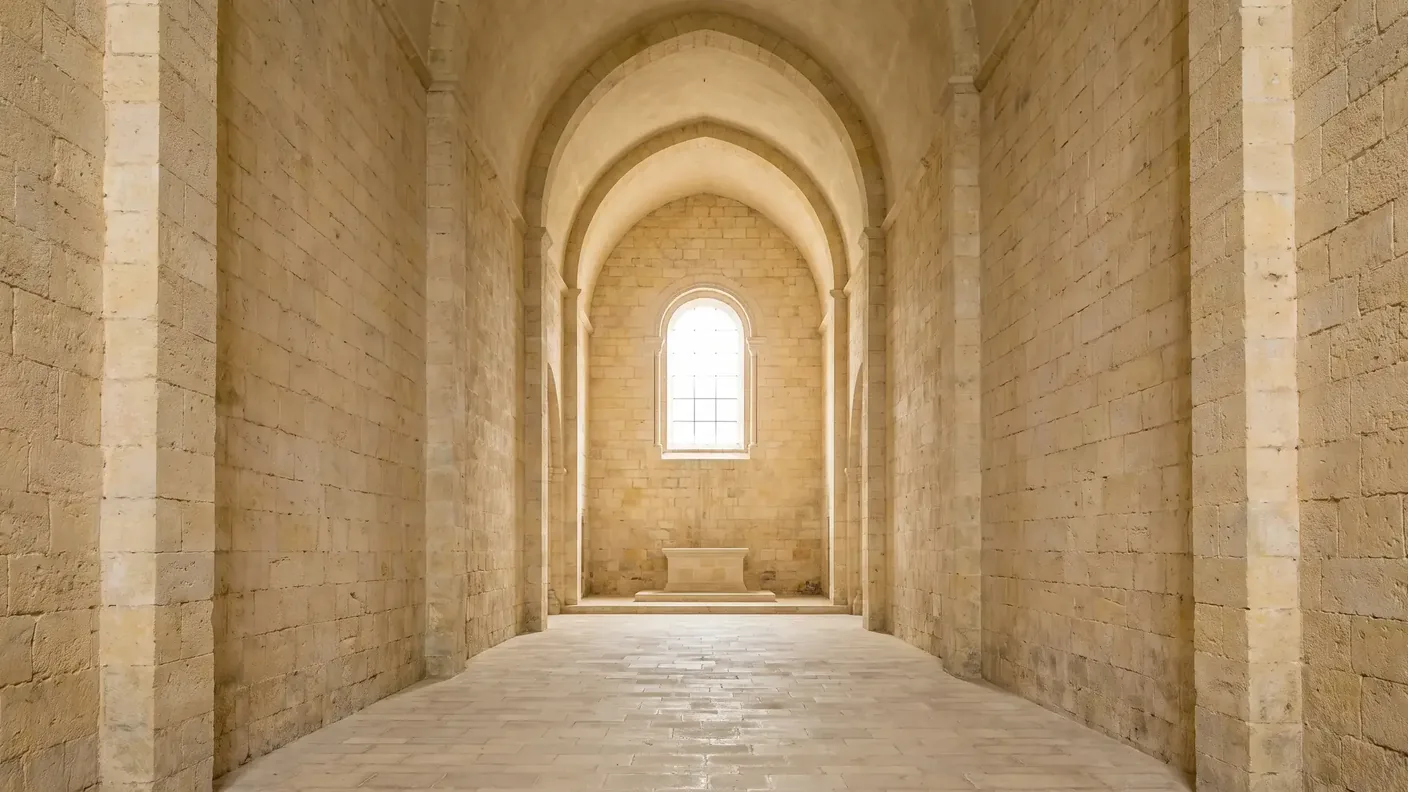
The church is 48 meters long. The nave, measuring 17 m by 8 m, is covered by a broken barrel vault. The transept extends 27 meters (26.76 m according to the survey) and is topped by a dome supported by pendentives—a hallmark of Romanesque architecture in the Périgord region—at the crossing. The order of construction, established by the town hall, proceeds from the eastern sections toward the west: the chapel and north transept, then the choir, chapel, and south transept, and finally the nave and portal, completed in the early 13th century. A “Romanesque-Gothic” building, blending Romanesque simplicity with the Gothic pursuit of height.
The Details That Make the Visit Special
- The floor slopes upward toward the sanctuary, combined with a slight narrowing of the nave—creating “an interesting perspective effect”—which was intentional; on the south side, the wall rests directly on the rock of the valley.
- The choir vault: a “rather archaic” ribbed vault dating from around 1150, with “a curious keystone consisting of seven keystones ”—and, between the northern apsidal niche and the choir, one of the oldest sloping vaults in the Périgord.
- The Gothic portal dating from the 1220s: three arches, a diamond-pointed archivolt, palmette capitals—and two reused capitals carved with figures of bearers.
- The epitaph of Abbé Guillaume (on the north wall of the north transept) and traces of a Romanesque fresco depicting the Crucifixion: the cross is framed by the chariots of the moon and the sun, and a symbolic Jerusalem can be seen.
- A multilobed arch over a window in the north transept, “which is reminiscent of the Alhambra in Granada”—perhaps brought back by the Crusaders or originating from Mozarabic Spain: an extremely rare touch of the exotic in the Périgord.
- Laus roofs: limestone slabs laid on chestnut battens, one meter thick at the base—weighing 500 kg to 1 metric ton per square meter. The current roof dates from 1947.
Visits: Hours and Prices for 2026
The abbey church offers free admission for much of the year. From May through October, the Heritage Centre (12 route de l'Abbaye, 05 53 51 98 92), run by the town hall, the association Les Amis de Saint-Amand de Coly, and the Lascaux-Dordogne tourist office, offers three guided tour options:
| Tour | Duration | Rates |
|---|---|---|
| The Abbey's Must-Sees | 1 hour and 30 minutes | €9.50 (€3 for children under 14) |
| The Abbey Heights | 1 hour | 8 € |
| Les Combles Revealed (Ages 14 and up) | 45 min | 6 € |
The tour of the attic is one of a kind: visitors can see the walkway above the vaults, the crossbeams, the “fan-shaped” roof truss above the apsidioles, and the underside of the slate roof. The abbey church accommodates approximately 12,000 visitors per year — one-hundredth the size of Lascaux, yet a monument that many consider just as remarkable. Since its restoration in 2021, an audio guide complements the self-guided tour.
Every month of August, the Périgord Noir Festival It hosts classical and Baroque concerts as well as early music masterclasses—the acoustics of the bare nave are the number one reason regulars come back. Book early: the venue has a capacity typical of a small village.
Saint-Amand, a listed village: slate roofs, guestbook, and lébérou
Saint-Amand-de-Coly is one of the 10 “Most Beautiful Villages of France” in the Dordogne—and one of three in the Vézère Valley, along with Saint-Léon-sur-Vézère and Limeuil. The designation, held by the listed village, survived the 2019 administrative merger unscathed. The village and its surroundings have also been a designated historic site since 1970.
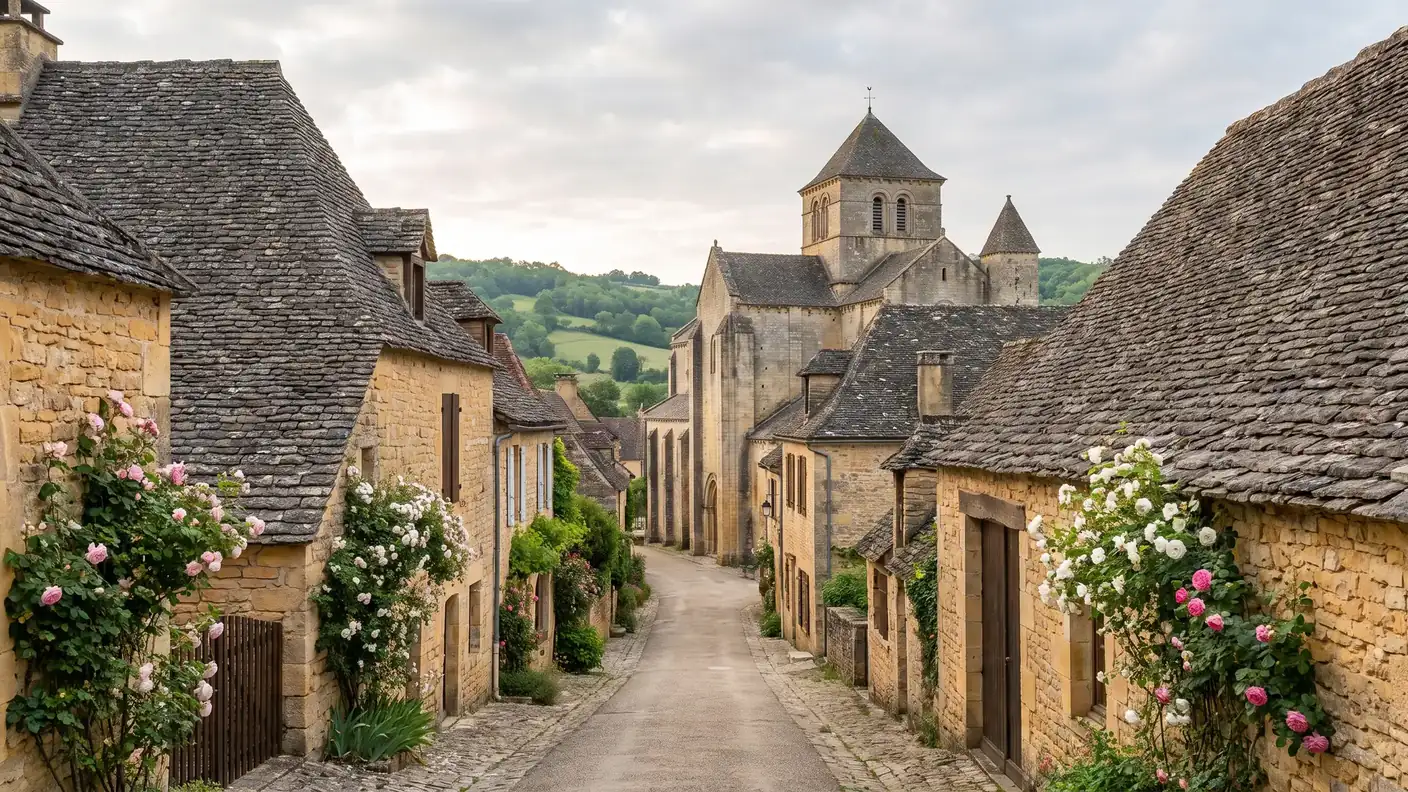
The historic district alone is worth the trip: houses built from ochre-colored stone and topped with stone-slab roofs, a former 14th-century hospital for the poor restored in the 18th century (the Rue de l'Hôpital still bears its name), walnut and tobacco drying rooms, and a washhouse. A 14-stop illustrated interpretive trail ties it all together, alongside an educational truffle farm, a trail through the old agricultural terraces, and—for the kids—the Lébérou Loop, 7 stops on the trail of the Périgord werewolf. Long-distance hikers will follow the GR 461, which runs through the town for 10 km between Terrasson and Aubas, passing through the village.
The local guestbook has its moments of glory: in 1978, the Queen Mother of England, while visiting the Périgord region, stopped in the village and signed the register of the Friends of Saint-Amand—it can still be leafed through at the Accueil Patrimoine. As for residents, sprinter Roger Bambuck, former 100-meter world record holder and former Minister of Sports, has owned a home here since 1973. And copper artist Alain Lagorsse hammers away at his craft in the village.
Social life revolves around the café La Rapiette à 3 Têtes (41 rue de l'Hôpital), which hosts literary gatherings with local writer Jean-Luc Aubarbier. Three events mark the summer: the street arts festival “Saint-Amand fait son intéressant” (3 days, 18th edition in July 2026), the Local Farmers’ Market on Tuesday evenings starting at 6 p.m. in July and August on the Place du Séchoir à Tabac, and the village festival on August 15, featuring a Mass for Saint Hubert accompanied by hunting horns, a Périgord-style meal, and a dance.
Coly, the Other Village: The Monks' Mill Turned 4-Star Hotel
Located 5.6 km from Saint-Amand (a 12-minute drive through the valley), the delegated commune of Coly—with 218 residents and an area of 8.01 km²—lives in the shadow of its larger neighbor, though it shouldn’t. Its 12th-century Saint-Raphaël Church watches over the village. Above it stand the ruins of the abbots’ fortified castle (the “castrum de Coly,” first mentioned in 1406), built to block access to the abbey—the English were driven out of it in 1411. It was during the destruction of this abbey castle that the abbey’s archives were lost. More unassuming, the 16th-century Bouch manor served as a hunting lodge for the bishops of Sarlat.
The place that has made Coly famous today is the Hautegente Manor: a former outbuilding belonging to the monks of Saint-Amand—first a blacksmith’s shop, then the abbey’s mill—now a 4-star hotel with 17 rooms on a 15-hectare estate along the river, run by the Hamelin family. Two restaurants: La Table du Coly (gourmet) and La Table de Jean (bistronomic). It’s hard to imagine a more “authentic” place to stay: the inn is part of the very history you’ve come to explore.
In the village, Le Troisième Lieu serves as a delicatessen, café, bar, restaurant, and wine cellar all in one—the Swiss Army knife of villages that have lost their local businesses (the school in Coly closed in June 2018. The children now attend the school in Saint-Amand, which still has its preschool classes).
Near the village: Lascaux is a quarter of an hour away, and the entire Vézère River
Saint-Amand-de-Coly is a secluded base camp in the heart of one of France’s most densely populated regions: the Vézère Valley, listed on the UNESCO since October 1979 under the category “Prehistoric Sites and Decorated Caves” — 147 Paleolithic sites and 25 decorated caves, with approximately 500,000 flint tools identified — and certified "Grand Site de France" in 2020. The distances listed below are by road and have been verified (OSRM).
Lascaux IV, in Montignac (9.7 km / 15 min)
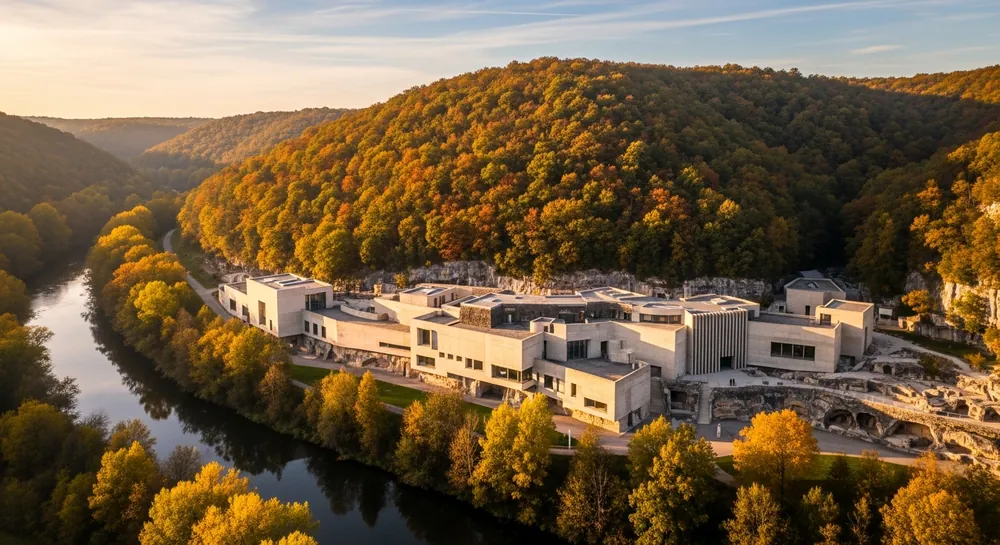
The International Center for Cave Art, which opened on December 15, 2016 (€57 million, a 150-meter semi-underground building designed by the Norwegian firm Snøhetta), features the first complete facsimile of the cave: Over the course of two and a half years, 34 artists from the Périgord Facsimile Workshop reproduced 900 m² of cave walls there.
2026 Prices: €23 for adults, €15 for children (ages 5–12), free for children under 5. Combined tickets with Le Thot (€26.50) or Lascaux II (€29). Allow 1 to 1.5 hours for the guided tour, and 2 to 3 hours on site. Time-stamped tickets—online reservations are strongly recommended during the summer. The original cave, however, has been closed since 1963: with more than 1,000 visitors per day, their breath released 2,500 liters of CO₂ daily, which was corroding the walls. Our comprehensive guide to Lascaux explains everything in detail.
Montignac-Lascaux (9.8 km / 14 min)
The valley’s market town: market stalls on Wednesday and Saturday mornings (8:30 a.m.–12:30 p.m., Quai Mérilhou and Place Carnot), along the banks of the Vézère with its houses featuring covered galleries. Since 2022, Montignac has been twinned with Santillana del Mar, in the Spanish municipality of Altamira—the two “prehistoric Sistine Chapels” are now officially sister cities.
Saint-Geniès (10.1 km / 12 min)
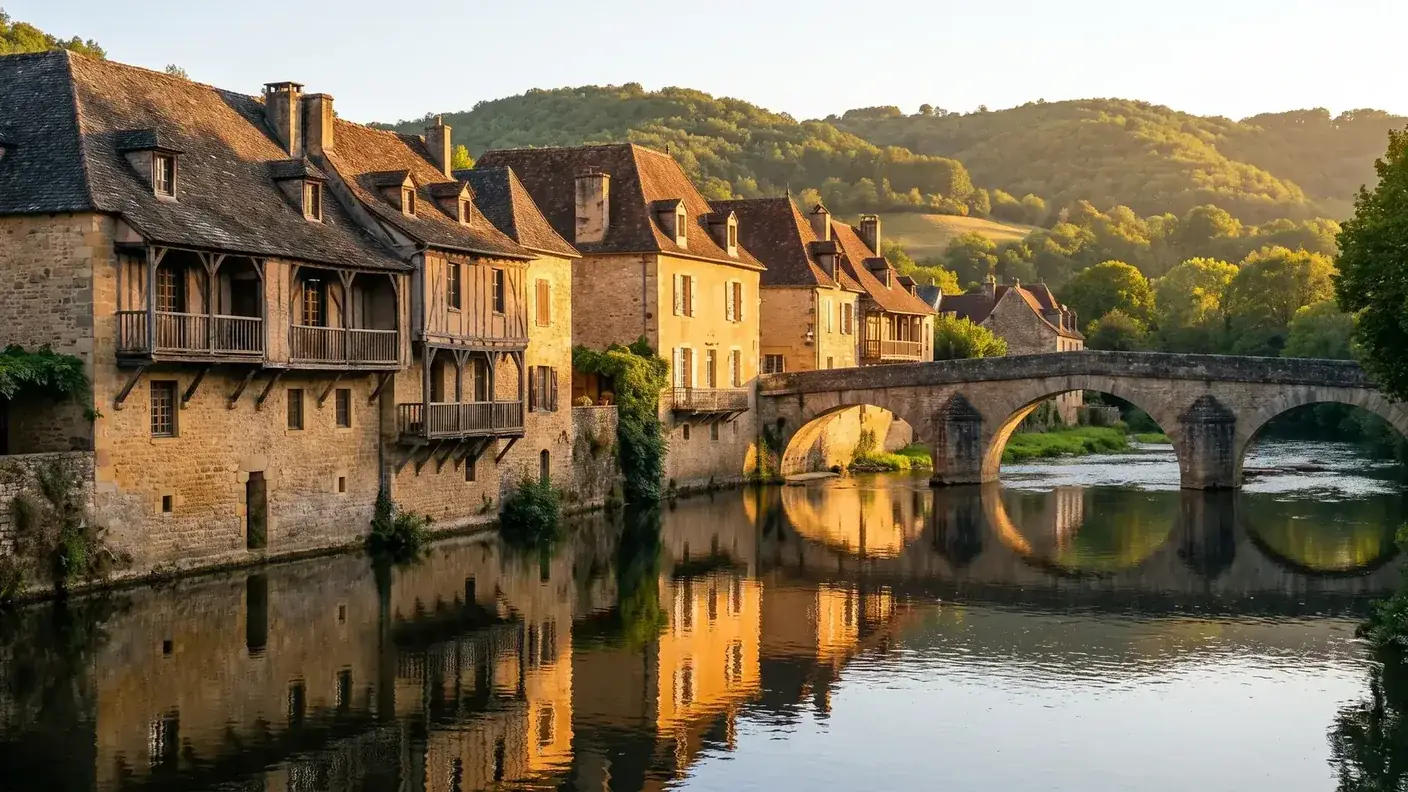
The quickest day trip: a village with slate-roofed houses situated on the 45th parallel—exactly halfway between the North Pole and the equator—featuring four historic monuments, including the Cheylard Chapel (founded in 1331, designated a historic monument in 1899), featuring 14th-century frescoes.
Terrasson-Lavilledieu (16.4 km / 22 min)
The “Gateway to the Périgord Noir” (population 6,000) has a dual connection to the village: it is the ancient Genuliacus of the three hermits, built around the tomb of Saint Sour. People visit it for the Jardins de l’Imaginaire — 6 hectares featuring 13 contemporary terraced gardens created in 1996 by landscape architect Kathryn Gustafson (designer of the Diana Memorial Fountain in Hyde Park), designated a 20th-Century Heritage Site, €8.50 admission, open from April through late September, 1 hour and 15-minute guided tour—and for the 12th-century Old Bridge (dating from before 1178, designated a Historic Monument in 1904), which has spanned the Vézère River for eight centuries. Truffle and walnut markets are held in season.
Le Thot (16.6 km / 23 min)
The Lascaux Family Park in Thonac: a wildlife park featuring about 70 animals—recreated aurochs, bison, Przewalski’s horses, wolves, and deer—along with an area dedicated to cave art, featuring reproductions of cave panels and a 3D theater. Combined ticket with Lascaux IV for €26.50.
Sarlat-la-Canéda (22 km / 26 min)
The capital of the Périgord Noir (population 8,763)—the first town in France to be protected under the Malraux Law in 1964, a medieval town “among the most densely built in the world,” with markets on Wednesdays and Saturdays. See our complete guide to Sarlat.
La Roque Saint-Christophe (23.9 km / 29 min)
A kilometer of cliffs carved into five terraces, between 80 and 100 meters above the Vézère River: inhabited from prehistoric times through the Renaissance, a refuge against Viking raids and later during the Hundred Years’ War, razed in 1588. Approximately 150,000 visitors per year—the third most-visited natural site in Nouvelle-Aquitaine in 2018.
Two Castles Along the Way
In the town itself, the Château de la Grande Filolie (15th–17th centuries, designated a historic monument in 1947, 6.4 km from the town center) features a mix of slate roofs and towers with machicolations. Restored in the 20th century by perfumer François Coty, it was once owned by Jean de Beaulieu, who married Fénelon’s sister. As it is a private property, it is not open to the public—it can be seen from hiking loop No. 30. In Aubas, the Château de Sauvebœuf (rebuilt in 1636–1637 after being razed to the ground on Richelieu’s orders as punishment for a duel. Owned by Mirabeau’s father in the 18th century) has been open to the public since 2013, featuring an impressive private museum of prehistoric artifacts.
| Field Trip | Road | The Argument |
|---|---|---|
| Lascaux IV (Montignac) | 9.7 km · 15 min | Complete facsimile edition, €23 |
| Montignac-Lascaux | 9.8 km · 14 min | Markets Wed. & Sat., along the banks of the Vézère |
| Saint-Geniès | 10.1 km · 12 min | Village of Lauzes, 45th parallel |
| Terrasson | 16.4 km · 22 min | Gardens of the Imagination, Old Bridge |
| Le Thot | 16.6 km · 23 min | Wildlife Park + Cave Art |
| Sarlat-la-Canéda | 22 km · 26 min | Capital of the Périgord Noir |
| La Roque-Saint-Christophe | 23.9 km · 29 min | Cave-filled cliff, 5 levels |
| Les Eyzies | 29.7 km · 35 min | National Museum of Prehistory |
| Brive-la-Gaillarde | 39.6 km · 44 min | Halle Brassens, Paris Direct Station |
When to go: August concerts or September light?
| Period | Crowd | For | Against |
|---|---|---|---|
| April–June | Sweet | Vallée Verte, Heritage Site Open Starting in May, Markets | Possible showers |
| July | Strong | Street Arts Festival (18th edition, 2026), night markets | Lascaux is packed; book everywhere |
| August | Very strong | Concerts at the Périgord Noir Festival, August 15 Celebration | Accommodations are fully booked months in advance |
| September–October | Impact | Golden light, walnut trees, peaceful visits | Shorter days |
| November–March | Minimum | An abbey church all to yourself, mists of the valley | Home: Cultural sites closed, restaurants operating at reduced capacity |
The regulars' choice: late May–June or September, when the golden rock catches the low-angled light and Lascaux IV can be visited without the crowds. Music lovers: head to August and book your tickets for the concert as soon as the Périgord Noir Festival goes on sale—the nave only has a few hundred seats. The Heritage Days (September) opens up areas that are usually closed off.
From Bordeaux: 185 km to the end of the world
Saint-Amand-de-Coly is 185 km from Bordeaux—about 2 hours and 15 minutes via the A89 and then the local roads through the valley. Key point: The village has neither a train station nor a direct bus route, and the nearest train station is 14.5 km away with no local public transportation. This journey always ends up being a drive.
| Fashion | Duration | Estimated cost | Details |
|---|---|---|---|
| Car | ~2 hours and 15 minutes | €40–55 (gas + tolls) | Take the A89, then the D704/D62 via Montignac or Le Lardin |
| Executive car service (chauffeur service) | ~2 hours and 15 minutes | Starting at €308 · one-way | Door-to-door, with stops along the way |
| Train (TER) | ~2.5 hours + 20-minute drive | Check the train fare and last departure time for the selected date | Bordeaux → Condat - Le Lardin or Terrasson, then 14.5–16.4 km without a bus |
| Bus | — | — | No direct service; regional bus route 320: Brive ↔ Montignac via Condat |
| Airplane | — | — | Brive-Vallée de la Dordogne Airport, 38.4 km away (43 min) |
By car
Take the A89 toward Périgueux-Brive, exiting at Thenon or Le Lardin depending on your route, then take the small roads through the Coly Valley. The last few kilometers are well worth the effort: narrow county roads winding through walnut groves and woods—the GPS announces the abbey church long before you see it emerge from the valley.
By train: possible, but not on your own
The Condat - Le Lardin and Terrasson-Lavilledieu stations can serve as rail arrival points, but train schedules, station services, and options for the last few kilometers vary. Check the Terrasson-Lavilledieu TER information sheet and the Modalis regional trip planner before departure.
As a private chauffeur: door-to-door service
The direct trip from Bordeaux to Saint-Amand-de-Coly by sedan costs €354 one way (1–3 passengers, fixed price confirmed in writing). The advantage of a private transfer for this specific destination: door-to-door service right to the foot of the abbey church, whereas the train drops you off 14.5 km away—plus flexible stops along the way, such as Saint-Émilion, Périgueux, or Montignac-Lascaux, depending on the itinerary. Request a quote: written response within 30 minutes, English-speaking driver, 8-passenger van available.
Practical Information: Where to Stay, Where to Eat, Planning Your Trip
How much time should I set aside?
A half-day is enough for the abbey church (guided tour + attic) and the village tour. A busy day allows you to add Lascaux IV or Terrasson. At base camp, 2 to 4 days cover most of the Vézère Valley—Lascaux, La Roque Saint-Christophe, Les Eyzies, Sarlat—and are all within a 35-minute drive.
Where to stay, where to eat?
The highlight: the Hautegente Manor in Coly, a 4-star hotel housed in a former monks’ mill, featuring two restaurants. In the village itself: bed-and-breakfasts and vacation rentals in slate-roofed houses (book early in the summer), Café La Rapiette à 3 Têtes for a break and literary evenings, and Le Troisième Lieu in Coly for gourmet groceries and dinner. For a wider range of options—hotels, supermarkets, pharmacies—head to Montignac (10 km) or Terrasson (16 km): the village has no permanent grocery store, so plan ahead.
| Profile | Daily budget (excluding transportation) | The Program |
|---|---|---|
| Small budget | ≈ 40-60 € | Vacation rental, market picnic, free admission to the abbey church + village tour |
| Comfort | ≈ 110-160 € | Bed and Breakfast, guided tour + attic tour, Lascaux IV, dinner at Le Troisième Lieu |
| Premium | ≈ 250-350 € | Hautegente Manor, Table du Coly, Festival concert, a day in Sarlat |
Good to Know
- Oceanic climate: hot but stormy summers, mild and damp winters—the morning mists in the valley make for the most beautiful photos of the abbey church.
- Accessibility: The village is on a gentle slope, and the floor of the nave rises—the Accueil Patrimoine (05 53 51 98 92) can provide information on accessibility for people with disabilities at the monument.
- Network: Uneven cell service coverage in the valley—download maps and tickets before you arrive.
- Markets: Farmers’ market on Tuesday evenings in the village (summer); Montignac on Wednesday and Saturday mornings; truffles and walnuts in Terrasson during the season.
- Lascaux IV: Time-Stamped Tickets — Book online and arrive 20 minutes before your tour time.
Frequently Asked Questions
Coly-Saint-Amand or Saint-Amand-de-Coly: Which is the correct name?
Both. Coly-Saint-Amand is the new municipality created on January 1, 2019, through the merger of Coly and Saint-Amand-de-Coly, which became delegated municipalities. The village with the abbey church—and the “Most Beautiful Villages of France” designation—retains its historic name, Saint-Amand-de-Coly.
Is Saint-Amand-de-Coly one of the Most Beautiful Villages in France?
Yes: It is one of the 10 certified villages in the Dordogne, and one of three in the Vézère Valley, along with Saint-Léon-sur-Vézère and Limeuil. The designation, sponsored by the village of Saint-Amand-de-Coly, remained fully in effect after the 2019 municipal merger.
Why is the church in Saint-Amand-de-Coly fortified?
The wealthy and isolated abbey became militarized as early as the 13th century—during the conflict between the Capetians and the Plantagenets—and then during the Hundred Years’ War, as the Périgord was a “border region.” The result: 10 bastions, a parapet walk, a strongroom, arrowslits, and a 300-meter-long enclosure with 2.5-meter-thick walls. It was known as “Fort Saint-Amand.”
Is there an admission fee to visit the abbey church?
No. Admission to the church is free for much of the year, with an audio guide available since 2021. From May through October, the Heritage Information Center offers three guided tours: the “Must-Sees” (1 hour 30 minutes, €9.50, €3 for children under 14), Les Hauteurs (1 hour, €8), and Les Combles révélés (45 minutes, €6).
Can we visit the church's attic?
Yes—this is the most unique tour: 45 minutes high above the vaults (ages 14 and up, €6) to see the defensive walkway, the battlements, the “fan-shaped” roof truss, and the underside of the slate roof, which weighs between 500 kg and 1 metric ton per square meter.
What are the must-see highlights inside the abbey church?
The floor slopes upward toward the choir (an intentional perspective effect), the archaic ribbed vault dating from around 1150 with its seven-segment keystone, the Latin epitaph of Abbot Guillaume (died around 1125–1130), the remains of a Romanesque fresco depicting the Crucifixion, and an extremely rare Mozarabic-inspired poly-lobed arch in the north transept.
Where to eat in Saint-Amand-de-Coly?
In the village: La Rapiette à 3 Têtes café (41 rue de l'Hôpital), which is expanding its literary café offerings. In Coly (5.6 km): Le Troisième Lieu (a gourmet shop, café, and restaurant) and the two restaurants at the Hautegente Manor—La Table du Coly (gourmet) and La Table de Jean (bistronomic). In the summer, there’s a farmers’ market on Tuesday evenings.
Where to stay in Coly-Saint-Amand?
The Hautegente Manor (Coly) is the premier destination: a 4-star hotel with 17 rooms housed in the monks’ former mill and forge, set on a 15-hectare estate along the river. Alternatively: bed-and-breakfasts and vacation rentals in the historic village—which are in high demand during the summer—and hotel accommodations in Montignac (10 km) or Sarlat (22 km).
Is Lascaux close to Saint-Amand-de-Coly?
Very: Lascaux IV is 9.7 km away, about a 15-minute drive—it’s one of the closest charming villages to the cave. Admission: €23 (2026); time-stamped tickets must be reserved online. The combined ticket with Parc du Thot (€26.50) makes for a great family day out.
Is there a train station in Coly-Saint-Amand?
No. The nearest train stations are Condat - Le Lardin (14.5 km) and Terrasson (16.4 km), served by the TER Bordeaux ↔ Brive line. There are no direct trains from Paris (transfer required in Brive). This page does not guarantee any local connections: please check the regional schedule for your travel dates.
How much does a chauffeured transfer cost from Bordeaux to Saint-Amand-de-Coly?
Starting at €354 one-way in a sedan (1–3 passengers), approximately 2 hours and 15 minutes door-to-door, fixed price confirmed in writing before booking. An 8-seat van is available for families, with stops along the way as desired (Saint-Émilion, Périgueux, Montignac-Lascaux).
When is the best time to visit?
Late May through June and September for the light and tranquility. August for the concerts of the Périgord Noir Festival under the vaulted ceiling (renowned acoustics—book early), July for the street arts festival “Saint-Amand fait son intéressant” (18th edition in 2026).
What's the most surprising story about the village?
A future pope once visited there incognito: in 1304, Bertrand de Got, Archbishop of Bordeaux, visited the abbey—and learned of his election shortly thereafter. He became Clement V, the first Pope of Avignon. Seven centuries later, in 1978, the Queen Mother of England signed the village’s guest book.
Further Reading
- The cave, 15 minutes away: see the Lascaux Guide (Lascaux IV, tickets, history)
- The capital of the Périgord Noir: see the Sarlat Guide
- The Paris Direct train station and the Brassens Market Hall: see the Brive-la-Gaillarde Guide
- The hilltop village overlooking the Dordogne: see the Domme Guide
- Plan your trip: Plan your transfer from Bordeaux to Saint-Amand-de-Coly or explore all our destinations
Sources and References
- Wikipedia — Saint-Amand-de-Coly Abbey — history, timeline, restorations
- Wikipedia — Coly-Saint-Amand — new municipality, geography, demographics
- Wikipedia — Saint-Amand-de-Coly — village, place names, natural heritage
- Coly-Saint-Amand Town Hall — History and Architecture of the Abbey Church (Heritage Pages)
- The Most Beautiful Villages of France — Official Village Profile
- The Friends of Saint-Amand de Coly — Guided Tours, Admission Fees, Heritage Home
- General Inventory of Nouvelle-Aquitaine — Abbey File (2011): Fortifications, Enclosure
- Mérimée Record PA00082792 — Designated as a Historic Monument in 1886 and 1965
- Lascaux — Official Website — Admission Prices and Hours for Lascaux IV 2026
- Lascaux-Dordogne Vézère Valley Tourist Office — Must-See Attractions, Events Calendar, Hiking Loops
- SNCF Connect — train schedules, routes, and fares (accessed July 23, 2026)
- TER Nouvelle-Aquitaine — Terrasson-Lavilledieu Station — Schedule and Official Services · accessed July 24, 2026
- Modalis — Regional Last-Mile Calculator (accessed July 23, 2026)
- INSEE — Complete Report on Coly-Saint-Amand — Official Population Figures, Age Structure
Article updated in July 2026.
On the way to the fortress-abbey
Direct trip from Bordeaux (~2 hours 15 minutes), with optional stops along the way—Saint-Émilion, Périgueux, Montignac-Lascaux. Written fixed-price quote within 30 minutes; sedan or van; English-speaking driver.