
Bordeaux to Loubès-Bernac: vineyards, heritage and Plum Village
A village of 407 residents situated at the border of three departments: the Côtes de Duras vineyards, the Château de Théobon (one of whose chimneys now stands in Harvard), four medieval parishes—and one of Europe’s largest Buddhist monasteries, Thich Nhat Hanh’s Plum Village. About 1 hour and 34 minutes from Bordeaux.
Loubès-Bernac at a Glance
Loubès-Bernac is a wine-growing town in the Côtes de Duras region, notable for the Château de Théobon and the hamlet of Bas du Village des Pruniers. This Buddhist monastery was founded in 1982 by Thich Nhat Hanh. From Bordeaux, the drive is 89 km and takes about 1 hour and 34 minutes. Private transfers start at €157 one way.
Detailed Guidelines
- Loubès-Bernac is a rural municipality in Lot-et-Garonne (47120), on the border of three departments (close to Dordogne and Gironde), in the heart of the Côtes de Duras vineyards, about 14 km from Eymet and Duras.
- 407 residents (2023), formed in 1826 through the administrative merger of two former parishes, Loubès and Bernac, and home to a network of four to five medieval sanctuaries.
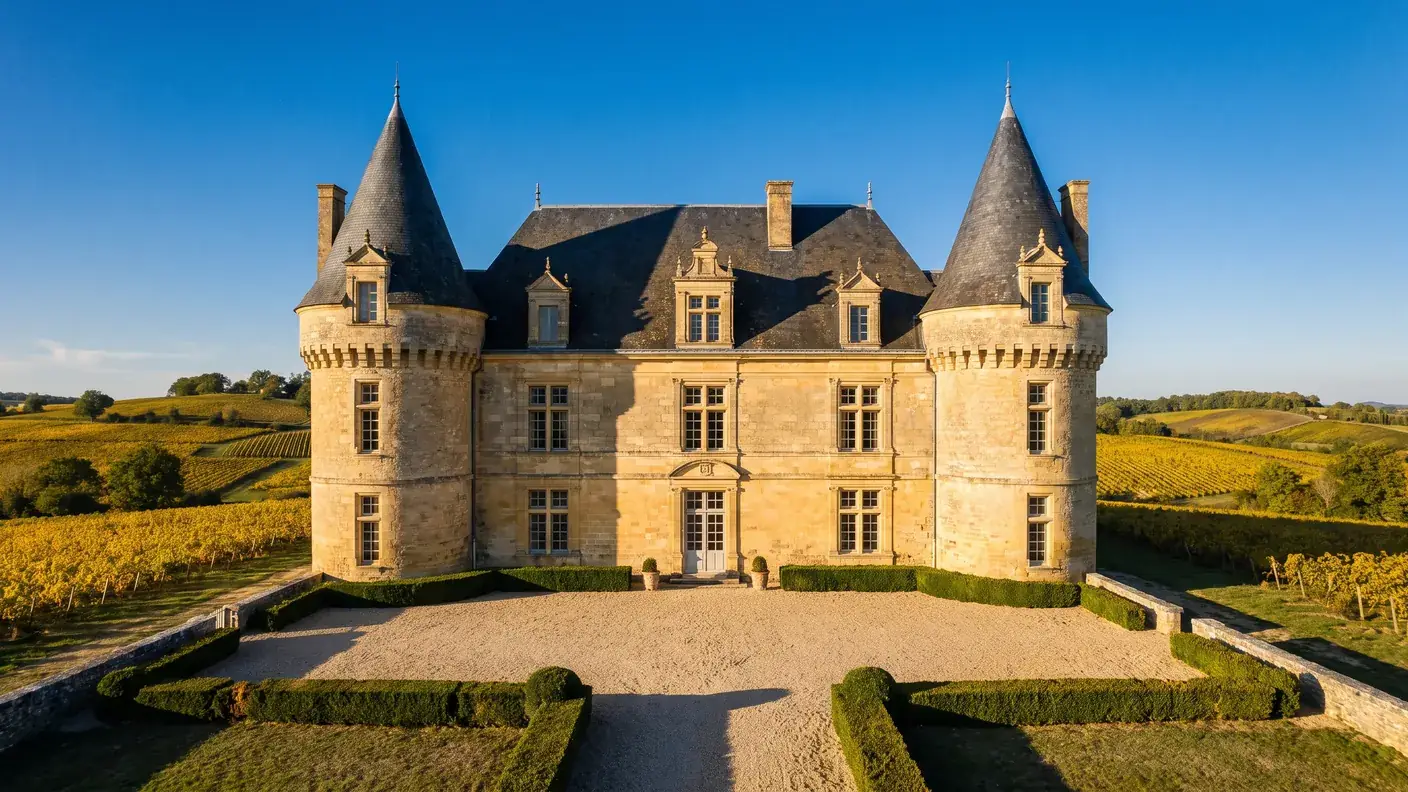
- Its most famous landmark: Théobon Castle, a medieval fortress that was later converted into a Renaissance residence, which has been listed as a Historic Monument since 1962.
- What makes it unique worldwide: the Village of Les Pruniers (Plum Village), a Buddhist monastery founded by the Zen master Thich Nhat Hanh — One of its hamlets, reserved for nuns, is located within the municipality.
- A surprising figure: ~30% foreigners among the residents (2021) — due to the presence of the international monastery and significant immigration from the United Kingdom.
- The name “Loubès” is thought to derive from a Gallo-Roman estate, Luperciacum (from the Latin lupus, meaning “wolf”); “Bernac” comes from an old parish name first recorded in 1520.
- Unassuming rural heritage: a washhouse fed by a Gallo-Roman spring, a blacksmith’s workshop, the “Four Mills” walking trail, and a mission cross from 1850.
- From Bordeaux: ~89 km, about 1 hour and 34 minutes by car — starting at €157 with a private driver. No train station (Sainte-Foy-la-Grande is ~15 km away).
Before You Go: What Loubès-Bernac Really Is
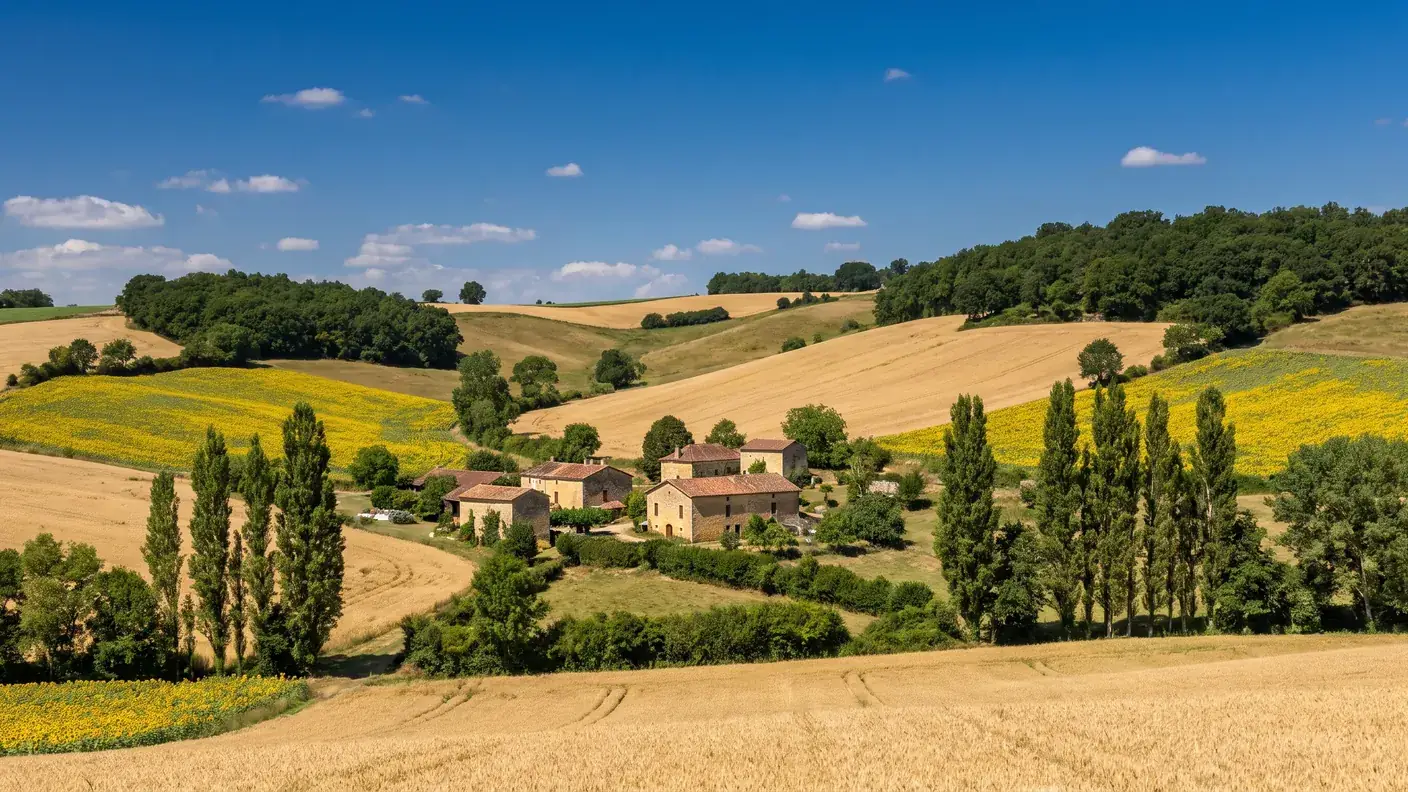
A misty morning on the hillsides of Duras. Rows of vines wind their way down toward the valley, dotted with plum trees in bloom and old stone farmhouses. Nothing in this wine-growing landscape of Lot-et-Garonne hints that one of Europe’s largest Buddhist monasteries has taken root here, nor that a Renaissance castle—whose chimney now rests at Harvard—watches over these hills. That is the charm of Loubès-Bernac: a village of 407 residents, at the border of three provinces, that hides an unexpected wealth of stories.
Loubès-Bernac is a village in historic Guyenne, at the border of Lot-et-Garonne, Dordogne, and Gironde, in the heart of the Côtes de Duras wine region. Its appeal lies in a striking contrast: a fragmented medieval heritage (two merged parishes, four to five churches, a fortified castle) and a distinctly contemporary presence—the Village des Pruniers, a major center of Zen Buddhism in the West, part of which lies within the municipality.
This guide distinguishes between verified information and copied information. On Loubès-Bernac, several accounts call for caution: a distance described as “70 km from Bordeaux” (which is ~89 km by road), a coat of arms “linked to Richard the Lionheart” (a disputed tradition), and a vanished town named “Rohan” (a local hypothesis). We present them for what they are, relying on solid facts: the 1826 merger, the Château de Théobon (listed as a historic monument in 1962), the 1937 AOC designation, and the monastery founded in 1982.
In terms of access, the village is off the beaten path, with no train station (the nearest one, Sainte-Foy-la-Grande, is about 15 km away) and no regular public transportation. You can get there by car—it’s about 1 hour and 34 minutes from Bordeaux. To explore the vineyards, the château, and the surrounding area—Eymet, Duras, Bergerac—at your own pace, a chauffeur service from Bordeaux remains the simplest door-to-door option.
A village on the border of three departments
Loubès-Bernac is located in the northern part of Lot-et-Garonne, in the Nouvelle-Aquitaine region, right in the heart of historic Guyenne. What stands out first is its location at a crossroads: the town borders both the Dordogne and the Gironde. Of its eight neighboring municipalities, three are in the Dordogne (including Monestier and Thénac) and one in the Gironde (Margueron)—a true tri-departmental junction (47/24/33).
The complete list of its eight neighboring towns clearly illustrates its border location: Saint-Jean-de-Duras, Soumensac, Saint-Astier and Villeneuve-de-Duras on the Lot-et-Garonne side, Monestier, Thénac, and Saint-Julien-Innocence-Eulalie on the Dordogne side, and Margueron on the Gironde side. Administratively, the municipality falls under the Marmande arrondissement and the Coteaux de Guyenne canton; it is part of the Pays de Duras community of municipalities, a small intermunicipal association comprising 17 municipalities and 5,730 residents (2022)—one of the most rural in Nouvelle-Aquitaine. The mayor, Joël Kleiber, is serving the 2020–2026 term.
Coteaux, Dropt, and Natura 2000
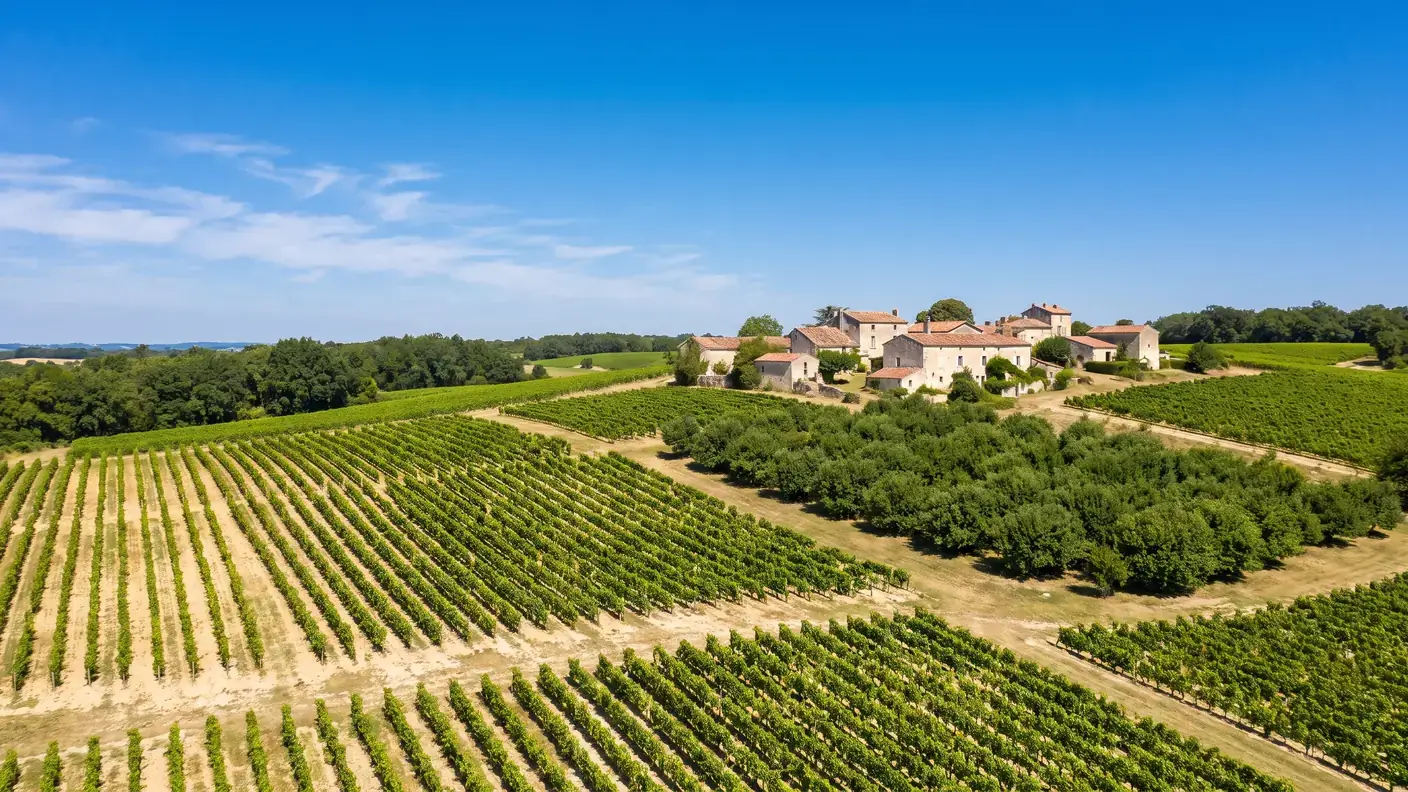
The terrain is gently rolling: 19.31 km² at elevations ranging from 74 to 187 meters. No major rivers flow through the area, but it lies within the Dropt basin—the small local streams flow into the Dourdèze, a tributary of the Dropt, and the municipality is part of the “Dropt Hydrographic Network” Natura 2000 site. The land is overwhelmingly used for agriculture (85%): vineyards and plum orchards dominate the landscape.
A note for map enthusiasts: the small stream that drains the town into the Dropt is spelled in two different ways, depending on the source, Dourdèze or Dourdenne — same stream, two spellings: a classic example of rural place-name etymology. The classification of the Dropt river system as a site Natura 2000 (FR7200692) is, in any case, a testament to the ecological quality of these unassuming valleys, where water flows through meadows, hedgerows, and vineyard plots. The highest point in the municipality, at 187 meters, offers views from its hillsides that, on a clear day, take in three departments at once.
| Data | Value |
|---|---|
| ZIP Code / INSEE | 47120 / 47151 |
| Department / Region | Lot-et-Garonne / Nouvelle-Aquitaine |
| District / Township | Marmande / Coteaux de Guyenne |
| Intermunicipal Cooperation | Pays de Duras Community of Communes |
| Area | 19.31 km² |
| Elevation | 74 m to 187 m |
| Population | 407 residents (2023) — population density ~21 people/km² |
| Terroir | AOC Côtes de Duras · Plum Trees |
Two Centuries of Exodus, Twenty Years of Recovery
Demographic trends tell the story of rural life in Lot-et-Garonne. In 1800, the town had 1,589 residents—nearly four times its current population. This was followed by a long decline, reaching a low of 309 residents in 1999, followed by a sharp rebound (+33% between 1999 and 2016).
| Year | Population |
|---|---|
| 1800 | 1,589 (all-time high) |
| 1901 | 700 (rural exodus began) |
| 1968 | 505 |
| 1999 | 309 (all-time low) |
| 2016 | 412 (rebound) |
| 2023 | 407 |
A note on methodology, for anyone who might come across slightly different figures: INSEE still lists 409 residents for the year 2022 in its municipal report, while the 2023 census counts 407. Both figures are correct—they simply refer to different years. The recent trend, however, remains slightly downward: −1.93% between 2017 and 2023, following the sharp rebound of the 2000s. Compared to the 1,589 residents in 1800, the current population represents just over a quarter of the historical peak: the decline reached −80% over two centuries before the trend began to recover.
An Unexpected Cosmopolitanism
A surprising statistic for a rural village: nearly 30% of the population was foreign-born in 2021, a rate four times higher than the national average (~7.7%). There are two main reasons for this. On the one hand, the international monks and nuns at Plum Village, who come from all over the world. On the other hand, there has been significant immigration from the UK since the 1980s and 1990s—as in many villages in Lot-et-Garonne and the neighboring Dordogne—drawn by affordable historic stone homes and a southern lifestyle. It is this understated cosmopolitanism, rooted in an ancient wine-growing region, that today defines the uniqueness of Loubès-Bernac.
Two names, four parishes, a terrible year (1562)
Names from Antiquity
The town’s name combines two histories. “Loubès” is said to date back to a Gallo-Roman villa, Luperciacum—“the estate of Lupercius,” a name derived from the Latin *lupus* (wolf). Traces of this name can be found in a record from 1326, in the form Capella de Lubüs. “Bernac” appears in Valeri’s list from 1520 (“Rectorate of Bernaco”); its origin, likely an old landowner’s name, remains a hypothesis. The two names were administratively merged in 1826 (source: EHESS).
This merger warrants clarification, as the dates vary depending on the source: the EHESS Cassini database—the standard reference for historians studying the administrative history of French municipalities—lists 1826 (though 1827 is sometimes cited). Bernac had, however, existed as a separate entity: established as a commune as early as 1790, at the very beginning of the Revolution, it existed as an independent entity for only one generation before being absorbed by its neighbor. As for the origin of the name “Bernac,” toponymists see it as the typical -acum formation—a Gallo-Roman landowner’s name with a suffix—but no primary source formally documents this specific Bernac: it is a plausible hypothesis, not an established fact.
Four Parishes and a Legend
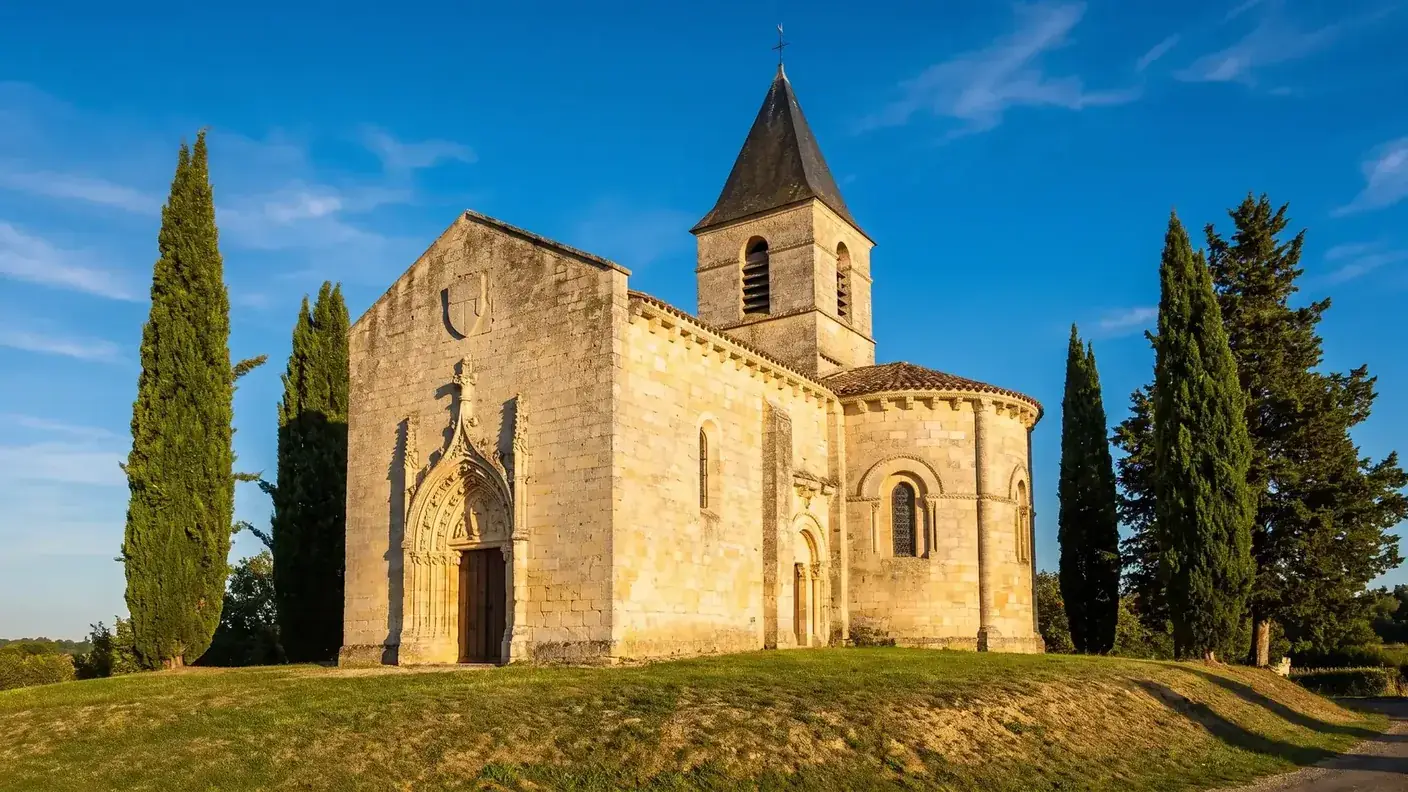
Before the Revolution, the area was not a village but a group of four parishes: Saint-Pierre de Loubès (in the town center), Notre-Dame de Bernac (of Romanesque origin, rebuilt in the 15th century in the Flamboyant Gothic style, whose portal bears a heraldic shield—which, according to a disputed tradition, is attributed to Richard the Lionheart), Saint-Martin de Montaillac, and Notre-Dame d’Uffer. A fifth, Saint-André de Théobon, rounded out the picture: legend places a village named “Rohan” there, which is said to have been destroyed around 1345 during the Count of Derby’s raid in the Hundred Years’ War.
1562–1671: A Century of Upheavals
All of these churches were burned or destroyed in 1562, on the orders of the lords of Théobon themselves—who had converted to the Reformation—during the religious unrest in the Agen region. A reversal of history: a century later, it was the town’s Protestant church that was demolished, by a ruling of the Council of State on March 7, 1671. Saint-André de Théobon, however, was never rebuilt. The antiquity of the settlement is confirmed by archaeological evidence: at a place called Les Bournizeaux, eight Merovingian sarcophagi were unearthed in 1958–1959.
This interfaith interplay alone encapsulates a century of the Southwest's history. In 1562, at the outbreak of the Wars of Religion, it was the local lords—who had converted to the Reformation—who destroyed the Catholic churches in their own parishes—a radical act, even by the standards of the Agen region. One hundred and nine years later, the balance of power had completely shifted: the royal decree of March 7, 1671 orders the demolition of the Protestant church in the town and the church Saint-Pierre de Loubès was rebuilt around the same year, 1671 — The Catholic stone reemerges at the very moment the Protestant stone disappears. Few villages offer such a striking symmetry between the two phases of this conflict.
The Lords of Théobon and Puychagut
Puychagut, a thousand-year-old Captalat vine
The region’s history is tied to two strongholds. Puychagut is one of the oldest fortresses in the region: first mentioned as early as the late 11th century (in the cartulary of Notre-Dame de Saintes), its lords bore the rare title of “captal ”—a Gascon feudal title derived from the Latin *capitalis*—since 1086. Besieged by Lord Derby in 1345, it belonged to the Ségur family before being dismantled in the 15th century, never to be rebuilt.
The siege of 1345 warrants a bit of context: that year, the Earl of Derby—Henry of Grosmont, one of Edward III’s finest commanders—led a well-documented campaign in Guyenne during the early stages of the Hundred Years’ War, which dealt a severe blow to the region. Local tradition also links the destruction of the vanished village of “Rohan,” near Théobon, to this campaign—a hypothesis that cannot be verified, but whose military backdrop is, in fact, perfectly real. As for the title of “captal,” attested here as early as 1086, it makes Puychagut one of the oldest documented captalates in the region.
Théobon: From the Mayracs to the Talleyrands
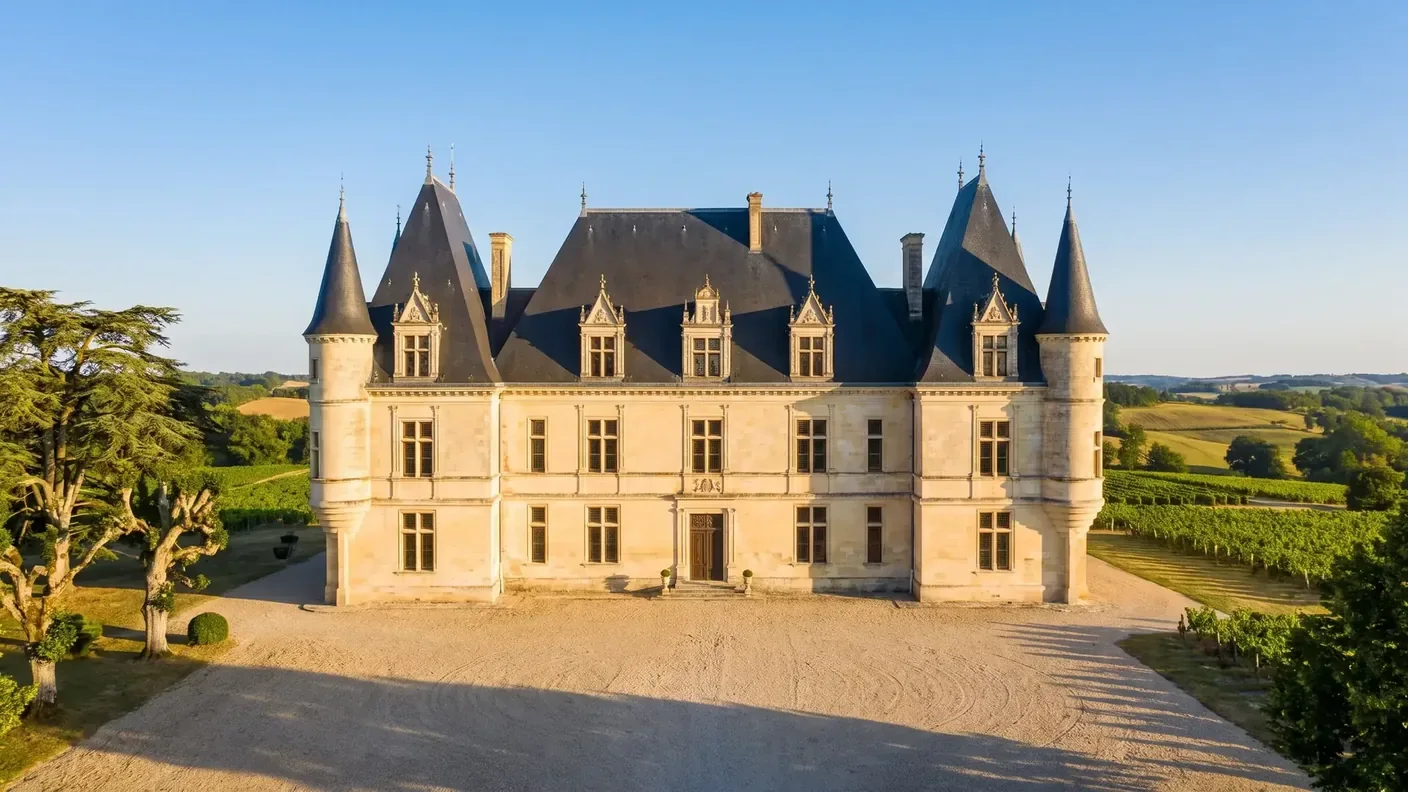
Théobon Castle, on the other hand, first appears at the turn of the 13th and 14th centuries with the Mayrac family (Gaubert de Mayrac referred to himself as Lord of Théobon in 1327). The lordship passed to the Ségur in 1475 through the marriage of Ysabeau de Mayrac to Giron de Ségur, Captal of Puychagut, and later to the Talleyrand-Périgord family (1725). Gaston de Ségur, Grand Cupbearer to Francis I, had the old fortress demolished to build a Renaissance château. Raised to the status of a barony in the 16th century, then to a marquisate under Louis XIII, the fortress was besieged by royal troops in 1622.
The complete list of Théobon’s owners reads like a genealogy of the Southwest: the Mayrac family, followed by the Ségur family (1475), then the Pierre-Buffière and Rochefort families, before the estate passed to the Talleyrand-Périgord family through a marriage in 1725, the family of the future diplomat, and was ultimately sold to the Brie de Teysson family in 1783, six years before the Revolution. Six lineages over five centuries: the simplified version sometimes seen (“from the Mayracs to the Ségurs, then to the Talleyrands”) omits two links in this chain.
A Fireplace That Went to America
The current building retains little of its medieval form, but its interior decor—including the wrought-iron staircase and fireplace—has been protected as a Historic Monument since November 5, 1962 (Mérimée entry). One of the castle’s fireplaces, which was dismantled and sold in the 1920s, is said to be in a music room at Harvard University today; however, this anecdote is based on secondary sources.
The story—a sale reported in 1924, at a time when America’s wealthiest families were buying up entire swaths of European cultural heritage—is documented only by secondary sources: no official Harvard inventory has confirmed it to date. Nevertheless, it speaks volumes about the quality of Théobon’s Renaissance décor, deemed worthy of crossing the Atlantic, and it offers this village in Guyenne an unlikely link to one of the world’s most famous universities.
The Plum Village, a major center of Zen Buddhism
A foundation established in 1982
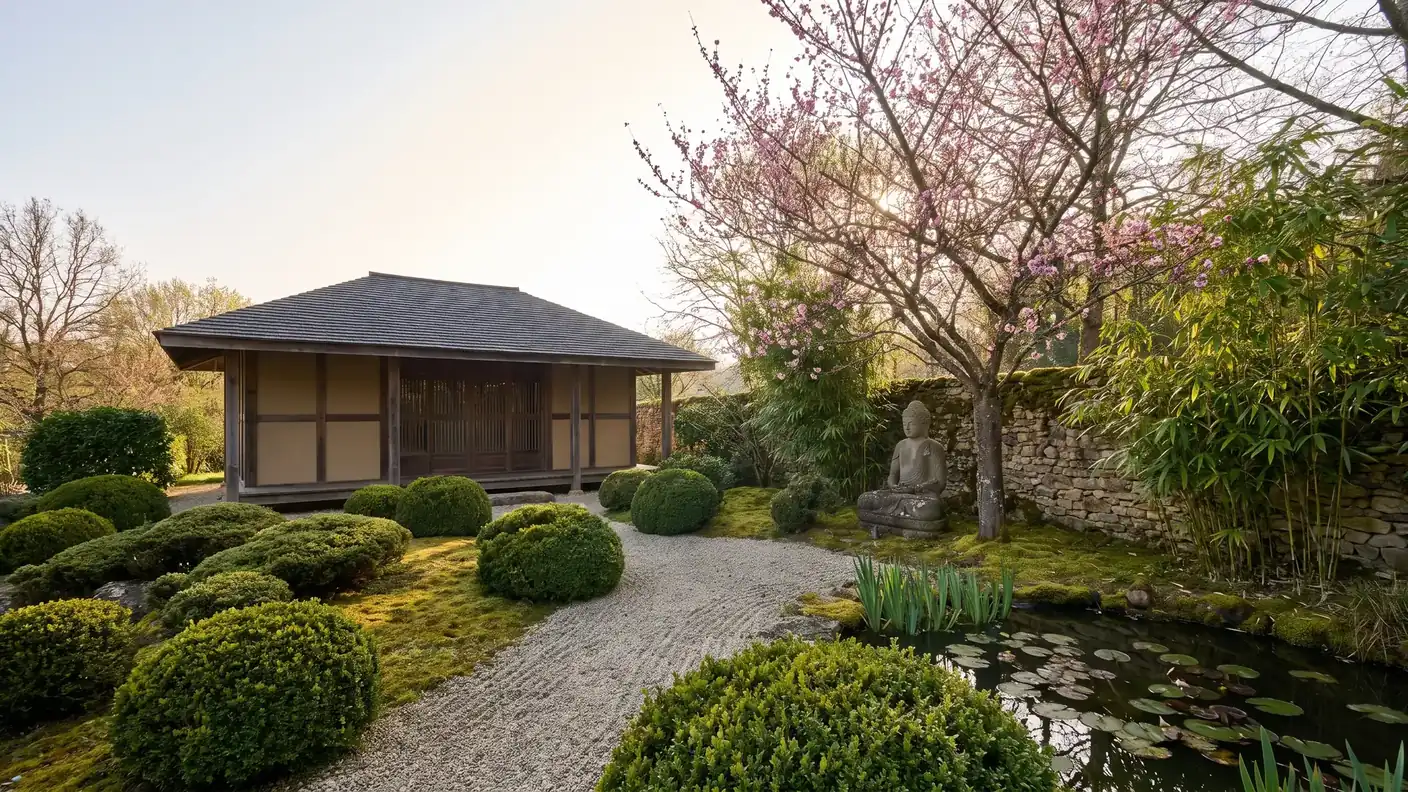
The region is home to part of the Village of Les Pruniers (Plum Village), a Buddhist monastery in the West. It was founded in 1982 by the Vietnamese Zen master Thich Nhat Hanh (official source). The monastery consists of several hamlets scattered throughout the area. The Hameau du Bas, reserved for nuns, is located in the town of Loubès-Bernac.
Exactly how many hamlets are there? Even the sources themselves disagree: the encyclopedia lists three, while the monastery’s official website lists four, spread across three departments—Dordogne, Gironde, and Lot-et-Garonne. Curiously, this fragmented geography mirrors that of the municipality: like Loubès-Bernac itself, which was formed by the merger of scattered parishes, the Village des Pruniers is an archipelago of places rather than a single site. It is important not to overstate the numbers: the figure of 200 monks and nuns applies to the entire monastery, and the Hameau du Bas in Loubès-Bernac is home to only a fraction of them.
An international monastery, a recent challenge
The entire Plum Village community is home to more than 200 monks and nuns from around the world (this figure includes all of its hamlets, not just the Lower Hamlet), as well as thousands of visitors from all over the world who come for meditation retreats. Their presence partly explains the town’s exceptionally high proportion of foreign residents and gives this corner of Guyenne a unique spiritual dimension. In January 2025, a fire partially destroyed the Lower Hamlet—notably the “Purple Cloud” building, which housed the room of Thich Nhat Hanh (who died in 2022)—without causing any casualties.
The contrast is striking, and that is what makes Loubès-Bernac so special: Amid a landscape of vineyards and plum orchards, at the border of three departments, a monastic community from Vietnam took root more than forty years ago, attracting mindfulness practitioners from around the world every year.
The Côtes de Duras Vineyard
One of France's first AOCs
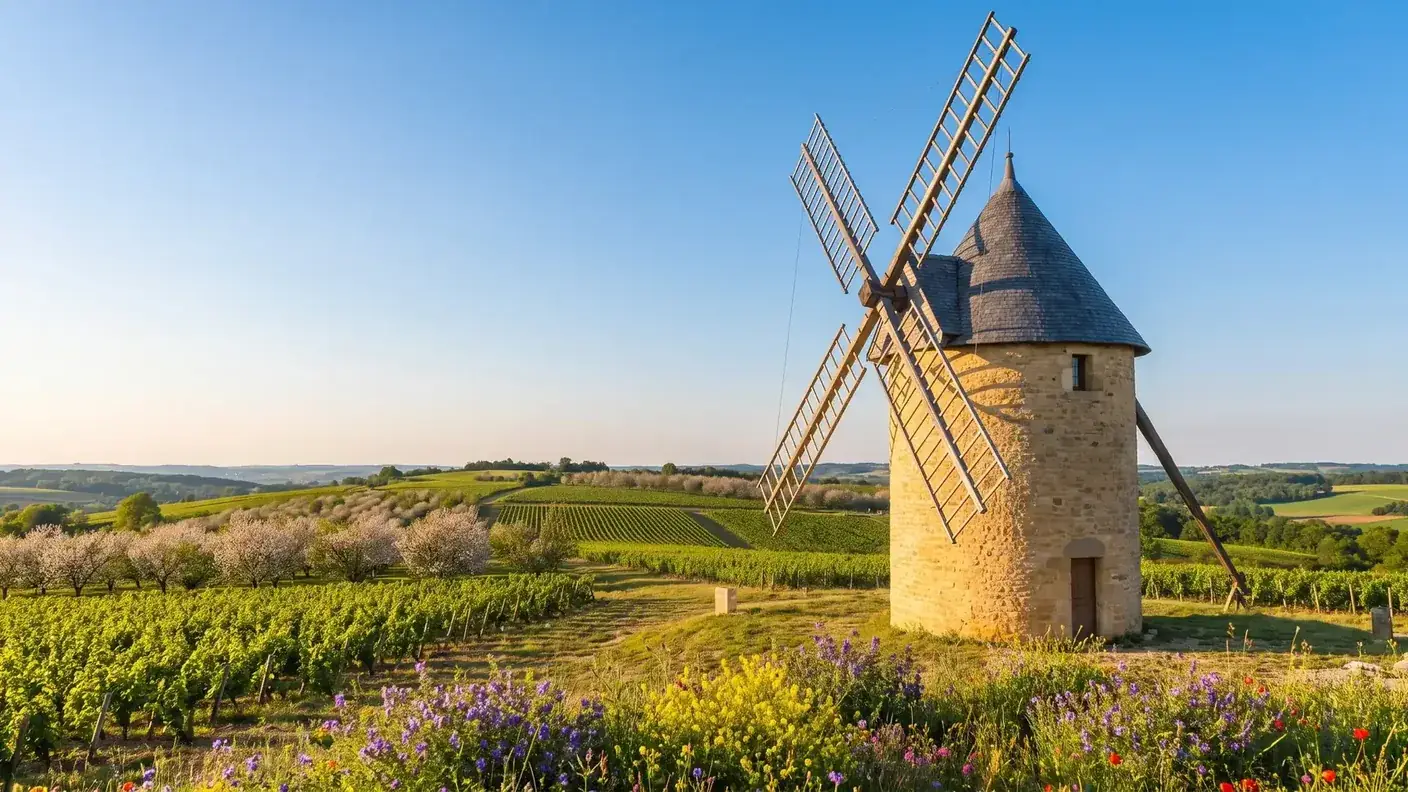
Loubès-Bernac is one of the 15 municipalities authorized to produce wine under the Côtes de Duras Appellation d’Origine Contrôlée (AOC), recognized by decree on February 16, 1937—one of France’s oldest AOCs. The vineyard stretches along the right bank of the Dropt River, between Bergerac and Bordeaux, on south-facing clay-limestone slopes that are ideal for achieving optimal grape ripeness.
Grape Varieties, Vineyards, and the Legacy of Phylloxera
Authorized grape varieties include, for reds, Cabernet Franc, Merlot, Cabernet Sauvignon, and Côt (Malbec); for whites—both dry and sweet—Sauvignon, Sémillon, and Muscadelle. Two estates are located directly within the municipality—Domaine du Petit Loubès and Domaine La Tuilerie Labreille (gold medal in 2023 for its Sauvignon). The appellation’s history dates back to antiquity, with a period of growth under English rule in Guyenne; the phylloxera epidemic of 1873 devastated the vineyards (from ~10,700 to ~2,180 hectares), subsequently leading to the rise of sweet white wines and plum brandy—hence the prevalence of plum trees in the landscape.
The range of white wines is actually broader than just the top three: the appellation regulations also permit Sauvignon Gris, Mauzac, Chenin, and Ondenc, with Ugni Blanc and Colombard as secondary grape varieties—a collection of Southwest French varieties that few appellations have preserved. Be wary, however, of the figures regarding vineyard area that are often cited: the “2,000 hectares” sometimes mentioned date back to the 2000s. The Côtes de Duras vineyard now covers approximately 950 hectares (2022–2024 average), a far cry from the ~10,700 hectares that existed before the phylloxera epidemic — a reminder of how the crisis of 1873 permanently reshaped the region, even giving rise to the landscape of plum orchards that now defines the area’s identity.
A Low-Key but Very Much Alive Rural Heritage
Beyond the castle and churches, Loubès-Bernac preserves a charming little heritage that bears witness to rural life of yesteryear:
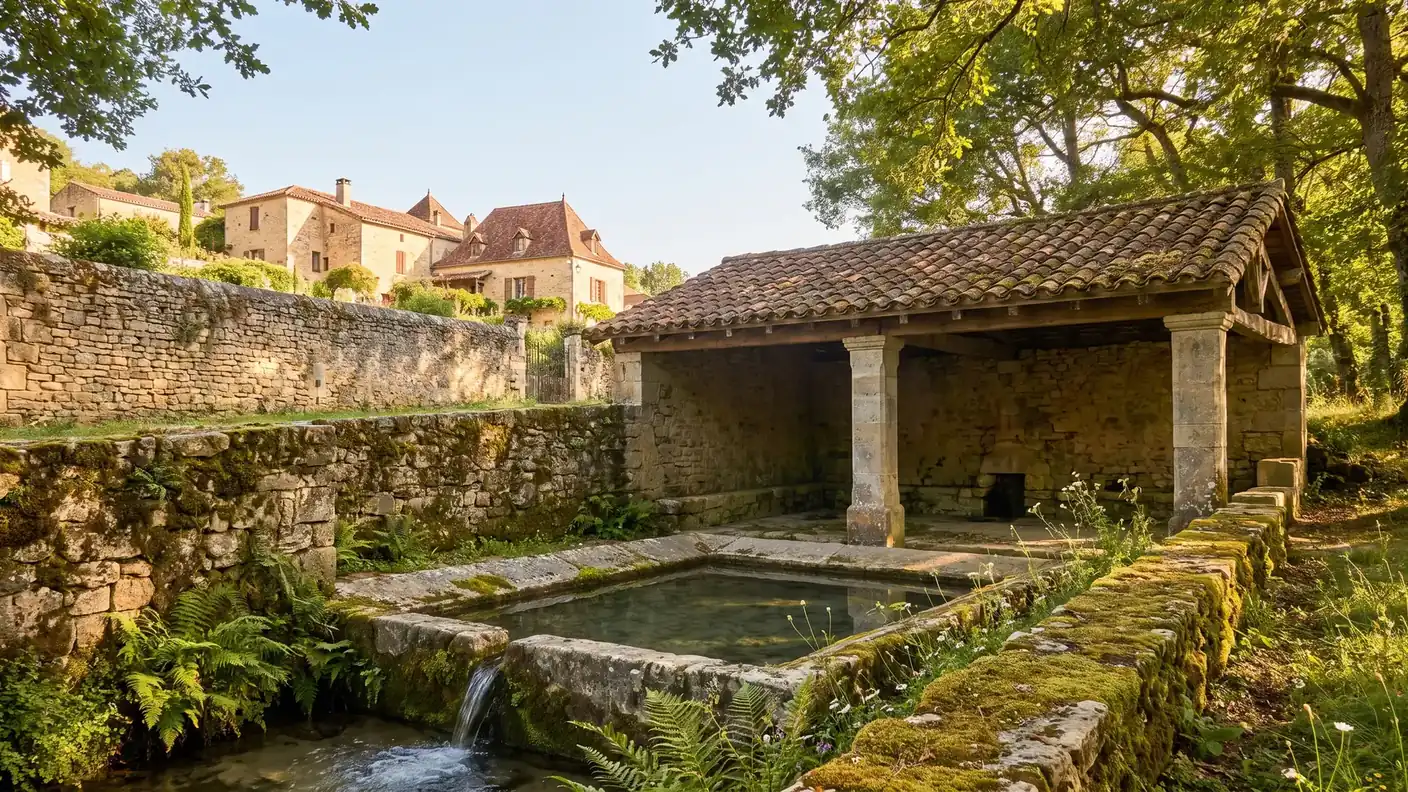
- The washhouse, located at the foot of the village, is fed by a spring that has been renowned since Gallo-Roman times; covered by a shelter in the 18th century, it has undergone a complete renovation.
- The shoeing frame (“tramail” in Occitan): a sturdy wooden device used to restrain oxen and cows during shoeing, which can still be seen in the village.
- The Four Mills Trail (~2.9 km), including the Brisseaux Mill, which offers beautiful views of the vineyard-covered hills.
- A mission cross dating from 1850, restored by local residents and incorporated into a local hiking trail.
It is a modest heritage, but one that lends a special charm to a stroll through the town—amid vineyards, plum trees, and rural traditions, at the crossroads of the Périgord and Guyenne.
What to See Around Loubès-Bernac
Loubès-Bernac is ideally located for exploring the Dropt region, an area of fortified towns and vineyards at the crossroads of Lot-et-Garonne, Dordogne, and Gironde. The town is also directly adjacent to several villages: Monestier and Thénac in the Dordogne, and Margueron in the Gironde. Here are the actual driving distances from the village:
| Destination | Distance / time from Loubès-Bernac | Interest |
|---|---|---|
| Monestier | ~10 km · ~13 min | Neighboring wine-growing village (Dordogne), Saussignac AOC, Château des Vigiers |
| Eymet | ~14 km · ~18 min | A bastide dating from 1270, a square with arcades, a Thursday market, “Dordogneshire” |
| Duras | ~14 km · ~18 min | Castle of the Dukes of Duras, Capital of the AOC Wine Region |
| Sainte-Foy-la-Grande | ~15 km · ~20 min | Country house on the Dordogne River, market, TER train station (Gironde) |
| Bergerac | ~28 km · ~36 min | Cyrano, the old town, gabarres, vineyards, and the airport |
| Monbazillac | ~30 km · ~38 min | Renaissance-era castle and famous sweet wine |
It's a condensed version of the Southwest of the borderlands: some country houses (Eymet, Sainte-Foy, and further on, Monpazier), some vineyards (Côtes de Duras, Bergerac, Saussignac, Monbazillac) and the châteaux, all within a 30-minute drive. Ideal for a day combining cultural heritage, wine tastings, and—for those who wish—a moment of reflection at the Village des Pruniers. A region still untouched by mass tourism, nestled between the Périgord Pourpre and Guyenne.
Getting to Loubès-Bernac from Bordeaux
Loubès-Bernac is about 89 km from Bordeaux, or ~1 hour and 34 minutes by car—not the “70 km” sometimes cited, which is only the distance as the crow flies. The village is off the beaten path, with no train station (the nearest one, Sainte-Foy-la-Grande, is about 15 km away) and no regular public transportation service.
| Fashion | Duration | Estimated cost | Details |
|---|---|---|---|
| Executive car service (Chauffeured transfer) | ~1 hr 34 min | Starting at €157 · one-way | Door-to-door service from Bordeaux, with stops at your choice (Saint-Émilion, Duras) |
| Personal car | ~1 hr 34 min | ~22–28 € for gas and tolls | Via the D933, D674, and the roads of the Pays de Duras |
| Train + transfer | 2–3 hours | ~15–25 € (TER) + road trip | Take the TER to Sainte-Foy-la-Grande (~15 km), then by road |
The most practical option without a car is to travel to Bordeaux or Bergerac by train, then continue by taxi or private chauffeur. To travel from Bordeaux, visit the vineyards, and explore Eymet, Duras, or the Village des Pruniers without being tied to a schedule, a professional chauffeur from Bordeaux offers the simplest door-to-door service at a flat rate starting at €157 one way.
Practical Information and the Surrounding Area
- Recommended duration: half a day, to be combined with a visit to the bastide of Eymet, the town of Duras and its castle, or a wine tasting at a winery in the Côtes de Duras region.
- Must-see attractions: Théobon Castle (guided tours in the summer), the church in Bernac, the Gallo-Roman washhouse, and the "Four Mills" walking trail.
- The Plum Village: a Buddhist monastery open for mindfulness retreats (by reservation only)—a place of contemplation, to be treated with respect.
- Nearby: Eymet (~14 km, fortified town), Duras (~14 km, castle and vineyards), Bergerac (~28 km), Sainte-Foy-la-Grande (~15 km, train station) — the town is in the heart of the Dropt region.
- Transportation: No train station or bus service. A car or door-to-door car service is essential. The nearest TER train station is Sainte-Foy-la-Grande.
- Local Specialties: Don't leave without picking up a bottle of Côtes de Duras or some plum brandy—the region's specialties.
Frequently Asked Questions
Where exactly is Loubès-Bernac located?
In northern Lot-et-Garonne (Nouvelle-Aquitaine), on the border between the Dordogne and Gironde departments, in the heart of the Côtes de Duras wine region. The village is about 14 km from Eymet and Duras, and about 28 km from Bergerac. ZIP code 47120.
Where does the name Loubès-Bernac come from?
"Loubès" is thought to derive from the Gallo-Roman name Luperciacum, the estate of a certain Lupercius, linked to the Latin word lupus (wolf); the name "Capella de Lubüs" appears in 1326. “Bernac” is an old parish name attested as early as 1520 (“Bernaco”). The two merged administratively in 1826.
How many parishes were there before the town was established?
Four main parishes—Saint-Pierre de Loubès, Saint-Martin de Montaillac, Notre-Dame de Bernac, and Notre-Dame d'Uffer—along with a fifth, Saint-André de Théobon, which was destroyed in 1562 and never rebuilt. All were burned or ruined in 1562, on the orders of the lords of Théobon, who had converted to the Reformation.
What is Théobon Castle?
A medieval fortress (dating from the turn of the 13th and 14th centuries), converted into a Renaissance residence in the 16th century by the de Ségur family, and later passed to the Talleyrand-Périgord family. Listed as a Historic Monument since November 5, 1962, it is open to visitors in the summer. Fun fact: one of its fireplaces is said to be at Harvard University today.
What is Plum Village?
Plum Village is a Buddhist monastery founded in 1982 by Zen Master Thich Nhat Hanh, one of the greatest in the West. It comprises several hamlets in the area; the Lower Hamlet, reserved for nuns, is located in the municipality of Loubès-Bernac. It hosts mindfulness retreats.
Does Loubès-Bernac produce wine?
Yes. The town is one of the 15 municipalities in the Côtes de Duras AOC (recognized in 1937), with two local wineries: Domaine du Petit Loubès and Domaine La Tuilerie Labreille. The region produces reds and whites (dry or sweet), as well as plum brandy.
Why does Loubès-Bernac have so many foreigners?
Nearly 30% of the population was foreign-born in 2021, a rate well above the national average. This is due to the presence of the Village des Pruniers, an international Buddhist monastery, and to significant immigration from the United Kingdom, as is the case in several villages in Lot-et-Garonne.
How many people live in Loubès-Bernac?
407 residents according to the 2023 census, for a population density of approximately 21 people per square kilometer. This is far from the historical peak of 1,589 residents in 1800; the municipality reached a low of 309 residents in 1999 before rebounding by 33% through 2016.
How far is Loubès-Bernac from Bordeaux?
About 89 km, or ~1 hour and 34 minutes by car. With a chauffeured car, the door-to-door trip starts at €157 one way. Be careful with the “70 km” distance sometimes listed: this refers only to the distance as the crow flies, not the actual road distance.
How do I get to Loubès-Bernac without a car?
The town has no train station or regular public transportation service. The most convenient option is to take the train to Bordeaux or Bergerac, then complete the journey by taxi or executive transfer. The nearest train station is Sainte-Foy-la-Grande (~15 km).
Who was Thich Nhat Hanh, the founder of Plum Village?
A Vietnamese Zen master (1926–2022), one of the most influential figures in Buddhism worldwide, and a pioneer of “mindfulness.” Exiled from his country, he founded Plum Village in 1982—one of whose hamlets is located in Loubès-Bernac—and trained thousands of practitioners from around the world there.
What is a “captal”?
A feudal title specific to Gascony, derived from the Latin *capitalis* (“chief”), held by a few major lordships in the Southwest—the most famous being the Captal de Buch. The lords of Puychagut, in the territory of Loubès-Bernac, bore this rare title as early as 1086, making it one of the oldest documented captalats in the region.
Can we tour the Côtes de Duras vineyard in Loubès-Bernac?
Yes. There are two wineries in the town: Domaine du Petit Loubès and Domaine La Tuilerie Labreille (2023 gold medal winner for its Sauvignon), and the neighboring town of Duras (~14 km) is the capital of the appellation. There, you can sample reds, dry and sweet whites, as well as plum brandy, a local specialty.
Further Reading
- The nearby English bastide, about 14 km away: see the Eymet Guide (bastide founded in 1270, arcaded square, Dordogneshire)
- The neighboring wine-growing village (Saussignac): see the Monestier Guide (unfinished bastide, Michelin-starred golf course)
- A village in the Val du Dropt, very close by: see the Armillac Guide (name ending in -ac, just outside Duras)
- The capital of the Périgord Pourpre: see the Bergerac Guide (Cyrano, gabarres, Monbazillac)
- Plan your trip: Book a chauffeur-driven transfer from Bordeaux to Loubès-Bernac or explore all our destinations
Sources and References
- Wikipedia — Loubès-Bernac — geography, demographics, parishes, heritage
- EHESS Cassini — Loubès-Bernac — administrative history and the 1826 merger
- POP Mérimée — Théobon Castle — designated a Historic Monument in 1962
- INSEE — Complete Report on Loubès-Bernac (47151) — Population, Density, Foreign Residents
- Wikipedia — Côtes de Duras (AOC) — 1937 decree, 15 municipalities, grape varieties
- Village des Pruniers (official website) — Thich Nhat Hanh, hamlets, and retreats
- Municipality of Loubès-Bernac — History — Four Parishes, Lords, Rural Heritage
- INAO — AOC Côtes de Duras Specifications — region, authorized grape varieties
Article updated in July 2026.
Our Latest Guides
On the Way to the Land of Duras
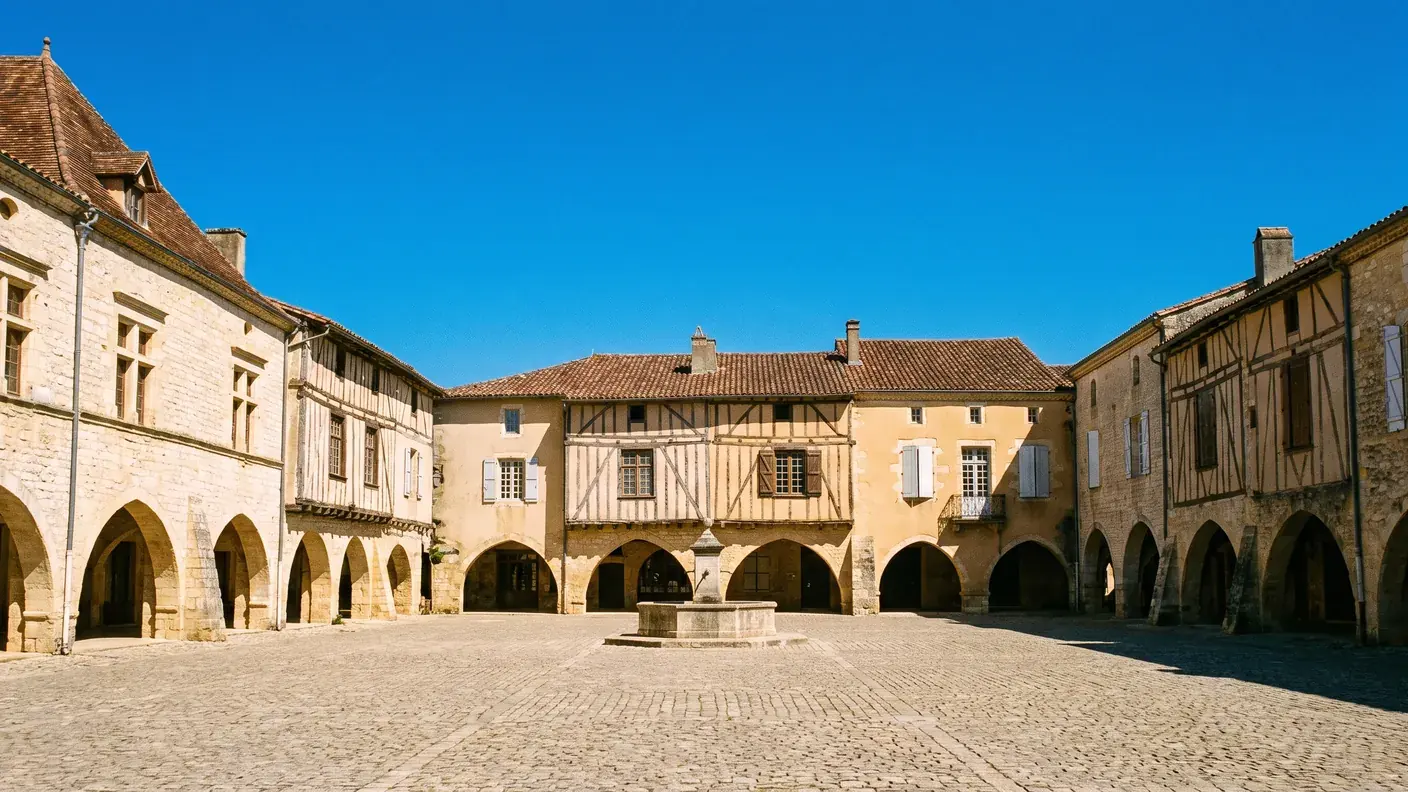
Direct trip from Bordeaux (~1 hr 34 min) to the Côtes de Duras vineyards, with stops along the way at your discretion—Saint-Émilion, Duras, Eymet. Written fixed-price quote within 30 minutes; sedan or 7-passenger van; English-speaking driver.