
Bordeaux to Lourdes: sanctuary, basilicas and the Pyrenees
One of the world's greatest pilgrimage sites, at the foot of the Pyrenees: the sanctuary and its basilicas, the grotto where the apparitions took place in 1858, the fortified castle, and the Pyrenean Museum, just outside Gavarnie and Cauterets—about 2 hours and 49 minutes from Bordeaux.
Lourdes at a Glance
Lourdes features the Notre-Dame Shrine, the Massabielle Grotto, three basilicas, and access to the major sites of the Pyrenees. From Bordeaux, the drive is 252 km and takes about 2 hours and 49 minutes. The transfer with a private driver starts at €417 one way, at a fixed price confirmed before booking, with drop-off at the agreed-upon address.
Here are the key details to know before you go. The distance, duration, and price shown are based on the booking engine’s rates for the Bordeaux–Lourdes route; the fixed fare is provided in advance, so there are no surprises on the meter.
| Landmark | Details |
|---|---|
| Department | Hautes-Pyrénées (65), Occitanie |
| Location | on the Gave de Pau, at the foot of the Pyrenees |
| Population | 13,266 residents (INSEE 2023) |
| Hospitality Industry | France's second-largest hotel city in terms of the number of rooms, after Paris |
| Don't miss it | The sanctuary and its basilicas, the grotto, and the fortified castle |
| Distance from Bordeaux | about 252 km · about 2 hours and 49 minutes by car |
| Around | Tarbes, Pau, Cauterets, Gavarnie, the Pic du Jer |
First, a quick note to put Lourdes in context. The city is located in the Hautes-Pyrénées (65), in Occitanie, and not in the Basque Country: it lies at the foot of the Central Pyrenees, on the Gave de Pau. Although it has only 13,000 residents, it boasts an extraordinary hotel capacity—the second-largest in France in terms of the number of rooms, just behind Paris—all of which is tied to the pilgrimage. This guide presents Lourdes in a factual manner: it recounts what Catholic tradition and history record about the apparitions of 1858, without taking a position on matters of faith, and distinguishes established facts from matters of belief. Each statement is supported by verifiable sources, cited at the end of the article. Pilgrims and casual travelers alike will find everything they need to plan their visit.
Here we’ll go over everything you need to know: the location of Lourdes in the Hautes-Pyrénées, the story of Bernadette and the apparitions of 1858, the sanctuary and its basilicas, the pilgrimage and its traditions, the fortified castle and the Pyrenean museum, the major nearby sites in the Pyrenees, the town and its exceptional accommodations, the surrounding area, the best time of year to visit, and the easiest way to get there from Bordeaux with a chauffeur service—all thoroughly researched and verified.
Where is Lourdes located?
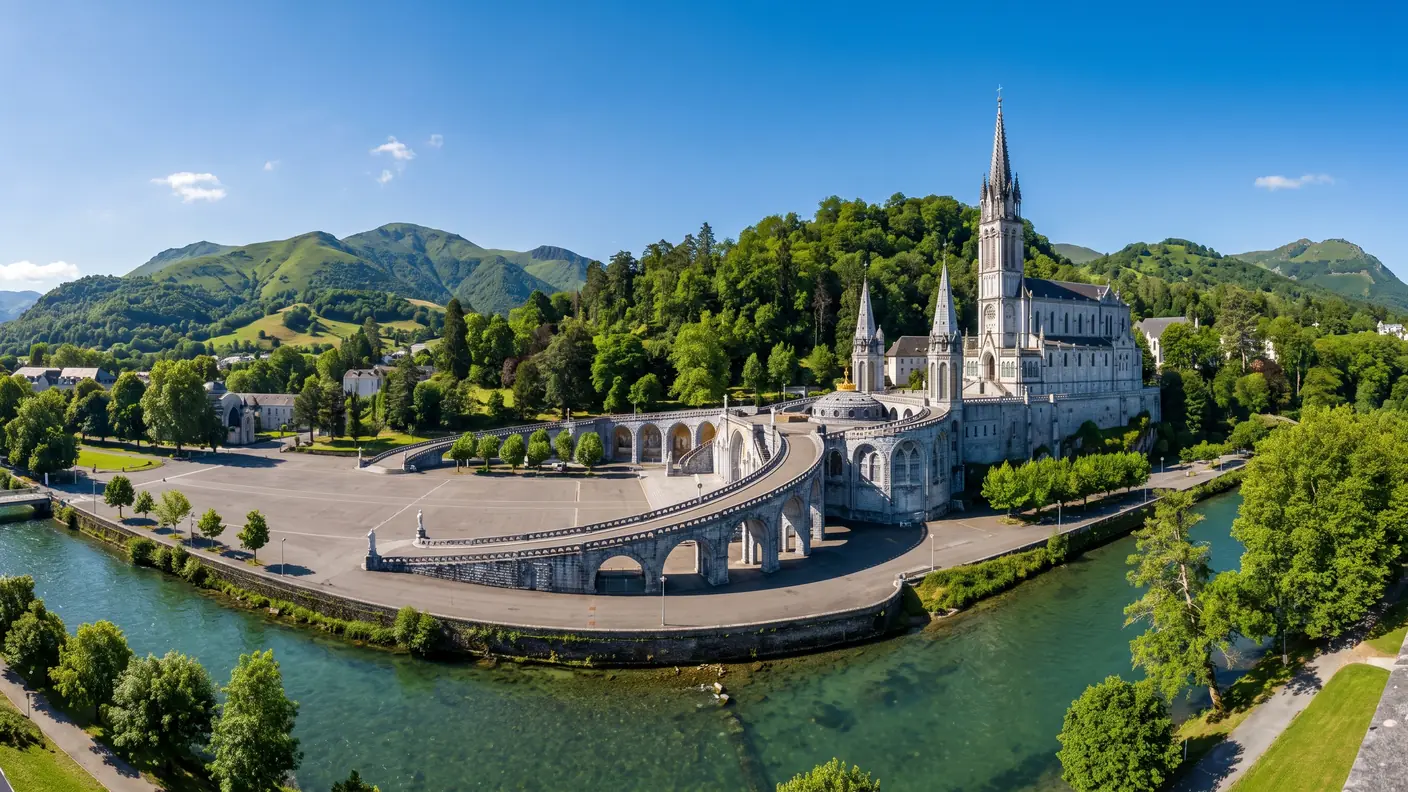
Lourdes is located in the Hautes-Pyrénées department (65), in Occitanie, at the foot of the Central Pyrenees, on the banks of the Gave de Pau, about 20 kilometers south of Tarbes, the prefecture. The town occupies a strategic position at the entrance to the Lavedan valleys, which lead to the great peaks and mountain passes of the Pyrenees. It is a town of mountains and rivers, dominated by its fortified castle perched on a rock, and built around the sanctuary on the banks of the Gave. With a population of 13,266 (source: INSEE), Lourdes is a modest-sized town in terms of population, but one of the best-known cities in France and the world, thanks to its pilgrimage. Its location, at the gateway to the Pyrenees and far from major cities, makes it both a spiritual center and a gateway to the mountains, set in a natural landscape of great beauty.
At the foot of the Pyrenees, on the Gave de Pau
The scope of Lourdes is that of the Pyrenean foothills. The city is built on both banks of the Pau Fair, this mountain torrent flowing down from the peaks, which runs through the sanctuary at the foot of the cave. All around rise the first hills of the Pyrenees: The Pic du Jer towers over the town to the south, and, further on, the valleys and major mountain ranges open up—the Lavedan, Cauterets, Gavarnie, and the Tourmalet. This immediate proximity to the high mountains is one of Lourdes’s greatest assets: in just a few minutes or a few dozen minutes, you can go from the sanctuary to the most beautiful landscapes of the Pyrenees. The humid mountain climate sustains lush, green nature. Lourdes is therefore not just a pilgrimage town: it is also a town in the Pyrenees, at the crossroads of faith and the mountains, in a setting where the mountain stream, forests, and peaks come together to form a magnificent backdrop.
A small town, a global reputation
With its 13,266 residents, Lourdes is a small town with worldwide renown. It owes that fame to its sanctuary and pilgrimage, which attract millions of visitors each year. This influx has shaped the city: Lourdes has accommodation capacity far beyond what its size would suggest. It is France's second-largest hotel city by number of rooms, with nearly 144 hotels and more than 12,000 rooms, second only to Paris. Almost the entire city thrives on the pilgrimage: hotels, religious-goods shops, cafés, and service providers all welcome pilgrims and visitors. This distinctive economy gives Lourdes a unique character, blending the fervour of the sanctuary with the vibrancy of a city dedicated to hospitality. Beyond the religious aspect, this small mountain town transformed into a global pilgrimage destination is what fascinates visitors.
Bernadette and the Apparitions of 1858
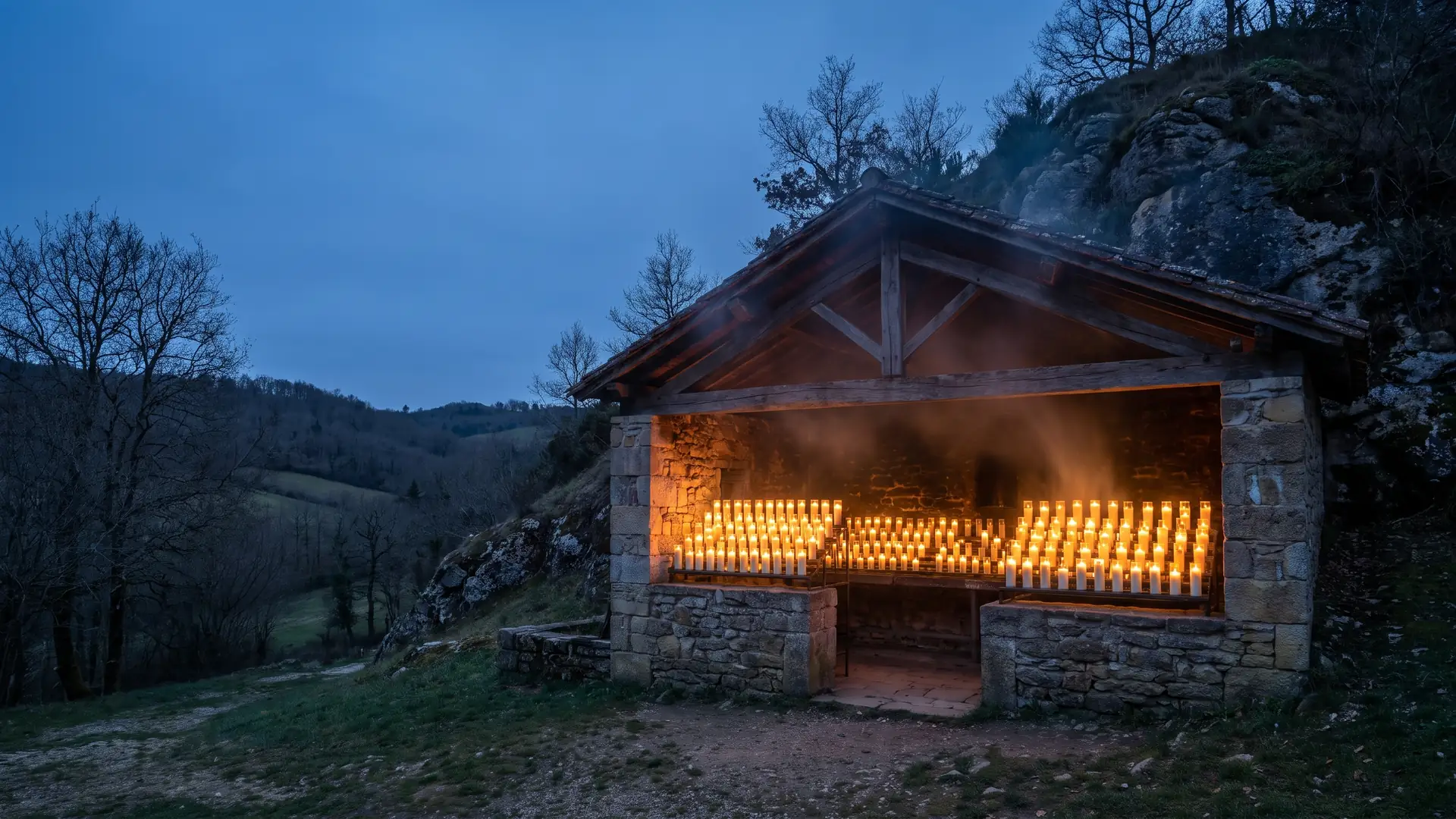
It all began in 1858: the young Bernadette Soubirous claimed to have seen the Virgin Mary eighteen times in the grotto of Massabielle. The Church recognized these apparitions in 1862; Bernadette was canonized in 1933. This marked the beginning of the entire shrine.
The Eighteen Apparitions of 1858
The history of Lourdes began on February 11, 1858. On that day, a fourteen-year-old girl named Bernadette Soubirous, from a poor family in Lourdes, claimed to have seen a “lady” dressed in white in the grotto of Massabielle, on the banks of the Gave. Between February 11 and July 16, 1858, she claimed to have seen this apparition eighteen times. According to her account, the lady asked her to pray, do penance, and tell the priests to build a chapel. During the ninth apparition, on February 25, Bernadette scraped the floor of the grotto, and a spring gushed forth—the very spring whose water has since been venerated by pilgrims. On March 25, the Feast of the Annunciation, the apparition identified herself in the local dialect as: “Que soy era Immaculada Councepciou”—“I am the Immaculate Conception.” These events, reported by a simple shepherdess, would transform Lourdes and give rise to one of the world’s greatest pilgrimages.
The Church's Recognition of Saint Bernadette
At first, both the Church and the authorities treated Bernadette's account with great caution. But after several years of investigation, the Bishop of Tarbes, Bishop Bertrand-Sévère Laurence, officially recognized the apparitions in a pastoral letter dated January 18, 1862. From that point on, the Catholic Church authorized the veneration of Our Lady of Lourdes. Bernadette entered the religious order of the Sisters of Charity of Nevers, far from the bustle of Lourdes, and died there in 1879, aged thirty-five. Her life as a simple and humble believer led, much later, to her beatification in 1925 and canonisation on December 8, 1933, by Pope Pius XI: she is now Saint Bernadette. Whether or not one shares the faith associated with it, this episode, in which a poor teenage girl’s story gave rise to a global shrine, is one of the most significant events in 19th-century religious history and the starting point for everything that Lourdes is today.
The sanctuary and its basilicas
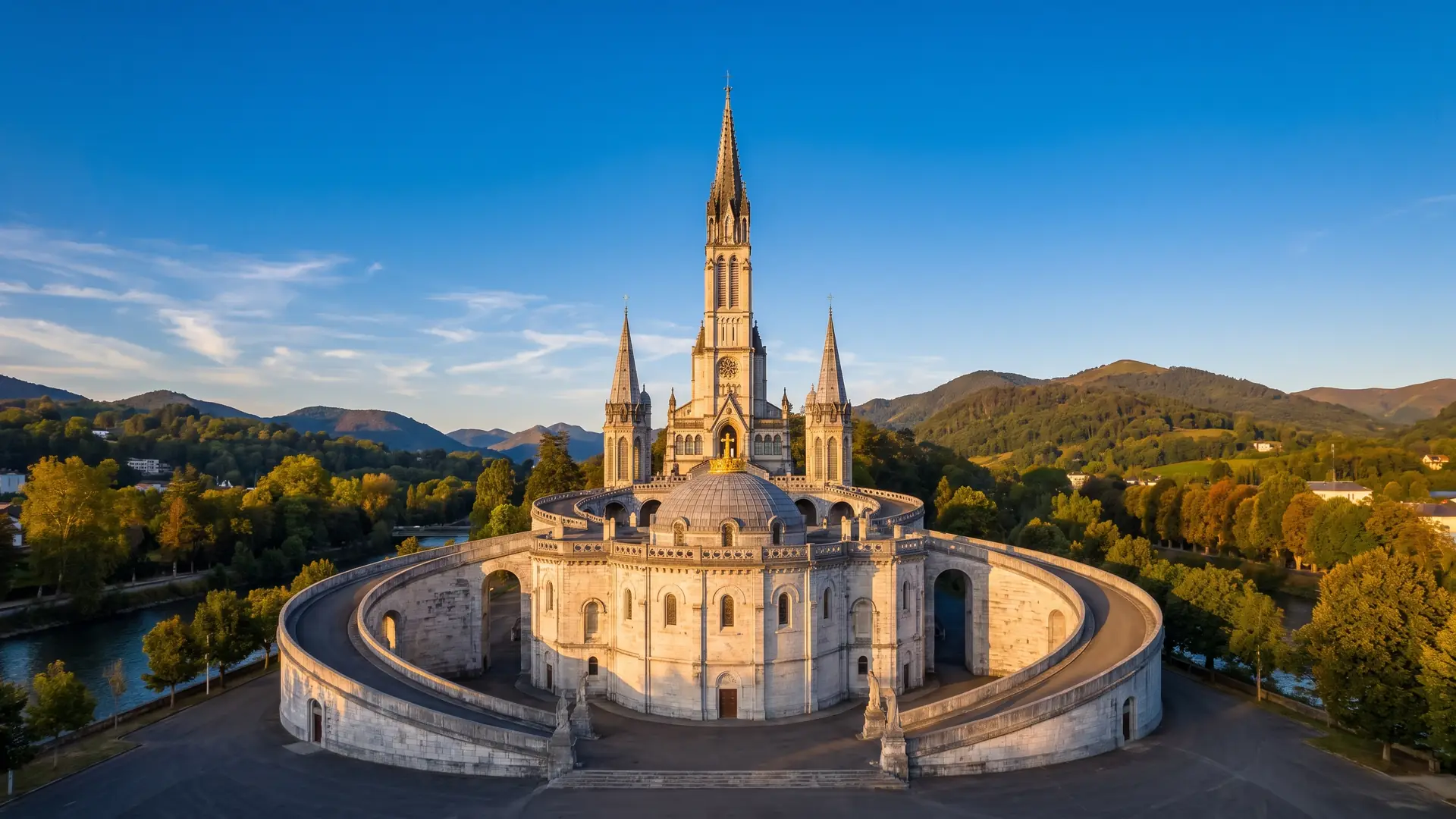
A vast sanctuary, known as the Domaine, has been built around the grotto; it includes three large basilicas, including the immense underground Basilica of St. Pius X, one of the largest churches in the world, capable of accommodating 25,000 people. A truly unique monumental complex.
Three basilicas and the grotto
The Lourdes sanctuary—the “Domaine ”—covers about fifty hectares along the banks of the Gave River, surrounding the Massabielle Grotto, the spiritual heart of the site, where the spring flows and where pilgrims come to pray and collect water. Above the grotto stand the basilicas. The Basilica of the Immaculate Conception, known as the “Upper Basilica,” built in the Neo-Gothic style (constructed from 1862 to 1871), points its spire toward the sky. Below it, nestled against the rock, the Basilica of Our Lady of the Rosary, in the Roman-Byzantine style (1883–1889), displays its domes and mosaics, framed by the large curved ramps leading to the esplanade. The complex, built entirely of white stone, with its layered and dramatic design, creates a striking image, famous throughout the world. It is there, on the esplanade and in front of the grotto, that the major ceremonies and processions of the pilgrimage take place.
The Underground Basilica of St. Pius X
The third and most astonishing sanctuary lies beneath the esplanade: the underground Basilica of St. Pius X. Built in 1958 to mark the centennial of the apparitions, this immense underground concrete church is one of the largest in the world: 191 metres long, it can accommodate up to 25,000 people (official source). Its oval shape, pillar-free nave, and sheer scale make it a spectacular structure, designed to gather crowds of pilgrims during major celebrations. Together with the two upper basilicas, it forms a monumental complex dedicated to welcoming millions of the faithful. Walking through the grounds, from the grotto to the basilicas and from the esplanade to the underground basilica, reveals the unique scale of a sanctuary born from one teenager’s story and which, over a century and a half, has become one of the world’s major places of religious gathering. It is an extraordinary architectural and spiritual heritage to be discovered with respect for the site.
The Pilgrimage and Its Traditions
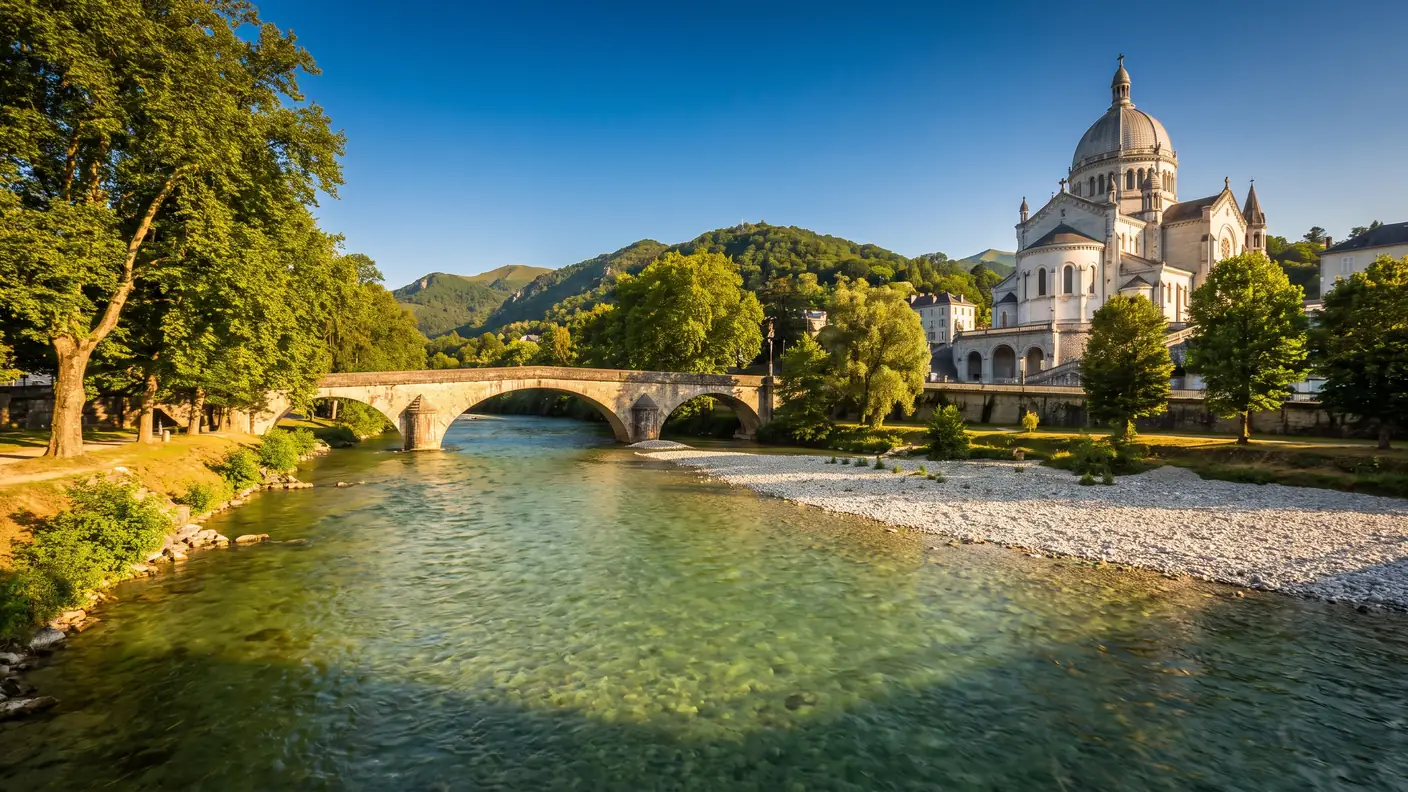
Every year, millions of visitors flock to Lourdes: torchlight processions, prayers at the grotto, and welcoming the sick and the most vulnerable set the pace of life at the shrine. It is a pilgrimage on a scale unlike any other in the world.
Processions, candles, and spring water
The Lourdes shrine welcomes millions of visitors each year, approximately 3.5 million in 2019, making it one of the world’s foremost Catholic pilgrimage sites. Since the apparitions, the total number of visitors is estimated at about 200 million. Life at the shrine is marked by major traditions: the Marian torchlight procession, held every evening during the season, when a huge crowd passes the esplanade with candles in hand while singing the “Ave Maria”, is one of the most impressive moments; the afternoon Eucharistic procession is another. Pilgrims come to pray at the grotto, place candles there, and collect or wash with water from the spring, renowned for its healing properties. These gestures and rituals, repeated by generations of the faithful, create Lourdes’ unique atmosphere of contemplation, fervour, and hope.
Welcoming the Sick and Healing Them
A key aspect of Lourdes is welcoming the sick, people with disabilities, and the most vulnerable—a central part of the shrine’s mission. Every year, thousands of volunteers assist these pilgrims in dedicated reception facilities. People report healings to Lourdes. The sanctuary’s Medical Assessment Office reviews certain cases with doctors; this evaluation alone does not constitute religious recognition. When a case is deemed medically unexplained, the bishop of the relevant diocese may then decide to recognize it as miraculous (official source).
The Fortified Castle and the Pyrenean Museum
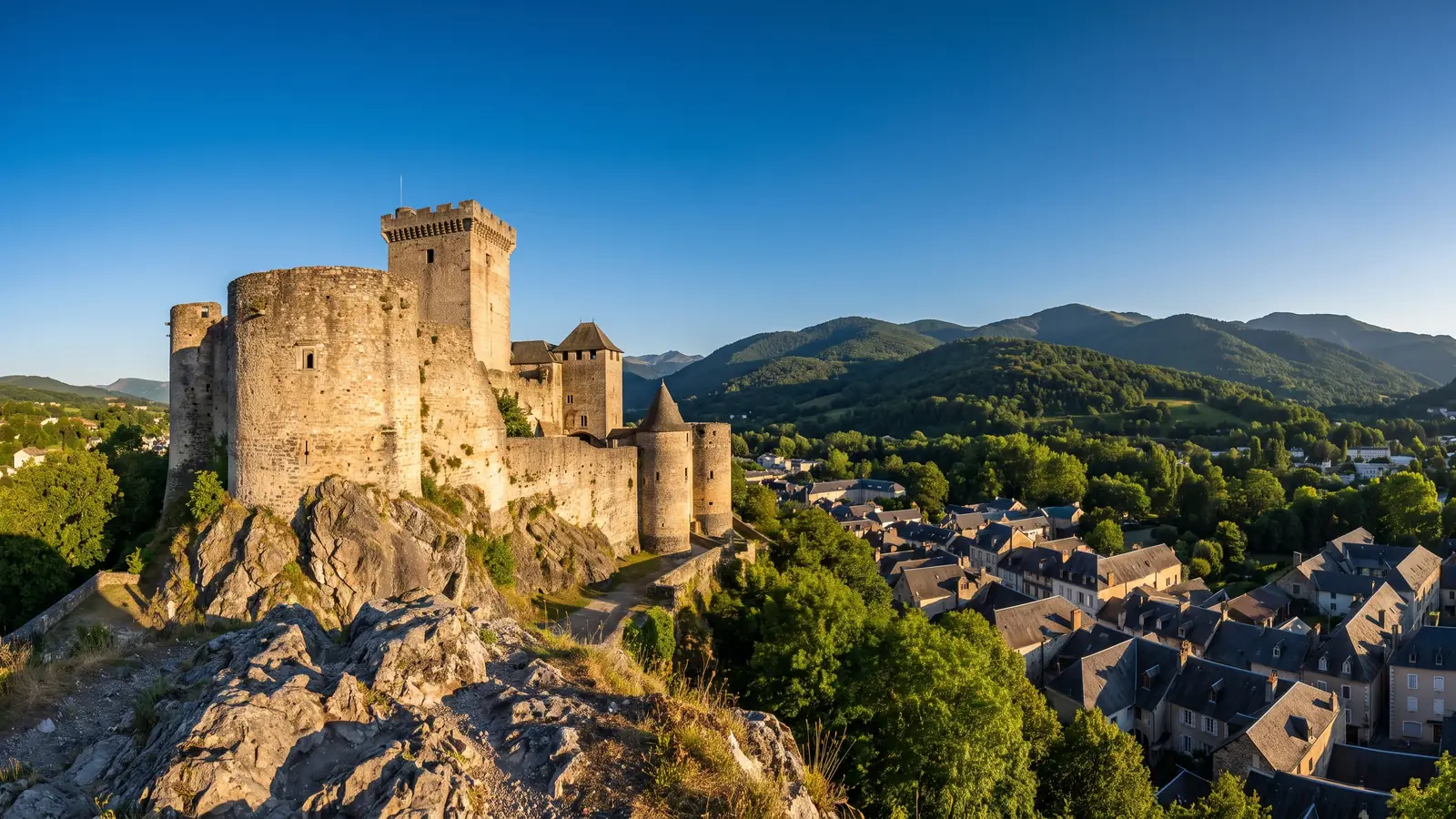
High above the town, a medieval fortified castle sits atop a rocky outcrop: today, it houses the Pyrenean Museum, the largest museum dedicated to the arts and traditions of the Pyrenees. The other side of Lourdes: historic and mountainous.
A fortress at the entrance to the valleys
Lourdes is not just its sanctuary: the city is also dominated by an imposing fortified castle, perched on a rocky outcrop overlooking the entrance to the seven valleys of the Lavedan. This strategic location, at the gateway to the Pyrenees, made the castle a coveted stronghold from ancient times. It was the residence of the Counts of Bigorre. According to tradition, the fortress was besieged by Charlemagne in 778; ceded to the English under the Treaty of Brétigny in 1361, it did not return to France until the early 15th century, before later serving as a state prison. Its ramparts, keep, and towers, which overlook the town and the Gave River, offer a fine example of Pyrenean military architecture and a superb panoramic view of Lourdes, the sanctuary, and the mountains. It is a major remnant of the town’s medieval past, dating well before the pilgrimage, and can be explored by climbing the rock.
The Pyrenean Museum
The fortified castle now houses the Pyrenean Museum, founded in 1921 by Louis and Margalide Le Bondidier: it is the largest museum dedicated to the folk arts and traditions of the Pyrenees. Within the fortress’s halls and courtyards, visitors can discover the entire world of the Pyrenees: traditional costumes, everyday objects, crafts, wildlife, the history of Pyrenean mountaineering (the discovery and exploration of the Pyrenees), scale models, and mementos of the great peaks. This museum, one of the most comprehensive in the region, offers insight into the mountain culture surrounding Lourdes, beyond the sanctuary. Visiting the castle and its museum thus reveals another side of Lourdes: that of a mountain town with an ancient history, deeply rooted in the Pyrenees and their traditions. For the curious traveler, it’s a fascinating complement to a visit to the sanctuary, reminding us that Lourdes was, long before 1858, a medieval city and a gateway to the Pyrenees.
The Pyrenees, within easy reach of Lourdes
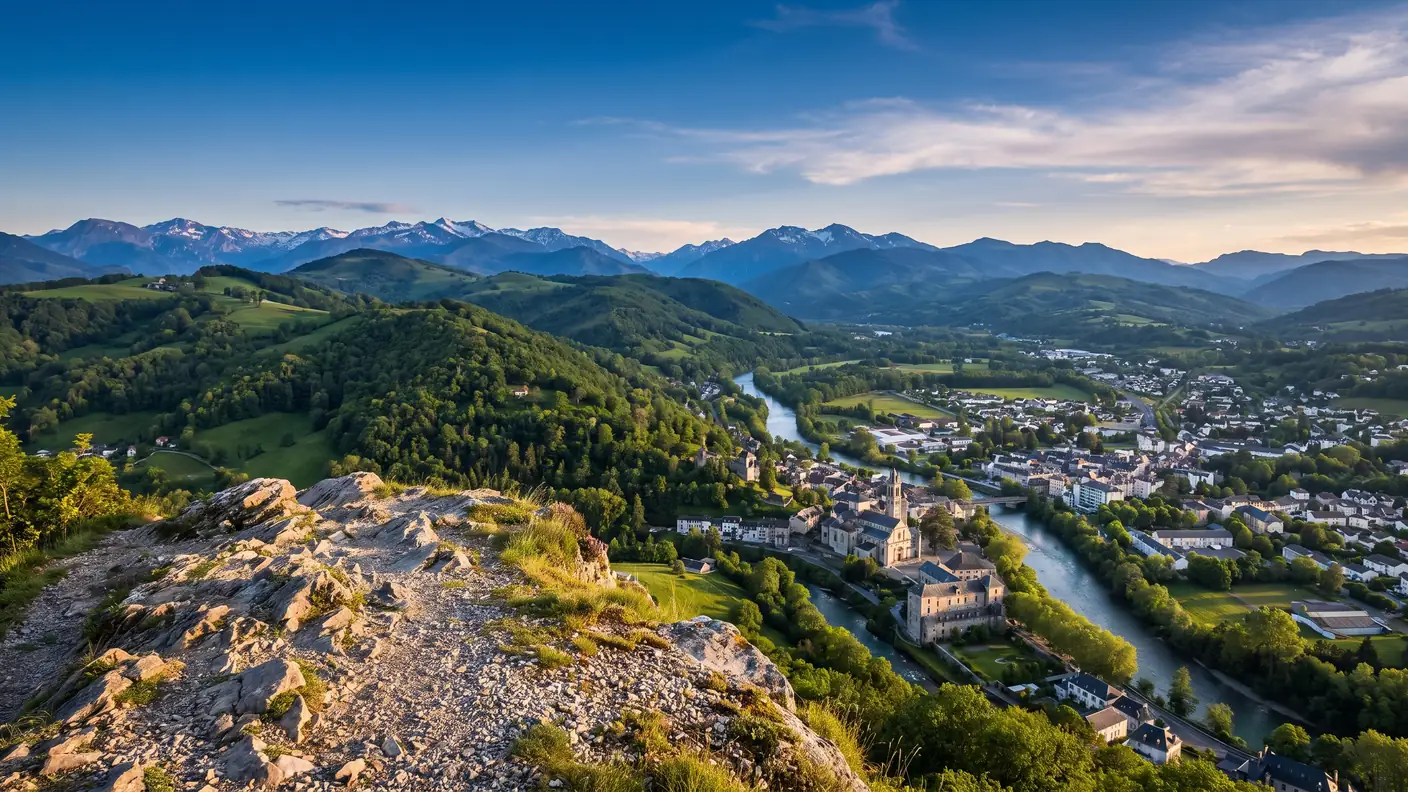
Lourdes is a gateway to the Pyrenees: the Pic du Jer, Cauterets, the Pont d'Espagne, the UNESCO-listed Cirque de Gavarnie, and the Tourmalet are all within easy reach. It offers a rare vantage point into the high mountains.
The Pic du Jer and its funicular
To the south of Lourdes stands the Pic du Jer (951 m), the mountain that overlooks the town. You can reach the summit via a charming funicular that has been in service since 1900: in eight minutes, along a track carved into the rock, it climbs the slope to the summit, where a breathtaking panorama opens up over Lourdes, the Gave Valley, the Lavedan, Tarbes, Pau, and the entire Pyrenees mountain range. It offers the most beautiful panoramic view of the city and its sanctuary, and is an easy and popular excursion from Lourdes. This historic funicular, one of the oldest in France still in operation, is a sight to behold in its own right and serves as the starting point for beautiful walks through the hills. To truly appreciate the Lourdes location—nestled between the city, the Gave River, and the mountains—nothing beats this climb to the Pic du Jer, which, in just a few minutes, offers one of the most stunning panoramic views in the Pyrenees.
Gavarnie, Cauterets, and the major attractions
Lourdes is, above all, an ideal base for exploring the most beautiful sites in the Pyrenees, all within easy reach. The Cirque de Gavarnie, an extraordinary amphitheater of cliffs nearly 1,500 meters high, crowned by the Grande Cascade (422 m, one of the highest waterfalls in Europe), is a UNESCO World Heritage Site (as part of the “Pyrenees-Mont Perdu” site): it’s a must-see, about an hour’s drive away. Cauterets, a spa and ski resort, and its Pont d’Espagne—a magnificent site of waterfalls and the gateway to Lake Gaube—are just as close. Further afield lie the Col du Tourmalet (2,115 m), one of the most famous mountain passes on the Tour de France route, and the Pic du Midi de Bigorre (2,877 m) with its observatory, accessible by cable car. With a driver, you can easily plan superb excursions through these mountains—taking in cirques, waterfalls, lakes, and mountain passes—to discover all the splendor of the Pyrenees, starting from Lourdes.
| The Pyrenees around Lourdes | Distance | Interest |
|---|---|---|
| Pic du Jer | in Lourdes | Funicular (1900), panoramic view of the city |
| Cauterets · Pont d'Espagne | ~50 km | Hot springs, skiing, waterfalls, Lake Gaube |
| Gavarnie Cirque | ~55 km | UNESCO, Grand Cascade (422 m) |
| Tourmalet Pass · Pic du Midi | ~50–60 km | Legendary mountain pass, observatory (2,877 m) |
| Argelès-Gazost | ~13 km | Spa town, Lavedan Valley |
The City and Its Extraordinary Hotels
A small town of 13,000 residents, Lourdes has the second-largest hotel capacity in France in terms of the number of rooms, behind only Paris: a unique phenomenon entirely tied to the pilgrimage. An entire town dedicated to welcoming visitors.
France's second-largest city for hotels
This is one of the most surprising facts about Lourdes: with a population of just 13,266, the city has nearly 144 hotels and more than 12,000 rooms (some 22,200 beds), making it France’s second-largest hotel city in terms of the number of rooms, just behind Paris—and third in terms of the number of establishments, after Nice and Paris. This concentration of hotels—unique in the world for a city of this size—is entirely due to the pilgrimage: accommodations must be provided for the millions of visitors who flock here each year, particularly during the major pilgrimages. Around the sanctuary, entire streets are lined with hotels, ranging from the most modest to the most comfortable. This pilgrimage-based economy sustains the entire city and gives it a distinctive character, blending the devotion of the sanctuary grounds with the bustling commercial activity of the streets leading to it. It’s also a practical advantage: Lourdes offers a very wide range of accommodations, at every price point, for a pilgrimage or a trip to explore the Pyrenees.
Around the Shrine
The town of Lourdes is centered around its sanctuary. The streets leading to it—notably Rue de la Grotte—are lined with hotels, restaurants, and numerous shops selling religious items—rosaries, statuettes, bottles of Lourdes water—which make up a very distinctive commercial scene, unique to major pilgrimage sites. Beyond this bustling atmosphere, the town also has its old quarter at the foot of the castle, its market, and its own distinct character, that of a small Pyrenean town. Visitors, whether pilgrims or tourists, will find everything they need for their stay in Lourdes, as well as easy access to mountain excursions. A global city and a mountain town, sacred and commercial, at once contemplative and lively, Lourdes offers a unique experience where visitors of all nationalities and backgrounds come together, united by faith or curiosity. It is this diversity and vibrancy that also make a stay in Lourdes truly unforgettable.
| Lourdes by the Numbers | Details |
|---|---|
| Population | 13,266 residents (INSEE 2023) |
| Hotels | nearly 144 · more than 12,000 rooms |
| Hotel Rating | France's second-largest city in terms of the number of hotel rooms (after Paris) |
| Visitors | ~3.5 million/year (2019) · ~200 million since 1858 |
| Sanctuary | The Estate · ~52 ha along the Gave River |
What's there to see around Lourdes?
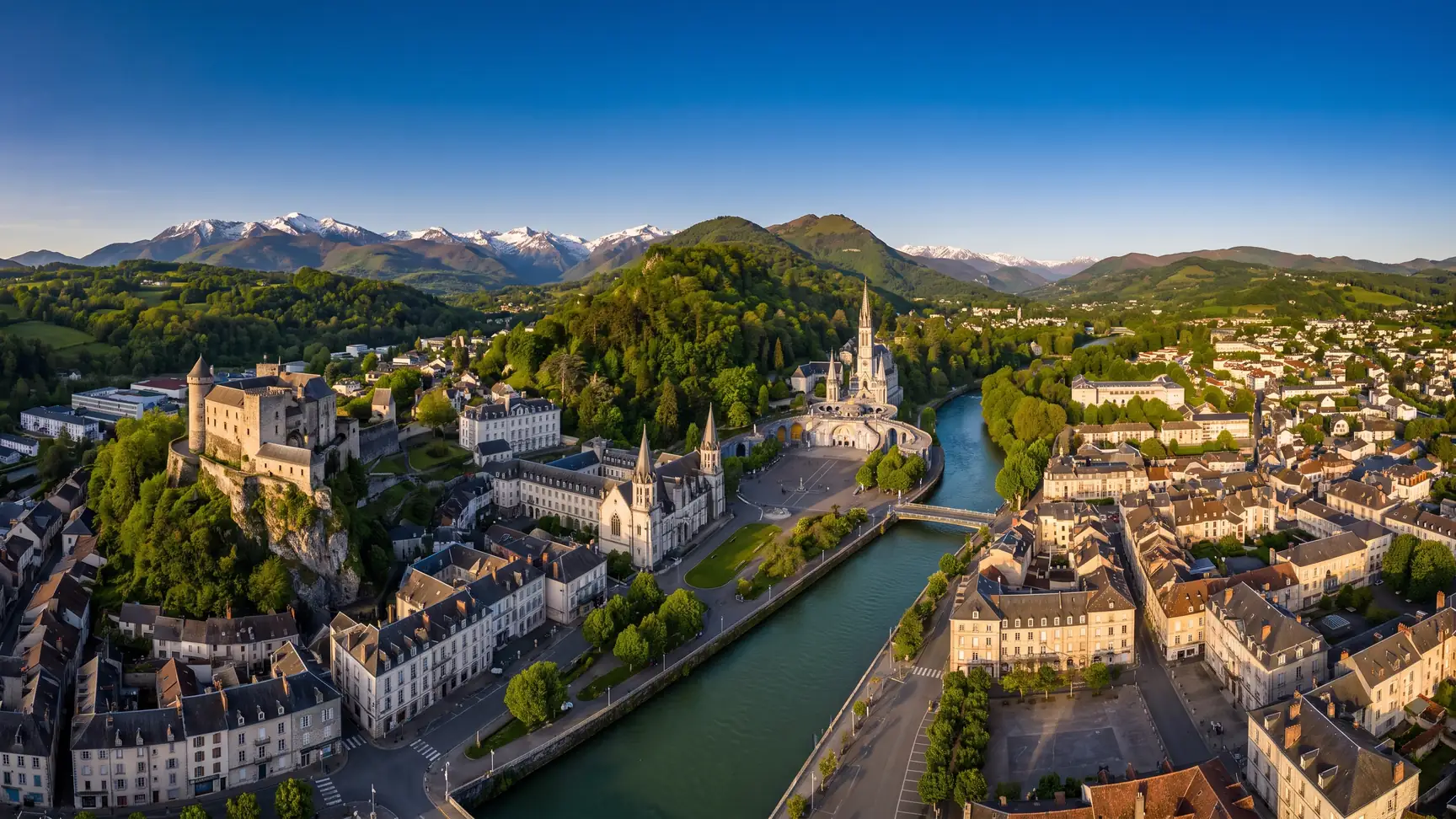
Lourdes is an ideal base for exploring the Hautes-Pyrénées and Béarn: Tarbes, Pau, the valleys, and the major mountain attractions are all within easy reach. A rare combination of cities and mountain peaks.
Tarbes, Pau, and neighboring cities
In the area around Lourdes, there are several beautiful towns worth visiting. Tarbes, the prefecture of the Hautes-Pyrénées, about twenty kilometers away, charms visitors with its magnificent Massey Garden and its historic sites, and is the birthplace of Marshal Foch and the poet Théophile Gautier. A little further west, Pau, the former capital of Béarn, is home to the birthplace of Henry IV and its famous Boulevard des Pyrénées. To the south, the Pyrenean valleys—the Lavedan, the Argelès-Gazost and Cauterets valleys, and the Gavarnie Valley—wind deep into the mountains, dotted with villages, thermal spas, and natural sites. Lourdes, situated at the crossroads of the plains and the mountains, between Bigorre and Béarn, is an excellent starting point for exploring the entire region, from its cultural heritage and thermal spas to its breathtaking landscapes. With a driver, you can easily visit these destinations without worrying about mountain roads or parking.
The Valleys and Thermal Springs
South of Lourdes lie the vast valleys of the Hautes-Pyrénées, each with its own treasures. The Argelès-Gazost valley and the Lavedan region, dotted with villages and thermal baths, lead to Cauterets and Gavarnie; the Pays Toy and the Barèges and Luz-Saint-Sauveur valleys lead to the Tourmalet and Pic du Midi. These valleys, centres of thermal tourism (Cauterets, Argelès, Barèges), with skiing and hiking opportunities, offer endless things to discover, from hot springs to waterfalls, high-altitude lakes, and mountain peaks. Add the richness of Pyrenean wildlife, chamois, marmots, vultures, and high-altitude flora, alongside mountain villages, and the result is a complete change of scenery. Lourdes, right on their doorstep, is the ideal starting point for exploring them. With a driver, you can easily reach these valleys and resorts, even on mountain roads that can be challenging at times, and fully enjoy the Pyrenees from Lourdes without worrying about driving or parking.
| Around Lourdes | Distance | Interest |
|---|---|---|
| Tarbes | ~21 km | Prefecture, Massey Garden, State Stud |
| Argelès-Gazost | ~13 km | Spa town, gateway to the valleys |
| Pau | ~45 km | Henri IV Castle, Boulevard des Pyrénées |
| Cauterets / Gavarnie | ~50–55 km | Hot springs, waterfalls, UNESCO |
| Pic du Midi de Bigorre | ~50 km | Lookout, panoramic view (2,877 m) |
When is the best time to visit Lourdes?
Lourdes is open to visitors year-round, but the pilgrimage season, from April to October, is the busiest time of year. It is from April through October that the sanctuary is at its liveliest, when the major pilgrimages take place and the processions and services are in full swing—notably the Marian torchlight procession, held every evening. This is the best time to experience the atmosphere and fervor of the place, but it’s also the busiest, when the town and the estate are packed. Major dates on the Catholic calendar—Easter, the Assumption on August 15, and the Rosary in October—draw the largest crowds. It’s best to book your accommodations well in advance during these times.
Spring, Summer, Fall, and Winter
Spring and fall offer a good balance: beautiful light, lush greenery, fewer crowds, and the chance to combine a visit to the sanctuary with mountain hikes, when the passes and valleys are accessible. Summer is the height of the season, warm in the plains but cool at higher elevations, making it the perfect time to combine a visit to Lourdes with the high mountains, their lakes, and their summer pastures. Winter offers a quieter setting, with snow-capped Pyrenees and nearby ski resorts (Cauterets, Barèges, Luz-Ardiden). In every season, the power of the place, the beauty of the setting, and the proximity of the Pyrenees make Lourdes a unique destination, about 2 hours and 49 minutes from Bordeaux, whether you come as a pilgrim or a curious traveller.
How to get to Lourdes from Bordeaux
Lourdes is located about 252 km from Bordeaux, which is approximately a 2-hour, 49-minute drive via the A65 (Bordeaux-Pau) highway, then the A64 toward Tarbes, and the Lourdes exit. The city is also accessible by train and via the Tarbes-Lourdes-Pyrénées Airport. For a direct trip, the driver will take you from your pickup location to your agreed-upon drop-off location at the rate confirmed prior to booking.
Train or executive car service?
To get to Lourdes—and, above all, to ensure a comfortable stay—hire a Chauffeured transfer, Private chauffeur in Bordeaux offers true peace of mind: a direct, door-to-door trip from Bordeaux, with no transfers or connections, and the option to make stops along the way as you please. This is especially valuable for a pilgrimage, especially when accompanying an elderly, ill, or tired person for whom train connections can be stressful; it’s just as convenient for exploring the valleys and major attractions of the Pyrenees, where you’ll want to get around without worrying about driving in the mountains. We offer this route to fixed price provided in advance: Allow about 518 € For the one-way trip, in a Mercedes sedan or a van seating up to 7 passengers, with a professional driver. The price, set at the time of booking, remains fixed: it does not depend on traffic, traffic jams, or the number of stops, unlike a taxi meter.
This is the perfect option for a pilgrimage, a family vacation, exploring the Pyrenees, an event, or a simple transfer to or from the Bordeaux-Mérignac, Tarbes-Lourdes, or Pau airports. You can travel alone, as a couple, or in a small group of up to 7 people, with luggage and, if needed, medical equipment or mobility aids, and request stops in Tarbes, Pau, or in a valley. In practice, booking is quick and easy: simply provide the departure address in Bordeaux and the destination at Lourdes (or the specific hotel, very close to the sanctuary), along with the date, desired time, and number of passengers, and you’ll receive a fixed-price quote in writing. On the day of the trip, the driver picks up the passengers at the agreed-upon address and takes them directly to Lourdes, without any detours—a real plus for a peaceful, spiritual, or sightseeing trip.
| Route | Distance | Duration | Landmark |
|---|---|---|---|
| Bordeaux → Private Car to Lourdes | ~252 km | ~2:49 | Starting at ~€417 for a professional chauffeur |
| Lourdes → Tarbes | ~21 km | ~25 min | Hautes-Pyrénées Prefecture |
| Lourdes → Cauterets | ~50 km | ~1 hour | hot springs, Pont d'Espagne |
| Lourdes → Gavarnie | ~55 km | ~1 hour 10 minutes | UNESCO-listed amphitheater |
Whether you’re visiting as a pilgrim, following in the footsteps of Bernadette and the apparitions, or as a curious traveler, to see the castle, the Pyrenean Museum, and the major sites of the Pyrenees, Lourdes makes your visit worthwhile—a place unlike any other in the world, where faith, history, and the mountains come together at the foot of the peaks.
Whether you’re going on a pilgrimage, exploring the Pyrenees, or attending an event, booking a door-to-door car service guarantees a comfortable and punctual ride—book a driver from Bordeaux to Lourdes with Lourdes or explore all our destinations.
Frequently Asked Questions
Where is Lourdes located?
Lourdes is a town in the Hautes-Pyrénées (65), in Occitanie, at the foot of the Central Pyrenees, on the banks of the Gave de Pau, about 20 kilometers south of Tarbes, the prefecture. It is not in the Basque Country: it is in the heart of the Pyrenees, at the entrance to the Lavedan valleys. With a population of 13,266 (INSEE 2023), it is a small town, but one of the best-known in the world thanks to its sanctuary and pilgrimage. From Bordeaux, it’s about 252 km and a 2-hour, 49-minute drive via the A65 (Bordeaux–Pau) and then the A64 toward Tarbes. The town also has a train station and an airport, both of which are largely dedicated to the pilgrimage.
What is the distance between Bordeaux and Lourdes?
Approximately 252 km by road, or about 2 hours and 49 minutes, via the A65 (Bordeaux-Pau) and then the A64 toward Tarbes and Lourdes. For a chauffeured car from Bordeaux, the fare is fixed and provided in advance, starting at €417 one way. Lourdes is also accessible by train and via the Tarbes-Lourdes Airport. The driver will take you directly to the agreed-upon drop-off address.
What happened in Lourdes in 1858?
In 1858, a fourteen-year-old girl named Bernadette Soubirous, from a poor family in Lourdes, claimed to have seen the Virgin Mary in the Massabielle Grotto, on the banks of the Gave de Pau. Between February 11 and July 16, 1858, she claimed to have seen this apparition eighteen times. During one apparition, she scraped the ground and a spring gushed forth—a spring whose water has been venerated ever since. On March 25, the apparition identified herself as “I am the Immaculate Conception.” After an investigation, the Bishop of Tarbes officially recognized the apparitions in 1862. Bernadette, who had entered religious life, was canonized in 1933: she is Saint Bernadette. These events are at the origin of the entire shrine.
What is there to see at the Lourdes Shrine?
The sanctuary, known as the Domaine, covers about 50 hectares along the banks of the Gave, surrounding the Massabielle Grotto, the spiritual heart of the site where the spring flows. Above it stand three basilicas: the Basilica of the Immaculate Conception (Neo-Gothic, 1871), the Basilica of Our Lady of the Rosary (Roman-Byzantine, 1889) with its grand ramps, and above all the immense underground Basilica of Saint Pius X, built in 1958, which can accommodate 25,000 people. Also worth seeing is the esplanade, where processions take place, notably the Marian torchlight procession held every evening during the season. It is a unique monumental complex to be explored with respect, whether you are a pilgrim or a curious visitor.
How many visitors come to Lourdes?
The shrine at Lourdes welcomes several million visitors each year—about 3.5 million in 2019—making it one of the world’s leading Catholic pilgrimage sites. Since the apparitions of 1858, an estimated 200 million people have visited Lourdes. This influx, unprecedented for a city of 13,000 residents, explains the city’s exceptional hotel capacity: Lourdes ranks second in France in terms of the number of hotel rooms, behind Paris. Visitor numbers peak during the pilgrimage season, from April to October. A significant portion of the visitors are the sick and frail, accompanied by tens of thousands of hospital volunteers.
Are the healings performed by Lourdes recognized?
People are reporting healings to Lourdes. The shrine’s Office of Medical Investigations reviews certain cases with doctors; this evaluation alone does not constitute religious recognition. When a case is deemed medically unexplained, the bishop of the relevant diocese may then decide to recognize it as miraculous. The exact number of recognitions must be dated and attributed to the shrine’s official publication at the time of the update.
Is there anything else to see in Lourdes besides the sanctuary?
Yes. Lourdes is also dominated by an imposing medieval castle, perched on a rocky outcrop that overlooks the entrance to the Lavedan valleys: once a stronghold of the Counts of Bigorre, it now houses the Pyrenean Museum, the largest museum dedicated to the arts and traditions of the Pyrenees. You can also take a funicular—in service since 1900—up to the Pic du Jer for a superb panoramic view of the town and the mountains. And Lourdes is, above all, an ideal base for exploring the Pyrenees: Cauterets and the Pont d’Espagne, the Cirque de Gavarnie (UNESCO), the Col du Tourmalet, and the Pic du Midi de Bigorre are all within easy reach. So there’s much more to see in and around Lourdes than just the sanctuary.
What is there to see in the Pyrenees around Lourdes?
There are many, because Lourdes serves as a gateway to the Pyrenees. The Cirque de Gavarnie—an extraordinary amphitheater of cliffs crowned by a 422-meter waterfall—is a UNESCO World Heritage Site (~55 km). Cauterets, a spa and ski resort, and its Pont d’Espagne—a site of waterfalls and the gateway to Lake Gaube—are very close by (~50 km). Further afield are the Col du Tourmalet (2,115 m), famous for the Tour de France, and the Pic du Midi de Bigorre (2,877 m) with its observatory, accessible by cable car. Not to mention the Pic du Jer, right above Lourdes itself, with its historic funicular. With a driver, it’s easy to plan wonderful excursions in these mountains, taking in cirques, waterfalls, lakes, and mountain passes.
When is the best time to visit Lourdes?
The pilgrimage season runs mainly from April to October: this is when the sanctuary is at its liveliest, when major pilgrimages take place, and when processions and services are in full swing—the most intense time to experience the atmosphere of the place, but also the busiest. Spring and fall offer a good balance, with beautiful light, more manageable crowds, and the opportunity to combine a visit to the sanctuary with mountain excursions. Winter, a quieter season, reveals Lourdes and its snow-covered Pyrenees in a peaceful atmosphere conducive to contemplation, with ski resorts nearby. In every season, the power of the place and the beauty of the site make Lourdes a unique destination.
Is it possible to organize a pilgrimage to Lourdes with an executive transfer?
Yes, and it’s a particularly well-suited solution. For a pilgrimage—especially when accompanying an elderly person, someone who is ill, or someone with limited mobility (all of whom are common among pilgrims)— a chauffeur-driven transfer eliminates the need for train transfers, which can often be exhausting, and provides a direct, door-to-door trip from Bordeaux to the hotel, located right next to the shrine. You can bring luggage, medical equipment, or mobility aids, and travel as a family or in a small group (van seating up to 7 passengers). The trip is offered at a fixed price, known in advance, in a comfortable vehicle, with the option to make stops as needed. It’s the most relaxing and stress-free way to travel to Lourdes, allowing you to fully devote yourself to the pilgrimage.
Can I book a pre-booked car service from Bordeaux through Lourdes?
Yes. We provide transportation from Bordeaux to Lourdes—a distance of approximately 252 km and a travel time of 2 hours and 49 minutes via the A65 and A64—at a fixed price starting at €518 one way. The transfer is provided in a Mercedes C-Class sedan or a van seating up to 7 passengers, with a professional driver. The drop-off address and any stops are agreed upon before departure. The fixed quote is provided and confirmed in writing before booking.
Further Reading
- The capital of Béarn: see the Pau Guide (the Castle of Henry IV, the Boulevard des Pyrénées), 45 km away
- The Gateway to the Valleys: see the Oloron-Sainte-Marie Guide (the mountain streams, the UNESCO-listed cathedral, the beret)
- The Basque Country and Santiago de Compostela: see the Guide to Saint-Jean-Pied-de-Port (Lower Navarre, the Routes of Santiago)
- Plan your trip: Book a dedicated chauffeur from Bordeaux to Lourdes or explore all our destinations
Sources and References
- Wikipedia — Lourdes — geography, demographics, hospitality industry (2nd in France in terms of number of rooms)
- Wikipedia — Marian Apparitions of Lourdes — 18 apparitions in 1858; Bernadette’s recognition in 1862
- Wikipedia — Shrine of Our Lady of Lourdes — the three basilicas, St. Pius X (25.000), the pilgrimage
- Wikipedia — Miraculous Healings at Lourdes — ~70 recognized healings, Office of Medical Findings
- Wikipedia — Lourdes Castle — fortress, Pyrenean Museum (1921)
- INSEE — Complete profile of the municipality of Lourdes (65286) — 2023 population: 13,266 residents
- Our Lady of Lourdes Shrine — official website — primary source: pilgrimages and basilicas
- Lourdes Medical Examination Office — Official Page — Medical Procedures and Religious Recognition
Article updated in July 2026.
Our Latest Guides
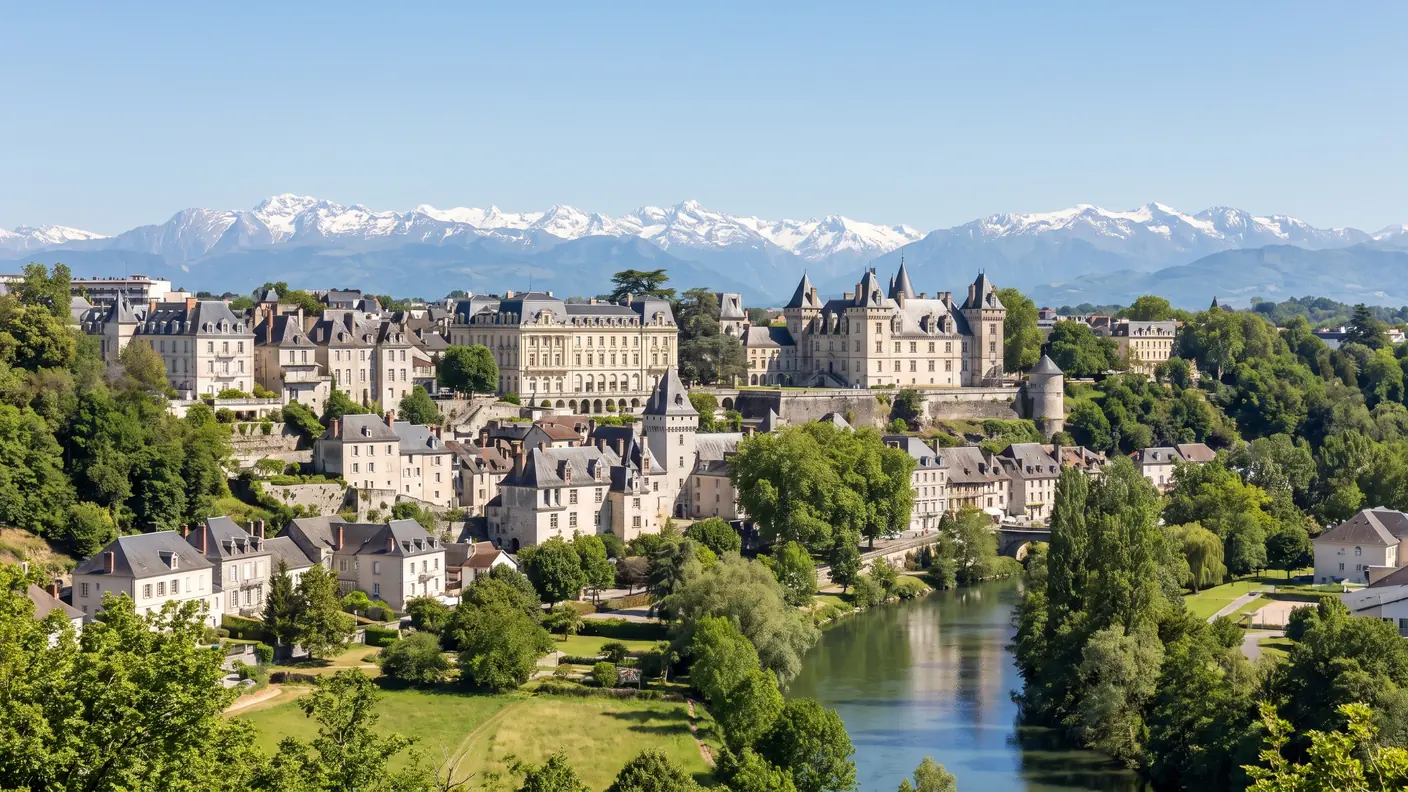
On the way to Lourdes
Direct trip from Bordeaux—approximately 252 km and 2 hours 49 minutes—to Lourdes and the Pyrenees. Drop-off and any stops to be agreed upon before departure. Written fixed-price quote, starting at €417 one way.