
Bordeaux to Saint-Jean-Pied-de-Port: gateway to the Camino
The former capital of Lower Navarre, at the foot of the Pyrenean mountain passes: the Porte Saint-Jacques, a UNESCO World Heritage Site; the citadel and ramparts; Rue de la Citadelle with its pink sandstone houses; and the starting point of the Camino de Santiago—all less than three hours from Bordeaux.
Saint-Jean-Pied-de-Port at a glance
Saint-Jean-Pied-de-Port is the former capital of Lower Navarre, a town built of pink sandstone nestled along the banks of the Nive River, at the foot of the Pyrenean mountain passes: it is the last major French stop on the Camino de Santiago before crossing into Spain. Listed among the Most Beautiful Villages of France, this gem of the Basque Country (Donibane Garazi in Basque) charms visitors with its Rue de la Citadelle, lined with pink sandstone houses featuring dated lintels, its perched citadel, its ramparts, and its famous Porte Saint-Jacques, a UNESCO World Heritage Site.
A land of vineyards (Irouléguy), sheep’s-milk cheese, and pelota, the gateway to the Basque mountains and the starting point of the Camino Francés, Saint-Jean-Pied-de-Port is an exceptional stopover. Just under three hours from Bordeaux, nestled among historic sites, mountains, and the Basque way of life, it is one of the most beautiful gateways to the Pyrenees.
Here are the key details to know before you go. Distances, travel times, and fares are based on the information listed on the route’s information page; the fixed fare is provided in advance, so there are no surprises on the meter, regardless of traffic or scheduled stops.
| Landmark | Details |
|---|---|
| Department | Pyrénées-Atlantiques (64), Nouvelle-Aquitaine |
| Basque name · demonym | Donibane Garazi · the Saint-Jeannais |
| Population | 1,479 residents (INSEE 2023) |
| Status | Former capital of Lower Navarre · Most Beautiful Villages of France |
| Don't miss it | The Saint-Jacques Gate (UNESCO), the citadel, Rue de la Citadelle |
| Distance from Bordeaux | about 236 km · about 2 hours and 55 minutes by car |
| Around | Roncesvalles, Irouléguy, Bayonne, the Basque valleys |
A quick note to start with, to put Saint-Jean-Pied-de-Port in context. The name is intriguing: “Pied-de-Port” doesn’t refer to a seaport, but means “at the foot of the pass”—the word “port” here, in the mountains, refers to a mountain pass: the town lies at the foot of the Roncevaux Pass, the route to Spain. It should not be confused with Saint-Jean-de-Luz, the seaside resort on the coast, nor with the neighboring town of Saint-Jean-le-Vieux. Finally, it is not the entire town that is listed as a UNESCO World Heritage Site, but its Porte Saint-Jacques, as part of the Routes of Santiago de Compostela.
Now that we’ve covered the basics, let’s set out to explore one of the most beautiful cities in the Basque Country. Every statement in this guide is based on verifiable sources, which are cited at the end of the article.
Here’s a rundown of everything you need to know: the location of Saint-Jean-Pied-de-Port in Lower Navarre and at the foot of the mountain passes, the Camino de Santiago routes and the Porte Saint-Jacques, the citadel and the ramparts, Rue de la Citadelle and its pink sandstone houses, the bridge and the church, the history of the Kingdom of Navarre, the Nive River and the mountains, the Basque region, nearby attractions, the best time of year to visit, and the easiest way to get there from Bordeaux by private driver—all thoroughly researched and verified.
Where is Saint-Jean-Pied-de-Port located?
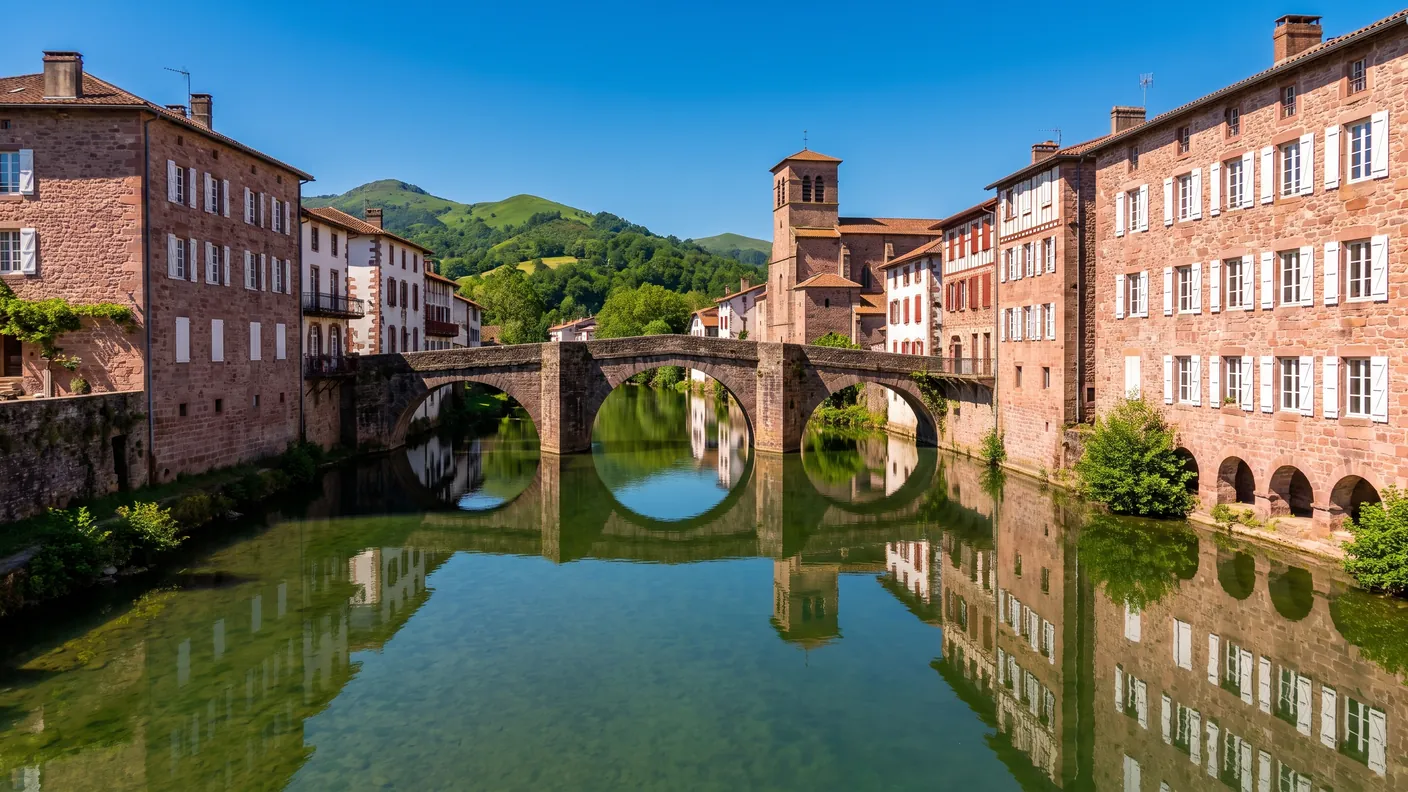
Saint-Jean-Pied-de-Port is located in the Basque Country, in the southeastern part of the Pyrénées-Atlantiques department (64), in the Nouvelle-Aquitaine region, in the province of Lower Navarre—of which it was once the capital—on the banks of the Nive River and at the foot of the mountain passes leading to Spain. The town, known in Basque as Donibane Garazi, occupies a small plain surrounded by mountains, where the Nive River is formed by the confluence of several streams flowing down from the Pyrenees (the Nive de Béhérobie, the Laurhibar, and the Nive d’Arnéguy). It is a strategic crossroads and transit point: the town controls the entrance to the valleys and mountain passes leading to Spanish Navarre, notably the Roncevaux Pass.
With its 1,479 residents (2023 census), it is a small town, but one with a rich history and great renown—the capital of a former province and a major stop on the Camino de Santiago pilgrimage route—set in a strikingly beautiful mountainous landscape.
At the foot of the pass, the Gate of Spain
Everything about Saint-Jean-Pied-de-Port can be explained by its location. The town is built at the mouth of the Basque valleys, just before the roads climb toward the mountain passes (the “ports”) that cross the Pyrenees into Spain—foremost among them the Roncevaux Pass (1,057 m), famous since the Song of Roland.
It is this location—the final stop before the mountains—that has, since the Middle Ages, brought the town its wealth and fame: a stopping point for merchants, armies, and above all, pilgrims on their way to Santiago de Compostela. “Pied-de-Port” says it all: the town lies at the foot of the pass, on the threshold of the mountains. Even today, it is from Saint-Jean-Pied-de-Port that tens of thousands of walkers set out each year toward Spain. This geographical position at a threshold—between the plains and the mountains, between France and Spain, between Lower Navarre and Navarre—is the key to the town’s entire history and charm.
The capital of Lower Navarre
Saint-Jean-Pied-de-Port was the political and administrative capital of Lower Navarre (Nafarroa Beherea in Basque), one of the seven historic Basque provinces. The town owed this status to its strategic position: it was the seat of the merindad of Ultrapuertos, the part of the kingdom of Navarre north of the Pyrenees. Its citadel, ramparts and striking sense of identity still reflect that distinguished past.
Today a small rural and tourist town, nestled in the heart of a region of valleys and mountains, Saint-Jean-Pied-de-Port remains the center of Lower Navarre, with its market, shops, and services. Its designation as one of the Most Beautiful Villages of France celebrates the beauty of a town that was once a capital and that has preserved, in its pink stones and narrow streets, the memory of a kingdom.
On the Pilgrimage Routes to Santiago de Compostela
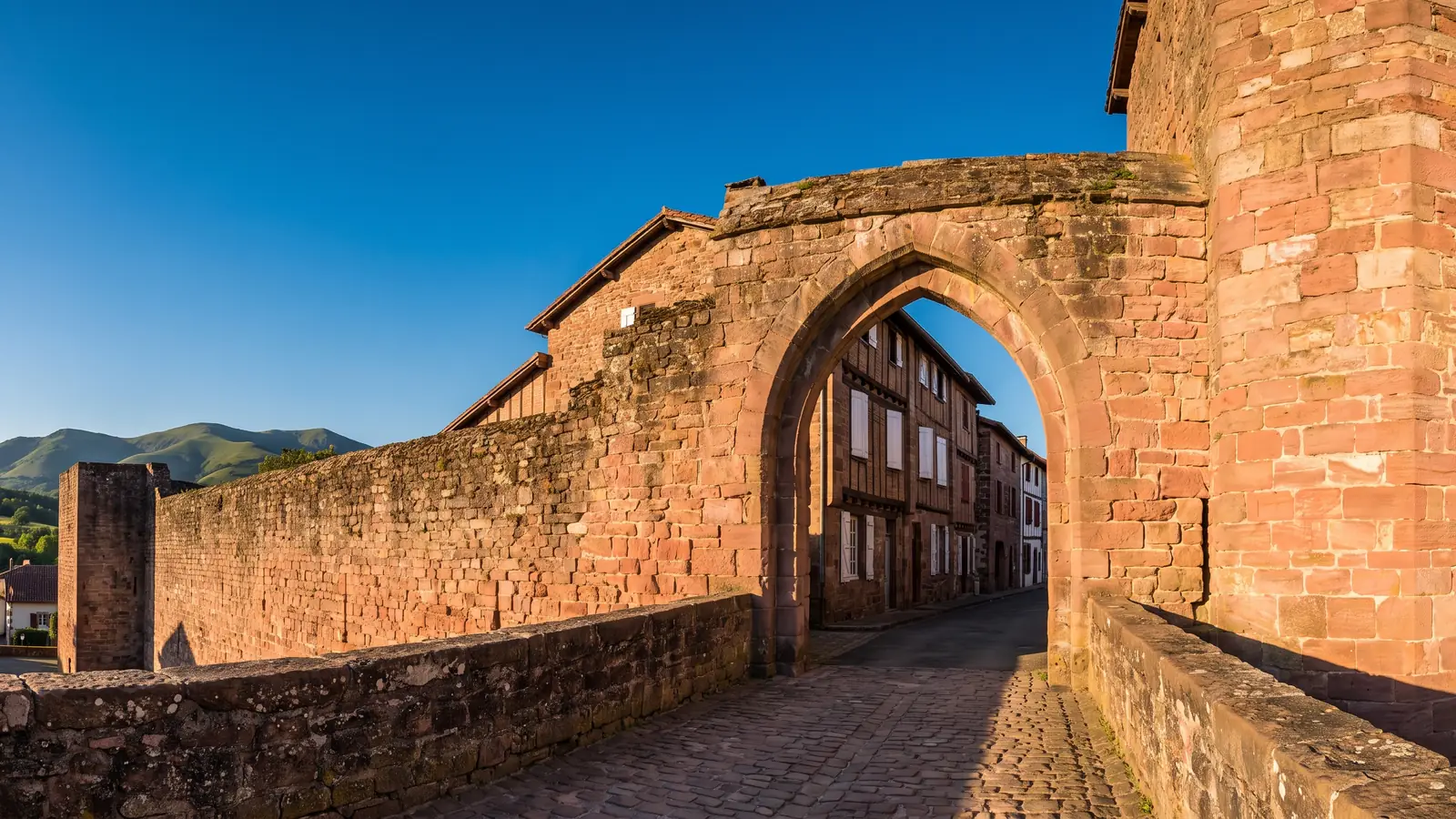
Saint-Jean-Pied-de-Port is one of the most famous stops along the Camino de Santiago: this is where the major routes from France converge before crossing the Pyrenees, and its Porte Saint-Jacques is listed as a UNESCO World Heritage Site. The starting point of the Camino Francés. Source: UNESCO.
The Crossroads of the Pilgrimage Routes to Santiago
Since the Middle Ages, Saint-Jean-Pied-de-Port has been a major centre of the pilgrimage to Santiago de Compostela. Here, or very close by, the three principal French routes from the north converge: the Le Puy route (Via Podiensis, the renowned GR 65), the Vézelay route and the Tours route, which meet near the Gibraltar Crossroads outside Ostabat. From Saint-Jean-Pied-de-Port, pilgrims begin the final and most storied French stage: the climb towards the Roncesvalles Pass, crossing the Pyrenees to Orreaga-Roncesvalles in Spanish Navarre, where the Camino Francés continues towards Santiago.
Many pilgrims choose Saint-Jean-Pied-de-Port as their starting point on the way to Roncesvalles. This influx of pilgrims from all over the world gives Saint-Jean-Pied-de-Port a unique, cosmopolitan, and devout atmosphere, making this small Basque town one of the busiest gateways on the entire pilgrimage route.
The Porte Saint-Jacques, a UNESCO World Heritage Site
Why is the Porte Saint-Jacques listed by UNESCO? It is part of the serial property “Routes of Santiago de Compostela in France,” inscribed in 1998 to highlight the routes and monuments associated with the medieval pilgrimage. In Saint-Jean-Pied-de-Port, this fortified gate remains the symbolic entrance for pilgrims passing through the town on their way to Roncesvalles. UNESCO · City of Saint-Jean-Pied-de-Port.
The most iconic monument of this history of the Way of St. James is the Porte Saint-Jacques (Arrankuntzea in Basque), a gate cut into the city walls to the north of the city: it was through this gate that pilgrims descending from the trails entered the city, before crossing through it and setting off again toward the mountain passes. This gate holds a dual distinction: classified as a historic monument since 1986, along with the city walls, it has, above all, been inscribed on the UNESCO World Heritage List since 1998 as one of the monuments of the “Routes of Santiago de Compostela in France ”—specifically, it is component No. 18, under the name Via Podiensis.
It is, therefore, the Porte Saint-Jacques—and not the entire city—that holds UNESCO status (official listing). To pass through this gate, walk down Rue de la Citadelle to the Nive River, and exit toward the mountains through the Porte d’Espagne is to retrace, in just a few hundred meters, the age-old pilgrimage route, in one of the most moving settings along the Way.
| The Paths That Lead to Saint-Jean | Details |
|---|---|
| Voie du Puy (GR 65) | Via Podiensis, from Le Puy-en-Velay — the great trail |
| The Vézelay Route | via Lemovicensis, through the Limousin region |
| Tours Line | via Turonensis, along the Atlantic coast |
| Gibraltar Crossroads | The three roads converge near Ostabat |
| Roncevaux Pass | 1,057 m · Pass to Spain and the Camino Francés |
The citadel and the ramparts
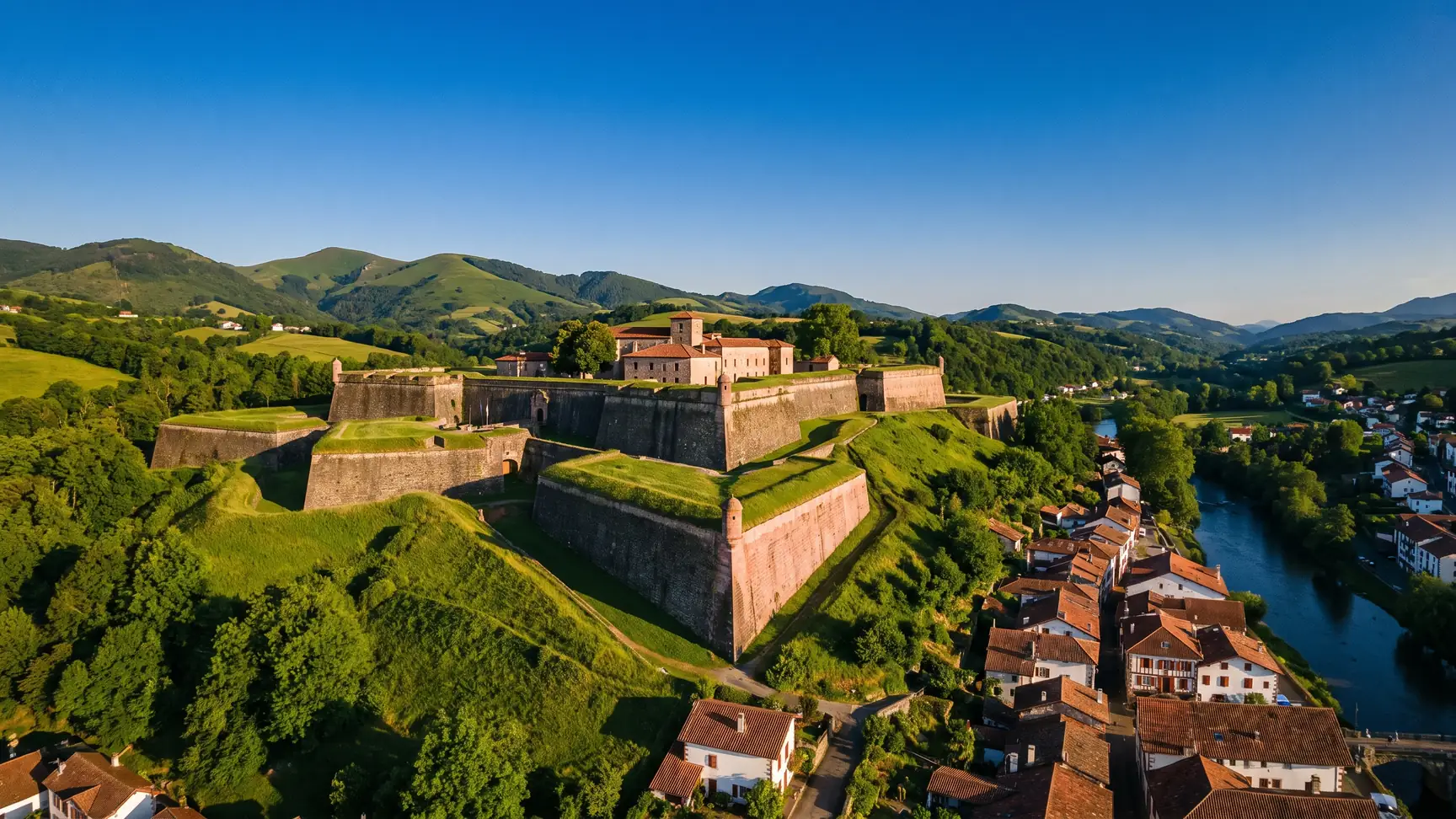
Perched on its hill, the citadel overlooks the town: a 17th-century fortress reshaped under Vauban’s authority, it stands on the site of the former castle of the kings of Navarre. The great military landmark of this Navarrese town.
A fortress redesigned under Vauban
The citadel of Saint-Jean-Pied-de-Port crowns the hill above the town, on the site of the former fortified castle of the kings of Navarre. The present structure is a bastioned fortress dating from the 17th century: begun around 1625–1627 and altered over the following decades, it was further refined late in the century under Vauban’s authority. Engineer François Ferry worked here from 1686 to 1700 on the instructions of Louis XIV’s master of fortifications.
Beware of a common misconception: Vauban did not “build” the citadel with his own hands, but he inspired its design and oversaw its renovation as part of the kingdom’s major border defense program (according to the municipal presentation). Designated a historic monument in 1963, the citadel offers, from its ramparts and glacis, a magnificent panoramic view of the town, the Nive Valley, and the Basque mountains. You reach it via a parapet walk that climbs up from the old town: the walk, though short and steep, is rewarded with one of the most beautiful views in the Basque Country.
City Walls and Gates
The citadel is the summit of an extensive system of fortifications. The upper town is ringed by ramparts whose origins date to the early 13th century, when the kings of Navarre turned Saint-Jean into a walled stronghold. Altered over the centuries, these walls have been protected as historic monuments since 1986. They are pierced by gates, the best known being the Porte Saint-Jacques to the north, through which pilgrims entered.
To the south, the Spanish Gate marked the start of the route to the mountain passes and Navarre, while the French Gate and the Navarre Gate controlled the other entrances to the upper town. Walking down through the old town from one gate to the other, between the sandstone ramparts and the old houses, is one of the great pleasures of a visit: with every step, you come to understand the role of Saint-Jean-Pied-de-Port as a frontier town and waystation—the gateway to the Pyrenees and a refuge for travelers since time immemorial.
Rue de la Citadelle and the pink sandstone
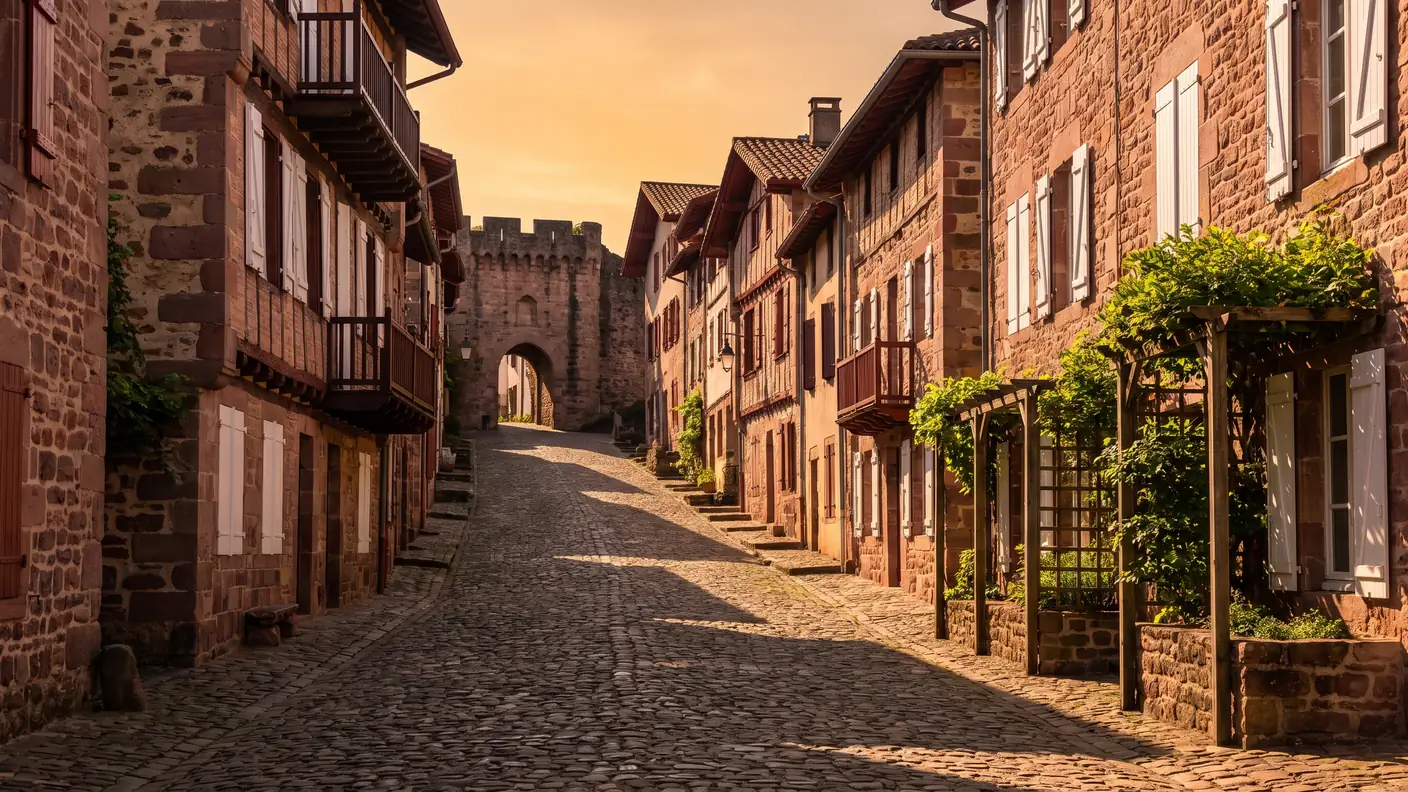
The heart of Saint-Jean-Pied-de-Port is its steep Rue de la Citadelle, lined with tall pink sandstone houses whose lintels are engraved with dates: one of the most beautiful streets in the Basque Country. It is the iconic setting of this Navarrese town.
The Pink Sandstone Houses
Rue de la Citadelle, which runs down from the Upper Gate to the Nive River, is the main thoroughfare and the iconic backdrop of the old town. It is lined with tall, stately houses built of pink sandstone, sometimes interspersed with gray sandstone—this beautiful reddish stone, quarried from nearby quarries, which gives the city its distinctive color, warm and ever-changing depending on the light.
Many of these facades bear, engraved on their door lintels, the date of their construction and sometimes the names of their builders: as you walk down the street, you can read 1510, 1633, 1654, 1722, and 1741, like an open-air history book. These old houses, with their white shutters and wooden balconies, lined up along the cobblestone slope, form a scene of rare harmony. Strolling down Rue de la Citadelle, looking up at the dated lintels, and stepping through the door of a workshop or shop allows you to experience the full charm of a city that has stood the test of time without losing any of its soul.
The Old Town of the Pilgrims
All of the Old Town is worth a leisurely stroll. As you walk down Rue de la Citadelle, you'll come across the old diocese, the Bishops' Prison — a medieval building with beautiful vaulted halls, designated a historic monument and now a museum —, and a thousand stone details: door knockers, old shop signs, and scallop shells. The street leads to the Nive River, which you cross via an old bridge, then heads back up toward the Porte d’Espagne and the mountains.
It is this same, unchanging route that pilgrims have followed for centuries, giving the old town its unique liveliness and fervor, amid artisan shops, pilgrim inns, and visitor centers. Small in size but immense in history and charm, the old town of Saint-Jean-Pied-de-Port is one of the most beautiful and moving in the Southwest—best explored at a leisurely pace, looking up and letting yourself be swept away by the magic of the place.
The bridge, the church, and the Nive River
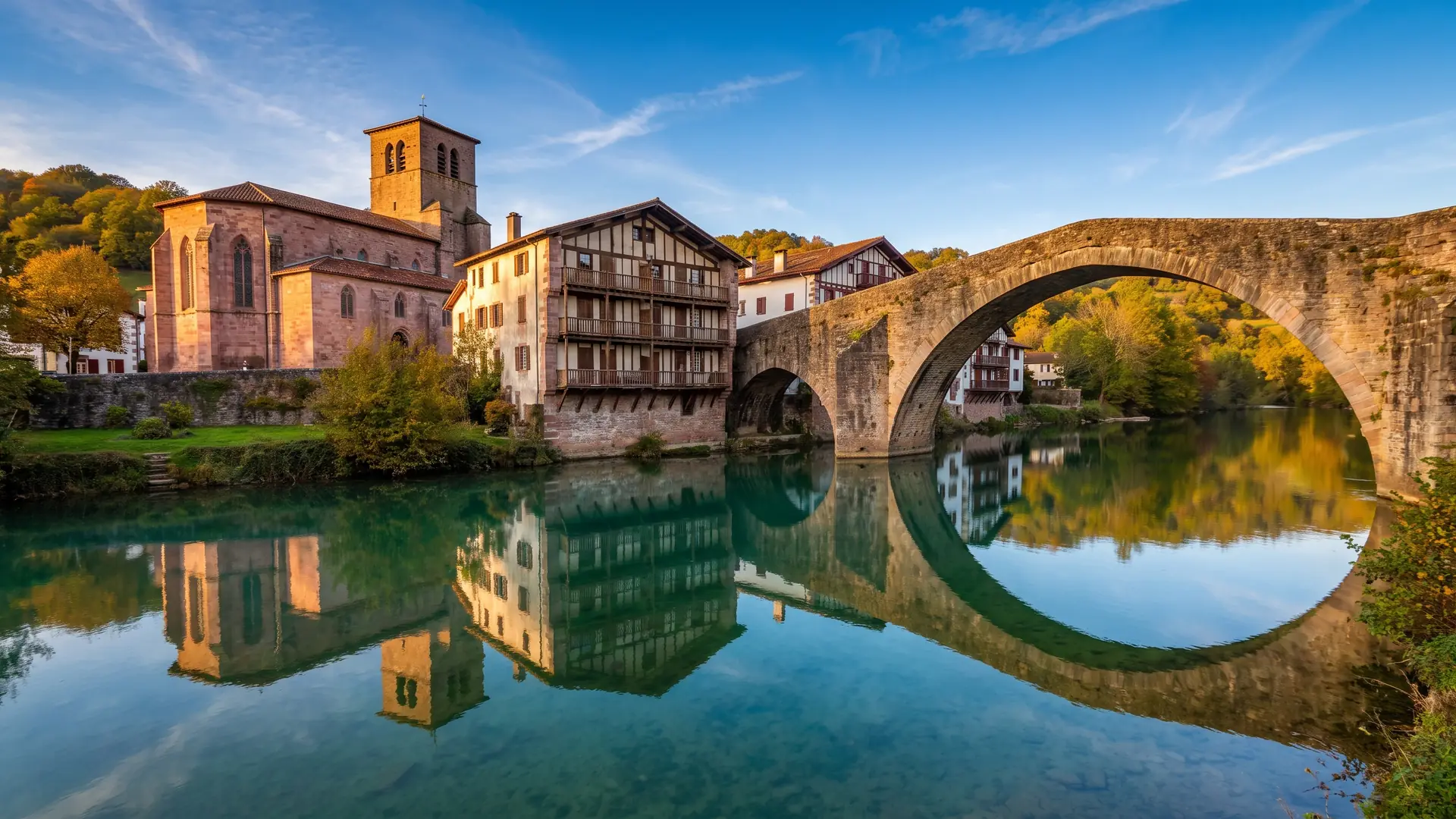
At the foot of the old town, an old bridge spans the Nive River at the base of the pink-sandstone Church of the Assumption—one of the most photographed scenes in the Basque Country. The romantic heart of the city, nestled between stone and river.
The Old Bridge and the Church of the Assumption
At the bottom of Rue de la Citadelle, the old town meets the Nive River, which you cross via an old stone bridge, the Pont Notre-Dame. Often referred to as “Roman,” this bridge is not: it is a medieval structure, restored in 1634, which, together with the pink sandstone houses reflected in the water, forms one of the most famous scenes in the Basque Country. At one end of the bridge stands the parish church, officially dedicated to the Assumption of the Virgin (but traditionally known as Notre-Dame-du-Bout-du-Pont, the church “at the end of the bridge”).
This pink sandstone building dates from the 15th century and was listed as a historic monument in 1925. It is one of the largest churches in the Basque Country after Bayonne Cathedral. One rare, documented detail is that its bell tower also served as a town gate: the Porte Notre-Dame is “curiously set within the church’s bell tower”. Church, bridge and river form a scene of rare beauty at the romantic heart of Saint-Jean-Pied-de-Port.
The Bishops' Prison
Another notable landmark in the old town, the Prison des Évêques on Rue de la Citadelle, intrigues visitors with its name and its beautiful medieval vaulted rooms. Despite its name, its history as an episcopal prison is largely a matter of tradition; the building served as a jail at various times. Designated a historic monument in 2012, it now houses a small museum that traces the history of the city and the pilgrimage.
Along with the church, the bridge, the citadel, and the ramparts, the Prison des Évêques rounds out a heritage complex of remarkable density for such a small town: the town alone boasts five monuments designated as historic landmarks. This wealth, inherited from its past as a capital and a stopover, makes Saint-Jean-Pied-de-Port a veritable open-air museum town, where every stone, every door, and every lintel tells a story—that of a frontier town, a place of faith and passage, at the foot of the mountains.
History of a Navarrese Stronghold
Founded by the kings of Navarre in the early 13th century and later capital of Lower Navarre, Saint-Jean-Pied-de-Port stood at the heart of the kingdom of Navarre’s turbulent history, divided between France and Spain. A great Pyrenean story written in pink stone.
From Saint-Jean-le-Vieux to the New Town
Before Saint-Jean-Pied-de-Port, nearby Saint-Jean-le-Vieux occupied the site of the Roman station of Imus Pyrenaeus, “the foot of the Pyrenees”, already a stop on the road to Spain. After this older settlement declined, a new town arose in the late 12th and early 13th century. King Sancho VII the Strong of Navarre turned Saint-Jean-Pied-de-Port into a walled stronghold and the capital of the merindad of Ultra-Puertos, the part of the kingdom north of the Pyrenees.
The town, beautifully situated at the foot of the mountain passes, prospered thanks to trade and pilgrimage, becoming the capital of what would later become Lower Navarre. Its ramparts, citadel, and pink sandstone houses bear witness to its role as a gateway and hub, at the crossroads of the French, Basque, and Navarrese worlds, on one of the major routes of medieval Europe.
Navarre: First Divided, Then French
The story of Saint-Jean-Pied-de-Port is that of the Kingdom of Navarre, who had long ruled on both sides of the Pyrenees. In 1512, the Upper Navarre, in the south, was conquered by Ferdinand II of Aragon and annexed to Spain; only the Lower Navarre, to the north, remained under the rule of the kings of Navarre of the House of Albret, with Saint-Jean-Pied-de-Port as its capital. When one of these kings, Henry III of Navarre, became Henry IV of France in 1589, he united the crowns of France and Navarre—hence the title “King of France and Navarre,” which was held until the reign of Charles X.
But Lower Navarre was not formally incorporated into the Kingdom of France until 1620, by an edict of Louis XIII. Vauban fortified the town to defend this border. From this unique history—a kingdom straddling the Pyrenees, divided and then partially incorporated into France—Saint-Jean-Pied-de-Port retains a strong identity that is at once Basque, Navarrese, and French, making it one of a kind.
| Historical Milestones | Date |
|---|---|
| A fortified town founded by Sancho VII of Navarre | early 13th century |
| Capital of the Outre-ports merindad (Lower Navarre) | Middle Ages |
| Spain's Conquest of Upper Navarre | 1512 |
| Henry IV, King of France and Navarre | 1589 |
| Annexation of Lower Navarre to France (edict) | 1620 |
The Nive River, the mountain passes, and the Basque Mountains
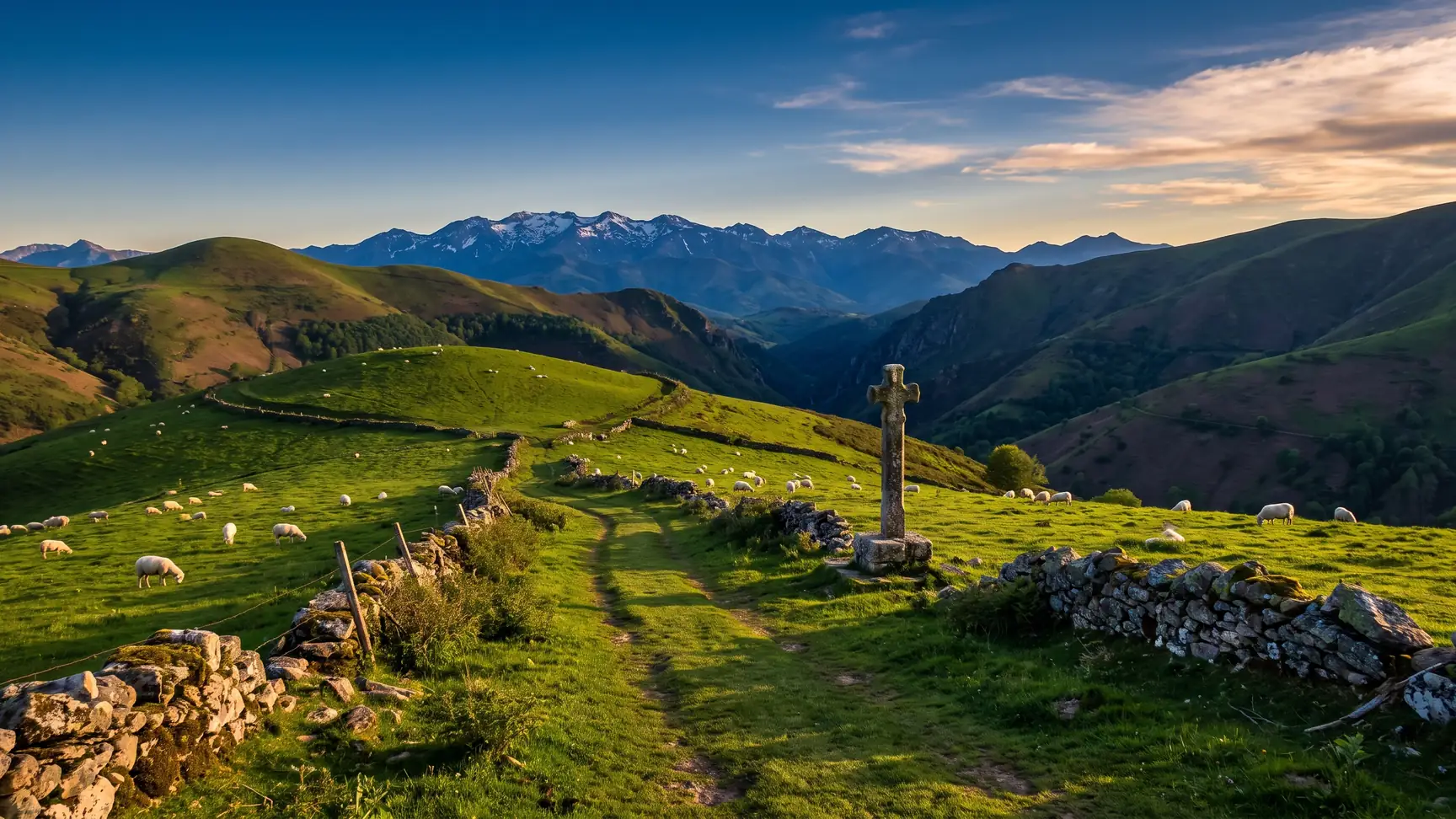
Saint-Jean-Pied-de-Port is the gateway to the Basque high mountains: the Nive River, the mountain passes leading to Spain, the summer pastures, and the forests of Iraty are all just a few minutes from the town. A natural paradise at the foot of the Pyrenees.
The Nive River and the Valleys
The Nive, which originates in Saint-Jean-Pied-de-Port from the confluence of several streams flowing down from the Pyrenees, is the river of the inland Basque Country: it flows northward from there through the valley to Bayonne and the ocean. Its fast-flowing, clear waters, renowned for trout fishing, bring life to the town and the surrounding countryside. Around Saint-Jean-Pied-de-Port lie the valleys and villages of Lower Navarre, set amid a landscape of green hills, meadows grazed by sheep, and forests, dotted with Basque farmhouses with red shutters.
It is a region of gentle, inhabited mountains, where sheep farming—the sheep from which Ossau-Iraty cheese is made—has shaped the summer pastures and landscapes for centuries. From the town, it takes just a few minutes to reach these valleys and highlands, whether for hiking, exploring the villages, or simply taking in one of the most beautiful regions of the Pyrenees, where unspoiled nature and living traditions coexist.
The mountain passes, the Iraty Forest, and Roncesvalles
Towering above the village are the great mountain passes and peaks. The road to Roncesvalles, which climbs toward the pass (1,057 m) and Spain, offers spectacular panoramic views and partly follows the pilgrims’ trail along the ridges (the famous “Route Napoléon” for hikers). The town recommends checking road conditions before setting out (official source).
Further to the east lies the vast Iraty Forest, one of Europe’s largest beech forests, straddling the border—a paradise for hiking, cross-country skiing in winter, and watching the migration of wood pigeons in the fall. The GR 10, which crosses the Pyrenees from coast to coast, passes through here.
These mountains, mountain passes, and forests, just a stone’s throw from Saint-Jean-Pied-de-Port, make the town an ideal base for exploring the Basque high mountains in all their untamed beauty. Between the river, the mountain pastures, the forests, and the mountain passes leading to Spain, the great outdoors and breathtaking landscapes are everywhere, right at the city’s doorstep.
Basque Produce and Traditions
Around Saint-Jean-Pied-de-Port, you can savor all the best the Basque region has to offer: the Irouléguy vineyards, Ossau-Iraty cheese, mountain charcuterie, and the lively atmosphere of the markets and pelota matches. An authentic, gourmet getaway in the Basque Country.
Irouléguy and Ossau-Iraty
The region’s premier wine is Irouléguy: this small Basque vineyard, one of the least well-known in France (barely more than 260 hectares), is terraced on the sun-drenched hillsides around Saint-Étienne-de-Baïgorry and Ispoure, very close to Saint-Jean-Pied-de-Port—the town itself is not within the appellation’s boundaries, but serves as its natural outlet. Awarded AOC status in 1970, Irouléguy produces characterful reds and rosés, made from Tannat and Cabernet varieties, as well as fine whites. It is often paired with the famous Ossau-Iraty sheep’s-milk cheese (AOP)—for which Saint-Jean-Pied-de-Port lies within the appellation zone—and is frequently served with black cherry jam from Itxassou.
Mountain charcuterie, ham, suckling lamb, Basque cake, chocolate: this region is a land of culinary delights, where people eat and drink well, surrounded by Basque hospitality and conviviality. Restaurants in the village and the surrounding area treat visitors to these local specialties, which can be enjoyed on-site or taken home.
Monday Market and Pelota
To experience the authentic Basque Country, there’s nothing quite like the Monday market in Saint-Jean-Pied-de-Port: It’s the major weekly gathering in Lower Navarre, where producers, farmers, and food lovers from all the valleys flock to enjoy a colorful and lively atmosphere. Sheep’s-milk cheeses, cured meats, chili peppers, fruits, and crafts: you’ll find all the best local specialties here. The weekly market and pelota matches are subject to the local schedule; check the municipal calendar before your visit.
Watch a game of pelota, stroll through the market, and enjoy a glass of Irouléguy paired with a plate of cheese and cold cuts: this is a wonderful way to experience the warm, deeply rooted Basque way of life. Saint-Jean-Pied-de-Port, the vibrant heart of Lower Navarre, offers all these flavors and traditions at the foot of the mountains.
| The region around Saint-Jean | Details |
|---|---|
| Irouléguy Wine | small Basque vineyard (AOC 1970), located near the town |
| Ossau-Iraty | sheep's-milk cheese from the Pyrenees (AOP) |
| Cold cuts & lamb | ham, mountain-style cured meats, milk-fed lamb |
| Basque Cake & Chocolate | Iconic sweets from the Basque Country |
| Monday Market · Pelota | weekly market and fronton games |
What's there to see in the area, and when should you visit?
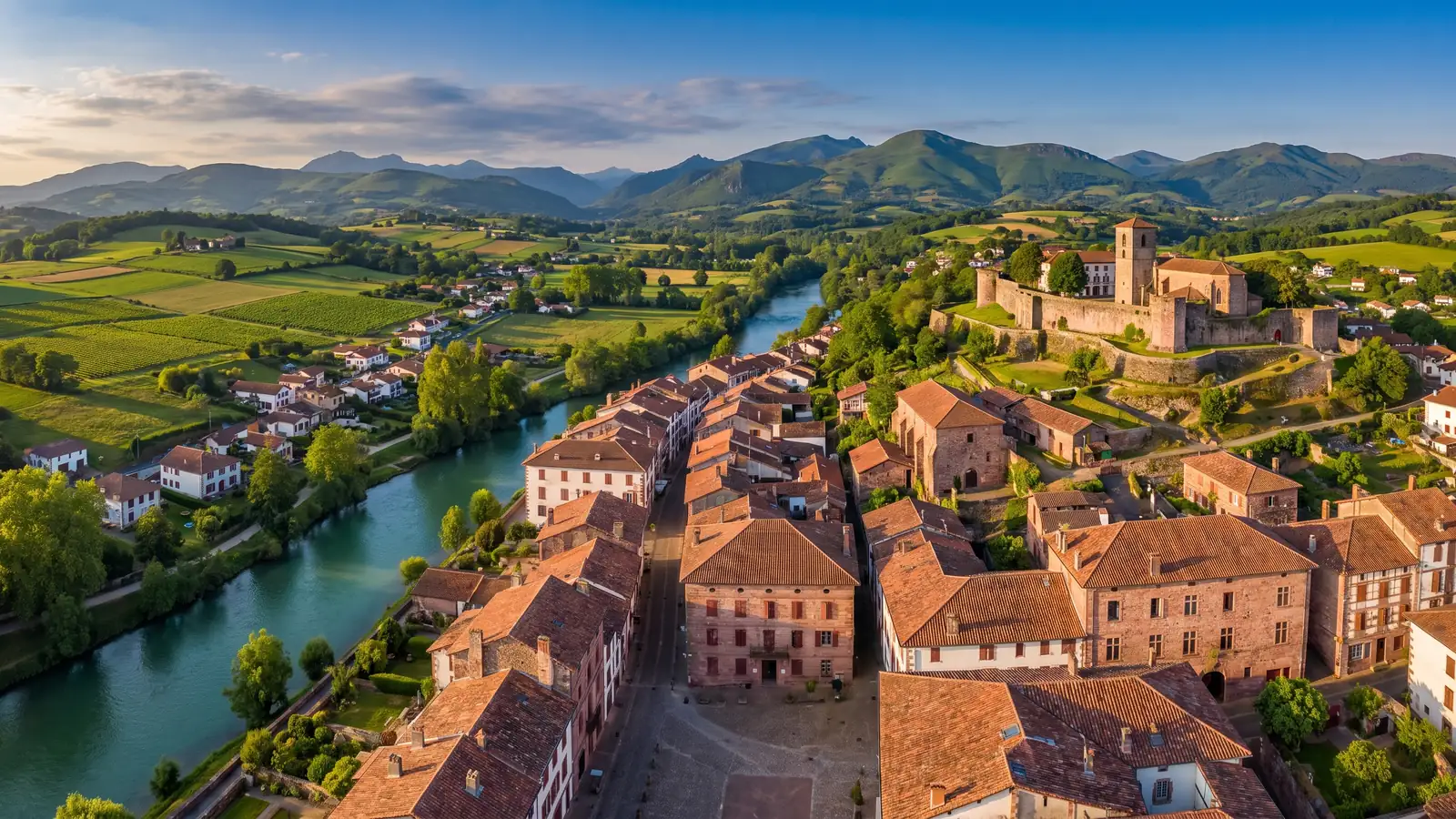
Saint-Jean-Pied-de-Port is an ideal base for exploring the inland Basque Country and nearby Spain: Baïgorry, Espelette, Bayonne, and Roncesvalles are all within easy reach. A rare blend of valleys, vineyards, and the border.
Baïgorry, Espelette, Bayonne, and Spain
In the surrounding area, one charming Basque village follows another. Saint-Étienne-de-Baïgorry, in the neighboring valley, is the heart of the Irouléguy wine region and a beautiful village on the banks of the Nive des Aldudes. Further away, Espelette and its famous chili pepper (a Labourd AOP, about 40 kilometers away), Ainhoa, Sare, and the listed villages of Labourd are worth a visit. To the north, Bayonne—the capital of the Northern Basque Country, with its cathedral, ramparts, and chocolate—and the coast (Biarritz, Saint-Jean-de-Luz) are just an hour away.
And to the south, via the Roncevaux Pass, the Spain and Navarre (Pamplona) invite you to explore, following in the footsteps of pilgrims. With a driver, it’s easy to plan a day trip from Saint-Jean-Pied-de-Port, taking in villages, vineyards, mountains, and the border, without worrying about winding roads or parking in the towns.
When is the best time to visit Saint-Jean-Pied-de-Port?
Saint-Jean-Pied-de-Port is open to visitors year-round, but the spring and the fall, with its soft lighting, offers the most beautiful moments—when the city and the mountains are adorned with greenery or vibrant colors, and pilgrims on the Way of St. James bring the narrow streets to life. The summer It’s the height of the season, lively and sunny: it’s the time for markets, Basque festivals, mountain hikes, and an influx of hikers and visitors—the atmosphere is warm and welcoming, but the town can get crowded.
The fall, the season of wood pigeons, the Irouléguy grape harvest, and the first snows on the mountain peaks, offers stunning landscapes and a more peaceful atmosphere. The winter, a quieter time, reveals the town of pink sandstone bathed in beautiful light, with the snow-capped mountains as a backdrop. No matter the season, the beauty of the town, its rich heritage, and the magic of the Camino de Santiago make Saint-Jean-Pied-de-Port an unforgettable getaway, less than three hours from Bordeaux.
| Around Saint-Jean-Pied-de-Port | Distance | Interest |
|---|---|---|
| Saint-Étienne-de-Baïgorry | ~11 km | Irouléguy Vineyard, Aldudes Valley |
| Roncesvalles (Spain) | ~25 km | Legendary Pass, Camino Francés, Navarre |
| Espelette | ~40 km | Espelette Pepper (Labourd) |
| Bayonne | ~50 km | Capital of the Basque Country, cathedral, chocolate |
| Biarritz | ~55 km | The Basque Coast, the ocean |
How to get to Saint-Jean-Pied-de-Port from Bordeaux
Saint-Jean-Pied-de-Port is located about 236 km from Bordeaux, which is about a 2-hour, 55-minute drive via the A63 highway to Bayonne, then along the road that winds up the Nive Valley toward the interior of the Basque Country (about an hour from Bayonne). The town does have a small train station served by a TER train from Bayonne (the picturesque Nive line), but traveling by train from Bordeaux requires a transfer in Bayonne and involves long wait times; more importantly, it doesn’t allow you to explore the surrounding villages, the surrounding valleys and mountain passes, which are poorly served by public transportation.
For a trip from Bordeaux to explore this gem of Lower Navarre and the Basque Mountains, a chauffeur-driven car is the most practical and flexible option, especially if you plan to extend your trip to Baïgorry, Espelette, Bayonne, or Spain.
Train or chauffeur service?
For reaching Saint-Jean-Pied-de-Port and exploring the inland Basque Country, a chauffeur service offers genuine freedom: a direct door-to-door journey from Bordeaux, without transfers or waiting, plus the option of stopping in Bayonne, a Basque village or an Irouléguy estate along the way. It is particularly well suited to a day trip or weekend combining heritage, vineyards, mountains and villages, with no need to navigate winding roads or search for parking.
It’s also the ideal solution for starting a pilgrimage: many pilgrims are driven directly from Bordeaux to Saint-Jean-Pied-de-Port to begin the Camino. We offer this trip at a fixed price quoted in advance: expect to pay approximately €458 for the one-way trip, in a Mercedes sedan or a van seating up to 8 passengers. The price, set at the time of booking, remains fixed: it does not depend on traffic, traffic jams, or stops, unlike a taxi meter.
This is the perfect option for a cultural and culinary getaway, the start of a pilgrimage on the Camino de Santiago, a family visit, an event, or a simple transfer to or from the Bordeaux-Mérignac or Biarritz airports. You can travel alone, as a couple, or in a small group of up to 8 people, with luggage or hiking backpacks, and request stops in Bayonne, Baïgorry, or a village.
In practice, booking is quick and easy: you simply provide the pickup address in Bordeaux and the destination in Saint-Jean-Pied-de-Port, along with the date, desired time, and number of passengers, and you’ll receive a fixed-price quote in writing. On the day of the trip, the driver picks up the passengers at the agreed-upon address and takes them directly to Saint-Jean-Pied-de-Port, without any detours—a real advantage, especially for starting a pilgrimage or a trip to the Basque Country with peace of mind.
| Route | Distance | Duration | Landmark |
|---|---|---|---|
| Bordeaux → Saint-Jean-Pied-de-Port | ~236 km | ~2:55 | Starting at ~396 € for a chauffeur service |
| Saint-Jean-Pied-de-Port → Bayonne | ~50 km | ~1 hour | capital of the Basque Country |
| Saint-Jean-Pied-de-Port → Baïgorry | ~11 km | ~15 min | Irouléguy vineyard |
| Saint-Jean-Pied-de-Port → Roncesvalles | ~25 km | ~35 min | Legendary mountain pass, Spain |
Whether you come for the Porte Saint-Jacques and the Camino de Santiago, for the citadel and the ramparts, for the Rue de la Citadelle and its pink sandstone houses, or for the Basque mountains and the local countryside, Saint-Jean-Pied-de-Port is a treat for lovers of history, beauty, and authenticity—one of the most beautiful cities in the Basque Country, the capital of a vanished kingdom, at the foot of the Pyrenees.
Whether you’re planning a cultural getaway, setting out on a pilgrimage, or attending an event, booking a professional chauffeur guarantees a comfortable and punctual ride—check out the route from Bordeaux to Saint-Jean-Pied-de-Port and the flat rate, or explore all our destinations.
Frequently Asked Questions
Where is Saint-Jean-Pied-de-Port located?
Saint-Jean-Pied-de-Port is a town in the Basque Country, in the southeastern part of the Pyrénées-Atlantiques department (64), in Nouvelle-Aquitaine, in the province of Lower Navarre, of which it was once the capital. In Basque, it is called Donibane Garazi. It is situated on the banks of the Nive River, at the foot of the mountain passes that cross the Pyrenees into Spain, notably the Roncevaux Pass. With a population of 1,479 (INSEE 2023), it is a small town but a major stop on the Camino de Santiago pilgrimage route and is listed among the Most Beautiful Villages of France. From Bordeaux, it’s about 236 km and a 2-hour, 55-minute drive via the A63 to Bayonne and then through the Nive Valley.
What is the distance between Bordeaux and Saint-Jean-Pied-de-Port?
Approximately 236 km by road, or about 2 hours and 55 minutes, via the A63 highway to Bayonne, then the road that runs up the Nive Valley (about one hour from Bayonne). With a door-to-door car service from Bordeaux, the fare is fixed and provided in advance, starting at approximately €458 one way (sedan or van, door-to-door price). The town has a small train station (TER from Bayonne), but the train requires a transfer and doesn’t allow you to explore the surrounding villages, valleys, and mountain passes afterward—which are best discovered with a driver. It’s also the ideal solution for starting a pilgrimage.
Why is Saint-Jean-Pied-de-Port connected to Santiago de Compostela?
Because it is one of the most famous stops along the pilgrimage routes to Santiago de Compostela. It is here, or very close by (at the Gibraltar crossroads, near Ostabat), that the three major French routes coming from the north—the Le Puy route (GR 65), the Vézelay route, and the Tours route—converge before crossing the Pyrenees. From Saint-Jean-Pied-de-Port, pilgrims begin the final French leg: the climb to the Roncevaux Pass in Spain, where the Camino Francés to Santiago de Compostela begins. Many pilgrims choose Saint-Jean-Pied-de-Port as their starting point for the journey to Roncesvalles.
Its Porte Saint-Jacques is, in fact, listed as a UNESCO World Heritage Site as part of the Routes of Santiago de Compostela.
What is the Porte Saint-Jacques?
This is the gate, cut into the ramparts on the northern side of the town (Arrankuntzea in Basque), through which pilgrims descending from the trails entered Saint-Jean-Pied-de-Port. It holds two distinctions: classified as a historic monument since 1986, along with the ramparts, it has, above all, been inscribed on the UNESCO World Heritage List since 1998 as component No. 18 of the “Routes of Santiago de Compostela in France.” It is therefore the Porte Saint-Jacques itself—and not the entire town—that holds the UNESCO designation.
Crossing it, walking down Rue de la Citadelle to the Nive River, and heading back toward the mountains is to retrace the age-old steps of the pilgrim setting out on the path to Spain.
What does the name “Pied-de-Port” mean?
Contrary to popular belief, “Pied-de-Port” has nothing to do with a seaport. Here in the mountains, the word “port” refers to a mountain pass: the town is “at the foot of the pass,” that is, at the foot of the Roncevaux Pass, the route that crosses the Pyrenees into Spain. The name therefore accurately describes its location: Saint-Jean at the foot of the pass, the last stop before the mountains.
It is this strategic location—between the plains and the mountains, between France and Spain—that has shaped the city’s history and prosperity, as it has served as a crossroads for merchants, armies, and pilgrims since the Middle Ages. In Basque, the city is called Donibane Garazi.
Was the citadel built by Vauban?
Not exactly. The citadel of Saint-Jean-Pied-de-Port, which overlooks the town on the site of the former castle of the kings of Navarre, is a 17th-century bastioned fortress, construction of which began around 1625–1627. It was primarily refined at the end of the century under Vauban’s supervision: the engineer François Ferry worked on it from 1686 to 1700 under the direction of Louis XIV’s grand master of fortifications. Vauban did not, therefore, “build” it with his own hands, but he inspired its design and oversaw its renovation. Designated a historic monument in 1963, it offers a magnificent view from its ramparts of the town, the Nive River, and the Basque mountains.
You can walk up there from the old town.
What to see in Saint-Jean-Pied-de-Port?
Rue de la Citadelle, a steeply sloping street lined with tall pink sandstone houses whose lintels are engraved with dates, is the town’s iconic setting. The Porte Saint-Jacques (UNESCO), to the north, and the other gates in the ramparts. The citadel, perched on its hill, offers a panoramic view. The old bridge over the Nive River and the Church of the Assumption, built of pink sandstone, are among the most photographed scenes in the Basque Country. The Bishops’ Prison, now a museum. Together, these elements form a “city-museum” of rare density: five of its landmarks are designated as historic monuments.
Add the Monday market, pelota, and the Basque region, and you’ve got an unforgettable stopover.
Does Irouléguy wine come from Saint-Jean-Pied-de-Port?
Not quite. Irouléguy is the local wine from a small Basque wine region—one of the least well-known in France (barely more than 260 hectares)—which was granted AOC status in 1970. It stretches across the hillsides around Saint-Étienne-de-Baïgorry and Ispoure, very close to Saint-Jean-Pied-de-Port; but the town of Saint-Jean-Pied-de-Port itself is not within the appellation’s boundaries—rather, it serves as its gateway and showcase. Irouléguy produces distinctive reds and rosés (Tannat, Cabernets) and fine whites, which can be enjoyed in the town and the surrounding area. These wines are often paired with Ossau-Iraty sheep’s milk cheese, for which the town is part of the appellation zone.
What's there to see around Saint-Jean-Pied-de-Port?
There is much to explore across the Basque Country and into Spain. Saint-Étienne-de-Baïgorry, in the neighboring valley, the heart of the Irouléguy wine region (~11 km). The Roncevaux Pass and Spain (Pamplona, Navarre), following in the footsteps of pilgrims (~25 km). Espelette and its famous chili peppers, in Labourd (~40 km). Bayonne, the capital of the Basque Country, with its cathedral and chocolate, and the coast (Biarritz, Saint-Jean-de-Luz), just an hour away. Not to mention the Iraty Forest, one of Europe’s largest beech forests and a hiker’s paradise. Saint-Jean-Pied-de-Port, at the foot of the mountain passes, is an ideal base for exploring the entire inland Basque Country and the mountains.
When is the best time to visit Saint-Jean-Pied-de-Port?
All year round, but spring and fall—with their soft light—are the most beautiful, when the town and the mountains are adorned with greenery or vibrant colors and pilgrims fill the narrow streets. Summer is the peak season, full of sunshine: markets, Basque festivals, hikes, and an influx of hikers, all in a wonderful atmosphere but with crowds. Fall, the season of wood pigeons and the Irouléguy grape harvest, offers superb and peaceful landscapes. Winter, a quieter time, reveals the city of pink sandstone bathed in beautiful light, with snow-capped mountains as a backdrop.
No matter the season, the beauty of the village and the magic of the Camino de Santiago make for an unforgettable getaway.
Can I book a chauffeured car from Bordeaux to Saint-Jean-Pied-de-Port?
Yes. We offer the route Bordeaux → Saint-Jean-Pied-de-Port (approximately 236 km, about 2 hours and 55 minutes via the A63 and Bayonne) at a fixed price, starting at approximately €458 one-way, in a Mercedes sedan or van seating up to 8 passengers, with a professional driver. The trip is direct, door-to-door, with the option to make stops as desired—ideal for a getaway to the Basque Country (the city, Baïgorry, Espelette, Bayonne) or to begin the Camino de Santiago, which many pilgrims start directly from the city. You can bring luggage and hiking backpacks. The fixed-price quote is provided and confirmed in writing before departure, with no unexpected meter charges.
Further Reading
- The capital of Béarn: see the Pau Guide (the Castle of Henry IV, the Boulevard des Pyrénées), King of France and Navarre
- The neighboring Basque city: see the Bayonne Guide (the cathedral, the Vauban ramparts, the chocolate), 50 km away
- The Gateway to the Valleys: see the Oloron-Sainte-Marie Guide (the mountain streams, the UNESCO-listed cathedral, the beret)
- Another major stop in the Pyrenees: check out the guide to Lourdes from Bordeaux
- Plan your trip: Book an executive transfer from Bordeaux to Saint-Jean-Pied-de-Port or explore all our destinations
Sources and References
- City of Saint-Jean-Pied-de-Port — Visit the City and the Citadel — Accessed July 24, 2026
- UNESCO — The Routes of Santiago de Compostela in France — inscription, criteria, and components of the property; accessed July 24, 2026
- Wikipedia — Saint-Jean-Pied-de-Port — geography, history, heritage, Lower Navarre
- Wikipedia — Porte Saint-Jacques — UNESCO 1998 (component 868-018), MH 1986
- Wikipedia — Via Podiensis (GR 65) — The Way of Le Puy, converging at Ostabat and Roncesvalles
- POP / Mérimée database — Citadel (PA00084506) — 17th-century citadel, remodeled under Vauban, designated a historic monument in 1963
- Wikipedia — Irouléguy (AOC) — Basque wine region, AOC established in 1970, ~260 ha
- INSEE — Municipality of Saint-Jean-Pied-de-Port (64485) — Population in 2023: 1,479 residents
Article published on .
Our Latest Guides
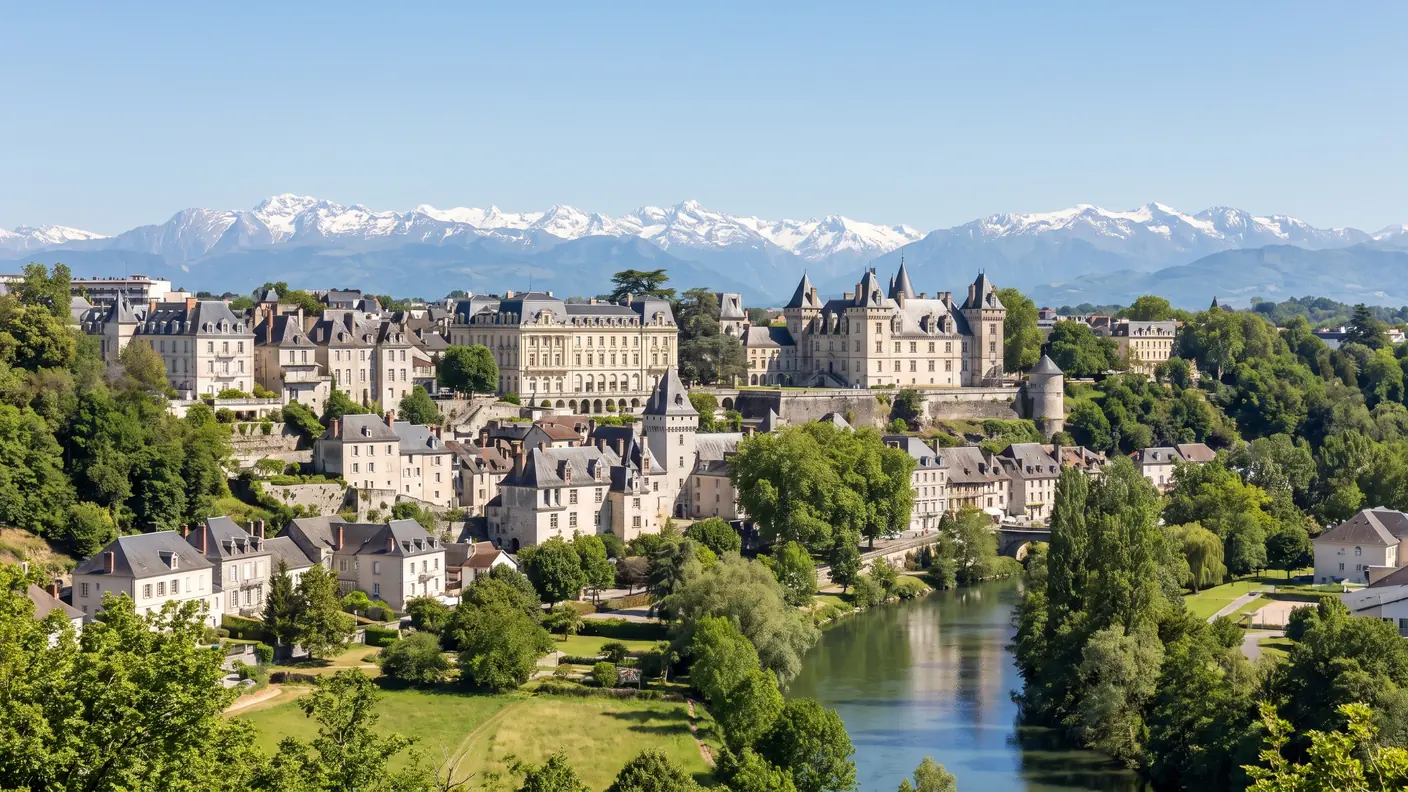
Off to Lower Navarre
Direct trip from Bordeaux (~2 hours 55 minutes) to Saint-Jean-Pied-de-Port and the Basque Country, with stops along the way as desired—Bayonne, Baïgorry, and the villages. Ideal for starting a pilgrimage. Written fixed-price quote, with no unexpected meter charges.