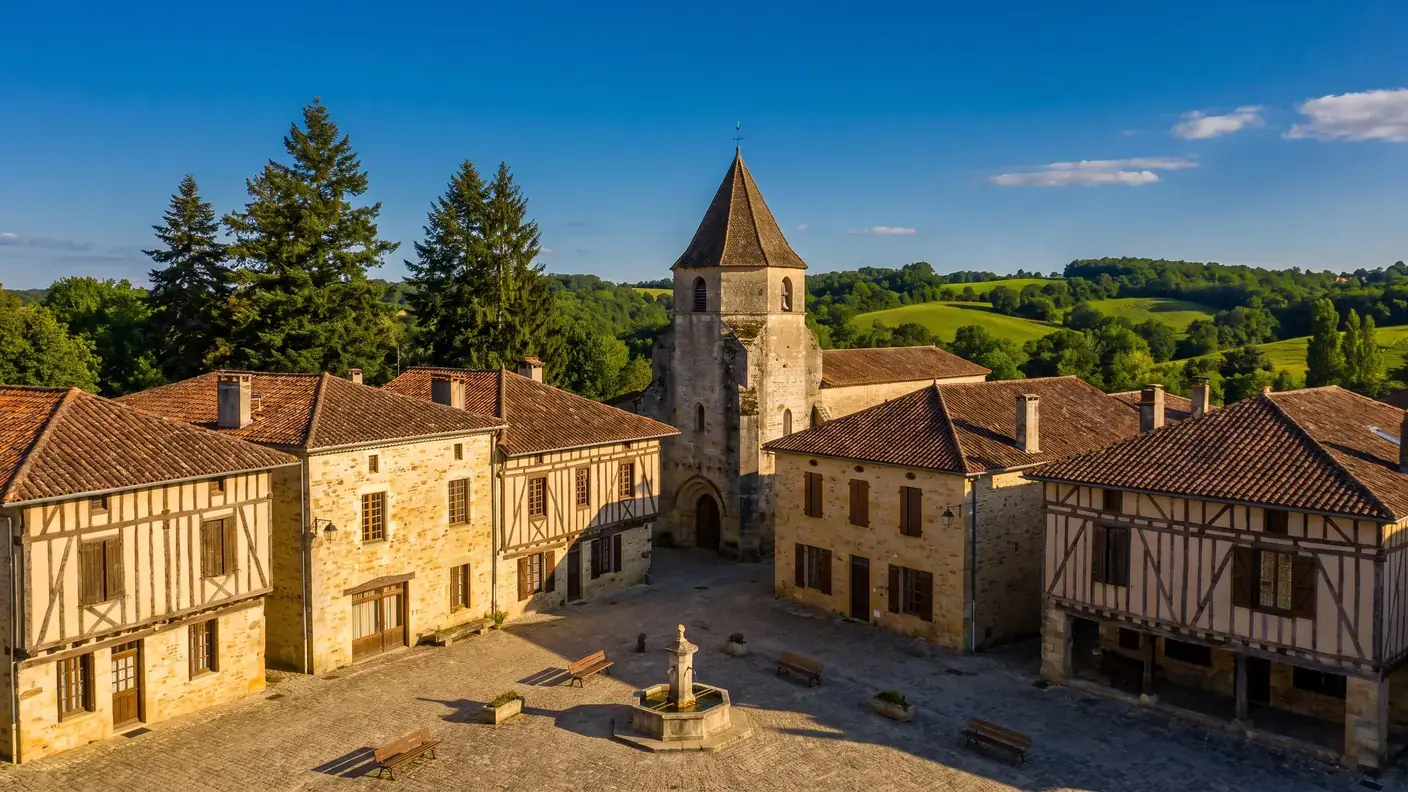
Bordeaux to Casteljaloux: thermal baths and Lake Clarens
A small spa town in the Albret region, on the edge of the Landes de Gascogne: the thermal baths of “Casteljaloux-les-Bains,” Lake Clarens and its golf course, the half-timbered houses, and the history of the Lords of Albret—99 km and 1 hour and 20 minutes from Bordeaux.
Casteljaloux at a Glance
Casteljaloux is a small spa town in Lot-et-Garonne, in the heart of the Albret region, at the edge of the Landes de Gascogne forest. Once the residence of the Lords of Albret and a Protestant stronghold, it features its thermal baths, Lake Clarens, and a historic center of half-timbered houses. The main route from Bordeaux covers 99 km in 1 hour and 20 minutes.
Here are the key details to know before you go. Driving distances are calculated door-to-door; rates are based on booking a private driver from Bordeaux, with a fixed price provided in advance.
| Landmark | Details |
|---|---|
| Department | Lot-et-Garonne (47), Nouvelle-Aquitaine |
| Status | Small spa town · Nérac district · Coteaux et Landes de Gascogne Community of Communes |
| Population | approximately 4,755 residents (INSEE 2023) · the residents of Casteljalous |
| Area | ≈ 30.59 km² · on the Avance River, at the gateway to the Landes region |
| Don't miss it | The thermal baths, Lake Clarens, the half-timbered houses, the Maison du Roy |
| Distance from Bordeaux | 99 km · 1 hr 20 min |
| Train Station | No active stations · Nearest station: Marmande (~24 km) |
Let’s be honest right off the bat, because Casteljaloux is burdened by a few misconceptions. Its name does not come from a “jealous castle”—that’s a charming legend; the most credible theory is that it comes from a “Vandal castle.” None of its monuments are officially designated as historic sites: they are only listed (and only partially so). And the town hasn’t had an active train station for a long time. This guide separates fact from fiction.
Here’s a rundown of everything you need to know before you come: where Casteljaloux is located and what makes it unique—its thermal springs, Lake Clarens, the history of the Lords of Albret and its Protestant heritage, the half-timbered houses and local heritage, the mystery of its name, the Avance River, and the Landes Forest, notable sites in the surrounding area, and the easiest way to get there from Bordeaux.
Where is Casteljaloux located?
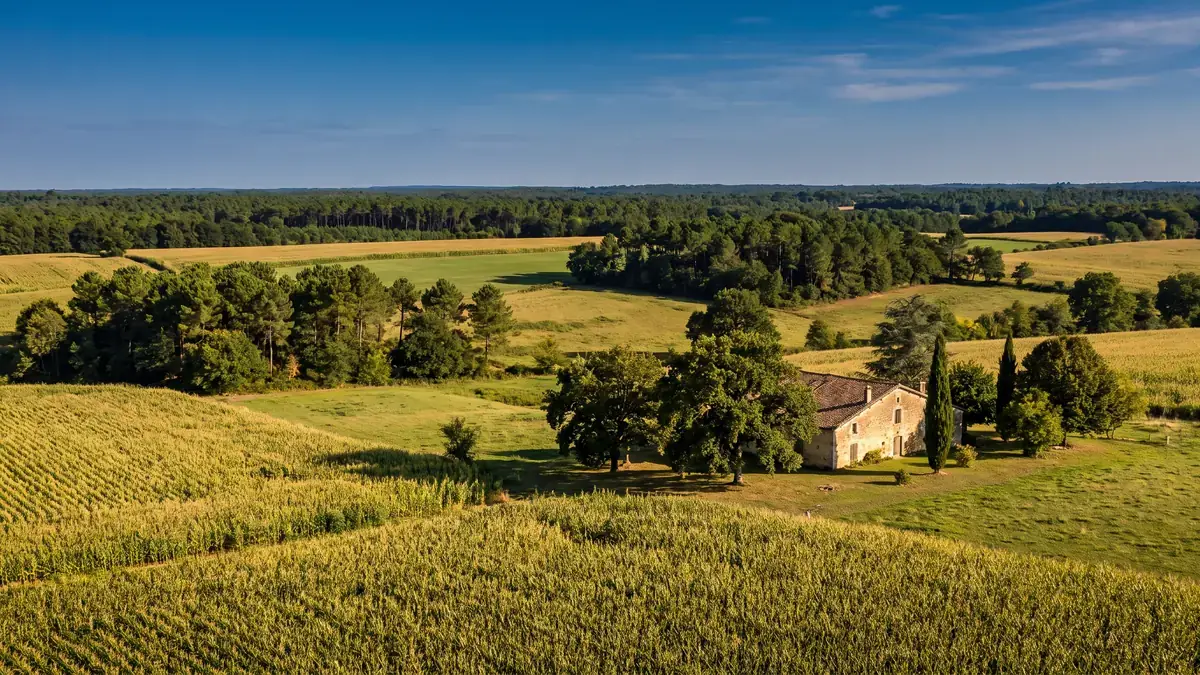
Casteljaloux is located in the southern part of Lot-et-Garonne (47), in Nouvelle-Aquitaine, about 20 kilometers southwest of Marmande. The town is part of the Nérac arrondissement, the Forêts de Gascogne canton, and the Coteaux et Landes de Gascogne Community of Municipalities. Its coordinates are 44.31° N and 0.09° E; its INSEE code is 47052, and its ZIP code is 47700. It covers an area of approximately 30.59 km² at elevations ranging from 55 to 168 meters, situated at the junction of two landscapes: the agricultural hills of Queyran to the north and the vast pine forest of the Landes de Gascogne to the south.
At the gateway to the Landes de Gascogne
Casteljaloux’s location is what gives it its unique character: it is a town on the edge, where the agricultural region of Lot-et-Garonne meets the Landes forest. More than 43% of its territory is forested, primarily with maritime pines, which ties it more closely to the world of the Landes de Gascogne than to the Garonne Valley. This forest explains many local traditions: the custom of hunting wood pigeons, the timber industry, and an ever-present natural setting. A small river, the Avance, flows through the town and has long powered mills and factories. Here, we find ourselves in a green and unassuming corner of Gascony, off the beaten path of major tourist routes.
A small town with a population of 4,700
With 4,755 residents (2023 census), Casteljaloux is, within the southern part of the department, a lively small town with shops, a market, services, and a thriving tourism scene. Its population density is approximately 155 inhabitants per square kilometer. A note on the figures: you may sometimes see “+3.8% since 2017,” but this increase is actually a rebound after a long decline — The town had a population of 5,406 at its peak in 1968, before experiencing decades of population decline. The recent resurgence, which has outpaced the departmental average, reflects a renewed appeal. The residents are known as the Residents of Casteljalous.
This crossroads location, between two worlds, is what makes Casteljaloux so unique. To the north and east lies classic Lot-et-Garonne: rolling hills, vineyards, orchards, bastides, and the nearby Garonne Valley. To the south and west, the landscape shifts to the Landes region of Gascony: vast pine forests, sandy soils, and a more scattered settlement pattern. The town enjoys the best of both worlds: the gentle, agricultural charm and culinary delights on one side, and the forest scenery and wide-open spaces on the other. This is why, in a single day starting from Casteljaloux, you can go from a farmers’ market to a walk in the forest, and from a Renaissance castle to a swimming lake.
Casteljaloux, a spa town
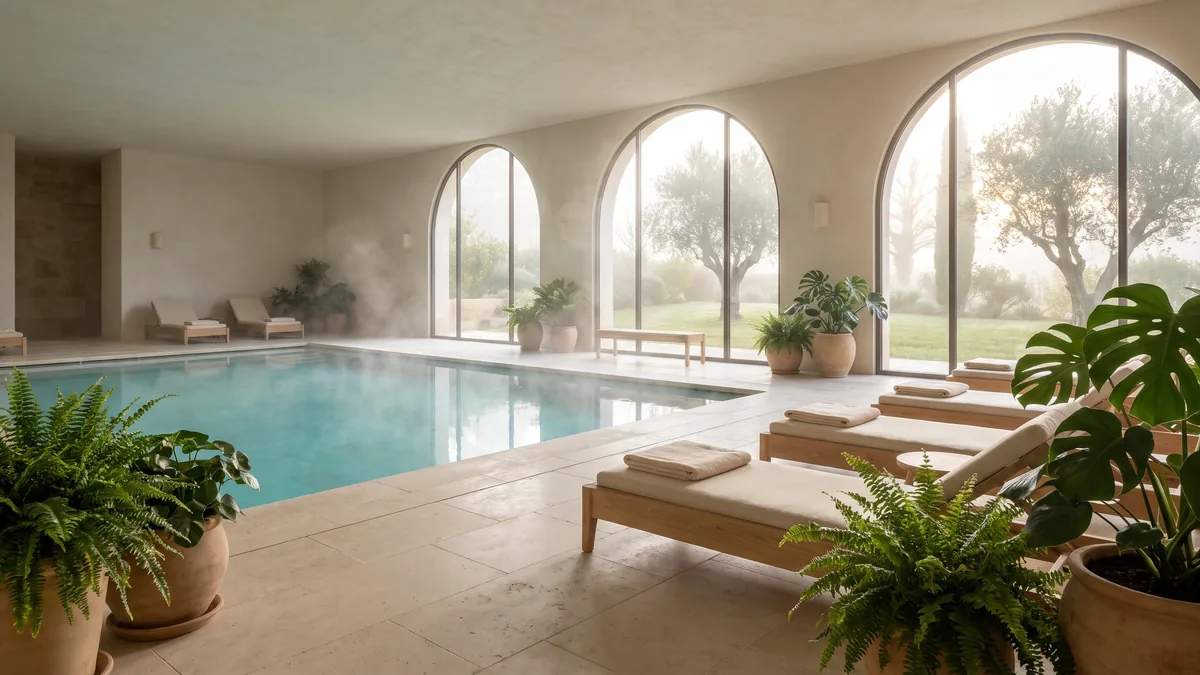
Casteljaloux is one of the few spa towns in Lot-et-Garonne—a distinction that dates back to the 19th century and is the foundation of its reputation as a wellness destination today. It is this spa culture, as much as the castle or the lake, that attracts thousands of visitors each year.
The principle behind thermal therapy is simple yet ancient: using the healing properties of natural, hot, mineral-rich water to relieve certain ailments. In Casteljaloux, this water has always existed underground, but it was necessary to tap it from deep underground and build a modern facility to use it for therapeutic purposes. Thermal treatments fall under a specific medical framework, supervised and covered by Social Security; the wellness aspect, on the other hand, is aimed at anyone simply looking to relax. This distinction between medical treatment and leisure is important for fully understanding what the resort has to offer.
From “Casteljaloux-les-Bains” to Today’s Thermal Baths
Casteljaloux has a long history as a spa town: as far back as 19th century, the city takes the name “ Casteljaloux-les-Bains ", renowned for its waters, which were described at the time as sulfurous and ferruginous. This industry declined, then experienced a revival in the 20th century with a modern facility operated by the group Eurothermes. Note an important distinction: the description “sulfurous and ferruginous” is history ; the water used today is classified as “chlorosulfate, sodium and calcium bicarbonate,” rich in iron, magnesium, and trace elements. The resort welcomes approximately 2,500 spa guests per year, a "small-scale" resort with its own apartment complex, far from the large resorts in the Pyrenees.
Rheumatology and Wellness Center
The Casteljaloux spa has an approved rheumatology treatment program. In addition to medical treatments, the facility offers a wellness area open to everyone. Thethermal water is collected by the Saint-Claude well at 1,237 meters deep and emerges at 42 °C.[4]
A rare asset for Lot-et-Garonne
It is important to recognize what thermal spas mean for a department like Lot-et-Garonne, which is better known for its prunes and bastides than for its thermal resorts. Casteljaloux is, along with a few others, one of the very rare spa towns in the region—a status that shapes a significant portion of its economy and tourism. The spa treatments attract a loyal clientele, often elderly, who stay in the town for three weeks and support local hotels, restaurants, and shops. A broader range of wellness tourism offerings has grown up around the medical spa, in step with the times: short relaxation stays, à la carte treatments, and fitness programs. It is this dual role—as both a government-approved medical spa and a wellness destination open to all—that defines the resort’s modern character.
In practice, a typical day at the spa in Casteljaloux combines several treatments spread out over the morning: thermal water baths and hydrotherapy sessions, applications of heated thermal mud to painful joints, jet showers, underwater massages, and sometimes a drinking cure. The afternoon is free—for resting, walking in the forest, playing golf, or strolling through the old town. Over the course of eighteen days, this regular routine aims to provide lasting relief from rheumatic conditions: osteoarthritis, lower back pain, and the aftereffects of trauma. It is a form of alternative medicine, complementary to conventional treatments, supervised by spa physicians, and covered by insurance under the national health plan. Many spa guests return every year, loyal to the town and its waters.
| The Thermal Baths of Casteljaloux | Details |
|---|---|
| Operator | Eurothermes Group |
| Thermal water | Collected at 1,237 m · emerges at 42 °C |
| Approved Treatment Program | Rheumatology |
| Wellness Area | Thermal pools, saunas, steam rooms |
Lake Clarens
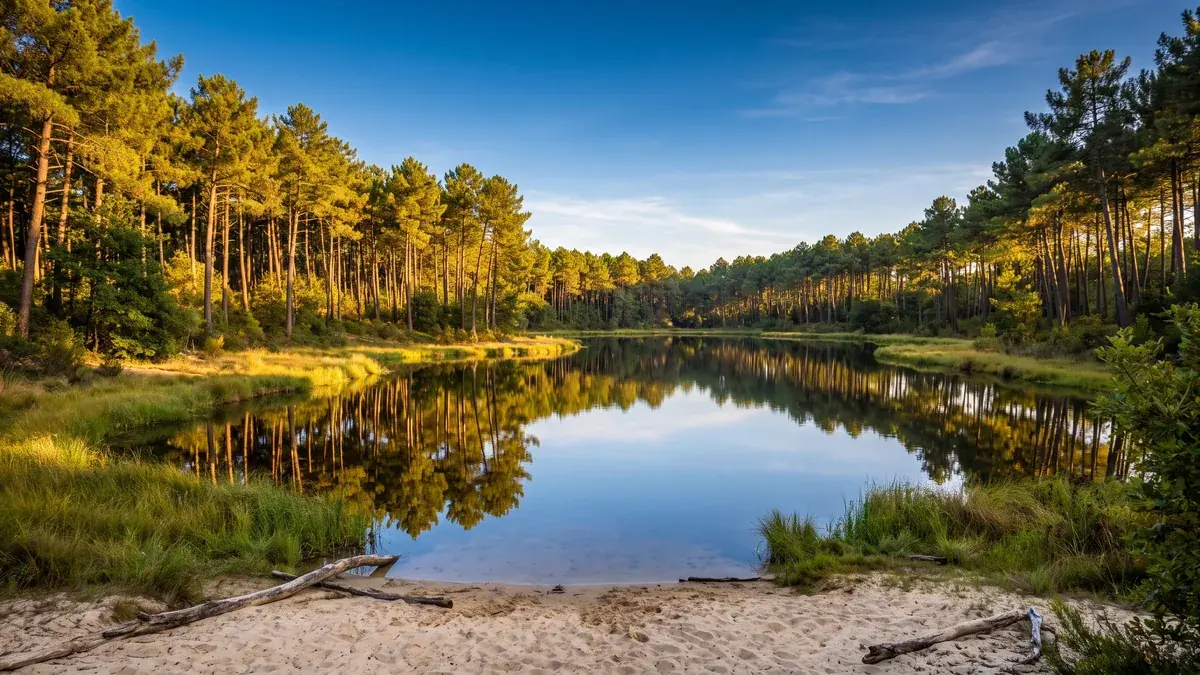
Next to the thermal baths, Lake Clarens offers a recreational area nestled among the pine trees. The tourist office lists amenities there, including a beach, supervised swimming during the season, stand-up paddleboarding, canoeing, and recreational trails.[6] Please check access requirements and opening hours before your visit.
The idea of a recreational lake in the 1960s and 1970s was a product of its time: a period when many landlocked municipalities in southwestern France created artificial bodies of water to offer their residents opportunities for swimming and relaxation. Casteljaloux took that gamble, and it paid off: half a century later, Lake Clarens is a key attraction that extends the tourist season well beyond the spa-goers. It is also an ecological and scenic asset—a piece of nature developed just a stone’s throw from downtown, where water and forest meet.
A recreational center founded in the 1970s
Lake Clarens is an artificial body of water covering about 15 hectares (within a much larger wooded area), developed as a recreational center. The municipality decided to create it in late 1969; excavation work took place from 1974 to 1976, and the site was inaugurated in 1977. It is fed by the Baraton Stream—which originates at the confluence of three streams—and by the Rieucourt, before flowing into the Avance. Over the years, a full-fledged recreational complex has developed around the lake, which is now the pride of Casteljaloux and attracts families from across the region.
Swimming, golf, and the casino
Lake Clarens offers supervised swimming during the season (water quality meets European standards), a beach, and numerous water sports and outdoor activities. Two facilities set it apart: an 18-hole golf course (a par-72 course over 6,000 meters long, designed by Michel Gayon in 1989), which overlooks the lake and is playable year-round thanks to its sandy soil; and a casino, built on stilts above the lake—a spectacular setting that is quite rare in France. Golf, a casino, swimming, and a panoramic restaurant: Lake Clarens makes Casteljaloux a leisure destination in its own right, far beyond simple spa tourism.
The Casteljaloux Golf Course is worth taking a closer look at: designed in 1989 by architect Michel Gayon, it is a 18-hole course, par 72, over 6,000 meters, known for its setting among pine trees and a body of water, and for being playable year-round thanks to its sandy soil, which quickly drains rainwater—a rare asset. A restaurant with a panoramic view overlooks the lake, and together they form a small leisure resort in the countryside. The casino, perched on its stilts, adds a touch of fun to the evenings, while the water sports center and the beach liven up summer days. It’s easy to see why Lake Clarens is, for many, the main reason to visit Casteljaloux—even before the thermal baths.
It is this combination that makes Casteljaloux so unique: few towns with fewer than 5.000 residents boast, within just a few kilometers, a spa, a swimming lake, an 18-hole golf course, and a casino. Over the decades, Lake Clarens has become a popular destination for day trips and vacations for families from throughout the southern part of Lot-et-Garonne and neighboring departments, drawing large crowds in the summer. It is also set in a remarkable natural setting—on the edge of the Landes de Gascogne—which gives it the atmosphere of a forest getaway, nestled between the beach and the pine forest, quite different from the lakes along the Garonne. For visitors coming for spa treatments or to explore its history, it offers a pleasant breath of fresh air.
Casteljaloux and the Lords of Albret
Before the thermal baths and the lake, Casteljaloux was a stronghold of the d'Albret family. The tourist office presents this history as one of the keys to understanding the old quarter and its heritage.[7]
The Albret family's favorite residence
From 11th–16th centuries, Casteljaloux and its surroundings belonged to the Lords of Albret, one of the most prominent families in Gascony. Let’s clarify a point that is often misunderstood: the cradle of the family is Labrit, in the neighboring Landes region, not Casteljaloux; but in the 13th and 14th centuries, the town became one of their favorite places to live and a center of their holdings (under Amanieu VII, between 1294 and 1326). The Albret family maintained a castle there, of which only the municipal park remains today: the fortress was partially demolished in 1636, and its keep was torn down in 1653. Only traces remain of this seigneurial grandeur—but they have shaped the entire old town.
A Protestant stronghold, following in the footsteps of Henry IV
In the 16th century, under Jeanne d'Albret and her son Henri of Navarre (the future Henri IV), Casteljaloux became a stronghold of Protestantism. The castle served as a hunting lodge for the young Henri, who knew the region well. The writer and fellow soldier Agrippa d’Aubigné was even wounded there. This Huguenot past left a lasting mark on the town: the medieval church was destroyed by Protestants in 1568, and the revocation of the Edict of Nantes in 1685 hit Casteljaloux among the first towns, forcing many Protestants into exile. Like many towns in Guyenne, Casteljaloux thus bears the scars of the Wars of Religion.
To understand the Albret family is to understand a meteoric rise: Starting from a modest Gascon fiefdom, they became, through a strategy of shrewd marriages, kings of Navarre, before Henry of Navarre ascended the French throne in 1589 as Henry IV. Casteljaloux, one of their towns, was thus linked to this extraordinary journey. The memory of this history—the young Henry’s hunts in the forests of the Landes, the Protestant court, the Wars of Religion—still permeates the identity of the town and the entire Albret region. This is one of the charms of these towns in the Southwest: beneath their tranquil exterior, they have at times rubbed shoulders with the greatest figures in French history.
| Casteljaloux and the Albret Family | Landmark |
|---|---|
| Lordship of Albret | From the 11th to the 16th century · favorite residence in the 13th and 14th centuries |
| Henry of Navarre | Castle = hunting lodge of the future Henry IV |
| Protestant Square | Jeanne d'Albret · church destroyed in 1568 · revoked in 1685 |
| Castle | Partially demolished in 1636; the keep was dismantled in 1653 (the grounds remain) |
Half-timbered buildings, the Maison du Roy, and the convent
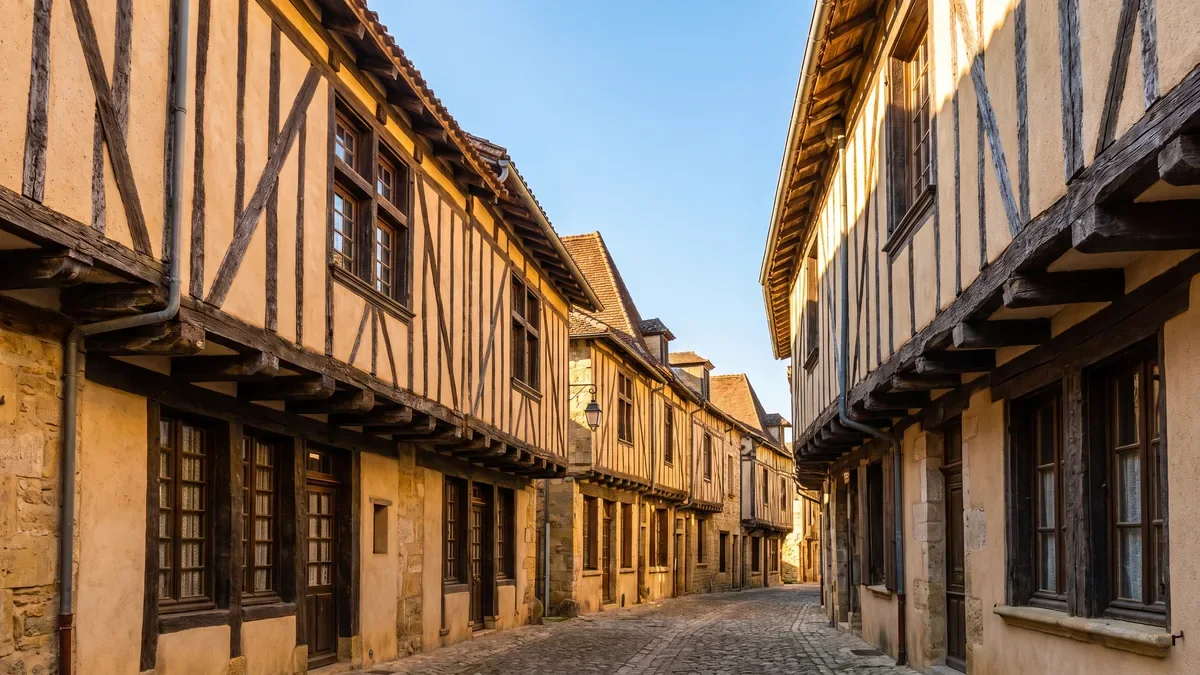
The historic center of Casteljaloux features a beautiful medieval ensemble: half-timbered houses, a church, a convent, and the Maison du Roy. It is a modest yet authentic heritage site, best explored by strolling through the old streets around the Place du Roy.
Casteljaloux isn’t as well-known among tourists as Sarlat or Saint-Émilion, and that’s just as well: here, you’re visiting a truly vibrant little town, not just a backdrop for tour buses. You discover its heritage as you stroll through the town, without ticket booths or crowds, amid half-timbered facades, carved doorways, and shaded little squares. This quiet authenticity is one of the charms of the small towns of Lot-et-Garonne, still untouched by mass tourism. Take the time to look up: architectural details, old signs, and traces of Albret’s past are hidden everywhere—for those who know where to look.
Half-timbered houses
The old town has a a dozen or so half-timbered houses some 15th and 16th centuries — these half-timbered facades, with their characteristic corbelling, serve as a reminder that Casteljaloux was a prosperous market town in the late Middle Ages. One of them, at 65 Grand-Rue, is Listed as a historic monument since 1963 (Mérimée reference PA00084089). The others, though not listed, nevertheless contribute to a beautifully cohesive streetscape. Strolling through old Casteljaloux is like stepping back in time to the era of the Albret family, amid oak beams, narrow alleys, and leaning facades.
Half-timbered construction—a technique involving a wooden framework filled with cob or bricks—was the standard architectural style in medieval and Renaissance market towns. The fact that about ten examples still stand in Casteljaloux—despite fires, wars, and demolitions—is remarkable for a town of this size. These houses are concentrated around the Place du Roy and the historic shopping streets, forming a small, cohesive ensemble that can be explored on foot in just a few minutes. It is here, more than in any single monument, that the town’s ancient heart beats: in this labyrinth of wooden facades that has seen merchants, spa-goers, and pilgrims pass through over the centuries.
The Church, the Convent, and the Maison du Roy
Three other monuments are listed, all partially (none are designated). The Church of Notre-Dame-de-l'Assomption (listed in 1998): the 15th-century medieval building was destroyed by Protestants in 1568, then rebuilt in several phases during the 17th and 18th centuries; its western façade was not completed until around 1763—two centuries after its destruction. The Cordeliers Convent (listed in 1998), rebuilt in the 17th century. And the Maison du Roy (facades and roofs listed in 1983), a 16th-century residence attributed to the Viscount of Turenne, the city’s governor, located on the Place du Roy. A modest complex, yet one that vividly recounts the city’s turbulent history.
To explore this heritage, the best way is to take a leisurely walking tour through the old town, around Place du Roy. There, you can admire the Maison du Roy and its 16th-century windows, walk past the Cordeliers Convent, look up at the bell tower of Notre-Dame-de-l’Assomption, and stop to admire the most beautiful corbelled half-timbered facades, including the listed one on the Grand-Rue. The whole area fits within a pocket handkerchief, making the walk easy and pleasant, even for a spa guest. It’s a delightful way to explore, in just under an hour, the seigneurial history of the Albret family, the city’s Protestant past, and its medieval commercial life—three layers of history visible in the very stone and wood.
| Monument | Period | MH Status |
|---|---|---|
| Half-timbered house (65 Grand-Rue) | 15th–16th centuries | Registered in 1963 (PA00084089) |
| Maison du Roy | 16th century | Facades/roofs listed in 1983 (PA00084088) |
| Cordeliers Convent | 17th century (rebuilt in 1633) | Registered in 1998 (PA47000035) |
| Church of Our Lady of the Assumption | Rebuilt in the 17th–18th centuries. | Registered in 1998 (PA47000036) |
Where does the name “Casteljaloux” come from?
The name Casteljaloux is intriguing, and it's very tempting to explain it as a story of jealousy. The reality is less clear-cut—and more interesting.
Three Hypotheses, One Legend
The place name appears as early as the Middle Ages: “Castedgelos” in the Gascon Rolls of 1242, and “Castellum Jaloux” in a manuscript from 1265. Regarding its origin, scholars propose three competing theories, none of which has been definitively proven. The best-documented theory is that of a “Castellum Vandalorum”—the “castle of the Vandals”—a form attested as early as the 9th century (“Castello Wandelors”): the name is thought to stem from a memory of the Great Invasions. A second theory suggests “Castrum Gelosium,” meaning “frozen castle” or “cold castle.” The third, and most popular, theory is that of the “jealous castle” (in Gascon, Castèth-Gelós), which a local legend attributes to the jealousy of a local lord. This last theory is explicitly presented as a legend by the sources: a charming story to tell, but not to be taken as the established etymology. A fine example of toponymy where the mystery remains unsolved—and where honesty lies in presenting the hypotheses without imposing any one of them.
A city steeped in history
Beyond its name, Casteljaloux has a rich history for such a small town. Originally known as Place des Albret and later a Protestant stronghold, it served as the district capital from 1790 to 1795 during the Revolution, a testament to its local importance. In the 19th century, its thermal springs brought it its heyday under the name “Casteljaloux-les-Bains,” while the Avance River powered mills and factories. The arrival of the railroad (the line to Marmande in 1891 and to Roquefort in 1893) opened the town to the world, before these lines were closed in the 20th century. This succession of eras—Medieval, Protestant, Revolutionary, spa, and industrial—has left its mark everywhere, making the town an open-air compendium of the history of southwestern France.
L'Avance and the Landes Forest
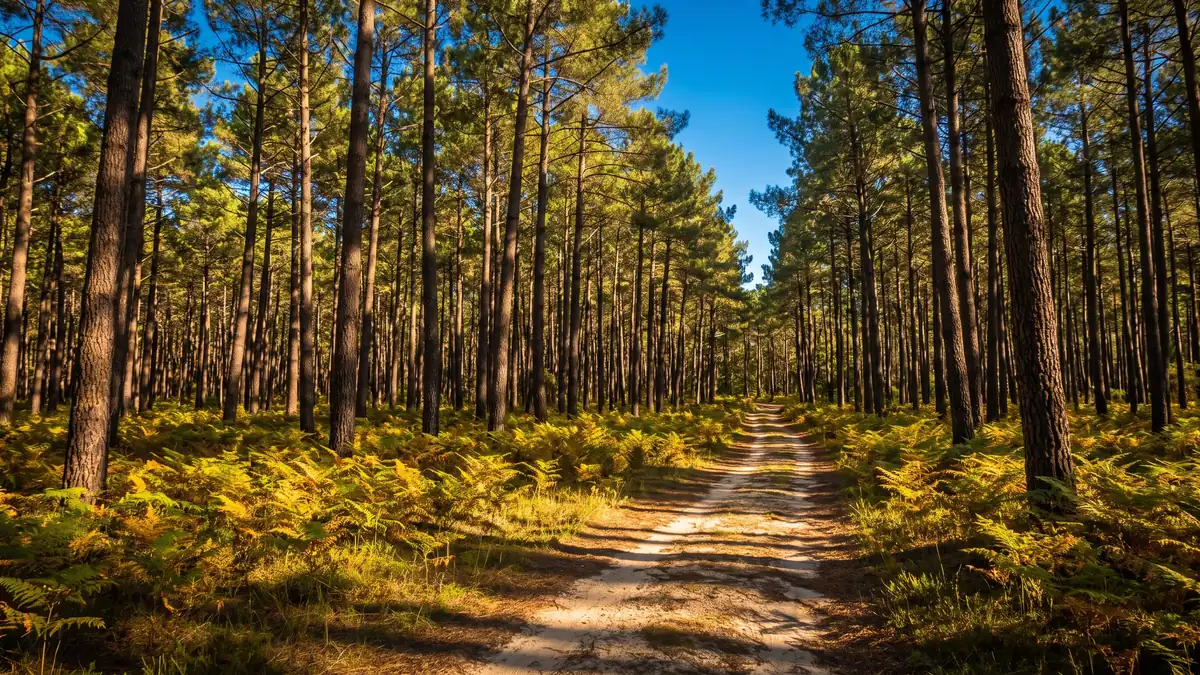
Casteljaloux is a town surrounded by nature, nestled between a small river with an unpredictable course and the vast pine forest of the Landes de Gascogne. This natural setting is one of the town’s greatest assets.
A river that disappears underground
The town is traversed by the Avance, a river in the Garonne basin (of which it is a 56-km-long left-bank tributary). It is a low-flow river, but with a surprising feature: along its course, the Avance disappears underground twice—a karst phenomenon typical of the region’s terrain—before reemerging. This unassuming river has nevertheless played a major historical role: it powered mills, paper mills, foundries, and candle and wax factories, sustaining a small local industry. The Baraton Stream completes this hydrographic network and feeds Lake Clarens.
At the edge of the pine forest
To the south of the city lies the Landes de Gascogne forest, the largest cultivated forest in Western Europe: maritime pines stretching as far as the eye can see, growing on sandy soil, which cover a large portion of the municipal territory. This forest shapes the identity of Casteljaloux, on the edge of the Albret region of the Landes. It offers beautiful walks and bike rides, but also presents its own challenges—the risk of forest fires is very real there in the summer. It is also the domain of wood pigeon hunting, an autumn tradition deeply rooted in Gascon culture, with its hunting blinds perched in the trees. Casteljaloux is thus a town with two sides: agricultural and forested, a spa town and a town of the Landes.
It’s worth noting that this forest in the Landes de Gascogne is by no means a natural forest: it is a cultivated forest, planted on a massive scale in the 19th century to reclaim and develop former swamplands. The maritime pine is harvested there for its wood and, in the past, for its resin (tapping). Around Casteljaloux, this forestry economy remains vibrant, with the wood industry ranking among the top local employers. For visitors, the forest offers above all a vast natural playground: hiking trails, bike paths, the scent of pine, and light filtering through the trees. It provides an immediate change of scenery, just a few minutes from the spa—one of the great highlights of a stay in Casteljaloux.
What is there to see around Casteljaloux?
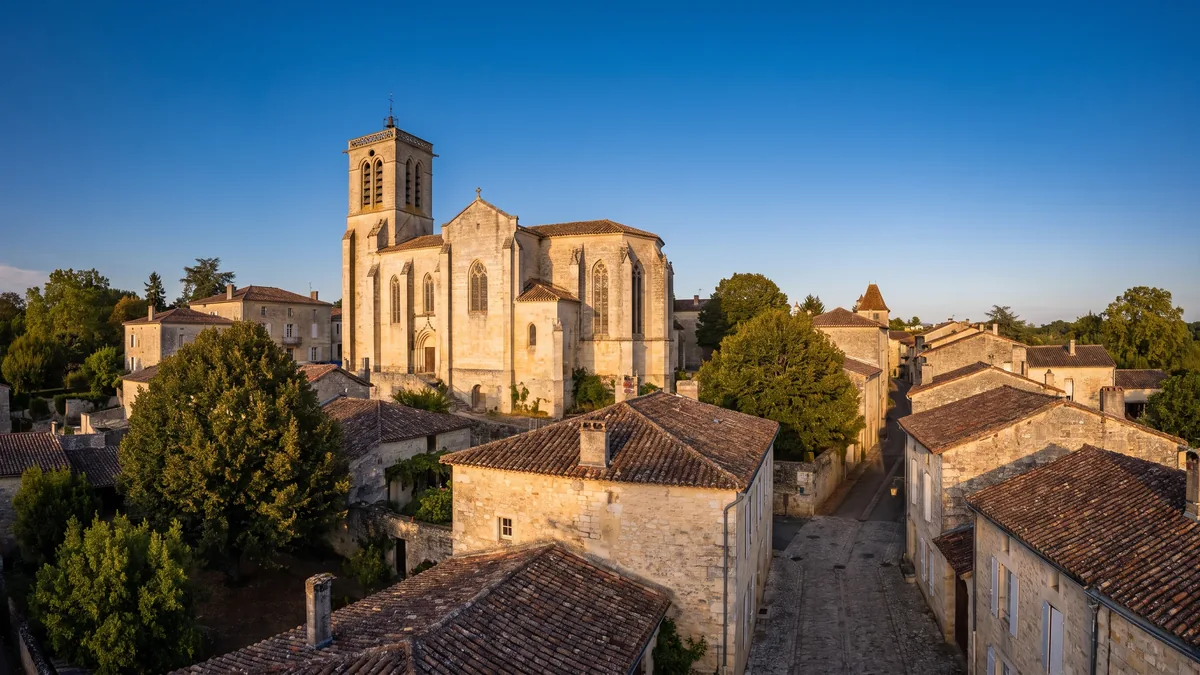
Casteljaloux is a great starting point for exploring the Albret region, the southern part of Lot-et-Garonne, and the edge of the Landes. The distances are short, and it’s easy to go from a historic town to a vineyard or a forest.
The Albret Region and the Garonne Valley
Nérac, about 30 kilometers away, is the historic capital of the Albret region: its Renaissance castle built by Henry IV and its Garenne Park are a natural extension of a visit to Casteljaloux, in the same Albret tradition. Marmande, about 24 km to the north, is the subprefecture of the Val de Garonne, renowned for its tomatoes and its bastide. Between the two lies a region of rolling hills, vineyards (the Côtes de Buzet and Duras), and orchards—typical of the agricultural and gourmet Southwest.
Nérac, the Landes, and the resorts
To the south and west lies the Landes de Gascogne forest, with its forest villages, lakes, and, further on, the Atlantic coast. Mont-de-Marsan, the prefecture of the Landes department, is about 80 km away. Closer by, the Albret region of the Landes (Barbaste, Durance, Réaup-Lisse) unfolds with its forests and cromlechs. Casteljaloux, with its thermal baths and lake, serves as a bridge between these two worlds: the Lot-et-Garonne region of fortified towns and vineyards, and the Landes region of Gascony with its pine forests and wood pigeons. With a chauffeur service, you can easily plan a tailor-made getaway exploring these different facets of the Southwest.
Lovers of heritage and local culture won’t want to miss the surrounding bastides and villages of the Southwest (Casteljaloux itself has the feel of a medieval town), the vineyards of Buzet and Duras—among the region’s best values—and Gascon cuisine: foie gras, Agen prunes, Marmande tomatoes, and wood pigeons in season. The Albret region is also home to recreational centers and lakes (Casteljaloux, as well as the many bodies of water in the neighboring Landes), making it ideal for an active family vacation. With its wellness retreats, culture, nature, and fine dining, Casteljaloux and its surroundings offer a taste of the Southwest—to be explored at a leisurely pace.
| Around Casteljaloux | Distance | Interest |
|---|---|---|
| Marmande | ~24 km | Val de Garonne Subprefecture, fortified town, tomato, train station |
| Nérac | ~30 km | Capital of the Albret region, castle of Henry IV |
| Agen | ~54 km | Prefecture, canal bridge, prune |
| Mont-de-Marsan | ~81 km | Landes Prefecture, at the edge of the great forest |
When is the best time to visit Casteljaloux?
Casteljaloux is worth visiting year-round, but each season has its own charm—spas in the winter, beach activities in the summer. The town has the advantage of offering activities no matter the weather, from the outdoor lake to the indoor thermal baths.
Thesummer It’s peak season at Lake Clarens: swimming, the beach, water sports, and entertainment are in full swing, in a cheerful, family-friendly atmosphere—but it’s also the busiest time of year. The spring and thefall are ideal for strolling through the old town with its half-timbered houses, playing golf, or walking in the forest in the soft autumn light; fall coincides with the wood pigeon hunting season, which is very popular in the region. Thewinter, which is quieter, is the peak season for thermal baths and wellness: there’s nothing quite like a 42 °C thermal bath when it’s cool outside. Whether you’re visiting the spa or the “Les Bains” area, it’s best to make a reservation and check the hours in advance.
A word about the pace: Casteljaloux isn’t a “museum town” that you can “see” in two hours, but rather a destination for a longer stay. A spa treatment lasts three weeks; a weekend at the lake, two or three days; a getaway to the Albret region, one day. It’s by taking your time—a thermal bath in the morning, a stroll through the old town, a lunch featuring local specialties, an afternoon walk in the forest—that the town reveals its best side. That’s also what makes it an ideal destination to reach with an executive car service: you arrive relaxed, get around without worrying about a car, and enjoy every activity to the fullest.
Getting to Casteljaloux from Bordeaux
Casteljaloux is located 99 km from Bordeaux, or 1 hour and 20 minutes according to the standard commercial route.[8] The city no longer has an active train station. The nearest station is in Marmande, about 24 km away, which requires a final leg of the journey by road.
No train station: train or private chauffeur?
Without a train station, Casteljaloux is poorly served by public transportation: the train drops passengers off in Marmande, about 20 kilometers away, and you then have to find another way to get there. When traveling in a group with luggage—whether for a spa treatment, a lakeside getaway, or an event—a chauffeured transfer (private chauffeur service) offers a clear advantage: a direct, door-to-door trip from Bordeaux with no transfers and flexible stops along the way. You get in at Bordeaux and get out exactly where you want—the thermal baths, a hotel, or the lakeshore. We offer this route at a fixed price quoted in advance: approximately €209 one way, in a Mercedes sedan or a van seating up to 8 passengers, with a professional driver.
This option is particularly well-suited for a spa retreat (comfortable transfers without the hassle of driving), a weekend at Lake Clarens, a business trip, or a family event in the Albret region. The price, set in advance, remains fixed regardless of traffic or stops—a real advantage for staying within budget, and the convenience of a direct trip to a town without a train station.
| Route | Distance | Duration | Landmark |
|---|---|---|---|
| Bordeaux → Casteljaloux | 99 km | 1 hour 20 minutes | Starting at €174 for private chauffeur service |
| Casteljaloux → Marmande | ~24 km | ~26 min | train station, subprefecture |
| Casteljaloux → Nérac | ~30 km | ~32 min | Castle of Henry IV |
| Casteljaloux → Agen | ~54 km | ~50 min | prefecture, canal bridge |
Whether you come for a spa retreat, to enjoy Lake Clarens and its golf course, to see the half-timbered houses, or to explore the Albret region and the Landes, Casteljaloux is a treat for lovers of the authentic Southwest, nestled among water, forests, and history.
Whether you’re heading to a spa, spending time at the lake, or taking a getaway to the Albret region, booking a private chauffeur guarantees a comfortable and punctual ride to a city without a train station— book a driver from Bordeaux to Casteljaloux or explore all our destinations .
Frequently Asked Questions
Where is Casteljaloux located?
Casteljaloux is a spa town in the southern part of Lot-et-Garonne, on the edge of the Landes de Gascogne forest. It is part of the Nérac district and the Coteaux et Landes de Gascogne Community of Municipalities. In the heart of the Albret region, it is located 99 km and 1 hour and 20 minutes from Bordeaux, according to the bakée reference system.
How far is it from Bordeaux to Casteljaloux?
The standard business route covers 99 km in 1 hour and 20 minutes. For a private driver from Bordeaux, the flat rate starts at €209 one way, in a sedan or van. This is a convenient option since Casteljaloux no longer has an active train station.
Is Casteljaloux a spa town?
Yes. Casteljaloux is a spa town in Lot-et-Garonne, known in the 19th century as “Casteljaloux-les-Bains.” Its spa center offers a government-approved treatment program for rheumatology. The thermal water, drawn from a depth of 1,237 meters, emerges at 42 °C. A wellness area rounds out the facility.
What is Lake Clarens?
This is Casteljaloux’s major recreational area: an artificial lake covering about 15 hectares, developed in the 1970s (planned in 1969, excavated from 1974 to 1976, and inaugurated in 1977). It features supervised swimming during the season, an 18-hole golf course overlooking the lake (designed by Michel Gayon in 1989), and a casino built on stilts over the water. It is the city’s recreational hub and is very popular in the summer. Fed by the Baraton and Rieucourt streams, it flows into the Avance River.
What is the connection between Casteljaloux and Henry IV?
Casteljaloux belonged to the House of Albret, the family of the future Henry IV. In the 13th and 14th centuries, the town was one of the favorite residences of the lords of Albret. In the 16th century, under Jeanne d’Albret and Henri of Navarre (the future Henry IV), it became a stronghold of Protestantism, and its castle served as a hunting lodge for the young Henry. The ancestral home of the House of Albret, however, is Labrit, in the Landes region, not Casteljaloux.
Can we visit the Casteljaloux Castle?
No: virtually nothing remains of the Albret Castle. The fortress was partially demolished in 1636, and its keep was torn down in 1653. All that remains today is the municipal park, built on the site. The town’s feudal history is best seen in its historic center: the half-timbered houses, the Maison du Roy, the church, and the Cordeliers convent. This shaded park, however, remains a pleasant place for a stroll right in the heart of town, following in the footsteps of the lords of Albret.
Where does the name Casteljaloux come from?
The name is ancient (“Castedgelos” in 1242, “Castellum Jaloux” in 1265), but its origin remains uncertain: scholars identify three competing hypotheses, without settling on any one of them. The best-documented theory refers to a “Castellum Vandalorum” (castle of the Vandals, 9th century). Another suggests a “frozen castle” (cold). The third, and most popular, hypothesis—that of the “jealous castle,” linked to a lord’s jealousy—is explicitly a legend, not the established etymology.
Are the monuments in Casteljaloux designated as historic landmarks?
None are classified; they are only listed as historic monuments—and all only partially. The following are listed: the Church of Notre-Dame-de-l’Assomption (1998), the Cordeliers Convent (1998), the Maison du Roy (facades and roofs, 1983), and a half-timbered house on the Grand-Rue (1963). The old town also features about ten half-timbered houses from the 15th and 16th centuries, only one of which is protected.
How many people live in Casteljaloux?
According to the 2023 census, the town had a population of approximately 4,755, with a population density of about 155 people per square kilometer. The population has recently increased, but only after a long decline: the town had a peak population of 5,406 in 1968. This recent upturn, which is outpacing the department’s average, reflects a renewed appeal. The residents are known as Casteljalousains.
Is there a train station in Casteljaloux?
No, Casteljaloux no longer has an active train station: the old line closed, and the station was demolished in 2011. The nearest station is in Marmande, about 24 km away, on the Bordeaux-Agen-Toulouse line. Since the town has limited public transportation options, hiring a chauffeur service remains the most flexible way to get there from Bordeaux, especially for a spa treatment or a vacation at the lake.
What is there to see around Casteljaloux?
Nérac and its castle of Henry IV (~30 km), another major attraction in the Albret region; Marmande, the subprefecture of Val de Garonne and its tomatoes (~24 km); the vineyards of Buzet and Duras; the Landes de Gascogne forest to the south, with its forest villages and lakes; and, further away, Mont-de-Marsan (~81 km) and the Atlantic coast. Casteljaloux serves as a bridge between the agricultural region of Lot-et-Garonne and the Landes region of Gascony. With a driver, you can easily visit several of these sites in a single day, without worrying about driving or parking.
When is the best time to visit Casteljaloux?
It depends on what you're looking for: summer for Lake Clarens and swimming; spring and fall for the old town, golf, and walks in the forest (fall being the season for wood pigeons); winter for thermal baths and wellness, which is especially pleasant when the weather is cool. The town has the advantage of offering activities in every season, both outdoors and indoors.
Can I book an executive car service from Bordeaux to Casteljaloux?
Yes. We offer transportation from Bordeaux to Casteljaloux—a distance of 99 km and a 1-hour, 20-minute ride according to the benchmark route—at a fixed price starting at €209 one way, in a Mercedes sedan or a van seating up to 8 passengers. The trip is direct, door-to-door, with no transfers, making it ideal for a spa treatment or a vacation at the lake.
Further Reading
- The capital of the Albret region, just nearby : see the Guide to Nérac (the Castle of Henry IV and the Garenne Park)
- The castle and the neighboring vineyard : see the Guide to Duras (the castle, the Côtes de Duras, and Marguerite Duras)
- A bastide in the Dropt region : next up is the bastide of Lévignac-de-Guyenne and its medieval town layout
- Another castle in Lot-et-Garonne : see the Guide to Birac-sur-Trec (Birac Castle and the Trec River)
- Plan your trip : Book a private chauffeur from Bordeaux to Casteljaloux or explore all our destinations
Sources and References
- Wikipedia — Casteljaloux — Geography, Demographics, History, Thermal Springs, Lake Clarens, Heritage
- POP/Mérimée Database — Maison du Roy — Listed as a Historic Monument (facades/roofs, 1983)
- POP/Mérimée Database — Notre-Dame-de-l'Assomption Church — Listed as a Historic Monument in 1998; rebuilt in the 17th–18th centuries.
- Casteljaloux Thermal Baths — thermal water — the Saint-Claude well at 1,237 m, with water at 42 °C at the surface
- INSEE — Municipality of Casteljaloux (47052) — 2023 population (~4,755 residents), area, municipal data
- Tourist Office — Lac de Clarens Recreation Center — beach, supervised swimming, and recreational activities
- Tourist Office — Casteljaloux — History of the City and Former Stronghold of the d’Albret Family
- Sales Page: Bordeaux → Casteljaloux — estimated travel time: 99 km, 80 minutes, and 174 €
Article updated on .
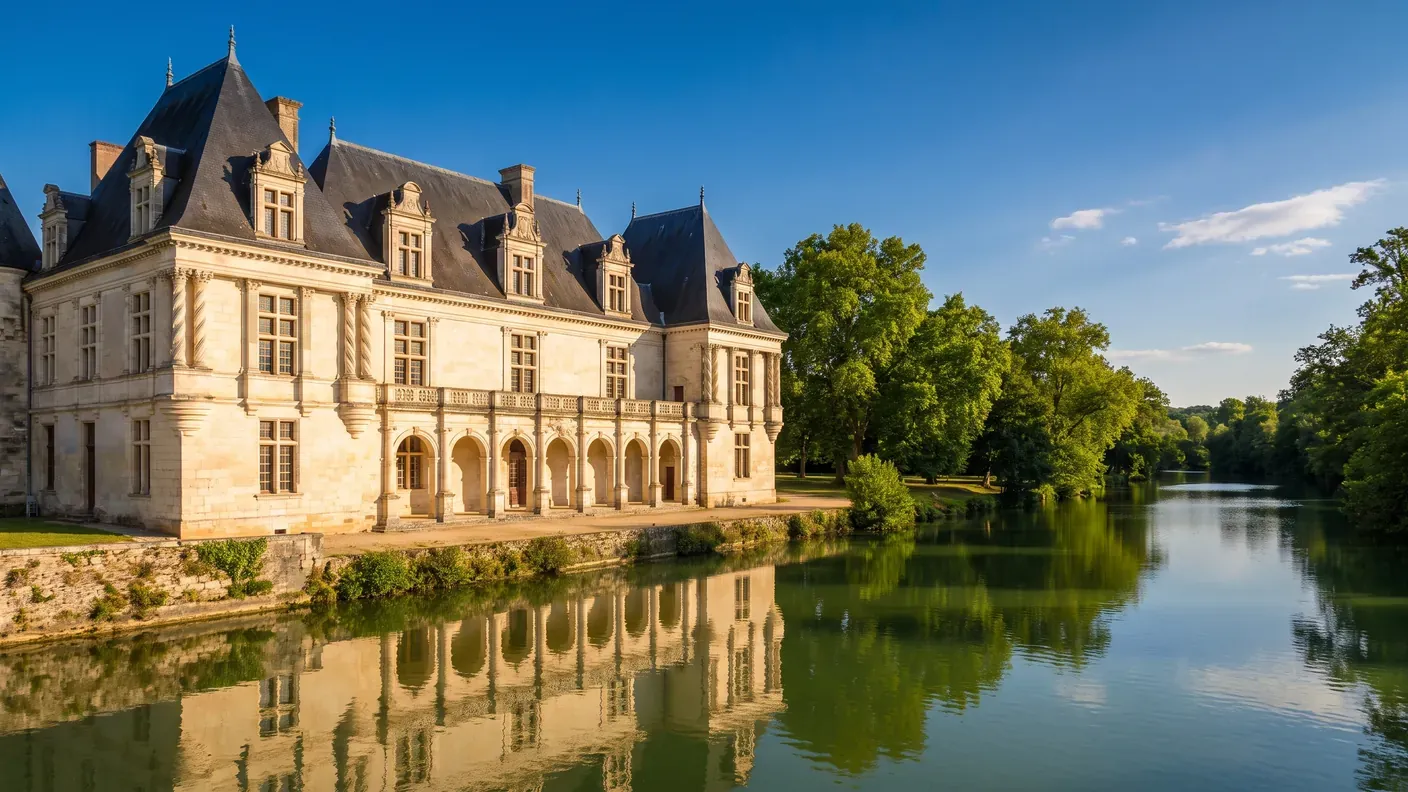
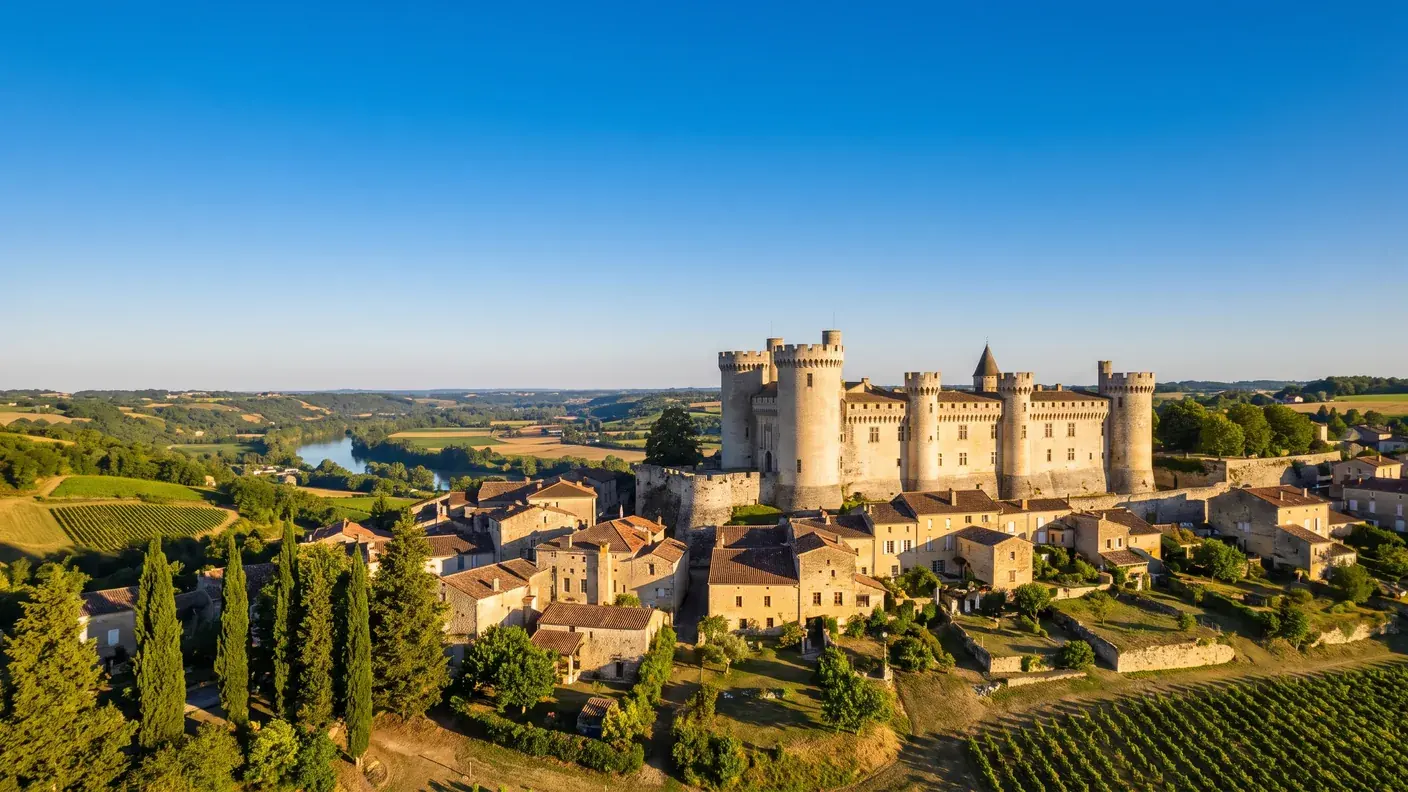
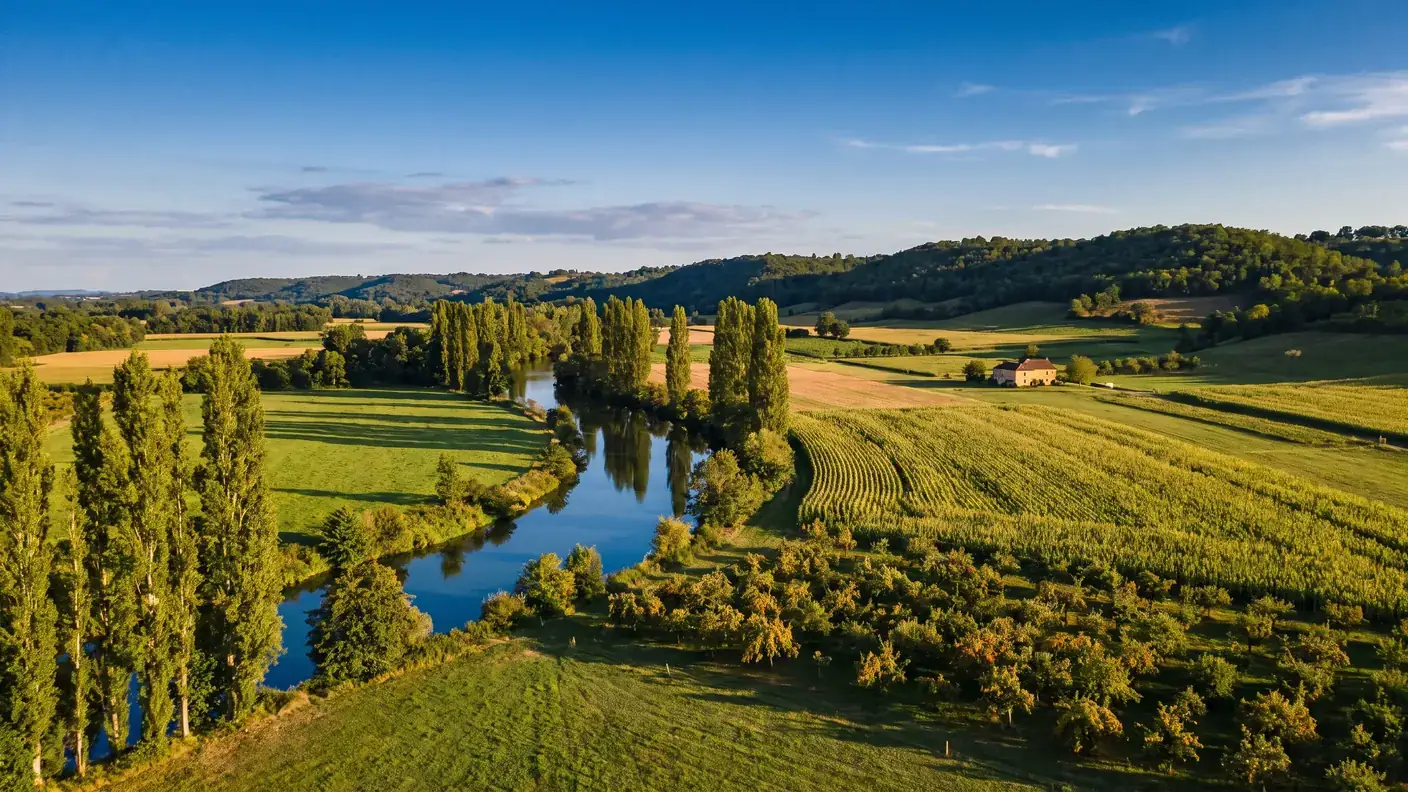
On the way to Casteljaloux
Direct route from Bordeaux (99 km · 1 hr 20 min) to Casteljaloux, its thermal baths, and Lake Clarens, with stops along the way at your discretion—Marmande, Nérac. Fixed, written quote with no unexpected meter charges; ideal for a spa treatment, without the fatigue of driving.