
Mont-de-Marrast, in the heart of Astarac
A tiny village in the Gers, nestled in the heart of the Astarac hills: the unspoiled heart of Gascony, a country church, the region famous for Armagnac and foie gras, and the bastides of the Gers all around (Mirande, Auch, Marciac)—about 3 hours and 2 minutes from Bordeaux.
Mont-de-Marrast at a Glance
Mont-de-Marrast is a tiny village in the Gers department, with just over a hundred residents, in the heart of Astarac: a peaceful hamlet tucked among the hills of rural Gascony, between fields, vineyards, and woodland. There are no famous landmarks or crowds here, just a village church, a few scattered farms, and the charm of unspoiled Gascon countryside shaped by ridges and valleys, sunflowers, and rolling slopes, with the Pyrenees on the horizon. That tranquillity and authenticity are precisely what make the place special. Around it, Astarac and the Gers reveal their treasures: the bastide of Mirande, the city of Auch and its UNESCO-listed cathedral, the jazz festival in Marciac, and the Gascon art of living, with Armagnac, Floc de Gascogne, and foie gras. About 3 hours and 2 minutes from Bordeaux, Mont-de-Marrast is a gateway to a discreet and deeply gastronomic corner of Gascony.
Here are the key details to know before you go. The distance, travel time, and fare are based on the values displayed by the booking engine for the route Bordeaux → Mont-de-Marrast; the fixed price is provided in advance.
| Key fact | Details |
|---|---|
| Department | Gers (32), Occitanie · Astarac region |
| Population | 106 residents (INSEE 2023) |
| Area · Elevation | ~7 km² · elevation ranging from 191 to 304 m |
| Not to be missed | Saint-Jacques Church, the Astarac countryside |
| Distance from Bordeaux | about 220 km · about 3 hours and 2 minutes by car |
| Around | Mirande, Auch, Marciac, and Gascon cuisine |
A quick note to start with, to put Mont-de-Marrast in context. The village is located in the Gers (32), in Occitanie, and more specifically in Astarac, the hilly region in the southern part of the department, which is part of the Mirande district. According to INSEE, the municipality had a population of 106 in 2023. Its settlements are very scattered: it’s a rural area worth exploring for its tranquility and natural setting. Not to be confused with the “Château de Marrast,” located in the Landes department.
Here we’ll go over everything you need to know: the location of Mont-de-Marrast in the Gers and Astarac regions, the village and its church, the Astarac region and its history, the Gascon countryside and its landscapes, the local specialties (Armagnac, Floc, foie gras), the bastides and nearby sites (Mirande, Bassoues), Auch and its UNESCO-listed cathedral, the Marciac Festival, the best time of year to visit, and the easiest way to get there from Bordeaux with a chauffeured transfer—all thoroughly researched and verified.
Where is Mont-de-Marrast located?
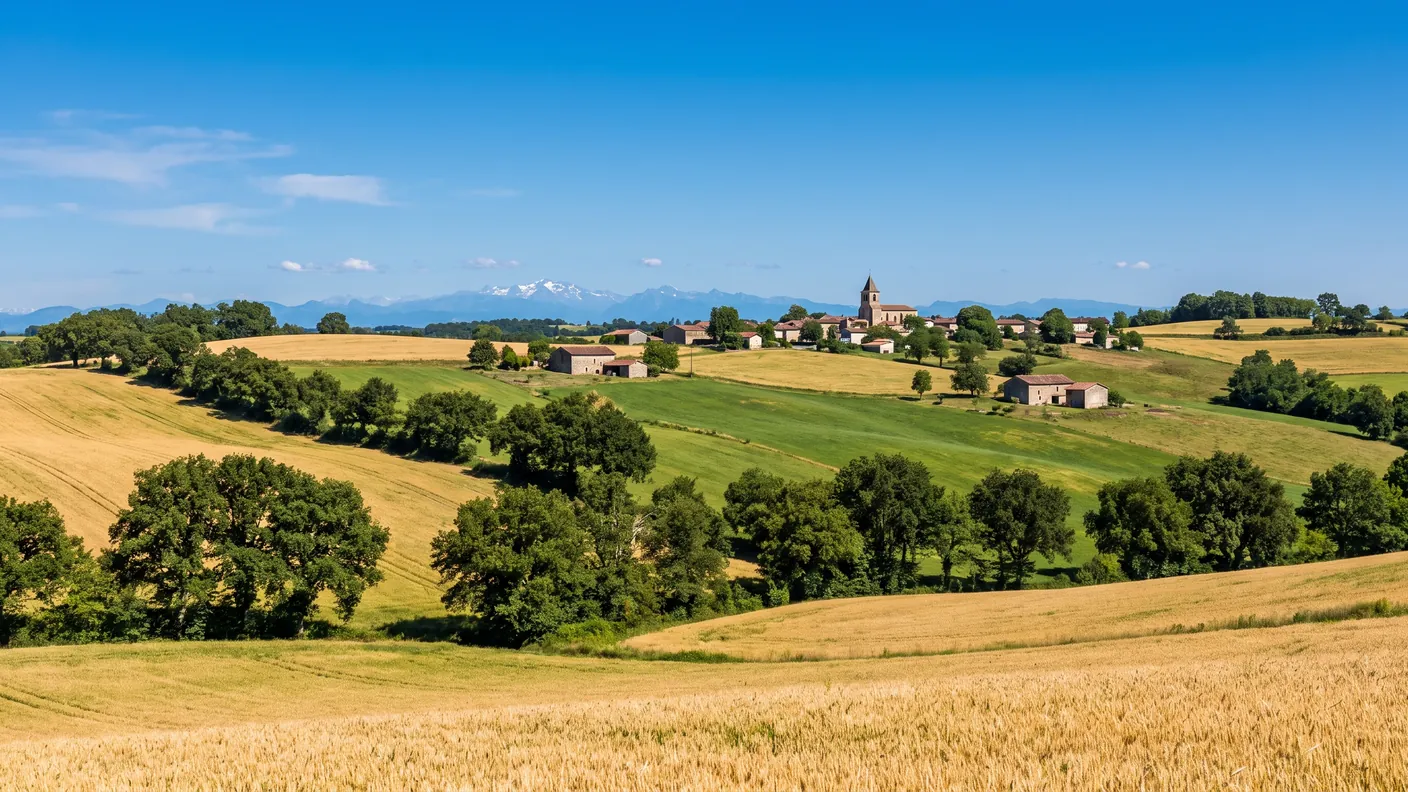
Mont-de-Marrast is located in the Gers department (32), in Occitanie, in the heart of Astarac—the hilly region in the southern part of the Gers—a few kilometers from Mirande, its small regional capital. It is a village in the Mirande district, a member of the Astarac Arros en Gascogne Community of Communes, situated in a region of clay hills at a modest elevation (191 to 304 meters), drenched by small streams with Gascon names—the Bataillouze and the Ruisseau des Bergouts. Its territory, covering about seven square kilometers, is almost entirely agricultural: grain fields, meadows, a few vineyards, and woods share the undulating hillsides, where settlements are very scattered. It is a landscape typical of Astarac and inland Gascony—gentle and verdant, far from major roads and crowds—where one can breathe in the tranquility of unspoiled countryside, with the Pyrenees visible on the horizon on clear days.
In the heart of the Astarac region, near Mirande
Mont-de-Marrast belongs to Astarac, one of the historic regions of the Gers: a land of hills, known in Gascon as “serres et vallons,” whose clay soils stretch across the south of the department toward the first Pyrenean foothills. This is a rural, agricultural area of scattered settlement, where livestock has been raised and crops grown for centuries amid gentle slopes and valleys. Its small capital, a few kilometres away, is Mirande, a bastide founded in the 13th century, now a subprefecture, with an arcaded square and market. Nestled in these hills, Mont-de-Marrast is one of the countless small villages that make up Astarac and the Gers, a department known for its deeply rural and authentic character. This green and peaceful setting in the heart of Gascony gives a stop in Mont-de-Marrast its distinctive charm.
A village with 106 residents
According to INSEE, Mont-de-Marrast had a population of 106 in 2023 across an area of approximately 7 km², for a population density of nearly 15 people per km². The scattered settlement pattern and the lack of a train station make a car necessary to reach Mirande, Auch, or other destinations in the Gers department. The village is best suited for a rural getaway or a stopover, while heritage sites are concentrated in neighboring towns.
The village and its church
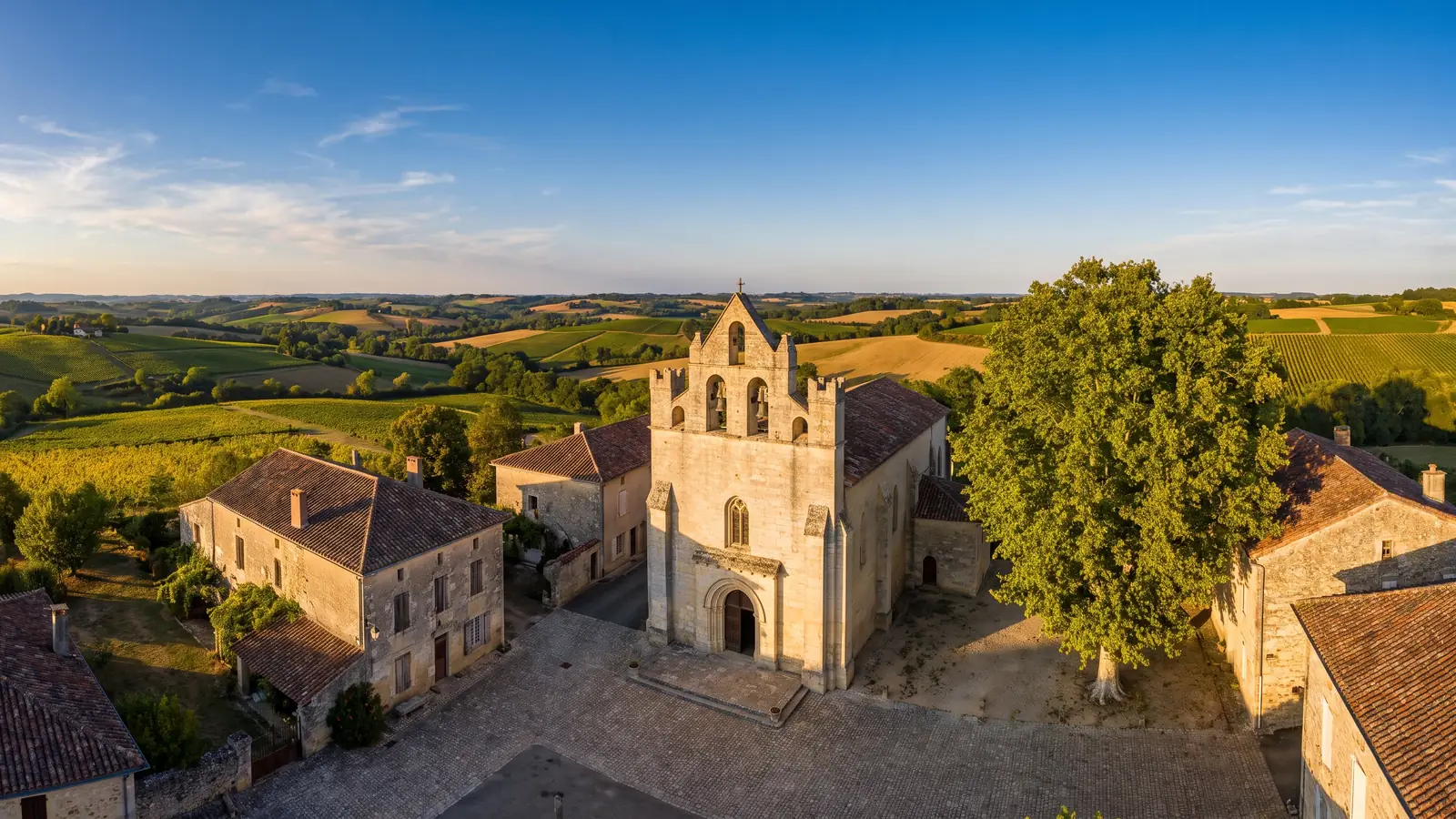
Mont-de-Marrast is a modest hamlet that possesses the understated charm of a Gascon village: a church dedicated to Saint James, a few farms, and the tranquility of the countryside. The main appeal of the place lies in its rural setting.
Saint-Jacques Church
The village’s main building is the Church of Saint-Jacques. In the absence of an official, verified heritage listing for this building, this guide does not assign it a specific date or protected status. It remains a simple landmark in the village and is part of the rural landscape of Astarac.
Authenticity is the main attraction
Let’s be clear: people don’t come to Mont-de-Marrast for a monument or a spectacular site—there aren’t any. People come here—or pass through—for something else entirely: the absolute tranquility of a hamlet lost in the hills, the beauty of unspoiled countryside, and the authenticity of a rural France that has become a rarity. Here, a few scattered stone farmhouses, sunken paths, fields and woods, birdsong, and the wind in the trees make up the entire landscape. It’s this simplicity, this peaceful escape, that appeals to those seeking the true essence of Gascony, far from the crowds. Mont-de-Marrast is thus less a destination in and of itself than a gateway to Astarac and the Gers, and a haven of peace for anyone looking to recharge in the countryside.
Astarac, a region of rolling hills and fortified towns
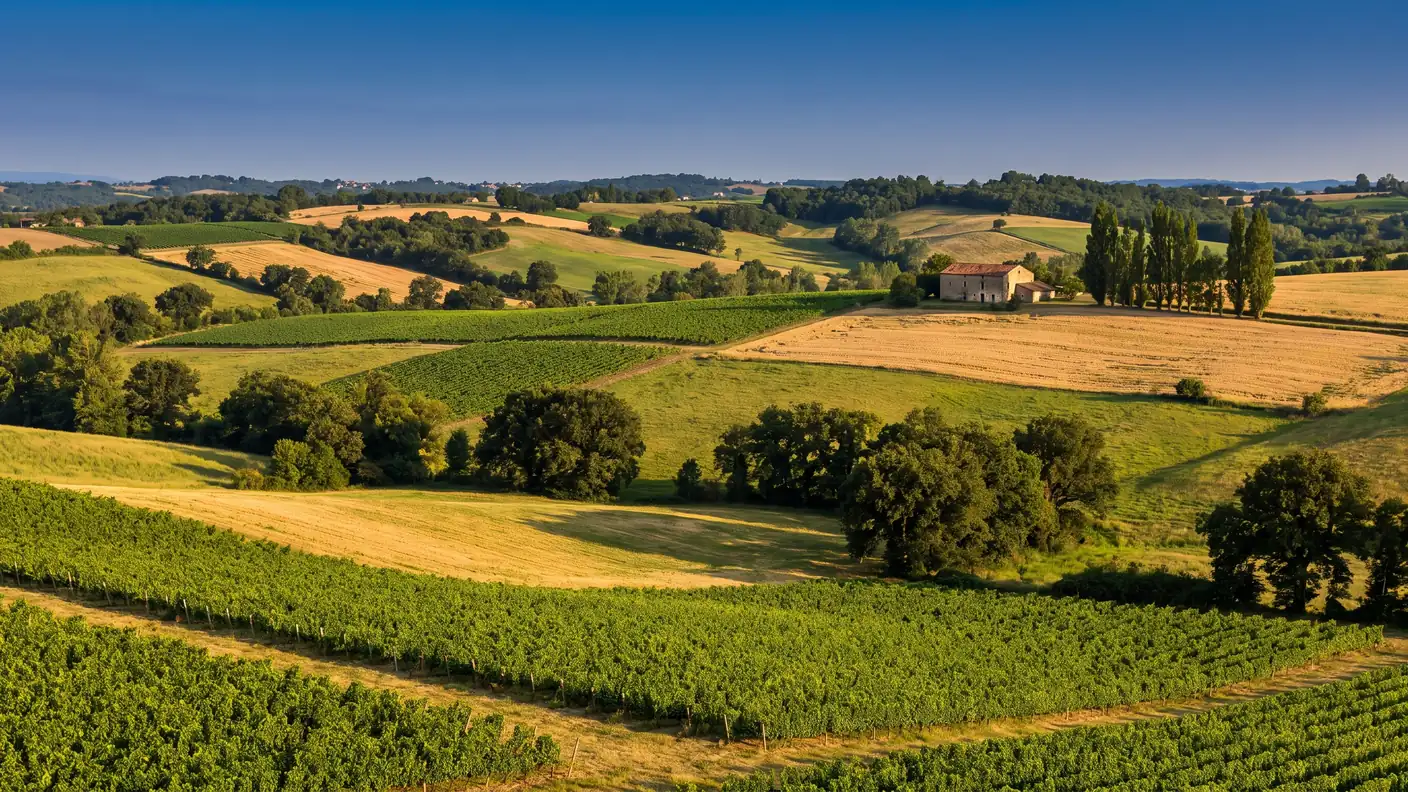
Surrounding Mont-de-Marrast lies Astarac, a former county of Gascony—a region of rolling hills and fortified towns, with Mirande, founded in the 13th century, as its capital. A region steeped in history, in the heart of the Gers.
A former county in Gascony
Astarac is more than a landscape: it is a land of history. From the 10th century through the Middle Ages, it was a county of Gascony, one of the great lordships into which the region was divided, with its own counts, castles, and abbeys. This territory of clay hills between the Adour and Garonne rivers lived to the rhythm of lords and farmers in a rural, fragmented Gascony. Astarac retains villages, churches, abbeys such as Berdoues, and above all bastides, the planned medieval towns with regular street grids and central squares, founded in the 13th and 14th centuries to settle and organise the region. Like so many small villages, Mont-de-Marrast belongs to this long Gascon history, shaped by land, faith, and lordship. Exploring Astarac means tracing the story of an old region of Gascony, now peaceful countryside but once part of the medieval history of south-western France.
Mirande, the capital of Astarac
The small capital of the Astarac region, a few kilometers from Mont-de-Marrast, is Mirande. This bastide, founded in 1281 through a joint agreement between Seneschal Eustache de Beaumarchais, the abbot of Berdoues, and Count Bernard IV of Astarac, became the county seat in 1297 and is now a subprefecture of the Gers department. Like all bastides, it features a regular checkerboard layout, organized around a beautiful square with arcades (featuring corner pillars), lined with covered walkways, where the market is held. Mirande also boasts its own fortified Gothic church and museum. It is a charming little Gascon town—lively and authentic—the beating heart of the Astarac region, just a few minutes’ drive from Mont-de-Marrast. It offers a wonderful glimpse into the character of the Gers’ bastides—those new medieval towns so characteristic of Gascony, of which the region boasts many beautiful examples. A natural stopover from Mont-de-Marrast to get a feel for the Astarac region and its history.
The Gascon countryside
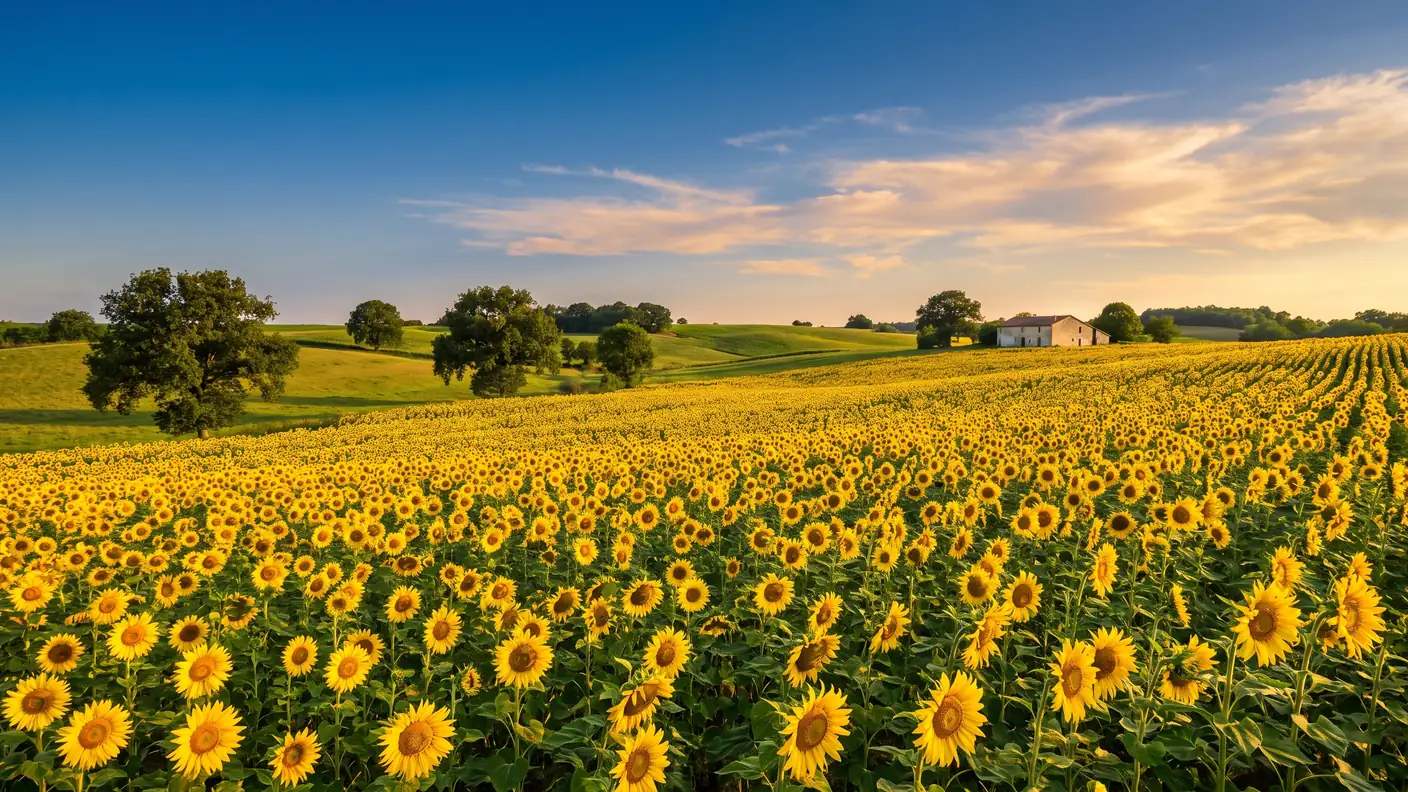
Mont-de-Marrast is located in the Gascon countryside of the Gers, a region of rolling hills, sunflowers, vineyards, and forests, renowned for its tranquility and relaxed way of life. This is the heart of France at its most beautiful.
Hills, sunflowers, and valleys
The main attraction of Mont-de-Marrast and the entire Astarac region is its countryside. The Gers is a region of gentle, rolling hills, valleys, and hillsides, where fields of grain, meadows, vineyards, oak forests, and scattered stone farmhouses alternate. In summer, the famous sunflower fields turning toward the sun and the golden wheat create strikingly beautiful landscapes bathed in abundant light. As the seasons change, this countryside shifts in color—the green of spring, the gold of summer, the ochre of fall—always with, on a clear day, the blue outline of the Pyrenees on the horizon. It is a gentle, harmonious, and unspoiled landscape, shaped by centuries of agriculture, typical of Gascony. Exploring these hills, in Mont-de-Marrast and the surrounding area, along the small roads and trails, is a delight for anyone who loves nature and tranquility, far from the hustle and bustle.
Peace and a relaxed lifestyle
What people come to Astarac for—more than just a monument—is a way of life: tranquility, nature, and the gentle charm of unspoiled countryside. The Gers is renowned as one of the least populated and most authentic departments in France, where life flows at a peaceful pace, close to the land. Here, people take their time: to hike through the hills, to sit down to a good meal, to stroll through a village or a market, to watch the sunset over the valleys. This Gascon way of life—filled with nature, warmth, and good food—is the region’s greatest luxury. Mont-de-Marrast, a peaceful hamlet in the heart of this countryside, is an ideal base for anyone looking to recharge, unwind, and experience the true essence of rural France. It’s an invitation to tranquility and a slower pace of life, in one of the most beautiful parts of Gascony, nestled among hills, vineyards, and the Pyrenees.
The Gascon terroir: Armagnac and foie gras
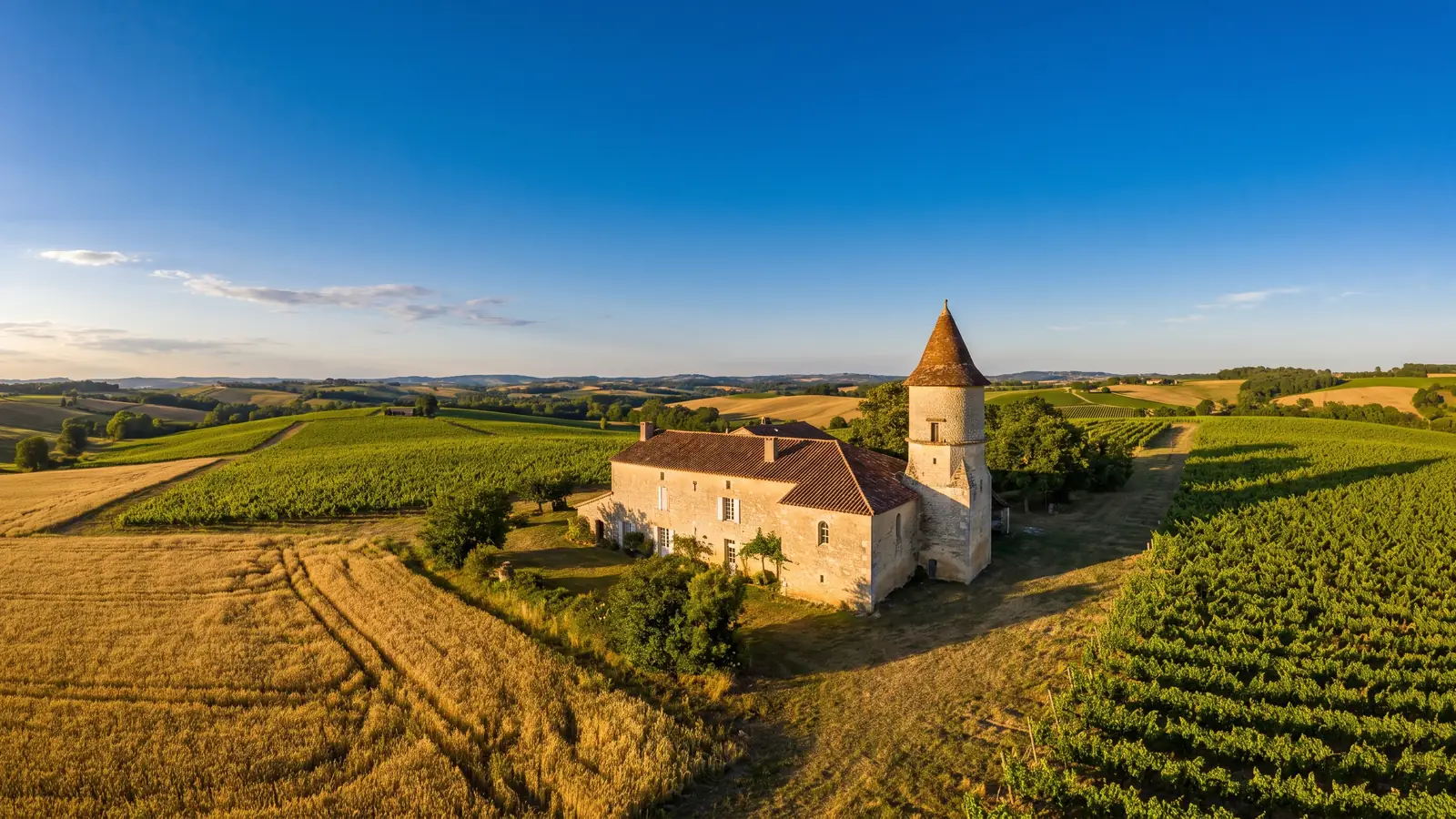
The INAO confirms that the Armagnac AOC region covers part of the Gers department, along with the Landes and Lot-et-Garonne departments. In the Mont-de-Marrast region, this brandy is enjoyed alongside Floc de Gascogne, wines from the Côtes de Gascogne, and Gascon cuisine.
Armagnac, Floc, and wines of Gascony
The Gers is the home of Armagnac, France’s oldest brandy, distilled in Gascony since the Middle Ages: a characterful amber spirit made from wine and aged in oak barrels, with some of its finest expressions produced across Astarac and the Gers. It is enjoyed as a digestif and also forms part of Floc de Gascogne, a mistelle made by blending grape must with young Armagnac and served chilled as an aperitif. It has held AOC status since 1990, and most of its production comes from the Gers. Alongside it, fresh, fruity white Côtes de Gascogne and other south-western wines complete a rich winemaking tradition. Around Mont-de-Marrast, vineyards and estates dot the hillsides, offering tastings of these emblematic Gascon products amid the scenery of Astarac.
Foie gras, confit, and Gascon cuisine
Gascony is also the kingdom of foie gras and duck. The Gers is one of France’s leading producers of foie gras, and Gascon cuisine features confit, duck breast, gizzards, garbure (a rustic soup made with cabbage and confit), poule au pot, and all the specialties of a hearty and flavorful cuisine. Add to that cheeses, fruits (melon, apples), and garlic—not to mention the colorful markets and food festivals that punctuate the year. This Gascon cuisine, one of the most renowned in France, is inseparable from the Gers way of life: here, people eat well, for a long time, in good company, amid the warm hospitality of the Southwest. Stopping in Mont-de-Marrast and the Astarac region also means treating yourself to the pleasure of fine dining at farmhouse inns and local restaurants, in the heart of one of France’s greatest culinary regions. A real treat for lovers of authentic regional cuisine.
| The Gers terroir | Details |
|---|---|
| Armagnac | France's oldest brandy (AOC) |
| Floc de Gascogne | Liqueur wine (grape must + Armagnac) · AOC 1990 |
| Côtes de Gascogne | fresh, fruity white wines |
| Foie gras & duck | confit, duck breast, garbure · the Gers, a major producer |
| Markets | Colorful Gascon markets, farm-inns |
Mirande, Bassoues, and the bastides
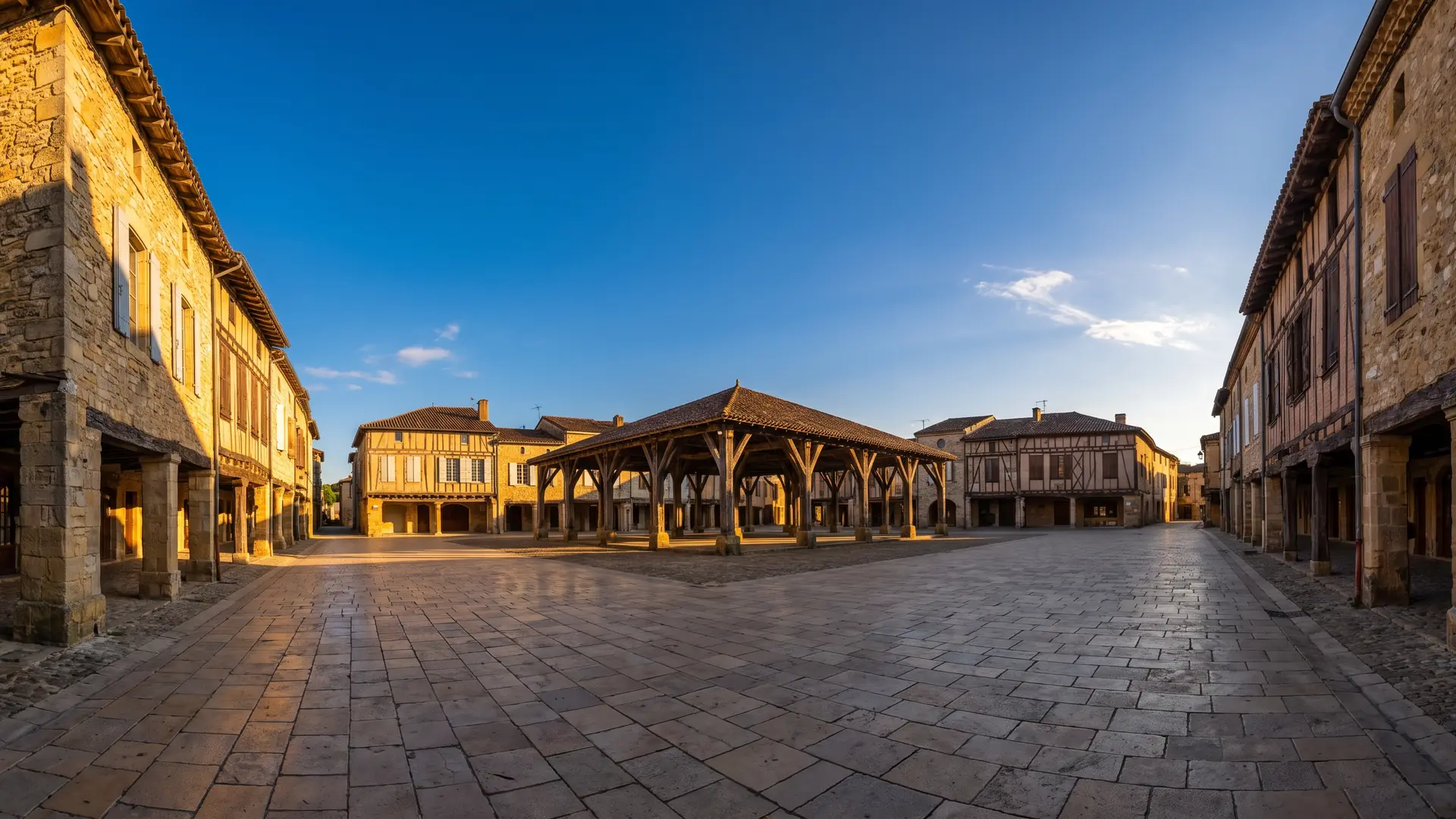
The Gers is the land of bastides: just a few minutes from Mont-de-Marrast, Mirande—with its arcaded square—the keep at Bassoues, and other medieval gems are well worth a visit. An exceptional example of Gascon heritage, right nearby.
The Bastides of the Gers
The Gers is one of France’s great regions of bastides, planned medieval towns founded in the 13th and 14th centuries, laid out on regular grids around an arcaded square, known locally for its corner passages, and a market hall. Very close to Mont-de-Marrast, Mirande, founded in 1281 and the capital of Astarac, is a fine example, with its covered arcades and lively market. The Gers has many other charming bastides: Marciac, Bassoues, Fourcès with its unusual circular square, Montréal-du-Gers, and Fleurance. Their arcades, market halls, fortified churches, and historic houses are among the region’s great attractions and bear witness to its rich medieval past. From Mont-de-Marrast, several can be visited along a winding route through the hills, combining history, architecture, and Gascon life.
The Bassoues Keep
Among the gems of the surrounding area, the village of Bassoues, to the southwest, deserves special mention for its extraordinary medieval keep: a massive tower standing 43 meters tall, built around 1370 by Arnaud Aubert, Archbishop of Auch and nephew of Pope Innocent VI, and designated a historic monument in 1840. This imposing structure, which overlooks the village and its market hall, is one of the most beautiful keep towers in Gascony and offers, from its summit, a superb panoramic view of the hills of the Gers and the Pyrenees. Between Mirande, Bassoues, and the other bastides and charming villages of the Astarac and Gers regions, the area around Mont-de-Marrast is home to a truly rich medieval heritage, just a few minutes from the village. This is one of the great attractions of a stay in the region: from a peaceful hamlet, you can set out to explore the bastides, keep towers, and treasures of Gascony, all within a few kilometers.
Auch, its cathedral, and the jazz of Marciac
Near Mont-de-Marrast, two major destinations in the Gers: Auch, the regional capital, with its UNESCO-listed cathedral, and Marciac, famous for its major jazz festival. Heritage and culture, right at your fingertips.
Auch, the capital of the Gers department
About thirty kilometres away, Auch, the prefecture of the Gers, is the historic capital of Gascony and an essential stop. Its Sainte-Marie Cathedral, a Gothic masterpiece of the 15th and 16th centuries, towers over the city. It is celebrated for the magnificent stained-glass windows by Arnaud de Moles, created between 1507 and 1513 and among the finest of the Renaissance, as well as its 113 carved wooden choir stalls. The cathedral has formed part of the UNESCO World Heritage listing for the Routes of Santiago de Compostela in France since 1998. Auch is also known for its monumental staircase, built in 1863 to link the upper and lower town, and for the statue of d’Artagnan, the Gascon musketeer immortalised by Alexandre Dumas and now an emblem of the Gers. The old town, its narrow “pousterles,” cathedral, and stairways make a rewarding visit within easy reach of Mont-de-Marrast.
Marciac and its jazz festival
Another major event in the area is Jazz in Marciac, held in the village of Marciac, to the southwest. The lineup, dates, and practical information for the current edition should be checked on the festival’s official website. Outside of the event, Marciac retains its arcaded streets and its bastide-style setting.
What is there to see nearby, and when should you visit?
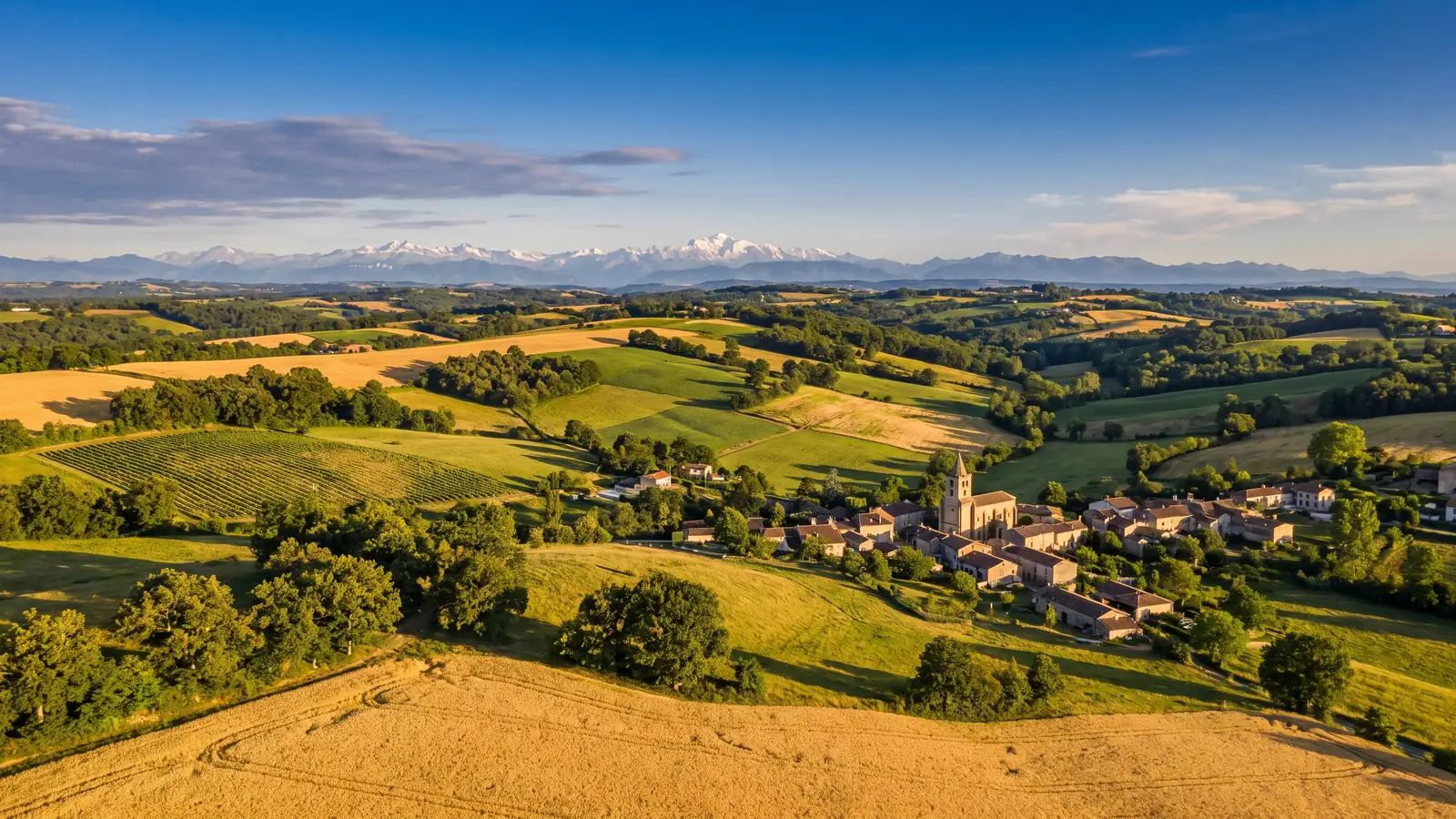
Mont-de-Marrast is a peaceful base from which to explore the Gers and Gascony: bastides, the city of Auch, the Marciac Jazz Festival, local cuisine, and the relaxed lifestyle are all nearby. A rare gem in the heart of the gourmet Southwest.
Gascony within easy reach
From Mont-de-Marrast, the whole of the Gers and Gascony opens up for exploration. The bastides of Mirande, Bassoues, Fourcès, and Montréal-du-Gers, Auch and its UNESCO-listed cathedral, the Marciac Festival, Armagnac and Floc estates, charming villages, and farm inns make this an exceptionally rich region to discover along winding roads through the hills. Further afield, the Pyrenees, Lourdes, Bigorre, and the Madiran vineyards broaden the possibilities. The Gers is made for unhurried exploration, travelling along quiet country roads from village to village and table to table. With a driver, Mont-de-Marrast becomes a practical base for days combining heritage, local produce, and nature, without the constraints of driving and with time to savour the Gascon way of life.
Toward the Pyrenees and Madiran
The influence of Mont-de-Marrast extends beyond the Gers. To the south, the Gascon countryside gradually slopes toward the first hills, and you soon reach the foothills of the Pyrenees: the vineyards of Madiran and Pacherenc, renowned for their tannic reds and sweet whites, about forty kilometers away; then, further on, Bigorre, Tarbes, and the great shrine of Lourdes, at the foot of the Pyrenees, just over an hour’s drive away. Mountain enthusiasts will want to venture into the valleys, mountain passes, and resorts of the Pyrenees. This proximity makes Astarac an ideal base for combining the gentle slopes of the Gascon hills with the majesty of the nearby Pyrenees. With a driver, you can easily plan, through Mont-de-Marrast, days that blend local culture, heritage, and stunning landscapes—from the bastide town of Mirande to the blue-tinged ridges on the horizon—without worrying about driving or distances.
| About Mont-de-Marrast | Distance | Interest |
|---|---|---|
| Mirande | ~10 km | A bastide dating from 1281, with an arcaded square, and the capital of the Astarac region |
| Auch | ~30 km | UNESCO Cathedral, staircase, d'Artagnan |
| Marciac | ~25 km | Jazz in Marciac, a bastide on the lakefront |
| Bassoues | ~25 km | 43-meter-tall medieval keep (listed as a historic monument) |
| Madiran / Pyrenees | ~40–60 km | Vineyard, Pyrenean foothills, Lourdes |
When is the best time to visit the Gers?
The Gers is a delight any time of year, but spring, summer, and early fall are the best times to visit: here’s when and how to make the most of a getaway to Mont-de-Marrast. The perfect pace for Gascony.
The Seasons of the Gers
The Gers is pleasant for much of the year, but spring, summer, and early fall are the finest seasons. Spring dresses the hills in vivid green and brings mild days, ideal for exploring the countryside and villages. Summer, warm and bright, is the season of sunflowers, night markets, village fêtes, and the Marciac Festival in late July and early August. It is the liveliest time of year, but also the busiest. Fall, with the grape harvest, young Armagnac, and “marchés au gras,” colours the countryside under a climate that remains mild. Winter reveals a quieter, more intimate Gascony, ideal for seasonal cooking by the fire. Whatever the season, the calm and generosity of the region make Mont-de-Marrast a rewarding getaway.
A carefree getaway
The Gers is made for touring, and is best explored without constraints, which is precisely where a driver helps. This is a land of small roads, scattered villages, country estates, and good restaurants, all easier to enjoy when there is no need to drive, park, or get back behind the wheel after an Armagnac tasting or a long lunch at a farm inn. From Mont-de-Marrast, you can plan a day to suit you: Mirande in the morning, an estate and Gascon lunch at midday, then Auch or Marciac in the afternoon, with stops whenever you wish. For a family countryside break, a wine and food tour, or an event in the Gers, the flexibility of a chauffeured vehicle with no fixed timetable turns the journey into part of the pleasure. That is the essence of Gascon life: taking your time among the hills and changing seasons.
| Season | The Atmosphere in the Gers |
|---|---|
| Spring | green hills, mild days, nature coming to life |
| Summer | sunflowers, night markets, the Marciac Festival |
| Fall | grape harvest, new Armagnac, "marchés au gras" |
| Winter | Intimate Gascony, Seasonal Cuisine |
How to get to Mont-de-Marrast from Bordeaux
Mont-de-Marrast is located about 220 km from Bordeaux, which is about a 3-hour and 2-minute drive via the A62 highway and then the roads through the Gers region toward Auch and Mirande. The village obviously has no train station or public transportation service: the nearest stations are in Auch (the terminus of a line from Toulouse) or Tarbes, both quite a distance away, and you’ll need a car to reach the village and explore the Astarac region. For a trip from Bordeaux to explore the heart of Gascony—its bastides, estates, and cuisine—a car with a driver is the most practical and flexible option: this is a region of small roads and scattered villages, best explored by car, without the constraints of a schedule.
Train or chauffeured car?
To reach Mont-de-Marrast, and especially to explore the Gers and Astarac, an executive car service from Bordeaux offers genuine freedom: a direct, door-to-door journey with no changes or waiting, plus the option of stops in Mirande, Auch, or at an Armagnac estate. That flexibility is particularly valuable on a wine and food break, when you may wish to taste without driving, or while visiting bastides and villages along the Gers back roads. We offer this route at a fixed price provided in advance: allow about 438 € for a one-way journey in a Mercedes sedan or a van seating up to 8 passengers, with a professional driver. The price agreed when booking remains fixed and does not vary with traffic, congestion, or the number of stops, unlike a taxi meter.
This is the perfect option for a countryside getaway, a gourmet getaway, a family visit, an event (wedding, reunion in the Gers), or a simple transfer. You can travel alone, as a couple, or in a small group of up to 8 people, with your luggage and local specialties (Armagnac, foie gras), and request stops in Mirande, Auch, Marciac, or at a vineyard. In practice, booking is quick and easy: simply provide your departure address in Bordeaux and your destination at Mont-de-Marrast (or the vacation rental, farmhouse inn), along with the date, desired time, and number of passengers, and you’ll receive a fixed-price quote in writing. On the day of the trip, the driver picks up the passengers at the agreed-upon address and takes them directly to Mont-de-Marrast, without any detours—a real advantage for exploring Gascony with peace of mind.
| Route | Distance | Duration | Landmark |
|---|---|---|---|
| Bordeaux → Mont-de-Marrast | ~220 km | ~3:02 | From ~379 € with an executive car service |
| Mont-de-Marrast → Mirande | ~10 km | ~12 min | Bastide, the capital of Astarac |
| Mont-de-Marrast → Auch | ~30 km | ~35 min | UNESCO-listed cathedral, d'Artagnan |
| Mont-de-Marrast → Marciac | ~25 km | ~30 min | jazz festival, bastide |
Whether you come for the tranquility of a remote hamlet, for the countryside and the bastides of Astarac, for the region famous for Armagnac and foie gras, or to explore Auch and Marciac, Mont-de-Marrast is a treat for lovers of authentic Gascony and the good life—a peaceful village that opens the door to one of the most charming regions in France.
Whether you are planning a food-focused break, exploring the bastides, or attending an event, a chauffeur service provides a comfortable and punctual journey. Book a driver from Bordeaux to Mont-de-Marrast or explore all our destinations.
Frequently Asked Questions
Where is Mont-de-Marrast located?
Mont-de-Marrast is a very small village in the Gers (32), in Occitanie, in the heart of Astarac, the hilly region in the southern part of the department, about ten kilometers from Mirande, its small regional capital. Part of the Mirande district, it is a rural hamlet with a population of about 106 (INSEE 2023), characterized by widely scattered dwellings, set amid a landscape of clay hills, fields, vineyards, and woods. It should not be confused with the “Château de Marrast,” which is located in the Landes department. From Bordeaux, it’s about 220 km and a 3-hour, 2-minute drive via the A62 and then the roads of the Gers. It’s a destination for peace and quiet and the Gascon countryside, rather than for its monumental heritage.
What is the distance between Bordeaux and Mont-de-Marrast?
Approximately 220 km by road, or about 3 hours and 2 minutes, via the A62 highway and then the roads of the Gers toward Auch and Mirande. With a private driver from Bordeaux, the fare is fixed and provided in advance, starting at approximately €438 one way (sedan or van, door-to-door price). Mont-de-Marrast does not have a train station: the nearest stations are in Auch or Tarbes, both some distance away, and a vehicle is then needed to reach the village and explore Astarac. On the Gers’ small roads between scattered villages, a chauffeur service is considerably more convenient than public transport.
What's there to see in Mont-de-Marrast?
Let’s be honest: Mont-de-Marrast is a tiny village (106 residents) with no famous landmarks or spectacular sights. Its only notable building is the Church of Saint-Jacques, a modest village church of Romanesque origin that was remodeled in the 19th century—it’s not a listed historic site, but it’s charming. What people come here for is something else entirely: the absolute tranquility of a hamlet lost in the hills, the beauty of the unspoiled Gascon countryside, and the authenticity of a rural France that has become a rarity. Mont-de-Marrast is less a destination in itself than a gateway to Astarac and the Gers, and a haven of peace. The real treasures are all around: the bastides (Mirande, Bassoues), Auch and its UNESCO-listed cathedral, Marciac and its jazz scene, and the Gascon region.
What is Astarac?
Astarac is one of the historic regions of the Gers: an area of clay-rich hills (known as “serres et vallons”) in the southern part of the department, near the foothills of the Pyrenees. From the 10th century through the Middle Ages, it was a county of Gascony, one of the region’s major fiefdoms, with its own counts, castles, and abbeys (such as Berdoues). Its capital is Mirande, a bastide founded in 1281, now a subprefecture. It is a rural and agricultural area, with scattered settlements, characterized by its gentle charm, where crops have been grown and livestock raised for centuries. Mont-de-Marrast, nestled in these hills, is one of the countless small villages that make up Astarac, in the heart of the deep and authentic Gascony.
What is the terroir of the Gers region around Mont-de-Marrast?
It is one of France’s greatest culinary regions. The Gers is the home of Armagnac, France’s oldest brandy, distilled in Gascony since the Middle Ages, and Floc de Gascogne, a fortified wine made by blending grape must with young Armagnac (AOC since 1990). The region also produces Côtes de Gascogne, fresh and fruity white wines. When it comes to gastronomy, Gascony is the kingdom of foie gras and duck (confit, magret, garbure): the Gers is one of France’s leading producers of foie gras. Around Mont-de-Marrast, vineyards, wineries, markets, and farm-inns offer visitors the chance to discover and savor all these iconic products amid the stunning scenery of the Astarac hills.
What's there to see around Mont-de-Marrast?
There are many in the Gers and Gascony. Nearby is Mirande, the main town of the Astarac region (~10 km), with its arcaded square. Auch, the prefecture (~30 km), and its Sainte-Marie Cathedral, a UNESCO World Heritage Site, famous for its stained-glass windows by Arnaud de Moles and its choir stalls, as well as its monumental staircase and statue of d’Artagnan. Marciac (~25 km), world-renowned for its jazz festival (late July–early August). Bassoues and its extraordinary 43-meter-tall medieval keep. Not to mention the Armagnac estates, the other fortified towns (Fourcès, Montréal-du-Gers), and, further afield, the Pyrenees and Lourdes. Mont-de-Marrast is a peaceful base from which to explore all of this rich and gourmet region of Gascony.
What is the Marciac Festival?
"Jazz in Marciac" is one of Europe's largest jazz festivals, held every summer in the village of Marciac, a bastide in the Gers department, about 25 km from Mont-de-Marrast. Founded in 1978, Jazz in Marciac features an international lineup every summer; the dates, artists, and details for the current edition should be checked on the festival’s official website. The contrast between this small, peaceful Gascon village and the festival’s international buzz is striking. Outside of the summer, Marciac remains a charming lakeside bastide, with its arcaded square and jazz museum. It is a major cultural destination in the region.
Why visit the Gers?
Because the Gers is one of the most authentic and charming departments in France. It is the heart of Gascony, a region of rolling hills, sunflowers, and vineyards, renowned for its tranquility, unspoiled nature, and relaxed way of life. It is also one of France’s great food regions—Armagnac, Floc, foie gras, and garbure—and rich in heritage, with its bastides (Mirande, Fourcès), the UNESCO-listed Auch Cathedral, the Bassoues keep, and the legacy of d’Artagnan, the Gascon musketeer. People come here to experience the Southwestern way of life, fine dining, tranquility, and authenticity, far from the crowds. Mont-de-Marrast, a peaceful hamlet in Astarac, is an ideal gateway to the region.
When is the best time to visit the Gers?
Spring, summer, and early fall are the most beautiful seasons. Spring dresses the hills in vibrant green and offers mild days, ideal for exploring the countryside and villages. Summer, warm and sunny, is the season of sunflowers, night markets, village festivals, and the Marciac Festival (late July–early August)—the liveliest time of year, but also the most popular. Fall, the season of the grape harvest, new Armagnac, and “gras” markets, adorns the countryside with superb colors. Winter, a quieter time, reveals the intimate side of Gascony, perfect for enjoying seasonal cuisine. No matter the season, the tranquility, the beauty of the landscapes, and the bounty of the region make Mont-de-Marrast and the Gers a wonderful getaway, about 3 hours and 2 minutes from Bordeaux.
Does Mont-de-Marrast have a castle?
No. Mont-de-Marrast, a tiny village in the Gers department, does not have a castle. Its only notable building is its church, dedicated to Saint James—a modest village church of Romanesque origin that was remodeled in the 19th century and is not listed as a historic monument. Moreover, Mont-de-Marrast should not be confused with the “Château de Marrast,” which is located in the neighboring department of Landes, not here. In Mont-de-Marrast, the appeal lies not in its monuments but in its setting: the tranquility of a hamlet tucked away in the Astarac hills, the beauty of the Gascon countryside, and the authenticity of a genuine rural village. Major heritage sites (bastides, the Cathedral of Auch, the Bassoues keep) are nearby, just a few minutes’ drive away.
Can I book a chauffeured transfer from Bordeaux to Mont-de-Marrast?
Yes. We offer the Bordeaux → Mont-de-Marrast route (approximately 220 km, about 3 hours and 2 minutes via the A62 and the Gers) at a fixed price, starting at approximately €438 one way, in a Mercedes sedan or a van seating up to 8 passengers, with a private chauffeur. The trip is direct and door to door, with optional stops. It suits a food and wine break in the Gers, where you may wish to taste Armagnac without driving, or a tour of the bastides, Auch, and Marciac. You can bring luggage and local purchases. The fixed quote is provided and confirmed in writing before departure, with no unexpected meter charges. The Gers, with its winding country roads, is best explored with a driver.
Further Reading
- A bastide in the Gers: see the Guide to Montréal-du-Gers (the bastide founded in 1255, the Villa de Séviac)
- The capital of the south-west: see the Agen guide (the canal bridge, old town, and prunes)
- The Pink City: See the Toulouse Guide (the Capitole, Saint-Sernin, the Canal du Midi)
- Plan your trip: book a chauffeur-driven transfer from Bordeaux to Mont-de-Marrast or explore all our destinations
Sources and References
- Wikipedia — Mont-de-Marrast — geography, demographics (population 106), Saint-Jacques Church
- Wikipedia — Astarac — former county of Gascony, a hilly region, Mirande
- Wikipedia — Mirande — a bastide founded in 1281, the capital of Astarac
- Wikipedia — Auch Cathedral — Gothic, stained-glass windows, choir stalls, UNESCO 1998
- Wikipedia — Jazz in Marciac — jazz festival since 1978, Wynton Marsalis
- Jazz in Marciac — Official Website, Lineup, and Practical Information
- INSEE — 2023 Reference Populations, Mont-de-Marrast (32281) — municipal population: 106 residents
- INAO — Armagnac — official appellation and geographical area
Article updated in July 2026.
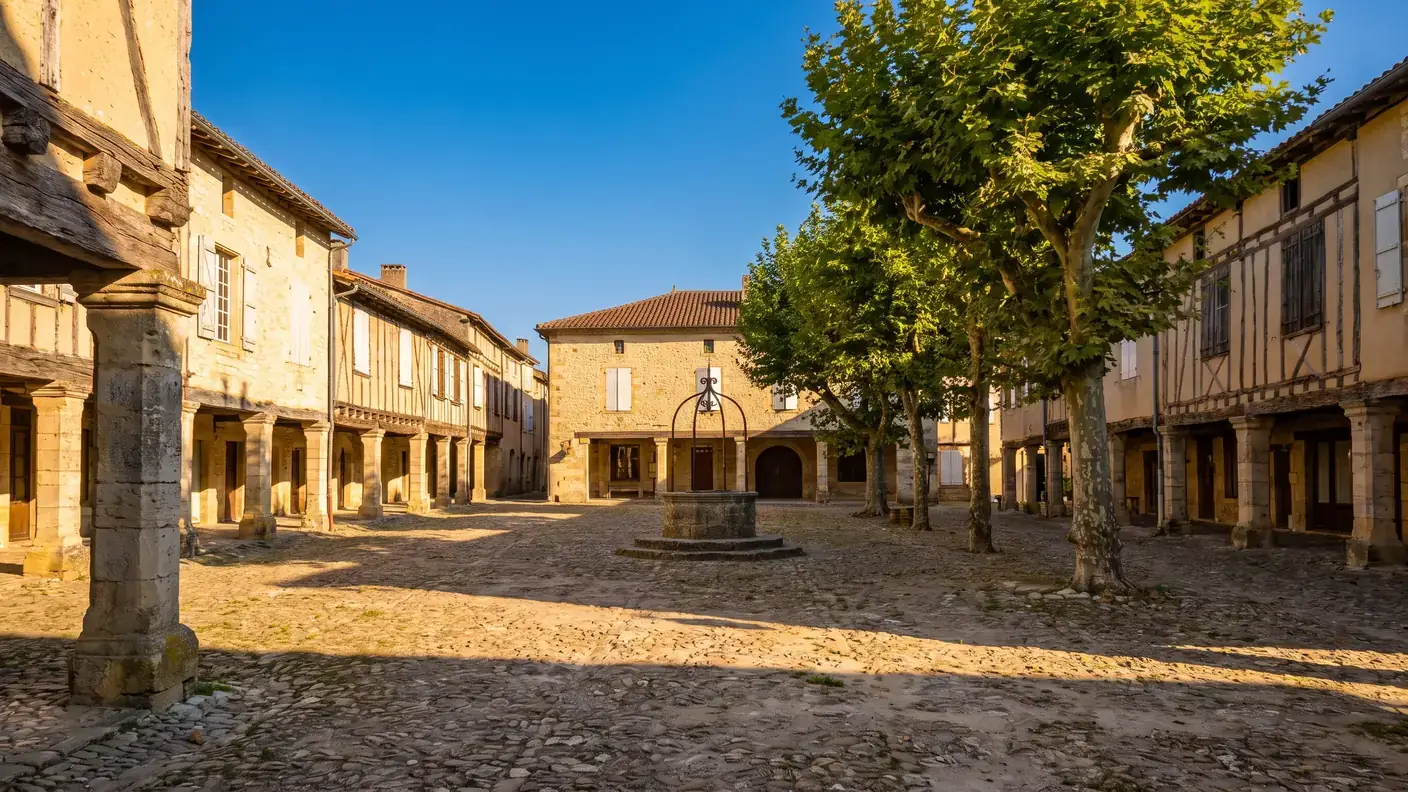
On the Way to Astarac
Direct trip from Bordeaux (~3h02) to Mont-de-Marrast and the Gers region, with stops along the way as desired—Mirande, Auch, and an Armagnac estate. Written fixed-price quote, with no surprises on the meter.