
Mussidan, the Crossroads Town of the Périgord Blanc
A small, densely populated town built at a strategic crossing: where the Crempse meets the Isle, a castle once stood on a promontory. Accounts of the events of 1569 and 1624 require a paginated historical reference, so this guide presents them with caution. About 1 hour and 16 minutes from Bordeaux.
Mussidan at a Glance
- Mussidan (Mussidanais) is a small town in Dordogne (24400), in White Périgord, built exactly where the Crempse plunges into the Isle.
- With 3.85 km² and 2,771 residents in 2023, Mussidan has a high density for a small town [Source: INSEE].
- A castle once stood on the promontory. The Dordogne Departmental Archives have cataloged collections related to the guardianship and seigneury of Mussidan, but these are not sufficient to corroborate the detailed account of its demolition.
- Some accounts describe a siege and acts of violence in Mussidan in 1569. The details must be cross-referenced with a specifically cited historical source; the official inventory of the archives is provided as a starting point, not as proof of each individual event.
- The former Notre-Dame-du-Roc Church has had an unusual fate: today, it is a 137-seat movie theater, considered one of the most beautiful in Aquitaine.
- The Saint-Georges Parish Church was designed by Paul Abadie, the architect of the Sacré-Cœur in Montmartre.
- The André-Voulgre Museum showcases the folk arts and traditions of the Périgord [official website].
- From Bordeaux: ~101 km, about 1 hour and 16 minutes via the A89 — starting at €175 for a private driver, door-to-door. Train station on the Bordeaux–Périgueux line.
Before You Go: What Mussidan Really Is
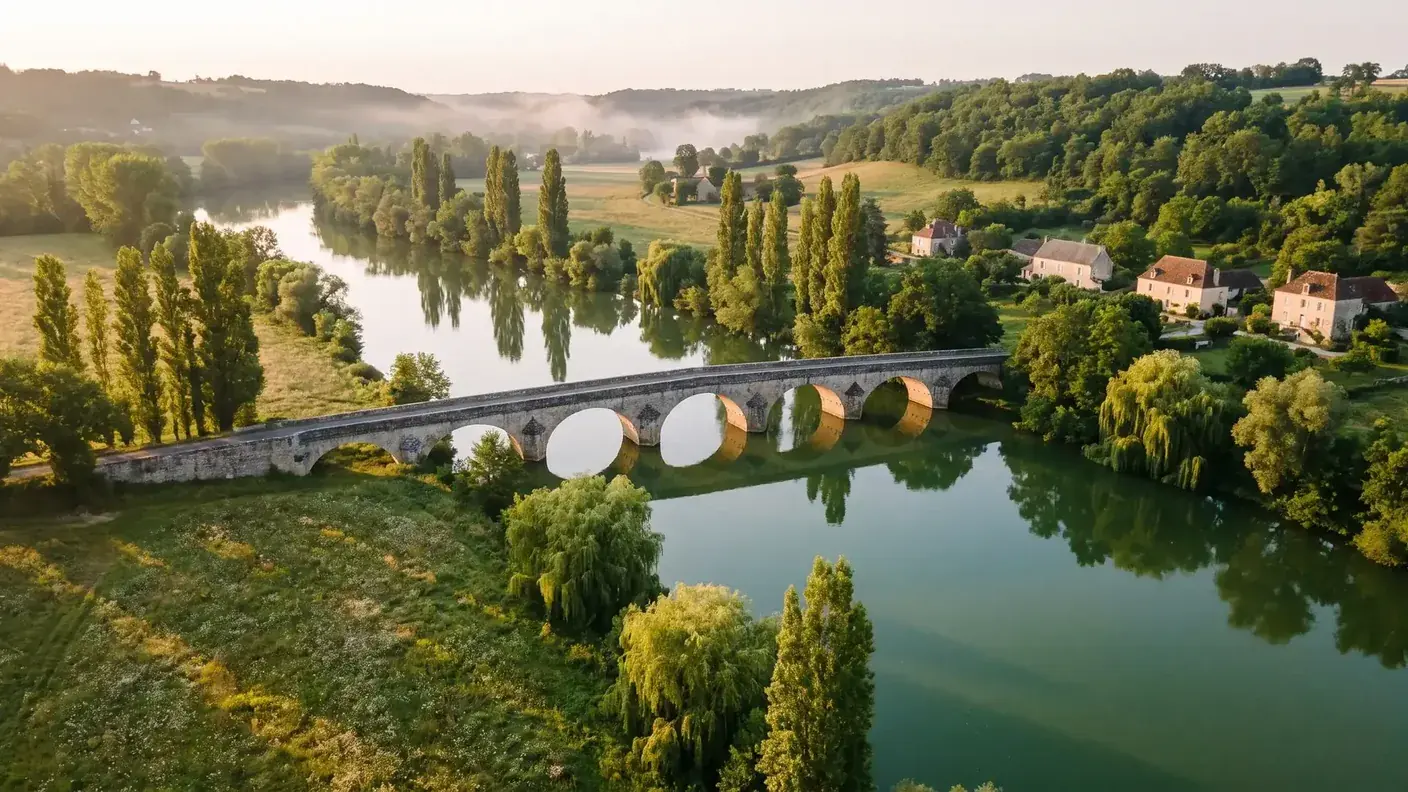
Late afternoon, on the bridge spanning the Isle. Below, the green river receives the waters of a modest tributary, the Crempse; on the left bank, a rocky promontory towers a few meters above the town. A castle stood there for seven centuries—it is now gone. People slaughtered one another there in 1569 in one of the most infamous massacres of the Wars of Religion. Historical accounts describe a surrender followed by the massacre of the garrison; the dates, key figures, and terms of surrender must be linked to a specifically cited publication or study. And on the rock where the church once stood, people now go… to the movies. Welcome to Mussidan: tiny in size, but rich in history.
Mussidan is a crossroads town at a confluence: everything here stems from the point where the Crempse meets the Isle. This geography has made it a place of passage and control since prehistoric times; it gave rise to a fortified castle, led to the town’s sieges and destruction, and still shapes its identity—the Community of Communes is called “Isle et Crempse en Périgord.” Although small (3.85 km²), Mussidan has always carried influence beyond its size.
This guide distinguishes between institutional data and accounts that require verification. The dates 1081, 1569, and 1624 are not presented as established facts without reference to a paginated historical publication; the inventory of the Dordogne Departmental Archives serves as the documentary starting point.
In terms of transportation, Mussidan is well connected: there’s a train station on the Bordeaux–Périgueux line, and the A89 (Bordeaux–Clermont-Ferrand) highway runs about 4 km to the south. But to explore the Isle Valley without being tied to a schedule—the museum, the villages, and the castles near Saint-Médard—a private driver from Bordeaux offers the easiest door-to-door option, taking about 1 hour and 16 minutes.
The second-smallest municipality in the Dordogne—but a real town
Mussidan is located in the western part of the Dordogne department, in the Périgord Blanc region, on the left bank of the Isle River, exactly at the point where the Isle is joined by its tributary, the Crempse. The old town is centered around the bridge and the market hall, between the two rivers. The town has been part of the Périgueux district since 1926.
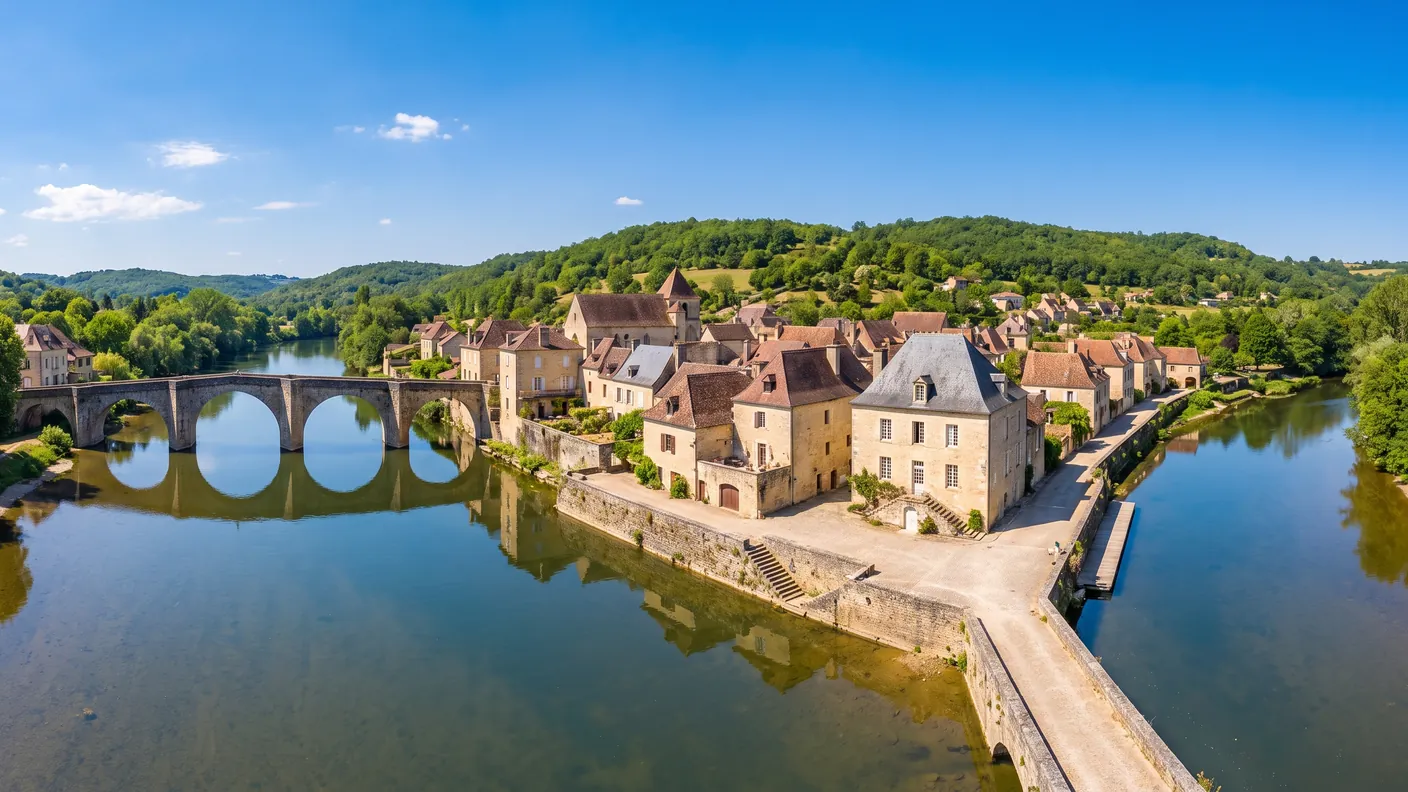
The area is tiny: just 3.85 km², making Mussidan the second-smallest municipality in the entire department, right behind Monpazier (0.53 km²). But its small size does not reflect its population density: with ~2,771 residents, Mussidan has nearly 721 residents per km² (and as many as 840 at its peak in 1982). It is a small, compact town that is largely urbanized—56.8% of its territory is built-up (compared to 47.9% in 1990)—rather than a sprawling village.
| Data | Value |
|---|---|
| ZIP Code / INSEE | 24400 / 24299 |
| Natural Region | White Périgord (Dordogne) |
| Arrondissement | Périgueux (since 1926) |
| Area | 3.85 km² — the second-smallest in the Dordogne |
| Elevation | 42 m to 106 m |
| Waterways | the Isle and the Crempse (confluence) |
| Population | 2,771 residents (2023) — the residents of Mussidan |
| Density | ~721 people per km² |
| Intermunicipal authority | CC Isle and Crempse in Périgord (headquarters) |
In terms of length, the Isle is the longest tributary of the Dordogne: 255 km, from its source at Janailhac (Haute-Vienne, 375 m) to its confluence at Libourne—ahead of the Vézère (211 km) and the Cère (120 km). It runs alongside Mussidan to the north for about 1.5 km, opposite Saint-Front-de-Pradoux. The Crempse, on the other hand, is much smaller (26 km, with its source at Beauregard-et-Bassac), but it is this river that, by joining the Dordogne right here on the left bank, gives the site its distinctive character. It appears in historical records as early as 1283, under the name “Crempsa.”
The demographics of a small rural town
Mussidan follows the typical trajectory of towns in the Périgord: a peak during the Trente Glorieuses, a slowdown, and then a slight recovery. The peak occurred in 1982 (3,236 residents), almost on par with 1975). The city then lost nearly 14% of its population through 2016 (2,728 residents), before rebounding slightly — +2.25% between 2017 and 2023. Mussidan remains the downtown of its urban area, which includes 7,132 residents (2022) with five neighboring municipalities, including Saint-Médard-de-Mussidan.
| Year | Population |
|---|---|
| 1968 | 3 048 |
| 1975 | 3 235 |
| 1982 | 3,236 (peak) |
| 1990 | 2 985 |
| 1999 | 2 843 |
| 2006 | 2 829 |
| 2011 | 2 878 |
| 2016 | 2 728 |
| 2022 | 2 778 |
| 2023 | 2 771 |
A Strategic Crossroads Since Prehistoric Times
To understand Mussidan, one must examine its geography. A river joining another, a limestone promontory overlooking both valleys: this is what has made this spot a crossroads and strategic point for millennia. Controlling a confluence means blocking both river and land traffic—a bridge or ford crosses the Isle here while also monitoring the mouth of the Crempse. This dual function as both a barrier and a crossroads has remained a constant feature of Mussidan for over two thousand years.
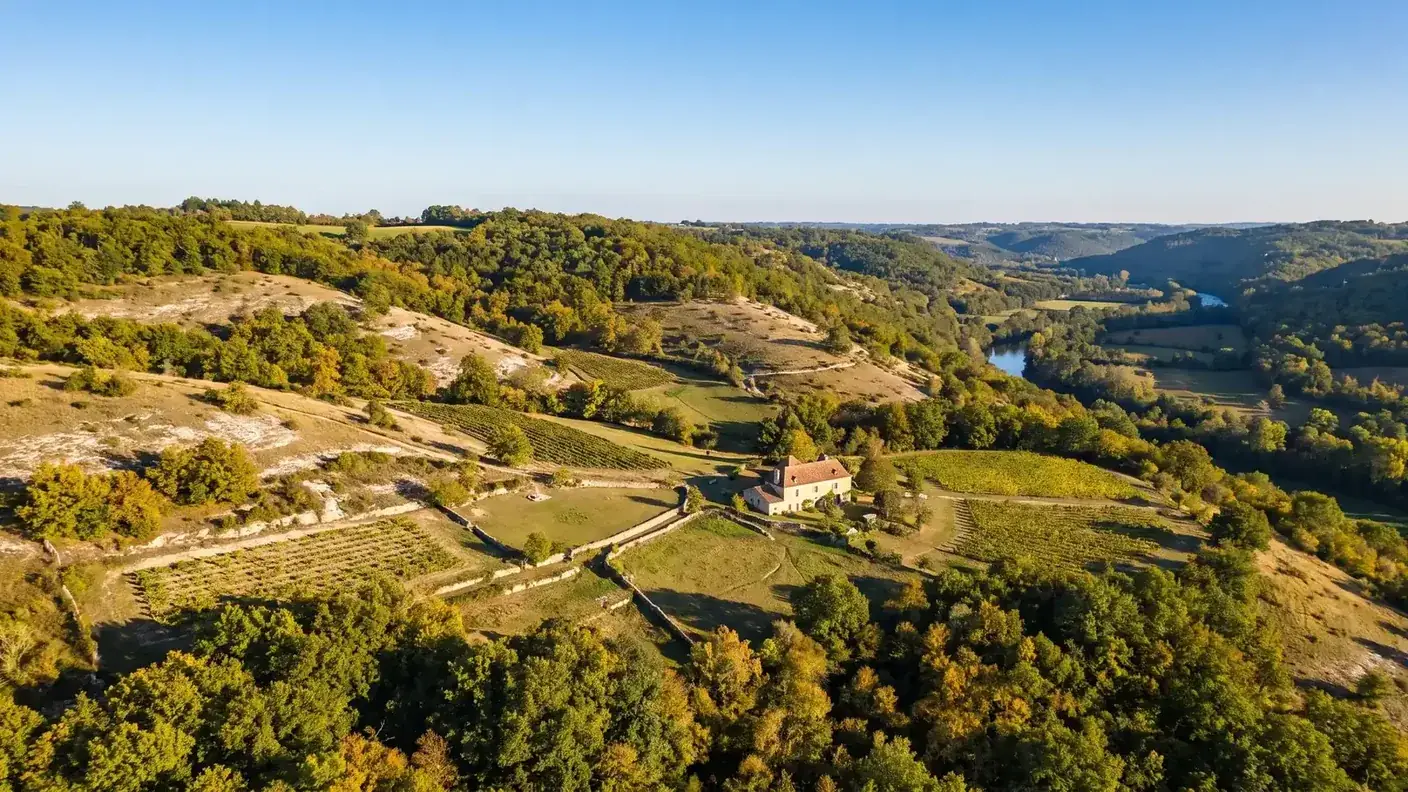
Human occupation here is well documented as far back as the Paleolithic: the hillsides overlooking the confluence contained high-quality flint, and the area’s open-air Upper Paleolithic site has been the subject of a scientific monograph (Jean Gaussen, Gallia Préhistoire, CNRS, 1980)—this is not a tourist legend. For later periods, caution is warranted: Neolithic settlement and a Gallo-Roman villa are plausible but remain hypothetical, presented in the conditional tense by local sources.
The name Mussidan: a hypothesis, not a certainty
The name itself is difficult to pin down. The most common explanation traces it back to "Mutidunum", combining a person's name ("Mutius," the presumed owner of a villa) and the Gallic element -dunon — which is often translated as “height,” but primarily refers to a citadel or fortified stronghold. This etymology fits the topography, but no toponymic authority has validated it, so it remains a hypothesis. There is also a claimed early mention from 830 in the form “Mulcedonum,” but no charter has been cited to substantiate it. The first reliably documented mention dates to 1081.
In Occitan, the town is actually called Moïssidan —a reminder that Mussidan, like the entire Southwest, is part of the Occitan-speaking region.
1081–1624: From the First Lord to the Demolished Castle
The Dordogne Departmental Archives catalogue collections related to the castle’s garrison and the administration of the seigneury of Mussidan during the 16th and 17th centuries [inventory]. They confirm the existence of documentation, but do not, on their own, corroborate all the dates and circumstances recounted in local accounts.
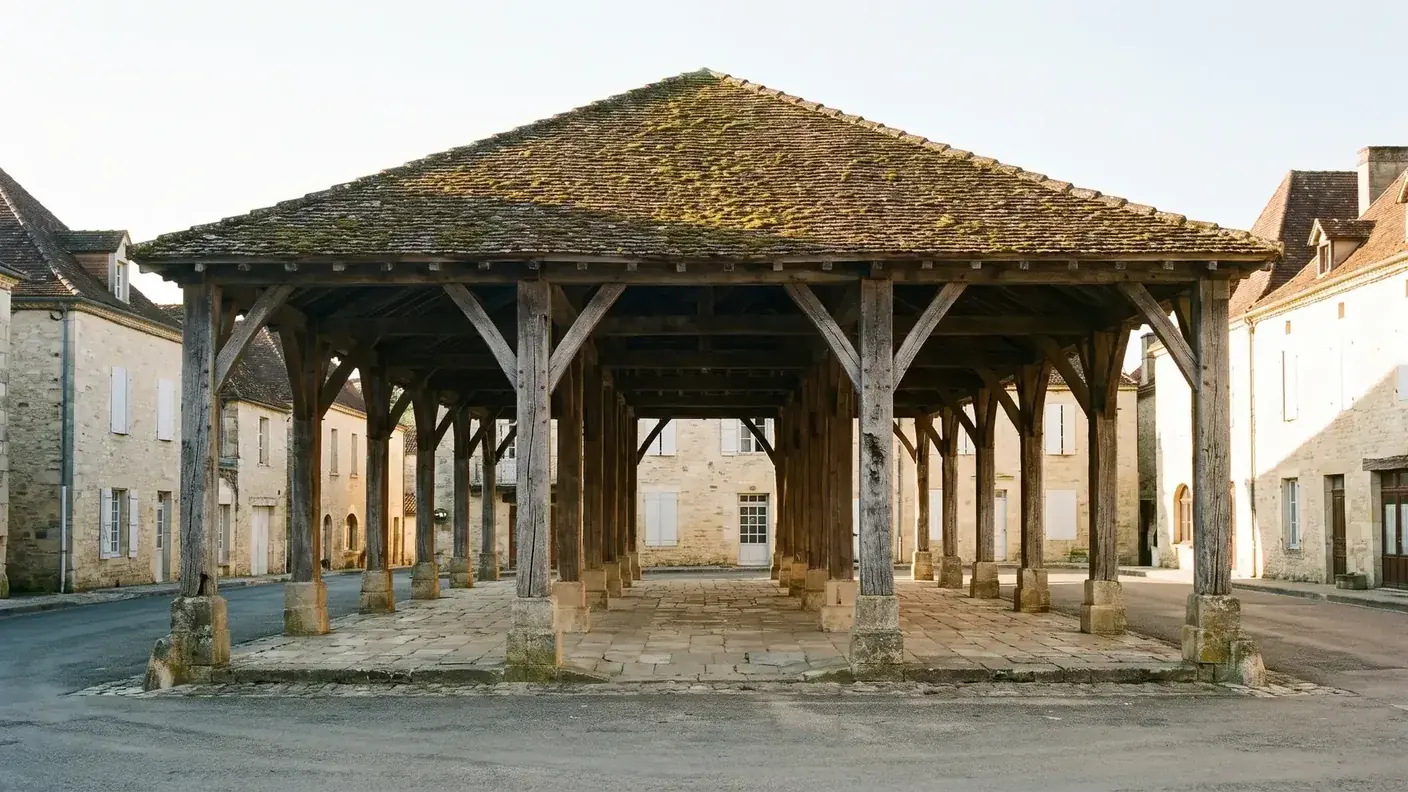
The Destruction of 1624
The date of 1624, the order attributed to Richelieu, and the description of private ruins are often cited, but the official source consulted here does not allow these details to be verified point by point. These details therefore remain to be verified in a published historical study or in the corresponding archival records.
The Siege and Massacre of Mussidan in 1569
Historical accounts describe a siege at Mussidan in the spring of 1569, followed by violence against the garrison. The inventory of the Dordogne Departmental Archives lists records pertaining to Mussidan and its seigneury [source], but this alone is not sufficient to confirm the specific dates, the key figures, or the terms of surrender.
In the absence of an institutional historical edition organized passage by passage, this guide does not include the detailed chronology or the quotes attributed to the combatants. These should be included only with a paginated and verifiable reference.
Longua and Bassy: The Castles in the Neighboring Town
The absence of a castle in Mussidan fuels persistent confusion, which must be clearly resolved. Two castles in the area—which are very real and clearly visible—are regularly attributed to Mussidan: Longua and Bassy. However, neither of them is located within the territory of Mussidan, but rather in that of its neighboring municipality, Saint-Médard-de-Mussidan, on the other side of the railroad tracks.
Longua Castle
Longua Castle and its grounds are protected as cultural heritage, as documented in the Ministry of Culture’s POP report. Architectural dates and visitors sometimes associated with the site are not included here without a specific institutional source.
Bassy Castle
Bassy is much more recent: built in 1925 by architect Paul Cocula, set in a 7-hectare park. Its purpose has changed radically: it became a preventorium in 1950, a sanatorium in 1953, and then a health facility, which it remains today. Its notable guests, however, are very real and well-documented—Princess Marguerite Troubetzkoy and the writer Auguste Gilbert de Voisins. It is essential to note this distinction: the castle that made Mussidan powerful disappeared in 1624, and the ones we admire in the surrounding area belong to the neighboring municipality.
The André-Voulgre Museum and Two Unique Churches
Mussidan’s museum collection owes everything to one man: Dr. André Voulgre, a physician based in Bordeaux who remained deeply attached to his native region. For decades, he amassed a considerable collection dedicated to Perigord society in the family home—the Chartreuse Voulgre, an elegant 18th-century Perigord charterhouse—featuring everyday objects, tools, furniture, works of art, and traditional crafts.
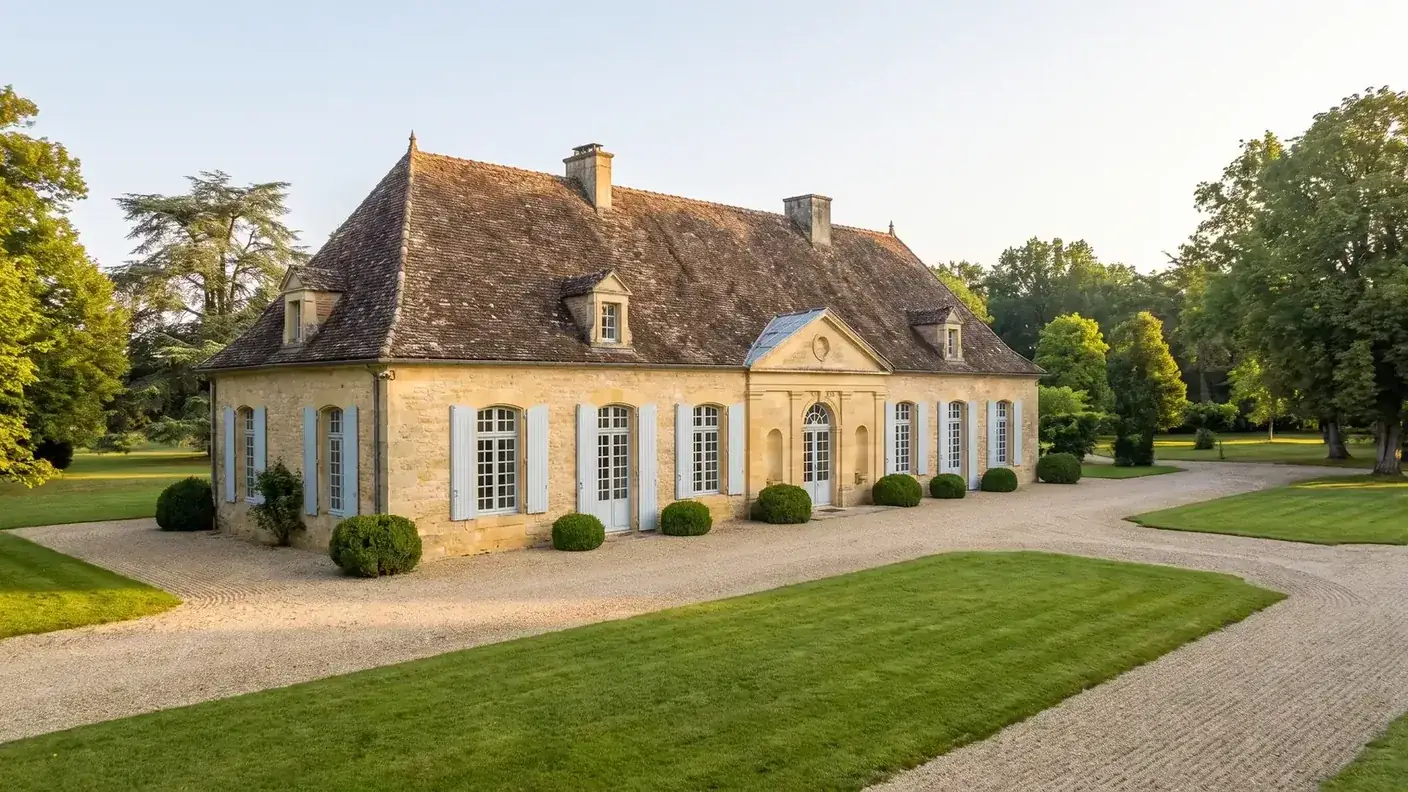
The official website of the André-Voulgre Museum showcases its collections, history, and visitor information. Since opening hours and exhibitions are subject to change, please check them directly before visiting.
Notre-Dame-du-Roc: The Church That Became a Cinema
The former Notre-Dame-du-Roc Church—built in the 16th and 17th centuries on the castle’s spur, to which it was connected by underground galleries—has had the most unexpected fate of any of Mussidan’s historic sites. Restored between 1842 and 1852, it was converted into a cinema in the early 2000s (since 2004). With its 137 seats beneath vaulted ceilings, it is considered one of the most beautiful cinemas in Aquitaine—an unusual repurposing of a historic building.
Saint-Georges, a church designed by Abadie
The active parish church is different: it is Saint-Georges, a 19th-century Neo-Romanesque building constructed between 1852 and 1870 (excluding the spire). A detail that is a source of local pride: it is the work of architect Paul Abadie (1812–1884), the same architect who designed the Basilica of the Sacred Heart in Montmartre—a nationally renowned achievement for a town of 2,700 residents.
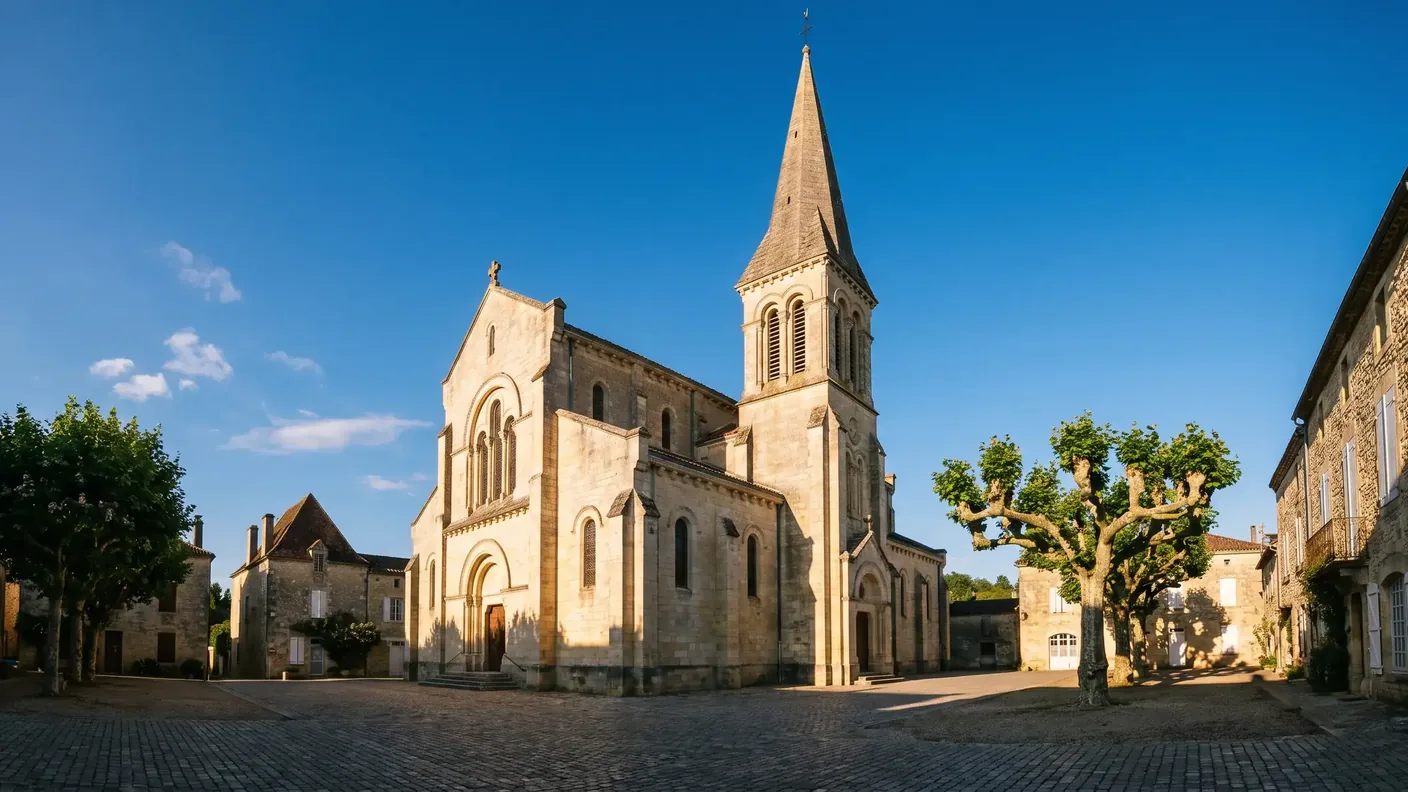
Saint-Georges is home to a wooden Pietà that is protected as a historic monument and documented in the POP database.
From Canton Seat to Regional Hub
The Revolution restored Mussidan to a leading institutional role. In 1801 (the canton had actually existed since 1790), the town became the seat of the canton of Mussidan—a status it would retain, without interruption, for more than two centuries. For a long time, the canton served as the administrative framework for the justice of the peace, the gendarmerie, tax collection, and public services for an entire rural community.
The 2015 territorial reform (decree of February 21, 2014) brought this continuity to an end: the canton of Mussidan was dissolved, and the municipality joined the larger canton of the Vallée de l'Isle (21 municipalities), whose central administrative office is now located in Neuvic, not Mussidan. The town lost its status as a canton seat, as did many small towns in France at the time.
But this shift does not signify a decline. Mussidan remains the central city of its urban area and, above all, the seat of the “Isle et Crempse en Périgord” Community of Municipalities, created on January 1, 2017, through the merger of Mussidan and the Pays de Villamblard (25 municipalities). The very name of the intermunicipal community—combining the names of the two rivers—pays homage to this geography of confluence that has shaped the entire history of the area. Its role as an administrative hub has evolved; it has not disappeared.
What to See Around Mussidan
Mussidan is a convenient base for exploring the Isle Valley and the Périgord Blanc. Here are the actual driving distances from the town (not as the crow flies, which is often misleading):
| Destination | Distance / time from Mussidan | Interest |
|---|---|---|
| Saint-Médard-de-Mussidan | ~5 km · ~7 min | The castles of Longua (listed historic monument) and Bassy, on the other side of the railway tracks |
| Neuvic | ~13 km · ~14 min | Neuvic Castle (Renaissance), gardens, village on the Isle River |
| Montpon-Ménestérol | ~18 km · ~18 min | The town of L'Isle, the church's historic organ, the Double Forest |
| Saint-Astier | ~25 km · ~25 min | Bourg de l'Isle, fortified church, recreation center |
| Périgueux | ~45 km · ~35 min | Gallo-Roman Vesunna, Saint-Front Cathedral, Old Town |
| Bergerac | ~40 km · ~40 min | Cyrano, the old town, vineyards, and gabarres on the Dordogne |
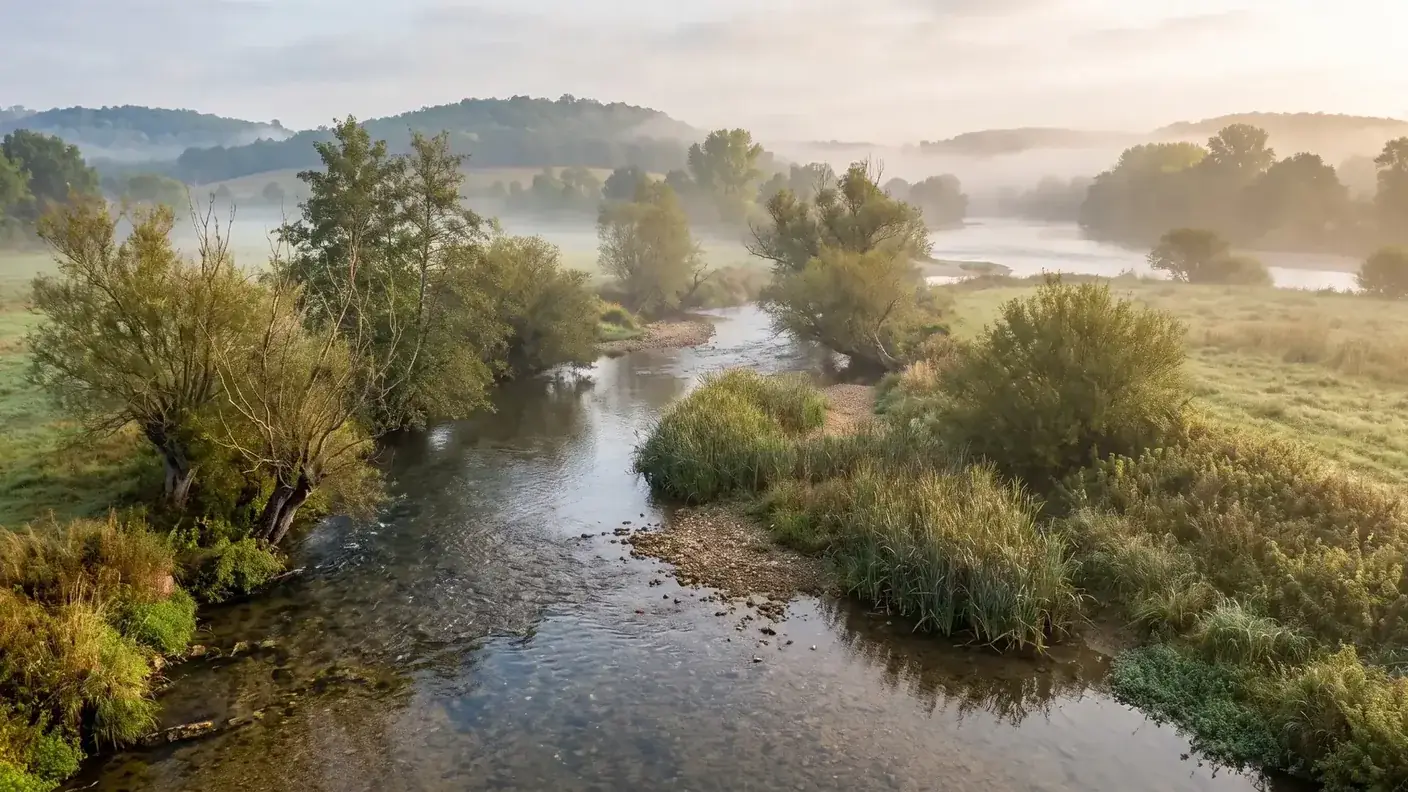
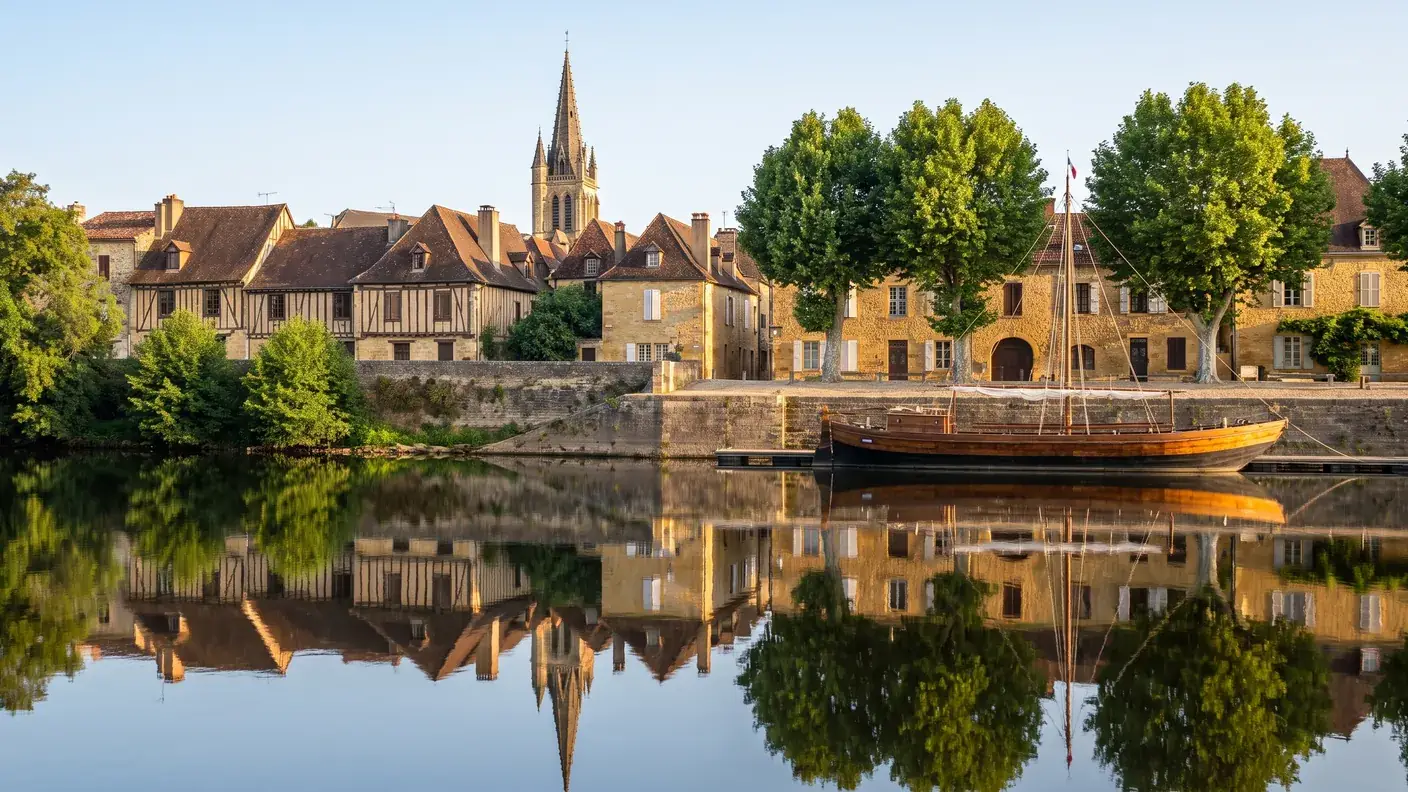
The Isle Valley serves as the central theme of the region: a greenway along the river, villages built of blond stone, and the Double Forest to the southwest. It is a quiet area, off the beaten path of the major tourist routes in the Périgord Noir, yet authentically Périgord.
Getting to Mussidan from Bordeaux
Mussidan is one of the most easily accessible destinations in the Périgord region from Bordeaux: about 101 km, or ~1 hour and 16 minutes by car via the A89. The town offers a number of logistical advantages—a train station and a highway interchange just a few kilometers away.
| Travel option | Duration | Estimated cost | Details |
|---|---|---|---|
| Chauffeur Service | ~1h16 | Starting at €175 · one-way | Door-to-door service from Bordeaux, with stops at your choice (Saint-Émilion, Isle Valley) |
| Personal car | ~1h16 | Varies depending on the vehicle, fuel, tolls, and route | A89, Exit 13, about 4 km south of downtown |
| Train | ~1 hour–1 hour 30 minutes | Check the fare for the selected TER train | Bordeaux–Périgueux Line, Mussidan Station in downtown |
Compare the fixed-rate quote of 175 € for a private chauffeur service with the available train fare and the actual cost of your vehicle on the date of departure; travel times are approximate.
By train and by car
The Mussidan train station, on the Bordeaux–Périgueux line, puts the town about 1 hour from Bordeaux by TER—a real asset for a town of this size. By car, Exit 13 of the A89 (Bordeaux–Clermont-Ferrand) is about 4 km to the south; it is labeled “Mussidan” on road signs, although it is administratively located in the neighboring town of Les Lèches.
By chauffeur service
To reach Mussidan without relying on train schedules—and, above all, to explore the surrounding area afterward (the museum, the castles of Saint-Médard, Neuvic, and the Isle Valley), a chauffeur service from Bordeaux is the most flexible option: a direct, door-to-door trip of about 1 hour and 16 minutes, with stops as you wish and a fixed rate known in advance, starting at €175 one way.
Practical Information
- Recommended duration: half a day (André-Voulgre Museum + Old Town + Notre-Dame-du-Roc Cinema), which can be extended with a visit to Neuvic or the Isle Valley.
- Must-see attractions: the André-Voulgre Museum (“Musée de France”), the Church of Saint-Georges (Abadie) and its 17th-century Pietà, a listed work of art, and the former Notre-Dame-du-Roc church-turned-cinema.
- Best time to visit: spring and summer for the Isle Valley and Chartreuse Park; autumn for the seasonal colours. The museum and cinema are open year-round.
- Shops & Services: Mussidan is a well-equipped town center (shops, market, train station, services)—a true town despite its 3.85 km² area.
- Transportation: Bordeaux–Périgueux TER train station in the city center; A89 interchange No. 13, ~4 km away. For door-to-door travel and the surrounding area, use a car or chauffeur service.
- Intermunicipal Cooperation: Mussidan serves as the headquarters of the Isle and Crempse Community of Communes in Périgord (25 municipalities).
Frequently Asked Questions
Why was Mussidan built at the confluence of two rivers?
Because the site—a limestone promontory overlooking the confluence of the Isle and the Crempse—offered both a defensive position and control over river and land routes. This “gateway and crossroads” logic guided the design of all the site’s fortifications, from the ancient settlement to the medieval castle.
What remains of the medieval castle at Mussidan?
The Dordogne Departmental Archives are cataloging collections related to the stewardship of the castle and the seigneury of Mussidan [source]. The date of 1624, the order attributed to Richelieu, and the condition of the ruins must be verified in a specifically cited study or archival record.
What was the Mussidan massacre of 1569?
The Dordogne Departmental Archives preserve and catalog collections related to Mussidan [source]. These serve as a starting point, but the chronology from 1569 and the terms of surrender have yet to be linked to a paginated historical edition.
Are the castles of Longua and Bassy located in Mussidan?
No, that’s a common misunderstanding. Longua (chapel dating from 1435, residence rebuilt in 1818, designated a Historic Monument) and Bassy (1925, architect Paul Cocula) are both located in the neighboring town of Saint-Médard-de-Mussidan, on the other side of the railway tracks.
How many people live in Mussidan?
According to INSEE, Mussidan had a population of 2,771 in 2023 across an area of 3.85 km². The municipal report provides a way to verify population data series and territorial indicators.
What is the André-Voulgre Museum?
The official website of the André-Voulgre Museum describes it as a museum of the folk arts and traditions of the Périgord, housed in the Chartreuse Voulgre. Visit the website for the latest information on collections, hours, and visiting policies.
What are the churches in Mussidan?
The Saint-Georges Parish Church (Neo-Romanesque, 1852–1870) was designed by Paul Abadie, the architect of the Sacré-Cœur in Montmartre; it houses a listed 17th-century wooden Pietà. The former Notre-Dame-du-Roc Church, meanwhile, has been converted into a 137-seat cinema, one of the most beautiful in Aquitaine.
When did Mussidan cease to be a canton seat?
Mussidan was the seat of the canton of Mussidan from 1801 to 2015. The 2015 cantonal reform abolished this canton; the municipality joined the canton of Vallée de l'Isle, whose administrative center is in Neuvic. Mussidan, however, remains the central city and seat of its intermunicipal association.
How far is Mussidan from Bordeaux?
About 101 km, or ~1 hour and 16 minutes via the A89. A chauffeured transfer is available from €175 one way, with door-to-door service. The town is also served by a TER train station on the Bordeaux–Périgueux line (~1 hour).
How do I get to Mussidan by train?
Mussidan has its own train station in the city center, on the Bordeaux–Périgueux–Limoges line. The trip from Bordeaux takes about 1 hour by TER, making it a convenient gateway to the entire Isle Valley.
What's there to see around Mussidan?
Less than 45 minutes away: the castles of Saint-Médard (Longua, Bassy), the Renaissance castle of Neuvic (~14 min), Montpon-Ménestérol (~18 min), Saint-Astier, and Périgueux with its Gallo-Roman settlement (~35 min). The Isle Valley and its greenway run through the entire area.
Where does the name "Mussidan" come from?
The most widely accepted hypothesis traces its origin to “Mutidunum,” combining a personal name with the Gallic element -dunon (a fortified settlement, rather than simply a hill). This etymology fits the site, but remains a hypothesis, stated in the conditional tense: no toponymic authority validates it, and the first documented mention dates only to 1081.
Further Reading
- The 2,000-year-old prefecture, about 35 minutes away: see the Périgueux Guide (Gallo-Roman Vesunna, Saint-Front Cathedral)
- The capital of the Périgord Pourpre: see the Bergerac Guide (Cyrano, gabarres, Monbazillac)
- The jewel of the Périgord Vert, on the Dronne River: see the Brantôme Guide (abbey, caves, “Venice of the Périgord”)
- The capital of the Périgord Noir: see the Sarlat Guide
- Plan your trip: Book a chauffeured transfer from Bordeaux to Mussidan or explore all our destinations
Sources and References
- INSEE — Complete Mussidan dataset (24299) — population, density, land use
- Dordogne Departmental Archives — Online Inventories (Private Collections) — Custody of the Castle and Administration of the Lordship of Mussidan, accessed July 24, 2026
- André-Voulgre Museum (official website) — Chartreuse Voulgre, collections, Musée de France 2003
- Isle-Périgord Tourist Office — Mussidan — heritage, Notre-Dame-du-Roc cinema, tours
- POP / Palissy Base — Pietà of Saint George — 17th-century wooden Pietà designated a historic monument
- POP/Mérimée Database — Longua Castle (Saint-Médard) — chapel built in 1435, remodeled in 1818, designated a historic monument
Article updated in July 2026.
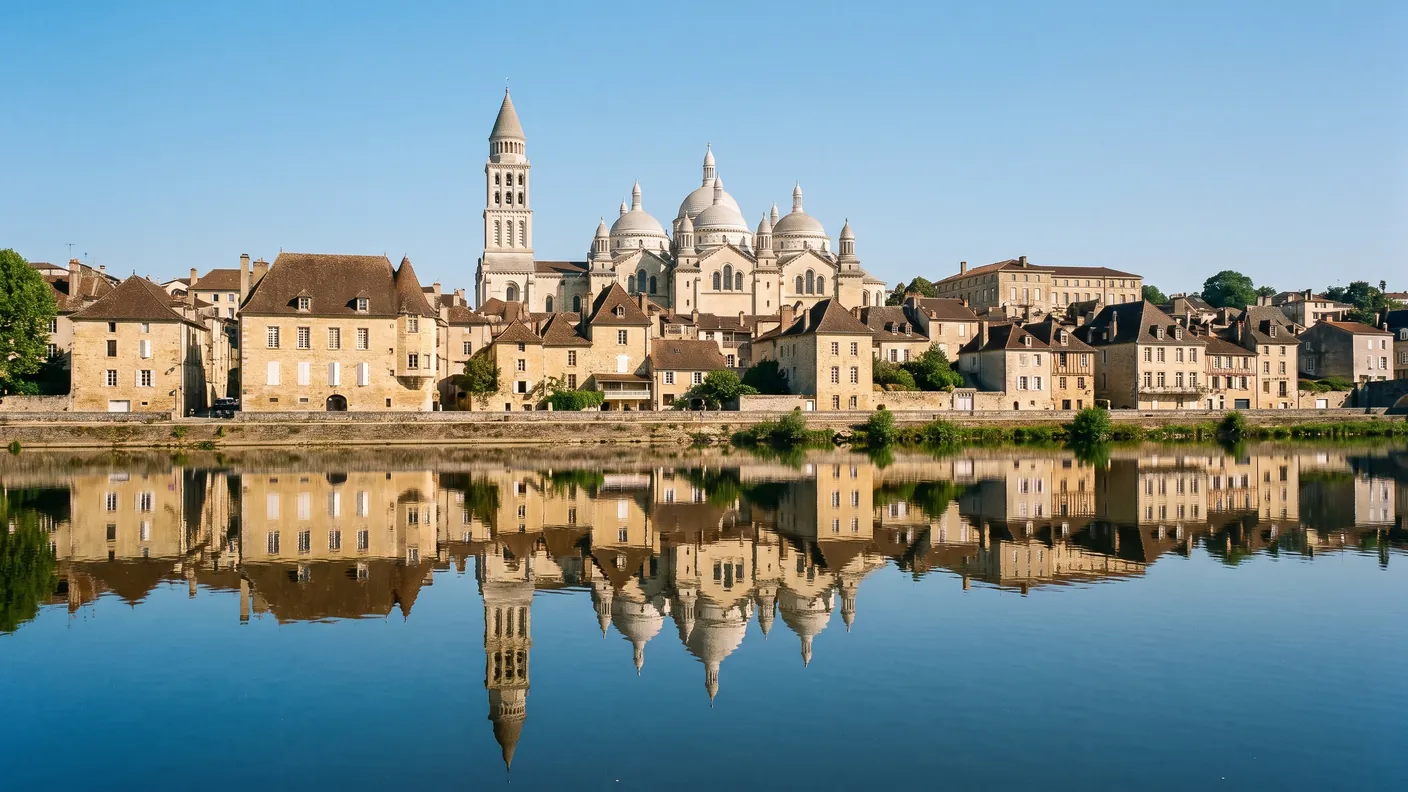
On the way to the Isle Valley
Direct trip from Bordeaux (~1 hr 16 min) via the A89, with stops along the way as desired—Saint-Émilion, Libourne, the Isle Valley. Written fixed-price quote within 30 minutes; choice of sedan or 7-passenger van; English-speaking driver.