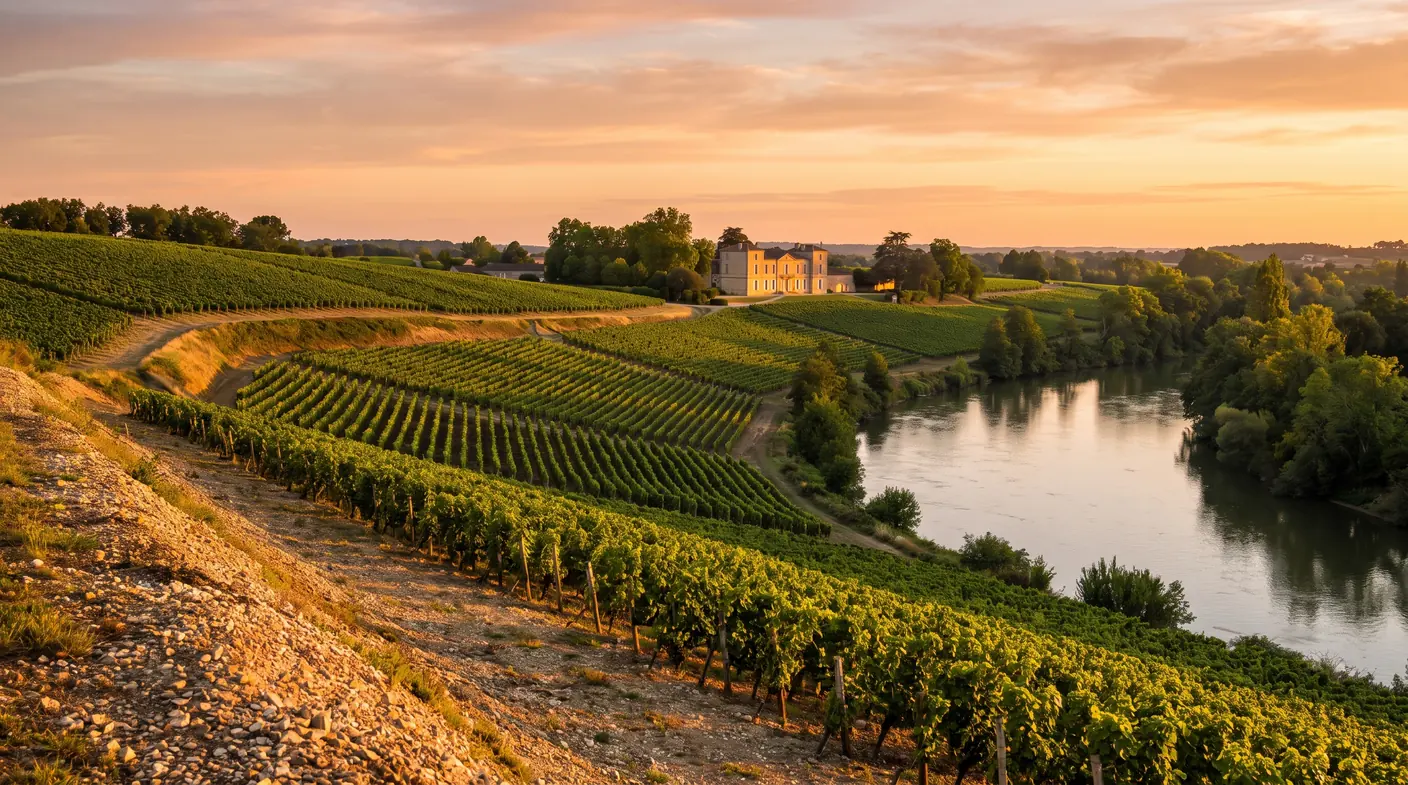
Bordeaux to Portets: Graves, Garonne and Mongenan
A wine-growing village in the Graves region, on the left bank of the Garonne, south of Bordeaux. A former river port, three listed châteaux—including the stunning Mongenan and its botanical garden—and the great wines of Graves on the gravelly hillsides. About 42 minutes from Bordeaux.
Portets at a Glance
Portets is the southern part of Bordeaux that transitions into the Graves region. About 42 minutes from Bordeaux, the left bank of the Garonne River unfolds with its terraces of light-colored gravel, rows of vineyards, and castles built of pale stone. This wine-growing village in the Gironde—with just over 2,600 residents—boasts three protected monuments, including the striking Château de Mongenan, its 18th-century “folly,” its remarkable garden, and its Masonic temple. Below, the Garonne River serves as a reminder that Portets was once a river port, a “gateway” to the river that is said to have given the village its name. People come here for the great wines of the Graves—dry reds and whites—for tastings in the cellars, and for the soft light that gilds the vineyards at sunset. This guide distinguishes verified facts from mere repetition: actual distances, precise heritage designations, and traditions clearly identified as such, with no embellished descriptions.
| Landmark | Details |
|---|---|
| Location | Gironde (33), Nouvelle-Aquitaine |
| Status | Wine-growing village · Langon district · Convergence Garonne Community of Communes |
| Population | ~2,618 residents (INSEE 2023), the residents of Portes |
| Must-Sees | Les Graves, Mongenan Castle, the banks of the Garonne |
| From Bordeaux | ~28 km · ~42 min · starting at €65 |
On the Bordeaux wine map, Portets occupies an easy-to-remember location: south of the city, on the left bank of the Garonne, right in the heart of the Graves appellation. It’s more of a winegrowing village than a tourist town—no large squares lined with terraces or streams of tour buses, but rather wineries, the half-open gates of châteaux, and a river that has shaped its entire history. This guide first provides you with specific details—where it is, how many residents, how far away—then traces the history of its heritage: the vineyards, the three listed châteaux, the old port, the Church of Saint-Vincent, and a day trip that pairs perfectly with La Brède, Cadillac, or the neighboring Sauternes region.
What strikes you about Portets is the contrast between the town’s apparent modesty and the true richness of its heritage. Nothing here is spectacular at first glance: no monumental structures visible from the road, no town square crowded with tourist terraces. And yet, as soon as you push open a castle gate or walk down toward the Garonne, the historical richness becomes immediately apparent—18th-century follies, remnants of the medieval barony, and traces of the old river port. It’s a destination that rewards curiosity and the time you devote to it, bucking the trend of rushed tourism. People rarely come here by chance—almost always for the wine or for Mongenan—and they often leave surprised to have found so much to see in such a small village. This blend of rural authenticity and exceptional heritage is precisely what gives the Graves on the left bank—this southern part of Bordeaux still off the beaten path—its charm.
Where is Portets located?
Portets is a commune in the Gironde department, on the left bank of the Garonne River, about twenty-eight kilometers south of Bordeaux, in the Graves wine region. Administratively, it has the INSEE code 33334 and the ZIP code 33640, and covers an area of nearly 15.5 km². The town is situated between the river to the east and the well-drained gravel terraces that rise gently inland—these soils of pebbles and gravel deposited by the Garonne over millennia, which give their name to both the wines and the appellation.
Contrary to what its proximity to Bordeaux might suggest, Portets is not part of the district of the Gironde capital but rather of the district of Langon, within the canton of Landes des Graves. The town is part of the Convergence Garonne community of municipalities, which brings together several wine-growing and riverside villages in this area. This affiliation clearly reflects the nature of the place: Portets belongs to the world of the Graves and the Garonne, oriented toward the wine-growing south rather than toward the city.
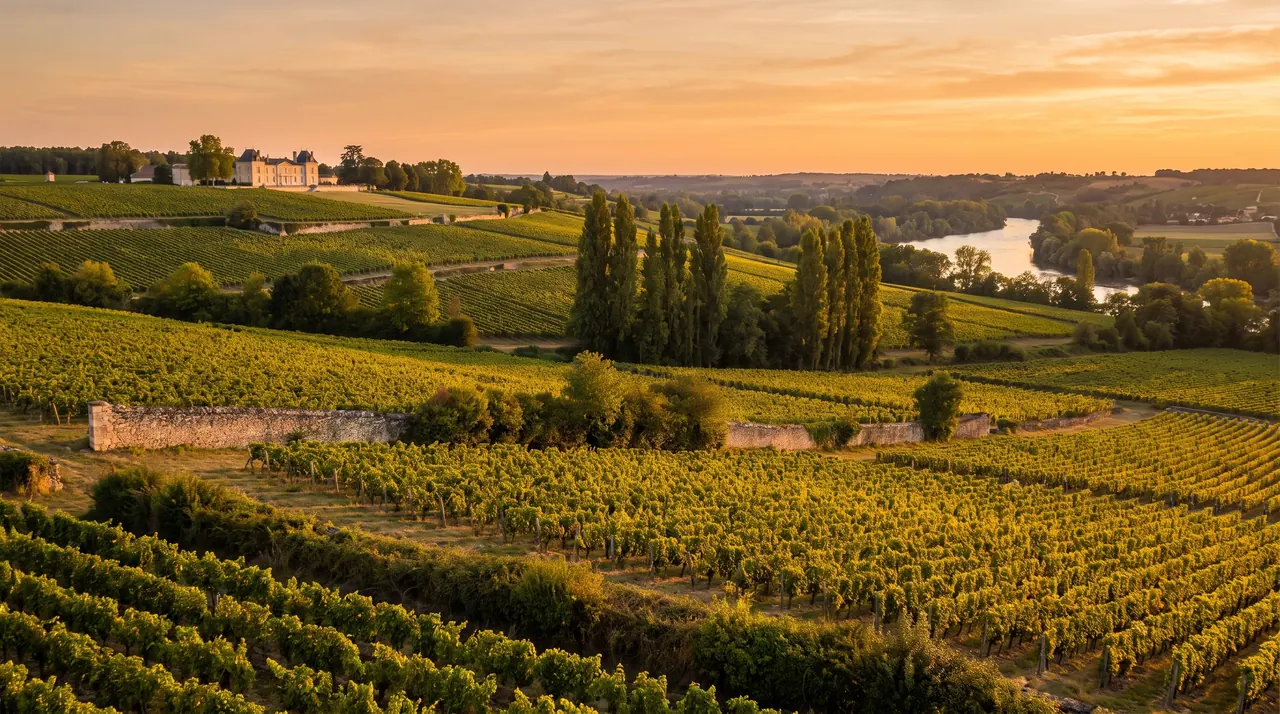
The landscape here is gentle yet distinctive. From the river, the terrain rises in successive steps—the famous gravel terraces—up to the higher elevations, where the vineyards sometimes give way to woodland. This topography is by no means insignificant: it is these rounded gravel banks, warmed by the sun and perfectly drained, that yield the finest plots. The Garonne River, to the east, forms a clear natural boundary; beyond it, on the opposite bank, other appellations and landscapes begin. Portets can thus be seen as a riverside community as much as a wine-growing region, straddling the water and the stone, between the historic traffic of river barges and the patient work of the winegrowers. This position at the interface—between Bordeaux and southern Gironde, between the river and the land—largely explains its history and its current character.
Portets or Portet-sur-Garonne?
There is often some confusion: Portets (Gironde) has nothing to do with Portet-sur-Garonne, a town in Haute-Garonne (31) located in the southern suburbs of Toulouse. The two names sound similar and both evoke the Garonne River, but they are two distinct towns, more than two hundred kilometers apart. If you’re planning a visit to the Graves region, be sure to head to Portets in Gironde—the small wine-growing village—and not the suburban town near Toulouse. Similarly, don’t confuse Portets’s INSEE code 33334 with 33333, which refers to Le Porge on the Médoc coast: two Gironde municipalities with neighboring codes but worlds apart.
How far is it from Bordeaux?
From downtown Bordeaux, it’s about 28 kilometers by road and a 40-minute drive under normal conditions (the route calculator shows nearly 27.8 km). You may sometimes see “22 km” listed: this figure corresponds to the distance as the crow flies, which is shorter than the actual route along the roads that follow the left bank. Portets is reached from the south of the metropolitan area, along the Graves region. The village is thus one of the first truly picturesque wine-growing stops you’ll encounter when heading south from Bordeaux, even before reaching La Brède, Cadillac, or Langon.
This proximity is one of Portets’s greatest assets. Just about 42 minutes from Bordeaux, you’re already far from the hustle and bustle of the city, immersed in a landscape of vineyards and the river that seems to move at a different pace. For visitors staying in Bordeaux, it’s the ideal destination for a day trip—or even a half-day excursion: the drive is short, but the change of scenery is complete. Within the Bordeaux wine region, Portets is one of those “inner-ring” wine destinations that are easy to reach yet offer everything you’d expect from a trip to the Graves—châteaux, wine tastings, and the banks of the Garonne—without the hour-plus drive required to reach more distant appellations in the Sauternes region or the heart of the Médoc.
| From Portets | Approximate distance |
|---|---|
| Bordeaux (downtown) | ~28 km · ~42 min |
| La Brède | ~11 km |
| Cadillac (across the river) | ~13 km |
| Langon | ~35 km |
| Sauternes | ~30 km |
How many people live in Portets?
How many residents does Portets have today?
Portets had approximately 2,618 residents According to the latest INSEE census (2023 population). Given a municipal area of approximately 15.5 km², this results in a population density of about 169 inhabitants per square kilometer—that of a large rural town undergoing suburbanization, still largely dominated by vineyards and farmland. This is no sleepy village: its proximity to Bordeaux and the Left Bank corridor has attracted new residents in recent decades, without erasing the town’s wine-growing identity.
The residents of the town are called Portésiens (and Portésiennes). The Gascon name for the town is Portèth, a form that reflects the Occitan roots of this entire southern Gironde region, where Gascon was long the language of daily life before French. This Gascon demonym and place name place Portets within a cohesive cultural region—that of the Graves and the Garonne Valley—where place names preserve the memory of the river and the cultivation of the land.
Within the southern Gironde region, this figure places Portets in the category of medium-sized municipalities: significantly more populous than the tiny villages of the Sauternes region, but a far cry from a city like Langon. This size accounts for a fairly balanced community structure, featuring a few local shops, a school, a vibrant community life, and, above all, the defining presence of the wineries that provide employment and bring vitality to the town. Portets’s demographics also reflect a broader trend in the region: the residential appeal of the Bordeaux suburbs, which is drawing families to settle in well-connected, still-green villages just minutes from the vineyards. We are thus faced with a vibrant village—neither a museum nor a commuter town—where the vineyards remain the defining thread of its collective identity.
| Data | Value |
|---|---|
| Population (INSEE 2023) | ~2,618 residents |
| Density | ~169 people per km² |
| Area | ~15.5 km² |
| Demonym | Residents of Portés |
| Gascon name | Portèth |
Where does the name Portets come from?
Where does the name Portets actually come from?
The most commonly cited explanation links the name Portets to its former port on the Garonne River. The place name is thought to derive from the idea of a “port” or “gateway” to the river: Portets is believed to have been a loading and unloading point for goods transported along the Garonne before the era of railroads and roads. This hypothesis has the merit of consistency: it aligns with the geography of the area, which faces the river, and with the documented river activity that shaped the village’s economic life for centuries.
However, these etymologies must be treated with caution. The origins of medieval place names are often disputed and have been reinterpreted over time, and popular reconstructions—such as “Portets comes from ‘port’”—do not always meet the rigorous standards of a linguistic analysis. We therefore present it for what it is: the most widespread and plausible explanation, supported by the port’s actual role, but stated in the conditional tense. What is certain, however, is that the river and river trade have indeed shaped the town’s destiny, as the rest of this guide will show.
This connection between the village’s name and its port illustrates a common phenomenon in the toponymy of the Garonne Valley, where many places bear traces of their relationship to the river—crossings, ports, fords, and ferries. The river was long the main route for travel and trade, long before modern roads, and it was only natural that the riverside towns would derive their identity—and sometimes their names—from it. Whether or not this hypothesis has been definitively proven for Portets, it reflects a geographical reality: here, everything stems from the Garonne. The wine itself, before being shipped by rail, traveled down the river to the docks of Bordeaux, making the port one of the essential links in the village’s historic wine-growing prosperity.
The Graves Vineyard
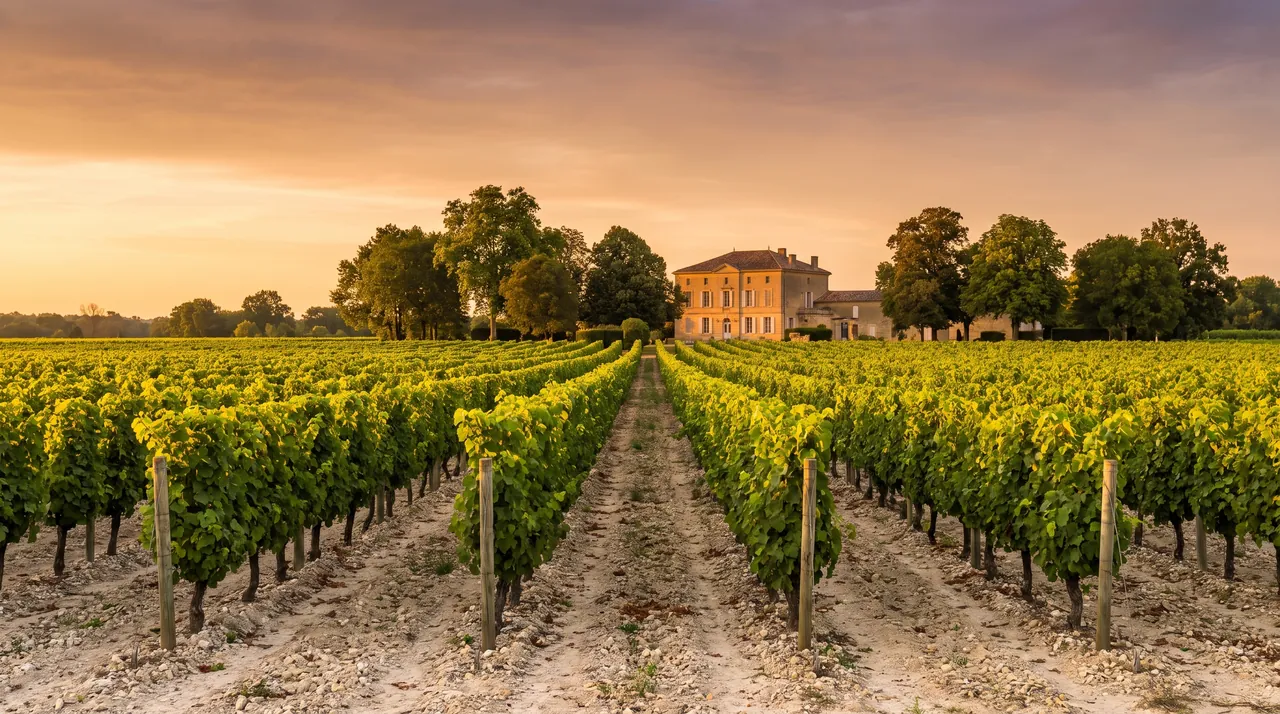
Portets belongs to the Graves appellation, one of the oldest and most distinctive in the entire Bordeaux region. Its uniqueness lies in its name: Graves is the only major Bordeaux appellation named after its soil. These “graves”—a mixture of pebbles, gravel, and sand deposited by the Garonne River—provide exceptional drainage and heat retention, which promote the ripening of the grapes. It is on these well-exposed hillsides, between the river and the forest, that part of the history of Bordeaux wine has been written.
The Graves region stretches along the left bank of the Garonne River, encompassing about 40 municipalities, from the outskirts of Bordeaux to the outskirts of Langon in the south. Portets is located entirely within this wine-growing region. The appellation produces both dry reds and dry whites, which sets it apart from many Bordeaux terroirs that specialize in a single wine type. This dual focus is what makes a tasting in the region so appealing: at a single estate, you can experience both the structure of a Graves red and the freshness of a dry white.
The Graves hold a special place in the history of Bordeaux wine. It was here, south of the city, on these stony terraces, that the Bordeaux wine region first began to flourish, long before other areas rose to prominence. The very name “Graves” refers first to the nature of the soil rather than to a wine: to say that an estate is “on the Graves” is to evoke those river-polished pebbles that release the heat stored during the day and help the grapes ripen. This direct link between the soil and the name makes Graves unique among the great Bordeaux appellations and lends a visit to Portets an educational dimension: as you walk through the rows, you understand why the terroir matters so much in this corner of the Gironde.
What wines does Portets produce?
For their red wines, the winemakers at Portets work with the classic Bordeaux grape varieties: the Cabernet Sauvignon, the Merlot and the Cabernet Franc, blended to produce structured wines with aging potential, often characterized by great depth. In dry whites, the flavor profile is based on the Sémillon, the Sauvignon and the Muscadelle, which contribute, respectively, roundness, aromatic liveliness, and floral notes. The result: dry, finely crafted Graves whites that hold their own both at the table and during a few years of cellaring.
What attractions are there to visit in Portets?
Several renowned estates fly the Portets flag. The Château de Portets (about 30 hectares) combines a vineyard with a château that dates back to the Middle Ages. Château Rahoul, whose manor house dates back to 1646, cultivates nearly 38 hectares and is one of the village’s historic estates. Château Crabitey (also about 30 hectares), a former orphanage turned vineyard and long associated with the Butler family, rounds out this trio of iconic estates. A useful clarification to avoid confusion: Denis Dubourdieu’s famous Clos Floridène, often mentioned in the Graves region, is not located in Portets but rather near Pujols-sur-Ciron and Illats—it’s best not to attribute it to this municipality.
Each of these estates has its own history, but they all share a common scale: that of a family-owned estate or one on a human scale—the size of a winemaker’s operation rather than a vast industrial enterprise. This is one of the charms of Portets and the Graves region in general—you’ll still find a personal welcome here, often provided by the owners themselves or a small team, a far cry from the anonymity of some of the larger appellations. This personal touch makes all the difference during a tasting: they take the time to explain a vintage, show you around the cellar, and let you sample a specific vat. For visitors, it’s an opportunity to learn as much as to taste, and to leave with a few bottles chosen with full knowledge of the facts. Again, it’s best to call or make a reservation in advance: the estates aren’t always open continuously, and visiting by appointment ensures a high-quality experience.
Three Protected Castles
Although Portets is a small wine-growing town, it boasts a wealth of heritage that is rare for its size: three châteaux designated as historic monuments, each with its own status and history. An important detail for those who value factual accuracy: in heritage law, “registered” and “classified” are not synonyms. Registration is the first level of protection; classification, reserved for buildings of major public interest, is the highest. The three castles of Portets exemplify these different statuses.
Portets Castle
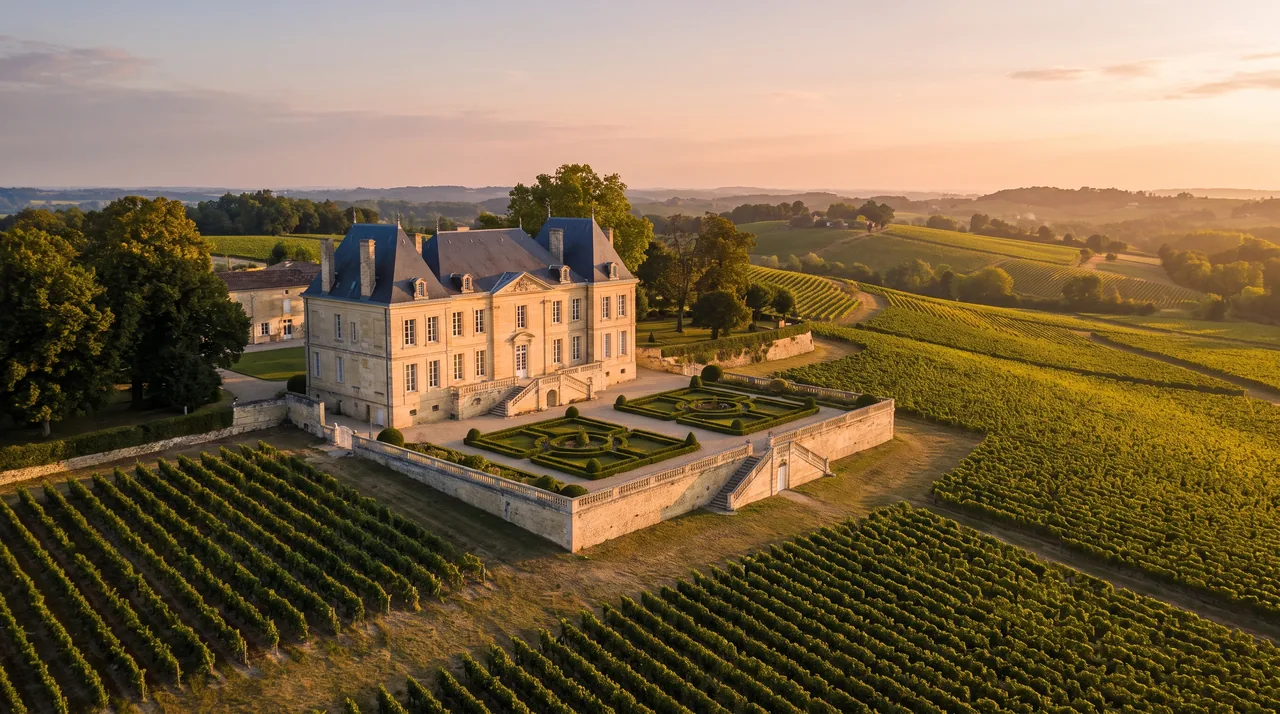
The Château de Portets traces its origins back to the Middle Ages: it served as the stronghold of the barony of Portets before being remodeled over the centuries and incorporated into a wine estate. It has been listed as a historic monument since April 29, 2013 (official Mérimée entry PA33000172, accessed July 24, 2026). Tradition associates this château with Napoleon’s visit (we’ll return to this later), and it occasionally opens its doors for events celebrating the heritage of the Graves region. Its appearance blends traces of the ancient fortress with later alterations, typical of Bordeaux’s wine-growing châteaux.
Mongenan Castle
Mongenan Castle is undoubtedly the most charming attraction in Portets. It is an 18th-century “folly,” built around 1736 for Antoine de Gascq, founder of the Bordeaux Academy of Sciences, Literature, and Arts. Designated a historic monument in 2003 (official Mérimée entry PA00083672, accessed July 24, 2026), the estate features a botanical garden designated a “Jardin remarquable” (Remarkable Garden), rich in 18th-century plants, as well as a remarkable Masonic temple housing period ritual objects. Open to visitors and transformed into a living museum of the Age of Enlightenment, Mongenan is, for many visitors, reason enough to make a detour via Portets.
The Château de l'Hospital
The Château de l'Hospital, for its part, bears a prestigious signature: it was built between 1787 and 1789 by the architect Victor Louis, who also designed the Grand Théâtre de Bordeaux. This pedigree makes it a landmark of Gironde’s neoclassical architecture, on the scale of a Graves estate. Its protected status is twofold: the château has been partially classified as a historic monument since 1973 and partially listed since 2013 (official Mérimée entry PA00083671, accessed July 24, 2026). Here again, the distinction in status is not merely a scholarly detail: it reflects the recognized value of certain parts of the building, which are protected at the highest level.
The fact that a single small town is home to three listed buildings—one of which was designed by the renowned architect of Bordeaux’s Grand Théâtre—speaks volumes about Portets’s former prestige. In the 17th and 18th centuries, this corner of the Graves region attracted Bordeaux’s judicial nobility and parliamentarians, who built country estates and vineyards here. These châteaux are not merely beautiful buildings: they bear witness to an era when Bordeaux’s bourgeoisie and aristocracy took to the Graves countryside, blending the art of living, scientific curiosity—as seen at Mongenan—and vineyard management. Today, this heritage makes Portets a microcosm of Gironde’s architectural history, from the Middle Ages to the Age of Enlightenment, waiting to be discovered during open houses and heritage events.
Wine Production and Aging
Behind the gates of the châteaux, most of the work takes place in the cellars. The Graves region is renowned as one of the historic birthplaces of Bordeaux wine: it was south of the city, on these pebble-strewn terraces, that some of the region’s oldest vineyards were established, long before other areas were developed. At Portets, as elsewhere in the appellation, winemaking follows Bordeaux traditions, with particular attention paid to grape ripeness, which is enhanced by the drainage and warmth of the gravel soils.
How are Graves wines aged?
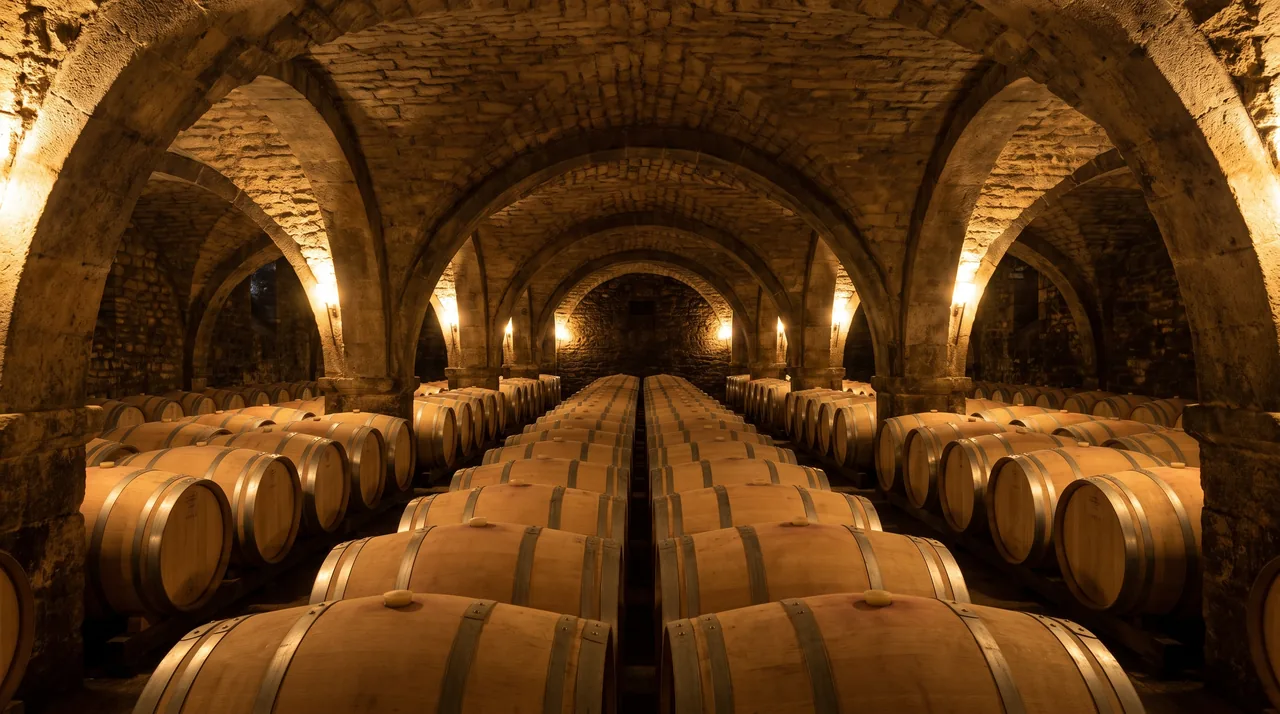
For reds, the Cabernet Sauvignon–Merlot blend is generally followed by aging in oak barrels, which rounds out the tannins and adds toasty and spicy notes. The great dry whites of Graves—led by Sémillon and Sauvignon—can also be aged in oak, a technique that sets the appellation apart: few Bordeaux terroirs produce dry whites of this caliber, capable of aging. We won’t go into detail about aging periods, which vary from one estate and vintage to another; what’s important to remember is this dual excellence in reds and whites that defines the Graves region around Portets.
Red or dry white—which should you try first?
It’s hard to choose, and that’s a good thing: a visit to the Graves region with Portets is the perfect opportunity to compare the two styles in one place. The reds will appeal to lovers of structured, age-worthy wines and slow-cooked dishes; the dry whites—rarer and more surprising for those who still associate Bordeaux solely with red wine—pair beautifully with seafood and the refreshing crispness of summer. The best thing to do: ask the estate to let you taste a red and a white side by side, to appreciate the dual personality of the Graves terroir.
For many, a visit to a winery remains the highlight of a day in the Graves. Moving from the bright, open air of the vineyards to the cool, dim light of the cellars, walking past rows of barrels, and breathing in the scent of wood and aging wine: the experience is immediately sensory, appealing even to those who aren’t wine experts. It’s also there that the winemaker shares the story of their work—the harvest, the selection, the blending, the choice of barrels—and that you come to understand everything that sets a supermarket bottle apart from an estate wine. At Portets, this encounter takes place on a human scale, in cellars that are often modest but authentic, where the sharing of knowledge matters just as much as the tasting itself.
The Port and the Banks of the Garonne
Before becoming a wine-growing village, Portets was first and foremost a river port. The Garonne River, here, is not merely a backdrop: it is the hub around which economic life has revolved for centuries. Goods—wines, timber, and foodstuffs—were transported via the river, and the ports on the left bank, such as Portets, or that of Cadillac on the opposite bank—served as true “gateways” to the Garonne, connecting the wine-growing hinterland to the docks of Bordeaux and, beyond that, to the estuary and the sea.
What remains of the old port?
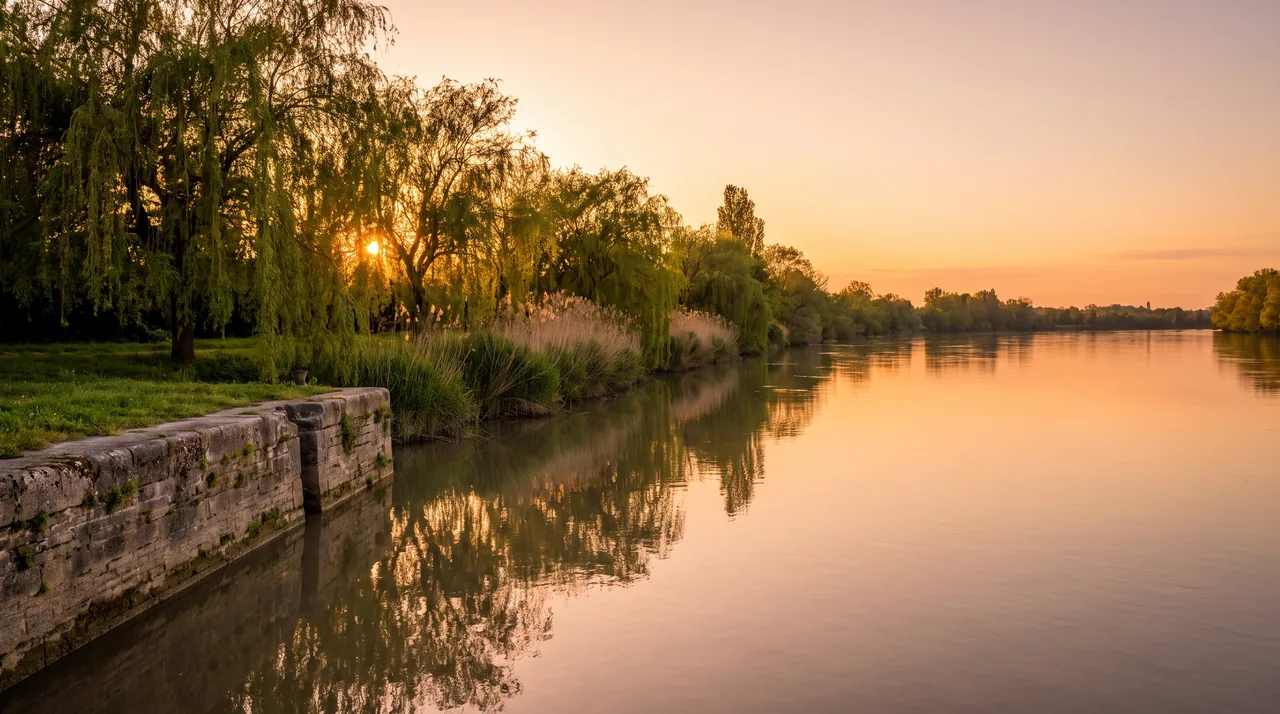
Port activity declined with the rise of rail and then road transport, but the old port and the banks of the Garonne are still part of the town’s landscape heritage. Here you’ll find that special light of the river, its banks lined with willows and reeds, and its reflections at sunset—a landscape that’s more intimate and less crowded than the major wine-growing regions. A watchtower, known as the “President de Gascq” bridge, once overlooked the port; it is a part of the local heritage, not designated as a historic monument, but one that serves as a reminder of the strategic importance of this riverfront site. Strolling along the Garonne at Portets is, in a way, a chance to reconnect with this past of trade and river transport.
The river here is no ordinary waterway: the Garonne is subject to the tides up to this point, a phenomenon that has long dictated the rhythm of navigation. Ships were loaded and unloaded according to the tide, and this constraint shaped all river life on the left bank—the famous tradition of the imperial crossing of 1808, incidentally, mentions a delay caused by the winds and the tide. Today, peaceful landscapes unfold before the walker: a few docks, reed beds, the slow flow of the water, and, on the opposite bank, the hillsides of Cadillac. This stretch of the Garonne offers a welcome contrast to visits to the vineyards and châteaux—a refreshing, expansive respite, particularly beautiful at the end of the day when the light skims the river’s surface.
From the Barony to Napoleon
The history of Portets is best understood through its barony, which flourished from the 12th to the 16th century and had the Château de Portets as its stronghold. The estate passed through the hands of several noble families, including the de Gascq family—who were among the founders of Mongenan—and later the Séguineau de Lognac family. These lineages shaped the town’s castle-filled landscape, ranging from medieval fortresses to country estates. The 18th century, in particular, marked a golden age of architecture with the construction of Mongenan and the Château de l’Hospital, both testaments to the refinement of the Bordeaux Enlightenment.
Did Napoleon really pass through Portets?
This is a story that people in the village like to tell: according to a reported tradition, Napoleon and Josephine are said to have stopped at Portets Castle on July 31, 1808, as an unexpected delay—attributed to the winds and the tide—forced them to stop. The story is charming and deeply rooted in local memory, but it must be presented for what it is: a tradition, not a firmly documented fact. We are therefore sharing it with this perspective, because it is part of the Portets narrative, without treating it as historical fact. The great houses of the Bordeaux region have no shortage of such grand legends, and they should be savored without taking them at face value.
How did the village change during the 19th century?
The 19th century saw Portets consolidate its identity as a wine-growing and riverine town. The reconstruction of the parish church in 1861 dates from this period, a sign of the town’s vitality. The vineyards, like those throughout the Bordeaux region, weathered the crises of the century—powdery mildew, phylloxera, and downy mildew—before reestablishing themselves with the grape varieties and winemaking practices that today define the reputation of the Graves region. Gradually, the river ceded its leading role to the vineyards, and Portets became the winegrowing village that people now visit for its châteaux and wineries.
This journey—from medieval stronghold to wine-growing village, via the extravagances of the 18th century and the decline of the port—fairly well sums up the long history of the entire Graves region. Each era has left its mark: the barony and its castle, the country estates of Bordeaux parliamentarians, the Second Empire-era church, and finally the slow transformation of a riverside town into a residential and wine-growing community. Walking through Portets today means reading these successive layers, often without even realizing it—a castle gate here, a mansion there, the outline of an old port street near the river. It is this rich historical depth, more than any single monument, that gives the village its character and depth, and that rewards the attentive visitor.
Saint-Vincent Church
In the heart of the village stands the Church of Saint-Vincent, dedicated to the patron saint of winegrowers—a choice that is, of course, far from coincidental in a village in the Graves region. The current building was constructed in 1861, based on plans by architect Henri Duphot. It features three naves with ribbed vaults and a bell tower-porch topped with a stone spire, in a Neo-Gothic style common in the Gironde countryside during the second half of the 19th century. This church replaces an older structure that had been built within the ruins of the castle—proof, if any were needed, of the close intertwining of seigneurial power and religious life in Portets.
Is Saint-Vincent Church a listed historic monument?
Be aware of a common source of confusion: the Saint-Vincent Church listed in the Inventory on the heritage registry (entry IA00067908), which means it has been studied and cataloged by the heritage authorities. But This does not constitute protection as a historic monument : An inventory is a fact-finding exercise, distinct from classification and designation. It would therefore be inaccurate to write that the church is “classified” or “designated as a historic monument.” This distinction illustrates a useful principle for visiting the region: not everything that is old and remarkable is automatically a “historic monument” in the legal sense. In Portets, the three castles hold this status, while the church is listed in the Inventory.
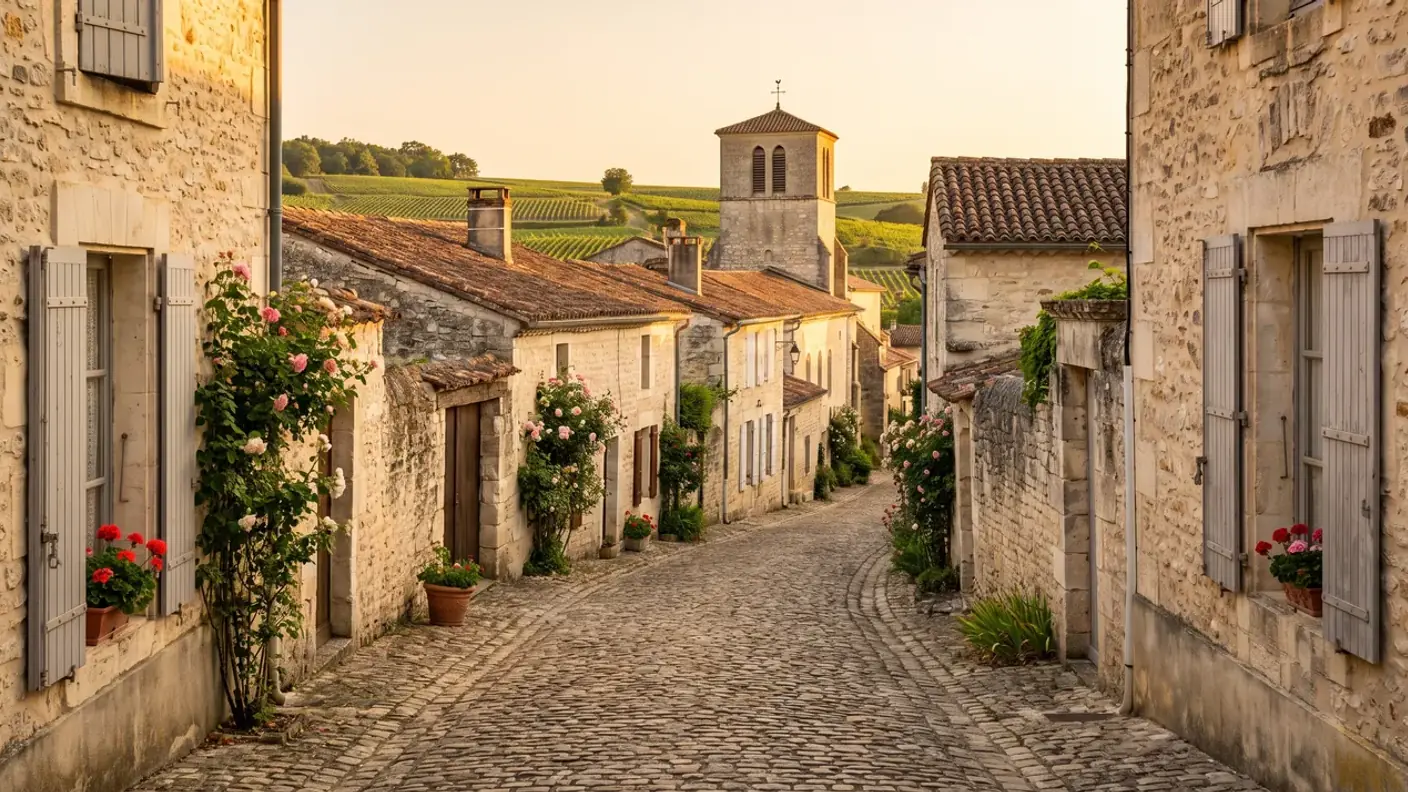
The choice of Saint Vincent as the parish’s patron saint is by no means a coincidence in a village in the Graves region. Saint Vincent is traditionally invoked by winegrowers, and many wine-growing towns in Gironde dedicate their churches to him and hold Saint Vincent’s Day celebrations in the winter. In Portets, this dedication symbolically seals the bond between the village and the vineyards: the church watches over the winemakers just as the châteaux watch over the vineyards. The 1861 building, with its bell tower porch and stone spire, also serves as a convenient visual landmark in the heart of the village—the bell tower visible in the distance between the rows of vines, marking the center of town. It is a modest yet deeply meaningful stop, well worth including on a stroll through the ancient alleyways of Portets.
What is there to do in Portets?
At Portets, we take our time. The day’s itinerary covers a very small geographical area, but it’s packed with activities: the morning is spent at the Château de Mongenan, with its 18th-century museum, its “remarkable” garden, and its surprising Masonic temple; the early afternoon is set aside for a wine tasting at one of the Graves estates—Château de Portets, Château Rahoul, or Château Crabitey—almost always by appointment; and the end of the day is reserved for a stroll along the Garonne River, where the old port once stood. Depending on the season, you can time your visit to coincide with the village’s major wine events: the Graves Heritage Open House in the fall, or the friendly “Boucle des vignerons” at the start of the school year. The trip can easily be extended to La Brède, Cadillac, or the Sauternes region, just a few kilometers away. It’s a getaway away from the crowds, experienced from a winemaker’s perspective, that prioritizes encounters and tastings over mass tourism.
- Visit Mongenan Castle: the 18th-century museum, the botanical garden designated a “Jardin remarquable,” and the Masonic temple, located in a “folly” listed as a historic monument.
- Wine tastings at the châteaux of Graves: Château de Portets, Château Rahoul, Château Crabitey—visits are usually by appointment only, for tastings of dry reds and whites.
- The Graves Heritage Open House: In the fall (around October), at the Château de Portets and neighboring estates, this is an opportunity to step through gates that are usually closed.
- The “Winegrowers’ Loop”: a walk of about 15 kilometers featuring wine tastings, held in September through the vineyards.
- Stroll along the banks of the Garonne: follow the riverbanks and the site of the old river port at sunset to enjoy the light reflecting off the river.
- Places to visit nearby: La Brède and Montesquieu Castle (~11 km), Cadillac on the opposite bank (~13 km), and the Sauternes region to the south.
- Stock up at nearby markets: Portets doesn't have a large, well-known weekly market, but the surrounding towns in the Graves region hold their own markets—check with locals to find out which days they're held.
| Activity | Good to Know |
|---|---|
| Mongenan Castle | Museum, notable garden, Masonic temple — check visiting hours |
| Wine Tasting at the Winery | Portets Castle, Rahoul, Crabitey — generally by appointment |
| Graves Open House | Fall (around October) — heritage and wine event |
| Winegrowers' Loop | September — ~15 km walk with food tastings |
| Along the Garonne River | Former river port, a stroll along the river |
About Portets
Portets has the advantage of being at the center of a cluster of remarkable destinations that are easy to visit in a single day. To the west, La Brède (about 11 km) is home to the Château de Montesquieu, a medieval fortress surrounded by a moat where the author of *The Spirit of the Laws* lived and wrote—one of the most captivating literary tours in the Gironde. On the opposite bank of the Garonne, Cadillac (about 13 km away) boasts the imposing Château des Ducs d’Épernon and its fortified town, at the gateway to the Côtes-de-Bordeaux wine region.
What destinations can you visit next from Portets?
Heading south, you enter the Sauternes region, home to great sweet wines, and then reach Langon (about 35 km), the gateway town to southern Gironde on the Garonne River. Each of these stops deserves its own guide and pairs perfectly with Portets to create a custom “Graves and Garonne” day trip. To explore further, check out our guides dedicated to Sauternes, Langon, and Bazas—all nearby destinations that extend your discovery of southern Gironde.
One of the joys of a getaway to Portets is precisely the opportunity to tailor your own day-by-day itinerary. You can stay true to the spirit of the Graves region and visit two wineries in a row; you can combine history and wine by visiting Mongenan and the Château de Montesquieu in La Brède; you can explore the river by traveling from Portets to Cadillac and its vineyards; or, for lovers of fine sweet wines, head toward the Sauternes region and continue on to Langon. None of these itineraries involve long drives: everything is within a radius of about thirty kilometers around the village. It is this concentration of remarkable sites, all within easy reach of one another and of Bordeaux, that makes southern Gironde one of the region’s most rewarding destinations for day trips.
| Destination | Distance from Portets | Must-See |
|---|---|---|
| La Brède | ~11 km | Montesquieu Castle |
| Cadillac | ~13 km | Castle of the Dukes of Épernon |
| Sauternes | ~30 km | Sweet Wine Vineyards of the Sauternes Region |
| Langon | ~35 km | Garonne, Gateway to Southern Gironde |
| Bazas | ~45 km | UNESCO Cathedral |
How to get to Portets from Bordeaux
Getting to Portets from Bordeaux is easy: the village is located about 28 kilometers south, on the left bank, about 40 minutes by car under normal conditions. Leave the city to the south and follow the Graves highway, which runs along the Garonne River. Portets’s location makes it an excellent first stop for a day in the vineyards: close to Bordeaux, yet already fully immersed in the atmosphere of the châteaux and wineries.
The route generally follows the left bank southward, along the roads that serve the Graves region. The estimated travel time—about forty minutes—applies outside of rush hour: leaving the Bordeaux metropolitan area can take longer in the late afternoon or during peak travel times. It’s therefore best to plan your trip for mid-morning or midday, both to avoid traffic and to arrive at the wineries at times that are ideal for tours. Once you’ve passed the southern suburbs, the landscape changes quickly: urban areas give way to vineyards, and within a few kilometers, it becomes clear why Portets is considered one of the most accessible gateways to the Graves wine region from Bordeaux.
How much does the trip from Bordeaux to Portets cost?
For a private driver service, the Bordeaux → Portets route starts at €65 during the day for a sedan (1 to 3 passengers), with a fixed price confirmed in writing before departure—no meter, no surprises. A surcharge applies at night, on weekends, and on holidays, and a van is available for groups of more than four passengers. The rate is a door-to-door flat rate: we’ll pick you up at your address in Bordeaux (or at the airport) and drop you off directly at the château or estate of your choice.
| Route | Distance / Duration | Rates |
|---|---|---|
| Bordeaux → Portets | ~28 km · ~42 min | starting at €65 |
| Portets → nearby castles | Depending on the itinerary | Based on a quote |
| Bordeaux Airport → Portets | Depending on the itinerary | Based on a quote |
Why hire a private chauffeur to visit Portets?
The reason is obvious as soon as you start talking about wine tasting: at Portets, people come to taste dry reds and whites from Graves, and it’s much more enjoyable—and responsible—to leave your car at the garage. a chauffeur service lets you visit two or three wineries in a day without worrying about driving, set your own pace, and return to Bordeaux peacefully as the sun sets. The fixed-rate package, known in advance, turns your getaway to Graves into a hassle-free day: you enjoy yourself, we do the driving.
Frequently Asked Questions
Where is Portets located?
Portets is a commune in the Gironde department, in the Nouvelle-Aquitaine region, on the left bank of the Garonne River, about 28 kilometers south of Bordeaux. It is part of the Graves wine region and falls under the jurisdiction of the Langon district (rather than Bordeaux), within the Convergence Garonne community of municipalities. Its INSEE code is 33334 and its ZIP code is 33640. The village is nestled between the river and the gravel terraces that give their name to the appellation and its wines.
How many people live in Portets?
Portets had a population of approximately 2,618 according to the INSEE census (2023), with a population density of about 169 people per square kilometer over an area of approximately 15.5 km². Its residents are known as Portésiens and Portésiennes. The Gascon name for the town is Portèth, a reminder of the Occitan roots of this southern Gironde region. It is a large rural wine-growing town that has seen an influx of new residents in recent decades, drawn by its proximity to Bordeaux, though this has not diminished its identity as a wine-growing village in the Graves region.
Is Portets part of the Graves wine region?
Yes, absolutely. Portets is located in the Graves appellation, on the left bank of the Garonne River. Graves is the only major Bordeaux appellation named after its soil—a mixture of pebbles and gravel deposited by the river, renowned for its excellent drainage. The Graves region spans some forty communes, stretching from the outskirts of Bordeaux to the vicinity of Langon. The appellation produces both dry reds and dry whites, which is what makes a tasting at the Portets estates so appealing.
Should Portets be confused with Portet-sur-Garonne?
No, they are two completely separate towns. Portets is located in Gironde (33), in the Graves wine region, about 28 km south of Bordeaux—a drive of about 42 minutes, depending on traffic. Portet-sur-Garonne, on the other hand, is a town in Haute-Garonne (31), in the southern suburbs of Toulouse, more than two hundred kilometers away. The two names sound similar and both refer to the Garonne River, but they are not related in any way. If you’re planning a visit to the Graves region and its châteaux, you’ll want to head to Portets in Gironde.
Which castles should you visit in Portets?
Portets is home to three castles designated as historic monuments. The Château de Portets, of medieval origin, has been listed as a historic monument since 2013. Mongenan Castle, an 18th-century “folly,” has been classified as a historic monument since 2003 and houses a museum, a remarkable garden, and a Masonic temple—it is the most visited of the three. The Château de l’Hospital, designed by architect Victor Louis (who also designed the Grand Théâtre de Bordeaux), is partially classified and partially listed. Mongenan is the most accessible to the general public.
Is Mongenan Castle open to visitors?
Yes. The Château de Mongenan, designated a historic monument in 2003, is open to visitors. Built around 1736 for Antoine de Gascq, founder of the Bordeaux Academy of Sciences, this 18th-century “folly” houses a museum dedicated to the Age of Enlightenment, a botanical garden designated a “Remarkable Garden ”—rich in period plants—and a surprising Masonic temple housing ritual objects. Be sure to check the opening days and hours before your visit, as they vary by season.
What wines are produced at Portets?
Portets produces AOC Graves wines, including both reds and dry whites. The reds are made primarily from Cabernet Sauvignon, Merlot, and Cabernet Franc, resulting in structured wines with aging potential. The dry whites blend Sémillon, Sauvignon, and Muscadelle, in the refined style for which Graves is renowned. Among the village’s renowned estates are Château de Portets, Château Rahoul (a manor house dating from 1646), and Château Crabitey. Note: Clos Floridène, often mentioned, is not located in Portets but rather near Pujols-sur-Ciron and Illats.
Did Napoleon really pass through Portets?
This is a local tradition, and should be taken as such. According to one account, Napoleon and Josephine are said to have stopped at the Château de Portets on July 31, 1808, after a delay caused by the winds and the tide forced them to halt. The anecdote is deeply rooted in the village’s memory, but it is more a matter of tradition than a firmly documented fact. We share it with this perspective: it is part of Portets’s folklore, without the weight of historical certainty. The grand estates of the Bordeaux region often harbor this sort of imperial legend.
Is the Saint-Vincent Church in Portets a designated historic site?
No, Saint-Vincent Church is not a historic monument. It is listed in the Heritage Inventory (entry IA00067908), which means it has been studied and cataloged, but the Inventory does not provide protection as a historic monument—so it should not be referred to as “classified” or “listed as a historic monument.” The current building was constructed in 1861 by architect Henri Duphot, featuring three naves with ribbed vaults and a bell tower with a stone spire. In Portets, it is the three castles that hold historic monument status.
How much does it cost to travel from Bordeaux to Portets with an executive car service?
The Bordeaux → Portets route starts at €65 during the day for a sedan that can accommodate 1 to 3 passengers. The fare is a fixed rate, confirmed in writing before departure, with no meter and no surprises. A surcharge applies at night, on weekends, and on holidays, and a van is available for groups of more than four passengers. This is a door-to-door price: pickup at your address in Bordeaux or at the airport, and drop-off directly at the château or estate of your choice in the Graves region.
How long does it take to get from Bordeaux to Portets?
Under normal conditions, it takes about 42 minutes by car to travel the approximately 28 kilometers between downtown Bordeaux and Portets. You may sometimes see “22 km” listed; this figure refers to the distance as the crow flies, which is shorter than the actual route along the roads on the left bank. Travel time may vary depending on traffic as you leave the Bordeaux metropolitan area, particularly during rush hour. In any case, Portets remains one of the first truly picturesque wine-tasting stops south of Bordeaux.
Is it possible to visit several vineyards in the Graves region in a single day?
Yes, and that’s actually one of the main attractions of Portets. The estates are close to one another, and the town is ideally located for exploring La Brède, Cadillac, or the Sauternes region. In a single day, you can reasonably visit two or three châteaux, provided you schedule your appointments in advance, as most require reservations. With a chauffeured transfer, planning is even simpler: you can enjoy the wine tastings without worrying about driving and return to Bordeaux stress-free at the end of the day.
When is the best time to visit Portets?
Spring and fall are particularly pleasant. In the fall, around October, the vineyards are ablaze with color, and this coincides with the Graves Heritage Open House, an opportunity to explore estates that are usually closed to the public. In September, the “Boucle des vignerons” offers a 15-kilometer walk punctuated by tastings through the vineyards. Summer is also a great time to visit, thanks to the low-angle sunlight over the Garonne and the long evenings. Always remember to book your tours and tastings in advance, as visits to the estates are generally by appointment only.
Further Reading
- Book your trip from Bordeaux to Portets: fixed-price quote confirmed in writing, door-to-door service, no obligation.
- All our destinations departing from Bordeaux: castles, vineyards, and villages in the Gironde and beyond.
- Sauternes: Sweet, Golden Wine and Château d'Yquem — the home of great sweet wines, south of Portets.
- Langon: the Garonne River, the church, and the Porte du Sauternais—the gateway town of southern Gironde on the Garonne River.
- Bazas: the UNESCO-listed cathedral and the fattened oxen—a heritage and culinary getaway in southern Gironde.
Sources and References
- Portets — Wikipedia — geography, demographics, history, port
- Portets Castle — POP/Mérimée PA33000172 — Listed as a Historic Monument in 2013
- Mongenan Castle — POP/Mérimée PA00083672 — listed as a historic monument in 2003, garden, Masonic temple
- Château de l'Hospital — POP/Mérimée PA00083671 — Victor Louis, MH 1973/2013
- AOC Graves — Wikipedia — appellation, left bank
- Mongenan Castle — Official Website — Museum, Notable Garden
Article updated on July 19, 2026.
Our Latest Guides
 Entre-deux-Mers & Southern Gironde
Sauternes: Sweet, Golden Wine and Château d'Yquem
Read the guide →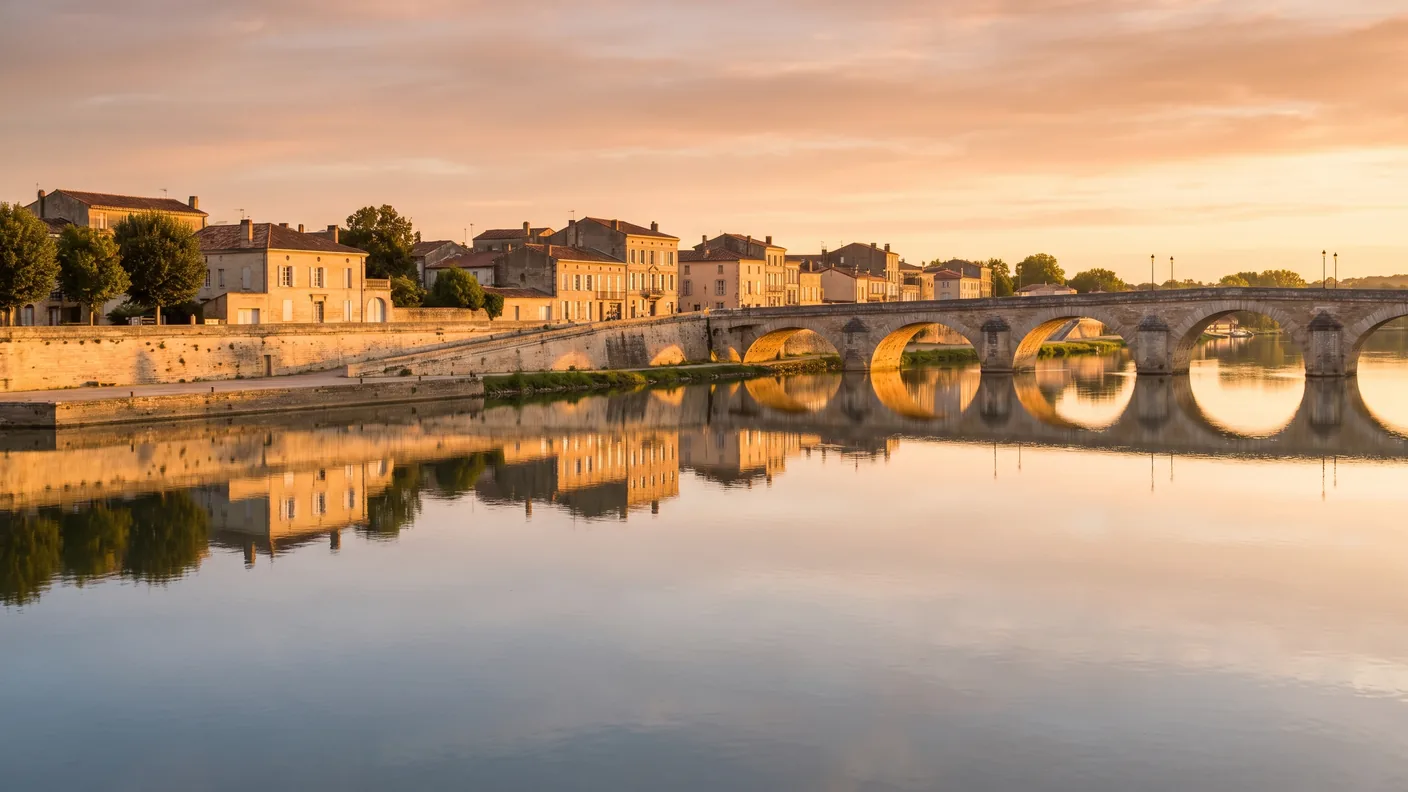 Entre-deux-Mers & Southern Gironde
Langon: the Garonne River, the church, and the gateway to the Sauternes region
Read the guide →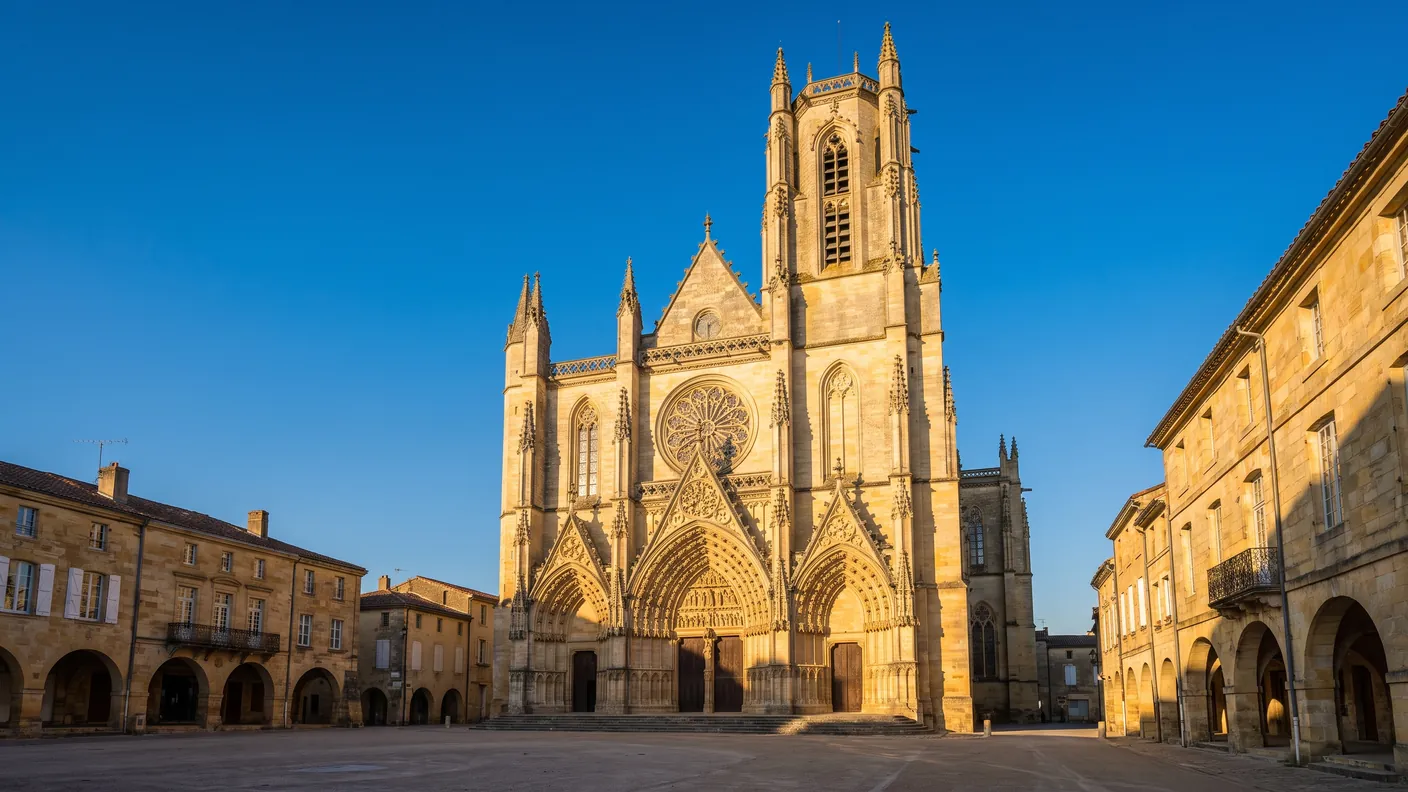 Entre-deux-Mers & Southern Gironde
Bazas: The UNESCO-listed cathedral and the fattened oxen
Read the guide →On the Way to the Graves
Direct transfer from Bordeaux (~40 min) to Portets, featuring its châteaux and wine tastings in the Graves region. Fixed-price quote in writing, with no obligation.