Bordeaux to Réaup-Lisse: the Landes Forest and the Nine Stones
A forest village in the Albret region, on the edge of the Landes: the vast forest of the Landes de Gascogne, a mysterious “cromlech” nicknamed the “Little Stonehenge of Lot-et-Garonne,” a castle and its vineyard, about 1 hour and 45 minutes from Bordeaux.
Réaup-Lisse at a glance
Réaup-Lisse is a forested municipality in Lot-et-Garonne, in the Albret region, about 136 km from Bordeaux. The municipality has a population of 591 across 70.89 km², and nearly 90% of its territory is covered by forests and natural areas (INSEE, municipal data, accessed July 24, 2026). Visitors come to explore the Landes de Gascogne trails maintained by the municipality, the three rural churches, the private castle of Lisse, and Las Naou-Peyros, a stone circle largely reconstructed in the 20th century (official website, accessed July 24, 2026). Réaup-Lisse does not have a passenger train station; Agen, approximately 43 km away, is the nearest major rail hub. From Bordeaux, the drive takes about 1 hour and 45 minutes. The price for the private driver listed on this page starts at €233 one way; it is provided in writing before the trip. Once there, Mézin, Barbaste, Nérac, and Poudenas offer opportunities to extend your day in the Albret region.
| Landmark | Details |
|---|---|
| Department | Lot-et-Garonne (47), Nouvelle-Aquitaine |
| Status | Rural municipality · Albret region · Nérac district |
| Population | 591 residents (INSEE 2023) · the residents of Réau |
| Area | 70.89 km² · ~90% forests and natural areas |
| Rivers | The Gélise (east) and the Gueyze (northwest) |
| Distance from Bordeaux | about 136 km · about 1 hour and 45 minutes by car |
| Nearest train station | Agen (~43 km) — there is no train station in Réaup-Lisse |
| Don't miss it | The Landes Forest, the Neuf Pierres Cromlech, the Château de Lisse, and its wine |
Let me be honest from the outset, because this village likes to present itself with a touch of legend: its churches aren’t designated as historic monuments (they’re merely listed in the inventory), its famous cromlech is largely a 20th-century reconstruction, and its connection to the famous House of Albret is primarily territorial. None of this detracts from the charm of the place—on the contrary, the true story is even more fascinating.
This guide covers everything you need to know before you visit: where Réaup-Lisse is located and what makes it unique, the history of the merger between Réaup and Lisse, the Landes de Gascogne forest and its history of resin tapping, the village’s three churches, the Château de Lisse and its vineyard, the mysterious Neuf Pierres cromlech, the surrounding Gascon countryside, nearby sites in the Albret region, and the easiest way to get there from Bordeaux.
Where is Réaup-Lisse located?
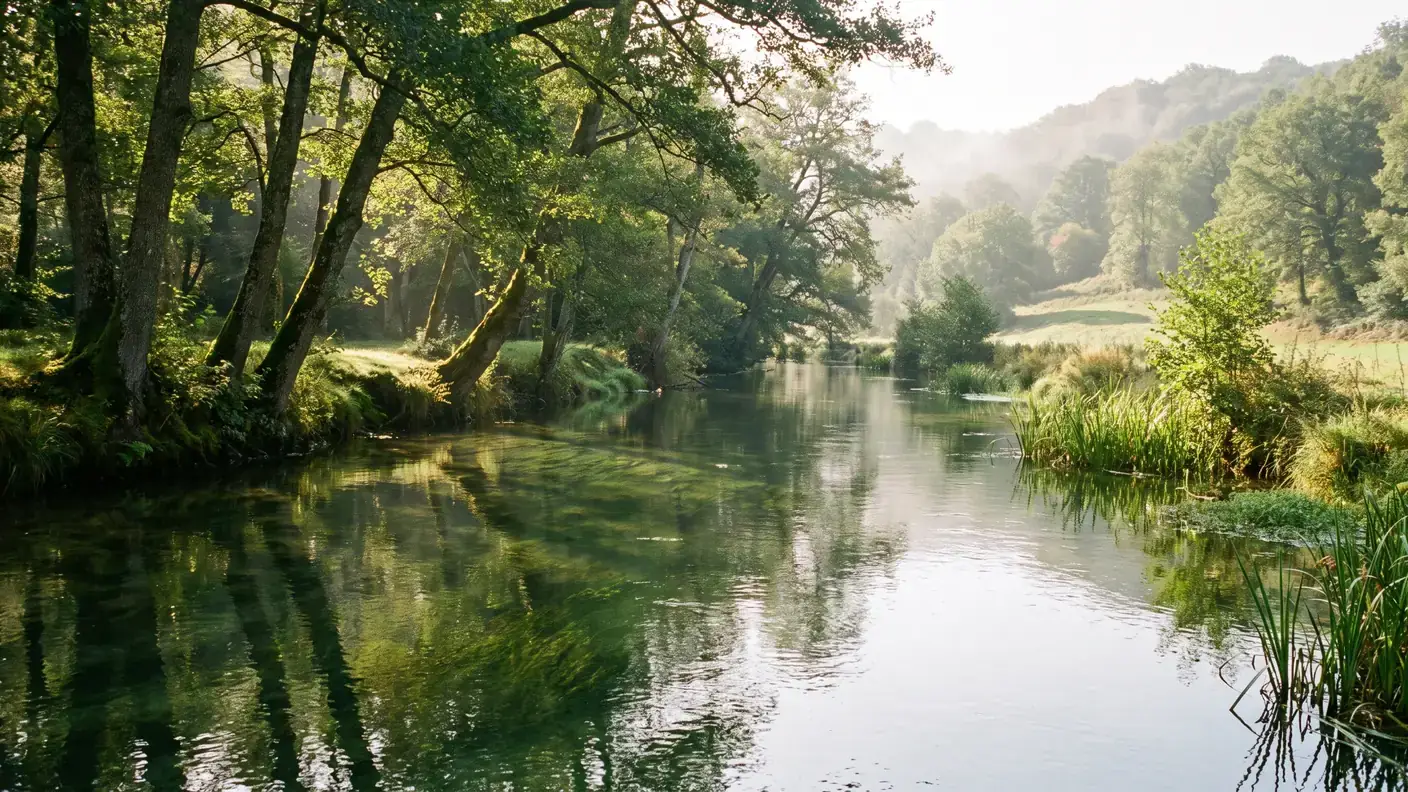
Réaup-Lisse is a rural commune in Lot-et-Garonne (47), in Nouvelle-Aquitaine, located in the far southwest of the department, on the edge of the Landes de Gascogne forest. It is part of the Albret region, falls under the Nérac district, and belongs to the Albret Communauté intermunicipal community. The Gélise River borders it to the east, and the Gueyze River to the northwest. Its INSEE code is 47221, and its ZIP code is 47170. The town borders the neighboring department of Landes, placing it at the crossroads of two worlds: the fruit-growing, rolling Agenais region on one side, and the vast Landes forest on the other. Its neighboring municipalities—Mézin, Barbaste, Nérac, Sos, Poudenas, Durance, and a few others—form a landscape of charming villages and woodlands.
A vast municipality that is almost entirely forested
The most striking feature of Réaup-Lisse is the contrast between its small population and its size: 591 residents (2023 census) spread across 70.89 km², for a population density of barely 8 residents per square kilometer. It is the second-largest municipality in Lot-et-Garonne by area—more than 7,000 hectares—and one of the least populated. The reason is simple: nearly 90% of the territory is covered by forests and natural habitats. Here, it is not houses that dominate the landscape, but trees. On average, each resident has more than twelve hectares at their disposal—a statistic that speaks to the vastness of the space and the silence.
The population is declining gradually: the village peaked at around 618 residents in 2016, before experiencing a slow decline (−2.5% since 2017). This is the fate of many rural and forested communities, far from major transportation routes. The residents are known as Réaupais. This is the heart of the deep, quiet Southwest, where nature takes center stage.
| Réaup-Lisse by the Numbers | Data |
|---|---|
| Population (2023) | 591 residents (the people of Réau) |
| Area | 70.89 km² — the second-largest municipality in Department 47 |
| Density | ≈ 8 people per square kilometer |
| Forest Cover | ≈ 90% of the territory (forests and natural areas) |
| Intermunicipal Cooperation | Albret Community (Nérac District) |
| Rivers | La Gélise · La Gueyze |
Réaup + Lisse: A Town Born in Two Stages
Réaup-Lisse hasn't always existed: the town was formed by the merger of two neighboring villages, Réaup and Lisse. But the history of this union holds a subtle detail that few people know—it took place in two stages, seven years apart. It’s the kind of detail you wouldn’t notice on a map, but one that illustrates how a French municipality is actually formed.
On April 14, 1972, under the Marcellin Law—which at the time encouraged municipal mergers—Réaup absorbed Lisse in a merger-association arrangement in which Réaup remained the seat of the municipality. But the compound name “Réaup-Lisse” was not officially adopted until 1979: seven years passed between the administrative merger and the creation of the name the village bears today. A technical detail that speaks volumes about parochial sensitivities when two communities are learning to become one.
Réaup, the “White River”
According to Gascon toponymy, the name Réaup comes from the Latin Rivus albus—the “white river”—which was adapted into Gascon as *Arriu aub*. This origin serves as a reminder of how, in this land of sand and clear waters, rivers have given their names to places. Réaup and Lisse were former parishes in Gascony-Albret, each with its own church and territory, before modern administrative history brought them together.
This dual origin accounts for much of the village’s heritage: two former market towns mean two parish churches, two histories, two local traditions—and that is why a town with fewer than 600 residents can boast so many points of interest. Lisse also had its own notable figures: Louis Dutilh de La Tuque (1794–1869), mayor of Lisse, also served as a deputy for Lot-et-Garonne from 1842 to 1848. Bringing Réaup and Lisse together thus meant uniting two small rural communities that, together, now form a cohesive region in the heart of the Landes.
The Landes de Gascogne Forest
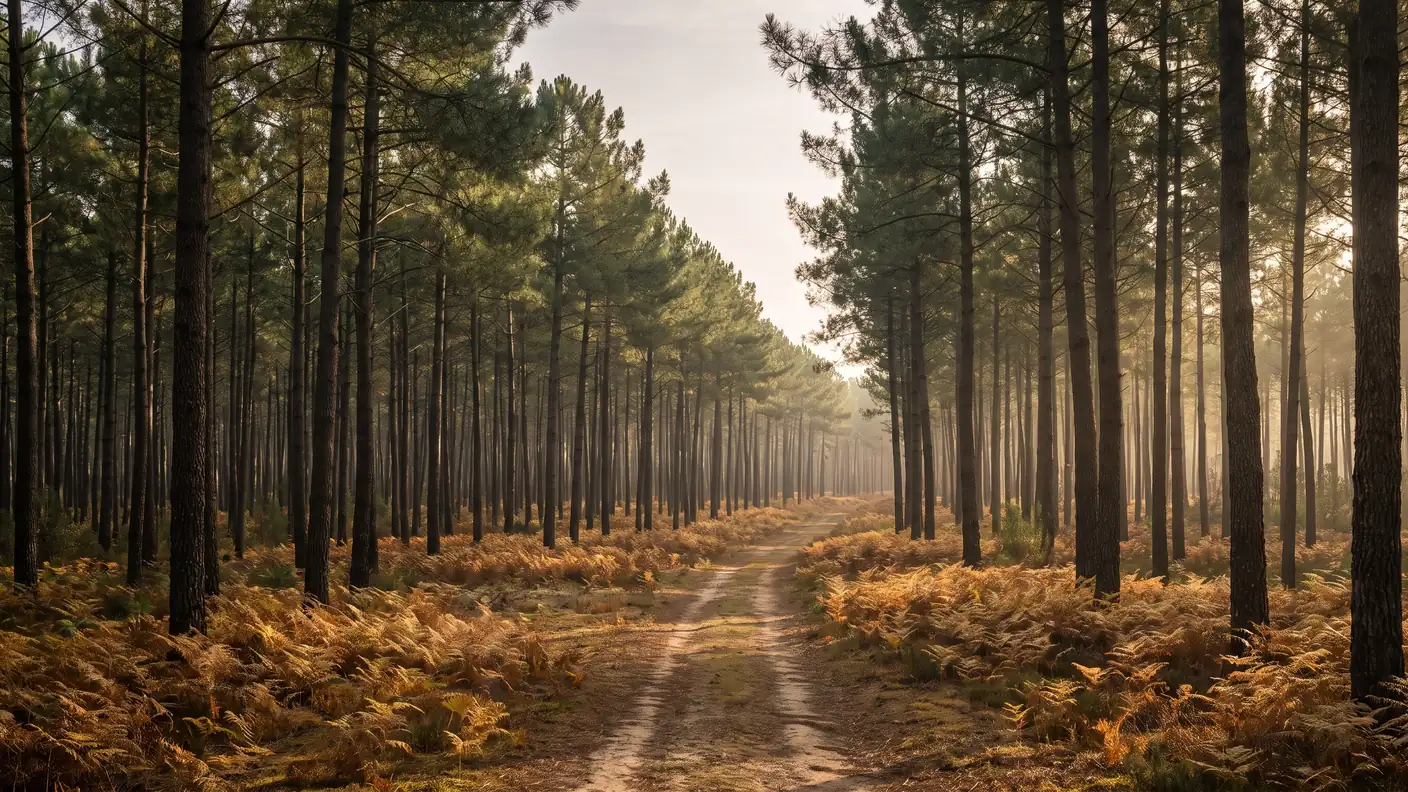
Réaup-Lisse is part of the Landes de Gascogne forest, the largest forest in Western Europe. This maritime pine forest spans three departments—Gironde, Landes, and Lot-et-Garonne—and covers nearly one million hectares, about 80% of which is maritime pine. Réaup-Lisse lies on its eastern edge. This vast forested area, largely planted in the 19th century to reclaim and develop former marshy heathlands, is today one of France’s great green lungs—and, for Réaup-Lisse, a daily view.
A mixed forest, not a pure pine forest
An important point: even in Réaup-Lisse itself, the forest is not a pine monoculture. It is a mixed forest, where maritime pines grow alongside oaks and cork oaks—hence the nearby presence of the Mézin cork industry. This diversity is what makes the area ecologically rich: heathlands, undergrowth, streams, and clearings form a mosaic of habitats that supports a wide variety of wildlife. The cork oak, whose bark is harvested to make corks, directly links the Réaup-Lisse forest to the industrial history of neighboring Mézin: here, the tree is not merely part of the scenery; it has sustained livelihoods and shaped a culture.
The Season of the Sap Collectors
For a long time, the forest sustained the village through a trade that has since disappeared: resin tapping, or the harvesting of pine resin (known as “gemme”). Réaup was a “village of laborers, but above all of resin collectors and lumberjacks”; its resin collectors had even organized themselves into a mutual aid society as early as the 19th century. The Landes region was the world’s second-largest producer of gemme, behind the United States, before resin tapping came to an end in the late 1980s, driven out of business by synthetic resins and imports. The forest preserves the memory of this epic era in the scarred gashes of its oldest pine trees.
Every day, the resin collector would climb up to his pine trees, make a “care”—a cut in the bark—and collect the oozing resin in a clay pot, destined to be distilled into turpentine and rosin. It was hard, seasonal work, passed down from father to son. Its disappearance transformed the forest into a mere source of lumber and paper pulp, but it left behind a culture, a vocabulary, and a sense of pride that the village elders have not forgotten.
For visitors, this forest is first and foremost a vast expanse for walking and enjoying the silence. Forest trails, narrow paths, sandy trails: you can walk, bike, and breathe in the scent of pine resin, far from it all. The wildlife is discreet but present—deer, wild boars, birds of prey, and a multitude of birds. It’s the kind of nature that doesn’t put on a show: you have to earn it, as you follow a path through the filtered light of the pine trees. For those coming from the hustle and bustle of the city, the effect is almost immediate.
| The Landes de Gascogne Forest | Data |
|---|---|
| Scope | ≈ 1 million hectares — the largest forest in Western Europe |
| Departments | Gironde, Landes, Lot-et-Garonne |
| Dominant Essence | Maritime pine (~80% of the forest) |
| At Réaup-Lisse | Mixed forest: pines, oaks, cork oaks |
| Historical profession | Tapping (resin), which ceased in the late 1980s |
Three Churches for One Village
As a legacy of its two former parishes and its hamlets, Réaup-Lisse has three churches still standing. One sometimes reads that there are four: this is incorrect—the fourth, Saint-Julien de La Baquère, is now nothing more than a ruin, and other places of worship (Saint-Jean in Cap Lisse, Saint-Gervais) have simply disappeared. This scattering of churches and chapels reflects the religious density of days gone by, when each hamlet wanted its own place of worship, before rural depopulation and the encroachment of the forest reduced the population.
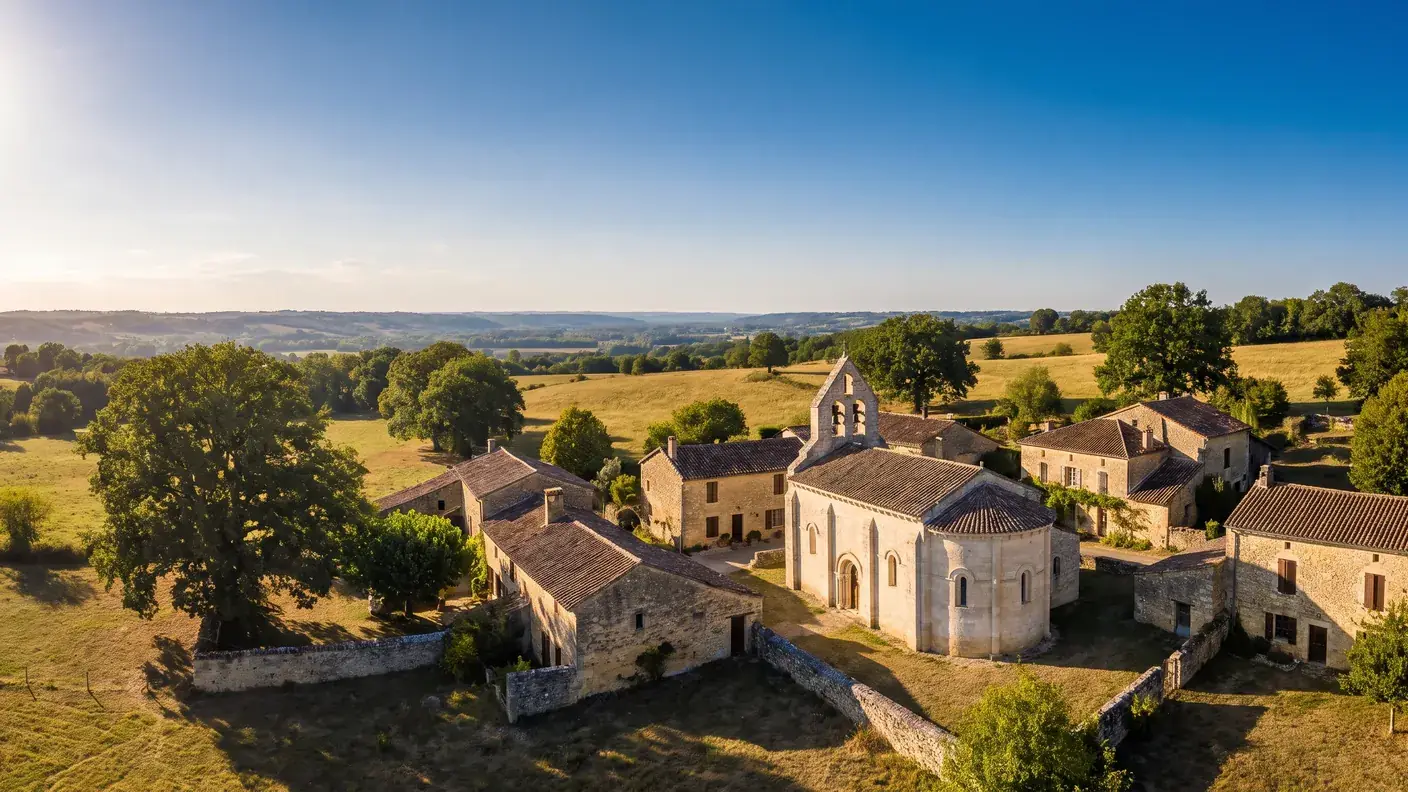
The three existing churches are Saint-Laurent, the church in Réaup; Saint-Barthélemy, the church in Lisse—patron saint of butchers and tanners, featuring a bell tower and three altars; and, above all, Notre-Dame de Cieuse, also known as Notre-Dame des Bienheureux. The latter is the oldest in the town: a single-nave church with an apse, dating from the late 12th or early 13th century, first mentioned in 1285.
The fact that Notre-Dame de Cieuse dates back to the 12th century makes it a precious testament to history: people have been praying at this site—in a hamlet lost in the middle of the woods—for eight centuries. These rural churches, often modest—a nave, an apse, a bell tower—constitute the village’s true heritage. They tell the story of an ancient geography—that of a region dotted with small parishes and scattered hamlets—long before the pine forest grew to its present-day extent.
Heritage that has been inventoried but not designated
An important clarification for anyone looking for “historic monuments”: none of these churches is classified or listed as a historic monument. They are included in the General Inventory of Cultural Heritage—a documentary survey conducted by the Region—which does not provide legal protection. Confusion is common, fueled by the shared name: a Saint-Barthélemy church designated for protection in 2023 is actually located in Ariège, hundreds of kilometers from Lisse. This in no way diminishes the interest of these rural buildings, which stand as modest and authentic testaments to the religious fervor of days gone by.
When it comes to local heritage, there is also mention of a former “Carthusian priory.” Here, too, caution is advised: the existence of an actual community of Carthusian monks has not been established by reliable historical sources, and the building is not protected in any way. This is the kind of heritage that villages like to highlight, but which historians treat with caution—it is better to present it as a local curiosity rather than as an established fact.
Lisse Castle: The Estate and the Wine
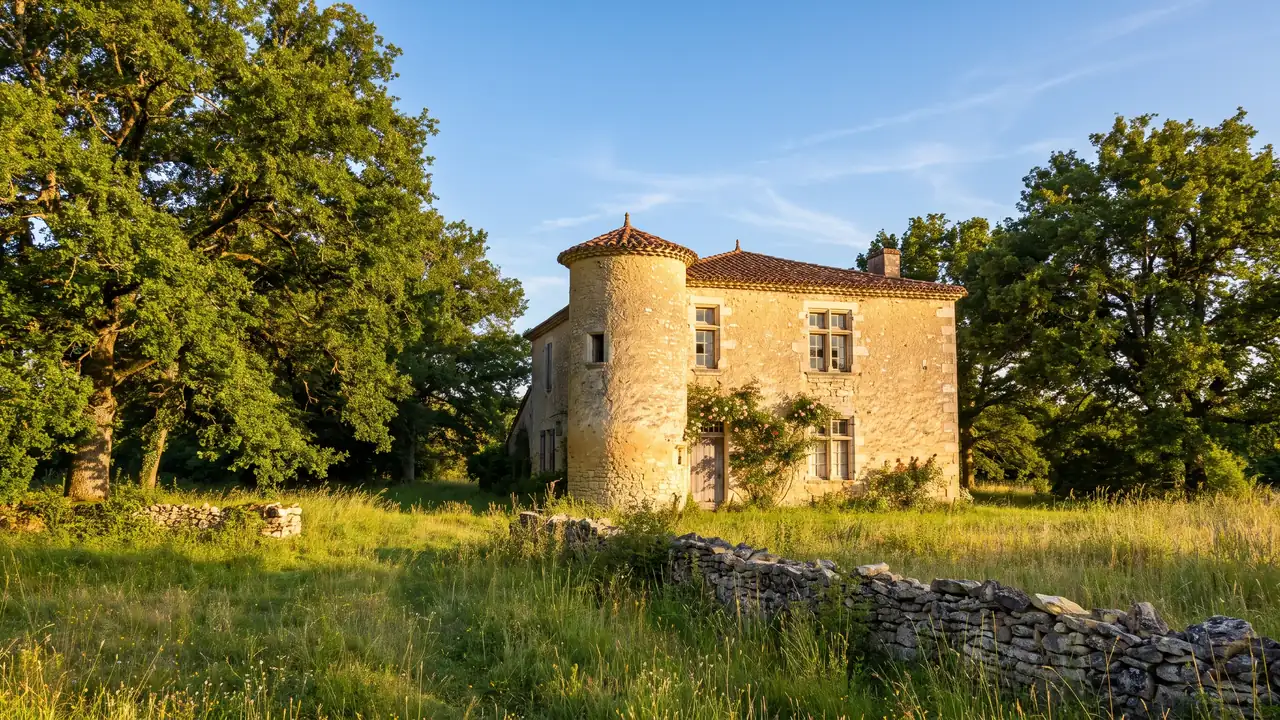
The Château de Lisse is the town’s main historic residence, dating back to the Middle Ages. A castrum held under a co-seignory is attested here as early as the late 13th century (1259, 1287). The castle has evolved over the centuries: a chapel dating back to no later than the 14th century, an extension added in the 16th century, a residence remodeled in the 17th century, and then major renovations carried out in 1880–1882 by a man named Louis Viton. Each era has left its mark, so that the building reads like a distillation of seven centuries of Gascon rural architecture, from the medieval stronghold to the 19th-century manor house.
A private residence that is not open to visitors
Let's be clear to avoid disappointment: the castle, as a residence, is a private property; not open to the public. It is not designated as a historic monument. It can be seen from the surrounding area, nestled in the countryside, but it is not open to the public. This is true of many “castles” in the Southwest: family homes that are still inhabited, whose charm lies precisely in the fact that they are not museums but living homes, passed down from generation to generation.
The winery, for its part, welcomes you
There is, however, a wonderful way to get a taste of Lisse—literally. The name is home to a winery of the same name, the “Château de Lisse”: twelve hectares of vineyards (replanted between 2002 and 2012) producing an IGP Agenais wine. This estate welcomes visitors for tastings and sales—traditionally in the afternoon, with a free tasting in the summer. It’s the perfect opportunity to take home a bottle of the local wine, a memento of a hidden gem in the Albret region.
This wine-growing renaissance, on sandy and gravelly soils at the edge of the forest, illustrates the quiet vitality of the small estates in the Southwest, far from the grand crus of the Médoc. Here, there are no crowds or flashy shops: you’re welcomed in a simple setting, in the heart of a family-run vineyard, just a few minutes from the Armagnac distilleries. With a designated driver, you can enjoy the tasting without worrying about getting behind the wheel—a compelling advantage in a region known for its wines and brandies.
The Neuf Pierres Cromlech, the “Little Stonehenge” of Lot-et-Garonne
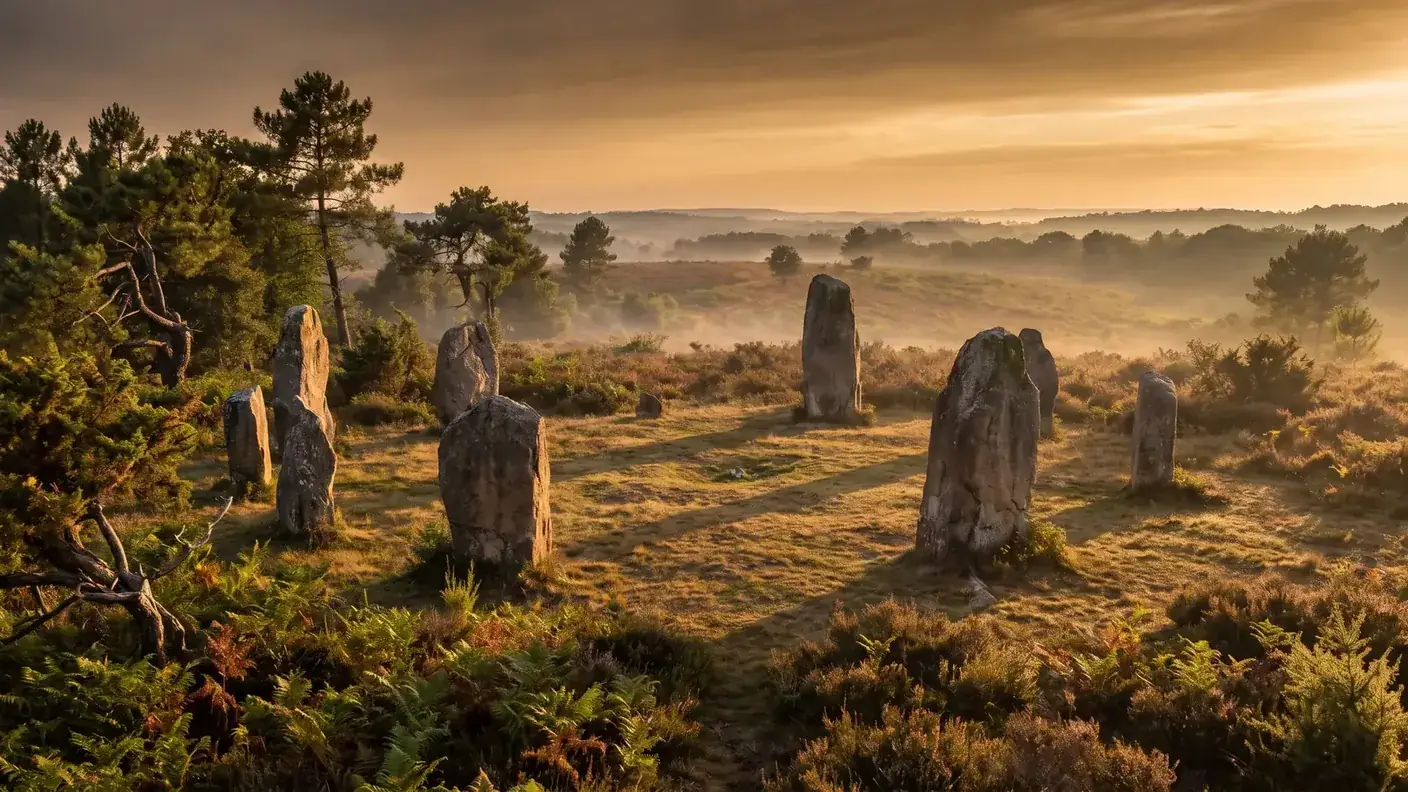
The most intriguing site in Réaup-Lisse is a group of standing stones called Las Naou-Peyros—“the Nine Stones”—often described as the only cromlech in Lot-et-Garonne. It has even been nicknamed the department’s “little Stonehenge.” But its history, as is often the case with megaliths, is more complicated than it seems: between uncertain dating, a later reconstruction, and persistent legends, one must untangle the truth from the myth. That is precisely what makes the place so endearing—a small, down-to-earth mystery in the countryside, far from the crowds at Carnac or Stonehenge.
An ancient site… largely reconstructed
The site has a long history—it was first mentioned in writing in 1587, and a lithograph from 1842 depicts it with its nine stones arranged in a circle. However, the structure we see today is not the original: eight of the nine stones were reportedly removed around 1850 to build a house, leaving only a single authentic monolith. They were first replaced with cement blocks in the 1930s, then with natural stones. What we see today is therefore, for the most part, a reconstruction—which in no way detracts from the power of the place, but is worth noting.
This fate is by no means unusual: throughout France, countless megaliths served as stone quarries for villagers before the early 19th century began to protect them. The fact that Réaup-Lisse saved and then reconstructed its “Nine Stones” attests to a long-standing attachment to this landmark. The original monolith, meanwhile, is still there—a true prehistoric relic amidst its replicas, like a beating heart beneath the reconstruction.
A Bronze Age tomb?
What was this site originally? No one knows for sure. Excavations in 1910–1911 and again around 1930 uncovered human bones—including a complete skeleton lying on its back with its head facing west—as well as flint tools and pottery shards, suggesting a funerary use: perhaps the peristalith (circle of stones) of a Bronze Age tomb. But these earlier excavations disturbed the remains so much that, by the experts’ own admission, “any new attempt at interpretation seems risky.” Its archaeological classification—cromlech, tomb, or something else?—remains uncertain, due to the lack of absolute dating and modern methods.
This uncertainty is ultimately the most honest assessment: Las Naou-Peyros is an ancient site—likely a burial ground—shrouded in a veil of mystery that neither science nor legend has fully dispelled. People come here not for a lesson in archaeology, but for the atmosphere: a few gray stones standing in a clearing on the moor, beneath the pine trees, at the end of a path. It’s not much, and yet it’s a lot—enough to let the imagination wander to those men who, millennia ago, chose this spot to set up stones.
Witches, Treasure, and a Snake
Where science falters, legend thrives. The place was said to be cursed and malevolent, “where death lurked.” It was rumored to be haunted by witches, who held grand sabbats there; and it was also said to hide a treasure guarded by a gigantic serpent. Folklore, of course—but revealing folklore: everywhere, standing stones have fueled the imagination of the countryside. Coming here at dusk, amid the silence of the moor, is enough to understand why.
| The Nine Stones Cromlech | Data |
|---|---|
| Local name | Las Naou-Peyros (“The Nine Stones”) |
| Status | The only known "cromlech" in Lot-et-Garonne (type uncertain) |
| First written mention | 1587 · lithograph from 1842 |
| Current Status | Reconstruction: 8 of the 9 stones were replaced after ~1850 |
| Excavations | 1910–1911 and c. 1930: bones, flint, shards |
| Hypothesis | Bronze Age burial (peristalith) |
The Gascon countryside and the dovecotes
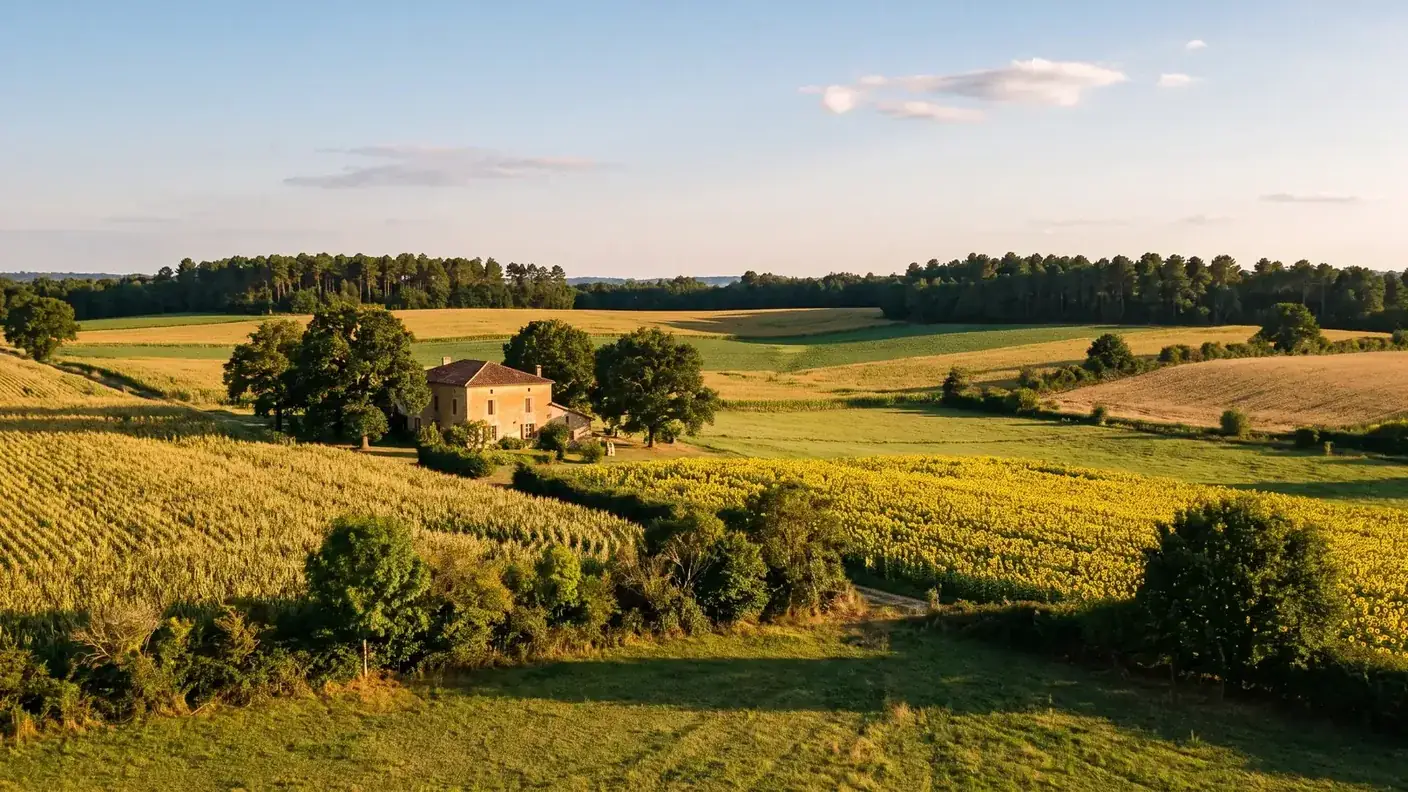
Between the forest and the fields
Around the village, the forest gives way in places to rolling countryside, made up of fields, meadows, and ochre-colored stone farmhouses. This is the rural, peaceful side of the Albret region: a few crops—corn, sunflowers—hedgerows, solitary oak trees, and that undulating landscape of hills stretching all the way to the dark line of pine trees on the horizon. Agriculture accounts for only a small portion of the territory (arable land covers less than 7% of the municipality), but it defines the few inhabited clearings around which the hamlets are clustered.
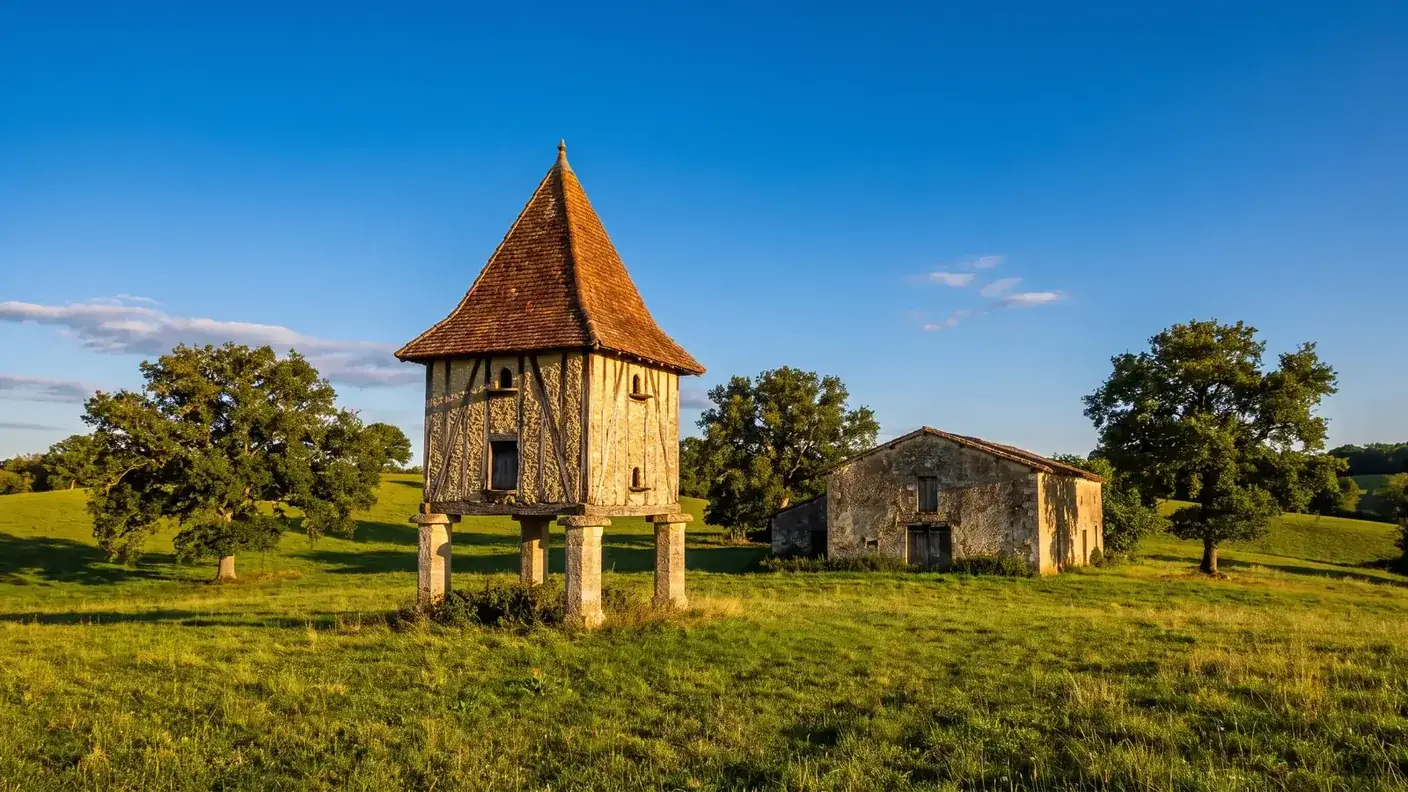
The landscape bears the hallmarks of traditional Gascon architecture: half-timbered farmhouses, barns, and above all the dovecotes that dot the countryside of southwestern France—small square towers on pillars, topped with tiles, once symbols of status and stores of precious fertilizer. They serve as a reminder that this land, now forested, was once agricultural as well. In Gascony, the dovecote was not merely a shelter for birds: owning a “fuie” was a privilege, and pigeon droppings—known as “colombine”—were worth their weight in gold as fertilizer. These small, elegant towers, many of which have been restored, have become one of the most endearing symbols of the rural heritage of southwestern France.
Let’s clarify a point that is often misunderstood: while Réaup-Lisse is indeed “in Albret,” this connection is primarily territorial—the canton and the community of communes bear the name Albret. There is no evidence that the village ever actually belonged to the famous House of Albret, that of Henry IV. The prestige of the name extends to the entire region, but the local feudal history remains modest and poorly documented. Nérac, the capital of the Albret family, is, however, only about fifteen minutes away—enough to link, without exaggeration, this forest village to the great epic of Henry IV and the Gascon Renaissance.
What's there to see around Réaup-Lisse?
Réaup-Lisse is ideally located as a base for exploring the Albret region and neighboring Armagnac. Charming villages and sites associated with Henry IV are just a few minutes away, making this forest village a peaceful base camp for exploring a whole section of southwestern France: the fortified towns and castles of Albret, the Armagnac distilleries, the Buzet vineyards, and the rivers of Gascony.
Mézin, Barbaste, and the Region of Henry IV
Mézin, a neighboring town (about 7 km away), was the French capital of the cork: Its Cork and Cork Stopper Museum tells the story of this forgotten industry, which employed generations of workers to transform the bark of the cork oak into corks for all the vineyards of southwestern France, in the heart of the Armagnac region. Barbaste retains the famous Moulin des Tours, a medieval fortified mill with four towers, built before 1308, which belonged to Henry IV—"the miller of Barbaste"—and designated a historic monument in 1889.
A fascinating detail that directly links this small village to history: King Henry used to pass through this mill on his way from his castle in Nérac to his hunting grounds in Durance—a town… bordering Réaup-Lisse. The woods where we stroll today thus border the former royal hunting grounds. This is how a quiet village in the Landes region finds itself, by sheer geography, in the wake of the most popular of France’s kings.
Nérac and Poudenas's "Tuscany"
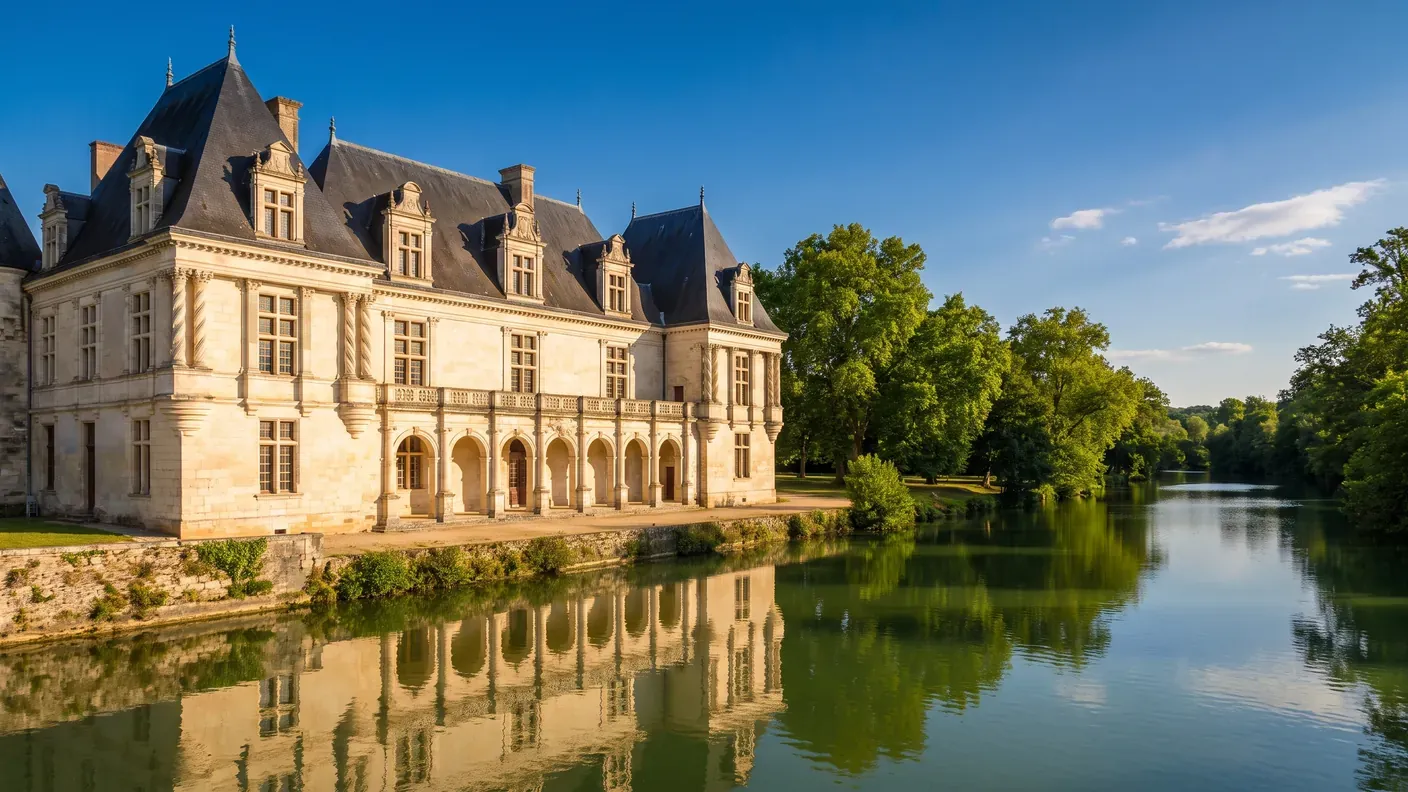
Nérac, the former capital of the Albret family and the court of the future Henry IV, is about 17 km away: the Renaissance castle, Petit Nérac, and the Parc de la Garenne are worth a visit. Closer by, Poudenas is worth a visit: this village, whose castle was remodeled into an Italian villa, is nicknamed the “ French Tuscany "— a nod to Stendhal, who compared the landscapes of Albret to the most beautiful sites in Italy. Be careful not to confuse the two: while it is sometimes referred to as “Little Venice,” sources clearly describe a Tuscan atmosphere, complete with a bell tower and cypress trees, rather than canals. SOS, another village in the Albret region, rounds out the list, as does the town of Mont-de-Marsan, the prefecture of Landes, a little further to the southwest.
All these little places make up one of the most beautiful rural routes in the Southwest: in a single day, you’ll travel from the woods of Réaup-Lisse to the bastides of Albret, from the Armagnac cellars to charming villages, without ever having to travel long distances. It promises a slow, authentic travel experience, a world away from the big resorts—the kind of getaway you enjoy all the more when shared with others, with one person behind the wheel.
| About Réaup-Lisse | Distance / Marker | Interest |
|---|---|---|
| Mézin | ~7 km | Museum of Cork and Corkscrews, Armagnac |
| Poudenas | ~10 km | "French Tuscany," Italian castle-villa |
| Barbaste | ~12 km | Henri IV's Moulin des Tours |
| Nérac | ~17 km | Castle of Henry IV, Garenne Park |
| Agen | ~43 km | Prefecture, nearest TER-TGV station |
When is the best time to visit Réaup-Lisse?
Réaup-Lisse is first and foremost an outdoor destination: spring and fall, with their mild, sunny weather, are the best seasons to enjoy the forest and countryside. In the spring (April–June), the forest and moors turn green again, the streams flow briskly, and the soft light highlights the Gascon countryside—it’s the perfect time for walking or biking. The major European Scandiberic cycle route (EuroVelo 3), which connects Norway to Spain, also passes through the area: the perfect way to combine nature with leisurely travel. It’s also the best time to explore the cromlech amid the flower-filled moors. Summer is hot: the pine forest offers shade and coolness, and this is the season when the winery hosts its wine tastings.
The fall is perhaps the most beautiful season: the oak trees are decked out in shades of gold and russet amid the evergreen pines, the air smells of resin and the forest floor, and it’s the time of the grape harvest and Albret’s culinary delights (Armagnac, foie gras). The winter It is calm and quiet—perfect for anyone seeking the vast emptiness and mystery of the cromlech under a low-hanging sky. No matter the season, a chauffeur service makes it easy to reach this rural area, which is poorly served by public transportation.
A sample itinerary: in the morning, a walk in the forest and a visit to the Neuf Pierres cromlech, followed by a tour of the village churches; for lunch, a gourmet stop in Mézin or Nérac; in the afternoon, a tasting at the Château de Lisse estate or at an Armagnac cellar, followed by a detour to Poudenas and its “Tuscany.” With a driver handling the transportation and tastings, this nature and regional getaway can be enjoyed in a single day starting from Bordeaux.
Join Réaup-Lisse from Bordeaux
Réaup-Lisse is located about 136 km from Bordeaux, which is about a 1-hour-45-minute drive. It is a rural town with no train station: the Albret rail line is closed to passengers, and the nearest operating station is in Agen, about 43 km away. A tourist train on the Albret line did run between Nérac and Mézin, very close by, until 2023, but it was an attraction, not a means of transportation. In other words, without a car, getting to the village is a real challenge—buses are infrequent, there are multiple transfers, and the last connections run in the early evening.
A village where a car (or a driver) is a must
For such a vast and forested area, public transportation service is very limited. This is where a executive car service (chauffeured transfer) really comes into its own: a direct, door-to-door trip from Bordeaux with no transfers, giving you the freedom to explore the Albret region afterward—Mézin, Barbaste, Nérac, Poudenas, and an Armagnac estate. You board in Bordeaux, get dropped off in the heart of the Albret Forest, and can ask the driver to wait or take you to the next stop—something no regular bus line offers in this rural area. Réaup-Lisse has no passenger train station. Check the schedule and service options to Agen for your travel date, then plan for the remaining 43 km by road.
From Bordeaux, we offer this trip at a fixed price quoted in advance: approximately €268 one way, in a Mercedes sedan or van seating up to 8 passengers, with a professional driver. You’ll receive a written quote with no hidden meter charges—perfect for a nature getaway, a visit to a vineyard, or a family event in the Albret region.
The value of a private chauffeur is especially evident when traveling with others, or when you want to enjoy wine tastings without worrying about the drive home. Whether you’re traveling as a couple, with family, or in a small group, you can avoid rental cars and long transfers; you get dropped off exactly where you want, and you leave whenever you want. In such a rural area, where everything is done by car, this is the most stress-free option—especially since the price, set in advance, doesn’t change, regardless of traffic or stops.
| Route | Distance | Duration | Landmark |
|---|---|---|---|
| Bordeaux → Réaup-Lisse | ~136 km | around 1:45 | Starting at ~€233 for a professional chauffeur |
| Réaup-Lisse → Agen (train station) | ~43 km | ~50 min | Nearest TER-TGV station |
| Réaup-Lisse → Nérac | ~17 km | ~25 min | Castle of Henry IV |
| Réaup-Lisse → Mézin | ~7 km | ~12 min | Cork Museum |
Whether you’re planning a day out in nature and exploring local specialties, a visit to a winery, or an event in the Albret region, booking a door-to-door car service guarantees a comfortable and punctual ride—check out our service options, fixed rates, and the route from Bordeaux to Réaup-Lisse, or explore all our destinations.
Frequently Asked Questions
Where is Réaup-Lisse located?
Réaup-Lisse is a rural commune in Lot-et-Garonne (47), in Nouvelle-Aquitaine, located in the far southwest of the department, on the edge of the Landes de Gascogne forest and within the Albret region. This village of 591 residents is located about 136 km southeast of Bordeaux and 43 km from Agen.
What is the distance between Bordeaux and Réaup-Lisse?
About 136 km by road, or about 1 hour and 45 minutes. With a chauffeured car from Bordeaux, the fare is fixed and provided in advance, starting at about €268 one way (sedan or van, door-to-door price).
What is the Nine Stones Cromlech?
It is a group of standing stones known as Las Naou-Peyros (“the Nine Stones”), often described as the only cromlech in Lot-et-Garonne and nicknamed the department’s “little Stonehenge.” First documented in 1587, it was largely reconstructed in the 20th century: eight of the nine stones, which had been dismantled around 1850, were replaced. Excavations at the site have uncovered human remains, suggesting an ancient funerary use.
Are the churches in Réaup-Lisse listed as historic landmarks?
No. Réaup-Lisse has three existing churches—Saint-Laurent (Réaup), Saint-Barthélemy (Lisse), and Notre-Dame de Cieuse, the oldest (first mentioned in 1285)—but none of them are classified or listed as historic monuments. They are listed only in the General Inventory of Cultural Heritage, a documentary census.
Can we visit Lisse Castle?
The Château de Lisse, a medieval-era residence, is a private property that is not open to the public. However, the eponymous “Château de Lisse” winery (12 hectares, IGP Agenais) welcomes the public for wine tastings and sales, typically in the afternoon, with a free tasting offered during the summer.
Why is Réaup-Lisse so vast and so sparsely populated?
Because it is a predominantly forested municipality: nearly 90% of its 70.89 km² territory is covered by forests and natural habitats. It is the second-largest municipality in Lot-et-Garonne by area, but it has only 591 residents, for a population density of barely 8 people per km².
Where does the name Réaup-Lisse come from?
The municipality was formed by the merger of two villages: Réaup and Lisse. Réaup absorbed Lisse on April 14, 1972 (under the Marcellin Law), but the compound name “Réaup-Lisse” was not adopted until 1979. The name Réaup is thought to derive from the Latin Rivus albus, meaning “white river,” which was adapted into Gascon as Arriu aub.
What is gemmage at Réaup-Lisse?
Tapping is the harvesting of pine resin (known as “gemme”), a trade that was once central to the Landes de Gascogne forest. Réaup was a village of resin tappers and lumberjacks, with a mutual aid society dating back to the 19th century. The region was the world’s second-largest producer of pine resin before the trade died out in the late 1980s.
What's there to see around Réaup-Lisse?
Mézin and its Cork Museum (~7 km), Poudenas, the “French Tuscany” (~10 km), Barbaste and its Henri IV Tower Mill (~12 km), Nérac and its castle (~17 km), as well as the Armagnac region. Réaup-Lisse is a great nature-based camp in the heart of the Albret region.
Is there a train station in Réaup-Lisse?
No, Réaup-Lisse does not have a train station: the Albret line is closed to passenger service. The nearest operating train station is in Agen (~43 km). For a direct, door-to-door trip from Bordeaux with no transfers, an executive transfer is by far the most convenient option in this rural area.
Does the village have any connection to Henry IV and the Albret family?
The connection is primarily territorial: Réaup-Lisse is located in the canton and the community of communes of Albret. There is no evidence that the village ever belonged directly to the House of Albret. But this is the heart of Henry IV’s domain: Nérac, his court, is 17 km away, and his hunting grounds at Durance bordered the town.
When is the best time to visit Réaup-Lisse?
Spring and fall, with their mild, sunny weather, are ideal for exploring the forest and the countryside. Fall is magnificent, when the oak trees glow red among the pines, right in the middle of Armagnac and foie gras season. Summer offers the shade of the pine forest and tastings at the estate; winter, absolute tranquility.
Can I book a chauffeur-driven transfer from Bordeaux to Réaup-Lisse?
Yes. We offer the Bordeaux → Réaup-Lisse route (~136 km, about 1 hour 45 minutes) at a fixed price, starting at approximately 268 € one-way, in a Mercedes sedan or a van seating up to 8 passengers. The trip is direct, door-to-door, with optional stops along the way (Nérac, Mézin, an Armagnac estate).
Further Reading
- The capital of the Albret region, just nearby: see the Nérac Guide (Castle of Henry IV, Garenne Park)
- The prefecture on the Garonne: see the Agen Guide (canal bridge, old town, museum with five Goyas)
- A country house in the Gers, in the Armagnac region: see the Guide to Montréal-du-Gers (Villa de Séviac)
- Plan your trip: arrange your transfer from Bordeaux to Réaup-Lisse, request a written quote, or explore all our destinations
Sources and References
- Wikipedia — Réaup-Lisse — geography, demographics, 1972 merger, forest, heritage
- Wikipedia — Las Naou-Peyros (the cromlech) — megalith, reconstruction, excavations, legends
- Wikipedia — Landes de Gascogne — forest, maritime pine, resin tapping
- INSEE — Municipality of Réaup-Lisse (47221) — 2023 population (591 residents), area, municipal data
- POP/Mérimée Database — Ministry of Culture — General Inventory: churches, Lisse Castle, cromlech (not designated as a historic monument)
- Municipality of Réaup-Lisse — official website — cultural heritage, cromlech, explore the village
Article updated in July 2026.
Off to the Landes de l'Albret
Direct trip from Bordeaux (~1 hr 45 min) to Réaup-Lisse, with stops along the way as desired—Nérac, Mézin, an Armagnac estate. Written fixed-price quote, with no unexpected charges based on the odometer.