
Bordeaux to Saint-Denis-de-Pile: a Romanesque church in the Isle Valley
One of the oldest Romanesque churches in the Libourne region, listed as a historic monument since 1862, on the banks of the Isle River. Here you can admire a painting attributed to the Le Nain brothers, the river valley, the Carthusian monastery, and the vineyards—just outside Pomerol, less than an hour from Bordeaux.
Saint-Denis-de-Pile at a glance
Saint-Denis-de-Pile is a commune in the Gironde department, in the Libournais region, on the banks of the Isle River, just north of Libourne. Its treasure is its Romanesque church, one of the oldest in the Libourne region, designated a historic monument in 1862, which houses a painting attributed to the famous Le Nain brothers.
Straddling the lush Isle Valley, the town is also home to an elegant Carthusian monastery and a suspension bridge that has served as a film set, and is surrounded by vineyards belonging to a prominent Bordeaux family, just outside Pomerol and Lalande-de-Pomerol. A rapidly growing village in the Libourne metropolitan area, less than an hour from Bordeaux, Saint-Denis-de-Pile offers a quiet and authentic getaway, where Romanesque architecture, the river, and the vineyards come together to form a peaceful landscape in the heart of the Libourne region.
Here are the key details to know before you go. Distances are calculated door-to-door from Bordeaux. The fare shown is for a private driver reservation at a fixed price provided in advance, with no unexpected meter charges regardless of traffic or stops along the way.
| Landmark | Details |
|---|---|
| Department | Gironde (33), Nouvelle-Aquitaine |
| Status | Libournais Municipality · Libourne District · Nord-Libournais Canton |
| Population | approximately 5,950 residents (INSEE 2023) · the residents of Dionys |
| Area | 28.27 km² · on the banks of the Isle |
| Don't miss it | The listed Romanesque church, the Isle Valley, and the Carthusian monastery |
| Distance from Bordeaux | about 49 km · about 52 min by car |
| Heritage | Saint-Denis Church, designated a historic monument in 1862 (painting by Le Nain) |
A word about accuracy right off the bat. Because Saint-Denis-de-Pile deserves to be described with precision, backed by sources. Its church is not just “old.” It is a 12th-century Romanesque building, classified historic monument since 1862 — one of the very first protected areas in the region, a sign of its exceptional value.
The painting it houses, The Visitation, is attributed to the Le Nain brothers, great French painters of the 17th century (the attribution remains tentative, as the official entry notes “Le Nain?”). Finally, there is no “Saint-Denis” appellation: the local wine falls under the regional AOCs Bordeaux and Bordeaux Supérieur. Every statement in this guide is based on verifiable sources, which are cited at the end of the article.
Here we review everything you need to know. The guide covers the location of Saint-Denis-de-Pile-sur-l’Isle and its growth, the listed Romanesque church and its painting by Le Nain, the river valley and the suspension bridge featured in the movie, the Carthusian monastery and the mystery behind the name “Pile,” the town’s history and notable figures, the vineyards and their wines, notable sites in the surrounding area, and the best time of year to visit. The easiest way to get there from Bordeaux by chauffeur service—all thoroughly researched and verified.
Where is Saint-Denis-de-Pile located?
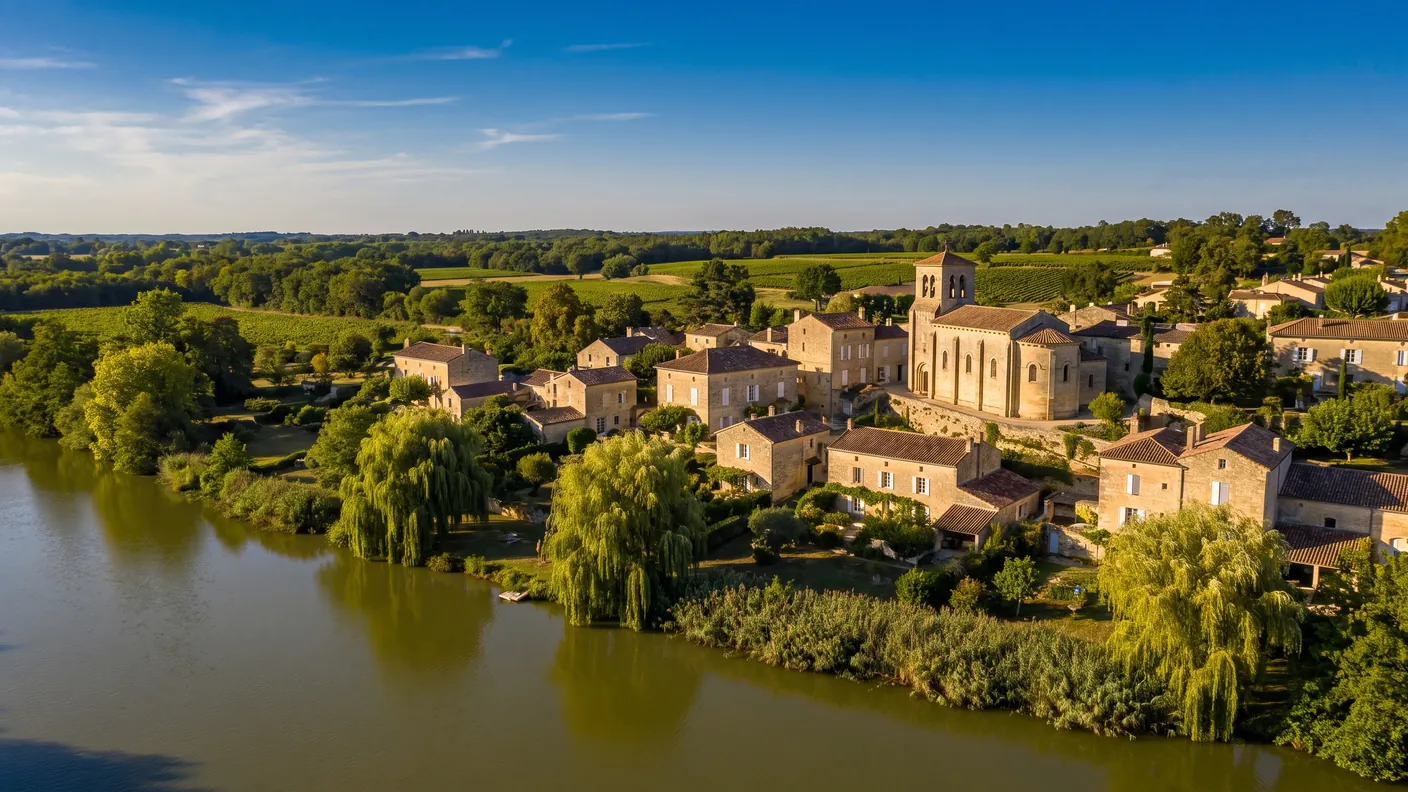
Saint-Denis-de-Pile is located in the eastern part of the Gironde department (33), in the Nouvelle-Aquitaine region, in the Libourne area, on the banks of the Isle River, about sixty kilometers northeast of Bordeaux and about ten kilometers north of Libourne. It is a municipality in the Libourne district and the Nord-Libournais canton, and a member of the Libournais Urban Community. Its territory stretches from east to west between the National Highway 89 (Bordeaux–Périgueux) and the river Isle, combines waterfront areas, vineyard-covered hillsides, and woodlands.
Its close proximity to Libourne, the major wine-producing town, and its excellent road and rail connections have made it a rapidly growing residential community, while still preserving its rural setting and heritage. Here, in the heart of the Libournais region, just a few minutes from the greatest vineyards on the right bank—Pomerol, Lalande-de-Pomerol, and Saint-Émilion—you’ll find yourself in a gentle landscape of rivers and vineyards.
On the banks of the Isle
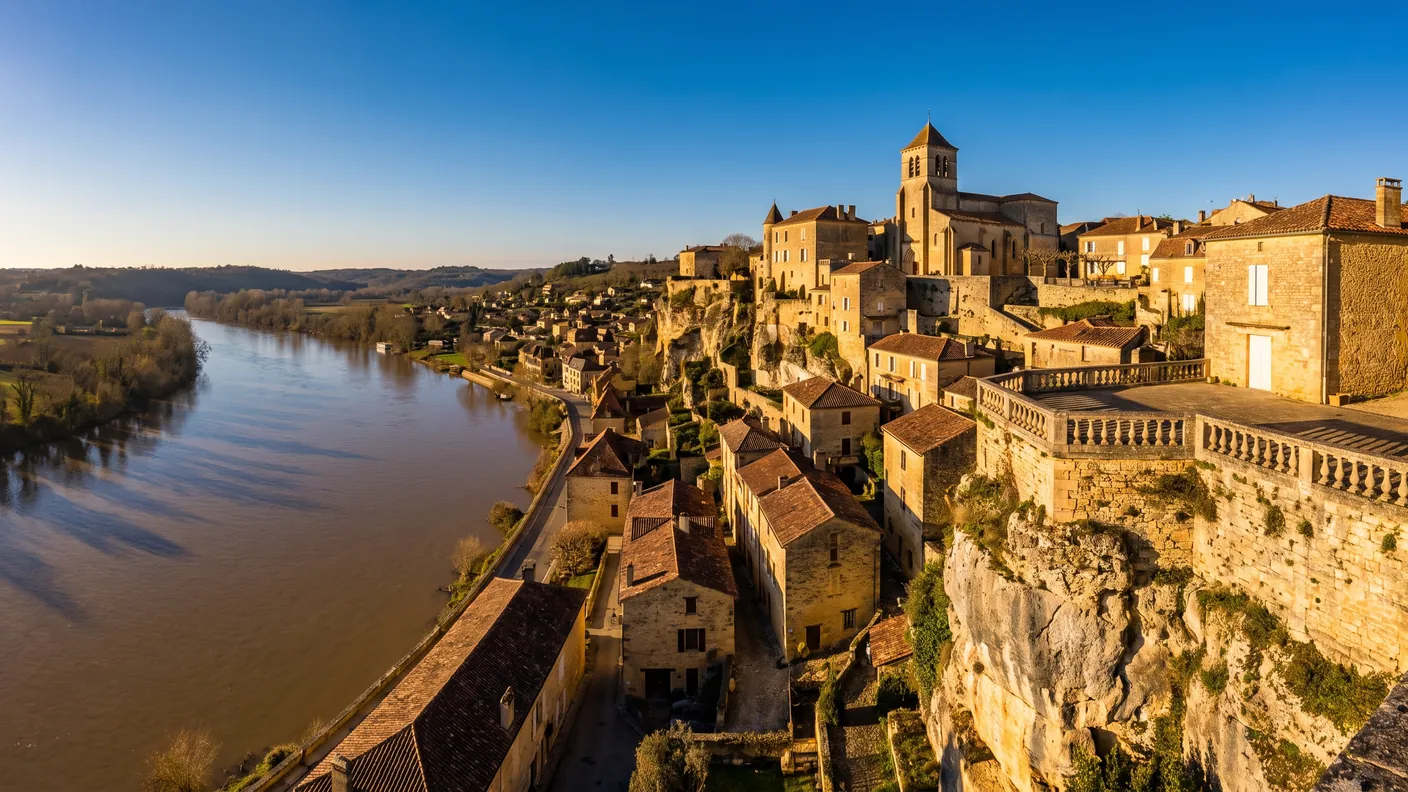
The town owes a great deal to its river. The Isle, the main tributary of the Dordogne, which flows down from the Limousin region through Périgueux, runs south of the town of Saint-Denis. Its wooded banks, wet meadows, and shimmering waters are what give the place its charm. The river has long shaped life in the town—fishing, mills, navigation, and travel—and it is on its banks that the church and the old village stand.
The Isle, still unspoiled and teeming with fish, now offers beautiful walks along the water—on foot or by bike—in a lush, peaceful setting, away from the main tourist crowds. A graceful suspension bridge spans the river. Its landscapes have even captivated the film industry. This is a land of freshwater and vineyards, with a mild climate, where nature and heritage come together, just a stone’s throw from Libourne and its fine wines.
A rapidly growing town
With approximately 5,950 residents in the 2023 census (INSEE) — with a sharp increase in population (nearly 8% since 2017) — Saint-Denis-de-Pile is a vibrant town, one of the most populous in the Libourne region after Libourne, whose residents are known as the Dionysians. Its growth is due to its prime location. It benefits from its location on the outskirts of Libourne, with good road and rail connections to Bordeaux, in a pleasant setting nestled between the river and the vineyards.
Once a village, now a small residential town, it has managed to preserve its heritage and rural character, with its Romanesque church, old town center, Carthusian monastery, and vineyards. Far from the hustle and bustle of tourism, Saint-Denis-de-Pile exudes the understated charm of an authentic Libournais town, where life follows the rhythm of the vineyards and the river, while residents enjoy proximity to some of the world’s most prestigious vineyards.
The Romanesque Church of Saint-Denis
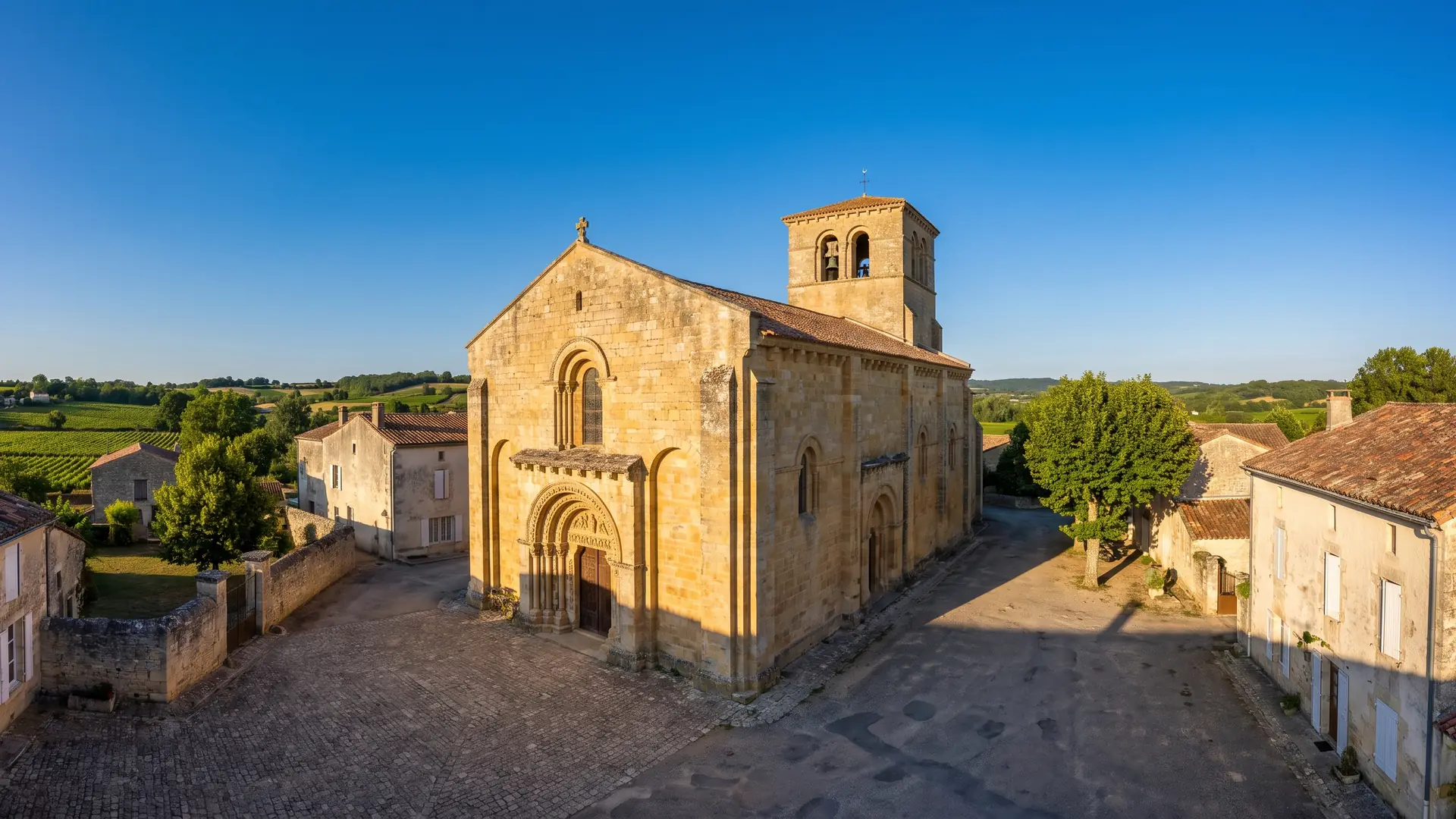
The treasure of Saint-Denis-de-Pile is its Romanesque church, one of the oldest and most valuable in the Libourne region, designated a historic monument in 1862 and home to a painting attributed to the Le Nain brothers. This is the main reason to stop in the town.
A Romanesque gem listed as a historic monument as early as 1862
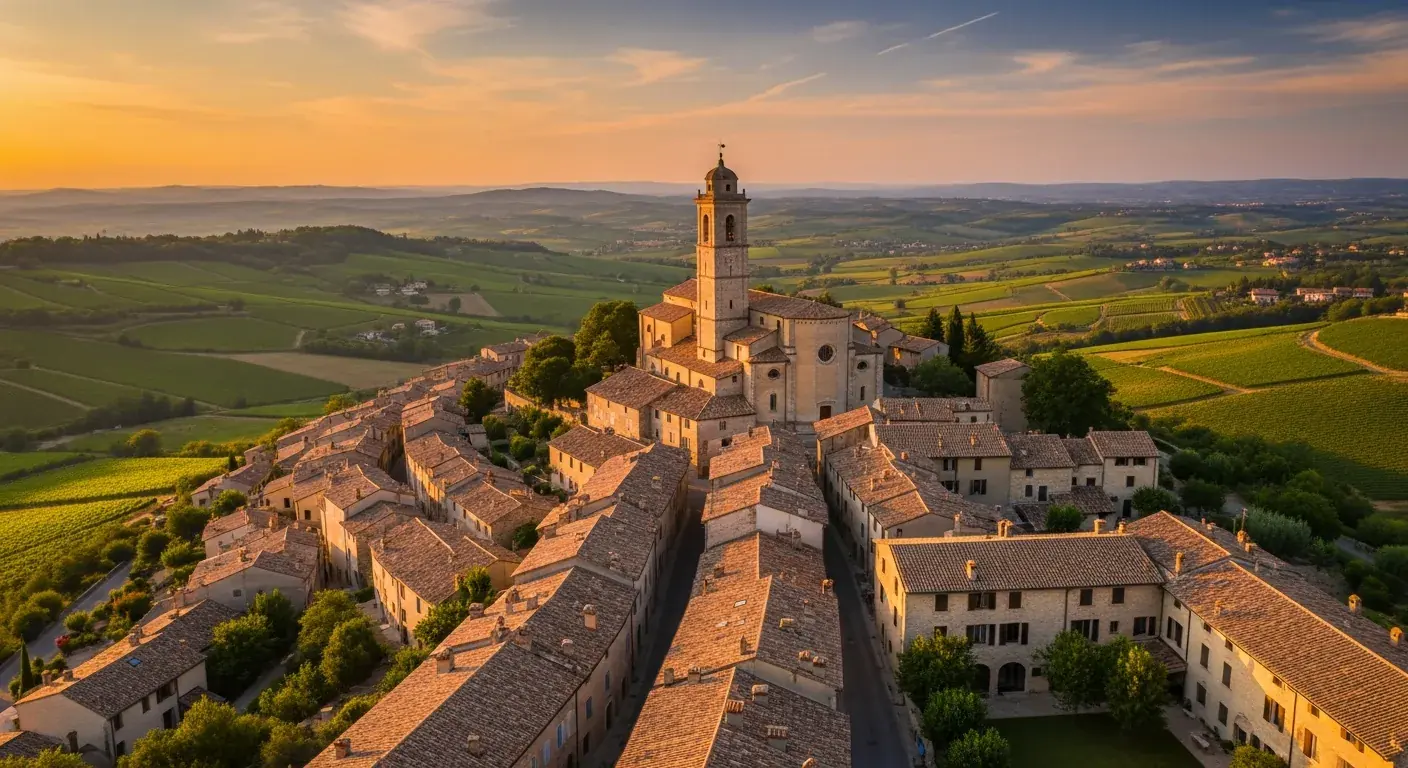
The Saint-Denis Church is a fine 12th-century Romanesque building, originally built on a Greek-cross plan, altered in the 15th and 16th centuries in the Gothic style, then expanded in 1860 by extending the nave, which gave it its current Latin cross shape. Its great heritage value has earned it the distinction of being listed as a Historic Monument as of 1862 (POP/Mérimée Instructions) — a remarkably early date, among the very first sites to be protected in the Gironde, at the time of Mérimée’s first lists.
This long-standing designation highlights the exceptional quality of the building, a fine example of Gironde Romanesque art. Visitors can admire the simplicity and grandeur of its medieval architecture: semicircular arches, capitals, and a sturdy bell tower. For heritage enthusiasts, this is a must-see destination, especially since the church houses a treasure trove of paintings—a rarity in a village church.
A painting attributed to the Le Nain brothers
The Church of Saint-Denis is home to a remarkable work of art. It is a painting depicting The Visitation, attributed to the Le Nain brothers — Antoine, Louis, and Mathieu, great French painters of the 17th century, famous for their rural scenes and religious compositions. The attribution remains tentative: the official description reads “Le Nain (?)”. This is because the works of the three brothers are notoriously difficult to distinguish from one another. The painting is classified as an object since 1957.
For a modest village church to house a painting of this magnitude is truly exceptional, and adds to the prestige of the place. One doesn’t expect to come across a Le Nain in rural Libourne. This work, combined with the listed Romanesque architecture, makes the Church of Saint-Denis a veritable little museum of sacred art, well worth exploring during your visit. Between its Romanesque stonework and the paintings of the Grand Siècle, the church alone tells the story of centuries of history and devotion, and is well worth the detour to Saint-Denis-de-Pile.
| Saint-Denis Church | Details |
|---|---|
| Style | Romanesque (12th century), rebuilt in the Gothic style (15th–16th centuries), expanded in 1860 |
| Map | originally a Greek cross, then a Latin cross |
| Protection | designated a historic monument in 1862 |
| Treasure | The Visitation, attributed to the Le Nain brothers (listed as an object in 1957) |
| Interest | one of the oldest historic churches in Gironde |
The Isle Valley
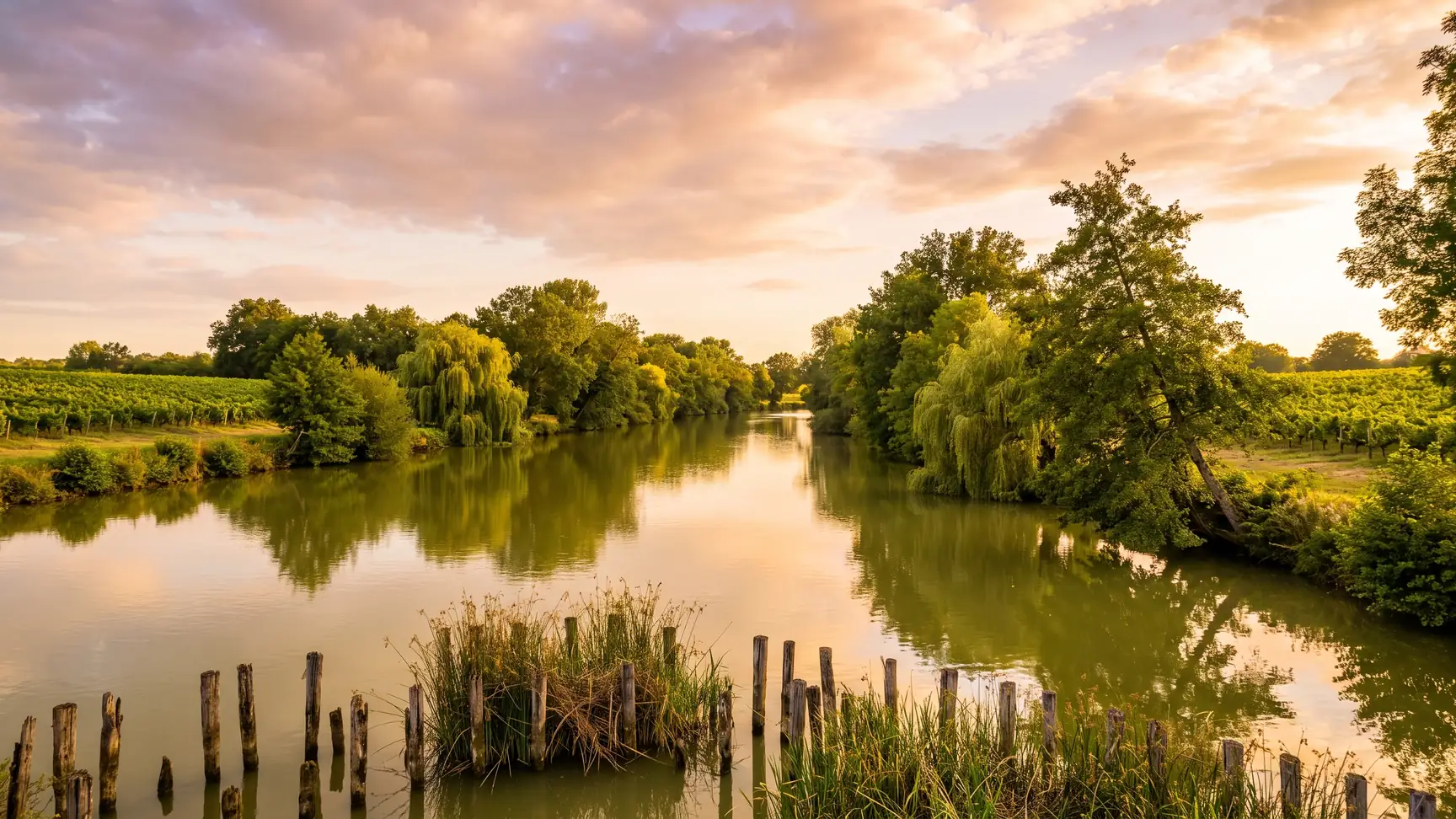
Saint-Denis-de-Pile lives in tune with the Isle: the river valley—lush and peaceful—is an integral part of the town’s identity, blending unspoiled nature with its heritage. A land of fresh water waiting to be explored along its banks.
A Land of Fresh Water
The Isle Valley, in Saint-Denis, is one of the most charming landscapes in the Libourne region. It features a calm river with green waters, lined with willows, alders, and reeds, which winds its way through meadows, woods, and vineyards. Long used for fishing, mills, and navigation—in days gone by, gabares loaded with wood, stone, and wine were taken downstream toward Libourne and the Dordogne—the Isle is now a natural haven, rich in birdlife and tranquility.
There are beautiful walks and bike rides along the river, particularly along the old towpaths. The river, still pristine and teeming with fish, is a delight for anglers and nature lovers alike. Just a stone’s throw from the village and its Romanesque church, the valley offers a breath of fresh air—a soothing contrast to the prestigious world of the nearby grand cru wines. This is one of the understated charms of Saint-Denis-de-Pile.
The Great River of the Libournais Region
The Isle is not a small river. It is the main tributary of the Dordogne, nearly 250 kilometers long, which originates in Limousin, flows through the Périgord and Périgueux, before joining the Dordogne at Libourne, very close to Saint-Denis. The town is thus situated along a major natural corridor—the Isle Valley—which has always connected the Bordeaux region to the Périgord—a transportation corridor also followed by National Route 89 and the railroad.
This strategic location, at the confluence of the river and major trade routes, explains the town’s long history of settlement and its development. In Saint-Denis, the Isle flows peacefully between its wooded banks, connected via the Dordogne to the estuary and the open sea: a river that is both intimate and open to the world. It is the blue thread that connects the village to the entire region, and which has, throughout history, been the source of its prosperity and charm.
The Suspension Bridge and the Movie Theater
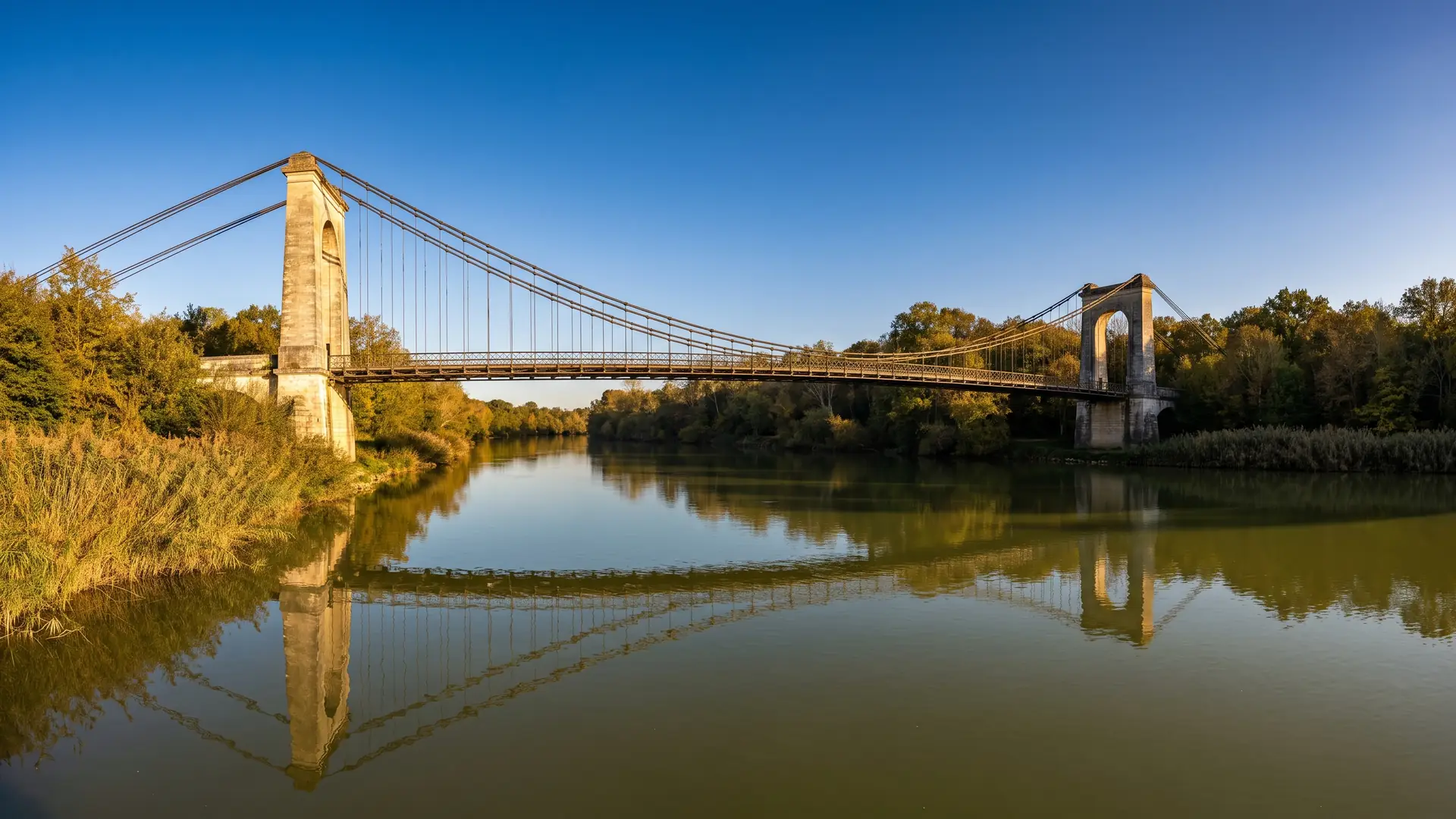
A landmark of the local landscape, the Saint-Denis-de-Pile suspension bridge has spanned the Isle River for nearly a century—and has even served as a backdrop for films and contemporary art. A small 20th-century landmark, dear to the Dionysians.
A Bridge Over the Isle
At Saint-Denis-de-Pile, the river is spanned by an elegant suspension bridge, gracefully arching over the water. The current bridge, built between 1938 and 1941, replaced an earlier bridge whose spectacular collapse in 1931 left a lasting impression. With its pylons and cables reflected in the calm water, it has become one of the town’s landmarks—a beloved point of reference for residents—connecting the two banks and offering beautiful views of the valley.
Weakened by decades of wear and tear, it was closed in 2024 to be completely rebuilt: a long-awaited project that will soon restore Saint-Denis’s historic bridge over the Isle. In the meantime, from the riverbanks, its slender silhouette continues to form, along with the river and the trees, one of the town’s most beautiful scenes—a gentle, timeless landscape bathed in the light of the Libourne region.
The Blue Bicycle and Daniel Buren
This picturesque bridge had its moment of glory on the big screen. Scenes from *La Bicyclette bleue*, the television adaptation of Régine Deforges’s famous novel—a sweeping saga set in the Gironde region spanning World War II—were filmed there in 1999, with the town and its river serving as the backdrop. The bridge has also inspired contemporary art: artist Daniel Buren, a leading figure in French art, installed a temporary artwork there, playing with the structure and the reflections on the water.
Gazing at the Isle from the riverbanks, imagining the gabares of days gone by, movie scenes, or Buren’s installation: this is one of the quiet pleasures of a visit to Saint-Denis-de-Pile. The bridge, the river, and the riverbanks come together to form a peaceful, cinematic scene to be savored at a leisurely pace, far from the hustle and bustle of major tourist sites—an open-air movie set in the heart of the Libournais region.
The Chartreuse and the Mystery of the “Pile”
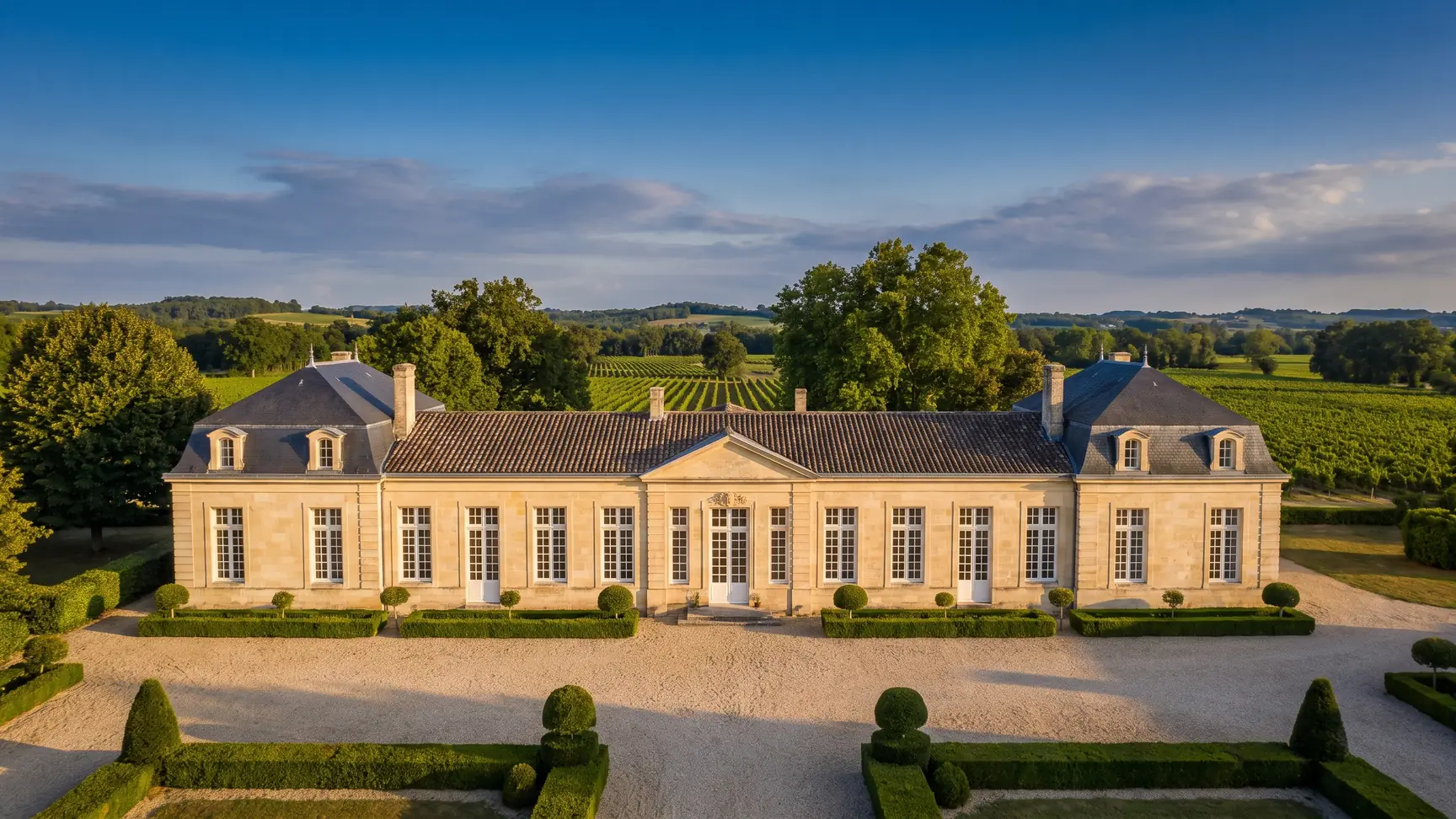
In addition to its church, Saint-Denis-de-Pile is home to an elegant Carthusian monastery and bears an intriguing name—“de-Pile”—whose origin may refer to a long-lost ancient monument. These are two more facets of Dionysian heritage.
The Chartreuse de Bômale
Among the beautiful homes in the town, the Chartreuse de Bômale is worth paying attention to. It is a Chartreuse, this type of Gironde manor house—low and elongated, with an elegant and understated facade—a residence from the 16th century, revised in the 18th century, on the banks of the Isle River, in a park covering about four hectares. Formerly owned by the Vacher family, it is now owned by the municipality, which organizes cultural events there: exhibitions, concerts, and other events.
It is a fine example of residential architecture in the Bordeaux region, now revitalized by the city’s cultural life (a cultural project, “BOMA,” is taking shape there). Surrounding it, as throughout the Libourne region, stand other estates and wine-growing mansions, scattered among the vineyards. This architectural heritage, less well-known than that of the neighboring grand cru estates, bears witness to the region’s historic wealth and its way of life, nestled between vineyards and the river. The Chartreuse de Bômale, open during cultural events, is one of the places where heritage and modern life come together in Saint-Denis-de-Pile.
The Mystery of the "Pile"
The very name of the town is intriguing: why “Saint-Denis-de-Pile "? The most compelling hypothesis points to a Gallo-Roman "pile" — not a bridge pier. But a tall Roman masonry tower, a funerary or commemorative monument, such as the few that still exist in the Southwest (the famous “Pile de Cinq-Mars” in Touraine, for example). Such an ancient monument, now lost, may have once stood within the town’s boundaries—which lay along the Roman road from Burdigala (Bordeaux) to Vesunna (Périgueux)—and given the town its nickname, attesting to an early Gallo-Roman settlement.
This explanation—which is appealing and consistent with the history of the Libournais region, a land of vineyards since ancient times—remains, however, to be confirmed: it is more of a toponymic hypothesis than an established fact. In any case, this unique name adds to the charm and mystery of Saint-Denis-de-Pile, and serves as a reminder that, beneath the vineyards of the Libournais region, lies a very ancient past—first Roman, then medieval—of which the Romanesque church is one of the finest examples.
The History and Figures of Saint-Denis
From its ancient origins to the present day, Saint-Denis-de-Pile has endured through the centuries alongside the Isle River and its vineyards, producing several notable figures. A few key events shed light on the history of this town in the Libourne region.
From Its Origins to the Modern Municipality
The area of Saint-Denis-de-Pile has been inhabited for a long time. A Bronze Age metalworker's hoard — a clay vase containing eleven and a half kilograms of metal — was discovered there in 1948. A Roman road ran along the Isle Valley as early as the 1ster century. Placed under the patronage of Saint Denis, the first bishop of Paris and a martyr; the parish is an ancient one. Its Romanesque church dates back to the 12th century, attests to the importance of the site in the Middle Ages, on the Route de l'Isle and near Libourne.
Like the rest of the Libourne region, the area experienced a long period of domination English in Guyenne during the Middle Ages, before its return to France in 1453, followed by the turmoil of the Wars of Religion. Over the centuries, the town made its living from vine, from the river and the agriculture, in the shadow of the nearby large city, Libourne. In the 20th and in the 21st Over the past century, it has become a rapidly growing residential town, while retaining its heritage and rural character, nestled between the Isle River and the vineyards.
People of Saint-Denis
Saint-Denis-de-Pile has produced or welcomed several notable figures. Jean André Garde (1892–1975), a native of the town, was a winemaker, archaeologist, and historian. Fascinated by his region’s past, he was one of the driving forces behind the Libourne Historical and Archaeological Society (founded in 1932), helping to promote and preserve the heritage of the Libourne region.
The town also honors the memory of Gilbert Benay (1922–1944), a young member of the French Interior Forces (FFI) who was executed during World War II at the age of just twenty-two—one of the many victims of the Gironde Resistance. These figures—the scholar with a passion for his local heritage, the young Resistance fighter who gave his life for freedom—each in their own way embody the people of Saint-Denis-de-Pilezz’s attachment to their land and their history. They serve as a reminder that, behind its apparent tranquility, Saint-Denis-de-Pile, too, has its share of grand history—from a passion for heritage to the sacrifices of war.
The Saint-Denis-de-Pile Vineyard
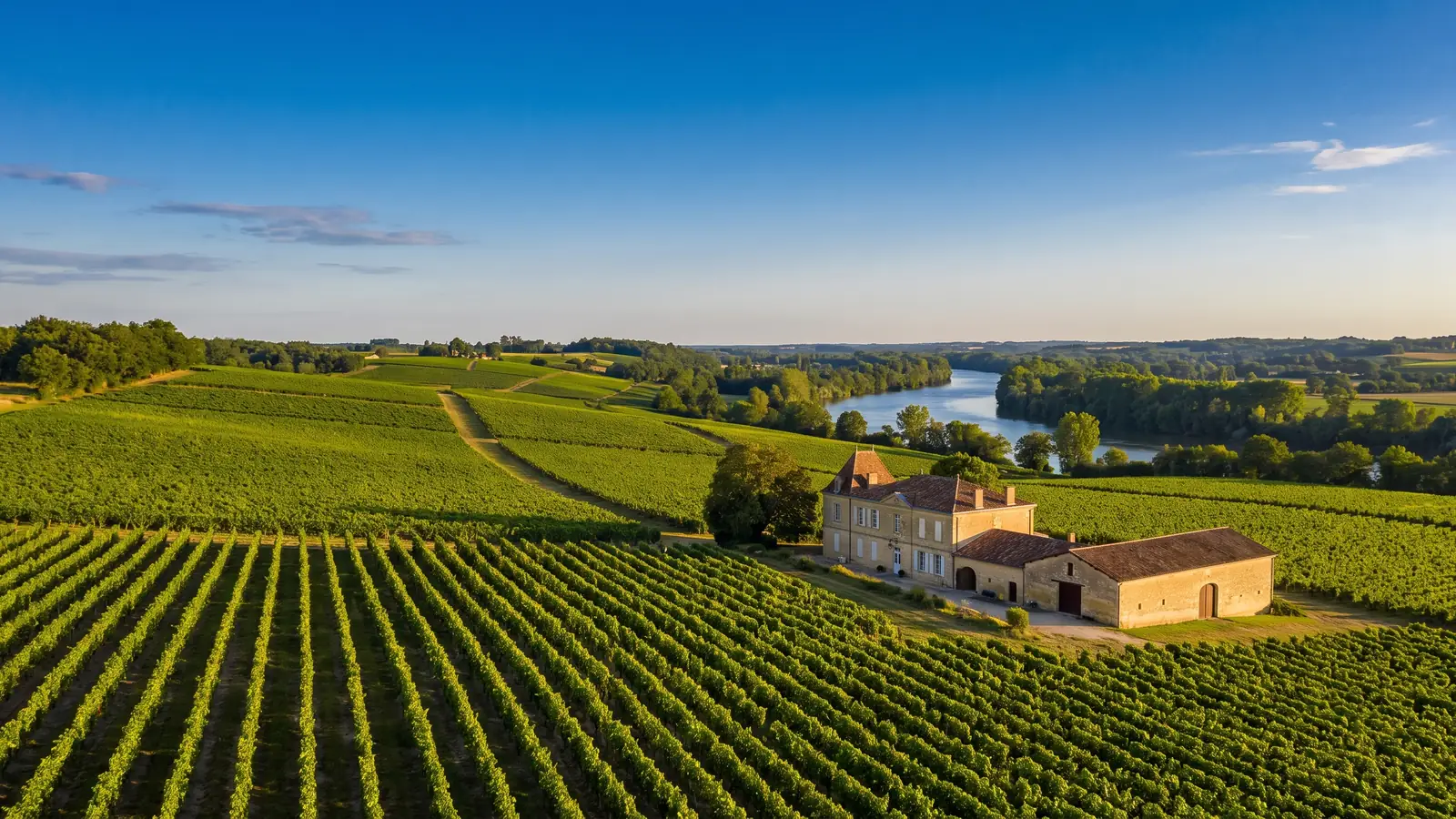
Surrounding Saint-Denis-de-Pile lies a vineyard belonging to a prominent Bordeaux family. The vineyard produces wines under the Bordeaux and Bordeaux Supérieur appellations, situated just outside the prestigious and nearby wine regions of Pomerol, Lalande-de-Pomerol, and Saint-Émilion. Wine is an integral part of the Dionysian region’s identity.
Bordeaux and Bordeaux Supérieur
The Libourne region has been a wine-growing area since ancient times, and Saint-Denis-de-Pile is no exception. The vineyards here fall under the regional Bordeaux and Bordeaux Supérieur appellations—there is no separate “Saint-Denis” AOC—and primarily produce red wines made from Merlot and Cabernet varieties, which are smooth and fruity, as well as white and rosé wines. On the hillsides overlooking the Isle River, wineries produce wines under the Bordeaux and Bordeaux Supérieur AOCs. The neighboring appellations of Pomerol, Lalande-de-Pomerol, and Saint-Émilion have their own distinct production regulations. This is one of the lesser-known attractions of the Saint-Denis-de-Pile region.
On the outskirts of Pomerol and Lalande
What makes the Saint-Denis-de-Pile vineyard so special is its location: the town lies at the gateway to legendary vineyards. Nearby, to the south, lie Lalande-de-Pomerol and Pomerol, home to legendary wines such as Pétrus, among the most expensive wines in the world. A little further on is Saint-Émilion, the medieval town listed as a UNESCO World Heritage Site, with its grand cru wines. The Fronsadais region.
A visit to Saint-Denis-de-Pile can thus easily be extended—with a driver—to explore these prestigious appellations, by sampling a wine produced under the regional appellations Bordeaux and Bordeaux Supérieur followed by a cru from a neighboring appellation. That’s the appeal of a base like Saint-Denis. Here, you can taste wines produced under the Bordeaux and Bordeaux Supérieur regional appellations, all while being just a few minutes away from the most sought-after vineyards on the Right Bank. This is where having an executive car service really pays off, allowing you to plan a wine-tasting tour without worrying about driving between tastings.
| The Saint-Denis-de-Pile Vineyard | Details |
|---|---|
| Appellations | Bordeaux · Bordeaux Supérieur (no "Saint-Denis" AOC) |
| Colors | mostly reds (Merlot, Cabernets) · also whites and rosés |
| Terroir | clay-limestone and gravel slopes above the Isle River |
| On the outskirts of | Pomerol, Lalande-de-Pomerol, Saint-Émilion |
| Strength | near Pomerol, Lalande-de-Pomerol, and Saint-Émilion |
What is there to see around Saint-Denis-de-Pile?
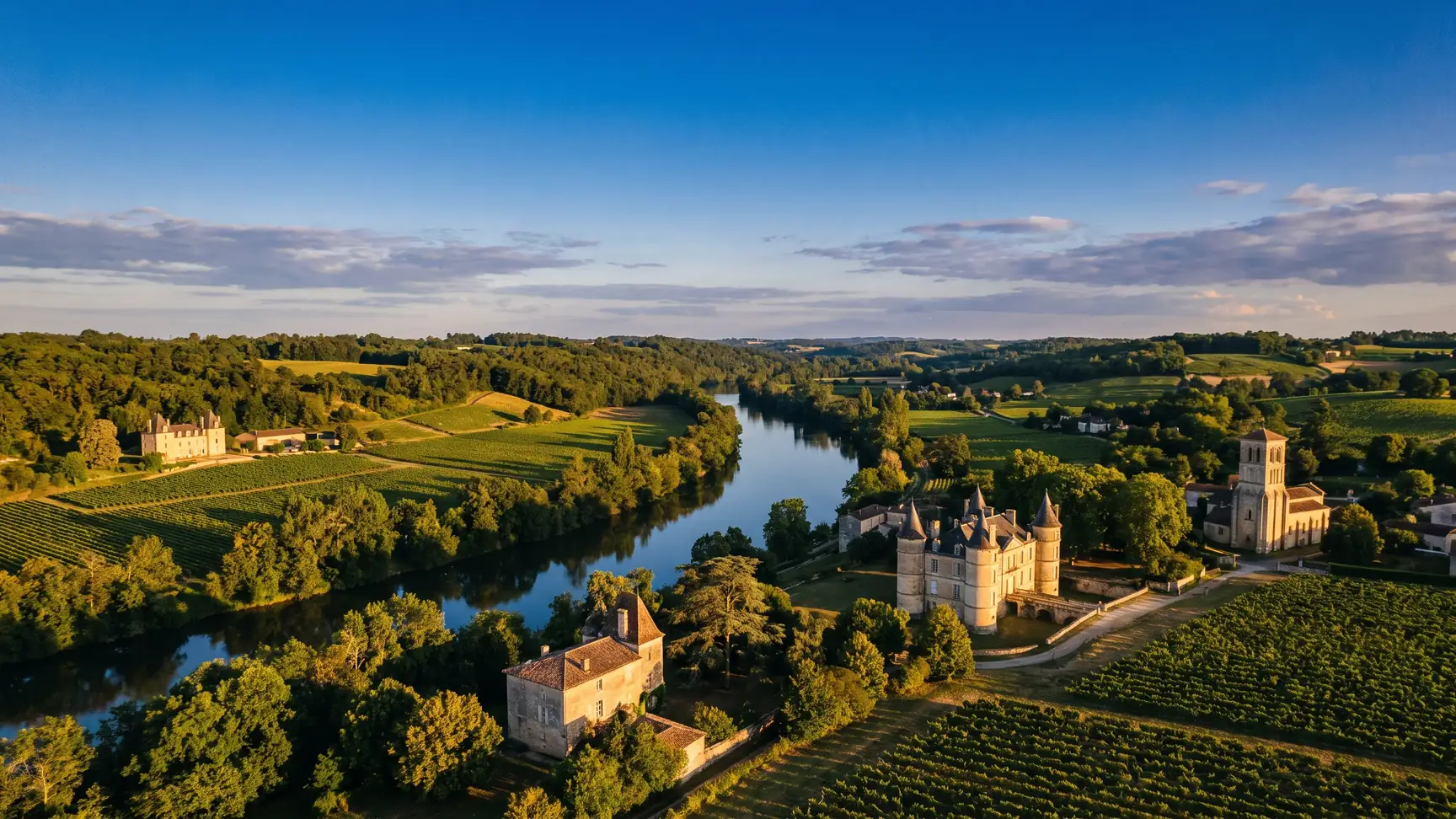
Saint-Denis-de-Pile is an excellent starting point for exploring the Libournais region and its fine wines: Libourne, Pomerol, Saint-Émilion, and Coutras are all just a few kilometers away. The distances are short, and you can quickly make your way from the riverside village to the legendary vineyards.
Libourne, Pomerol, and Saint-Émilion
To the south, about ten kilometers away, Libourne, the major wine-trading town on the Dordogne, is a lively bastide founded in the 13th century, in the heart of the vineyards. Nearby lie the most prestigious vineyards of the Right Bank. There you’ll find Pomerol and Lalande-de-Pomerol, home to legendary wines. Saint-Émilion, the medieval town listed as a UNESCO World Heritage Site, with its monolithic church, cobblestone streets, and grand cru wines—an absolute must-see, about 20 kilometers away.
And the Fronsadais region, with its Fronsac hill. With a private chauffeur, it’s easy to plan a customized loop from Saint-Denis-de-Pile that takes you through these renowned wine regions, enjoying one tasting after another without worrying about driving. This is one of the town’s greatest assets: its immediate proximity to some of the most famous vineyards on the planet.
Coutras and the Isle Valley
Traveling north-east along the Isle River, you reach Coutras, about fifteen kilometers away. This small town lies at the confluence of the Isle and Dronne rivers; it is famous for the battle of 1587 and Henry IV’s first victory, and serves as a major railway junction. Further on, the Isle Valley leads toward the Périgord and Périgueux, through a landscape of vineyards, rivers, and charming villages.
To the north lie the Charente region and the Cognac region, featuring the beautiful village of Aubeterre-sur-Dronne and its monolithic church. Saint-Denis-de-Pile, situated at the crossroads of the Libournais region and its surrounding areas, is thus an ideal base from which to explore the entire region. With a driver to take you between these stops, you can easily turn your visit into a customized tour, combining heritage, nature, and fine wines, at your own pace.
| Around Saint-Denis-de-Pile | Distance | Interest |
|---|---|---|
| Libourne | ~9 km | The Dordogne: A Wine-Trading Town |
| Pomerol | ~8 km | Vineyard of legendary wines (Pétrus) |
| Lalande-de-Pomerol | ~7 km | A renowned vineyard on the Right Bank |
| Saint-Émilion | ~18 km | UNESCO-designated medieval city, fine wines |
| Coutras | ~15 km | Battle of 1587, confluence of the Isle and Dronne Rivers |
When is the best time to visit Saint-Denis-de-Pile?
Saint-Denis-de-Pile is open to visitors year-round. But spring and summer, when the light dances on the Isle River and the vineyards come to life, are the most pleasant times to visit. The spring covers the hillsides in soft greenery, offers mild days perfect for exploring the Romanesque church, the river valley, the suspension bridge, and the Carthusian monastery, and sees the wineries reopen for tastings. The summer bathes the valley in abundant light.
It’s the perfect time of year to stroll along the Isle River, enjoy the cool, shaded riverbanks, and visit the Libournais wineries in a peaceful atmosphere. The riverbanks offer a welcome respite, just a stone’s throw from the great vineyards. It’s also the season for cultural events, particularly at the Chartreuse de Bômale. The lush, tranquil Dionysian region is perfect for strolling and exploring, with its blend of heritage, nature, and vineyards.
Fall Harvest and Winter
The fall It’s a wonderful time of year to explore the region of Saint-Denis-de-Pile. The grape harvest brings the Libournais wineries to life, the vine leaves turn shades of gold and purple on the hillsides above the Isle River, and the air is filled with the scent of grape must. It’s the perfect time to learn about winemaking and taste the new vintages, before venturing on to the neighboring grand crus of Pomerol or Saint-Émilion.
The winter, a quieter setting, reveals the village, the Romanesque church, and the river in a peaceful atmosphere, beneath the vast skies of the Gironde. You can explore the historic sites without the crowds, in a spirit of contemplation. In any season, the mild oceanic climate, the beauty of the Isle Valley, and the proximity to the region’s finest vineyards make Saint-Denis-de-Pile a restful and enriching getaway, less than an hour from Bordeaux, where Romanesque art, the river, and the wines of the Right Bank come together.
How to get to Saint-Denis-de-Pile from Bordeaux
Saint-Denis-de-Pile is located about 49 km from Bordeaux, which is about a 52-minute drive via the A89 highway toward Périgueux or National Route 89. The town has a train station on the Bordeaux–Angoulême line. However, from July 5 through October 30, 2026, TER Nouvelle-Aquitaine states that service is temporarily suspended. Replacement CALI buses are running between Saint-Denis-de-Pile and Libourne (official traffic information).
Check the train schedule for your travel date. However, the train doesn’t allow you to explore the Romanesque church, the Isle Valley, and the scattered wineries in the area afterward, nor does it make it easy to travel on to Pomerol or Saint-Émilion. For a trip from Bordeaux that combines cultural heritage, nature, and wine tastings, a chauffeur-driven car is the most practical and flexible option.
Train or chauffeured transfer?
To join Saint-Denis-de-Pile and, above all, to make your mark in the area, call on a Professional chauffeur, chauffeur service in Bordeaux offers true freedom. This option guarantees a direct, door-to-door trip from Bordeaux—with no transfers or waiting—and the option to make stops along the way as you please. This is especially valuable for a day combining cultural sites and wine tastings—the Romanesque church and the Isle Valley, followed by two or three wineries in the Libourne region, in Pomerol, Lalande, or Saint-Émilion—where you’ll want to be able to taste the wines without worrying about driving.
We offer this route at a fixed price quoted in advance: expect to pay approximately €109 for the one-way trip, in a Mercedes sedan or a van seating up to 8 passengers, with a professional chauffeur. The price, set at the time of booking, remains fixed. It does not depend on traffic, potential traffic jams, or the number of stops requested along the way, unlike a taxi meter.
This is the perfect option for a day of wine tourism and cultural exploration, a family heritage tour, an event (such as a wedding or birthday celebration at a château in the Libourne region), or a simple transfer to or from Bordeaux-Mérignac Airport. You can travel alone, as a couple, or in a small group of up to 8 people, with luggage, and request stops in Libourne, Pomerol, or at a winery along the way.
In practice, booking is quick and easy. You simply provide the pickup address in Bordeaux and the destination at Saint-Denis-de-Pile, along with the date, desired time, and number of passengers, and you’ll receive a fixed-price quote in writing. On the day of the trip, the driver picks up the passengers at the agreed-upon address and takes them directly to Saint-Denis, without any detours—a real plus for enjoying a stress-free day of cultural heritage and wine.
| Route | Distance | Duration | Landmark |
|---|---|---|---|
| Bordeaux → Saint-Denis-de-Pile | ~49 km | ~52 min | Starting at ~€98 for a private chauffeur service |
| Saint-Denis → Libourne | ~9 km | ~12 min | wine market town |
| Saint-Denis → Pomerol | ~8 km | ~12 min | Pétrus vineyard |
| Saint-Denis → Saint-Émilion | ~18 km | ~25 min | UNESCO World Heritage Site, fine wines |
Whether you come for the beautiful Romanesque church and its painting by Le Nain, for the peaceful Isle Valley and its iconic bridge, for the Carthusian monastery, or for the vineyards and their proximity to the grands crus of the Right Bank, Saint-Denis-de-Pile is a reward for lovers of authentic Bordeaux, at the crossroads of Romanesque art, the river, and the vineyards—a quiet town that, for those who take the time to stop and explore, reveals true treasures, just outside Pomerol and Saint-Émilion.
Whether it’s for a wine-tasting tour, a heritage tour, or an event, booking a chauffeur service guarantees a comfortable and punctual ride—book a driver from Bordeaux to Saint-Denis-de-Pile or explore all our destinations.
Frequently Asked Questions
Where is Saint-Denis-de-Pile located?
Saint-Denis-de-Pile is a commune in the Gironde department (33), in the Nouvelle-Aquitaine region, in the Libournais area, on the banks of the Isle River, about 10 kilometers north of Libourne and approximately 49 km northeast of Bordeaux. Part of the Libourne arrondissement and the Nord-Libournais canton, it has a population of approximately 5,950 (known as Dionysiens) and is part of the Libournais Urban Community. Known for its beautiful, listed Romanesque church, it is located about a 52-minute drive from Bordeaux (approximately 49 km).
What is the distance between Bordeaux and Saint-Denis-de-Pile?
About 49 km by road, or about a 52-minute drive, via the A89 highway toward Périgueux or National Route 89. With a chauffeur service from Bordeaux, the fare is fixed and provided in advance, starting at approximately €109 one way (sedan or van, door-to-door price). The town also has a train station on the line from Bordeaux to Angoulême. However, the train does not allow you to explore the area around the church, the Isle Valley, and the local wineries, nor does it take you as far as Pomerol or Saint-Émilion.
What to See in Saint-Denis-de-Pile?
The 12th-century Romanesque Church of Saint-Denis, designated a historic monument in 1862, houses a painting, *The Visitation*, attributed to the Le Nain brothers (designated a historic object in 1957). It’s a veritable little museum of sacred art. The lush green Isle Valley, perfect for a stroll along the river, and its suspension bridge, where scenes from *La Bicyclette bleue* were filmed. The Chartreuse de Bômale, an elegant 18th-century residence now owned by the municipality, which hosts cultural events. And the vineyards, just outside Pomerol and Saint-Émilion. Nearby: Libourne, Pomerol, Saint-Émilion, and Coutras, all within easy reach.
Why is the church in Saint-Denis-de-Pile noteworthy?
Because it is a 12th-century Romanesque building, originally constructed on a Greek cross plan, remodeled over the centuries, and expanded in 1860. Its great heritage value led to its designation as a historic monument as early as 1862—a very early date, among the very first such designations in the Gironde department. Above all, it houses a painting, *The Visitation*, attributed to the Le Nain brothers, great 17th-century French painters (a cautious attribution: the catalog entry reads “Le Nain?”), which has been listed as a protected object since 1957. For a village church to house such a work is exceptional: it is the great treasure of Saint-Denis-de-Pile.
Which painting is housed in the church of Saint-Denis-de-Pile?
The Church of Saint-Denis houses a painting depicting *The Visitation*, attributed to the Le Nain brothers — Antoine, Louis, and Mathieu —, great 17th-century French painters famous for their scenes of peasant life and their religious compositions, whose works are now on display in major museums, including the Louvre. The attribution remains tentative: the official description reads “Le Nain (?)”. This is because the works of the three brothers are notoriously difficult to distinguish from one another. The painting has been classified as a cultural artifact since 1957. The fact that a modest village church in the Libourne region houses such a work is truly exceptional and a source of pride for the community.
Where does the name “Saint-Denis-de-Pile” come from?
The name “Saint-Denis” comes from Saint Denis, the first bishop of Paris and a martyr, to whom the church is dedicated. The “de-Pile” part is more puzzling. The most compelling theory suggests it refers to a Gallo-Roman “pile”—not a bridge pier, but a tall Roman masonry tower (a funerary or commemorative monument), such as those still found in the Southwest. Such a monument, now lost, may have once stood within the town’s boundaries. This explanation remains a toponymic hypothesis. Yet it attests to the antiquity—undoubtedly Gallo-Roman—of the site’s occupation.
How many people live in Saint-Denis-de-Pile?
According to the 2023 census, the town has approximately 5,950 residents, with a rapidly growing population (an increase of nearly 8% since 2017), making it one of the most populous towns in the Libourne region after Libourne itself. Its residents are known as Dionysians. Its growth is due to its prime location, just outside Libourne and well-connected to Bordeaux by road and rail, in a pleasant setting nestled between the river and vineyards. Having evolved into a small residential town, it has managed to preserve its heritage and rural character, with its listed Romanesque church, its old town center, its Carthusian monastery, and its vineyards.
What kind of wine is produced in Saint-Denis-de-Pile?
Around Saint-Denis-de-Pile, the vineyards fall under the Bordeaux and Bordeaux Supérieur regional appellations: there is no separate “Saint-Denis” AOC. The area primarily produces red wines made from Merlot and Cabernet varieties—smooth and fruity—as well as whites and rosés. Numerous family-owned châteaux dot the hillsides above the Isle River. Most importantly, the town lies at the gateway to legendary vineyards: Pomerol (home of Pétrus), Lalande-de-Pomerol, and Saint-Émilion are just a few kilometers away. Here, you can taste wines produced under the regional appellations of Bordeaux and Bordeaux Supérieur, in close proximity to Pomerol, Lalande-de-Pomerol, and Saint-Émilion.
Is there a train station in Saint-Denis-de-Pile?
Yes, Saint-Denis-de-Pile has a train station on the Bordeaux–Angoulême line. However, from July 5 through October 30, 2026, TER Nouvelle-Aquitaine states that service to this town is temporarily suspended. Replacement CALI buses connect the town to Libourne (official traffic information). That’s a plus. But the train doesn’t allow you to explore the Romanesque church, the Isle Valley, and the scattered vineyards in the area afterward, nor does it make it easy to head out to Pomerol or Saint-Émilion. For a comprehensive tour combining heritage, nature, and wine tastings, an executive car service from Bordeaux remains the most flexible and comfortable option.
What is there to see around Saint-Denis-de-Pile?
Libourne, the major wine market town on the Dordogne River, is about ten kilometers away. The prestigious vineyards of Pomerol and Lalande-de-Pomerol—home to legendary wines such as Pétrus—are nearby. Saint-Émilion, the medieval town listed as a UNESCO World Heritage Site, with its monolithic church and its grand crus (~18 km). Coutras, the site of the 1587 battle and Henry IV’s first victory, at the confluence of the Isle and Dronne rivers (~15 km). And, further afield, the Fronsadais region, the Périgord, and the Charente. Saint-Denis-de-Pile is an excellent base from which to explore the Libournais region and its surroundings.
What is the Chartreuse de Bômale?
The Chartreuse de Bômale is a low, elongated Gironde-style manor house, built in the 16th century and later remodeled in the 18th century, on the banks of the Isle River. Once owned by the Vacher family, it is now owned by the town, which organizes cultural events there, including exhibitions, concerts, and other gatherings. It is a fine example of residential architecture in the Bordeaux region, now revitalized as part of the town’s cultural life. Along with the Romanesque church, it forms part of the town’s remarkable heritage, which is best experienced during the cultural events held there.
Can I book a private chauffeur from Bordeaux to Saint-Denis-de-Pile?
Yes. We offer the Bordeaux → Saint-Denis-de-Pile route (approximately 49 km, about 52 minutes via the A89) at a fixed price, starting at approximately €109 one way, in a Mercedes sedan or a van seating up to 8 passengers, with a professional chauffeur. The trip is direct, door-to-door, with the option to make stops as desired—ideal for a day combining cultural heritage (the Romanesque church, the Isle Valley) and wine tastings at the great neighboring vineyards (Pomerol, Lalande, Saint-Émilion), where you’ll want to be able to taste the wines without worrying about driving. The fixed quote is provided and confirmed in writing before departure.
Further Reading
- The nearby town of Henri IV: see the Coutras Guide (the Battle of 1587, the confluence of the Isle and Dronne rivers)
- The UNESCO City of Wine: see the Saint-Émilion Guide (medieval town, monolithic church, grand cru wines)
- The right bank of the estuary: explore our guides to the Libournais and the Gironde
- Plan your trip: Book a chauffeured transfer from Bordeaux to Saint-Denis-de-Pile or explore all our destinations
Sources and References
- Wikipedia — Saint-Denis-de-Pile — geography, demographics, church, Carthusian monastery, notable figures
- POP / Mérimée Database — Saint-Denis Church — 12th-century Romanesque church, designated a historic monument in 1862
- Wikipedia — the Le Nain brothers — 17th-century painters; *The Visitation*, attributed to “Le Nain (?)”, designated as a cultural property in 1957
- Wikipedia — the Isle (river) — a tributary of the Dordogne, in the Libournais Valley
- TER Nouvelle-Aquitaine — Saint-Denis-de-Pile Station — official station profile · accessed July 24, 2026
- TER Nouvelle-Aquitaine — Traffic Information — Temporary Service Suspension and CALI Buses from July 5 to October 30, 2026 · accessed July 24, 2026
- INSEE — Municipality of Saint-Denis-de-Pile (33393) — Population in 2023 (~5,950 residents), area
Article updated in July 2026.
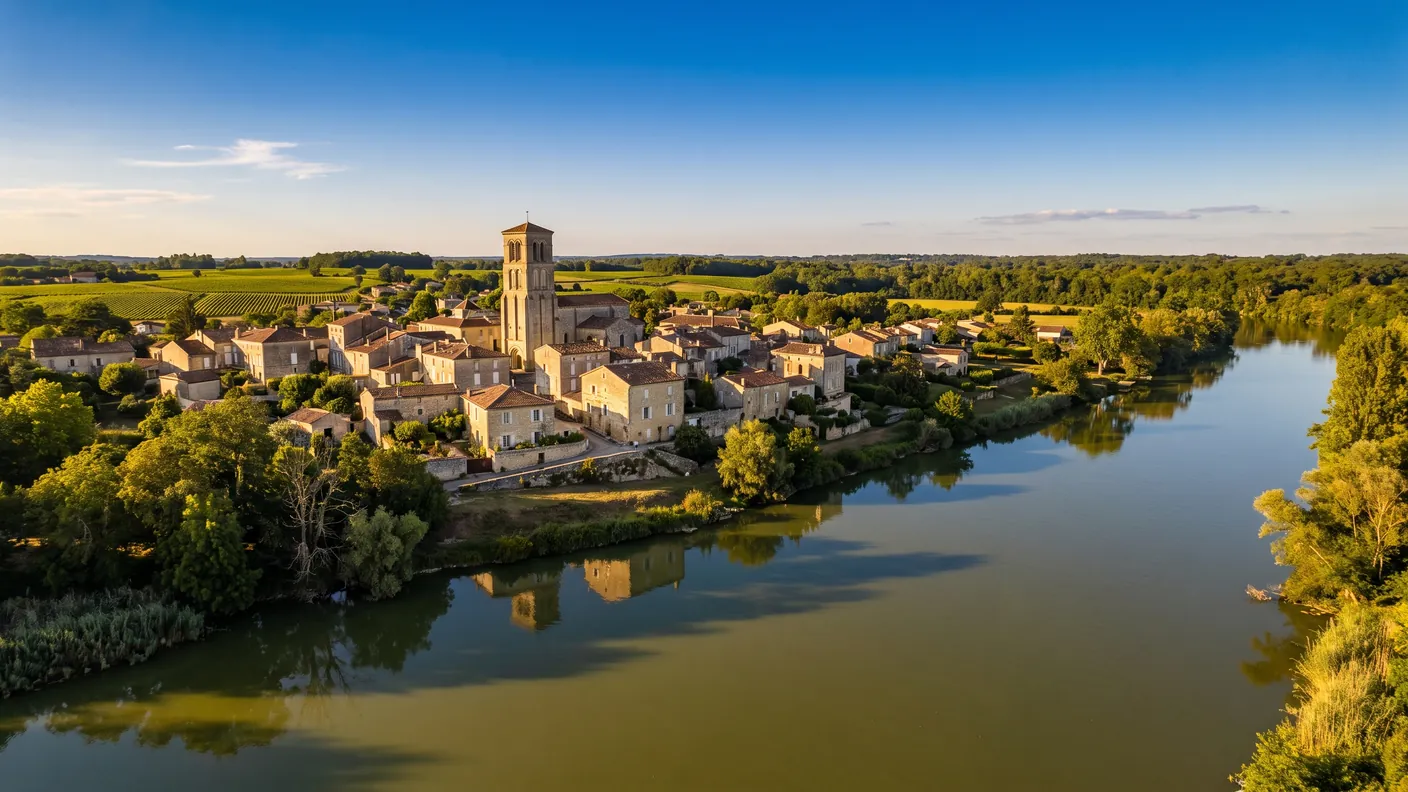
On the way to the Isle Valley
Direct trip from Bordeaux (~52 min) to Saint-Denis-de-Pile, with its Romanesque church and the Libourne vineyards; stop wherever you like along the way—Libourne, Pomerol, Saint-Émilion. Written fixed-price quote—no surprises on the meter.