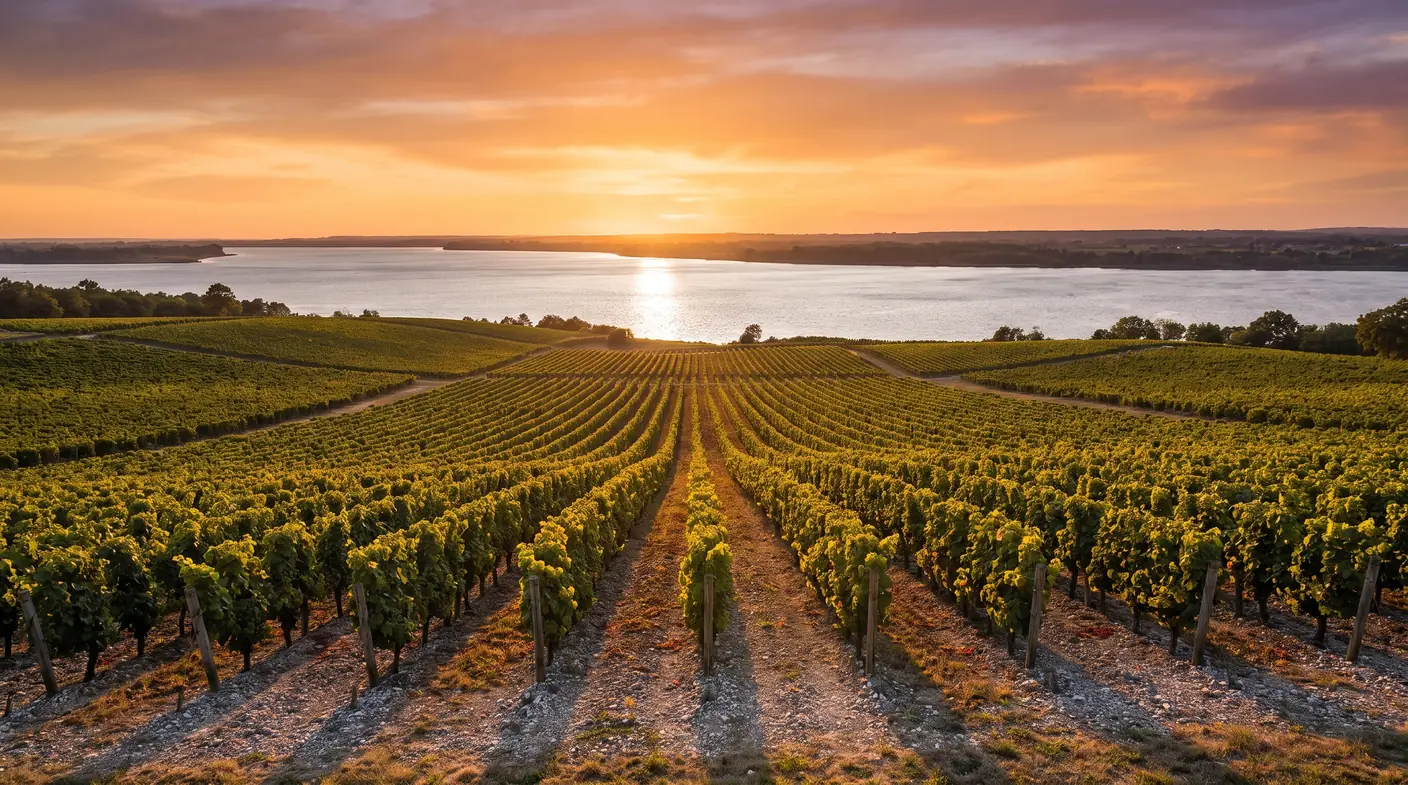
Bordeaux to Saint-Estèphe: grands crus and the Gironde estuary
The northernmost of the Médoc’s major communal appellations, facing the Gironde estuary. Tannic reds built for aging, the pagodas of Cos d’Estournel, the heart of Calon-Ségur, and the Saint-Étienne Church, listed as a historic monument in 1995—the great wine of the Northern Médoc, just an hour from Bordeaux.
Saint-Estèphe at a glance
At the northernmost tip of the Médoc’s major communal appellations, Saint-Estèphe overlooks the Gironde estuary from its gravelly hillsides. It is here, just over an hour from Bordeaux, that the vineyard produces tannic, full-bodied reds, made for aging—never whites, much less sweet wines, contrary to a persistent misconception that this guide takes the time to correct. The town has only 1,638 residents, but it is home to five 1855 classified growths: the famous pagodas of Cos d’Estournel, the single-block vineyard of Montrose overlooking the river, and the heart of Calon-Ségur. In the center of town, the Church of Saint-Étienne, listed as a historic monument in 1995, overlooks a quiet square and its Maison du Vin. This guide distinguishes between verified facts and mere repetition: what Saint-Estèphe is really like, what you’ll see there, and how to get there from Bordeaux.
| Landmark | Details |
|---|---|
| Last Name | Saint-Estèphe — Gironde (33), Médoc Peninsula |
| Status | Wine-growing town, Lesparre-Médoc district |
| Population | ~1,638 residents (INSEE 2023), the Stéphanois and Stéphanoises |
| Must-Sees | Red AOC wines, the 1855 classified growths, and the Saint-Étienne Church, designated a historic monument in 1995 |
| From Bordeaux | ~61 km · ~1 hr 10 min · starting at €123 |
Where is Saint-Estèphe located?
Saint-Estèphe is a commune in the Gironde department, situated on the left bank of the Gironde estuary, at the northernmost tip of the Médoc peninsula. It covers approximately 23.5 km² of gravel, vineyards, and waterfront areas, and borders Pauillac to the south. Administratively, it belongs to the Lesparre-Médoc district, the Nord-Médoc canton, and the Médoc Cœur de Presqu’île community of municipalities. This is the “upper” Médoc, the region that extends the Route des Grands Crus to its northernmost point.
It is, in fact, the northernmost of the major municipal appellations in the Médoc: beyond that, as one heads toward the tip of the peninsula, one leaves the most prestigious appellations behind and enters the generic Médoc AOC. This location at the very edge of the region, between the river to the east and the Landes Forest to the west, is by no means insignificant: it exposes the vineyard to the influence of the water, shields it from ocean winds, and largely shapes the firm and enduring character of its wines.
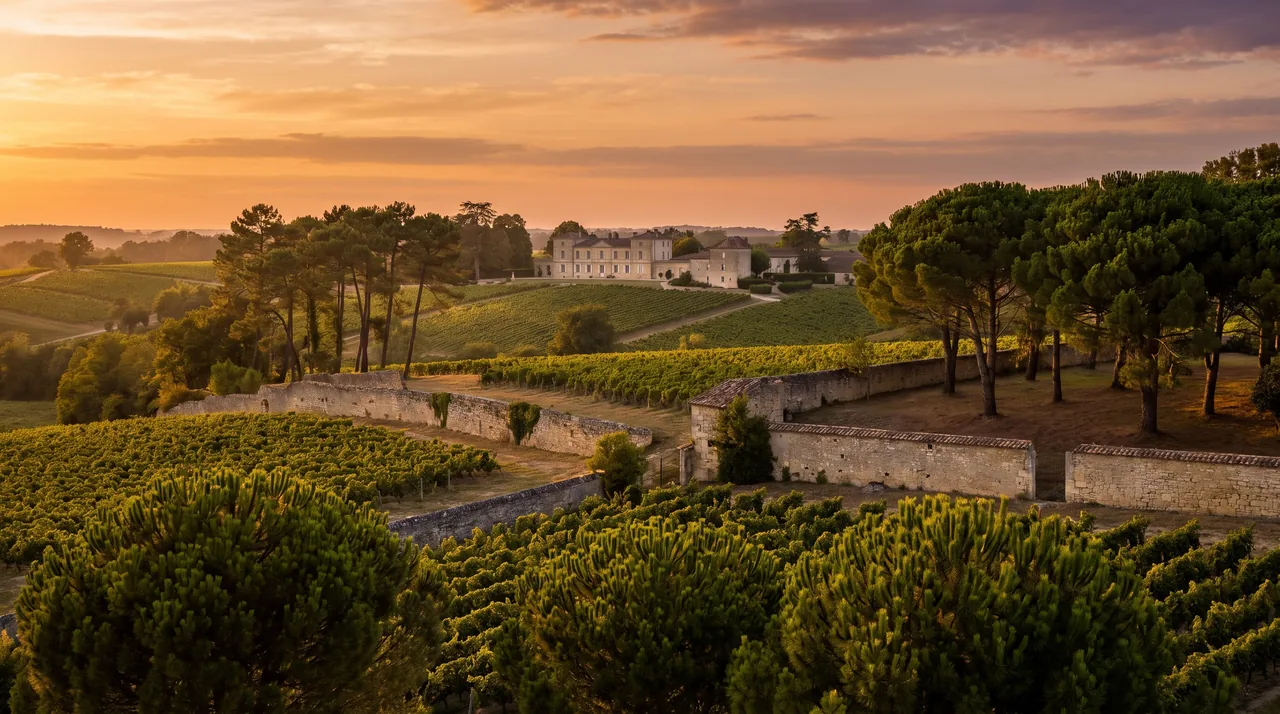
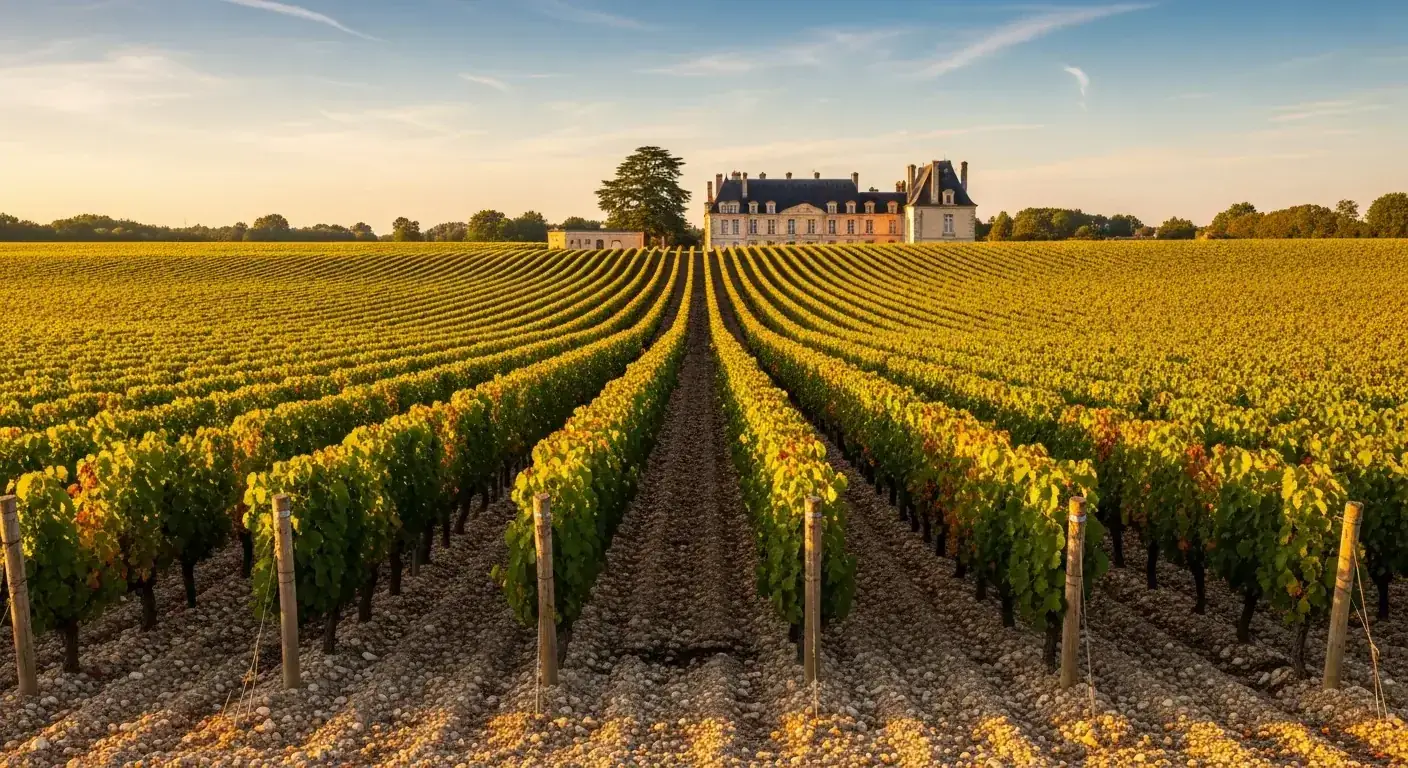
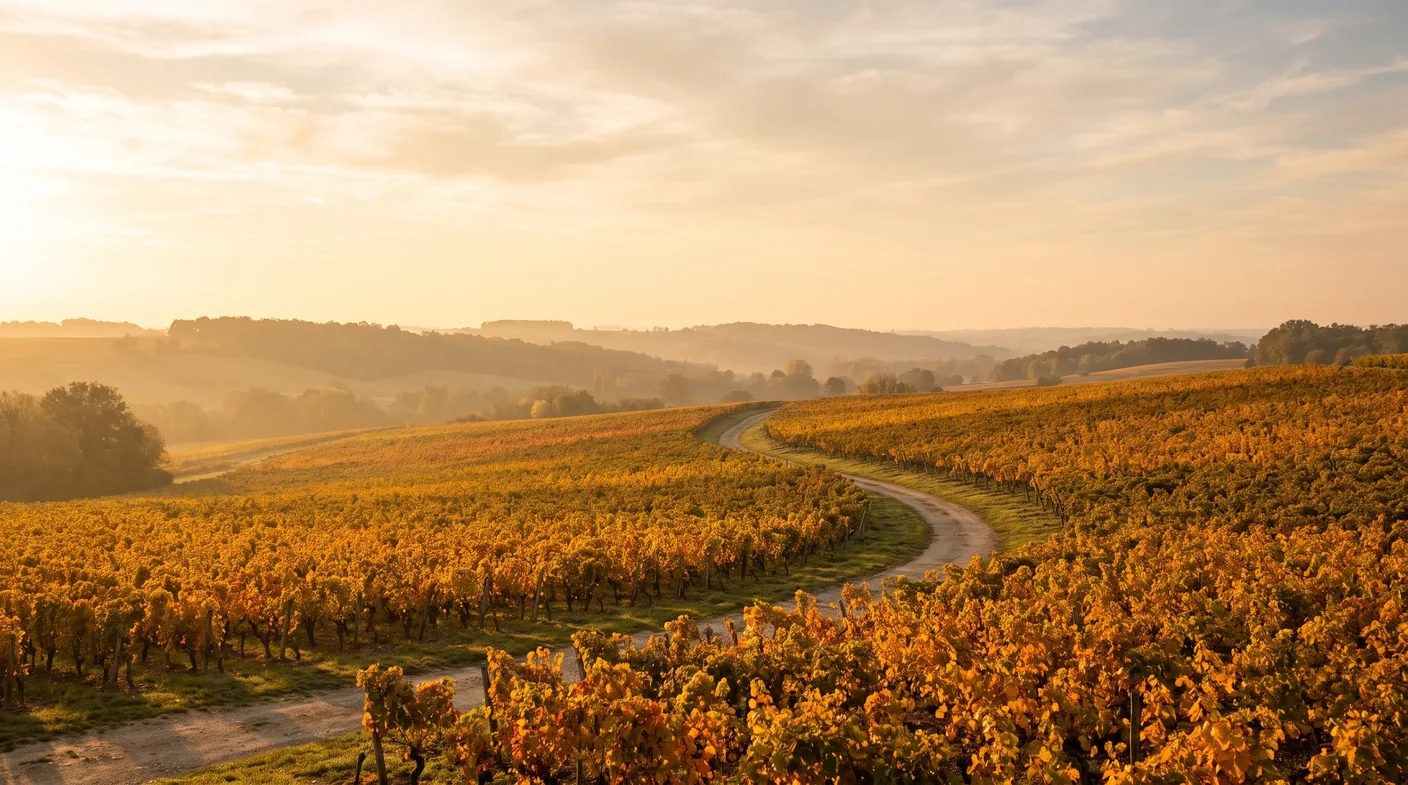
The landscape is that of a Médoc that is both understated and opulent: long, gravelly ridges planted with vines slope down toward the Gironde, punctuated by pine forests, hedgerows, and, here and there, the grand gates of châteaux. Nothing spectacular at first glance, but a lived-in countryside shaped by the vineyards, where every plot has a name and a value.
This location at the tip of the peninsula has a practical implication for visitors: Saint-Estèphe takes a bit of effort to reach. You can’t get there in ten minutes from Bordeaux, the way you would reach Margaux; you have to drive all the way up through the vineyards, pass through Pauillac, and it’s precisely this drive along the estuary that sets the mood. Here, the drive itself is part of the experience—not the other way around.
Gironde, Not Dordogne: Clearing Up the Confusion
One point is worth clarifying from the outset: France has two places called Saint-Estèphe. This one is in Gironde (INSEE code 33395, postcode 33180), in the heart of the Médoc vineyards. Its namesake is in Dordogne, in the Nontron district, with no connection to the wine appellation or the estuary. That ambiguity explains occasional errors in maps and articles; whenever the subject is classified growths, Cos d’Estournel or Montrose, the reference is always to Saint-Estèphe in Gironde.
How far is it from Bordeaux?
From downtown Bordeaux, it’s about 61 km and a 1-hour, 10-minute drive. Leave the city to the north, drive up the peninsula on the D1215, then switch to the D2, the famous “Route des Châteaux,” which connects the classified growths from one town to the next as it runs along the estuary. Saint-Estèphe is thus very close to Pauillac (~7 km): the two appellations border each other, making it natural to visit them both in a single day, just as it’s easy to continue a bit further south toward Saint-Julien.
| Route | Distance | Estimated duration |
|---|---|---|
| Bordeaux → Saint-Estèphe | ~61 km | ~1 hr 10 min |
| Saint-Estèphe → Pauillac | ~7 km | ~10 min |
| Saint-Estèphe → Lesparre-Médoc | ~24 km | ~30 min |
How many people live in Saint-Estèphe?
Saint-Estèphe is a small town: it has 1,638 residents according to the 2023 INSEE census (INSEE), covering an area of approximately 23.5 km². This results in a modest population density of around 70 people per square kilometer — a figure that serves as a reminder that here, vineyards—not residential areas—take up most of the land. This is a far cry from the tourist town that’s overcrowded in the summer: Saint-Estèphe remains, above all, a winegrowers’ village, quiet for most of the year, whose rhythm follows the work in the vineyards—pruning in winter, trellising in spring, and the grape harvest in fall.
This intimate scale is part of the place’s charm. People don’t come to Saint-Estèphe for a large, bustling resort, but for a living, breathing region where vineyards and homes share a landscape that remains deeply agricultural. The silence of the vine rows, barely disturbed by a tractor, is almost a hallmark of the area.
Stéphanois and Stéphanoises
The residents of Saint-Estèphe are known as Stéphanois and Stéphanoises, a term derived directly from Saint Étienne, the parish’s patron saint. Despite its small population, the town plays a major role in the world of wine: five classified growths are based there, and its name appears on restaurant menus around the world. Few villages of this size boast such an international reputation—a striking contrast between the unassuming nature of the place and the prestige of the wines produced there.
| Data | Value |
|---|---|
| Population (INSEE 2023) | ~1,638 residents |
| Area | ~23.5 km² |
| Density | ~70 people/km² |
| Demonym | Stéphanois and Stéphanoises |
| Borough | Lesparre-Médoc |
| Intermunicipal Cooperation | CC Médoc: Heart of the Peninsula |
| Codes | INSEE 33395 · Postal Code 33180 |
Where does the name Saint-Estèphe come from?
The town’s name comes from Saint Stephen, known in Latin as Stephanus, who is considered the first Christian martyr. “Estèphe” is neither a separate saint nor a fanciful corruption of the name: it is simply the Occitan—or Gascon—form of Étienne. The shift from the Latin Stephanus to the Gascon Estèphe is characteristic of the dialects of southwestern France, which have retained their own unique phonetic developments, distinct from those of Northern French.
In fact, the same root—that of Stephanus—can be found in numerous place names and personal names in the region. In Saint-Estèphe, it has taken root in a local form that has endured through the centuries without being Frenchified, a quiet testament to a language that was long part of everyday life before becoming a legacy.
Estèphe: Étienne's Echo in the Landscape
This origin is evident throughout the village. The parish church is dedicated to Saint Stephen, and the residents are known as Stéphanois: the saint, the name of the town, and the demonym form a perfectly coherent triangle centered on the same root. It is no surprise, then, that Saint-Estèphe—which, despite its reputation as a world-famous wine-growing region—first and foremost preserves the memory of a saint from the very earliest days of Christianity. Wine, on the other hand, came much later to give the name its current fame.
This connection is nothing out of the ordinary in the Médoc, where many towns bear the names of saints that have been adapted to the Gascon dialect. Above all, it serves as a reminder that, long before becoming a global brand, Saint-Estèphe was first and foremost a rural parish centered around its church tower, like so many other villages on the peninsula. The name tells this long story, in which viticulture is only a recent—but striking—chapter.
The Saint-Estèphe AOC, a red wine for aging
The Protected Designation of Origin Saint-Estèphe was recognized by the decree of November 14, 1936 (INAO), part of the very first wave of French AOCs—the one that laid the foundation for the modern appellation system. It is an appellation exclusively municipal: The wines must come from designated plots located exclusively within the Saint-Estèphe area. The vineyard covers approximately 1,166 hectares (2023 figures), processed by nearly 69 winemakers, making it one of the largest appellations in the Médoc in terms of area.
The wines produced here have a profile quite distinct from the rest of the peninsula: firmer, more full-bodied, often austere in their youth, and magnificent after a few years in the cellar. Where Margaux emphasizes finesse and aroma, Saint-Estèphe embraces power and structure—a difference in character that stems primarily from the soil.
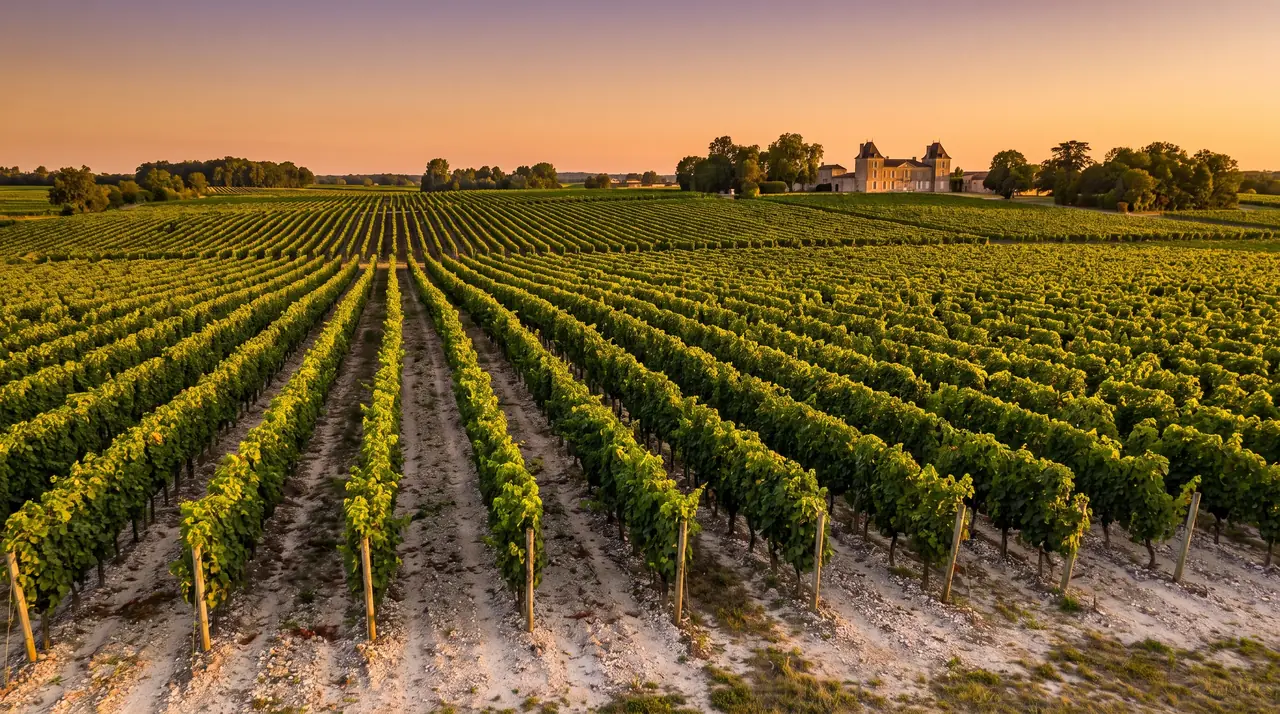
This reputation for being a robust wine is nothing new: for a long time now, Saint-Estèphe have been regarded as reds that require patience—the kind you lay down in the cellar to rediscover ten or fifteen years later, when the structure has mellowed and the tannins have softened.
Red wines only
A key point—and one that is often misunderstood—is that the Saint-Estèphe AOC produces only red wine. There is no white Saint-Estèphe, nor—and this is the most common source of confusion—any sweet Saint-Estèphe. Sweet, golden wines—the great late-harvest nectars—are the domain of other Bordeaux terroirs such as Sauternes or Barsac, on the left bank of the Garonne. Here, everything is red, dry, and tannic. The name, somewhat solemn, may be confusing to the novice, but no bottle of Saint-Estèphe has ever been a dessert wine. This is an important point to keep in mind before building a wine cellar or planning a food pairing.
What makes a Saint-Estèphe unique?
The grape varieties are the classic Bordeaux blend of the Médoc: Cabernet Sauvignon dominant, supplemented by Merlot, by Cabernet Franc and sometimes from small green bird. But the terroir leaves its mark. As is the case throughout the Médoc, we are on serious, these pebbles and gravel deposited by the Garonne over the millennia, which drain the water and force the vines to send their roots deep into the soil. In Saint-Estèphe, however, the clay content in the subsoil is higher than in neighboring appellations. Clay retains water and coolness better: it nourishes the vines even during dry summers and produces wines that are more tannic, full-bodied, and well-structured, made for the guard rather than to be drunk young. That is the hallmark of the appellation, and the reason why wine enthusiasts often describe Saint-Estèphe as the most robust of the great Médoc wines.
| Feature | Saint-Estèphe |
|---|---|
| AOC Recognition | Decree of November 14, 1936 |
| Color | Red only |
| Surface (2023) | ~1,166 ha |
| Winegrowers | ~69 |
| Grape Varieties | Cabernet Sauvignon, Merlot, Cabernet Franc, Petit Verdot |
| Terroir | Soils with a high clay content |
| Style | Tannic, full-bodied, suitable for long-term aging |
In practical terms, a young Saint-Estèphe may seem closed, almost austere; it needs air, time, and often a hearty dish to reveal its full potential. It’s a wine that rewards patience—exactly what the concept of a “red for aging” promises.
The 1855 Classified Growths
Like the rest of the Médoc, Saint-Estèphe is listed in the 1855 ranking, this hierarchy of great wines, established for the Paris World’s Fair and which has remained remarkably stable for nearly two centuries. The town is well represented in it: five castles ranked, including two in second place, which is by no means insignificant for an appellation of this size.
To fully understand these five wines, it’s important to remember how this list came about and why it continues to be considered authoritative.
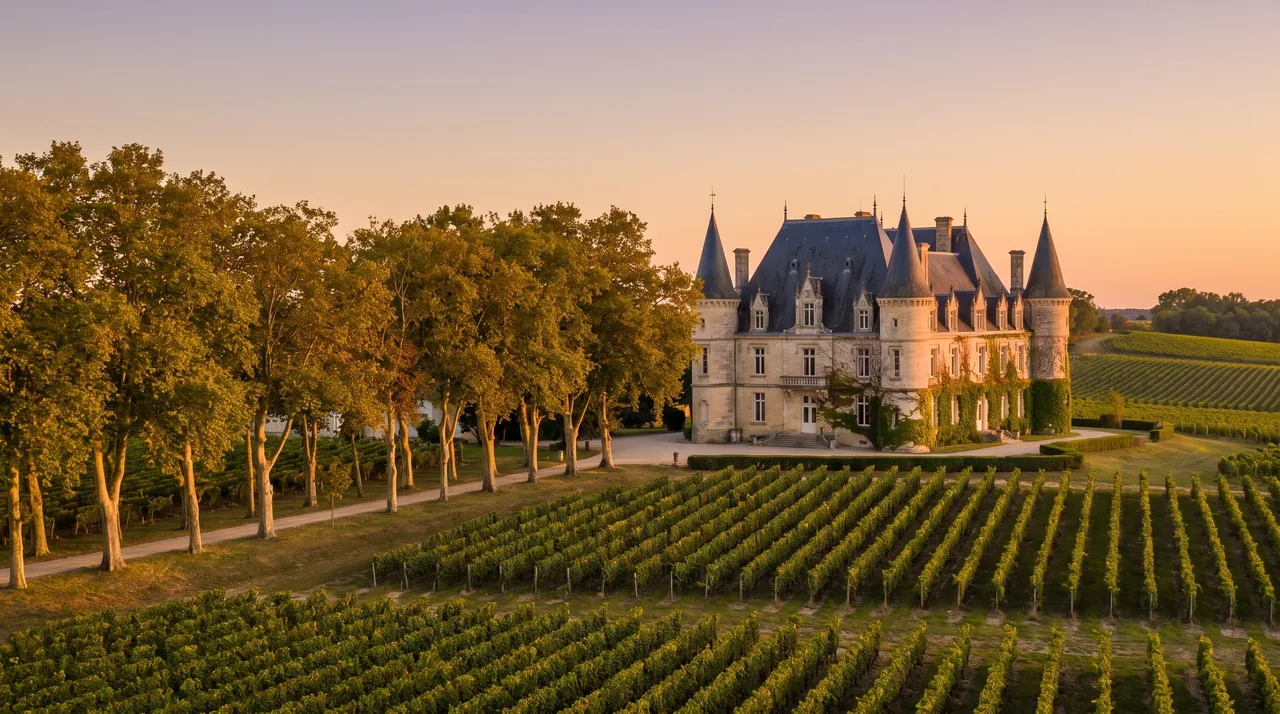
In 1855, at the request of Napoleon III, who wanted to showcase the finest Bordeaux wines at the World’s Fair, local wine brokers ranked the châteaux not by tasting them, but based on the prices they had fetched on the market for decades. This snapshot of market conditions at a single moment in time was set in stone: it has remained virtually unchanged ever since, which explains why a 19th-century list continues to shape the market for fine wines today.
Why Is There No First Growth in Saint-Estèphe?
Unlike Pauillac (Lafite, Latour, Mouton) or Margaux (Château Margaux), Saint-Estèphe has no First Growths. The First Growths of 1855 are located elsewhere in the Bordeaux wine region. This is not a judgment on the current quality of the commune’s wines—the classification reflects a commercial hierarchy from the mid-19th century, not today’s tasting profiles—but it is a fact to keep in mind: in Saint-Estèphe, the official pinnacle of the 1855 classification is the second cru, represented by Cos d’Estournel and Montrose. Many wine enthusiasts, in fact, believe that these two “seconds” now rival certain first crus, given how consistently high their quality has been across vintages.
The five classified growths of the commune
Here are the five châteaux of Saint-Estèphe listed in the 1855 classification, along with their exact ranking:
| Château | Rank in the 1855 classification |
|---|---|
| Cos d'Estournel | Second-growth wine |
| Château Montrose | Second-growth wine |
| Calon-Ségur | Third-growth wine |
| Lafon-Rochet | Fourth-growth wine |
| Cos Labory | Fifth Growth |
Five classified growths in a town with fewer than 1,700 residents: such a concentration is rare, and it speaks volumes about the place Saint-Estèphe holds in the world of fine wines. Each of the five classifications from 1855—from second to fifth growth—is represented here.
Finally, it should be noted that the 1855 classification applies only to red wines from the Médoc—with the sole exception of Haut-Brion in the Graves. The Crus Bourgeois and Crus Artisans, of which there are many in Saint-Estèphe, fall under separate classifications that are more recent and regularly revised. To properly read a label from Saint-Estèphe, one must therefore distinguish between these different categories: a 1855 classified growth, an Exceptional Cru Bourgeois such as Phélan-Ségur, or a communal appellation wine with no mention of a specific classification.
Cos d'Estournel, Montrose, Calon-Ségur
Behind the rows of vines, it is the châteaux that make Saint-Estèphe famous. Three names stand out: Cos d'Estournel, Montrose, and Calon-Ségur. Each has its own history, architecture, and style of wine, and these alone are enough to explain why this small town holds a special place in the Médoc.
Two of them are second growths, and the third is a famous third growth—but their reputation places them all very highly in the esteem of wine lovers. Let’s take a closer look at them, because beyond the labels, they tell a story: that of a Bordeaux wine merchant with an international outlook and ever-rising standards for winemaking.
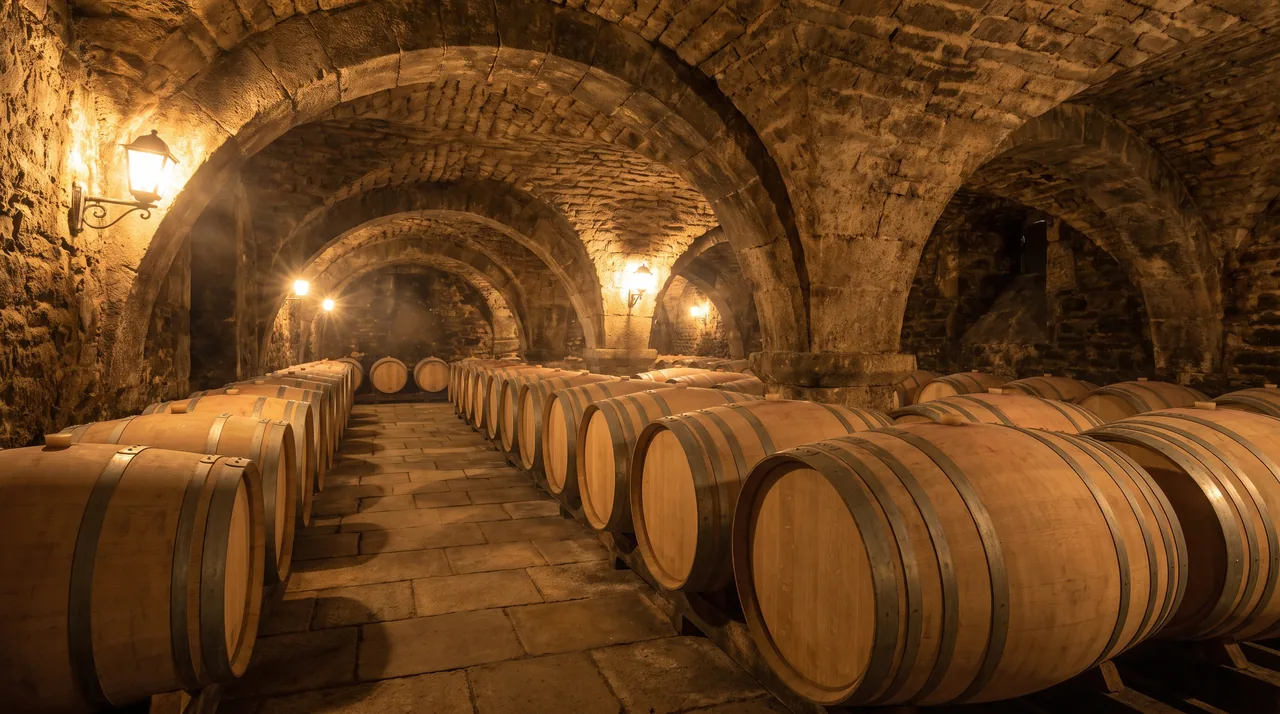
Cos d'Estournel, the Pagodas of 1830
A Second Growth, Cos d'Estournel is arguably the Médoc’s most visually spectacular château. Above its cellars, architecture shaped by Eastern influences features Chinese-style pagodas, erected in 1830, and a 17th-century door imported from Zanzibar. The ensemble was created by Louis-Gaspard d'Estournel (1762–1853), a visionary merchant nicknamed the “Maharaja of Saint-Estèphe” for his far-reaching exports, notably to India. Contrary to a persistent story, this is not an imported temple dismantled in the East. It is a deliberate architectural style, celebrating international trade while incorporating a few authentic elements such as the Zanzibar door. The Gascon word “Cos” refers to a gravel hill: some 91 hectares of lean, well-drained ground ideally suited to Cabernet Sauvignon. Architecture and fine wine are inseparable here; the visual experience is as memorable as the tasting.
Château Montrose, facing the estuary
Another Second Growth, Château Montrose was founded in 1815 and cultivates approximately 95 hectares of vineyards in a single block, situated on a gentle slope above the estuary, which they overlook for more than a kilometer. This single-block layout—rare among the grands crus—and its direct exposure to the river—highly sought after in the Médoc because it protects against frost and regulates temperatures—are among the estate’s major assets. The château has been owned by the Bouygues family since 2006, which has made significant investments in modernization. Its wines are considered among the most powerful, distinguished, and long-lasting in the appellation, often mentioned in the same breath as the best neighboring Pauillacs.
Calon-Ségur and the Heart
A Third Growth, Calon-Ségur is instantly recognizable by its label featuring a heart. Its history dates back to Marquis Nicolas-Alexandre de Ségur, who in the 18th century owned several of the Médoc’s greatest estates—including Lafite and Latour, no less. He is credited with the following phrase, which has become the château’s motto: “I make wine at Lafite and Latour, but my heart is at Calon.” This declaration is said to have inspired the heart on the label, one of the most endearing and well-known symbols in all of Bordeaux. It is one of the few major brands whose logo tells a true story, passed down from generation to generation of owners.
What about Phélan-Ségur?
The name Phélan-Ségur often comes up in discussions of Saint-Estèphe, and people sometimes assume that it appears in the 1855 classification. This is not the case: Phélan-Ségur is not a 1855 classified growth, but rather a Cru Bourgeois Exceptionnel—a distinct category with an excellent reputation, at the top of the Cru Bourgeois hierarchy. The estate was founded by the Irishman Bernard Phelan, a testament to the significant Irish presence in the history of the Médoc vineyards, where so many families from across the Channel and Ireland planted vines and built châteaux. Pointing this out is not meant to diminish Phélan-Ségur—whose wines are highly regarded—but rather to give each château its proper place, which, when it comes to classified growths, is never a minor detail.
Nor should these three big names overshadow the commune’s two other classified growths, Lafon-Rochet (fourth growth) and Cos Labory (fifth growth), or the constellation of estates and Crus Bourgeois that round out the picture. Together, they form an appellation of rare density, where simply driving from one estate gate to another—a journey of just a few kilometers—already offers a lesson in the geography of great wines. It is this concentration—even more so than any particular vintage—that makes Saint-Estèphe so unique.
The Vineyards and the Gironde Estuary
Saint-Estèphe lies along the Gironde Estuary, the largest in Europe, formed where the Garonne and Dordogne rivers meet a short distance upstream. This immense expanse of water, several kilometers wide in places, is more than just a backdrop: it plays a direct role in the quality of the wines. The vineyard slopes down toward the river across gravelly ridges, interspersed with pine forests, meadows, and narrow paths.
It is this proximity to the water that, in part, accounts for the reputation of the commune’s finest terroirs—and explains why, in the Médoc, people often say that the grands crus “overlook the river.”
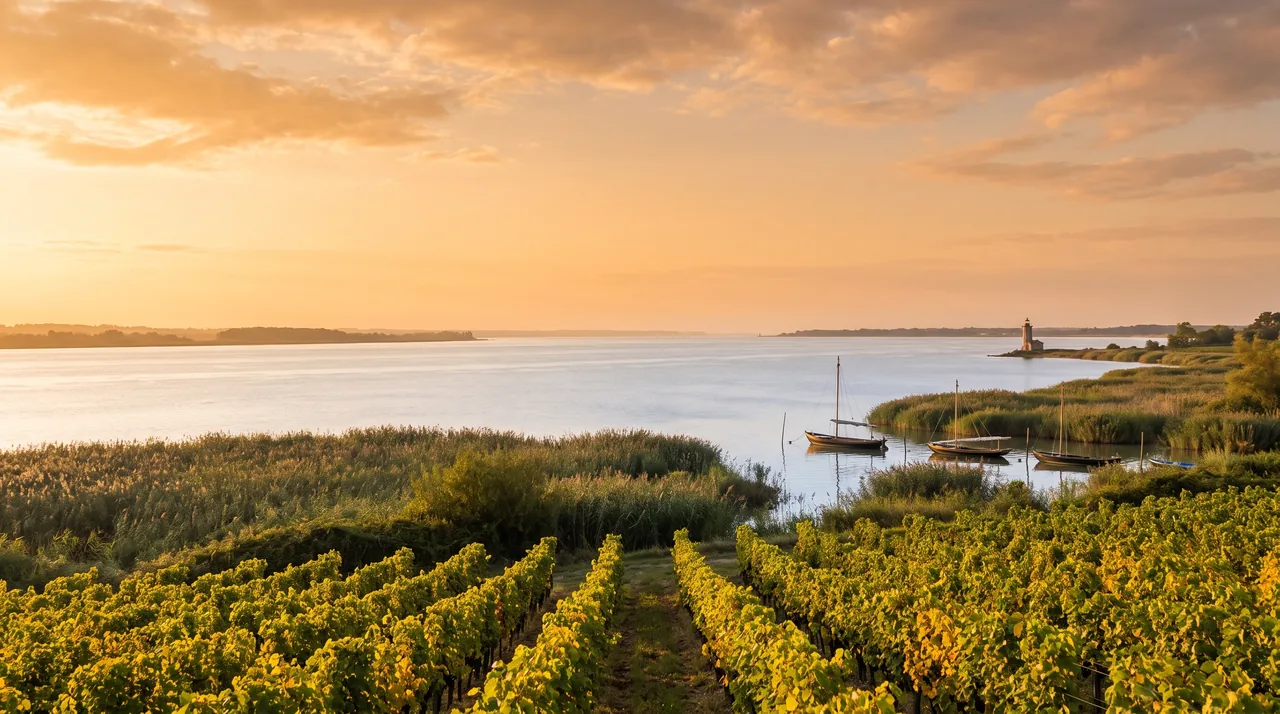
Standing at the edge of the vineyards, facing the silvery water and the vast sky, you quickly realize what the river brings to both the landscape and the wine: a unique light, a certain humidity in the air, and a sense of vastness that softens everything.
Why the Estuary Makes the Wine
The estuary’s vast body of water acts as a thermal regulator. It stores heat from the day and the summer, then releases it slowly, moderating temperature fluctuations, delaying the spring frosts that threaten young buds and extending the late season—all of which are invaluable conditions for the slow ripening of Cabernet Sauvignon, a demanding grape variety that needs time to truly mature. The best-exposed plots, such as those at Montrose that overlook the river for more than a kilometer, benefit particularly from this. The resulting landscape—gravelly soils, pine forests, and estuary shores—forms one of the most beautiful borders of the Médoc, between prestigious vineyards and the open sea. It is this constant interplay between land and water that gives Saint-Estèphe part of its identity.
This influence of water is accompanied by another, more subtle effect: the estuary reflects light and increases the amount of sunlight reaching the vineyards that border it. For a late-ripening grape variety like Cabernet Sauvignon, every ray of sunlight counts in bringing the grapes to full maturity before the first cool spells of fall. That is why, at Saint-Estèphe—as throughout the Left Bank of the Médoc—the best vineyards are clustered as close as possible to the river, on the best-exposed gravelly ridges, where the soil and water work in harmony.
St. Stephen's Church and the Maison du Vin
Wine isn't the only legacy of Saint-Estèphe. In the heart of the village, two sites are worth a visit: the Church of Saint-Étienne, a protected historic monument, and the Maison du Vin, located right across from it on the church square. Together, they perfectly capture the spirit of the village: ancient faith and wine, side by side.
Together, these elements form a quiet yet authentic village center, away from the tourist hustle and bustle of the most popular sites in the Bordeaux region. It’s a pleasant place to stroll for a few minutes between wine tastings, just long enough to appreciate the simple architecture that hides some lovely surprises inside.
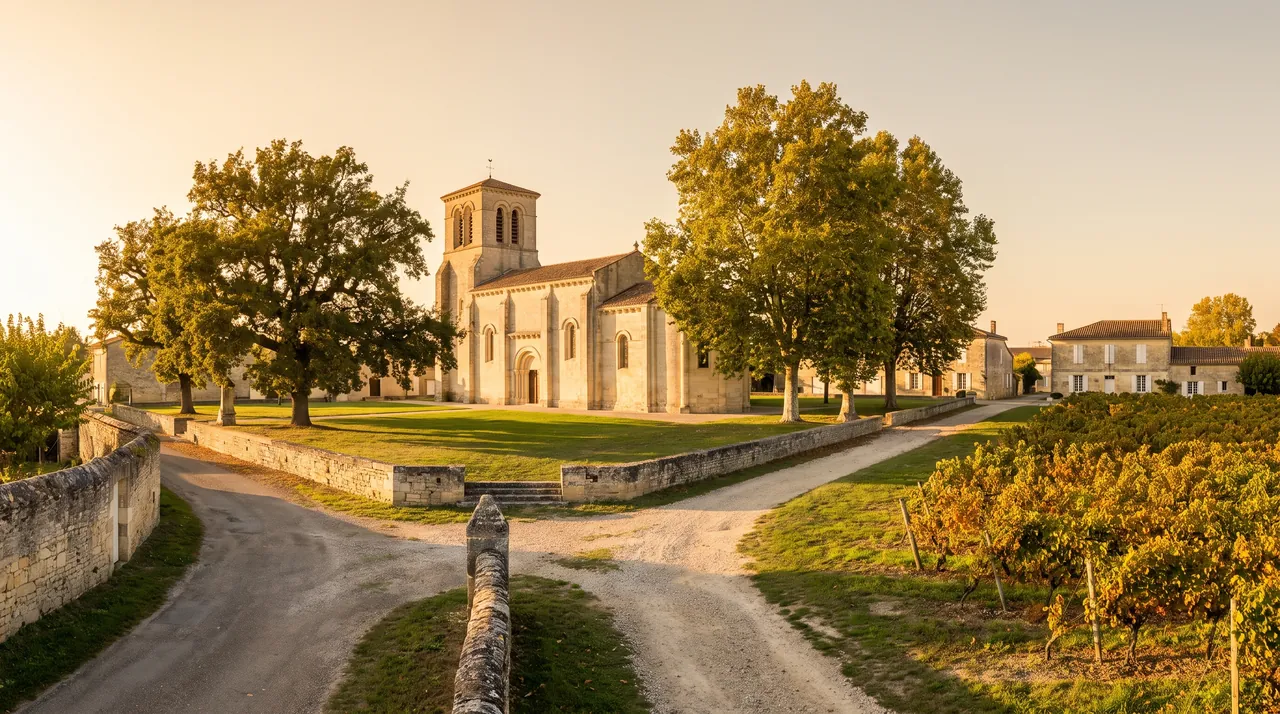
It's the kind of stop you didn't plan for but will remember: a quiet square, a light-colored stone facade, and behind it, a view worth seeing.
Saint-Étienne Church, listed as a historic monument
The Saint-Étienne Parish Church was listed as a historic monument in 1995 (Mérimée reference PA00083905; POP/Mérimée entry). Rebuilt beginning in 1764 and topped with a bell tower erected around 1855, it houses one of the finest collections of 18th-century religious art in the Gironde region: altarpieces, paintings, and period furnishings—a wealth of art that nothing, when viewed from the outside, would suggest. Behind the church’s simple village façade lies a remarkable interior, which alone justifies a stop in the heart of the village. It is a cultural treasure rarely found in a town with fewer than two thousand residents.
La Maison du Vin, Church Square
Located across from the church, the Maison du Vin de Saint-Estèphe is the ideal starting point for exploring the appellation, especially if you haven’t scheduled any visits to the châteaux. There, you can enjoy a free tasting of a selection of wines from the town, which you can purchase at estate price—that is, directly from the winery, with no middlemen or retailer markups. In July and August, the center also organizes meet-and-greets with winemakers on Wednesdays and Fridays—an opportunity to speak directly with those who make the wine, to understand a vintage, a vineyard plot, or a winemaking method, before, perhaps, visiting a château. For a first introduction to Saint-Estèphe, this is often the most informative stop.
This pair—the Saint-Étienne Church, designated a historic monument in 1995, and the Maison du Vin—makes the central square a natural meeting place. You park your car there, visit the church, cross the square for a wine tasting, and then head back toward the châteaux. In just a few dozen meters, Saint-Estèphe sums up what it is: a village of stone and vineyards, where heritage and wine go hand in hand without any pretension.
What is there to do in Saint-Estèphe?
In Saint-Estèphe, people come first and foremost for the wine and the scenery, and they often leave surprised by the richness of this small region. The highlight of the visit is the wine tastings: at the classified growths, usually by appointment, or more casually at the Maison du Vin on the church square, where you can taste and buy wine at estate prices. Between two estates, the Château Route (the D2) and the River Route unfold their vistas of vineyards and the estuary, punctuated by superb views of the Gironde. It’s well worth rounding out the day with a visit to Saint-Étienne Church, with its 18th-century decor, and a tour of the nearby markets, particularly in Pauillac, just a few minutes south. The ideal day combines a visit to a château, a stop at the Maison du Vin, a stroll along the water, and—weather permitting—a detour to a neighboring appellation. Nothing too strenuous: here, you take your time.
- Taste the classified growths—Cos d'Estournel, Montrose, Calon-Ségur, and others—usually by appointment, which must be made in advance.
- Stop by the Maison du Vin—on the church square: free wine tasting and purchases at estate prices.
- Drive along the Route des Châteaux (D2)—from one classified growth to the next, all the way to Pauillac.
- Follow the river route—to stay as close as possible to the estuary.
- Enjoy the views of the estuary—especially from the hills of Montrose.
- Visit Saint-Étienne Church—listed as a historic monument in 1995—with its 18th-century religious decor.
- Visit the nearby markets—in Pauillac, just a few minutes south.
| To Do | Where | Good to Know |
|---|---|---|
| Wine Tasting at the Château | Classified wines of the municipality | Often by appointment |
| Free Tasting | Maison du Vin, Church Square | Free, purchase at property value |
| Route des Châteaux | D2, toward Pauillac | An Overview of Classified Growths |
| Heritage | St. Stephen's Church | Listed as a historic monument in 1995; 18th-century decor. |
| Views of the estuary | River Road, Montrose Heights | Most Beautiful at the End of the Day |
Around Saint-Estèphe
One of the highlights of Saint-Estèphe is its location at the tip of the peninsula: several of the Médoc’s top attractions are within easy reach. It would be a shame to come all this way without enjoying the surrounding area, especially since the Château Route connects all these places without any detours or long drives.
Pauillac, Saint-Julien, Lesparre
Just to the south, about 7 km away, Pauillac is home to three First Growths (Lafite, Latour, Mouton) and a charming port on the estuary: it’s the most natural stop to combine with Saint-Estèphe, and the one with the most famous names. A little further on, Saint-Julien extends the château route with its grands crus of exemplary consistency. To the west, Lesparre-Médoc (~24 km), the subprefecture of the Médoc, oversees the rest of the peninsula and its lesser-known appellations. With a well-planned day, you can easily visit several of these towns without ever having to drive for very long.
| Destination | Distance from Saint-Estèphe | Interest |
|---|---|---|
| Pauillac | ~7 km | Three Premier Crus, overlooking the estuary |
| Saint-Julien | ~15 km | Classified Growths of the Central Médoc |
| Lesparre-Médoc | ~24 km | Subprefecture, gateway to the North Médoc |
| Bordeaux | ~61 km | Departure and arrival cities |
To broaden your horizons even further, check out our guide to Pauillac and its three Premier Crus, our comprehensive overview of the Médoc, Its Appellations, and the Wine Route, or, for a complete contrast to age-worthy reds, the discovery of Sauternes and its sweet, golden wine.
How to get to Saint-Estèphe from Bordeaux
It takes about [time] to travel from Bordeaux to Saint-Estèphe 61 km and 1 hour 10 minutes Route: Leave the metropolitan area to the north, then head up the peninsula via the D1215, then we switch to the D2, the Château Route, all the way to the northern Médoc. It’s a simple, easy drive, but one that takes you through a region where you’ll find yourself more drawn to the vineyards and the estuary than to the road itself—a good reason to let someone else take the wheel. If you’re arriving by train, check the schedules and services for the Pauillac train station at the Official TER Fact Sheet before departure.
How much does the ride cost?
The Bordeaux → Saint-Estèphe transfer is available starting at €123 during the day for a sedan accommodating 1 to 3 passengers, at a fixed price confirmed in writing before departure—no meter, no surprises upon arrival. This rate applies under normal conditions: a surcharge applies at night, on weekends, and on holidays, and a van is provided for groups of more than 3 passengers. Trips to neighboring wine regions such as Pauillac or Saint-Julien, or from Bordeaux-Mérignac Airport, are priced on a quote basis, always with the same guarantee of a price confirmed in advance. Saint-Estèphe is happy to serve as a starting point for a day trip along the Northern Médoc wine route.
| Route | Distance / Duration | Rates |
|---|---|---|
| Bordeaux → Saint-Estèphe | ~61 km · ~1 hr 10 min | starting at €123 |
| To the neighboring wine regions (Pauillac, Saint-Julien) | Depending on the itinerary | Based on a quote |
| From the Bordeaux Airport | Depending on the itinerary | Based on a quote |
Why hire a private driver?
Saint-Estèphe is a wine-tasting destination: its classified growths are meant to be savored, and no one would dream of coming here just to spit them all out. Leaving the driving to a chauffeur service lets you savor every glass in complete peace of mind, move from one château to the next without worrying about parking or mileage, and head back to Bordeaux stress-free at the end of the day, no matter how many bottles you bring back. It also guarantees a price you know in advance and door-to-door service, whether from your address in Bordeaux or the airport. For a region where the pleasure lies as much in the wine as in the scenery, this is the most stress-free option.
Frequently Asked Questions
Where is Saint-Estèphe located?
Saint-Estèphe is a commune in the Gironde department, on the left bank of the Gironde estuary, at the northernmost tip of the Médoc peninsula. It borders Pauillac to the south and is part of the Lesparre-Médoc arrondissement. Be careful not to confuse it with its namesake in the Dordogne, in the Nontron district, which has no connection to wine: whenever the topic turns to the Médoc’s classified growths, such as Cos d’Estournel or Montrose, it is always the Gironde-based Saint-Estèphe (INSEE code 33395) that is being referred to.
Does Saint-Estèphe produce white wine or sweet wine?
No. The Saint-Estèphe AOC, recognized by the decree of November 14, 1936, produces only dry, tannic red wine. There is no such thing as a white Saint-Estèphe or a sweet Saint-Estèphe: this is the most common misconception about it. The great sweet, golden wines of the Bordeaux region come from other terroirs, such as Sauternes or Barsac, on the left bank of the Garonne. In Saint-Estèphe, every bottle is a red wine meant for aging, never a dessert wine.
What are the top wines from Saint-Estèphe?
The commune has five wines classified in the 1855 classification: Cos d'Estournel (second growth), Château Montrose (second growth), Calon-Ségur (third growth), Lafon-Rochet (fourth growth), and Cos Labory (fifth growth). Cos d’Estournel and Montrose, both second growths, represent the official pinnacle of the appellation. Added to these are renowned estates not included in the 1855 classification, such as Phélan-Ségur, classified as a Cru Bourgeois Exceptionnel, which is not part of the 1855 classification but enjoys an excellent reputation.
Is there a First Growth in Saint-Estèphe?
No, Saint-Estèphe has no First Growths from the 1855 classification, unlike Pauillac (Lafite, Latour, Mouton) or Margaux (Château Margaux). The highest ranking in the commune is Second Growth, held by Cos d’Estournel and Montrose. This absence reflects a commercial hierarchy that solidified in the mid-19th century, rather than the current quality of the wines, which are now among the most sought-after in the Médoc—to the point that its two second-growths are often compared to first-growths.
Why does Cos d'Estournel have pagodas?
The Chinese-style pagodas at Cos d'Estournel were erected in 1830, above the wine cellars, by Louis-Gaspard d’Estournel, nicknamed the “Maharaja of Saint-Estèphe” for his long-distance exports, particularly to India. They celebrate the merchant’s thriving trade. Contrary to popular belief, this is not a temple brought back from India: it is a deliberate Eastern architectural style, punctuated by a few elements that were actually imported, such as a 17th-century door from Zanzibar. The name “Cos” refers, in Gascon, to a hill of pebbles.
What does the heart on the Calon-Ségur label mean?
The heart of Calon-Ségur pays homage to Marquis Nicolas-Alexandre de Ségur, who in the 18th century owned several major estates in the Médoc, including Lafite and Latour. He is credited with this phrase, which has become the château’s motto: “I make wine at Lafite and Latour, but my heart is at Calon.” This statement is said to have inspired the heart on the label—one of the most famous and endearing symbols in the entire Bordeaux wine region—which has been passed down from owner to owner to this day.
Is Phélan-Ségur a 1855 classified growth?
No. Phélan-Ségur is not included in the 1855 classification: it is a Cru Bourgeois Exceptionnel, a distinct category with an excellent reputation, at the top of the Cru Bourgeois hierarchy. The estate was founded by the Irishman Bernard Phelan, a testament to the strong Irish presence in the history of the Médoc vineyards. The five classified growths of Saint-Estèphe remain Cos d’Estournel, Montrose, Calon-Ségur, Lafon-Rochet, and Cos Labory: it is to them, and them alone, that the 1855 classification applies.
How much does it cost to travel from Bordeaux to Saint-Estèphe by executive car service?
The Bordeaux → Saint-Estèphe route is available starting at €123 during the day for a sedan carrying 1 to 3 passengers, at a fixed rate confirmed in writing before departure, with no meter. This rate applies under normal conditions: a surcharge applies at night, on weekends, and on holidays, and a van is provided for groups of more than 3 passengers. Trips to neighboring wine regions such as Pauillac, or from the airport, are priced on a quote basis, always with a price guaranteed in advance.
How many people live in Saint-Estèphe?
Saint-Estèphe had a population of approximately 1,638 according to the 2023 INSEE census, covering an area of about 23.5 km², resulting in a modest population density of about 70 inhabitants per square kilometer. It is a small winegrowing village, where vineyards cover most of the land and housing remains scattered. Its residents are known as Stéphanois and Stéphanoises, a name derived from Saint Étienne, the patron saint of the parish and the origin of the town’s name.
What is the style of Saint-Estèphe wines?
Saint-Estèphe wines are tannic, full-bodied, and well-structured reds, renowned for their aging potential. They are primarily made from Cabernet Sauvignon, complemented by Merlot, Cabernet Franc, and Petit Verdot. Their firm character comes from the terroir: gravel soils with a higher clay content than in neighboring appellations, which helps retain freshness and moisture. The resulting wines are often austere in their youth, requiring time to breathe and age, and become magnificent after a few years in the cellar. This is the quintessential example of a great red wine that rewards patience, best enjoyed with a hearty dish.
Can you visit the châteaux in Saint-Estèphe?
Yes, but most classified growths require an appointment: it’s a good idea to book your tastings in advance, especially during peak season. For a more independent exploration, the Maison du Vin de Saint-Estèphe, located on the church square, offers free tastings and wines for sale at estate prices. In July and August, it organizes meet-and-greets with winemakers on Wednesdays and Fridays—a great opportunity to chat before visiting a winery and gain a better understanding of the appellation.
What do “Saint-Estèphe” and “Stéphanois” mean?
Both derive from Saint Stephen, or Stephanus in Latin, who is considered the first Christian martyr. “Estèphe” is simply the Occitan—or Gascon—form of Étienne, characteristic of the dialects of southwestern France. This is why the parish church is dedicated to Saint Stephen and the residents are called Stéphanois: the saint, the town’s name, and the demonym share the same root. The name is therefore much older than the reputation for wine-making with which it is now associated.
How much time should I allow to visit Saint-Estèphe from Bordeaux?
Plan on spending a full day to really enjoy it. The drive takes about 1 hour and 10 minutes each way, plus one or two wine tastings by appointment, a stop at the Maison du Vin and the Saint-Étienne Church, and often a detour to Pauillac, just 7 km away. By scheduling appointments in advance, you can easily combine a visit to Saint-Estèphe with a neighboring appellation on the same day. A half-day trip is possible if you limit yourself to one visit and the Maison du Vin, but a full day does much more justice to the Northern Médoc.
Further Reading
- Book Your Trip — Vehicles, fixed rates, and terms: see our page Chauffeured transfer from Bordeaux → Saint-Estèphe.
- Explore other stops — all our guides and transfers: see all our destinations.
- Pauillac, the neighboring town—three Premier Crus within 7 km: read our guide to Bordeaux → Pauillac.
- To learn all about the Médoc—including its appellations, the 1855 classification, and the wine route—read our Bordeaux → Médoc guide.
- The contrast with sweet wine—the other great wine of the Gironde: read our guide to Bordeaux → Sauternes.
Sources and References
- AOC Saint-Estèphe — Wikipedia — municipal appellation, terroir, classified growths
- Château Cos d'Estournel — Wikipedia — Pagodas 1830, Maharaja of Saint-Estèphe
- Château Calon-Ségur — Wikipedia — "the heart," quote by Ségur
- Saint-Estèphe — INAO — production area, specifications, and recognition of the appellation
- Saint-Estèphe (33395) — INSEE — official population
- Pauillac Station — TER Nouvelle-Aquitaine — Routes and Services
- Saint-Étienne Church — POP/Mérimée PA00083905 — listed as a historic monument in 1995
- Saint-Estèphe Wine House — tastings, estate prices
- Château Montrose — Wikipedia — 2nd growth, overlooks the estuary, Bouygues 2006
Article updated in July 2026.
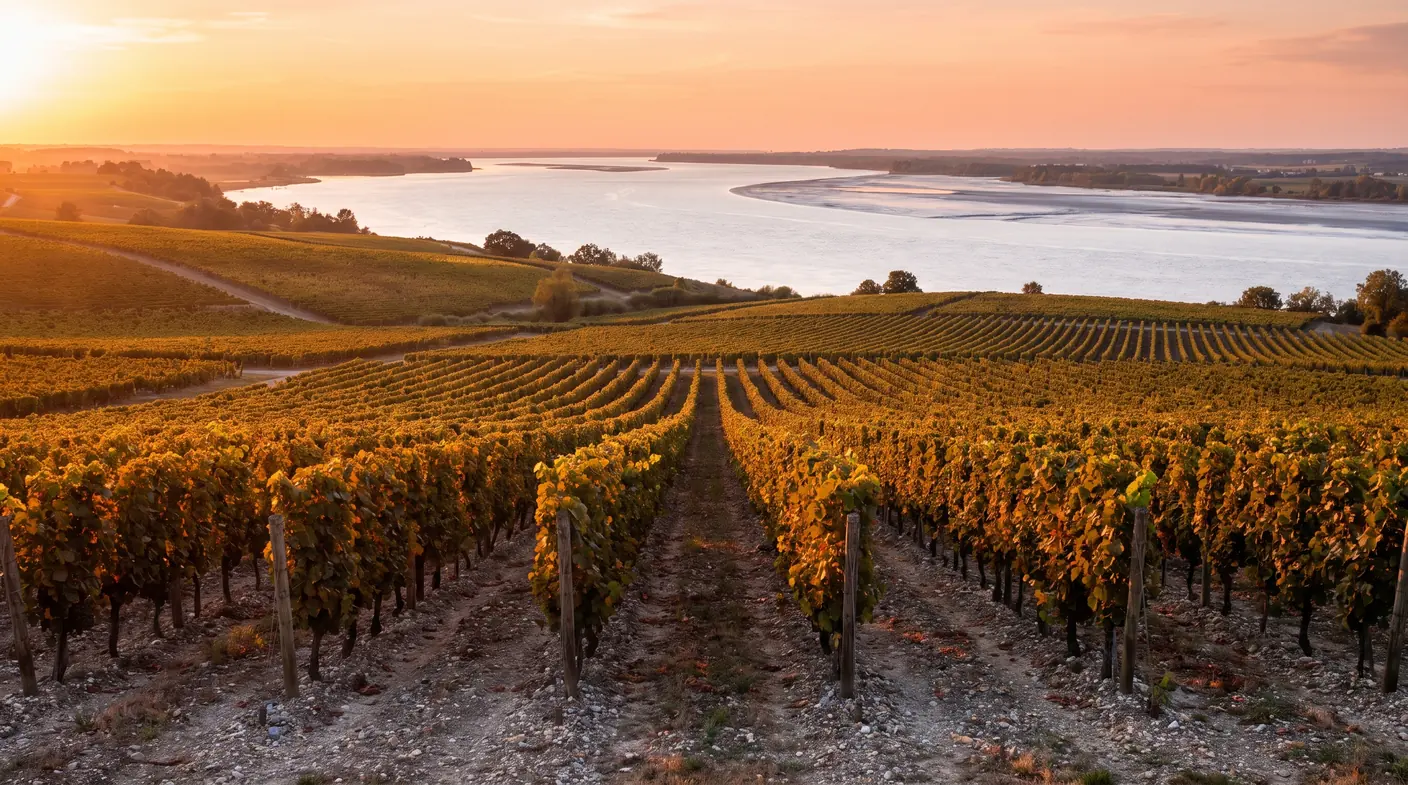
Off to the Northern Médoc
Direct transfer from Bordeaux (~1 hr 10 min) to Saint-Estèphe and its classified growths. Fixed-price quote in writing, with no obligation.