Bordeaux to Vayres with a private driver
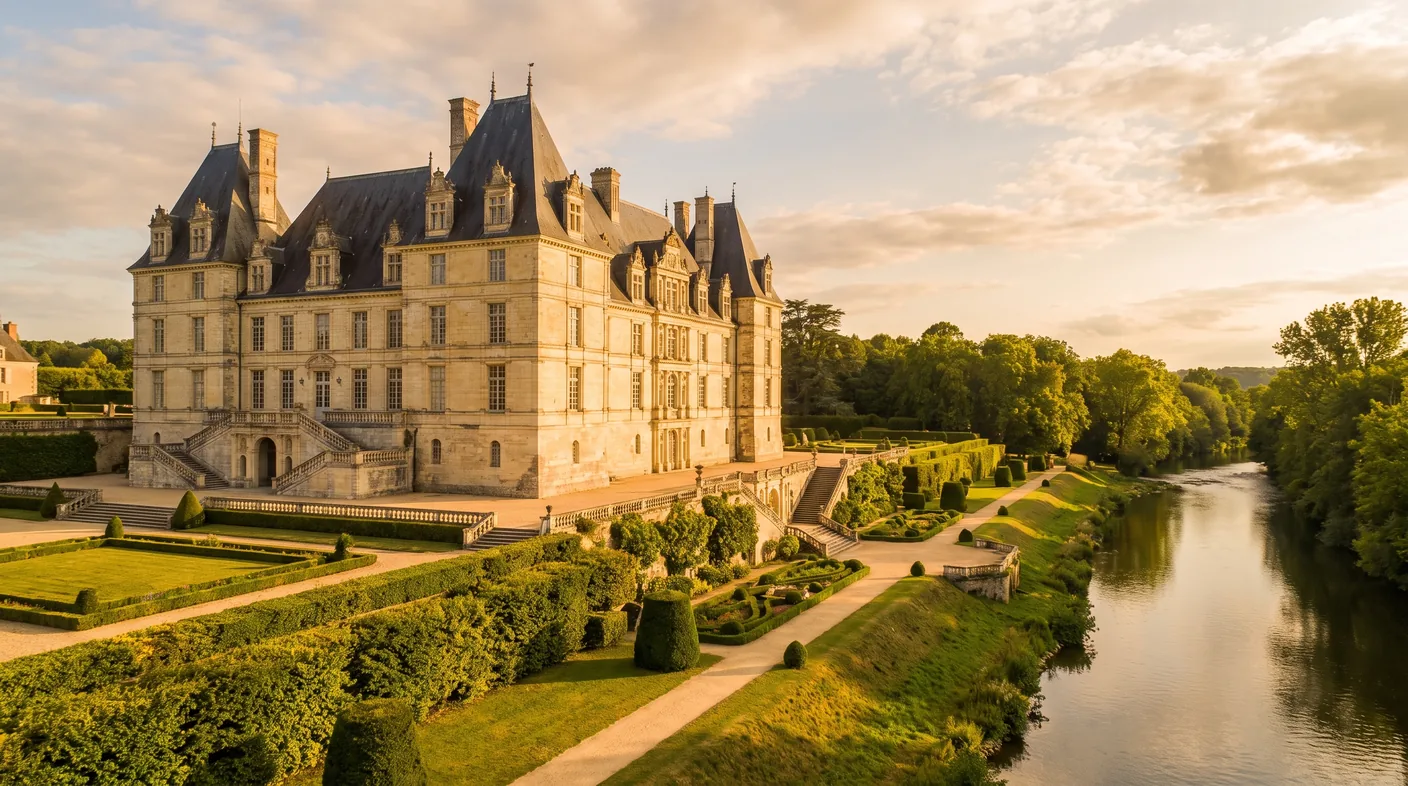
A medieval and Renaissance castle overlooking the Dordogne River, surrounded by “remarkable” gardens, near Libourne. Once owned by the d'Albret family, the château stands in the little-known Graves-de-Vayres appellation, on the riverbank—half an hour from Bordeaux, on the road to Saint-Émilion.
Vayres at a Glance
Vayres is a wine-growing town in the Gironde department, on the left bank of the Dordogne River, near Libourne. Its main landmark is the Château de Vayres, a medieval fortress converted during the Renaissance and later remodeled in the 17th century, with gardens designated as “Jardin remarquable” (Remarkable Garden). The local vineyard produces the Graves-de-Vayres AOC, distinct from the Graves AOC located south of Bordeaux: its name derives from the gravelly soils deposited by the Dordogne River. From Bordeaux, the trip is 26 km and takes about 39 minutes; the fixed fare currently starts at 66 € for a one-way trip in the Eco class. A visit can include the château, the gardens, and a vineyard estate, and can then extend to Libourne, Fronsac, or Saint-Émilion. Check the château’s and TER trains’ schedules on their official websites before departure, as schedules and service vary by season.
First, here are the key points to help you locate the town, understand what makes it unique, and plan a visit—because in Vayres, everything revolves around a castle and a wine appellation, and you’ll need to sort out fact from fiction right from the start.
| Landmark | Details |
|---|---|
| Department | Gironde (33) · Nouvelle-Aquitaine |
| Status | Wine-growing town, Libourne district, Libournais Community of Communes (La Cali) |
| Population | ~4,600 residents (INSEE), Les Vayrais |
| Area | 14.46 km² |
| River | The Dordogne (left bank), across from Libourne |
| Designation | AOC Graves-de-Vayres (1937 decree) |
| Codes | INSEE 33539 · ZIP Code 33870 |
| Must-Sees | The Château de Vayres, its remarkable gardens, and the Graves-de-Vayres AOC |
| From Bordeaux | ~26 km · ~39 min · starting at 66 € |
Unlike the tiny villages that surround it, Vayres is already a sizable, rapidly growing town, driven by its proximity to Bordeaux and Libourne and by its train station. Yet its identity remains deeply rooted in wine and heritage, epitomized by the silhouette of its château overlooking the Dordogne.
This guide follows a single rule: to distinguish between what has been verified and what has merely been repeated. Two clarifications form the backbone of this guide, as they address the most common misconceptions about Vayres. The first concerns the château: it is neither “purely Renaissance” nor does it feature gardens designed by Le Nôtre, as is too often claimed. The second concerns the wine: Graves-de-Vayres is not the Graves AOC in southern Bordeaux, but a distinct appellation on the right bank of the Dordogne. The rest—the demographics, the church, the riverbanks, and the area’s influence extending toward Libourne and Saint-Émilion—revolves around these two clarifications, making Vayres a more nuanced destination than it first appears.
Where is Vayres located?
Vayres is a commune in the Gironde department (INSEE code 33539—not 33544; zip code 33870), covering an area of 14.46 km², located on the left bank of the Dordogne River, across from Libourne, which lies on the opposite bank, approximately 6.6 km away. It is part of the Libourne arrondissement, the Libournais-Fronsadais canton, and the Libournais Urban Community, “La Cali”—and not the Fronsadais Community of Communes, contrary to what is sometimes believed.
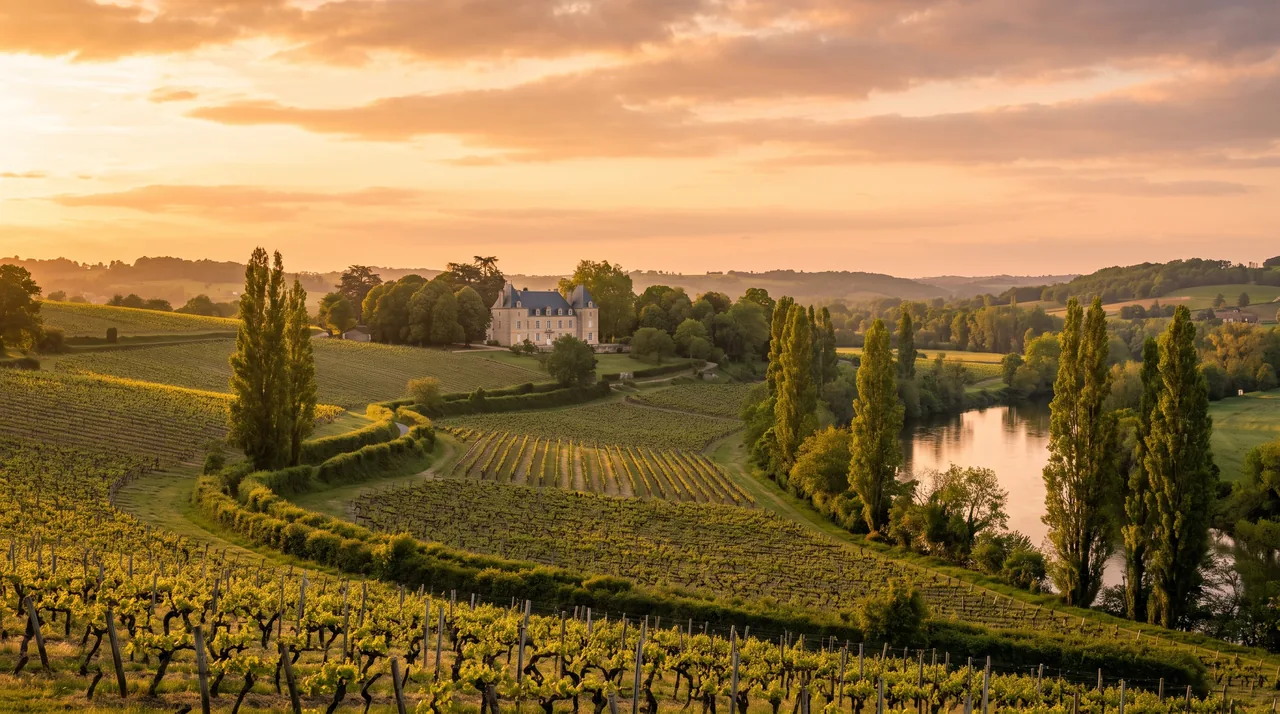
One point deserves to be clarified right away, as it can be confusing. The Libourne region is often referred to as the “right bank” of the Bordeaux wine region—as opposed to the Médoc and the Graves, the “left bank.” But this terminology is wine-growing, not geographical: the Vayres itself is, of course, on the left bank of the Dordogne, geographically speaking. So it’s perfectly accurate to say that Vayres is “on the right bank” in the wine world, even though it’s actually on the left bank of the river. This kind of nuance, as we’ll see, is Vayres’s trademark.
Vayres, between Entre-Deux-Mers and Libournais
The town occupies a pivotal location. To the south and west lies the vast Entre-Deux-Mers plateau—a triangle of vineyards nestled between the Dordogne and the Garonne rivers—to which Vayres is linked through its wine-growing region. To the north and east lies the Libournais proper—the region of Fronsac, Pomerol, and Saint-Émilion—with the city of Libourne as its capital. Vayres lies exactly on this border, on the last gravelly terrace before the river, which explains both its administrative affiliation with the Libournais and the unique character of its vineyard.
Its neighboring towns clearly illustrate this division: Arveyres and Izon along the Dordogne, then Saint-Germain-du-Puch, Beychac-et-Caillau, and Saint-Sulpice-et-Cameyrac toward the Entre-Deux-Mers; across the river, on the opposite bank, lie Libourne, Fronsac, and Saint-Michel-de-Fronsac. This crossroads location makes Vayres a natural transit point, long dominated by the Dordogne River and now by road and rail.
How far is it from Bordeaux?
It’s about 26 km and a 39-minute drive from Bordeaux, via the road leading to Libourne. It’s a short distance along the route to Saint-Émilion, making Vayres an easy stop to include in a day trip along the right bank. The village is very close to Libourne—barely 7 km by road, despite the river separating them—which puts all the major wine-growing sites of the Libourne region within easy reach.
| From Vayres to | Driving distance | Duration |
|---|---|---|
| Bordeaux (downtown) | ~26 km | ~39 min |
| Arveyres | ~3 km | ~6 min |
| Libourne | ~7 km | ~12 min |
| Fronsac | ~10 km | ~15 min |
| Saint-Émilion | ~15 km | ~20 min |
| Pomerol | ~15 km | ~22 min |
Homonyms to Avoid
Be careful not to confuse the two: there is also a Vayres in Haute-Vienne (87) and Vayres-sur-Essonne in Essonne (91). This guide covers Vayres (Gironde, 33539, ZIP code 33870), the town with the castle on the banks of the Dordogne. The place name is common enough that a search engine will readily confuse the three: when planning a visit or looking for information, it’s best to specify “Vayres, Gironde” to avoid getting results that pertain to its namesakes.
How many people live in Vayres?
Vayres has approximately 4,600 residents: the official INSEE population figure for 2022 stands at 4,414, and the most recent estimate is close to 4,615. The municipality is experiencing strong growth—around 16% over six years—driven by its quality of life, its proximity to Bordeaux and Libourne, and its rail service. Its residents are known as Vayrais and Vayraises.
| Data | Value |
|---|---|
| Municipal population | ~4,600 residents (INSEE) |
| Evolution | growing rapidly (~+16% over 6 years) |
| Density | ~320 people per km² (estimated figure) |
| Area | 14.46 km² |
| Codes | INSEE 33539 · ZIP Code 33870 |
| Demonym | Vayrais and Vayraises |
A rapidly growing suburban town
This figure—nearly 4,600 residents—sets Vayres apart from its neighbors: while the villages in the Fronsadais region have only a few hundred residents, Vayres is already a small town. Its population density, at around 320 residents per square kilometer, reflects a much more concentrated settlement pattern than that of the purely wine-growing towns nearby. The reason lies in its location: half an hour from Bordeaux, a few minutes from Libourne, and on a TER rail line, Vayres has become a sought-after suburban town, where new neighborhoods have sprung up around the old wine-growing village. This rapid growth has not erased its rural character: the château, the church, and the vineyards still form the heart of the town.
Where does the name Vayres come from?
Although place-name studies are rarely an exact science, the name Vayres is thought to come from “Varatedo”, “the property of a man named Varus,” a Gallo-Roman male name followed by the possessive suffix. This follows a classic pattern in the Gironde region, where many villages bear the memory of an ancient estate. This long history comes as no surprise: the site of the château, overlooking the Dordogne River, was settled very early on, with a document already mentioning a stone structure as early as 1092.
This Gallo-Roman word is not merely a linguistic curiosity. It serves as a reminder that the Dordogne Valley has been a major settlement corridor since ancient times: the navigable river was already a hub of trade, and the villae—those large Roman agricultural estates, many of which gave their names to today’s towns—had been established there early on. Vayres, with its terrace overlooking the water, is part of this long continuity that runs, without any real break, from the ancient villa to today’s wine-growing village.
Can You Visit the Château de Vayres?
The Château de Vayres is the main tourist attraction of the town. Contrary to what is sometimes claimed, it is not a “purely Renaissance” castle: it is a composite structure of medieval origin that has been altered over the centuries. The site is first mentioned in 1092; a vast fortress stood there in the 14th century (complete with moats and defensive structures), then the castle was rebuilt as a residential mansion in the 16th century (with ornate Renaissance facades) and expanded in the 17th century (monumental facade, grand staircase).
Its history is steeped in aristocracy. The d'Albret family owned it for nearly three centuries; it was Amanieu VII d'Albret who fortified it in the 13th century. Through his mother, Jeanne d’Albret, Queen of Navarre, the future Henry IV inherited it: tradition—reported by Wikipedia but not confirmed by the castle itself—has it that he stayed there on several occasions; we will therefore state this in the conditional tense. What is certain and documented, however, is that Henry, short of funds, sold the castle in 1583 to Ogier de Gourgue, treasurer of Guyenne.
The d'Albret family is not like any other: it is one of the great houses of medieval Gascony, whose steady rise would ultimately lead to the French throne with Henry IV. The fact that Vayres was part of their estate for nearly three hundred years speaks volumes about the site’s strategic importance as a gateway to the Dordogne at the gates of Libourne. Herein lies the paradox of the place: a castle that was long austere and defensive, which through inheritance became part of the sphere of influence of a dynasty destined for the highest honors, only to be sold by the future king himself to pay off his debts.
Louis de Foix and the Main Courtyard
The courtyard façade, with its refined Mannerist style, is sometimes attributed to Louis de Foix, the engineer and architect of the famous Cordouan lighthouse, around 1586—but this attribution is treated with caution (“perhaps,” according to the source). We will therefore state this in the conditional tense, without treating it as a settled fact. The château was subsequently restored around 1700 by Jacques-Joseph de Gourgue.
The name Louis de Foix is no mere coincidence: he was one of the great engineers of the late 16th century, to whom we owe the colossal undertaking of the Cordouan Lighthouse at the mouth of the Gironde. Attributing the main courtyard of Vayres to him would be tantamount to classifying the château among the works of a leading master—hence the appeal of this hypothesis, and the need for caution. We will therefore note a façade of remarkable refinement, without definitively attributing it, a question that even specialists themselves leave open.
Five Centuries on a Single Facade
The castle’s history is one of gradual transformation: the medieval foundation with its defensive structures and moats, the Renaissance transformation that turned the austere fortress into a stately residence, and finally the 17th-century embellishments that gave it its monumental appearance. Each century has left its mark, and that is precisely what makes a visit so fascinating: on a single facade, one can trace five hundred years of evolving tastes and techniques. The grand staircase, the courtyard façade, the corner towers, and the moats come together to form a remarkably cohesive whole for a building that has undergone so many alterations.
| Period | Construction history |
|---|---|
| As early as 1092 | First mention of a stone structure at the site |
| 13th century | Amanieu VII of Albret fortified the area |
| 14th century | Vast fortress: moats, defensive structures |
| 16th century | Rebuilt in the Renaissance style, with ornate facades |
| 17th century | Monumental façade, grand staircase; restored around 1700 |
A listed monument
The Château de Vayres is protected as a historic monument (Mérimée listing PA00083856): listed on September 18, 2000, then classified on October 4, 2001 (facades and roofs) and on April 9, 2002 (the gardens). It is therefore one of the few truly protected monuments in the area, and it is open to visitors: the Château de Vayres is open to visitors according to a seasonal schedule. Opening days, hours, events, and admission requirements vary throughout the year: check the official ticket office before visiting. The castle also welcomes groups of more than twenty people, school groups, and recreation centers, and rents out its spaces for receptions and weddings: it’s a living monument, not a sleeping beauty.
This late designation—in the 2000s—may come as a surprise for a building of this caliber. It can be explained by the history of its protection: long held as private property and rarely open to the public, the château—including its gardens—was not formally protected until the turn of the millennium. This serves as a useful reminder that a monument can be of major significance without having been listed since the 19th century, and that official recognition sometimes lags far behind its actual heritage value.
A few words to help you prepare for your visit—though this is by no means a substitute for the official information: the castle, which is still inhabited and in use, has opening hours that vary with the seasons. We have deliberately chosen not to provide specific prices or opening hours, as they change from year to year—it’s best to check the official ticket office before you come. Above all, keep in mind that Vayres is one of the few châteaux in the Libourne region to combine a furnished interior, listed facades, and a certified garden: a complete experience that alone makes the detour from Bordeaux worthwhile.
"Remarkable" Gardens
The gardens of the Château de Vayres stretch down in terraces from the castle toward the Dordogne: a listed French-style garden, certified "Remarkable Garden", an official award from the Ministry of Culture (official label, accessed July 24, 2026). Boxwood hedges, gravel paths, and carefully designed vistas: this is one of the great pleasures of the visit, especially during the warmer months.
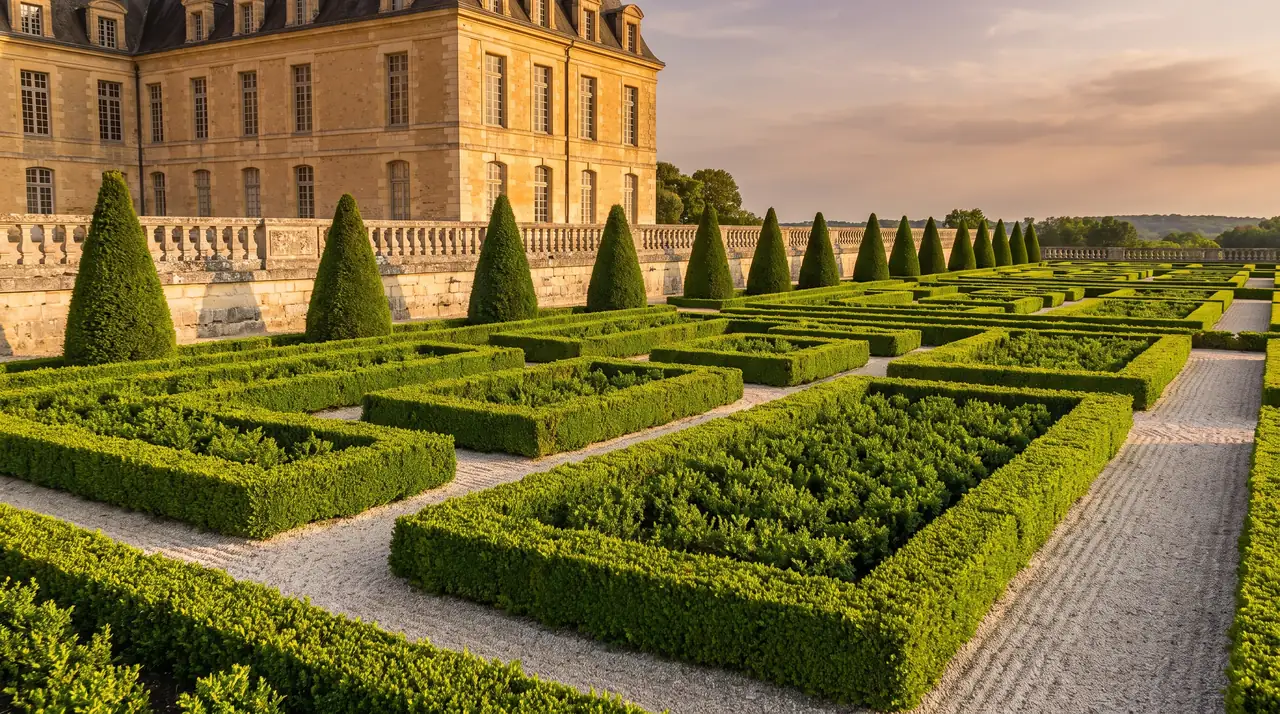
Here is an important correction, as this misconception is widespread: these gardens were not designed by Le Nôtre. While the great gardener of Versailles is sometimes credited with their design, no source—neither Wikipedia, nor the Mérimée entry, nor the official website—confirms this. The current gardens were created in 1938 by Ferdinand (Louis-Ferdinand) Duprat, a renowned landscape architect of the interwar period. It is a “French-style” garden of classical inspiration, but from the 20th century: superb, and perfectly authentic once its true creator is acknowledged.
Why the “Remarkable Garden” designation?
The “Remarkable Garden” designation is not just a marketing gimmick: it is an official distinction awarded by the Ministry of Culture to gardens open to the public that are of particular heritage, aesthetic, or botanical interest and that ensure high-quality maintenance. At Vayres, it recognizes the art of meticulously laid-out flowerbeds: intricately trimmed boxwood borders, raked gravel paths, carefully framed views of the river, and a series of terraces that make the most of the slope. The design follows the classical principles of the French garden—symmetry, axes, and viewpoints—but within a 20th-century composition, which in no way detracts from its success: it is a perfectly mastered exercise in style, befitting the château it complements.
The decision to attribute the garden’s design to Ferdinand Duprat is not merely a matter of pedantic precision. Attributing the work to Le Nôtre would be tantamount to tracing it back to the 17th century and betraying its true nature; linking it to Duprat, a landscape architect active between the two world wars, places Vayres within the revival of the formal garden that breathed new life into many historic estates during that era. The garden loses nothing by this: it gains a true history, one that is more interesting than the legend.
When is the best time to visit the gardens?
Formal gardens are at their best during the warmer months, when the boxwoods are trimmed, the flowerbeds are neat, and the days are long: late spring and summer highlight the views toward the Dordogne. There’s no reason not to visit off-season—the structure of a French formal garden remains clear even when bare, defined as it is by the evergreen boxwood and the layout of the paths—but it’s on sunny days that the combination of the château, terraces, and river truly comes into its own. Again, be sure to check the opening days and hours with the estate before visiting.
St. John the Baptist Church
In the heart of the village, the Church of Saint John the Baptist features a Romanesque core that was restored in the 19th century. It is a modest structure compared to the castle, but it defines the layout of old Vayres and is worth a look for its stonework and village atmosphere.
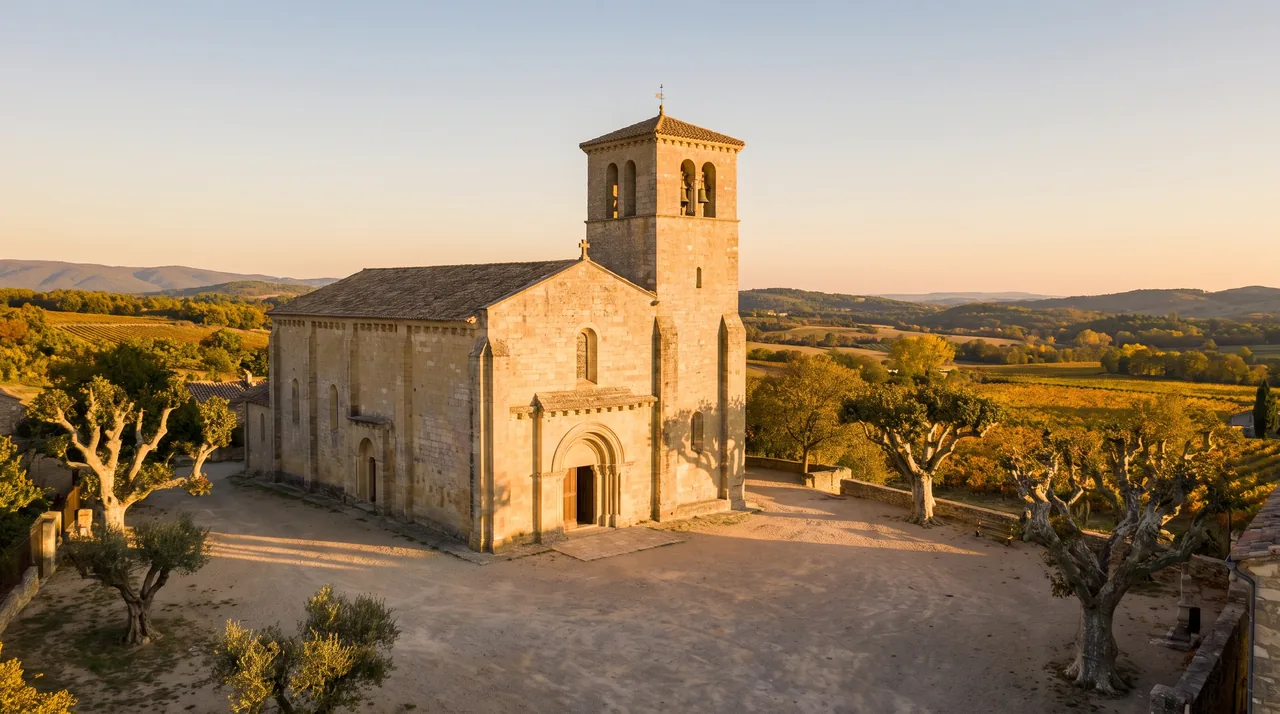
To be fair, it should be noted that we have no source documenting the church’s designation as a historic monument: only the castle is officially classified and listed. We will therefore not attribute to Saint-Jean-Baptiste a status that it may not have. Nevertheless, it remains a testament to the old town and is worth including in a short stroll before or after visiting the castle.
This Romanesque core, restored in the 19th century, tells a story familiar to the people of the Bordeaux region. Built in the Middle Ages, the church has weathered the centuries, endured wear and tear and changing fashions, and then, like so many rural buildings, underwent a restoration campaign in the 19th century, when a renewed interest in medieval art and the resurgence of parishes spurred efforts to restore the old stones. Its bell tower and nave still define the fabric of old Vayres: people use it as a landmark, gather there, and the building fulfills the discreet role that village churches play everywhere in these vineyard villages.
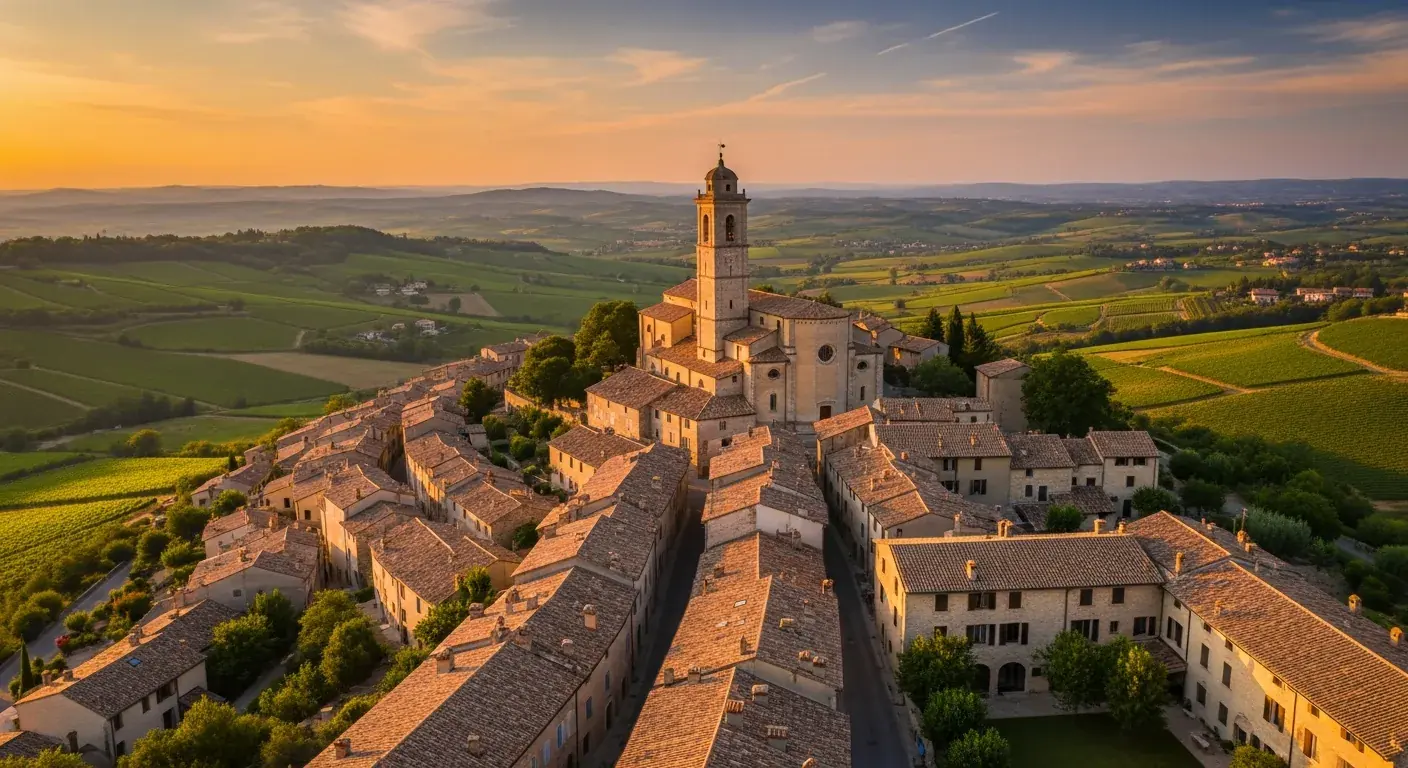
You have to approach the village of Vayres for what it is: a modest village center that you can explore on foot in just under half an hour, taking in the church, its surroundings, and the views that open up toward the castle and the river. People don’t come here for a historic center full of monuments—that’s elsewhere, on the other bank, in Libourne—but for the atmosphere: the light-colored stone, the winemakers’ houses, and the countryside that stretches out at the end of the streets. It’s the perfect complement to a visit to the château: a chance to catch your breath at ground level after taking in the grandeur of the facades and terraces.
What is the Graves-de-Vayres AOC?
Here is the second major update to this guide. The AOC Graves-de-Vayres is a distinct municipal appellation, recognized by Decree of July 31, 1937 and official specifications, in the municipalities of Vayres and Arveyres (for the upper part). It is part of the Entre-Deux-Mers subregion. Its wines are primarily red (about 80%), predominantly Merlot, supplemented by about 19% white wines (dry and sweet).
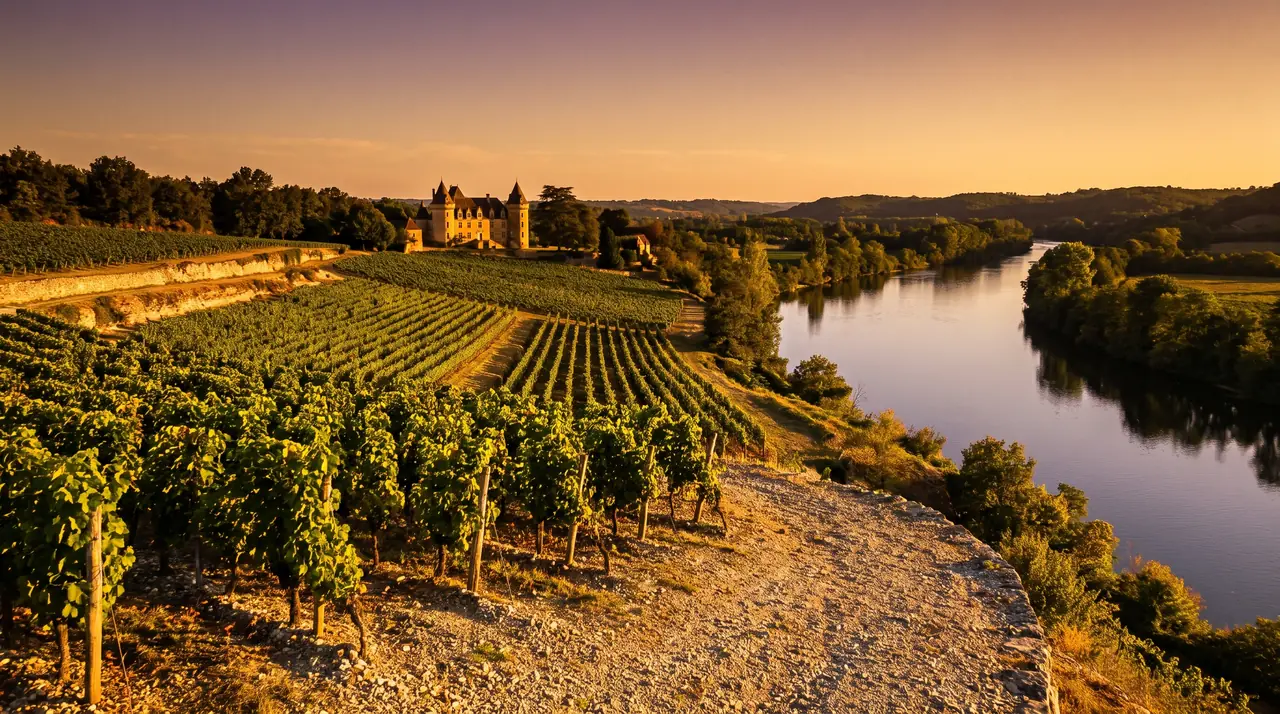
Beware of the name trap: “Graves-de-Vayres” is not the Graves AOC. The word “graves” here refers to the soil—a 20- to 30-meter-thick layer of siliceous gravel—not the classic Graves wine region. The Graves AOC, on the other hand, is located on the left bank of the Garonne River, south of Bordeaux, around Portets, Cérons, and Langon. Graves-de-Vayres, by contrast, is on the left bank of the Dordogne River, in the Libournais region. Two appellations, two banks, two rivers: confusion is common, but it is nonetheless a mistake.
The key to it all is the soil. The appellation’s name comes from this gravel plateau—banks of siliceous gravel, rounded and deposited by the Dordogne River over the ages, reaching a thickness of up to 20 to 30 meters. These stony terraces drain water well, warm up quickly, and force the vines to send their roots deep into the ground: a high-quality terroir, comparable in principle to that of the great gravel soils of Bordeaux, but located here on the other river. It is this geological kinship, and this alone, that gave the appellation its name—hence the persistent misunderstanding regarding the Graves of the Garonne.
A Little-Known, High-Quality Vineyard
Graves-de-Vayres remains a modest appellation in terms of area: approximately 380 hectares claimed in 2023 (Graves-de-Vayres appellation) (nearly 330 ha for reds, 50 ha for whites), with a production of approximately 13,000 hectoliters. This production figure is distinct from that of the broader defined area. The red grape varieties are dominated by Merlot, along with Cabernet Franc, Cabernet Sauvignon, Malbec, Carménère, and Petit Verdot; the white varieties include Sémillon, Sauvignon Blanc, Sauvignon Gris, and Muscadelle.
| Landmark | Graves-de-Vayres |
|---|---|
| Recognition | AOC by decree of July 31, 1937 |
| Municipalities | Vayres and Arveyres (upper part) |
| Subregion | Entre-Deux-Mers |
| Claimed Area (2023) | ~380 ha (~330 for red, ~50 for white) |
| Production | ~13,000 hectoliters |
| Colors | ~80% red · ~19% white (dry and sweet) |
| Main Grape Varieties | Merlot (reds) · Sémillon and Sauvignon (whites) |
Red or white—which should I try?
Most of the production consists of red wines, in the familiar style of the Right Bank: Merlot-dominated, round and fruity, with the freshness provided by well-drained gravel soils. But Graves-de-Vayres has a rarity in the Libourne region: it also produces white wines—both dry and sweet—made from Sémillon and Sauvignon—one bottle of white for every five bottles of red. This is one of the appellation’s attractions for the curious: the chance to taste both red and white wines—under the same name and from the same terroir—whereas the nearby appellations of Fronsac and Pomerol produce only red.
What is Graves-de-Vayres?
In a nutshell: a Bordeaux from the right bank of the Dordogne, primarily red, grown on gravelly soils, worth discovering at the Vayres and Arveyres estates. It’s a lesser-known appellation, often offering excellent value for the price, that deserves to be tasted on its own merits rather than confused with its cousin from southern Bordeaux.
What is there to do along the Dordogne River in Vayres?
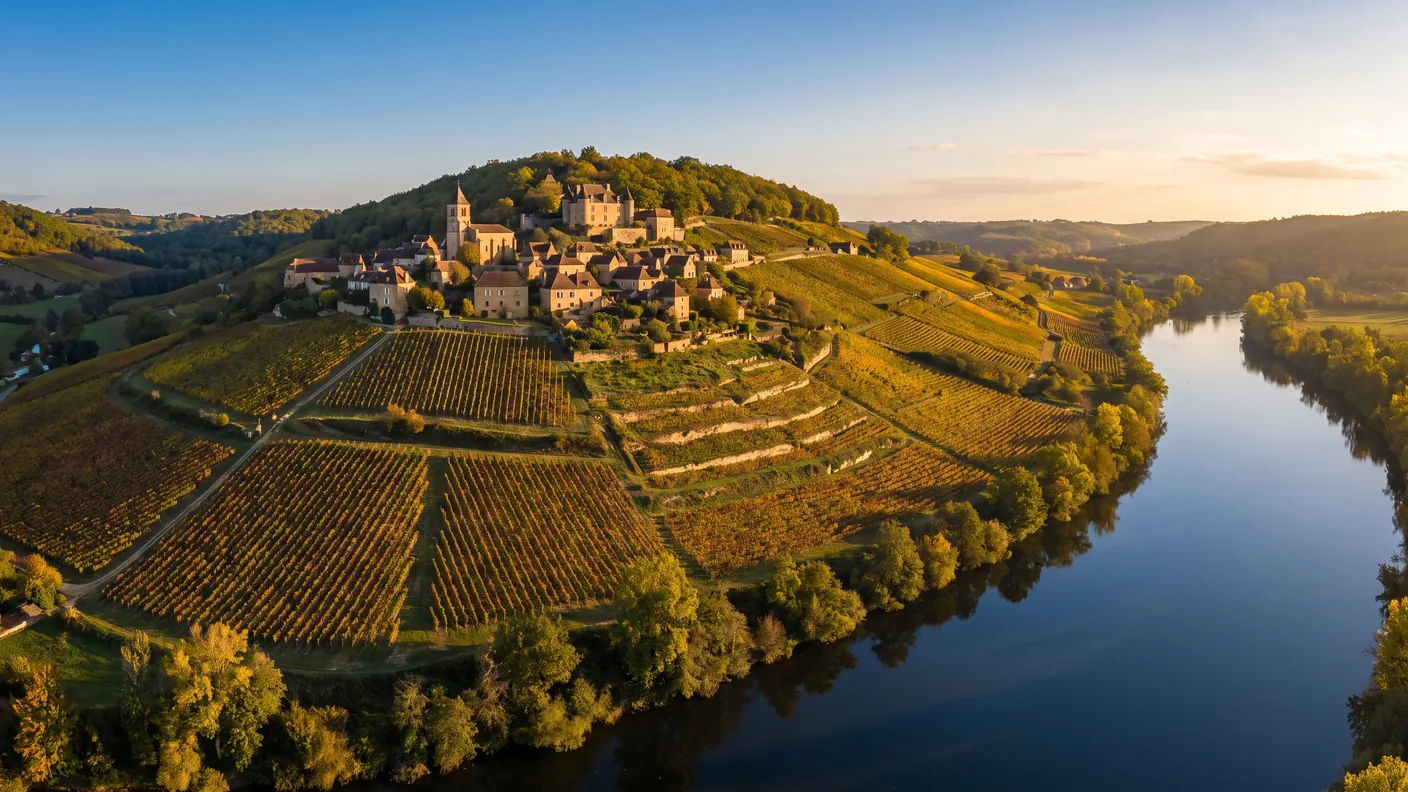
The Dordogne River borders Vayres and separates it from Libourne. It is a wide, peaceful river at this point, lined with riverbanks and levees, and for a long time served as the main waterway for the Libourne region: barges would sail downstream, loaded with barrels, bound for Bordeaux and the open sea. Today, the banks of the Dordogne offer peaceful walks and beautiful views, particularly toward the quays of Libourne on the opposite bank.
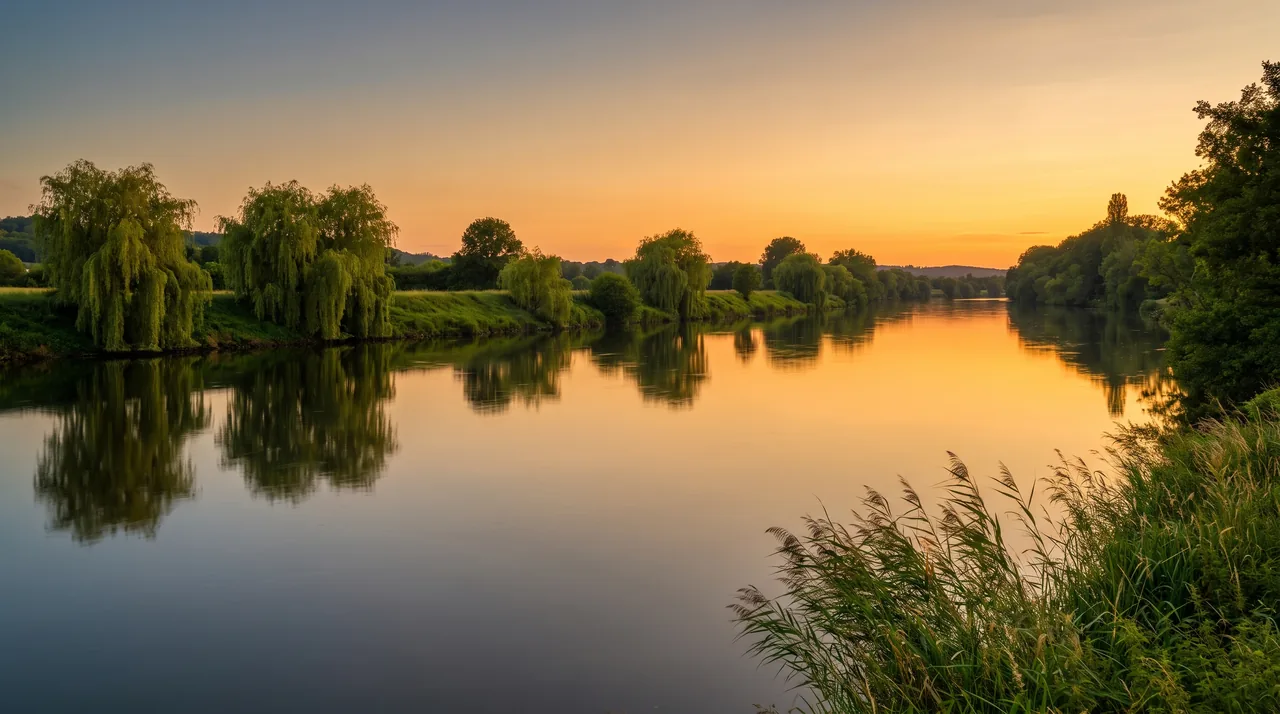
The River: A Historic Wine Route
For a long time, the Dordogne was not a scenic backdrop but a highway. The gabares—flat-bottomed boats built for the river—would sail downstream loaded with barrels, reaching Libourne and then Bordeaux, from where the wines of the right bank were shipped to England, the Netherlands, and the northern ports. The entire prosperity of the Libourne region was built on this river trade, before the railroad took over in the 19th century. Understanding this history of water means understanding why the towns of the Dordogne—Vayres, like Libourne across the river—turned, century after century, to viticulture and to the river, which was their only gateway to the world.
What remains from that era is a gentle, open landscape: low riverbanks, levees, rows of willows and poplars, and that vast expanse of water reflecting the sky at sunset. You can stroll along the banks, look for vantage points overlooking the docks of Libourne, and get a sense of the former bustle of a river that once carried the trade of an entire region.
Want to travel to Vayres by train?
Vayres has another advantage, particularly valuable for those who want to travel without a car: its train station, located on the Paris-Austerlitz–Bordeaux-Saint-Jean line, on the Bordeaux–Libourne section served by the TER. You can therefore reach the town by train from Bordeaux—but, as is always the case in wine-growing regions, the station serves the town center, not the estates scattered throughout the vineyards, nor necessarily the château itself. For a complete visit, a car or a driver remains the most convenient option.
The train remains a good option for exploring the town center, the church, and the riverbanks on foot, or for traveling to Libourne, whose train station serves as a hub for the regional rail network. However, as soon as you want to visit the castle, a few estates on the Graves plateau, and a nearby town like Fronsac or Saint-Émilion, the scattered locations in the countryside quickly make the train an inadequate option. This is the classic challenge of wine country: the area’s charm lies precisely in the scattered nature of the vineyards, which public transportation simply cannot accommodate.
What is there to do in Vayres?
A visit to Vayres centers on the château and the surrounding vineyard. Tour the Château de Vayres and its "remarkable" gardens, taste Graves-de-Vayres at a wine estate, stroll along the banks of the Dordogne across from Libourne, and it’s easy to make day trips to the major sites on the right bank—Libourne, Fronsac, and Saint-Émilion. It’s an ideal day for anyone who wants to combine history, gardens, and wine without straying far from Bordeaux.
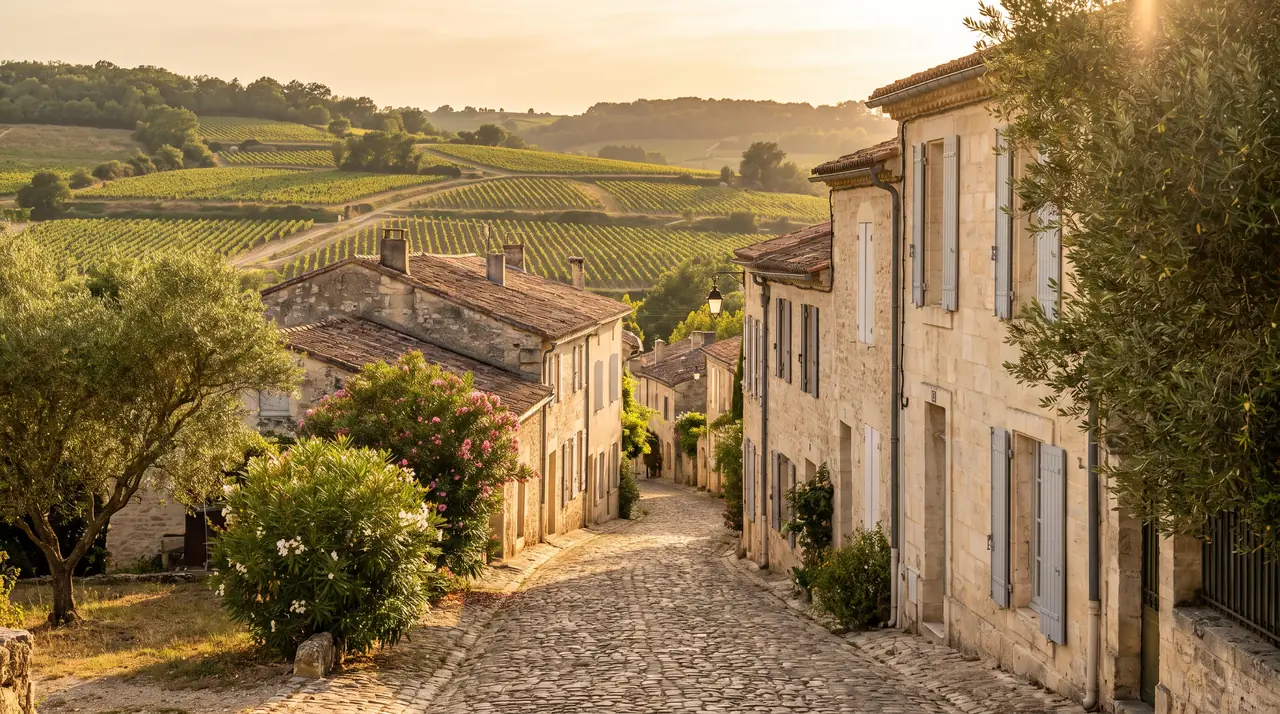
- Visit the Château de Vayres — the château is open to visitors according to a seasonal schedule. Opening days, hours, events, and admission requirements vary throughout the year: please check the official ticket office before your visit.
- Explore the “remarkable” gardens — a terraced French garden overlooking the Dordogne, created in 1938 by Ferdinand Duprat
- Taste the Graves-de-Vayres wines—from the Vayres and Arveyres estates; Merlot reds, dry whites
- Stroll along the banks of the Dordogne—views of the quays in Libourne on the opposite bank
- Stroll through the old town—the Romanesque Church of Saint John the Baptist and its surroundings
- Continue on to Libourne—the port town with its arcaded square, about 7 km away
- Discover Fronsac—the hill and its fine wines, about 10 km away
- Spend half a day in Saint-Émilion—a medieval town listed as a UNESCO World Heritage Site, about 20 minutes away
The Castle and Vineyard: A Typical Day
From Bordeaux, it takes about 30 minutes to reach Vayres; you can tour the château and its gardens in the morning, have lunch in Libourne, and then spend the afternoon in Saint-Émilion exploring its grand cru wines. The château is particularly well-suited for family visits, with its children’s activities and puzzles. We’ve deliberately omitted specific prices and opening hours: they vary by season, so it’s best to check the official ticket office.
Vayres with children
The Château de Vayres is one of the few attractions in the area designed with younger visitors in mind: the activities—puzzles to solve, children’s activities, and theatrical evening events—turn a visit to the castle into a real scavenger hunt. The vast terraced gardens offer plenty of space to run around, and the nearby river completes the picture. For a family visiting the Bordeaux region, Vayres combines the beauty of a historic castle with a welcoming atmosphere that takes children seriously: an outing that lasts half a day without getting boring.
| Activity | Where / When | Good to Know |
|---|---|---|
| Château de Vayres + Gardens | Vayres, Seasonal Calendar | Protected historic monument; check the official ticket office |
| Graves-de-Vayres Wine Tastings | Vayres Estates/Arveyres | Merlot reds, dry whites |
| Along the Dordogne River | Vayres, across from Libourne | Walk, scenic viewpoints |
| Old Town and Church | Vayres Center | Romanesque Church of Saint John the Baptist |
| Libourne | ~7 km | Bastide, arcaded square |
| Saint-Émilion | ~20 min | UNESCO City, fine wines |
Around Vayres
Vayres’s location, at the gateway to the Libourne region, makes it an ideal base. Across the Dordogne River, Libourne unfolds its 13th-century bastide, its large arcaded square, and its wine-trading quays. A little further on, Fronsac stands on its hilltop with its great wines from the right bank, and Saint-Émilion crowns the landscape with its UNESCO World Heritage-listed town, its monolithic church, and its classified growths.
Nearby, Arveyres shares the Graves-de-Vayres appellation with Vayres and extends the vineyard. You can also venture over to Pomerol, where legendary wines lie hidden in a surprisingly unassuming landscape. The area, rich and diverse, offers enough to fill several days exploring châteaux, vineyards, and riverbanks.
| Destination | Distance | Interest |
|---|---|---|
| Arveyres | ~3 km | The other municipality in Graves-de-Vayres |
| Libourne | ~7 km | Bastide, riverbanks, arcaded square |
| Fronsac | ~10 km | Le Tertre, Fine Wines |
| Saint-Émilion | ~15 km | UNESCO Medieval City |
| Pomerol | ~15 km | Legendary wines, unassuming scenery |
Two neighboring areas, polar opposites of one another, are worth a closer look. Arveyres, right next door, is a direct extension of Vayres: the same appellation, the same gravel plateau, and the same wine-growing countryside stretching on. Pomerol, just a quarter of an hour away, is the complete opposite: a tiny appellation whose wines rank among the most sought-after in the world, hidden away in a landscape devoid of pomp. To travel from one to the other is to grasp the full breadth of the Right Bank, from the most understated to the most legendary.
Combining Visits
Most of these sites can easily be visited in a single day, since the distances between them are so short. You can also spread it out over a weekend, with an overnight stay in Libourne or Saint-Émilion, to take your time exploring the château, the gardens, and the wine tastings. Vayres is the perfect starting point for a trip to the right bank.
How to get to Vayres from Bordeaux
The drive from Bordeaux is about 26 km and takes 39 minutes, via the road leading to Libourne. It’s a short drive, on the way to Saint-Émilion. You can also take the train to the Vayres station, but it serves the town center, not the vineyards or necessarily the château, which are often located further out.
The route heads east toward the Libournais region: we leave the Bordeaux metropolitan area, follow the main roads toward Libourne, and arrive at Vayres via the Route de Saint-Émilion. It’s an easy ride, short enough not to take up too much of the day, and toward the end, it passes through the first vineyards on the right bank—a little taste of what’s to come before visiting the château and enjoying the wine tastings.
How much does the ride cost?
A private transfer from Bordeaux to Vayres starts at 66 € during the day, in a sedan for one to three people, with a fixed price provided in advance—no meter and no surprise surcharges. A surcharge applies at night, on weekends, and on holidays; a van is available for groups of more than four passengers. Trips to neighboring estates and villages, or to the airport, are priced on a quote basis.
| Route | Distance / Duration | Rates |
|---|---|---|
| Bordeaux → Vayres | ~26 km · ~39 min | starting at 66 € |
| Neighboring estates and villages | Variable | Based on a quote |
| Bordeaux-Mérignac Airport | Variable | Based on a quote |
Why hire a private chauffeur?
Because a day at Vayres and on the Right Bank means the castle, the gardens… and tastings: Graves-de-Vayres right on site, grands crus in Fronsac or Saint-Émilion. With a chauffeur, you can enjoy as many glasses as you like, you don’t have to worry about finding parking in the narrow village streets, and you can move from château to estate at your own pace throughout the day. The quote is fixed, confirmed in writing, and non-binding.
Frequently Asked Questions
Where is Vayres located?
In Gironde, on the left bank of the Dordogne River, across from Libourne, half an hour east of Bordeaux. It is a municipality in the Libourne district (INSEE 33539, ZIP code 33870) and a member of the Libournais Urban Community (La Cali). The Libournais region is referred to as the “right bank” in the context of winemaking, but the town of Vayres is, of course, on the left bank of the river. The town is famous for its castle on the banks of the Dordogne.
Can you visit the Château de Vayres?
Visits to the Château de Vayres follow a seasonal calendar. Opening days, hours, events, and admission policies vary throughout the year: please check the official ticket office before your visit.
Is the Château de Vayres a Renaissance castle?
Only partially. It is a composite structure: originally a medieval fortress (first mentioned in 1092, a vast fortress in the 14th century), converted into a Renaissance residence in the 16th century (ornate facades), then expanded in the 17th century (monumental facade, grand staircase). It is listed and designated as a Historic Monument (entry PA00083856: listed in 2000, designated in 2001 and 2002). Calling it a “Renaissance castle” is therefore a convenient but incomplete simplification.
Were the gardens at Vayres designed by Le Nôtre?
No, that’s a common but false myth. The current French-style gardens were created in 1938 by landscape architect Ferdinand (Louis-Ferdinand) Duprat, not by André Le Nôtre, the gardener at Versailles. They are nonetheless stunning and perfectly authentic: designated a “Remarkable Garden,” they descend in terraces from the château toward the Dordogne River. Attributing the garden to its true creator in no way detracts from its beauty.
What does the “Remarkable Garden” designation mean?
This is an official distinction awarded by the Ministry of Culture to gardens open to the public that are of particular heritage, aesthetic, or botanical interest and are maintained to a high standard. At Vayres, the designation recognizes a terraced French-style garden featuring boxwood hedges, gravel paths, and views of the Dordogne River. Created in 1938 by Ferdinand Duprat, it is at its best during the warmer months, when the boxwoods are trimmed and the flowerbeds are neat.
Is Graves-de-Vayres the same as Graves?
No, and that's the classic pitfall. “Graves-de-Vayres” is a distinct communal appellation (decree of 1937), covering the municipalities of Vayres and Arveyres on the left bank of the Dordogne River in the Libournais region. The word “Graves” here refers to the gravelly soil, not the Graves wine region. The Graves AOC, on the other hand, is located on the left bank of the Garonne, south of Bordeaux. Two banks, two rivers, two appellations that should not be confused.
Does Graves-de-Vayres also produce white wine?
Yes, and this is unique in the Libourne region. The appellation produces about 80% red wines, dominated by Merlot, but also nearly 19% white wines—both dry and sweet—made from Sémillon and Sauvignon. Whereas the nearby regions of Fronsac and Pomerol produce only red wine, Graves-de-Vayres offers the chance to taste both red and white wines from the same gravelly terroir. The vineyard covers approximately 380 hectares across Vayres and Arveyres, producing some 13,000 hectoliters.
How much does a chauffeured transfer from Bordeaux to Vayres cost?
Private transfers start at 66 € during the day, in a sedan for one to three people, for a distance of approximately 26 km and a 39-minute drive. The price is fixed, provided in advance, and there is no meter. A surcharge applies at night, on weekends, and on holidays; a van is available for groups. Trips to neighboring estates and villages, or to Bordeaux-Mérignac Airport, are priced on a quote basis.
Did Henry IV really stay at Vayres?
The castle did indeed belong to the d'Albret family for nearly three centuries, and the future Henry IV inherited it through his mother, Jeanne d'Albret. Tradition holds that he stayed there on several occasions, but this information, reported by certain sources, is not confirmed by the castle itself: so it is stated in the conditional tense. What is known with certainty is that Henri, having fallen on hard times, sold the castle in 1583 to Ogier de Gourgue.
What is there to do in Vayres?
The main attractions revolve around the castle: visit the Château de Vayres and its “remarkable” gardens, tasting Graves-de-Vayres wines at the Vayres and Arveyres estates, strolling along the banks of the Dordogne across from Libourne, and wandering through the old town. From there, it’s easy to venture out to Libourne (a bastide, ~7 km), Fronsac (Le Tertre, ~10 km), and Saint-Émilion (a UNESCO World Heritage Site, ~20 min). A wonderful day combining heritage, gardens, and wines from the right bank.
How many people live in Vayres?
Approximately 4,600 residents: the official INSEE population figure for 2022 is 4,414, while the most recent estimate is close to 4,615. The town is experiencing strong growth—around 16% over six years—driven by its proximity to Bordeaux and Libourne and by its rail service. Its residents are known as Vayrais and Vayraises. It is a small wine-producing town, much more populous than the surrounding villages.
How do I get to Vayres by train?
Vayres has a train station on the Paris-Austerlitz–Bordeaux-Saint-Jean line, on the Bordeaux–Libourne section served by the TER Nouvelle-Aquitaine. You can therefore reach the town by train from Bordeaux in about 20 minutes. Please note, however, that the station serves the town center, not the estates scattered throughout the vineyards, nor necessarily the château itself. For a complete tour of the château and the estates, a car or a driver is still the most convenient option.
What wines does Vayres produce?
Graves-de-Vayres wines, primarily red (about 80%), dominated by Merlot, supplemented by about 19% dry and sweet white wines. The appellation, recognized in 1937, covers Vayres and Arveyres on the left bank of the Dordogne, encompassing approximately 380 hectares. It is a lesser-known wine region, often offering good value for the price, worth discovering at the estates for its own merits—though it should not be confused with the Graves AOC on the left bank of the Garonne.
What's there to see around Vayres?
There’s plenty to see within a small radius: Libourne and its bastide (~7 km), Arveyres, which shares the appellation (~3 km), Fronsac and its hilltop village (~10 km), Saint-Émilion and its UNESCO-listed town (~15 km), and Pomerol and its legendary wines (~15 km). The area, teeming with châteaux, vineyards, and riverbanks, offers plenty to keep you busy for several days on the right bank of the Dordogne.
Does it take a whole day to visit Vayres and the surrounding area?
The château and its gardens can easily fill a morning or an afternoon. But once you add a wine tasting featuring Graves-de-Vayres, Libourne, and Saint-Émilion, you’ll need to set aside a full day. With a driver picking you up in Bordeaux, you can make the most of the tour without worrying about driving or parking, and you can even spread it out over a weekend to fully enjoy the right bank.
Further Reading
Sources and References
- Vayres (Gironde) — Wikipedia — geography, demographics, train station
- Vayres Castle — Wikipedia — history, the House of Albret, Duprat Gardens
- Vayres Castle — POP/Mérimée PA00083856 — listed in 2000, designated in 2001/2002
- Vayres Castle — Official Ticket Office — Visiting Days, Hours, and Conditions, accessed July 23, 2026
- AOC Graves-de-Vayres — Wikipedia — 1937 decree, Vayres + Arveyres
- Libournais Urban Community (La Cali) — intermunicipal association
Article updated on July 21, 2026.
Our Latest Guides
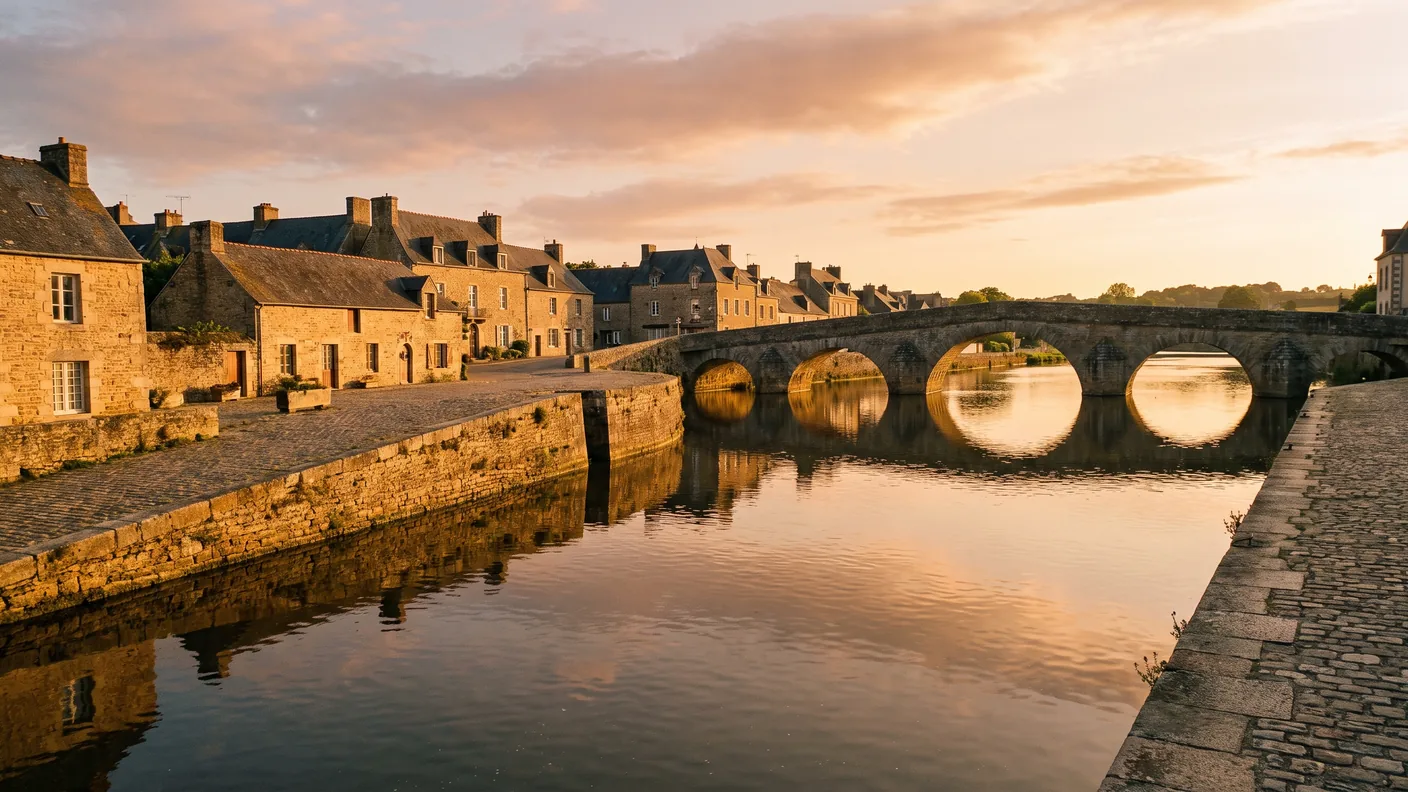
On the way to Vayres
Direct transfer from Bordeaux (39 min) to Vayres, its castle, and its gardens. Written, fixed-price quote with no obligation.