Virsac from Bordeaux: in the heart of the Cubzaguais
A small wine-growing village in the Cubzaguais region, in the hinterland of the right bank, north of Bordeaux. A Romanesque church, two historic mansions, the Bordeaux Supérieur vineyards, and nearby Saint-André-de-Cubzac (Cousteau’s hometown), Bourg, and the citadel of Blaye. About 39 minutes from Bordeaux.
Virsac at a Glance
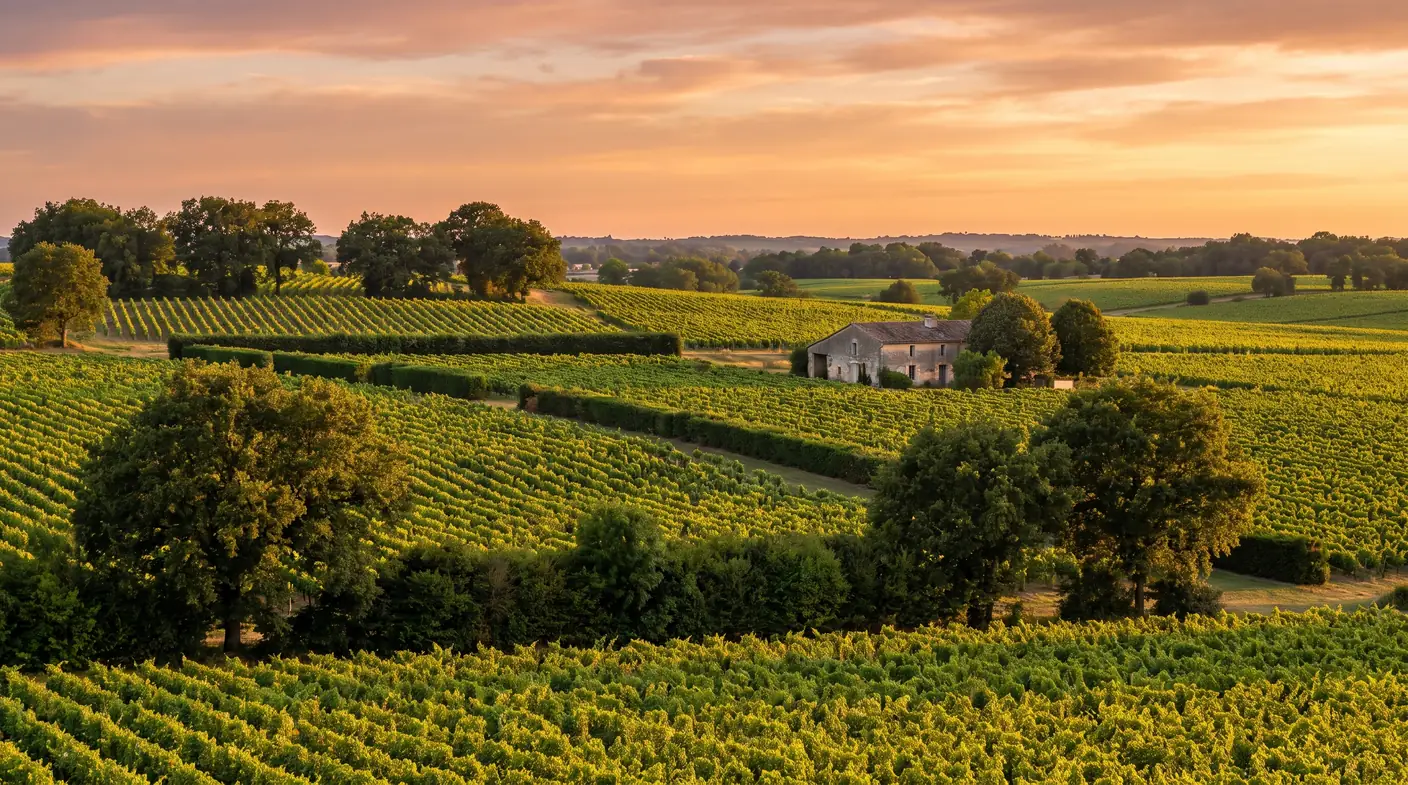
Virsac is a very small wine-growing village in the Gironde, nestled in the Cubzaguais region—the hinterland of the right bank—about half an hour north of Bordeaux. Barely three square kilometers in area, with just over 1,300 residents: this is a modest town, without any grand pretensions, whose story is told through its church steeple and rows of vineyards. Its Romanesque Saint-Genès Church, two old mansions dating back to the Paris–Bordeaux postal route, the hillsides of Bordeaux and Bordeaux Supérieur, and the ribbon of the A10 motorway that has cut through it since 1974 make up its portrait. This guide clearly distinguishes verified facts from common clichés, embraces the small-town charm of Virsac, and lets the landscape honestly shine through its neighbors: Saint-André-de-Cubzac, the town of Cousteau; the hilltop village of Bourg; and the UNESCO-listed citadel of Blaye. Here are the essential landmarks to know before hitting the road.
These guidelines are easy to understand at a glance. Distances are calculated door-to-door from the center of Bordeaux; the fare shown is a fixed price, announced in advance and confirmed in writing, with no meter and no unpleasant surprises, regardless of traffic or stops along the way.
| Landmark | Details |
|---|---|
| Department | Gironde (33), Nouvelle-Aquitaine |
| Status | Suburban village · Blaye district · Nord-Gironde canton · Grand Cubzaguais Community of Communes |
| Population | approximately 1,304 residents (INSEE 2023) · the Virsacais |
| Area | 3.06 km² · in the Cubzaguais region, in the hinterland of the right bank |
| Don't miss it | The Church of Saint-Genès, the vineyards of the Cubzaguais region, and the view toward the estuary |
| Codes | ZIP Code 33240 · INSEE Code 33553 |
| Distance from Bordeaux | about 29 km · about 39 min drive · starting at €67 |
A note on methodology, since even a tiny town has its share of approximations. This guide draws on data from INSEE, the Fondation du Patrimoine, and the town hall of Virsac: we carefully distinguish between what is actually protected and what is sometimes a bit too readily attributed to the village, and we credit each nearby point of interest to the municipality that truly owns it—Saint-André-de-Cubzac, Bourg, or Blaye—rather than artificially inflating Virsac’s scope. The depth of this guide does not stem from a scale it does not possess, but from the accuracy of its information.
Where is Virsac located?
Virsac is a commune in the Gironde department, in the Nouvelle-Aquitaine region, located in the Cubzaguais—a small area on the right bank centered around Saint-André-de-Cubzac, north of Bordeaux. It covers just over three square kilometers—3.06 km² to be exact—making it one of the smallest municipalities in the area: you can cross it in just a few minutes, passing through vineyard-covered hillsides, groves, and stone hamlets. Its ZIP code is 33240, and its INSEE code is 33553.
Administratively, Virsac is part of the Blaye district—a designation that dates back to 2006—and the Nord-Gironde canton. It is part of the Grand Cubzaguais Community of Municipalities, the intermunicipal association that brings together Saint-André-de-Cubzac and the neighboring towns within a shared catchment area. Its location, just north of Saint-André, makes it a discreet gateway to the estuary and the Haute Gironde: you pass right by it without noticing as you head north, and that is precisely what gives it its charm as a town caught between two worlds.
A village in the hinterland, not on the river
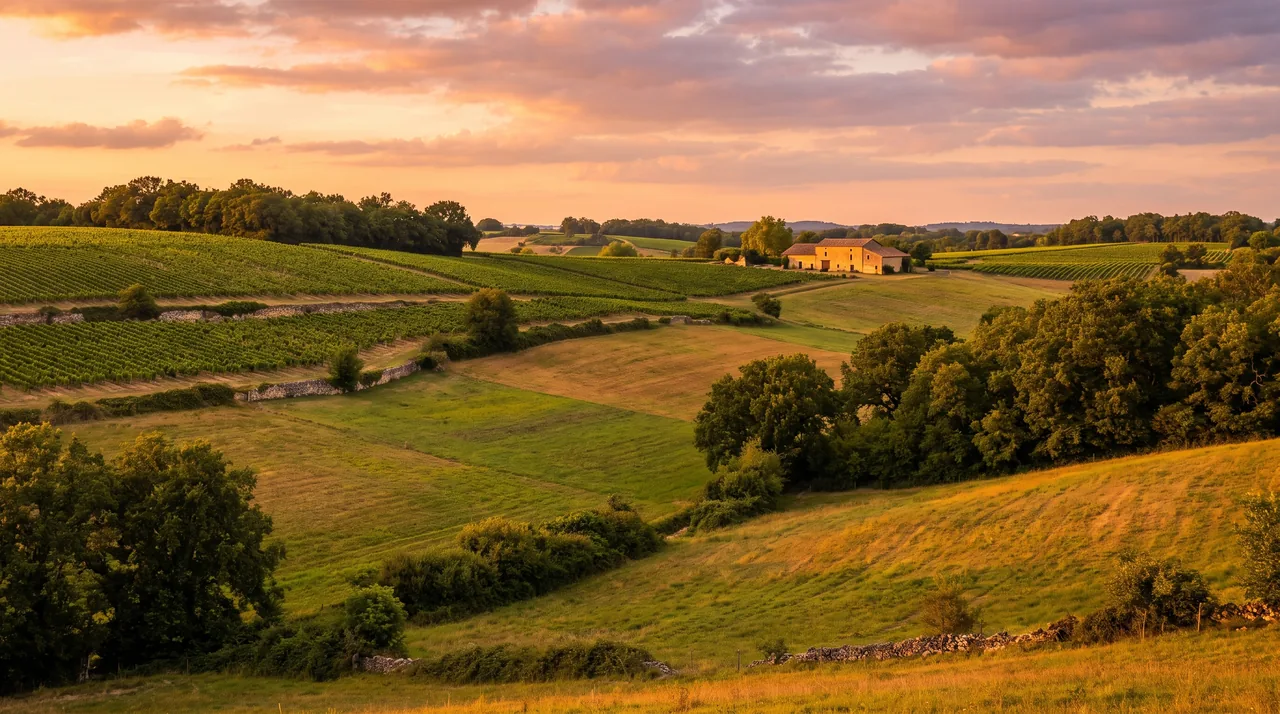
Here’s an important clarification, since the word “Gironde” can be misleading. Virsac is not located on the waterfront. Unlike Bourg or Blaye, which stand above the Dordogne River and its estuary, Virsac is located in the hinterland: it looks out at the rivers from afar, from its hillsides, without touching their banks. It is a village of dry land and vineyards, with no docks, no port, and no beach; the Gironde estuary is the neighbors’ domain, not its own. Stating this clearly avoids the main misconception people have about this town.
A Name at the Motorway Toll Booth
In fact, the most distinctive feature of Virsac’s geography is not a body of water, but a ribbon of asphalt. Since 1974, the A10 motorway has run through the town, and it is within its boundaries that the large toll plaza north of Bordeaux was built (Virsac Town Hall, local history accessed July 24, 2026), which regulars on the Paris–Bordeaux route know as the “Virsac toll.” Every year, millions of drivers utter the village’s name without ever stopping there—a curious fate for such a small town, which owes its fame, disproportionate to its size, to the motorway.
As for the origin of the name Virsac, it remains unclear. There is no firmly established etymology on which there is a consensus, and we prefer not to speculate where the sources are silent: like so many place names in the Southwest, the suffix evokes a distant, ancient realm, but let us stick to what is actually attested rather than to enticing reconstructions.
On the ground, Virsac looks like a checkerboard of plots: vineyards in tight rows, meadows, small oak and chestnut groves, isolated farms, and hamlets connected by narrow roads. The A10 motorway speeds by on one side, oblivious; on the other, the Cubzaguais countryside remains peaceful. It is this coexistence—high speed and rural slowness—that best sums up the town, and that makes it so restful as soon as you leave the motorway for the vineyard paths.
How far is it from Bordeaux?
From downtown Bordeaux, it’s about 29 kilometers and roughly a 39-minute drive, with most of the route taking you along the ring road and then north on the A10—the same motorway that runs through the town. Route calculators estimate the distance at around 30 kilometers, depending on the exact starting point and time of day. Virsac is therefore one of the quickest getaways on the right bank: you’ll be there before you’ve even had time to settle in for the trip, making it perfect for a half-day outing or as the starting point for a more extensive tour of the Cubzaguais region.
| From Virsac | Distance | Approx. duration |
|---|---|---|
| Saint-André-de-Cubzac | ~3 km | ~6 min |
| Town | ~10 km | ~15 min |
| Blaye | ~22 km | ~30 min |
| Bordeaux (downtown) | ~29 km | ~39 min |
How many people live in Virsac?
How many people live in Virsac? According to the latest INSEE census (2023 population), Virsac has approximately 1,304 residents (municipal records accessed on July 24, 2026). This is a small number in absolute terms, but when considered in relation to its 3.06 km² area, it results in a population density of about 426 inhabitants per square kilometer—a higher figure than one might expect for a rural village, and a sign of a compact, densely populated area rather than a rural wasteland. In other words, Virsac is small in area but very much alive.
The residents are known as the Virsacais and the Virsacaises. Like many towns in the Bordeaux suburban belt, Virsac has seen its population grow over the past few decades. Its proximity to Saint-André-de-Cubzac, direct access to the A10, and the charm of a wine-growing setting—about 39 minutes from the city—make it a sought-after place to live for those who work in Bordeaux but prefer not to live there. The village thus combines a long-standing rural identity with a modern residential reality.
| Indicator | Value |
|---|---|
| Population (INSEE 2023) | approximately 1,304 residents |
| Demonym | Virsacais, Virsacaises |
| Area | 3.06 km² |
| Density | about 426 people per square kilometer |
| Profile | a growing suburban town in the Cubzaguais region |
A small-town community
That said, don’t expect to find a city here. Virsac remains a village, with its school, town hall, church, and farms, and most of its land is covered by vineyards, woods, and a few scattered hamlets. It is precisely this modest scale that makes it so charming: people come to Virsac for the tranquility, for the light on the hillsides, and for the feeling of being far from the city while still within easy reach of Bordeaux. Those seeking a lively atmosphere will find it in Saint-André, three kilometers away; those seeking the tranquility of the vineyards need look no further than here.
This gradual growth has not erased the village’s character. Newcomers settle in among the winegrowers and long-established families, and Virsac remains what is known as a “street village” with scattered hamlets, lacking a central square: the church, town hall, and a few houses form the heart of the village, while the rest is scattered throughout the countryside. There are more tractors than tourists here, and that’s just fine—it’s this quiet authenticity that gives your stay the feel of the real Gironde countryside.
The Romanesque Church of Saint-Genès
The most charming landmark in Virsac is its parish church, dedicated to Saint Genès. Its origins date back to the Romanesque period: the building dates primarily to the 11th and 12th centuries (Fondation du Patrimoine, project accessed on July 24, 2026), a time when the Cubzaguais region was dotted with small stone churches along its roads and within its parishes. But the history of this sanctuary is also one of rebirth, as it nearly disappeared.
At the end of the 19th century, the church was on the verge of collapse. It was saved in 1899 thanks to a bequest from a benefactor, Marguerite Sabourin, whose generosity made a major restoration possible. The work gave the building a Neo-Gothic appearance, notably featuring a new bell tower crowned with a slender spire: this slender silhouette now marks the village from afar, rising above the rooftops and vineyards. Thus, what we see at Virsac is a curious blend: a Romanesque soul clad in a 19th-century guise.
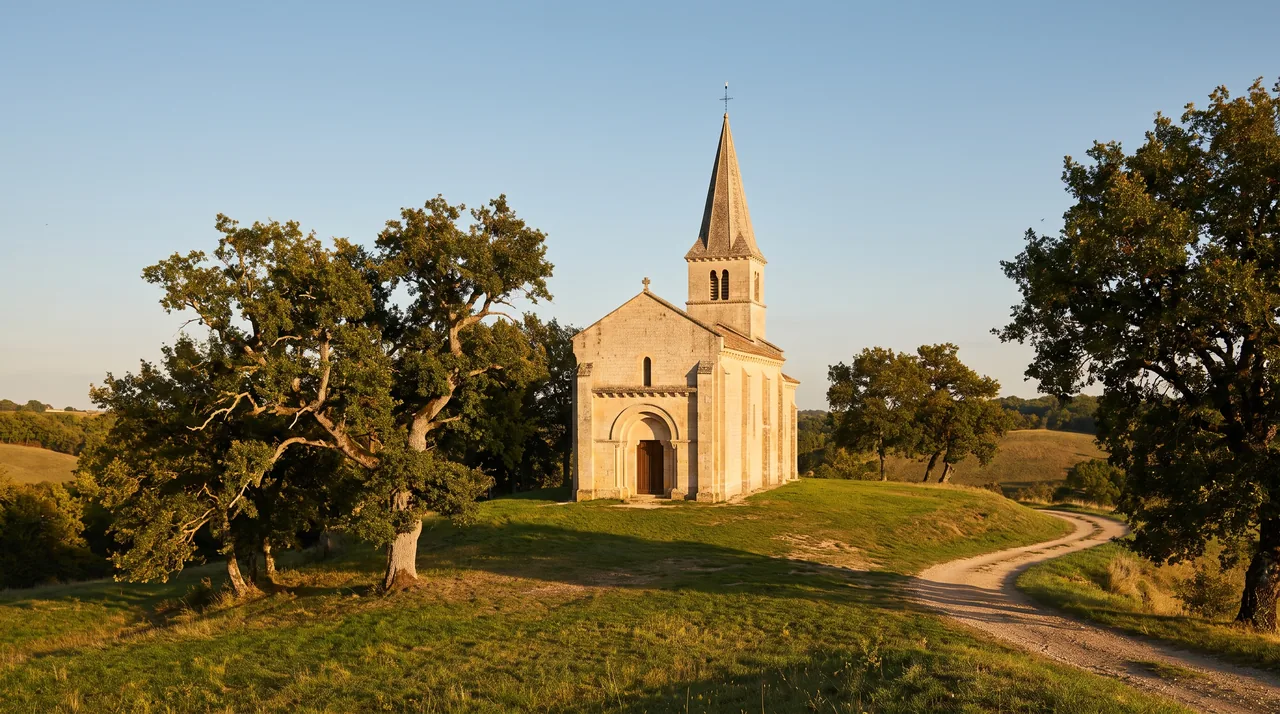
The church can be admired for what it is: a modest country church, Romanesque at its core and Neo-Gothic in appearance, carefully maintained by the town and its residents. The Heritage Foundation has also taken an interest in it, a sign of the residents of Virsac’s attachment to their bell tower and their desire to preserve this landmark of the landscape. People don’t come to Virsac for a cathedral; they come for this particular stone, on a village scale, which is valued more for its sincerity than for its size.
Is the Saint-Genès Church designated as a historic monument?
This is where we need to be precise, because there’s a persistent misconception circulating about Virsac. No: the Saint-Genès Church itself is neither classified nor listed as a Historic Monument. Rather, it is three objects housed within the church that are protected “as individual objects”: the wrought-iron liturgical railing, listed in 1971; the limestone cemetery cross, classified in 1974; and a painting depicting Saint Genès, listed in 1981. The building itself is not protected under the Historic Monuments designation—an essential distinction that this guide is careful to respect rather than applying a label to the village that does not belong to it.
| Protected Object | Protection | Year |
|---|---|---|
| Wrought-iron liturgical fence | Designated as a historic monument “as an object” | 1971 |
| Limestone cemetery cross | Designated as a historic monument “as an object” | 1974 |
| Painting of Saint Genès | Listed as a historic monument “as an object” | 1981 |
A burial ground beneath the church?
Another interesting fact reported by the town hall: a medieval necropolis, whose tombs are said to have been carved directly out of the rock, was reportedly uncovered beneath the church during previous construction work. This information is based on local lore rather than a published archaeological excavation, and we present it as such, without drawing further conclusions. In any case, it serves as a reminder of the long history of this place of worship, which was likely occupied long before the Romanesque building visible today: at Virsac, the little church hides a long past.
For visitors, the Church of Saint-Genès offers, above all, a wonderful excuse to stop: park for a moment, walk around the building, look up at the spire, and step inside if the door is open to catch a glimpse of the wrought-iron fence that is the parish’s quiet pride. It’s not much, yet it captures the very soul of the place: a humble stone structure, saved from certain ruin by the generosity of a benefactor, watching over its cemetery and vineyards. People love to photograph it at the end of the day, when the limestone takes on honey-colored hues.
Château Bois-Martin and Château Julie
Virsac may not boast the opulent wine châteaux found in the Médoc, but it does have two historic estates that, on their own, tell a chapter of its history: Château Bois-Martin and Château Julie (Virsac City Hall, historical record accessed on July 24, 2026). Both are historic estates—beautiful stone buildings—rather than famous wineries: they should not be confused with “châteaux” in the Bordeaux wine sense. No reliable source links them to a specific wine, and we will refrain from inventing one.
What makes them interesting is their history. These mansions have witnessed the lords of Virsac, travelers on the royal road, and the successive architectural styles of the Gironde region from the 16th to the 18th century. Together with the church, they form the bulk of the town’s built heritage.
Bois-Martin, a former stagecoach stop
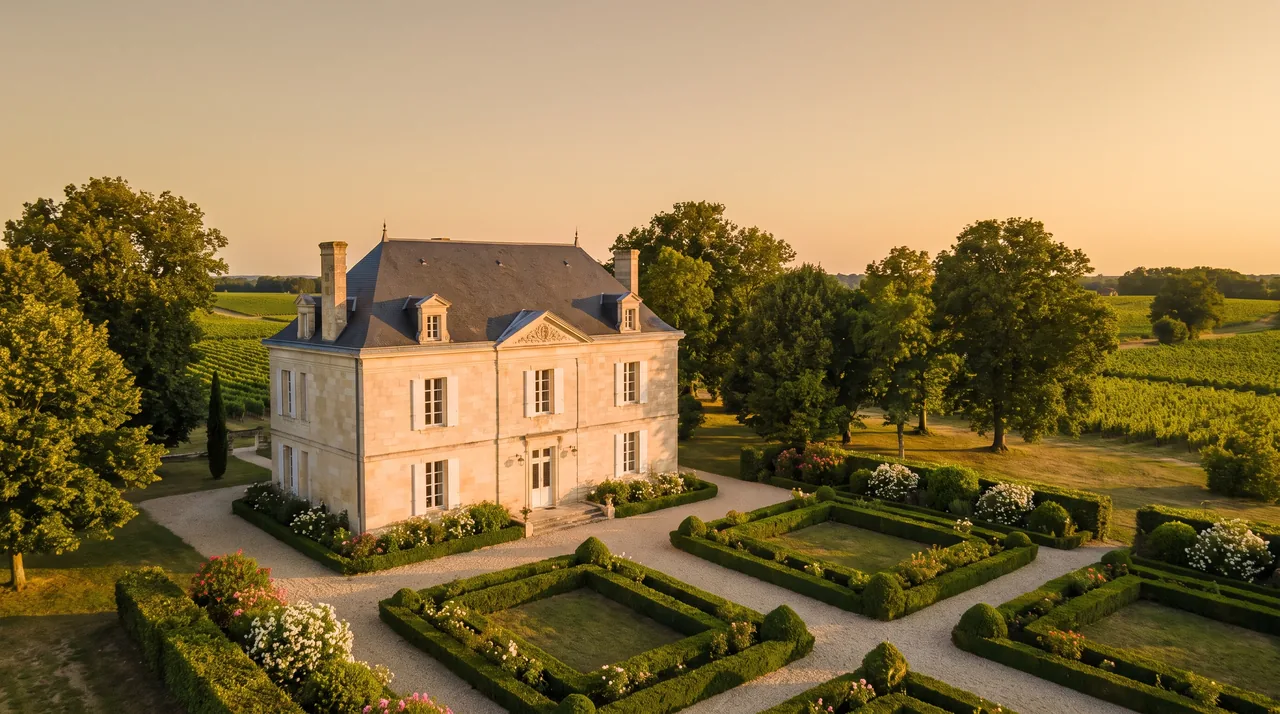
The Château Bois-Martin is the one steeped in the most history. At the end of the 16th century, it was a noble residence belonging to the lords of Virsac, and above all, a coaching post on the main road connecting Paris to Bordeaux. Travelers would change horses there, have a meal, and sometimes spend the night: the village lived to the rhythm of the stagecoaches and travelers, long before the A10 motorway took over that same role as a north–south artery a few centuries later. Bois-Martin is, in a way, the forerunner of the gas station: the stop where the Paris–Bordeaux route made a stopover.
Château Julie, formerly Naudonnet
Château Julie, formerly known as “Naudonnet,” is a 17th-century mansion that was remodeled in the 18th century and is surrounded by gardens. Today, the house welcomes guests: it has become a bed-and-breakfast, where you can enjoy a peaceful stay among the vineyards of the Cubzaguais region. It’s one of the few ways to extend your exploration of Virsac beyond a simple stopover, and an opportunity to stay in an authentic Gironde-style home, just a few minutes from Saint-André and about 39 minutes from Bordeaux.
These two residences are best explored from the outside, during a stroll. They are not monuments open to the public like a castle-museum, but their stone silhouettes, slate roofs, and dormer windows, together with the bell tower of Saint-Genès, make up the village’s most iconic postcard view. Photographing them in the late-afternoon sun, when the stone takes on a golden hue, is enough to appreciate the understated charm of Virsac.
Within the village, these houses and the church are enough to make for a lovely one-hour walk: you walk from one to the other along narrow roads, passing a tractor, a patch of vineyards, and a wayside cross; it’s heritage on a human scale, without ticket booths or crowds, best experienced by strolling rather than on a guided tour. For those who love authentic villages, this simplicity is a virtue, not a shortcoming.
From the Knights Templar to the Motorway
The history of Virsac, for such a small area, is surprisingly rich. Archaeologists have uncovered evidence of Gallo-Roman settlement here: ancient artifacts confirm that the site was inhabited well before the Middle Ages, at a time when the road and the vineyards were already shaping this corner of the right bank. This is nothing out of the ordinary for Aquitaine, but it proves that people have lived here for a long time.
This continuity of settlement is by no means insignificant: it shows that Virsac has always taken advantage of its location on the road leading north from Bordeaux toward Poitou. Each era has left its mark here—the ancient road, the postal route, the motorway—as if the village had been built around the comings and goings of others. It is therefore easier to understand why its entire history revolves around this idea of a crossroads.
A Templar commandery that became a priory
In the Middle Ages, the parish developed around a unique religious institution: a Templar commandery. When the Order was dissolved, it was replaced in the 13th century by a priory, which then served the church. This history as a commandery—shared by several towns on the right bank of the Gironde—anchors Virsac within the network of military and hospitaller orders that crisscrossed the medieval Southwest along pilgrimage routes and major thoroughfares. This lends the village—now bisected by the motorway—an unexpected historical depth.
Mail trunks at the A10 toll plaza
During the Renaissance, the village gained new significance with the royal road from Paris to Bordeaux: this was the period when Bois-Martin became a post station, at the end of the 16th century. It has never lost its role as a crossroads. In 1974, the A10 motorway opened through the town, complete with its toll booth: the same north–south traffic flow, four centuries later, continues to pass through Virsac. In the meantime, in 1899, the church had been rebuilt from its ruins; and in 2006, the town was incorporated into the Blaye district.
| Period | Landmark |
|---|---|
| Antiquity | Documented Gallo-Roman occupation (archaeological evidence) |
| Middle Ages | A Templar commandery, later a priory in the 13th century |
| Late 16th century | Bois-Martin Becomes a Post Station on the Paris–Bordeaux Route |
| 1899 | The ruined church is being restored (bequest from Marguerite Sabourin) |
| 1974 | Opening of the A10 toll gate in the town |
| 2006 | Incorporation into the Blaye District |
From the ancient villa to the modern toll booth, Virsac has always been a place of passage: a place for travelers rather than residents, whose small size has never prevented the main road from making its way through it. To understand this is to understand the soul of the town—a humble and enduring crossroads village, nestled between vineyards and roads.
The Vineyards of Cubzaguais
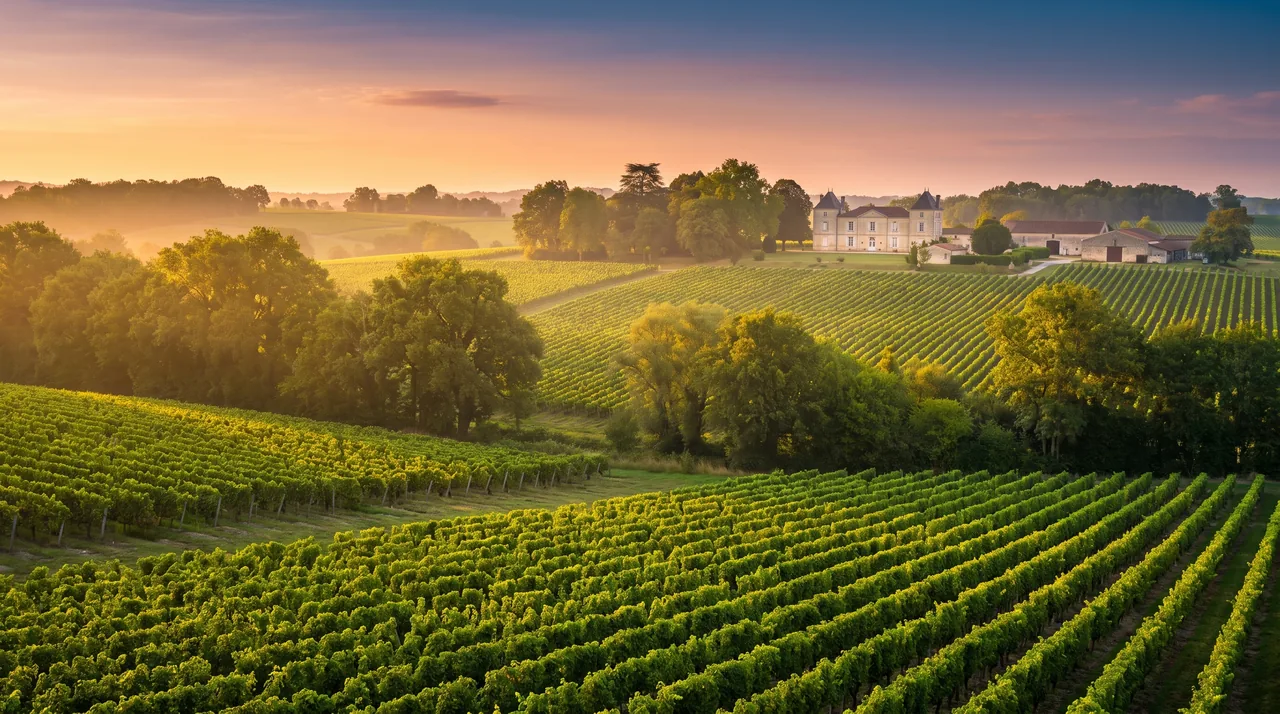
Like the rest of the Cubzaguais region, Virsac is a land of vineyards. Its hillsides produce wines from the right bank of the Gironde, mainly reds, under the Bordeaux and Bordeaux Supérieur appellations. These are regional AOCs, covering a large part of the Bordeaux wine region: not a prestigious municipal appellation like Saint-Émilion or Pomerol, further to the southeast, but a wine region of good quality, authentic, and representative of its terroir.
Let’s be blunt about it, because it’s more accurate and, ultimately, more interesting: Virsac doesn’t claim to be among the great wines. Its vineyards belong to the realm of “ordinary” yet high-quality Bordeaux—the kind of reds meant for enjoyment, supple and fruity, meant to be drunk young and enjoyed with everyday meals. It’s the wine of a region with mixed farming, where vineyards sit alongside meadows, woods, and orchards—without the grandeur of the great Médoc châteaux.
What wines does Virsac produce?
Specifically, in Virsac and the surrounding area, you’ll find classic Bordeaux blends, dominated by Merlot—a favorite of the Right Bank—and complemented by Cabernets. We won’t name any specific estates: reliable sources do not highlight any iconic properties bearing the village’s name, and it would be dishonest to invent one just to make it sound good. For wine tasting, it’s best to turn to the wineries and estates in neighboring towns, which are more numerous and more prominent—particularly in the nearby Côtes de Bourg region, whose full-bodied reds have the highest percentage of Malbec in the entire Bordeaux region.
What gives Virsac its wine-growing charm, then, is not a famous label, but the landscape itself: rows of vines undulating across the hillsides, punctuated by hedges and groves, bathed in the soft light of the right bank. An unpretentious winegrowing setting, best savored on a leisurely stroll—and a reminder that Bordeaux wine, before being a matter of classified growths, is first and foremost this vast region of hillsides and villages like Virsac.
There’s nothing stopping you, after all, from planning a wonderful day of wine tasting with Virsac as your starting point: the wineries of the Côtes de Bourg, Blaye, and Cubzaguais regions are just a few minutes away, and you can easily move from a light, enjoyable Bordeaux red to a more full-bodied Côtes de Bourg. The village doesn’t have any grand cru wines of its own to boast about, but it’s perfectly situated for tasting those from other regions—which, for the curious wine lover, is well worth the trip to sold-out estates.
The Cubzaguais, between the Dordogne and the estuary
To understand Virsac, you need to broaden your perspective to include the Cubzaguais, the small region of which it is a part. The Cubzaguais is the region centered around Saint-André-de-Cubzac, on the right bank, where the Dordogne River widens as it flows toward its confluence with the Garonne. This confluence—the Bec d’Ambès—marks the beginning of the Gironde estuary, renowned as the largest in Western Europe. Virsac sits slightly set back from this watery spectacle, on the hills above, yet it fully shares its identity.
Historically, the Cubzaguais region has been a crossroads. The main road from Paris to Bordeaux once ran through it; the A10 has since taken its place, and the crossing over the Dordogne at Saint-André remains a strategic chokepoint. It is also a region of vineyards and mixed farming, nestled between two bodies of water: the Bordeaux and Bordeaux Supérieur wines of the plain and hillsides, the nearby Côtes de Bourg, and, a little further north, the Côtes de Blaye. A transitional region, bridging the wine-growing heartland of Bordeaux and the maritime openness of the estuary.
A country between two rivers
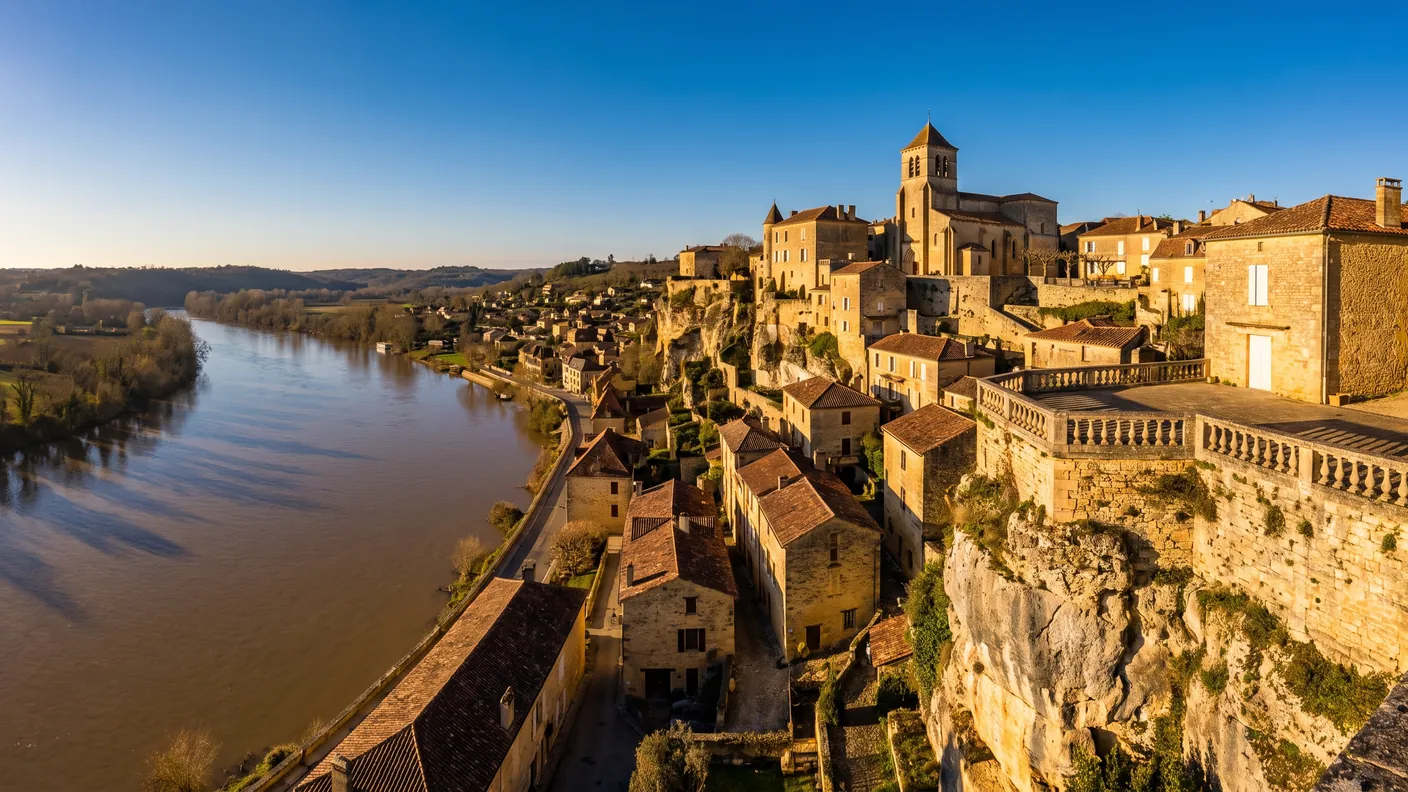
Virsac occupies a low-key spot within this region: just one wine-growing village among many, without a river at its feet or a citadel atop its ramparts, but ideally situated as a base for exploring the area. From its hillsides, you can reach Saint-André and its bridges in just a few minutes, Bourg and its lookout point in a quarter of an hour, and Blaye and its fortress in half an hour. That’s precisely why it’s worth making it your base or first stop: you’re at the heart of the Cubzaguais region, at the crossroads of the routes leading to wine, stone, and water. What Virsac lacks in monuments, it more than makes up for in location.
Think of this region as a crossroads. To the south, the Bordeaux metropolitan area and its renowned vineyards; to the west, the Bec d’Ambès and the industrial facilities at the confluence; to the north, the estuary opening out to the ocean, with its islands, fishing huts, and ports. The Cubzaguais region holds all of this together, and Virsac, nestled on its hillsides, occupies a quiet spot, slightly elevated and sheltered from the noise of the world.
This unique location also explains why the village appeals to those seeking the countryside without the isolation. Here, you can breathe in the fresh air of the vineyards, yet the motorway is right at your doorstep and Bordeaux is just thirty minutes away: the Cubzaguais region offers that rare balance between rural charm and urban convenience, and Virsac epitomizes it.
What is there to do in and around Virsac?
Let’s be honest: Virsac is a very small town, and you can see everything it has to offer in no time. That’s why this chapter is titled “and beyond”: the real adventure unfolds across the Cubzaguais region and the Haute Gironde, to which Virsac serves as a convenient gateway. Once there, take the time to admire the Saint-Genès Church and its spire, spot the silhouettes of Bois-Martin and Château Julie, and then venture down the paths through the vineyards. All around, however, attractions abound: Saint-André-de-Cubzac, Cousteau’s town, just three kilometers away; Bourg-la-Perchée and its Côtes de Bourg wines; the citadel of Blaye, a Vauban masterpiece listed by UNESCO; and, in the background, the vast Gironde estuary. Here, evenly distributed between the village and its neighbors, are the sights worth a detour.
- The Church of Saint-Genès and its protected treasures: the wrought-iron liturgical fence, the cemetery cross, and the painting of Saint Genès—all three of which are classified or listed as Historic Monuments—while the building itself is not.
- The exteriors of the Bois-Martin and Julie castles—the former stagecoach inn and the mansion that has been converted into a bed-and-breakfast—are worth exploring during a stroll through the village.
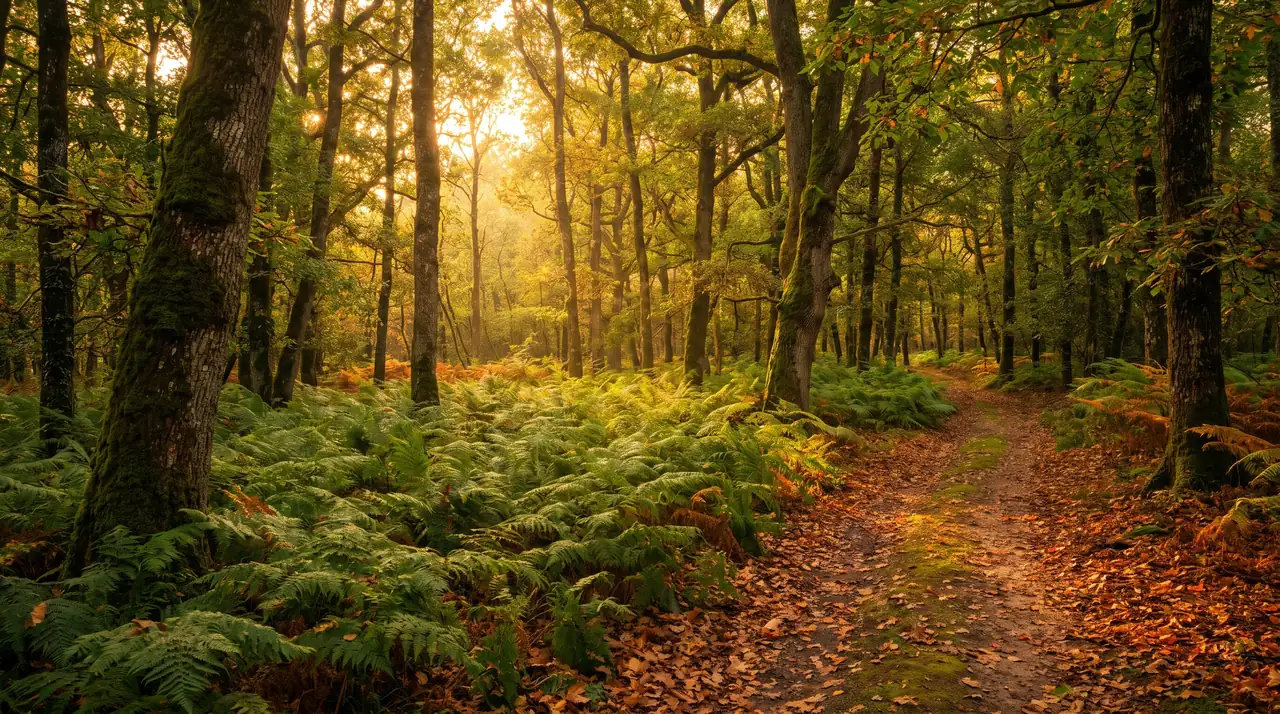
- A stroll through the vineyards in the Cubzaguais region: paths winding through the rows of vines, hedgerows, and groves, leading to the light and tranquility of the right bank.
- Saint-André-de-Cubzac (about 3 km away): the birthplace of Jacques-Yves Cousteau, with its bridges over the Dordogne River and its fortified church.
- Bourg (about 10 km away): the village perched above the Dordogne River and the Côtes de Bourg vineyards, home to the largest Malbec production in the Bordeaux region.
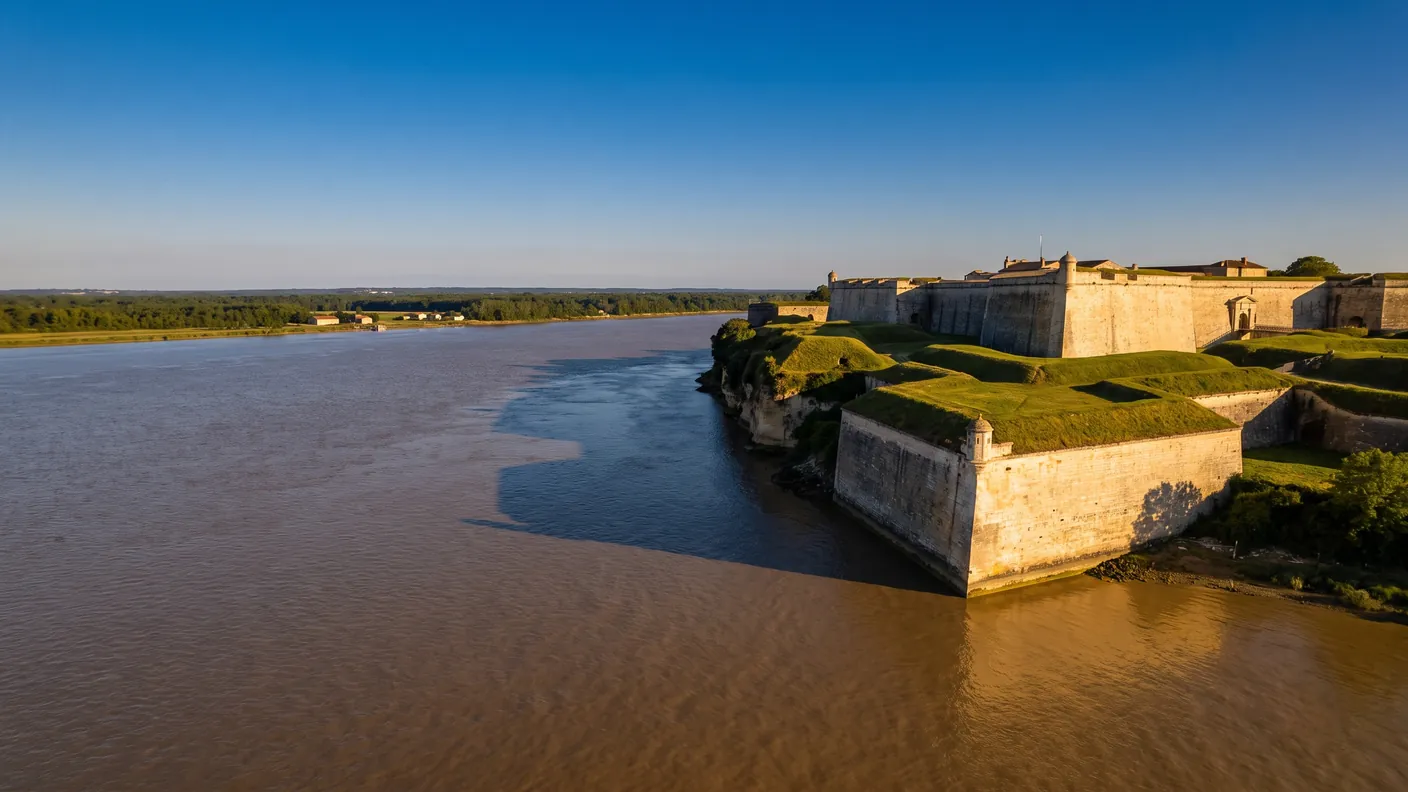
- The Citadel of Blaye (about 22 km away): Vauban’s fortress, designated a UNESCO World Heritage Site in 2008, which guards the estuary.
- The coastal road between Blaye and Bourg and the panoramic views of the Gironde Estuary, reputed to be the largest in Western Europe.
One more word of honesty: Don’t expect to find a large weekly market or a marked hiking trail unique to Virsac; for that, head to Saint-André-de-Cubzac, the little capital of the Cubzaguais region, which is home to shops, a market, and events. Instead, Virsac is best enjoyed as a way to start your day: begin with the bell tower and the vineyards, then make your way toward the river, the town of Cousteau, and the citadel.
| Must-See | Where | Good to Know |
|---|---|---|
| Saint-Genès Church | Virsac | 3 objects listed as historic monuments (not the building itself) |
| Bois-Martin & Julie Castles | Virsac | Outdoors; Julie = bed and breakfast |
| Cousteau, bridges, fortified church | Saint-André-de-Cubzac (~3 km) | Birthplace of Commander Cousteau |
| Hilltop Village, Côtes de Bourg | Town (~10 km) | Lookout Point Over the Dordogne River |
| Vauban Citadel (UNESCO) | Blaye (~22 km) | Estuary Lock, designated in 2008 |
Around Virsac
The greatest asset of Virsac is its location. In less than half an hour, you can travel from the wine-growing village to the estuary, passing through some of the most beautiful sites in the Haute Gironde. Three destinations, in particular, are well worth combining on a trip starting from Virsac: Saint-André-de-Cubzac, Bourg, and Blaye.
The nearest town is Saint-André-de-Cubzac, just three kilometers away. The small capital of the Cubzaguais region, the town is famous for being the birthplace of Jacques-Yves Cousteau, born on June 11, 1910: the “Commander in the Red Beanie,” oceanographer, and filmmaker was born here, and the town honors his memory. Visitors can also admire a beautiful fortified church and the large bridges spanning the Dordogne River. Next is Bourg, about ten kilometers away: a village perched above the river, with stone terraces and the heart of the Côtes de Bourg wine region.
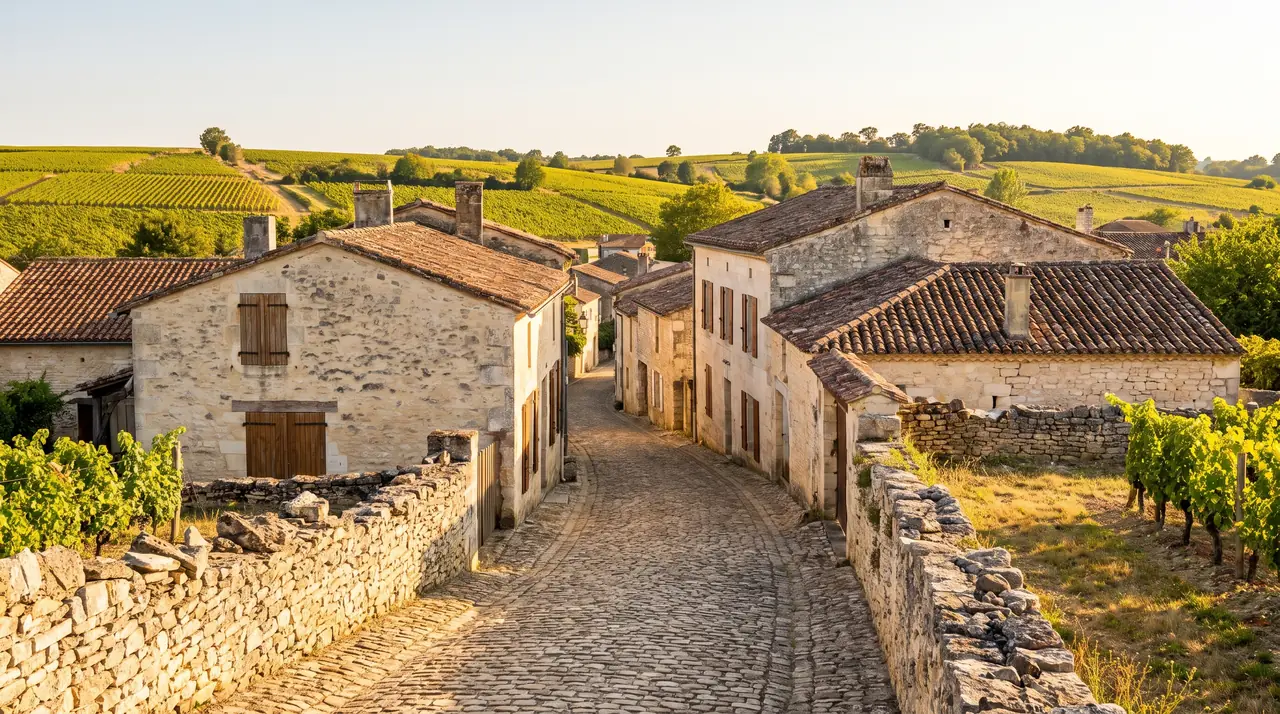
Further north, about twenty kilometers away, Blaye boasts its citadel—a masterpiece by Vauban that has been listed as a UNESCO World Heritage Site since 2008 as part of the “Network of Major Vauban Sites”—the gateway to the estuary. Between Blaye and Bourg, the coastal road winds along the hillsides and the water: one of the prettiest drives on the right bank, winding through vineyards, fishing huts, and stone villages. And everywhere on the horizon, the Gironde estuary—renowned as the largest in Western Europe—unfolds its broad ribbon of water and light.
| Destination | Distance from Virsac | Must-See |
|---|---|---|
| Saint-André-de-Cubzac | ~3 km | Cousteau, bridges over the Dordogne, fortified church |
| Town | ~10 km | Hilltop Village, Côtes de Bourg |
| Blaye | ~22 km | Vauban Citadel (UNESCO 2008) |
| Bordeaux | ~29 km | Bordeaux Métropole, Port of the Moon (UNESCO) |
Three Getaways to Combine
These three neighboring towns form a natural itinerary starting from Virsac. You can visit Saint-André-de-Cubzac and its bridges, Bourg and its terrace overlooking the Dordogne, then Blaye and its fortress, before returning through the vineyards: a full day on the right bank, complete with heritage sites, wine tastings, and river views. To learn more about each of these stops, check out our guides dedicated to Saint-André-de-Cubzac, Bourg, and Blaye.
How to Get to Virsac from Bordeaux
Getting to Virsac from Bordeaux is quick and easy: it’s about 29 kilometers and a 39-minute drive via the bypass and then the A10 heading north—the motorway that runs right through the town. It’s one of the most accessible getaways on the right bank, ideal for a half-day visit or as the first stop on a tour of the Cubzaguais region and the estuary.
How much does the trip from Bordeaux to Virsac cost?
The Bordeaux → Virsac route is available starting at €67 during the day for a sedan accommodating 1 to 3 passengers, at a fixed price quoted and confirmed in writing before departure: no meter, no unpleasant surprises due to traffic or stops. A surcharge applies at night, on weekends, and on holidays; for groups of 4 or more passengers, a van seating up to 7 passengers will be provided. Transfers to nearby destinations—Saint-André-de-Cubzac, Bourg, Blaye—as well as transfers from Bordeaux-Mérignac Airport are priced based on a quote, following the same fixed-price principle.
| Route | Distance / Duration | Starting at |
|---|---|---|
| Bordeaux → Virsac | ~29 km · ~39 min | starting at 67 € |
| Virsac → Saint-André / Bourg / Blaye | residents of the right bank | based on a quote |
| Bordeaux-Mérignac Airport → Virsac | depending on the route | based on a quote |
Why Choose a Private Driver for Virsac?
Virsac serves as a gateway to the Cubzaguais region and the estuary, and that’s exactly what makes the ride with a private chauffeur so enjoyable. You’ll pass through the village, the vineyards, Saint-André, Bourg, and Blaye without worrying about parking, the narrow hillside roads, or enjoying a glass of wine at the winery. Pickup is at your address, in Bordeaux, or at the airport, in a sedan or van depending on the size of your group, with a price quoted in advance and confirmed in writing.
In short, Virsac isn’t a place you visit for its monuments—it has few of them—but for what it opens up: a region of vineyards, rivers, and fortresses, about 39 minutes from Bordeaux, which you can explore at your own pace. A tiny town, but a gateway to the entire right bank.
Frequently Asked Questions
Where is Virsac located?
Virsac is a small town in the Gironde department (33), in the Nouvelle-Aquitaine region, located in the Cubzaguais area—the hinterland of the right bank—about 29 kilometers north of Bordeaux (about a 39-minute drive). It lies immediately north of Saint-André-de-Cubzac, belongs to the Blaye district and the Nord-Gironde canton, and is part of the Grand Cubzaguais community of municipalities. Its ZIP code is 33240. It is a village of hillsides and vineyards, set apart from the rivers.
How many people live in Virsac?
According to the INSEE census (2023 population), Virsac has approximately 1,304 residents, known as Virsacais and Virsacaises. Covering an area of just 3.06 km², this represents a population density of about 426 people per square kilometer, which is fairly high for a village. Like many towns in the Bordeaux suburban belt, Virsac has seen its population grow in recent decades, driven by its proximity to Saint-André-de-Cubzac and direct access to the A10 motorway.
What's there to see at Virsac?
Even in Virsac, the bulk of the heritage consists of just a few sites: the Romanesque Church of Saint-Genès, restored in 1899 with a neo-Gothic bell tower featuring a spire; the exteriors of Château Bois-Martin, a former coaching inn, and Château Julie, now a bed-and-breakfast; and the paths that wind through the vineyards of the Cubzaguais region. Since the town is very small, the itinerary naturally extends to include neighboring towns: Saint-André-de-Cubzac, Bourg, and the citadel of Blaye.
Is the Saint-Genès Church in Virsac designated as a historic monument?
No, and this is a common misunderstanding. The Saint-Genès Church itself is neither classified nor listed as a Historic Monument. However, three objects housed within it are protected “as individual objects”: the wrought-iron liturgical railing, classified in 1971; the limestone cemetery cross, classified in 1974; and a painting depicting Saint Genès, listed in 1981. The building, originally Romanesque and restored in the Neo-Gothic style, has no protection of its own.
What is the Cubzaguais?
The Cubzaguais is the small region on the right bank of the Gironde, centered around Saint-André-de-Cubzac, north of Bordeaux. It stretches along the stretch where the Dordogne widens toward its confluence with the Garonne (the Bec d’Ambès), which marks the beginning of the Gironde estuary. It is a region of vineyards and mixed farming, and a historic transportation hub: the Paris–Bordeaux road—now the A10 motorway—runs through it. Virsac is one of its unassuming wine-growing villages.
Is Virsac located on the banks of the Dordogne or the estuary?
No. Although it is part of the Gironde department and the Cubzaguais region, Virsac is not located along the water. It lies in the hinterland, on the hillsides, and borders neither the Dordogne River nor the Gironde Estuary. It is its neighbors, Bourg and Blaye, that rise above the river and the estuary. Virsac is a village of dry land and vineyards: from its heights, one can make out the rivers in the distance, but they are out of reach.
What wines are produced at Virsac?
Virsac primarily produces red wines from the Right Bank, under the regional appellations Bordeaux and Bordeaux Supérieur. These are not prestigious wines like those from Saint-Émilion or Pomerol, but rather classic red blends dominated by Merlot and complemented by Cabernets: a “regular” but high-quality vineyard, meant to be enjoyed young and for pleasure. No iconic estate bears the village’s name specifically; for wine tasting, people often turn to the nearby Côtes de Bourg.
Why do we refer to the “Virsac toll”?
Because the A10 motorway has run through the town of Virsac since 1974, and the large toll plaza north of Bordeaux was built there. Drivers on the Paris–Bordeaux route therefore know it as the “Virsac toll plaza.” This is the paradox of this small village: its name is familiar to millions of drivers who never stop there. In the age of the motorway, this role as a crossroads continues the tradition of the old royal road and its coaching post.
What are the Bois-Martin and Julie castles?
These are the two historic estates of Virsac. At the end of the 16th century, Château Bois-Martin was a noble residence of the lords of Virsac and a coaching post on the Paris–Bordeaux route. Château Julie, formerly known as “Naudonnet,” is a 17th-century residence that was remodeled in the 18th century; it is surrounded by gardens and now operates as a bed-and-breakfast. These are historic estates, not famous wine estates: it’s best not to confuse them with wine “châteaux.”
Was Jacques-Yves Cousteau born in Virsac?
No. Commander Jacques-Yves Cousteau was born on June 11, 1910, in Saint-André-de-Cubzac, the neighboring town, about three kilometers from Virsac—and not in Virsac itself. Saint-André is the small “capital” of the Cubzaguais region and honors the memory of the oceanographer. It is a typical example of Virsac’s influence: the village is very close to the sites that have made the area famous, without being the source of that fame itself. Cousteau is therefore credited to Saint-André-de-Cubzac.
What is there to do near Virsac?
The best of what the area has to offer is right nearby. Three kilometers away, Saint-André-de-Cubzac features a fortified church, bridges over the Dordogne River, and a tribute to Cousteau. About ten kilometers away, Bourg showcases its hilltop village and its Côtes de Bourg wines. About twenty kilometers away, the citadel of Blaye—a masterpiece by Vauban designated a UNESCO World Heritage Site in 2008—guards the estuary. You can also drive along the coastal road between Blaye and Bourg and admire the Gironde estuary, reputed to be the largest in Western Europe.
How much does a trip from Bordeaux to Virsac cost with a chauffeur service?
A trip from Bordeaux to Virsac starts at €67 during the day for a sedan accommodating 1 to 3 passengers, at a fixed rate confirmed in writing before departure, with no meter. A surcharge applies at night, on weekends, and on holidays; for groups of 4 or more passengers, a van seating up to 7 passengers will be provided. Transfers to nearby destinations (Saint-André-de-Cubzac, Bourg, Blaye) and transfers from Bordeaux-Mérignac Airport are priced based on a quote, following the same principle of a fixed rate announced in advance.
How long does it take to get from Bordeaux to Virsac?
It takes about 39 minutes to drive from downtown Bordeaux to Virsac, a distance of approximately 29 kilometers. The route follows the Bordeaux beltway and then the A10 motorway northbound—the same motorway that runs through the town. Actual travel time may vary slightly depending on the time of day and traffic on the ring road; this is one of the quickest day trips from Bordeaux to the right bank, ideal for a half-day excursion to the Cubzaguais region.
Further Reading
- The town of Cousteau: see the Guide to Saint-André-de-Cubzac (birthplace of Commander Cousteau, bridges over the Dordogne, fortified church), ~3 km away
- The hilltop village of Côtes de Bourg: check out the Bourg Guide (viewpoint overlooking the Dordogne, home to the largest Malbec vineyard in the Bordeaux region), about 10 km away
- The UNESCO-listed citadel: see the Blaye Guide (Vauban fortress, gateway to the estuary), ~22 km away
- Plan Your Trip : View the transfer from Bordeaux to Virsac and its four product lines at a fixed price, confirmed in writing before departure
- Explore the Right Bank: Discover all our destinations around Bordeaux and the Cubzaguais region
Sources and References
- INSEE — Complete profile for Virsac (municipality code 33553) — official population, area, population density, and administrative affiliations; accessed July 19, 2026
- Virsac — Wikipedia — geography, demographics, heritage, A10
- Saint-Genès Church in Virsac — Heritage Foundation — Romanesque church, protected artifacts
- Virsac Town Hall — History — Local History, Castles
- Grand Cubzaguais Community — Intermunicipal Association
- Citadel of Blaye (UNESCO) — Gironde Tourism — influence, Vauban stronghold
- Jacques-Yves Cousteau — Saint-André-de-Cubzac — influence, birthplace
Article updated on .
Our Latest Guides
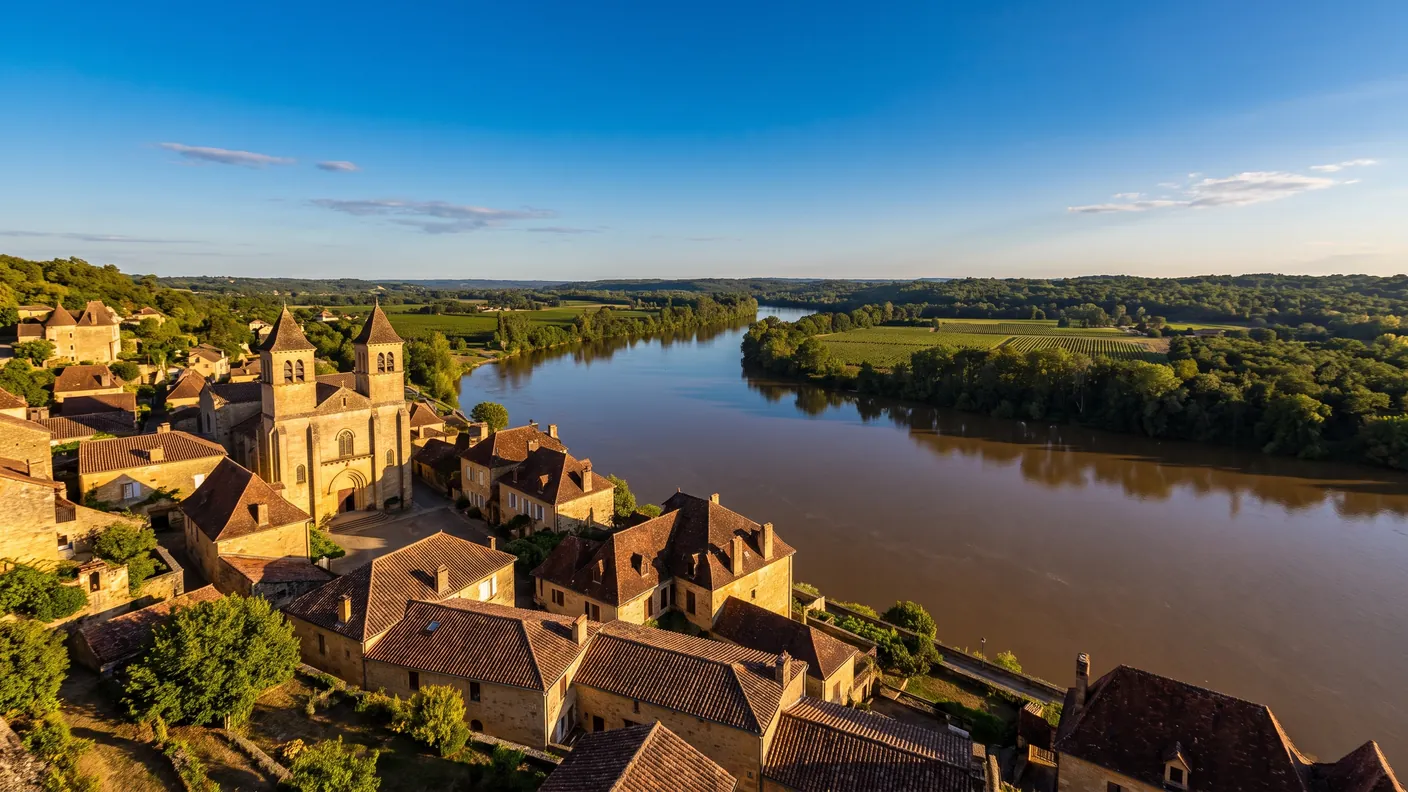
Heading to the Cubzaguais region
Direct transfer from Bordeaux (~39 min) to Virsac and the Cubzaguais wine region. Fixed-price quote in writing, with no obligation.