
Bordeaux to Saint-André-de-Cubzac: Cousteau, the Eiffel bridge and wine
The birthplace of Commander Cousteau, on the right bank of the Dordogne. Here you’ll find the grand Eiffel bridges, the Château du Bouilh designed by the architect of the Grand-Théâtre, the fortified church, and the vineyards—the gateway to the Bordeaux region, less than three-quarters of an hour from Bordeaux.
Saint-André-de-Cubzac at a glance
Saint-André-de-Cubzac is a small town in the Gironde department, the capital of the Cubzaguais region, located on the right bank of the Dordogne River, about 30 kilometers north of Bordeaux. Famous worldwide as the birthplace of Commander Jacques-Yves Cousteau, the ocean explorer, it is also home to one of the region’s most beautiful engineering marvels—the Eiffel Bridge spanning the Dordogne—and boasts a remarkable cultural heritage.
This heritage includes the magnificent Château du Bouilh, designed by the architect of the Grand Théâtre de Bordeaux, and a beautiful fortified church. It serves as the northern gateway to the Bordeaux region, set amid vineyards producing Bordeaux and Bordeaux Supérieur wines, and crossed by 45th parallel At the same time, the city combines the legacy of a great man with 19th-century engineering The 18th century, Enlightenment architecture, and the river—a rich and little-known getaway, less than three-quarters of an hour from Bordeaux.
Here are the key details to know before you go. Distances are calculated door-to-door from Bordeaux. The fare shown is for a private driver reservation at a fixed price provided in advance, with no unexpected meter charges regardless of traffic or stops along the way.
| Landmark | Details |
|---|---|
| Department | Gironde (33), Nouvelle-Aquitaine |
| Status | Capital of the Cubzaguais region · Blaye district · Nord-Gironde canton |
| Population | approximately 12,600 residents (INSEE 2023) · the residents of Cubzagué |
| Area | 23.15 km² · on the right bank of the Dordogne |
| Don't miss it | Cousteau's hometown, the Eiffel Bridge, the Château du Bouilh |
| Distance from Bordeaux | about 36 km · about 33 min by car |
| Distinctive Feature | Crossed by the 45th parallel north |
A word of clarification right off the bat. Saint-André-de-Cubzac perpetuates a few common misconceptions, which this guide corrects with supporting sources. The famous bridges of Cubzac, including the Eiffel Bridge, span the Dordogne River but are actually located in the neighboring town of Cubzac-les-Ponts, on the opposite bank. They are part of the history of the Cubzaguais region, not the territory of Saint-André itself.
The Château du Bouilh, a masterpiece by architect Victor Louis, remained unfinished: the project, interrupted by the Revolution, was never completed. Finally, there is no “Cubzac” appellation: the local wine falls under the regional AOCs of Bordeaux and Bordeaux Supérieur. Every statement in this guide is based on verifiable sources, cited at the end of the article.
Here, we go over everything you need to know. The guide covers Saint-André-de-Cubzac’s location on the Dordogne River and its role as the regional capital of the Cubzaguais, the legacy of Commander Cousteau, who was born there, the famous bridges of Cubzac and the Eiffel Bridge, Victor Louis’s Château du Bouilh, the fortified church and the old town, the town’s history dating back to the Middle Ages, the vineyards and their wines, notable sites in the surrounding area, and the best time of year to visit. The easiest way to get there from Bordeaux by chauffeur service—all information sourced and verified.
Where is Saint-André-de-Cubzac located?
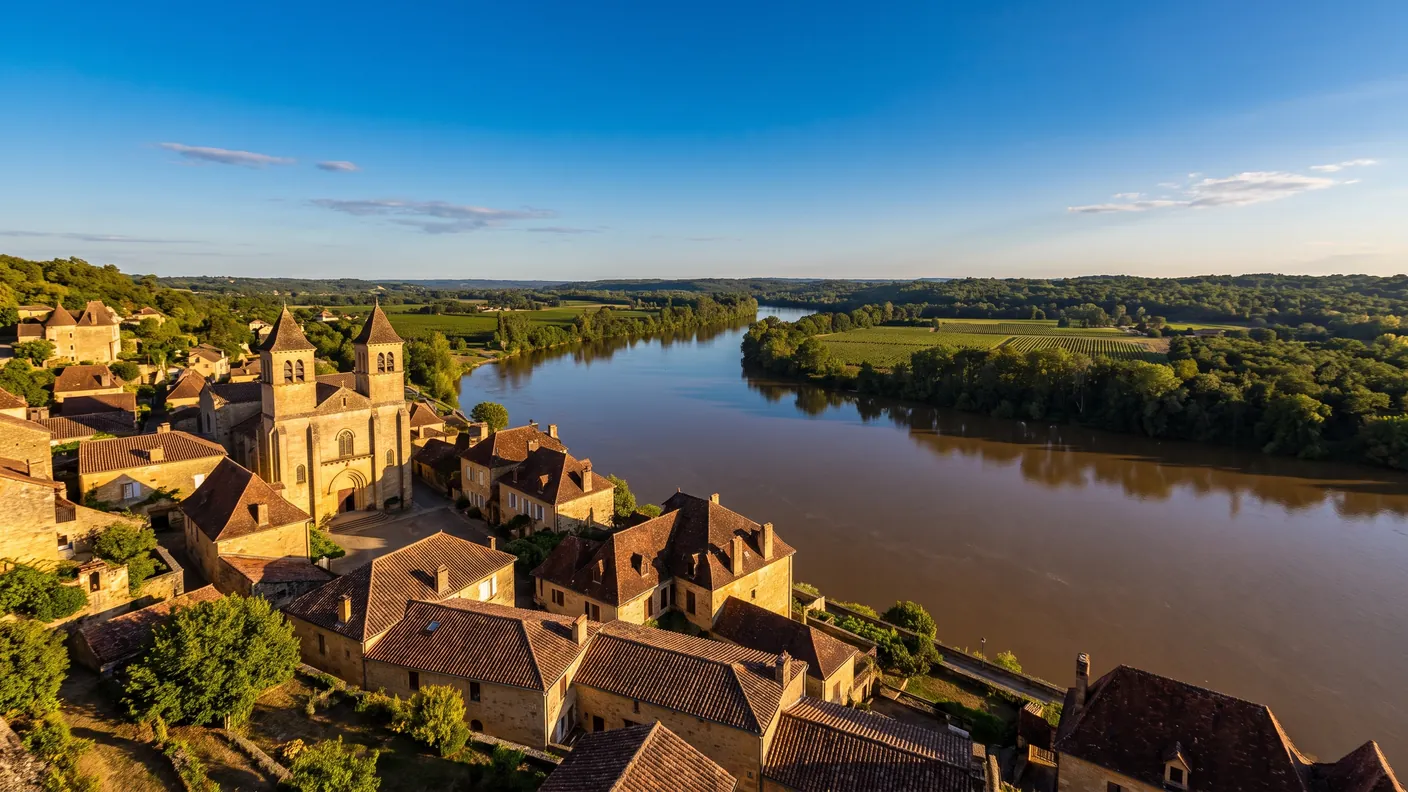
Saint-André-de-Cubzac is located in the northern part of the Gironde department (33), in the Nouvelle-Aquitaine region, on the right bank of the Dordogne River, about 30 kilometers north of Bordeaux, on the border between the Bordelais and the Haute Gironde regions. It is a municipality in the Blaye district and the Nord-Gironde canton, and serves as the principal town and administrative seat of the Grand Cubzaguais Community of Municipalities. The town overlooks the Dordogne plain from a strategic vantage point.
It is here that the major roads coming from the north—from Paris, Saintonge, and the Blayais region—cross the river on their way to Bordeaux via the famous bridges of Cubzac. This crossroads location on the right bank has made Saint-André a lively, bustling town—the gateway to the Bordeaux region and the nearby Libourne area. Surrounding it lies a landscape of vineyards, hillsides, and valleys, between the Dordogne to the south and the foothills of the Fronsadais and Bourgeais regions.
On the right bank of the Dordogne
The city is built on the right bank of the Dordogne, the great river that, a few kilometers downstream, joins the Garonne at the Bec d'Ambès to form the Gironde estuary. Here, the Dordogne is still a wide and powerful river, subject to the tides, which has long shaped the rhythm of life in the city. People fished in it, sailed on it, and transported goods along it.
Crossing the river has always been the main challenge for this area. Before bridges were built, a ferry provided the crossing, and it was to permanently connect the two banks that the great engineering structures—for which Cubzac is renowned—were built in the 19th century. The town is thus entirely oriented toward the river and toward Bordeaux, for which it now serves—thanks to the highway—as a northern gateway and a rapidly growing green suburb.
The county seat of the Cubzaguais region
With approximately 12,600 residents According to the 2023 census, Saint-André-de-Cubzac is a small, dynamic, and rapidly growing town—the most populous in its region—whose residents are known as the Cubzaguais. County seat of the Cubzaguais, it shines over a region of vineyards and valleys between the Dordogne, Fronsadais, and Bourgeais. Geographical trivia.
The town is crossed by the 45th parallel north, this imaginary line located at an equal distance from the North Pole and the equator (approximately 5,000 kilometers on either side), marked by a landmark at the Montalon site, where restored historic mills still stand. Vibrant and bustling with commerce, and equipped with all the amenities of a regional center, Saint-André is a town of character, rich in history and heritage. It is a lively community in the Bordeaux area, just a few minutes from the city via the highway.
Commander Cousteau, a native of Saint-André
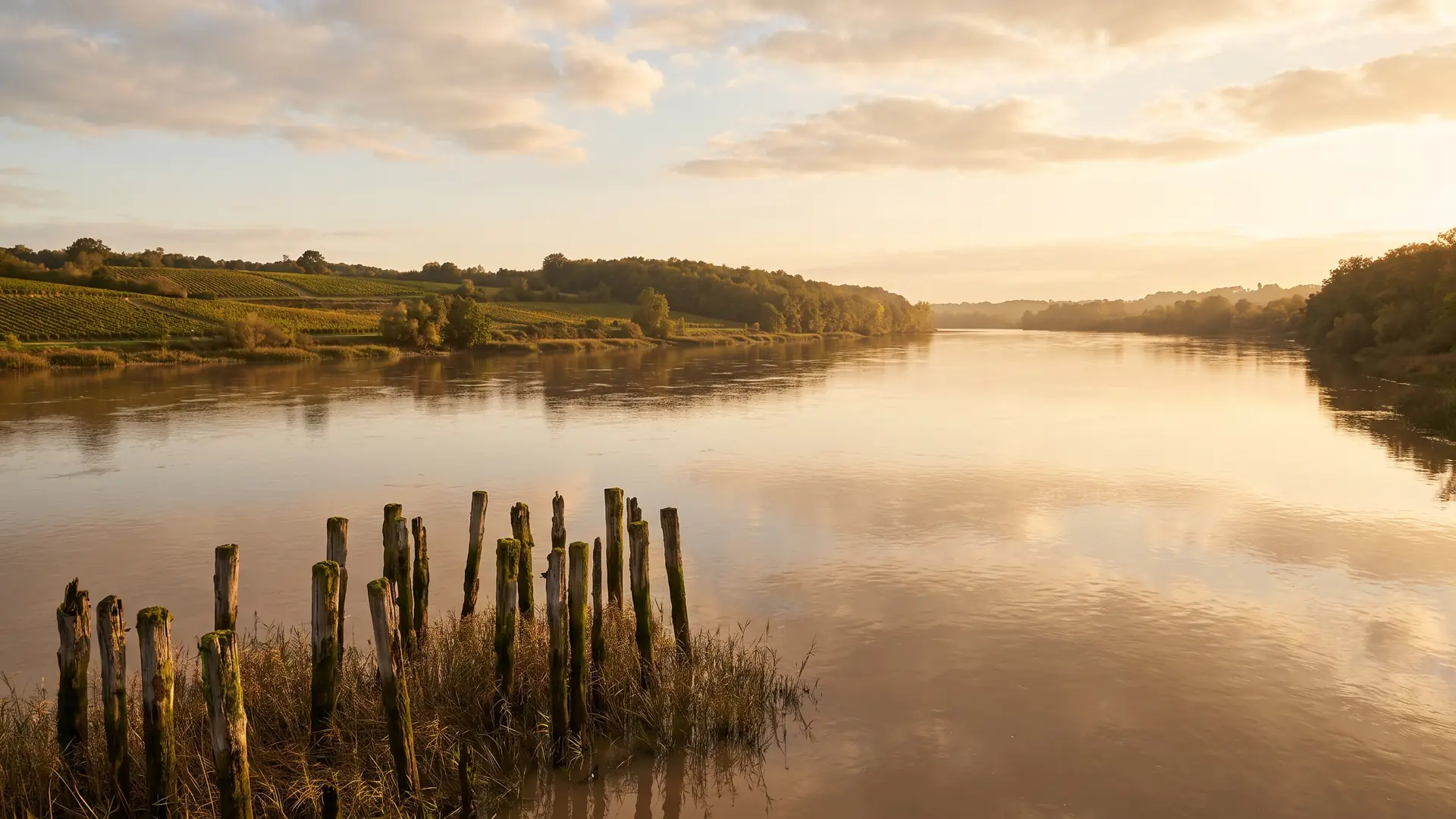
Saint-André-de-Cubzac is world-famous for a reason. It was here, in 1910, that Jacques-Yves Cousteau—the famous captain, ocean explorer, filmmaker, and inventor, and one of the most admired Frenchmen of the 20th century—was born. The town is proud of this great man, who is buried there today.
Commander Cousteau's Cradle
Jacques-Yves Cousteau was born in Saint-André-de-Cubzac on June 11, 1910, at 83 Rue Nationale (municipal source) — the city’s historic thoroughfare, a remnant of the ancient cardo —, above the pharmacy owned by his maternal grandfather, Ronan Duranthon. Although he left his hometown early on, following his family’s moves, he remained attached to this riverland, and it was here, in the municipal cemetery from Saint-André, that he is buried since his death in 1997.
The city honors his memory: a plaque, a bust, and the pride of being the birthplace of “JYC,” as he was nicknamed. A naval officer who became the greatest popularizer of the ocean, Cousteau embodied, for generations, a passion for exploration and a love of the sea. His global legacy began on the banks of the Dordogne, the river that, at Saint-André, is about to flow into the estuary and then the ocean—as if foretelling his destiny.
The Inventor of the Silent World
Cousteau’s career was that of a pioneer. As an officer in the French Navy, he developed, in 1943, together with engineer Émile Gagnan, the self-contained diving apparatus (the aqualung), which revolutionized scuba diving and opened up the depths to humankind. Aboard the Calypso, his legendary oceanographic vessel, he explored the world’s oceans, filmed the underwater world, and introduced it to the general public.
His film *The Silent World*, co-directed with Louis Malle, won the Palme d’Or at Cannes in 1956, followed by an Oscar: a global recognition (Académie française). An early advocate for the oceans and elected to the Académie française in 1988, Cousteau became a global icon, whose documentaries inspired millions to pursue their passions. The fact that this exceptional figure was born in Saint-André-de-Cubzac gives this small town in the Gironde a special aura—that of a place that gave birth to one of the greatest explorers of all time.
| Jacques-Yves Cousteau | Landmark |
|---|---|
| Birth | June 11, 1910, at 83 Rue Nationale in Saint-André |
| Invention | the self-contained diving apparatus (1943, with Émile Gagnan) |
| Ship | the Calypso, an oceanographic research vessel |
| Cult Film | The World of Silence (1956 Palme d'Or, Oscar) |
| Académie française | elected in 1988 |
| Burial | Saint-André Municipal Cemetery (died in 1997) |
The bridges of Cubzac over the Dordogne River
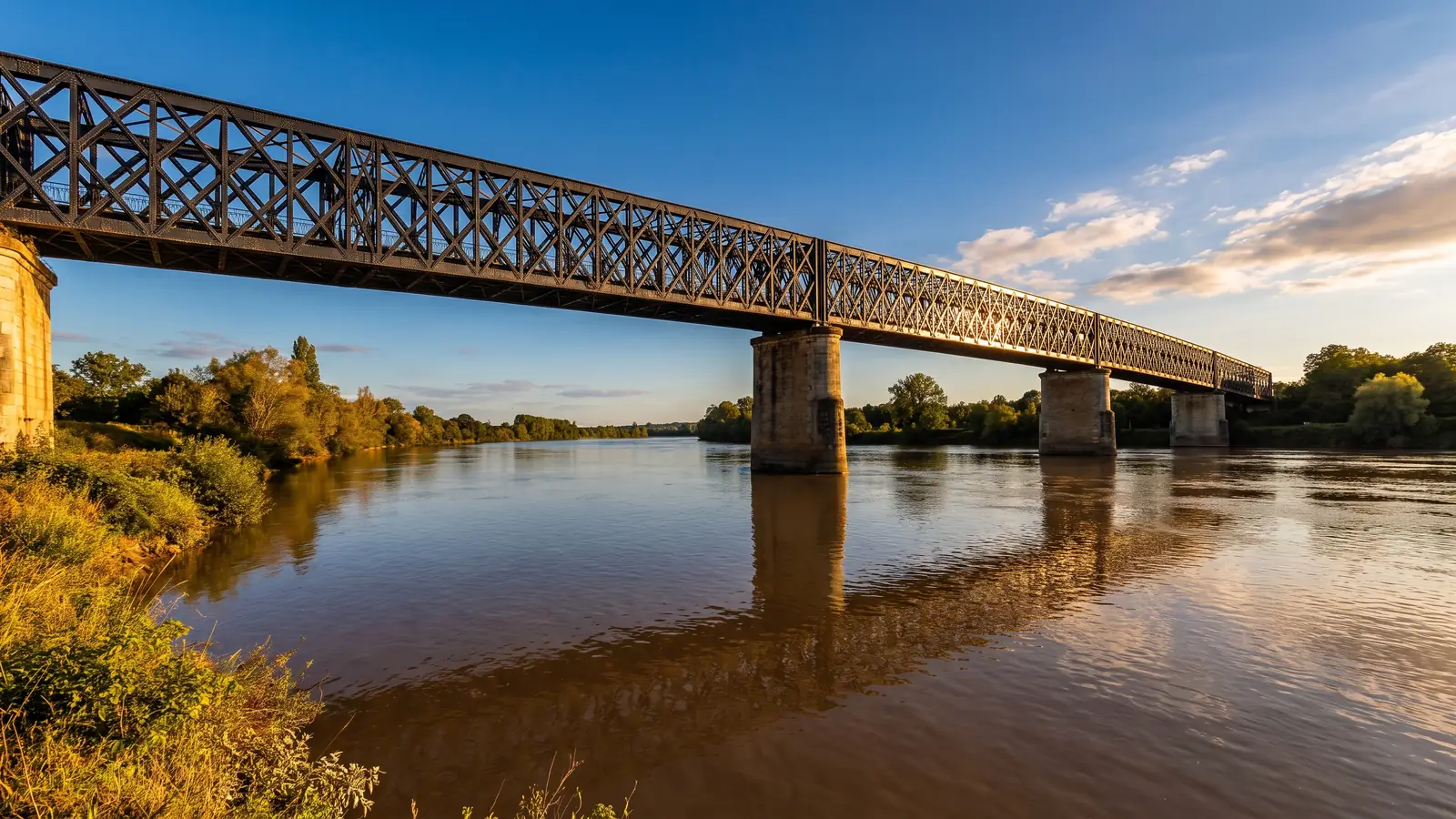
The famous bridges of Cubzac, which span the Dordogne River at the foot of Saint-André, are among the region’s most impressive engineering structures. The road bridge built by Gustave Eiffel and the railroad viaduct have made this crossing a major transportation hub. One clarification, however: these bridges are located in the neighboring town of Cubzac-les-Ponts, on the left bank.
The Eiffel Bridge over the Dordogne River
Crossing the Dordogne River at Cubzac has always been a challenge. An initial suspension bridge, opened around 1839, was swept away by a storm and demolished in 1869. Gustave Eiffel—the future builder of the Eiffel Tower in Paris—was commissioned to construct, from 1879 to 1883, a large metal road bridge measuring 1,545 meters (including 553 meters of iron spans across eight arches), supported by tall stone piers above the wide river. It is a feat of engineering.
Destroyed during World War II, the bridge was rebuilt in 1946–1947 by Jacques Eiffel, Gustave’s grandson. In addition to these road bridges, there is a railway viaduct, completed in 1886 and measuring 2,178 meters in length—once the longest railway bridge in France—which was also destroyed in 1944 and subsequently rebuilt. Together, these bridges form the only road and rail crossings between the Gironde estuary and Libourne: a remarkable site in the history of French engineering.
A Gate in the Bordeaux Region
These bridges are not merely engineering structures: they reflect the role of crossroads from Saint-André-de-Cubzac. Since time immemorial, this is where the roads from the north—from Paris and the Saintonge—had to cross the Dordogne to reach Bordeaux: the city is the northern gateway to the Bordeaux region. Before the bridges were built, everything had to go by ferry. With the bridges, in the 19th century In the 19th century, road and rail lines were finally able to connect seamlessly, making Cubzac a bustling and prosperous hub through which all traffic had to pass.
Even today, the A10 highway and the railroad line cross the Dordogne at this spot, carrying on the area’s tradition as a crossroads. Gazing at the Dordogne and its grand bridges, whether from Saint-André or from the opposite bank, allows you to grasp at a glance what defines the city’s identity. It appears as a threshold, a passageway, a gateway between the north and the great Bordeaux wine region.
The Château du Bouilh, designed by Victor Louis
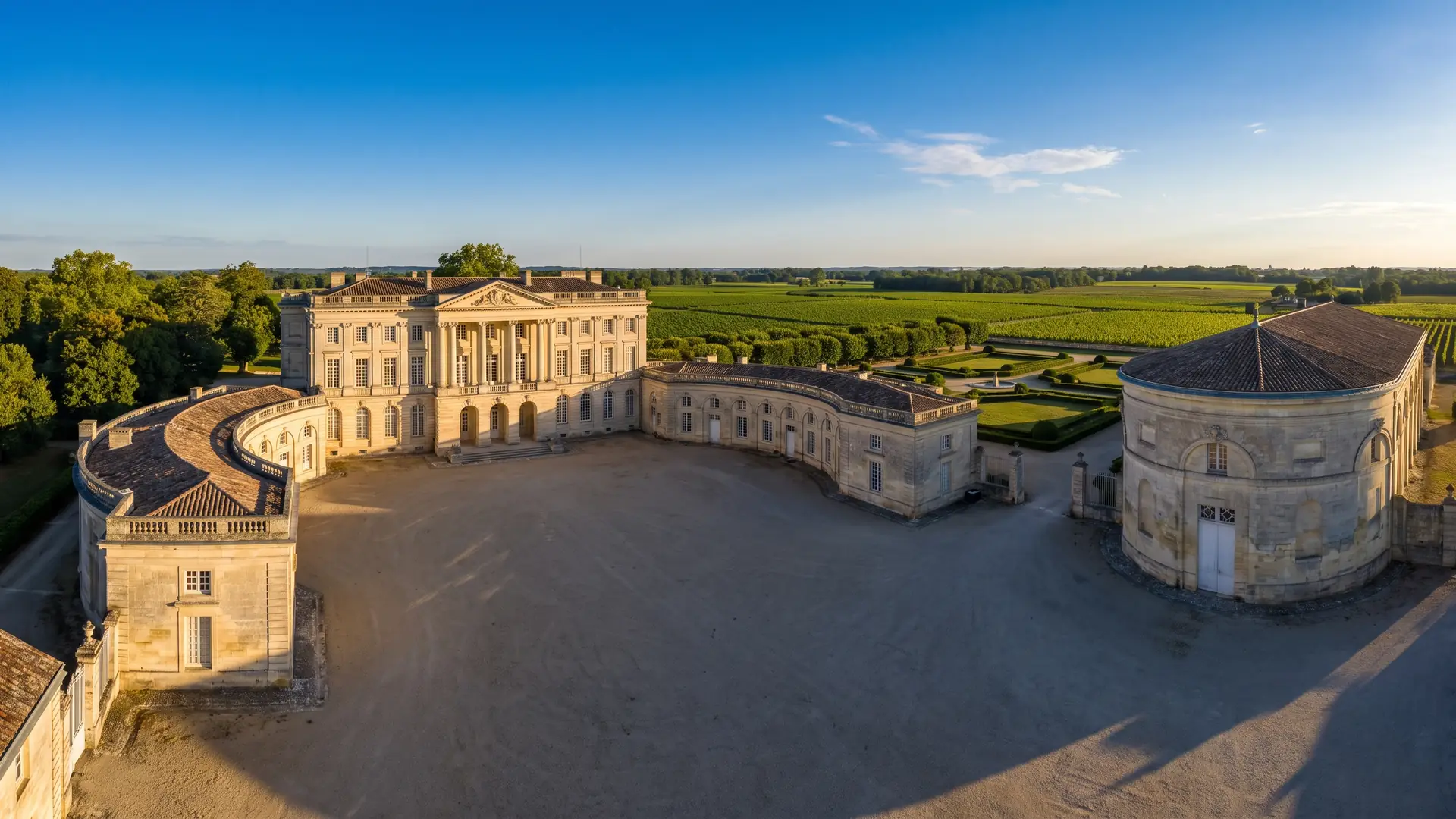
Saint-André-de-Cubzac is home to one of the most beautiful castles in the Gironde. There, you can explore the Château du Bouilh, designed in the late 18th century by Victor Louis, the architect of the Grand Théâtre de Bordeaux—an unfinished masterpiece of Enlightenment architecture. It's a hidden gem just outside the city.
A project by Victor Louis
The Château du Bouilh was commissioned in the late 1780s by Jean-Frédéric de La Tour du Pin Gouvernet, a nobleman and future minister under Louis XVI, from the architect Victor Louis—the genius who had just given Bordeaux its Grand Théâtre, one of the most beautiful theaters in Europe. Louis designed for Le Bouilh a vast neoclassical complex of rare elegance.
It features an elegant main building and, above all, an extraordinary semi-circular gallery of common rooms (a long, semi-elliptical curve), on a monumental scale—but only the west wing and this gallery were ever built, as part of a much larger plan. Built starting from 1786, the château bears the hallmarks of the grand style of the waning Enlightenment—the very style that gives the center of Bordeaux its splendor. This is an opportunity, in Saint-André, to admire a work by Bordeaux’s greatest 18th-century architect, in a rural setting, surrounded by vineyards.
An Unfinished Masterpiece
The history of Le Bouilh has an air of incompleteness, which is also part of its charm. Construction, which began on the eve of the Revolution, was abruptly halted. The patron, La Tour du Pin, emigrated and was later guillotined in 1794. Victor Louis’s grand project was never completed. The château we see today is therefore only part of the envisioned complex: a magnificent wing and the semicircular gallery. But it is not the complete palace that the architect had designed.
Listed as a historic monument (The protection also covers the dovecote, the water tower, the wine cellars, and the park.) Le Bouilh is now a private property, which has remained in the family . Among them are cellars carved out of an old quarry and a rare 16th-century circular dovecote (a circular structure 12 meters in diameter, with some 1,200 trellises). An unfinished architectural masterpiece nestled among the vineyards, Le Bouilh is like the twin that remained in the rough draft stage of the Grand Théâtre de Bordeaux—a fragment of an Enlightenment dream, set in stone.
The Fortified Church and Old Saint-André
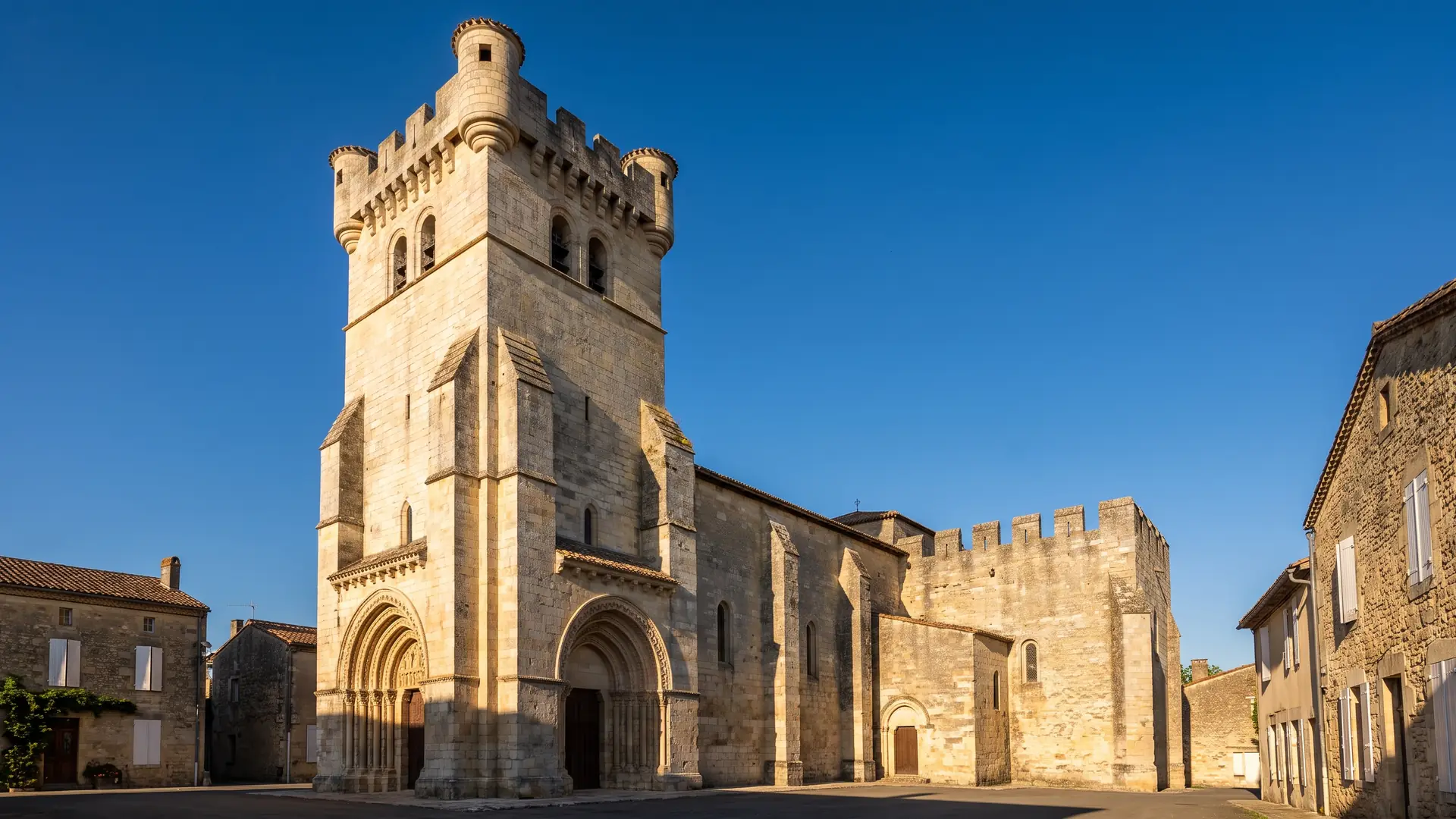
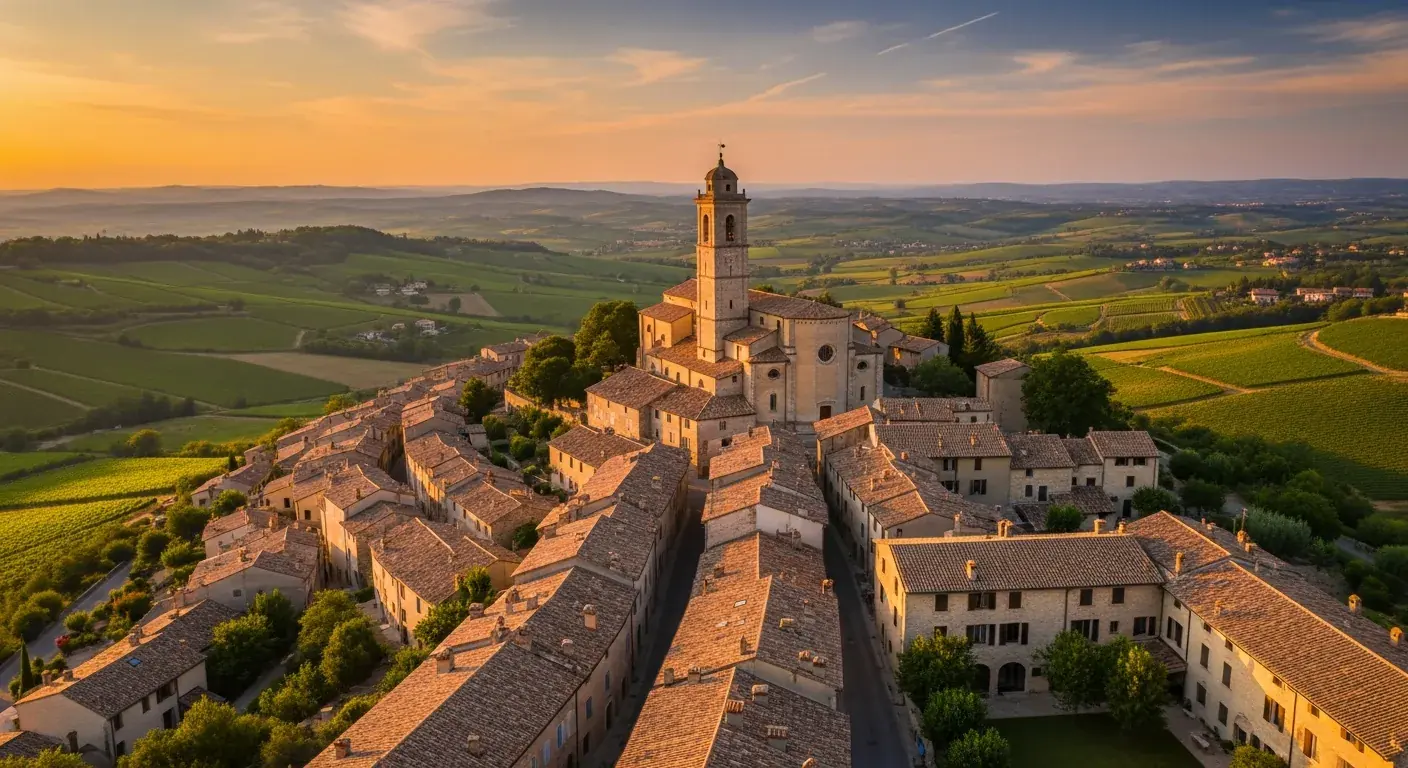
In the heart of the city stands the Church of Saint-André, a 12th-century fortified building-13th centuries. The old town surrounding it bears witness to the city’s long history, dating back to well before Cousteau and the bridges. A leisurely stroll that rounds out your exploration of Cubzaguais’ heritage.
The Fortified Church of Saint-André
The Saint-André Church (known as Saint-André-du-Nom-de-Dieu) is the city's main historic landmark. It is a vast Romanesque building from the 12th–13th centuries, altered through the 19th century and listed as a Historic Monument since November 21, 1925. Its massive silhouette, dominated by an imposing square bell tower and bristling with battlements above the arches and watchtowers at the corners, bears the mark of the fortified churches in the region.
In these often-troubled borderlands, situated between English and French territories during the Middle Ages, the church also served as a refuge and a defensive stronghold for the local population. Visitors can admire its beautiful carved portal, ancient vaults, and the serene grandeur of medieval Gironde architecture. Standing in the center of the village, it serves as a reminder that Saint-André was, as early as the Middle Ages, an important town on the river and wine routes, long before it became famous for its illustrious son.
Robillard and Montalon Castle
Around the church, the Old Saint-André preserves its old streets, stone houses, and a few notable mansions. The Robillard Castle, a 16th-century building, it now hosts cultural events and performances: a beautiful testament to the Gironde Renaissance, brought back to life by the city. In the hamlet of Montalon — a name the town bore, incidentally, during the Revolution —, there remain some old mills restored and the famous landmark of the 45th parallel, a geographical curiosity that attracts the curious.
With its fortified church, Renaissance castle, mills, and grand bridges, Saint-André-de-Cubzac boasts a richly diverse heritage, a legacy of its role as a crossroads and a vibrant city. It is much more than just a stopover town; it is a place where every era has left its mark, from the Middle Ages to the Industrial Age.
| Heritage of Saint-André-de-Cubzac | Landmark |
|---|---|
| Bouilh Castle | Victor Louis · Listed as a Historic Monument (1943) · Unfinished |
| St. Andrew's Church | fortified Roman villa · designated a historic monument (1925) |
| Robillard Castle | 16th century · theaters (not designated as historic monuments) |
| Cubzac Bridges | Eiffel Bridge (1883) · Railroad Viaduct (1886) |
| Montalon Site | Restored mills · 45th parallel marker |
The Story of Saint-André-de-Cubzac
A medieval stronghold, a wine-trading town, a crossroads of the Dordogne, and the birthplace of Cousteau: Saint-André-de-Cubzac has endured through the centuries along the river and its roads. A few key events shed light on the past of this town on the right bank.
From the Middle Ages to the Wine Trade
The history of Saint-André is inextricably linked to its location on the Dordogne. In the Middle Ages, the Cubzac Royal Fortress was built in 1249 by Simon de Montfort, on the banks of the river—at the foot of what is now the neighboring town of Cubzac-les-Ponts—. Meanwhile, Saint-André developed a little further away, around a priory (a “sauveté”) founded by the Abbey of La Sauve-Majeure as early as the late 12th century.
Like the rest of Guyenne, the region came under English rule following the marriage of Eleanor of Aquitaine to Henry Plantagenet (1152). In 1341, Edward III granted the lands of Cubzaguais to the House of Albret. The town’s location on the river, which controlled access to Bordeaux, made it a strategic target during the medieval wars.
Very early on, the city prospered thanks to the wine trade and goods. As early as the 13th In the 19th century, it was a bustling trading hub, where barrels bound for Bordeaux, England, and Northern Europe were loaded onto ships on the Dordogne River. This commercial tradition, tied to the river and the vineyards, shaped the city for centuries.
From Montalon to the City of Today
Modern times have left their mark on Saint-André. Under the Revolution, the town, like many others whose names were associated with a saint, was renamed. For a time, it was known as Montalon, named after a locality within its territory, before reverting to the name Saint-André-de-Cubzac. It was at the end of the 18th century that the Château du Bouilh was built, followed in the 19th century by the great bridges over the Dordogne, ushering the city into the industrial age and cementing its role as a crossroads.
On June 11, 1910, Jacques-Yves Cousteau was born there; he would go on to carry the town’s name to the four corners of the world. Today, Saint-André-de-Cubzac is a vibrant, rapidly growing small town in the Bordeaux region, proud of its history, its heritage, and its illustrious son, nestled between the river, vineyards, and the big city.
The Cubzaguais Vineyard
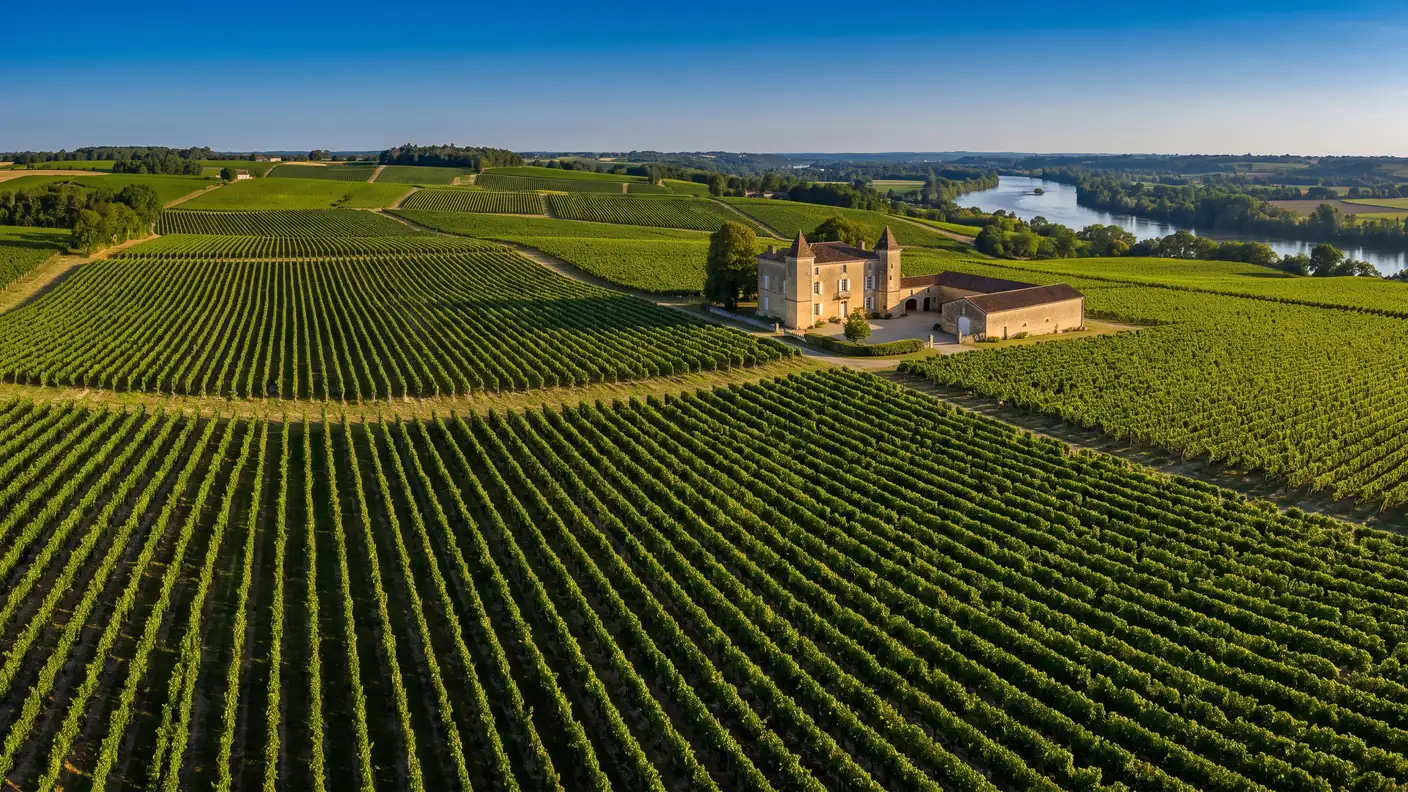
Surrounding Saint-André-de-Cubzac lies a vineyard belonging to a prominent Bordeaux family. Here, wines bearing the Bordeaux and Bordeaux Supérieur appellations are produced, right on the doorstep of the prestigious Fronsadais and Libournais wine regions nearby. Wine is an integral part of the identity and economy of the Cubzac region.
Bordeaux and Bordeaux Supérieur
The Cubzaguais region has been a wine-growing area since the Middle Ages. Wine has always been a source of prosperity here, shipped down the Dordogne River to Bordeaux and abroad. The vineyards here fall under the regional appellations Bordeaux and Bordeaux Supérieur—there is no separate “Cubzac” AOC—and primarily produce red wines made from Merlot and Cabernet varieties, which are smooth and fruity, as well as white and rosé wines.
On the clay-limestone and gravelly hillsides overlooking the river, numerous châteaux and family-owned estates carry on the tradition, and the selection has even expanded in recent years to include rosé and Bordeaux sparkling wine vibrant. Here we are on the fringes of the Fronsadais and the Libournais — even though it isn’t part of the Fronsac appellation —, so a visit to Saint-André can easily extend to the neighboring grand cru regions of Fronsac, Pomerol, or Saint-Émilion, just a few kilometers away.
Dining in Saint-André
Discovering the wines of the Cubzaguais region means tasting an authentic and affordable Bordeaux, a far cry from the prices of the grands crus classés. The many châteaux and estates in the area open their doors for cellar tours and tastings, often at family-run operations where you’re welcomed by the winemaker. The Château du Bouilh, a masterpiece by Victor Louis nestled amid the vineyards, evokes the long-standing connection between great architecture and wine in the Bordeaux region.
This is where an executive car service really comes in handy. He allows you to combine exploring the town—Cousteau’s birthplace, the church, the bridges—with visits to two or three wineries, in Saint-André and then on toward Fronsac or Saint-Émilion, without ever having to worry about driving between tastings. It’s the perfect way to spend a day combining wine tourism and culture, in the heart of a vineyard on a human scale, just a stone’s throw from Bordeaux.
| The Cubzaguais Vineyard | Details |
|---|---|
| Appellations | Bordeaux · Bordeaux Supérieur (no "Cubzac" AOC) |
| Colors | mostly reds (Merlot, Cabernets) · as well as whites, rosés, and crémant |
| Terroir | clay-limestone and gravel slopes on the right bank |
| Must-See | Bouilh Castle (Victor Louis, historic monument) |
| Neighborhood | at the gateway to the Fronsadais and Libournais regions |
What is there to see around Saint-André-de-Cubzac?
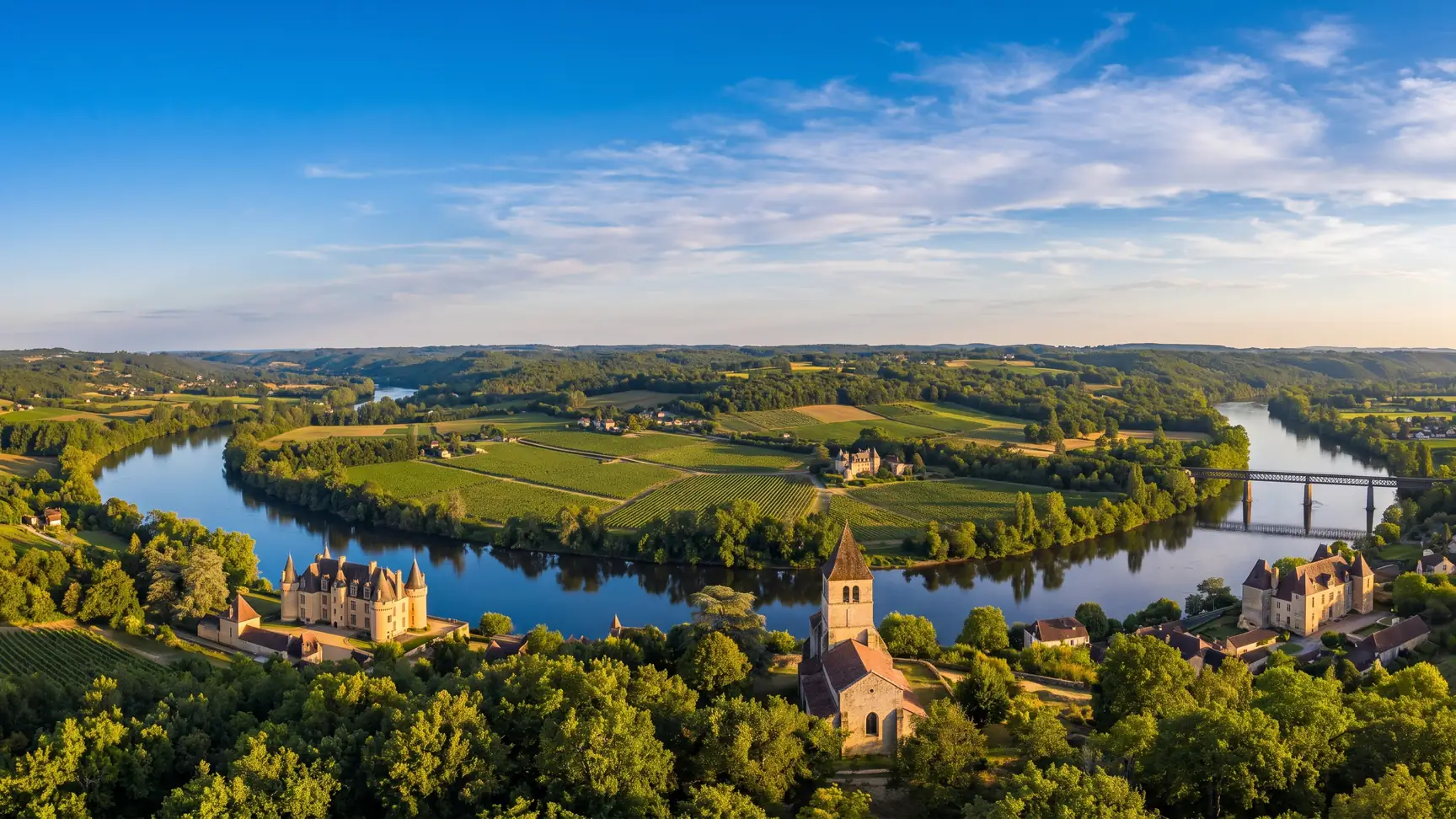
Saint-André-de-Cubzac is an excellent starting point for exploring the right bank: Bourg and Blaye toward the estuary, and Fronsac, Libourne, and Saint-Émilion toward the vineyards, are all just a few kilometers away. It’s easy to go from the river to the grand cru vineyards, all within short distances.
Bourg, Blaye, and the estuary
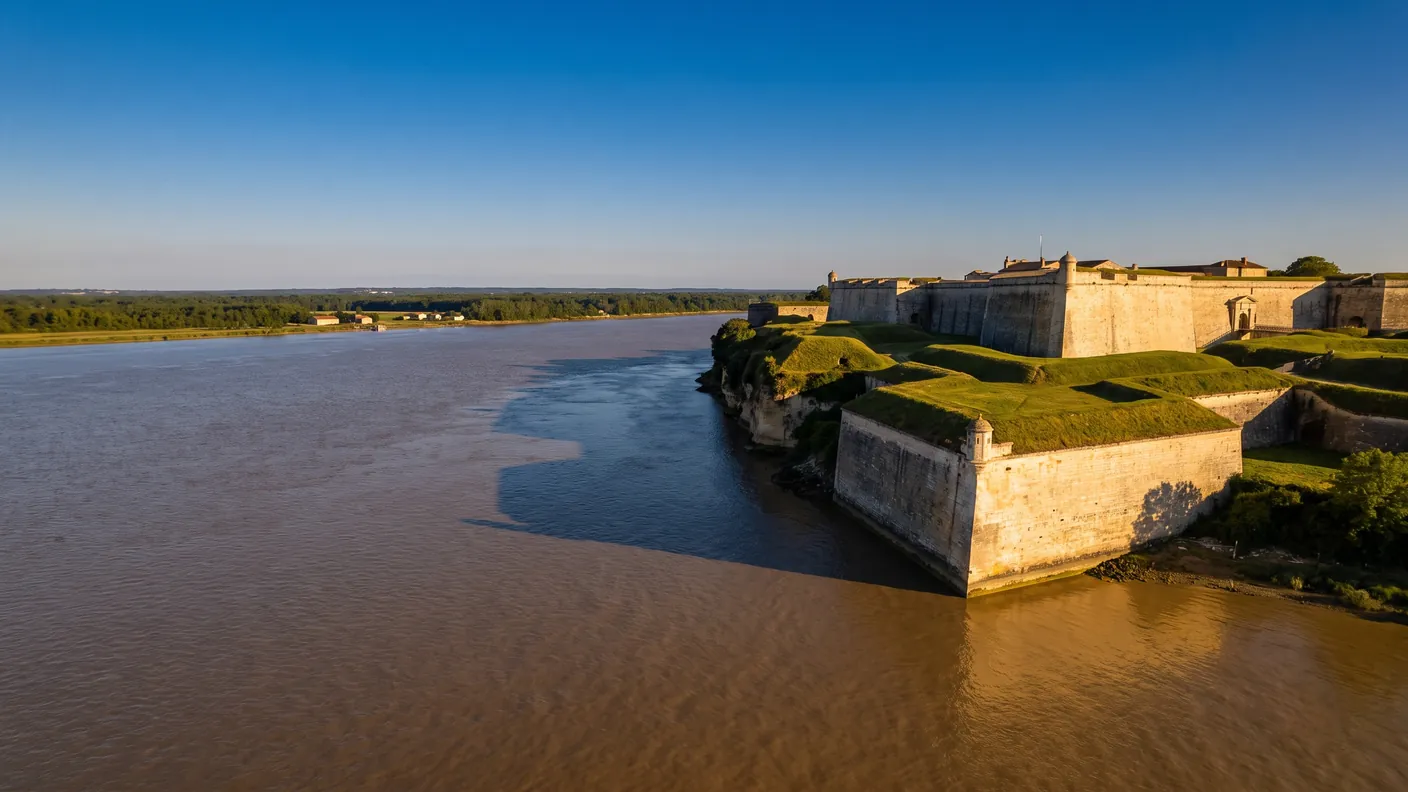
Heading north along the right bank, you’ll soon reach Bourg (Bourg-sur-Gironde), the charming town perched above the Dordogne River, and its Côtes de Bourg vineyards, about ten kilometers away. A little further on, Blaye and its magnificent Vauban citadel, a UNESCO World Heritage Site, overlook the Gironde estuary.
The entire Haute Gironde region—the estuary, the fishing huts, the fortresses, and the vineyard-covered hillsides—is easily explored from Saint-André, the area’s natural gateway. Just a few kilometers away, you can also visit the prehistoric cave of Pair-non-Pair, near Bourg, one of the oldest known decorated caves. With a private chauffeur, you can easily plan a customized loop tour between the river, the hilltop villages, and the estuary’s fortresses, tailored to your preferences.
Fronsac, Libourne, and Saint-Émilion
To the east, Saint-André opens the door to the Libournais and its legendary vineyards. The Fronsadais, located nearby, produces renowned red wines on its hillsides overlooking the Isle and the Dordogne. Libourne, the bustling wine market town on the Dordogne, is about 20 kilometers away, and beyond it lie the prestigious vineyards of Pomerol and Saint-Émilion, the medieval city designated a UNESCO World Heritage Site, with its fine wines, its monolithic church, and its cobblestone streets.
Within a few dozen kilometers of Saint-André, you’ll find some of the world’s most renowned wine producers. With a driver to take you between these stops, you can easily turn a visit to Saint-André into a customized tour of the Gironde region. The tour combines a visit to the town of Cousteau and its bridges in the morning with the grand crus of the Right Bank in the afternoon.
| Around Saint-André-de-Cubzac | Distance | Interest |
|---|---|---|
| Bourg-sur-Gironde | ~10 km | A hilltop town, the Côtes de Bourg wine region |
| Fronsac | ~12 km | A renowned vineyard on the Right Bank |
| Libourne | ~20 km | The Dordogne: A Wine-Trading Town |
| Blaye | ~25 km | Vauban Citadel (UNESCO), estuary |
| Saint-Émilion | ~30 km | UNESCO-designated medieval city, fine wines |
When is the best time to visit Saint-André-de-Cubzac?
Saint-André-de-Cubzac is open to visitors year-round. But spring and summer, when the light dances across the Dordogne and the vineyards come to life, are the most pleasant times to visit. The spring covers the hillsides in soft greenery, offers mild days perfect for exploring the town, the church, the Château du Bouilh, and the riverbanks, and sees the wineries reopen for tastings. The summer bathes the valley in abundant light.
It’s the perfect time of year to stroll through the old town, admire the grand bridges over the Dordogne, enjoy the riverfront, and tour the wineries, all amid a lively atmosphere. It’s also the season for festivals and events, particularly at Château Robillard. From the heights, the long evenings offer beautiful views of the river and the wine-growing plain—a vast, sun-drenched riverside landscape just outside Bordeaux.
Fall Harvest and Winter
The fall It’s a magnificent time of year to explore the Cubzaguais region. The grape harvest brings the wineries to life, the vine leaves take on shades of gold and purple on the hillsides above the Dordogne, and the air is filled with the scent of grape must. It’s the perfect time to learn about winemaking and taste the new vintages of Bordeaux and Bordeaux Supérieur, while the low-angled sunlight casts a beautiful glow on the stone walls of the Château du Bouilh and the church.
The winter, a quieter setting, reveals the city and the river in a peaceful atmosphere, beneath the vast skies of the Gironde. You can explore the historic sites without the crowds and admire the bridges in the morning mist. In any season, the mild oceanic climate and the proximity to Bordeaux make Saint-André-de-Cubzac an easy and rewarding getaway, combining history, heritage, the river, and vineyards, all within less than three-quarters of an hour from the city.
Travel to Saint-André-de-Cubzac from Bordeaux
Saint-André-de-Cubzac is located about 36 km from Bordeaux, which is about a 33-minute drive via the A10 highway toward Paris, followed by the Cubzaguais exit and crossing the Dordogne River. Note: Unlike its neighbors on the right bank, the city has a bustling train station—with nearly 690,000 passengers in 2023—on the line from Bordeaux to Saintes and the Saintonge region, which connects it directly to the metropolitan area.
But taking the train doesn’t allow you to explore the area afterward, including Cousteau’s house, the Château du Bouilh, and the scattered wineries in the region. For a trip from Bordeaux that combines heritage, history, and wine tastings, a chauffeur-driven car is the most practical and flexible option, especially if you plan to extend your trip to Bourg, Blaye, or the Libournais region.
Train or chauffeured transfer?
To get to Saint-André—and especially to explore the surrounding area—hire a Professional chauffeur, chauffeur service in Bordeaux offers true freedom. This option guarantees a direct, door-to-door trip from Bordeaux—with no transfers or waiting—and the option to make stops along the way as you please. This is particularly valuable for a day combining cultural sites and wine tastings—Cousteau’s town, Château du Bouilh, followed by two or three wineries in the Cubzaguais or Fronsadais regions—where you’ll want to be able to taste the wines without worrying about driving.
We offer this route at a fixed price quoted in advance: expect to pay approximately €66 for the one-way trip, in a Mercedes sedan or a van seating up to 8 passengers, with a professional chauffeur. The price, set at the time of booking, remains fixed. It does not depend on traffic, potential traffic jams, or the number of stops requested along the way, unlike a taxi meter.
This is the perfect option for a day of wine tourism and cultural exploration, a family trip following in Cousteau’s footsteps, an event (such as a wedding or birthday celebration at a local château), or a simple transfer to or from Bordeaux-Mérignac Airport. You can travel alone, as a couple, or in a small group of up to 8 people, with luggage, and request stops in Bourg, Fronsac, or at a vineyard along the way.
In practice, booking is quick and easy. You simply provide the pickup address in Bordeaux and the destination at Saint-André-de-Cubzac, along with the date, desired time, and number of passengers, and you’ll receive a fixed-price quote in writing. On the day of the trip, the driver picks up the passengers at the agreed-upon address and takes them directly to Saint-André, without any detours—a real plus for enjoying a stress-free day of exploring heritage sites and wine.
| Route | Distance | Duration | Landmark |
|---|---|---|---|
| Bordeaux → Saint-André-de-Cubzac | ~36 km | ~33 min | Starting at ~60 € for a private chauffeur service |
| Saint-André → Bourg-sur-Gironde | ~10 km | ~15 min | hilltop town, Côtes de Bourg |
| Saint-André → Fronsac | ~12 km | ~18 min | Right Bank vineyards |
| Saint-André → Saint-Émilion | ~30 km | ~35 min | UNESCO World Heritage Site, fine wines |
Whether you come to honor the memory of Commander Cousteau, to see the grand bridges over the Dordogne, to visit the Château du Bouilh and its Enlightenment-era architecture, to explore the fortified church, or to enjoy the vineyards and their proximity to the grands crus of the Right Bank, Saint-André-de-Cubzac is a treat for lovers of authentic Bordeaux, where the river, history, and vineyards converge—a charming crossroads town that, for those who take the time to stop there, reveals much more than just a stopover on the road to Bordeaux.
Whether it’s for a wine-tasting tour, a trip following in Cousteau’s footsteps, or an event, booking a chauffeur service guarantees a comfortable and punctual ride—book a driver from Bordeaux to Saint-André-de-Cubzac or explore all our destinations.
Frequently Asked Questions
Where is Saint-André-de-Cubzac located?
Saint-André-de-Cubzac is a small town in the Gironde department (33), in the Nouvelle-Aquitaine region, on the right bank of the Dordogne River, about 30 kilometers north of Bordeaux. It is the capital of the Cubzaguais region, located in the Blaye arrondissement and the Nord-Gironde canton, and serves as the seat of the Grand Cubzaguais Community of Communes. It has a population of approximately 12,600 (known as Cubzaguais) and is crossed by the 45th parallel north. Famous as the birthplace of Commander Cousteau, it is located about a 33-minute drive from Bordeaux (approximately 36 km).
What is the distance between Bordeaux and Saint-André-de-Cubzac?
Approximately 36 km by road, or about a 33-minute drive, via the A10 highway toward Paris, then take the Cubzaguais exit. This figure is based on the door-to-door distance used by the estimation engine. If you hire a chauffeur service from Bordeaux, the fare is fixed and provided in advance, starting at approximately €66 one way (sedan or van, door-to-door price). The town also has a train station on the line from Bordeaux to Saintes. However, the train does not allow you to explore the Château du Bouilh, the Cousteau House, and the local wineries afterward.
Was Commander Cousteau born in Saint-André-de-Cubzac?
Yes. Jacques-Yves Cousteau, the famous captain, ocean explorer, and filmmaker, was born in Saint-André-de-Cubzac on June 11, 1910, at 83 Rue Nationale, above his grandfather’s pharmacy. A naval officer, he developed the self-contained diving apparatus in 1943, explored the seas aboard the Calypso, and his film *The Silent World* won the Palme d’Or in 1956. A member of the Académie française, he died in 1997 and is buried in the municipal cemetery of Saint-André-de-Cubzac, his hometown, which honors his memory.
Where is Jacques-Yves Cousteau buried?
Commander Cousteau is buried in the municipal cemetery of Saint-André-de-Cubzac, his hometown in Gironde. Born in this small town on the right bank of the Dordogne on June 11, 1910, and having died in Paris on June 25, 1997, he now rests in the land of his childhood, on the banks of the river that flows into the estuary and then into the ocean. The town, proud to be the birthplace of “JYC,” honors his memory. This is one of the reasons why admirers of the explorer visit Saint-André, a trip they can combine with exploring the local heritage and vineyards.
What is the Château du Bouilh?
It is one of the most beautiful castles in the Gironde department, located in Saint-André-de-Cubzac. It was designed in the late 18th century (beginning in 1786) by Victor Louis, the architect of the Grand Théâtre de Bordeaux, for Jean-Frédéric de La Tour du Pin Gouvernet. It is a neoclassical masterpiece of Enlightenment architecture, featuring a refined main building and a monumental semicircular wing housing the outbuildings. The project was interrupted by the Revolution and remained unfinished. Listed as a historic monument, it is now privately owned. Notable features include wine cellars carved into a former quarry and a rare 16th-century circular dovecote.
Were the bridges in Cubzac built by Eiffel?
Yes, for the road bridge. After an initial suspension bridge was inaugurated in 1839, it was Gustave Eiffel—the future builder of the Eiffel Tower in Paris—who constructed, at the end of the 19th century, a large metal road bridge spanning more than one and a half kilometers across the Dordogne River. Destroyed in 1944, it was rebuilt around 1946–1947 by Jacques Eiffel, Gustave’s grandson. A railroad viaduct also spans the river. Note: These bridges, often associated with Saint-André-de-Cubzac, are actually located in the neighboring town of Cubzac-les-Ponts, on the opposite bank.
What is there to see in Saint-André-de-Cubzac?
The hometown of Commander Cousteau, who was born and is buried there, along with landmarks commemorating his life. The Château du Bouilh, an unfinished masterpiece by Victor Louis, designated a historic monument (privately owned). The fortified Church of Saint-André, a Romanesque structure from the 12th–13th centuries, listed as a historic monument. The 16th-century Château Robillard, which hosts performances. The famous bridges of Cubzac over the Dordogne River, including the Eiffel Bridge. And the Montalon site, with its mills and the marker for the 45th parallel. Nearby: Bourg, Blaye, Fronsac, and Saint-Émilion, all just a short distance away.
Why does the 45th parallel run through Saint-André-de-Cubzac?
The 45th parallel north, an imaginary line located exactly halfway between the North Pole and the equator (approximately 5,000 kilometers on either side), crosses the territory of Saint-André-de-Cubzac. This geographical curiosity is marked by a landmark at the Montalon site within the town, where several restored historic mills also stand. It is one of the town’s amusing peculiarities: it literally has one foot toward the North Pole and one foot toward the equator. The marker at Montalon marks this latitude. It is a geographical curiosity, but does not, on its own, explain the vineyard. Local viticultural characteristics also depend on the soil, climate, and farming practices.
How many people live in Saint-André-de-Cubzac?
With a population of approximately 12,600 according to the 2023 census, it is a small, dynamic, and rapidly growing town—the most populous in its region. Its residents are known as Cubzaguais. As the capital of the Cubzaguais region and the seat of the Grand Cubzaguais Community of Municipalities, the town is situated in a region of vineyards and valleys between the Dordogne, the Fronsadais, and the Bourgeais. Its growth stems from its location at a crossroads and its proximity to Bordeaux, for which—being about 33 minutes away by highway—it has become a northern gateway and a sought-after residential community.
What kind of wine is produced at Saint-André-de-Cubzac?
The Cubzaguais region has been a wine-growing area since the Middle Ages. There is no “Cubzac” appellation. The wine falls under the regional AOCs of Bordeaux and Bordeaux Supérieur, which primarily produce smooth, fruity reds made from Merlot and Cabernet grapes, as well as whites and rosés. Numerous châteaux and family-run estates dot the hillsides above the Dordogne, and in recent years, the region has even begun producing crémant and sparkling wines. This area lies at the gateway to the Fronsadais and Libournais regions, so a visit can easily be extended to include the grand crus of Fronsac, Pomerol, or Saint-Émilion.
Is there a train station in Saint-André-de-Cubzac?
Yes, unlike many of its neighbors on the right bank, Saint-André-de-Cubzac has a train station on the line from Bordeaux to Saintes and the Saintonge region, connecting it to the Bordeaux metropolitan area. This is a major advantage. However, the train doesn’t allow you to explore further afield to Cousteau’s birthplace, the Château du Bouilh, and the scattered wineries in the area. For a comprehensive tour combining heritage, history, and wine tastings—and to extend your trip to Bourg, Blaye, or the Libourne region—an executive car service from Bordeaux remains the most flexible and comfortable option.
Can I book a private chauffeur from Bordeaux to Saint-André-de-Cubzac?
Yes. We offer the route from Bordeaux to Saint-André-de-Cubzac (approximately 36 km, about 33 minutes via the A10) at a fixed price, starting at approximately €66 one way, in a Mercedes sedan or a van seating up to 8 passengers, with a professional chauffeur. The trip is direct, door-to-door, with the option to make stops as desired—ideal for a day trip combining a visit to the town of Cousteau, the Château du Bouilh, and wine tastings in the Cubzaguais region or neighboring Fronsadais, where you’ll want to enjoy the wines without worrying about driving. The fixed-price quote is provided and confirmed in writing before departure, with no unexpected charges on the meter.
Further Reading
- The neighboring hilltop town: see the Guide to Bourg-sur-Gironde (the old town on the Dordogne, the Côtes de Bourg), 10 km away
- The Citadel on the Estuary: see the Blaye Guide (Vauban’s fortress, a UNESCO World Heritage Site)
- The UNESCO City of Wine: see the Saint-Émilion Guide (medieval town, monolithic church, grand cru wines)
- Plan your trip: Book a chauffeured transfer from Bordeaux to Saint-André-de-Cubzac or explore all our destinations
Sources and References
- Town of Saint-André-de-Cubzac — Cousteau’s birthplace — address, family pharmacy, and burial site
- Académie française — Jacques-Yves Cousteau’s career — self-contained diving suit and the Palme d’Or for *The Silent World*
- Wikipedia — Saint-André-de-Cubzac — geography, demographics, history, heritage, Cousteau
- Wikipedia — Jacques-Yves Cousteau — born in Saint-André on June 11, 1910, career, final resting place
- POP/Mérimée Database — Château du Bouilh — Victor Louis, built beginning in 1786, designated a historic monument in 1943, unfinished
- Wikipedia — Cubzac Bridges — 1839 suspension bridge, Eiffel Bridge, railway viaduct
- INSEE — Municipality of Saint-André-de-Cubzac (33366) — 2023 population (~12,600), area
Article updated in July 2026.
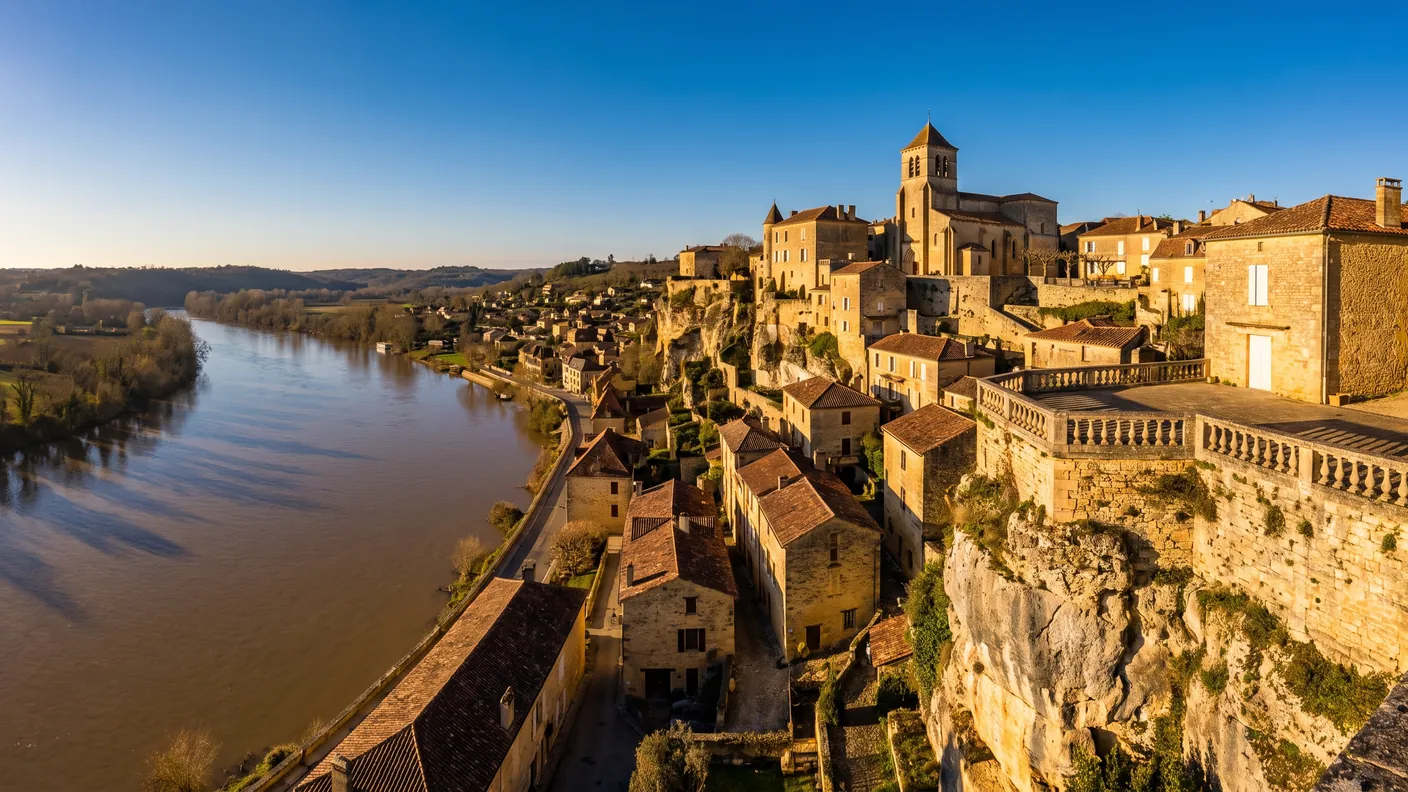
On the way to the town of Cousteau
Direct trip from Bordeaux (~33 min) to Saint-André-de-Cubzac, the town of Cousteau and the Château du Bouilh, with stops along the way at your discretion—Bourg, Fronsac, and the vineyards. Fixed, written quote—no surprises on the meter.