
Zarautz from Bordeaux: the queen of Basque beaches
A town in the Spanish Basque Country, about 20 kilometers from San Sebastián: the longest beach in the Basque Country, a great surfing spot, the spectacular flysch coastline, Getaria, and txakoli—just over two and a half hours from Bordeaux.
Zarautz at a Glance
Zarautz is a seaside resort in the Spanish Basque Country, in the province of Guipúzcoa, famous for the longest beach in the Basque Country—“the Queen of Beaches”—and for surfing. About twenty kilometers west of San Sebastián, nestled between the ocean and the mountains, Zarautz boasts nearly three kilometers of sandy beach, a long boardwalk, and a charming old town (the Luzea Tower, the Narros Palace where Queen Isabella II used to vacation), and is surrounded by a hinterland of txakoli vineyards and charming villages, starting with Getaria, the birthplace of Elcano and Balenciaga. At the gateway to the spectacular Flysch Coast, just over two and a half hours from Bordeaux, Zarautz offers a seaside getaway perfect for foodies and sports enthusiasts in the heart of the Spanish Basque Country, just across the border.
Here are the key details to know before you go. Distances are calculated door-to-door from Bordeaux; the fare shown is for a private driver reservation at a fixed price provided in advance, with no unexpected meter charges regardless of traffic or stops along the way.
| Landmark | Details |
|---|---|
| Country · Region | Spain · Basque Country (Euskadi), Province of Guipúzcoa |
| Name · Demonym | Zarautz (Basque) / Zarauz (Castilian) |
| Population | approximately 23,500 residents (up to ~60,000 in the summer) |
| Don't miss it | The big beach and surfing, the old town, txakoli |
| Distance from Bordeaux | about 254 km · about 2 hours and 55 minutes by car |
| Around | San Sebastián, Getaria, the Flysch Coast, Spain |
A quick note to start with, to put Zarautz in context. The city is in Spain, in the Spanish Basque Country (Euskadi), in the province of Guipúzcoa—not in the French Basque Country: it’s just across the border, about 40 kilometers away. It’s much closer to San Sebastián (Donostia), about 20 kilometers to the east, than to Bilbao (about 85 km to the west). Its name is spelled Zarautz in Basque and Zarauz in Castilian Spanish. And its famous beach is renowned as the longest in the Basque Country, nicknamed “la Reina de las Playas,” the Queen of Beaches. With that out of the way, let’s set out to discover this gem of the Spanish Basque coast. Every statement in this guide is based on verifiable sources, cited at the end of the article.
Here’s a rundown of everything you need to know: Zarautz’s location in Guipúzcoa, the expansive beach and surfing, the Flysch Coast and its UNESCO Geopark, Getaria and its famous sons, the old town and Narros Palace, txakoli and local cuisine, the vineyards and hills, nearby attractions (San Sebastián), the best time of year to visit, and the easiest way to get there from Bordeaux with a private chauffeur—all thoroughly researched and verified.
Where is Zarautz located?
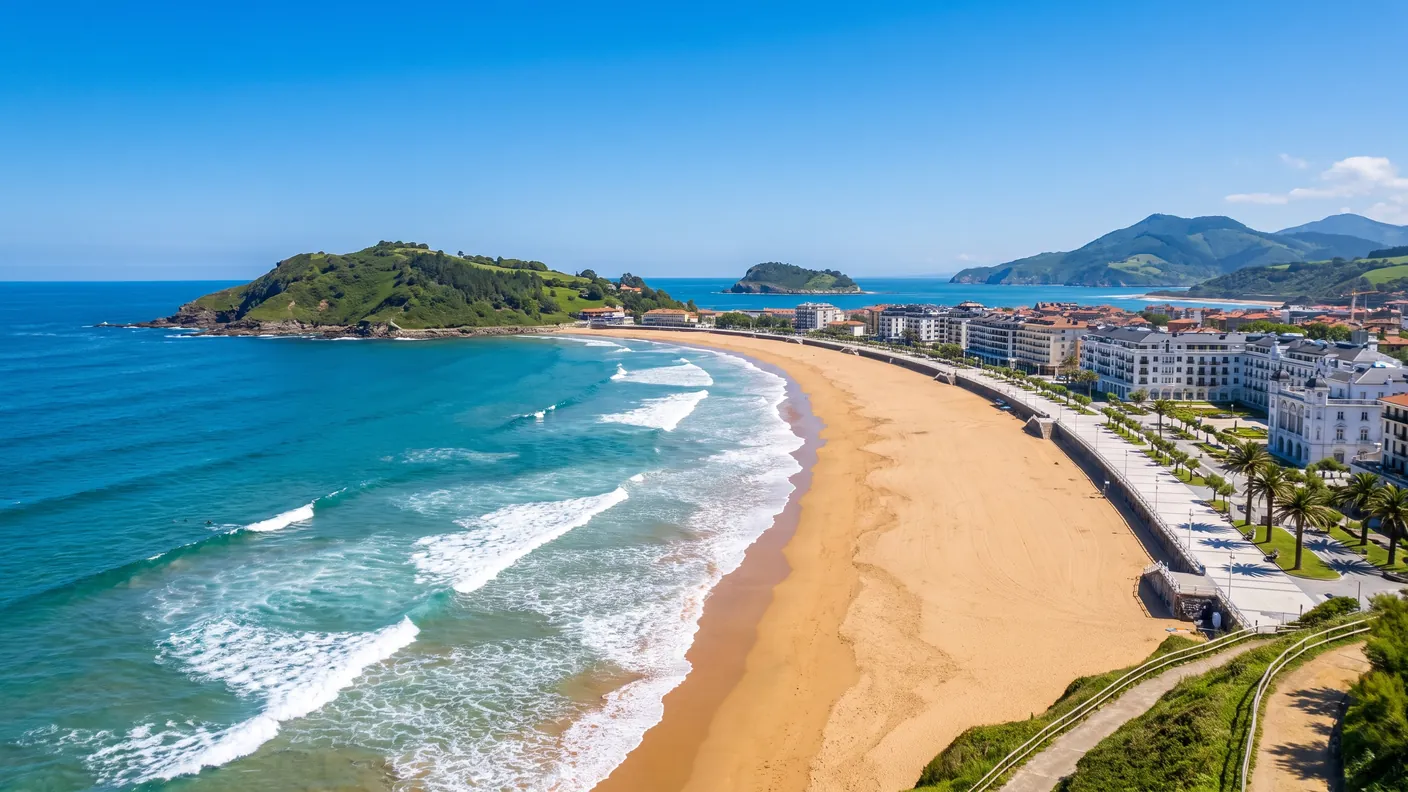
Zarautz is located in Spain, in the Spanish Basque Country (Euskadi), on the coast of the province of Guipúzcoa, about 20 kilometers west of San Sebastián, on the Cantabrian Motorway that runs along the Bay of Biscay. The town is beautifully situated on the Basque coast, nestled against green hills covered with txakoli vineyards and opening out to the ocean via its vast bay. With about 23,500 residents—a population that swells to nearly 60,000 in the summer—it is a lively and popular seaside resort, both a long-standing vacation destination and a premier surfing spot. Its location, between the major city of San Sebastián (Donostia) and the charming village of Getaria, in the heart of a spectacular coastline and a renowned wine region, makes Zarautz an ideal base for exploring the best of the Spanish Basque Country, just a few minutes from the French border.
In the Spanish Basque Country, near San Sebastián
Zarautz is located in Guipúzcoa (Gipuzkoa), one of the three provinces of the Spanish Basque Country, along with Biscay (Bilbao) and Álava (Vitoria). It is the Spanish part of the Basque Country, a counterpart to the French Basque Country, with its own language (Basque, or Euskara), culture, and world-renowned cuisine. Zarautz is located on the coast, between San Sebastián (Donostia), the major seaside city about twenty kilometers to the east, and Getaria, the small fishing and wine-producing port just to the west. The city is connected to France and the entire coast by the A-8 motorway, the Autopista del Cantábrico, which serves as the Spanish extension of the A63 motorway coming from Bordeaux. This location, on the main coastal motorway and halfway between the border and Bilbao, makes Zarautz an easily accessible stopover and an excellent starting point for exploring the entire Spanish Basque Country, from beaches to mountains to cities of art.
A historic and vibrant seaside resort
Zarautz isn't a new resort—it's a vacation destination aristocratic since the 19th centurye century, sparked by the queen's visits Isabelle II from Spain at the Narros Palace. Queens, kings, and other royalty took up their summer residence there, making Zarautz a chic vacation spot on the Cantabrian coast. The city has retained a certain charm from this past, with its old mansions bearing coats of arms, its palaces, and its elegant waterfront. But today, Zarautz is also a young and active city, the capital of surfing, bustling year-round and packed in the summer, where a laid-back seaside vibe blends with the Basque way of life. This dual identity—a historic resort and a surf spot, blending old-world elegance with youthful energy—is what gives Zarautz its charm. It is one of the most endearing towns on the Spanish Basque coast, rich in heritage, a gourmet destination, and with a strong connection to the ocean.
The Big Beach and Surfing
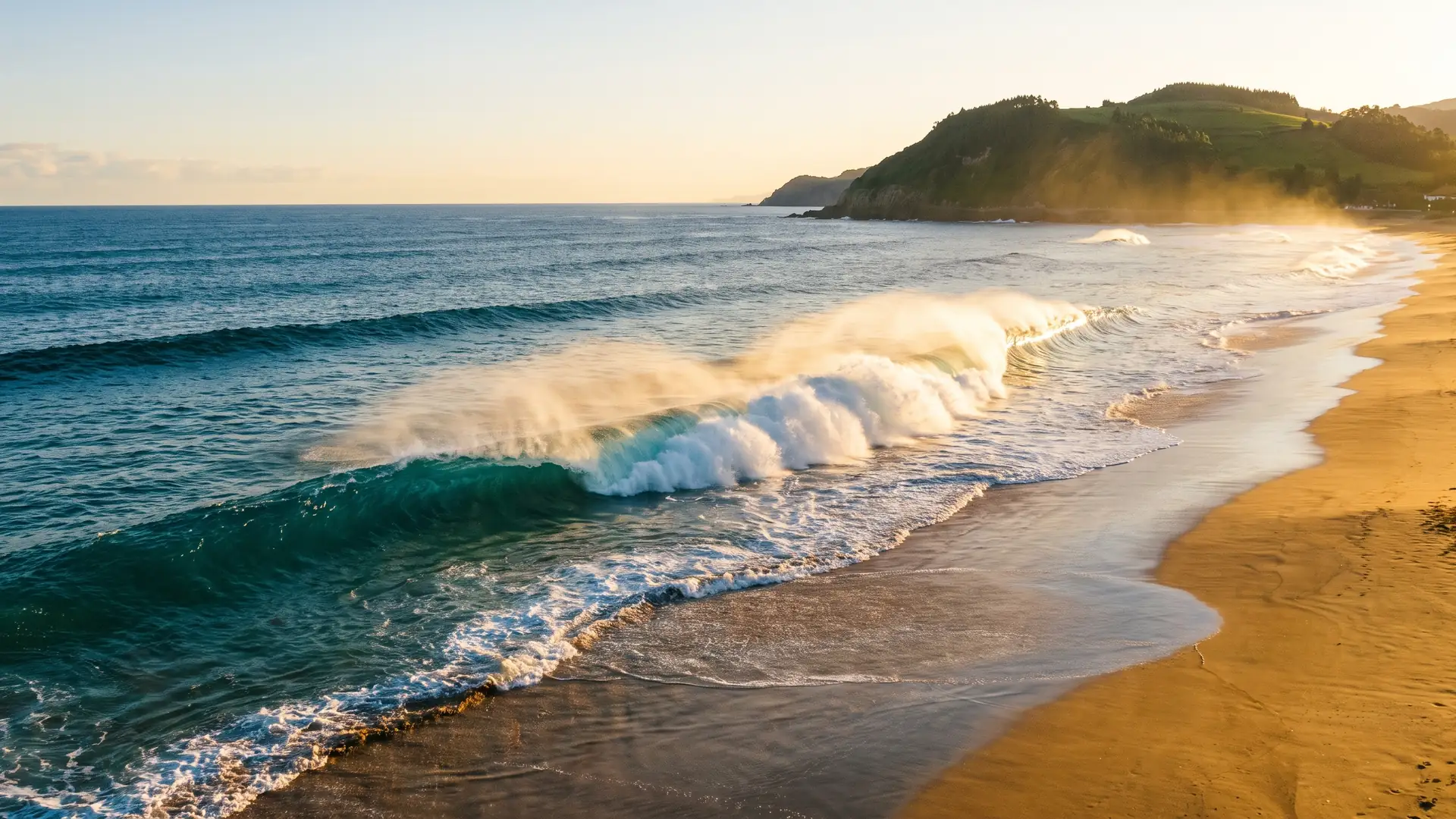
The beach at Zarautz stretches for 2.5 kilometers of sand and is one of the top surfing spots on the Basque coast. Tourism Euskadi, official fact sheet accessed on July 24, 2026. The heart and pride of the resort.
"The Queen of the Beaches"
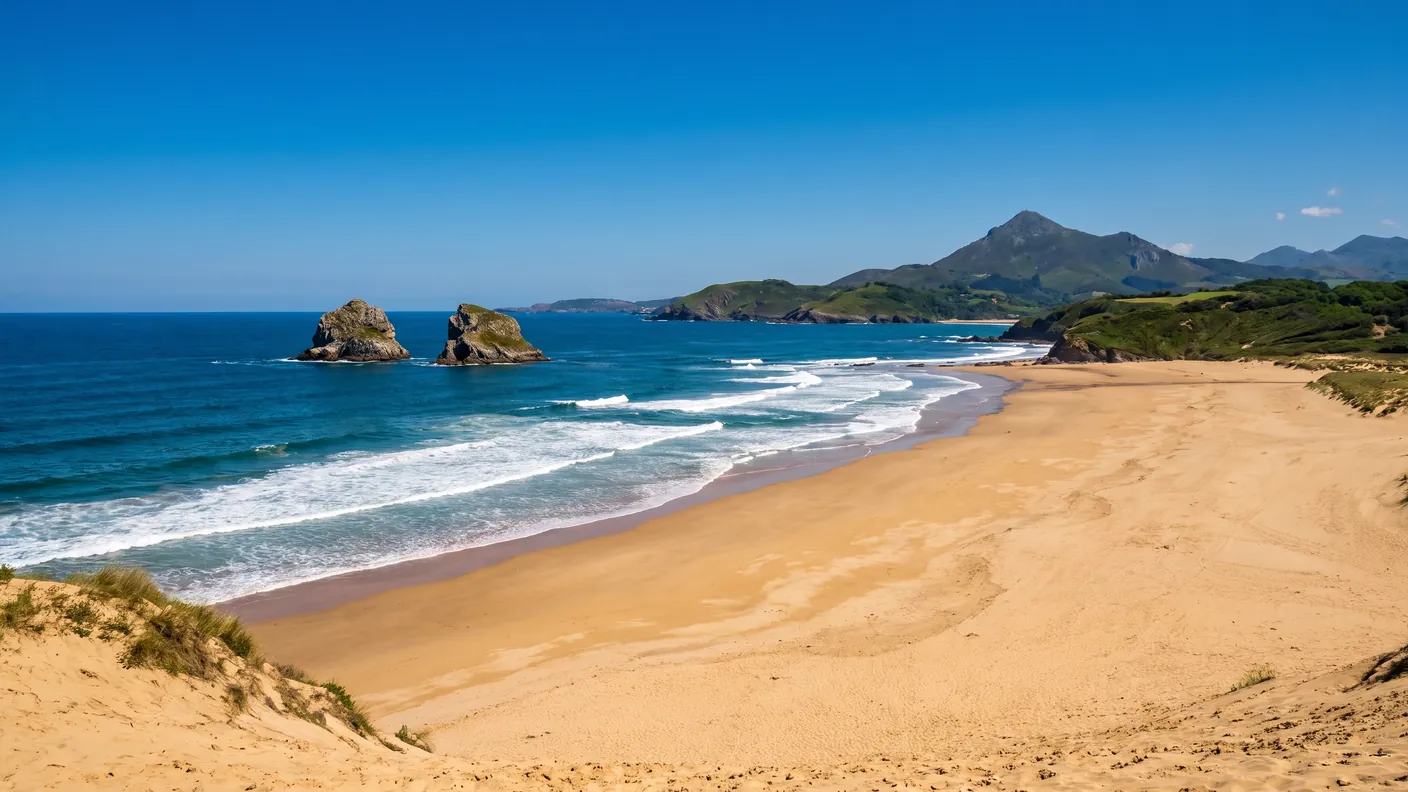
The beach Zarautz is a unique destination on the Basque Coast. It is approximately 2.5 kilometers, it's the longest beach in the Basque Country, which earned him his wonderful nickname, “ The Queen of the Beaches "— the Queen of Beaches. Opening wide onto the Atlantic, bordered by a walk Stretching its full length, it offers a vast stretch of sand—a rare sight along this coastline of cliffs and coves. Backed by the old town and the vine-covered hills, and sheltered to the west by Mount Getaria, it serves as the stunning backdrop and playground for Zarautz. People come here to swim, stroll, relax, but above all to waves: The beach is famous for its steady, powerful swell, which breaks over a long stretch. It is this abundance of sand and foam, at the foot of the mountains, that makes Zarautz such a unique and highly sought-after seaside destination.
A Surfing Capital
Zarautz is one of Spain's major surfing destinations. Its consistent waves, suitable for all skill levels, make it a renowned learning destination—a “spot” where beginners and experienced surfers alike gather—and the city has produced many Spanish surfing champions. Every year, Zarautz hosts a professional competition on the world tour, the “Pro Zarautz,” a stop on the World Surf League’s Qualifying Series, which brings together the world’s top surfers and energizes the resort. A whole surf culture has developed along the waterfront: surf schools, shops, and a laid-back, cosmopolitan atmosphere, much like the major surf resorts on the Basque coast. Whether you’re a seasoned surfer, a beginner taking your first lesson, or simply a spectator admiring the waves from the boardwalk, at Zarautz you’ll feel the unique energy of a city focused on the ocean and water sports—young and vibrant, moving to the rhythm of the tides.
| The beach at Zarautz | Details |
|---|---|
| Length | ~2.5 km · the longest in the Basque Country |
| Nickname | "La Reina de las Playas" (The Queen of the Beaches) |
| Surfing | Major event · Pro Zarautz stage (World Surf League) |
| Walk | a long boardwalk along the entire beach |
| Frame | between the old town, the Txakoli hills, and Mount Getaria |
The Flysch Coast and the Geopark
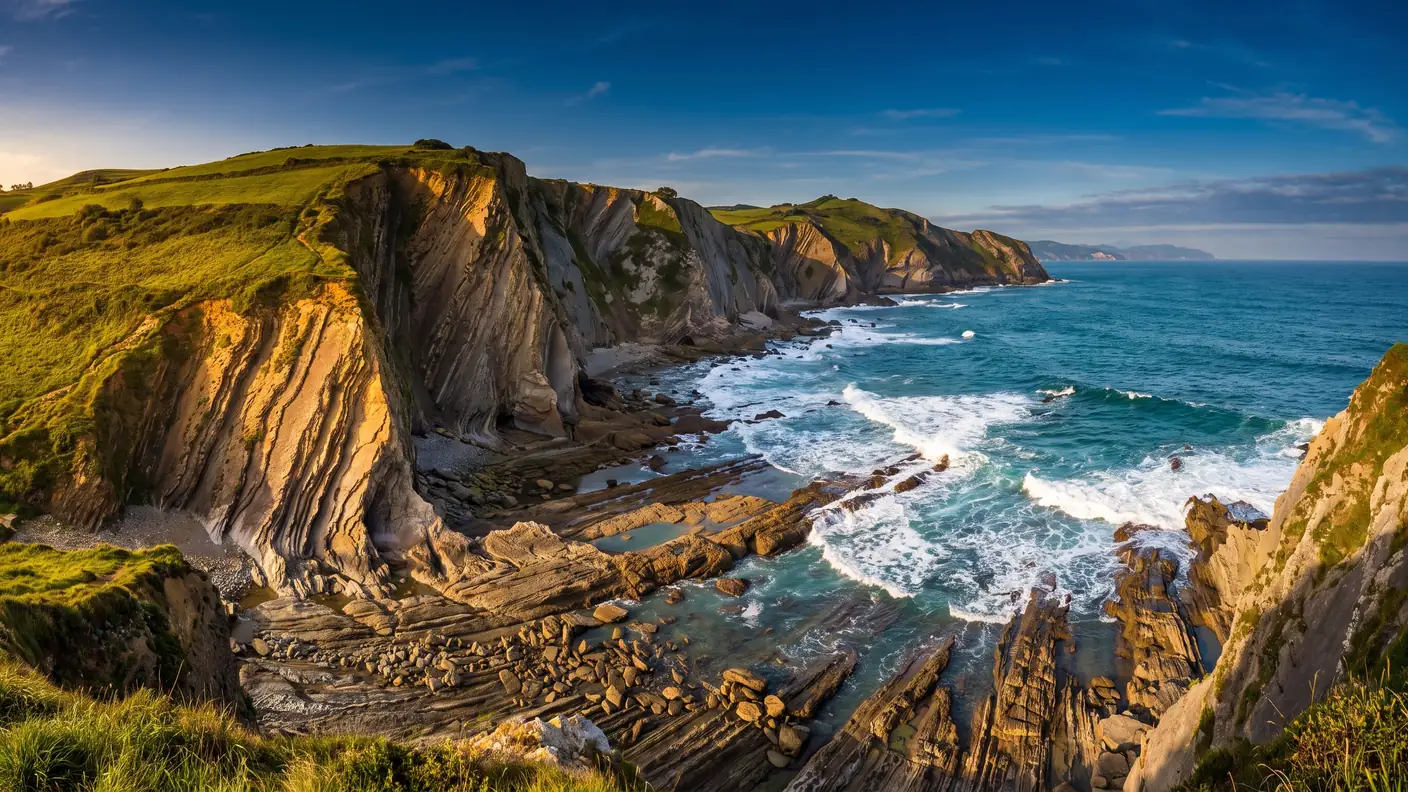
To the west of Zarautz lies the spectacular Flysch Coast, a UNESCO Global Geopark: cliffs with vertical strata that tell the story of sixty million years of Earth’s history. It is one of the most amazing geological sites in Europe.
Sixty million years of rock layers
Just west of Zarautz, between Zumaia, Deba, and Mutriku, the coast offers one of the continent’s most fascinating geological spectacles: the flysch. These are immense cliffs made up of rock strata—successive layers of rock deposited on the seafloor and raised, over millions of years, to a vertical position by the formation of the Pyrenees. At low tide, erosion reveals vast, striated rock platforms at the base of the cliffs, like the pages of a stone book. These cliffs chronicle approximately sixty million years of Earth’s history in a continuous record: geologists from around the world come to study them. They even preserve evidence of the great dinosaur extinction (the Cretaceous–Paleogene boundary). This wild and majestic landscape, where land meets sea, is an exceptional site, best explored via the coastal trails or, in Zumaia, on boat tours at the base of the cliffs.
A UNESCO Global Geopark
This extraordinary coastline is protected and promoted within the Basque Coast Global Geopark (Basque Coast UNESCO Global Geopark), designated by UNESCO (UNESCO fact sheet accessed on July 24, 2026), which spans the three municipalities of Zumaia, Deba, and Mutriku. A geopark is an area with remarkable geological heritage, managed for conservation, research, and sustainable tourism. In addition to the flysch cliffs, the Basque Coast Geopark showcases caves, prehistoric sites, and unspoiled nature through trails, scenic viewpoints, and a visitor center. Just outside Zarautz, it offers visitors a journey through geological time and coastal landscapes of rare beauty. Hiking along the cliffs, boat trips, and exploring rock layers and fossils: the flysch coast perfectly complements the seaside pleasures of Zarautz, offering—just minutes from the beach—one of Spain’s most beautiful and educational natural landscapes. A must-see in the area.
Getaria, Elcano, and Balenciaga
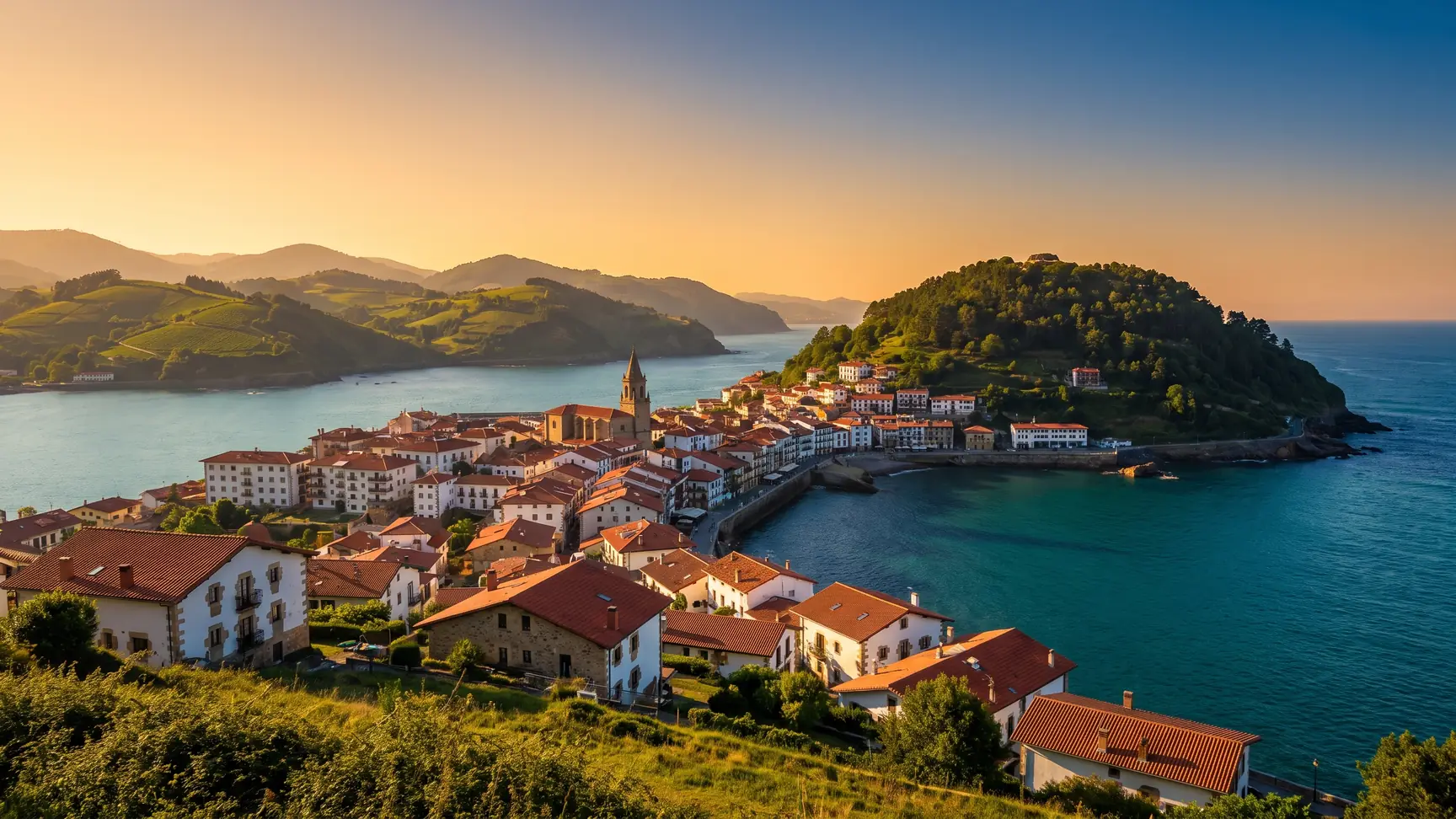
Five kilometers from Zarautz, Getaria is a charming fishing and wine port, dominated by its mouse-shaped island, the “Ratón”: it is the birthplace of the navigator Elcano and the fashion designer Balenciaga. A gem of the coast—not to be missed.
"El Ratón" and the First Circumnavigation of the Globe
Getaria (Guetaria), five kilometers west of Zarautz, is one of the most beautiful villages on the Spanish Basque coast. This small fishing port, with its steep narrow streets and renowned grilled fish, is dominated by a mountainous peninsula, Mount San Antón, whose silhouette resembles a mouse—hence its popular nickname, the “Ratón” of Getaria. Above all, Getaria is the birthplace of a hero: Juan Sebastián Elcano, the navigator who, after Magellan’s death in the Philippines, brought the ship Victoria safely home in 1522, thus becoming the first man to circumnavigate the globe. Of the approximately 240 sailors who set out, only eighteen survived to return after three years of a heroic journey. A statue and the story of Elcano are the pride of Getaria. This small port, nestled between the sea and vineyards, is a must-see stop on any visit to Zarautz, thanks to its charm, history, and cuisine.
Balenciaga and Txakoli
Getaria is also home to another famous figure: Cristóbal Balenciaga, the famous fashion designer, born in the village in 1895, considered one of the greatest fashion designers of the 20th century. The village pays tribute to him with the magnificent Cristóbal Balenciaga Museum (Cristóbal Balenciaga Museoa), which opened in 2011 and showcases his designs in a stunning contemporary architectural setting—a must-see for fashion and art lovers. Getaria is, after all, along with Zarautz, the birthplace of the txakoli: The hillsides overlooking the village, nestled between the mountains and the sea, are covered with vineyards, and it is here that the finest of this slightly sparkling Basque white wine is produced. Between the Ratón, the statue of Elcano, the Balenciaga Museum, the harbor, and the vineyards, Getaria packs a rare wealth of attractions into just a few hectares—a distillation of everything that makes the Spanish Basque Country so charming, just a few minutes from Zarautz.
The Old Town and Narros Palace
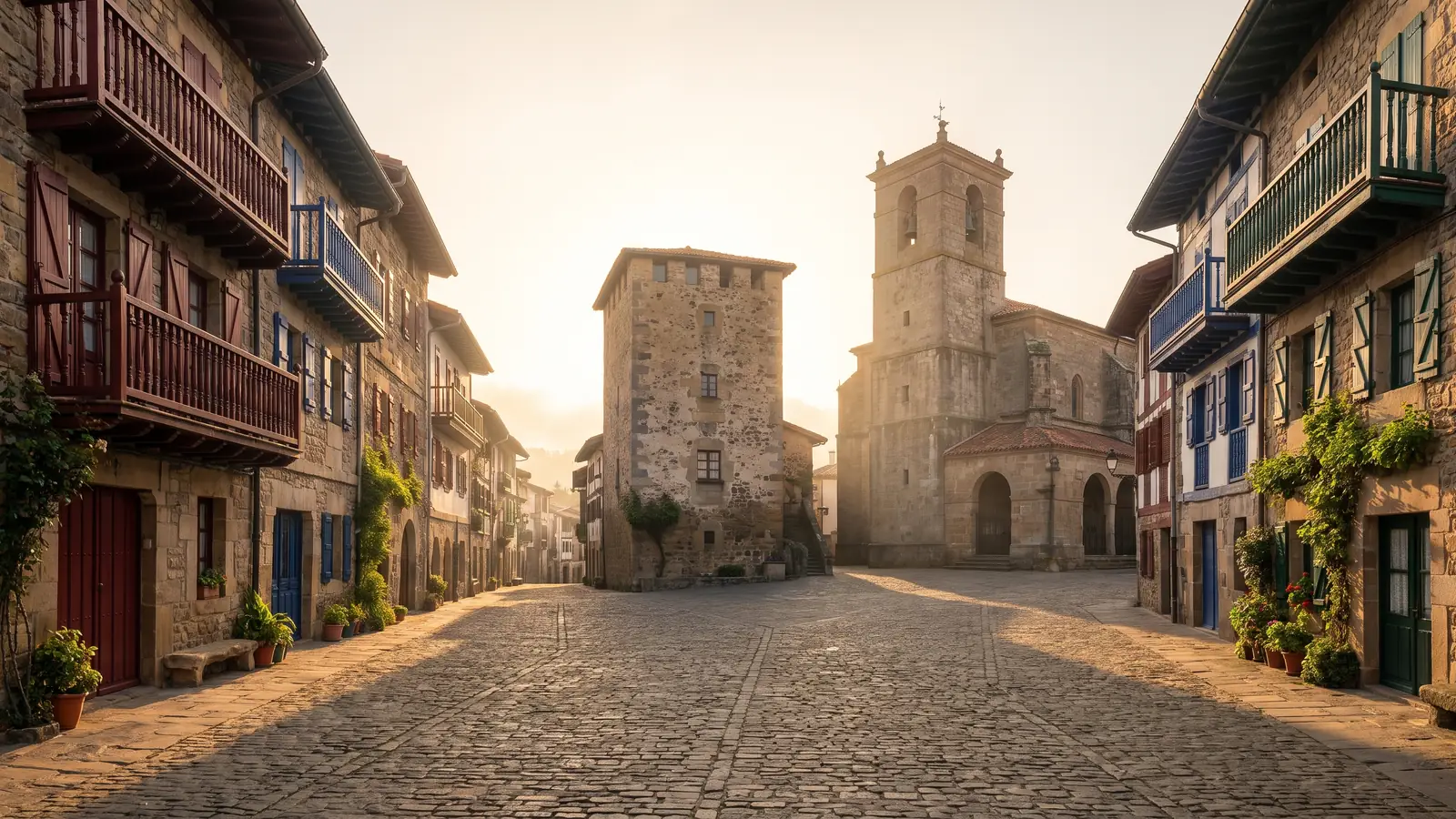
Behind the beach, Zarautz hides an old town steeped in history: the Luzea Tower, the Church of Santa María la Real—built on Roman ruins—and the Narros Palace, where Queen Isabella II once stayed. Two thousand years of history right on the waterfront.
The Luzea Tower and the Church of Santa María
The Old Town The historic center of Zarautz, nestled between the beach and the hill, is well worth a stroll. There, you’ll discover the Luzea Tower (Torre Luzea), a beautiful stone fortified house from the 15th century, one of the city's landmarks, designated a historic monument (Asset of Cultural Interest) and now serving as an exhibition hall. Nearby stands the church Santa María la Real, the town's main building, a Gothic structure whose bell tower dates from the 15th century, is the oldest building in Zarautz. A fascinating detail: beneath the church and the tower, excavations have revealed a continuous occupancy since the Iron Age and the Roman era—ancient times Menosca —, as well as a medieval cemetery. The old town of Zarautz is thus literally built on two thousand years of history. Visitors can also admire old mansions adorned with coats of arms stone buildings, reminders of the city’s noble past. A compact and charming historic center, just a stone’s throw from the beach.
The Narros Palace, Queens' Beach
The most prestigious landmark in Zarautz is the Narros Palace (Narros Jauregia), an elegant residence from the 16th century, featuring an English-style garden overlooking the sea. It was here that the queen Isabelle II from Spain came to spend his summers there in the 19th centurye century, establishing Zarautz as a fashionable resort for the aristocracy: following in his footsteps, other royalty—including King Baudouin and Queen Fabiola of Belgium—stayed there. The palace, which bears the proud motto “ Zarauz First and Foremost " ("Zarautz before Zarautz"), once housed portraits of Velázquez, now scattered among major museums. It is from this royal history that the beach at Zarautz derives part of its prestige, worthy of a “Queen of Beaches.” Between the Luzea Tower, the thousand-year-old church, the houses bearing coats of arms, and the Queens’ Palace, the old town of Zarautz offers a heritage of unexpected richness, which adds to the beauty of the site and the joy of discovery.
Txakoli and Basque Cuisine
Zarautz and Getaria are the birthplace of txakoli, the slightly sparkling Basque white wine that’s enjoyed with pintxos; it’s also a culinary capital and the hometown of chef Karlos Arguiñano. Exceptional terroir and cuisine.
Txakoli, poured from a height
The region’s most famous wine is txakoli (txakolina): a very dry, lively, low-alcohol, naturally sparkling Basque white wine made primarily from the Hondarrabi Zuri grape variety. Zarautz and Getaria are at the heart of this tradition: the hillsides overlooking the sea, between the mountains and the shore, are covered with these vines and form the Getariako Txakolina appellation, recognized as a designation of origin in 1989 (Appellation Council, accessed July 24, 2026). Txakoli is best enjoyed young and chilled, and is served according to a spectacular ritual: it is poured from a height in a long stream to create a froth in the glass. It’s the perfect accompaniment to grilled fish, seafood, and, of course, pintxos—those tasty little bites skewered on a stick that you enjoy as you go from bar to bar. Discovering txakoli in its homeland, between Zarautz and Getaria, with a glass in hand overlooking the sea, is one of the great pleasures of a visit.
Pintxos and fine dining
The Spanish Basque Country is one of the world’s culinary capitals, and Zarautz is no exception. The town is notably associated with chef Karlos Arguiñano, a very popular figure in Spanish cuisine, who has run his hotel-restaurant on the beach in Zarautz since 1978, in a stone mansion with its feet in the sand—a restaurant that was once awarded a Michelin star. All around, pintxos bars, seafood restaurants, and grill spots (those in nearby Getaria are legendary) treat visitors to fresh, generous, and refined cuisine based on seafood and local produce. Between the txakoli, pintxos, grilled fish, and fine Basque cuisine, a stop in Zarautz is also a first-rate culinary journey. This is one of the major attractions of the Spanish Basque coast: sampling, right there on the spot, one of Europe’s finest cuisines, set against a backdrop of beaches and vineyards.
| The Region of Zarautz | Details |
|---|---|
| Txakoli | Sparkling Basque white wine · Getariako Txakolina AOP |
| Grape variety | hondarrabi zuri · poured from a height to create foam |
| Pintxos | Basque-style appetizers, from bar to bar |
| Grilled Fish | a specialty from Getaria, just nearby |
| Karlos Arguiñano | hotel and restaurant on the beach at Zarautz (since 1978) |
Vineyards, hills, and megaliths
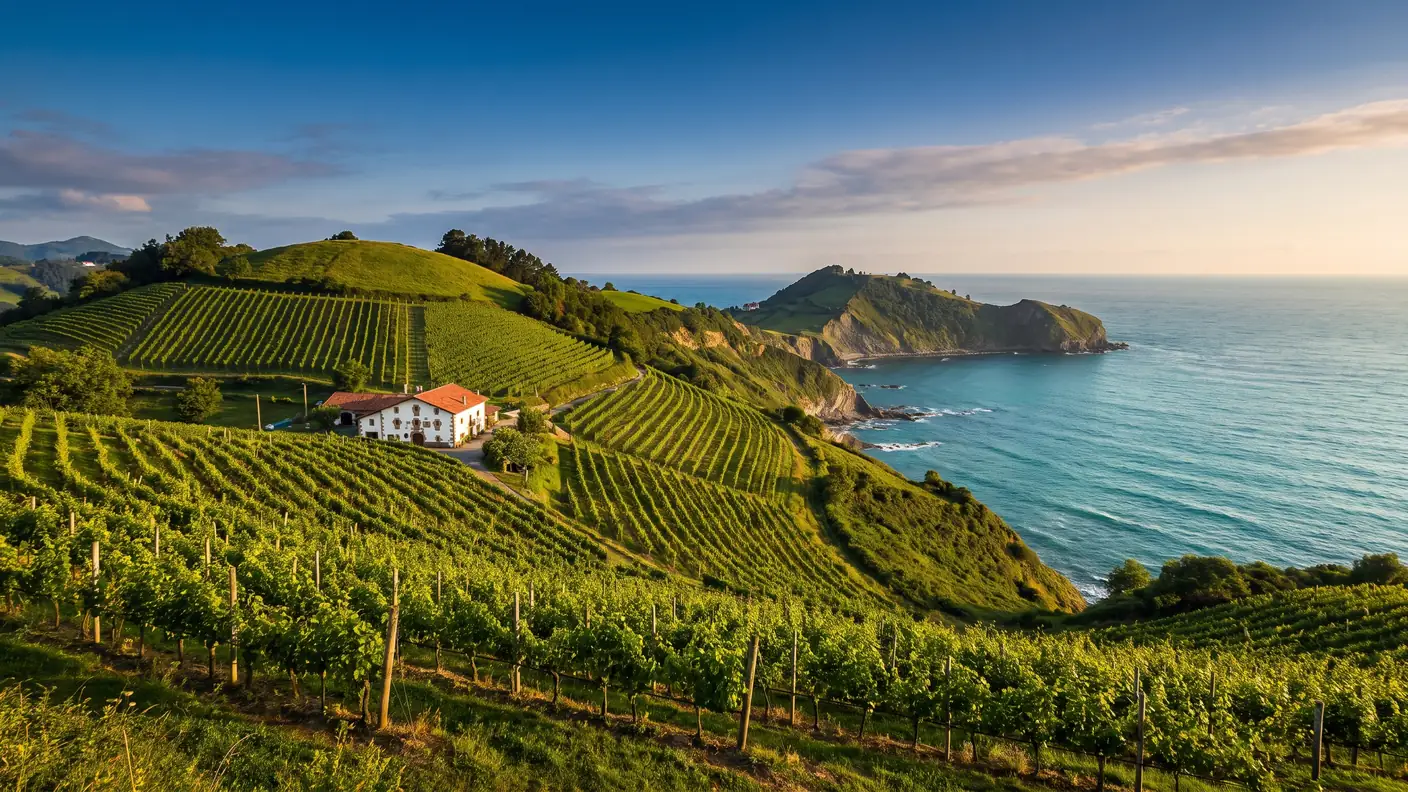
Above the beach, Zarautz is surrounded by green hills covered with txakoli vineyards, dotted with farms and megaliths, nestled between the ocean and the mountains. A lush hinterland waiting to be explored on foot.
A vineyard overlooking the sea
One of the most striking images from Zarautz is that of its vineyards txakoli flowing down the hills to the edge of the sea. Between the shore and the foothills, the sun-drenched slopes are covered with these trellised vines, which produce the famous sparkling white wine. This rare and magnificent coastal vineyard landscape, set against the green of the hills, the turquoise of the ocean, and the white of the Basque farmhouses (the hamlets), is what makes the hinterland of Zarautz so charming. You can explore it on foot along trails that wind up from the old town toward the hills, offering superb views of the bay, the beach, and the coast. It’s also a chance to visit a vineyard (a bodega) and to taste txakoli right where it’s grown. This blend of vineyards and the sea, hills and beaches, is one of the main attractions of Zarautz, which offers, within a small area, an astonishing variety of landscapes, from sandy beaches to mountain peaks.
Megaliths and Lookout Points
The hills surrounding Zarautz also hold older treasures. On the heights of Garate, between Zarautz and Getaria, around the hermitage of Santa Bárbara (a lookout point at about 281 meters), you’ll find prehistoric megaliths—the sites of Meaga and Arriaundi, burial mounds dating back several millennia. These ruins bear witness to the very ancient settlement of these lands, long before the Romans and medieval lords. Climbing these hills means not only discovering these monuments and taking in a magnificent panorama of the coast, the vineyards, and the sea, but also traveling back in time, from today’s surfers to the builders of prehistory. Amid the vineyards, megaliths, hermitages, and lookout points, the hinterland of Zarautz offers beautiful hikes and stunning views—the perfect complement to the joys of the beach. A land of hills and sea, lush and inhabited, where nature and history intertwine, right at the resort’s doorstep.
What's there to see around Zarautz?
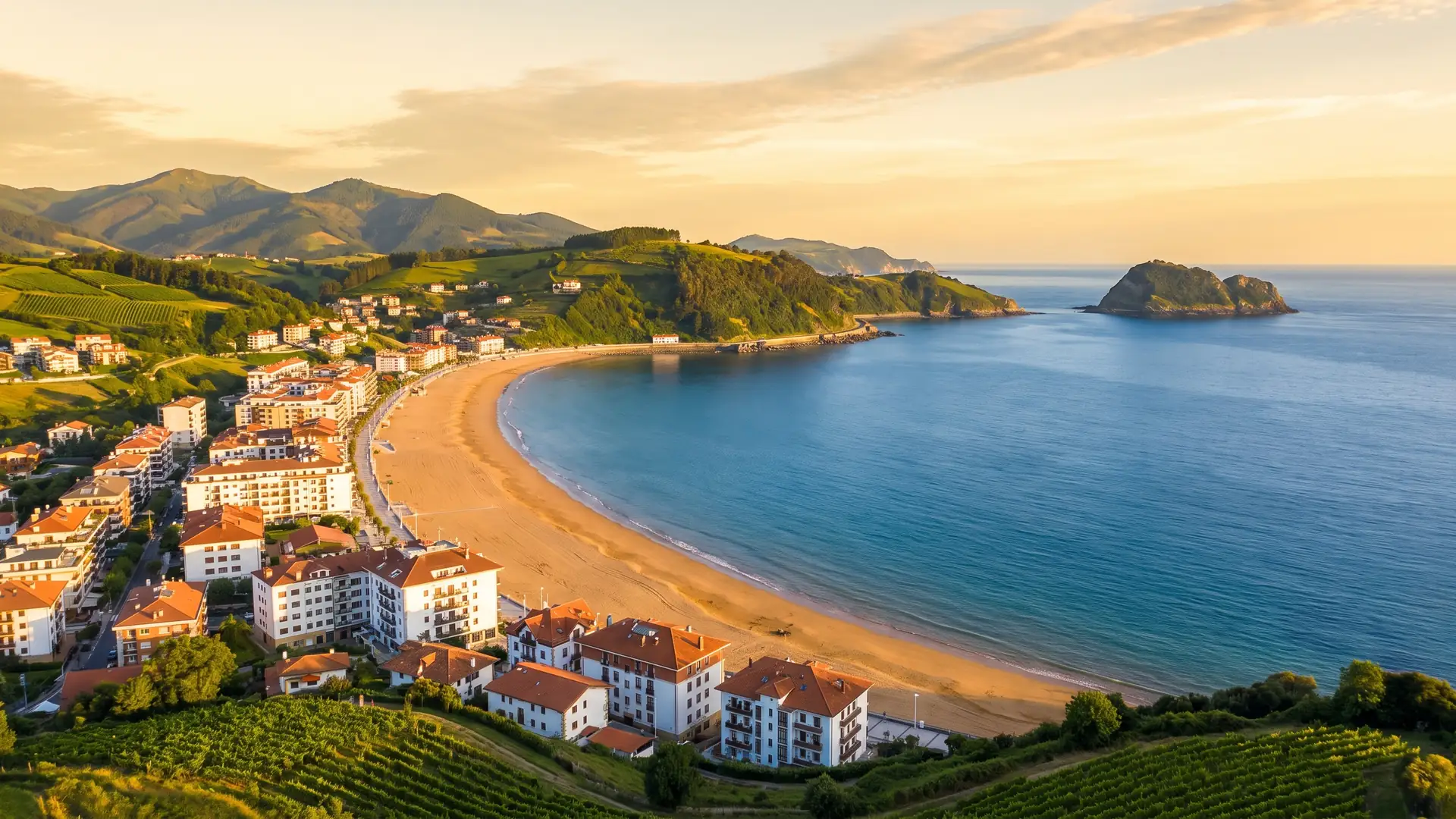
Zarautz is an ideal base for exploring the Spanish Basque Country: San Sebastián, Getaria, the Flysch Coast, and France are all nearby. A unique blend of beaches, art-filled towns, and the border.
San Sebastián and the Basque Coast
Zarautz’s closest neighbor is San Sebastián (Donostia), about 20 kilometers to the east: one of Spain’s most beautiful cities, with its shell-shaped La Concha Bay, its old town, its beaches, and its world-renowned Michelin-starred cuisine—a must-see destination. To the west lies the Flysch Coast (Zumaia, Deba), Getaria and its Balenciaga Museum, followed by Bilbao and its Guggenheim Museum, about an hour and a half away. To the east, the border and the French Basque Country—Hendaye, Saint-Jean-de-Luz, Biarritz—are less than an hour away. Zarautz is thus ideally located for exploring both sides of the border, among the beaches, art cities, villages, and vineyards. With a driver, it’s easy to plan a tour of the Spanish and French Basque Country from Zarautz, without worrying about driving, tolls, or parking—which can often be a challenge in these busy cities.
Bilbao, La Rioja, and Northern Spain
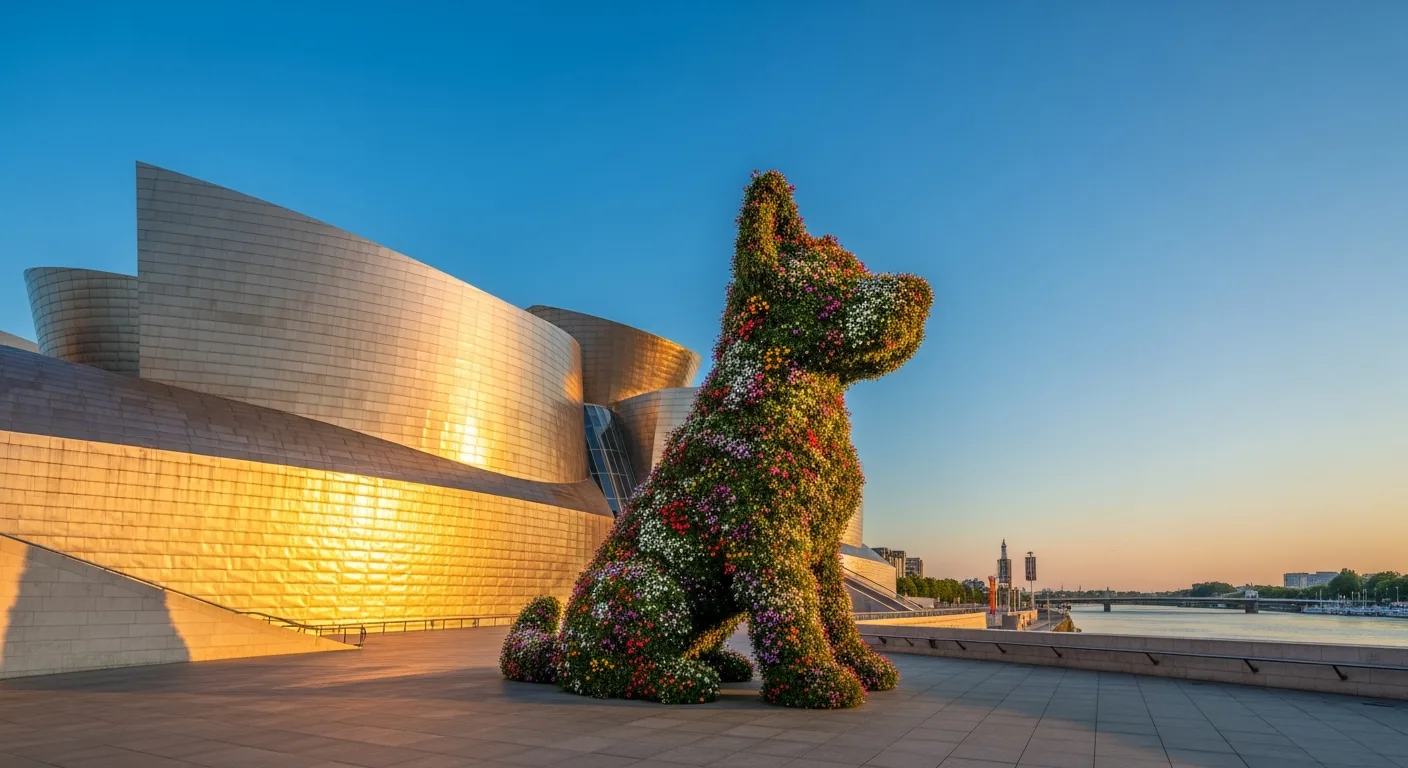
Beyond its immediate surroundings, Zarautz serves as a gateway to all of Northern Spain. To the west, past the Flysch Coast, Bilbao and its famous Guggenheim Museum—a masterpiece by Frank Gehry—are about an hour and a half away; further on lie La Rioja and its great vineyards, the Cantabrian Coast, Navarre, and Pamplona. To the east, the French border and the French Basque Country—Hendaye, Saint-Jean-de-Luz, Biarritz, and Bayonne—are less than an hour away, making it easy to explore both sides of the Basque Country. This location, on the main coastal route between France and Bilbao, makes Zarautz an ideal base for a cross-border getaway, combining beaches, cities of art, vineyards, and mountains. With a driver, you can explore freely without worrying about driving abroad, tolls, or parking, and discover the best of Northern Spain and the Basque Country.
| Around Zarautz | Distance | Interest |
|---|---|---|
| Getaria | ~5 km | El Ratón, Elcano, Balenciaga Museum, txakoli |
| Zumaia (Flysch Coast) | ~10 km | Flysch Cliffs, UNESCO Geopark |
| San Sebastián (Donostia) | ~20 km | La Concha, the Old Town, Michelin-starred cuisine |
| Bilbao | ~85 km | The Guggenheim Museum, Casco Viejo |
| Hendaye (France) | ~40 km | The French Basque Coast, the border |
When is the best time to visit Zarautz?
Zarautz is open to visitors year-round, but summer—with its large beach and surfing—is the peak season. The summer It's time to enjoy the large beach, swimming, surfing, and the resort’s lively atmosphere, which is in full swing at this time—the population triples, the vibe is festive and cosmopolitan, but the town and beaches are very crowded. The long days are perfect for surfing, strolling along the paseo, relaxing on outdoor terraces, and taking day trips to San Sebastián and Getaria. The mild, green climate of the Cantabrian coast, which is more temperate than inland Spain, makes summer in Zarautz a pleasant season, less oppressive than on the Mediterranean.
Spring, Fall, and Winter
The other seasons have a more peaceful charm. The spring and the fall, with their soft lighting and fewer crowds, are ideal for exploring the old town, the flysch slope, the txakoli vineyards and San Sebastián, in a more peaceful setting and a climate that is still mild. The winter, which is calmer and sometimes rainy, reveals the coast in all its grandeur: it’s the season for the great waves, a favorite among surfers, and the perfect time to savor Basque cuisine—pintxos and txakoli—without the crowds, cozying up in bars and restaurants. No matter the season, the beauty of the bay, the rich heritage, and the generous cuisine make Zarautz a charming getaway, just over two and a half hours from Bordeaux, just across the border.
How to get to Zarautz from Bordeaux
Zarautz is located about 254 km from Bordeaux, which is about a 2-hour, 55-minute drive via the A63 motorway to the Spanish border (at Biriatou/Behobia), then the Spanish A-8 motorway (the Autopista del Cantábrico), which runs along the coast toward San Sebastián and Bilbao. It’s a straightforward, uninterrupted route: the same motorway connects Bordeaux to Zarautz on both sides of the border, with no major changes in route (note, however, that the Spanish motorway has tolls). Zarautz does have a train station on the Basque regional network, Euskotren, which connects it to San Sebastián; however, traveling there by train from Bordeaux requires several transfers and involves long travel times, and does not allow for easy exploration of the surrounding region afterward. For a trip from Bordeaux to discover this gem of the Spanish Basque Country, a chauffeur-driven car is by far the most practical and flexible option, offering door-to-door service that includes crossing the border.
Train or chauffeur service?
To get to Zarautz—and especially to explore the Spanish Basque Country—booking a Bordeaux-based executive car service offers true freedom: a direct, door-to-door trip from Bordeaux, with no transfers or waiting, including border crossing assistance and the option to make stops along the way—in Hendaye, San Sebastián, or Getaria. This is especially valuable for a day trip or weekend getaway combining the beach, the old town, the Flysch Coast, San Sebastián, and its pintxos—where you’ll want to get around without worrying about driving abroad, tolls, or parking. We offer this route at a fixed price quoted in advance: expect to pay approximately €484 for the one-way trip, in a Mercedes sedan or a van seating up to 7 passengers, with a professional driver. The price, set at the time of booking, remains fixed: it does not depend on traffic, traffic jams, or the number of stops, unlike a taxi meter.
This is the perfect option for a beach vacation, a gourmet getaway across the border, a family trip, an event, or a simple transfer to or from the Bordeaux-Mérignac, Biarritz, or San Sebastián airports. You can travel alone, as a couple, or in a small group of up to 7 people, with luggage and surfboards, and request stops in Hendaye, San Sebastián, or Getaria. In practice, booking is quick and easy: simply provide your departure address in Bordeaux and your destination at Zarautz, along with the date, desired time, and number of passengers, and you’ll receive a fixed-price quote in writing. On the day of the trip, the driver picks up the passengers at the agreed-upon address and takes them directly to Zarautz, across the border, without any detours—a real advantage for a trip to the Spanish Basque Country.
| Route | Distance | Duration | Landmark |
|---|---|---|---|
| Bordeaux → Zarautz | ~254 km | ~2 hr 55 min | Starting at ~€417 for a private chauffeur service |
| Zarautz → San Sebastián | ~20 km | ~25 min | La Concha, pintxos |
| Zarautz → Getaria | ~5 km | ~10 min | El Ratón, txakoli, Balenciaga |
| Zarautz → Hendaye (France) | ~40 km | ~40 min | the border, the French Basque coast |
Whether you come for the expansive beach and surfing, the Flysch Coast, Getaria and its famous sons and daughters, the old town and the Palace of the Queens, or for txakoli and fine dining, Zarautz is a treat for lovers of the Basque coast, nature, and fine dining—one of Spain’s most beautiful resorts, just across the border.
Whether it’s for a beach vacation, a gourmet getaway, or an event, booking a chauffeured transfer guarantees a comfortable and punctual ride—book a driver from Bordeaux → Zarautz or explore all our destinations.
Frequently Asked Questions
Where is Zarautz located?
Zarautz is a seaside resort in the Spanish Basque Country (Euskadi), in the province of Guipúzcoa, on the Cantabrian coast, about 20 kilometers west of San Sebastián (Donostia) and about 40 kilometers from the French border. In Basque, it is written Zarautz (Zarauz in Castilian Spanish). With a population of about 23,500—up to 60,000 in the summer—it is a lively town, famous for its beach, the longest in the Basque Country, and for surfing. From Bordeaux, it’s about 254 km and a 2-hour, 55-minute drive via the A63 motorway to the border, then the Spanish A-8 motorway. It’s much closer to San Sebastián than to Bilbao.
What is the distance between Bordeaux and Zarautz?
About 254 km by road, or about 2 hours and 55 minutes, via the A63 motorway to the Spanish border (at Biriatou/Behobia), then the A-8 motorway (the Autopista del Cantábrico) along the coast. It’s a straightforward, uninterrupted route; the same motorway connects Bordeaux to Zarautz on both sides of the border (the Spanish section of the motorway is a toll road). With a private chauffeur from Bordeaux, the fare is fixed and provided in advance, starting at approximately €484 one way (sedan or van, door-to-door price), including the border crossing. The train, on the other hand, requires several transfers and does not allow you to explore the region afterward.
Why is Zarautz Beach famous?
Because it’s the longest beach in the Basque Country: about 2.5 kilometers of golden sand, which has earned it the nickname “la Reina de las Playas,” the Queen of Beaches. Opening wide onto the Atlantic and bordered by a long promenade, it offers a vast area for swimming and relaxation—a rarity on this cliff-lined coast. Above all, it’s one of Spain’s top surfing spots, renowned for its consistent waves: Zarautz is a surfing capital, hosting a professional competition on the world tour every year (the Pro Zarautz, a stop on the World Surf League). Nestled against the old town and the vineyards, it is the heart and pride of the resort.
What is the Flysch Coast near Zarautz?
It is one of the most spectacular geological sites in Europe. West of Zarautz, between Zumaia, Deba, and Mutriku, the cliffs consist of rock strata standing vertically, which chronicle approximately sixty million years of Earth’s history in a continuous sequence—they even bear traces of the dinosaur extinction. At low tide, erosion reveals vast, striated rock platforms, like the pages of a stone book. This coastline is protected within the UNESCO-designated Basque Coast Global Geopark. You can explore it via the coastal trails or by boat from Zumaia. It’s a must-see in the area around Zarautz, just a few minutes from the beach.
What to see in Getaria, near Zarautz?
Getaria, five kilometers west of Zarautz, is a charming fishing and wine-producing port, one of the most beautiful villages on the Spanish Basque coast. It is dominated by a mouse-shaped peninsula known as the “Ratón.” It is the birthplace of Juan Sebastián Elcano, the navigator who completed the first circumnavigation of the globe in 1522 (after Magellan’s death), and of fashion designer Cristóbal Balenciaga, whose creations are on display in a superb museum that opened in 2011. Getaria is also, along with Zarautz, the birthplace of txakoli, and its grilled fish dishes are legendary. Between the Ratón, Elcano, Balenciaga, the harbor, and the vineyards, it’s an unmissable stop on any visit to Zarautz.
What is txakoli?
Txakoli (txakolina) is the iconic white wine of the Basque Country: a very dry, lively wine with low alcohol content and natural effervescence, made primarily from the Hondarrabi Zuri grape variety. Zarautz and Getaria are its historic birthplace: the hillsides overlooking the sea are covered with these vines, which make up the Getariako Txakolina appellation, recognized as a designation of origin in 1989 (Appellation Council, accessed July 24, 2026). Txakoli is best enjoyed young and chilled, and is served according to a spectacular ritual: it is poured from a height in a long stream to create foam in the glass. It is the perfect accompaniment to grilled fish, seafood, and pintxos—best enjoyed in its homeland, overlooking the sea.
Is Zarautz in Spain or France?
Zarautz is located in Spain, in the Spanish Basque Country (Euskadi), in the province of Guipúzcoa—just across the border, about 40 kilometers from it. This is the Spanish side of the Basque Country, which is distinct from the French Basque Country (Bayonne, Biarritz, Hendaye). Zarautz is on the Cantabrian coast, about 20 kilometers west of San Sebastián (Donostia) and approximately 85 km from Bilbao. It is therefore much closer to San Sebastián than to Bilbao. From Bordeaux, it’s easily accessible via the motorway (A63 then the Spanish A-8) in about 2 hours and 55 minutes: it’s an ideal cross-border getaway, best enjoyed with a chauffeur service so you don’t have to worry about the border or tolls.
What's there to see around Zarautz?
There’s plenty to see in the Spanish Basque Country and all the way to France. Nearby, Getaria (El Ratón, Elcano, the Balenciaga Museum, txakoli) and the Flysch Coast (Zumaia, UNESCO Geopark). About 20 kilometers away is San Sebastián (Donostia), one of Spain’s most beautiful cities, with its La Concha Bay and Michelin-starred cuisine. Further away, Bilbao and its Guggenheim Museum (~1 hour for about 84 km). And to the east, the border and the French Basque Country—Hendaye, Saint-Jean-de-Luz, Biarritz—less than an hour away. Zarautz, ideally located on the main coastal motorway, is a perfect base for exploring both sides of the border, among beaches, art cities, villages, and vineyards.
When is the best time to visit Zarautz?
Summer is the peak season to enjoy the large beach, swimming, surfing, and the resort’s lively atmosphere, which is in full swing at this time—but the town and beaches are very crowded. Spring and fall, with their soft light and fewer visitors, are ideal for exploring the old town, the flysch coast, the vineyards, and San Sebastián in a more peaceful atmosphere, under the mild, green climate of the Cantabrian coast. Winter, which is quieter and rainier, is popular with surfers for its big swells and offers the chance to savor Basque cuisine without the crowds. No matter the season, the bay, the heritage, and the cuisine make Zarautz a wonderful getaway, less than three hours from Bordeaux.
Is it possible to travel from Bordeaux to Zarautz without driving abroad?
Yes, that’s actually one of the main advantages of hiring an executive car service for this destination. Many travelers prefer not to drive across the border—whether due to Spanish tolls, difficult parking in San Sebastián, driving abroad, or simply the desire to enjoy the trip. With a chauffeur service from Bordeaux, the trip is door-to-door, including the border crossing, without any of these hassles: you sit back and let yourself be driven, you can make stops (Hendaye, San Sebastián, Getaria), and you can explore the Spanish Basque Country in complete peace of mind. It’s the ideal option for a cross-border getaway, a beach vacation, or a culinary tour on the Spanish side.
Can I book a chauffeured transfer from Bordeaux through Zarautz?
Yes. We offer the route from Bordeaux to Zarautz (approximately 254 km, about 2 hours and 55 minutes via the A63 and the Spanish A-8 motorway) at a fixed price, starting at approximately €484 one-way, in a Mercedes sedan or van for up to 7 passengers, with a professional driver, including border crossing. The trip is direct, door-to-door, with the option to make stops as desired—ideal for a beach vacation or a cross-border getaway (the beach, Getaria, the Flysch Coast, San Sebastián)—where you’ll want to get around without worrying about driving abroad, tolls, or parking. You can bring luggage and surfboards. The fixed quote is provided and confirmed in writing before departure, with no surprises on the meter.
Further Reading
- The nearby Michelin-starred destination: see the San Sebastián Guide (La Concha, the Old Town, fine dining), 20 km away
- The Guggenheim: See the Bilbao Guide (the Guggenheim Museum, the Casco Viejo, pintxos)
- The French Basque Coast: See the Hendaye Guide (the main beach, the Corniche, the border)
- Plan your trip: Book a private chauffeur from Bordeaux to Zarautz or explore all our destinations
Sources and References
- Wikipedia — Zarautz — geography, beach, txakoli, Narros Palace, access via the A-8
- Wikipedia ES — Zarauz — population, Reina de las Playas, Torre Luzea, Menosca
- Wikipedia (EN) — Basque Coast Geopark — flysch, Zumaia-Deba-Mutriku, K-Pg boundary
- Wikipedia — Getaria — El Ratón, Elcano (round-the-world voyage, 1522), Balenciaga
- Wikipedia (EN) — Getariako Txakolina — txakoli, hondarrabi zuri, Getaria/Zarautz
- UNESCO — Basque Coast UNESCO Global Geopark — flysch, over 60 million years old, K/Pg boundary, and UNESCO designation (accessed July 23, 2026)
- Getariako Txakolina — Denominación de Origen — Designation of Origin recognized in 1989 (accessed July 23, 2026)
- Getaria Tourism — Elcano Monument — Elcano, Getaria, and the first circumnavigation completed in 1522 (accessed July 23, 2026)
- Cristóbal Balenciaga Museum — 2011–21 Sharing a Legacy — Balenciaga, Getaria, and the museum’s opening in 2011 (accessed July 23, 2026)
Article updated in July 2026.
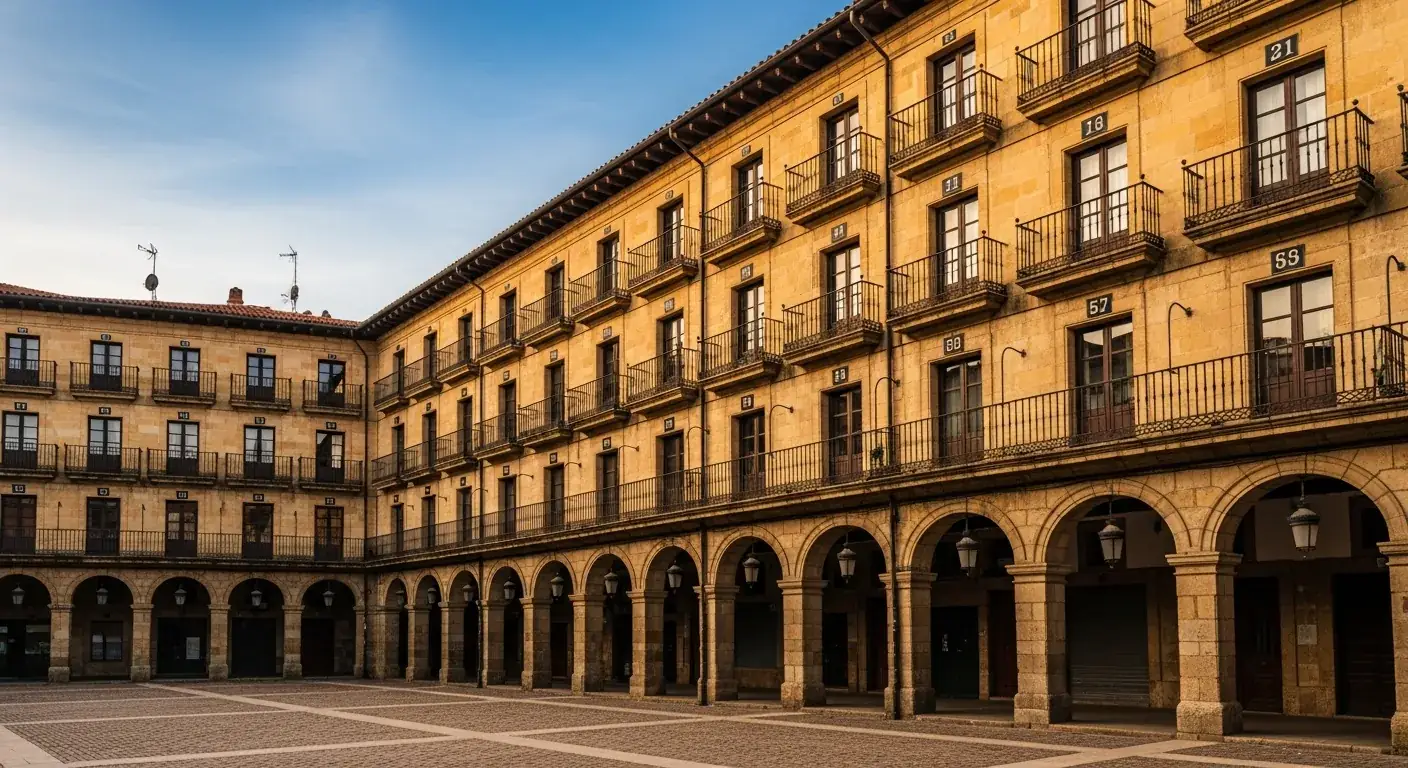
Off to the Spanish Basque Country
Direct trip from Bordeaux (~2 hours 55 minutes) to Zarautz and the Spanish Basque Coast, including the border crossing; stop wherever you like along the way—Hendaye, San Sebastián, Getaria. Fixed, written quote—no surprises on the meter.