
From Bordeaux to Hendaye: beach, cliffs and Basque coast
The last town on the Basque coast before Spain: the longest beach on the Basque coast, the Deux Jumeaux rocks, the Corniche and its cliffs, Abbadia Castle, and Île des Faisans—just over two hours from Bordeaux.
Hendaye at a glance
Hendaye is the last town on the Basque Coast before Spain, at the southwestern tip of France: a large seaside resort boasting the longest beach on the Basque Coast, facing the border marked by the Bidasoa River. Bordered by the ocean on one side and the Bidasoa estuary on the other, Hendaye overlooks the Spanish towns of Irun and Hondarribia across the river. Its Grande Plage with its golden sand, the Deux Jumeaux rocks, the Basque Corniche and its cliffs, the fabulous Château d’Abbadia, and the history of Île des Faisans make it a rich and surprising destination. Just over two hours from Bordeaux, with its beaches, cliffs, cultural heritage, and border location, Hendaye offers an exceptional seaside getaway at the crossroads of two countries.
Here are the key details to know before you go. Distances are calculated door-to-door from Bordeaux; the fare shown is for a private driver reservation at a fixed price provided in advance, with no unexpected meter charges regardless of traffic or stops along the way.
| Landmark | Details |
|---|---|
| Department | Pyrénées-Atlantiques (64), Nouvelle-Aquitaine |
| Basque name · demonym | Hendaia · the residents of Hendaye |
| Population | approximately 18,102 residents (INSEE 2023) |
| Location | Labourd, on the Bidasoa River, on the Spanish border |
| Don't miss it | La Grande Plage, the Basque Coast, Abbadia Castle |
| Distance from Bordeaux | about 219 km · about 2 hours and 25 minutes by car |
| Around | Saint-Jean-de-Luz, Hondarribia, San Sebastián, La Rhune |
A quick note to start with, to put Hendaye in context. The town is located in Labourd, the coastal province of the Basque Country, on the French-Spanish border marked by the Bidasoa River: it is the last French coastal town before Spain. Its Basque name is Hendaia. It faces not one, but two Spanish towns: the industrial town of Irun, upstream, and Fontarrabie (Hondarribia), the picturesque port at the river’s mouth. Finally, it boasts a heritage that is unexpected for a seaside resort—the neo-Gothic Château d’Abbadia—and a piece of land unique in the world, Île des Faisans, a territory shared with Spain. Every statement in this guide is based on verifiable sources, cited at the end of the article.
Here’s a rundown of everything you need to know: Hendaye’s location on the border, the Grande Plage and the Deux Jumeaux, the Basque Corniche and its cliffs, the Château d’Abbadia, Pheasant Island and its rich history, the city’s notable figures and heritage, the seaside resort and its lifestyle, nearby attractions, the best time of year to visit, and the easiest way to get there from Bordeaux with a chauffeur service—all thoroughly researched and verified.
Where is Hendaye located?
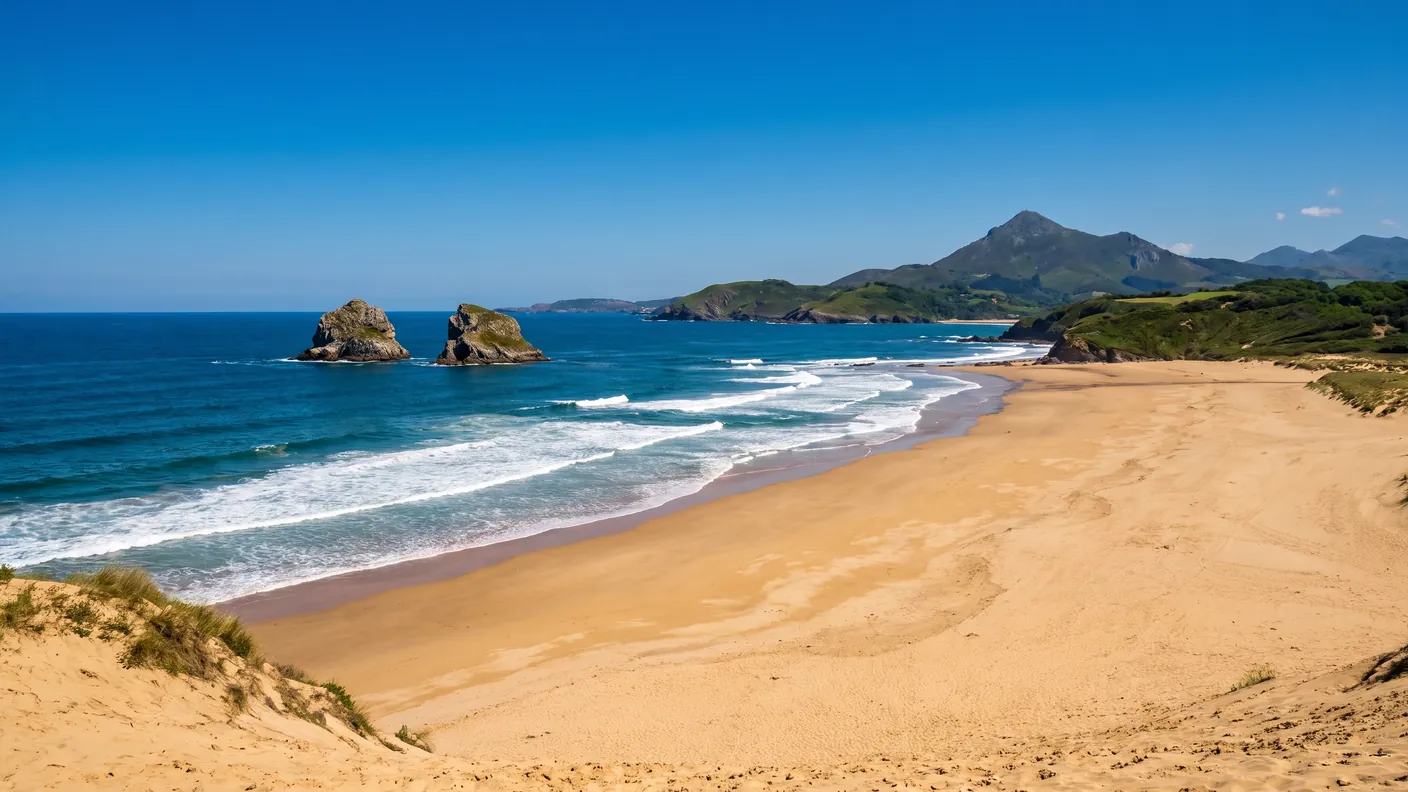
According to the INSEE Regional Comparison Tool published on July 9, 2026, Hendaye has 18,102 residents in 2023, with an average annual increase of 1.6% since 2017. The town is located on the Bidasoa River, across from Irun and Hondarribia, on the French-Spanish border.
At the border with Spain
The defining feature of Hendaye is the border. The town is built on the French bank of the Bidasoa, a coastal river that, for centuries, has marked the border between France and Spain along its final kilometers before flowing into the ocean at the far end of Txingudi Bay. Across from Hendaye, on the other side of the river, lie two distinct Spanish towns: Irun, the industrial and railway town, upstream, and Fontarrabie (Hondarribia), the charming fortified port with colorful houses, at the mouth of the river.
This border location has shaped the entire history of Hendaye, which has served in turn as a place of passage, conflict, and exchange between the two kingdoms. Today, the border is open, and people can travel freely from one country to the other, either by bridge or by the small ferry: Hendaye is thus a true gateway to Spain, from which one can reach San Sebastián, Fontarrabie, or Navarre—all within a few minutes—which adds to its appeal.
A Growing Beach Resort
With approximately 18,102 residents According to the 2023 census—which has shown a sharp increase in recent years—Hendaye is one of the major cities on the Basque Coast, second only to the Bayonne-Anglet-Biarritz metropolitan area. It is a seaside resort a well-known resort whose life revolves around its beach, marina, thalassotherapy center, and casino, but also a bustling border town with close ties to nearby Spain.
Hendaye consists of several neighborhoods: the historic upper town, centered around the church; the train station district (a major rail hub, TGV terminus, and gateway to Spain); and, above all, Hendaye-Plage, the seaside resort proper, with its villas, hotels, and waterfront. This diversity, combined with an exceptional natural setting between the ocean, the estuary, and the mountains, makes Hendaye a charming and well-rounded town, where the resort’s charm blends with the vibrancy of a border town, all within a setting of great beauty.
La Grande Plage and Les Deux Jumeaux
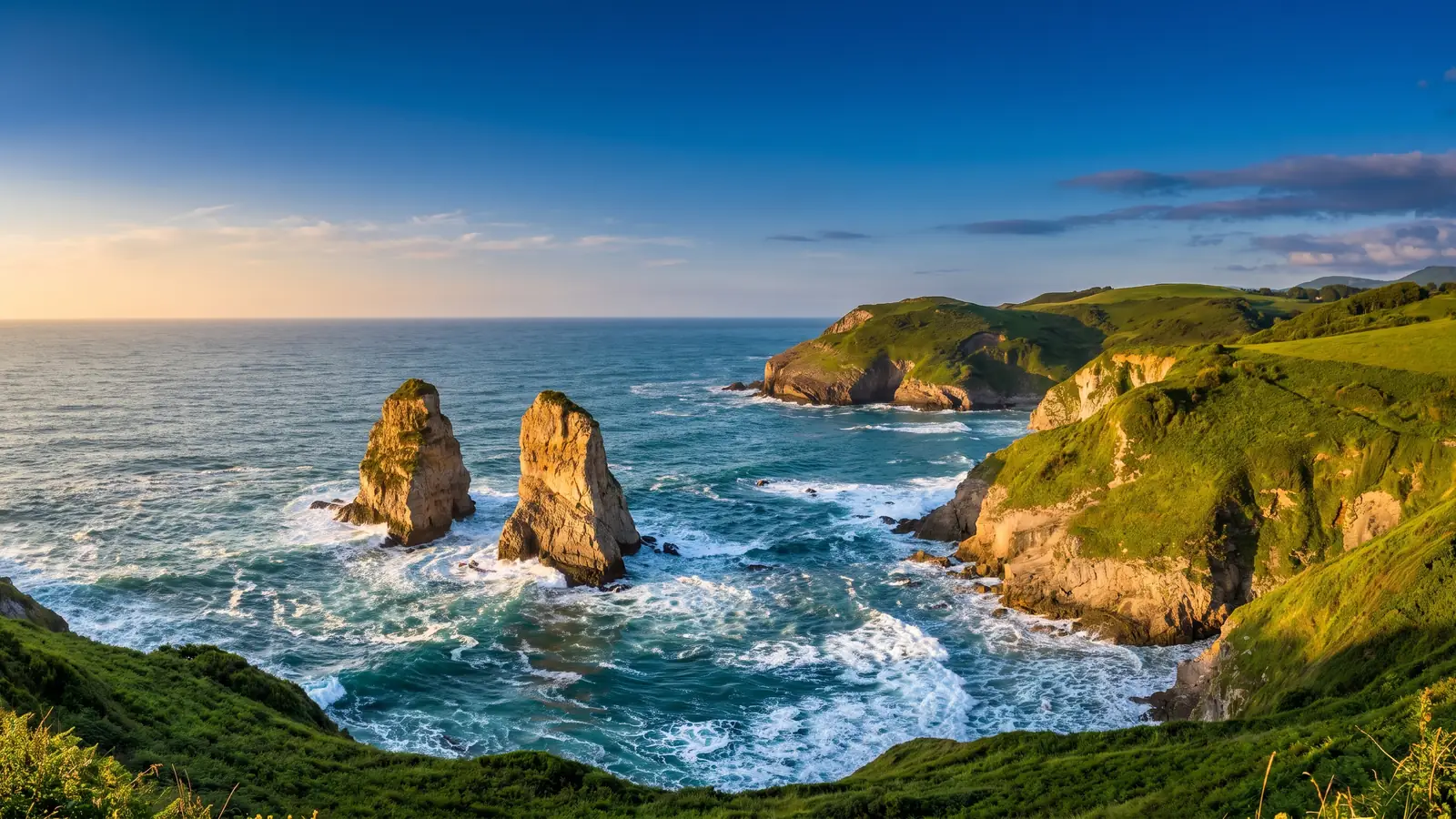
Hendaye boasts the longest beach on the Basque Coast—nearly 3.5 km of golden sand—overlooking the famous Deux Jumeaux rocks. A spacious waterfront, a rarity along this cliff-lined coast.
The longest beach on the Basque Coast
The Grande Plage in Hendaye is unique along the Basque coast. While the coastline from Biarritz to Spain is mostly made up of cliffs and coves, Hendaye boasts a vast and magnificent sandy beach, about 3.5 kilometers long—the longest on the entire Basque Coast. Wide open to the ocean and bordered by an elegant boardwalk and villas, it offers a vast, family-friendly, and safe space for swimming, playing, and relaxing—a favorite among both vacationers and surfers.
The seaside resort of Hendaye-Plage has developed around this beach, with its hotels, casino, and thalassotherapy center. Across from it lies the ocean, and on the horizon, the blue silhouette of the Spanish mountains. This vast, open, and sun-drenched beach is Hendaye’s greatest asset and the reason for its status as a seaside resort: a rare, expansive stretch of sand at the foot of the Pyrenees, on the border between two countries.
The Twins and the Bay
At the southern end of the beach, where the Corniche begins, stand the Deux Jumeaux (Dunbarriak in Basque), two tall, pointed rocks rising from the ocean at the foot of the cliffs: they are the sentinels and emblem of Hendaye, a spectacular sight that can be admired from the beach or the Corniche. To the north, on the other hand, the beach extends to the mouth of the Bidassoa River and Txingudi Bay, with its calmer waters, where the marina is nestled and where you can see the Spanish shore nearby.
Hendaye thus offers two distinct maritime landscapes: the powerful ocean and its wide beach on one side, and the peaceful estuary and its bay on the other, separated by the town. This dual coastal landscape—combining ocean and estuary—is one of Hendaye’s greatest assets: here, you can enjoy the waves and the sand, the rocks and the coves, and the tranquility of a sheltered bay—all in one place, at the tip of France.
| The Coast of Hendaye | Details |
|---|---|
| Grande Plage | ~3.5 km of sand · the longest on the Basque Coast |
| The Twins | two iconic rocks off the coast of the Corniche |
| Basque Coast | ~6 km of flysch cliffs, a protected natural area |
| Txingudi Bay | Bidassoa Estuary · French-Spanish border |
| Marina | on the Bidasoa River, across from Spain |
The Basque Coast
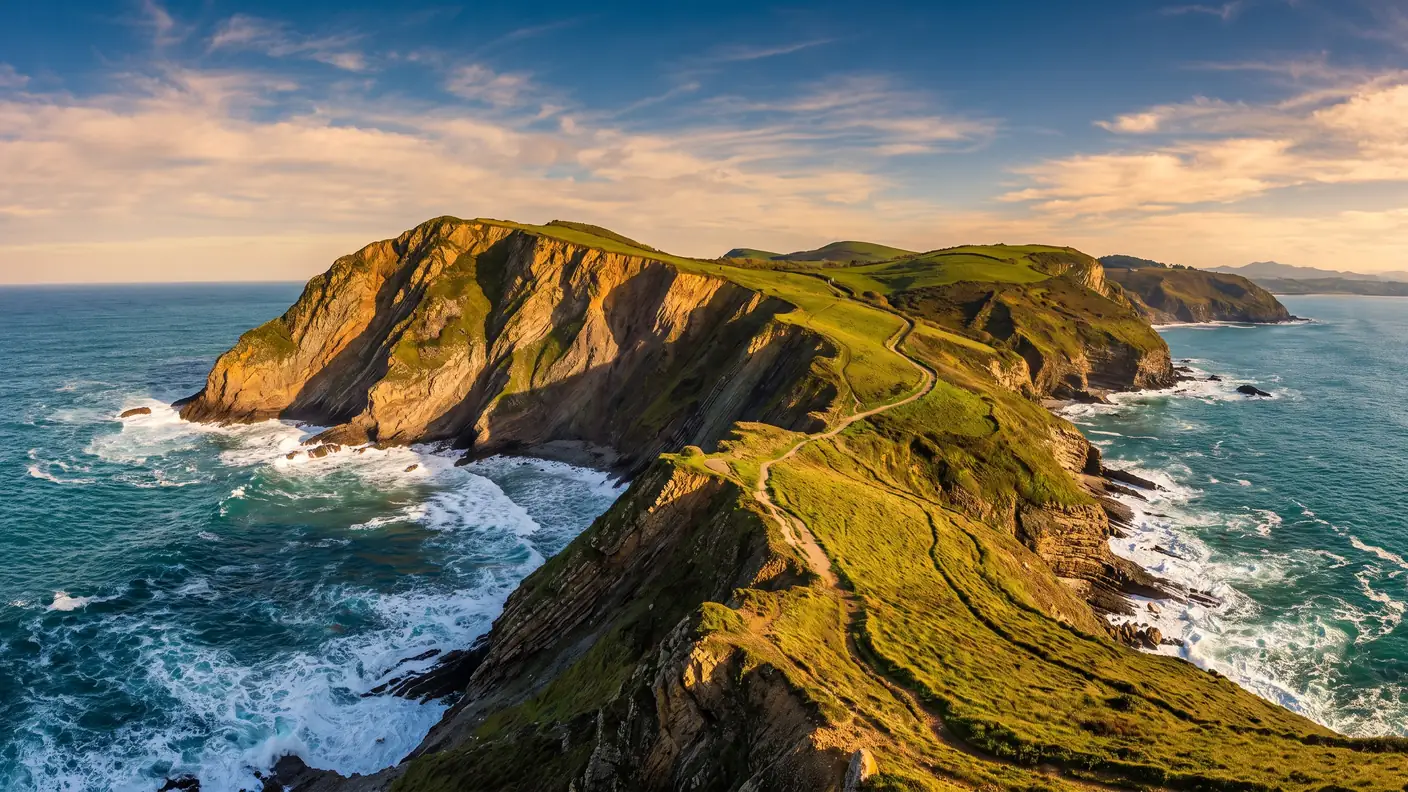
North of Hendaye, the Basque Corniche stretches for several kilometers, its spectacular cliffs plunging into the ocean: one of the most beautiful coastal landscapes in France. A protected natural area, where land meets sea.
Flysch cliffs overlooking the ocean
The Basque Coast is one of the natural gems of the Basque Country. Stretching for about six kilometers between Hendaye and Socoa (Ciboure), the coastline is lined with spectacular cliffs that plunge sheer into the Atlantic. These cliffs are famous for their flysch: a stack of rock strata, tilted and carved by erosion, forming astonishing shapes and telling the story of millions of years of geological history. Pounded by the waves and topped with heathland and green meadows, these cliffs offer breathtaking views of the ocean and, on clear days, of the mountains. A well-maintained and protected seaside trail runs along the Corniche, allowing you to explore it on foot, suspended between sky and sea, in a wild and unspoiled setting. It’s one of the most beautiful walks along the Basque coast, best enjoyed at sunset, when the cliffs and the ocean are ablaze with color. An unforgettable natural spectacle, right at the doorstep of Hendaye.
A Preserved Natural Area
The Basque Corniche is not just a scenic drive: it is a protected natural area, preserved from urban development, that stretches across the municipalities of Hendaye, Urrugne, and Ciboure. Heathlands, grasslands, cliffs, and small coves are home to remarkable flora and fauna, adapted to the sea spray and offshore winds, and the site is managed to balance public access with nature conservation.
This wild coastal strip, nestled between the seaside resorts, is a haven for hikers, nature lovers, and photographers, who come here to admire the cliffs, sunsets, and winter storms. From Hendaye, the Corniche is just a stone’s throw away: you can drive along it on the scenic route or hike it on the coastal trail. This is one of the main attractions of a visit to Hendaye, which combines, in a single location, a large family-friendly beach and one of the most beautiful wild coastlines in France.
Abbadia Castle
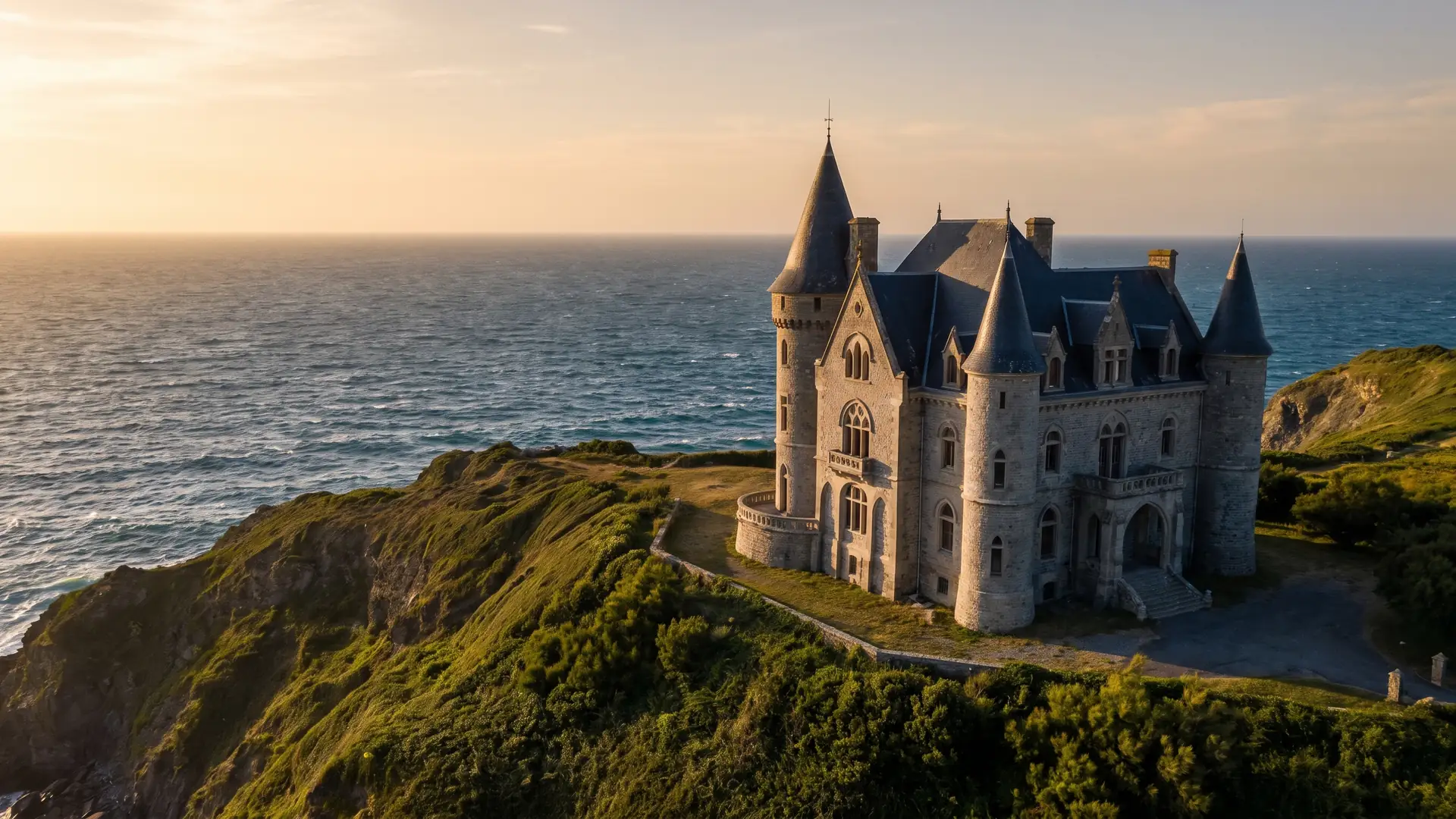
According to the Mérimée entry PA00084395 from the Ministry of Culture, Abbadia Castle was built in Hendaye between 1864 and 1879 for Antoine d’Abbadie, by Viollet-le-Duc and Duthoit. The entry also details the protected sections and the interior layout of the monument.
A Scholar's Neo-Gothic Mansion
The Abbadia Castle is one of the most stunning landmarks on the Basque Coast. This magnificent mansion in the Neo-Gothic and “troubadour” was coined, between 1864 and 1879, for Antoine d'Abbadie (1810–1897), an extraordinary scholar—an explorer of Ethiopia, astronomer, geographer, and linguist, and a member and later president of the Academy of Sciences. To design his dream home, he enlisted the help of the most famous architect of his time, Eugène Viollet-le-Duc (the restorer of Notre-Dame and Carcassonne), who, due to a lack of time, entrusted most of the work to his student Edmond Duthoit. The result is a romantic, opulent castle, bristling with towers, pinnacles, and gargoyles, blending Gothic architecture with Eastern touches, perched on a rugged cliff overlooking the Atlantic. At once a home, a laboratory, and a dream carved in stone, the Château d’Abbadia is a masterpiece of 19th-century eclecticism. century, one of a kind.
The Observatory and the Academy of Sciences
Abbadia Castle was not just a residence; it was a center of science. Antoine d’Abbadie, an astronomy enthusiast, set up a full-fledged observatory there, named “Ohartzea,” equipped with precision instruments. Astronomical research was conducted there until the 1970s.
Upon his death, the scientist bequeathed his castle and estate to the Academy of Sciences, with the stipulation that it continue his work. In particular, he demanded that a catalog of 500,000 stars be compiled within fifty years in his memory.
Still owned today by the Academy of Sciences, designated a historic monument, and recognized as a “Maison des Illustres,” the château is open to the public as a museum. Visitors can explore its richly decorated apartments, the observatory, and the legacy of an extraordinary man, all set on the ocean’s edge.
Pheasant Island and the Border
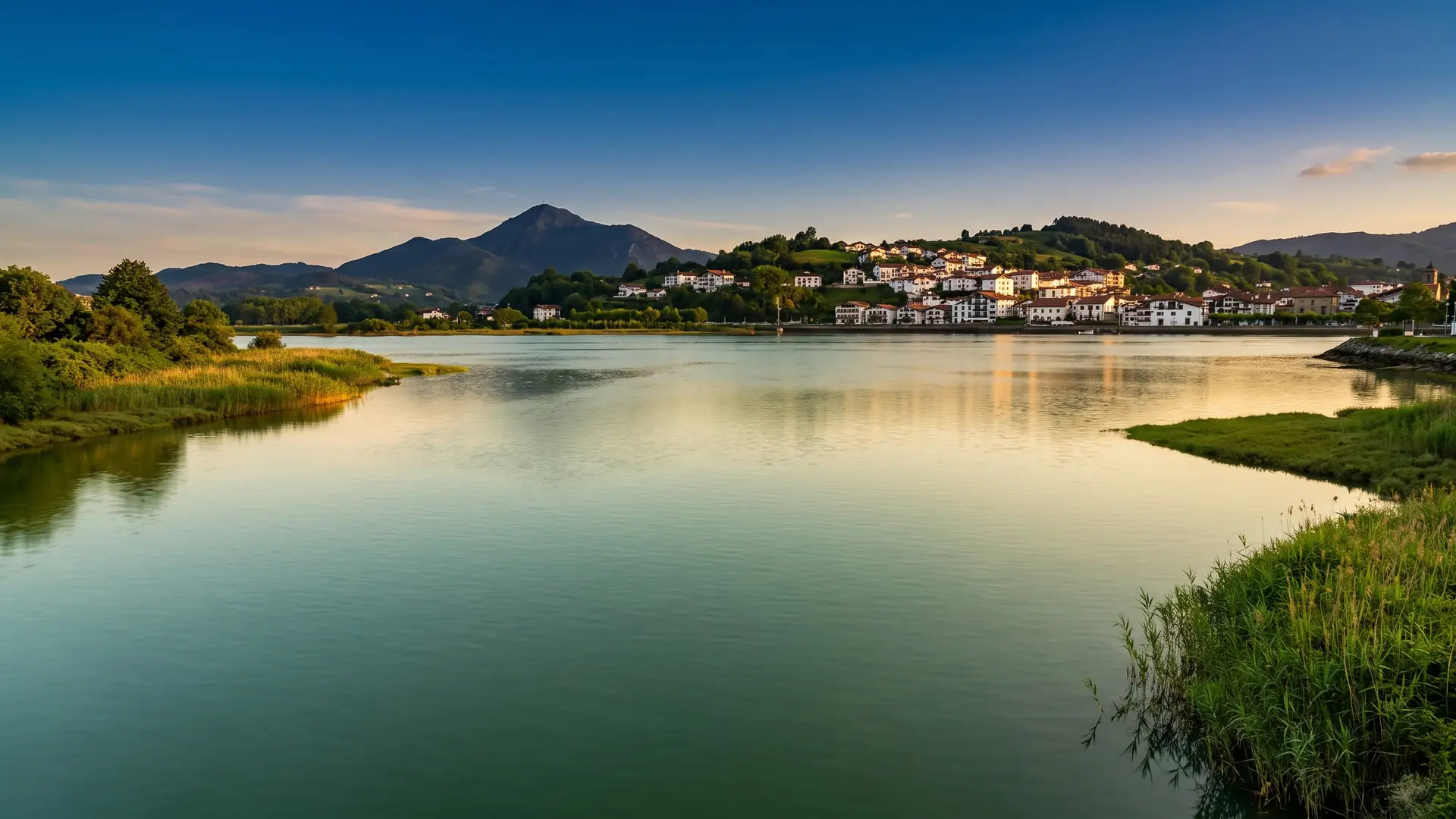
According to the official statement from the Ministry of Europe and Foreign Affairs, Île des Faisans is under shared French-Spanish sovereignty. From June 7 to November 7, 1659, it hosted the conference that led to the signing of the Treaty of the Pyrenees.
The World's Smallest Condominium
In the middle of the Bidassoa, just a few hundred meters from Hendaye, a tiny islet covering less than one hectare holds a vast history: the Pheasant Island, or Conference Island. It is the smallest condominium of the world — a territory under shared sovereignty between France and Spain, which take turns administering it, each for six months a year (Spain from the 1ster February through July 31, France from the 1ster August through January 31).
This unique status, dating back to the 17th century, makes this small piece of land one of the world’s most intriguing borders. It was here, on this neutral island, that major affairs between the two crowns were settled over the centuries: exchanges of princesses, peace negotiations, and royal meetings. The island is not open to the public—it can be admired from the banks of the Hendaye—but within its few square meters, it encapsulates a fascinating chapter of European history. A unique detail that adds to the charm of Hendaye.
The Treaty of the Pyrenees and the Marriage of Louis XIV
The Île des Faisans owes its fame to the year 1659. It was there, after twenty-four rounds of negotiations (from August to November), that Cardinal Mazarin, representing France, and Luis de Haro, representing Spain, signed the Treaty of the Pyrenees, which ended a long war and established the border between the two kingdoms. One of the provisions of this treaty was the marriage of the young King Louis XIV to the Infanta Maria Theresa of Austria, daughter of the King of Spain—a union intended to seal the peace.
The meeting of the two courts and the handover of the Infanta took place on the island in June 1660, before the wedding was celebrated in nearby Saint-Jean-de-Luz. Thus, for a year, this tiny islet was the center of European diplomacy and the starting point for Franco-Spanish peace. It is a prestigious history that we can contemplate today from the peaceful banks of the Bidasoa River in Hendaye.
| Pheasant Island | Details |
|---|---|
| Status | A Franco-Spanish condominium, the smallest in the world |
| Sovereignty | alternating every 6 months between France and Spain |
| Area | less than one hectare, in the middle of the Bidasoa River |
| Treaty of the Pyrenees | signed on the island in 1659 (Mazarin / Luis de Haro) |
| The Marriage of Louis XIV | Infanta Marie-Thérèse was sent back to the island in 1660 |
Hendaye, City of Remembrance
Hendaye has witnessed both major and minor historical events: the 1940 meeting between Hitler and Franco, the writer Pierre Loti, and the border wars. A border town steeped in history, at the far end of France.
The Hitler-Franco Meeting of 1940
The name Hendaye has remained associated with a dark chapter in 20th-century history century: the interview between Adolf Hitler and the general Francisco Franco, the October 23, 1940. It is at the train station In Hendaye, a border town, the two dictators met in the salon car of Hitler’s train to discuss Spain’s possible entry into the war on the side of the Axis. The meeting did not result in Spain entering the war on the side of the Axis.
Pierre Loti and the Border Wars
Hendaye was also the hometown of a great writer: Pierre Loti (1850–1923), a naval officer and famous novelist, who, having commanded a ship stationed in Hendaye, grew so attached to the town that he bought a house there, the Villa Bakhar Etxea (“the solitary house”), where he died on June 10, 1923. A lover of the Basque Country, he made it the setting for his novel *Ramuntcho*.
Before him, Hendaye’s location on the border had, over the centuries, made it a strategic military site: the Bidassoa was often a front line between France and Spain, and it was near here that Wellington’s armies crossed the river in 1813, at the end of the Napoleonic Wars. From 17th-century royal diplomacy century during the darkest hours of the 20th century, from border wars to literature, Hendaye has been a part of major historical events. This rich historical legacy—rare for a seaside resort—adds to the interest and depth of a visit.
The Seaside Resort and the Art of Living
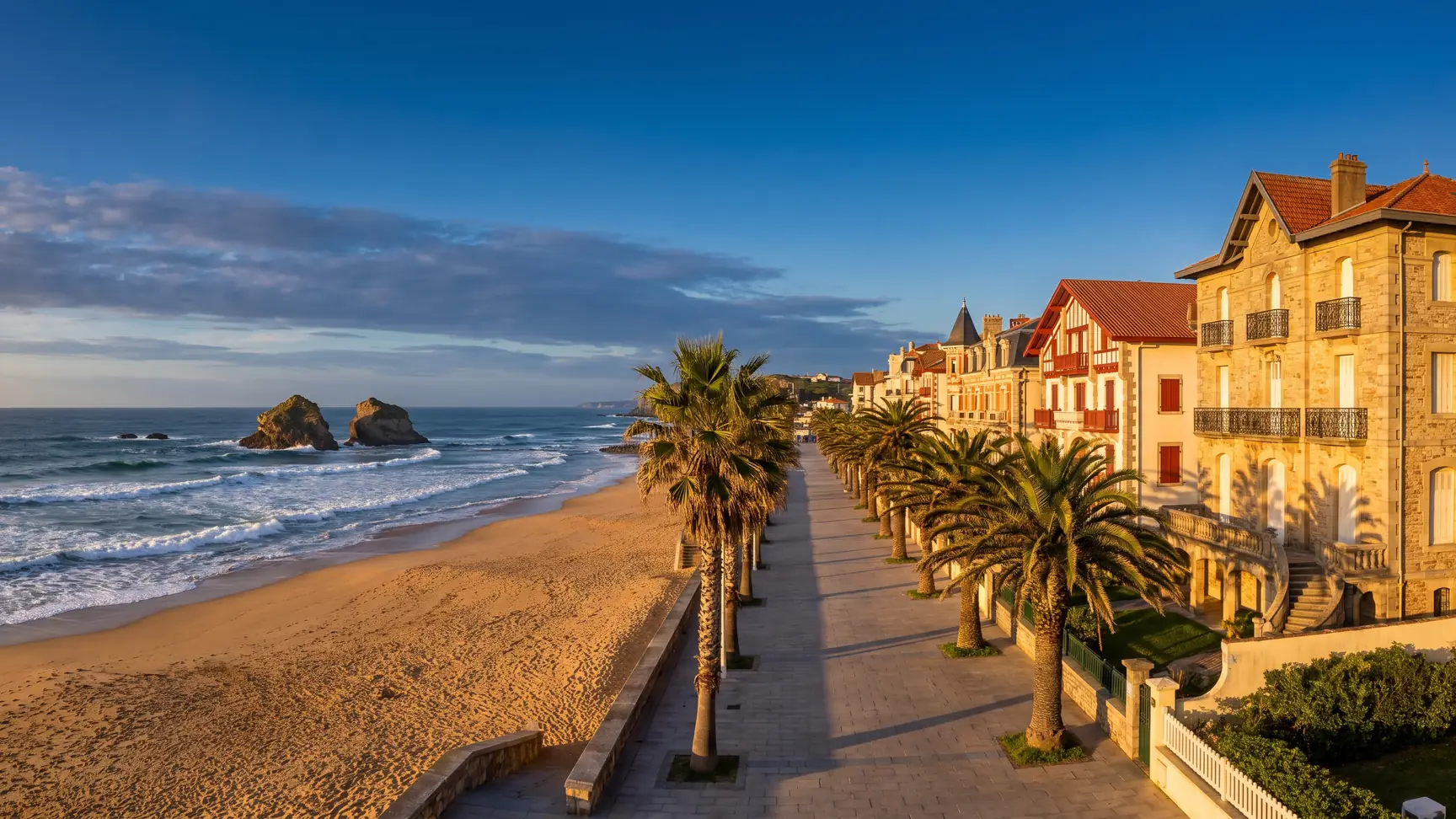
Hendaye-Plage is an elegant, family-friendly seaside resort, featuring a waterfront promenade, villas, a thalassotherapy center, and a casino, all set in a unique setting between the ocean and the mountains. The Basque way of life, right by the water.
Villas, Thalasso, and the Waterfront
The seaside resort d'Hendaye-Plage, founded at the turn of the 20th century century, has retained the charm of the Belle Époque and seaside bathing. A beautiful stretch of beach runs along the Grande Plage waterfront, with its promenade, its villas with its Basque and Neo-Basque architecture, hotels, and casino. The city has turned the sea into a way of life: people come here to swim and surf, but also to thalassotherapy and fitness, sailing, and water sports in the sheltered bay, or simply for a stroll and some relaxation overlooking the ocean.
The marina on the Bidasoa River adds to this maritime character. Family-friendly, active, and peaceful, Hendaye offers a relaxed and wholesome vacation atmosphere, set against an exceptional backdrop that includes the wide beach, the cliffs of the Corniche, the estuary, and the mountains. It’s a resort on a human scale—less glamorous than Biarritz, more nature-oriented—where it’s a pleasure to settle in.
A Gateway to Spain
One of the great advantages of Hendaye is its proximity to Spain. The border is just a few minutes away—whether you take the bridge or the small ferry that crosses the bay— you can reach Fontarrabie (Hondarribia) in no time, with its magnificent old fortified harbor and colorful houses, and you can continue on to San Sebastián (Donostia), the superb Spanish seaside city with its world-renowned cuisine (the famous pintxos), just under half an hour away.
This makes Hendaye an ideal base for exploring, in a single day, the French and Spanish Basque coasts on either side of the border. From Hendaye, you can enjoy the best of both countries: the French beaches and villages, and the Spanish tapas and cities of art. With a driver, you can cross the border hassle-free for a complete and carefree exploration of this cross-border Basque Country, one of the most beautiful regions in Europe.
What's there to see in the area, and when should you visit?
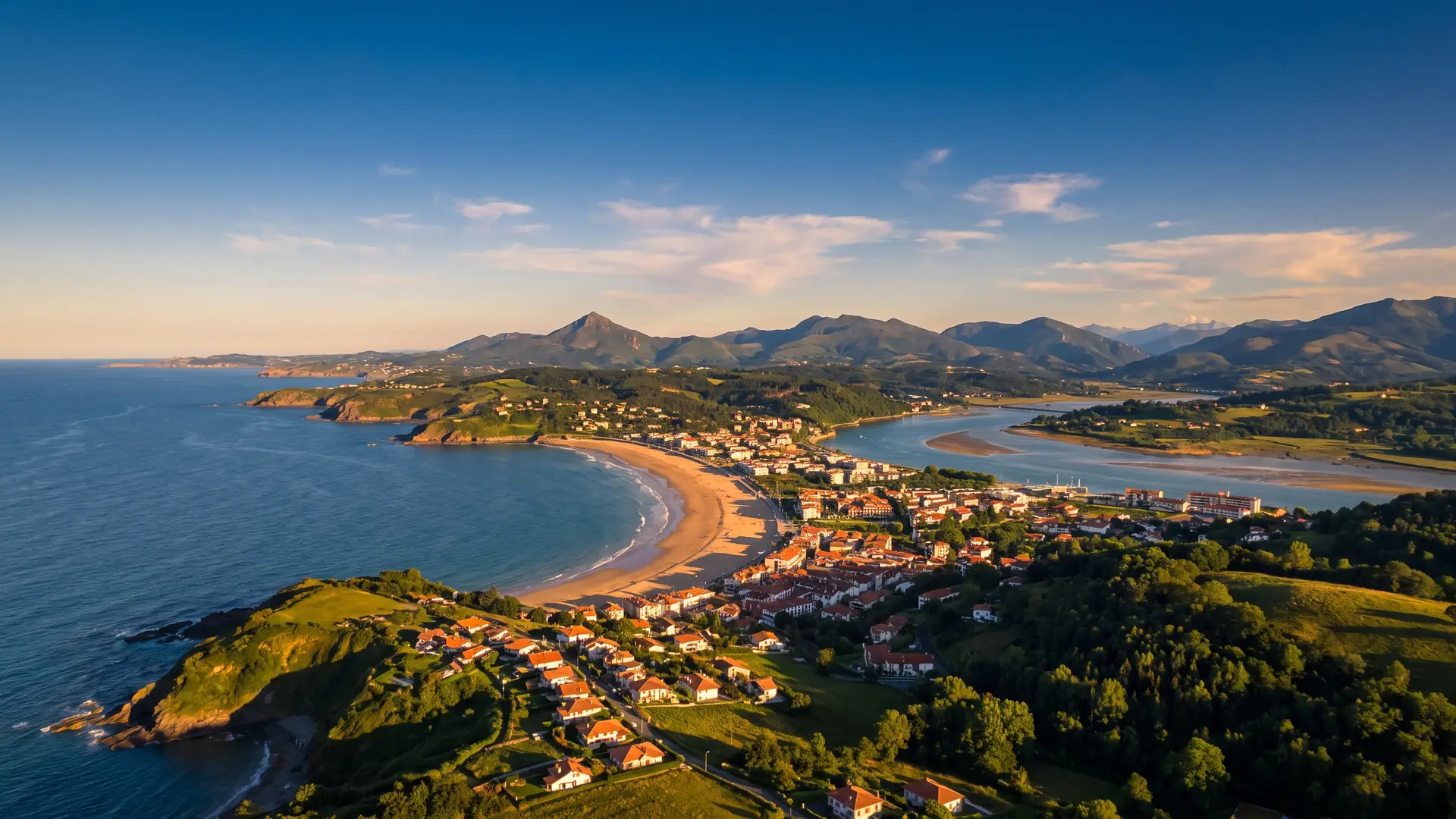
Hendaye is an ideal base for exploring the Basque Coast and Spain: Saint-Jean-de-Luz, Hondarribia, San Sebastián, and La Rhune are all within easy reach. A rare connection between two countries.
Saint-Jean-de-Luz, Spain, and La Rhune
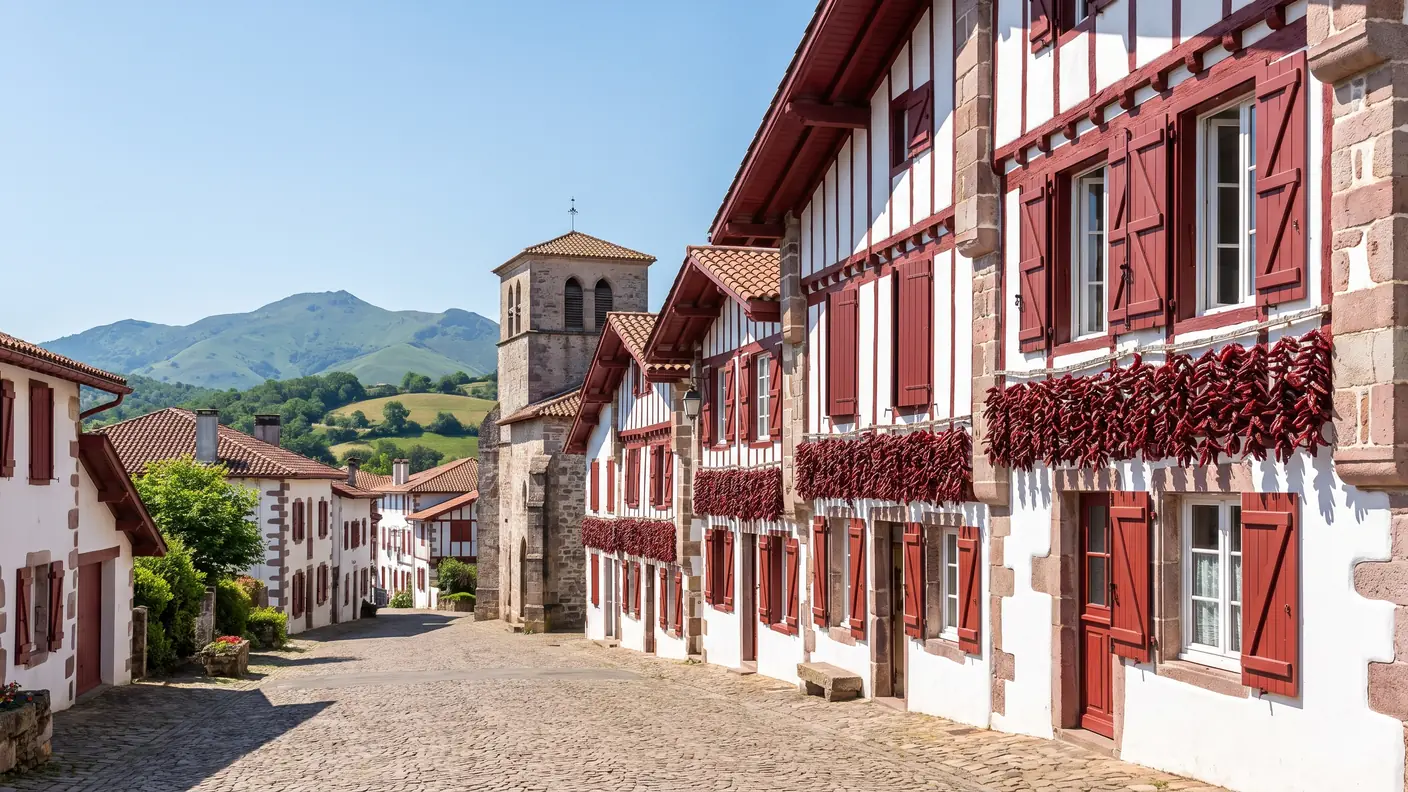
There's no shortage of things to discover in the area around Hendaye. Very close by, along the Corniche, Saint-Jean-de-Luz and Ciboure, the elegant fishing port where Louis XIV’s wedding was celebrated, and Biarritz, the chic resort, is just half an hour away. On the other side of the border, the Spain opens immediately: Fontarrabie and its old harbor, Irun, and above all San Sebastián (Donostia), one of Spain's most beautiful cities, with its La Concha Bay and Michelin-starred cuisine. Further inland, Labourd and its villages — Espelette and her spicy side, Ainhoa, Sare —, and the famous Rhune (905 m), the Basque mountain that you climb aboard a small train, offers superb excursions. With a driver, you can easily plan a tour from Hendaye to explore the Basque Country on both sides of the border—from the coast to the mountains—without worrying about driving or parking.
Biarritz and the French Basque Coast
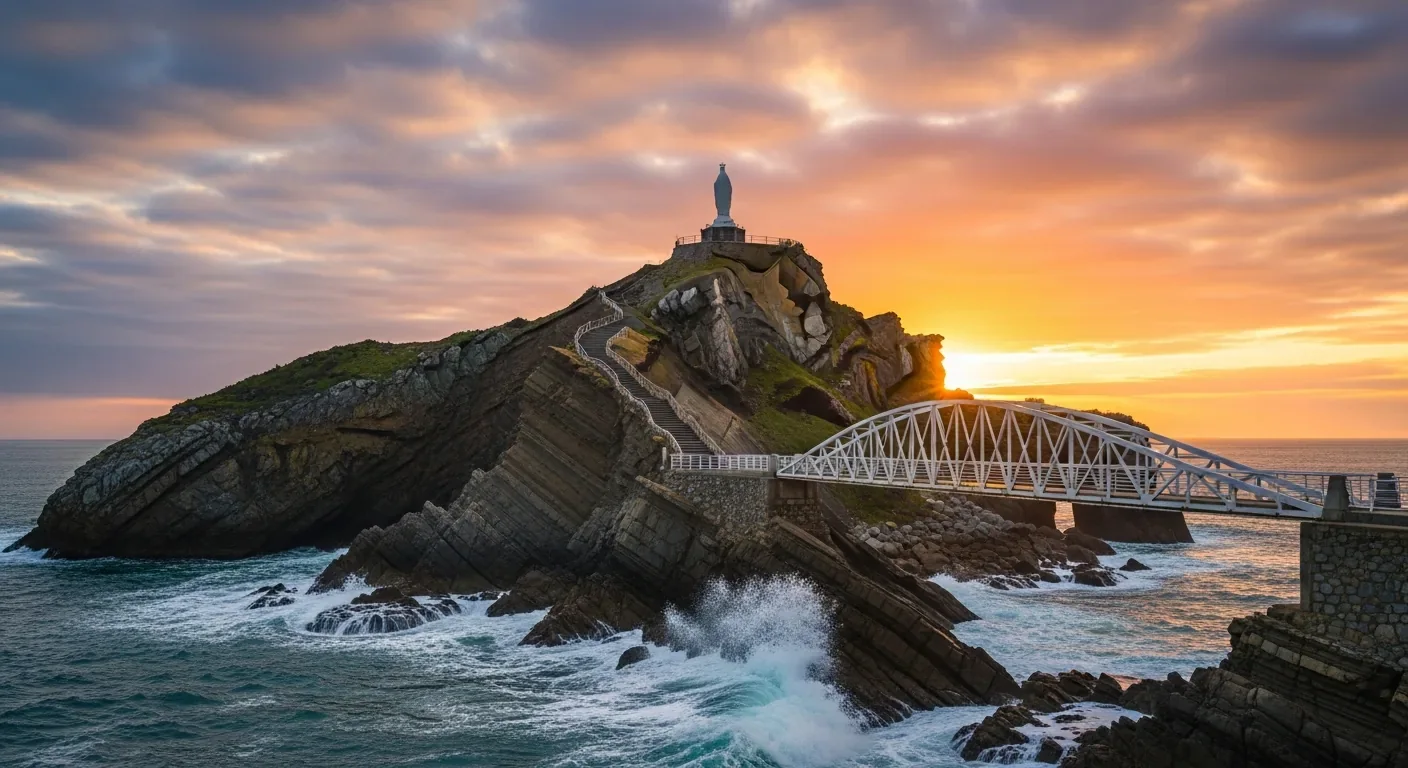
Heading north along the Corniche, the rest of the French Basque Coast unfolds: Saint-Jean-de-Luz and its harbor, just fifteen minutes away; Guéthary and Bidart, small fishing villages and surf spots; then Biarritz, the chic resort town with its Rocher de la Vierge; and Bayonne, the capital, with its cathedral and chocolate. This is the full splendor of the Basque coastline, stretching north of Hendaye for about thirty kilometers, featuring beaches, cliffs, and villages. From Hendaye, you can easily reach these resorts and ports for a complete exploration of the coast, in addition to excursions to Spain and the mountains. With a driver, you can effortlessly move from one stop to the next—from one beach to another—without worrying about parking, which is often difficult along the coast during peak season.
| About Hendaye | Distance | Interest |
|---|---|---|
| Fontarrabie (Spain) | ~5 km | Old fortified port, colorful houses |
| Saint-Jean-de-Luz | ~15 km | Port, bay, wedding of Louis XIV |
| San Sebastián (Spain) | ~25 km | La Concha, pintxos, city of art |
| Espelette | ~30 km | Chili peppers, Labourdine houses |
| La Rhune | ~20 km | Basque Mountains, small rack-and-pinion train |
When is the best time to visit Hendaye?
Hendaye is open to visitors year-round, but summer is the peak season, when the large beach and the resort come alive in the mild coastal climate. The summer It's time to enjoy the Grande Plage, swimming, water sports, and the resort atmosphere—all in a climate that’s more temperate than inland—this is also the busiest time of year, when parking can be difficult. The long days are perfect for swimming, sailing in the sheltered bay, strolling along the waterfront, and taking day trips across the border. The Basque coast, gentler and greener than the southern coasts, reveals all its charm at this time of year, nestled between the ocean, cliffs, and mountains.
Spring, Fall, and Winter
The spring and the fall, with their stunning lighting and fewer visitors, are ideal for exploring the Cornice, visit Abbadia Castle and explore the Spain just nearby, in a more peaceful atmosphere and with the weather still mild. The winter, which is quieter, reveals the coast in all its power when major storms crash against the cliffs and rocks of the Deux Jumeaux—a spectacular sight that enthusiasts come to admire—and allows visitors to enjoy thalassotherapy, the local heritage, and Spain without the crowds. In every season, the beauty of the site—nestled between the ocean, cliffs, estuary, and mountains—and its immediate proximity to Spain make Hendaye a charming and exotic getaway, just over two hours from Bordeaux. Every time of year has its own charm, from the height of the summer beach season to winter storms.
How to get to Hendaye from Bordeaux
Hendaye is located about 219 km from Bordeaux, or about a 2-hour, 25-minute drive via the A63 highway, which runs along the entire coast of the Landes and Basque regions to the Spanish border—Hendaye is the last French exit on this highway. The city is also a major rail hub, serving as the terminus for the TGV from Bordeaux and Paris and as a gateway to Spain (with connections to the Spanish rail network toward San Sebastián). However, while the train does serve Hendaye, it does not allow you to explore the Corniche or the villages of Labourd, nor does it provide a convenient way to cross the border and explore Spain. For a trip from Bordeaux to explore the beach, the cliffs, Abbadia Castle, and nearby Spain, a chauffeur-driven car is the most practical and flexible option, offering door-to-door service.
Train or executive car service?
To join Hendaye—and especially to explore the Basque Coast and Spain—hire a Private chauffeur, chauffeur service in Bordeaux offers true freedom: a direct, door-to-door trip from Bordeaux, with no transfers or waiting, and the option to make stops along the way—in Saint-Jean-de-Luz, on the Corniche, or across the border. This is especially valuable for a day trip combining the beach, the Château d’Abbadia, Hondarribia, and San Sebastián, where you’ll want to be able to cross from one country to the other without any hassle. We offer this route at fixed price provided in advance: Allow about 461 € € For the one-way trip, in a Mercedes sedan or a van seating up to 8 passengers, with a professional chauffeur. The price, set at the time of booking, remains fixed: it does not depend on traffic, traffic jams, or the number of stops, unlike a taxi meter.
This is the perfect option for a beach vacation, a cross-border getaway, a family trip, an event, or a simple transfer to or from the Bordeaux-Mérignac, Biarritz, or San Sebastián airports. You can travel alone, as a couple, or in a small group of up to 8 people, with luggage, and request stops in Saint-Jean-de-Luz, Fontarrabie, or San Sebastián. In practice, booking is quick and easy: simply provide your departure address in Bordeaux and your destination at Hendaye, along with the date, desired time, and number of passengers, and you’ll receive a fixed-price quote in writing. On the day of the trip, the driver picks up the passengers at the agreed-upon address and takes them directly to Hendaye, without any detours—a real advantage for a trip to the border between France and Spain.
| Route | Distance | Duration | Landmark |
|---|---|---|---|
| Bordeaux → Hendaye | ~219 km | ~2 hours 25 minutes | Starting at ~368 € for a private chauffeur service |
| Hendaye → Saint-Jean-de-Luz | ~15 km | ~20 min | port, bay, Louis XIV |
| Hendaye → Fontarrabie (Spain) | ~5 km | ~10 min | old fortified port |
| Hendaye → San Sebastián (Spain) | ~25 km | ~30 min | La Concha, pintxos |
Whether you come for the Grande Plage, the Corniche and its cliffs, the Château d’Abbadia, Île des Faisans and its rich history, or for its proximity to Spain, Hendaye is a treat for lovers of the Basque Coast and sweeping landscapes—an exceptional resort at the tip of France, where two countries meet.
Whether you’re planning a beach vacation, a trip across the border, or an event, booking a chauffeured transfer guarantees a comfortable and punctual ride—book a chauffeured transfer from Bordeaux → Hendaye or explore all our destinations.
Frequently Asked Questions
Where is Hendaye located?
Hendaye is a town in the Basque Country, located at the southwestern tip of the Pyrénées-Atlantiques department (64) in Nouvelle-Aquitaine, on the Spanish border marked by the Bidasoa estuary. It is the last French coastal town before Spain, bordered by the ocean at its Grande Plage and by Txingudi Bay on the other side. In Basque, it is called Hendaia. It faces the Spanish towns of Irun and Fontarrabie across the river. With a population of approximately 18,102 (INSEE 2023), it is a major seaside resort and border town. From Bordeaux, it’s about 219 km and a 2-hour, 25-minute drive via the A63 highway.
What is the distance between Bordeaux and Hendaye?
About 219 km by road, or about 2 hours and 25 minutes, via the A63 highway, which runs along the entire coast of the Landes and Basque regions to the border—Hendaye is the last French exit. If you take a professional chauffeur from Bordeaux, the fare is fixed and provided in advance, starting at approximately 461 € one way (sedan or van, door-to-door price). Hendaye is also the TGV terminus from Bordeaux, but the train does not allow you to explore the Corniche or the villages of Labourd afterward, nor does it provide convenient access to Spain—a private driver offers much greater flexibility for discovering the cross-border region.
Why is Hendaye Beach famous?
Because it’s the longest beach on the entire Basque coast: nearly 3.5 kilometers of golden sand. While the Basque coastline, from Biarritz to Spain, consists mainly of cliffs and coves, Hendaye boasts a vast beach that opens wide onto the ocean, lined with a promenade and villas, offering a large, safe swimming area for families that’s also popular with surfers. At its far end stand the famous Deux Jumeaux rocks. It is around this large beach that the resort town of Hendaye-Plage has developed, with its hotels, casino, and thalassotherapy center. A rare and expansive stretch of sand, at the foot of the Pyrenees and on the border with Spain.
What is Abbadia Castle?
This extraordinary Neo-Gothic castle perches on a cliff overlooking the ocean in Hendaye and is one of the most stunning landmarks on the Basque Coast. It was built between 1864 and 1879 for Antoine d’Abbadie (1810–1897), a scholar, explorer, astronomer, and geographer, and a member of the Academy of Sciences, by the famous architect Viollet-le-Duc and his student Edmond Duthoit. The castle, bristling with towers and gargoyles and blending Gothic and Oriental elements, housed an astronomical observatory. Antoine d’Abbadie bequeathed it to the Academy of Sciences, which still owns it today. Designated a historic monument and bearing the “Maison des Illustres” label, it is open to the public as a museum. A first-rate cultural experience.
What is Île des Faisans in Hendaye?
It is a tiny islet of less than one hectare, in the middle of the Bidasoa River, that holds a rich history: it is the world’s smallest condominium, a territory under shared sovereignty between France and Spain, which administer it in turn, for six months each. It was here, in 1659, that the Treaty of the Pyrenees was signed between Mazarin and Spain, establishing the border between the two kingdoms; one of its clauses was the marriage of Louis XIV to the Infanta Maria Theresa, whose wedding took place on the island in 1660. The islet is not open to the public, but it can be admired from the banks of the Hendaye. One of the most curious borders in the world.
What happened in Hendaye in 1940?
On October 23, 1940, the Hendaye train station was the site of a historic meeting: the encounter between Adolf Hitler and General Francisco Franco. The two dictators met in the parlor car of Hitler’s train at the border town to discuss Spain’s possible entry into World War II on the side of the Axis. The meeting did not result in Spain entering the war on the side of the Axis.
What is the Basque Coast?
This is one of the most beautiful coastlines in France: stretching for about six kilometers between Hendaye and Socoa (Ciboure), the coastline is lined with spectacular cliffs that plunge into the Atlantic. These cliffs are famous for their flysch—a stack of rock strata carved by erosion—which tells the story of millions of years of geological history. A protected natural area, topped with heathland and meadows, the Corniche offers breathtaking panoramic views of the ocean and the mountains. A seaside trail allows you to explore it on foot, between sky and sea. It is one of the most beautiful walks along the Basque coast, best enjoyed at sunset, just outside Hendaye.
Can you cross into Spain from Hendaye?
Yes, it’s very easy: the border is right there, just a few minutes away. Whether you take the bridge or the small ferry that crosses Txingudi Bay, you’ll reach Fontarrabie (Hondarribia) in no time, with its magnificent old fortified harbor lined with colorful houses. You can also head to San Sebastián (Donostia), one of Spain’s most beautiful cities, with its La Concha Bay and world-renowned cuisine (pintxos), just under half an hour away. This proximity makes Hendaye an ideal base for exploring both the French and Spanish Basque coasts in a single day. With a driver, you can cross the border without worrying about driving or parking, allowing you to enjoy the best of both countries.
What's there to see around Hendaye?
Plenty, on both sides of the border. Right nearby, along the Corniche, is Saint-Jean-de-Luz with its harbor, and Biarritz, the chic resort town, just half an hour away. On the other side, in Spain: Hondarribia and its old port, Irun, and San Sebastián (Donostia), with its La Concha Bay and Michelin-starred cuisine, just under half an hour away. Further inland, Labourd and its villages—Espelette and its chili peppers, Ainhoa, Sare—and the famous Rhune (905 m), which you can climb by mini-train. Hendaye, situated at the crossroads of two countries and between the ocean and the mountains, is an ideal base for exploring the entire Basque Country, both French and Spanish.
When is the best time to visit Hendaye?
Summer is the peak season to enjoy the large beach, swimming, and the resort’s lively atmosphere, all under the coast’s mild climate. Spring and fall, with their stunning light and fewer crowds, are ideal for exploring the Corniche, visiting the Château d’Abbadia, and discovering Spain in a more peaceful atmosphere. Winter, a quieter time of year, reveals the coast’s wild side as storms batter the cliffs and the Deux Jumeaux, and offers the chance to enjoy the thalassotherapy and local heritage without the crowds. No matter the season, the beauty of the area and its proximity to Spain make Hendaye a wonderful getaway, just two hours from Bordeaux.
Can I book a chauffeur service from Bordeaux through Hendaye?
Yes. We offer the Bordeaux → Hendaye route (approximately 219 km, about 2 hours and 25 minutes via the A63) at a fixed price, starting at approximately 461 € one-way, in a Mercedes sedan or a van seating up to 8 passengers, with a professional chauffeur. The trip is direct, door-to-door, with flexible stops—ideal for a beach vacation or a cross-border getaway (the beach, the Corniche, Abbadia Castle, Fontarrabie, and San Sebastián)—where you’ll want to be able to move between countries hassle-free. You can bring luggage and beach gear. The fixed-price quote is provided and confirmed in writing before departure, with no unexpected meter charges.
Further Reading
- The King's Neighboring Town: see the Saint-Jean-de-Luz Guide (the port, the bay, the wedding of Louis XIV), 15 km away
- The capital of the Basque Country: see the Bayonne Guide (the cathedral, the chocolate, the Vauban ramparts)
- The Land of Chili Peppers: See the Espelette Guide (AOP chili peppers, Labourdine-style houses)
- Plan your trip: Book an executive car service from Bordeaux → Hendaye or explore all our destinations
Sources and References
- Wikipedia — Hendaye — geography, border, Grande Plage, demographics
- Ministry of Culture — Château Abbadia, entry PA00084395 — Antoine d'Abbadie, Viollet-le-Duc/Duthoit, 1864–1879, Academy of Sciences
- Ministry of Europe and Foreign Affairs — Île des Faisans — condominium, Treaty of the Pyrenees (1659), marriage of Louis XIV (1660)
- Wikipedia — Interview with Hendaye — Hitler-Franco, October 23, 1940, Hendaye Station
- INSEE — Regional Comparison Tool, Hendaye (64260) — 2023 population: approximately 18,102 residents
Article updated on July 24, 2026.
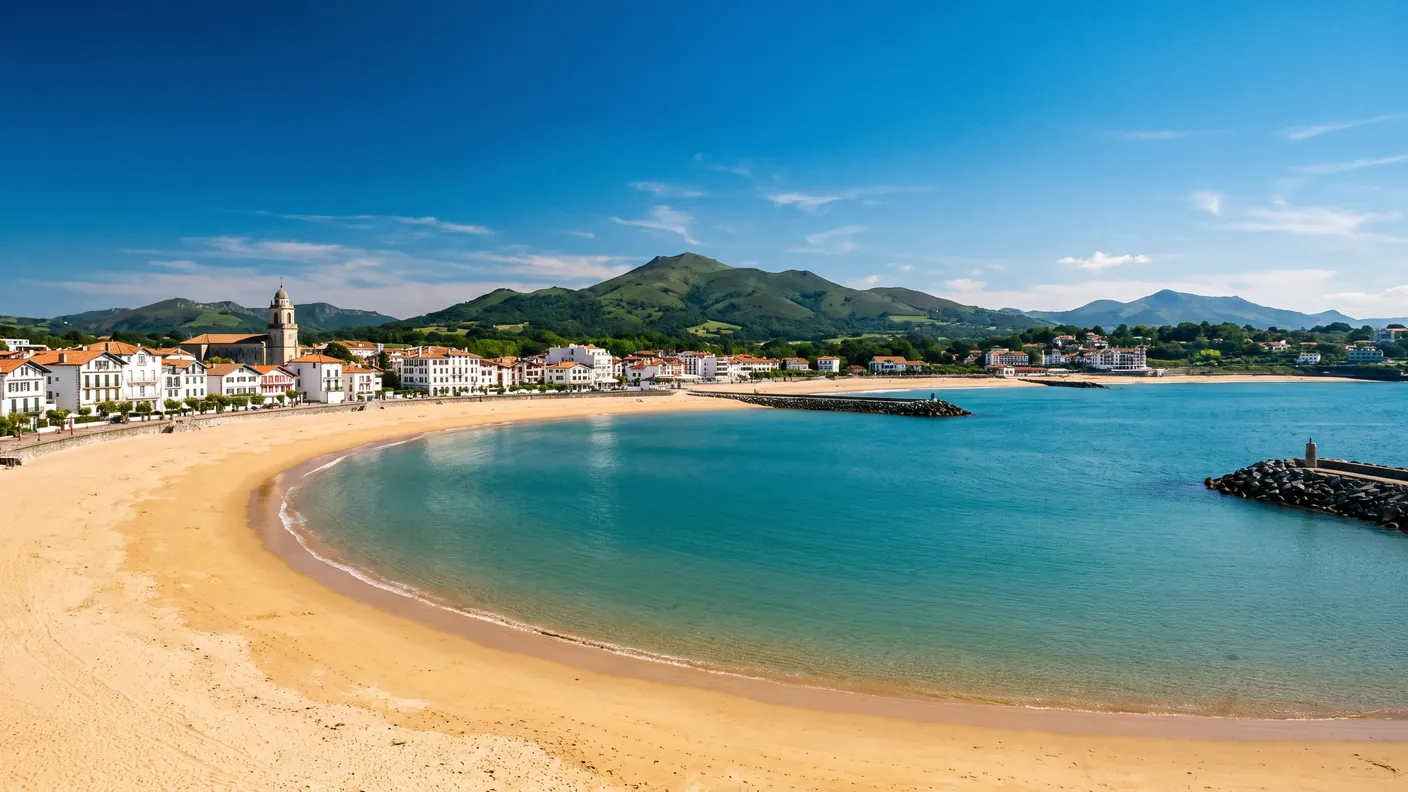
On the way to the Basque border
Direct trip from Bordeaux (~2 hours 25 minutes) to Hendaye and the Basque Coast, with stops along the way at your convenience—Saint-Jean-de-Luz, the Corniche, Spain. Fixed, written quote—no surprises on the meter.