Private driver regulations in France: the legal framework
A practical guide to France's chauffeur regulations: the legal framework as it applies in Bordeaux and Gironde, including the Grandguillaume Act, professional card, vehicle standards, REVTC register, financial guarantee, red identification stickers, professional liability insurance, advance-booking rules, legal differences from taxis and penalties.
Key Points at a Glance
French chauffeur regulations apply to the driver, vehicle and operating company. From 27 June 2026, operators must also declare their employed drivers, professional card numbers and active vehicle registrations to the REVTC. Vehicles require an annual roadworthiness inspection. Operating without registration or carrying a passenger without a prior booking now attracts stronger criminal penalties, detailed below.
- Chauffeur regulations are the national rules governing pre-booked chauffeured passenger transport, including in Bordeaux.
- The legal framework is based on the Grandguillaume Act No. 2016-1920 of December 29, 2016 and on the Transportation Code (Articles L3120-1 and L3122-1).
- The driver must hold a professional card, issued by the prefecture after an examination, valid for five years and renewable after continuing training.
- The vehicle must be less than 7 years old, measure at least 4.50 m × 1.70 m, have a power output of at least 84 kW, and have 4 to 9 seats and 4 doors (exceptions for hybrid and electric vehicles).
- The company registers with the REVTC (~170 €) and displays the required red identification stickers (~€35). Since 27 June 2026 it must also declare employed drivers, their professional card numbers and active vehicle registrations. A €1,500 financial guarantee per vehicle may apply, depending on ownership status.
- Professional liability insurance is compulsory; failing to hold it can lead to a fine of up to €3,750. The operator must also arrange an annual vehicle inspection.
- A licensed operator cannot accept a street hail without a booking or wait for passing customers on public roads; those rights are reserved for taxis.
- VTC Bordeaux uses licensed chauffeurs, compliant vehicles and current insurance, with a written fixed price from €50 for a Mercedes C-Class Sedan.
The legal framework for chauffeur services in France
In France, chauffeured passenger transport operates only on advance booking. It requires a professional card, an operator registered with the REVTC, a compliant insured vehicle, red identification stickers and an annual roadworthiness inspection. The same rules apply in Bordeaux. Registration duties and penalties were strengthened from 27 June 2026.
What changed on June 27, 2026?
Since 27 June 2026, each operator must report its employed drivers, their professional card numbers and active vehicle registrations to the REVTC. Penalties for fraudulent or illegal operation were also strengthened. Failing to register, or carrying a customer without a prior booking, can lead to three years' imprisonment and a fine of up to €45,000 for an individual or €225,000 for a legal entity, with possible additional penalties. The effective date and requirements appear in Service-Public Entreprendre fact sheet F31027, checked on 24 July 2026.
These regulations govern France's chauffeured passenger transport sector, covering drivers, operators and vehicles.
It specifies who is allowed to drive, what type of vehicle they may drive, under what operating conditions, and what a driver is and is not permitted to do while driving.
This framework applies everywhere, including in Bordeaux and the Gironde department, where the prefecture and law enforcement agencies ensure compliance on a daily basis.
Understanding these rules helps passengers distinguish a registered professional from a questionable offer. Our guide to a Bordeaux chauffeur covers the service experience beyond legal compliance.

How does French law define the service?
Under French law, this service uses a vehicle with 4 to 9 seats, including the driver, reserved in advance to carry passengers for payment.
This definition in the Transport Code distinguishes the sector from taxis, car-sharing and public transport, each of which has its own legal framework.
The French legal term is “voiture de transport avec chauffeur”, which appears on the driver's professional card.
The rules governing the sector
Two main sources underpin the profession: the Grandguillaume Law of 2016 and the Transport Code, supplemented by several technical decrees.
The Transportation Code sets forth the general principles in Articles L3120-1 and L3122-1, while administrative orders specify the technical standards for the vehicle.
In addition, there are local administrative regulations that govern inspections and the practical implementation of the national framework in each French department.
The advance reservation requirements remain in effect, but the reporting obligations to the REVTC and the penalties were strengthened on June 27, 2026.
The regulations have three objectives: to protect passengers, to ensure the safety of the industry, and to maintain fair competition with taxis.
For the user, knowing these rules is not just an abstract concept: it’s what allows them to recognize, in a matter of seconds, a driver who is truly in compliance.
Private passenger transport, or T3P, groups taxis, pre-booked chauffeured transport and motorcycle taxis under a single regulatory framework.
Each profession has its own set of rules, but they all require that practitioners be registered, trained, insured, and subject to oversight.
The Grandguillaume Act and the Transportation Code
The Grandguillaume Law is the modern foundation of the sector's rules; it was enacted in response to conflict between taxis and booking platforms in the 2010s.
The Grandguillaume Act of 2016
Law No. 2016-1920 of 29 December 2016, known as the Grandguillaume Act, reorganised France's private passenger-transport sector.
In particular, it ended the use of LOTI status for urban transport vehicles with fewer than ten seats, requiring those drivers to meet the rules for pre-booked chauffeured transport.
Its aims were to clarify the rules, improve driver training and create fairer competition between taxis and licensed operators.
This law is named after Representative Laurent Grandguillaume, the bill’s sponsor, who led the mediation efforts between the conflicting parties in the sector.
The Transportation Code: L3120-1 and L3122-1
The Transport Code regulates all private passenger transport under Article L3120-1, which covers taxis, pre-booked chauffeured transport and motorcycle taxis.
Article L3122-1 specifically defines this pre-booked service, with no provision for on-the-spot pickups. (official source, verified on July 22, 2026)
These articles establish the sector's core principle: the passenger books first and the driver completes the scheduled journey, never an impromptu street pickup.
Before 2016, the sector was fragmented among taxis, licensed chauffeured operators and vehicles using LOTI status, creating numerous legal disputes.
The Grandguillaume Act restricted LOTI status to public transportation carrying at least ten people, closing a loophole that had been widely exploited in the past.
It also established a national exam as the requirement for entry into the profession, where previously some regions had applied requirements that varied widely from one another.
The Transportation Code serves as the backbone of the system: it establishes a hierarchy of regulations and refers to the implementing decrees.
These decrees, published in the Official Journal, set forth operational details such as vehicle dimensions and the terms and conditions for the red sticker.
The professional chauffeur card
The professional card authorises an individual to drive a regulated chauffeured vehicle for payment. Operating without it is illegal.
Requirements for obtaining the professional card
To obtain the card, you must have held a Class B driver's license for at least three years, or two years if you previously participated in a supervised driving program.
The applicant must also provide a clean criminal record and undergo a medical examination certifying their fitness for professional driving.
The license is issued by the department’s prefecture—in Gironde, by the Bordeaux Prefecture—after passing the professional licensing exam.

Examination, validity and renewal
The professional examination consists of a written test covering regulations and safety, followed by a practical test of driving skills and customer care.
Once issued, the professional card is valid for five years and may be renewed after mandatory continuing training. (official source, checked on 22 July 2026)
This renewal ensures that the driver stays up to date on legal changes, which reassures passengers boarding the vehicle that the driver is reliable.
The card must be available during an inspection: it proves that the holder is authorised to work as a licensed driver.
The professional card certifies verified competence: without passing the examination, no candidate can legally provide the service.
The written examination covers transport law, road safety, management and English, a common foundation for future drivers.
The practical test assesses driving, passenger service and the handling of a real journey from pickup to drop-off.
The five-year renewal requires several days of continuing education to bring the driver's knowledge of regulations up to date.
An employed chauffeur must also hold this card: it belongs to the individual, not the company.
Holding this card commits the driver to a certain standard of conduct, a criterion detailed in our Criteria for Selecting a Good Driver.
| Criterion | Legal Requirement |
|---|---|
| Driver's License | Class B driver's license for 3 years (2 years if driving under supervision) |
| Criminal Record | compatible with the practice of the profession |
| Medical Fitness | mandatory medical examination |
| Exam | written exam + practical exam |
| Card Validity | 5 years, renewable with continuing education |
Vehicle standards for chauffeured passenger transport
A chauffeured vehicle must meet rules on age, dimensions, power, doors and seating capacity, with certain exemptions for hybrid or electric models. The operator must also arrange an annual roadworthiness inspection, without an automatic reminder. These requirements sit alongside the professional card and insurance.
Technical standards for chauffeured vehicles
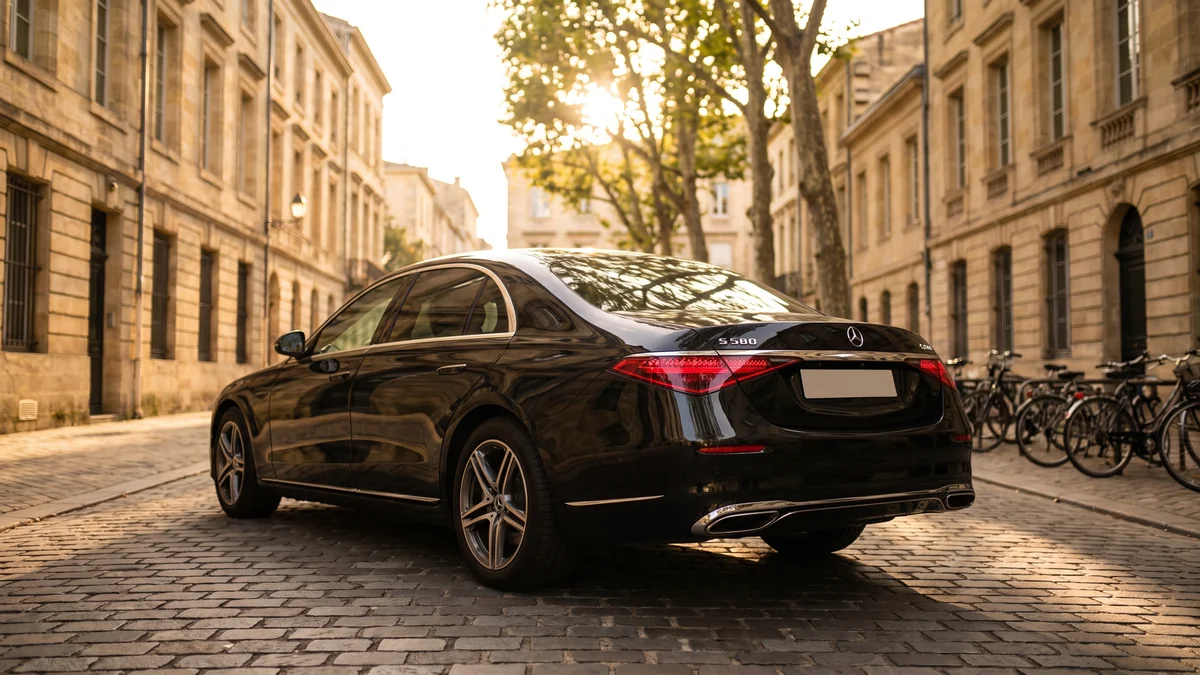
Since December 2023, a compliant vehicle must be less than seven years old and at least 4.50 metres long and 1.70 metres wide.
It must have a net power output of at least 84 kW, have four doors, and seat between four and nine people, including the driver. (official source, verified on July 22, 2026)
Exemptions regarding vehicle age and dimensions apply to hybrid and electric vehicles, which the regulations aim to promote.
Number of Seats and Passenger Capacity
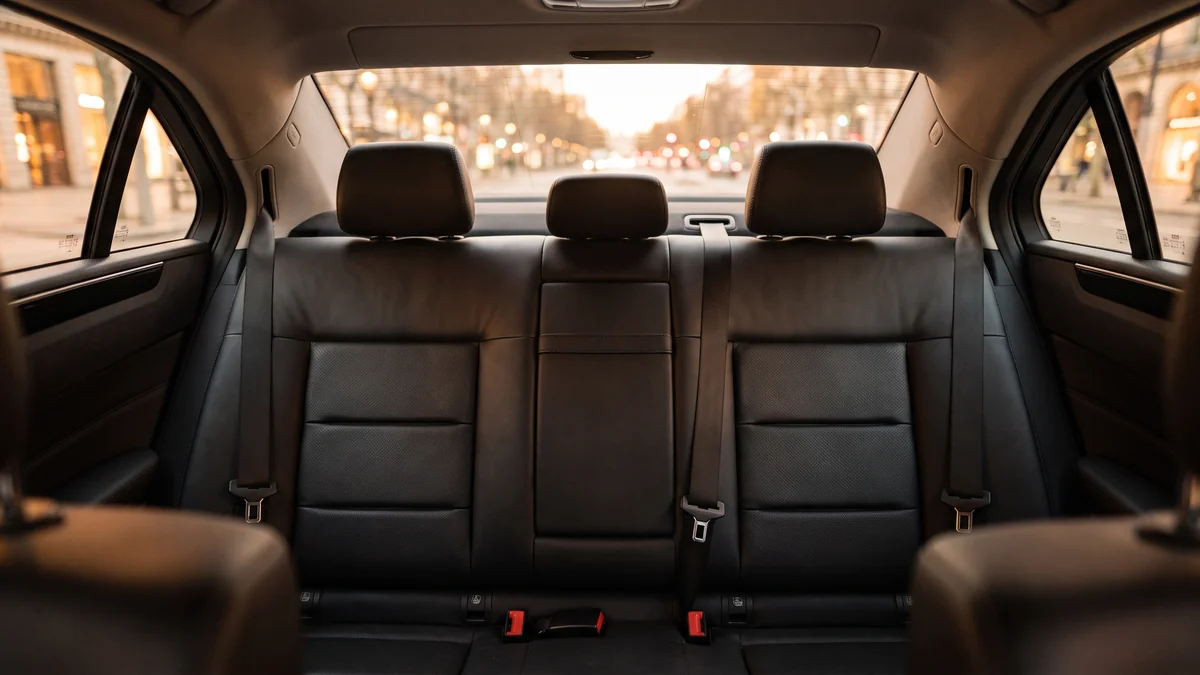
The permitted configuration has four to nine seats, including the driver, allowing no more than eight passengers.
Above nine seats, the vehicle falls under public passenger transport, which requires a D1 licence for up to sixteen seats or a D licence for more than sixteen.
A van with a driver remains in the chauffeured passenger transport category if it has no more than nine seats, as explained in our Group Transport Guide.
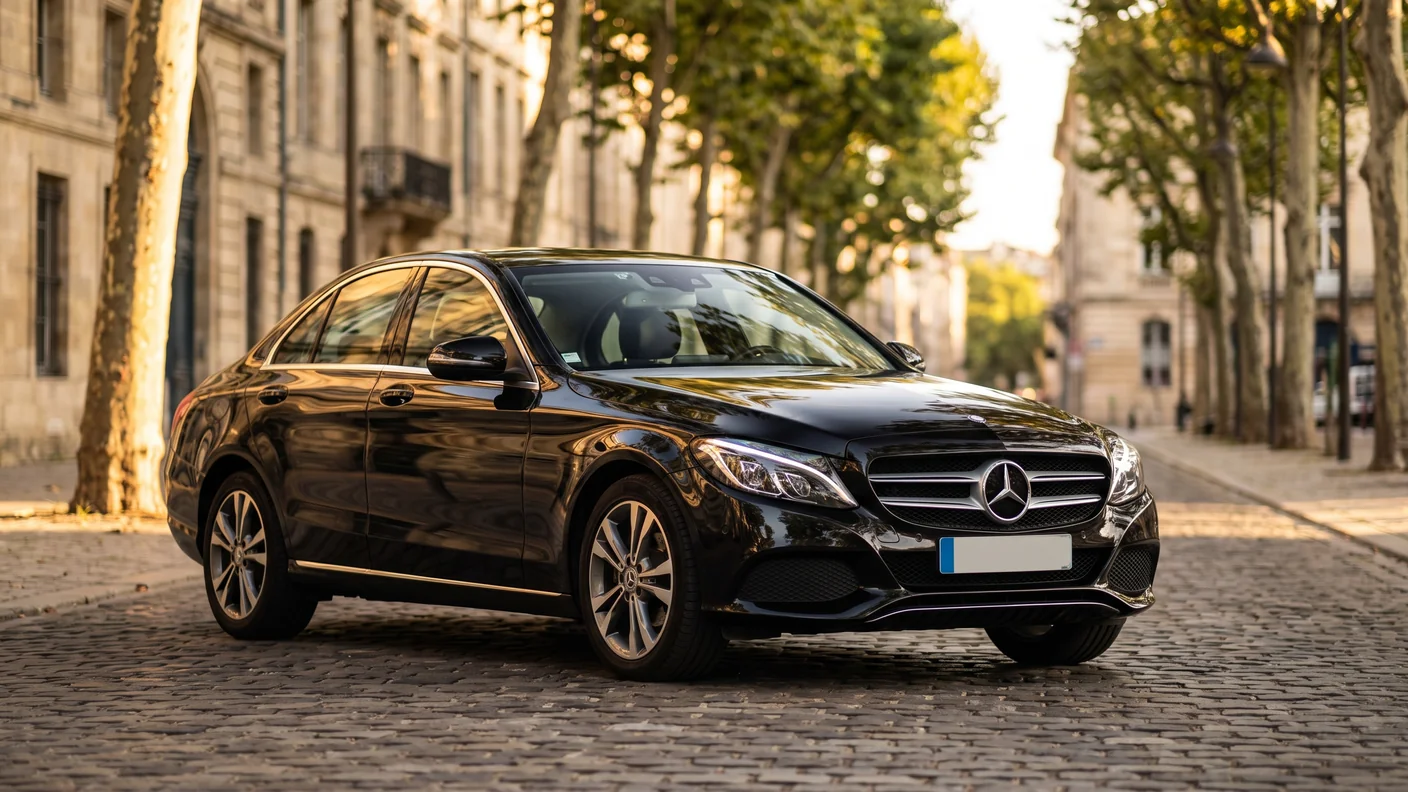
At VTC Bordeaux, the saloon is a Mercedes C-Class and the standard van seats seven passengers; an economy configuration for eight is available on request.
These standards are not just a marketing gimmick: they require a spacious, powerful, and modern vehicle suitable for transporting people.
Vehicle age is calculated from the date of the vehicle's initial registration, a detail that operators monitor closely to ensure compliance.
The 84-kW threshold—equivalent to about 114 chevaux—excludes small-displacement engines and ensures a powertrain suitable for long-distance intercity travel.
The vehicle's generous dimensions ensure ample passenger and trunk space, especially for airport transfers with bulky luggage.
A vehicle used for paid chauffeured transport must undergo a roadworthiness inspection every year, initiated by the operator without an automatic reminder. This frequency is confirmed by the official Service-Public Entreprendre fact sheet F31027.
In practice, a recent executive saloon readily meets these criteria, which explains its prevalence in professional fleets.
Any vehicle that no longer meets one of the criteria, including the age limit, must be withdrawn from service and replaced by the operator.
| Criterion | Chauffeured Vehicle Standards | Details |
|---|---|---|
| Vehicle age | under 7 years old | since December 2023 |
| Dimensions | ≥ 4.50 m × 1.70 m | minimum length and width |
| Power | ≥ 84 kW | net engine power |
| Doors and seats | 4-door, 4 to 9 seats | Includes driver; maximum of 8 passengers |
| Hybrid / Electric | possible exemptions | regarding age and dimensions |
| Vehicle Inspection | annual | at the operator's initiative, without an automatic reminder |
REVTC, financial guarantee, identification and insurance
The operator must be registered with the REVTC, renew this registration every five years, ensure the business is operating, and identify the vehicles with a red sticker. As of June 27, 2026, the operator must also report the drivers employed, their professional license numbers, and the license plates in use. A financial guarantee may apply depending on the vehicle’s ownership status.
The REVTC Registry and the Financial Guarantee
Every operator must join the national REVTC register before trading, for a fee of approximately €170. (official source, verified on July 22, 2026)
This registration, which must be renewed every five years, is a prerequisite for the right to operate and allows the relevant authorities to identify the company. As of June 27, 2026, the REVTC account must also include the names of the employed drivers, their professional license numbers, and the license plate numbers of the vehicles in operation. Service-Public Entreprendre provides details on these statements.
A financial guarantee of €1,500 per vehicle may be required if the operator does not own the vehicle in accordance with one of the exemptions provided for by the regulations; please verify your situation and the acceptable supporting documents when registering with the REVTC. (official source, verified on July 22, 2026)

The required red identification stickers
A vehicle in service displays red identification stickers on the windscreen and rear window.
It costs about 35 euros and is affixed to the lower left corner on the front and the lower right corner on the back, so that it is visible during inspections. (official source, verified on July 22, 2026)
This sticker proves that the vehicle is properly registered for chauffeured passenger transport; its absence should concern an attentive passenger.
Professional Liability Insurance
Every operator must carry professional liability insurance covering passengers in the event of bodily injury or property damage.
This requirement protects the customer: without it, the operator faces a fine of up to 3,750 euros and a ban on conducting business. (official source, verified on July 22, 2026)
Checking that the driver is properly insured is one of those useful habits to get into, just like checking for the red sticker and the professional license.
These corporate obligations complement those of the driver: the regulations apply to both the driver and the company that employs him or her.
The red sticker is issued after registration with the REVTC: it is tied to the vehicle and must be replaced if you change cars.
Professional liability insurance differs from personal insurance: it specifically covers the paid transportation of passengers.
Registration with the REVTC is done online and requires the submission of a set of supporting documents, which are verified by the administration before approval.
The registration number issued serves as a permanent identifier for the operator, much like a license plate specific to its transportation business.
A responsible operator keeps all supporting documents current, a standard highlighted in our guide to a Bordeaux chauffeur.
| Obligation | Details | Cost / Penalty |
|---|---|---|
| REVTC Registration | National Register of Chauffeured Transport Operators | ~€170, to be renewed every 5 years |
| Financial Guarantee | Depending on the vehicle's registration status — check the requirements on Service-Public | |
| Red sticker | required distinguishing mark | ~€35, front and rear |
| Professional Liability Insurance | passenger coverage | fine of up to 3,750 € for non-compliance |
Street hails, waiting and return to base
The rules draw a strict line between pre-booked chauffeured transport and taxis: several practices reserved for taxis are prohibited for licensed operators.
The ban on street hails
Picking up passengers on the street without a prior reservation, known as street hailing, is prohibited for licensed operators and remains exclusive to taxis.
A licensed driver may not stop for a person who hails the vehicle: every journey must be booked in advance by phone or online. (official source, verified on July 22, 2026)
This rule, established by the Transport Code, legally distinguishes the sector from taxis and governs its day-to-day operation.
Waiting on public roads and returning to base
A licensed vehicle may not park on public roads to solicit customers or wait like a taxi outside a station or hotel.
After a ride, the driver must generally return to their parking spot, unless they already have a new reservation to fulfill. (official source, verified on July 22, 2026)
This return-to-base principle prevents operators from working like taxis and preserves the balance intended by the Grandguillaume Law.
This requirement explains why the service must always be booked in advance. Our page on the alternative to taxis in Bordeaux explains the passenger experience.
These prohibitions define the profession: journeys are provided by appointment, not in response to street hails.
The distinction can be verified because every pre-booked journey leaves a reservation record.
A licensed driver may wait near the pickup point for a booked passenger, but must never solicit someone passing by.
The often-misunderstood return-to-base rule prevents licensed vehicles from occupying public space as an informal taxi rank.
These rules also protect customers by ensuring that each journey is booked, traceable and priced before departure.
This is why advance booking is central to our guide on the differences between taxis and pre-booked chauffeurs.
The legal difference between a taxi and chauffeured transport
The difference between a taxi and a licensed chauffeured operator is not merely a matter of price: it is a legal distinction set out in two separate provisions of the Transport Code.
Two Distinct Legal Systems
The taxi holds a license—a parking permit—that grants it the exclusive right to pick up passengers on the street and at taxi stands.
Chauffeured transport, by contrast, operates exclusively by advance booking, without a meter and at a fixed rate known before the journey begins.
This legal distinction has very concrete implications for how each service is ordered and billed to the end passenger.
A taxi may decline a long-distance booking and prefer street pickups; a licensed operator, by contrast, relies exclusively on advance reservations.
Understanding these models prevents common misunderstandings about their respective benefits, as explained on our services page.
Our detailed comparison of the differences between taxis and pre-booked chauffeurs explains both models; the table below summarises their key legal points.
| Legal criterion | Taxi | Chauffeured transport |
|---|---|---|
| Authorization | Parking permit (ADS) | Professional card + REVTC registration |
| Street hails | authorized (monopoly) | prohibited |
| Temporary Parking | authorized dedicated station | Prohibited on public roads |
| Pricing | meter | fixed price for advance reservations |
| Distinctive feature | "TAXI" lighted sign + license plate | red sticker |

Penalties and compliance checks
From 27 June 2026, failure to register with the REVTC or carrying a passenger without a prior booking is punishable by three years' imprisonment and a €45,000 fine for an individual, or €225,000 for a legal entity. Additional penalties may apply. Official source: Service-Public Entreprendre.
The Main Penalties That May Be Imposed
Practicing without a professional license remains illegal. Failure to register with the REVTC is now subject to the stricter criminal penalties described above.
Failure to maintain professional liability insurance is punishable by a fine of up to 3,750 euros for the operator at fault.
As of June 27, 2026, providing service to a customer without a prior reservation is also subject to stricter criminal penalties; in particular, a judge may order the suspension of the driver’s license, or the impoundment or confiscation of the vehicle.
These inspections, conducted during police or gendarmerie operations, are intended to protect passengers and ensure fair competition.
The scale of penalties reflects the severity of the offense: a missing sticker does not have the same consequences as an entirely clandestine operation.
Matching platforms also have obligations and may only list drivers and vehicles that are in full compliance.
For passengers, this penalty system serves as an indirect guarantee: it drives the entire market toward greater legal compliance.
Inspections may take place on the road, but also through document reviews, during which the authorities verify the accuracy of vehicle registration and insurance information.
A compliant chauffeur can produce the professional card, identification stickers and insurance documents during a check.
Conversely, an unlicensed operator puts their passengers at risk, as they are not covered by valid insurance in the event of an accident during the trip.
| Violation | Penalty Incurred |
|---|---|
| Operating without a professional card | criminal penalty, illegal activity |
| Not registered with the REVTC | 3 years' imprisonment and a fine of €45,000 (for an individual) or €225,000 (for a corporation) |
| Lack of Professional Liability Insurance | a fine of up to 3,750 € |
| Service available without a prior reservation | 3 years' imprisonment and a fine of €45,000 (for an individual) or €225,000 (for a corporation), with possible additional penalties |
| No red sticker | citation, required to comply |
How chauffeur regulations apply in Bordeaux and Gironde
The rules are national, but enforcement takes place locally under the authority of the Gironde Prefecture in Bordeaux.
Enforcement in Gironde
In Gironde, the Bordeaux Prefecture issues professional cards and verifies operator compliance across the department.
Roadside checks, conducted by the police and the gendarmerie, focus on the red vignette, the driver's license, and the vehicle's insurance.
In Bordeaux Métropole, this strict approach protects passengers and brings order to a market where licensed drivers coexist with providers that are sometimes questionable.
Bordeaux's business, tourism and wine sectors create strong demand for chauffeured transport, making effective oversight especially important.
At Saint-Jean Station and Mérignac Airport, the distinction between taxis and pre-booked operators must be strictly observed.
The Gironde Prefecture offers online services for professionals, ranging from vehicle registration to license plates.
This local centralization facilitates oversight and makes it possible to quickly remove from the market any operator that is no longer in compliance.
Choosing a licensed operator in Bordeaux
Passengers can check compliance through a visible red sticker, the driver's professional card and a clearly stated fixed price.
Our criteria for choosing a reliable licensed driver in Bordeaux explain these passenger-side checks in detail, beyond the legal framework outlined here.
Choosing an established local service provider reduces the risk of encountering a non-compliant offer that isn't discovered until it's too late—on the very day of your trip.
At VTC Bordeaux, every journey meets these standards: a licensed driver, a compliant vehicle, current insurance and a written fixed price starting at €50 for a saloon.
A chauffeur-driven car gives you access to the entire region: check it out Our destinations from Bordeaux for the most popular routes.
For the day-to-day passenger experience, read our complementary guide: How does the service work?
You can also book a licensed chauffeur and request a free online fixed-price quote, confirmed within 30 minutes.
Frequently Asked Questions
What rules govern chauffeured passenger transport in France?
France regulates chauffeured passenger transport through the Grandguillaume Law No. 2016-1920 of 29 December 2016 and the Transport Code, particularly Articles L3120-1 and L3122-1. Drivers must pass an examination and hold a professional card; companies must register with the REVTC and provide any required financial guarantee; vehicles must meet standards for age, dimensions and power. Professional liability insurance and the distinctive red sticker are mandatory. Operators may accept only prior bookings and cannot cruise for customers or wait at taxi ranks. These national rules apply in Bordeaux and throughout Gironde.
What is the Grandguillaume Act?
The Grandguillaume Law is Law No. 2016-1920 of 29 December 2016, which substantially reorganised private passenger transport in France. It is named after MP Laurent Grandguillaume, who mediated between taxi drivers and booking platforms during disputes in the mid-2010s. The law ended LOTI status for urban transport vehicles with fewer than ten seats, bringing those drivers into the pre-booked chauffeured transport regime. It strengthened training, regulated platforms and clarified legal status to support fairer competition with taxis. Together with the Transport Code and technical decrees, it remains the sector's modern legal foundation.
How do I obtain the professional driver card?
Applicants must have held a category B driving licence for at least three years, or two after accompanied driving. They need a criminal record compatible with the profession and a medical certificate confirming fitness for professional driving. The qualifying examination includes written tests on regulation and safety plus a practical assessment of driving and customer care. The departmental prefecture issues the professional card; in Gironde, this is the Bordeaux Prefecture. It is valid for five years and renewable after mandatory continuing training, and must be presented during an inspection.
What standards apply to chauffeured vehicles?
A chauffeured vehicle must be less than seven years old, measure at least 4.50 m by 1.70 m, produce at least 84 kW, have four doors and seat four to nine people including the driver. Certain exemptions apply to hybrid or electric vehicles. It must display red identification stickers at the front and rear and pass an annual roadworthiness inspection, arranged by the operator. VTC Bordeaux uses a Mercedes C-Class as its standard Sedan.
How many seats may a licensed vehicle have?
A licensed chauffeured vehicle has four to nine seats including the driver, so its largest configuration carries eight passengers. Above nine seats, it falls under public passenger transport, requiring a D1 licence for up to sixteen seats or a D licence beyond sixteen. A van with a driver therefore remains in this regulatory category provided it does not exceed nine seats in total. At VTC Bordeaux, the standard van carries seven passengers, while an economy version may carry eight on request. Larger groups may need several vehicles or a coach.
What is the REVTC registry?
The REVTC is the national register of chauffeured transport operators. Registration is mandatory before trading, renewed every five years and costs approximately €170. From 27 June 2026, operators must report employed drivers, professional card numbers and the registrations of active vehicles. They must also provide proof of insurance and, depending on vehicle ownership, a financial guarantee. Failure to register may result in up to three years’ imprisonment and a fine of €45,000 for an individual or €225,000 for a legal entity. Official source.
What is the red identification sticker?
The red sticker is the sector's mandatory identification mark and should not be confused with a parking permit. It costs approximately €35 and must appear in the lower left corner of the front windscreen and the lower right corner of the rear window. It proves that the vehicle is registered and authorised to operate, allowing law enforcement to check compliance quickly. For passengers, its absence casts doubt on the service's legality. The sticker, professional card and insurance are practical checks before entering the vehicle.
Does the operator need specialist insurance?
Yes. Every operator needs professional liability insurance, separate from ordinary personal motor cover. It protects passengers against bodily injury or property damage during the journey. Operating without it is a serious offence, exposing the operator to a fine of up to €3,750 and a ban on trading. Passengers can check the red sticker, professional card and insurance. Every VTC Bordeaux vehicle operates with current professional liability cover.
Can a licensed driver collect someone without a reservation?
No. Street hailing is strictly prohibited for pre-booked chauffeured transport and reserved for taxis, which may collect someone who signals them or waits at a taxi rank. A licensed driver cannot stop spontaneously for a passing customer: every journey must be booked by phone, online or through an app. This Transport Code rule underpins the legal distinction between the two professions. An unlawful street pickup can lead to fines, vehicle confiscation and withdrawal of the professional card.
Can a licensed vehicle park while waiting for customers?
No. A licensed vehicle cannot park on public roads to solicit customers or wait like a taxi outside a station, airport or hotel. Those ranks are reserved for taxis. After drop-off, the driver must in principle return to the operator's usual parking place unless another booking is already scheduled. This return-to-base rule preserves the balance between the professions intended by the Grandguillaume Law. Chauffeured cars are therefore booked for a route or duration, never hailed in the street.
What is the legal difference between a taxi and a licensed operator?
The distinction is legal and appears in separate provisions of the Transport Code. Taxis hold an ADS parking permit, may collect street hails and rank passengers, and use a meter charging for time and distance. Chauffeured transport requires a professional card and REVTC registration, operates only by prior booking and charges a fixed price known before departure. Taxis display a roof light and licence details; licensed chauffeured vehicles display a red sticker.
What are the penalties for breaking these rules?
From 27 June 2026, failure to register with the REVTC or carrying passengers without a prior booking may be punishable by up to three years’ imprisonment and a fine of €45,000 for an individual or €225,000 for a legal entity. A driving licence suspension, vehicle immobilisation or confiscation may also apply. Failure to maintain professional liability insurance remains a separate offence. Official source.
How are the national rules applied in Gironde?
The rules apply uniformly throughout France, including Bordeaux and Gironde; only their local enforcement varies. The Bordeaux Prefecture issues professional cards and checks operators in the department. Police and gendarmerie roadside inspections focus on the red sticker, driver's card and vehicle insurance. Across Bordeaux Métropole, this oversight protects passengers in a market where registered drivers may coexist with questionable providers. Customers can check the visible sticker, professional card and fixed quote before travelling.
Further Reading
- Book a licensed chauffeur: request an online chauffeur quote, fixed in writing within 30 minutes
- Taxi or pre-booked chauffeur: our complete comparison of taxis and licensed operators, legal models and pricing
- Making the right choice: our criteria for selecting a reliable licensed driver in Bordeaux
- Understanding the service: read how pre-booked chauffeured transport works
- Group transport: our guide to chauffeured group transport in Bordeaux
Sources and References
A legal review must be conducted whenever these texts are amended.
- Service-Public — Becoming a licensed driver (Form F31027) — professional card valid for five years, examination, REVTC registration (~€170), conditional €1,500 financial guarantee, red sticker (~€35) and professional liability insurance
- Légifrance — Law No. 2016-1920 of December 29, 2016 (Grandguillaume Law) — reorganization of private passenger transportation, end of urban LOTI, enhanced training
- Légifrance — Transport Code, Articles L3120-1 and L3122-1 — T3P framework and definition of the pre-booked service; advance reservation required and no soliciting
- Légifrance — Order of 26 March 2015 on chauffeured vehicle specifications — 4 doors, ≥ 4.50 m × 1.70 m, ≥ 84 kW, 4 to 9 seats and an age limit below 7 years
- Gironde Prefecture: taxi and chauffeur regulations in Gironde: professional cards, operator oversight and local enforcement of the national framework
Article updated on July 24, 2026.
Our Latest Guides



A registered, insured and compliant chauffeur service in Bordeaux
A chauffeur with the required professional card, a compliant vehicle, current liability insurance and a fixed price guaranteed in writing. Eco, Mercedes C-Class Sedan or Van; quote confirmed within 30 minutes; professional chauffeurs throughout Bordeaux and Gironde.