Bordeaux to Blanzac-Porcheresse: Romanesque Heritage
A listed Romanesque collegiate church with long-hidden frescoes, a Templar chapel that became a Protestant church, and two towns separated by a river. In the heart of the Blanzac region, about 1 hour and 32 minutes from Bordeaux, Blanzac-Porcheresse encapsulates a thousand years of Charente history amid Cognac vineyards and light-colored stone.
Blanzac-Porcheresse at a Glance
Blanzac-Porcheresse is a historic village in southern Charente, in Nouvelle-Aquitaine, nestled in the Blanzacais wine region, about an hour and a quarter from Bordeaux. Since January 1, 2017, it is no longer a municipality in its own right but a delegated municipality of the new municipality of Coteaux-du-Blanzacais, formed by its merger with Cressac-Saint-Genis, followed by Saint-Léger in 2019. Its crown jewel is the Romanesque and Gothic collegiate church of Saint-Arthémy, designated a historic monument as early as 1890, where frescoes that had long been hidden were rediscovered in the 1990s, beginning with a Saint Christopher nearly three meters tall. The area is also home to a former Templar chapel that has been converted into a Protestant church, two historic villages separated by the Né River, and vineyards classified as “Fins Bois” cru within the Cognac appellation. People come here for the light-colored stone, the rich history, and the tranquility of the hillsides.
| Landmark | Details |
|---|---|
| Department / Region | Charente (16) · Nouvelle-Aquitaine |
| Status | Delegated Municipality of Coteaux-du-Blanzacais (since January 1, 2017) |
| Affiliation | Cognac District · 4B Community of Municipalities South Charente |
| Population | Coteaux-du-Blanzacais ~1,013 residents (2023) · formerly Blanzac-Porcheresse ~774 residents |
| INSEE Code / ZIP Code | 16046 · 16250 |
| Demonym | Men and women from Blanzac |
| Must-Sees | Saint-Arthémy Collegiate Church · Chapel of the Knights Templar of Dognon · Cognac Region |
| From Bordeaux | 100 km · 1 hr 32 min · starting at €183 |
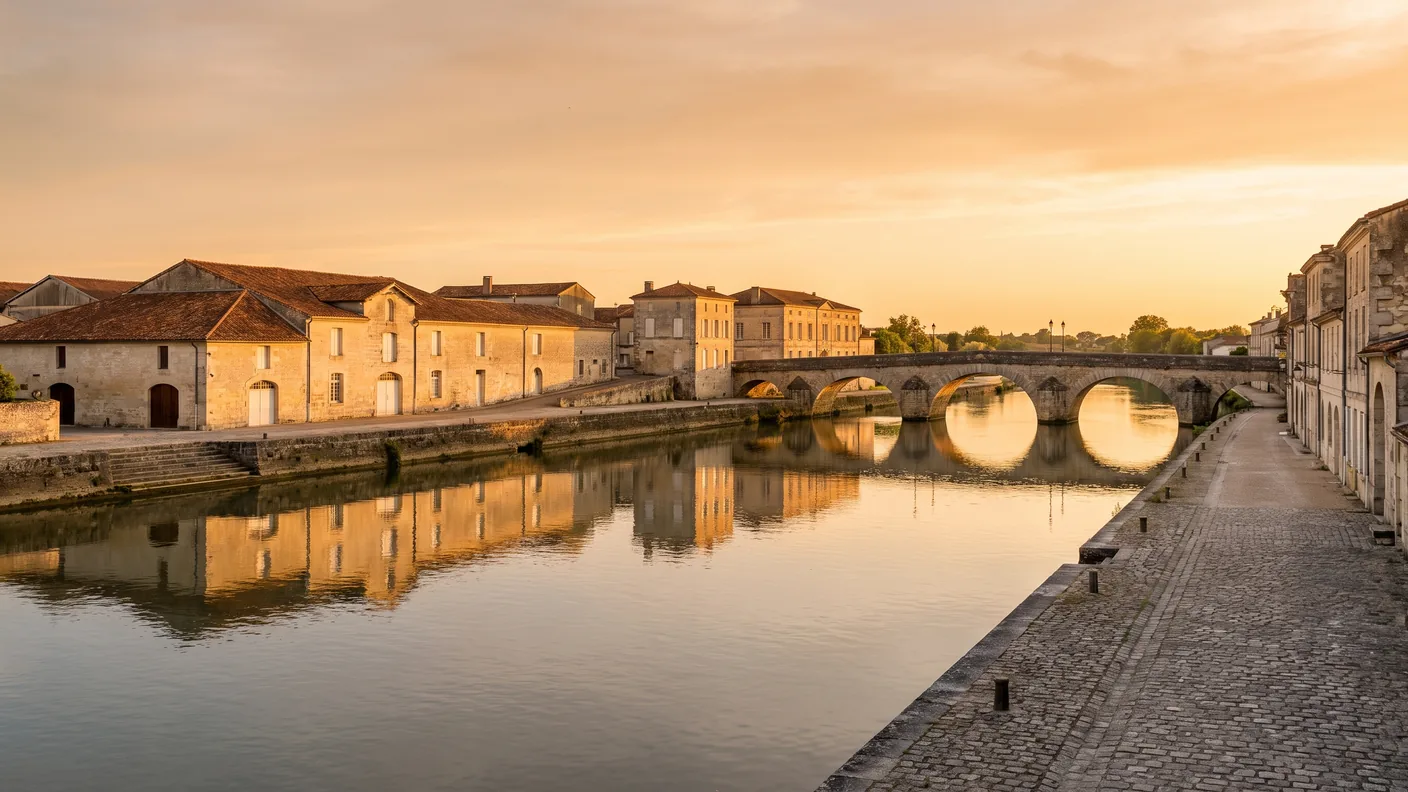
There are villages you can take in at a glance, and others that invite you to linger. Blanzac-Porcheresse belongs to the latter category. Beneath the tranquil facade of a Charente village, with its pale limestone houses and grassy square, lies a treasure trove of stories spanning nearly a thousand years: a collegiate church with two stone eras, a Templar commandery that was later to Protestant worship, a castle razed in the 19th century of which only a single tower remains, and a curious geography where two ancient villages meet at only one point, on the banks of a river. All of this is nestled in a sea of vineyards dedicated to the production of cognac.
Before going into detail, a clarification of terminology is necessary, as it determines everything else. One still often reads “the municipality of Blanzac-Porcheresse.” This is no longer accurate: since January 1, 2017, Blanzac-Porcheresse has merged with its neighbor Cressac-Saint-Genis to form the new commune of Coteaux-du-Blanzacais, of which it is the seat. In 2019, the small municipality of Saint-Léger joined them. Blanzac-Porcheresse thus retains its name and identity, but under the administrative status of a delegated municipality. It is this entity that we describe here, keeping in mind that today’s territory extends well beyond the former boundaries of the village.
Where is Blanzac-Porcheresse located?
Blanzac-Porcheresse is located in the southern part of the Charente department, in the Nouvelle-Aquitaine region, at the heart of a small natural region known as the Blanzacais. Administratively, the former market town falls under the Cognac district and the community of 4B Sud-Charente. It is generally described as being “22 kilometers southwest of Angoulême,” but this distance is measured as the crow flies: by road, it’s actually closer to thirty kilometers and a half-hour drive to reach the prefecture. This is an important distinction to keep in mind when planning a day trip, as the small roads of southern Charente wind through hillsides and valleys.
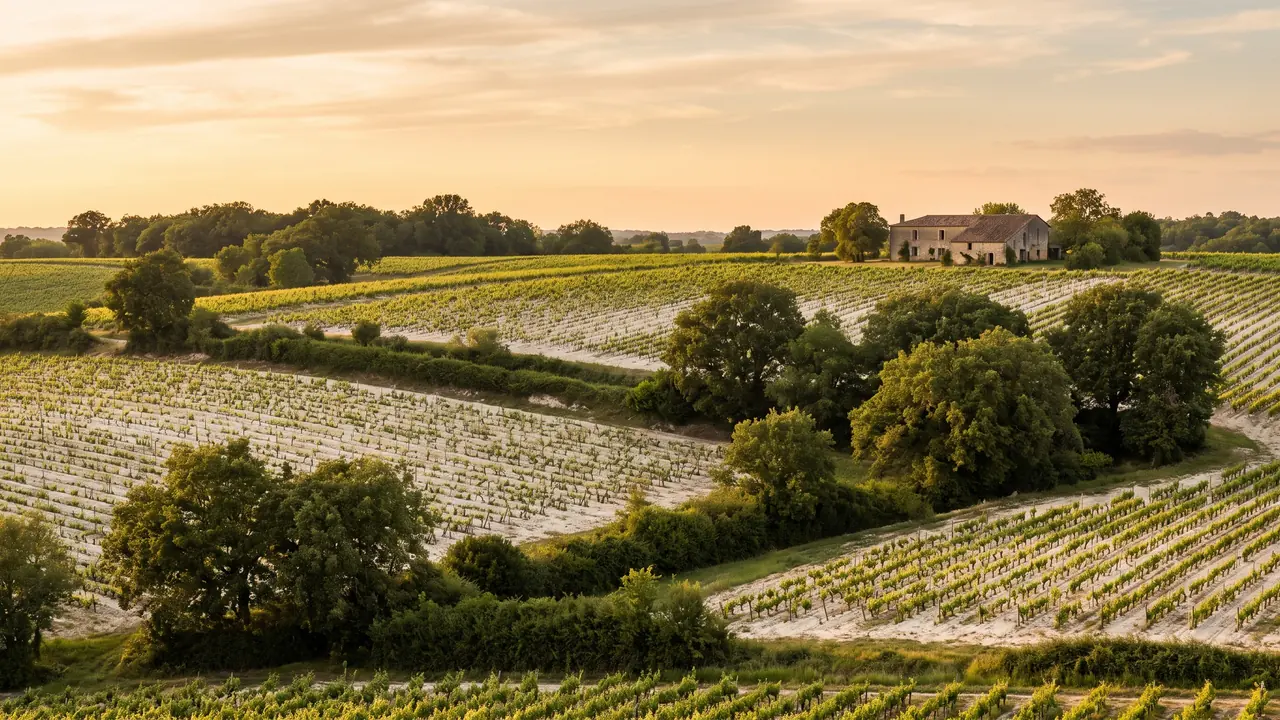
The landscape is that of the inland, agricultural Charente region, halfway between the Charente Valley to the north and the borders of Petite Champagne to the south. The former municipality covered 10.84 square kilometers squares, at an elevation ranging from 62 to 160 meters; the new municipality of Coteaux-du-Blanzacais, which is larger, now covers 23.83 square kilometers. This is a region of vineyards and fields of light-colored soil, dotted with traditional Charente farmhouses, hedgerows, and groves of oak trees. Nothing spectacular in the tourist sense of the word : the beauty of the Blanzacais lies in its unassuming scale, its light, and the richness of its architectural heritage.
One of the unique features of Blanzac-Porcheresse lies in its very origin. The compound name is no mere whim: it serves as a reminder that the town was formed by the merger of two distinct entities, Blanzac and Porcheresse, which were long separated by the Né River. An interesting geographical fact is that the two former villages meet at only a single point—a quadripoint located at the bridge on the Brossac Road. On the ground, one thus moves from one historic center to the other by crossing the river, as if the village were preserving the trace of its dual origins.
How far is it from Bordeaux?
Blanzac-Porcheresse is located 100 kilometers from Bordeaux, or about a 1-hour, 32-minute drive. Leave the city of Bordeaux via the major highways heading north—the N10 toward Angoulême— before turning west onto the roads of southern Charente. This relative proximity makes Blanzac a perfectly reasonable day trip: you can spend the morning there, have lunch in the area, visit a cognac house in the afternoon, and head home in the evening without feeling like you’ve spent your whole life on the road. The table below summarizes the driving distances from the most useful landmarks.
| Since | Driving distance | Approximate time |
|---|---|---|
| Barbezieux-Saint-Hilaire | ~14–17 km | ~18 min |
| Angoulême | ~30 km | ~30 min |
| Cognac | ~45 km | ~48 min |
| Bordeaux | 100 km | 1 hour 32 minutes |
This remote location is no coincidence. The Blanzac region is one of those small, natural areas in Charente that lie off the main tourist routes and thus retain an authentic character. People don’t end up here by chance: you have to make a conscious choice to leave the main thoroughfares behind and venture into a landscape of gentle hills, where the horizon is framed by rows of vineyards and groves. This relative seclusion is precisely what appeals to those seeking a Charente off the beaten path, far from the crowds of the Charente Valley or the Saintonge coast. Peace and quiet are the norm here, and the region’s rich heritage can be explored without the crowds.
Finally, a word about the place name. Toponymists trace “ Blanzac” back to a Gallo-Roman personal name, Blandius, followed by the suffix -acum, which denotes an estate: Blanzac would therefore, etymologically, be the “estate of Blandius,” like so many other villages in the Southwest ending in -ac. The name is attested as early as the 11th century. This scholarly hypothesis, common for place names in the region, highlights the long history of settlement on these hillsides, which were inhabited long before the collegiate church or the medieval castle were built there. The suffix -acum, inherited from Latin, gave rise in French to the -ac ending so characteristic of place names in the Southwest, and the same naming logic can be found in a multitude of neighboring villages in the Charente.
The Saint-Arthémy Collegiate Church
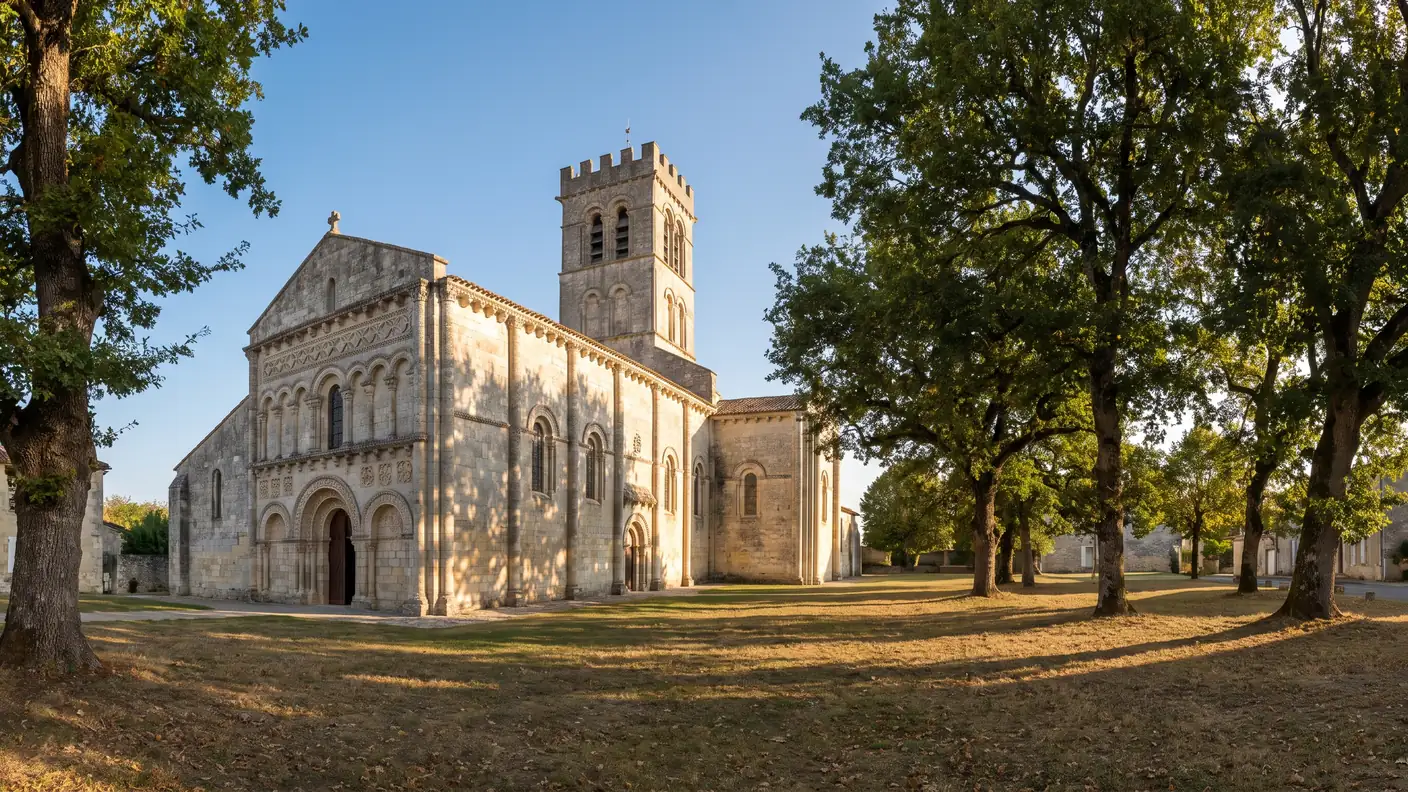
If you had to choose just one monument, it would be this one. The Saint-Arthémy Collegiate Church overlooks the village of Blanzac with its light-colored limestone structure, square bell tower, and façade punctuated by arcades. It is one of the most interesting religious buildings in southern Charente, both for its architecture and for the murals it unveiled at the end of the 20th century. Let us note right away a subtlety in its name: the official entry from the Ministry of Culture refers to it as “Saint-Barthélémy or Saint-Arthémy Church,” while local usage, as reported by the tourist office, has settled on Saint-Arthémy. This is the name we use here, while noting the alternative. However, the form “Saint-Arnould,” which is sometimes encountered, is incorrect and does not correspond to any saint associated with the building.
The surname itself refers to Saint Arthémy, who is described by tradition as a bishop of the Arverni and a fourth-century martyr. It This is a hagiographic element—that is, part of the narrative of sainthood rather than documented history—and should be taken as such, without confusing the Golden Legend with historical chronicles. What is, , however, is the building’s status: the Saint-Arthémy Collegiate Church was designated a historic monument by decree on March 16, 1890, under the Mérimée reference PA00104249. The Ministry of Culture’s POP entry, updated on June 4, 2026, confirms this classification. This long-standing recognition attests to the interest already shown in it at the end of the 19th century.
Roman and Gothic Combined
The main appeal of the collegiate church lies in the fact that it brings together, within a single building, two eras of stone architecture. The oldest part belongs to the Romanesque period: the dome and the bell tower date back to the early 12th century, while the choir and the apse date from the late 12th century. Construction then continued during the Gothic period: the transept dates from the 13th century, and both the nave and the façade were built between the middle and the end of that same 13th century. Thus, as one walks through the building, one can observe the transition from one style to another, from the Romanesque round arch to the Gothic pointed arch, like a life-size lesson in architecture.
This blending of styles is nothing out of the ordinary in a region where churches were built gradually, depending on the resources and ambitions of each generation. But in Blanzac, the transition is particularly evident and well-preserved, which explains it has attracted the attention of art historians. The façade, in particular, with its arcades and limestone characteristic of southern Charente, offers a typical example of regional religious architecture, at the crossroads of influences from Saintonge and Angoulême.
| Period | Elements of the Novel | Gothic Elements |
|---|---|---|
| Early 12th century | Dome, bell tower | — |
| Late 12th century | Choir, apse | — |
| 13th century | — | Transept, then nave and façade (mid-to-late) |
| Status | Designated a historic monument by decree dated March 16, 1890 (PA00104249) |
The Mural of Saint Christopher
The collegiate church’s true treasure remained hidden for a long time. During the restoration project carried out in the 1990s—sources differ as to the exact year, 1994 according to one record, 1998 according to another — a series of murals dating from the 12th to the 16th century was rediscovered beneath the plaster. They recount, layer by layer, the history of the building’s decoration: a 12th-century sketch, a 14th-century painted faux-stonework, a 15th-century “Baptism of Christ,” and, above all, a large 16th-century Saint Christopher. This accumulation turns the collegiate church into a medieval picture book, where each era has left its mark. The town’s heritage webpage, accessed on July 24, 2026, documents the paintings discovered in 1998 and their various periods.
The most spectacular of these frescoes is this Saint Christopher, nearly three meters tall, positioned facing the entrance. The choice of location is no coincidence. According to a widespread belief in the Middle Ages, gazing upon the image of Saint Christopher—patron saint of travelers and bearer of the Christ Child, offered protection for the day against “sudden death without confession”—one of the greatest fears of medieval people. These monumental figures were therefore often placed near the doors, so that the faithful would see them upon entering. The fact that this painting remained hidden for centuries before reemerging intact adds to the charm of the place: one enters the collegiate church a bit like opening a forgotten treasure chest.
The collegiate church’s painted decoration cannot be reduced to this single Saint Christopher. The successive layers that have been uncovered tell the story of the church’s decorative evolution over several centuries: a 12th-century century, a faux-ashlar decoration imitating the regular arrangement of stones in the 14th, a Baptism of Christ in the 15th, preceding the great Saint Christopher from the early 16th. This stratigraphy makes the building a textbook example for anyone interested in medieval mural art, as it is rare to be able to discern, on the same walls, several distinct painting campaigns. Here one can fully appreciate the value of the restoration carried out in the 1990s, which revealed a heritage that layers of plaster had long concealed from view. The collegiate church alone illustrates just how much the heritage of the Blanzac region is worth examining closely, in the light, and without rushing.
The Templar Chapel of Dognon
Southern Charente is a land of the Knights Templar, and Blanzac preserves a discreet yet fascinating reminder of them. Be careful, however, not to confuse two buildings that are often—and incorrectly—grouped under the same name, “Templar Chapel.” The first is located in Blanzac itself: it is the chapel of the Dognon Commandery. The second, far more famous for its battle frescoes, is located in Cressac, a neighboring town that is now also part of Coteaux-du-Blanzacais. These are two distinct sites, with two different histories, which must be carefully distinguished so as not to confuse them.
The Dognon Commandery: From the Knights Templar to the Protestants
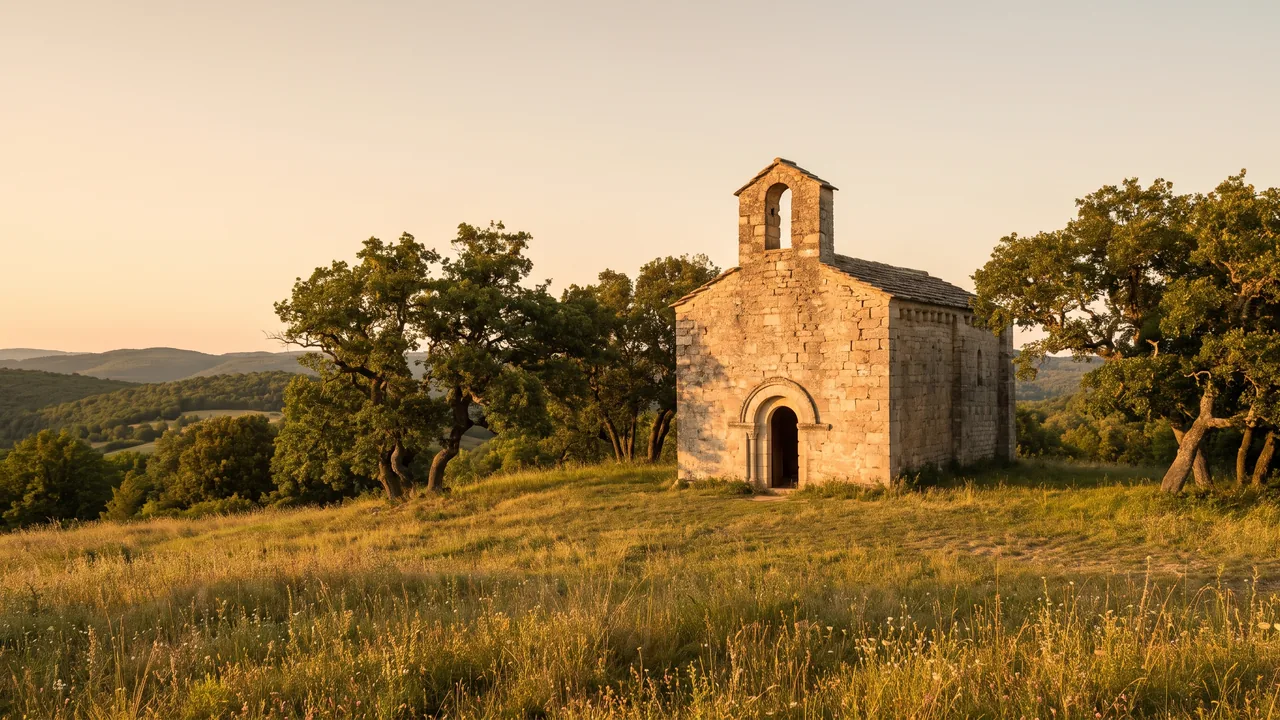
The chapel of the Dognon Commandery in Blanzac dates back to around 1150. It is a sober structure, consisting of a single, large nave without an apse, whose simplicity betrays Cistercian influence—that aesthetic of austerity that suited the military and religious orders of the 12th century well. Whereas other churches feature an abundance of ornaments, the Dognon Chapel relies on the purity of its form and the quality of its stone. It belonged to the Knights Templar, that order that was both monastic and warrior-like, which managed a vast network of commanderies before being brutally dissolved in the early 14th century. The town’s official website, accessed on July 24, 2026, traces the history of the commandery and the chapel.
What happened next is truly astonishing. During the French Revolution, the chapel—like many other church properties—was sold as national property and lost its religious function: for a time, it served as a barn. Then, in 1902, it was purchased by the Protestant community of Barbezieux, which restored it and returned it to religious use. Here, then, is a single building that has spanned the centuries, passing from the Order of the Temple to the Reformed faith — a striking snapshot of the religious history of southern Charente, where the Protestant presence was, as we shall see, particularly strong. Few chapels can boast such a history.
This history alone encapsulates the upheavals experienced by the region’s religious buildings: the dissolution of the Knights Templar in the early 14th century, the confiscation of Church property during the Revolution, its conversion into a farm building, and then its rebirth under the auspices of another denomination: each stage corresponds to a major turning point in French history, as reflected in this modest Charente sanctuary. That it was specifically the Protestant community of Barbezieux—a neighboring town and long-standing Reformed stronghold—that saved the of Dognon is by no means a coincidence: this speaks to the vitality of Protestantism in this corner of Charente, which also comes to the fore in the turbulent history of Blanzac during the Wars of Religion.
Cressac and Its Crusade Murals
A few kilometers away, in the former municipality of Cressac-Saint-Genis, stands the other Templar chapel—the one that has made the area famous far beyond the Charente. The Cressac Chapel, also built around 1150–1160, has been classified as a historic monument since May 9, 1914 (entry PA00104351), under the Mérimée reference PA00104351. It is famous for its Romanesque murals, among the most remarkable in the region, which adorn the interior of the building.
The traditional interpretation of these frescoes sees them as scenes from a Crusade battle: Frankish knights facing off against Saracen horsemen, a depiction that would allude to the battles in the Holy Land, or even to a victory won in 1163. This interpretation, while appealing, remains, however, a heritage-based reading: it must be presented with caution, as a hypothesis put forward by historians rather than as a scientifically established fact. What is certain, however, is the existence of these 12th-century paintings and the site’s connection to a Templar commandery. One thing is certain: these battle frescoes must be attributed to Cressac, and not to the village of Blanzac, where only the Dognon Chapel is found. For the visitor, the proximity of the two sites is a real treat: in a single day, one can explore two Templar chapels with very distinct histories.
Blanzac and Porcheresse: Two Villages, One Municipality
The administrative history of Blanzac-Porcheresse resembles a set of Russian nesting dolls. The name itself is the result of an initial merger: in 1972, two neighboring parishes, Blanzac and Porcheresse, joined together to form a single municipality, Blanzac-Porcheresse. Each brought its church and its history to the table. Blanzac, the better known of the two, contributed its Saint-Arthémy collegiate church; Porcheresse, more modest, contributed its Saint-Cybard Church, which was also designated a historic monument in 1913. Thus, two bell towers for a single municipality, each representing a distinct community.
A Four-Point Geography
Then, in 2017, this municipality established in 1972 was in turn absorbed into a larger entity, Coteaux-du-Blanzacais, like a doll that joins a larger one. Blanzac-Porcheresse thus became a delegated municipality, while remaining the seat of the new entity. This successive interweaving of municipalities, common in rural France over the past decades, explains the difficulty in correctly naming the place: depending on the level at which one considers it, one speaks of Porcheresse, Blanzac, Blanzac-Porcheresse, or Coteaux-du-Blanzacais, and all these names refer to nested realities.
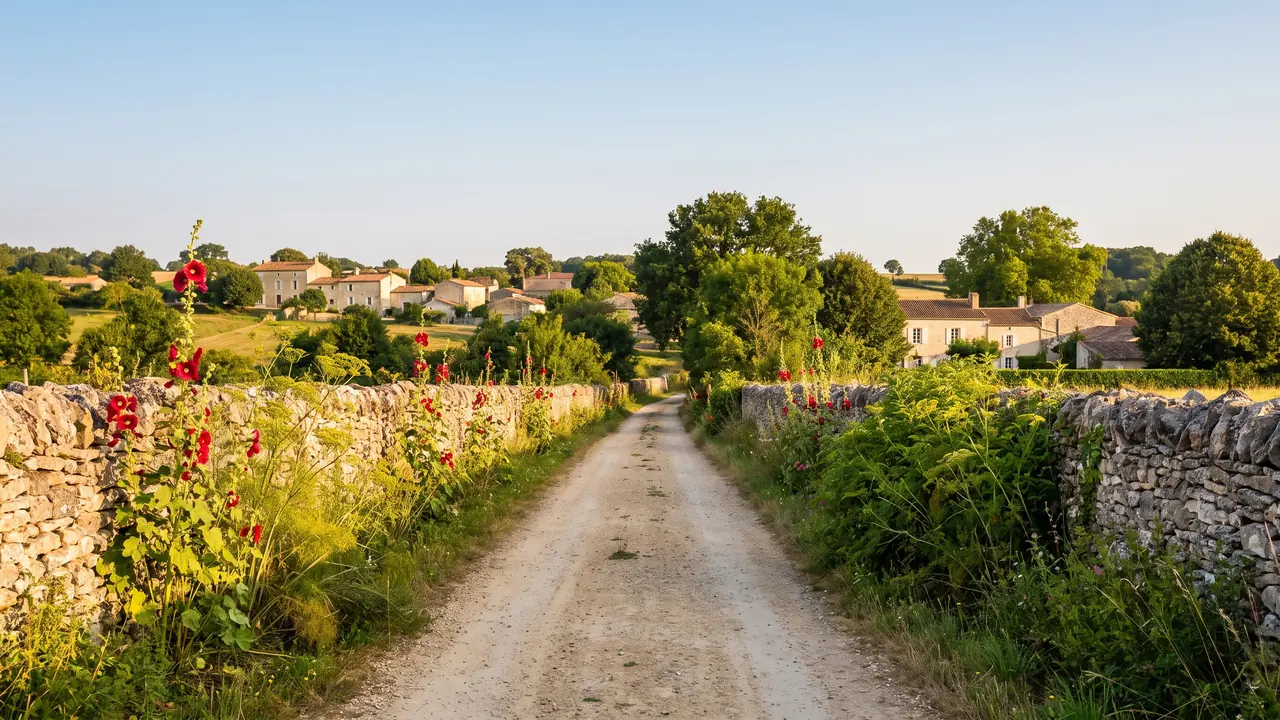
The geographical peculiarity of the area adds to this administrative oddity. The two former towns of Blanzac and Porcheresse, as mentioned, are separated by the Né River and touch only at a single point—a quadripoint located at the bridge on the Brossac Road. In other words, the municipal territory has long taken the form of two entities that brush against each other without truly meeting, connected by a simple bridge over the water. This unusual configuration is what makes of a stroll through the area: as you pass from one village to the other, you cross not only a river but also the invisible boundary between two parish histories. The Church of Saint-Cybard in Porcheresse, the second listed monument in the area alongside the collegiate church, is well worth the short detour from the center of Blanzac.
For visitors, there is something appealing about this duality. Porcheresse, a more low-key town, offers a modest counterpoint to the Blanzac Collegiate Church: its Saint-Cybard Church, dedicated to a very popular saint from the Charente region, serves as a reminder that the area developed around two parish communities with parallel histories. Crossing the Né to go from one to the other means truly grasping the nature of this unique geography, where the water long served as a border before people decided, in 1972 and then in 2017, to bring together what the river had separated. The compound name Blanzac-Porcheresse bears, in its own way, the mark of this reconciliation.
Blanzac Through the Centuries
Beneath its appearance as a peaceful wine-growing village, Blanzac hides a turbulent past as a medieval stronghold. In the 12th century, a branch of the powerful La Rochefoucauld family had a castle built there. The location was no accident: at that time, the Angoumois region was region, at a time when the kings of England, through a series of marriages and inheritances, controlled a large part of southwestern France. Blanzac thus found itself at the center of tensions between feudal powers, and its castle made it a key strategic target.
1182: Richard the Lionheart lays siege to Blanzac
In 1182, Blanzac Castle was besieged by Richard the Lionheart, then Duke of Aquitaine before becoming King of England. The episode was not kind to the town: according to accounts, it was pillaged, set ablaze, and its walls destroyed. This assault illustrates the brutality of feudal wars in a region that served as a battleground between the great lords and the Plantagenet crown. Blanzac recovered from this ordeal, but the event has remained in local memory as one of the great military feats of the Middle Ages in the Charente region.
As for the castle, its fate came much later and was far more prosaic. Rebuilt and remodeled over the centuries, it was finally demolished in 1881. It is therefore important to be clear on this point, as confusion is common: there is no medieval castle to visit in Blanzac. All that remains is a round tower, now attached to the village’s elementary and middle school buildings. Visitors looking for a fortress will therefore have to look elsewhere—specifically in the area of Barbezieux, whose well-preserved castle is an entirely different structure that should not be confused with the modest tower in Blanzac.
Blanzac, a Protestant stronghold during the Wars of Religion
The 16th century saw Blanzac play a significant role in another dramatic chapter in French history: the Wars of Religion. The town was then one of the major settlements in the Angoumois region and became an active center of Protestantism. The seigneuries of Blanzac, Montmoreau, and Barbezieux formed a bastion of the Reformation in the southern part of the county, and their men fought alongside the Calvinists at the Battle of Jarnac in 1569, one of the major clashes of those civil wars. This Protestant legacy is by no means trivial for understanding the region: it sheds light, for example, on the 1902 purchase of the Dognon Chapel by the Protestant community of Barbezieux, as mentioned earlier. Southern Charente has remained, to this day, a region where Protestantism has left a lasting mark.
Viewed in this light, the history of Blanzac unfolds like a succession of layers, much like the frescoes in its collegiate church. Originally a Gallo-Roman estate, then a medieval stronghold contested by feudal powers, a center of the Reformation during the Wars of Religion, and finally an agricultural town focused on vineyards and cognac. Each era has left its mark, more or less visible: the castle tower for the Middle Ages, the Dognon Chapel and the Protestant heritage for the turbulent Renaissance, and the Charente-style homesteads and wine cellars for the more peaceful centuries. It is this rich history, condensed into a small area, that gives Blanzac-Porcheresse a depth of meaning rare for a town of this size.
| Date | Event |
|---|---|
| 12th century | Construction of the castle by a branch of the La Rochefoucauld family |
| 1182 | The castle was besieged by Richard the Lionheart; the town was looted and set on fire |
| 1569 | Blanzac, a Protestant stronghold, fought alongside the Calvinists at the Battle of Jarnac |
| 1881 | Demolition of the castle; only a round tower remains |
| 1972 | Merger of Blanzac and Porcheresse into a single municipality |
| 2017 | Creation of the new municipality of Coteaux-du-Blanzacais |
The Origin and Character of the Blanzacais Region
The river that flows through the region and has shaped its geography is called the Né. It is a left-bank tributary of the Charente, 66.1 kilometers long. Contrary to popular belief, the Né does not originate in Blanzac: it rises in the neighboring town of Bécheresse, near Voulgézac, at an elevation of about 160 meters, before flowing westward and joining the Charente at Salignac-sur-Charente. Along its course, it flows through, among other places, Coteaux-du-Blanzacais and Barbezieux-Saint-Hilaire, irrigating a whole section of the wine-growing region in southern Charente.
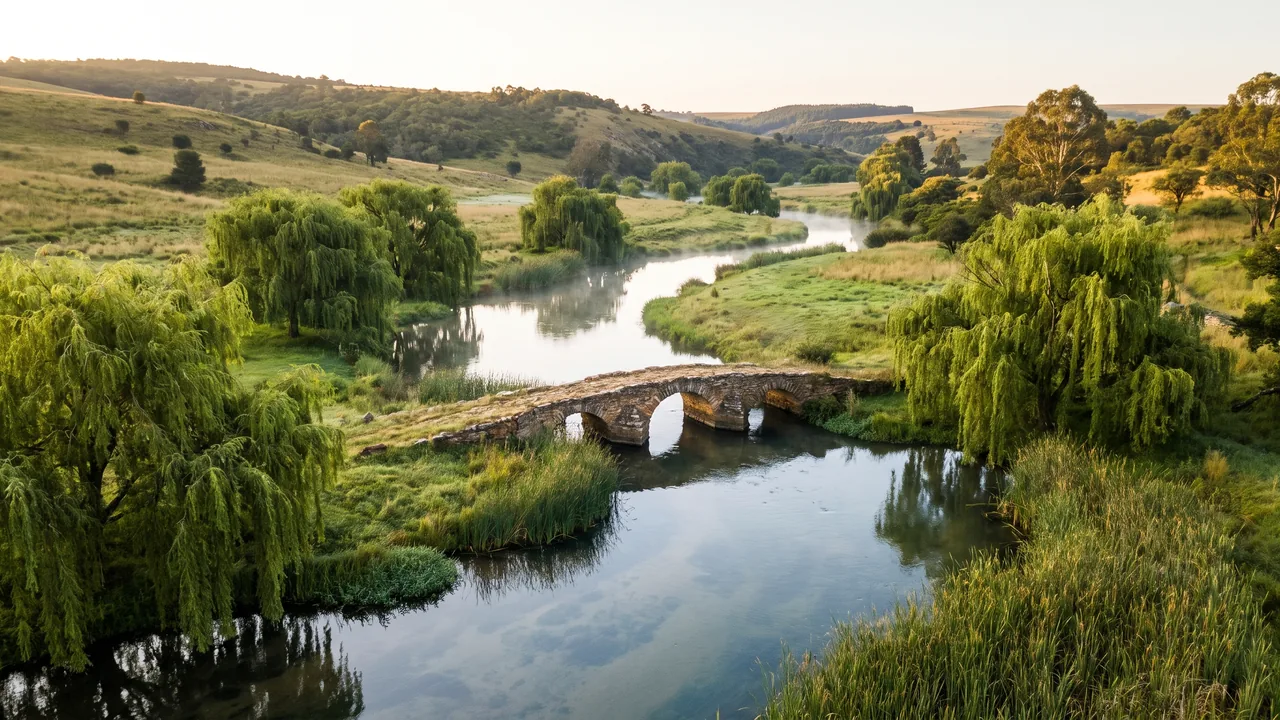
A river that shapes the landscape
It is the Né River that separates the two old villages of Blanzac and Porcheresse, and it is this river that gives the Blanzac region much of its charm. Along its course stretch wet meadows lined with willows, dotted with old Charente farmhouses, and overlooked by hillsides planted with vineyards. The contrast is delightful: on one side, the coolness of the valley floor; on the other, the warm stone of the houses and the vivid green of the rows of vines on the hillsides. For those who enjoy walking, the banks of the Né offer wonderful opportunities for leisurely strolls, away from the main roads, in a natural setting that is unobtrusive yet well-maintained—typical of this inland Charente region, still unspoiled by mass tourism.
The river irrigates a balanced agricultural landscape, where vineyards stand side by side with crops and meadows. As the Né flows downstream toward the Charente, which it joins at Salignac-sur-Charente, it has, over time, carved out a gentle valley, ideal for human settlement and the growth of villages. As you follow its course, it becomes clear why the two towns settled there, on either side of the river: the river provided a source of water, the moisture from the riverbed nourished the meadows, and the well- exposed hillsides were home to vineyards. This ancient layout of the landscape, still visible today, makes the Blanzac region a microcosm of rural Charente, where geography explains much of its history.
The Terroir: Fins Bois Cognac
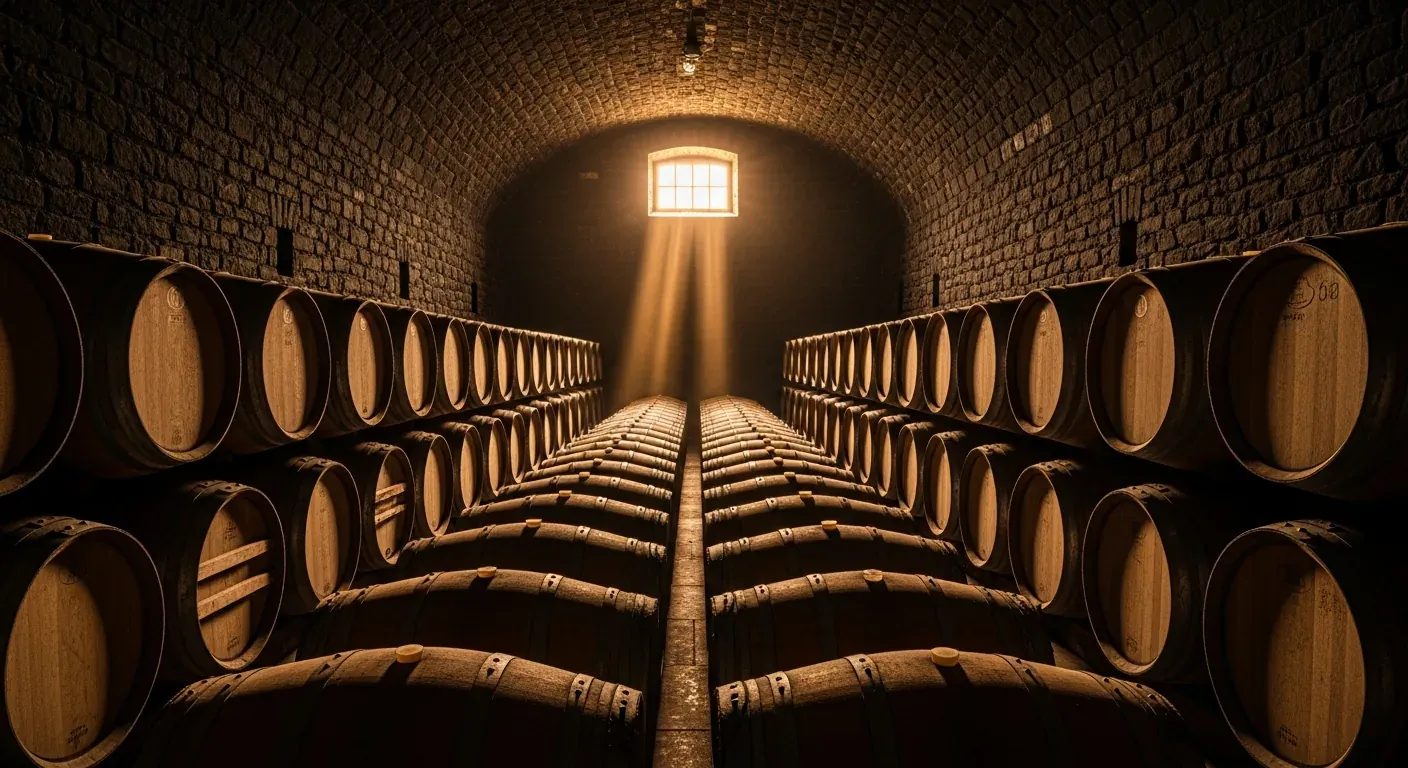
It’s impossible to understand the Blanzac region without mentioning cognac. The vineyards that cover its hillsides do not produce table wine but rather a white wine intended for distillation, which is transformed into brandy and then aged in oak barrels to produce cognac. The vineyards of the Cognac appellation are divided into six crus, whose reputations vary depending on the nature of the soils. A clarification is needed here, as confusion is common: Blanzac is not in Petite Champagne, as is sometimes stated, but in the Fins Bois cru. Petite Champagne, the second-ranked cru behind Grande Champagne, is centered further south, around Barbezieux, Archiac, and Jonzac.
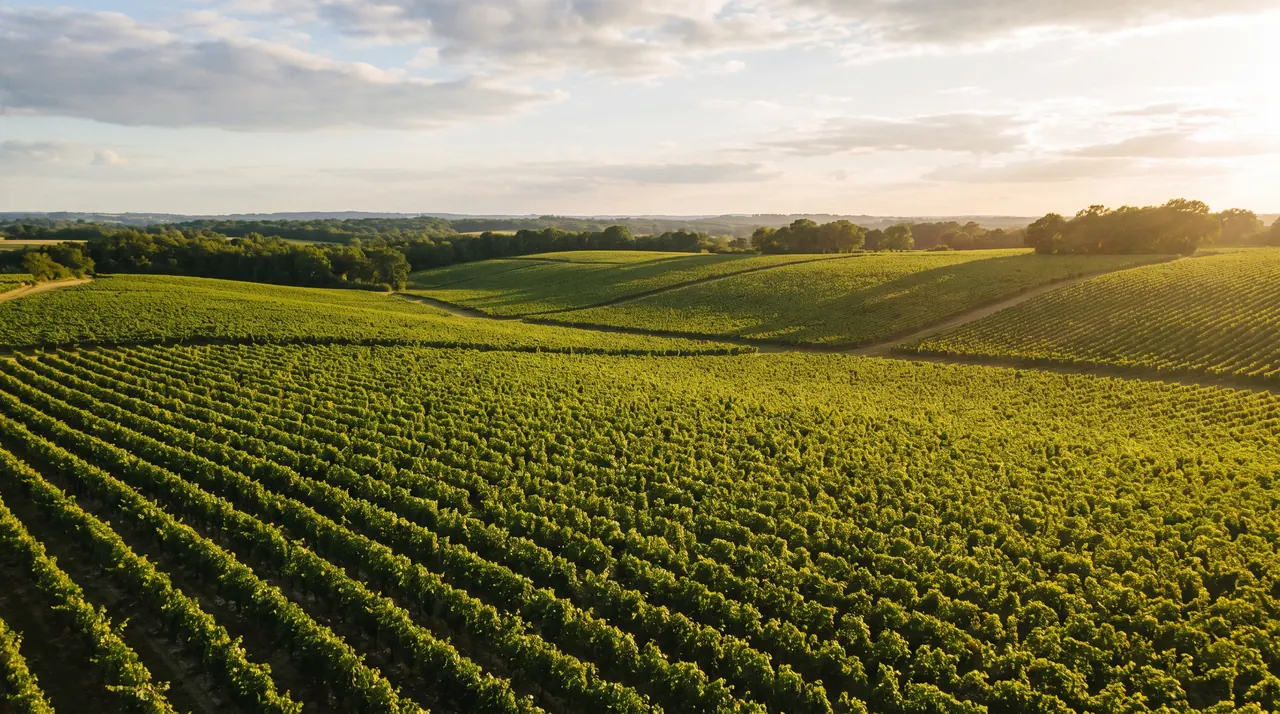
Understanding the Six Cognac Grape Varieties
The six Cognac crus are distinguished by the composition of their soils, particularly their limestone content, which influences the character of the eaux-de-vie. Grande Champagne and Petite Champagne, with their chalky soils, produce fine eaux-de-vie, renowned for their suitability for long-term aging. Next come the Borderies, a small cru north of Cognac, followed by the Fins Bois, the Bons Bois, and the Bois Ordinaires, with more clayey or sandy terroirs. The Fins Bois, where the Blanzacais region is located, form the largest of the crus and yield round, supple eaux-de-vie that mature more quickly—qualities that are highly valued in cognac blending.
| Vintage | Location |
|---|---|
| Grande Champagne | 1er cru, chalky soils, south of Cognac |
| Petite Champagne | 2nd growth, around Barbezieux, Archiac, and Jonzac |
| Borderies | A small wine-growing region north of Cognac |
| Fine Woods | The largest wine-growing region—this is where the Blanzacais is located |
| High-Quality Wood / Ordinary Wood | Outlying vineyards, lighter soils |
Blanzacais thus straddles an interesting boundary. While its vineyards are part of the Fins Bois region, Petite Champagne is only about fifteen kilometers away, toward Barbezieux. Barbezieux is sometimes referred to as the “capital of Petite Champagne,” but this is more of a marketing nickname than an official designation. This proximity of two appellations that border each other gives meaning to a renowned blend, the “Fine Champagne,” which blends eaux-de-vie from Grande and Petite Champagne, with at least half coming from Grande Champagne. For the visitor, the lesson is simple: the region allows you to taste, just a few kilometers apart, cognacs from different terroirs. Several estates and houses in the area, particularly around Barbezieux, offer tastings of cognac and Pineau des Charentes, a Charente fortified wine made by fortifying grape must with brandy.
Understanding cognac also means understanding a way of life that shapes the entire southern Charente region. Here, the grapes do not end up in a glass of wine but in a still: the white wine—tart and only slightly alcohol content, is distilled using the Charente method in two distillations, then patiently aged in oak barrels, where it develops its color and aromas. This slow cycle shapes the rural calendar, from the fall harvest to winter distillation. The Blanzac region, with its Fins Bois vineyards, plays a full part in this economy, even though it lacks the renown of Champagne’s vintages. For the , it’s an invitation to step inside a producer’s facility, to learn about blending and aging, and to leave with a clearer understanding of what the word “cognac” truly means—a designation whose reputation extends far beyond the borders of the Charente.
What is there to do in Blanzac-Porcheresse?
In Blanzac-Porcheresse, you can enjoy a wonderful day of exploration without ever having to rush. The highlight of the visit is the Saint-Arthémy Collegiate Church and its rediscovered frescoes, starting with the giant Saint Christopher facing the entrance. Round out the tour with the Templar Chapel of Dognon, whose history—from the Temple to the Protestant church—continues to intrigue. A few kilometers away, the Cressac Chapel and its famous Crusade paintings are worth the detour for anyone interested in the Templars. The Church of Saint-Cybard in Porcheresse, the area’s second listed monument, adds a bell tower to the itinerary. The rest of the day lends itself to more leisurely pleasures : a tasting of Fins Bois cognac or Pineau at a local producer’s in the area, a leisurely stroll along the Né River, or a stop at the village market. For specific schedules and the calendar of events, it’s best to check with the Sud Charente Tourist Office, the only source that keeps this information up to date as it changes with the seasons.
- Visit the Saint-Arthémy Collegiate Church and its frescoes from the 12th to the 16th centuries, including the nearly three-meter-tall Saint Christopher
- Discover the Templar Chapel of Dognon, which transitioned from the Order of the Temple to the Protestant faith
- Head over to the Cressac Chapel in the neighboring town to see its Romanesque paintings depicting a Crusade battle
- Stop at the Saint-Cybard Church in Porcheresse, designated a historic monument in 1913
- Enjoy the Blanzac market on Saturday mornings, which turns into a fair on the third Friday of the month
- Enjoy a Fins Bois cognac or a Pineau des Charentes at a local producer's
- Take a stroll along the Né River and among the Charente-style houses of the Blanzacais
The Blanzac Market and Fair
Among the village’s events, the market is definitely worth fitting into your schedule. It’s held on Saturday mornings and brings the center of Blanzac to life with the energy of local farmers and merchants. Once a month, on the third Friday, it takes on a different scale and turns into a fair: additional vendors set up shop, and the excitement spreads throughout the entire village. It’s the perfect opportunity to sample local Charente specialties and feel the heartbeat of a rural town that’s still very much alive. The table below summarizes the main activities and their nature.
| Activity | Nature | Good to Know |
|---|---|---|
| Saint-Arthémy Collegiate Church | Listed Monument | Frescoes, including the giant Saint Christopher |
| Chapel of the Knights Templar of Dognon | Heritage | A former commandery that has been converted into a Protestant church |
| Cressac Chapel | Listed monument (1914) | Neighboring town; Crusade murals |
| Saint-Cybard Church in Porcheresse | Listed Monument (1913) | The region's second bell tower |
| Market / Fair | Local Life | Saturday morning; market on the third Friday of the month |
| Cognac Tastings | Terroir | Fins Bois and Pineau, in the area |
Around Blanzac: Barbezieux and Southern Charente
Blanzac-Porcheresse is best visited as part of a broader tour of southern Charente, a region rich in heritage and local character. About 15 kilometers away, Barbezieux-Saint-Hilaire is the most obvious stop. The town boasts a castle far more imposing than the modest tower in Blanzac: built in 1453 by Marguerite de La Rochefoucauld, well-preserved, and designated a historic monument since 1913, it overlooks the Petite Champagne region. It is this château, with its towers topped by conical roofs, that is depicted in the image below—not to be confused with the long-gone château of Blanzac. Barbezieux, often referred to as the “capital of Petite Champagne,” is an excellent addition to any wine tour of the Blanzac region.
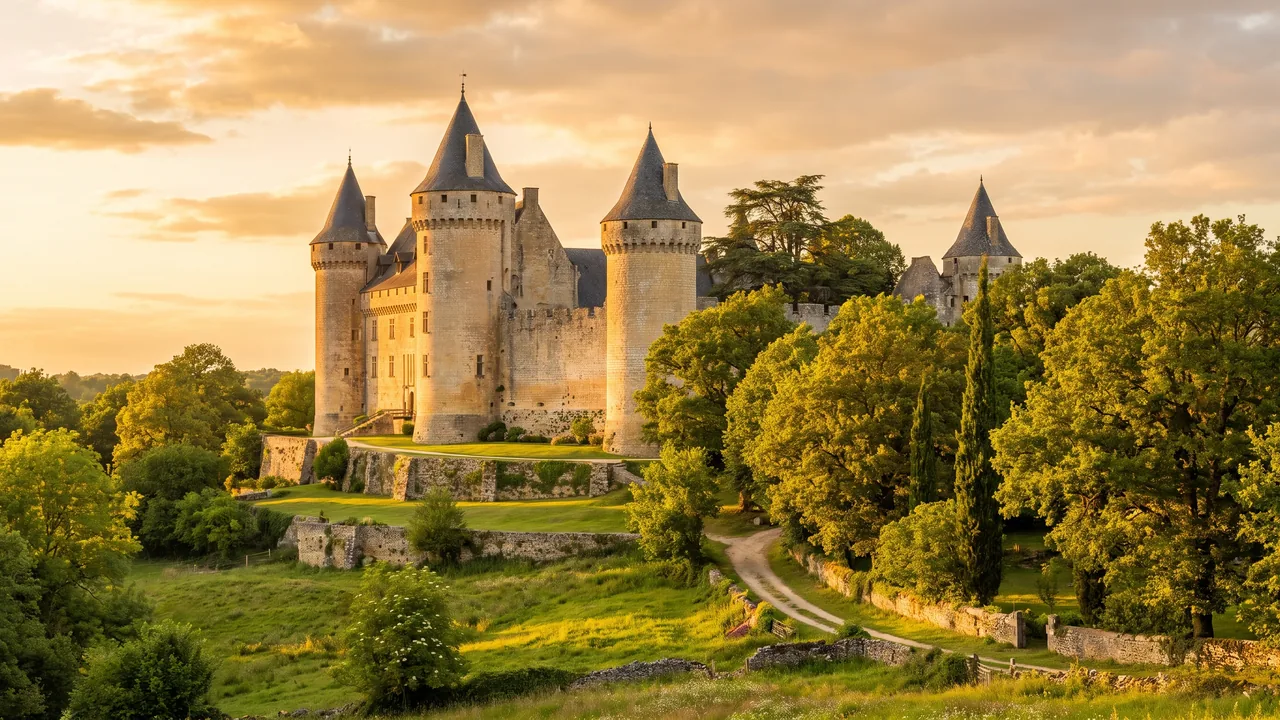
Day trips within an hour's drive
Beyond Barbezieux, several destinations make for a great way to round out the day. To the south, Brossac charms visitors with its Vallier Pond—a popular summer recreation spot—and its cognac estates. Heading northwest, Cognac, the county seat to which Blanzac belongs, brings together—just a 50-minute drive away—the major houses and their cellars where the brandy matures. Jarnac, very close to Cognac, links cognac to the memory of François Mitterrand, who was born there and is buried there. Finally, Angoulême, about thirty minutes away, delights comic book fans with its Cité Internationale and its world-famous festival. All of these destinations make the Blanzac region an ideal starting point for exploring the Charente.
Blanzac’s inclusion in the Cognac district is not merely an administrative fact: it reflects the region’s cohesion. By connecting Blanzac to Barbezieux, then to Cognac and Jarnac, you are in fact following the trail of cognac—its vintages and its houses, from the most modest producer of Fins Bois to the major international brands. A single day can thus combine Romanesque heritage, castles, and tastings, by visiting destinations just a few dozen kilometers apart. That’s the appeal of making Blanzac not just a standalone visit, but a stop on a broader itinerary through southern Charente—a region best explored at a leisurely pace, taking in chapels, vineyards, and rivers.
| Destination | Distance from Blanzac | Interest |
|---|---|---|
| Barbezieux-Saint-Hilaire | ~14–17 km | Castle built in 1453, Petite Champagne |
| Brossac | southern Blanzacais | Étang Vallier, Cognac |
| Angoulême | ~30 km | Comic Book City, Prefecture |
| Cognac | ~45 km | Major wineries, wine cellars |
| Jarnac | near Cognac | Cognac and Memories of Mitterrand |
Getting to Blanzac from Bordeaux
Blanzac-Porcheresse is located 100 km from Bordeaux, or about 1 hour and 32 minutes via the N10 and then the roads of southern Charente. Private transfers start at €183 during the day for 1 to 3 passengers; rate verified on July 24, 2026. Door-to-door service eliminates the need for transfers and makes it easier to reach scattered sites.
Since Blanzacais is not directly accessible by train, the car remains the most convenient way to get there. A shuttle service departing from Bordeaux avoids the hassles of the nearest train station and those of parking in the villages.
How much does the ride cost?
A private transfer from Bordeaux to Blanzac-Porcheresse starts at €183 during the day, for a sedan accommodating one to three people. This rate is fixed and confirmed in writing before departure: no meter, no surprises upon arrival. Surcharges apply at night, on weekends, and on holidays, and a van is available for larger groups. For a tour that combines multiple sites, a full-day package—including waiting time and multiple stops—is priced based on a quote. The table below provides the main pricing guidelines.
| Route | Distance / Duration | Rates |
|---|---|---|
| Bordeaux → Blanzac-Porcheresse | 100 km · 1 hr 32 min | starting at 183 € |
| Bordeaux-Mérignac Airport → Blanzac | based on a quote | based on a quote |
| Blanzac + Barbezieux + Cognac Loop | Customized Day | based on a quote |
Why hire a private driver?
The main advantage of a private chauffeur here lies in the very nature of the tour. The Blanzac region’s heritage is spread out among Blanzac, Porcheresse, and Cressac, not to mention side trips to Barbezieux or Cognac: having a vehicle and a driver allows you to move from one stop to the next without worrying about the route or parking. This is even more true when the itinerary includes cognac tastings: you can savor the region’s eaux-de-vie in complete peace of mind, without having to get behind the wheel. Ultimately, it’s the promise of a peaceful day in a corner of Charente that you can explore at your own pace, far from the hustle and bustle—a comfortable alternative for anyone who wants to fully enjoy the Blanzac region.
This itinerary is ideal for exploring at your own pace, without fixed schedules or connection constraints. You can spend as much time as you like at the collegiate church and its frescoes, linger in front of the Dognon Chapel, continue on to Cressac, and then finish up at a cognac house, depending on your mood at the time. The return trip to Bordeaux is just as comfortable, at the end of the day, once the visits are complete and any bottles you’ve purchased are stowed in the trunk. For a heritage getaway like this, where the sites are scattered and the small roads are numerous, the flexibility of an organized door-to-door itinerary greatly enhances the experience and ensures that the day is remembered as a pleasure rather than a logistical challenge.
Frequently Asked Questions
How much does a trip from Bordeaux to Blanzac-Porcheresse cost,
and how long does it take?
A private transfer from Bordeaux to Blanzac-Porcheresse starts at €183 during the day for a sedan accommodating 1 to 3 people. The trip covers 100 km and takes about 1 hour and 32 minutes, mainly via the N10 and then the roads of southern Charente. The fare, distance, and duration are based on the standard commercial route, verified on July 24, 2026.
Where exactly is Blanzac-Porcheresse located?
Blanzac-Porcheresse is located in the southern part of the Charente department, in the Nouvelle-Aquitaine region, in the heart of the Blanzacais. The town is part of the Cognac district and the 4B Sud-Charente community of communes. By road, it is located about 30 kilometers southwest of Angoulême, about 15 kilometers from Barbezieux, and 100 kilometers from Bordeaux. Please note: the often-cited distance of 22 kilometers from Angoulême is measured as the crow flies; by road, expect a distance of about thirty kilometers and a half-hour drive.
Is Blanzac-Porcheresse still a municipality?
No, not strictly speaking. Since January 1, 2017, Blanzac-Porcheresse has been a delegated commune of the new commune of Coteaux-du-Blanzacais, formed by its merger with Cressac-Saint-Genis; the municipality of Saint-Léger joined them in 2019. Blanzac-Porcheresse remains its seat and retains its name, but its administrative status is now that of a delegated municipality. The new municipality had approximately 1,013 residents in 2023. Source: INSEE, code 16046. The INSEE code 16046, inherited from the former Blanzac, now refers to both the former municipality and the new entity.
What is the most famous landmark in Blanzac-Porcheresse?
This is the Saint-Arthémy Collegiate Church, designated a historic monument by decree on March 16, 1890. This remarkable structure combines in a single building two eras of stone architecture: a Romanesque section, with its dome and bell tower dating from the early 12th century, and a Gothic section, with its transept, nave, and 13th-century façade. During restoration work carried out in the 1990s, a series of murals dating from the 12th to the 16th century were rediscovered. The most spectacular is a depiction of Saint Christopher, nearly three meters tall, located opposite the entrance.
What to See and Do in Blanzac-Porcheresse?
The tour centers on the Saint-Arthémy Collegiate Church and its frescoes, including the giant Saint Christopher. The tour is rounded out by the Templar Chapel of Dognon, which transitioned from the Knights Templar to Protestant worship, and the Saint-Cybard Church in Porcheresse, which is also a listed historic site. A few kilometers away, the Cressac Chapel and its paintings depicting the Crusades are worth a visit. The rest of the day is perfect for a tasting of Fins Bois cognac or Pineau at a local producer, a stroll along the Né River, or a stop at the Saturday morning market.
Is the Templar chapel with its Crusade frescoes located in
Blanzac?
No, and this is a common misunderstanding. The chapel with its famous frescoes depicting Crusade battles is located in Cressac, in the former municipality of Cressac-Saint-Genis, neighboring Blanzac and now, like Blanzac, part of Coteaux-du-Blanzacais. It has been designated a historic monument since 1914. In Blanzac itself stands another Templar chapel, that of the Dognon Commandery, inspired by Cistercian architecture, which was purchased in 1902 by the Protestant community of Barbezieux. These are two distinct buildings that should not be confused: the Crusade frescoes are indeed located in Cressac.
Is it possible to visit a castle in Blanzac?
No, there is no medieval castle to visit in Blanzac. A castle was indeed built there in the 12th century by a branch of the La Rochefoucauld family, then besieged in 1182 by Richard the Lionheart, who had the town pillaged and burned. But this structure was demolished in 1881; only a round tower remains, now attached to the village’s elementary and middle schools. The castle that visitors can tour in the area is the one in Barbezieux, about fifteen kilometers away, a completely different, well-preserved building dating from 1453.
What kind of cognac is produced in the Blanzac area?
The vineyards of the Blanzacais region are classified as Fins Bois, one of the six crus of the Cognac appellation, and not as Petite Champagne, as is sometimes stated. Fins Bois is the largest of the crus and produces round, supple eaux-de-vie that mature fairly quickly. Petite Champagne, the second-ranked cru behind Grande Champagne, is centered further south, around Barbezieux, Archiac, and Jonzac. The proximity of these two crus explains the blend known as “Fine Champagne.” Several producers in the area offer tastings of cognac and Pineau des Charentes.
Why does Blanzac-Porcheresse have a double name?
Because the town was formed in 1972 through the merger of two neighboring parishes: Blanzac, home to the Saint-Arthémy collegiate church, and Porcheresse, whose Saint-Cybard Church has been designated a historic monument since 1913. The two former towns are separated by the Né River and meet at only one point: a four-way intersection at the bridge on the Brossac Road. The compound name thus preserves the memory of this dual origin. Since 2017, the entire area has itself been absorbed into the new municipality of Coteaux-du-Blanzacais, like an administrative Russian nesting doll.
Is the village accessible and easy to visit?
Blanzac-Porcheresse is a quiet, single-level rural village that’s easy to access, making it simple to stroll through its streets and visit the collegiate church. However, since the historic sites are scattered between Blanzac, Porcheresse, and the neighboring town of Cressac, a car is necessary to see everything in a single day. The religious buildings and ancient monuments may have steps and thresholds; to find out the opening hours and access conditions for the collegiate church or the chapels, it’s best to check with the Sud Charente tourist office, which keeps the calendar and schedules up to date throughout the seasons.
When is the Blanzac market held?
The Blanzac market is held on Saturday mornings and brings life to the center of town with local farmers and merchants. Once a month, on the third Friday, it expands and turns into a fair: additional vendors set up shop and the excitement spreads throughout the village. It’s a great time to discover local Charente products and experience the life of a rural town that’s still bustling. Since dates and arrangements may change, it’s a good idea to check with the Sud Charente Tourist Office before heading out.
What is there to see around Blanzac-Porcheresse?
The surrounding area has much to offer. About fifteen kilometers away, Barbezieux-Saint-Hilaire boasts a well-preserved castle dating from 1453 and is located in the Petite Champagne region. To the south, Brossac charms visitors with its Vallier pond and cognac estates. Further on, Cognac, the district’s capital, is home to the major cognac houses and their cellars, about fifty minutes away by car, while Jarnac links cognac to the memory of François Mitterrand. Finally, Angoulême, about thirty minutes away, delights comic book fans with its Cité Internationale. The Blanzacais region is an excellent starting point for exploring the Charente.
Is it worth hiring a private driver to visit the Blanzacais
region?
Yes, especially because the heritage sites are scattered among Blanzac, Porcheresse, Cressac, and neighboring towns such as Barbezieux and Cognac. Having a vehicle and a driver allows you you to move from one stop to the next without worrying about the route or parking in the villages. The advantage is even more obvious if the itinerary includes cognac tastings: you can enjoy the local eaux-de-vie without having to get behind the wheel. A transfer from Bordeaux starts at €183, with a fixed rate confirmed in writing, for a relaxing day of exploration at your own pace.
Further Reading
- Head south from the Blanzac area : see the Guide to Brossac (Vallier Pond, Cognac, and the Roman villa, a few kilometers from Blanzac).
- Capital of brandy: see the Cognac Guide (4 houses, the Charentais method, and the 6 crus, including the Fins Bois du Blanzacais).
- Cognac and Memory: See the Guide to Jarnac (Cognac, the Charente, and the memory of François Mitterrand).
- Historic Sites on the Outskirts of Angoulême: Discover the Abbey and the Paper-Making Heritage of La Couronne.
Sources and References
- POP Mérimée — Saint-Arthémy Collegiate Church — Listed on March 16, 1890
- POP Mérimée — Cressac Chapel — Listed on May 9, 1914
- Municipality of Coteaux-du-Blanzacais— collegiate church, Dognon Chapel, Porcheresse, history
- Sud Charente Tourisme / Tourist Office —murals, market, Barbezieux, cognac
- INSEE — Coteaux-du-Blanzacais (16046) — demographics, new municipality
- BNIC — National Interprofessional Cognac Office — Fins Bois and Petite Champagne vintages
Article updated in July 2026.
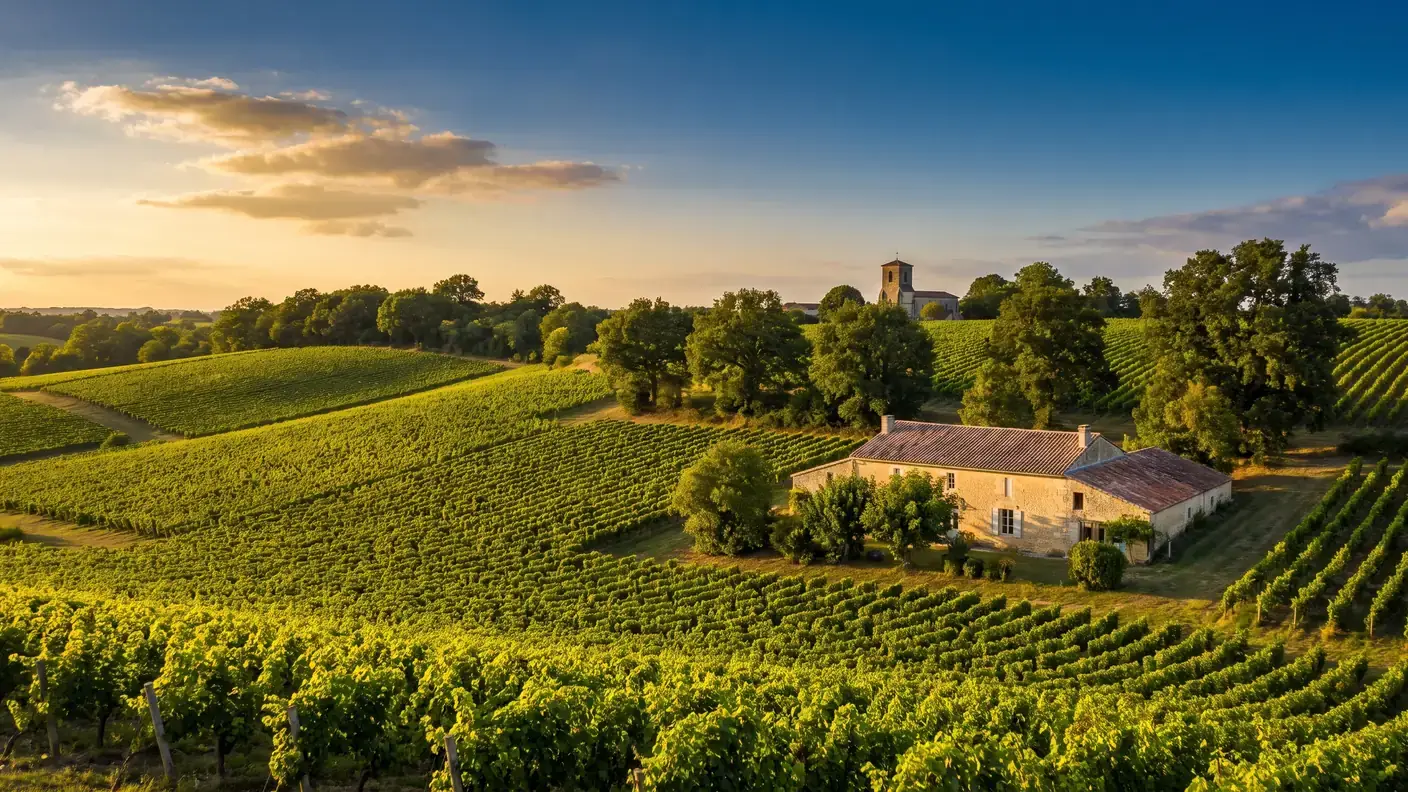
Heading to the Blanzacais region
Direct transfer from Bordeaux (1 hr 32 min) to Blanzac-Porcheresse, home to its Romanesque collegiate church and the Cognac region. Fixed-price quote in writing, with no obligation.