Bordeaux to Brossac: Étang Vallier and Cognac country
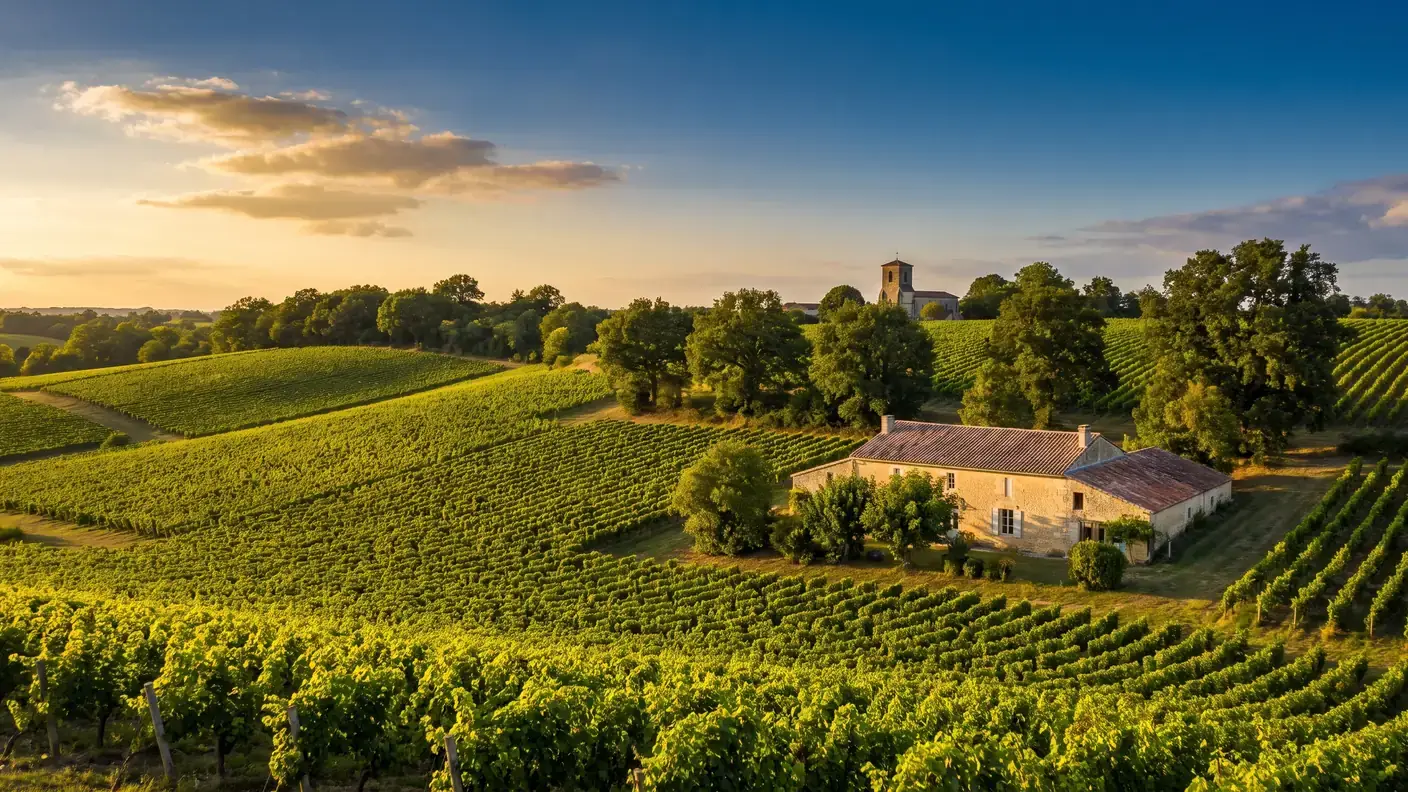
A village in southern Charente on the edge of the Double Saintonge region, in Cognac country : the Vallier pond and its swimming area, the listed Gallo-Roman villa, the fortified Romanesque church, and the Bons Bois wine—about 1 hour and 23 minutes from Bordeaux, at the borders of the Charente, the Dordogne, and the Gironde.
Brossac at a Glance
Brossac is a small village in southern Charente, on the edge of the Forêt de la Double Saintongeaise, in the Cognac region. A village of fewer than five hundred residents, perched on the slope of a limestone hillside, it nevertheless holds several surprises: a large recreational lake that increases its population tenfold every summer, a listed Gallo-Roman villa, a fortified Romanesque church, and a castle with a remarkable history, having passed from the Second Empire to the Wehrmacht and then to a nightclub. We are here in the very south of the Charente, on the borders of the Dordogne and the Gironde, about an hour and a quarter from Bordeaux.
Here are the key details to know before you go. Driving distances are calculated door-to-door; the rate is for a private driver reservation from Bordeaux, with a fixed price provided in advance.
| Landmark | Details |
|---|---|
| Department | Charente (16), Nouvelle-Aquitaine |
| Status | Rural village · Cognac district · Sud-Charentais |
| Population | approximately 482 residents (INSEE 2023) · the residents of Brossac |
| Area | 21.84 km² · between 75 and 184 m above sea level, on the slope of a cuesta |
| Don't miss it | Vallier Pond, the Gallo-Roman villa, and Notre-Dame Church |
| Distance from Bordeaux | 84 km · about 1 hour and 23 minutes by car |
| Nearest train station | Chalais (~11 km) · TER Angoulême–Bordeaux |
A word of honesty right off the bat, because Brossac perpetuates a few misconceptions that this guide corrects, with supporting sources. The village is not part of in the Angoulême district, but that of Cognac. Its Notre-Dame Church is not a “listed” building, but registered historic monument—it is the Gallo-Roman villa and its aqueduct that are listed. Its vineyard is not in “Petite Champagne” but in a cru Good Woods. And its famous Vallier Pond is not a 45-hectare natural lake, but a body of water 4-hectare artificial lake dug in the 1970s. This guide consistently distinguishes between verified information and hearsay.
Here we cover everything you need to know before you come: the location of Brossac between hillsides and forest, the Vallier Pond and its vacation village, the Double Saintongeaise, the fortified church, the listed Gallo-Roman villa, the origin of the name, the history of the village and its castle, Bons Bois cognac, notable sites in the surrounding area, and the easiest way to get there from Bordeaux.
Where is Brossac located?
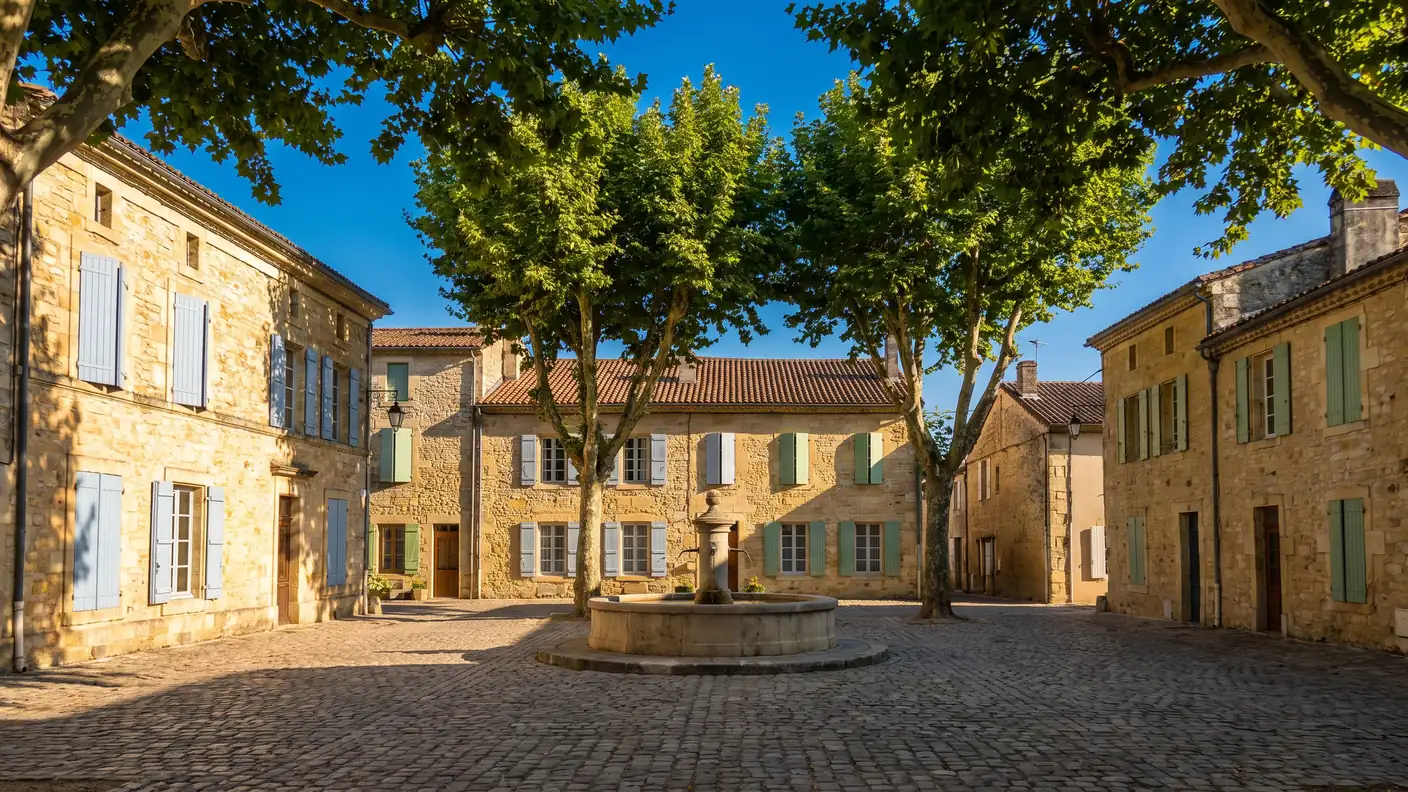
Brossac is located in the far south of the Charente department (16), in Nouvelle-Aquitaine, in the Sud-Charentais region, on the border between the Dordogne and Gironde departments. It is a rural village that belongs—contrary to what is often reported —to the Cognac district, not Angoulême. It is part of the 4B Sud-Charente Community of Communes and, since the 2015 redistricting, of the Charente-Sud canton (whose administrative center is Barbezieux-Saint-Hilaire). The village covers 21.84 km², at an elevation ranging from 75 to 184 meters, with the village itself nestled on the hillside, halfway up a slope that transitions from vineyard limestone to forested sands. This location, set apart from major roads and cities, explains the deep tranquility of the place—but also its rich variety of landscapes, including vineyards, woods, and bodies of water, all less than an hour and a quarter from Bordeaux.
A village on the side of a cuesta
Brossac’s geography is that of a geological boundary, marked by a cuesta—a slope that runs through the town. To the northeast lie the chalky limestone hillsides of the Cretaceous period, with “Champagne”-type soils ideal for vineyards; to the southwest lie the sands and clays of the Tertiary period, home to the Double Saintonge forest. The village clings to this ledge, at an elevation between 125 and 160 meters, dominated to the north by a limestone ridge that rises to 184 meters. Two small rivers drain the town: the Palais, which flows toward the southwest and into the Dordogne basin, and the Viveronne, which joins the Tude at Chalais. Unusually, the watershed between the Charente and Dordogne basins runs through the northernmost part of the village.
A village with fewer than five hundred residents
With a population of 482 according to the 2023 census, Brossac is a small village with a very low population density (approximately 22 inhabitants per km²). These municipal data are published by INSEE (updated July 9, 2026). Its residents are known as Brossacais . Like many rural municipalities in southern Charente, the village is experiencing a long-term population decline: it has lost nearly 40% of its population since the late 1960s. It is an aging community— nearly half of the residents are over 60 years old. But these figures, given such a small population, should be interpreted with caution: each census results in significant variations in the percentages, and the village has even seen a slight recent rebound (from 453 residents in 2022 to 482 in 2023). Above all, Brossac undergoes a remarkable summer transformation, for which the Vallier Pond is the key.
Brossac’s greatest strength lies in its border location. The village lies at the boundaries of three ancient provinces—Saintonge, Angoumois, and Périgord—and a few kilometers from three departments: Charente, Dordogne, and Gironde. It is crossed by the D731, the old road from Saintes to Périgueux, which more or less follows the route of a Roman road. This crossroads location, between wine-growing hillsides and forest, between the Charente and Dordogne river basins, explains both the richness of its history (continuous occupation since antiquity) and the diversity of its landscapes. In Brossac, in just a few minutes you go from the Cognac vineyards to the pine forests of La Double, from limestone to sand—a microcosm of the Southwest’s countryside.
Vallier Pond: The Lake That Changes Everything
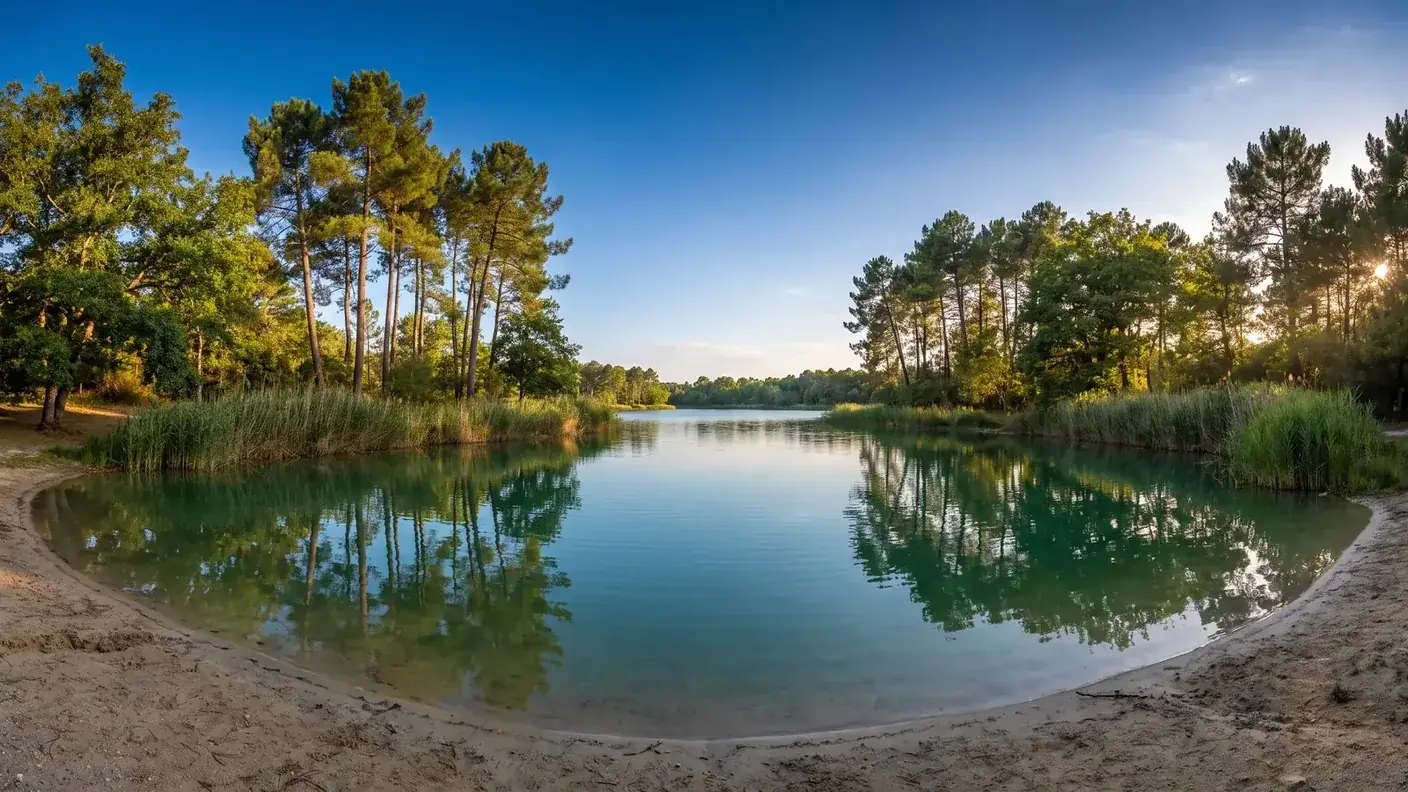
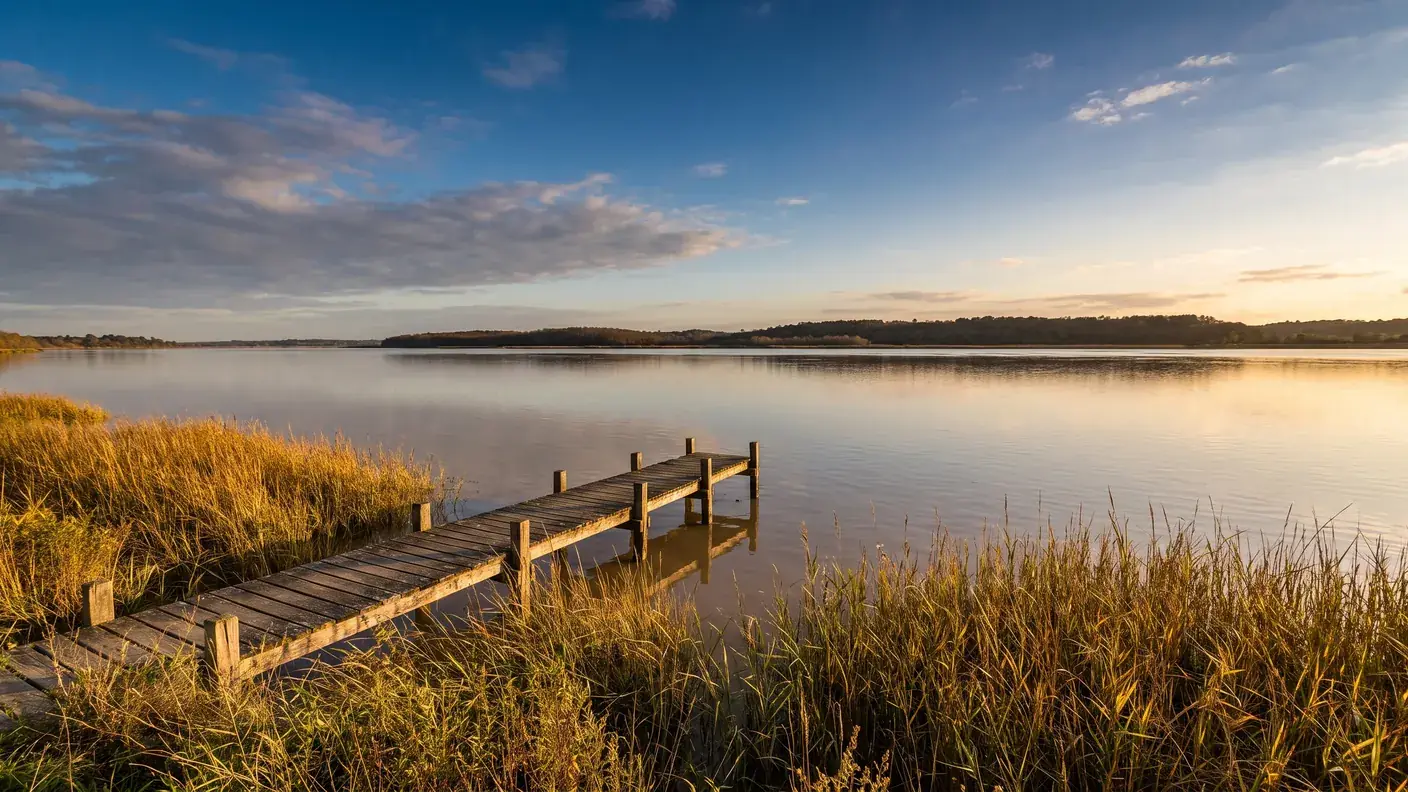
Brossac’s main attraction is its body of water: the Étang Vallier, a recreational lake on the edge of the Double Forest, which transforms the village every summer. It is this lake that transforms Brossac from a peaceful wine-growing village into a small country lakeside resort as soon as the warm weather arrives, attracting families and vacationers seeking the coolness of the water and the pine trees. But here again, one must separate fact from fiction: contrary to what is often claimed, it is neither a natural lake nor a body of water covering 45 hectares. Behind the postcard-perfect image lies a history of recent development, and a few facts it’s best to keep in mind before taking the plunge.
An artificial lake, not a natural one
Contrary to popular belief, Vallier Pond is not an ancient natural lake: it is an artificial body of water, dug by the municipality in the 1970s on a tributary of the Palais River. Another useful point to note: the body of water itself covers 4 hectares, not the 45 hectares sometimes cited—that latter figure refers to the entire recreational complex. In the 1980s, a vacation village was built there, complete with cottages and cottages; the site, which had long been municipally owned, was sold around 2004 to a private operator who now runs it under the name “Étang Vallier Resort.” Swimming, which is supervised in the summer, is free.
Four hundred residents in the winter, thousands in the summer
That is what makes Brossac so unique: this village of 482 permanent residents sees its summer population soar dramatically, reaching several thousand residents at the height of the season, thanks to the vacation village, the municipal campground (“Les Châtaigniers de Brossac”), and visitors to the lake. This striking contrast—a sleepy village for half the year, a rural lakeside resort in the summer—is what gives the place its charm and economic vitality. Around the lake, visitors can enjoy swimming, water sports, and trails in the nearby forest. It’s a family-friendly and affordable destination, a world away from the hustle and bustle of the coast, where people come to enjoy the coolness of the water and the pine trees.
The site, developed as a swimming area with its redeveloped shores, is perfect for family fun: pedal boats, games, picnic areas, and a shady pine forest. The lake is bordered by a white sand beach (documented by the tourist office), a well-maintained swimming area set in a wooded setting. The complex, operated under the name “Étang Vallier Resort,” offers lodging, dining, and activities all summer long. For visitors coming from Bordeaux, it’s a unique getaway into nature: a lake surrounded by pine trees, less than an hour and a quarter’s drive away, where you can swap the vineyards and monuments for swimming and forest walks.
The Double Saintonge Forest
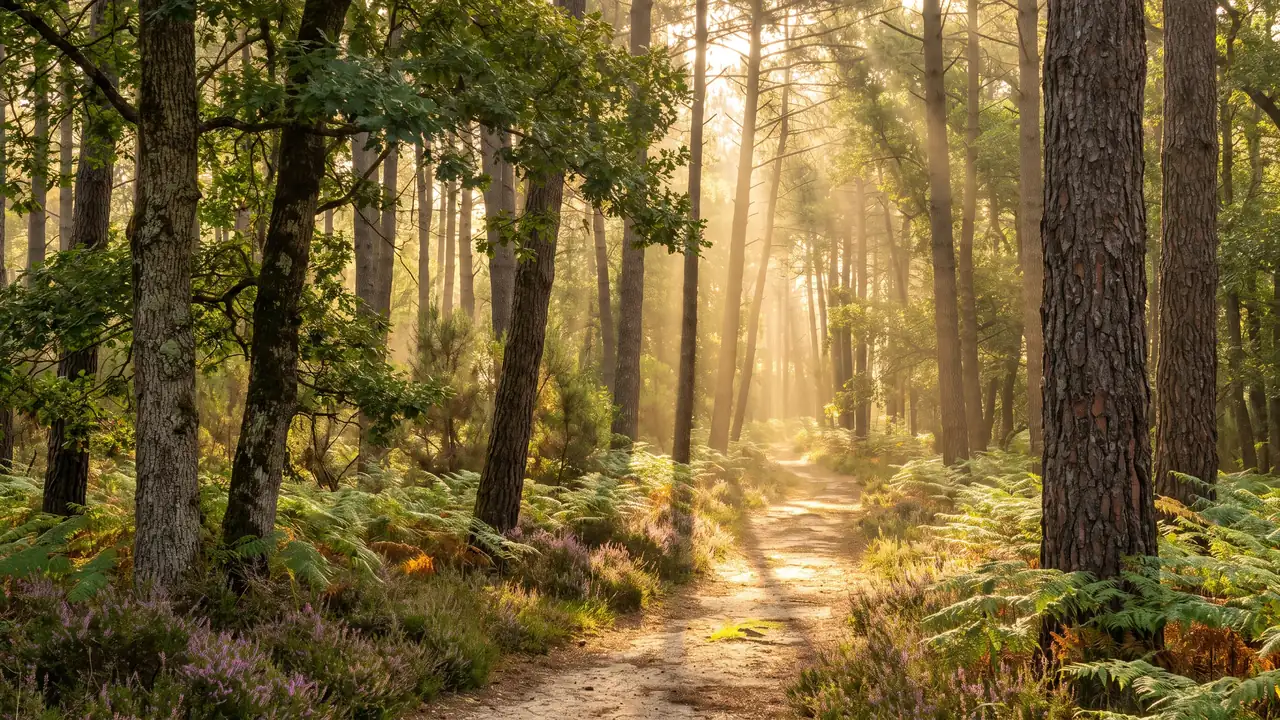
Brossac lies on the northeastern edge of the Double Saintongeaise, a large, little-known forest that spans three departments. This wild and peaceful woodland, a refuge for rare wildlife, gives the town its forested character and summer coolness. This forest of pines and oaks, long considered barren and damp before its drainage in the 19th century, is today a natural haven away from the major tourist routes—a striking contrast to the sun-drenched vineyard-covered hillsides that make up the other half of the town. It is this duality—between vineyards and forest—that defines the very character of Brossac. Let’s take the time to explore this forest, its trees, its wildlife, and its unique geology.
A forest of pine and oak trees
The Double Saintonge is a forested region that extends across southern Charente, Haute-Saintonge, and northeastern Gironde—the western part of the great Double Forest. It is primarily planted with maritime pines, mixed with pedunculate oaks and Tauzin oaks, on the sandy and clayey soils of the Tertiary period. Note a distinction that is often overlooked: Brossac is not “at the heart” of this forest, but rather on its northeastern edge—the forest abuts the limestone cuesta on which the village clings. It is on the southwestern side, near the pond, that the forest truly begins, with its pines, sandy paths, and silence.
A sanctuary for rare wildlife
This forest is more than just a backdrop: it is a treasure trove of biodiversity. Very close to Brossac, the Landes de Touvérac-Saint-Vallier—a vast Natura 2000 site covering over 2,000 hectares, is home to peat bogs and wetlands. It harbors iconic protected species: the European pond turtle (a small freshwater turtle), the otter, and the European mink—one of the continent’s most endangered mammals. For hikers, it’s an ideal place to explore, with ponds, pine forests, and heathlands, all to be discovered on foot or by bike. The Double Saintongeaise, long considered poor and unsanitary before its reclamation, has become a haven for nature, away from the major tourist routes.
This dual character—vineyards and forest, limestone and sand—is evident throughout the landscape of Brossac. To the northeast, the limestone Champagne region unfolds its light-colored hillsides, streaked with vineyards; to the southwest, the forest closes in with its horizon of dark pine trees. Between the two, the cuesta marks a clear dividing line, almost a border between two worlds. This is what gives the town its richness: in a single walk, you go from sun-drenched rows of vines to cool, resinous woodlands. Nature lovers will find a secluded playground here—forest trails, wildlife watching, mushroom picking in the fall—in a region still untouched by mass tourism, where the forest and the vineyards have shared the land for centuries.
The Romanesque, fortified Church of Notre-Dame
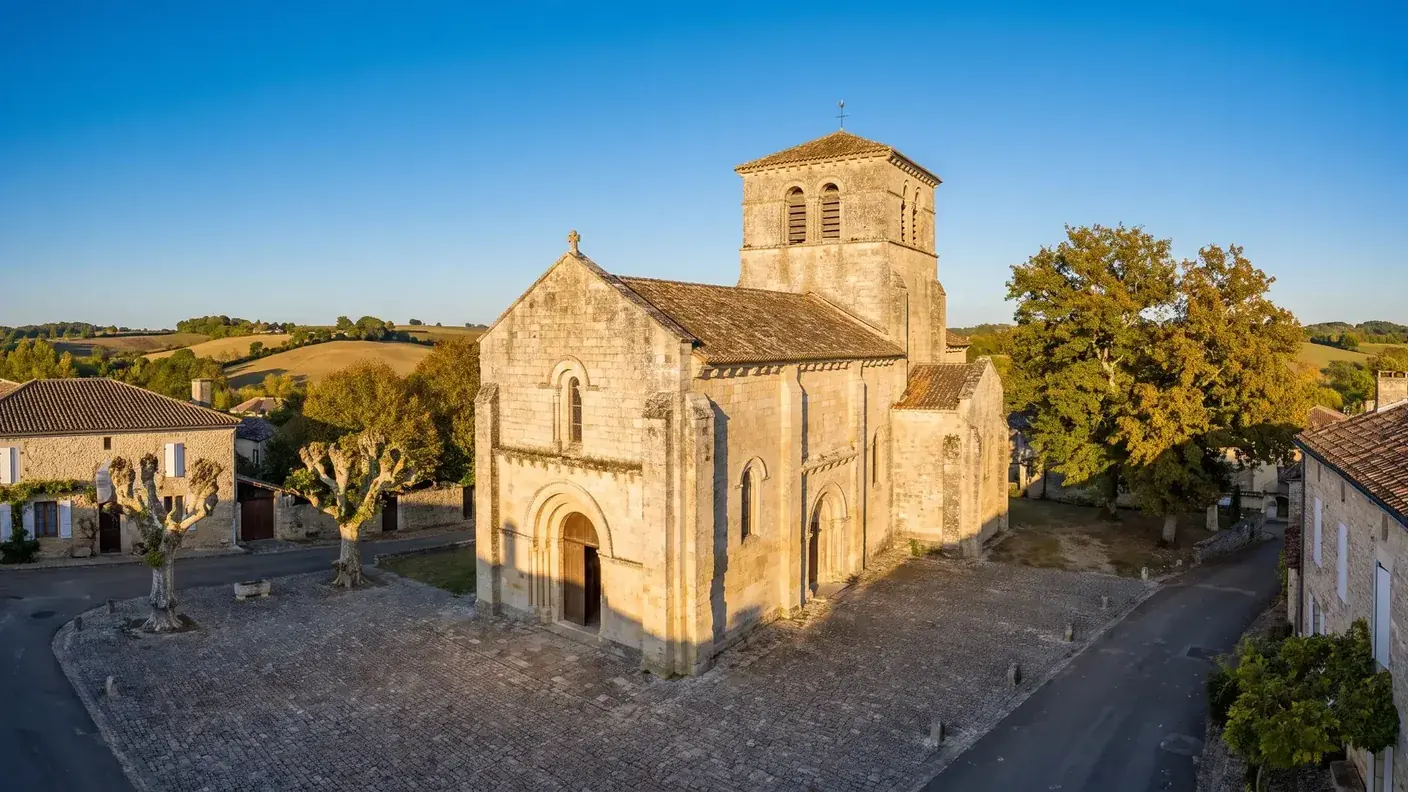
In the heart of the village stands the Church of Notre-Dame, a Romanesque building from the 12th century, listed as a historic monument. A modest country church—built of the rough, gray stone of the region—but deeply marked by history, particularly by the wars that ravaged these borderlands in the Middle Ages. It is often mistakenly believed to be “classified” (as a protected monument); in reality, it is “listed,” a nuance in protection that is significant and which this guide wishes to clarify, since “classification” and “listing” are not the same. Behind its stocky, unadorned silhouette lie several centuries of successive alterations and a surprise, rediscovered during recent restorations. Let’s take a moment to look at it more closely: with its thick walls and defensive features, it speaks volumes about the turbulent past of a village that long stood on the border between kingdoms.
Registered, unranked
Let's make this clear from the outset, since confusion is common: the Notre-Dame Church is registered historic monument (by decree dated October 28, 1985, Mérimée reference PA00104264 in the official POP database, verified on July 24, 2026), and not “listed”—since the designation is a lower level of protection than listing. In Brossac, it is other Gallo-Roman ruins that have been granted protected status (we’ll get to that). The church is a building 12th-century novel, with a Latin cross plan, whose nave was re-vaulted with a ribbed vault in the 15th century, and whose square bell tower and northern apse were rebuilt in the 19th century. Its therefore spans several periods: the 12th, 14th–15th, and 19th centuries.
A fortified church during the Hundred Years' War
Major historical events have left their mark on this humble church. During the Hundred Years’ War, it sustained heavy damage and was fortified: its walls were raised, refuge chambers were built in the attic, and watchtowers were added. The church thus became a last refuge for the villagers in the event of an attack—a common occurrence in these exposed rural areas, at the crossroads of French and English influences. A delightful detail for enthusiasts: the building is constructed of “grison,” a local gray, iron-rich stone, which is hard and unsuitable for fine carving — which explains the simplicity of its decoration. During restoration work, a painted fresco was rediscovered there, bearing witness to its past splendor.
Surrounding the church, the village retains the understated charm of Charente villages: limestone houses, quiet alleyways, and a shaded square. On the heights, a hill topped by a water tower rises to 183 meters, nearly the highest point in the town—it is the site of a former windmill, a reminder of the days when the windy ridges of the cuesta turned the millstones. This modest heritage, lacking any spectacular monuments, tells the story of a rural village that long lived off its land, its vineyards, and its forests. It is by strolling leisurely between the church, the square, and the viewpoints overlooking the valley that one best captures the peaceful atmosphere of Brossac.
The Gallo-Roman villa and the aqueduct
Brossac's most precious heritage is not medieval, but ancient: a Gallo-Roman villa and its aqueduct, both designated historic monuments. A little-known archaeological treasure, hidden just outside the village, which serves as a reminder that this land has been inhabited for at least two thousand years. While the church, which is more visible, is merely listed, it is these ancient ruins that benefit from the ranking, the highest level of protection—and this as early as the late 19th century, at a time when heritage preservation in France was still in its infancy. This highlights the significance of this site, discovered and described as early as 1844 by Abbé Michon, at a time when French archaeology was still in its infancy. The fact that this small village boasts two listed monuments from the Roman era—when so many cities have none—speaks volumes about its rich history. Let’s explore it.
A villa that has been a listed historic building since 1875
About one kilometer east of the village, at a place called La Coue d'Auzenat, lie the remains of a Gallo-Roman villa—a large agricultural estate from antiquity. Its residential section (the pars urbana) has yielded mosaic fragments and elements of refined comfort, bearing witness to its owner’s wealth. Built before the 2nd century, it is classified as a historic monument— the highest level of protection—since the 1875 list (Mérimée reference PA00104265 in the official POP database, verified on July 24, 2026). It was the Charente archaeologist, Abbé Jean-Hippolyte Michon, who first described it as early as 1844. The site attests to the long history of human occupation in Brossac, located on a branch of the Roman road connecting Saintes to Périgueux.
An ancient aqueduct, which is also a designated historic site
The villa did not stand alone: it was supplied with water by a Gallo-Roman aqueduct, fed by the Fontenelles spring, located about one kilometer away on a hill; it was this section of the aqueduct itself that was unearthed about sixty meters north of the villa. This structure, remarkable for a rural estate, has also been classified as a historic monument since the 1889 list (Mérimée reference PA00104263). Brossac thus has three protected monuments: an inscription (the church) and two classified sites (the villa and the aqueduct)—a rare heritage for such a small village, and one entirely rooted in antiquity. The village’s castle, though often mentioned, is not, however, protected as a historic monument, contrary to what is sometimes reported.
This ancient heritage is no trivial matter. The fact that two Gallo-Roman ruins in such a small village were designated as historic sites as early as the late 19th century—among the very first sites protected in France, speaks volumes about their significance. They serve as a reminder that the Brossac region was, as far back as antiquity, an inhabited and prosperous area, situated along a major trade route between Saintes and Périgueux. The villa and its aqueduct—a rare feature for a rural estate—paint a picture of a prosperous agricultural estate, equipped with Roman comforts, a world away from the image of an isolated village. This is one of Brossac’s attractions: beneath today’s tranquil countryside lies a history spanning two millennia, which the mosaic fragments unearthed in the 19th century suddenly bring to life.
| Brossac's Protected Heritage | MH Status |
|---|---|
| Gallo-Roman Villa at La Coue d'Auzenat | Listed (1875 list) · PA00104265 |
| Gallo-Roman Aqueduct (Fontenelles Spring) | Listed (1889 list) · PA00104263 |
| Notre-Dame Parish Church | Registered (October 28, 1985) · PA00104264 |
| Brossac Castle | unprotected (neither classified nor listed) |
Where does the name Brossac come from?
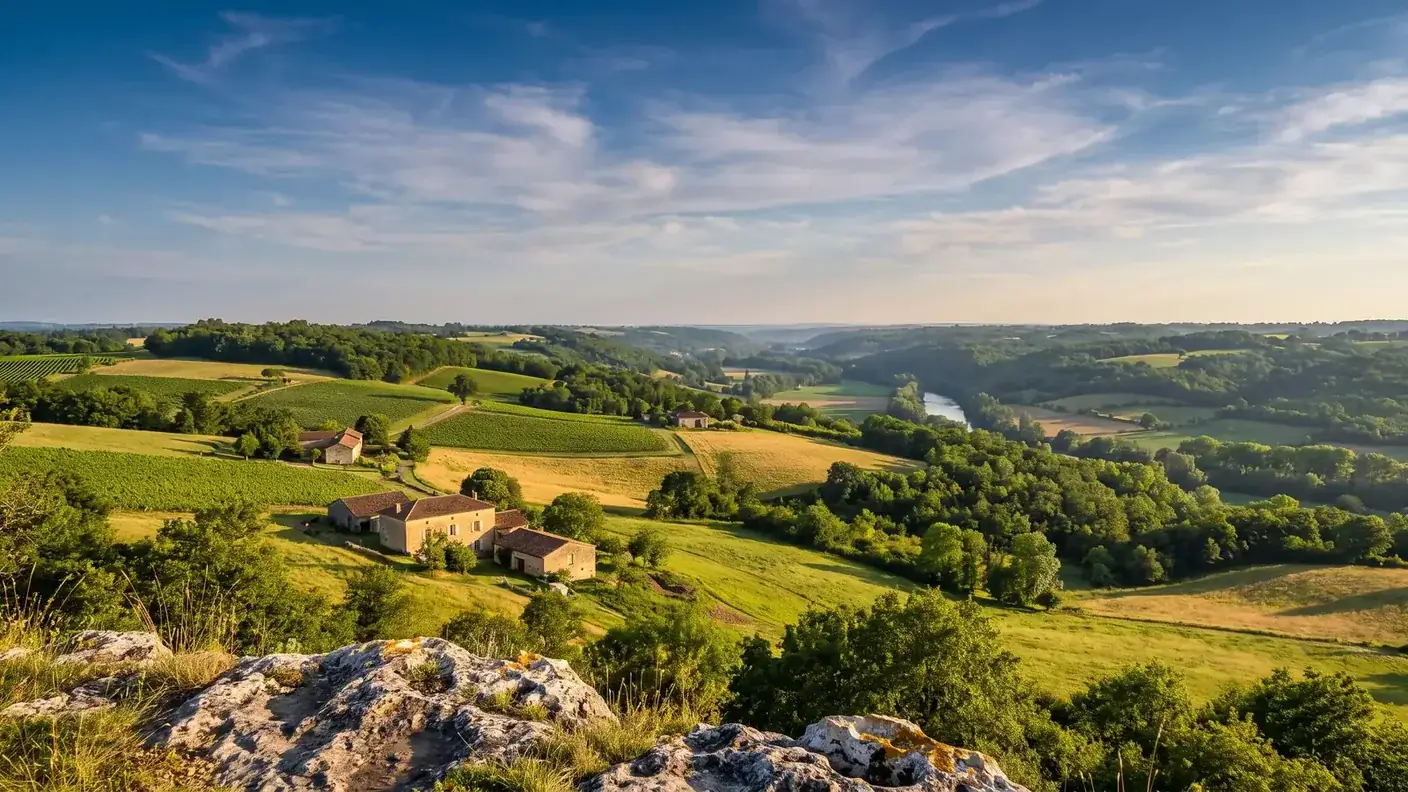
The name “Brossac” tells, in and of itself, a brief history of the language—provided one avoids the usual shortcuts. Here and there one reads that “Brossac” comes from the word for “badger,” or that the estate of a certain “Broccius” was founded there: both claims deserve to be qualified. Like many villages in the southwest whose names end in -ac, Brossac bears the traces of a distant Gallo-Roman estate, but the history of this name is more subtle and fascinating than it seems, involving an animal, a man, and a Gallic root. Here is what toponymists actually say, once we set aside the oversimplifications.
The estate of a certain Broccius
The best-supported hypothesis—though it remains a hypothesis and must be stated in the conditional—traces “Brossac” back to the estate of a certain “Broccius,” a Gallo-Roman male name, followed by the suffix -acum, which denoted the property. The ancient forms of the name, attested in texts, support this interpretation: Brocac or Brociaco (circa 1109–1121), Brozac (1143), Brocciaco (1278). However, no contemporary source mentions this “Broccius”: it is a reconstruction based on the place name, not a documented individual. Brossac shares this origin with several toponymic cousins elsewhere in France, such as Brossay in Anjou or Broussy in Champagne—the same male given name, four regional phonetic variations.
From the badger to the village
And what about the badger in all this? We often read that the Gallic root *brocco-* means “badger.” That’s a shortcut. The primary meaning of *brocco-* is “ sharp, prickly” (it’s found in “broche” and “brochet”); it was only through metonymy, because of its tapered snout, that the word came to refer to the badger. The entire chain is fascinating: from a word meaning “pointed,” we first gave a nickname to an animal (the badger), then to a man (Broccius), and then to his estate (Brossac). From “sharp” to the animal, from the animal to the man, from the man to the village: four stages for a name consisting of just a few letters. A fine lesson in etymology—provided one does not confuse the root meaning with the derived meaning.
From Manor to Napoleon III Castle
Brossac has a long history, stretching from the Roman road to World War II, shaped by its ecclesiastical lordship and the unusual fate of its castle. A stopover village since ancient times, on the road from Saintes to Périgueux, it was Church property in the Middle Ages, before experiencing, over the centuries, the great noble families, the Revolution, and then the Occupation. Above all, its castle has weathered the passage of time in a spectacular fashion, evolving from a stately residence to a German headquarters and then to a nightclub. Here are the major milestones, as established by the sources—a village history that, in many ways, encapsulates that of an entire region.
A fief of the Bishop of Saintes
A crossroads since ancient times, located on a branch of the Roman road from Saintes to Périgueux, Brossac was a seigneury in the Middle Ages—and not a “barony,” as is sometimes claimed without basis. Most of the parish, which was then part of the Saintonge region, fell directly under the jurisdiction of the Bishop of Saintes, to whom the neighboring fiefs (Durfort, La Cour, Le Châtelard, Coyron) owed feudal homage. In 1725, the fief of Durfort passed to the de Lafaye family, nicknamed “du Bourgoin,” one of whose members, Pierre de Lafaye du Bourgoin, served as a lawyer at the Parliament of Bordeaux and as seneschal of Brossac on the eve of the Revolution. Until 1926, the canton of Brossac was part of the district of Barbezieux.
A Castle with an Extraordinary History
Brossac Castle, for its part, has had a truly romantic history. Rebuilt in 1874 in the Napoleon III style by Pierre-François de Lafaye du Bourgoin, on a site that once controlled the fiefdoms and the ancient road, it weathered the 20th century in a spectacular fashion: it served as a kommandantur for the German occupiers from 1940 to 1944, before becoming, in the 1990s, a nightclub named “Paradise.” From the Second Empire to parties, via the war: few village castles can boast such a history. It should be noted, however, that this castle is not protected as a historic monument.
A Famous Son and a Living Memory
Brossac was also the birthplace of a renowned figure: Louis Hourticq (1875–1944), an art historian, author of reference works, inspector general of arts education, and member of the Institut de France. The village also fosters a love of literature: its schools are named after Alfred de Vigny and Honoré de Balzac . As for local life, Brossac holds its market every Saturday morning at the Place de la Mairie, under the Halles, and continues to celebrate its major annual festival, the Frairie de Brossac . One final recent change worth noting: the canton of Brossac, of which the village was the seat, was abolished during the 2015 redistricting; we can therefore refer to it as a “former” canton seat.
Finally, a word about a forgotten relic: in the first half of the 20th century, Brossac was served by a small meter-gauge railway line connecting Barbezieux to Chalais, operated by the Chemins de fer économiques des Charentes. The village had its own station, located at a place called “la Gare,” along the current D731. This line, now gone, serves as a reminder that in those days even the smallest rural villages were connected to the rail network, before the automobile cut them off from it. These successive layers—Roman road, defunct railroad, departmental road—tell, in their own way, the long history of a transit village, always situated on a route connecting the Saintonge to the Périgord.
Bons Bois Cognac
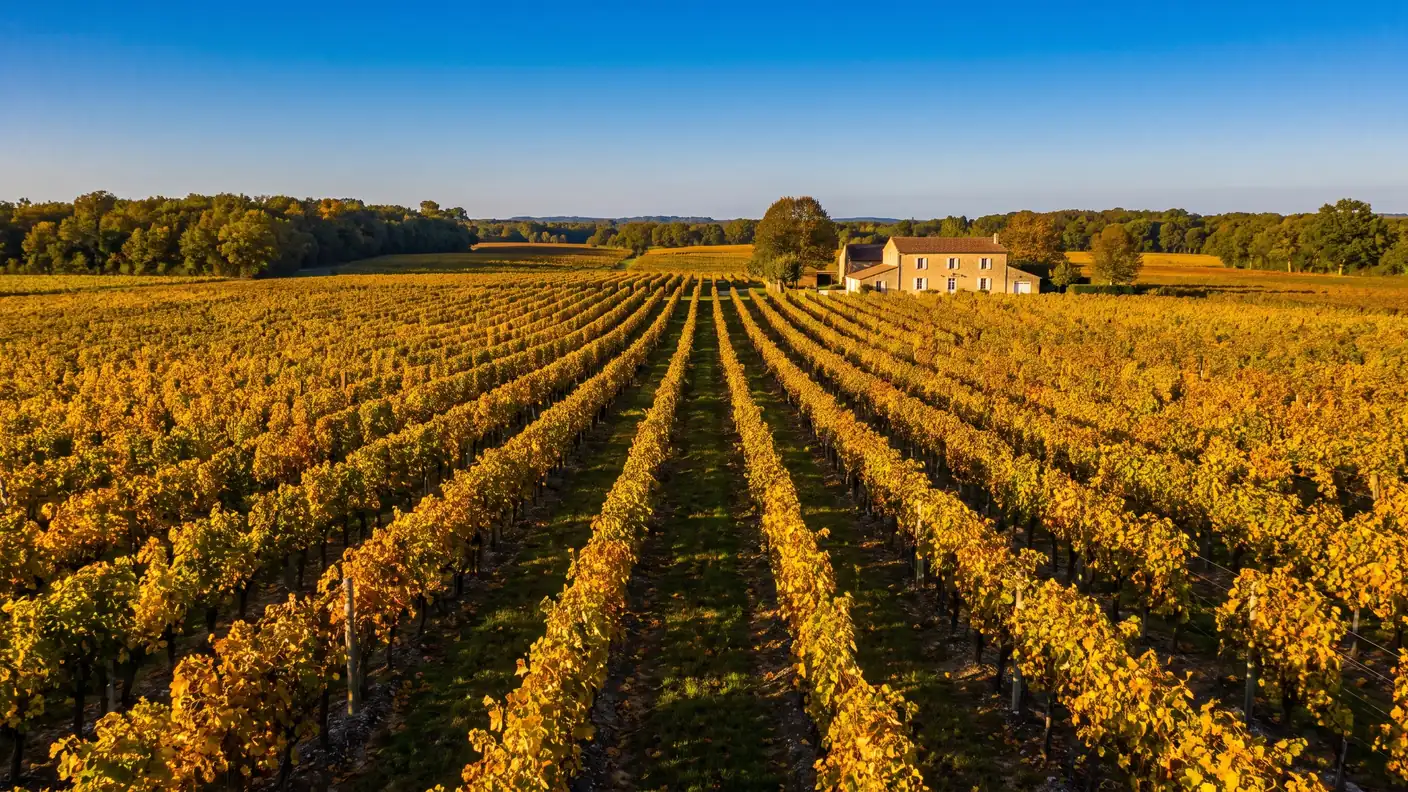
Brossac is in Cognac country—but not just any part of it: the Bons Bois cru, which is often misidentified. It is a discreet, borderland terroir that must be named precisely, because confusion reigns: Brossac is sometimes mistakenly classified as “Petite Champagne” or “Fins Bois.” Here, the vineyards share the land with the forest and grain fields, and the brandy distilled here has its own distinct character, more rustic and direct than the prestigious cognacs from the chalky Champagne regions. It is the cognac for everyday enjoyment, the one for winemakers and family dinners, to be discovered at small local producers during a tasting at the estate. Here’s what you need to know about this little-known vintage, its aromas, and Brossac’s exact place within the grand circular geography of cognac.
Neither Petite Champagne nor Fins Bois
Here's a persistent misconception that needs to be corrected: Brossac is not not neither in “Petite Champagne” (which actually covers Barbezieux, Archiac, and Jonzac) nor in “Fins Bois,” as claimed by some hasty summaries. The town belongs to the cru of the Bons Bois (INAO reference), one of the six crus of the Cognac appellation. Bons Bois forms a wide belt around the central crus, on more scattered vineyards intermingled with other crops. The eau-de-vie produced there is renowned round and supple, which ages fairly quickly, with a bouquet reminiscent of pressed grapes. This is the vast outer belt of the appellation, where the vineyards are more scattered; while lacking the prestige of Champagnes, they possess a straightforward character.
Cognac, Pineau, and Small Producers
In Brossac, viticulture accounts for only a modest portion of agricultural activity—since the southwestern half of the municipality is forested, the area under vineyards remains limited. Cognac is produced here, of course, but so is Pineau des Charentes, a liqueur created by blending grape must and brandy, whose appellation area coincides with that of cognac. Local producers, such as the nearby Le Petit Cousinaud estate, carry on the tradition of Les Bons Bois. For visitors, this is an opportunity to discover an authentic and affordable cognac, far from the high-profile major houses, in the warm atmosphere of a family-run estate—a delightful culinary stop to combine with exploring the village and its pond.
To understand where Brossac fits into the geography of Cognac, a quick refresher is in order: the appellation is divided into six crus, arranged in concentric circles around the town of Cognac, from the most prestigious (Grande Champagne, with its chalky soils) to the most peripheral. Brossac is located in the Bons Bois, the vast outer belt of the appellation. It is a cognac with a simpler and more direct character than those from the Champagnes, yet frank and approachable—the everyday cognac, the one enjoyed by winemakers and at family dinner tables. To know it is to understand that behind the worldwide prestige of cognac lies a whole hierarchy of terroirs, of which the Bons Bois of Brossac form one of the most authentic links.
| The Six Cognac Grape Varieties | Location |
|---|---|
| Grande Champagne | heart of the region, chalky soils — the most prestigious |
| Petite Champagne | around Barbezieux, Archiac, and Jonzac |
| Borderies | the smallest wine-growing region, north of Cognac |
| Fine Woods | Wide ring — 1er cru in terms of area |
| Bons Bois (Brossac) | the appellation's vast outer belt |
| Bois Ordinaires | coastal zone and islands |
What is there to see around Brossac?
Brossac is an excellent starting point for exploring the Southern Charente, the Dordogne region, and the land of cognac. Distances are short, and you can easily travel from a village designated as one of the “Most Beautiful Villages of France” to a historic town, from a vineyard to a forest, from a castle to a Romanesque church. Thanks to its location at a crossroads, at the borders of three former provinces—Saintonge, Angoumois, and Périgord—the village offers access in less than an hour to a wonderful variety of sites: Aubeterre and its underground church, Chalais and its castle, or the world capital of cognac. That’s the real appeal of a stay in Brossac: exploring at your own pace in an unspoiled region, where every country road leads to a new discovery. Here are the main destinations within easy reach of Brossac, from the closest to the farthest, along with their actual distances from the village.
Aubeterre, Chalais, and the Cognac Region
Just a half-hour drive away, Aubeterre-sur-Dronne is the jewel of the region: listed among the “Most Beautiful Villages of France,” this village perched on a cliff is home to an extraordinary monolithic church, carved into the rock beginning in the 8th century and expanded in the 12th century by Benedictine monks—one of the largest in Europe, designated a historic monument since 1912. Closer by, Chalais (about 11 km) and its Château des Talleyrand-Périgord, and Barbezieux-Saint-Hilaire (about 20 km), birthplace of the chronicler Jacques Chardonne, round out the picture. A little further away, Cognac (about an hour) boasts its grand brandy houses and its castle, the birthplace of King Francis I, born in 1494.
A Borderland
What gives the Brossac region its charm is its location at the crossroads, where three provinces meet—the Saintonge, the Angoumois, and the Périgord. In just a few minutes’ drive, you go from the Cognac vineyards to the forests of La Double, from the limestone hillsides to the valleys of the Dronne and the Tude. It’s a quiet region, off the beaten path, where you can take the time to stroll from one village to the next, among Romanesque heritage sites, castles, and local terroirs. With a chauffeur service, you can easily plan a customized loop — Aubeterre, a vineyard, the lake — according to your desires, without worrying about driving or parking.
For a wonderful day trip starting from Bordeaux, you can enjoy a series of experiences: a swim or a walk at Vallier Pond, a visit to the Gallo-Roman villa and the fortified church in Brossac itself, a tasting stop at the Bons Bois estate, followed by a drive through the Dronne Valley to Aubeterre and its underground church. All of this within a radius of about twenty kilometers, along small country roads lined with vineyards and woods. This is the kind of itinerary that you can’t do by train, and one that really comes into its own with a driver: flexible scheduling, stops whenever you like, and the pleasure of discovering a hidden side of the Southwest, far off the beaten path.
| Around Brossac | Distance | Interest |
|---|---|---|
| Chalais | ~11 km | Château, Angoulême-Bordeaux TER Station |
| Barbezieux-Saint-Hilaire | ~20 km | Château, the hometown of Jacques Chardonne |
| Aubeterre-sur-Dronne | ~22 km | "Most Beautiful Village," listed monolithic church |
| Cognac | ~55 km | Cognac Houses, Château of François I |
Getting to Brossac from Bordeaux
Brossac is located 84 km from Bordeaux, which is about 1 hour and 23 minutes via the N10 and then the roads of the Sud-Charentais region. Private transfers start at €157 during the day for 1 to 3 passengers, based on rates verified on July 24, 2026. The town does not have a passenger train station.
Contrary to what is sometimes reported, the nearest train station is not Barbezieux—which no longer has a passenger station in operation—but Chalais (~11 km), a TER Nouvelle-Aquitaine stop on the Angoulême–Bordeaux line.
Train or chauffeur service?
Getting to Brossac by public transport is cumbersome: you have to take a train to Chalais, then arrange another mode of transport for the final eleven kilometres. This is inconvenient with luggage or if you want to explore the region. If you’re travelling with others, or if you want to visit several places in one trip (the lake, Aubeterre, a vineyard), a private chauffeur becomes the more convenient option: a direct trip from Bordeaux, door-to-door, with no transfers, and stops along the way as you wish. We offer this trip at a fixed price confirmed in advance: approximately €196 one way, in a Mercedes sedan or van seating up to 8 passengers, with a professional chauffeur.
This is the perfect option for a stay at Étang Vallier, a getaway to the Cognac region, a visit to Aubeterre, a family event, or a transfer to Bordeaux-Mérignac Airport. The price, set in advance, remains fixed regardless of traffic or stops—a real advantage for staying within your budget, and the convenience of a direct trip to the Sud-Charentais region.
In practice, booking is simple: you provide the pickup address in Bordeaux and the destination in Brossac, along with the date, time, and number of passengers, and you’ll receive a fixed-price quote in writing. On the day of the trip, the driver picks up the passengers at the agreed-upon address and takes them directly to Brossac or Étang Vallier, without any detours. You can travel alone, with your family, or in a small group (up to 8 people in a van), with luggage, and request stops along the way. This is the most comfortable and reliable way to explore the Sud-Charentais region from Bordeaux, without worrying about driving or parking.
| Route | Distance | Duration | Landmark |
|---|---|---|---|
| Bordeaux → Brossac | 84 km | about 1 hour and 23 minutes | Starting at €157 for a private chauffeur service |
| Brossac → Chalais (train station) | ~11 km | ~11 min | castle, TER train station |
| Brossac → Aubeterre-sur-Dronne | ~22 km | ~25 min | Most Beautiful Village |
| Brossac → Cognac | ~55 km | ~58 min | cognac houses |
Whether you come for the Vallier Pond and its swimming, for the Gallo-Roman villa and the fortified church, for Bons Bois cognac, or for the Double Forest, Brossac is a rewarding stop for travellers drawn to the character of south-west France, set among vineyards, hillsides, and pine trees.
Whether it’s for a day at the lake, a gourmet tour, or an event, booking a chauffeured transfer guarantees a comfortable and punctual ride— book a driver from Bordeaux to Brossac or explore all our destinations.
Frequently Asked Questions
Where is Brossac located?
Brossac is a village in southern Charente (16), in Nouvelle-Aquitaine, in the Sud-Charentais region, on the border between the Dordogne and Gironde departments. It is part of the district of Cognac (not Angoulême) and the canton of Charente-Sud. The village has a population of approximately 482 and is located 84 km from Bordeaux—about a 1-hour, 23-minute drive—on the edge of the Forêt de la Double Saintongeaise.
What is the distance between Bordeaux and Brossac?
Bordeaux and Brossac are 84 km apart, which is about a 1-hour, 23-minute drive. Private transfers start at €157 during the day for 1 to 3 passengers, with the price quoted before departure. Brossac does not have a passenger train station; Chalais is the nearest train stop.
What is Vallier Pond?
This is Brossac’s large recreational lake, on the edge of the Double Forest. Contrary to popular belief, it is not a natural lake: it is a 4-hectare artificial pond, dug by the municipality in the 1970s (the figure of 45 hectares sometimes cited refers to the entire property). A vacation village was built there in the 1980s, now operated under the name “Étang Vallier Resort.” Swimming is free and supervised during the summer.
Why does Brossac get so crowded in the summer?
Because this village of 482 permanent residents becomes a small rural seaside resort in the summer, thanks to the Vallier Pond. Between the vacation village, the municipal campground, and the visitors to the lake, the summer population swells to several thousand people at the height of the season. This contrast between a sleepy village in winter and a lively one in summer is what makes Brossac so unique.
Is the church in Brossac a designated historic site or listed?
It is listed as a historic monument (by decree of October 28, 1985, Mérimée reference PA00104264), and is not “classified”— as listing provides a lower level of protection than classification. In Brossac, it is the Gallo-Roman villa and its aqueduct that are classified. The Church of Notre-Dame is a 12th-century Romanesque building, re-vaulted in the 15th century and fortified during the Hundred Years’ War, built of “grison,” the local gray stone.
What is the Gallo-Roman villa at Brossac?
This is the village’s most precious heritage site: the remains of a large ancient farmstead, located at a place called La Coue d’Auzenat, about 1 km from the village center. Its residential section has yielded fragments of mosaics. Built before the 2nd century, it has been listed as a historic monument since the 1875 list (PA00104265). Its aqueduct, which drew water from the Fontenelles spring, has also been listed since 1889 (PA00104263). The archaeologist Jean-Hippolyte Michon described it as early as 1844.
Which Cognac cru is Brossac in?
Brossac is located in the Bons Bois cru—and not in “Petite Champagne” or “Fins Bois,” as is sometimes stated. Bons Bois form a wide belt around the central crus of the Cognac appellation, consisting of scattered vineyards; it is the vast outer belt of the appellation. The eau-de-vie produced there is round and smooth. The town also produces Pineau des Charentes. However, viticulture accounts for only a modest portion of agricultural activity here, as the southwestern half is forested.
Where does the name Brossac come from?
The best-supported hypothesis traces “Brossac” back to the estate of a certain “Broccius,” a Gallo-Roman male name, followed by the suffix -acum. The older forms (Brocac around 1109–1121, Brozac in 1143) confirm this. Beware of a common misconception: the Gallic root *brocco-* primarily means “pointed, sharp,” and only came to refer to the badger through metonymy (its tapered snout). The sequence is: pointed → badger → man’s nickname → estate name → village.
What is the history of Brossac Castle?
The current castle was rebuilt in 1874 in the Napoleon III style, on a site that once controlled the fiefdoms and the Roman road. Its history is quite remarkable: it served as a German kommandantur from 1940 to 1944, then became a nightclub called “ Paradise” in the 1990s. It is not listed as a historic monument, contrary to what is sometimes reported. In the Middle Ages, Brossac was a seigneury under the jurisdiction of the Bishop of Saintes.
How many people live in Brossac?
Approximately 482 residents according to the 2023 census, with a very low population density (about 22 residents per km²). See the INSEE source. Like many rural towns in southern Charente, Brossac is experiencing chronic depopulation (nearly a 40% decline since the late 1960s) and an aging population. However, these figures should be treated with caution for such a small municipality. The residents are known as Brossacais. In the summer, the population increases significantly thanks to the Vallier Pond.
Is there a train station in Brossac?
No, the town does not have a train station. Contrary to what is sometimes reported, the nearest station is not Barbezieux (which no longer has a passenger station in operation), but Chalais, about 11 km away, a Nouvelle-Aquitaine TER stop on the Angoulême-Bordeaux line. To reach Brossac and explore the Sud-Charentais region, hiring a professional chauffeur from Bordeaux remains the simplest and most direct option.
What is there to see around Brossac?
Aubeterre-sur-Dronne, listed among the “Most Beautiful Villages of France,” and its monolithic church carved into the cliff, which has been a listed site since 1912 (~22 km); Chalais and its castle (~11 km); Barbezieux-Saint-Hilaire, birthplace of Jacques Chardonne (~20 km); Cognac, with its brandy distilleries and the castle of Francis I (~55 km). We are at the crossroads of Saintonge, Angoumois, and Périgord, amid vineyards, forests, and rivers.
Can I book a private driver from Bordeaux to Brossac?
Yes. The private ride from Bordeaux to Brossac covers 84 km in about 1 hour and 23 minutes. Fares start at €157 during the day for 1 to 3 passengers, with a fixed price provided before departure. Pickup and drop-off take place at the agreed-upon addresses, with no transfers.
Further Reading
- The Land of Cognac: See the Guide to Cognac (the major houses, the Charente method, and the six crus)
- A village on the estuary: see the Guide to Saint-Fort-sur-Gironde (the estuary, Port-Maubert caviar, and Fins Bois cognac)
- A wine town in the Dordogne: see the Guide to Bergerac (Cyrano, the wines, the gabarres, and the old town)
- Around Angoulême: Explore the guide to La Couronne, from the Abbey to the History of Paper
- Plan your trip: book a chauffeur service from Bordeaux to Brossac or explore all our destinations
Sources and References
- INSEE — Brossac (Charente) — Official Population and Demographic Trends
- Wikipedia — Brossac — Geography, Demographics, History, Heritage, Vallier Pond
- POP/Mérimée Database — Gallo-Roman Villa at La Coue d'Auzenat — Listed as a Historic Monument (1875 list)
- POP/Mérimée Database — Gallo-Roman Aqueduct of Brossac — Aqueduct of the Villa de la Coue d'Auzenat, listed as a historic monument on the 1889 list
- POP/Mérimée Database — Notre-Dame de Brossac Church — Listed as a Historic Monument (October 28, 1985), 12th-century Romanesque
- Wikipedia — Cognac Crus — Bons Bois Cru, Appellation Area
- Wikipedia — Double Saintonge — a forest of pines and oaks, protected wildlife
Article updated on .
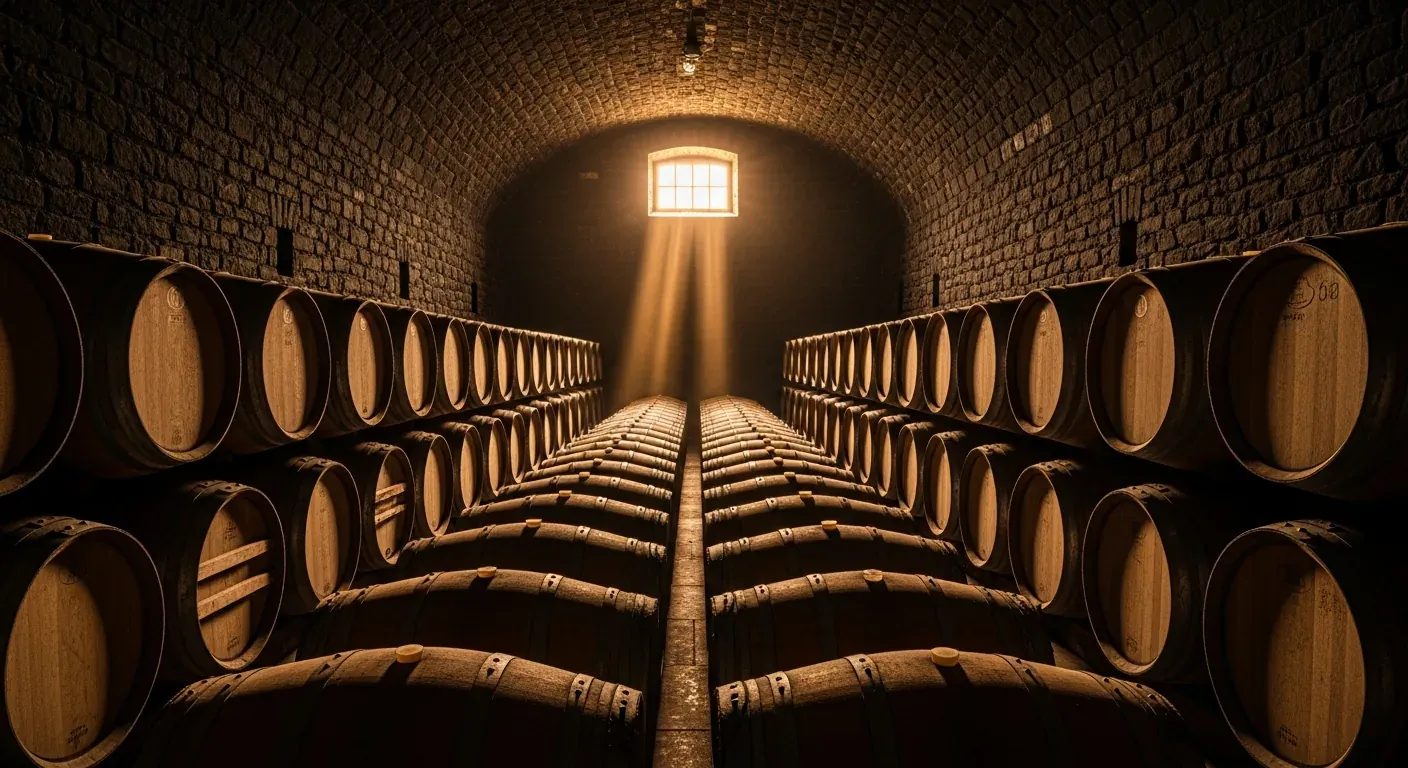
Heading to the South Charente Region
Direct trip from Bordeaux (about 1 hour 23 minutes) to Brossac and the Vallier Pond, with stops along the way as desired—Aubeterre, a cognac vineyard, and the Double Forest. Written fixed-price quote, with no surprises on the meter.