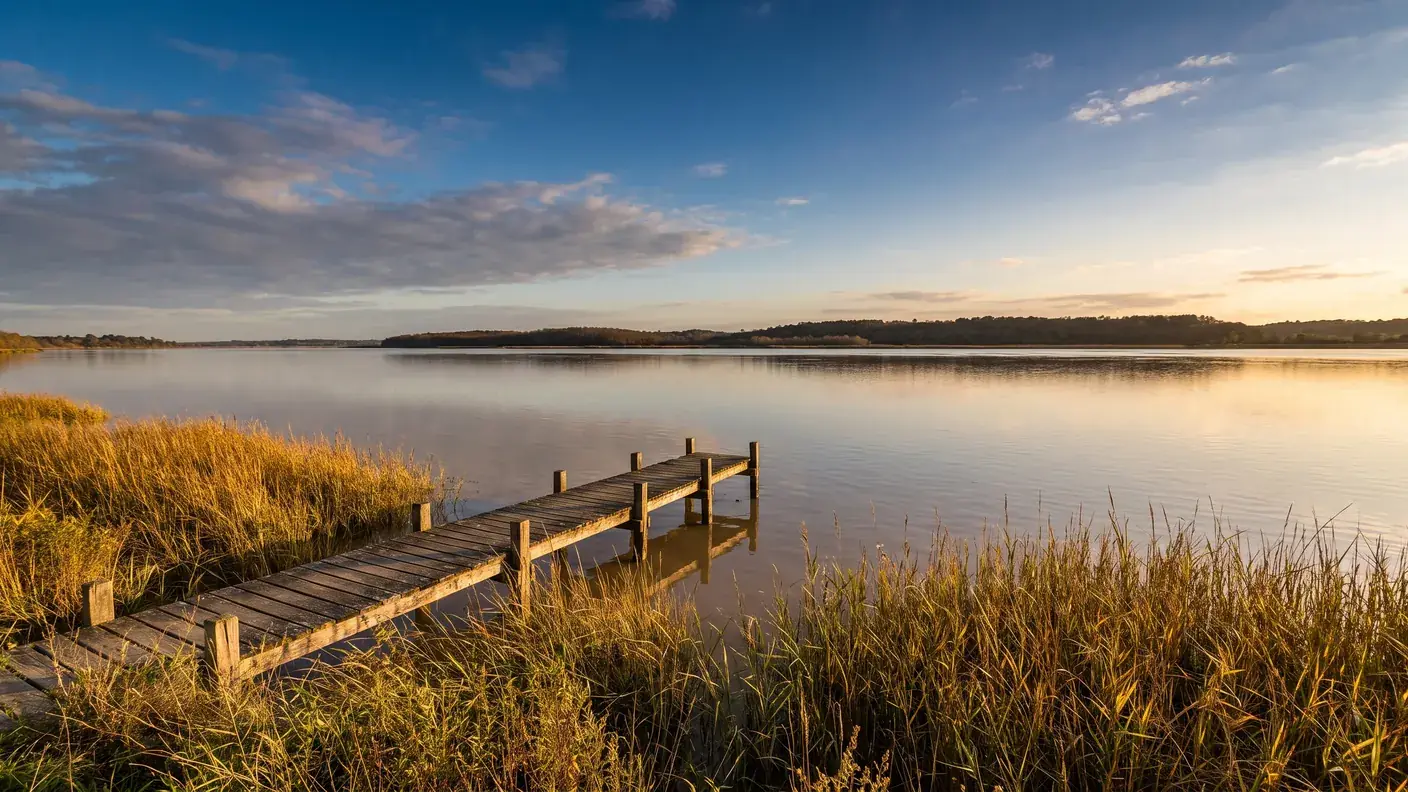
Bordeaux to Saint-Fort-sur-Gironde: estuary, caviar and cognac
A village in Haute-Saintonge on the right bank of the Gironde estuary: Port-Maubert and its history of caviar, the remarkable Saint-Fortunat church, a listed historic site, the Fins Bois Cognac and the marshes of the “Little Camargue”—just over an hour from Bordeaux, across from the Médoc.
Saint-Fort-sur-Gironde at a glance
Saint-Fort-sur-Gironde is a village in Haute-Saintonge, in Charente-Maritime, situated on the right bank of the Gironde estuary—the largest wild estuary in Europe—facing the Médoc. At first glance, it’s a peaceful wine-growing village of nine hundred residents. In reality, it’s a microcosm of unique stories: a former trading port, Port-Maubert, which was once a hub for caviar; a listed church with puzzling architecture, part Romanesque, part Renaissance; a name that conceals a persistent confusion between a 6th-century poet and a legendary saint; and a cognac vineyard right on the water’s edge. We are here on the border between Saintonge and Guyenne, just over an hour from Bordeaux.
Here are the key details to know before you go. Driving distances are calculated door-to-door; the rate is for a private driver booked from Bordeaux, with a fixed price provided in advance.
| Landmark | Details |
|---|---|
| Department | Charente-Maritime (17), Nouvelle-Aquitaine |
| Status | Rural municipality · Jonzac district · Haute-Saintonge |
| Population | approximately 912 residents (INSEE 2023) · the Saint-Fortais |
| Area | 24.22 km² · on the right bank of the Gironde estuary |
| Don't miss it | Port-Maubert, the Saint-Fortunat Church, the estuary, and its fishing huts |
| Distance from Bordeaux | about 87 km · a little over an hour's drive |
| Nearest train station | Jonzac (~25 km) · TER and Intercités |
A candid note at the outset: several misconceptions about Saint-Fort deserve correcting, with sources to support the facts. Its name does not come from a martyred “Saint Fort”, but from Saint Fortunatus—Venantius Fortunatus, poet and bishop of Poitiers, who died in 609. The church is not merely listed; it is classified as a historic monument (since 1913). The local vineyards belong not to Bons Bois, as is sometimes stated, but to the Fins Bois cru under the Cognac AOC specifications. And the nearest passenger station is not Mirambeau, but Jonzac. Throughout this guide, verified facts are kept distinct from hearsay.
Here’s a rundown of everything you need to know before you come: the location of Saint-Fort on the estuary, the history of Port-Maubert and its caviar, the remarkable church of Saint-Fortunat, the truth behind its name, its past as a salt port, Fins Bois cognac, its understated heritage, the remarkable sites in the surrounding area, and the easiest way to get there from Bordeaux.
Where is Saint-Fort-sur-Gironde located?
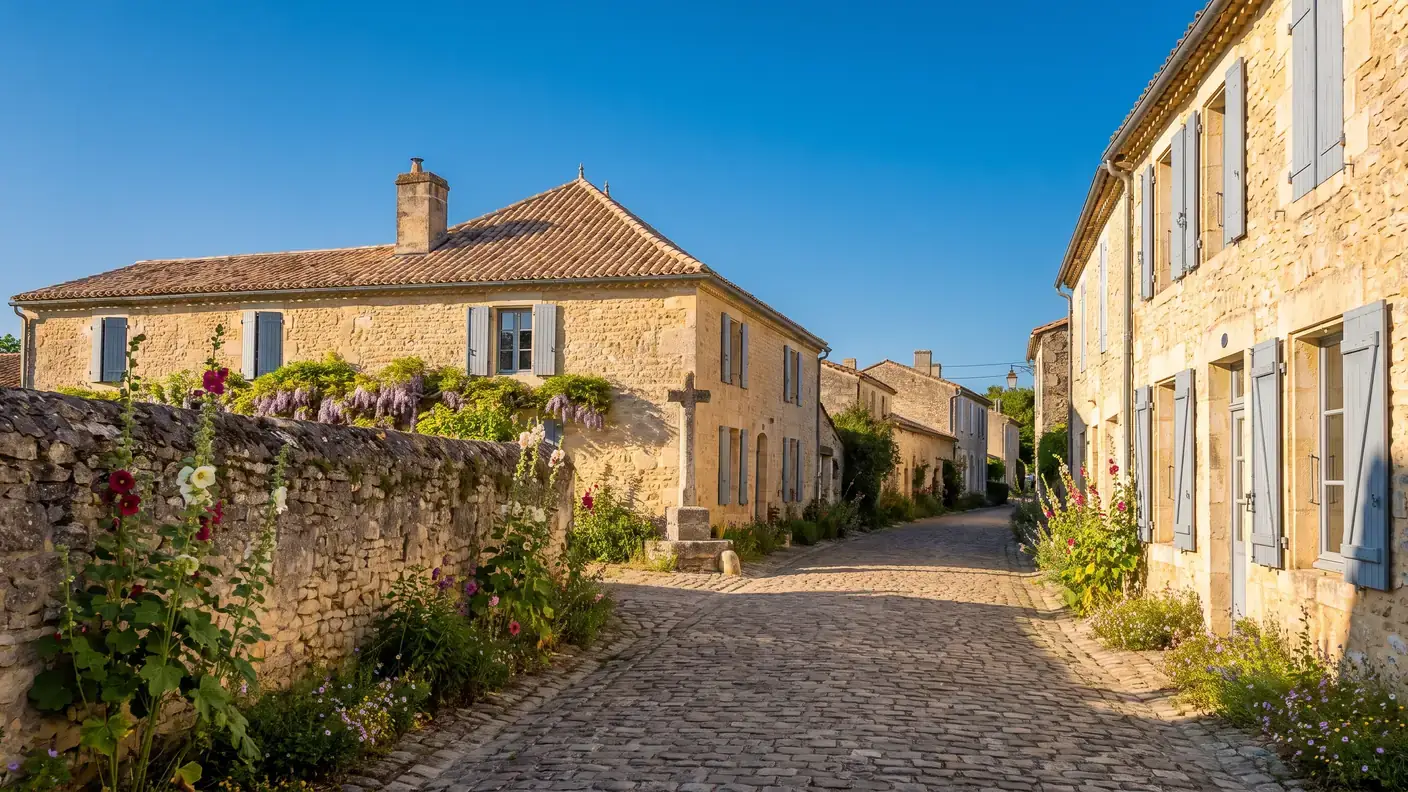
Saint-Fort-sur-Gironde is located in the southern part of Charente-Maritime (17), in Nouvelle-Aquitaine, on the right bank of the Gironde estuary, halfway between Bordeaux and Royan. It is a rural commune in Haute-Saintonge, part of the Jonzac arrondissement and the Haute-Saintonge Community of Communes—the largest intermunicipal community in France in terms of the number of communes. The village covers an area of 24.22 km², at elevations ranging from 2 to 70 meters, set amid a landscape of vineyard-covered hills, wooded valleys, and estuarine marshes. Across the estuary—which is about ten kilometers wide at this point—lies the Médoc region and its vineyards. This in-between location—between land and water, between Saintonge and the Bordeaux region—permeates the village’s entire identity, from its wine-growing economy to its history as a river port, and gives it its unique character as a coastal community without being maritime, facing a river as wide as an arm of the sea.
On the border between Saintonge and Gironde
Saint-Fort is situated on the frontier. We are on the southern edge of Saintonge, that ancient province in the west, where it meets the estuary and the Bordeaux region of Guyenne. This location explains everything: the landscape, nestled between Cognac vineyards and estuary marshes; the history, shaped by river trade and salt; and even the wines, since the village straddles the Cognac region (on the Saintonge side) and the Blayais wine region (on the Gironde side). One important detail: since the 2015 redistricting, the municipality has belonged to the canton of Pons—and no longer to the canton of Saint-Genis-de-Saintonge, which was abolished in the redistricting but is still sometimes mentioned.
A village with 900 residents
With a population of 912 according to the 2023 census (INSEE), Saint-Fort is a small village with a very low population density (about 38 people per km²). Its residents are known as Saint-Fortais. A word about the numbers, because they tell a story: the population is roughly stable today (slightly higher than in 2017), but over the long term, it has been declining—the village had more than 1,000 residents in 1975. It is an aging community (nearly half the residents are over 60), which was long the most populous in its former canton (Saint-Genis-de-Saintonge) before being surpassed by its neighbor, Saint-Genis. A typical example of rural Saintonge, blending a winemaking heritage with the laid-back lifestyle of the estuary region.
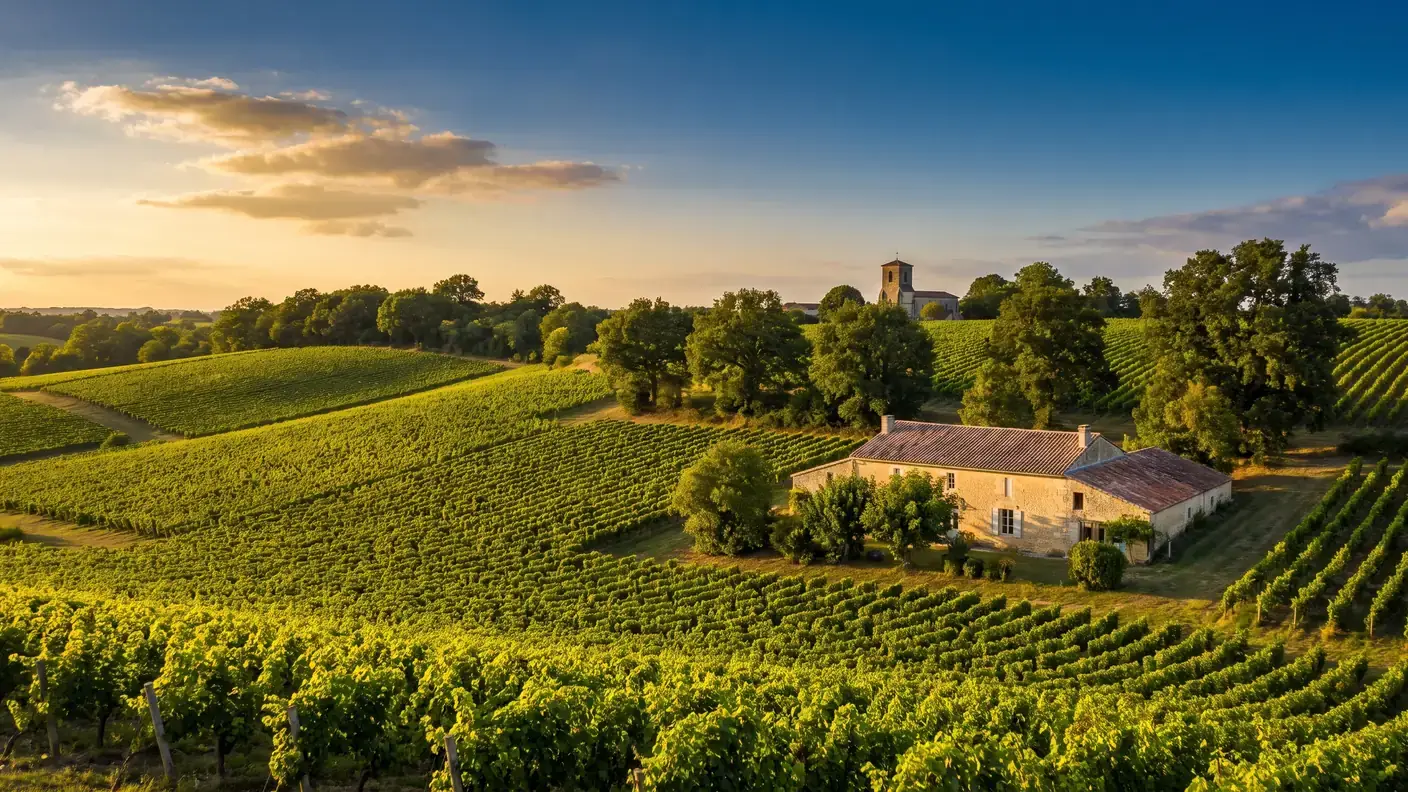
The landscape of Saint-Fort blends two worlds. On one side, the vineyard-covered hills: more than 40% of the area consists of clay-limestone soils (known as “groies”) ideal for vineyards, and it’s beautifully said that the church “seems to spring from the vineyards.” On the other, the lowlands and marshes bordering the estuary, wild and water-rich. Between the two, scattered settlements, wooded valleys, and that distinctive light of the estuary region. The town is overwhelmingly rural—more than half of its area is farmland—and a significant portion of its territory is protected as natural areas. It is this contrast between the vineyards and the water that defines the character of Saint-Fort.
The Gironde Estuary and Port-Maubert
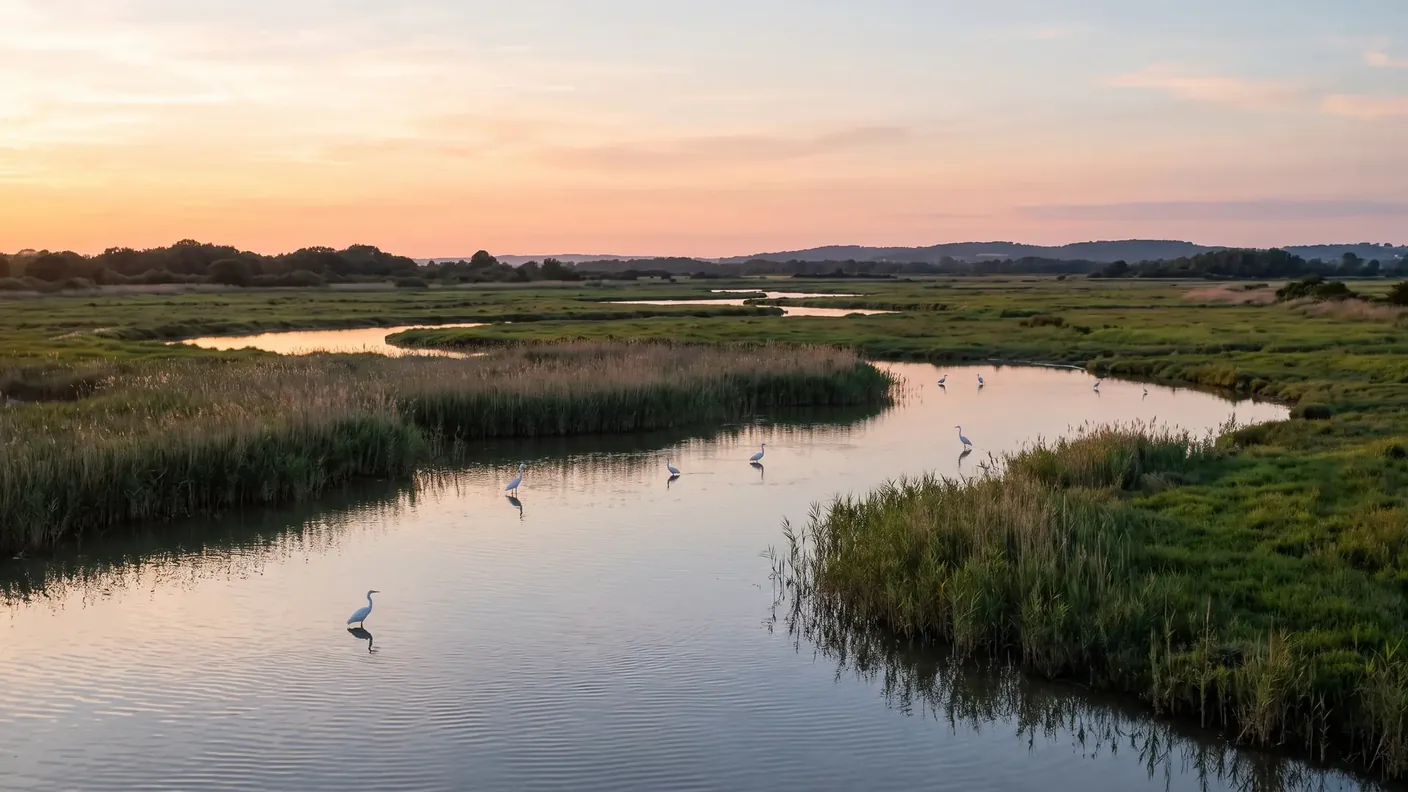
Saint-Fort is, above all, an estuary town. The Gironde Estuary, formed where the Garonne and Dordogne rivers meet, is the largest wild estuary in Europe: 75 kilometers long and up to 12 kilometers wide, it is a vast corridor of water and mudflats stretching between the ocean and the vineyards. Designated a Natura 2000 site and bordered by marshes, mudflats, and reed beds, it is home to remarkable wildlife—migratory fish and waterfowl—earning it the nickname “Little Camargue.” In Saint-Fort, nearly a quarter of the municipal territory is protected under the ZNIEFF designation, and the estuarine marshes form a flat, wild, and luminous landscape where the water and sky merge. It is this great river—both life-giving and capricious—that has shaped the town: it gave it its port, its fisheries, its former prosperity—and even that distinctive silvery light so sought after by painters and photographers.
Port-Maubert, the former salt port
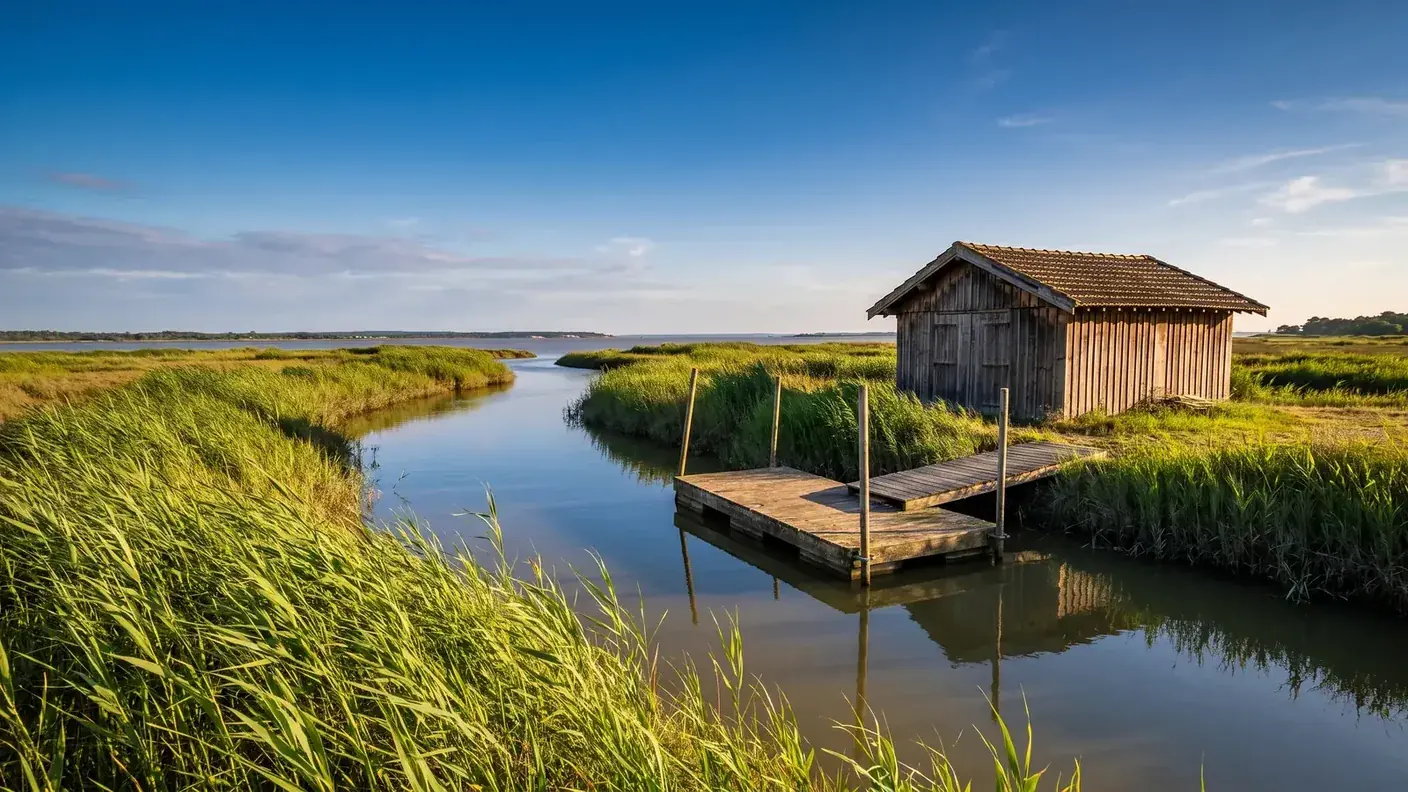
A few kilometers from the town, connected to the estuary by a channel, lies Port-Maubert, a former commercial port and the beating heart of Saint-Fort’s history. Contrary to popular belief, it is not an ancient port: it succeeded an older port, the Port of Beaumont, which silted up and was abandoned in the 16th century, and is first mentioned as a commercial port only from 1544 onward (Haute-Saintonge Tourisme). At that time, the region’s greatest treasure—salt—was unloaded there. In the 19th century, the port reached its peak: a landing stage was built in 1835, and Port-Maubert became the main maritime transit point for the entire Jonzac district, capable of accommodating fifteen to twenty ships.
A haven for fishing and recreational boating
Large-scale trade has disappeared, but Port-Maubert remains very much alive: it has reinvented itself around fishing and recreational boating. The small harbour now accommodates around eighty to eighty-five boats, while its promenade, viewpoint map and walking trails make it a pleasant place to explore. The GR 360, which loops through Saintonge, passes through the port. Estuary fishers still leave from here in traditional boats in search of migratory fish and the famous glass eel. A sailing school also operates on site, and every summer the Port-Maubert Festival (13–15 August) brings dances and sailors’ choirs to the waterfront, echoing the great estuary sailing festivals of the past.
Around the harbor, nature reigns supreme. The estuarine marshes of Saint-Fort—the Port-Maubert channels, the Saint-Seurin sandbar, the Lande Forest—are designated as Natural Areas of Ecological Interest (ZNIEFF) and, together, cover nearly half of the municipality. A rich variety of birdlife can be observed here: herons, egrets, ducks, and wading birds inhabit these mudflats and reed beds, which serve as refuges for migratory birds. This is why this stretch of the estuary is nicknamed the “little Camargue.” An information board, set up at the water’s edge, explains this fragile ecosystem to visitors, and trails allow you to explore it on foot or by bike, amid the tranquility and the unique light of the great estuaries.
Caviar, Sturgeon and Elvers
Here is the most surprising story from Saint-Fort: Port-Maubert was once a major center for caviar. The Gironde estuary was once home to the European sturgeon, that large prehistoric fish that fishermen from the Saintonge region called the “créac” (from the Occitan word creac). For a long time, it was fished for its meat, with its eggs—considered worthless—being discarded, until a Parisian merchant, Émile Prunier, recognized the potential of these eggs and launched caviar production in the estuary as early as 1921. The birthplace of this industry is Saint-Seurin-d’Uzet, a little further downstream—the caviar capital of the Gironde, where Prunier sent the Russian expert Alexandre Scott to train the fishermen in the Caspian-style preparation method—and Port-Maubert is among the production sites that keep this adventure alive.
During the interwar period, the Gironde region thus became one of France’s major caviar-producing areas, and the name Port-Maubert suddenly resonated far beyond the banks of the Saintonge River, reaching the prestigious restaurants of Paris.
From the Golden Age to the Ban
In the 1950s, Port-Maubert and the estuary produced three to five metric tons of caviar per year. The cost of that success was overfishing: wild sturgeon numbers collapsed, and fishing for the species was completely banned in the 1980s in an effort to save it. The wild Gironde sturgeon is now strictly protected and remains on the brink of extinction. Caviar has not disappeared from the region, however: it is now produced by fish farms under the Aquitaine caviar name, continuing in a different form the craft tradition born on these shores. The documentary A Touch of Madness (2006) brought this remarkable and cautionary story to the screen, after a 1968 archive had already recorded it.
Elvers, the Gold of the Estuary
While caviar is a thing of the past, another fishery still sustains the estuary: the pibale fishery—the civelle, or young eel. Commercial fishing for glass eels continues in the estuary, subject to licenses, quotas, and seasons set for each fishing season; check the current regulations with the maritime authorities before confirming any schedule. A rare and expensive delicacy, it is now widely exported to Spain, where it is highly prized. Throughout the seasons, the estuary also yields other fish found in local restaurants: shad in the spring, sea bass and sea bream in the summer, lamprey, and eel. The estuary’s cuisine—humble and authentic—is a legacy of centuries of fishing.
This caviar adventure left a deep mark on the local imagination, to the point of inspiring filmmakers: the documentary Grains de folie (2006, Bérengère Casanova) tells its story, and a 1968 INA archive recording preserves a record of it. Today, although wild sturgeon have disappeared from the nets, the name “créac” remains associated with this corner of the estuary as a reminder of a golden age. It’s the whole story of the relationship between a village and its river: a resource discovered, exploited to excess, and then protected—an ecological lesson ahead of its time, which curious visitors will enjoy discovering through the interpretive panels and stories along the water’s edge.
| Estuarine Fishing | Season / Status |
|---|---|
| Sturgeon (the “créac”) | Fishing has been prohibited since the 1980s — protected species |
| Caviar | now exclusively farmed (Aquitaine caviar) |
| Eel (glass eel) | Regulated commercial fishing · Check the annual schedule |
| Shad · European shad · sea bass · lamprey | throughout the seasons, served in restaurants |
The Saint-Fortunat Church
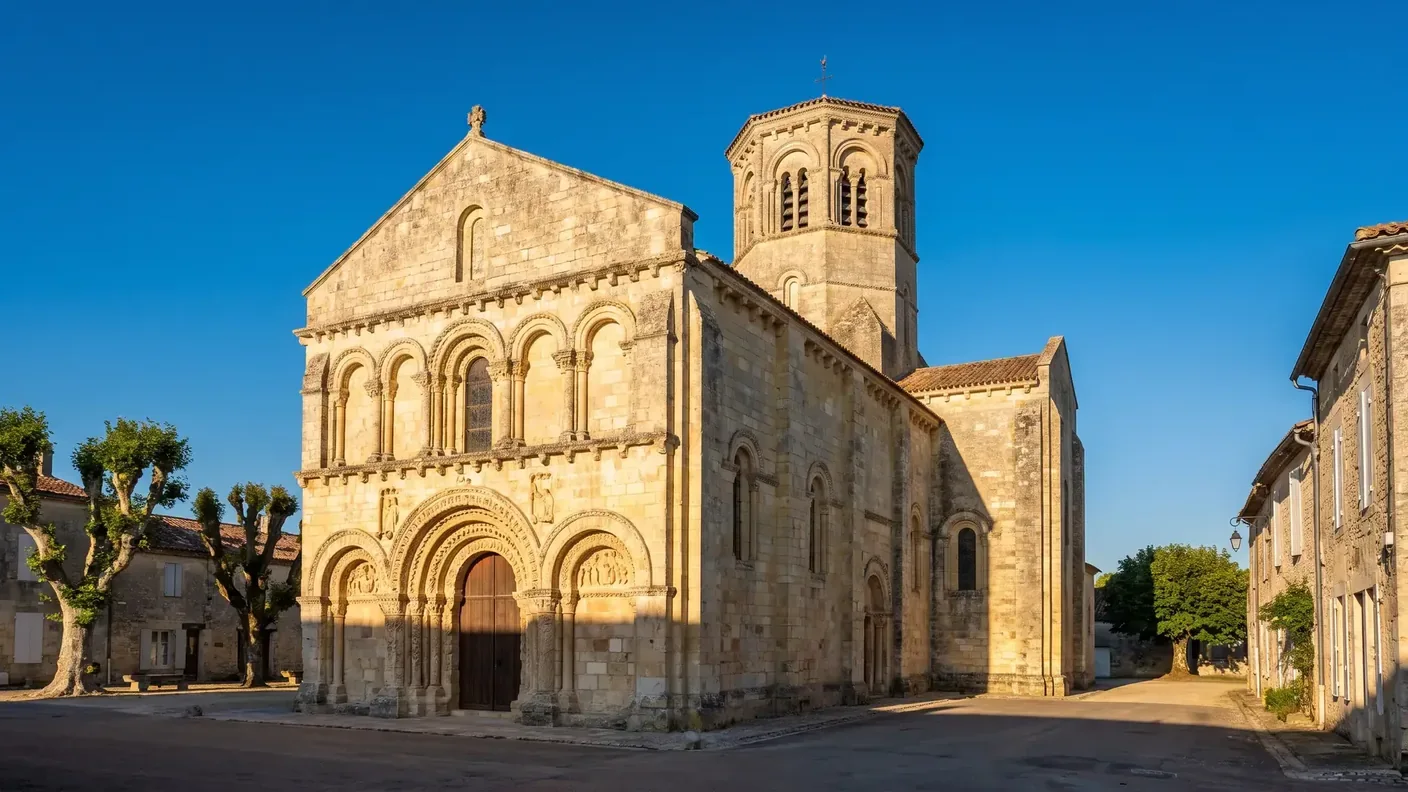
The landmark of Saint-Fort is its church, dedicated to Saint Fortunat—a building listed as a historic monument, as beautiful as it is puzzling. Standing in the heart of the village, nestled among vineyards and stone houses, it is the only protected monument in the town and one of the little-known gems of the Saintonge Romanesque style, a regional school of architecture famous for its richly carved facades. For this church, often hastily described as “12th-century Romanesque,” is in reality a fascinating blend of eras: Romanesque, Flamboyant Gothic, and Renaissance styles overlap here to form a rare architectural tapestry. Each of its parts tells a different chapter in the village’s history—wars, reconstructions, and successive architectural styles—and its sculpted façade even conceals a mystery that art historians have yet to unravel.
A listed church, not registered
First, to clear up a common point of confusion: the Saint-Fortunat church is classified as a historic monument—the highest level of protection—and is not merely “listed.” This classification dates back to a decree of June 13, 1913 (Mérimée reference PA00105172; POP/Mérimée entry). It is the only protected monument in the municipality. It also houses objects listed in the inventory of movable cultural property, such as a painting of the Crucifixion. This early classification, dating back to before World War I, attests to the building’s exceptional significance—particularly its façade, one of the most distinctive in Romanesque Saintonge.
Romanesque, Gothic, and Renaissance all at once
The church is a composite building, and that's what makes it so interesting. Only the facade and the narthex are part of the Saintonge Romanesque style (11th–12th centuries). The main parts of the building—the vault, the choir, the flat apse, and the south aisle—were rebuilt in the 15th century in the Flamboyant Gothic style, following the destruction caused by the Hundred Years' War. Finally, the bell tower, with its unusual forms (scaled domes, pinnacles, slender flying buttresses), dates from around 1500-1520: it is a rare example of the early Renaissance in Saintonge, which is related to a small group of church towers, including those at Fléac-sur-Seugne and Lonzac. The official dating summarizes this layered history as follows: “11th, 15th, and 16th centuries.”
The frieze with twenty-six horse heads
The most intriguing detail is hidden on the Romanesque façade: a carved frieze of twenty-six horse heads, lined up in a row, biting down on a continuous bar representing their bits and bridles. This rare and enigmatic motif from the Saintonge Romanesque style continues to divide art historians: is it a symbol of human passions reined in by religious discipline? A clever play on words? Or simply the virtuosity of a stonemason? No one knows for sure. That is the magic of these Romanesque facades: they speak to us in a language to which we have lost the key. This frieze alone is worth the detour and makes the humble church of Saint-Fort a little treasure of medieval sculpture.
| Part of the church | Period |
|---|---|
| Facade and Nave | Saintonge Romanesque (11th–12th centuries) |
| Vault, choir, flat apse, south aisle | Flamboyant Gothic (15th century) |
| Bell Tower | Early Renaissance (c. 1500–1520) |
| Protection | Designated a historic monument on June 13, 1913 (ref. PA00105172) |
Saint-Fort or Saint-Fortunat?
The very name “Saint-Fort” hides a fascinating historical confusion that is worth unraveling. For behind this place name lie two figures in contention: a very real poet, one of the greatest of Late Antiquity, who died at the very beginning of the 7th century; and a legendary “Saint Fort,” whose very existence is doubtful. The former gave his name to the church—and, by extension, to the village; the latter gave rise to a devout tradition of pilgrimage in Bordeaux. Distinguishing between the two helps us understand how a simple religious term could, over the centuries, become so steeped in legend that its true origin was forgotten. Here is what the sources say, once the edifying tales have been set aside.
A 6th-century poet
The true origin of the name is clear to scholars: “ "Saint-Fort" is a contraction of "Saint-Fortunat", the name of the church. And Fortunat is Venance Fortunat (Venantius Fortunatus), one of the great poets of Late Antiquity, who became bishop of Poitiers at the very end of his life and died in 609. The composer of famous hymns that are still sung today, he lived in 6th century — and not “in the 7th century,” as is sometimes written. It is therefore to this poet-bishop, and not to some random martyr, that the village owes its name. The etymology is well-established, documented, and straightforward.
The Legend of Saint Fort
But a legend has become associated with this name, distinct from the actual patron saint. It features a “Saint Fort”—a figure whose very existence is open to question. According to historians, this legend arose from the personification of the shrine of Saint Seurin of Bordeaux (the reliquary, the feretrum, “the fort”): his relics—“or those believed to be such”—are said to rest in this basilica in Bordeaux. Historian Jacques Sargos sees this quite plainly as “an obvious deception intended to attract a stream of pilgrims.” In Bordeaux, there was even a tradition of lifting newborns nine times above the shrine to grant them “strength and health”—a pious play on the word “fort.” A charming legend, then, but one that must be told as such: this is not the true story of Saint-Fort.
An Estuary Through History
Though small in size, Saint-Fort nonetheless has a rich history, woven together by the church, the seigneury, and the river. Inhabited since the early Middle Ages—a necropolis containing about ten sarcophagi was excavated at a place called “les Tombeaux”—the parish was, in turn, Church land, a fief of prominent noble families linked to the navy, and a thriving commercial port. Its very name has changed several times with the shifting political regimes, from “Saint-Fort-de-Cosnac” under the Ancien Régime to “Fort-Maubert” during the Revolution. Here are the major milestones, as established by historical sources: from the first medieval mention of the church in 1136 to the dark days of World War II.
From the Papal Bull to the Revolution
The church of Saint-Fort is first mentioned in historical records in 1136, in a papal bull issued by Pope Innocent II confirming its donation to the Order of La Chaise-Dieu. The seigneury, long attached to the powerful barony of Mirambeau, was divided around 1540 among several notable figures, including a counselor to the Parliament of Bordeaux, before being reunited in the 17th century. In 1726, it passed by marriage to the illustrious d’Amblimont family, renowned in the French navy. Under the Ancien Régime, the parish was known as “Saint-Fort-de-Cosnac”; renamed “Fort-Maubert” during the Revolution, it did not take on its current name, Saint-Fort-sur-Gironde, until 1889.
The Salt and Grain Port
The history of Saint-Fort is inextricably linked to that of its port. In the 17th and 18th centuries, Port-Maubert saw, in turn, the French fleet of Cardinal Richelieu and the British fleet, which came there to resupply. In the 19th century, it became a bustling port for salt and grain, equipped with a landing stage (1835) and a steam-powered flour mill (1880–1903). The town, for its part, prospered thanks to cognac, the “liquid gold” of the Second Empire, as evidenced by its bourgeois buildings constructed of cut stone. Much earlier, in the early Middle Ages, a necropolis had been established at a place known as “Les Tombeaux”: about ten sarcophagi have been unearthed there.
A Legacy of Protestantism and Resistance
Like the rest of the Saintonge region, Saint-Fort was shaped by Protestantism: after the revocation of the Edict of Nantes in 1685, the village’s Huguenots practiced clandestine worship as part of the “Church of the Desert,” and a church was built in the 19th century. Recent history also has its heroes: Mayor Maurice Chastang, a member of the Resistance since 1940, was arrested by the Gestapo in September 1942, deported to the Oranienburg camp, and shot in 1945, just days before the end of the war. A middle school in Saint-Genis-de-Saintonge bears his name today. These layers of memory lend this unassuming village an unexpected depth.
The river remains at the heart of this story. In the 19th century, Port-Maubert was connected by boat to the neighboring ports of the estuary—just a few miles from Port-Vitrezay, Blaye, Royan, and even the Médoc across the water—in a constant flow of gabares and filadières that sustained the entire region. The official 1839 statistics on seaports describe it as a “beautiful channel,” where ships would run aground on the muddy bottom at low tide to load and unload. It is this riverine character—this openness to the estuary and the ocean—that explains the relative prosperity of the past for a village that is peaceful today, and that continues to shape its identity, nestled between wine-growing lands and the banks of the Gironde.
Fins Bois Cognac and Pineau
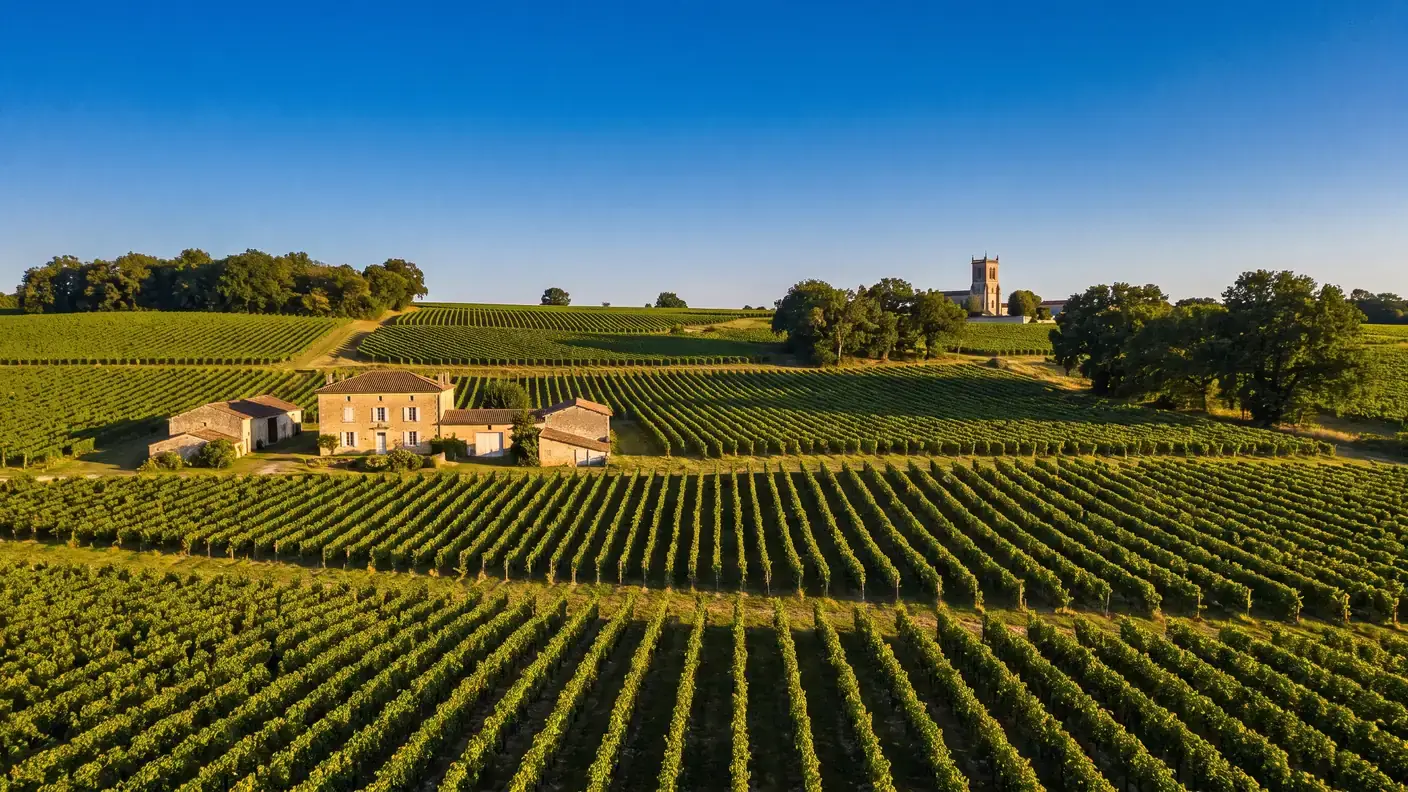
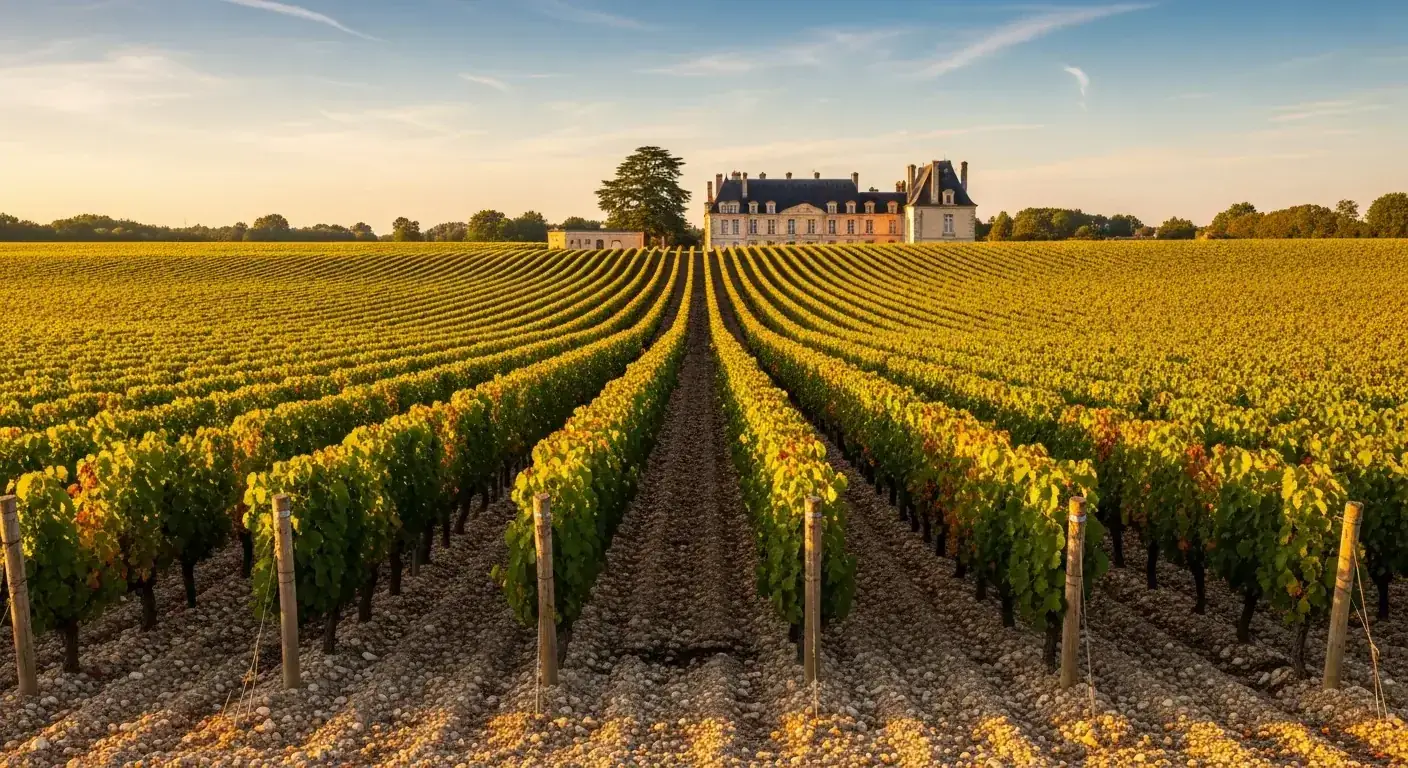
Around Saint-Fort, the hills are covered with vineyards: we are in Cognac country, in the Fins Bois appellation. It’s a little-known but charming region that deserves to be called by its proper name—because misconceptions die hard. Here, the vines aren’t just used to distill brandy: they also produce Pineau des Charentes and local wines, and shape a landscape where the church, as the saying goes, “seems to spring from the vineyards.” Nearly half of the town consists of clay-limestone soils, known as “groies,” which are ideal for vineyards. This unassuming vineyard, situated on the plateaus overlooking the estuary at the edge of the Bordeaux region, is well worth a visit—as much for its wines as for the story it tells.
The Fins Bois Cru, Not Bons Bois
Contrary to what some entries claim—which sometimes incorrectly classify it as “Bons Bois”—Saint-Fort is entirely located within the Fins Bois appellation, according to the Cognac AOC specifications. It is the largest of the six Cognac crus (about 42% of production), the outer ring that surrounds the central vineyards of Champagne and the Borderies. Here, people even refer to “ Estuarine Wood Types ”: the plateaus overlooking the estuary, around the former Conac region, on clay-limestone “groies” soils. The brandy produced here is known for being smooth and round, aging fairly quickly. The entire neighboring estuary region—Saint-Thomas-de-Conac, Saint-Dizant-du-Gua, Saint-Bonnet-sur-Gironde—shares this classification, which dispels the common misconception that “near the estuary = Bons Bois.”
Cognac, Pineau, and local wines
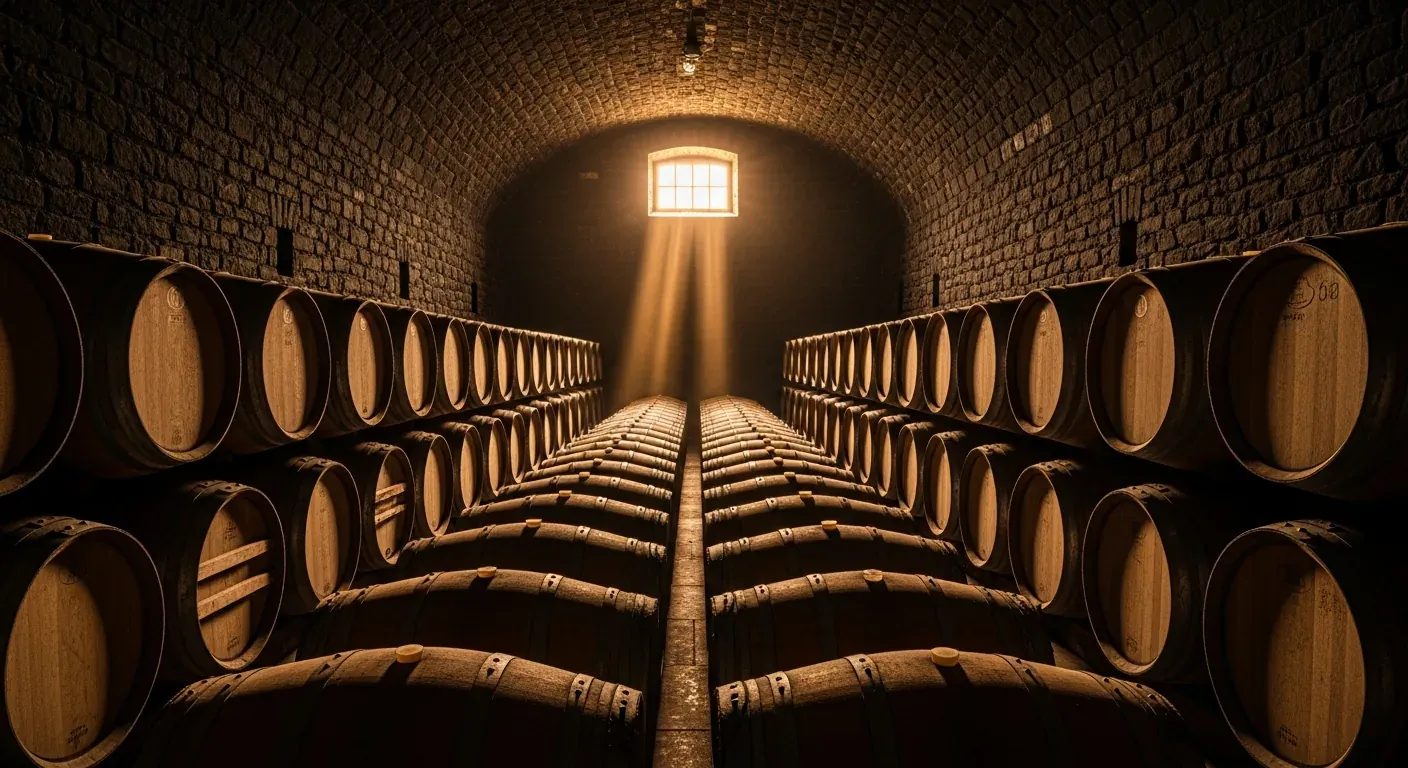
In addition to cognac, the Saint-Fort vineyard also produces Pineau des Charentes — this delicious mistelle, created by blending grape must with cognac brandy — and local wines from the Charente region. In fact, the vineyards of the estuarine Fins Bois region are now often used just as much for Pineau and direct sales as they are for the major cognac houses. The landscape itself reflects this dual identity: in Saint-Fort, one is in the borderlands of two wine-growing regions, nestled between the cognac of the Saintonge region and the wines of the nearby Blayais region in Bordeaux. The church, as the saying goes, “seems to spring from the vineyards”—a fitting image of a village where vineyards have shaped the horizon for centuries.
For visitors, this is a wonderful opportunity to venture off the beaten path. Far from the high-profile houses of Cognac or Jarnac, the small producers of the Fins Bois estuarien region gladly open their cellars and offer tastings at reasonable prices in a family-friendly atmosphere—cognac, white or rosé Pineau, and grape juice. The very history of the village is also reflected in the glass: this “liquid gold” that, in the 19th century, brought prosperity to Saint-Fort and earned it its beautiful mansions built of cut stone. Combining a visit to the port and the church with a stop at a winery is undoubtedly the best way to capture the spirit of this corner of Saintonge, where cognac and the estuary have always gone hand in hand.
Castles, fishing huts, and panoramic views
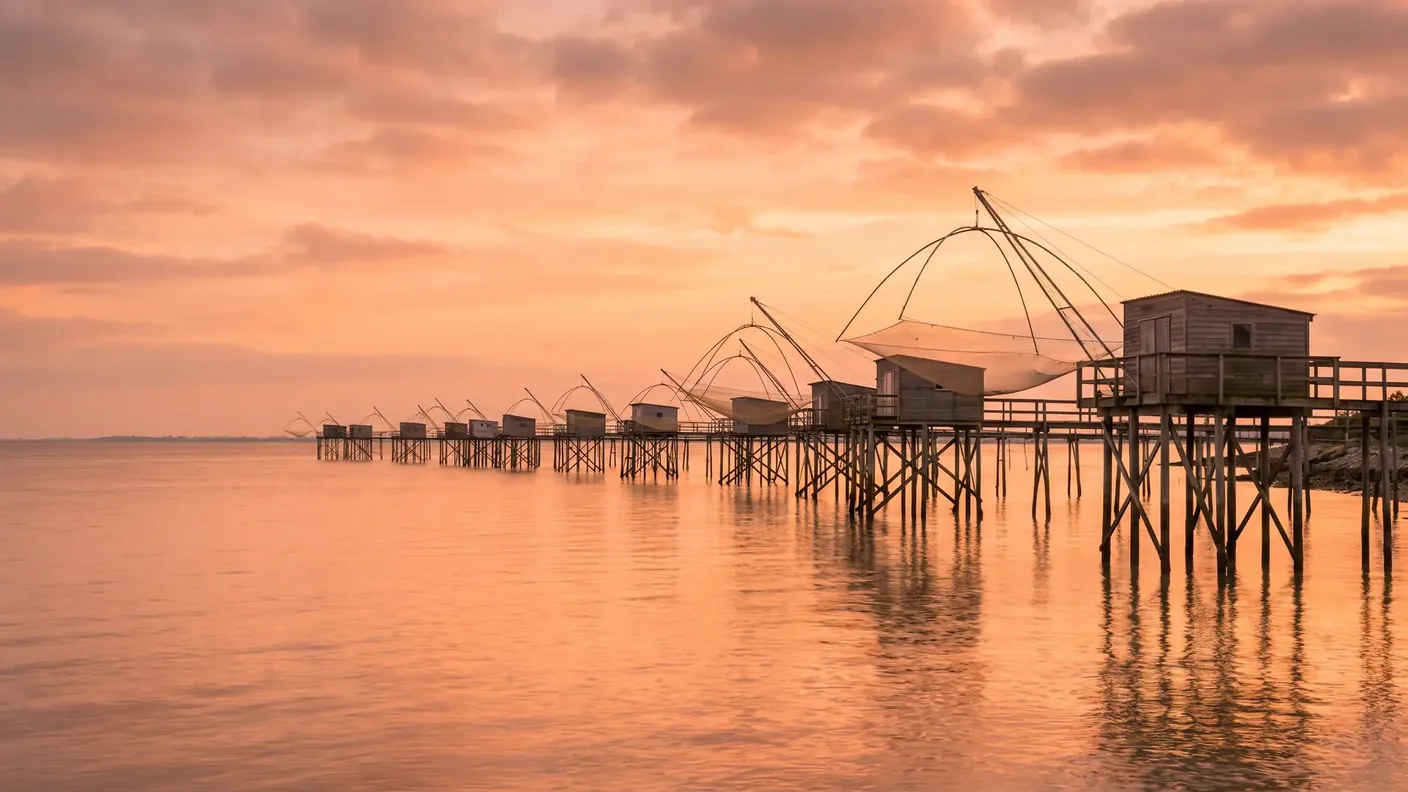
Beyond its church and harbor, Saint-Fort offers a low-key heritage and estuary landscapes to be savored at a leisurely pace. A few charming, intimate castles, fishing huts lined up along the banks, a promontory offering a sweeping view of the entire estuary, an old lighthouse tower, and long-distance hiking trails: the village reveals itself through leisurely walks, amid stone, water, and vineyards. Nothing spectacular here, but a subtle charm—that of an estuary region where you take the time to watch the light shift across the water, and where every hamlet, every pier, and every viewpoint holds its own little surprise. It’s the kind of destination that doesn’t reveal itself at first glance, but rewards the curious visitor who’s ready to wander and linger. Here’s what you shouldn’t miss once you’ve visited the church and the harbor.
Castles on a Human Scale
The town has several historic homes—which should be recognized for what they are: part of the local heritage, not listed monuments. The Château des Salles, parts of which date back to the 15th century, was restored in the 19th century by architect Gustave Alaux and now serves as a bed-and-breakfast. The Château d’Amblimont, meanwhile, has become the village town hall (acquired in 1949). Also worth noting are the Logis du Fief-Doré (18th century), a 19th-century Protestant church, and several beautiful mansions that are a legacy of the region’s cognac prosperity. None of these buildings are listed as historic monuments, but together they contribute to the charm of this wine-growing village in the Saintonge region.
Fishing Huts and Viewpoint Maps
Along the estuary, you'll find the iconic carrelets — those fishing huts on stilts, equipped with a large square net, that dot the banks of the Gironde and create unforgettable scenes at sunset. To take in the view, head up to the Beaumont Terrier: From the top of this hill, crowned by an old lighthouse tower, the view stretches from Meschers to Saint-Ciers-sur-Gironde, including the Médoc. The road known as “ green route "Bordeaux-Royan is also a natural stop for anyone traveling along the right bank of the estuary—whether by bike, on foot along the GR 360, or by car, stopping to take in the views."
This tower in Beaumont, in fact, adds an air of mystery to the scene. This lighthouse, standing on the edge of the estuary, is traditionally regarded as one of the oldest in the department, believed to be of Gallo-Roman origin—even though no sources allow us to date its foundations precisely. Whether true or embellished, the legend clearly reflects the historic purpose of these shores: since ancient times, the Gironde estuary has been a major waterway, marked by landmarks to guide ships between the ocean and Bordeaux. The most famous of these lighthouses, the legendary Cordouan, stands at the mouth of the estuary, visible from the heights of the riverbank. In Saint-Fort, you are fully immersed in this land of seafarers and lights.
What's there to see around Saint-Fort?
Saint-Fort is an excellent starting point for exploring Haute-Saintonge, the estuary, and the nearby vineyards. Distances are short, and it’s easy to travel from a port to a spa town, from a vineyard to a beach, or from one bank of the great river to the other. In a single day, a driver can put together a lovely loop combining heritage, nature, and fine dining—the spa town of Jonzac, the seaside resort of Royan, the citadel of Blaye, or the fishing huts of Meschers—without ever straying too far. This is one of the attractions of this little-known region of Haute-Saintonge: within a radius of about thirty kilometers, it offers a beautiful variety of landscapes and sites, from the waterfront to the vineyard-covered hillsides. Here are the main destinations within easy reach of Saint-Fort, from the closest to the farthest, along with their actual distances from the village.
Jonzac, Royan, and the estuary
A half-hour drive away, Jonzac, the subprefecture, charms visitors with its castle, thermal baths, and old town—it’s also the nearest train station. Heading down the estuary toward the ocean, you’ll reach Royan (about three-quarters of an hour away), a seaside resort with 1950s-style architecture, a large beach, and a concrete church. The entire right bank is worth exploring: the cliffs and fishing huts of Meschers, the small port of Mortagne-sur-Gironde, and the vineyards that slope down toward the water. It’s a gentle, sun-drenched estuary region where you can take your time strolling along the water’s edge between tastings of cognac or Pineau.
The Médoc, on the other side of the water
Geographical curiosity: Saint-Fort faces the Médoc, whose prestigious vineyards stretch out directly across from it, on the other bank of the estuary. By road, however, you must drive around the estuary (via Blaye, about three-quarters of an hour away) to reach the grand cru wines of Pauillac or Margaux. Closer by, Blaye and its UNESCO-listed Vauban citadel, along with the Blayais vineyards, complete this picture of vineyards and water. With a chauffeur service, you can easily plan a customized loop—a port, a town, a vineyard—whichever you prefer, without worrying about driving or parking.
As you travel south up the estuary, you’ll follow a charming right bank dotted with wine-growing villages and small ports. A little further inland, Brossac and its pond, or the vineyards of the Sud-Charentais region, offer more to explore. And for lovers of charming villages, one of the “Most Beautiful Villages of France,” Aubeterre-sur-Dronne—with its astonishing monolithic church carved into the cliff—is just an hour’s drive away. Haute-Saintonge, often sped through on the highway between Bordeaux and Saintes, is well worth a stop: it’s a quiet region of vineyards, water, and stone, where every village holds its own surprise.
| Around Saint-Fort | Distance | Interest |
|---|---|---|
| Mirambeau | ~18 km | Bourg, A10 Highway Access |
| Jonzac | ~25 km | Subprefecture, thermal baths, nearest train station |
| Royan | ~36 km | Seaside resort, beaches, estuary |
| Blaye | ~49 km | Vauban Citadel (UNESCO), Blayais vineyards |
How to get to Saint-Fort from Bordeaux
Saint-Fort-sur-Gironde is located about 87 km from Bordeaux, which is a little over an hour’s drive via the A10 highway (Exit 37, “Mirambeau”). Please note, to help you plan your visit: the town does not have a train station. Contrary to what is often reported, the nearest train station is not Mirambeau—which no longer has regular passenger service—but Jonzac (~25 km), whose schedules and services are detailed on the official TER information sheet.
Train or executive car service?
Getting to Saint-Fort by public transportation is a real ordeal: you have to take a train to Jonzac, then transfer for the last 25 kilometers—which is inconvenient, especially if you’re traveling with luggage or want to explore the estuary and the vineyards. As soon as you’re traveling with others, or want to visit several stops in a row (Port-Maubert, Jonzac, Royan, a vineyard), a chauffeured transfer (chauffeur service) is the better option: a direct trip from Bordeaux, door-to-door, with no transfers, and flexible stops along the way. We offer this route at a fixed price quoted in advance: approximately €178 for the one-way trip, in a Mercedes sedan or van seating up to 8 passengers, with a professional driver.
It’s the perfect option for a getaway to the estuary, a cognac or Pineau tasting, a family event, or a transfer to Bordeaux-Mérignac Airport. The price, set in advance, remains the same regardless of traffic or stops—a real advantage for staying within your budget, and the convenience of a direct trip to the banks of the Gironde.
In practice, booking is simple: you provide the pickup address in Bordeaux and the destination at Saint-Fort, along with the date, time, and number of passengers, and you’ll receive a fixed-price quote in writing. On the day of the trip, the driver picks up the passengers at the agreed-upon address and takes them directly to Saint-Fort or Port-Maubert, without any detours. You can travel alone, with your family, or in a small group (up to 8 people in a van), with luggage, and request stops along the way. It’s the most comfortable and reliable way to explore the Gironde Estuary from Bordeaux, without worrying about driving or parking.
| Route | Distance | Duration | Landmark |
|---|---|---|---|
| Bordeaux → Saint-Fort-sur-Gironde | ~87 km | a little over 1 hour | Starting at ~€157 for a professional chauffeur |
| Saint-Fort → Jonzac (train station) | ~25 km | ~28 min | subprefecture, thermal baths |
| Saint-Fort → Royan | ~36 km | ~42 min | seaside resort |
| Saint-Fort → Blaye | ~49 km | ~48 min | Vauban Citadel |
Whether you come for the estuary and Port-Maubert, for the stunning Saint-Fortunat church, for Fins Bois cognac, or for the serene beauty of the marshes of the “Little Camargue,” Saint-Fort-sur-Gironde has something to offer lovers of the authentic Southwest, nestled between vineyards and saltwater.
Whether it’s for a day trip to explore the estuary, a gourmet tour, or an event, booking a door-to-door car service guarantees a comfortable and punctual ride—book a driver from Bordeaux → Saint-Fort or explore all our destinations.
Frequently Asked Questions
Where is Saint-Fort-sur-Gironde located?
Saint-Fort-sur-Gironde is a village in Charente-Maritime (17), in Nouvelle-Aquitaine, on the right bank of the Gironde estuary, halfway between Bordeaux and Royan. It is a rural commune in Haute-Saintonge, part of the Jonzac arrondissement, with a population of approximately 912. It is located just over an hour’s drive from Bordeaux (~87 km), facing the Médoc across the estuary.
What is the distance between Bordeaux and Saint-Fort-sur-Gironde?
About 87 km by road, or just over an hour’s drive via the A10 highway (Exit 37, “Mirambeau”). If you hire a chauffeured car from Bordeaux, the fare is fixed and provided in advance, starting at approximately €178 one way (sedan or van, door-to-door price). The town does not have a train station; the nearest one is in Jonzac, about 25 km away.
Why is Port-Maubert famous for caviar?
Because the Gironde estuary was home to the European sturgeon, which fishermen called the “créac.” Starting in 1921, the merchant Émile Prunier organized caviar production in the estuary—from his home in Saint-Seurin-d’Uzet, alongside the Russian expert Alexandre Scott—and Port-Maubert took part in training the fishermen. In the 1950s, the estuary produced 3 to 5 metric tons of caviar per year. Overfishing led to the collapse of the stock and a ban on sturgeon fishing in the 1980s. Today, caviar is produced exclusively from farmed sturgeon.
Where does the name Saint-Fort-sur-Gironde come from?
Contrary to popular belief, it does not come from a martyred “Saint Fort,” but from Saint Fortunatus: “Saint-Fort” is a contraction of “Saint-Fortunat,” the name of the church, named after Venance Fortunat, a poet and bishop of Poitiers who died in 609. The “legend of Saint Fort” (a saint whose existence is doubtful, whose relics are said to rest in Saint-Seurin in Bordeaux) is a later tradition and should not be confused with the actual etymology. The suffix “-sur-Gironde” was added in 1889.
Is the church in Saint-Fort a listed or registered historic site?
It is classified as a historic monument—the highest level of protection—and is not merely “listed.” This classification dates back to a decree of June 13, 1913 (Mérimée reference PA00105172; POP/Mérimée entry). It is the only protected monument in the municipality. Dedicated to Saint Fortunat, the church is a composite structure: a Romanesque façade in the Saintonge style (11th–12th centuries), a nave rebuilt in the Flamboyant Gothic style in the 15th century, and a bell tower from the early Renaissance (circa 1500–1520).
What is the frieze with horse heads?
This is the most intriguing detail of the Romanesque façade of the Saint-Fortunat Church: a carved frieze featuring twenty-six horse heads lined up in a row, biting down on a continuous bar representing their bits. This rare and enigmatic motif of the Saintonge Romanesque style continues to divide art historians—passions reined in by religious discipline, a clever play on words, or simply virtuosity? Its exact meaning remains a subject of debate, which is part of its charm.
What to see in Saint-Fort-sur-Gironde?
The Saint-Fortunat Church, a listed historic site, with its Romanesque façade and frieze featuring horse heads; the port of Port-Maubert and its channel leading to the estuary, once a major center for caviar; the estuarine marshes, the “Little Camargue”; the fishing huts along the banks of the Gironde; the panoramic view from the Terrier de Beaumont; the Fins Bois Cognac vineyards. Nearby, Jonzac, Royan, Blaye, and the vineyards.
In which cognac appellation is Saint-Fort-sur-Gironde located?
Saint-Fort is located entirely within the Fins Bois appellation, in accordance with the Cognac AOC specifications—and not the “Bons Bois,” as is sometimes claimed (the common misconception that “near the estuary = Bons Bois” is false). The Fins Bois is the largest of the six crus (accounting for approximately 42% of production), forming the wide ring that surrounds the central crus (Grande and Petite Champagne, Borderies). Around the estuary, the term “Fins Bois estuariens” is used, referring to soils composed of clay-limestone groies. The eau-de-vie produced there is supple and round; the vines are also used to make Pineau des Charentes.
Is commercial elver fishing still allowed at Saint-Fort?
Commercial fishing for glass eels continues in the estuary, subject to licenses, quotas, and seasons set for each fishing season; check with the maritime authorities to confirm the current regulations before making any schedule announcements. A rare and expensive delicacy, the pibale is widely exported to Spain. The estuary also yields other fish throughout the seasons: shad in the spring, sea bass and sea perch in the summer, lamprey, and eel. However, fishing for wild sturgeon has been strictly prohibited since the 1980s.
How many people live in Saint-Fort-sur-Gironde?
Approximately 912 residents according to the 2023 census. The population is currently more or less stable, but has been declining over the long term (the village had more than 1,000 residents in 1975). It is an aging, sparsely populated municipality (about 38 residents per km²), typical of rural Saintonge. The residents are known as Saint-Fortais. Saint-Fort was long the most populous municipality in its former canton (Saint-Genis-de-Saintonge), before being surpassed by Saint-Genis-de-Saintonge.
Is there a train station in Saint-Fort-sur-Gironde?
No, the town does not have a train station. Contrary to what is often reported, the nearest train station is not Mirambeau (which no longer has regular passenger service), but Jonzac, about 25 km away, served by the Nouvelle-Aquitaine TER and Intercités trains. To get to Saint-Fort and explore the estuary, hiring an executive transfer from Bordeaux remains the simplest and most direct option.
What is there to see around Saint-Fort-sur-Gironde?
Jonzac, the subprefecture, with its thermal baths and train station (~25 km); Royan, a seaside resort at the mouth of the estuary (~36 km); Blaye and its Vauban citadel, a UNESCO World Heritage Site (~49 km); the fishing huts and cliffs of Meschers; the port of Mortagne-sur-Gironde. Across the estuary lie the vineyards of the Médoc. We are in the heart of a region of estuaries, vineyards, and marshes.
Can I book a chauffeur-driven transfer from Bordeaux to Saint-Fort?
Yes. We offer the route from Bordeaux to Saint-Fort-sur-Gironde (~87 km, just over an hour via the A10, Mirambeau exit) at a fixed rate, starting at approximately €178 one-way, in a Mercedes sedan or van seating up to 8 passengers, with a professional driver. The trip is direct, door-to-door, with the option to make stops as desired—ideal for exploring the estuary, Port-Maubert, and the Cognac vineyards without the hassle of driving.
Further Reading
- The neighboring region of Cognac: see the Cognac Guide (the major houses, the Charente method, and the six crus)
- A charming village in Charente: see the Brossac Guide (Vallier Pond, Bons Bois cognac, and the Gallo-Roman villa)
- The vineyard across the way: see the Guide to the Médoc (grands crus, appellations, and wine route), on the other side of the estuary
- Plan your trip: Book a pre-booked car service from Bordeaux to Saint-Fort or explore all our destinations
Sources and References
- Wikipedia — Saint-Fort-sur-Gironde — geography, demographics, history, Port-Maubert, economy
- Saint-Fort-sur-Gironde (17328) — INSEE — official population
- Port-Maubert — Haute-Saintonge Tourism — History and Port Heritage
- Jonzac Station — TER Nouvelle-Aquitaine — Routes and Services
- POP/Mérimée Database — Saint-Fortunat Church — Listed as a Historic Monument (June 13, 1913), dating from the 11th, 15th, and 16th centuries.
- Wikipedia — Saint-Fortunat Church — composite architecture, frieze with horse heads, Renaissance bell tower
- Wikipedia — Cognac Crus — Fins Bois cru (INAO specifications), appellation area, municipalities
- Wikipedia — Gironde Estuary — Europe's largest estuary, Natura 2000, wildlife
- Légifrance — Order of October 29, 2025, on glass eel quotas — 2025–2026 and 2026–2027 fishing seasons
Article updated on July 17, 2026.
Heading for the Gironde Estuary
Direct trip from Bordeaux (~1h13) to Saint-Fort-sur-Gironde and Port-Maubert, with stops along the way as desired—Jonzac, a Cognac vineyard, and the estuary. Written fixed-price quote, with no surprises on the meter.