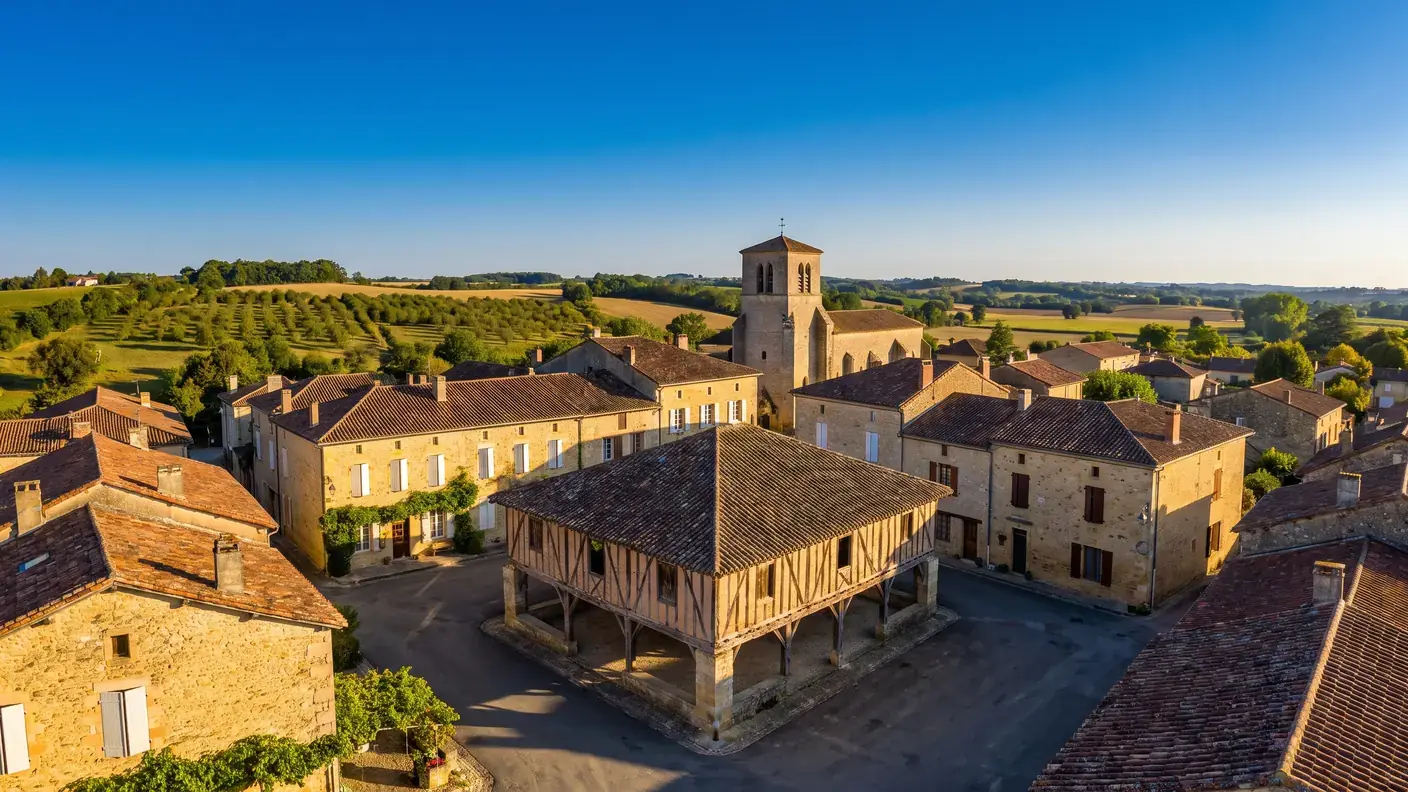
Discover Lévignac-de-Guyenne, a bastide in prune country
A village in the Duras region, an English bastide founded in 1305: its market hall and market featuring Agen prunes, its Notre-Dame Church, which was relocated to make way for commercial activity, and the poignant ruins of Sainte-Croix, about 1 hour and 26 minutes from Bordeaux, very close to Duras.
Lévignac-de-Guyenne at a Glance
Lévignac-de-Guyenne is a commune in Lot-et-Garonne and a bastide founded in 1305. Sights to see: the town square, the market hall, the Notre-Dame Church built outside the town walls in 1865, and the ruins of Sainte-Croix. From Bordeaux, the distance is 98 km and the trip takes about 1 hour and 26 minutes, with a flat rate starting at 173 €.
Here are the key details to know before you go. Driving distances are calculated door-to-door; rates are based on booking a chauffeur service from Bordeaux, with a fixed price provided in advance.
| Landmark | Details |
|---|---|
| Department | Lot-et-Garonne (47), Nouvelle-Aquitaine |
| Status | Rural village · bastide · Marmande district · Pays de Duras Community of Communes |
| Population | approximately 674 residents (INSEE 2023) · Lévignacais residents |
| Area | ≈ 25.02 km² · on the Caubon River |
| Don't miss it | The market hall and the town square, Notre-Dame Church, and the ruins of Sainte-Croix |
| Distance from Bordeaux | about 98 km · about 1 hour and 26 minutes by car |
| Nearest train station | Marmande (~14 km) or Sainte-Bazeille (~14 km) |
A word of honesty right off the bat, because Lévignac has a few inaccuracies. Its current market hall is not from the 18th century but from the 19th century. The village has no classified or listed Historic Monuments. The river that rises there, the Caubon, is not a tributary of the Dropt (it flows into the Gupie). Unlike neighboring Duras, Lévignac is not a wine-producing town: its specialty is prunes. This guide distinguishes between what has been verified and what is merely repeated.
Here’s a rundown of everything you need to know before you come: where Lévignac is located and what makes it unique, its history as an English bastide founded in 1305, the market hall and the prune trade, its two churches (one of which is in ruins), the origin of its name, its municipal mergers, the Caubon River, the notable sites in the surrounding area, and the easiest way to get there from Bordeaux.
Where is Lévignac-de-Guyenne located?
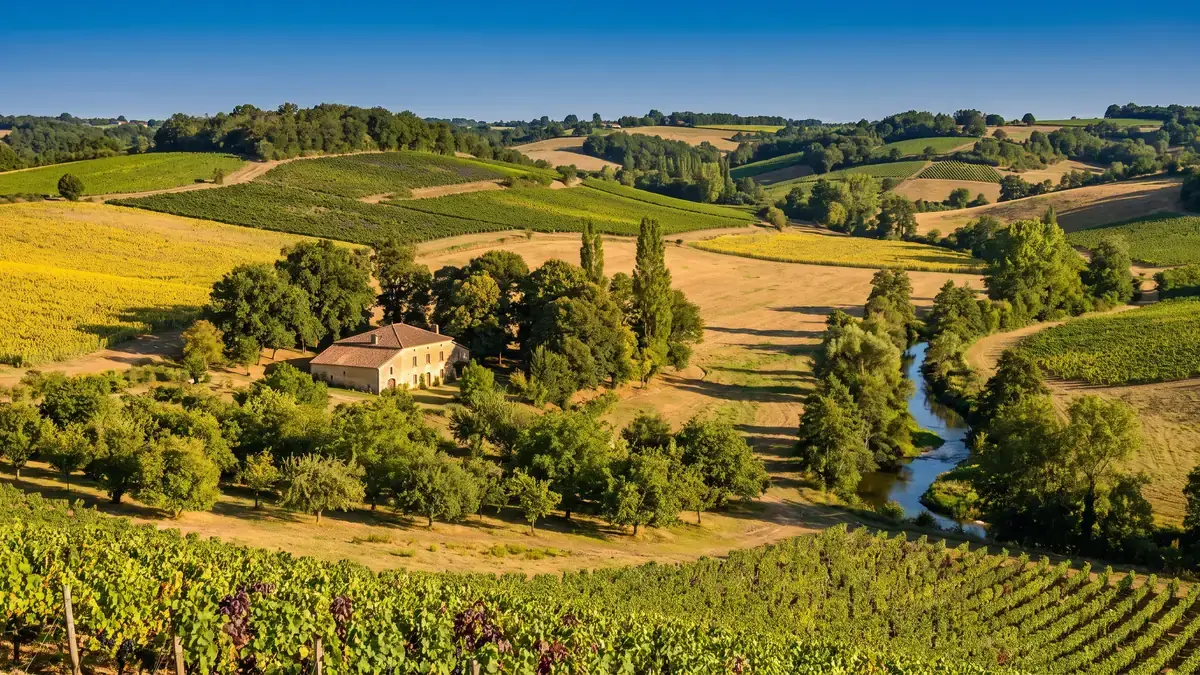
Lévignac-de-Guyenne is located in the northern part of Lot-et-Garonne (47), in Nouvelle-Aquitaine, in the Duras region, about 20 kilometers north of Marmande. The village is part of the Marmande district, the Coteaux de Guyenne canton, and the Pays de Duras Community of Municipalities. Its coordinates are 44.63° N and 0.20° E; its INSEE code is 47147, postal code 47120. It covers approximately 25.02 km² of rolling hills, at elevations ranging from 32 to 122 meters, in a hilly landscape of fields, orchards, and small woodlands typical of the borders of Lot-et-Garonne, Gironde, and Dordogne.
In the Duras region, on the Caubon River
Lévignac is part of the Duras region, that corner of Guyenne straddling the Dropt Valley, with the small town of Duras and its castle at its heart, less than six kilometers away. The village is fed by an unassuming river, the Caubon, which has its source right within its own boundaries: Lévignac is a headwater community. To clarify, as is often mistakenly stated: the Caubon is not a tributary of the Dropt, but of the Gupie, which itself is a tributary of the Garonne. This modest watercourse can experience slow-rising floods, posing a risk of flooding in the valley bottoms. The surrounding countryside is agricultural: farmland, plum orchards, and a few woods.
A village with a population of 674
With a population of 674 (2023 census) [source], Lévignac-de-Guyenne is a small rural village with a very low population density of about 27 people per square kilometer and a scattered settlement pattern. Its population is stable, even showing a slight increase: it has gained a handful of residents since 2017 (when it had 663), bucking the trend of decline seen in many rural areas. The residents are known as Lévignacais. It is a quiet, authentic village at the end of the road, far from major tourist routes, but, as we shall see, its history is surprisingly rich for its size. Its status as a bastide and its past as a prune market give it a depth that few neighboring villages possess.
Lévignac’s location at the border of three departments, Lot-et-Garonne, Gironde, and Dordogne, and three historic regions makes it a place of transition. Here, one can sense the influence of the Bordeaux wine region to the west, the Périgord to the east, and the Garonne Valley to the south. This blend is evident in the landscapes, the architecture of the farms, and the agricultural produce. It is a discreet “in-between” place, off the beaten path of traditional tourist routes, that you discover best by stopping to explore. For the curious visitor, this location offers the advantage of being able to explore the surrounding area easily: in a single day, you can go from the bastide town of Lévignac to the Château de Duras, from a vineyard to a spa town, without ever having to travel long distances.
An English Bastide Founded in 1305
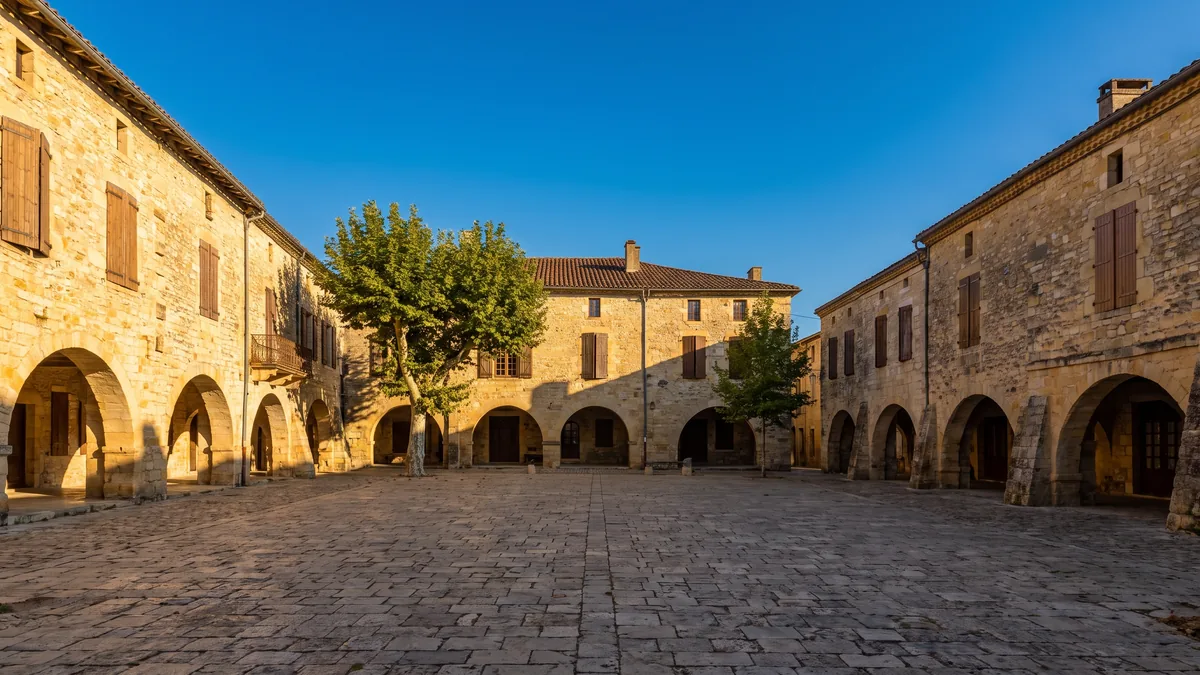
Lévignac-de-Guyenne is not a village that came into being by chance: it is a bastide, a new town built from the ground up in the early 14th century. This origin, still evident in its layout, is the key to its identity, and deserves to have its true story told, one that is more nuanced than the term “English bastide” would suggest.
What Is an English Bastide?
Bastides are new towns founded between 1230 and 1350 throughout the Southwest, laid out according to a regular geometric plan around a covered central square. They are referred to as “English” or “French” depending on the ruling power that founded them: at that time, Guyenne (now Aquitaine) was a fief held by the King of England in his capacity as Duke of Aquitaine, a vassal of the King of France. Founding a bastide meant populating and controlling a territory by offering residents privileges (freedoms, exemptions) that attracted settlers. Lévignac is one of these “English” bastides in Guyenne, located in an area that is home to several of them, a stopover between Miramont-de-Guyenne and Monségur.
The Act of 1305: A Paréage Under Edward I
The founding of Lévignac is documented in a deed dated March 30, 1305, during the reign of Edward I Plantagenet, King of England and Duke of Aquitaine. But be mindful of a nuance that is often overlooked: this document is not a complete founding charter; it records an order for an inquiry: the duke ordered his seneschal of Gascony to examine a proposal for paréage, that is, a foundation established as an association. The bastide was therefore not the work of the king alone, but of a partnership between the ducal authorities and local lords: Guillaume Arnaud de Caussant and the brothers Gérard and Amanieu de Levignac, the latter two lending their name to the place. Edward I died in 1307, and construction continued after his death.
| The Bastide of Lévignac | Landmark |
|---|---|
| Type | Bastide (a new town from the Middle Ages), laid out in a regular grid pattern |
| Foundation | Deed dated March 30, 1305, under Edward I (Duke of Aquitaine) |
| Fashion | Joint tenancy: ducal authority + lords (Caussant, the Levignac brothers) |
| Background | The Wave of Bastides in the Southwest (1230–1350) |
| Heart | Central square · market hall · two gates · castle to the north |
The Layout of the Bastide
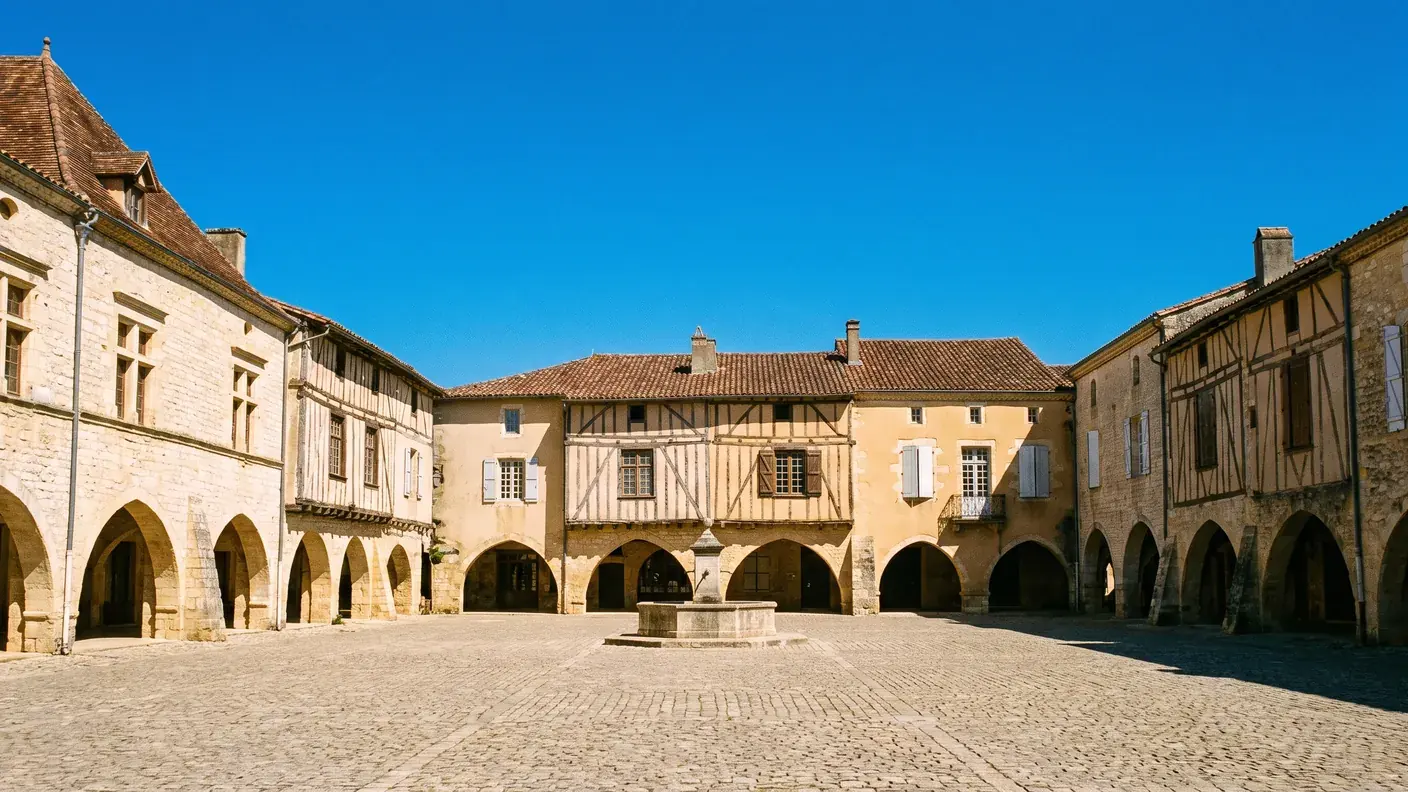
Lévignac retains this planned layout in its street plan: a compact settlement, spread over about two hundred meters, organized around a central square that brought together the church, the market hall, and the town hall. A castle stood to the north, and two gates controlled access to the town. This is the classic layout of a bastide: a regular grid, designed for commerce and community life, with the square and its market hall as its beating heart. Although the centuries have altered the details of the buildings, this structure remains evident to anyone strolling through the village, an open-air textbook on medieval urban planning, unobtrusive yet authentic.
One must imagine what the founding of a bastide represented in the 14th century: a land-use planning project of astonishing modernity. Based on a pre-drawn plan, regular plots were allocated to the new residents, freedoms were guaranteed by a charter, and a market was organized. It was both a political act, to populate and control a disputed border between France and England, and an economic one, to create a hub of commerce. The Dropt region, a zone of contact between the two crowns, thus became dotted with bastides within a few decades. Lévignac is one of these settlements, more modest than Monségur or Miramont, but born of the same planning impulse that shaped the entire urban landscape of southwestern France.
The Market Hall and the Prune of Agen
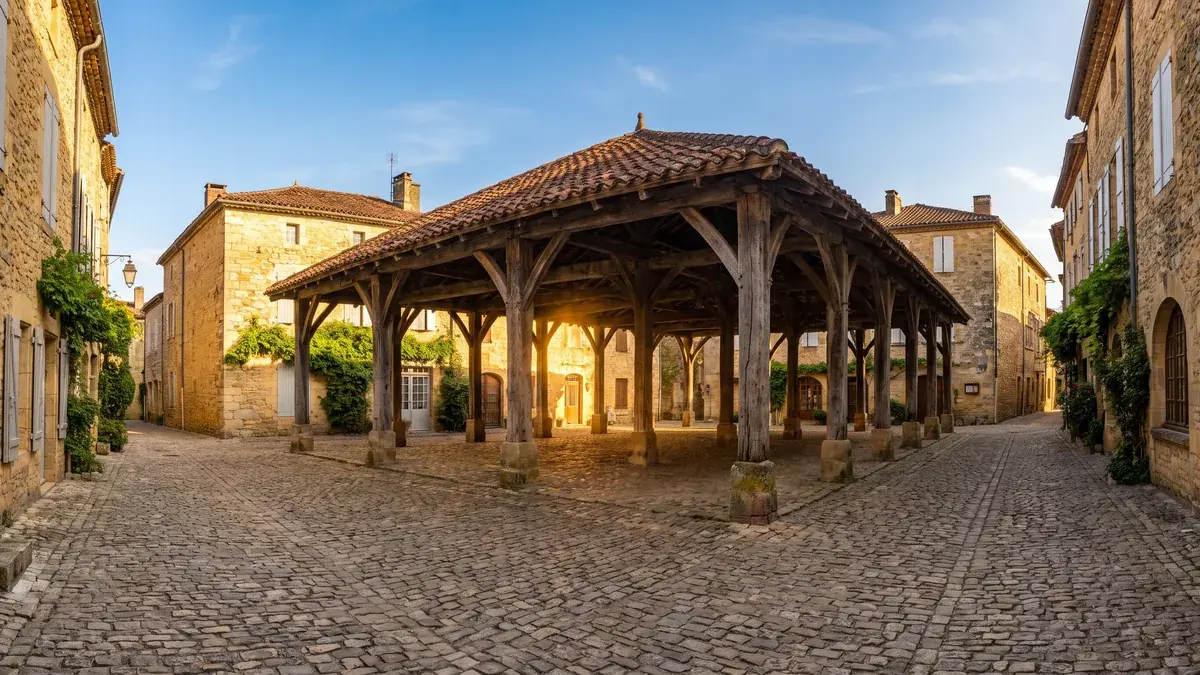
If the bastide is the backbone of Lévignac, the prune is its soul. For a long time, the village has been closely associated with this dried fruit, the king of Lot-et-Garonne, and was once a renowned center for its trade. Its market hall and market keep this legacy alive.
The market hall, the heart of the prune market
In the center of the square stands the market hall, an open structure that once housed the markets. A useful note: the current market hall dates from the second half of the 19th century (and not the 18th, as is sometimes stated); it replaced an older market hall that faced the opposite direction. Beneath its pillars, famous plum and prune markets were held every Wednesday from mid-August through late October, right up until World War II. People came from all over the country to sell and buy the harvest, creating a bustle that is hard to imagine today for such a small village. This trade brought prosperity to the village for generations, and the market hall remains its symbol. The tradition hasn’t completely died out: since 2002, farmers’ night markets have been bringing the square back to life on warm evenings, in the same friendly spirit as in days gone by.
Prunes, a specialty of Lévignac
Lévignac-de-Guyenne specializes in the production of Agen prunes, the dried “ente” plums that have brought worldwide fame to the department. The landscape tells the story: nearly 85% of the territory is farmland, including numerous plum orchards that, by late summer, are laden with mauve fruit. Unlike nearby Duras, Lévignac is not a wine-growing town: here, there are no appellation vineyards, only plum trees. The Agen prune, protected by a PGI designation, is the flagship product of this agricultural sector; it is enjoyed plain, stuffed, in pastries, or cooked with meats, in keeping with the rich culinary tradition of the Southwest.
Despite its name, the Agen prune is not produced in Agen itself, but throughout a region that spans Lot-et-Garonne and its surrounding areas, Lévignac is part of this region. Its history dates back centuries: the “ente” plum is said to have been brought back from the East by the Crusaders, then acclimatized by monks, before becoming, in the 19th century, a full-fledged regional industry. Once dried in prune ovens, the plums could be preserved and transported: this explains the importance of markets like the one in Lévignac, where the harvest was traded. Now protected by a geographical indication, the Agen prune remains an emblem of the South West’s culinary heritage, and a source of local pride that the people of Lévignac share with the entire department.
| The Lévignac Terroir | Details |
|---|---|
| Specialty | Agen Prune (dried "ente" plum, PGI) |
| Land Use | ≈ 85% arable land · orchards · some woodlands (11%) |
| Historic Market | Prune Market, Wednesdays (mid-August → late October) |
| Today | Farmers' Night Markets Since 2002 |
Notre-Dame and the Ruins of Sainte-Croix
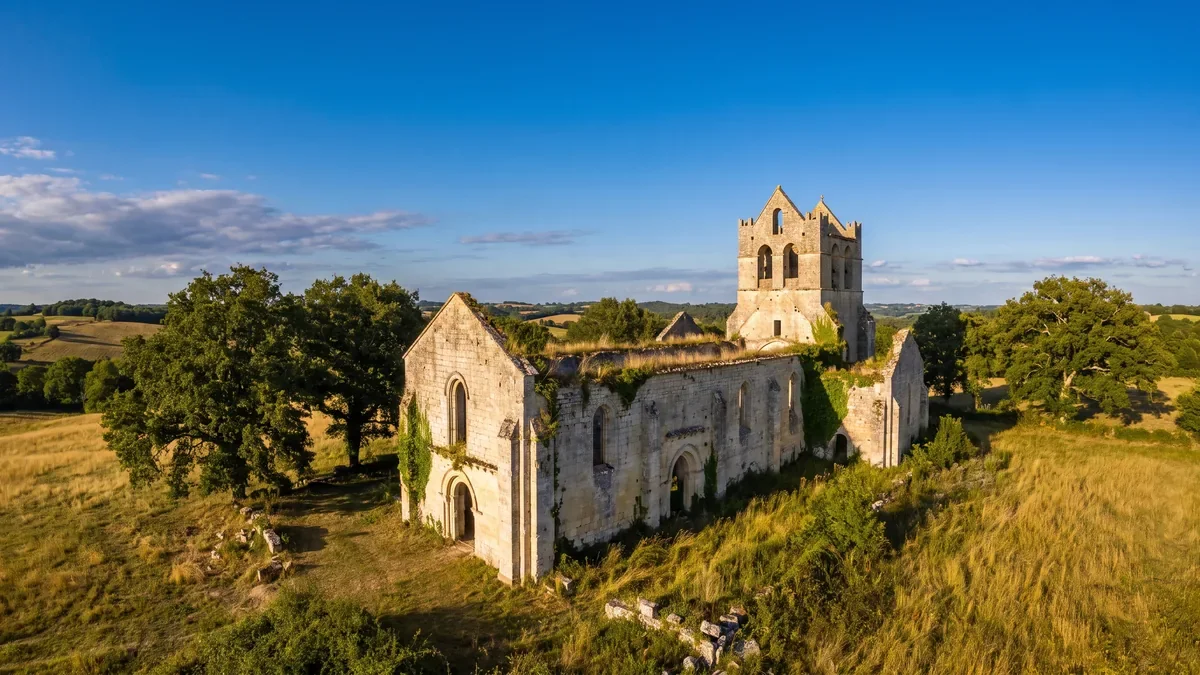
Lévignac has two churches with contrasting fates: Notre-Dame, a thriving church in the village center, and Sainte-Croix, reduced to a poignant ruin. Neither is protected as a historic monument, in fact, the village has no listed or designated monuments, but both tell a beautiful story.
Notre-Dame, Moved for the Prune Market
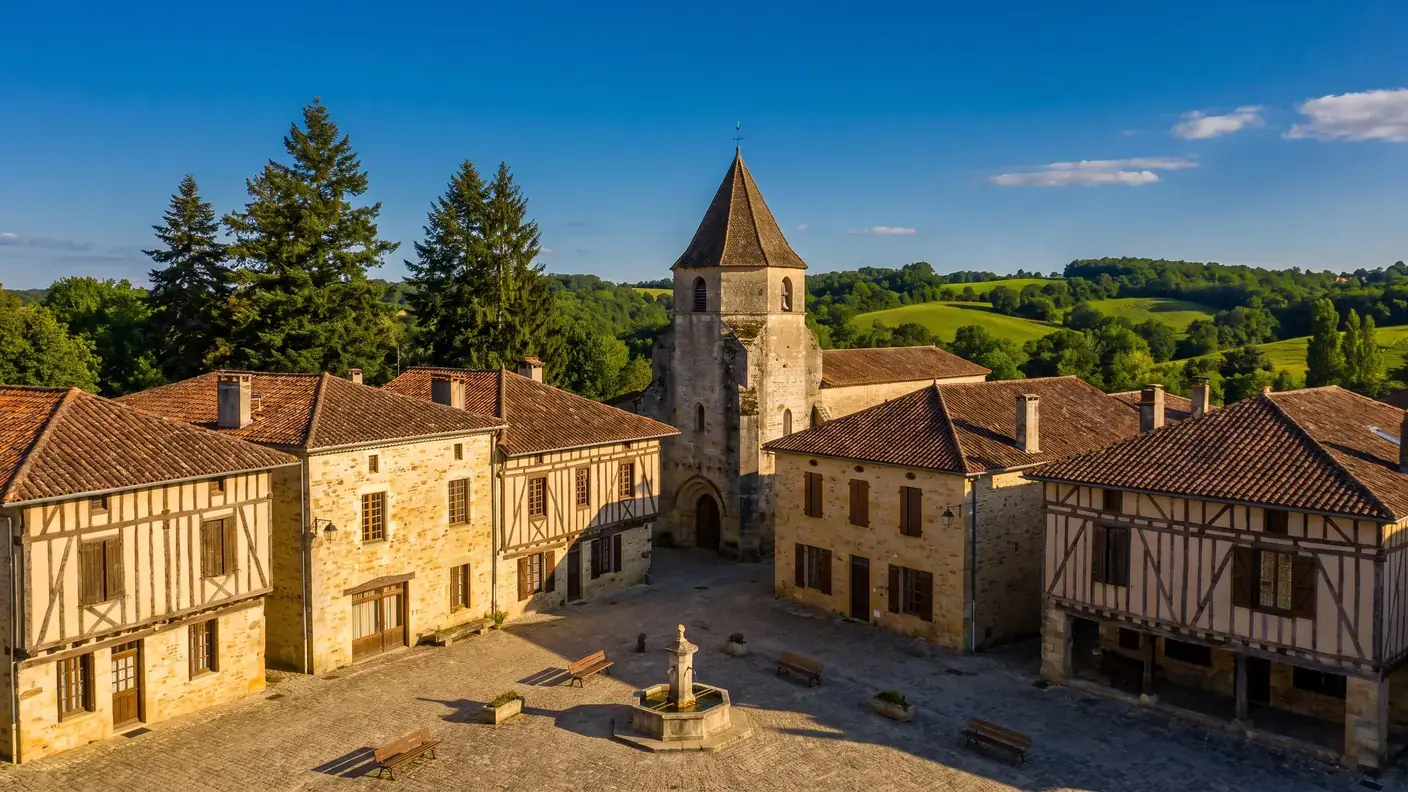
The Notre-Dame Church, in the town center, has a fascinating history that highlights the importance of prunes. An earlier church stood on the square, within the fortified town; it was demolished in the 18th century to expand the market square and its prune market, commerce taking precedence over worship. A new church was therefore built later, outside the town walls, between 1865 and 1868, in the then-fashionable Neo-Gothic style, by the Bordeaux architect Gustave Alaux, featuring a beautiful bell tower with a spire some thirty meters high. Restored in 1956, it still dominates the village. Few churches can claim to have been relocated because of a fruit market: in Lévignac, faith and prunes have gone hand in hand.
Sainte-Croix, a Ruin Saved by Volunteers
A few kilometers south of the town stand the ruins of the Church of Sainte-Croix, from the 13th century [source], with walls made of a mix of stone and brick. Long neglected, it was consolidated in the 20th century by volunteers with the support of the Sauvegarde de l'Art français [source]. Today, the outer walls, the altar, and the baptismal font remain, set in a rural setting. It is a peaceful and poetic place, a testament to a time when the region had five parishes, a beautiful story of heritage saved by the dedication of a few enthusiasts, without any official designation.
These two churches truly capture the essence of Lévignac: a modest, humble heritage, without any grand, star-rated monuments, yet steeped in history and local pride. People don’t come here for a Gothic masterpiece, but for the atmosphere of a bastide village, for the romantic ruin lost in the fields, for the story of a church that was moved to make way for a fruit market. It’s a form of slow, curious tourism, the polar opposite of overcrowded sites, for those interested in the subtle traces of the past, unique stories, and unspoiled landscapes. The entire Duras region lends itself to this peaceful exploration, far from the crowds.
Where does the name "Lévignac-de-Guyenne" come from?
As is often the case, the village’s name consists of two parts: a very old root, “Lévignac,” and a more recent addition, “de-Guyenne.”
Levinius, a Gallo-Roman estate
“Lévignac” is a classic Gallo-Roman place name from the Southwest: it is derived from the name of a Latin landowner, “Levinius,” followed by the Gallic suffix -acum, which indicates ownership. Leviniacum therefore means “the estate of Levinius”, the name of a former lord of these lands, dating back to Roman times or the early Middle Ages. This pattern is found in hundreds of villages ending in -ac throughout the region. An interesting fact: this ancient name predates the medieval bastide that bears it today by more than a thousand years, the place was inhabited and named long before Edward I even considered founding a new town there.
"de-Guyenne": From Seyches to Guyenne (1929)
The supplement “ de-Guyenne " is very recent: it was officially added in 1929. Beware of a common misconception: the point was not to add an article to a noun on its own, but to replace another one. In the 19th century, the town was in fact called “ Lévignac-de-Seyches ", named after the canton of Seyches. In 1929, it was decided to incorporate it into the Guyenne, this former province that covered a large part of the Southwest, a more prestigious and broader name. This type of change, common in the 20th century, was often used to distinguish between municipalities with the same name: there are other towns named Lévignac in France, notably near Toulouse.
The choice of “Guyenne” is no coincidence: this word, a corruption of “Aquitaine,” refers to the ancient province that stretched across much of southwestern France and which, for three centuries, was at the heart of the rivalry between France and England. By renaming itself “de-Guyenne” in 1929, the village was essentially asserting its historical roots in this great medieval region, the very same one that had seen its bastide founded under English rule. There is a lovely consistency to this name: a town that began as English, during the time of the Duchy of Guyenne, which took on the province’s name six centuries later. Few villages carry, in their very name, the memory of a bygone era.
A village born from five parishes
With a current population of 674, Lévignac-de-Guyenne is the result of a long history of mergers: the present-day municipality was formed by the consolidation of several former parishes. This is a common feature of many rural French municipalities, which were shaped by the mergers of the 19th century.
Five original parishes
The current territory of Lévignac encompasses what were once five separate parishes: Lévignac, Saint-Pierre, Saint-Brice, Sainte-Croix, and Civert. Each had its own church and small community in a region of scattered settlements with numerous hamlets. This dispersion explains the presence, even today, of several religious buildings in the town, including the famous ruins of Sainte-Croix. In 1791, during the Revolution, two of these parishes, Saint-Pierre and Saint-Brice, merged to form the neighboring municipality of Saint-Pierre-sur-Dropt. The mosaic of municipalities in the area has thus taken shape over the centuries through a series of mergers and separations.
Municipal Mergers
Lévignac itself expanded through annexations: it incorporated the commune of Sainte-Croix-et-Civert before 1806, then that of Saint-Géraud between 1839 and 1868 (which at the time had two to three hundred inhabitants). These mergers, common in the 19th century, were intended to give very small rural municipalities a viable size. They explain Lévignac’s relatively large area (more than 25 km²) relative to its modest population, as well as the dispersion of its settlements across several former parish centers. The administrative history of a village like Lévignac is thus a microcosm of the history of the French countryside, shaped by communities that come together to survive.
This history of parishes and mergers is not merely an administrative abstraction: it is evident in the landscape. The former parish centers have left behind churches, cemeteries, and hamlets that still bear their names. As you travel through the town, you come across traces of these vanished communities, absorbed over time by Lévignac. The ruins of Sainte-Croix are the best example: this is the church of a former parish, incorporated into Lévignac before 1806, of which only the walls remain. Understanding the geography of these former parishes explains why a village of 674 residents spans more than 25 square kilometers and boasts several religious buildings, a legacy of a time when each hamlet lived almost entirely independently.
Le Caubon and the Dropt Countryside
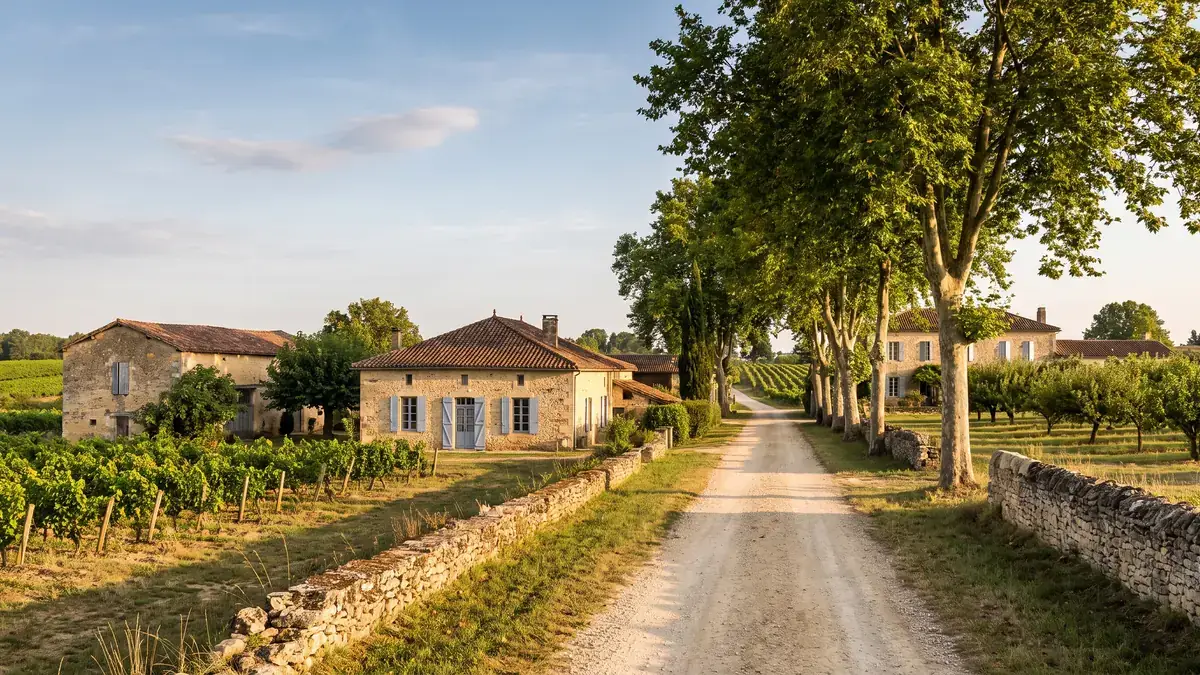
Lévignac is a village in the heart of the countryside, situated at the junction of three departments, amid a gentle landscape of rolling hills and valleys. This rural setting, which remains largely unspoiled, is one of the town’s understated charms.
A river in the headwaters
The distinctive hydrographic feature of Lévignac is that it is a headwater community: the Caubon, the small river that flows through it, has its source there before flowing about ten kilometers to join the Gupie, which is itself a tributary of the Garonne. It is often mistakenly claimed that the Caubon is a tributary of the Dropt: this is incorrect, even though the Dropt flows just a few kilometers to the north. This modest watercourse can experience slow-rising floods, posing a real risk of flooding in the valley bottoms, a reminder that even small rivers shape the life of a village.
At the border of three provinces
Lévignac is situated on the border: one of its neighboring towns, Taillecavat, is already in the Gironde department, while the Dordogne and the Périgord are not far to the north. The village thus lies at the junction of three historic regions, Guyenne, the Bordeaux region, and the Périgord, which has made the entire Dropt area a land of crossroads and fortified towns. Today, this crossroads location is part of its appeal to tourists: on a short loop, you can visit villages in three departments, winding through hillsides, orchards, the vineyards of Duras, and fortified towns. It’s a quiet region, best explored at a leisurely pace, far from the crowds.
The landscape of Lévignac is that of a vibrant, cultivated countryside: gentle hills covered with orchards and fields, dotted with light-colored stone farmhouses, groves, and valleys through which small streams meander. It is a restful setting, without spectacular terrain, but beautifully harmonious, the rural Southwest at its most authentic. Nature lovers will find country trails for walking and biking, a soft light that shifts with the seasons, and that sense of time standing still that is the true charm of these remote villages. Far from being “nothing,” this ordinary countryside is precisely what many city dwellers come here to find.
What's there to see around Lévignac-de-Guyenne?
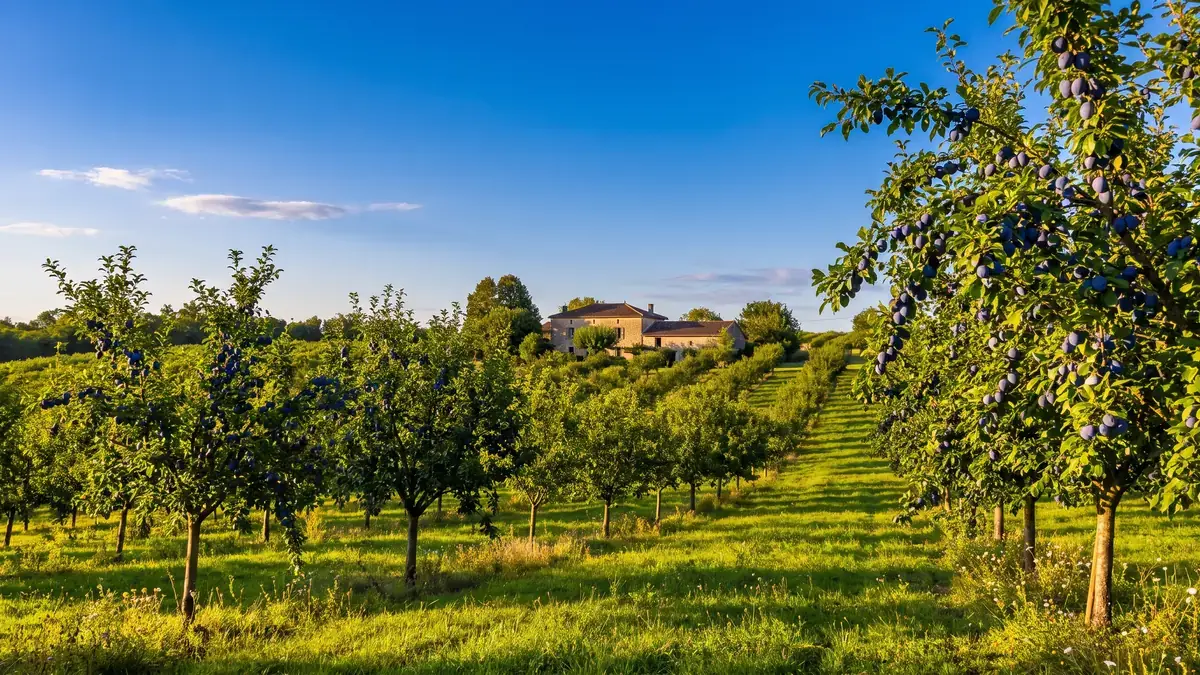
Lévignac is ideally located for exploring the Duras region and the Dropt Valley, with its bastides, castles, and vineyards. Distances are short, and it’s easy to go from one village to a castle, or from an orchard to a winery.
Duras, right nearby
Less than six kilometers away, Duras is the capital of the region that bears its name: its grand castle, a former duchy designated a historic monument, and its Côtes de Duras AOC vineyards make it a must-see destination, just a few minutes from Lévignac. It’s the natural neighbor, the place you head to for a castle tour, a wine tasting, or a market. This close proximity is a real asset: from Lévignac, you can make Duras the centerpiece of a day of exploration, combining the small town’s history of nobility and winemaking with the rural charm of the bastide of Lévignac.
The Bastides and the Dropt Region
Scattered throughout the area are other bastides and charming villages of the Dropt Valley: Eymet, in the Dordogne, a magnificent English-style bastide with an arcaded square; Miramont-de-Guyenne and Monségur (in Gironde), other towns founded in the Middle Ages, like Lévignac. Further away lies Marmande, the subprefecture of the Val de Garonne (about twenty kilometers away), famous for its tomatoes. This Dropt region, dotted with mills, orchards, and vineyards, is perfect for leisurely excursions, whether on foot or by car, through countryside untouched by mass tourism. A private chauffeur makes it easy to plan a loop tour among these scattered villages.
Beyond the bastides, the entire region of the Dropt and the Middle Garonne is a land of local flavors and gastronomy: the AOC Côtes de Duras vineyards, Agen prunes, Marmande tomatoes, foie gras, and the fruits of Lot-et-Garonne. There are many farms and estates that sell directly to the public, as well as lively markets, including the farmers’ night markets in Lévignac during the summer. It’s a region made for taking your time: driving from one village to another on small roads, stopping at a local producer’s, enjoying a traditional regional lunch, and visiting a château or a bastide. With a driver, you can tailor this day to your liking, without worrying about driving or the itinerary, and enjoy it to the fullest, including sampling the wines of Duras.
| About Lévignac-de-Guyenne | Distance | Interest |
|---|---|---|
| Duras | ~6 km | Château designated as a historic monument (MH), AOC Côtes de Duras |
| Marmande | ~18 km | Subprefecture, fortified town, tomato, train station |
| Eymet (Dordogne) | ~20 km | English-style bastide with arcades |
| Agen | ~83 km | Prefecture, train station, canal bridge, prune |
When is the best time to visit Lévignac-de-Guyenne?
Lévignac is worth visiting year-round, but late summer and early fall, plum season, are the most picturesque times to visit. This is when the Duras region moves to the rhythm of its orchards and markets, bathed in beautiful golden light.
The end of summer (August–September) is the time of the Ente plum harvest: the orchards are bending under the weight of purple fruit, and once you’re there, you understand what has shaped the village’s identity. It’s also the season for nighttime farmers' markets, which bring the market square back to life with a friendly atmosphere. The spring covers the hillsides with flowers (including those of the plum trees) and offers mild days for strolling through the bastide and exploring the ruins of Sainte-Croix. Fall, with its colors, adds to this charm; winter, which is quieter, allows the village to retain its peaceful atmosphere. Since Lévignac isn't a developed tourist destination, it's best to visit with an open mind, combining your visit with a trip to Duras and the surrounding area.
You can actually see the village in quite a short time, a stroll around the market hall and the square, a detour to the Church of Notre-Dame, and a trip to the ruins of Sainte-Croix in the countryside. That’s why it’s worth combining it with other stops in the Duras region: the Château de Duras just a few minutes away, a Côtes de Duras winery, or a nearby bastide like Eymet. By planning a day that connects several villages, you get the most out of this area: each adds its own touch, the history of the nobility here, the wine there, and the fortified town and prunes in Lévignac. This is the kind of leisurely itinerary that a chauffeur can help you organize without any constraints, at your own pace.
How to get to Lévignac-de-Guyenne from Bordeaux
Lévignac-de-Guyenne is located about 98 km from Bordeaux, which is about a 1-hour, 26-minute drive. The village does not have a train station; the nearest ones are in Marmande (~14 km) and Sainte-Bazeille (~14 km), on the Bordeaux-Agen-Toulouse line. From either of these stations, you’ll need to travel the remaining kilometers by car, as Lévignac is not served by regular public transportation.
The drive is straightforward: from Bordeaux, head toward the Marmande region (via the A62 and then the valley roads), before reaching Lévignac through the hills of the Duras region. The village is truly a convenient starting point for exploring the Dropt Valley: Duras is less than ten minutes away, and several bastides and vineyards are nearby.
No train station: rail or chauffeur service?
Without a train station, Lévignac has poor public transportation service. Whenever you’re traveling with others, with luggage, or want to explore the Duras region (Duras Castle, the bastides, a winery, a prune producer), a private chauffeur service is the best option: a direct trip from Bordeaux, door-to-door, with no transfers, and flexible stops along the way. You get in at Bordeaux and get out exactly where you want, a farm, a vacation rental, or right outside the market hall. We offer this route at a fixed price quoted in advance: approximately €251 one way, in a Mercedes sedan or van seating up to 8 passengers, with a professional driver.
It’s the perfect solution for a cultural and culinary getaway in the Duras region, a countryside retreat, a tour of a historic estate, or a family event. The price, set in advance, remains fixed regardless of traffic or stops, a real advantage for staying within budget, and the convenience of a direct trip to a village with limited train service.
| Route | Distance | Duration | Landmark |
|---|---|---|---|
| Bordeaux → Lévignac-de-Guyenne | ~98 km | a little over 1 hour | Starting at ~€173 for a private chauffeur service |
| Lévignac → Duras | ~6 km | ~7 min | castle, Duras region |
| Lévignac → Marmande | ~18 km | ~20 min | subprefecture, train station |
| Lévignac → Agen | ~83 km | ~1 hr 10 min | prefecture, train station, prune |
Whether you come for the bastide and its market hall, the romantic ruins of Sainte-Croix, the plum orchards, or to explore Duras and the bastides of the Dropt region, Lévignac-de-Guyenne is a treat for lovers of the authentic Southwest, far from the crowds.
Whether it’s for a heritage and local culture day, a visit to the Duras region, or an event in the countryside, booking a chauffeur service provides a comfortable and punctual ride to a village without a train station, book a driver from Bordeaux → Lévignac-de-Guyenne or explore all our destinations.
Frequently Asked Questions
Where is Lévignac-de-Guyenne located?
Lévignac-de-Guyenne is a village in Lot-et-Garonne (47), in Nouvelle-Aquitaine, in the Duras region, about 20 kilometers north of Marmande and less than 6 kilometers from Duras. It is part of the Marmande arrondissement, the Coteaux de Guyenne canton, and the Pays de Duras Community of Municipalities. This rural village, with a population of about 674, is located about a 1-hour-26-minute drive southeast of Bordeaux (~98 km).
What is the distance between Bordeaux and Lévignac-de-Guyenne?
About 98 km by road, or about 1 hour and 26 minutes (via the A62 toward Agen, then the roads through the Duras region). With a chauffeur service from Bordeaux, the fare is fixed and provided in advance, starting at approximately €251 one way (sedan or van, door-to-door price).
Is Lévignac-de-Guyenne a bastide?
Yes, it is an English bastide, a new town founded in the Middle Ages. Its founding is documented in a charter dated March 30, 1305, issued under Edward I, King of England and Duke of Aquitaine. More specifically, it was a paréage (joint foundation) between the ducal authority and local lords, the Levignac brothers, after whom the town is named. The village’s regular layout, centered around a central square with its market hall, bears the mark of this planned origin. The “English” bastides of Guyenne, including Lévignac, were founded during the period when the King of England ruled Aquitaine as duke, a vassal of the King of France.
When was the Lévignac-de-Guyenne market hall built?
The current market hall dates from the second half of the 19th century, not the 18th as is sometimes claimed; it replaced an older market hall that faced the opposite direction. It was home to the famous prune market, which was held every Wednesday from mid-August through late October until World War II. Since 2002, farmers’ night markets have been bringing the square back to life on warm evenings.
Are there any historic monuments in Lévignac-de-Guyenne?
No: the village has no monuments that are classified or listed as Historic Monuments. Neither the Notre-Dame Church (rebuilt in 1865–1868 by architect Gustave Alaux), nor the market hall, nor the ruins of Sainte-Croix are protected. This in no way diminishes their significance: Sainte-Croix, in particular, was stabilized in the 20th century by volunteers with the support of the Sauvegarde de l’Art français.
What is the Church of the Holy Cross?
It is a 13th-century church with stone and brick walls, now in ruins, located a few kilometers south of the village of Lévignac. Long abandoned, it was restored in the 20th century by volunteers with the support of the Sauvegarde de l'Art français. The outer walls, the altar, and the baptismal font have been preserved in a peaceful rural setting.
Why was the Notre-Dame Church moved?
To expand the plum market! An early church once stood on the town square; it was demolished in the 18th century to expand the market square and its plum market. A new church, Notre-Dame, was therefore built outside the town walls between 1865 and 1868, in the Neo-Gothic style, by the Bordeaux architect Gustave Alaux. This is a rare case: a church moved to make way for a fruit market, evidence of the importance of prunes to the village’s economy.
Where does the name Lévignac-de-Guyenne come from?
“Lévignac” is a Gallo-Roman place name: it derives from the name of a Latin landowner, “Levinius,” followed by the Gallic suffix -acum, meaning “the estate of Levinius.” The suffix “de-Guyenne” was added in 1929; it replaced the former “de-Seyches” (named after the canton) to link the village to the ancient province of Guyenne. The ancient name is therefore much older than the bastide, which dates back to 1305.
Does Lévignac-de-Guyenne produce wine?
No: Unlike its neighbor Duras, Lévignac is not a wine-producing town and is not part of the Côtes de Duras AOC. Its agricultural specialty is the Agen prune, made from dried Ente plums. Nearly 85% of the area is farmland, with numerous plum orchards. The Côtes de Duras vineyards are located nearby, around Duras, just a few kilometers away, but Lévignac is not part of them, as the AOC is limited to about fifteen towns centered on Duras.
How many residents are there in Lévignac-de-Guyenne?
According to the 2023 census, the town had approximately 674 residents, with a very low population density of about 27 residents per km². The population is stable, or even slightly increasing (663 residents in 2017), bucking the trend of population decline seen in many rural areas. The residents are known as Lévignacais. The municipality, which is large (more than 25 km²) but sparsely populated, was formed by the merger of several former parishes.
Is there a train station at Lévignac-de-Guyenne?
No, Lévignac does not have a train station. The nearest stations are Marmande and Sainte-Bazeille, each about 14 km away, on the Bordeaux-Agen-Toulouse line. Since the village isn’t served by regular public transportation, a chauffeured transfer remains the most flexible option for traveling from Bordeaux and then exploring the Duras region (Duras is less than ten minutes away).
What's there to see around Lévignac-de-Guyenne?
Duras and its historic castle (~6 km), another highlight of the Duras region and the Côtes de Duras AOC; Eymet, in the Dordogne, a magnificent English-style bastide with arcades (~20 km); Miramont-de-Guyenne and Monségur, other bastides in the Dropt region; Marmande, the subprefecture of the Val de Garonne (~18 km). We are in the heart of a region of bastides, orchards, and vineyards, at the border of three departments.
Can I book a private chauffeur from Bordeaux to Lévignac-de-Guyenne?
Yes. We offer the Bordeaux → Lévignac-de-Guyenne route (~98 km, approximately 1 hr 26 min) at a fixed price, starting at around €251 one-way, in a Mercedes sedan or a van seating up to 8 passengers, with a professional driver. The trip is direct, door-to-door, with no transfers. It’s the ideal way to reach a village without a train station and then explore the Duras region, Duras and its castle are less than ten minutes away.
Further Reading
- The capital of the Duras region, 6 km away: see the Duras Guide (the castle, the Côtes de Duras, and Marguerite Duras)
- Another nearby English-style bastide: see the Eymet Guide (the arcaded bastide of the Purple Périgord)
- The spa town of the Albret region: see the Casteljaloux Guide (the thermal baths, Lake Clarens, and the Albret)
- Plan your trip: Book a private chauffeur from Bordeaux to Lévignac-de-Guyenne or explore all our destinations
Sources and References
- Wikipedia, Lévignac-de-Guyenne, geography, demographics, bastide, heritage, history, land use
- Wikipedia, the Caubon (river), source at Lévignac, a tributary of the Gupie (not the Dropt)
- Preserving French Art, The Consolidation of the Sainte-Croix Church in the 20th Century
- INSEE, Municipality of Lévignac-de-Guyenne (47147), 2023 population (~674 residents), area, municipal data
- Lot-et-Garonne Tourism, Bastide of Lévignac-de-Guyenne, founded in 1305; market hall and new church built in 1865
Article updated in July 2026.
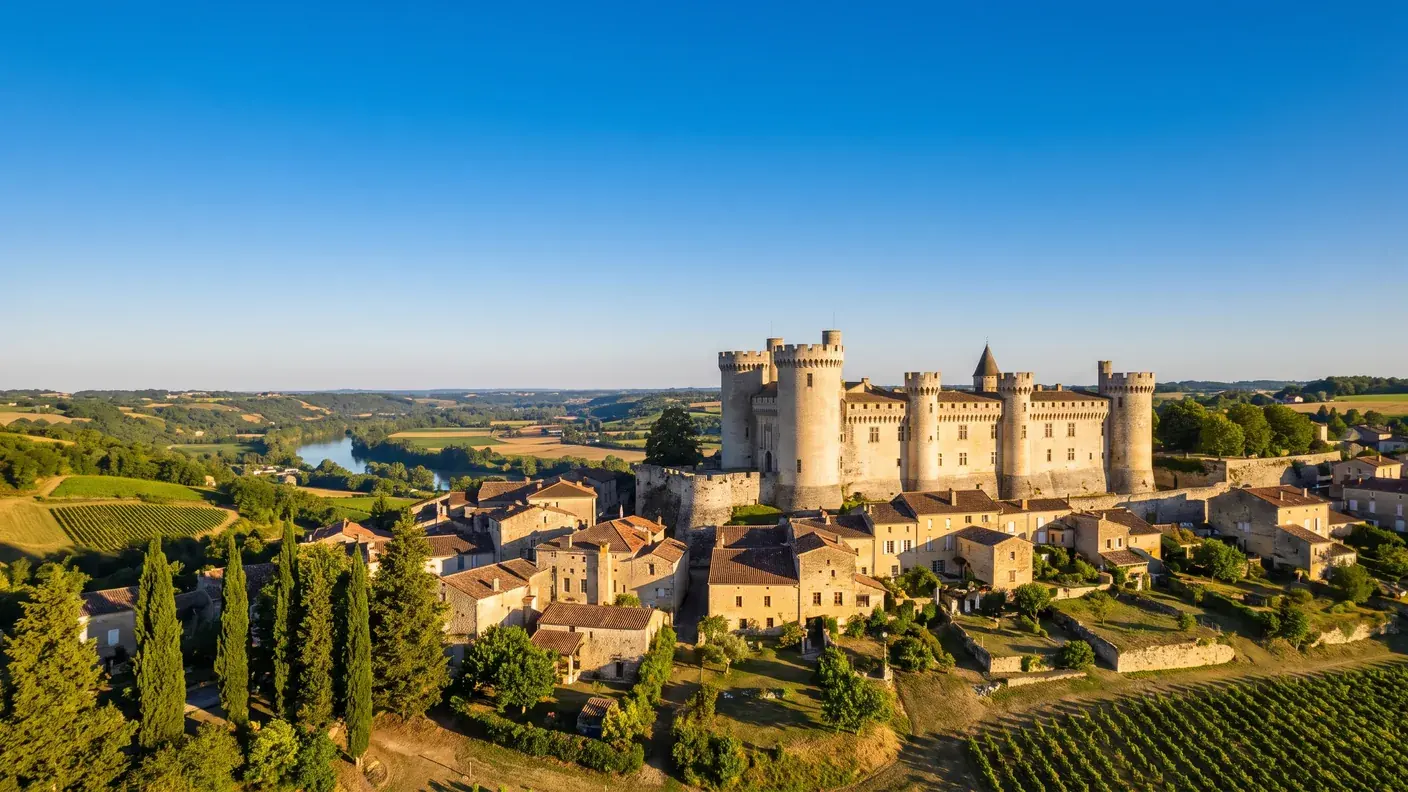
On the Way to the Land of Duras
Direct trip from Bordeaux (~1 hr 26 min) to Lévignac-de-Guyenne and the Duras region, with optional stops in Duras, a bastide town, and a prune producer. Written fixed-price quote, with no surprises on the meter.