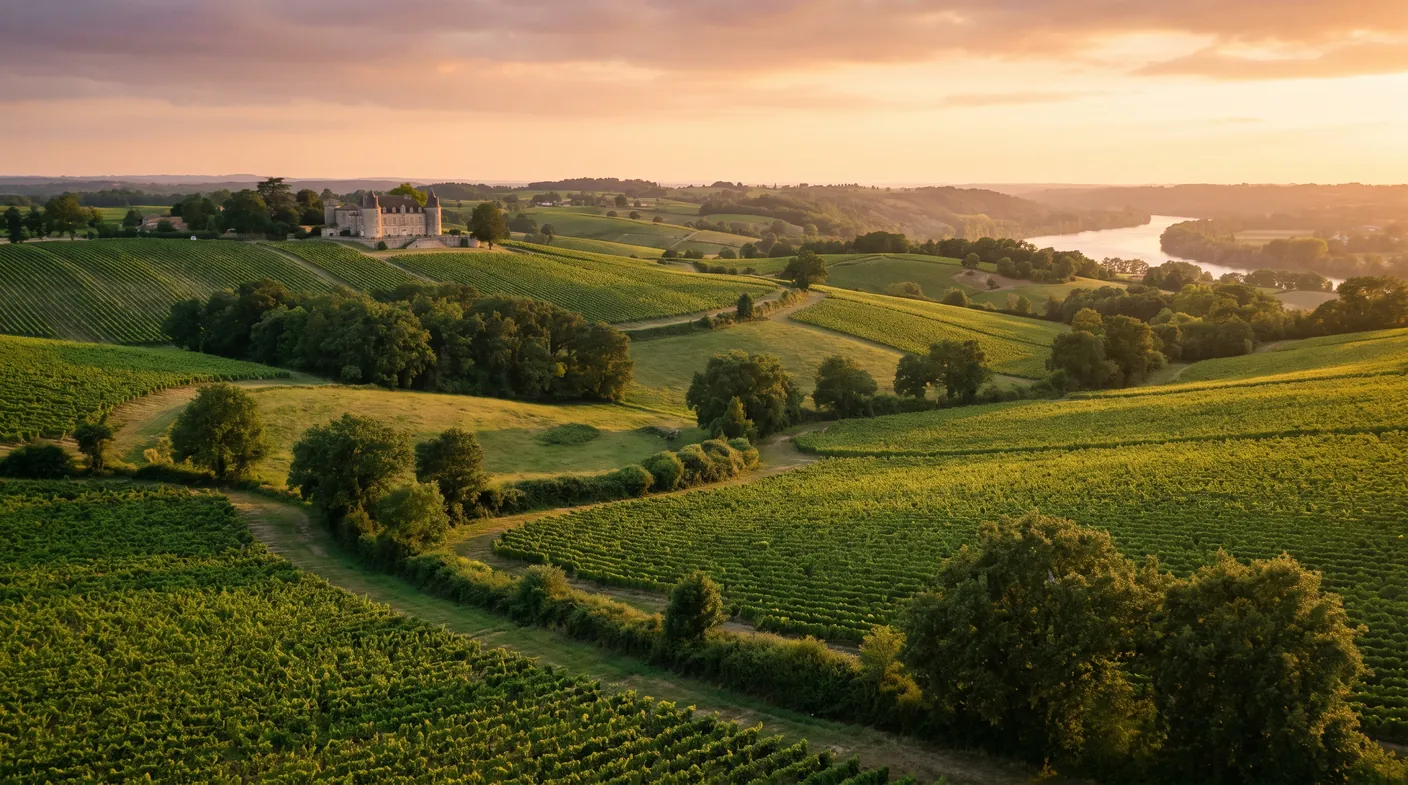
Haux and Château Lagorce
A wine-growing village in the Entre-deux-Mers region, on the right bank of the Garonne River, known for Château Lagorce. A mansion converted into a reception venue, a Romanesque church with a remarkable carved portal, the Cadillac-Côtes de Bordeaux vineyards, and nearby Créon, Cadillac, and the UNESCO-listed Abbey of La Sauve-Majeure. Half an hour from Bordeaux.
Haux and Château Lagorce at a Glance
Haux is a small wine-growing village in the Entre-deux-Mers region, on the right bank of the Garonne River, about 28 km southeast of Bordeaux, best known for its Château Lagorce. With some 840 residents, it is a modest town, yet it boasts three treasures: the Château Lagorce, the Romanesque Church of Saint-Martin with its remarkable carved portal, and a vineyard in the Cadillac Côtes de Bordeaux appellation. This guide distinguishes fact from fiction. “Château Lagorce” actually refers to two distinct entities—a mansion that has been converted into a reception venue and a wine estate—and it is neither a fortified castle nor a listed historic monument; the church is dedicated to Saint Martin, not Saint Peter; and Haux is indeed located on the right bank, in the Cadillac region, not in the Graves or the Médoc. A small village, then, but an ideal starting point for exploring the entire Entre-deux-Mers region.
Here are the key things to know before you go. We’ll be honest about Haux’s small size: people don’t come here for a bustling city center, but for its unassuming heritage, vineyard-covered hillsides, and the deep tranquility of the Entre-deux-Mers region, just half an hour from Bordeaux. Distances are calculated door-to-door from the city; heritage data is verified using INSEE, the Ministry of Culture’s Mérimée database, and sources documenting the Right Bank vineyards. The fare shown is a fixed-price fare, communicated and confirmed in advance. Throughout, we distinguish between verified facts and mere speculation or rumor—because in a village with so little documented information, many approximations are circulating.
| Landmark | Details |
|---|---|
| Village | Haux (Gironde 33 · Nouvelle-Aquitaine), known for Château Lagorce |
| Status | wine-growing village · Bordeaux district · Créonnais Community of Communes |
| Residents | approximately 840 Hauxois (INSEE 2023) |
| Must-See | Château Lagorce, the Romanesque Church of Saint-Martin, the vineyard |
| From Bordeaux | about 28 km · about 45 min · starting at €68 |
What is Château Lagorce?
Château Lagorce, located at Haux, is not a fortified castle but an elegant Gironde-style residence—and the name actually refers to two very distinct entities that must be carefully distinguished. On the one hand, there is a historic, characterful residence that now serves as a prestigious venue for events and accommodations; on the other, there is a winery that produces wine under the “Château Lagorce” label. Both share a location and a name—the locality of La Gorce, in Haux—but refer to different activities. Here is what the sources say, without adding anything further.
Let’s start with what it isn’t. Château Lagorce is neither a medieval fortress nor a listed or designated historic monument: it is private property. It is sometimes confused with the Gironde commune of Lagorce (33230), in the Libournais region, or with one of the various “Châteaux de Lagorce” located elsewhere in France: these are unrelated places. At Haux, “Château Lagorce” refers to a neighboring residence and vineyard, grouped under a single name, and nothing more.
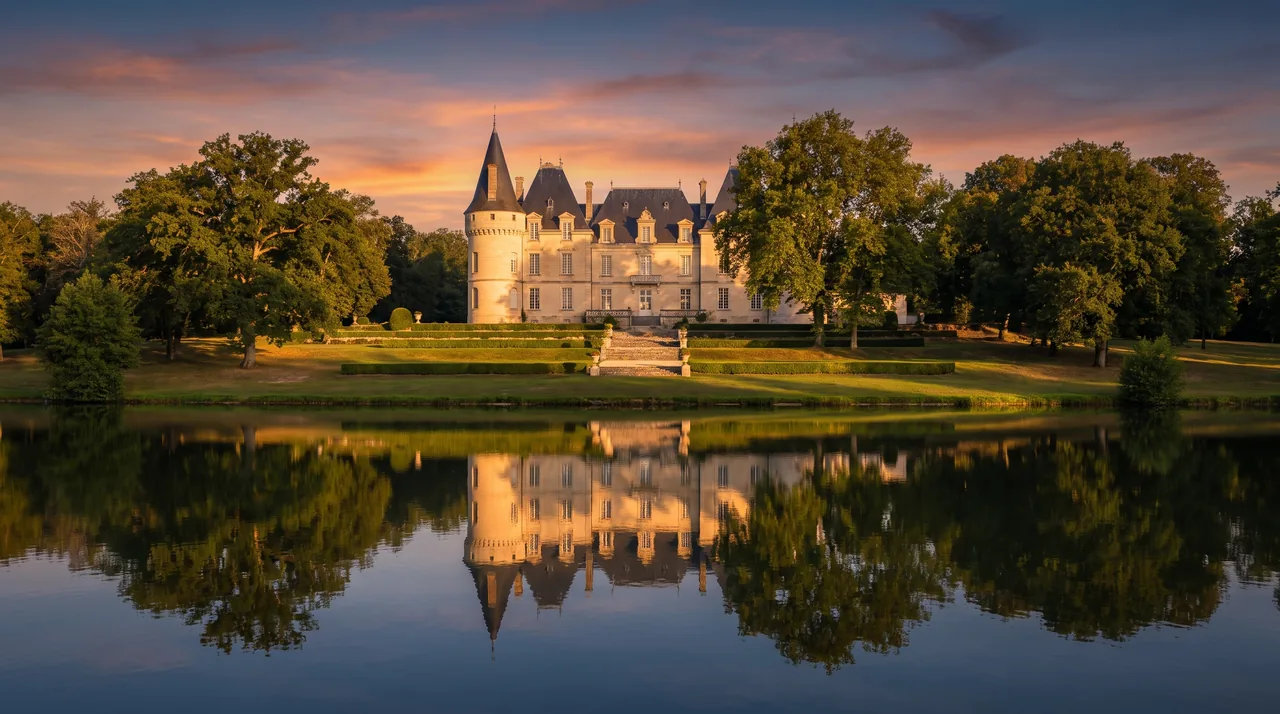
A mansion that has become a venue for receptions and weddings
Château Lagorce is currently marketed as a private venue for events and accommodations, particularly for weddings. Official source for the venue; address and directions verified in July 2026. Capacity, stay details, and access requirements must be confirmed directly with the operator before traveling.
For the average visitor, this changes the way one approaches the place. You don’t “visit” Château Lagorce like a public castle: you can be hosted there for a wedding, stay overnight, or explore its wines, but the estate and its grounds are private property. It’s therefore best to contact the estate in advance to find out exactly what it offers, rather than showing up hoping for a guided tour that may not be available. This clarification helps avoid disappointment and clarifies the exact nature of the place: a venue for hosting and receptions, not a monument open to the public.
Château Lagorce Wine: An SCEA Since 1993
The other aspect is wine. Under the name “Château Lagorce” operates a vineyard—SCEA Château Lagorce, SIREN 393 431 911—registered on December 29, 1993, for viticulture. Source: Business Directory, verified in July 2026. Like most of Haux’s properties, it takes advantage of the clay-limestone slopes of the right bank to produce Bordeaux wines. It is therefore important to clarify, when referring to “Château Lagorce,” whether one is talking about the event venue (the estate and its grounds) or the wine label (the winery and its bottles). Both coexist at Haux, sharing the same name, but belong to different worlds: event planning on one hand, viticulture on the other. This is exactly the kind of nuance that a reputable guide must clarify, given how closely the two realities are—often mistakenly—intertwined in the descriptions found online.
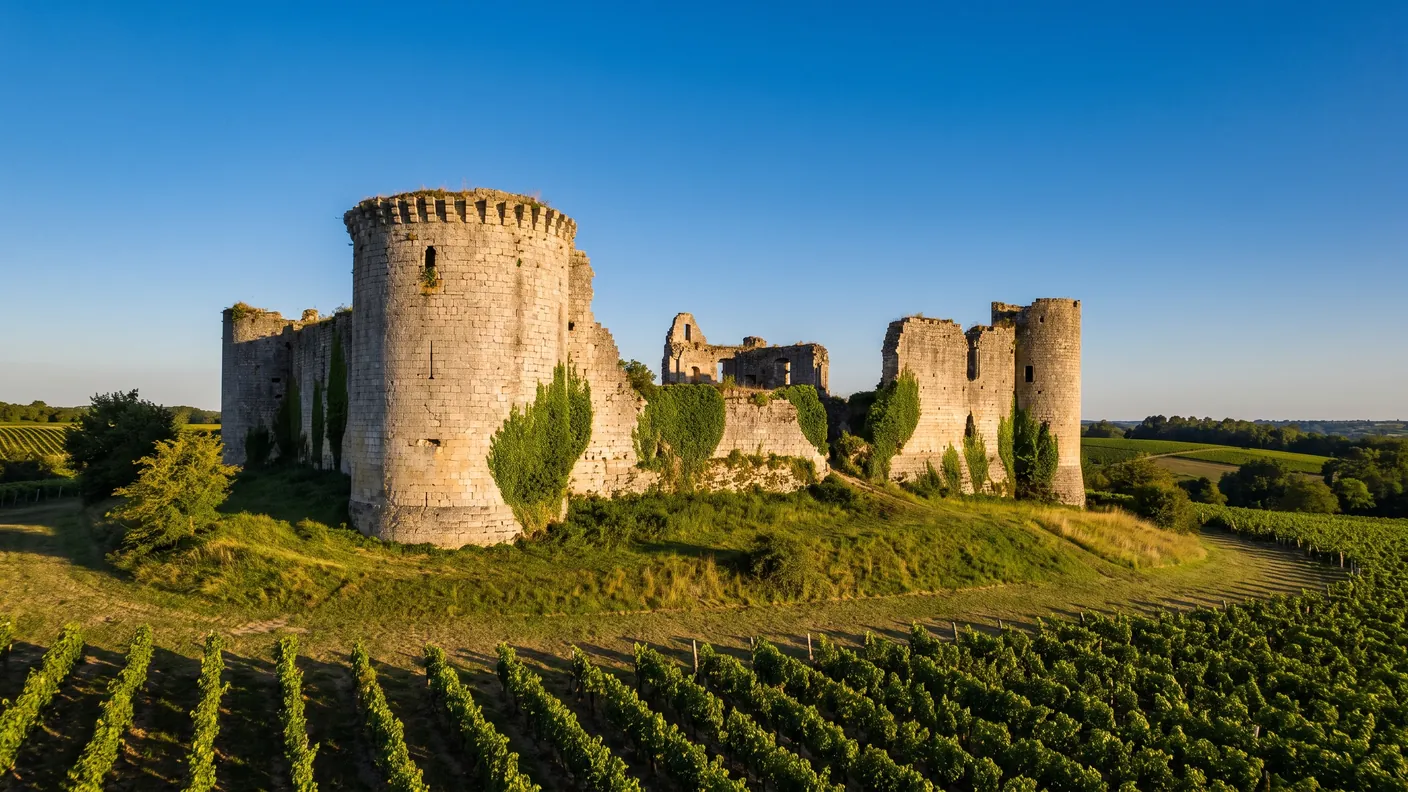
Let’s focus on the essentials: at Haux, Château Lagorce is a private residence—not protected as a historic monument—known on the one hand as a premium event venue and, on the other, as a winery. There’s no keep, no ramparts, and no self-guided tour of a listed monument. Those dreaming of a medieval fortress will find what they’re looking for next door in Langoiran, where the fortified castle overlooks the Garonne Valley. Here, the charm is of a different kind: that of a country manor nestled amid the vineyards, between a park, a lake, and rolling hills.
Where is Haux located?
Haux is a commune in the Gironde department, on the right bank of the Garonne River, in the heart of the Entre-deux-Mers region, about 28 km southeast of Bordeaux. This vast wine-growing plateau, nestled between the Garonne to the south and the Dordogne to the north, gave the region its name: “entre deux mers”—“between two seas”—though in reality it refers to two rivers rather than two seas, since their waters, at this latitude, are still subject to ocean tides. Haux (INSEE code 33201, ZIP code 33550) covers approximately 10.21 km² of hillsides and valleys on the southern edge of the plateau, where the hills begin to slope down toward the Garonne Valley.
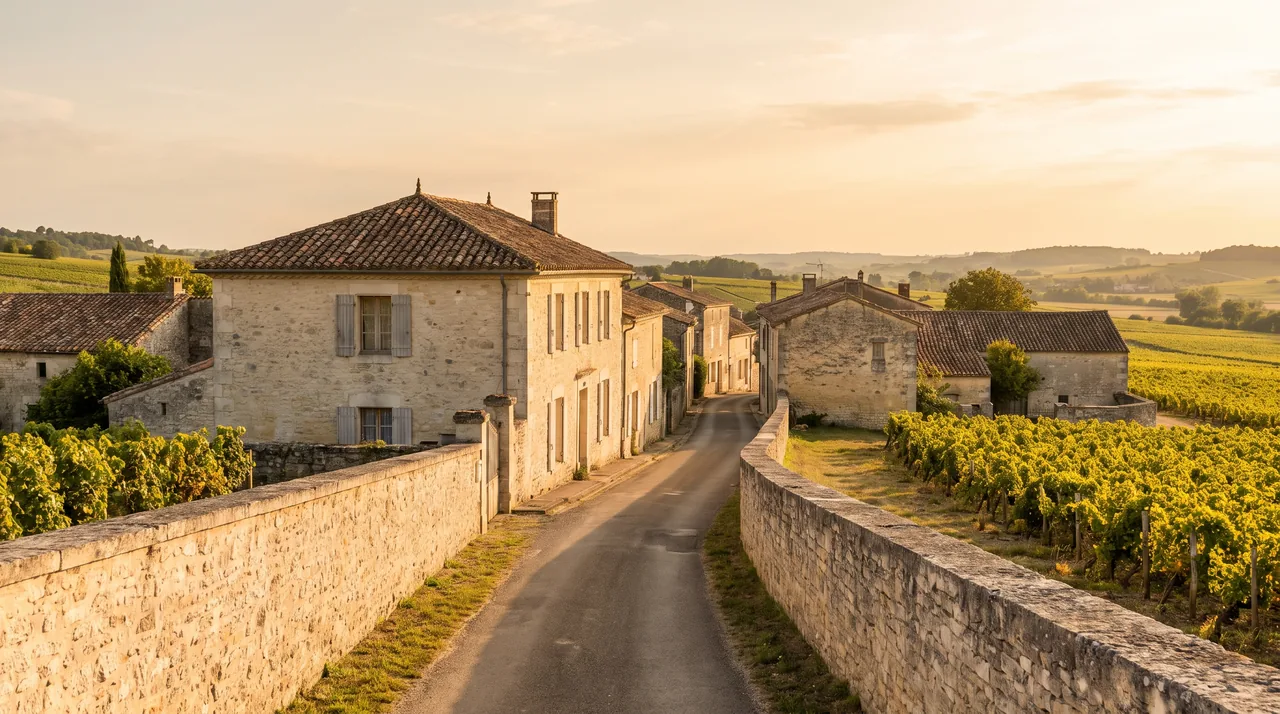
Administratively, the municipality is part of the Bordeaux district, the Entre-deux-Mers canton—formerly the Créon canton—and the Créonnais Community of Municipalities. Its immediate neighbors clearly define the region: Créon and La Sauve to the north, Capian to the east, Langoiran, Le Tourne, and Tabanac toward the Garonne, and Saint-Genès-de-Lombaud to the west. Here, we find ourselves in a countryside of vineyards and woods, dotted with hamlets built of light-colored stone, far from major highways and the hustle and bustle of the city.
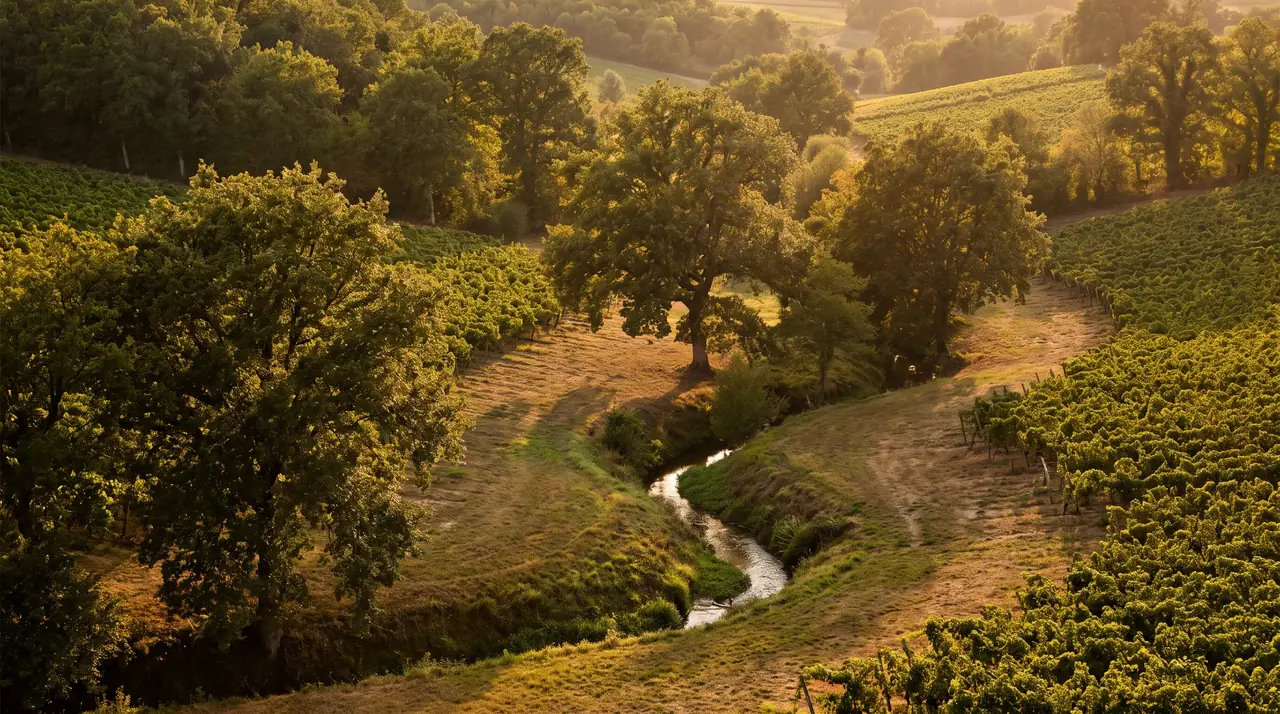
How far is it from Bordeaux?
From downtown Bordeaux, it’s about 28 km by road, or roughly a 45-minute drive. Route calculators show a shorter distance as the crow flies—around 26 km—but the road winds through the hills, making the trip a bit longer. The route heads southeast, crosses the Bordeaux ring road, and then reaches the right bank of the Garonne via the small roads of the Entre-deux-Mers region. Haux has no train station, and public transportation is limited there: it is primarily accessible by road, which explains why a shuttle service is often the most convenient option for a visit. The table below shows the village’s location relative to its neighbors and the metropolitan area.
| From Haux | Distance | Duration |
|---|---|---|
| Créon (fortified village) | ~4 km | ~10 min |
| Langoiran (fortified castle) | ~4 km | ~10 min |
| La Sauve-Majeure (Abbey) | ~5 km | ~10 min |
| Cadillac (Ducal Castle) | ~10 km | ~15 min |
| Bordeaux (downtown) | ~28 km | ~45 min |
On the right bank, between Créon and the Garonne
Haux is in a pleasant location: the village lies at the junction between the Entre-deux-Mers plateau to the north and the Garonne Valley to the south. To the north, four kilometers away, the bastide town of Créon serves as the lively and administrative heart of the region; nearby, the ruins of the Romanesque Abbey of La Sauve-Majeure, a UNESCO World Heritage Site, stand tall. To the south, the hillsides slope down toward the Garonne at Langoiran and Le Tourne, where the river—still subject to the tides—borders ancient fishing villages. This dual connection—to both the wine-growing plateau and the river valley—is what makes Haux such an appealing starting point: in just a few minutes, you can go from the vineyards up above to the riverbanks. Finally, two things to keep in mind so you don’t get lost. First, there is another Haux in the Pyrénées-Atlantiques (64); the one we’re interested in is Haux (Gironde). Second, the ZIP code 33550 isn’t enough to identify the town, since it covers eight villages in the area, including Langoiran—so it’s best to specify “Haux, Gironde” to avoid any confusion on a GPS or in the mail.
This situation also explains the concept behind Haux: a village where people come to enjoy peace and quiet and wine, while remaining within easy reach of the region’s major attractions. You can stay or get married at Château Lagorce, visit the abbey in the morning, have lunch in Créon, and enjoy a wine tasting in the afternoon—all without ever traveling more than a few kilometers. Few villages in the Gironde offer, within such a small radius, such a concentration of heritage sites—a Romanesque abbey, a medieval bastide, castles, and vineyards, all just a few minutes apart.
How many people live in Haux?
Haux had a population of approximately 840 according to the 2023 census, making it one of the smaller municipalities in the Entre-deux-Mers region. Its residents are affectionately known as Hauxois. With an area of about 10.21 km², the population density is low—around 82 inhabitants per square kilometer—reflecting this region of vineyards and woods, where houses are scattered in hamlets rather than clustered in a large village.
A small wine-growing village—and that's just fine
Let’s just come right out and say it: Haux is a small village, and makes no claim to be anything more. You won’t find any spectacular monuments or a bustling historic center here, but rather a beautiful Romanesque church, a few wine-producing châteaux, rolling hills, and silence. That is precisely what gives it its charm. The population, long rural and centered on winemaking, has grown slightly due to the proximity of Bordeaux, for which Haux has become, for some, a distant residential outpost—though it remains firmly in the countryside. The village lives in tune with the seasons of the vineyard: pruning in winter, flowering in spring, and the grape harvest in fall. For visitors, this modesty is an invitation rather than a drawback. You don’t “tour” Haux the way you visit a city: you use it as a peaceful base from which to explore the entire Entre-deux-Mers region—La Sauve Abbey, the bastide town of Créon, the châteaux of Cadillac and Langoiran, and the countless wineries that dot the plateau.
Think of Haux as a scattering of hamlets: the village center around the church, a few clusters of houses on the hillsides, and isolated estates at the ends of their driveways. This scattered layout, with no real commercial center, is typical of countless wine-growing villages in the Gironde. It has its advantages—peace and quiet, open space, and the immediate proximity of the vineyards—as well as its drawbacks, notably the lack of public transportation and local services, which make a car almost indispensable. For the passing visitor, the essentials boil down to just a few things: a church, châteaux, hillsides, and countryside stretching as far as the eye can see.
Its small size also explains why Haux is often less well-known than Château Lagorce, which has received more media attention. Nevertheless, the village retains a distinct character: that of a discreet and authentic right-bank region, where visitors come to experience the heritage and wine rather than the hustle and bustle. This is a trait shared by many towns in the Entre-deux-Mers region, whose dense network of small villages, when taken together, forms one of the largest appellation vineyards in the entire Bordeaux region. The Gironde region is home to hundreds of these wine-growing towns with populations of just a few hundred; Haux is a prime example.
| Data | Value |
|---|---|
| Population | approximately 840 residents (INSEE 2023) |
| Demonym | the Hauxois |
| Area | about 10.21 km² |
| Density | about 82 people per square kilometer |
| Intermunicipal Cooperation | Créonnais Community of Municipalities |
Where does the name Haux come from?
According to the most common hypothesis, the name Haux derives from the Gascon word “hau,” which in turn comes from the Latin “fagus”—meaning “beech.” We use the conditional tense deliberately: like many ancient place names, the origin of the name has not been established with absolute certainty, and it is better to present it as a plausible hypothesis than as a proven fact. If this hypothesis is correct, Haux would originally have referred to a place planted with beech trees—a reminder of the forests that once covered this corner of the Entre-deux-Mers region, before vineyards eventually took over and reshaped the entire landscape.
The beech—is that the tree hidden in the name?
The connection between “Haux,” “hau,” and “fagus” is nothing out of the ordinary in the Southwest. The Gascon language, long spoken throughout much of the Gironde department, has left numerous traces in place names, often linked to vegetation, the landscape, or water. The beech tree, which thrives in moist soil, is said to have given its name to more than one hamlet in the region. However, we must be careful not to say more than that: popular etymologies are numerous and appealing, but the history of a name must be reconstructed cautiously, piece by piece, based on attested ancient forms. We will therefore stick to the beech tree hypothesis, without presenting it as a truth set in stone—that is more honest, and often more accurate.
Haux and Lagorce: two names that should not be confused
Finally, a word to clear up a common misunderstanding: the name of the village, “Haux,” and that of its most famous castle, “Lagorce,” are two distinct place names with no etymological connection between them. “Lagorce” refers to the locality known as La Gorce, within the municipality’s boundaries; the estate itself traces this name to a type of vegetation attested as early as the beginning of the 16the century. In other words, the village beech tree and the “gorce” at the castle tell two different stories about their names, which only intersect in the field. It’s also important to note that our Haux in Gironde should not be confused with the Haux in the Pyrénées-Atlantiques, nor should the Château Lagorce of Haux be confused with the town of Lagorce (33230) in the Libournais region: they sound the same, but the places are completely unrelated. These homonyms are a classic pitfall in the Southwest.
St. Martin's Church and Its Portal
The most remarkable landmark in Haux is its Romanesque Church of Saint Martin, whose carved portal features more than 150 figures—an exceptional collection for a village of this size. Be careful not to confuse the saints: the church is indeed dedicated to Saint Martin, and not to Saint Peter, as is sometimes stated here and there. It is a composite structure, with its oldest parts dating back to the Romanesque period, and it was expanded and remodeled over the following centuries.
The church dates back to the 11th century, but its portal and several of its features date from the 14th and 15th centuries. This mix of eras is common in rural churches, which were expanded and embellished as the parish’s resources and needs dictated. What sets Saint-Martin apart from Haux is the unusual richness of its sculpted decoration, concentrated around the portal, which makes it a small rural masterpiece.
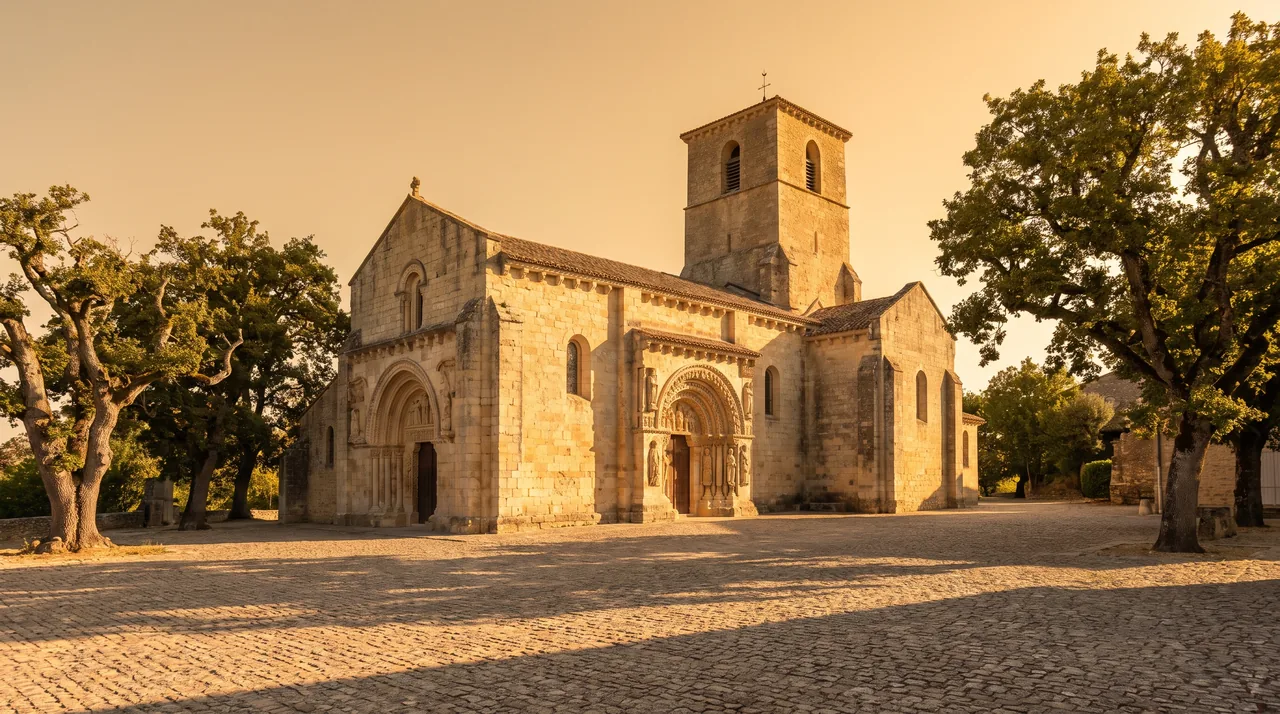
A Romanesque portal featuring more than 150 carved figures
The portal is the centerpiece. Its arches and capitals feature more than 150 sculpted subjects: scenes from the life of Christ, apocalyptic themes, as well as agricultural labor and scenes of daily life, as seen on large Romanesque portals. This rich, narrative ensemble is all the more astonishing given that it adorns the church of a village with just a few hundred residents—proof that, during the Romanesque period, religious fervor and craftsmanship did not stop at the city gates. Experts compare this portal to that of the Sainte-Croix Abbey in Bordeaux, from which it appears to draw inspiration—a sign that stonemasons from the Bordeaux region traveled widely and spread their designs as far as the rural parishes of the Entre-deux-Mers region. Taking the time to study this portal, detail by detail, as if deciphering a comic strip carved in stone, is one of the true pleasures of a stop at Haux.
Registered in 1925; gate listed in 1953
The church’s historical significance has long been recognized. The building has been listed as a Historic Monument since 1925; then, in 1953, its portal and west facade were granted the highest level of protection under the Mérimée reference PA00083571. This dual designation clearly reflects the value placed on the carved portal, considered the most precious element of the entire structure. For visitors, this serves as a helpful reminder: in the Entre-deux-Mers region, the most beautiful surprises are often hidden in modest village churches, whose Romanesque portals, capitals, and modillions are well worth the detour. Saint-Martin de Haux is a fine example of this, worth exploring before or after a wine tasting at nearby estates—an opportunity to realize that this small village possesses, within its church, a treasure that many larger towns might envy.
Haute-Sage Castle and the Estates
In addition to Château Lagorce, Haux is home to another notable landmark, the Château de Haute-Sage, as well as several vineyards scattered across the hillsides. The town’s architectural heritage is typical of the Entre-deux-Mers region, consisting of stately homes and winemakers’ châteaux rather than fortresses. Here is what the sources allow us to confirm, carefully excluding what actually belongs to neighboring towns.
Haute-Sage Castle, listed in 1984
The Château de Haute-Sage is a 16th-century residencee and XVIIe centuries. Unlike Château Lagorce, it is protected as a historic monument: it has been listed since 1984 for its roofs, facades, and chimneys. Like many of these properties in the Gironde region, it is also an active winery, producing wine on the hillsides of Haux. This dual nature—as both a protected historic building and a working vineyard—is very common in the Bordeaux region, where the word “château” primarily refers to a wine-producing estate, with or without remarkable architecture. Haute-Sage combines both: a beautiful historic residence and a vineyard.
Alongside Haute-Sage and Lagorce, the town is home to other estates, including Château de Haux and Château Lamothe, which produce wines in the Côtes de Bordeaux and Cadillac appellations. All of them cultivate the clay-limestone slopes of the right bank, which are ideal for both age-worthy reds and sweet whites. A word of caution, however, so as not to attribute to Haux what does not belong to it. Château Grand Branet, sometimes mentioned in this area, is actually located in the neighboring town of Capian, not in Haux; therefore, we do not include it with the village. Similarly, some online sources mention a “Château Peyrat” in Haux that we have been unable to verify; when in doubt, we prefer to omit it rather than assert uncertain information. This commitment to accuracy—down to the details of properties and their corresponding municipalities—is what distinguishes a verified guide from a simple, copied-and-pasted compilation.
This collection of residences and estates—more than just an isolated monument—forms the heritage identity of Haux: that of a lived-in region, where architecture has been put at the service of the vineyards. Here, one can sense the long history of the Entre-deux-Mers region, shaped by abbeys, parishes, and wine estates far more than by the great fortresses of the nearby Garonne Valley. It is a heritage on a human scale, revealed as you travel along the hillside roads, between a Romanesque bell tower and a winery gate.
This distinction between wine-growing estates and true fortified castles is, in fact, one of the keys to understanding the Entre-deux-Mers region. Unlike the Garonne Valley, dotted with fortresses that guarded the river and its trade, the wine-growing plateau has primarily seen the emergence of manor houses surrounded by vineyards, built for production rather than defense. Haux perfectly illustrates this landscape: its “châteaux” are agricultural estates whose prestige stems as much from the quality of the wine as from the stone structures themselves. It is another, more peaceful way of living in the countryside, born of the prosperity of the vineyards.
The Cadillac-Côtes de Bordeaux Wine Region
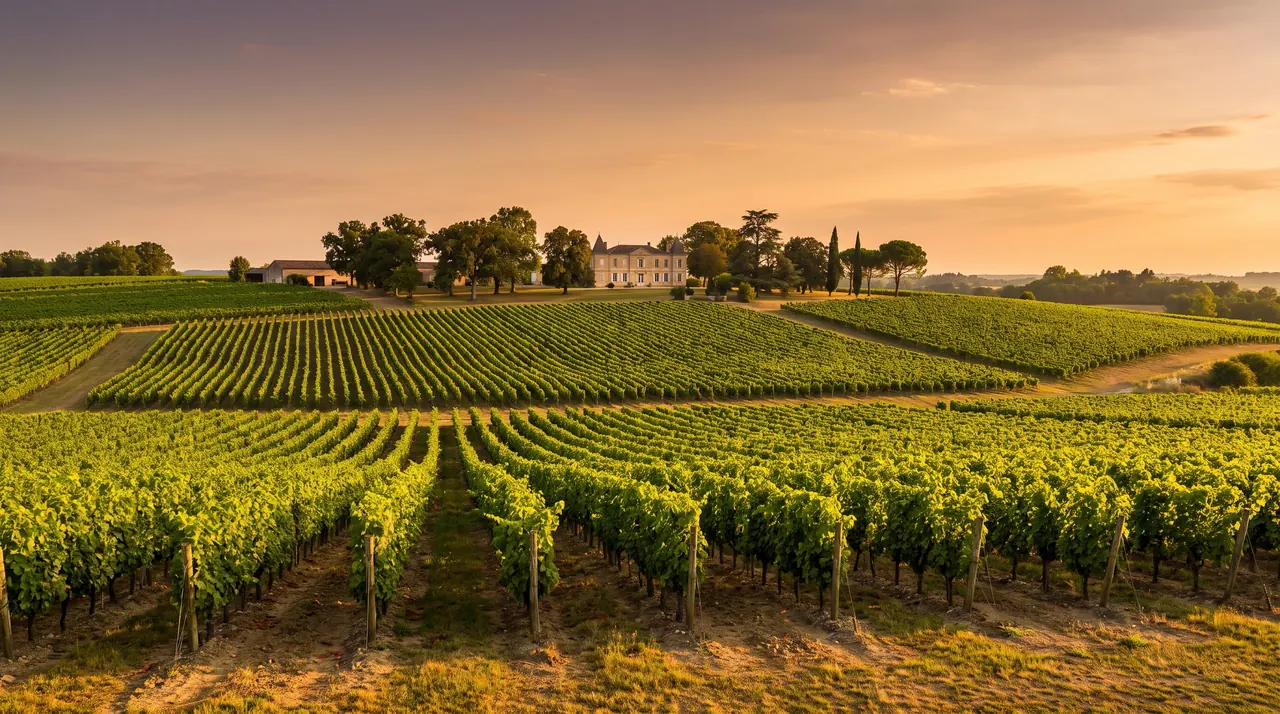
Haux is located in the wine-growing region on the right bank of the Garonne, where two appellations overlap—and care must be taken not to confuse them: Cadillac Côtes de Bordeaux, for reds, and Cadillac, for sweet whites. As is the case throughout the Entre-deux-Mers region, viticulture is the backbone of the local economy here, and most of the commune’s “châteaux” are primarily wine-producing estates, whose cellars are often more impressive than their architecture.
The terroir is typical of the region: well-exposed clay-limestone slopes overlooking the valley. These soils, a blend of clay and limestone, and this excellent exposure are equally well suited to red grape varieties—led by Merlot, accompanied by the Cabernets—as well as to white grape varieties used for sweet wines. It is this versatility that explains the coexistence, within the same municipalities and sometimes on the same estates, of two appellations with radically different profiles.
What wines does Haux produce?
The Haux estates primarily produce red wines under the Cadillac Côtes de Bordeaux appellation: Merlot and Cabernet wines that are full-bodied, supple, and often offer excellent value for money—perfect for pairing with everyday meals or for aging for a few years in the cellar. Part of the vineyard also produces sweet white wines under the Cadillac appellation—these golden, sweet wines, the Gironde cousins of Sauternes, are made from late-harvest grapes concentrated by the sun and “noble rot.” This range, from hillside reds to sweet wines, can be found at several estates in the commune, from Château de Haux to Château de Haute-Sage. Tasting at Haux, therefore, means experiencing, all in one place, the two faces of the Right Bank: the straightforward character of a terroir-driven red and the sweetness of a dessert wine.
At the table, these wines find their place easily: a red from Cadillac Côtes de Bordeaux pairs well with grilled meat, duck breast, or a cheese platter, while a sweet wine from Cadillac pairs well with foie gras, blue cheese, or a lightly sweetened dessert. That’s the real appeal of tasting these wines on-site: to discover, glass in hand, what the Right Bank terroir has to offer—at prices that, for many of these family-owned estates, remain very reasonable given the prestige of the “Bordeaux” name.
Cadillac and Cadillac Côtes de Bordeaux: Don't Confuse Them
The source of confusion lies in the name: two Bordeaux appellations include the word “Cadillac,” and they do not refer to the same thing. The Cadillac Côtes de Bordeaux AOC refers to red wines; it is part of the broader Côtes de Bordeaux region, which encompasses several hillside terroirs scattered around the Garonne and Dordogne rivers. Official source for the appellation, verified in July 2026. The Cadillac AOC, on the other hand, is reserved for sweet white wines: it covers about twenty communes on the right bank of the Garonne, where late harvests of botrytized grapes yield sweet wines with good structure, less famous—and often much more affordable—than their neighbors in Sauternes. So let’s remember this simple rule: at Haux, “Cadillac” on its own refers to the sweet wine; “Cadillac Côtes de Bordeaux” refers to the red. And above all, don’t look for the Graves, the Médoc, or Sauternes here: we’re on the right bank, in the Cadillac region, with its own identity and its own appellations. This clarity regarding the names is part of the pleasure of discovery.
The Underground Quarries of Entre-deux-Mers
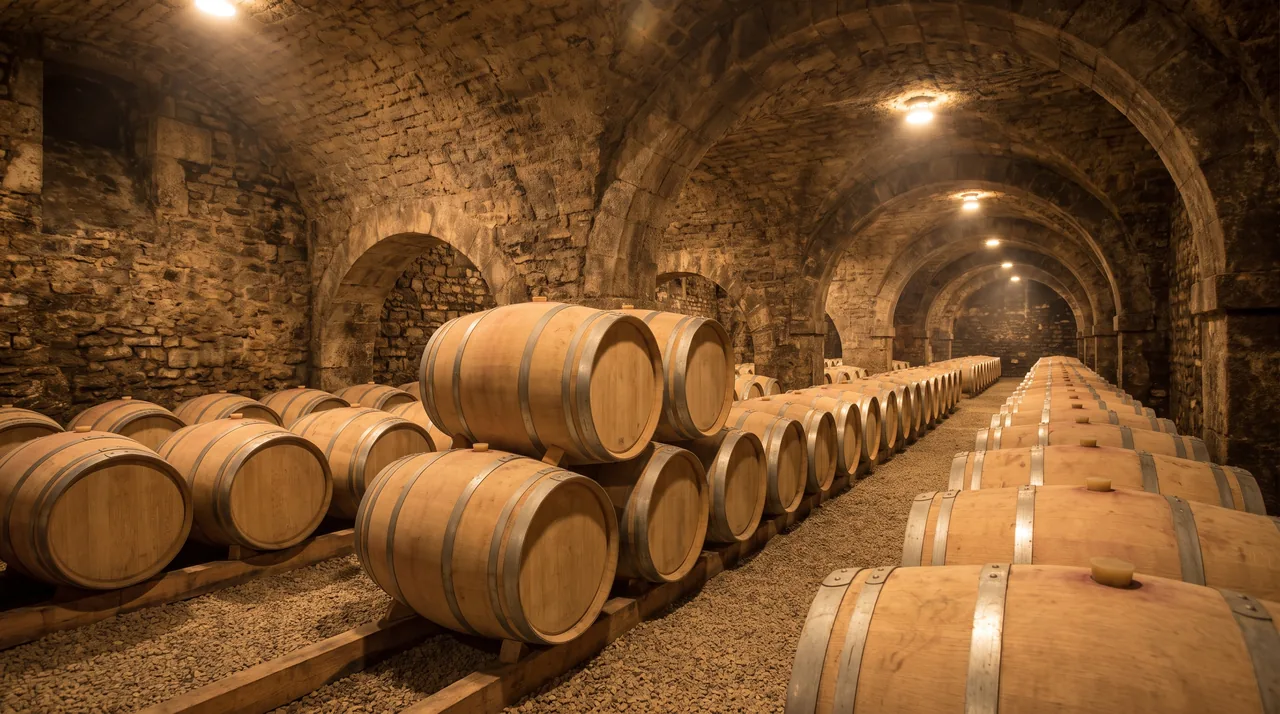
Beneath the hillsides of Entre-deux-Mers lies a little-known underground world: old limestone quarries, dug to build Bordeaux, some of which were later used as mushroom farms before being converted, in some cases, into wine cellars. Haux, like its neighbors, sits atop this limestone bedrock that built the region’s wealth and gave its houses their beautiful golden-hued stone.
This phenomenon dates back a long time and is surprisingly widespread. Some 1,424 underground quarries have been identified in 122 municipalities in the Gironde department, most of which were operated during the 18the in the early 20the century. Building stone was quarried there—that beautiful blond stone, soft when freshly extracted but hardening when exposed to the air, which gives Bordeaux’s facades their distinctive luminosity. In a sense, part of the city of Bordeaux emerged from the heart of the Entre-deux-Mers region, brought to the surface by entire cartloads transported along the Garonne River.
From Quarries to Mushroom Farms
Once mining operations ceased, these cool, damp tunnels found a new purpose. Many were converted into mushroom farms: sheltered from light and maintaining a constant temperature year-round, they offered ideal conditions for growing button mushrooms. This industry, once thriving in the region, began to decline in the 1980s, as it faced competition and was gradually abandoned. Today, the old quarries are mostly abandoned and closed to the public, unless they have been repurposed in other ways—some wineries have converted them into naturally temperature-controlled cellars, perfect for aging wine in barrels, protected from temperature fluctuations. This connection between stone and wine, extending even underground, sums up quite well the long history of this region of rolling hills.
Can we visit the quarries near Haux?
Let’s be clear and cautious on this point, as there are many inaccuracies circulating. We sometimes read that there are supposedly “Haux caves” to visit: we have found no reliable source confirming the existence of a site by that name that is open to the public in Haux itself, and we will therefore refrain from making such a claim. It’s better not to make any promises than to send a visitor to a closed door or a place that doesn’t exist under that name. However, there is indeed an underground quarry site in the Entre-deux-Mers region that has been developed for visitors: Frontenac, another town in the area, where you can explore these tunnels and learn about the history of stone quarrying. That’s where you should go to see this underground world firsthand, rather than to Haux, where the quarries remain, to the best of our knowledge, private or closed. This distinction—what is actually open to visitors, and exactly where—is part of what we take care to verify before writing about it.
What is there to do at Haux and the surrounding area?
In Haux itself, you can visit the Romanesque Church of Saint-Martin and its carved portal, taste wines from local estates, and stroll through the vineyards; all around, the Entre-deux-Mers region offers enough to fill several days. Let’s be honest: Haux is a small village, and the local attractions can be explored in a single morning. Its true appeal lies in serving as a starting point for exploring one of the most beautiful regions of the Gironde. Just a few minutes’ drive away, you’ll find the UNESCO-listed Abbey of La Sauve-Majeure, the bastide town of Créon and its greenway bike path, the Ducal Castle of Cadillac, or the fortified castle of Langoiran. Here’s a concrete look at what you can do at Haux and in its immediate surroundings—taking care not to attribute to the village anything that actually belongs to its neighbors.
- Admire the Church of Saint-Martin—its Romanesque portal, featuring more than 150 carved figures, is listed and classified as a Historic Monument
- Tastings at Château Lagorce or Château de Haux — wine tourism experiences and tastings scheduled at the estates within the municipality (details and times to be confirmed with each estate)
- Explore the wine-growing hillsides—the vineyards of Cadillac Côtes de Bordeaux and the wooded valleys of Entre-deux-Mers—by car or on foot
- La Sauve-Majeure Abbey—about 5 km away: the Romanesque ruins, designated a UNESCO World Heritage Site (1998), of an abbey founded in 1079
- The town of Créon — about 4 km away: a new town founded in 1315, featuring its arcaded square and the Roger-Lapébie Greenway, a major bike path in the Entre-deux-Mers region
- Cadillac — about 10 km away: the Château des Ducs d'Épernon and the Saturday market
- Langoiran — about 4 km away: the ruins of its fortified castle overlooking the Garonne Valley
- Sadirac — a pottery village with a long tradition of ceramics in the Entre-deux-Mers region
The church, the estates, and the hillsides
Once there, start with the Saint-Martin Church: take the time to study its portal, panel by panel, before heading out to soak up the atmosphere of the surrounding hillsides. You can then extend your half-day with a wine tasting at one of the local wineries—Château Lagorce and Château de Haux offer wine tourism experiences; be sure to check the details and schedules directly with them, as these vary by season and estate. This is your chance to taste a red from Cadillac Côtes de Bordeaux side-by-side with, perhaps, a sweet wine from Cadillac, then head home with a few bottles you won’t find anywhere else. Between visits, the narrow roads winding through the hillsides and wooded valleys offer lovely drives or walks, far from the crowds, through a landscape of vineyards and woods that changes color with each season—soft green in spring, gold and purple in fall.
Surrounding Areas: La Sauve-Majeure, Créon, Cadillac
It is within the Entre-deux-Mers region that Haux truly comes into its own. Just five minutes away, the Abbey of La Sauve-Majeure is the area’s must-see attraction: the magnificent Romanesque ruins of a Benedictine abbey founded in 1079, listed since 1998 as a UNESCO World Heritage Site as part of the Routes of Santiago de Compostela. Nearby, the bastide town of Créon—a new town founded in 1315—charms visitors with its arcaded square and the Roger-Lapébie greenway, built on a former railroad line, which crosses the wine-growing plateau and is perfect for cycling. A little further on, toward the Garonne River, Cadillac boasts the imposing Château des Ducs d’Épernon and hosts a lively market on Saturdays; Langoiran features the ruins of its medieval fortified castle overlooking the river; and Sadirac carries on an old tradition of Gironde pottery. From Haux, all these sites are just a short drive away—enough to put together a lovely itinerary for one or more days, without ever having to ride for very long, as you move from Romanesque art to vineyards and from the river to a bastide.
| To Do | Where | Good to Know |
|---|---|---|
| St. Martin's Church | at Haux | Romanesque gate, over 150 elements, designated a historic monument |
| Tasting | Haux domains | Château Lagorce, Château de Haux; by appointment |
| La Sauve-Majeure Abbey | ~5 km | Roman ruins, UNESCO 1998 |
| Créon's Country House | ~4 km | arcade-lined square, greenway bike path |
| Cadillac Castle | ~10 km | Ducal castle, Saturday market |
About Haux
Haux’s greatest strength is its location: within just a few kilometers, you can reach some of the most beautiful sites in the Entre-deux-Mers region and the Garonne Valley. The village is ideally situated at the junction of the wine-growing plateau and the river, putting abbeys, fortified towns, and castles within a short drive. Here are the must-see attractions in the area, all accessible for a day trip from Haux—and often much closer than you might think.
Creon, La Sauve-Majeure, and Cadillac
Four kilometers to the north, the bastide town of Créon is the lively heart of the area: founded in 1315, it has preserved its central square with arcades and serves as the starting point for the Roger-Lapébie greenway, the major bike path that crosses the entire Entre-deux-Mers region along a former railroad line. Nearby, five kilometers away, the Abbey of La Sauve-Majeure features its Romanesque ruins, a UNESCO World Heritage Site—one of the Gironde’s major attractions, not to be missed under any circumstances. Toward the Garonne, about ten kilometers away, Cadillac stands watch with its Château des Ducs d’Épernon and its Saturday market, in the heart of the region famous for its sweet wines. And just four kilometers away, Langoiran’s medieval castle ruins tower above the river. Add to that Sadirac and its pottery tradition, and you’ll find—all from the single village of Haux—enough to fill several days of exploration.
This concentration of sites explains why it’s so enjoyable to use Haux—or a neighboring village—as a base for exploring the Entre-deux-Mers region. In a single day, you can visit a Romanesque abbey in the morning, have lunch in a bastide town square, enjoy a wine tasting at a vineyard in the afternoon, and end the day along the Garonne River as the sun sets. Few regions offer such variety within such a small radius: Romanesque art, medieval architecture, vineyards, and river landscapes. The table below summarizes the distances from Haux.
| Destination | Distance | Interest |
|---|---|---|
| Creon | ~4 km | Bastide dating from 1315, greenway bike path |
| Langoiran | ~4 km | fortified castle on the Garonne River |
| La Sauve-Majeure | ~5 km | UNESCO-listed Romanesque Abbey |
| Cadillac | ~10 km | Ducal Château, sweet wine |
| Bordeaux | ~28 km | city, airport, train station |
Several of these sites are featured in a dedicated guide to help you plan your day trips: the Romanesque abbey of La Sauve-Majeure, the bastide town of Créon and its cycling route, and the fortified castle of Langoiran in the Garonne Valley. These are all stops that naturally extend a visit to Haux.
How to get to Haux from Bordeaux
Haux is located about 28 km from Bordeaux, or roughly a 45-minute drive along the right bank of the Garonne. The route leaves the city heading southeast, crosses the beltway, and then winds through the hills of the Entre-deux-Mers region via small country roads, passing through vineyards and woods. The village has no train station and is only very limitedly served by public transportation: it is primarily accessible by car, which complicates planning a visit.
This location makes Haux a somewhat unique destination: very close to Bordeaux as the crow flies, but poorly connected by train or bus, it requires a drive to reach. For those arriving at Mérignac Airport or Saint-Jean Station without a car, it’s worth planning your route in advance, especially if you want to visit several sites in the Entre-deux-Mers region in a single day. Once these logistics are sorted out, the area is very easy to explore, as the distances between the villages are short.
How much does the ride cost?
The Bordeaux → Haux transfer is offered at a fixed rate, starting at €76 for a one-way daytime trip in a sedan for one to three passengers. The fare is provided and confirmed in writing before departure, with no meter surprises, regardless of traffic or stops along the way. A surcharge applies at night, on weekends, and on holidays; for groups of more than four passengers, a van is provided so everyone can travel together in comfort. The table below summarizes the distances and travel times from Bordeaux, the airport, and nearby towns to help you plan a day in the Entre-deux-Mers region.
| Route | Distance | Duration | Indications |
|---|---|---|---|
| Bordeaux → Haux | ~28 km | ~45 min | starting at 68 € |
| Bordeaux-Mérignac Airport → Haux | ~35 km | ~50 min | based on a quote |
| Haux → Creon | ~4 km | ~10 min | based on a quote |
| Haux → Langoiran | ~4 km | ~10 min | based on a quote |
| Haux → Cadillac | ~10 km | ~15 min | based on a quote |
Why Choose a Private Driver for Haux?
For a small village without a train station like Haux, having someone drive you makes perfect sense. You’ll be picked up at your hotel in Bordeaux, at the Saint-Jean train station, or at Mérignac Airport, and dropped off right where you want to be: in front of the church, at the entrance to an estate, or at Château Lagorce for a reception. Best of all, you can go on a series of tours of the Entre-deux-Mers region—La Sauve-Majeure, Créon, Cadillac, Langoiran—and taste the wines of the right bank without worrying about driving back or trying to find parking in tiny hamlets. Whether for a day trip or to attend an event, this is the simplest, safest, and most relaxing option—one that leaves plenty of room for the joy of discovery.
Whether it’s for a heritage tour, a wine-tasting day in the Entre-deux-Mers region, or a reception at Château Lagorce, the trip from Bordeaux is arranged in advance at a fixed price—book a trip from Bordeaux to Haux or explore all our destinations.
Frequently Asked Questions
Where is Haux located?
Haux is a commune in the Gironde department, on the right bank of the Garonne River, in the heart of the Entre-deux-Mers region, about 28 km southeast of Bordeaux (about a 45-minute drive). It is part of the Bordeaux arrondissement, the Entre-deux-Mers canton, and the Créonnais community of municipalities. Its neighboring towns are Créon, La Sauve, Capian, Langoiran, Le Tourne, Tabanac, and Saint-Genès-de-Lombaud. Note the namesake: there is another Haux in the Pyrénées-Atlantiques department. This one is indeed Haux (Gironde), in the Cadillac region.
What is Château Lagorce?
At Haux, “Château Lagorce” refers to two distinct entities. First, it is a historic Gironde mansion that has been converted into a private venue for events and accommodations, particularly for weddings. It is also a vineyard, in operation since 1993, that produces a wine under the Côtes de Bordeaux appellation. It is neither a fortified castle nor a listed historic monument, but a private estate.
Is Château Lagorce a castle worth visiting?
No. Château Lagorce is not a medieval fortress, but a noble residence converted into a venue for events and lodging; it is neither classified nor listed as a historic monument, and is not open to the public as a historic site. Instead, people come here for an event—a wedding, a stay—or, for wine enthusiasts, for a tasting (to be confirmed with the estate). Those looking for a real fortified castle will find one nearby, in Langoiran, whose ruins overlook the Garonne Valley.
How much does a ride from Bordeaux to Haux cost with a private driver?
The Bordeaux → Haux route is offered at a fixed price, starting at €76 for a one-way daytime trip in a sedan for one to three passengers, covering approximately 28 km and taking about 45 minutes. The fare is confirmed in writing before departure, with no meter surprises, regardless of traffic or stops. A surcharge applies at night, on weekends, and on holidays; for groups of more than four passengers, a van will be provided. Ideal for a getaway to the Entre-deux-Mers region or an event at Château Lagorce.
How many residents are there in Haux?
Haux had a population of approximately 840 according to the 2023 census, making it a small town in the Entre-deux-Mers region. Its residents are known as Hauxois. Covering an area of about 10.21 km², the population density remains low, at around 82 inhabitants per square kilometer: it is a village of hillsides and vineyards, with houses scattered across hamlets rather than clustered in a large town center. Its modest size is part of its charm and makes it a peaceful base from which to explore the surrounding Entre-deux-Mers region.
To which saint is the church at Haux dedicated?
The church at Haux is dedicated to Saint Martin—and not to Saint Peter, as is sometimes stated. It is a building of Romanesque origin (with foundations dating to the 11th century), which was remodeled in the 14th and 15th centuries. Its portal, adorned with more than 150 sculpted motifs (scenes from the life of Christ, apocalyptic themes, agricultural labor), is the church’s crowning jewel; it is often compared to the portal of the Sainte-Croix Abbey in Bordeaux. The church has been listed as a Historic Monument since 1925, and its portal has been classified as such since 1953.
What wines are produced at Haux?
Haux is a wine-growing village on the right bank of the Garonne. Its estates primarily produce red wines under the Cadillac Côtes de Bordeaux appellation—Merlot and Cabernet, which are supple and have good aging potential—as well as sweet white wines under the Cadillac appellation, the Gironde cousins of Sauternes, made from late-harvest grapes. This is the Cadillac region, not the Graves, the Médoc, or Sauternes. Several estates here, such as Château de Haux and Château de Haute-Sage, produce both of these styles.
What is the difference between Cadillac and Cadillac Côtes de Bordeaux?
Two appellations include the word “Cadillac,” but they do not refer to the same thing. Cadillac Côtes de Bordeaux applies to red wines; it is part of the broader Côtes de Bordeaux appellation, which encompasses several hillside terroirs. “Cadillac,” on its own, is reserved for sweet white wines: about twenty communes on the right bank, where late harvests of botrytized grapes produce sweet wines. At Haux, you’ll find both: the red from Côtes de Bordeaux and the sweet white from Cadillac.
What is there to do at Haux and in the surrounding area?
In Haux itself, you can visit the Romanesque Church of Saint-Martin and its carved portal, enjoy wine tastings at the vineyards, and explore the hillsides—a half-day itinerary. The real treasures are nearby: the UNESCO-listed Abbey of La Sauve-Majeure (~5 km), the bastide town of Créon and its greenway bike path (~4 km), the Ducal Castle of Cadillac (~10 km), the fortified castle of Langoiran (~4 km), and the pottery village of Sadirac. From Haux, all these sites are just a short drive away.
Are there any underground quarries to visit near Haux?
The Entre-deux-Mers region is dotted with old limestone quarries, which were used to build Bordeaux before some of them were converted into mushroom farms and later abandoned. At Haux, we sometimes refer to these as “caves”; however, since we lack a reliable source confirming that any such site in the town is open to the public, we cannot confirm this. However, there is indeed an underground quarry site open to visitors in the area, in Frontenac, another town in the Entre-deux-Mers region. That’s where you should go to truly explore this underground world.
Is Haux close to La Sauve-Majeure Abbey?
Yes, very close: La Sauve-Majeure Abbey is only about 5 km from Haux, or about ten minutes away. It’s one of the major sites in the Gironde region—the magnificent Romanesque ruins of a Benedictine abbey founded in 1079, listed since 1998 as a UNESCO World Heritage Site as part of the Routes of Santiago de Compostela. You can easily combine a visit to Haux, a tour of the abbey, and a stop at the nearby bastide town of Créon all in one day.
How can I get to Haux without a car?
Haux does not have a train station, and public transportation from Bordeaux is limited: the village is primarily accessible by car. For a day trip, a private door-to-door transfer is the simplest option—pickup at the airport, Saint-Jean train station, or your hotel, drop-off directly at Haux, then the freedom to explore La Sauve-Majeure, Créon, or Cadillac without having to drive or worry about finding parking in the hamlets.
Where does the name Haux come from?
The most common hypothesis traces “Haux” back to the Gascon word “hau,” derived from the Latin “fagus,” meaning beech: Haux is thought to have originally been a place planted with beech trees. We state this in the conditional tense, as ancient etymologies remain uncertain. This should not be confused with the name of the castle, “Lagorce,” which refers to the locality known as La Gorce and has an entirely different etymology. These are two distinct place names, unrelated to one another.
Further Reading
- The nearby abbey, a UNESCO World Heritage Site : see the Guide to La Sauve-Majeure (a masterpiece of the novel, about 5 km from Haux)
- The neighboring bastide and its greenway: see the Créon Guide (arcaded square and Roger-Lapébie bike path)
- The nearby fortified castle on the Garonne: see the Langoiran Guide (medieval keep and the Garonne Valley)
- Understanding our rates and vehicles: see the "Book a Driver" page (sedan & van, written fixed quote)
- Plan your trip: Book a ride from Bordeaux to Haux or explore all our destinations
Sources and References
- Haux (Gironde) — Wikipedia — geography, demographics, heritage
- Château Lagorce — Official Website — Venue, Address, and Directions
- Business Directory — SCEA Château Lagorce — SIREN 393 431 911, legal form and date of registration
- Saint-Martin Church in Haux — POP/Mérimée PA00083571 — Romanesque, registered in 1925/listed in 1953
- AOC Cadillac Côtes de Bordeaux — Right Bank appellation
- INSEE — Municipality of Haux (33201) — Demographics
- La Sauve-Majeure Abbey (UNESCO) — nearby attractions
Article updated on .
Our Latest Guides
 Entre-deux-Mers & Southern Gironde
Langoiran: The Fortified Castle and the Garonne Valley
Read the guide →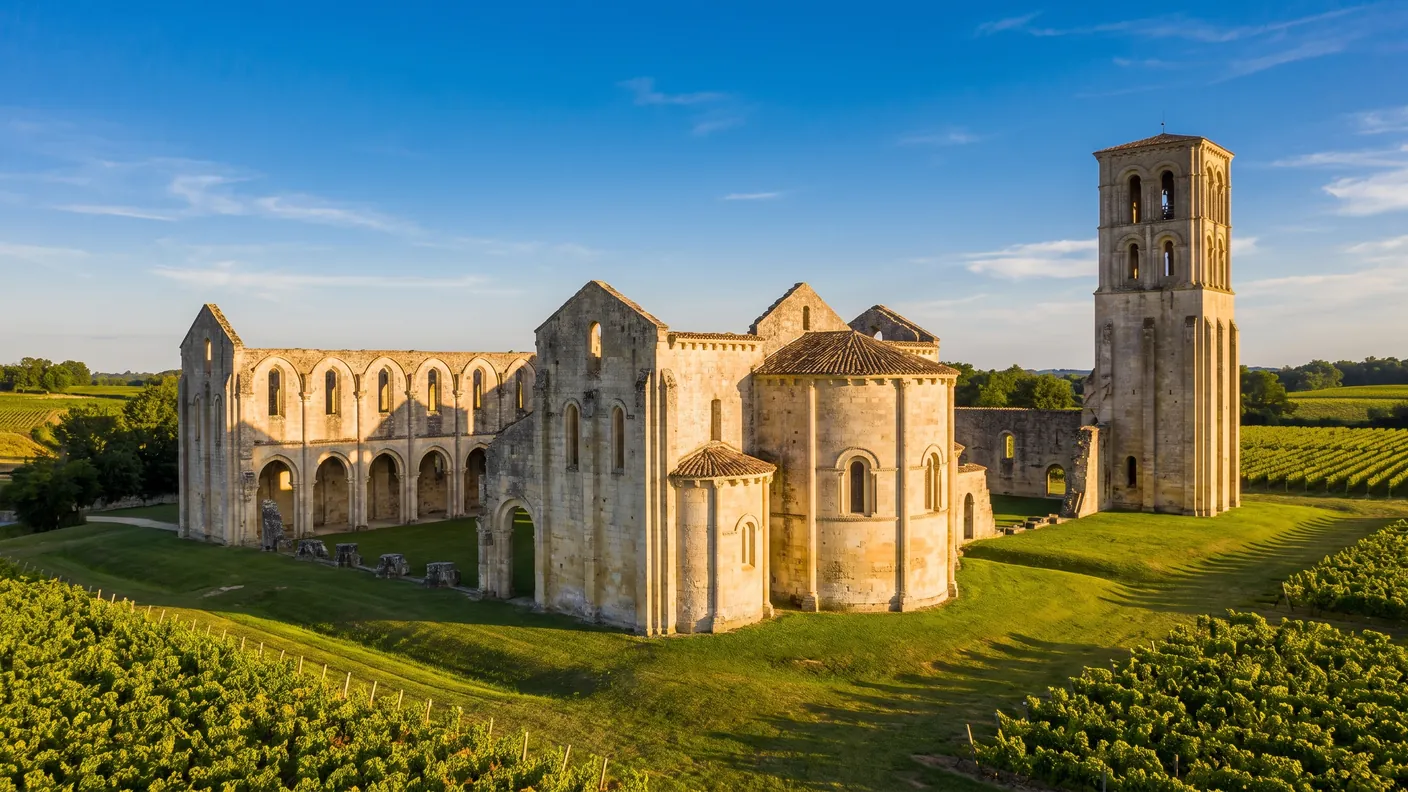 Entre-deux-Mers & Southern Gironde
La Sauve-Majeure: The Romanesque Abbey Designated a UNESCO World Heritage Site
Read the guide →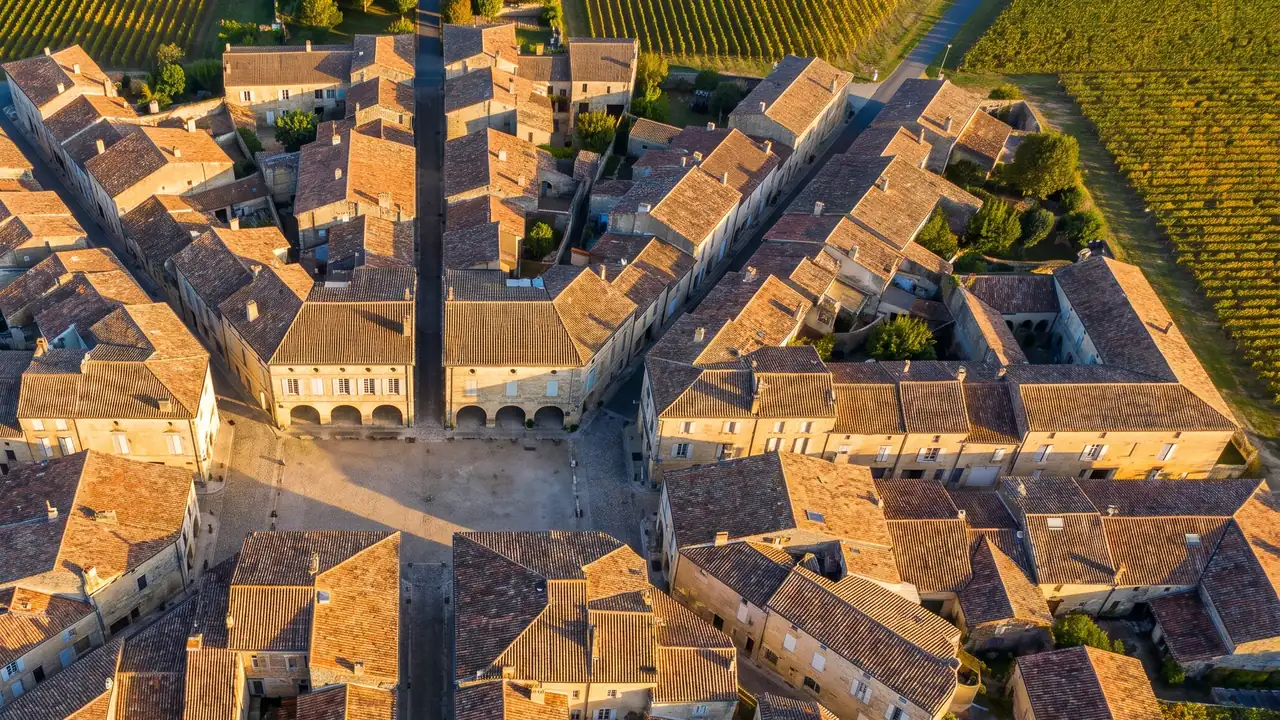 Entre-deux-Mers & Southern Gironde
Créon: The Country House and the Roger-Lapébie Greenway
Read the guide →Off to Entre-deux-Mers
Direct transfer from Bordeaux (~45 min) to Haux, Château Lagorce, and the Entre-deux-Mers hillsides. Written, fixed-price quote with no obligation.