
Bordeaux to Douelle: Cahors wine country and the Lot Valley
A wine-growing village nestled in a bend of the Lot River: the former “port of the vineyards” of Cahors, from which barges loaded with red wine set sail for Bordeaux, in the heart of the Cahors vineyards and the Lot Valley—just over two and a half hours from Bordeaux.
Douelle at a glance
Douelle is a small village in the Lot department, nestled in a bend of the Lot River, about ten kilometers downstream from Cahors, in the heart of the Cahors wine region—the home of the famous “black wine” and the Côt (Malbec) grape variety. A former river port nicknamed “the Vineyard’s Port,” Douelle once made its living from inland waterway shipping: This is where the barrels of Cahors wine set out on flat-bottomed boats, traveling down the Lot and then the Garonne to Bordeaux.
Today, this village of winemakers and boatmen, nestled on the left bank of the Lot in Quercy, charms visitors with its setting—the river’s meanders, the vineyard-covered hillsides, and the limestone plateaus—and with the gentle charm of a land of wine and water.
Just over two and a half hours from Bordeaux, Douelle is an ideal gateway to the Lot Valley and the Cahors wine region, which this guide will help you explore, backed by verified facts.
Here are the key details to know before you go. Distances are calculated door-to-door from Bordeaux; the fare shown is for a private driver reservation at a fixed price provided in advance, with no unexpected meter charges regardless of traffic or stops along the way.
| Landmark | Details |
|---|---|
| Department | Lot (46), Occitanie · Quercy (Quercy Blanc) |
| River | the Lot River (left bank, in a bend) |
| Population | ≈ 830 residents (INSEE 2023) |
| Don't miss it | The meandering Lot River, the Cahors vineyards, and riverboat transport |
| Around | Cahors and the Valentré Bridge, Saint-Cirq-Lapopie, Luzech |
| Distance from Bordeaux | about 230 km · about 2 hours and 40 minutes by car |
First, a quick note to help you locate Douelle. The village is in the Lot department (46), in Occitanie, in the Quercy region (more specifically, Quercy Blanc, in the south), about ten kilometers west of Cahors, downstream along the river. It is a small rural town—with about 830 residents—built on the left bank of the Lot, in a bend of the river, surrounded by the vineyards of the Cahors appellation. Its history as a river port and its wine-growing region give it its unique character. All information in this guide is based on verifiable sources—Wikipedia, INSEE, INAO, the official Cahors wine website—cited at the end of the article. We’d also like to take this opportunity to dispel some common misconceptions (Douelle is not Cahors; the village bridge is not medieval; the primary grape variety is actually called “côt”).
Here’s a rundown of everything you need to know: the location of Douelle in the Lot and Quercy regions, the village and its history as a “port of the vineyards,” Cahors wine and its grape variety, the history of river transport and the wine route to Bordeaux, the Lot Valley and its limestone plateaus, Cahors and its Valentré Bridge, the surrounding villages and sites (Saint-Cirq-Lapopie, Luzech), the best time of year to visit, and the easiest way to get there from Bordeaux—all thoroughly sourced and verified.
Where is Douelle located?
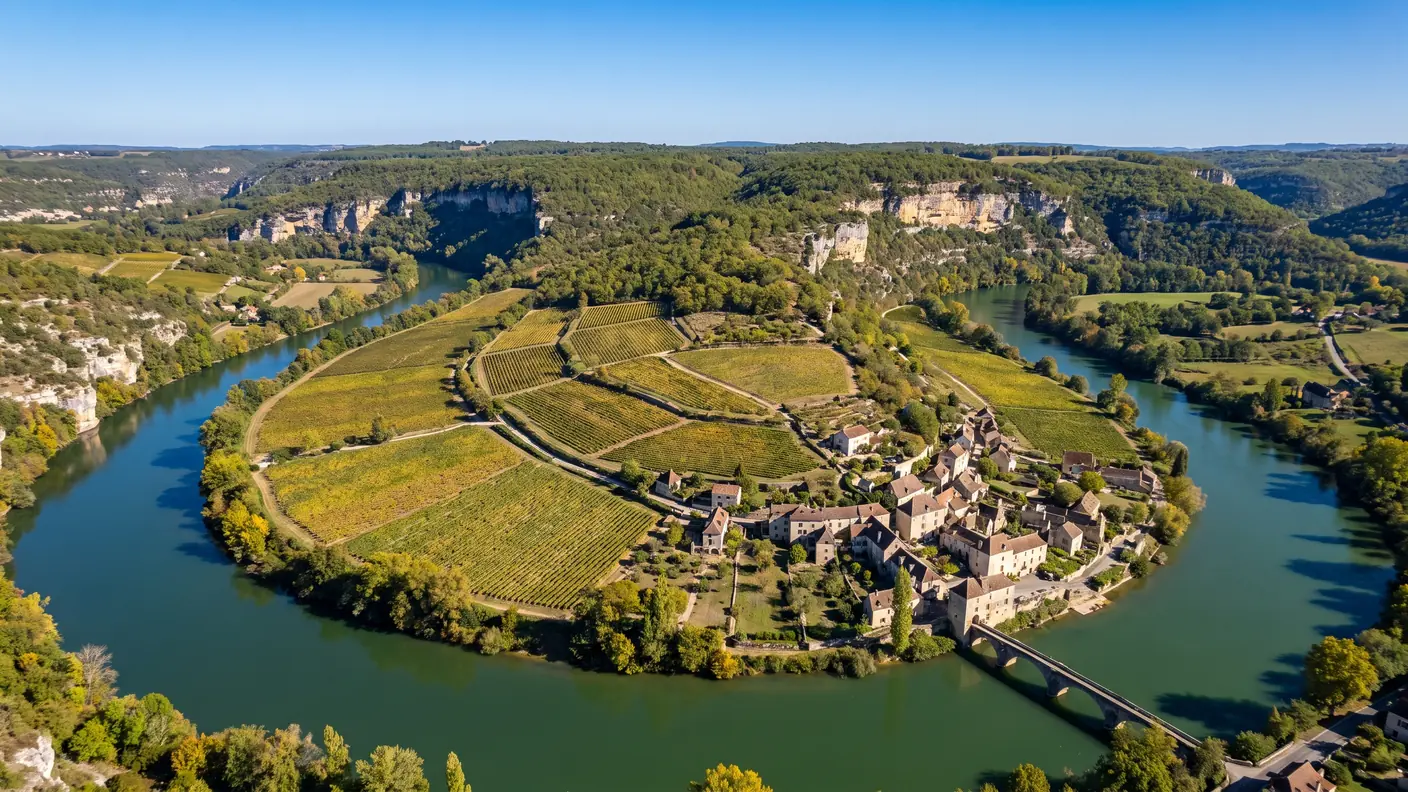
Douelle is located in the Lot department (46), in the Occitanie region, in Quercy, on the left bank of the Lot River, about ten kilometers downstream from Cahors, in the heart of the Cahors wine-growing region. The village is built within a tight bend of the Lot River, on a site shaped by the river’s meanders and the limestone plateaus of Quercy—the famous causses.
This is a landscape typical of the middle Lot Valley: the green river winding its way between vineyard-covered hillsides and white limestone cliffs, bathed in soft, southern light. Let’s make one thing clear from the start: Douelle is not Cahors, but a separate village located west of the prefecture, along the Lot River. This location—on the riverbank, in the vineyards, between Cahors and the gorges of Lower Quercy—has shaped the village’s entire history, which revolves around water and wine.
In a bend of the Lot River, in Quercy
Douelle is located in Quercy, a natural and historical region characterized by limestone and causses, and more specifically in its southern part, Quercy Blanc. The village occupies a remarkable site: a tight bend in the Lot River, on the left bank, between two limestone plateaus.
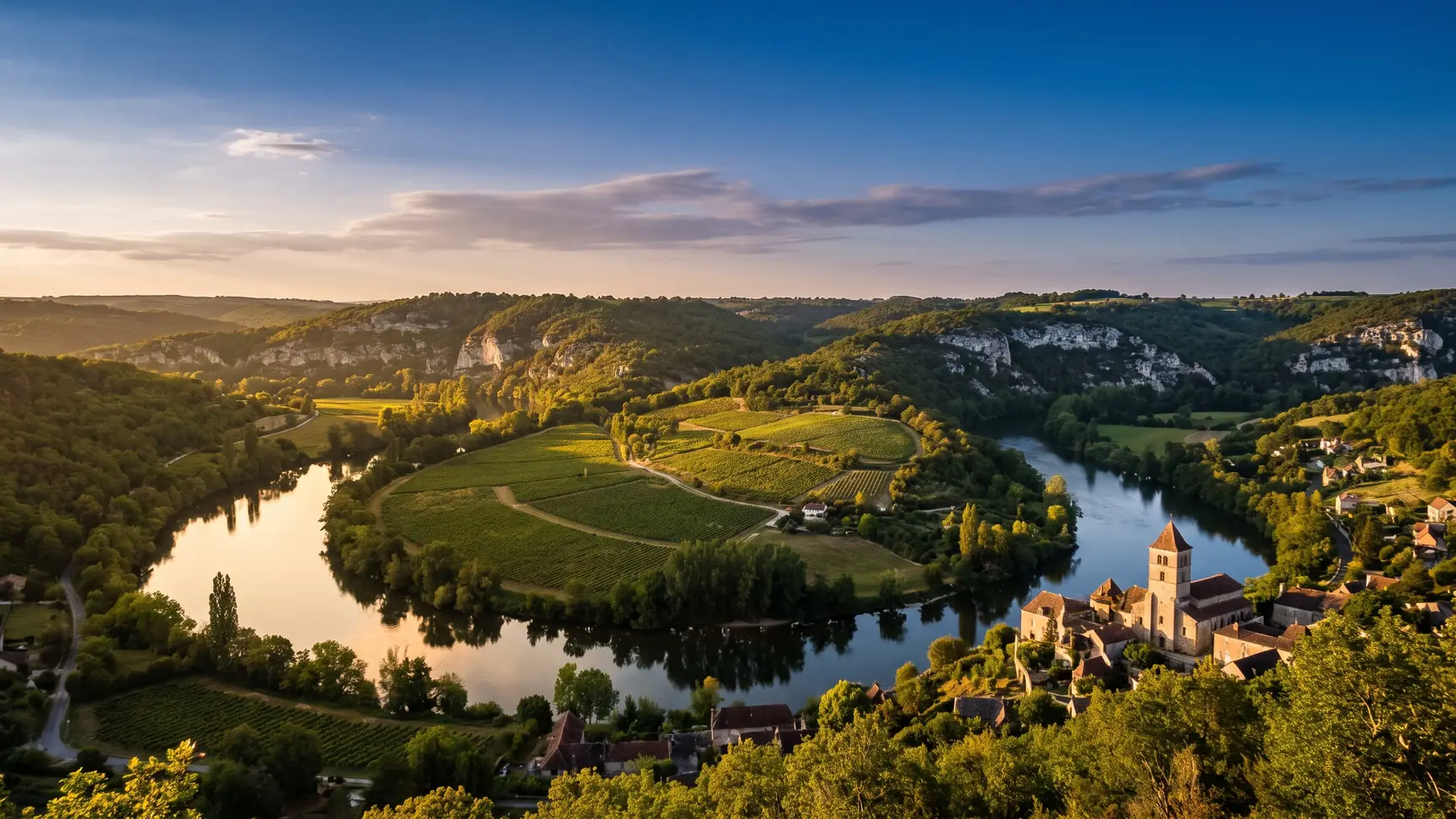
Here, the river traces the sweeping meanders that give the valley its beauty, encircling promontories covered in vineyards and flanked by white cliffs. The landscape alternates between the calm, green waters of the Lot, the vineyard-covered hillsides of the Cahors appellation, the arid limestone plateaus dotted with oak trees and dry-stone walls, and the villages built of golden limestone.
It is one of the most beautiful parts of Quercy: a region of wine and water, carved out by the river, where vineyards cling to the hillsides and every bend in the Lot offers a new view. Douelle, nestled within one of its meanders, is an ideal base.
A Small Village with a Rich Local Flavor
According to According to INSEE, Douelle had a population of 830 as of 2023, a municipal population figure that came into effect in 2026. It is a small rural village in the terroir Noted: The Cahors vineyards cover part of the town, set amid a landscape of meandering rivers, vineyards, and limestone plateaus.
The charm of Douelle lies in its setting, its history as a river port, and its location in the heart of the vineyards. People come here for the valley, Cahors wine, the history of river transport, and the tranquility of an unspoiled region, far from the major tourist routes.
The village is ideal for those seeking the authentic charm of a wine-growing region rather than historic landmarks. It also serves as a convenient starting point for exploring Cahors, Saint-Cirq-Lapopie, and the Quercy region. Douelle is the perfect destination for lovers of wine, nature, and peaceful exploration.
| Douelle at a Glance | Details |
|---|---|
| Department | Lot (46), Occitanie · Quercy Blanc |
| Setting | on the left bank of the Lot, in a bend |
| Population | ≈ 830 residents (the people of Douellais) |
| Nickname | "The Vineyard Port" (Cahors Wine Barge Service) |
| Vineyard | Cahors AOC (~125 ha of vineyards in the municipality) |
The “Vineyard Harbor”
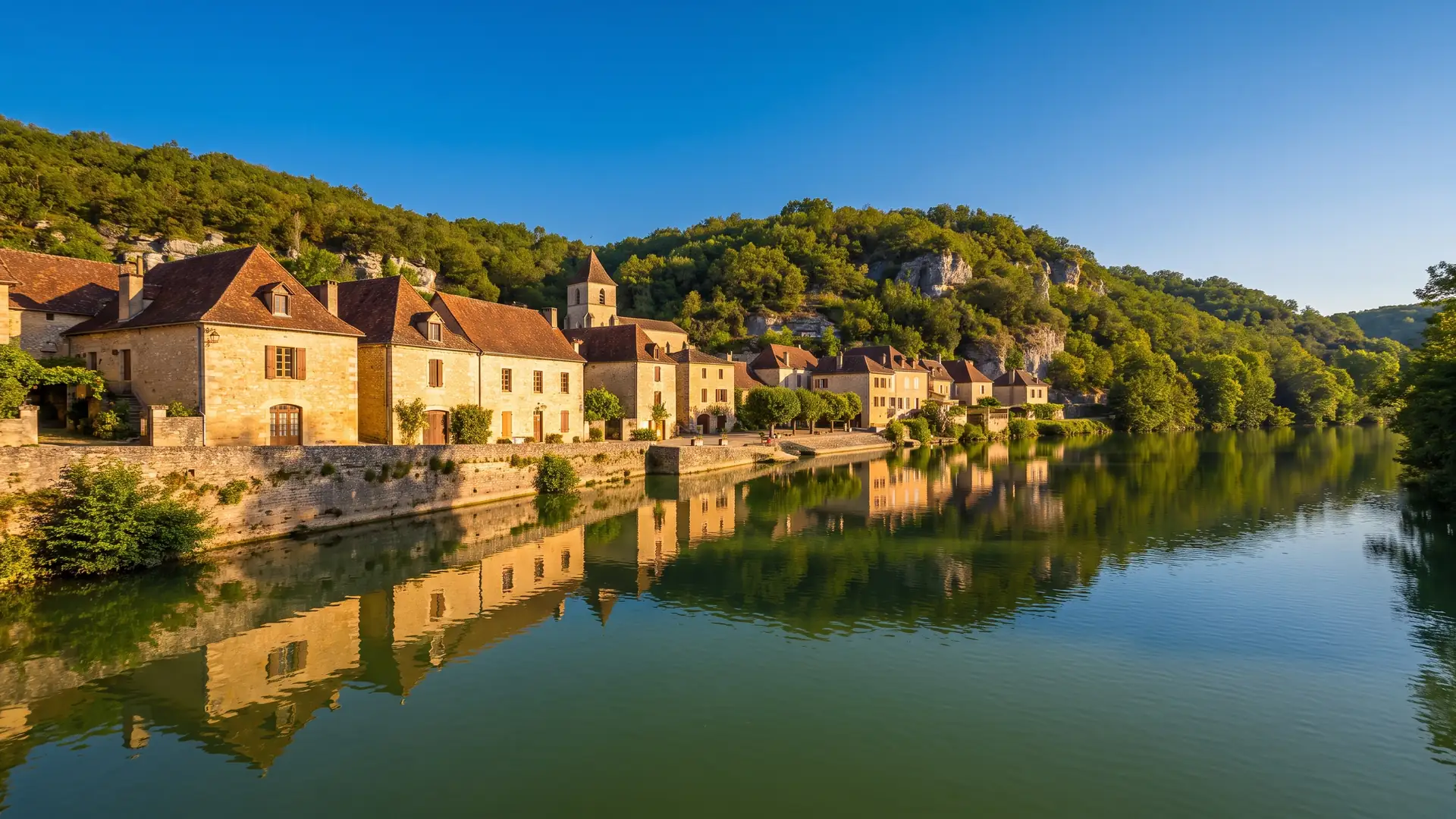
Douelle was once a bustling river port, nicknamed “the Vineyard Port”: it was from here that barrels of Cahors wine were loaded onto gabares to travel down the Lot River to Bordeaux. A village of winemakers and boatmen, centered around the river.
The Vineyard Harbor
The great history of Douelle is that of a port. On the Lot River, between two locks, the village had a bustling river port—a transshipment point where staves (cooperage wood brought down from the Massif Central) arrived and from which barrels of Cahors wine, loaded onto gabares, set off again. These flat-bottomed boats—merchant barges, not pleasure craft—traveled down the Lot and then the Garonne to the port of Bordeaux, from where the wine was shipped to England and northern Europe. This river trade, vital to the vineyard’s economy, earned Douelle its nickname, “Port of the Vineyard.” Navigating the Lot, with its currents and rapids, was no leisurely cruise but a tough and risky trade. From this past, the village retains its soul as a riverside town, oriented toward the water, and the memory of a once-thriving river trade that has now disappeared.
A village of boatmen
Douelle was, for a long time, a fishing village. In the 18th In the 19th century, the town supplied a large portion of the sailors necessary for navigation on the Lot: these included boatmen, coopers and winemakers, all connected to the wine trade and the river.
This river community has left behind some moving traces: in the church At Notre-Dame-de-l'Assomption, you can see a ex-voto shaped like a suspended boat, offered by the boatmen as a token of gratitude or to protect themselves from the dangers of the Lot—a rare and tangible testament to the devotion of the river people.
To be precise, it should be noted that this church (which was extensively remodeled in the 19th (19th century) is listed in the Inventory, but is neither classified nor designated as a historic monument. Douelle’s heritage is modest—consisting of the church and the suspension bridge built in 1875—but its history as a fishing village is rich and endearing, and that is what gives the place its unique charm.
Cahors wine, the “black wine”
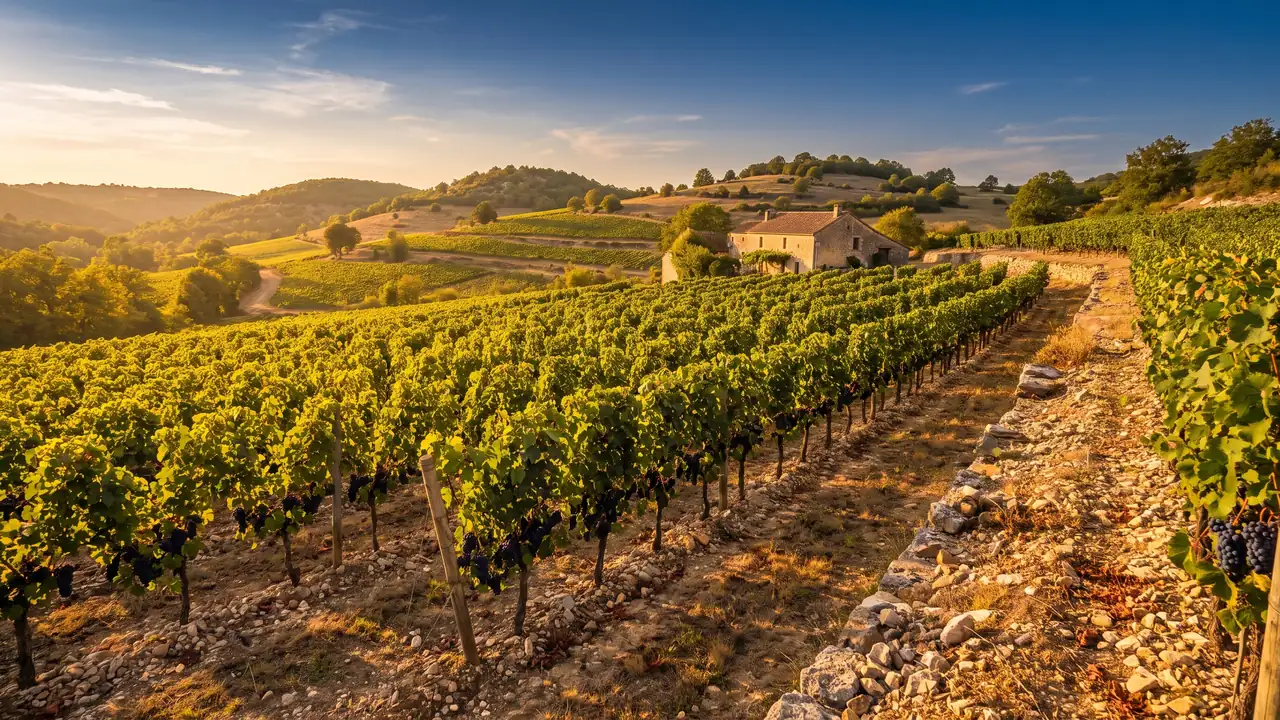
Douelle is located in the heart of the Cahors AOC, the land of “black wine”: a great red wine—dark and powerful—made from the Côt grape variety (also known as Malbec), whose appellation was recognized in 1971. One of the oldest vineyards in France.
Cahors Red Wine
Cahors wine is one of the oldest and most renowned wines in France. As early as the Middle Ages, it was known as “vin noir” (the “black wine” to the English, “Kagor” to the Russians): a red wine with a very dark, intense, and deep color, renowned for its power and aging potential.
This medieval nickname, linked to its color and reputation, is by no means a modern practice: it is a historical legacy. The vineyard is very old—it dates back to antiquity and was, it is said, appreciated by Francis Ier — and was a major center of medieval trade, with goods exported far and wide via the river.
The Appellation d'Origine Contrôlée (AOC Cahors) was officially recognized by decree on April 15, 1971; but note that this date marks the official recognition of the appellation, not the founding of the vineyard, which is much older. Around Douelle, the limestone hillsides and terraces of the Lot region give rise to this distinctive wine—one of the great reds of the Southwest—which is well worth discovering and savoring right here.
Côt, the King of Grape Varieties
According to the INAO and the Cahors AOC specifications, Côt must account for at least 70% of the vineyard’s grape varieties. The remainder may consist of a blend of Merlot and Tannat: a Cahors wine is therefore not necessarily a single-varietal wine, even though some vintages are made exclusively from Côt.
The premier grape variety of Cahors is Côt, also known as Auxerrois in the Lot department. It is best known worldwide as Malbec, a name that became famous in Argentina; in Cahors, its historic French birthplace, the name Côt remains common. The term “Malbec” is a more recent designation.
This grape variety gives Cahors wine its dark color, its aromas of black fruits, and its tannic structure. Discovering it in its homeland, around Douelle, is the highlight of a wine-tasting getaway—provided you organize the tastings and arrange for a designated driver.
| The Cahors AOC | Details |
|---|---|
| Type | fine red wine, also known as “black wine” |
| The King of Grape Varieties | Côt (or Auxerrois), known as Malbec |
| Grape Varieties | At least 70% Côt (+ Merlot and Tannat as a supplement) |
| AOC | recognized by decree on April 15, 1971 |
| In Douelle | ≈ 125 hectares in the Cahors AOC within the municipality |
The Wine Route to Bordeaux
For centuries, Cahors wine was transported down the Lot and then the Garonne to Bordeaux on gabares that set out from ports such as Douelle—a river trade shaped by the famous “Privilege of Bordeaux.” The story of a river and a wine.
The Lot: The Wine Route to Bordeaux
Since the Middle Ages, the Lot River has served as a route for exporting Cahors wine. Barrels loaded at Douelle and in neighboring ports were transported down the river and then along the Garonne to Bordeaux, from where the wine was shipped to England and northern Europe.
This road was not always open. The “ Bordeaux privilege ", granted as early as the 13th For many years, the city restricted the entry of wines from the inland regions into the port before a specified date in order to protect Bordeaux wines. This restriction weighed heavily on the Cahors wine trade.
Under Louis XIV, Colbert had locks built along the Lot River between Cahors and the Garonne to ensure safe navigation. Douelle thrived on this traffic until it began to decline at the end of the 19th century, due to the combined effects of the railroad and phylloxera.
Douelle, Jean Fourastié’s model village
Douelle has an unexpected historical gem. The economist Jean Fourastié (1907–1990), famous for coining the phrase “the The Glorious Thirty " (the three decades of postwar growth) had deep ties to Douelle: he spent his summers there and died there on July 25, 1990.
Above all, he made this village in the Lot region his emblematic case study: by comparing daily life in Douelle before the war and during the Trente Glorieuses, he provided a concrete illustration of the transformation of French society—the transition from a rural, traditional world to modernity.
Through Fourastié’s writing, Douelle thus became the “model village” of France during the Trente Glorieuses—a small village in Quercy that came to symbolize the great upheaval of the 20th century. This is a little-known and fascinating aspect of Douelle, which adds a dimension of economic and social history to its appeal, beyond just the wine and the river.
The Lot Valley and the Causses
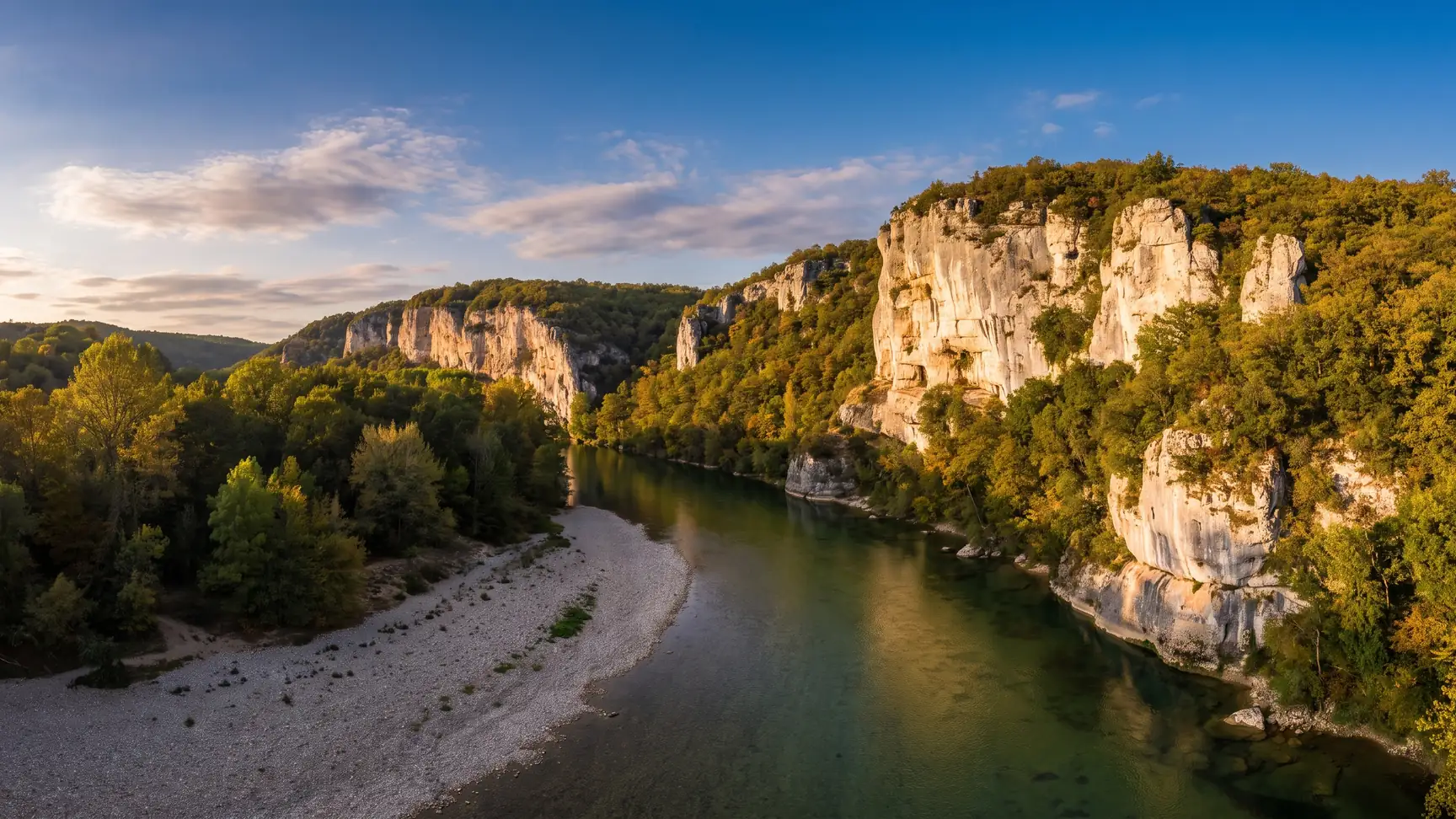
Douelle is located in the Lot Valley, one of the most beautiful valleys in southwestern France: a green river winding its way through the cliffs and limestone plateaus—the causses—of Quercy. A landscape sculpted by water and stone.
A valley of meanders and limestone plateaus
The Lot Valley is a delight for nature lovers. The river, green and calm, winds its way in wide meanders (known as “cingles”), encircling promontories of vineyards and winding its way between tall white limestone cliffs. On either side stretch the Causses du Quercy, arid limestone plateaus, covered with oaks, junipers, and dry grasslands, dotted with dry-stone walls, cazelles (shepherd’s huts), and villages built of golden limestone.
This landscape, where water meets rock, alternates between the gentle, cultivated valley floors (vineyards, orchards) and the rugged, rocky plateaus. Around Douelle, you can follow the river as it winds its way through the landscape, discover superb views of its meanders, and explore the limestone plateaus and their trails. This is one of the most beautiful facets of Quercy, to be savored at the leisurely pace of small roads and trails, bathed in the golden light of the Southwest.
The Lot, a river in Quercy
The Lot, which gave its name to the department, is the region’s iconic river. Originating in the Cévennes, it flows through Quercy from east to west, passing through Cahors, Douelle, then Luzech and Puy-l'Évêque, before joining the Garonne in Lot-et-Garonne.
Long navigable and dotted with locks (a legacy of Colbert and the wine trade), it was a vital waterway before the railroad. Today, part of the Lot has been reopened to recreational boating: you can travel along it by boat, winding through its meanders and locks, exploring the villages and vineyards—a peaceful and unique way to see the countryside.
Its riverbanks, pebble beaches, and cliffs also offer beautiful walks. Once a river of commerce, now a river of recreation and beauty, the Lot is the soul and the common thread of the valley, around Douelle as well as throughout the Quercy region.
Cahors and the Valentré Bridge
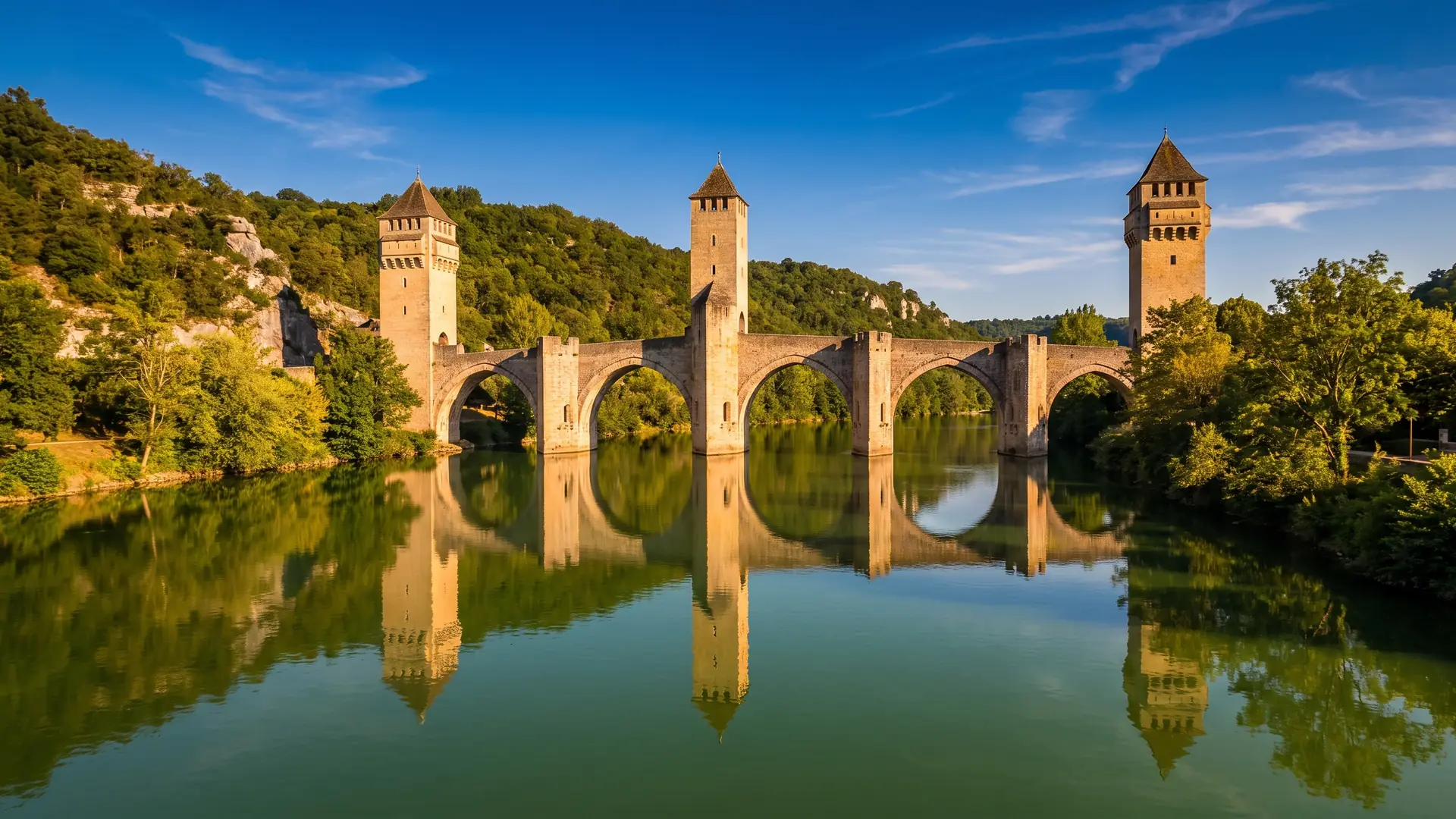
About ten kilometers from Douelle, Cahors—the prefecture of the Lot department—is home to one of the most beautiful monuments in southwestern France: the Valentré Bridge, a medieval fortified bridge with three towers that is listed as a UNESCO World Heritage Site. The major city of Quercy is nearby.
Cahors and the Valentré Bridge
According to According to UNESCO, the Valentré Bridge in Cahors is part of the “Routes of Santiago de Compostela in France” property, inscribed on the World Heritage List in 1998. The designation therefore applies to this group of sites as a series, and not to the bridge alone.
The Valentré Bridge is a 14th-century fortified bridge century-old bridge that spans the Lot with its arches and its three rounds crenellated. Construction took place from 1308 to 1378. It is the main historic landmark in Cahors, a prefecture located just a few minutes from Douelle.
Cahors is also home to Saint-Étienne Cathedral, a medieval old town, and a nearby vineyard. From Douelle, a visit to the bridge and the historic center can easily be incorporated into a day trip to Quercy, with schedules tailored to your chosen itinerary.
The City of Quercy
Beyond the Valentré Bridge, Cahors is well worth a stroll through its narrow streets. The town, also nestled in a large bend of the Lot River, boasts a rich medieval heritage: Saint-Étienne Cathedral, one of the oldest domed cathedrals in southwestern France; the Badernes district, a maze of narrow streets and historic houses;
the remains of the ramparts and towers. Cahors is also the capital of the wine that bears its name: here you’ll find wine merchants, cellars, and a vibrant wine culture centered around Malbec. This lively, food-loving city, with its markets (featuring Quercy saffron, truffles, and wine), is the ideal starting point for exploring the entire Lot Valley and its vineyards. With its world-famous bridge, cathedral, old town, and wines, Cahors—just a few minutes from Douelle—offers one of the most beautiful experiences in Quercy, rich in art, history, and flavors.
Saint-Cirq-Lapopie and the Villages of the Lot
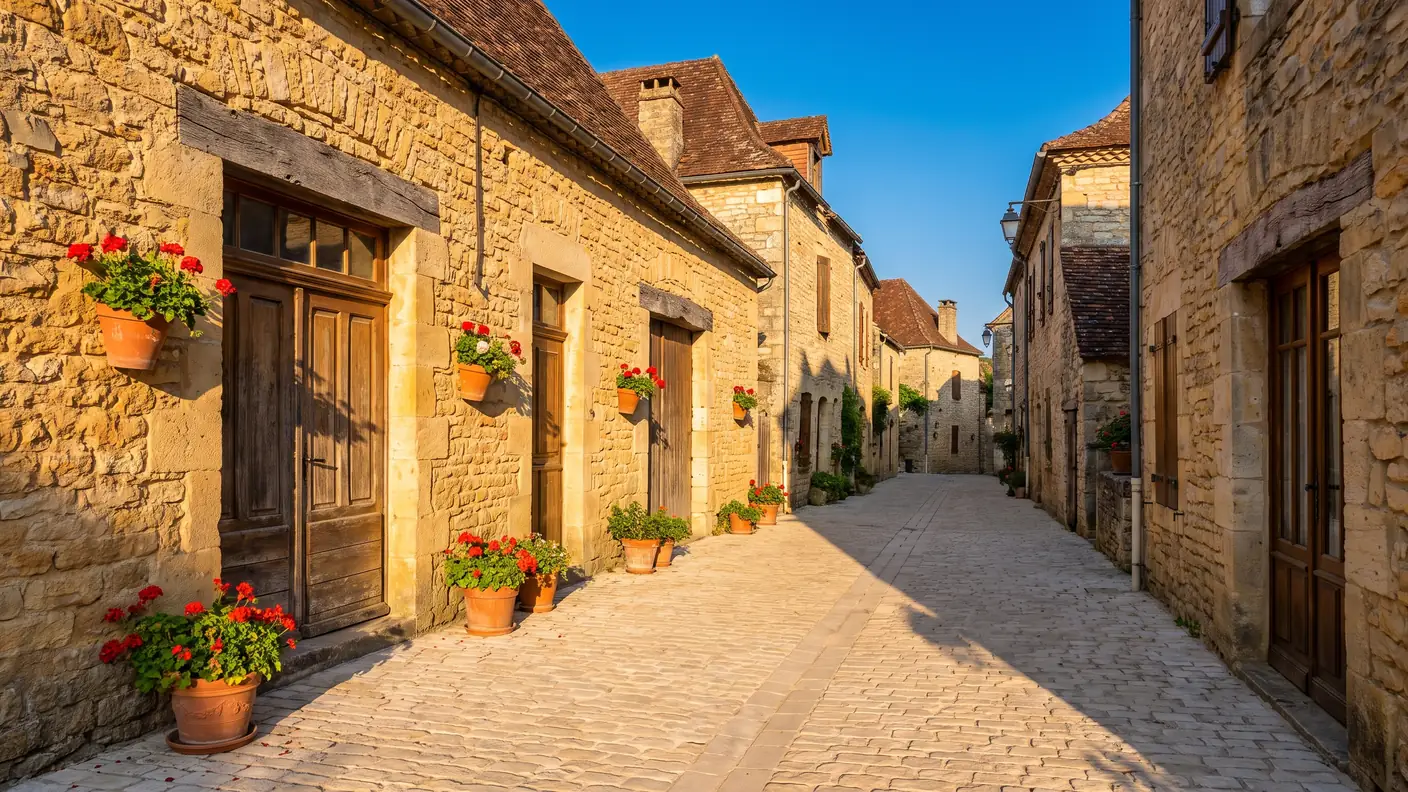
The Lot Valley is home to some of the most beautiful villages in France: starting with Saint-Cirq-Lapopie, perched high above the river, not to mention Luzech and the charming towns of Quercy. These treasures are within easy reach of Douelle.
Saint-Cirq-Lapopie and Luzech
The valley’s crowning jewel is Saint-Cirq-Lapopie, a spectacular village perched on a cliff overlooking the Lot River, about thirty kilometers east of Cahors (and thus upstream from Douelle). With its medieval houses, cobblestone streets, and breathtaking location, it was voted, in 2012, “France’s Favorite Village” (on the France 2 TV show, with 66,000 votes)—a title distinct, it should be noted, from the “Les Plus Beaux Villages de France” designation, which it also holds.
It’s one of the must-see attractions in Quercy. Downstream, very close to Douelle, Luzech occupies a stunning site: a peninsula narrowed to an isthmus barely 90 meters wide, encircled by a meander of the Lot River, and dominated by an ancient oppidum and a medieval tower. Between these villages, the meanders, the vineyards, and the causses, the area around Douelle offers, within a small radius, superb discoveries that blend heritage, nature, and panoramic views.
Villages and Causses of Quercy
Beyond Saint-Cirq-Lapopie and Luzech, the entire Quercy region awaits exploration from Douelle. Traveling down the Lot River, you’ll reach Puy-l’Évêque, a medieval town perched above the river, and pass through the great wine-growing regions of Cahors. To the north and east lie the Quercy Causses, with their stone villages, dolmens, and rocky landscapes, and, further on, the major sites of the Lot:
Rocamadour, the sacred town perched on a cliff; the Padirac Chasm; Figeac; and Saint-Cirq. To the west, the valley leads to Lot-et-Garonne and Agen. This region, one of the richest in France in terms of charming villages and unspoiled landscapes, is perfect for exploring along its winding country roads. From Douelle, you can easily explore the area, hopping from village to village and vineyard to vineyard, in one of the most beautiful corners of the Southwest, between Quercy and the Lot Valley.
When is the best time to visit Douelle and the vineyard?
Douelle and the Lot Valley are best visited from spring through fall; late summer and the grape harvest are the perfect times to explore the Cahors vineyards. It’s the ideal time for a wine-tasting getaway.
The Seasons in the Lot Valley
The spring The Lot Valley is ablaze with vibrant green: the vines are budding, and the days are mild—perfect for exploring the river’s meanders and the villages. The summer, warm and sunny, is the height of the season: the river is perfect for swimming and boating, the village terraces come alive, and the golden light makes the limestone plateaus and cliffs look even more stunning—it’s also the busiest time of year for tourists, especially in Saint-Cirq-Lapopie.
The best time of year for wine lovers is the end of summer and the fall, the season of grape harvest: The hillsides of Cahors are ablaze with stunning colors, the wineries are bustling with activity, and it’s the perfect time for tours and tastings at the vineyards.
The winter, a quieter setting, reveals the valley’s intimate, rocky beauty—the perfect backdrop for enjoying wine by the fire. No matter the season, the valley’s beauty and the vineyard’s bounty make Douelle a wonderful getaway.
A Wine-Tasting Getaway
Douelle and the Cahors region are ideal for a wine-tasting getaway. The region is home to numerous wineries and châteaux around Douelle, Cahors, Luzech, and Puy-l’Évêque, where you can tour the cellars and taste Cahors red wine — it’s one of the great joys of a visit.
The best way to fully enjoy the experience is to be able to travel from winery to winery without worrying about driving, so you can taste the wines at your leisure and bring back a few bottles. This is precisely where a chauffeur service comes in: he plans the itinerary, drives from one winery to the next, and allows everyone to enjoy the tastings without any stress or risk.
Between visits to wineries, winding landscapes dotted with vineyards, charming villages, and excellent restaurants, a wine-tasting getaway in the Cahors region, starting from Douelle, is a memorable experience to be enjoyed at a leisurely pace.
Discover Douelle and Plan Your Visit
Here are a few tips to help you plan a visit to Douelle, the Cahors vineyards, and the Lot Valley. Everything you need to easily organize a wonderful getaway combining nature and wine.
Explore the vineyard and the valley
In Douelle itself, people come for the scenery—the meandering Lot River, the village, the vineyards, the suspension bridge—and to discover Cahors wine at the surrounding estates. The village is small; a visit is best planned on the scale of the valley.
You can combine a visit to Douelle with Cahors and its Valentré Bridge (just ten minutes away), a trip up to Saint-Cirq-Lapopie and Luzech, and stops at wineries for tastings. Plan on at least one day to experience it all—the valley, the town, the vineyards, and one or two villages.
Nature lovers will enjoy walks along the Lot River, the views of its meanders, and the trails through the Causses; foodies will appreciate the markets in Cahors and the local restaurants. It’s a destination where you can take your time, meandering along the river and through the vineyards, far from the hustle and bustle.
Come here and shine
Douelle does not have a train station: the nearest station is in Cahors, about ten kilometers away, on the main Paris-Toulouse line (the POLT corridor). However, once you’re there, you’ll need a car anyway to explore the valley and the vineyards, since the attractions—wineries, villages, and scenic overlooks—are scattered along the Lot River.
That is why the executive car service, door-to-door, is particularly well-suited for exploring Douelle and the Cahors region: You’re driven directly from Bordeaux, then from one site to the next, without having to worry about driving or parking—a major advantage for a wine-tasting getaway where you want to be able to enjoy the wines.
This is how you put together a tailor-made day: Douelle and its meandering river, Cahors and its bridge, one or two wineries, a hilltop village, and a peaceful return in the evening. The ideal way to enjoy Quercy at your own pace.
| Discover Douelle | Details |
|---|---|
| Must-See | the meander of the Lot River, the village, the suspension bridge (1875) |
| Terroir | the Cahors wine region (~125 ha), the “black wine” |
| Around | Cahors and the Valentré Bridge, Saint-Cirq-Lapopie, Luzech |
| Recommended duration | One day (valley + city + vineyard) |
| From Bordeaux | ~230 km / ~2 hours 40 minutes · starting at ~383 € with a private chauffeur |
How to get to Douelle from Bordeaux
Douelle is located about 230 km from Bordeaux, which is about a 2-hour-and-40-minute drive via the A62 (Bordeaux-Toulouse) highway and then, depending on the route, the A20 “l’Occitane” via Montauban or via departmental roads through Agen, heading toward Cahors. The A62 connects Bordeaux to Toulouse; you’ll need to exit it to reach Cahors and the Lot Valley, from where you can reach Douelle, about ten kilometers west of the prefecture. The village has no train station (the nearest one is in Cahors, on the Paris–Toulouse line), and once there, a car is essential for exploring the valley and the vineyards. For a nature and wine-tasting getaway, a door-to-door car service with a driver is the most practical and flexible option.
Train or chauffeured transfer?
To get to Douelle—and especially to explore the Cahors vineyards and the Lot Valley—hire a Professional chauffeur, chauffeur service in Bordeaux offers true freedom: a direct, door-to-door route from Bordeaux with no transfers, and the option to make stops as you please—in Cahors, Saint-Cirq-Lapopie, or at a winery. This is especially valuable for a wine-tasting getaway, where you’ll want to be able to taste Cahors wine without having to drive afterward, in complete safety. We offer this route to fixed price provided in advance: Allow about 506 € For the one-way trip, in a Mercedes sedan or a van seating up to 8 passengers, with a professional chauffeur. The price, set at the time of booking, remains fixed: it does not depend on traffic or stops, unlike a taxi meter.
This is the perfect option for a wine-tasting getaway, exploring the Lot Valley, a trip with family or friends, or an event at the vineyard. You can travel alone, as a couple, or in a small group of up to 8 people, with your luggage and purchases (bottles of Cahors!), and request stops in Cahors, Saint-Cirq-Lapopie, or at a winery. In practice, booking is quick and easy: simply provide your pickup address in Bordeaux and your destination in Douelle (or the winery or vacation rental), along with the date, desired time, and number of passengers, and you’ll receive a fixed-price quote in writing. On the day of the trip, the driver picks up the passengers at the agreed-upon address and takes them directly to the Lot Valley, without any detours—so you can start your beautiful day of exploring vineyards and new discoveries with peace of mind.
| Route | Distance | Duration | Landmark |
|---|---|---|---|
| Bordeaux → Douelle | ~230 km | ~2 hours 40 minutes | Starting at ~383 € for a private chauffeur service |
| Douelle → Cahors | ~10 km | ~15 min | Valentré Bridge, Cathedral |
| Douelle → Saint-Cirq-Lapopie | ~40 km | ~45 min | The French People's Favorite Village |
| Douelle → Luzech | ~10 km | ~15 min | peninsula, bend in the Lot River |
Whether you come for Cahors wine, for the meandering rivers and limestone plateaus of the Lot Valley, for Cahors and its Valentré Bridge, or for Saint-Cirq-Lapopie, Douelle is a treat for lovers of nature, wine, and authenticity—a wine-growing village in the heart of one of France’s most beautiful regions, just over two and a half hours from Bordeaux.
Whether you’re planning a wine-tasting getaway, exploring the valley, or attending an event, booking a private driver guarantees a comfortable and punctual ride—book a driver from Bordeaux to Douelle or explore all our destinations.
Frequently Asked Questions
Where is Douelle located?
Douelle is a small village in the Lot department (46), in the Occitanie region, in Quercy, on the left bank of the Lot River, situated in a meander, about ten kilometers west of Cahors (downstream). It is a rural commune with a population of approximately 830 (INSEE 2023), located in the heart of the Cahors wine region. It should not be confused with Cahors, of which it is a separate neighboring village. Douelle is famous for its history as a “wine-growing port” (river barge transport) and for its setting—the meander of the Lot, the vineyards, and the Causses. From Bordeaux, it’s about 230 km and a 2-hour, 40-minute drive. With a chauffeur service, the transfer is door-to-door, which is ideal for a wine-tasting getaway.
What is the distance between Bordeaux and Douelle?
Approximately 230 km by road, or about 2 hours and 40 minutes, via the A62 highway (Bordeaux–Toulouse) and then, depending on the route, either the A20 via Montauban or local roads via Agen, heading toward Cahors and the Lot Valley. With an executive car service, the rate is fixed and provided in advance, starting at approximately €506 for a one-way trip (sedan or van, door-to-door price). Douelle does not have a train station: the nearest one is in Cahors, about ten kilometers away, on the Paris–Toulouse line. Once there, a vehicle is essential for exploring the valley and the vineyards, as the sites are scattered—a private chauffeur is therefore particularly well-suited, especially for a getaway that includes wine tastings.
What is Cahors wine?
It is one of France’s oldest and most renowned wines: a great red wine, dark and powerful, nicknamed “vin noir” (the “black wine” of the English, the “Kagor” of the Russians) as early as the Middle Ages due to its very dark color. It is made primarily from the Côt grape variety (also known locally as Auxerrois, and internationally as Malbec): the appellation regulations require a minimum of 70% Côt, possibly supplemented with Merlot and Tannat. The Cahors AOC was officially recognized by decree on April 15, 1971, but the vineyards date back much further (to Antiquity, with significant medieval trade). Douelle lies at the heart of this appellation, with approximately 125 hectares of AOC vineyards in the municipality.
Is the grape variety from Cahors called Malbec or Côt?
Both, but the official and local name is “côt” (also called “auxerrois” in the Lot region). This is the same grape variety that the whole world knows as “Malbec,” which became famous in Argentina. But in Cahors, the historic birthplace of the grape variety in France, people primarily call it “côt.” Contrary to popular belief, “Malbec” is not the grape’s original or local name: it is a later designation (18th century), derived from a winegrower in the Médoc region. Côt gives Cahors wine its dark color, its aromas of black fruits, and its tannic structure. Many wines are made from 100% Malbec, but the appellation also allows Merlot and Tannat as complementary varieties (with a minimum of 70% Côt required).
Why is Douelle called “the vineyard’s port”?
Because Douelle was, for centuries, a bustling river port on the Lot, dedicated to the Cahors wine trade. It was from here that the barrels were loaded onto gabares (flat-bottomed barges) to travel down the Lot and then the Garonne to the port of Bordeaux, from where the wine was shipped to England and northern Europe. The village served as a transshipment point where staves (cooperage wood from the Massif Central) also arrived. In the 18th century, Douelle provided a large portion of the Lot’s riverboat crews and was home to boatmen, coopers, and winemakers. From this past, the church preserves a moving ex-voto in the shape of a boat, donated by the boatmen. It is this river history that has earned Douelle its nickname, “Port of the Vineyards.”
What is the “Bordeaux privilege”?
This was a well-known historical obstacle to the Cahors wine trade. Granted by the kings of England (then rulers of Aquitaine) as early as 1241, the “Privilege of Bordeaux” long prohibited wines from the “haut-pays ”—including Cahors, as well as Gaillac and Bergerac—from entering the port of Bordeaux before a certain date (often after All Saints’ Day or Christmas), in order to protect the sales of Bordeaux wines. Cahors wines, which were transported down the Lot and then the Garonne, were long penalized by this restriction. This privilege, a symbol of the rivalry between Bordeaux and the hinterland, was not abolished until the 18th century. It is a defining episode in the history of Cahors wine and river transport, in which Douelle, the vineyard’s port, played a key role.
Who was Jean Fourastié, who was connected to Douelle?
Jean Fourastié (1907–1990) was a renowned French economist, best known for coining the term “les Trente Glorieuses,” which refers to the three decades of strong postwar growth (1945–1975). He had deep ties to Douelle, where he spent his summers and where he died on July 25, 1990. Above all, he made this small village in the Lot region his emblematic case study: by comparing daily life in Douelle before the war and during the Trente Glorieuses, he vividly illustrated the transformation of French society—the transition from a traditional rural world to modernity. Douelle thus became the “model village” of the Trente Glorieuses—a little-known and fascinating facet of this wine-growing village in Quercy.
What's there to see around Douelle?
So many wonders. Just a short distance away (about ten kilometers), Cahors, the prefecture of the Lot department, and its extraordinary Pont Valentré—a medieval fortified bridge with three towers (built between 1308 and 1378), listed by UNESCO as part of the Routes of Santiago de Compostela—as well as its domed Saint-Étienne Cathedral. Upstream, Saint-Cirq-Lapopie, a spectacular village perched above the Lot River, voted “France’s Favorite Village” in 2012. Nearby, Luzech, situated on a narrow peninsula encircled by a river bend. Further on, Puy-l’Évêque, the Quercy Causses, Rocamadour, and the Padirac Chasm. From Douelle, you can easily explore one of France’s most beautiful regions, amid vineyards, charming villages, and river landscapes.
Is the Valentré Bridge in Douelle?
No: the Valentré Bridge is located in Cahors, the prefecture of the Lot department, about ten kilometers from Douelle (but it takes about fifteen minutes to get there). It is a magnificent medieval fortified bridge with three tall crenellated towers that spans the Lot River; construction took place from 1308 to 1378 (in the 14th century), and it has been listed as a UNESCO World Heritage Site since 1998 as part of the “Routes of Santiago de Compostela in France.” In Douelle itself, the bridge crossing the Lot is a much more recent suspension bridge, built in 1875–1877 to replace a ferry: it should not be confused with the Pont Valentré. A visit to Cahors and its bridge is a must during a getaway to Douelle.
When is the best time to visit Douelle and the Cahors vineyards?
Mainly from spring to fall. Spring dresses the Lot Valley in vibrant green and offers mild days, ideal for exploring the river’s meanders and the villages. Summer, warm and sunny, is the peak season: the river is perfect for swimming and boating, and the light makes the Causses look stunning (it’s also the busiest time of year, especially in Saint-Cirq-Lapopie). The best time for wine lovers is late summer and fall, the harvest season, when the hillsides of Cahors are ablaze with color and the wineries come alive—the perfect time for tours and tastings. Winter, a quieter time, reveals the valley’s more intimate side. No matter the season, the beauty of the landscape and the bounty of the vineyards are sure to charm.
Can I book a chauffeured transfer from Bordeaux to Douelle?
Yes. We offer the route from Bordeaux to Douelle (approximately 230 km, about 2 hours and 40 minutes via the A62 and then through the Lot Valley) at a fixed price, starting at approximately €506 one-way, in a Mercedes sedan or a van seating up to 8 passengers, with a professional chauffeur. The trip is direct, door-to-door, with the option to make stops as desired—ideal for a wine-tasting getaway in the Cahors vineyards (where you’ll want to enjoy tastings without having to drive), exploring the Lot Valley, or visiting Cahors and Saint-Cirq-Lapopie. You can bring along luggage and purchases (bottles of Cahors wine!). The fixed quote is provided and confirmed in writing before departure, with no unexpected meter charges. Once there, a vehicle is essential for exploring the area: the driver will take you from one site to another with complete peace of mind.
Further Reading
- Quercy and its abbey: see the Moissac Guide (the abbey, the Romanesque cloister, the Chasselas)
- Neighboring Gascony: see the Guide to Auch (the UNESCO-listed cathedral, d'Artagnan, Armagnac)
- The Sacred City of the Lot: See the Rocamadour Guide (the city perched on a cliff)
- Plan your trip: Book a professional chauffeur from Bordeaux to Douelle or explore all our destinations
Sources and References
- INSEE — Reference population for Douelle — 830 residents as of 2023, data published in late 2025
- INAO — Cahors AOC — Product Sheet and Access to the Specifications
- Cahors Wines — The Vineyard — Official Website of the Appellation, Grape Varieties, and AOC Recognition
- UNESCO — The Routes of Santiago de Compostela in France — The Valentré Bridge is one of the components of the property
- Cahors–Lot Valley Tourist Office — Douelle, a former commercial port and wine-growing village
Verified and updated on .
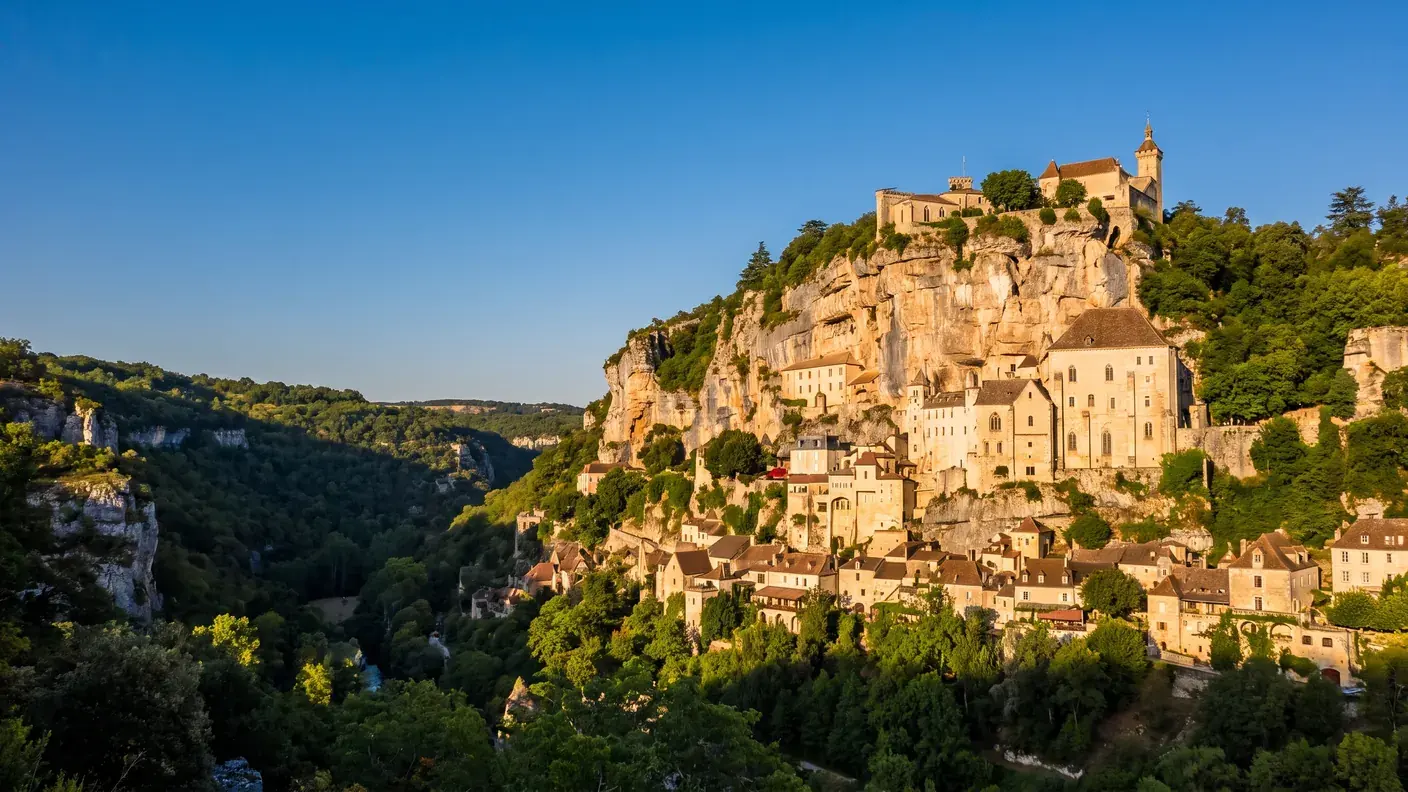
Off to the Lot Valley
Direct trip from Bordeaux (~2 hours 40 minutes) to Douelle and the Cahors vineyards, with stops at your discretion—Cahors, Saint-Cirq-Lapopie, and a vineyard estate. Written fixed-price quote, with no unexpected meter charges.