
Bordeaux to Espelette: peppers, Basque houses and Labourd
A village in Labourd famous for its chili peppers—the only French spice with AOP certification: garlands of red chili peppers hanging from white houses, the Church of Saint-Étienne, the fronton, the chili pepper festival, and the Basque way of life—just over two hours from Bordeaux.
Espelette at a Glance
Espelette is a village in Labourd, in the French Basque Country, known for its AOP chili peppers and its white facades adorned with red garlands in the fall. Its center features traditional Labourd houses, the castle of the Barons of Ezpeleta, the Church of Saint-Étienne, and a pelota court. The village is located near Cambo-les-Bains, Ainhoa, and Sare, at the foot of La Rhune. The chili pepper festival takes place on the last weekend of October, a very busy time when you’ll need to plan ahead for access and parking. From Bordeaux, the driving route shown on this page is approximately 205 km and takes 2 hours and 25 minutes. A private driver can take you directly to Espelette and include stops in the neighboring villages of Labourd.
Espelette is a village in Labourd, in the Basque Country, known worldwide for its chili peppers: everywhere, garlands of red chili peppers—the symbol of the only French spice to bear a PDO designation—hang drying on the white facades of the houses. This charming village in the Basque countryside, with its white houses featuring red half-timbering, nestled at the foot of the mountains, lives to the rhythm of Espelette chili peppers, its festivals, and its traditions—the pottok, pelota, and Basque cake. A charming village in the Labourd hinterland, just a few kilometers from Cambo, Ainhoa, and the coast, Espelette offers the charm of an authentic, colorful, and gourmet Basque Country. Just over two hours from Bordeaux, it’s a delightful and picturesque getaway, combining heritage, gastronomy, and the Basque way of life, in the heart of Labourd.
Here are the key details to know before you go. Distances are calculated door-to-door from Bordeaux; the fare shown is for a chauffeur service reservation at a fixed price provided in advance, with no unexpected meter charges regardless of traffic or stops along the way.
| Landmark | Details |
|---|---|
| Department | Pyrénées-Atlantiques (64), Nouvelle-Aquitaine |
| Basque name · demonym | Ezpeleta · The Espelettars |
| Population | 2,155 residents (INSEE 2023) Source: INSEE |
| Location | Inland plowing, on the Latsa River, near Cambo-les-Bains |
| Don't miss it | Espelette pepper, Saint-Étienne Church, the Barons' Castle |
| Distance from Bordeaux | about 205 km · about 2 hours and 25 minutes by car |
| Around | Cambo-les-Bains, Ainhoa, Sare, Bayonne, the Basque Coast |
First, a quick note to put Espelette in context. The village is located in Labourd (Lapurdi), one of the provinces of the Basque Country, and more specifically in Inner Labourd, the hilly hinterland, which is distinct from the coastal towns. Its Basque name is Ezpeleta. The river that runs through it is called the Latsa (“the river” in Basque), a tributary of the Nive. And the famous chili pepper isn’t actually hot: it scores only 4 on the Scoville scale—barely more than black pepper—and is an aromatic, mild variety. With that clarified, let’s set out to discover one of the most charming villages in the Basque Country. Every statement in this guide is based on verifiable sources, cited at the end of the article.
Here’s a rundown of everything you need to know: Espelette’s location in Labourd, Espelette pepper and its PDO, the Saint-Étienne Church and the Barons’ Castle, traditional Labourd houses and the fronton, the chili pepper festival and the pottok, Basque gourmet cuisine, the countryside and mountains, nearby attractions, the best time of year to visit, and the easiest way to get there from Bordeaux by executive car service—all sourced and verified.
Where is Espelette located?
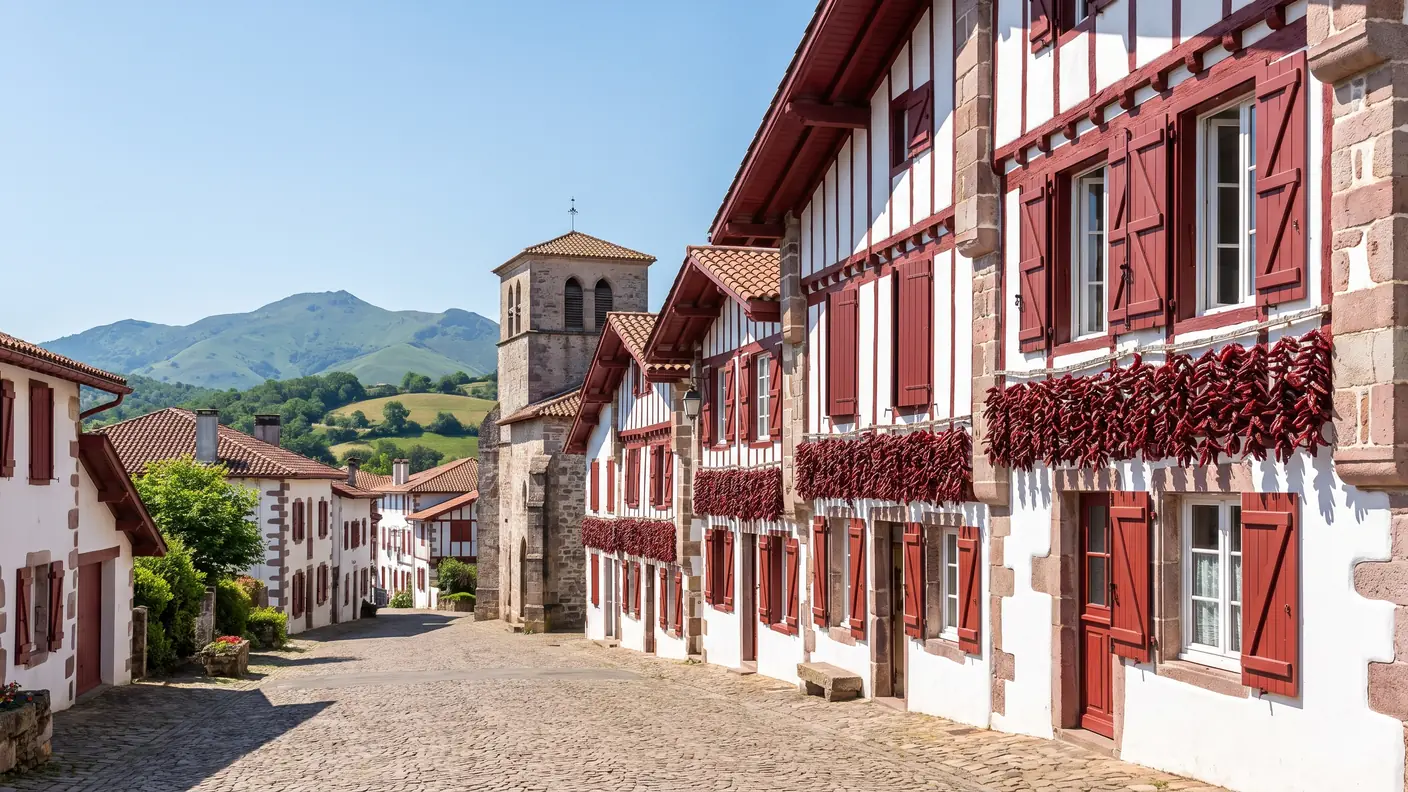
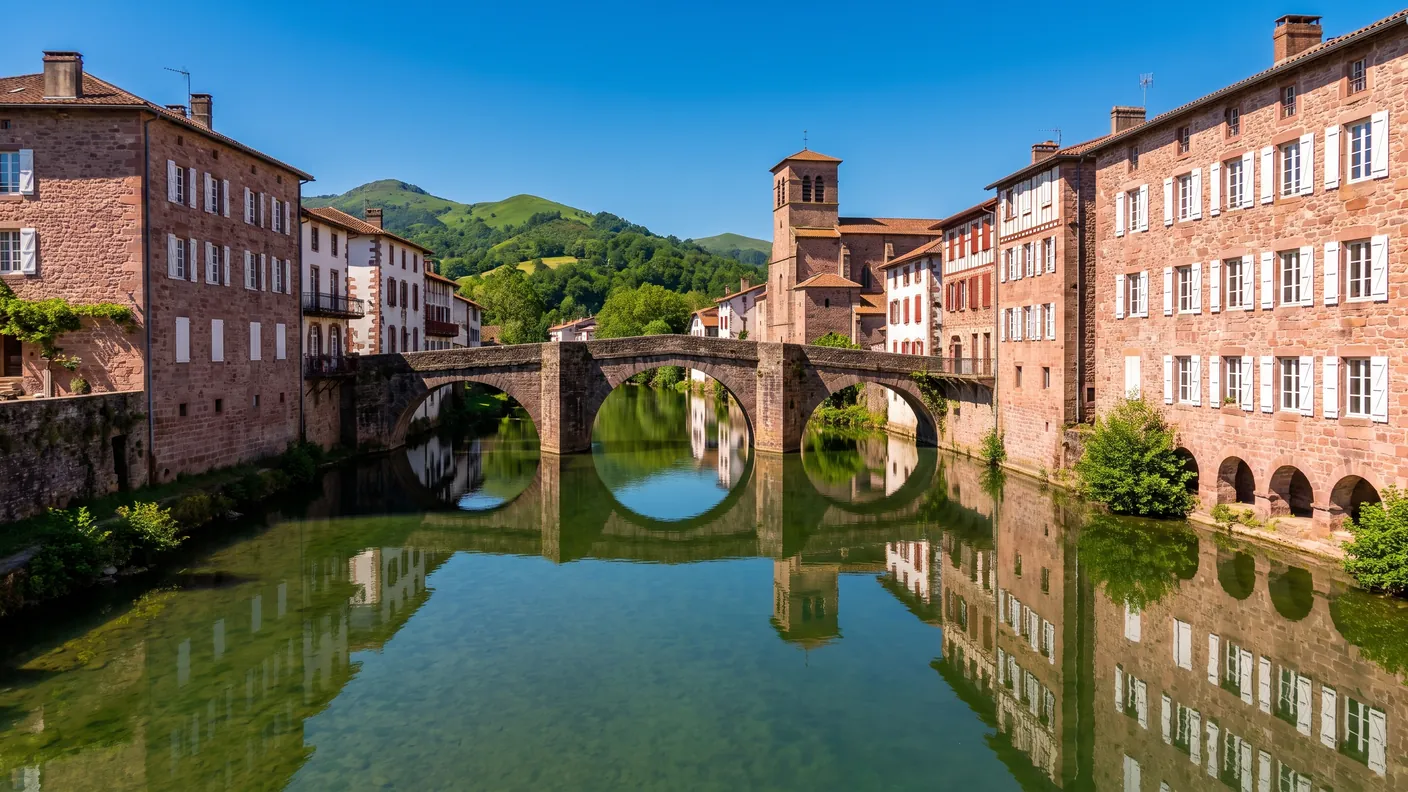
Espelette is located in the Basque Country, in the western part of the Pyrénées-Atlantiques department (64), in Nouvelle-Aquitaine, within the Labourd intérieur—a rolling hinterland of green hills that rises from the coast toward the mountains. The village, known as Ezpeleta in Basque, is crossed by the Latsa, a small river flowing down from the Mondarrain that joins the Nive. With its 2,155 residents, it is a rural town, yet one of great renown—the world capital of its famous chili pepper. Espelette is beautifully situated in the heart of Labourd: just a few minutes from Cambo-les-Bains (the spa town), Ainhoa (one of the Most Beautiful Villages of France), and Sare, and a little less than half an hour from the coast (Bayonne, Saint-Jean-de-Luz). This setting—nestled between the countryside, charming villages, and mountains, in a gentle, lush green landscape—is what makes a visit to Espelette so enchanting.
In the heart of Inner Labourd
Espelette is part of Labourd (Lapurdi), one of the three provinces of the French Basque Country, along with Lower Navarre and Soule. But it is not on the coast: it lies in inland Labourd (Lapurdi Garaia), the hilly and mountainous hinterland that stretches behind Biarritz and Bayonne. It is a land of green hillsides, meadows, and woods, of white farmhouses and villages clustered around their churches and frontons, at the foot of the first Pyrenean peaks—the Mondarrain, the Ursuya, and the famous Rhune nearby. This rolling, verdant, and inhabited landscape, of great beauty, is the perfect setting for discovering the authentic Basque Country, far from the hustle and bustle of the coast. Espelette, at its heart, is the ideal starting point for exploring this inland Labourd region—a land of traditions, gastronomy, and heritage, nestled between the ocean and the mountains.
A village with a population of 2,155
According to INSEE, Espelette has 2,155 residents according to the 2023 census. Between 2017 and 2023, its population grew by an average of 1.1% per year, a sign of a vibrant village whose appeal far exceeds its size. Its residents are known as the Espelettars.
Agriculture, commerce, and chili pepper-related tourism form the backbone of the local economy. Espelette has turned this fame into a resource while preserving its traditions, its pelota, and its cuisine. The town center retains a cozy, intimate feel: houses decorated with chili peppers, shops selling local products, and flower-lined alleys come together to create a quintessential slice of the Basque Country.
Espelette Pepper
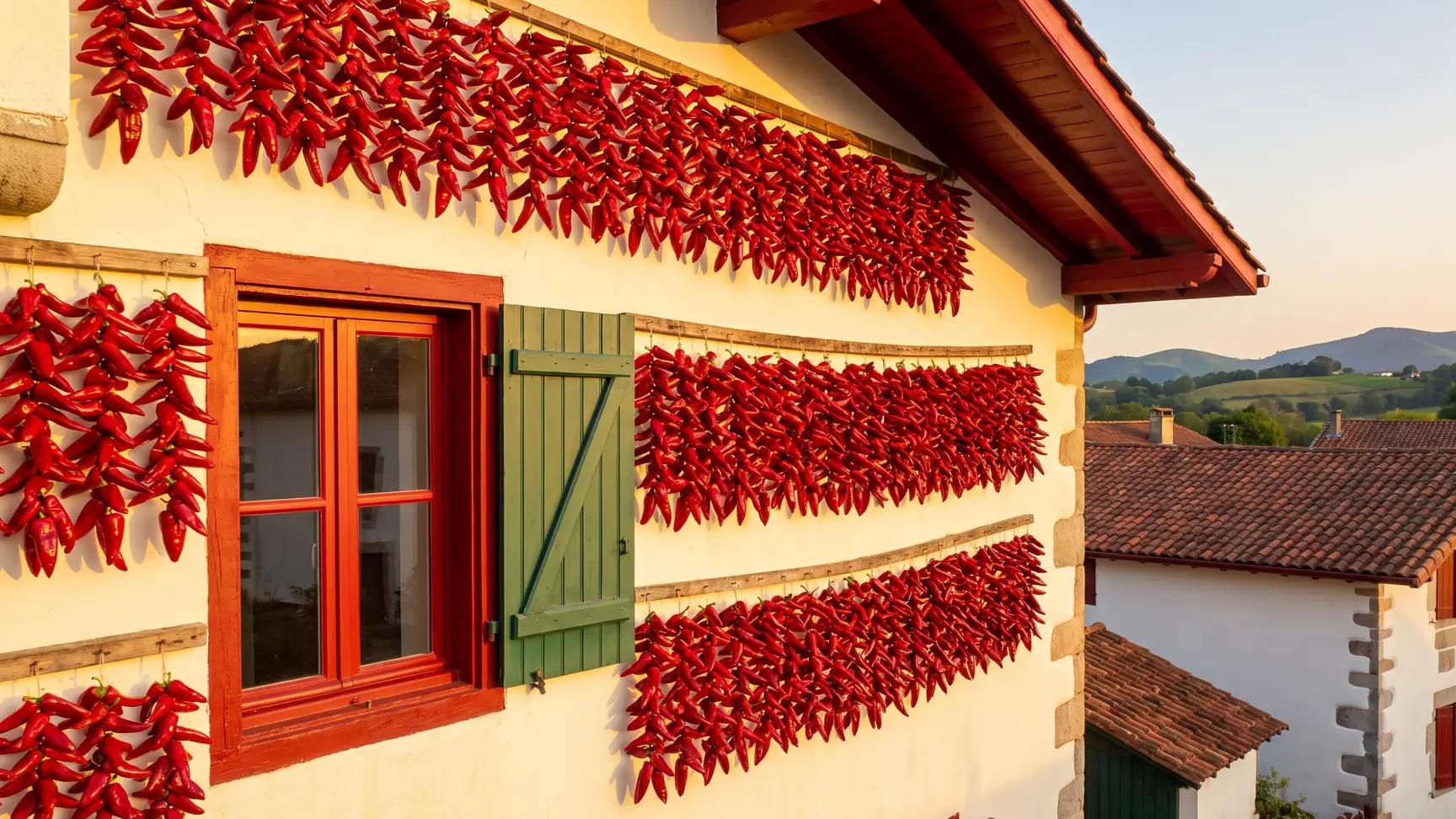
Espelette pepper is the pride of the village and the only French spice to hold a PDO designation: a mild, aromatic pepper that was brought from Mexico in the 16th century and is dried in garlands on the facades of buildings. This condiment has become a true Basque institution.
The only French spice with PDO status
According to the INAO, Espelette pepper is the only French spice with PDO status. The designation protects a product harvested and processed in ten municipalities in the Basque region of the Pyrénées-Atlantiques, in three forms: whole fresh peppers intended for processors, strings of peppers, or powder.
Native to Mexico and introduced to the Basque Country in the 16th century Over the centuries, chili peppers gradually replaced black pepper in the region as a seasoning and preservative for meats. Grown from the Gorria variety, the designation was officially recognized as a designation of origin by decree on May 29, 2000. Over the centuries, this spice has become an integral part of Basque cuisine.
In practice, the INAO describes a powder with fruity or toasty aromas and a gradual, but not burning, spiciness. To purchase a compliant product, check for the full designation: each container of powder has a tamper-proof label indicating its name and the harvest year. This traceability distinguishes the AOP product from simple flavored condiments.
The red garlands on the facades
The most famous image of Espelette—the one that made it famous—is its garlands of chili peppers. In late summer and fall, after the harvest, the red chili peppers are strung into long garlands (called ristras) and hung to dry on the white facades of houses, balconies, and porches: the village is then adorned in red, creating a unique and photogenic sight. This tradition, originally purely practical (to dry the chili peppers before grinding them), has become the emblem of Espelette, immortalized as early as 1897 by the writer Pierre Loti in his novel Ramuntcho, who described these “garlands of red chili peppers” as “beautiful strings of coral.” Even today, from September through the fall, the facades adorned with chili peppers form the village’s most distinctive backdrop.
This is the best time to visit Espelette: when the red of the chili peppers stands out against the white of the houses, under the Basque Country sky.
| Espelette Pepper | Details |
|---|---|
| Origin | originating in Mexico, introduced to the Basque Country in the 16th century |
| Variety | Gorria (“red” in Basque), Capsicum annuum |
| Label | AOC 2000, AOP 2008 · the only French spice with AOP certification |
| Force | 4 on the Scoville scale · mild and aromatic |
| Area | 10 municipalities in Labourd around Espelette |
| Drying | strung up on the facades, starting in September |
St. Stephen's Church and the Castle
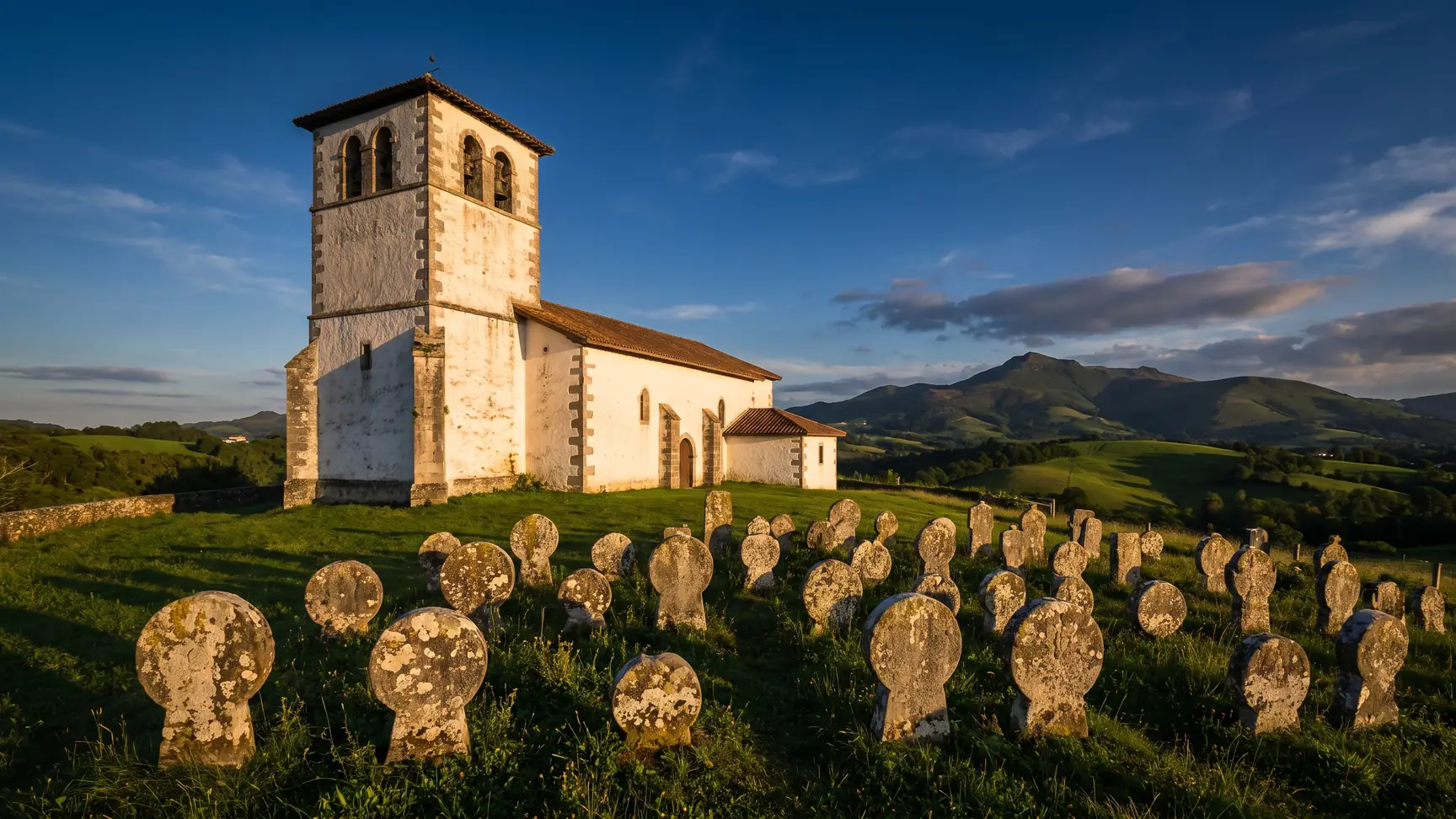
According to the Ministry of Culture’s POP/Mérimée listing, the Church of Saint-Étienne in Espelette has been classified in its entirety as a historic monument since June 9, 2015. This Basque church is distinguished by its long nave, galleries on three sides, carved posts, and balustrades with turned balusters.
St. Stephen's Church and Its Galleries
The Church of Saint-Étienne, situated on a hill away from the village, is a fine example of a Labourd-style church. Like other churches in Labourd, its interior features beautiful wooden galleries running along three sides of the nave: these tiered, painted galleries were traditionally reserved for men, while women and children stood in the nave—a custom that persisted until the 1970s. This distinctive feature of Basque churches, said to be unique in Europe, is worth the visit in itself. The building, designated a historic monument, is surrounded by its cemetery, where one can see traditional Basque disc-shaped tombstones: these round-topped tombstones, engraved with solar motifs and crosses, are one of the oldest and most moving symbols of Basque culture.
The church and cemetery form a scene of great beauty, bearing witness to the faith and traditions of the region.
The Castle of the Barons of Ezpeleta
In the heart of the village stands the castle of the Barons of Ezpeleta, an ancient stately home with a tower, around which the village developed. This castle, which belonged to the powerful Barons of Ezpeleta, passed to the municipality in 1694 upon the death of the last baroness, who bequeathed it to the parish; today it houses the town hall. Listed as a historic monument, it bears witness to the village’s feudal past and its organization around seigneurial power. Strolling through Espelette means discovering, beyond the garlands of chili peppers, a true heritage: the church and its galleries, the castle and its tower, the old houses, and the fronton. This historic and picturesque setting, combined with the vibrant colors of the chili peppers and the lively atmosphere of the village, makes Espelette much more than just a gourmet stop: it is an authentic Basque village full of character, best discovered by taking the time to stroll through its streets.
Labourdine Houses and the Fronton
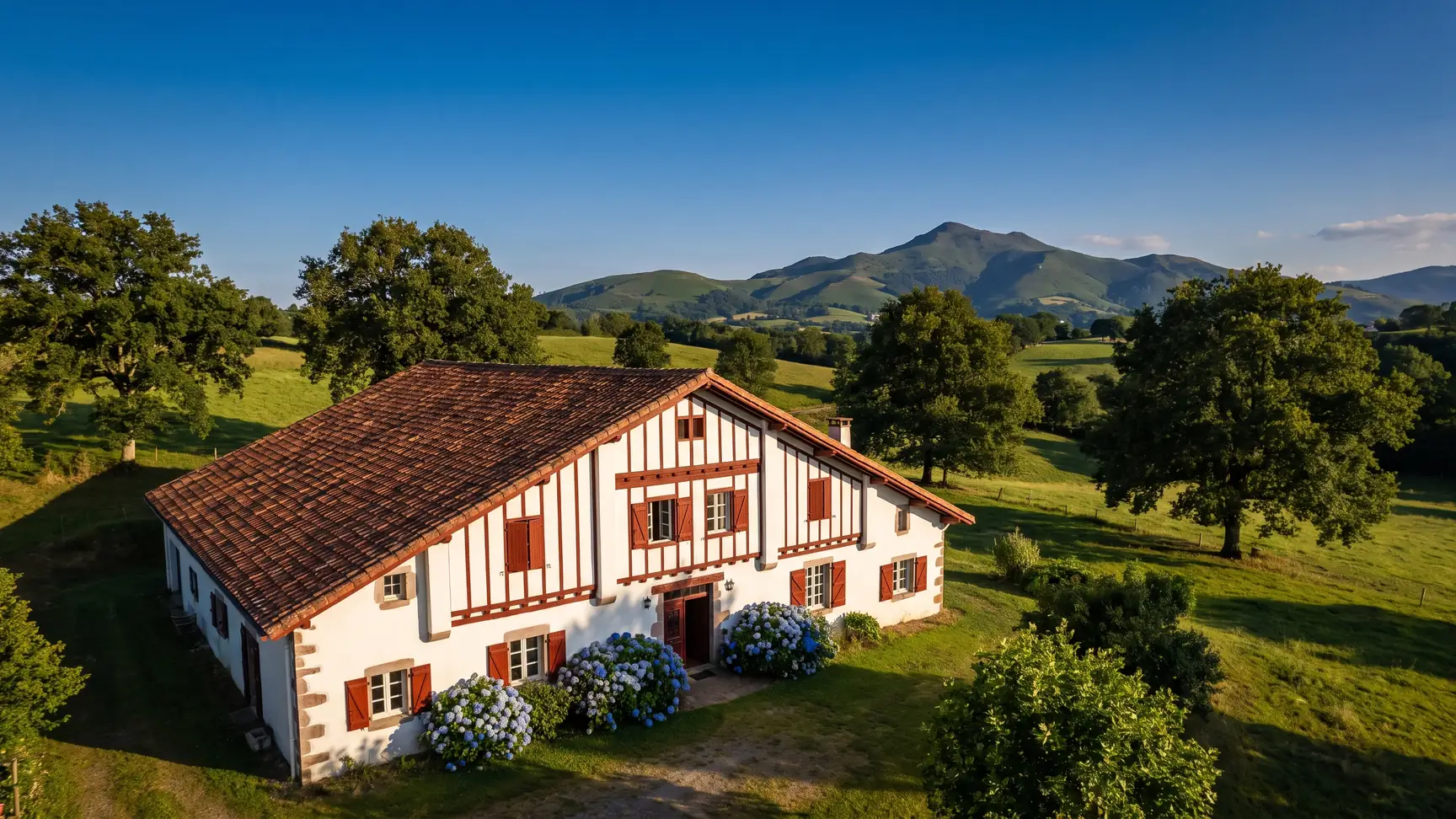
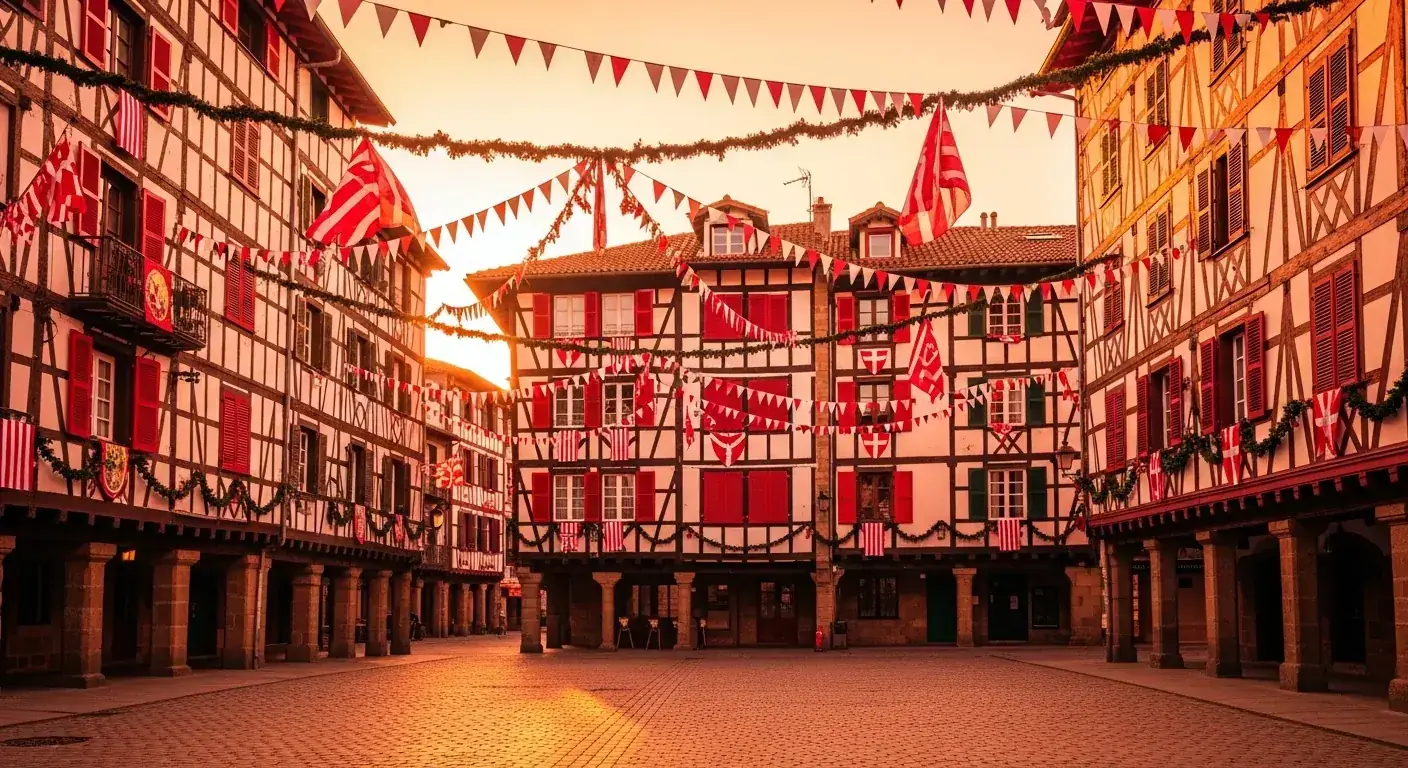
Espelette’s charm also lies in its architecture: the Labourd-style houses, white with red half-timbering, and the fronton, the heart of Basque village life. The setting and spirit of a village in Labourd.
White and Basque Red
The houses of Espelette and Labourd are truly enchanting. The traditional Basque house, the Labourd-style etxe, has a distinctive silhouette: tall whitewashed walls, a wide gabled tiled roof, and, above all, half-timbering, shutters, and balconies painted a deep red—the famous “Basque red” or “oxblood”—or sometimes green. This striking contrast of white and red, punctuated by blue hydrangeas, creates one of the most recognizable built landscapes in France. In Espelette, these beautiful homes, often adorned with garlands of chili peppers, line the streets and the surrounding countryside in perfect harmony. Each house, with its lintel sometimes engraved with a date and a name, tells the story of a family and a region deeply rooted in its land. Strolling through the village means admiring this distinctive, proud, and colorful architecture—the very embodiment of Basque identity.
The fronton, the heart of the village
Like any Basque village, Espelette has its own fronton: that large wall against which Basque pelota—the region’s most popular sport—is played. The fronton, often located near the church and town hall, is the true heart of village life: it is where the residents gather, where pelota matches are played—bare-handed, with a chistera, or with a pala—and where Basque strength contests are held, including traditional games such as stone lifting, sawing, and tug-of-war. Pelota and Basque strength competitions, along with dancing, singing, and festivals, set the pace of life in Espelette, with the enthusiasm and camaraderie so characteristic of the Basque Country.
Watching a game of pelota at the fronton on a summer evening is a wonderful way to experience the spirit of the village, beyond the chili peppers and shops. It is this joyful, deeply rooted sense of community that gives Espelette—and the entire Labourd region—its profound charm.
The Chili Festival and the Pottok
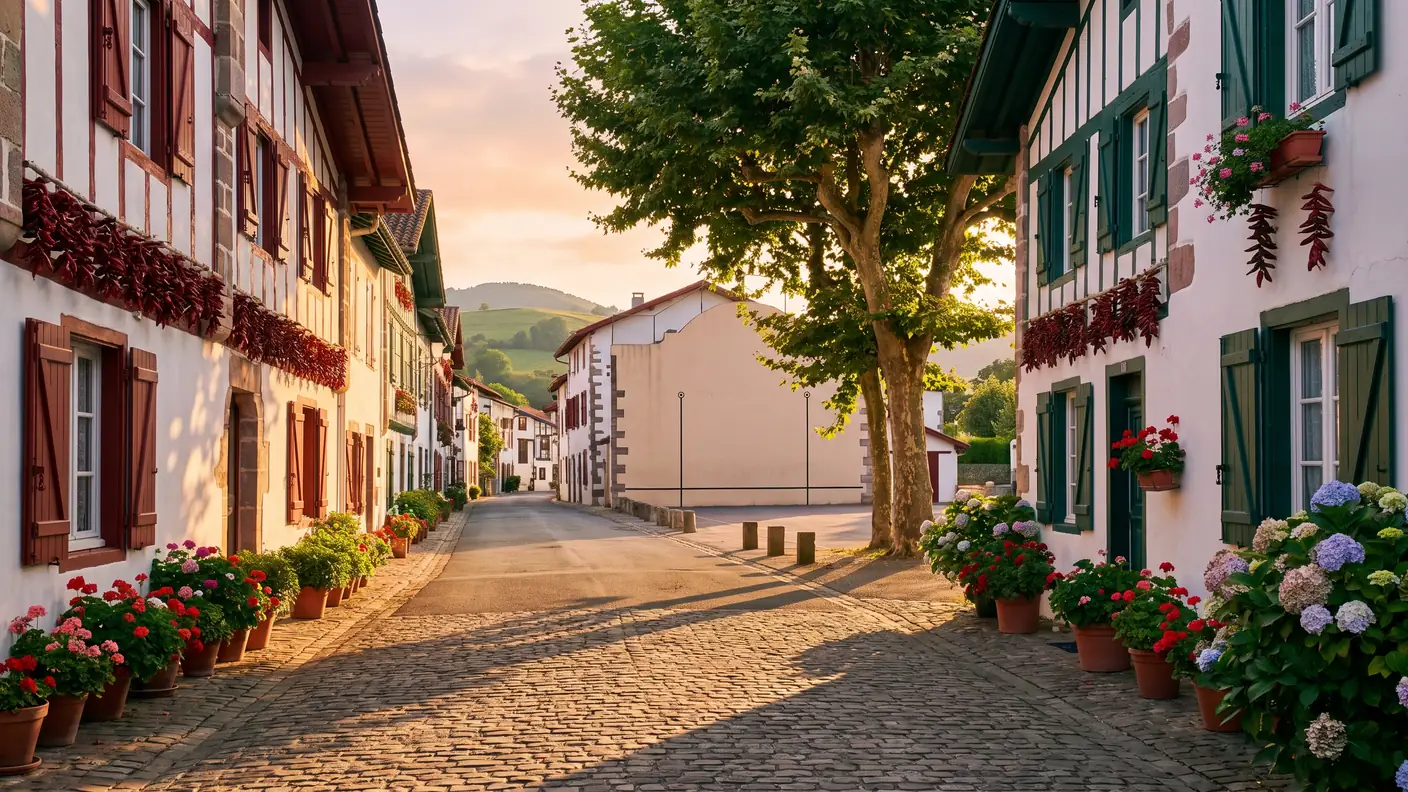
Espelette lives to the rhythm of its festivals: the Great Chili Pepper Festival in the fall and the Pottok Fair in the winter celebrate the local culture and traditions of Labourd. These are two major events on the Basque calendar.
The Chili Pepper Festival, in the fall
The main event in Espelette is the Chili Pepper Festival, held every year on the last weekend of October. Organized in collaboration with the Confrérie du piment d’Espelette, the festival celebrates the harvest and this prized condiment in the spirit of a Basque fair: induction ceremonies, markets, tastings, parades, music, dancing, and pelota enliven the village for two days. For the occasion, the whole of Espelette is decked out in the colors of the chili pepper, from the red garlands adorning the facades to the buzz of the festivities. Attending the Chili Pepper Festival means experiencing the Basque Country in all its passion and generosity, centered around its signature product. This is when a private chauffeur really comes in handy: finding parking that weekend is no easy feat.
The Pottok, a pony from the Basque Country
Espelette is also the capital of another Basque icon: the pottok, this little pony A hardy, rustic breed from the Basque Country, raised in a semi-wild state in the mountains. Every year, at the end of January (on the last Tuesday and Wednesday of the month), the village hosts the famous Pottok Fair, one of the breed’s major events, where breeders and enthusiasts gather. The Pottok, whose ancestry is said to date back to antiquity, is part of the region’s living heritage: sturdy, endearing, and perfectly adapted to the Basque mountains, it grazes freely on the slopes of the Rhune and neighboring peaks. This fair, less well-known than the chili pepper festival but just as authentic, reflects the deep attachment of Espelette and Labourd to their rural and pastoral traditions.
From chili peppers to pottoks, the village celebrates, throughout the seasons, everything that defines the spirit of the inland Basque Country.
The Basque Culinary Region
Espelette is a culinary capital: centered around chili peppers, visitors can savor axoa, Basque cake, Ossau-Iraty cheese, and chili-spiced ham—the very essence of the Basque way of life. A delicious stop in the heart of Labourd.
Axoa, ham, and Ossau-Iraty
Espelette pepper is the soul of Basque cuisine, and the village is its culinary showcase. The area’s signature dish is axoa (pronounced “achoa”): thinly sliced veal shoulder, cut into small cubes and simmered with onions, sweet peppers, and, of course, Espelette pepper—a simple, hearty, and flavorful dish to be savored in the village’s taverns. The chili pepper also enhances the famous Basque ham, flavoring and preserving the meat, and adds flavor to a thousand other dishes, from Basque-style chicken to piperade, and from cod to eggs. Alongside it, the Basque region offers Ossau-Iraty sheep’s milk cheese (AOP), for which Espelette is a production area, often served with black cherry jam from Itxassou, the neighboring village. Cured meats, cheeses, and slow-cooked dishes: Espelette’s cuisine is a delight, reflecting the Basque spirit of generosity.
Basque cake and sweets
To end on a sweet note, Espelette and Labourd are the birthplace of the Basque cake (etxeko biskotxa, “the cake of the house”): a golden shortcrust pastry filled with either Itxassou black cherry jam or vanilla- or rum-flavored pastry cream, which first appeared in the 19th century and has become the iconic dessert of the Basque Country. You can enjoy it everywhere—in pastry shops and inns—and you can bring some home, just as you might bring home the region’s chili peppers, cheeses, cured meats, and jams. Espelette, with its many shops selling local products, is a paradise for food lovers and an ideal starting point for putting together a basket of Basque specialties.
With its chili-spiced stews, sheep’s-milk cheeses, Basque cake, and sweet treats, a stop in Espelette is also a culinary journey into the heart of one of France’s finest regional cuisines—to be enjoyed on the spot or taken to go.
| The Espelette Region | Details |
|---|---|
| Espelette Pepper | AOP · Adds flavor and aroma to all Basque cuisine |
| Axoa | Sliced veal simmered with Espelette pepper |
| Basque ham | spiced and preserved with chili peppers |
| Ossau-Iraty | sheep's-milk cheese from the Pyrenees (AOP) |
| Basque Cake | Itxassou black cherries or cream · local dessert |
The countryside and mountains of Labourd
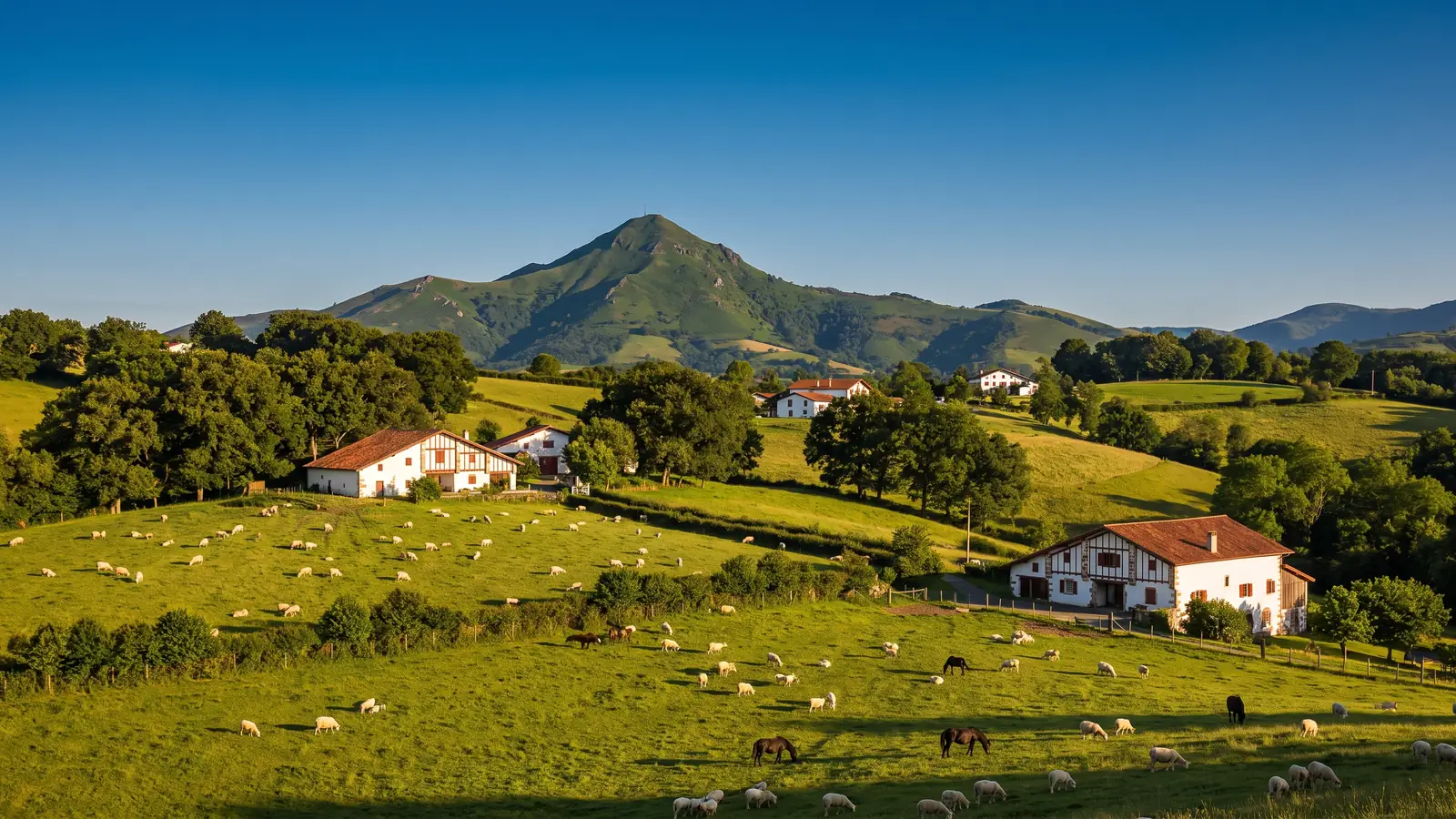
Espelette is nestled amid a landscape of green hills and mountains, at the foot of La Rhune: the Inner Labourd region offers a gentle, unspoiled natural environment, a land of livestock farming and hiking. The great Basque outdoors, right at the village’s doorstep.
At the foot of La Rhune and Mondarrain
The typical landscape of the region stretches out around Espelette In-field tilling: rolling green hills, meadows grazed by sheep and the pottok, scattered white farmhouses, oak and chestnut groves. Above them rise the first Basque peaks: the Mondarrain, the Ursuya, and especially the famous Rhune (905 m), the iconic mountain of the Basque Country, whose summit—accessible by a small rack-and-pinion train from Sare—offers a breathtaking view of the ocean, the Pyrenees, and Spain. This lush mid-mountain setting, nestled between the ocean and the peaks, is a paradise for hike and exploring the Basque countryside. The trails, mountain passes, and ridges invite you to hike through landscapes of great beauty, where herds and pottoks graze freely. From Espelette, the great outdoors and these panoramic views are right at your doorstep.
Unspoiled and Thriving Nature
The Espelette countryside isn't just beautiful—it's alive, shaped by centuries of farming and livestock raising. This is where they grow the chili pepper, on the sun-drenched hillsides, where the sheep used to produce Ossau-Iraty cheese are raised, in keeping with a tradition pastoral still thriving. The pottok, left to roam semi-wild in the highlands, is part of this landscape, just like the transhumant herds. This bountiful natural environment—comprising cultivated hillsides, summer pastures, and forests—is also home to a rich variety of flora and fauna, offering visitors a glimpse of an authentic and unspoiled Basque Country, far from the concrete of the coast.
Taking a stroll through the Espelette countryside, admiring La Rhune on the horizon, and coming across a herd of pottoks—that’s what it means to experience the very essence of Labourd: a lush, gentle land nestled between the ocean and the mountains, where people and nature have lived in harmony since time immemorial. A setting that adds to the charm of a visit to the village.
What is there to see around Espelette?
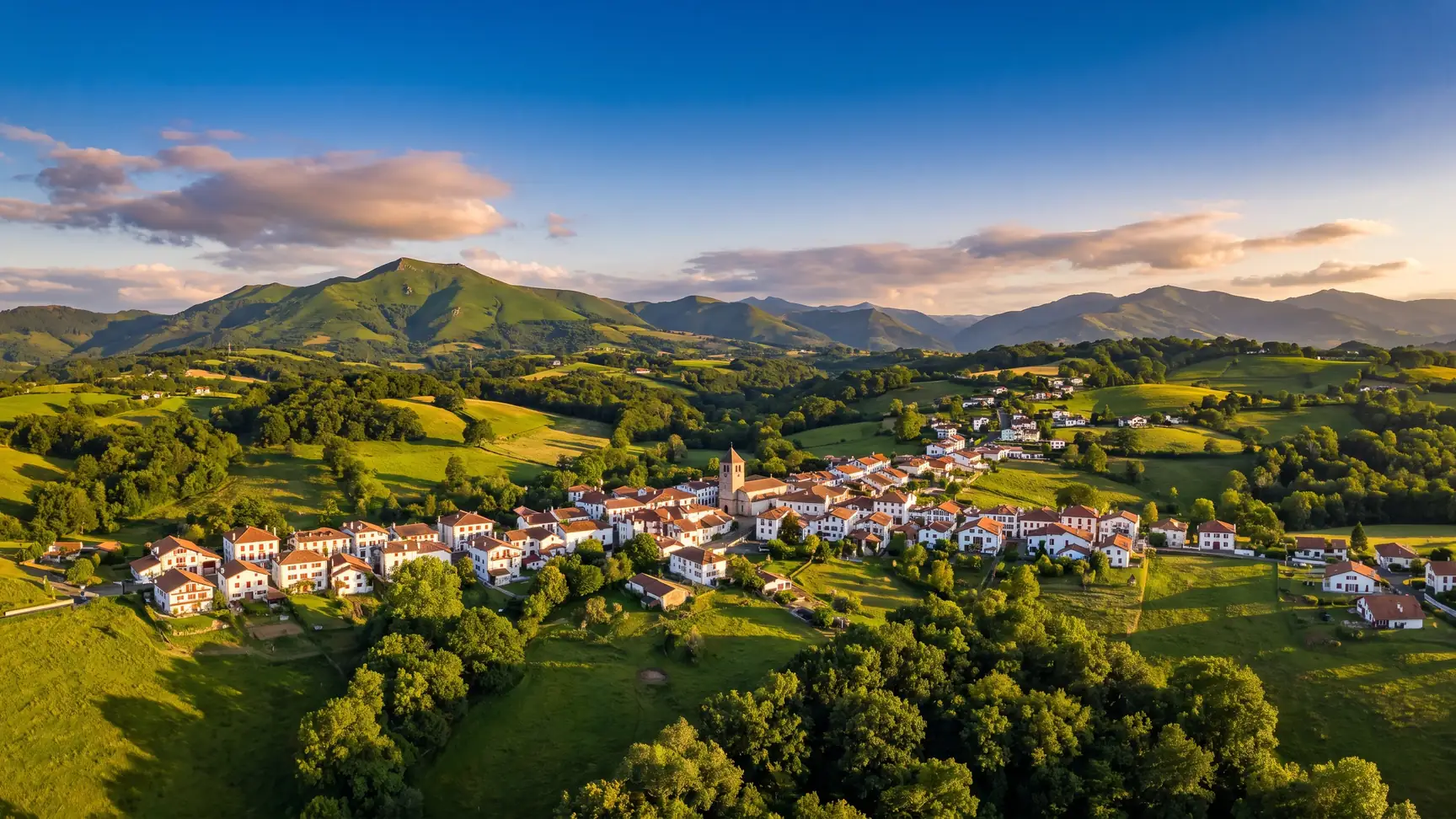
Espelette is an ideal base for exploring the Basque Country: Ainhoa, Sare, Cambo, the coast, and nearby Spain are all within easy reach. A rare blend of villages, mountains, and the ocean.
Ainhoa, Sare, Cambo, and the coast
In the area around Espelette, the most beautiful villages of Labourd are scattered one after another. Ainhoa, listed among the Most Beautiful Villages of France, features a row of Labourd-style houses lining a single street. Sare, which is also a listed site, is the starting point for the Rhune train. Cambo-les-Bains, the spa town, is home to Edmond Rostand's magnificent Villa Arnaga. A little further on, Saint-Jean-Pied-de-Port and Lower Navarre, the Aldudes Valley, and its Basque pork are worth a visit. Toward the coast, Bayonne (chocolate, the cathedral), Biarritz and Saint-Jean-de-Luz are just half an hour away. And the Spain (San Sebastián, Pamplona) isn't far away. With a driver, it's easy to plan a lovely "chili pepper route" from Espelette or explore the Basque Country—taking in the villages, the coast, and the mountains—without worrying about narrow roads or parking in the busy towns.
The Basque Coast and Spain
Espelette is just a short half-hour from the Basque Coast: Bayonne, the capital, with its cathedral, its Vauban ramparts, and its famous chocolate; Biarritz, the chic resort and its surf spots; Saint-Jean-de-Luz, the elegant fishing port where Louis XIV's wedding was celebrated. To the south, the border and the Spain are all nearby: San Sebastián (Donostia) and its pintxos, Hondarribia and its old port, and Pamplona and Navarre are all less than an hour away. This proximity to the coast, the inland villages, and Spain makes Espelette an ideal base for exploring the entire Basque Country—both French and Spanish. With a driver, you can easily connect these destinations—from the mountains to the ocean—without worrying about roads or borders, for a complete and carefree exploration of this beautiful land of contrasts.
| Around Espelette | Distance | Interest |
|---|---|---|
| Ainhoa | ~6 km | "Most Beautiful Villages of France," Labourd-style houses |
| Cambo-les-Bains | ~6 km | Spa Town, Villa Arnaga (Rostand) |
| Sare | ~9 km | Listed village, La Rhune mini-train |
| Bayonne | ~25 km | Cathedral, chocolate, Vauban ramparts |
| Saint-Jean-de-Luz | ~25 km | Seaside resort, port, Louis XIV's wedding |
When is the best time to visit Espelette?
Espelette is worth visiting year-round, but fall—the chili pepper season—is when it’s at its most magical. From September through October, the white facades are covered with garlands of red chili peppers left to dry, and the village reaches its peak of color and liveliness, leading up to the big chili pepper festival on the last weekend of October. It’s the perfect time to discover Espelette in all its splendor, when the red of the chili peppers pops against the white of the houses, bathed in the golden light of the late Basque summer. Tables are laden with dishes made from the harvest, shops are overflowing with fresh chili peppers, and the atmosphere is festive. Just one piece of advice for that weekend: leave your car behind and hire a driver, as the crowds are so large and parking is difficult in the village.
Spring, Summer, and Winter
The other seasons have their own charm, too. The spring It cloaks the hills of Labourd in a vibrant green and offers mild days, ideal for exploring the villages, the countryside, and the first mountain trails, far from the crowds. The summer It’s the height of the season, lively and sunny: it’s the time for village festivals, pelota games at the fronton, and markets, all in a warm and welcoming atmosphere, but the village is very crowded then and the streets are bustling. The winter, a quieter side, reveals Espelette and its countryside in an intimate light, bathed in beautiful light, with the Pottok Fair starting in late January to liven up the winter season.
No matter the season, the beauty of the white and red houses, the gentle landscapes, and the bounty of the region make Espelette a charming and culinary getaway, just over two hours from Bordeaux—but fall, the chili pepper season, remains the highlight.
Getting to Espelette from Bordeaux
Espelette is located about 205 km from Bordeaux, which is about a 2-hour, 25-minute drive via the A63 highway to Bayonne, then along the road that heads inland toward Labourd through Cambo-les-Bains (just under half an hour from Bayonne). The village does not have a train station: the nearest ones are in Cambo-les-Bains (on the Bayonne–Saint-Jean-Pied-de-Port line) and Bayonne, but the train does not stop in Espelette and does not allow you to explore the villages of Labourd afterward. For a trip from Bordeaux to explore chili peppers, the village, and the Basque hinterland, a chauffeur-driven car is the most practical and flexible option, especially for creating a “chili pepper route” between Espelette, Ainhoa, Sare, and Cambo—or to continue on to the coast.
Train or chauffeured transfer?
To get to Espelette—and especially to explore Labourd and the Basque Country—hire a Professional chauffeur, chauffeur service in Bordeaux offers true freedom: a direct, door-to-door trip from Bordeaux, with no transfers or waiting, and the option to make stops along the way—in Cambo, Ainhoa, or at a vineyard. This is especially valuable for a day spent exploring the villages of Labourd, or during the chili pepper festival (the last weekend in October), when parking is impossible and having a driver makes all the difference. We offer this route at fixed price provided in advance: Allow about 395 € For the one-way trip, in a Mercedes sedan or a van seating up to 8 passengers, with a professional chauffeur. The price, set at the time of booking, remains fixed: it does not depend on traffic, traffic jams, or the number of stops, unlike a taxi meter.
This is the perfect option for a gourmet and scenic getaway, a family trip, an event, or a simple transfer to or from the Bordeaux-Mérignac or Biarritz airports. You can travel alone, as a couple, or in a small group of up to 8 people, with your luggage and local purchases, and request stops in Cambo, Ainhoa, or along the coast. In practice, booking is quick and easy: simply provide your departure address in Bordeaux and your destination in Espelette, along with the date, desired time, and number of passengers, and you’ll receive a fixed-price quote in writing. On the day of the trip, the driver picks up the passengers at the agreed-upon address and takes them directly to Espelette, without any detours—a real advantage for exploring the Basque Country with peace of mind, among villages, chili peppers, and mountains.
| Route | Distance | Duration | Landmark |
|---|---|---|---|
| Bordeaux → Espelette | ~205 km | ~2 hours 25 minutes | Starting at €342 for a private chauffeur service |
| Espelette → Cambo-les-Bains | ~6 km | ~10 min | spa town, Villa Arnaga |
| Espelette → Bayonne | ~25 km | ~30 min | cathedral, chocolate |
| Espelette → Saint-Jean-de-Luz | ~25 km | ~30 min | Basque Coast, Wedding of Louis XIV |
Whether you come for the chili peppers and their red garlands, for the church and the castle, for the Labourd-style houses and the fronton, or for the local cuisine and the mountains of Labourd, Espelette is a treat for lovers of the authentic, colorful, and gourmet Basque Country—one of the most charming villages in the Southwest, nestled at the foot of the mountains.
Whether it’s for a gourmet getaway, the chili pepper festival, or any other event, booking a private driver guarantees a comfortable and punctual ride—book a driver from Bordeaux to Espelette or explore all our destinations.
Frequently Asked Questions
Where is Espelette located?
Espelette is a village in the Basque Country, in the western part of the Pyrénées-Atlantiques department (64), in the Nouvelle-Aquitaine region, in the Labourd intérieur—the rolling hinterland behind the coast. In Basque, it is called Ezpeleta. The village, through which the Latsa River (a tributary of the Nive) flows, has a population of 2,155 (INSEE 2023). It is beautifully situated in the heart of Labourd, just a few minutes from Cambo-les-Bains, Ainhoa, and Sare, and a little under half an hour from the coast (Bayonne, Saint-Jean-de-Luz). From Bordeaux, it’s about 205 km and a 2-hour, 25-minute drive via the A63 to Bayonne, then along the road to Cambo.
How far is it from Bordeaux to Espelette?
About 205 km by road, or about a 2-hour, 25-minute drive, via the A63 highway to Bayonne, then the road heading inland toward Labourd through Cambo-les-Bains. By chauffeur service from Bordeaux, the fare is fixed and provided in advance, starting at €395 one way (sedan or van, door-to-door price). Espelette does not have a train station: the nearest ones are in Cambo-les-Bains and Bayonne, but the train does not serve the village and does not allow you to explore the villages of Labourd, which are best discovered with a driver—essential during the chili pepper festival.
What is Espelette pepper?
It is a mild, aromatic chili pepper grown in the Basque Country and the only French spice to hold a PDO designation. Originating in Mexico and introduced to the Basque Country in the 16th century, it replaced black pepper there and was used to season and preserve meats. It has held AOC status since 2000 and AOP status since 2008, and is grown from the Gorria variety (“red” in Basque) in ten municipalities in the Labourd region around Espelette. Contrary to popular belief, it is not a hot chili pepper: it scores only 4 on the Scoville scale, barely more than black pepper. It is a fragrant and fruity chili pepper that adds flavor without burning, and is highly prized in fine dining.
Why are the houses in Espelette covered with chili peppers?
Because that's how chili peppers are dried before being ground. After the harvest, in late summer and fall, the red chili peppers are strung into long ropes (ristras) and hung to dry on the white facades of houses, balconies, and porches. This practical tradition has become the village’s symbol: from September through the fall, Espelette is decked out in red, creating a unique and photogenic spectacle. The writer Pierre Loti described it as early as 1897, in *Ramuntcho*, as “beautiful strings of coral.” This is the best time to visit Espelette, when the red of the chili peppers stands out against the white of the houses.
When is the Espelette Pepper Festival held?
The Chili Pepper Festival is held every year on the last weekend of October. Organized in collaboration with the Confrérie du Piment d’Espelette, the festival celebrates the harvest in the spirit of a Basque fair: induction ceremonies, markets, tastings, parades, music, dancing, and pelota enliven the village for two days. On this occasion, the whole town of Espelette is decked out in chili pepper colors. It’s a time of excitement and celebration not to be missed, but parking is impossible—it’s best to have a driver drop you off.
What else is there to see in Espelette besides chili peppers?
Espelette has a rich heritage. The Church of Saint-Étienne, perched on a hill, features beautiful wooden galleries (reserved for men until the 1970s) and a cemetery with Basque discoidal steles—tombstones with rounded tops. The castle of the Barons of Ezpeleta, around which the village grew, was transferred to the municipality in 1694 and now houses the town hall. Add to that the Labourd-style houses—white with Basque-red half-timbering—the fronton where pelota is played, the local specialty shops, and the countryside at the foot of La Rhune, and you have a village of great richness, far beyond its famous chili pepper.
What is a pottok?
The Pottok is a small, hardy, and resilient pony from the Basque Country, raised in a semi-wild state in the mountains. Endearing, robust, and perfectly adapted to the Basque terrain, it grazes freely on the slopes of La Rhune and neighboring peaks, and is part of the region’s living heritage. Espelette is one of its main hubs: every year, at the end of January (on the last Tuesday and Wednesday of the month), the village hosts the famous pottok fair, a major event for the breed where breeders and enthusiasts gather. Less well-known than the chili pepper festival, this fair reflects the deep attachment of Espelette and Labourd to their rural and pastoral traditions.
What is Espelette axoa?
Axoa (pronounced “achoa”) is Espelette’s signature dish: thinly sliced veal shoulder, cut into small cubes and simmered with onions, sweet peppers, and Espelette pepper. It’s a simple, hearty, and flavorful dish, typical of Labourd cuisine, best enjoyed at the village inns. Espelette pepper is the soul of all Basque cuisine: it adds a kick to ham, piperade, Basque-style chicken, and cod. It’s often served with Ossau-Iraty sheep’s milk cheese and, for dessert, Basque cake (filled with black cherries from Itxassou or cream). Espelette, with its local specialty shops, is a true gourmet capital of the Basque Country.
What is there to see around Espelette?
There are many throughout Labourd. Ainhoa, listed among the “Most Beautiful Villages of France,” and Sare (the starting point for the La Rhune tourist train), both just a few kilometers away. Cambo-les-Bains, the spa town, home to Edmond Rostand’s Villa Arnaga. A little further away are Saint-Jean-Pied-de-Port and Lower Navarre. Toward the coast, just under half an hour away: Bayonne (cathedral, chocolate), Biarritz, and Saint-Jean-de-Luz. And Spain (San Sebastián) isn’t far away. Espelette, in the heart of Labourd, is an ideal base for exploring the “chili pepper route” or discovering the Basque Country through its villages, coastline, and mountains.
When is the best time to visit Espelette?
Fall is the most magical time of year: from September through October, the facades are adorned with garlands of red chili peppers left to dry, and the village reaches its peak of color, right up until the chili pepper festival on the last weekend of October. Spring and summer offer mild weather and the liveliness of festivals and pelota games—summer is peak season, lively but crowded. Winter, a quieter time, reveals the village’s intimate side, with the Pottok Fair in late January. No matter the season, the beauty of the white and red houses and the bounty of the region make Espelette a wonderful getaway, with fall remaining the highlight of the chili pepper season.
Can I book an executive car service from Bordeaux to Espelette?
Yes. We offer the Bordeaux → Espelette route (approximately 205 km, about 2 hours and 25 minutes via the A63 and Bayonne) at a fixed price, starting at €395 one-way, in a Mercedes sedan or a van seating up to 8 passengers, with a professional chauffeur. The trip is direct, door-to-door, with the option to make stops as desired—ideal for a “chili pepper tour” (Espelette, Ainhoa, Sare, Cambo) or exploring the Basque Country, and especially valuable during the chili pepper festival, when parking is impossible. You can bring along luggage and local purchases. The fixed quote is provided and confirmed in writing before departure, with no unexpected meter charges.
Further Reading
- The nearby seaside resort: see the Saint-Jean-de-Luz Guide (the port, the bay, the wedding of Louis XIV), 25 km away
- The capital of the Basque Country: see the Bayonne Guide (the cathedral, the chocolate, the Vauban ramparts)
- The Coast and Surfing: See the Biarritz Guide (surfing, the Rocher de la Vierge, the coast)
- Plan your trip: Book a private chauffeur from Bordeaux to Espelette or explore all our destinations
Sources and References
- Wikipedia — Espelette — geography, demographics, castle, heritage, Labourd
- INAO — Espelette Pepper / Ezpeletako Biperra — AOP status, area covering ten municipalities, packaging and labeling
- POP / Mérimée database — Saint-Étienne Church (PA00084387) — Labourd-style church, galleries, listed as a historic monument
- Wikipedia — Pottok — semi-wild Basque pony, Espelette Pottok Fair
- INSEE — Regional Comparison Tool, Espelette (64213) — Population and Trends, 2017–2023
Article updated in July 2026.
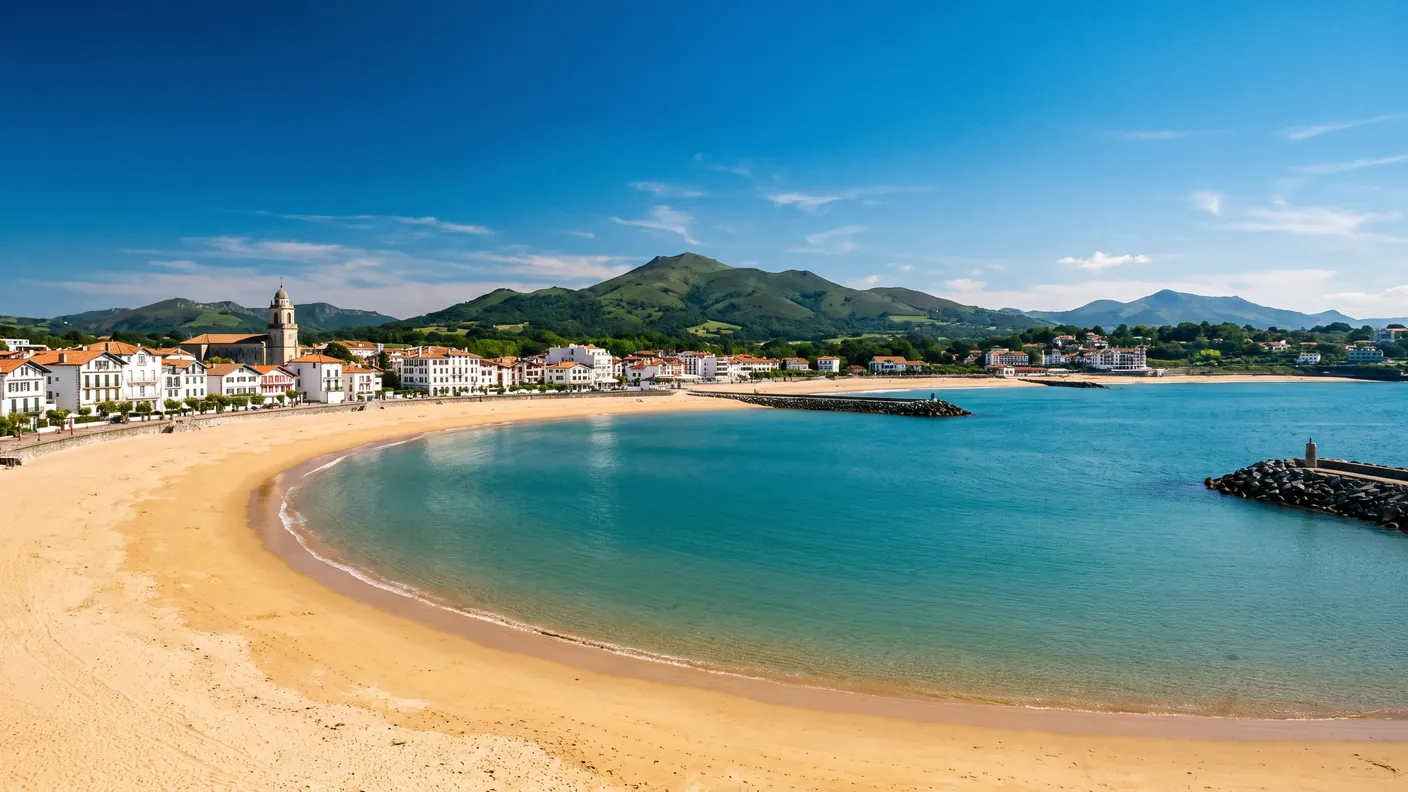
Off to Chili Country
Direct trip from Bordeaux (~2 hours 25 minutes) to Espelette and Labourd, with stops along the way as desired—Cambo, Ainhoa, Sare. Perfect for the chili pepper festival. Written fixed-price quote—no unexpected meter charges.