Bordeaux to Lauzun: Renaissance château and legendary duke
A ducal city in Guyenne, in the Dropt basin: a castle that spans from a medieval fortress to the “Dôme,” a church with a Romanesque portal, an old half-timbered village, and the legacy of the legendary Duke of Lauzun—about 1 hour and 35 minutes from Bordeaux.
Lauzun at a glance
Lauzun is a village of 735 residents in northern Lot-et-Garonne, known for its medieval and Renaissance castle, the Saint-Étienne Church, and its connection to the Duke of Lauzun. From Bordeaux, it’s about 125 km and a 1-hour-35-minute drive; there is no direct train service, but a one-way ticket starts at 218 €. [INSEE 2023]
Useful Information
| Landmark | Details |
|---|---|
| Department | Lot-et-Garonne (47), Nouvelle-Aquitaine |
| Status | Former ducal city · capital of the Pays de Lauzun |
| Population | 735 residents (INSEE 2023) · the residents of Lauzun [1] |
| Area | 24.09 km² · in Guyenne, in the Dropt River basin |
| Distance from Bordeaux | about 125 km · about 1 hour and 35 minutes by car |
| Nearest train station | Marmande or Bergerac (~32 km) — no train station in Lauzun |
| Don't miss it | The castle, Saint-Étienne Church, the Carrérou, and the history of the duke |
A word of honesty right off the bat: the famous Duke of Lauzun was not the peaceful lord of a country castle, but one of the most romantic adventurers of the Grand Siècle—a courtier, a prisoner, and a general in the service of the exiled kings of England. His legend extends far beyond his native village, and that is also what makes Lauzun so endearing.
This guide covers everything you need to know before visiting: where Lauzun is located and what makes it unique, the history of its castle—from the fortress to the “Dôme”—the extraordinary life of the Duke of Lauzun, Saint-Étienne Church and its Black Madonna, the old town and its narrow streets, the village’s role in the Wars of Religion, notable sites in the surrounding area, and the easiest way to get there from Bordeaux.
Where is Lauzun located?
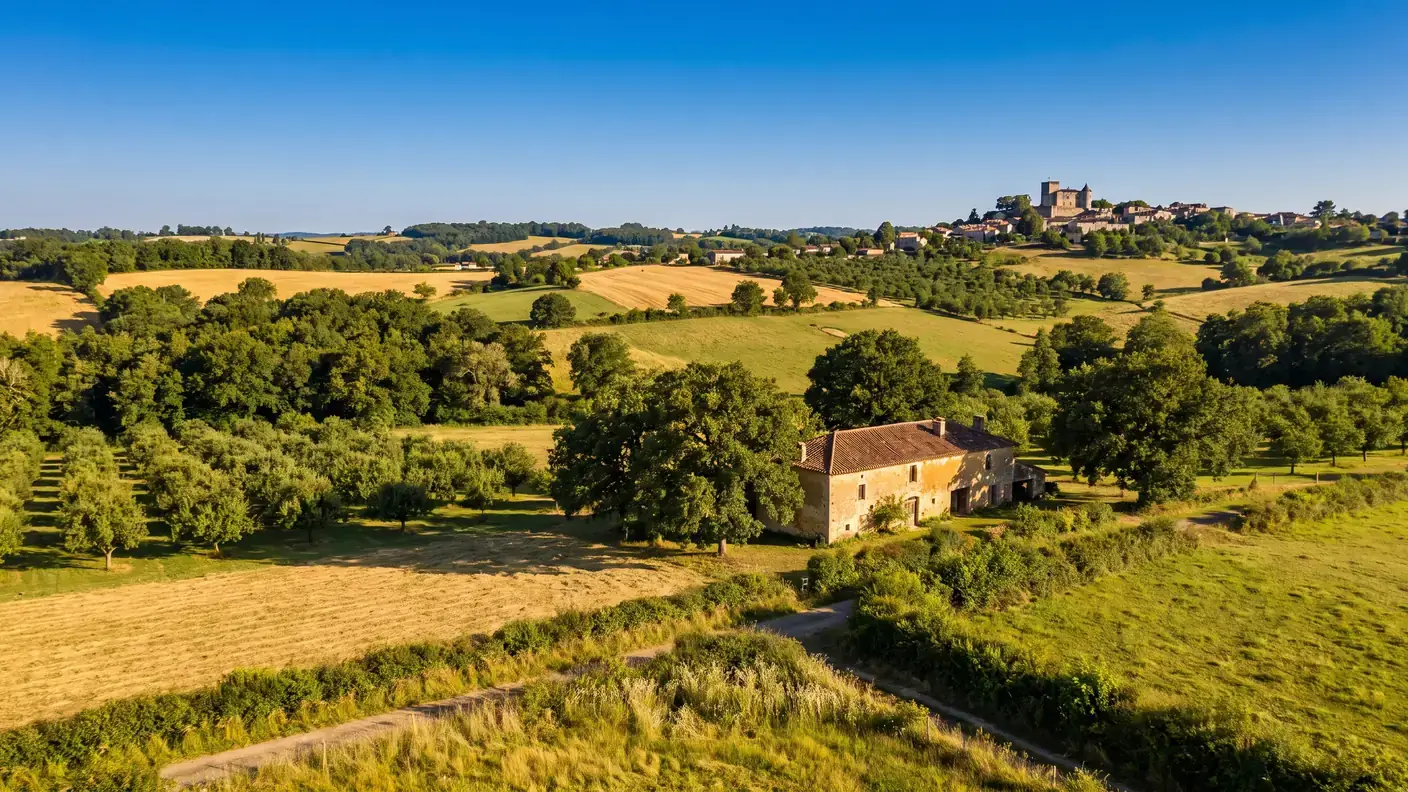
Lauzun is located in Lot-et-Garonne (47), in Nouvelle-Aquitaine, in the northern part of the department, in Guyenne, in the Dropt basin. The town is part of the Marmande arrondissement and lies on the border with the Dordogne—three of its eight neighboring municipalities are in the Périgord region. Its coordinates are 44.63° N and 0.46° E; its INSEE code is 47142, and its ZIP code is 47410. It covers 24.09 km² of hillsides and valleys. This border location, between two departments and two “regions,” explains its cultural heritage and cuisine, which draw equally from Lot-et-Garonne and the neighboring Périgord.
A ducal city in the land of bastides
Lauzun is the seat of the Pays de Lauzun community of municipalities, which comprises about twenty municipalities and more than 10,000 residents. We are here in the heart of Guyenne, on the route of the bastides of the Dropt Valley—the river that was once nicknamed the “River of Guyenne.” Contrary to what is sometimes written, Lauzun is not strictly speaking part of the “Haut-Agenais”: the correct term is Guyenne, the former large province of southwestern France that encompassed the Bordeaux region, the Agen region, and southern Périgord. The town originated in the 13th century around its castle, protected by a rampart and a moat, and it has retained its compact layout, full of curves and narrow streets.
An administrative detail for those who like to be precise: the canton of Lauzun was dissolved during the 2015 redistricting, and the municipality now falls under the canton of Val du Dropt. Historical sources that refer to the “canton of Lauzun” are therefore outdated—but the name Lauzun continues to designate a “region,” that of its intermunicipal community, the direct successor to the old ducal city.
A Shrinking Village
With a population of 735 (2023 census, down from 745 in 2017),[INSEE 2023] Lauzun is a small rural town in slight decline, like many others in this inland region of Guyenne, far from major transportation routes. It should not be confused with the intermunicipal community it leads: the municipality itself has 735 residents, but the Pays de Lauzun encompasses more than 10,000, spread across some twenty villages. The residents are known as Lauzunais. This contrast between a tiny village and a grand ducal past—a listed castle, a duke who went down in history—is precisely what gives Lauzun its somewhat unexpected charm: a place where History, with a capital H, has left a mark disproportionate to its size.
Lauzun Castle: From Fortress to “Dôme”
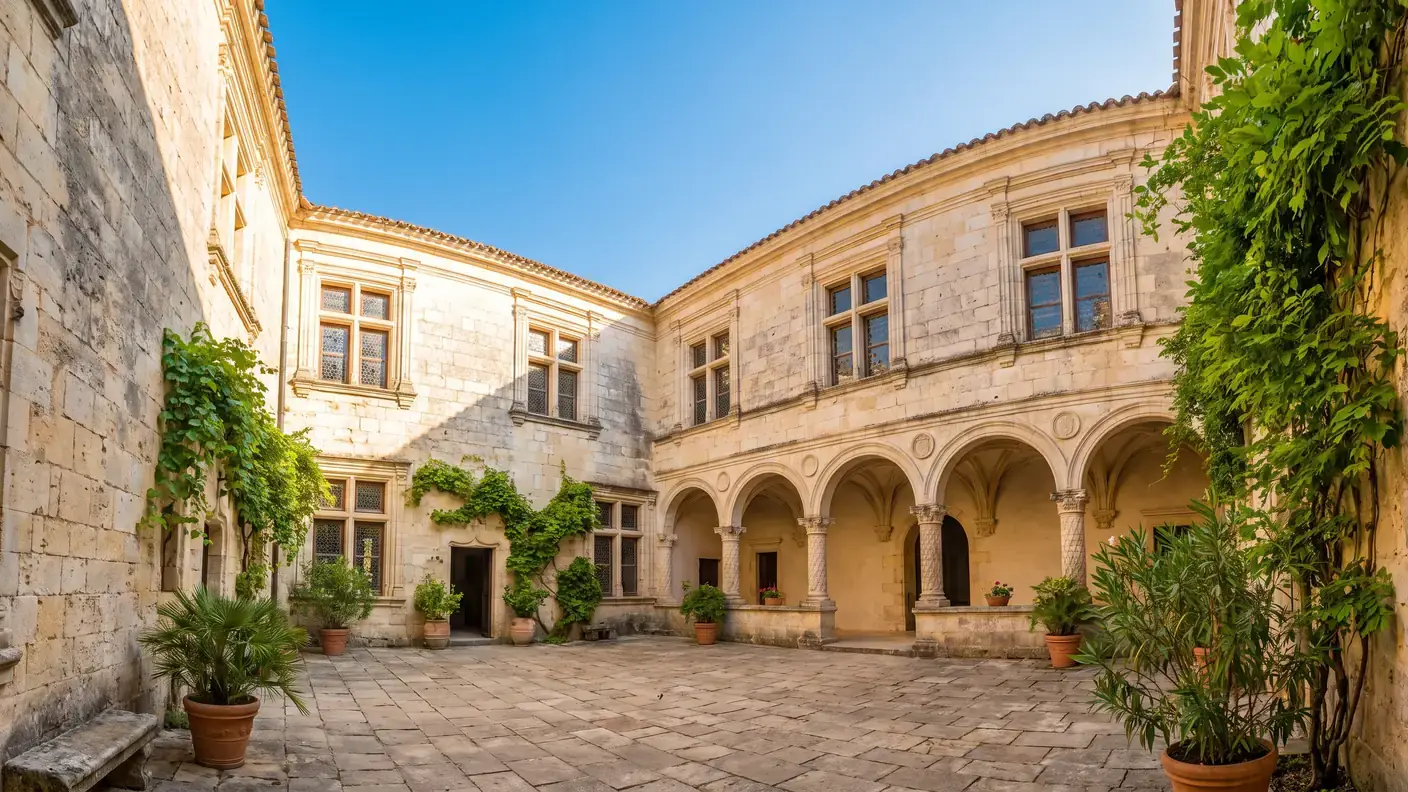
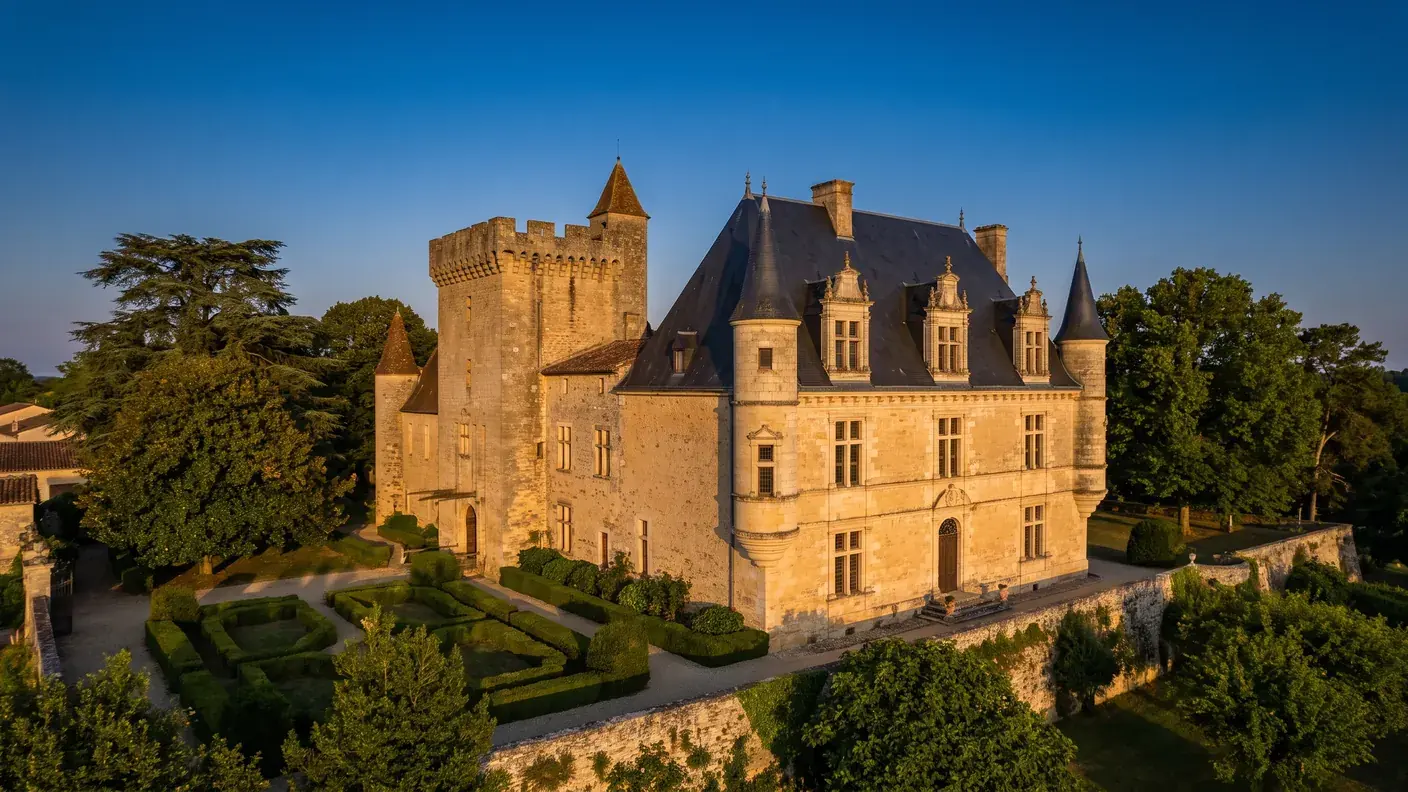
The Château de Lauzun is the town’s most iconic landmark: a complex that combines a medieval fortress with an elegant Renaissance residence. The oldest part dates back to the Middle Ages—a keep from the late 12th or early 13th century, a residential wing from the 14th–15th centuries, and 15th-century ramparts. These are the remnants of the original stronghold, around which the village has nestled. To appreciate this castle is to read five centuries of history carved in stone: on one hand, the rugged defensiveness of the Middle Ages; on the other, the refinement of a pleasure residence—two worlds coexisting on the same site.
From the Medieval Keep to the Renaissance Manor
The castle still has a keep dating back to the 13th century. The Renaissance residence was built around 1539; in the 17th century, a pavilion with a hull-shaped roof, known as the “Dôme,” connected the buildings, prior to restorations and its completion in the 18th century. [POP 2026]
The castle is full of exquisite details: a gateway flanked by four marble columns with Corinthian capitals, the Lauzun coat of arms, two Renaissance fireplaces made of marble, and even a Roman votive altar from the 2nd century—all of these elements have been classified as historic monuments since 1923, and the building itself is also protected (Mérimée reference PA00084153). [POP 2026]
| The Castle of Lauzun | Data |
|---|---|
| Medieval Core | Dungeon (late 12th–13th centuries), residential quarters (14th–15th centuries), ramparts (15th century) |
| Renaissance Wing | Around 1539 |
| "The Dome" | Central Pavilion, circa 1685 (inverted keel roof) |
| Families | Caumont (including the duke), then Gontaut-Biron (18th century) |
| Protection | Historic Monument · Elements Listed Since 1923 |
The “Dôme” and its upside-down boat hull
The castle's silhouette is crowned by a curious central pavilion known as "the Dome", dating from around 1685—a date confirmed by dendrochronology (the analysis of tree rings, which places the felling of the beams between 1677 and 1689) and corroborated by a description from 1784 referring to it as “ninety years old.” It owes its name to its roof shaped like an inverted ship's hull, a structural marvel that crowns the entire structure and gives it such a distinctive appearance in the landscape. This type of inverted roof structure, which reflects the artistry of shipwrights, is rare enough to be worth noting.
On the subject of families, beware of a common misconception: the castle originally belonged to the Caumont family — the family of the Duke of Lauzun, who built the Renaissance wing there — and passed to the Gontaut-Biron in the first quarter of the 18th century, after the duke died without issue. So the order is indeed: Caumont first, then Gontaut.
Visiting hours for the Lauzun Castle vary by season. The sources cited in this guide are not sufficient to guarantee that the castle will be open on a specific date: please confirm access with the Lauzun town hall or the castle’s manager before traveling there.
The Duke of Lauzun: “His Life Is a Novel”
No figure embodies Lauzun better than Antonin Nompar de Caumont (1633–1723), the first Duke of Lauzun, one of the most romantic adventurers at the court of Louis XIV. Born at the Château de Lauzun—sources vary between 1632 and 1633, with a preference for 1633—and died in Paris at nearly 90 years of age, he led an extraordinary life. Saint-Simon summed up his life with the phrase “His life is a novel” (reference). That is an understatement: between royal favor, disgrace, imprisonment, forbidden love affairs, and military campaigns abroad, his biography reads like an adventure serial.
A brilliant officer and witty courtier, Lauzun rose to great heights in the favor of Louis XIV—before suffering a spectacular downfall. This rise was due in part to Madame de Montespan, the king’s mistress, who viewed his ambitions with suspicion and, it is said, coveted the fabulous Montpensier inheritance for her own children. Small in stature—memoirists describe him as frail—but immense in audacity, Lauzun knew how to make himself both indispensable and unbearable, which in turn made for both his fortune and his downfall. He is credited with a thousand witticisms and just as many acts of recklessness; he perfectly embodies the archetype of the Grand Siècle courtier—brilliant, ambitious, and a gambler, ready to risk everything for a favor or a good marriage.
The Marriage to the Grande Mademoiselle
The most famous episode was his planned marriage to Anne Marie Louise d'Orléans, “la Grande Mademoiselle,” the king’s first cousin and one of the wealthiest heiresses in Europe. The fact that a princess of the blood—the granddaughter of Henry IV—wanted to marry a mere Gascon gentleman caused a scandal at court. In 1670, she asked to marry him; Louis XIV initially consented, but then, under pressure from the court, forbade the public wedding a few days later, shattering the princess’s dream (biographical source). A secret marriage may well have taken place, but only later, after Lauzun’s release (around 1682), and it was never officially recognized; the couple separated around 1684. This thwarted love story, blending passion, money, and reasons of state, has been the subject of much writing—from Madame de Sévigné to Saint-Simon.
Pignerol, d'Artagnan, and Fouquet's Fireplace
The fall from grace was sudden. Arrested on November 25, 1671 by d'Artagnan, captain of the Musketeers, Lauzun was imprisoned for nearly ten years at the fortress of Pignerol, in the Alps, the same prison that held so many great state secrets (biographical source). There he rubbed shoulders with another prominent figure who had fallen from grace, the superintendent Fouquet. According to legend, as recounted by historians, Lauzun managed to secretly reach Fouquet's cell through the chimney to chat with him. He did not regain his freedom until April 1681, at the cost of renouncing the lands that the Grande Mademoiselle had given him. Ten years in prison, however, did not dampen his spirit or his taste for intrigue.
Duke to the Kings of England
He did not receive the title of Duke of Lauzun until 1692[Ville de Lauzun 2026]—not for his favors at Versailles, which were never fully restored, but for his service to the Stuarts, the Catholic kings of England in exile (biographical source). In 1688, he organized the escape of Queen Marie of Modena and the Prince of Wales to Calais; in 1690, he commanded the French expedition to Ireland and fought at the famous Battle of the Boyne (biographical source). Made a Knight of the Garter by James II, he ended this illustrious career in great style. He died without issue: the title passed, through marriage, to the de Gontaut family.
Legendary longevity
What is also striking about Lauzun is his longevity: he lived to be nearly 90 years old, spanning the entire reign of Louis XIV and part of the Regency. He remarried in 1695, at over sixty years of age, and had no children. Having witnessed half a century of intrigues, he ended his days as a disillusioned old courtier, yet still feared for his sharp tongue. It was this improbable fate—from favor to the dungeon, from the dungeon to the battlefields of Ireland, and then to old age in Paris—that inspired Saint-Simon to coin his definitive phrase: “His life is a novel.” Even today, this remains the best guide for visiting Lauzun: keep in mind that, behind these quiet stones, one of the most flamboyant figures of the Grand Siècle was born.
A life worth a novel, told in just a few dates:
| Antonin Nompar de Caumont, Duke of Lauzun | Event |
|---|---|
| 1633 | Birth at the Château de Lauzun |
| 1670 | Plans for a marriage to the Grande Mademoiselle, forbidden by Louis XIV |
| 1671 | Arrested by d'Artagnan, imprisoned in Pignerol |
| 1681 | Released after nearly ten years in custody |
| 1688-1690 | In the Service of the Stuarts: The Flight of Marie de Modène, the Battle of the Boyne |
| 1692 | Created Duke of Lauzun; Knight of the Order of the Garter |
| 1723 | Died in Paris at nearly 90 years of age, leaving no descendants |
St. Stephen's Church and its Black Madonna
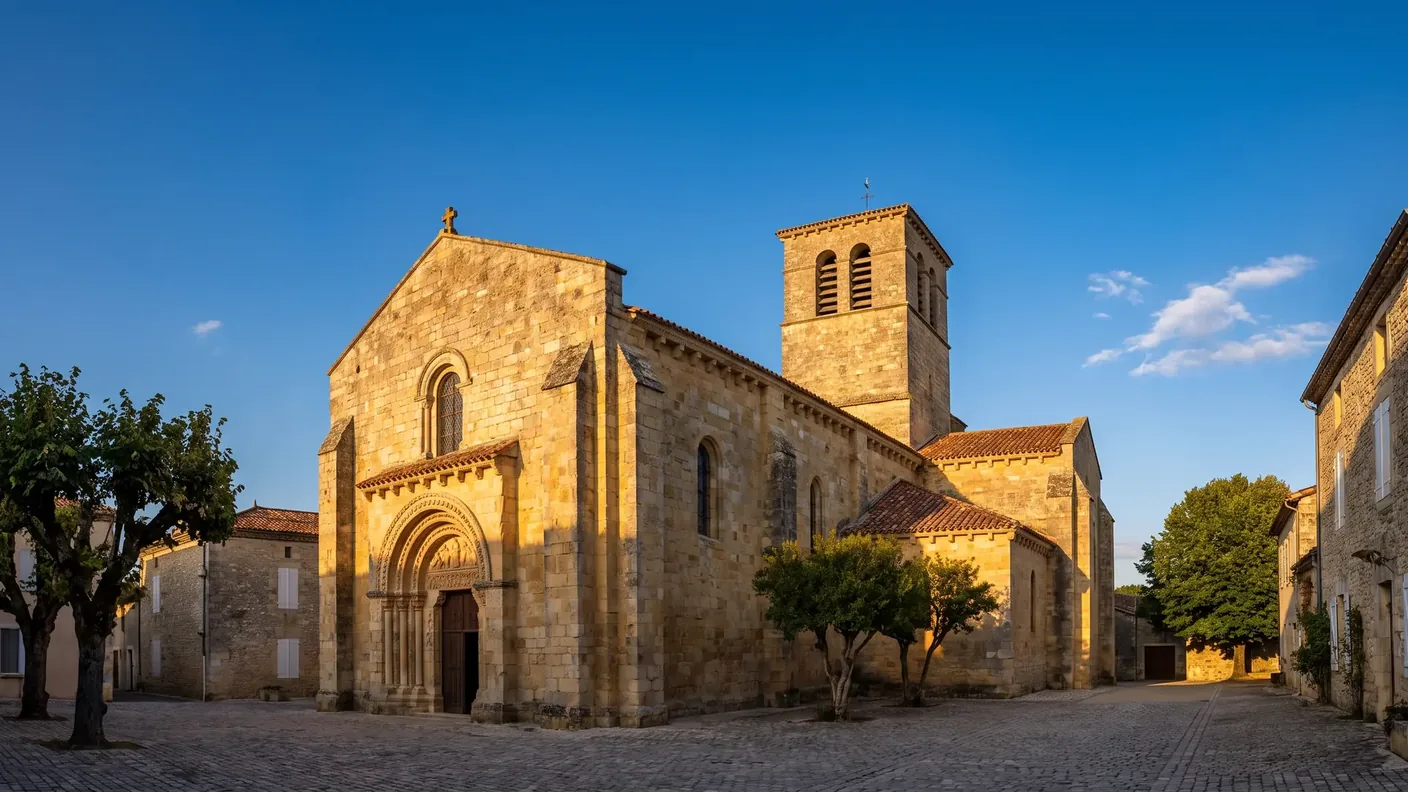
Just a stone's throw from the castle, the church of Lauzun—now dedicated to Saint Stephen, having previously been dedicated to Our Lady of the Assumption—features a beautiful Romanesque portal. This portal, the only remnant of the original Romanesque church, features seven arches a pointed arch resting on two columns with capitals: a late Romanesque example whose form foreshadows the Gothic style. The rest of the building has been altered over the centuries, following the cycles of destruction and reconstruction that have shaped the region. This portal is a fine example of this “transitional” art, in which the Romanesque semicircular arch gradually gives way to the Gothic pointed arch—an architectural shift that can be seen here within a single doorframe.
A Black Madonna Born of Legend
The church's treasure is a 13th-century Black Madonna, known by the Occitan name “ Nostro Damo de la Molo "— Notre-Dame de la Meule. According to tradition, the statue was discovered inside a millstone; it’s a lovely legend, to be taken as such rather than as a historical fact. Black Madonnas, often dating from the Middle Ages, have long been the focus of pilgrimages and devotion in southwestern France, and the one in Lauzun is part of this history of popular piety. The dark color of these statues, once interpreted as a mystery, is most often due to aged wood, candle smoke, or old varnish; nonetheless, for centuries, it has fueled a special fervor.
In terms of protection, there are two distinct levels: the building has been listed as a historic monument since September 3, 2012, while the Récollets altarpiece it houses has been classified as a historic monument since 1910. This subtle difference in terminology—listing for the building, classification for the object—serves as a reminder that, even within the same church, not everything is protected to the same degree. The classification, which is older and carries greater weight, highlights the altarpiece’s exceptional value; while the designation, which is more recent, acknowledges the building’s significance without granting it the highest level of protection. These somewhat technical distinctions speak to the rich heritage of a small country church that appears unremarkable from the outside. [POP 2026]
The Old Town: Le Carrérou and the House with Caryatids
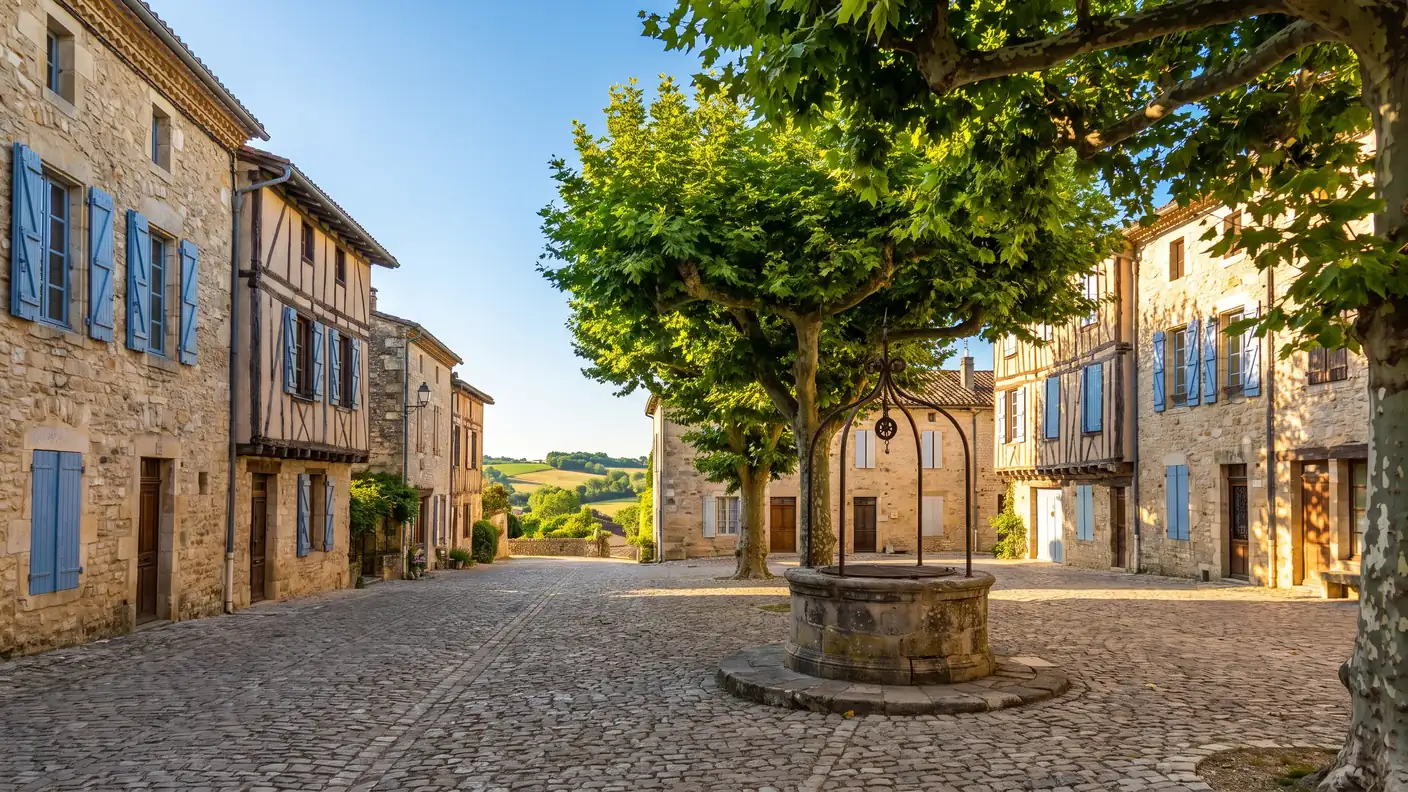
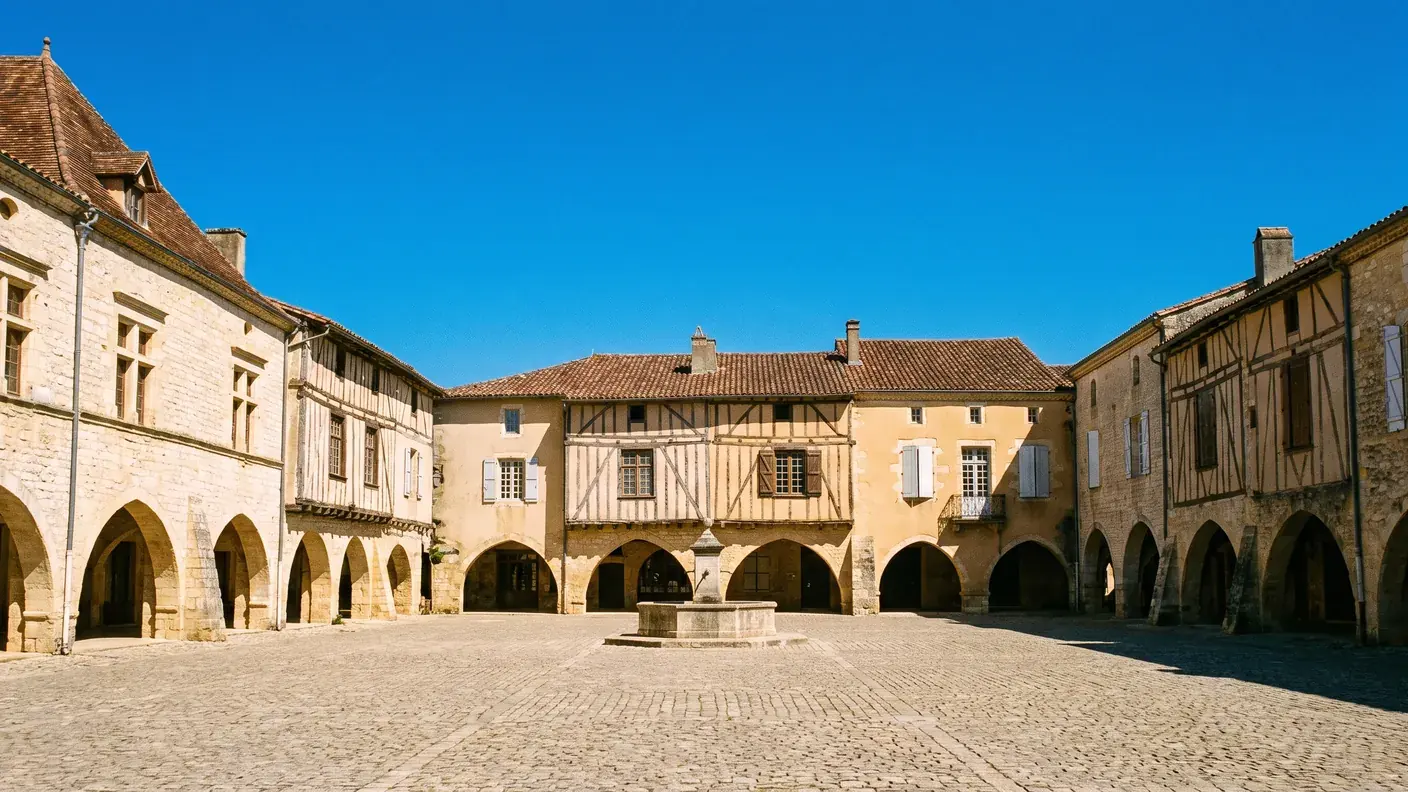
The historic town of Lauzun, which grew up within the castle walls, is best explored on foot through a maze of narrow streets. Here you’ll find beautiful half-timbered houses, with wooden frames filled with cob and corbelled floors—a style typical of medieval architecture in southwestern France. This construction technique involved building each floor slightly forward of the one below to gain more floor space. It’s a village on a human scale, where you can stroll at a leisurely pace between the castle that towers overhead and the church that watches over the town square. There’s nothing ostentatious here: an authentic village, still inhabited and vibrant, that hasn’t been turned into a tourist attraction.
Le Carrérou and the Pompéïf Alley
Two points of interest are worth noting. The Carrérou is a medieval covered passageway, a sheltered alley that winds its way between the houses—a remnant of the compact urban layout of the walled town, where space was saved by covering the passageways. Not far away, the Venelle de Pompéïf is one of those narrow, charming passageways that give old Lauzun its distinctive character. These are small details, but they are what give the town its atmosphere of a well-preserved medieval village: you pass from one street to another through arcades, discover a small square around the bend of a wall, and walk along the remains of the rampart. Here, the space unfolds at pedestrian level.
Also worth noting is the House with Caryatids, built later (1830): its façade, adorned with sculpted figures, adds an unusual touch to the old village. Spanning from the medieval half-timbered houses to the 19th-century caryatids, Lauzun offers, within just a few hundred meters, a condensed showcase of domestic architecture—without the crowds found at more popular sites.
That’s where Lauzun’s strength lies: in its scale. You can walk around the old town in half an hour, but every nook and cranny—a vaulted passageway, an ancient doorway, a stone bearing a coat of arms—tells a story. It’s a “everyday” heritage—modest and authentic—that speaks to those who take the time to look up, far from the tourist-oriented spectacle of major attractions. You stroll through it as if turning the pages of an open-air history book. And you quickly realize that Lauzun doesn’t need long lines or souvenir shops to charm visitors: its beauty is the understated charm of a genuine Guyenne village that has remained true to itself, where the past is just around every corner.
Lauzun in the Wars of Religion
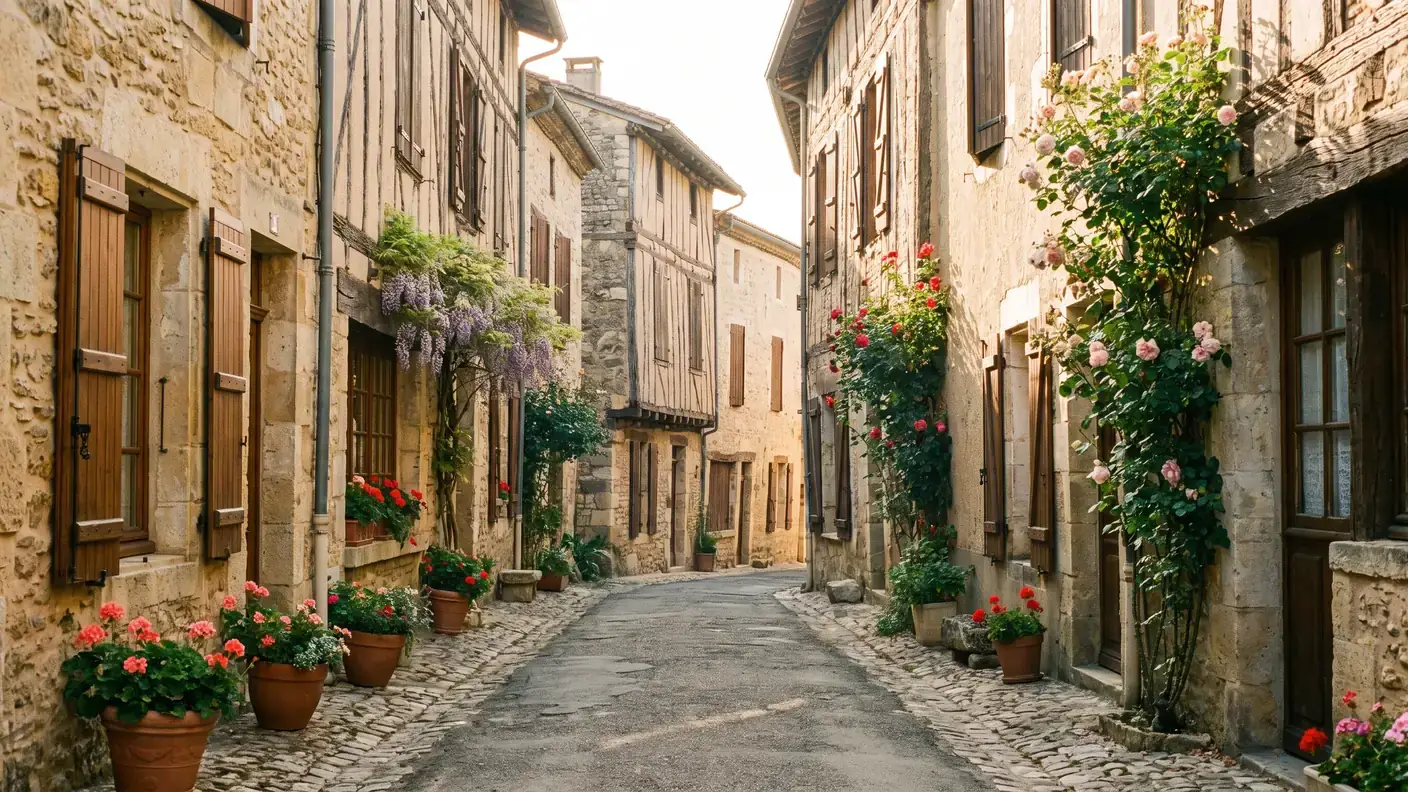
Now a peaceful little village, Lauzun was, in the 16th century, a scene of major upheavals in French history. The powerful Caumont family, lords of the manor, hosted the kingdom’s most prominent figures there and, like so many others, found themselves torn apart by the Wars of Religion that ravaged the Guyenne region.
Kings and Princes in Lauzun
In 1565, the young King Charles IX and his mother, Catherine de’ Medici, were welcomed at Lauzun during the royal Grand Tour of France—a two-year journey across the kingdom intended to introduce the king to his subjects and ease religious tensions. In 1570, the seigneury of Lauzun was elevated to the status of a county, a sign of royal favor toward the Caumont family. And in 1576—the very year construction began on the castle’s Renaissance wing—Henri of Navarre, the future Henri IV, leader of the Protestant party and a neighbor through his kingdom of Navarre, stayed in Lauzun. Within a decade, the small town thus saw both the royal family and the future sovereign pass through its gates—proof that it was, at the time, among the key players in the political landscape of Guyenne.
A Family Divided by Faith
The Caumont family alone illustrates the religious divisions of the time: one branch, the Caumont-La Force family, was Protestant; the other, the Caumont-Lauzun family, remained Catholic. This shows just how deeply the Wars of Religion divided even families, pitting brothers and cousins against one another. Sixteenth-century Guyenne, a mosaic of Catholic and Protestant fiefdoms, was one of the major theaters of the Wars of Religion, and Lauzun played its part there.
Finally, to clear up a common misunderstanding: while Lauzun is indeed a seigneury in Guyenne, there is no evidence that it played a role in “English Guyenne” during the Hundred Years’ War—the Caumonts were on the French side at that time. One also sometimes reads “Haut-Agenais” in reference to it: the correct term is Guyenne, the ancient large province that encompassed the Bordeaux region, the Agen region, and southern Périgord. These clarifications are by no means pedantic: they place Lauzun within the proper historical context—that of the seigneuries of Guyenne and their prominent families.
What's there to see around Lauzun?
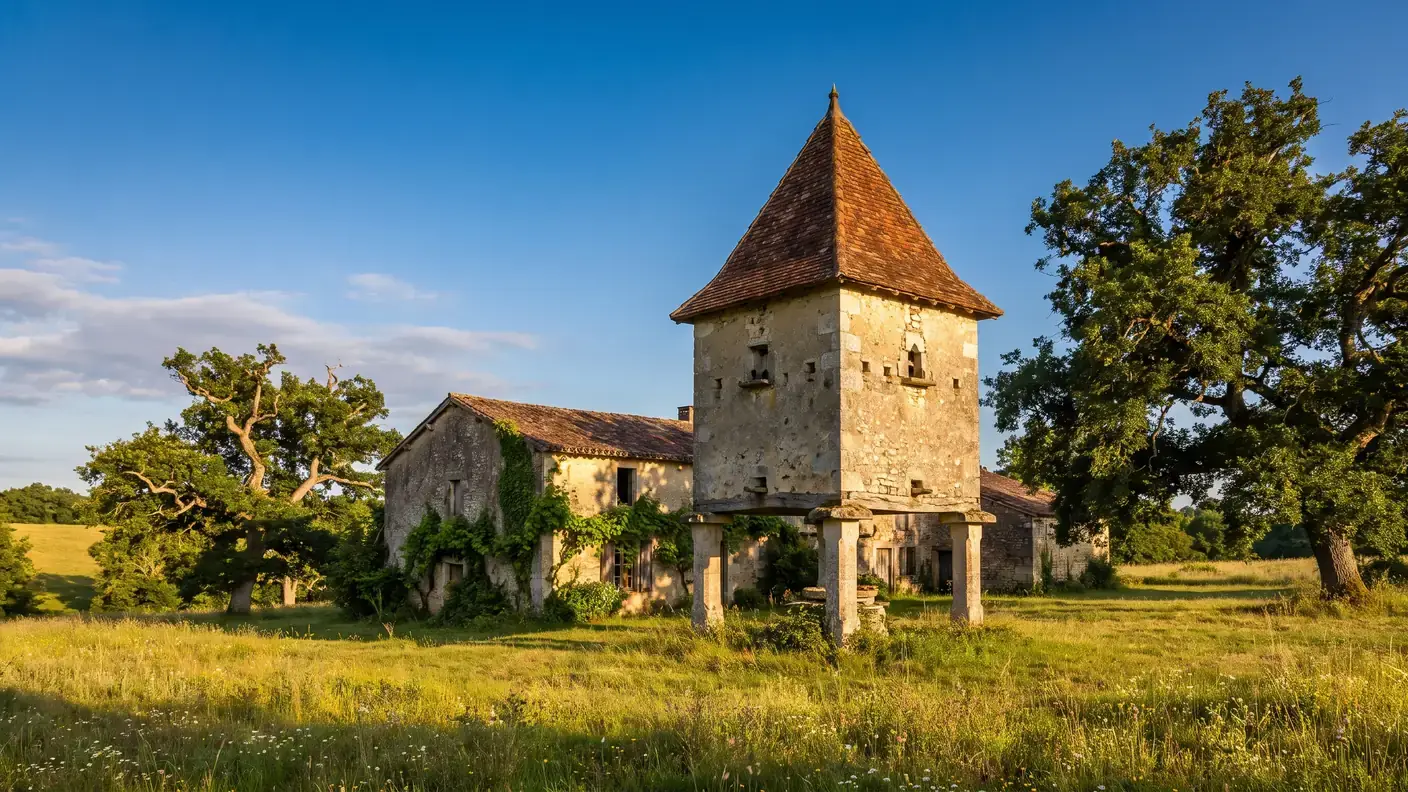
Lauzun is located in the heart of a region known for its bastides, castles, and vineyards, straddling the departments of Lot-et-Garonne and Dordogne. The Dropt Valley is home to some of the most beautiful villages, and the Côtes de Duras wine region is just nearby. It’s one of those rural areas where you never have to drive far before coming across a bastide, a castle, or a winery—the kind of destination that’s perfect for slow tourism, away from the crowded major attractions.
Bastides and Nearby Villages
Eymet, about 7 km away (already in the Dordogne, on the Dropt River), is a superb bastide in the Périgord Pourpre region with a covered market square, popular with British visitors living in the area. Miramont-de-Guyenne, about ten kilometers away, is another bastide, known for its lively market and its grid-like layout. Castillonnès, a bastide dating back to 1259 perched above the Dropt Valley, rounds out this tour of medieval towns, with its Place des Cornières and its church featuring a listed altarpiece. All these villages are just a few minutes away, within a very small radius: the Dropt Valley is one of the most beautiful “bastide regions” in France, and Lauzun is an ideal starting point for exploring it.
The Château and Wine of Duras
To the west, Duras is well worth a visit: its imposing medieval and Renaissance castle (designated a historic monument), which once belonged to the Dukes of Duras, overlooks the valley, and its vineyards produce Côtes de Duras, one of France’s oldest appellations, renowned for its dry and sweet whites as well as its reds. It’s the perfect way to round out a heritage day with a wine tasting in this hidden gem of a region between Bordeaux and Bergerac. Stay at Lauzun, explore within a 15-kilometer radius, and let each village add its own charm to the experience: a bastide, a castle, a winery—enough to fill a wonderful day without ever having to drive far.
| Around Lauzun | Distance / Marker | Interest |
|---|---|---|
| Eymet | ~7 km | A bastide in the Périgord Pourpre region (Dordogne) |
| Miramont-de-Guyenne | ~10 km | Bastide, Market |
| Duras | ~15 km | Château MH, Côtes de Duras Vineyard |
| Castillonnès | ~15 km | A bastide dating from 1259, in the Dropt Valley |
| Marmande | ~32 km | Subprefecture, TER train station |
When is the best time to visit Lauzun?
Lauzun is a pleasant place to visit from spring through fall, when the castle is open and the countryside of Guyenne is ablaze with its most beautiful colors. Each season has its own atmosphere, but not all are equally appealing depending on whether you prefer historic sites, nature, or vineyards. Spring (April–June) brings the orchards and hillsides to life, with soft light that’s perfect for strolling through the old town and visiting the castle. Summer is warm and sunny: it's the height of the tourist season, with markets and events in the nearby bastides, and the tall trees provide shade.
Fall is a stunning time of year in this land of vineyards and plum trees: it’s harvest season in Duras and the Bergerac region, when the wineries open their doors and the cuisine of southwestern France (foie gras, porcini mushrooms, new wines) is in full swing. The hills of Guyenne are ablaze with shades of gold and russet, offering beautiful light for photography. Winter is quieter—the castle may be closed, but the town, the church, and the narrow streets can be explored without the crowds, in the subdued charm of a village at rest.
A practical note: Since the castle is open to visitors only during specific hours and seasons, it’s best to check the opening days before you visit, especially during the off-season. However, the village, the church, the Carrérou, and the narrow streets are open to the public year-round.
For a day trip from Bordeaux, spring and early fall are ideal: visit the castle and church in Lauzun, stroll through Carrérou, then head on to Eymet, Miramont, or a winery in Duras. With a driver handling the transportation and wine tastings, the day flows smoothly without the hassle of driving—a pleasant way to discover this little-known corner of southwestern France, where heritage, countryside, and wines come together.
How to get to Lauzun from Bordeaux
Lauzun is located about 125 km from Bordeaux, which is about a 1-hour-and-35-minute drive. From Bordeaux, take the A62 highway toward Toulouse, then follow the departmental roads through the Dropt Valley, passing through a landscape of rolling hills and bastides. It is a small rural village with no train station: the nearest TER stations are in Marmande and Bergerac, both about 30 kilometers away, with no convenient direct connection to Lauzun. In other words, without a car, getting to the village requires several transfers and a lot of patience.
The convenience of door-to-door service
This is where a chauffeured transfer really comes into its own: a direct, door-to-door trip from Bordeaux with no transfers, giving you the freedom to explore the Dropt Valley afterward—Eymet, Miramont, Castillonnès, and a winery in Duras. From Bordeaux, we offer this trip at a fixed price quoted in advance: approximately €296 for the one-way trip, in a Mercedes sedan or a van seating up to 8 passengers, with a professional chauffeur. You’ll receive a written quote, with no unexpected meter charges.
The appeal of a private car service is especially evident when traveling with others, or whenever you want to sample wines from Duras and the Bergerac region without worrying about the return trip. You board in Bordeaux, get off at the foot of the château, and the driver can wait or take you on to the next stops—a village, a bastide, a winery—something no regular bus route offers in this rural area. The price, set in advance, doesn’t change, regardless of traffic or stops: it offers the peace of mind that comes with a fixed budget and a hassle-free trip to a destination that public transportation serves poorly.
| Route | Distance | Duration | Landmark |
|---|---|---|---|
| Bordeaux → Lauzun | ~125 km | around 1:35 | Starting at ~€218 for a private chauffeur service |
| Lauzun → Marmande (train station) | ~32 km | ~40 min | nearest TER station |
| Lauzun → Eymet | ~7 km | ~10 min | Périgord Pourpre bastide |
| Lauzun → Duras | ~15 km | ~20 min | Château and Côtes de Duras |
This option is also ideal for transfers to or from Bordeaux-Mérignac Airport (about 110 km away) for visitors exploring the region who want to travel directly to the Pays de Lauzun without renting a car. Whether you’re traveling in a group, with your family, on a wine-tasting trip, or for a heritage weekend, the chauffeur service will tailor the service to your itinerary.
Whether it’s for a heritage and vineyard tour, a visit to the château, or an event in the Lauzun region, booking an executive car service guarantees a comfortable and punctual ride—book a driver from Bordeaux to Lauzun or explore all our destinations.
Frequently Asked Questions
Where is Lauzun located?
Lauzun is a village in Lot-et-Garonne (47), in Nouvelle-Aquitaine, located in the northern part of the department, in Guyenne, in the Dropt basin, and on the border with the Dordogne. The seat of the Pays de Lauzun, this village of 735 residents is located about 125 km southeast of Bordeaux and about 30 kilometers from Marmande and Bergerac.
What is the distance between Bordeaux and Lauzun?
About 125 km by road, or about 1 hour and 35 minutes. With a private chauffeur from Bordeaux, the fare is fixed and provided in advance, starting at about €296 one way (sedan or van, door-to-door price).
Who was the Duke of Lauzun?
Antonin Nompar de Caumont (1633–1723), the first Duke of Lauzun, was one of Louis XIV’s most colorful courtiers. First a favorite and then fallen from grace, he nearly married the Grande Mademoiselle, was arrested by d’Artagnan and imprisoned for nearly ten years at Pignerol, and was granted the title of duke in 1692 for his service to the exiled kings of England (he fought at the Battle of the Boyne in 1690). He died at nearly 90 years of age without issue, inspiring Saint-Simon to say, “His life is a novel.”
Can we tour the Lauzun Castle?
Visiting hours for the Lauzun Castle vary by season. The sources cited in this guide are not sufficient to guarantee that the castle will be open on a specific date: please confirm access with the Lauzun town hall or the castle’s manager before traveling there.
What is the connection between Lauzun and La Grande Mademoiselle?
In 1670, Anne Marie Louise d'Orléans, “la Grande Mademoiselle,” a cousin of Louis XIV and a woman of immense wealth, asked to marry the Count of Lauzun. The king consented but then banned the public wedding a few days later. A secret wedding is said to have taken place later, after Lauzun’s release, but it was never officially recognized.
Why was the Duke of Lauzun imprisoned?
Having fallen from grace in 1671 (a downfall partly attributed to Madame de Montespan), he was arrested by d'Artagnan, the captain of the Musketeers, and imprisoned for nearly ten years at the fortress of Pignerol, where Superintendent Fouquet was also being held. He was released in April 1681.
What is the Carrérou at Lauzun?
The Carrérou is a medieval covered passageway, a sheltered alley that winds its way between the houses of the old town of Lauzun, which grew up within the castle walls. Together with the Pompéïf alley and the half-timbered houses, it contributes to the charm of the village’s historic center.
What is there to see at Saint-Étienne Church in Lauzun?
Its Romanesque portal with seven pointed arches—the only remnant of the original church—and a 13th-century Black Madonna, the “Nostro Damo de la Molo” (Our Lady of the Millstone). The building has been designated a historic monument since 2012, and the Récollets altarpiece it houses has been classified as a historic monument since 1910.
Which villages are worth visiting near Lauzun?
The bastides of Eymet (~7 km, in the Dordogne), Miramont-de-Guyenne (~10 km), and Castillonnès (~15 km), as well as Duras, with its listed castle and the Côtes de Duras vineyards (~15 km). A little further on, Bergerac and its vineyards, or Monbazillac and its sweet wines, extend the exploration. Lauzun is at the heart of a region of bastides, castles, and wines, straddling the Lot-et-Garonne and Dordogne departments: a radius of about twenty kilometers is enough to fill a wonderful day.
Is there a train station in Lauzun?
No, Lauzun does not have a train station. The nearest TER stations are in Marmande and Bergerac, about 30 kilometers away. For a direct, door-to-door trip from Bordeaux with no transfers, a chauffeured transfer is by far the most convenient option in this rural area.
Is Lauzun in Agenais or in Guyenne?
In Guyenne. Although administratively located in Lot-et-Garonne (whose prefecture is Agen), Lauzun is historically located in Guyenne, in the Dropt basin—the “river of Guyenne”—in the land of the bastides—and not in the “Haut-Agenais,” a term not applied to it by historical sources.
When is the best time to visit Lauzun?
In spring and fall, enjoy the soft light, the colorful countryside of Guyenne, and the château, which is open to visitors. Fall coincides with the grape harvest in Duras and the Bergerac region. Winter is quieter; the château is sometimes closed, but you can explore the village without the crowds.
Can I book a professional chauffeur from Bordeaux to Lauzun?
Yes. We offer the Bordeaux → Lauzun route (~125 km, about 1 hour 35 minutes) at a fixed price, starting at approximately €296 one-way, in a Mercedes sedan or a van seating up to 8 passengers. The trip is direct, door-to-door, with optional stops along the way (Eymet, Miramont, a winery in Duras).
Further Reading
- The neighboring bastide dating from 1259, on the Dropt River: see the Castillonnès Guide (Place des Cornières, market hall, altarpiece)
- The bastide of the "Purple Périgord," just nearby: see the Eymet Guide (arcaded square, medieval castle)
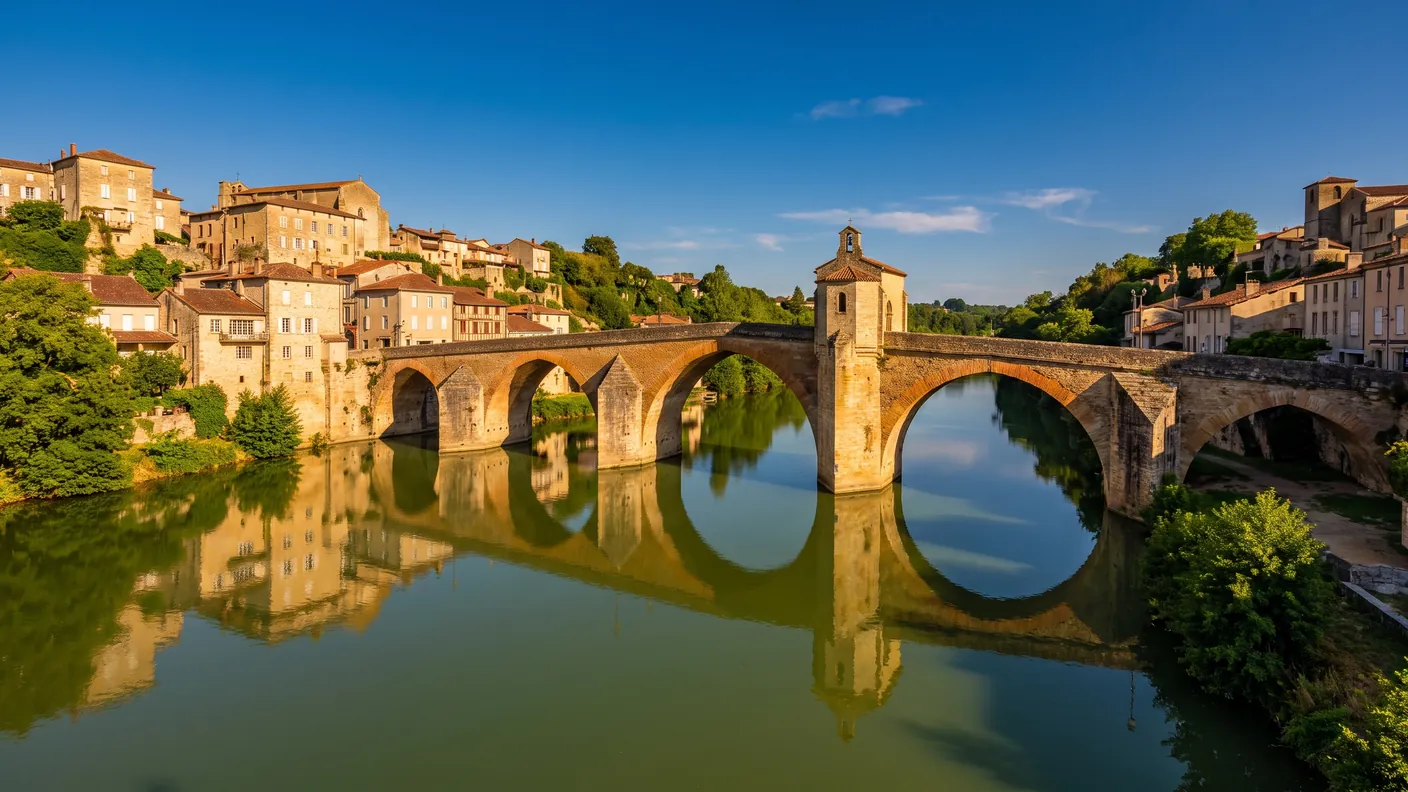
- The Grand Bastide of Lot-et-Garonne: See the Guide to Villeneuve-sur-Lot (Pont-Vieux, prunes)
- Plan your trip: Book a private driver from Bordeaux to Lauzun or explore all our destinations
Sources and References
- INSEE — Regional Comparison Tool, Lauzun — Population and Municipal Data
- Lot-et-Garonne Departmental Archives — Medieval Agenais — Historical Context and the Château de Lauzun
- Ministry of Culture, POP — Lauzun Castle — Architectural Phases and Heritage Preservation
- Town of Lauzun — History of Lauzun — The Caumont Family, the Duke, and Local History
- Ministry of Culture, POP — Saint-Étienne Church — preservation of the building
- City of Lauzun — The Lauzunais No. 28 — Restoration and Heritage of the Church
Article updated in July 2026.
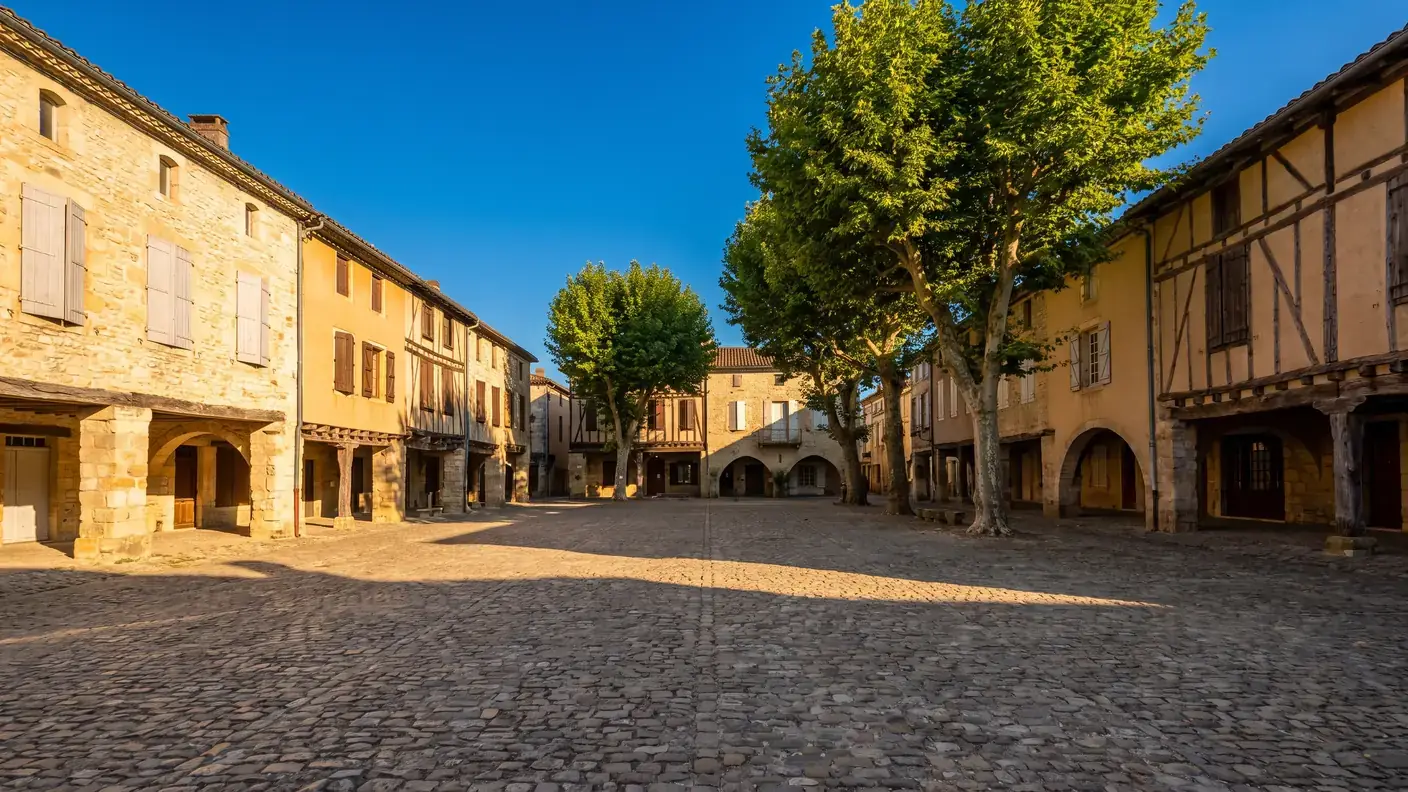
On the Way to the Lauzun Region
Direct ride from Bordeaux (~1 hr 35 min) to Lauzun, with stops along the way as desired—Eymet, Miramont, and a winery in Duras. Fixed-price quote in writing, with no unexpected meter charges.