
Explore Marseille from Bordeaux
France’s second-largest city, founded by the Greeks 2,600 years ago: the Old Port and the Panier district, Notre-Dame de la Garde, the Calanques and the Château d’If, the MuCEM, and bouillabaisse. This complete guide also covers the journey from Bordeaux.
Marseille at a Glance
Marseille includes the Old Port, the Panier district, Notre-Dame de la Garde, the MuCEM, the Calanques, and the Château d'If. From Bordeaux, the listed driving distance is 645 km, and the trip takes approximately 6 hours and 26 minutes. A private chauffeur transfer is available starting at 880 € one-way, at a fixed price confirmed prior to booking, with drop-off at the agreed-upon address.
Here are the key details to know before you go. The distance, duration, and price shown are based on the booking engine’s data for the Bordeaux–Marseille route; the fixed fare is provided in advance.
| Landmark | Details |
|---|---|
| Department | Bouches-du-Rhône (13), PACA region |
| Status | Prefecture · France's second-largest city · 16 arrondissements (8 sectors) |
| Population | approximately 886,000 residents (INSEE 2023) · the people of Marseille |
| Area | 240.6 km² · 57 km of coastline, including 24 km of calanques |
| Must-sees | The Old Port, Notre-Dame de la Garde, the Calanques, the MuCEM |
| Distance from Bordeaux | about 645 km · about 6 hours and 26 minutes by car |
| Foundation | around 600 B.C. by the Greeks of Phocaea (Massalia) |
A word of clarification from the outset: even a city as well known as Marseille is surrounded by misconceptions, which this guide corrects with supporting sources. Marseille was founded by the Greeks, not by the Romans, who annexed it much later. Its Notre-Dame de la Garde Basilica is not designated as a historic monument; the protected site is the hill on which it stands. The gilded statue of the Bonne Mère is made of copper covered with gold leaf, not solid gold. “La Marseillaise” was composed in Strasbourg, not Marseille. The plague of 1720 did not wipe out “half” the city, but about one-third. Finally, the port of Marseille is the largest in France, but the fifth largest in Europe. Every statement in this guide is backed by verifiable sources.
Here we’ll go over everything you need to know: the location of Marseille and its demographics, its Greek origins and its nickname as the “Phocaean City,” the Old Port and the Panier district with the MuCEM, the Notre-Dame de la Garde Basilica, the Calanques and the Château d’If, the city’s turbulent history, its iconic cuisine, the surrounding areas stretching to Cassis and Aix-en-Provence, the best time of year to visit, and how to plan your trip from Bordeaux—all thoroughly researched and verified.
Where is Marseille located?
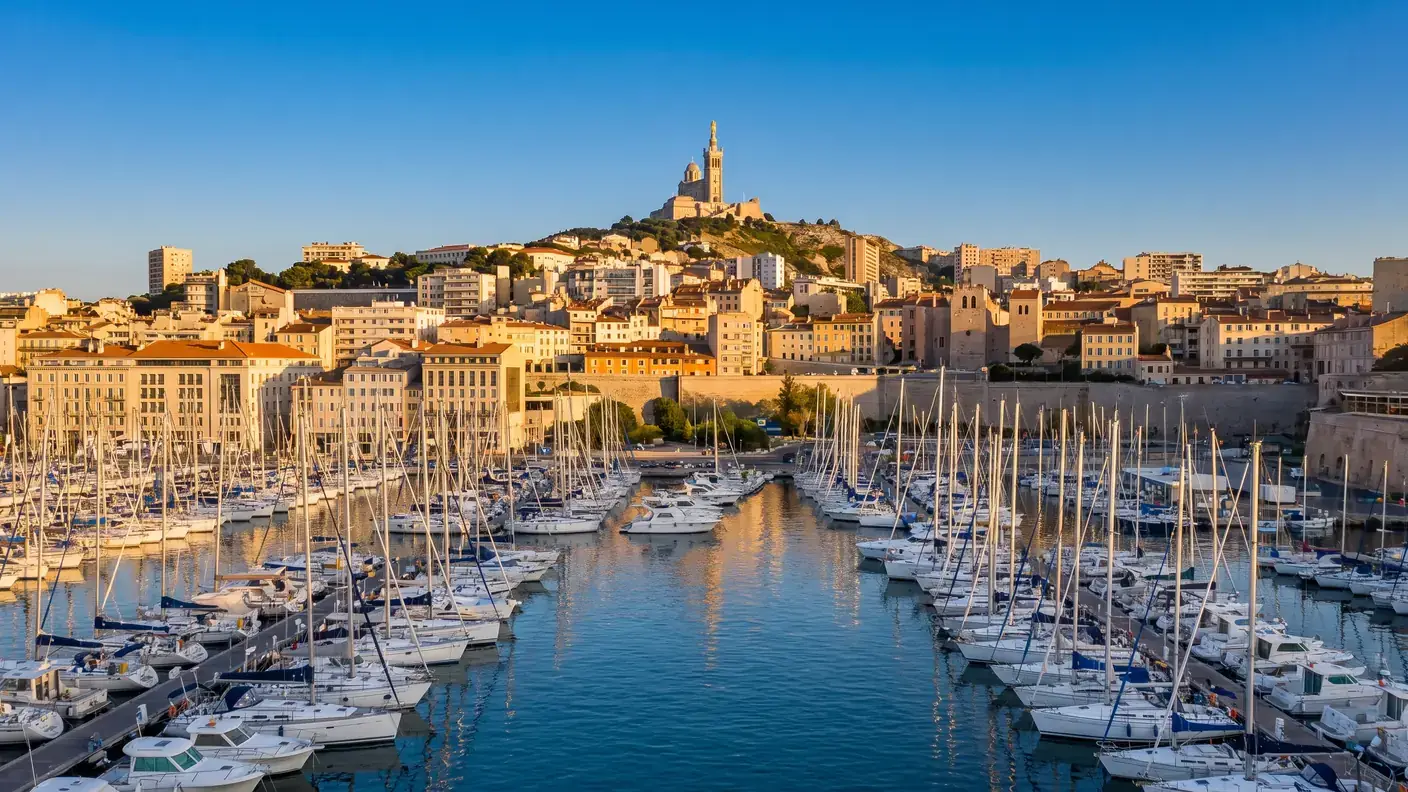
Marseille is located in southeastern France, on the Mediterranean coast, in the Bouches-du-Rhône department (13), of which it is the prefecture, and it is the capital of the Provence-Alpes-Côte d'Azur region (PACA). As the second-most populous municipality in France after Paris, it covers 240.6 square kilometers—more than twice the area of Paris—along a 57-kilometer coastline, including 24 kilometers of calanques, those spectacular limestone cliffs. The city is organized into 16 municipal districts, grouped in pairs into 8 sectors—an organizational structure unique to Marseille, without the spiral layout of Paris. Its Grand Port Maritime is the largest in France by tonnage and the fifth largest in Europe. Nestled against its limestone hills and opening onto the Mediterranean, Marseille is a global, cosmopolitan, and sun-drenched city.
France's second most populous city
With approximately 886,000 residents (2023 municipal population), Marseille is by far France’s second most populous city, ahead of Lyon. Its residents are known as Marseillais, and the city is nicknamed the “Cité Phocéenne” after its Greek founders from Phocaea. Beyond the city limits, the Marseille-Aix urban area has approximately 1.65 million residents, making it the third largest in France, while the Aix-Marseille-Provence Metropolis, which comprises 92 municipalities, approaches 1.9 million. This conveys the importance of this great southern city, the economic and cultural capital of Provence and a historic gateway to the Mediterranean and the East. Marseille has a strong, down-to-earth, rebellious identity, very different from that of other French metropolitan areas. It is a city unlike any other, and loved for precisely that reason.
A City and the Sea
What strikes you first about Marseille is the constant presence of the sea. The Old Port extends into the heart of the city, the limestone hills plunge into turquoise waters, and the horizon is dotted with islands—Frioul, Château d’If, and the Riou archipelago. The bright, golden Mediterranean light carves the ochre facades and tiled roofs. From the Calanques mountain range in the south to L’Estaque in the north, the city hugs a landscape of hills and coves, swept by the mistral—that northwesterly wind that clears the sky and turns it a brilliant blue. This exceptional geography, where land meets sea, makes Marseille as much an outdoor destination as a city of art and history: here, you can move seamlessly from a museum to a calanque, from a bustling market to a beach. That is the unique charm of Marseille.
Massalia, the oldest city in France
Marseille is the oldest city in France: it was founded around 600 B.C. by Greek sailors and merchants from Phocaea, in Asia Minor, under the name Massalia. This Greek—rather than Roman—origin is what makes the city of Marseille so unique, with a history dating back twenty-six centuries.
Greeks from Phocaea
Around 600 B.C., Greeks from Phocaea (a city in Ionia, on the coast of present-day Turkey, near Izmir) founded a trading post on the shores of a sheltered cove, Lacydon—now known as the Old Port. They named their city Massalia (Massilia in Latin). This is the origin of its nickname, “the Phocaean city,” and the reason why the people of Marseille are sometimes called “the Phocaeans.” Massalia became a powerful trading city, which expanded along the coast by founding trading posts of its own: Agde, Antibes, Nice, and Monaco owe their origins to it. Contrary to a persistent misconception, it was not the Romans who founded Marseille: they merely annexed the city much later, after Julius Caesar’s siege in 49 B.C. Marseille had already been a major Greek city for five centuries.
The Myth of Gyptis and Protis
The founding of Marseille is shrouded in a beautiful legend, which should be presented as such. According to the account reported by the Roman historian Justin, the Greek sailor Protis is said to have landed at Lacydon on the day that Nannus, the local king of the Segobriges, was marrying off his daughter Gyptis. According to custom, the princess was to choose her husband by offering him a cup during the banquet: she presented it to the handsome Greek stranger, thereby sealing the alliance and the founding of the city. It’s a lovely story, but a legend, not a historical fact—and there is, in fact, another, older version in Aristotle, where the names differ. What is archaeologically attested, however, is the presence of Greek settlers around Lake Lacydon as early as the beginning of the 6th century B.C., confirmed by excavations in the Panier district. The legend tells of the meeting of two worlds; archaeology confirms the Greek settlement.
Pytheas, the Explorer from Massalia
Greek Massalia was not merely a trading post: it was a center of learning and adventure. It was the birthplace of one of antiquity’s greatest explorers, Pytheas, a Greek navigator and astronomer born in Massalia around 380 B.C. Around 325 B.C., he undertook an extraordinary journey northward, sailing along the coasts of Gaul and Britain, and may have reached Iceland or Norway: he was the first to describe the Arctic regions, the midnight sun, and the pack ice, and to link the tides to the Moon. A powerful maritime city, Massalia also expanded along the Mediterranean coast, in turn founding trading posts that would become Agde, Antibes, Nice, and Monaco. Greek emigration intensified after the fall of Phocaea to the Persians under Cyrus, around 546 B.C. From this period of Greek vitality, Marseille retains the nickname “Phocaean city” and a tradition of openness to the open sea.
The Old Port, Le Panier, and the MuCEM
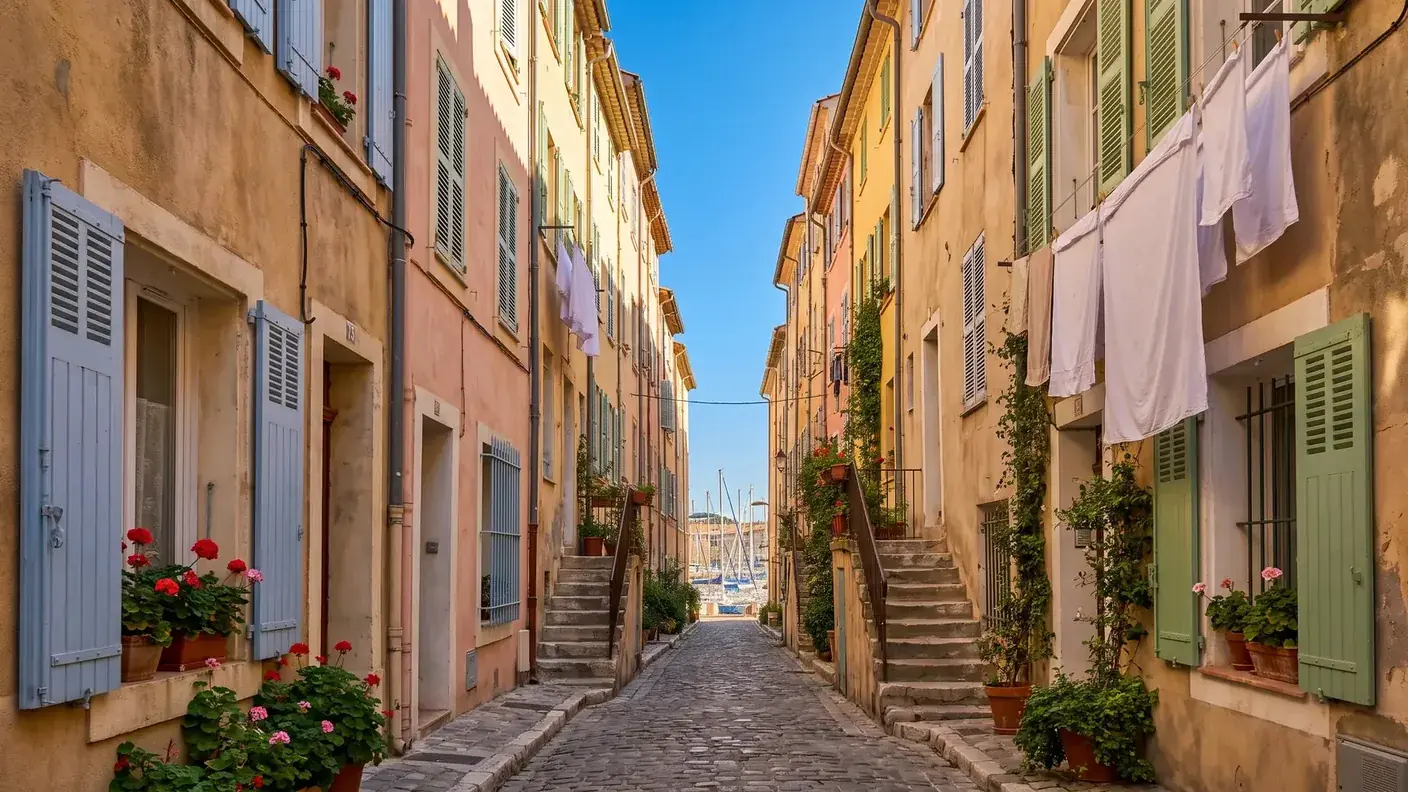
The historic heart of Marseille beats around the Old Port, the harbor where the city was founded, overlooked by the working-class neighborhood of Le Panier and bordered at its entrance by the spectacular MuCEM. This is the starting point for any visit—the very place where the soul of Marseille is concentrated.
The Old Port and Le Panier
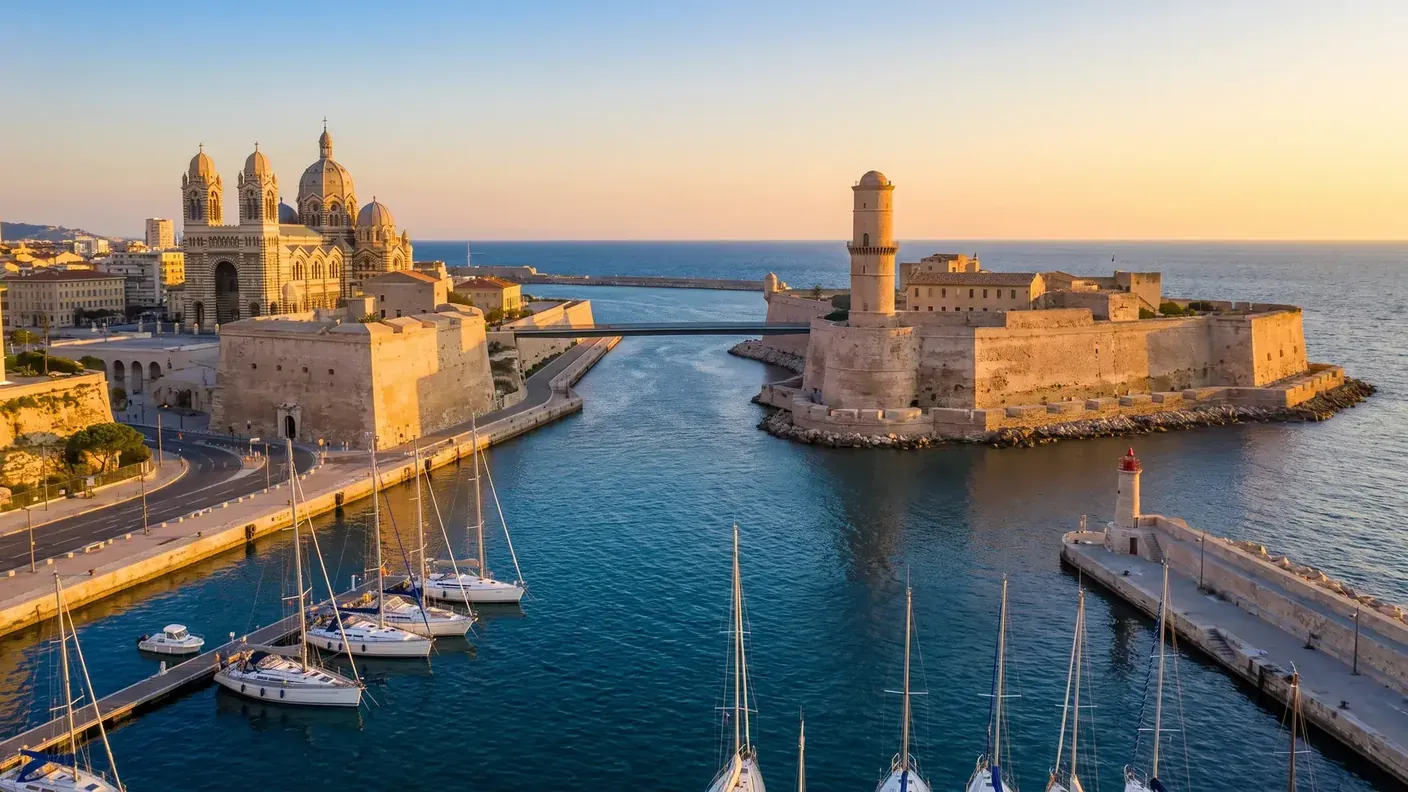
The Old Port, formerly known as Lacydon by the Greeks, has been the beating heart of Marseille for twenty-six centuries. Today, filled with pleasure boats, bustling with the fish market, and lined with cafés, it is nestled between the Forts Saint-Jean and Saint-Nicolas (source: Tourist Office). A charming attraction runs through it: the ferry, which connects the two banks. Perched on the heights of the north bank is Le Panier, the city’s oldest neighborhood, built on the site of the ancient Greek city of Massalia. With its winding, stair-step alleys, colorful facades, artists’ studios, and the Vieille Charité, Le Panier is one of the most picturesque neighborhoods in Marseille.
The MuCEM and the Major
At the entrance to the Old Port, on the seaward side, a spectacular complex blends heritage with contemporary architecture. The MuCEM — Museum of European and Mediterranean Civilizations — was inaugurated in June 2013, when Marseille was the European Capital of Culture. Designed by architect Rudy Ricciotti, its flagship building, the J4, is a cube with 72-meter sides wrapped in a mesh of fiber-reinforced concrete, connected by a footbridge to the old Fort Saint-Jean. Right next to it stands La Major Cathedral, an imposing domed, 19th-century Neo-Byzantine cathedral designated as a historic monument in 1906. It is one of the largest cathedrals built in France since the Middle Ages. This neighborhood, stretching from La Joliette to the Old Port, has become one of the city’s most beautiful seaside promenades.
Our Lady of the Guard, the Good Mother
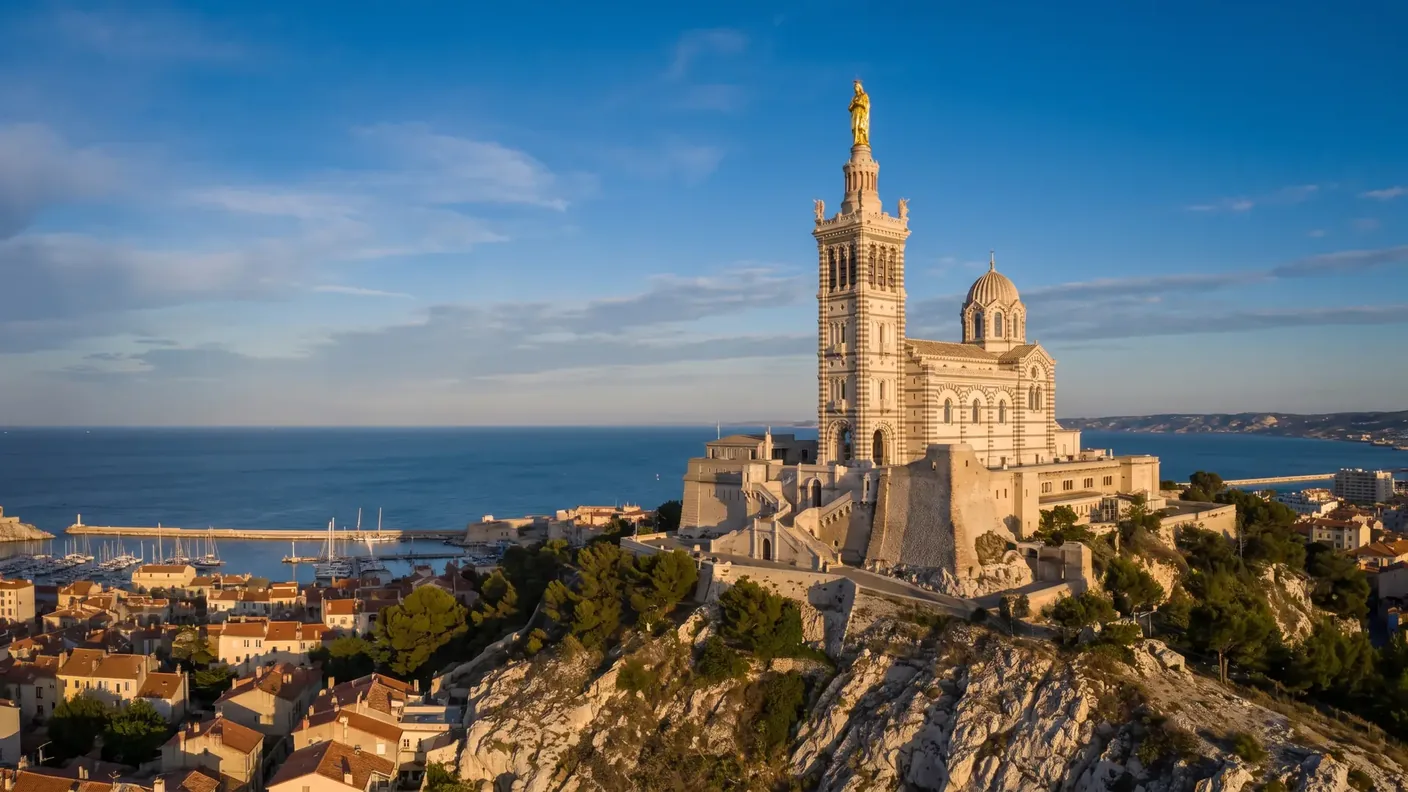
Perched on the city’s highest point, the Basilica of Notre-Dame de la Garde—known as “la Bonne Mère” to the people of Marseille—is the iconic landmark of Marseille, visible from everywhere and dear to the hearts of its residents. Its history and status deserve further explanation.
A Romano-Byzantine basilica
Notre-Dame de la Garde stands on a limestone outcrop at an elevation of 149 meters—the highest point in Marseille—on the site of a former fort built by Francis I. The current basilica, built in the Roman-Byzantine style, was constructed in the 19th century by architect Henri-Jacques Espérandieu: the cornerstone was laid in 1853, and the church was consecrated on June 5, 1864. It consists of a lower church (a Romanesque-style crypt carved into the rock) and an upper church richly adorned with mosaics and polychrome marble. Its 41-meter-tall square bell tower is crowned by a monumental statue of the Virgin and Child, standing 11.2 meters tall, made of copper gilded with gold leaf (and not solid gold, contrary to popular belief): it is this statue that sparkles in the sun and draws the gaze of the entire city. From the terrace, the panoramic view of Marseille, the islands, and the sea is simply unforgettable.
Is the basilica protected?
Here’s a fact that often comes as a surprise: the Basilica of Notre-Dame de la Garde itself is not designated as a historic monument. What is protected is the hill itself (approximately 15 hectares), which has been listed as a protected “site” since October 8, 1917, a legal status distinct from that of a historic monument. The hill had been threatened by a quarry that operated until the mid-20th century, which explains the protection. A debate over the possible classification of the basilica itself was reignited in early 2025. This distinction does not detract from the emotional impact of a visit: every year, millions of visitors and pilgrims climb the hill to venerate the Bonne Mère and take in the city at her feet. It is an essential Marseille experience and the finest viewpoint over the Phocaean city.
The Calanques and the Château d'If
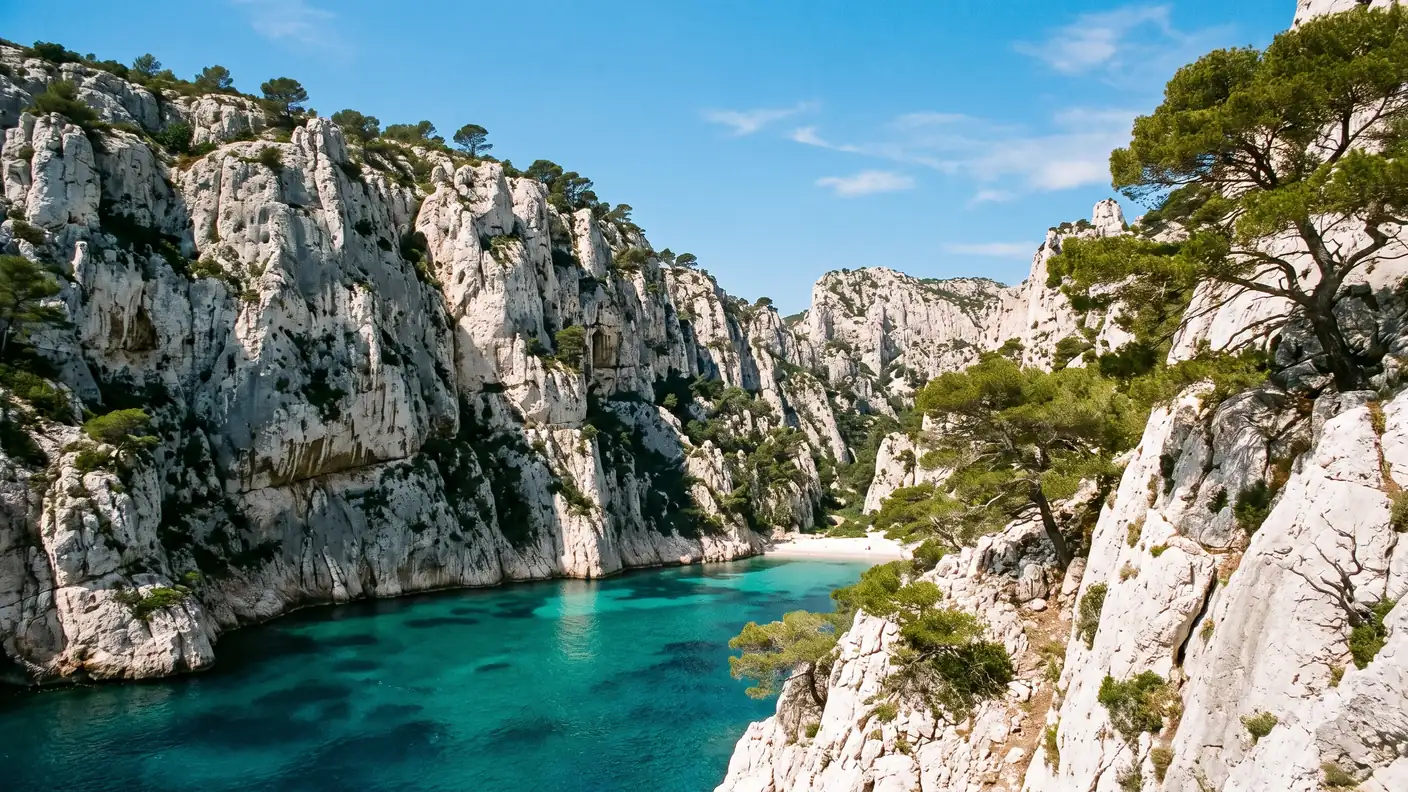
To the south of Marseille lies one of France’s most beautiful coastal landscapes: the calanques, deep coves of white limestone bathed in turquoise water, which have been protected by a national park since 2012. And offshore, a small island is home to one of the most famous castles in literature.
The Calanques National Park
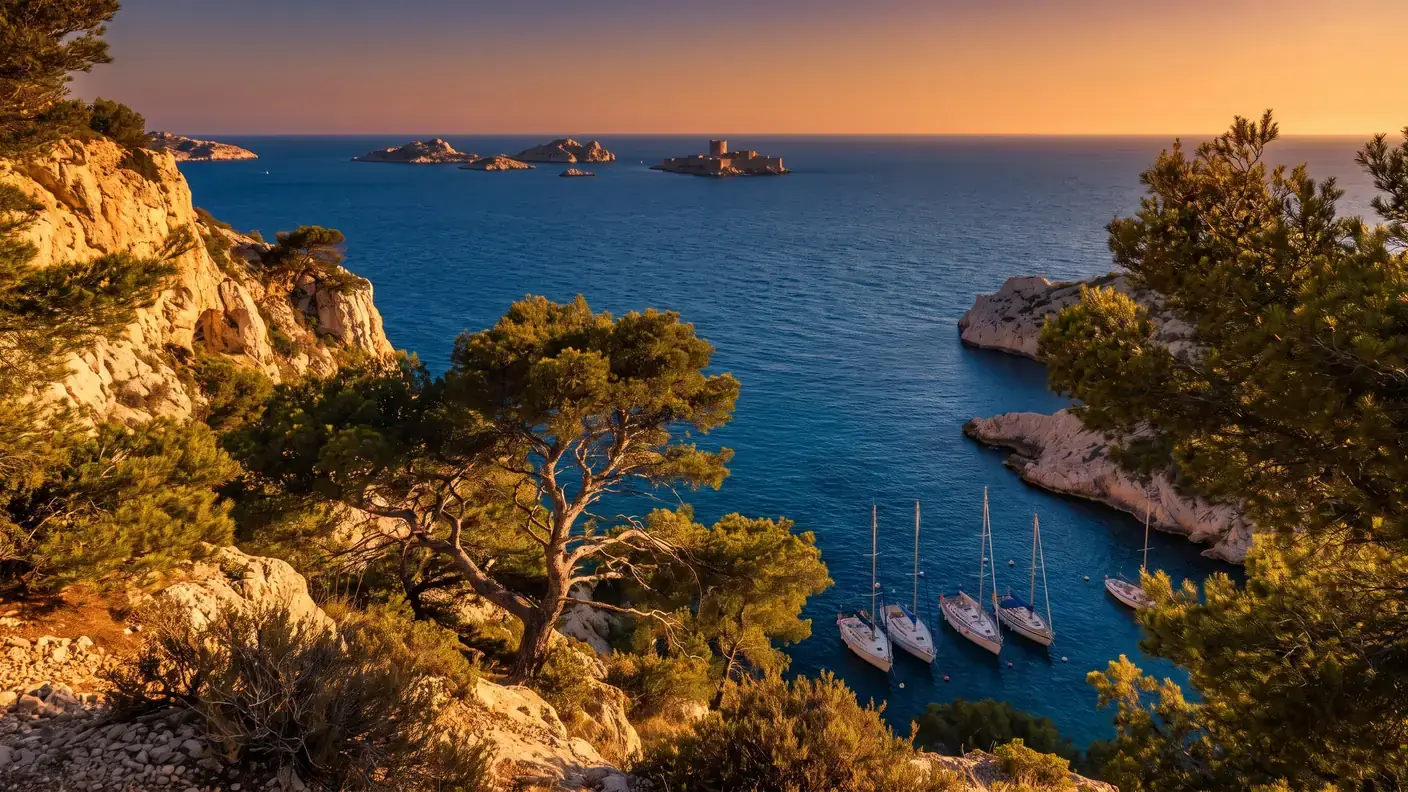
The Calanques are spectacular rocky inlets where high white limestone cliffs plunge into a blue-green sea. They stretch south of the city all the way to Cassis. Since 2012, they have been protected by the Calanques National Park, which encompasses both land and sea (official source). Sormiou, Morgiou, Sugiton, and En-Vau each have their own character, with pebble beaches, crystal-clear waters, and steep trails. Check access conditions for the massif before visiting.
The Château d'If, the Island of Monte Cristo
Off the Old Port, on a small island in the Frioul archipelago, stands the Château d'If, a fortress built during the reign of Francis I. Converted into a state prison, it became famous through Alexandre Dumas’s novel The Count of Monte Cristo, whose hero Edmond Dantès is imprisoned there. The monument is reached by boat from the Old Port; opening hours, visiting conditions, and admission prices are published on the official Château d’If website.
| Must-Sees in Marseille | Landmark |
|---|---|
| The Old Port | the heart of the city, the ancient Greek port |
| Notre-Dame de la Garde | Panoramic basilica, 149 m, “La Bonne Mère” |
| Le Panier | the oldest neighborhood, La Vieille Charité |
| The MuCEM | museum + Fort Saint-Jean (opened in June 2013) |
| The Calanques | National Park since 2012, Marseille-Cassis-La Ciotat |
| The Château d'If | Monte Cristo Fortress-Prison (listed in 1926) |
Twenty-six centuries of history
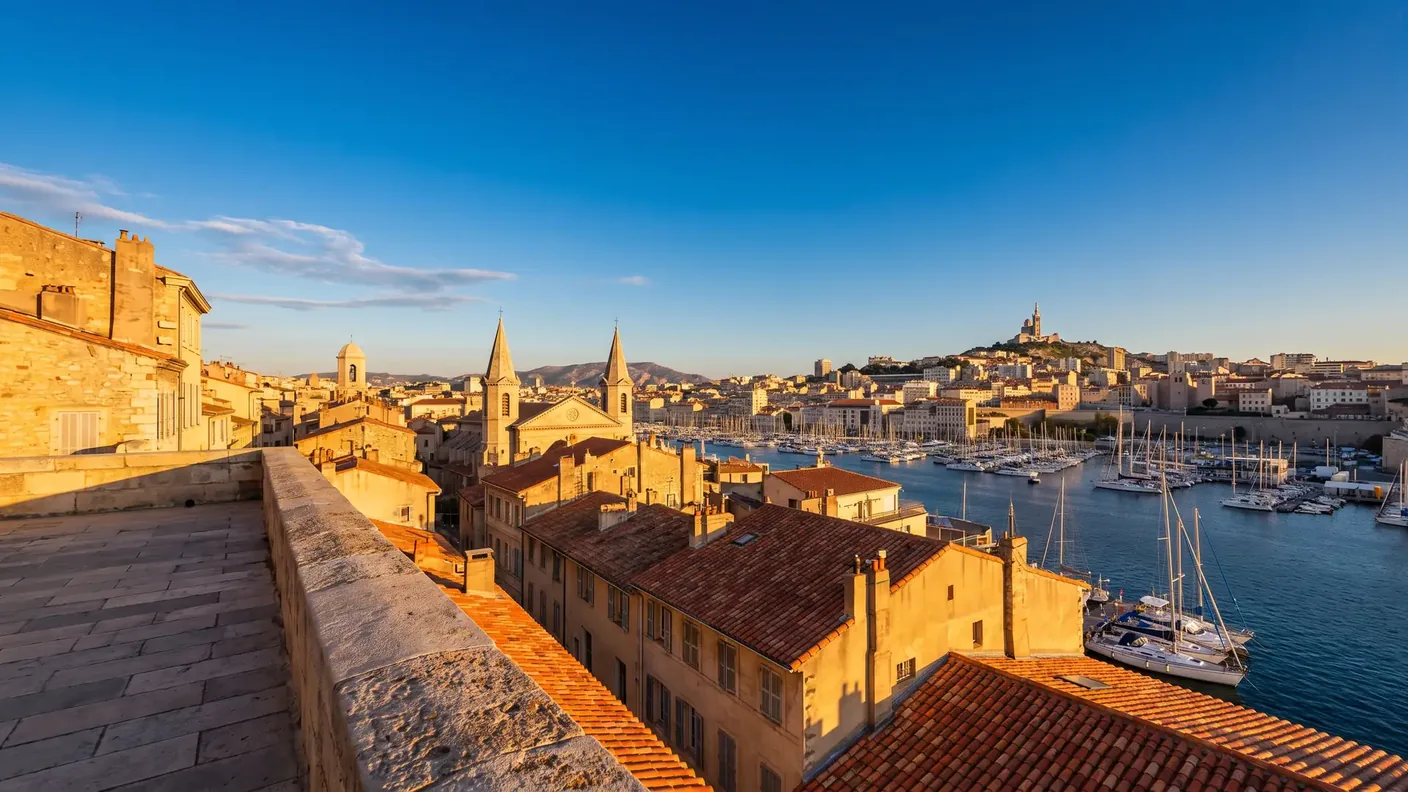
From a Greek city to today’s metropolis, Marseille has weathered twenty-six centuries of turbulent history: first a Greek city, then a Roman one; a major port of the kingdom; decimated by the plague; the birthplace of the national anthem; and a laboratory for modern architecture. A few milestones shed light on this long history.
The Great Plague of 1720
One of the most tragic episodes in Marseille’s history is the plague of 1720, the last major plague epidemic in France. It was introduced by a merchant ship, the Grand Saint-Antoine, returning from the Levant, whose contaminated cargo was unloaded despite quarantine regulations. The epidemic ravaged the city: within the city itself, it claimed between 30,000 and 40,000 lives out of a population of approximately 80,000 to 90,000—that is, nearly one-third, and not “half” as is sometimes written. Throughout Provence, there were approximately 100,000 deaths. The memory of this catastrophe remains vivid in Marseille, where remnants such as the “plague wall” can still be seen. It is a dark but foundational part of the city’s history, a testament to the dangers of the large-scale maritime trade on which Marseille depended.
"La Marseillaise" and "The Radiant City"
Two symbols link Marseille to national history, though not without some misunderstandings. “La Marseillaise,” the national anthem, was not composed in Marseille but in Strasbourg, on the night of April 25–26, 1792, by Rouget de Lisle, under the title “War Song for the Army of the Rhine”: it owes its name to the Marseille federates who sang it as they marched on Paris that summer, making it popular throughout France. Closer to home, the Cité Radieuse, a landmark building designed by Le Corbusier and completed in 1952, is a milestone in modern architecture: it is the only site in Marseille listed as a UNESCO World Heritage Site, part of a series of seventeen works by Le Corbusier spread across seven countries, inscribed in 2016. Two facets of a city that has never ceased to innovate and shine.
| Marseille Through the Centuries | Landmark |
|---|---|
| around 600 B.C. | Greek settlement (Massalia), founded by the Phocaeans |
| 49 B.C. | Caesar's siege, Roman annexation |
| 1720 | Great Plague (~one-third of the city) |
| 1792 | The federates popularized "La Marseillaise" |
| 1952 | Le Corbusier's Cité Radieuse (UNESCO 2016) |
| 2013 | MuCEM · Marseille, European Capital of Culture |
Bouillabaisse, pastis, and navettes
Marseille is also a hub of Mediterranean cuisine, inextricably linked to three iconic dishes: bouillabaisse, pastis, and navettes. Discovering Marseille also means savoring its flavors, whether in its seaside restaurants or its bustling markets.
Bouillabaisse, a legendary dish
Bouillabaisse is THE signature dish of Marseille: a sumptuous stew of Mediterranean rockfish—scorpionfish, red mullet, goby, John Dory, conger eel, sea bream… — simmered with garlic, olive oil, tomato, and saffron. Originally a fishermen’s soup, it has become a festive dish, served in two courses: first the broth, with rouille and croutons, then the fish. To protect the recipe from imitations, Marseille restaurateurs established a “Bouillabaisse Charter” in 1980 that sets out the rules. A true bouillabaisse is enjoyed at the finest restaurants in the Old Port or along the waterfront, and is often reserved in advance. It’s a culinary experience in its own right—generous and convivial, just like the city itself. Alongside it, other specialties are a delight: bourride, panisses (chickpea fritters), and pieds et paquets.
Pastis and Navettes
It’s impossible to talk about Marseille without mentioning pastis, the anise-flavored spirit enjoyed chilled and diluted with water in the shade of a plane tree. Its modern recipe was developed in Marseille by Paul Ricard in 1932; the word comes from the Provençal pastis, meaning “mixture.” With an alcohol content of at least 40% (often 45% for major brands), it is a fixture of the aperitif and the pétanque court. On the sweet side, navettes are small, boat-shaped biscuits flavored with orange blossom and traditionally made for Candlemas; the famous Four des Navettes, near Saint-Victor Abbey, has baked them since 1781. Their shape recalls the boats of the Saintes Maries arriving on the Provençal coast. These simple, sun-filled flavors capture the Marseille way of life.
| The Flavors of Marseille | Details |
|---|---|
| Bouillabaisse | rockfish stew · 1980 charter |
| Pastis | anise-flavored spirits · Ricard recipe, Marseille 1932 |
| Navettes | Orange blossom biscuits · Four des Navettes (1781) |
| Panisses & Pieds Paquets | chickpea patties · Provençal stew |
What's there to see around Marseille?
Marseille is the ideal starting point for exploring coastal Provence: Cassis and its calanques, the sophisticated city of Aix-en-Provence, the Côte Bleue, and the fishing villages are all within easy driving distance. All around Marseille lies a region of sea, light, and vineyards.
Cassis, Aix, and Provence
To the east, about 30 minutes away, the charming port of Cassis is a must-see: its colorful harbor, the cliffs of Cap Canaille (among the highest in France), its AOC vineyards, and access to the most beautiful calanques make it a jewel of the coast. To the north, also about half an hour away, Aix-en-Provence charms visitors with its plane-tree-shaded courtyards, fountains, mansions, and the legacy of Cézanne: this is the elegant, cultured side of Provence, a perfect counterpoint to the more down-to-earth Marseille region. To the west lies the Côte Bleue, with its small ports (Carry-le-Rouet, Sausset, Niolon) and its more secluded calanques. A little further on, the Camargue, Les Baux-de-Provence, the Luberon, and the hilltop villages of the Var round out a region of inexhaustible richness. From Marseille, the whole of Provence is within easy reach.
The Islands and the Sea
Marseille also serves as a gateway to the sea and its islands. Just a few minutes by boat from the Old Port, the Frioul Archipelago (the islands of Pomègues and Ratonneau, connected by a causeway) and the Château d’If offer secluded coves, crystal-clear waters, and panoramic views of the city. Further south, the Riou Archipelago, a nature reserve, extends the Calanques National Park out to sea. Swimmers will enjoy the Prado beaches and the coves along the Corniche, the famous coastal road beside the Mediterranean. Whether you enjoy hiking, scuba diving, kayaking, or simply relaxing in the sun, Marseille and its surroundings offer an exceptional coastal playground, bathed in characteristic Mediterranean light and warmth.
| About Marseille | Distance | Interest |
|---|---|---|
| Cassis | ~30 km | Port, rocky coves, vineyards, Cap Canaille |
| Aix-en-Provence | ~31 km | City of Art, Fountains, Cézanne |
| Château d'If / Frioul | by boat | Islands, Fortress of Monte Cristo |
| La Ciotat | ~43 km | Port, rocky coves, birthplace of cinema |
| Camargue (Arles) | ~90 km | Nature, bulls, flamingos |
What is there to do in Marseille?
At Marseille, you can cross the Old Port on the legendary ferry, take a boat to the Château d’If and the Frioul Islands, explore the calanques, visit the MuCEM, stroll through the markets, climb up to the Bonne Mère, tour a soap factory, and visit the Stade Vélodrome. Here are some specific activities to confirm for the dates of your stay: daily fares and schedules on RTM; admission prices, opening days, and shuttle services to be checked on the Château d’If website; access conditions and any necessary reservations on the Calanques National Park website; check opening hours and free admission options on the MuCEM website. A global city that’s as much about living the experience as it is about sightseeing.
- Take the ferry from the Old Port — City Hall ↔ Place aux Huiles: today's fares and schedules on RTM
- Head to the Château d'If and Frioul — check the Château d'If website for prices, opening days, and shuttle services
- A cruise through the Calanques — access requirements and booking information (if available) on the Calanques National Park website
- The MuCEM and Fort Saint-Jean — check the MuCEM website for hours and free admission information
- Markets — Fish Market and Noailles: days and times to be confirmed for the duration of your stay
- La Bonne Mère — access and tour to be confirmed for the dates of your stay
- A soap factory and the Vélodrome — the Licorne factory and the “OM Stadium Tour” at the Vélodrome Stadium: tours to be confirmed for the date of your stay
On the water: ferry, If, and the Calanques
The sea is Marseille’s main playground. The ferry from the Vieux-Port connects City Hall to Place aux Huiles: check RTM for today’s fares and schedules. From the ferry terminal on Quai de la Fraternité, shuttle boats depart for Château d’If and the Frioul Islands: check the Château d’If website for fares, operating days, and shuttle schedules. For the Calanques, check the Calanques National Park website for access conditions and any necessary reservations.
Markets, Soap, and the Velodrome
On land, Marseille is something to savor and breathe in. Visit the fish market on Quai de la Fraternité and the Noailles market, the “belly of Marseille,” on days and at times to be confirmed for your stay. Discover Marseille soap at local soapworks, including La Licorne and the Savonnerie du Midi, after checking their visiting arrangements. Football fans can plan an OM Stadium Tour at the Stade Vélodrome, subject to availability on their dates. Check access and opening hours for the Bonne Mère as well, then end the day in the water at the Prado beaches.
| Activity | Where / When | Good to Know |
|---|---|---|
| Old Port Ferry | Old Port | Today's fares and schedules on RTM |
| Château d'If / Frioul | ferry terminal, Quai de la Fraternité | Check the Château d'If website for admission prices, opening days, and shuttle service |
| Calanques Cruise | Departure from the Old Port | Access requirements and booking information (if applicable) on the Calanques National Park website |
| MuCEM | waterfront | Check the MuCEM website for hours and free admission information |
| Fish Market | Quai de la Fraternité and Noailles | Dates and times to be confirmed for the duration of the stay |
| OM Stadium Tour | Vélodrome Stadium | Tours to be confirmed for the dates of your stay |
When is the best time to visit Marseille?
Marseille can be visited year-round thanks to its sunny Mediterranean climate, but spring and early fall are ideal, with gentler conditions than at the height of summer. Spring (April through June) is arguably the best time to visit: temperatures are pleasant, the light is superb, the sea is already inviting, the calanques are accessible, and the summer crowds have not yet arrived. It is the perfect season for hiking, sightseeing, and strolling. Summer is warm, bright, and lively, with busy beaches and bustling terraces; however, the heat can be intense, and access to the calanques is sometimes restricted or closed because of fire risk. It is also peak season, so book accommodation and restaurants in advance.
Fall (September–October) extends the mild weather: the sea remains warm enough for swimming, the calanques reopen, crowds thin out, and the light takes on magnificent golden tones. Winter in Marseille is mild and often sunny, swept by the mistral, the northwesterly wind that clears the sky and turns it a brilliant blue. It is a quiet season, ideal for exploring museums, heritage, and the city’s authentic off-season atmosphere, with gentler prices. Marseille offers more than 300 days of sunshine a year and a unique energy. Its Mediterranean climate, sea, and light make it a radiant destination in almost every season, especially outside the August heat.
How to get to Marseille from Bordeaux
Marseille is located about 645 km from Bordeaux by road, which is about a 6-hour, 26-minute drive via the A62, A61, and A9 highways through Toulouse, Narbonne, and Montpellier. It’s a long journey across the south of France, from one ocean to the other. Depending on the date, the train may offer a direct or connecting service between Bordeaux-Saint-Jean and Marseille-Saint-Charles; check the schedule and travel time for your specific day on SNCF Connect. Flights also connect Bordeaux-Mérignac to Marseille-Provence, while driving allows for a direct trip.
Long-distance chauffeur service
For this long journey, an executive car service provides a direct ride from the pickup address to the agreed drop-off point. We offer the long-distance transfer at a fixed price quoted in advance, starting at 966 € one way. Travel is in a Mercedes C-Class sedan or a van accommodating up to 7 passengers. Stops and luggage requirements must be agreed when booking.
This option suits travelers who value comfort and simplicity over a long distance: families with luggage, business travelers, people who prefer not to fly, or groups of up to 7 wishing to travel together. It can also be arranged for events or a planned return journey. Booking is straightforward: provide the Bordeaux pickup address, the Marseille destination, the date, preferred time, and number of passengers, and receive a fixed-price quote in writing with no surprises. Your private chauffeur collects the passengers at the agreed address and drives them directly to Marseille. For a simple city break, train or air travel will often cost less; for a comfortable door-to-door journey, a chauffeured transfer offers a more seamless experience.
| Route | Distance | Duration | Landmark |
|---|---|---|---|
| Bordeaux → Marseille | ~645 km | ~6 hrs 26 mins | Starting at 880 € with a chauffeur service |
| Marseille → Cassis | ~30 km | ~35 min | harbor and rocky coves |
| Marseille → Aix-en-Provence | ~31 km | ~35 min | city of art |
| Marseille → Marseille-Provence Airport | ~27 km | ~30 min | Marignane |
Whether you come for the Old Port and the Bonne Mère, for the calanques and the Château d’If, for the MuCEM and the Panier, or for bouillabaisse and the Mediterranean way of life, Marseille rewards travelers with a rare intensity and authenticity—France’s oldest city, sunny and proud, unlike any other, and one that can be explored without ever being fully captured.
Whether it’s for a cultural getaway, a stay on the Mediterranean coast, or a long-distance transfer, booking an executive car service provides a comfortable, punctual door-to-door journey. Book a chauffeur from Bordeaux → Marseille or explore all our destinations.
Frequently Asked Questions
Where is Marseille located?
Marseille is located in southeastern France, on the Mediterranean coast. It is the prefecture of the Bouches-du-Rhône department (13) and the capital of the Provence-Alpes-Côte d'Azur (PACA) region. As France’s second-largest city by population, it stretches along a vast coastline that includes the Calanques. From Bordeaux, it is approximately 645 km by road, or about 6 hours and 26 minutes.
What is the distance between Bordeaux and Marseille?
Approximately 645 km by road, or about 6 hours and 26 minutes, via the A62, A61, and A9 highways through Toulouse, Narbonne, and Montpellier. With a private driver, the fare is fixed and provided in advance, starting at 880 € for a one-way trip. The train—for which you should check whether direct or connecting service is available on your chosen date—and the plane are often more economical alternatives for a one-way trip.
Who founded Marseille?
Marseille was founded around 600 B.C. by Greek sailors and merchants from Phocaea, a city in Asia Minor (modern-day Turkey), under the name Massalia. It is the oldest city in France. Contrary to popular belief, it was not the Romans who founded it: they did not annex the city until much later, after Julius Caesar’s siege in 49 B.C. This origin explains the nickname “Phocaean city” and the term “Phocaeans” used to refer to the people of Marseille.
Is Notre-Dame de la Garde designated as a historic monument?
No—and this often comes as a surprise. The basilica itself is not designated as a historic monument. What is protected is the site on the hill (about 15 hectares), which has been classified as a “site” since 1917—a separate legal designation. The basilica, built in the Roman-Byzantine style, was constructed in the 19th century by the architect Espérandieu (consecrated in 1864). Its famous gilded statue of the Virgin Mary, standing 11.2 meters tall, is made of copper gilded with gold leaf, not solid gold. A debate over its classification was reignited in 2025.
What are the Calanques of Marseille?
The Calanques are deep, rocky coves—a sort of Mediterranean fjord—where high cliffs of white limestone plunge into turquoise waters. They stretch for about 20 kilometers south of Marseille to Cassis. Since 2012, they have been protected by the Calanques National Park (covering the municipalities of Marseille, Cassis, and La Ciotat), Europe’s first peri-urban national park. They can be explored on foot, by kayak, or by boat; access via the trails is restricted in the summer due to fire hazards. It is an exceptional natural gem.
What is the Château d'If?
The Château d'If is a fortress built between 1529 and 1531 during the reign of Francis I on a small island off the Old Port of Marseille. Converted into a state prison, it is world-famous thanks to Alexandre Dumas’s novel *The Count of Monte Cristo*, in which the hero is imprisoned there (Dumas had visited the island in 1834). Designated a historic monument in 1926, it can be visited after a short boat ride from the Old Port. An interesting fact: this fortress never fired a single cannon shot in self-defense.
Was "La Marseillaise" composed at Marseille?
No, contrary to what its name suggests. The French national anthem was composed in Strasbourg on the night of April 25–26, 1792, by Rouget de Lisle, under the title “War Song for the Army of the Rhine.” It owes its name to the Marseillais federates who sang it as they marched on Paris during the summer of 1792, making it popular throughout France—hence “La Marseillaise.” The connection to Marseille is therefore one of its dissemination, not its composition.
What to See in Marseille During a Short Stay?
Must-see attractions: the Old Port (the historic heart of the city, a former Greek port); Notre-Dame de la Garde, “la Bonne Mère,” for the panoramic view; the Panier district, the oldest part of the city, featuring the Vieille Charité; the MuCEM and Fort Saint-Jean; the Major Cathedral; the Calanques (on foot or by boat); the Château d’If and the Frioul Islands. Don’t forget the Corniche and the Prado beaches, Le Corbusier’s Cité Radieuse (a UNESCO World Heritage Site), and an authentic bouillabaisse by the water. Plan on spending at least two to three days.
Did the plague of 1720 kill half of Marseille?
No, that figure is exaggerated. The Great Plague of 1720, the last major plague epidemic in France, brought by the ship Grand Saint-Antoine, claimed between 30,000 and 40,000 lives in the city out of a population of approximately 80,000 to 90,000—nearly one-third (not half). Throughout Provence, there were approximately 100,000 deaths. The memory of this catastrophe remains vivid in Marseille, where remnants such as the “plague wall” still stand.
How many people live in Marseille?
With approximately 886,000 residents (2023 municipal population), it is the second-largest city in France by population, behind Paris and ahead of Lyon. The metropolitan area (urban unit Marseille-Aix) has a population of approximately 1.65 million, making it the third-largest in France, and the Aix-Marseille-Provence Metropolis, which comprises 92 municipalities, has a population of nearly 1.9 million. The residents are known as Marseillais, and the city is nicknamed the “Phocaean City” in reference to its Greek founders from Phocaea.
What is the best time of year to visit Marseille?
Spring (April through June) and early fall (September–October) are ideal: pleasant temperatures, beautiful light, inviting seas, accessible calanques, and fewer crowds. Summer is hot and very lively, but access to the calanques is sometimes restricted or closed due to fire risks, and the heat can be intense. Winter, which is mild and often sunny (with the mistral wind sweeping in to make the sky a brilliant blue), is perfect for visiting museums and exploring heritage sites. Marseille enjoys more than 300 days of sunshine per year.
What is bouillabaisse?
Bouillabaisse is Marseille’s signature dish: a stew of Mediterranean rockfish (scorpionfish, red mullet, goby, John Dory, conger eel, sea bream, etc.) simmered with garlic, olive oil, tomato, and saffron. Originally a fishermen’s soup, it is served in two courses: first the broth with rouille and croutons, then the fish. A “Bouillabaisse Charter” established by Marseille restaurateurs in 1980 protects the recipe. A true bouillabaisse is enjoyed at fine seaside restaurants and is often reserved in advance.
What is there to do in Marseille?
In practice: take the ferry across the Old Port—check RTM for today’s fares and schedules; board at Quai de la Fraternité for Château d’If and the Frioul Islands—check fares, opening days, and shuttle services on the Château d’If website; explore the Calanques—check access requirements and booking information on the Calanques National Park website; visit the MuCEM—check opening hours and free admission on the MuCEM website; stroll through the markets, climb up to Notre-Dame de la Garde, visit a soap factory, tour the Stade Vélodrome, and go swimming at the Prado beaches: confirm these activities for the dates of your stay.
Can I book a private driver from Bordeaux to Marseille?
Yes, for this long-distance transfer of approximately 645 km and 6 hours 26 minutes via the A62, A61, and A9. We offer this service at a fixed price starting at 966 € one-way, in a Mercedes C-Class sedan or a van seating up to 7 passengers. The drop-off address, rest stops, and luggage restrictions are agreed upon before departure. For a simple visit, the train or plane is often a more economical option; the fixed quote is confirmed in writing before booking.
Further Reading
- An island in the Atlantic: see the Guide to Bois-Plage-en-Ré (the Île de Ré, its beaches, vineyards, and salt)
- The major Basque resort: see the Biarritz Guide (the Rocher de la Vierge, the beaches, surfing)
- The Guggenheim city: see the Bilbao Guide (the Guggenheim Museum, the Casco Viejo, pintxos)
- Plan your trip: Book a chauffeur from Bordeaux to Marseille or explore all our destinations
Sources and References
- Wikipedia — Marseille — geography, demographics, history, heritage
- Wikipedia — Notre-Dame de la Garde — architect Espérandieu, listed site since 1917, statue 11.2 m
- Wikipedia — Calanques National Park — established in 2012, Marseille-Cassis-La Ciotat
- Wikipedia — Château d'If — 1529–1531, designated a historic monument in 1926, *The Count of Monte Cristo*
- INSEE — municipality of Marseille (13055) — population in 2023 (~886,000), area
- Marseille Tourist Office — the Old Port — History and Sightseeing Highlights
- RTM — Official Website — Ferry Fares and Schedules
- Château d'If — Official Website — Admission Prices, Opening Days, and Visiting Guidelines
- Calanques National Park — Official Website — Establishment, Boundaries, and Access Requirements
- MuCEM — Official Website — Hours and Free Admission
- SNCF Connect — Service and Travel Time for the Bordeaux–Marseille Route
Article updated in July 2026.
Our Latest Guides
Off to Marseille
Long-distance transfer from Bordeaux to Marseille: approximately 645 km, 6 hours 26 minutes, and 880 € one way. Drop-off address, rest stops, and luggage details must be specified before departure; written fixed-price quote provided.