
Bordeaux to Limoges: porcelain, enamel and the Bénédictins station
The historic capital of Limousin, a city of art with a history spanning two millennia: porcelain and enamelware, the spectacular Bénédictins train station, the Gothic cathedral, and Old Limoges, the memory of Oradour—the complete guide and directions from Bordeaux.
Limoges at a Glance
Limoges is worth visiting for its porcelain and enamels, the Bénédictins train station, Saint-Étienne Cathedral, and the historic districts. From Bordeaux, the 222-km drive takes about 2 hours and 56 minutes. A private driver transfer starts at €379 one way, with a fixed price confirmed before booking. Oradour-sur-Glane is an easy addition to a cultural getaway.
Here are the key details to know before you go. The distance and travel time are based on the actual road trip from Bordeaux; the fare shown is for a long-distance chauffeur service reservation, with a fixed price provided in advance and no unexpected meter charges.
| Landmark | Details |
|---|---|
| Department | Haute-Vienne (87), Nouvelle-Aquitaine region |
| Status | Prefecture · former capital of Limousin · ~30th largest city in France |
| Population | approximately 129,900 residents (INSEE 2023) · the Limougeauds |
| Area | ~78 km² · on the Vienne River |
| Don't miss it | The Bénédictins Train Station, porcelain, and the cathedral |
| Distance from Bordeaux | 222 km · about 2 hours and 56 minutes by car |
| Foundation | around 10 B.C. by the Romans (Augustoritum) |
First, a word about accuracy, since this major city is subject to a few common misconceptions that this guide corrects, backed by sources. Limoges is now the 30th-largest municipality in France (and not the 28th, a ranking that is no longer used), and its population is declining slightly. Its famous Bénédictins train station is registered as a historic monument (not listed) and dates from 1929, not from the 19th century; its 67-metre bell tower (not the dome, which rises to 31 m) makes it the highest point in the city. The discovery of kaolin is attributed to the surgeon Jean-Baptiste Darnet, not Louis XV. And the Roman city, Augustoritum, was built from scratch near the Vienne ford, not on the Gallic oppidum. Every statement in this guide is based on verifiable sources.
Here’s a rundown of everything you need to know: Limoges’ location and demographics, its Roman origins and the fascinating history of its two rival cities, the Bénédictins train station, porcelain and kaolin, Limoges enamels, the cathedral and the Boucherie district, the Ostensions and Saint Martial, the memory of nearby Oradour-sur-Glane, the best time of year to visit, and how to plan your trip from Bordeaux—all thoroughly researched and verified.
Where is Limoges located?
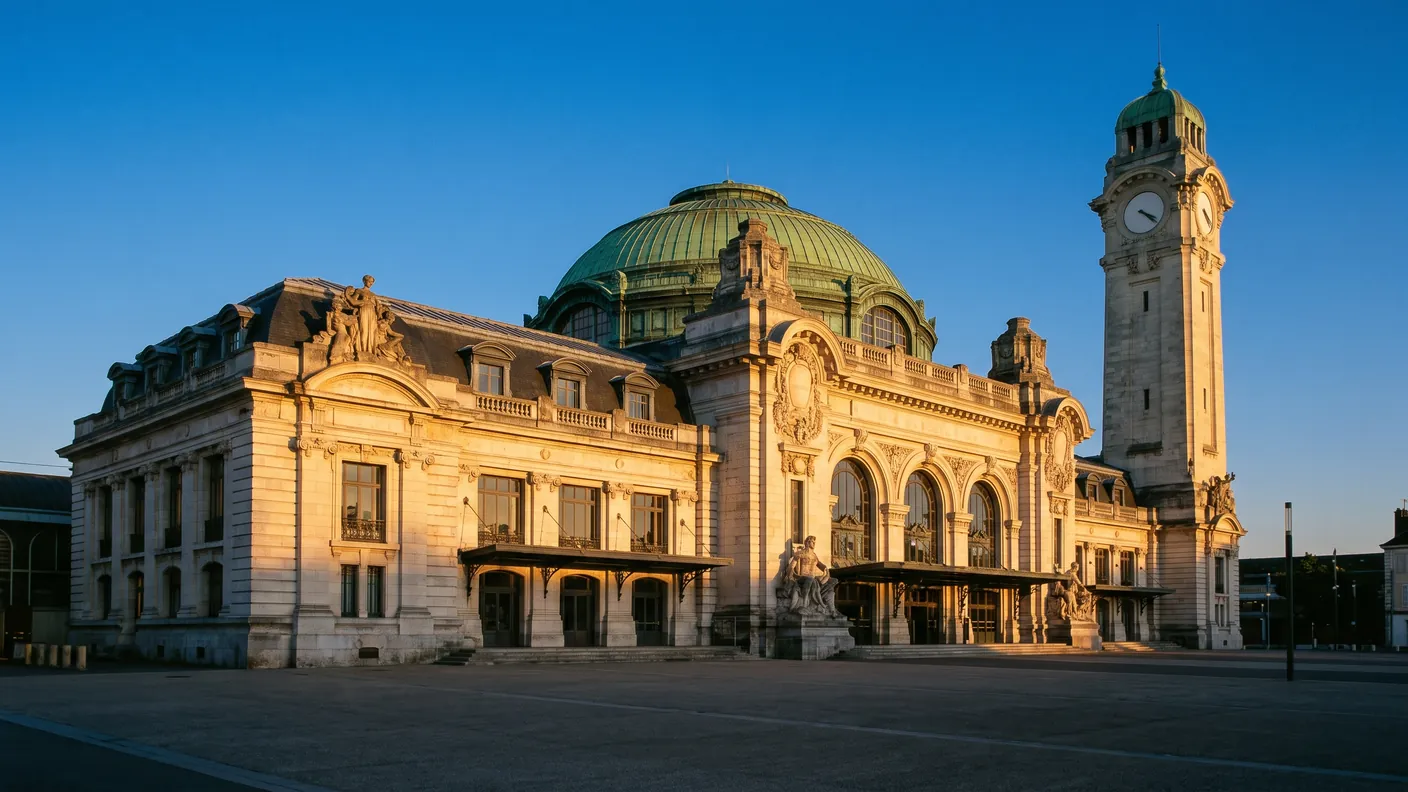
Limoges is located in central-western France, on the Vienne River, in the Haute-Vienne department (87)—of which it is the prefecture—in the Nouvelle-Aquitaine region. Formerly the capital of the province and later the Limousin region—a status it lost to Bordeaux during the 2016 regional merger—it remains the largest city and the historic heart of this land of hills, rushing waters, and forests. It spans approximately 78 square kilometers on both sides of the Vienne River, which is spanned by the old Saint-Étienne Bridge. Situated at the junction of the Massif Central and the western plains, halfway between Paris and Toulouse on the main rail line, LIMOGES is a city of art and industry, renowned for its expertise in working with fire—porcelain, enamel, and stained glass—and for the gentle, verdant beauty of its Limousin setting.
The 30th-largest city in France
With approximately 129,900 residents (municipal population in 2023), Limoges is now the 30th most populous municipality in France, a ranking that needs to be specified, since we often see “28th,” a ranking that is now outdated. Its residents are known as Limougeauds. The city's population has been declining slightly since the mid-2010s (about −2% over a decade), in contrast to cities such as Bordeaux and Toulouse; however, its catchment area comprises nearly 284,000 residents spread across 96 municipalities, making it a major urban center in the greater Southwest. Once the regional capital but no longer holding that title, Limoges cultivates a strong and somewhat rebellious identity: that of a city with a working-class and artisanal tradition, proud of its heritage and craftsmanship, which has lost none of its cultural influence.
The City of Vienne
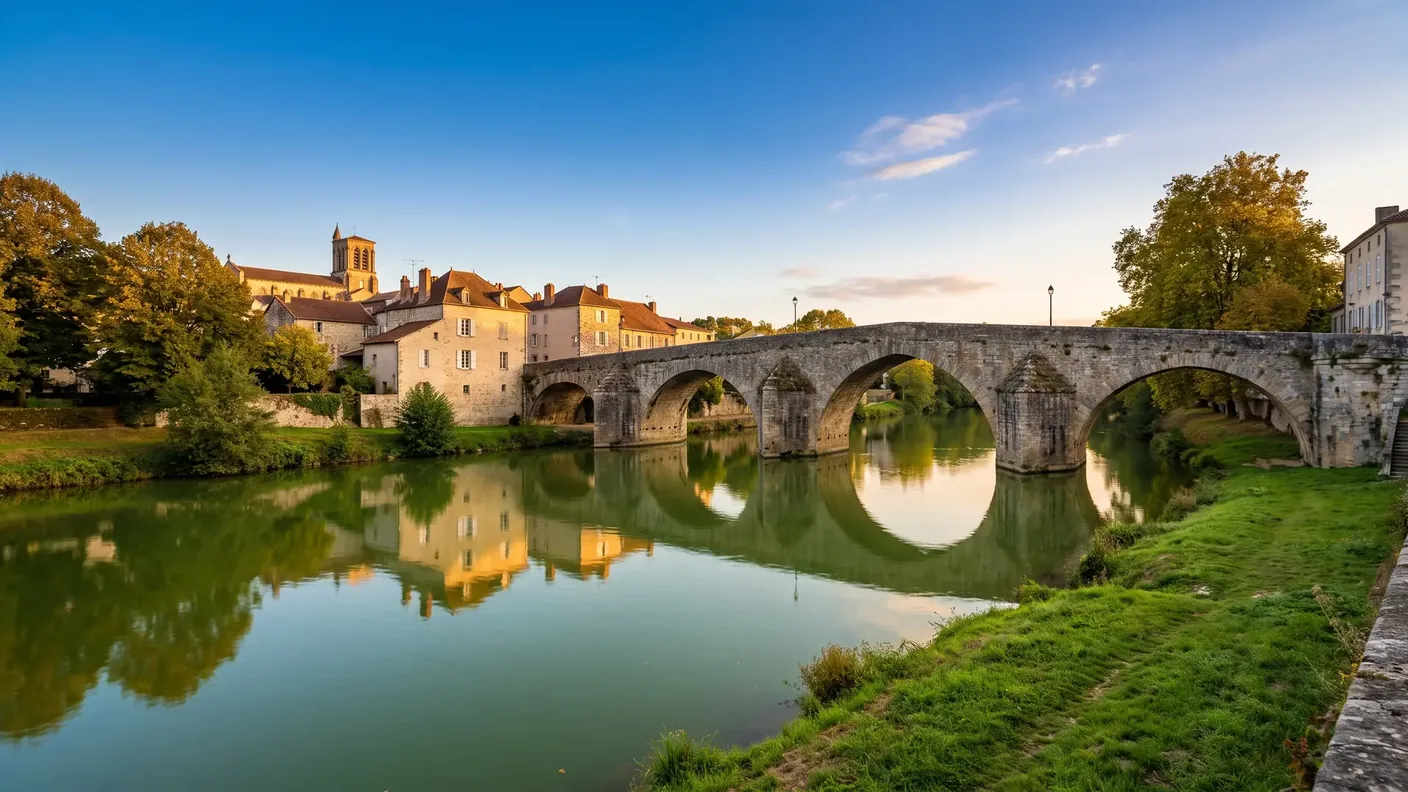
Limoges grew out of the Vienne, the beautiful river that flows through it and which, since ancient times, has shaped its development: the Romans founded the city at the river’s first fords. Even today, the banks of the Vienne, with the old Saint-Étienne Bridge (a medieval arched bridge with buttresses) and the Saint-Martial Bridge, offer beautiful views of the upper town and the cathedral. The river, its bridges, and its lush banks serve as a reminder that Limoges is also a city of water, with a climate that is more humid and cooler than that of the Bordeaux region, influenced by the nearby Massif Central. Surrounding the city lies the rolling, green, and wooded Limousin region—a land of livestock farming (the Limousin beef, France’s most renowned breed), ponds, and forests—a bountiful natural setting that adds to the charm of a stay in the capital of the Limousin.
Augustoritum and the Two Rival Cities
Limoges was founded by the Romans around 10 B.C. under the name Augustoritum, “Augustus’s ford,” and developed during the Middle Ages into two rival cities that remained distinct for a long time. This dual origin—first Roman, then medieval—is key to the city’s character.
Auguste's Ford
The city was built “from scratch” around 10 B.C., during Emperor Augustus' reorganisation of Gaul, on a new site at the first ford across the Vienne River, hence its name, Augustoritum, formed from Augusto- (in honour of Augustus) and -ritum (“ford” in Gallic), or “Augustus’s Ford.” Note this subtle distinction: it does not extend the ancient Gallic oppidum of the Lemovices, which was located about 20 kilometres to the east, at Villejoubert. Augustoritum became the Gallo-Roman capital of the Lemovices, the Gallic people whose name gave rise to “Limoges” (from Lemovices) and “Limousin” (from Lemovicinus). The Roman city built an amphitheatre, thermal baths, and a forum, whose remains still survive today: the ancient foundation of a long history.
The City and the Castle
In the Middle Ages, Limoges was remarkable in one respect: not one, but two rival and distinct fortified towns developed side by side. On one side was the Cité, an episcopal town clustered around Saint-Étienne Cathedral, under the bishop’s authority; on the other, the Château (in the sense of a fortified town, a castrum, not a keep), which developed around the powerful Saint-Martial Abbey and the viscountcy—a world of merchants and artisans. These two settlements, each with its own ramparts, institutions, and inhabitants, long ignored, resented, and sometimes clashed with one another—a rivalry that lasted more than a thousand years. They were not definitively united until 1792, during the Revolution, to form the municipality of Limoges. This dual history still explains the city’s geography and complex spirit today.
The Bénédictins Train Station, a masterpiece
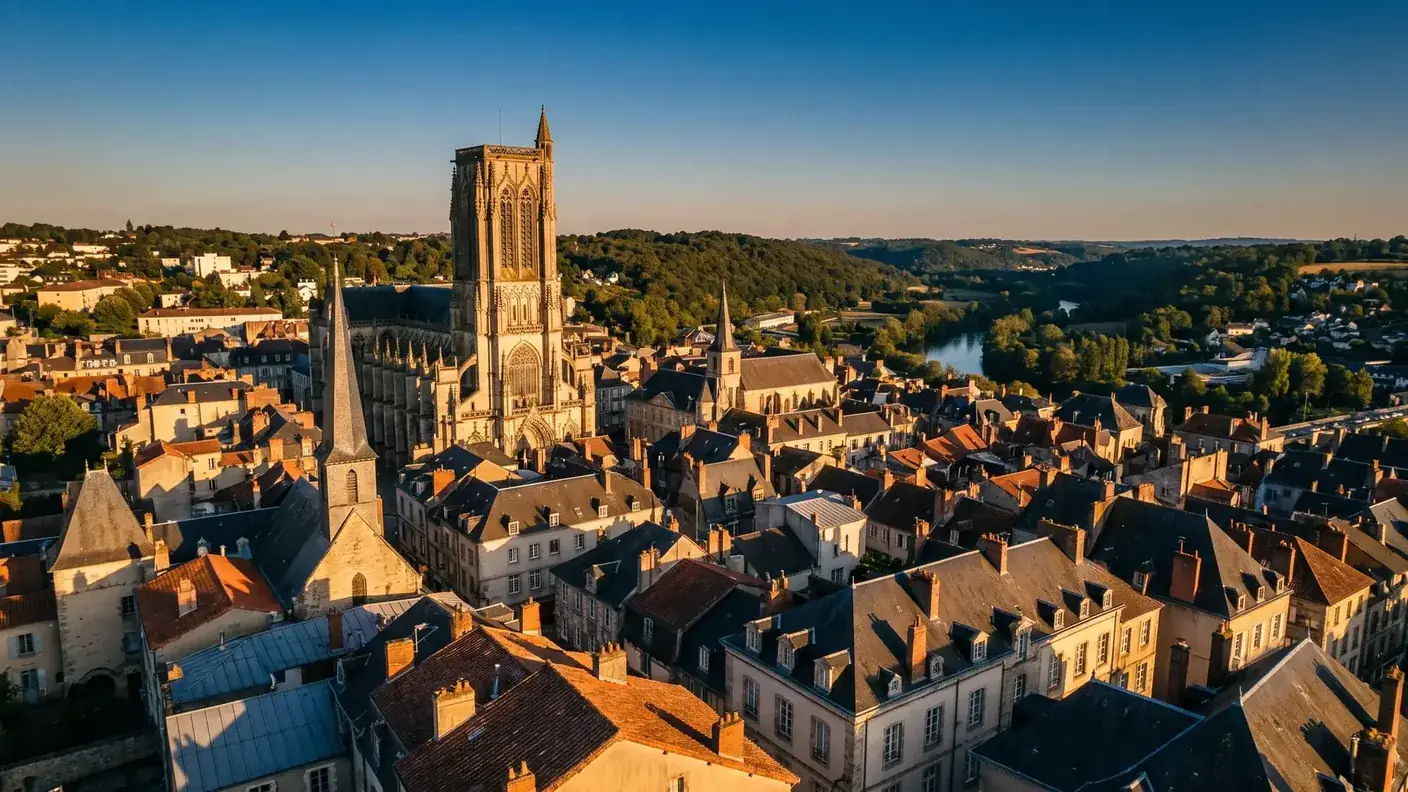
The Limoges-Bénédictins train station is one of the most beautiful railway buildings in France and a favorite landmark of the people of Limoges—but its history and status deserve further explanation. It’s often the first stop on a visit to the city, and it’s worth the trip all on its own.
A gem from 1929
Contrary to popular belief, the Bénédictins train station does not date from the 19th century. The current building was constructed in 1924–1929, then inaugurated on July 2, 1929. The architect Roger Gonthier built it on the site of an earlier station dating from 1856 (official source). It is a masterpiece of eclectic architecture, blending Neoclassicism, late Art Nouveau, and Art Deco. It has been registered as a historic monument since 1975, rather than listed, and later received the 20th-Century Heritage designation. A technical marvel, the station was built above the tracks, on a concrete platform seven metres above the ten railway tracks. Its large copper dome, rising to a height of 31 metres, crowns a bright atrium adorned with stained-glass windows and allegorical sculptures. After a fire in 1998, it was rebuilt exactly as it was. The station serves the city on the major Paris–Orléans–Limoges–Toulouse (POLT) rail line.
The 67-meter bell tower
The most spectacular feature of the station is its bell tower, a square bell tower that soars to 67 meters high. It is this building—not the dome—that is the tallest structure in Limoges (official source). It is the same height as the bell tower at the Paris-Lyon train station. It houses a monumental clock at four dials, each four meters in diameter, all synchronized, and thirteen levels connected by a staircase. This elegant tower, visible from afar, has become the very symbol of the city: in fact, the people of Limoges have voted it their favorite monument. Since May 1968, the bell tower has also been a symbol of the labor movement, from the top of which a red flag is sometimes flown. With its dome, bell tower, stained-glass windows, and Art Deco furnishings made of exotic woods, the station resembles a palace. It offers a spectacular introduction to anyone discovering Limoges.
| The Bénédictins Station, at a Glance | Details |
|---|---|
| Architect · Dates | Roger Gonthier · 1924–1929 (NOT the 19th century) |
| Protection | Listed as a Historic Monument (1975) · 20th-Century Heritage designation |
| Campanile | 67 m (the highest point in the city) · 4-dial clock |
| Copper Dome | 31 m · burned down in 1998, rebuilt exactly as it was |
| Feat | built over 10 railroad tracks |
Porcelain by Limoges
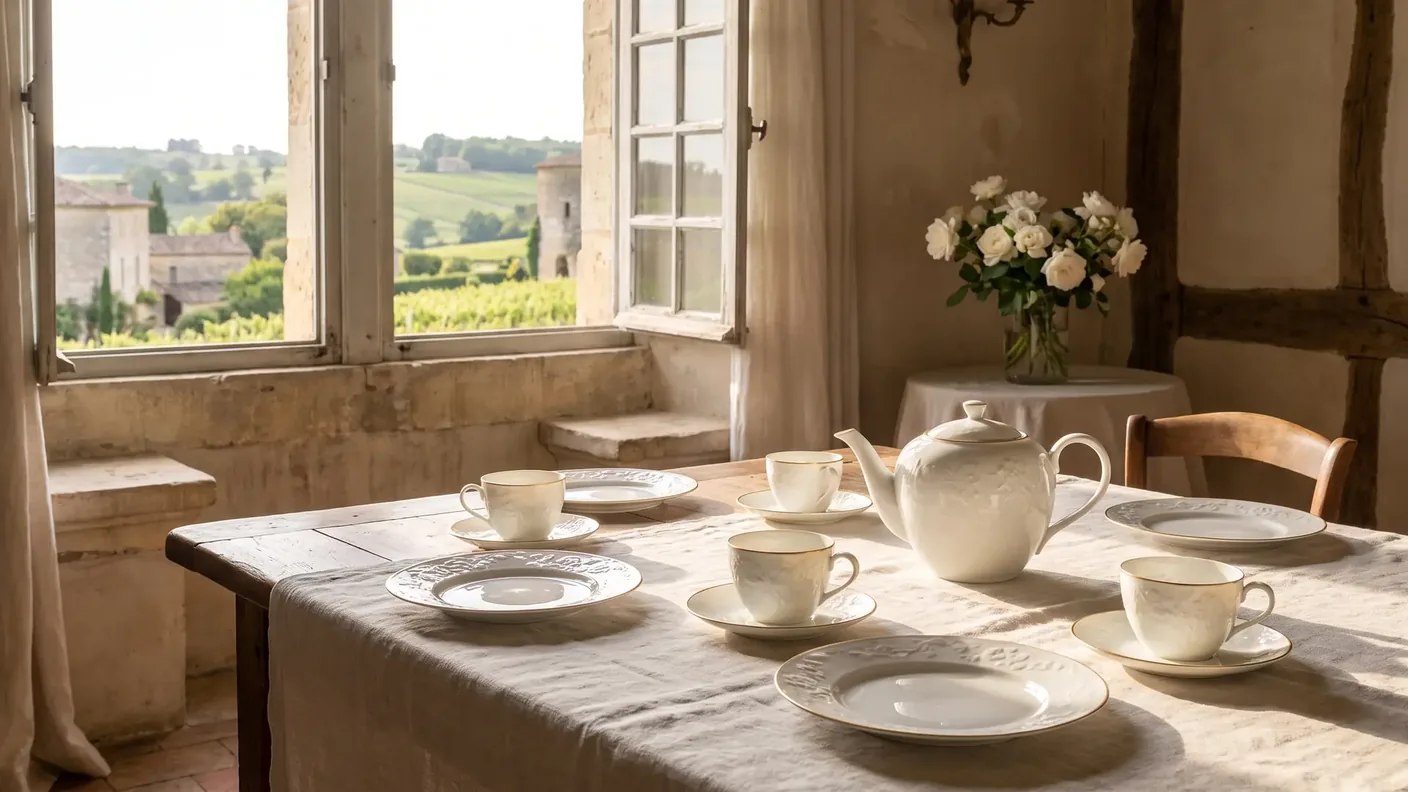
Limoges is the porcelain capital of the world, a reputation that dates back to the 18th century, when a deposit of kaolin—the white clay essential for hard-paste porcelain—was discovered nearby. It is this expertise that has brought the city its wealth and fame.
Kaolin, white clay
It all began in the late 1760s with the discovery of a rich kaolin deposit in Saint-Yrieix-la-Perche, south of Limoges. This white clay was the ingredient France had been missing to produce hard-paste porcelain, which until then had been a secret known only to the Chinese and Meissen. Contrary to popular belief, the discovery, around 1768, is credited to the surgeon Jean-Baptiste Darnet, not to Louis XV. Upon seeing his wife use a “white earth” to bleach laundry, Darnet set out to find the precious material. The king did not intervene until later, purchasing the deposit in 1769. The first Limousin porcelain factory opened in 1771, and the industry experienced rapid growth in the 19th century. "Limoges" then became, throughout the world, a name synonymous with fine, white, and translucent porcelain. Even today, a few major houses continue to uphold this tradition of excellence.
The Adrien-Dubouché Museum
To discover this art form, there’s one place you simply must visit: the Adrien-Dubouché National Museum on Winston-Churchill Square. It houses the world’s most extensive public collection of Limoges porcelain, with some 18,000 works tracing the entire history of ceramics (official source). Founded in 1845, it is named after the patron who enriched its collection, Adrien Dubouché. It was established by Tiburce Morisot, prefect of Haute-Vienne and father of the Impressionist painter Berthe Morisot. Limoges is also known as the “capital of the fire arts”, as it excels in porcelain, enamel, and stained glass. This excellence in craftsmanship earned it admission in 2017 to UNESCO’s Creative Cities Network, in the “Crafts and Folk Arts” category. A visit to the museum, followed by a tour of the shops and workshops, offers insight into what Limoges is so proud of.
A Tradition of Expertise That Lives On
Limoges porcelain is not just a relic of the past: it remains a thriving luxury industry. Several major historic houses continue to uphold this exceptional craftsmanship today, blending tradition with contemporary design. They supply the world’s finest restaurants and luxury brands. The protected designation “Limoges France” guarantees that the porcelain is genuinely manufactured in the city and its surrounding region. It thus serves as a mark of authenticity to distinguish it from imitations. Several factories and workshops open their doors to visitors. There, you can discover the processes of wheel-throwing, casting, hand-decorating, and high-temperature firing. This firing process gives hard porcelain its translucent whiteness and crystalline sound. Factory outlets, artists’ studios, and galleries also offer the chance to take home a piece, ranging from a refined dinner service to a designer creation. This vibrant artisanal scene makes Limoges a thriving capital of the ceramic arts, where tradition is constantly reinventing itself.
| Limoges, Capital of the Glass Arts | Details |
|---|---|
| Porcelain | Saint-Yrieix kaolin (c. 1768) · First factory established in 1771 |
| Adrien-Dubouché Museum | the world's most extensive porcelain collection (~18,000 pieces) |
| Glazes | "Works by Limoges," exported as early as the 12th century |
| Acknowledgments | UNESCO Creative City (2017), Crafts & Folk Arts |
Limoges Enamels
Even before porcelain, Limoges had already earned its reputation for its enamels, an art of fire in which the city has excelled since the Middle Ages—but its history experienced a long hiatus that cannot be overlooked. Two techniques, two eras, the same Limousin virtuosity.
The Medieval "Work of Limoges"
From the mid-12th century, workshops in the Limousin region produced champlevé enamels on gilded copper, so renowned that they became known throughout Europe as the “Work of Limoges” (Opus Lemovicense). The champlevé technique involves carving small cells into a copper plate with a chisel, then filling them with coloured enamels melted in a kiln: material is removed from the plate. These reliquaries, plaques, and liturgical objects, resplendent with gold and deep blues, offered a brilliant and less expensive alternative to gold and silver filigree; they were exported as far as Sweden, Spain, and Italy. Enamel artists from Limousin even spread the image of the assassination of Thomas Becket throughout Europe. A reliquary from this period is now housed at the Metropolitan Museum in New York, a testament to this exceptional medieval influence.
Cracking and Painted Enamel
An important point that is often overlooked: this art form was not continuous. Medieval champlevé enamel declined and then disappeared in the mid-14th century; the workshops had already ceased operations when the Black Prince sacked the city in 1370. It was not until nearly a century later, in the last quarter of the 15th century (around 1480), that Limousin enamelwork was revived using an entirely different technique: painted enamel. Whereas champlevé involved carving into the metal, painted enamel adds layers of coloured enamel to the surface, much like a painting, with each colour fired separately. This art form reached its peak in the 16th century, rivaling painting: masters such as Léonard Limosin and the Pénicaud dynasties brought Limousin painted enamel to the royal court. This mastery of enamel, like that of porcelain, can be explored at the Adrien-Dubouché Museum and in the art studios that carry on the tradition.
The Cathedral and the Boucherie Neighborhood
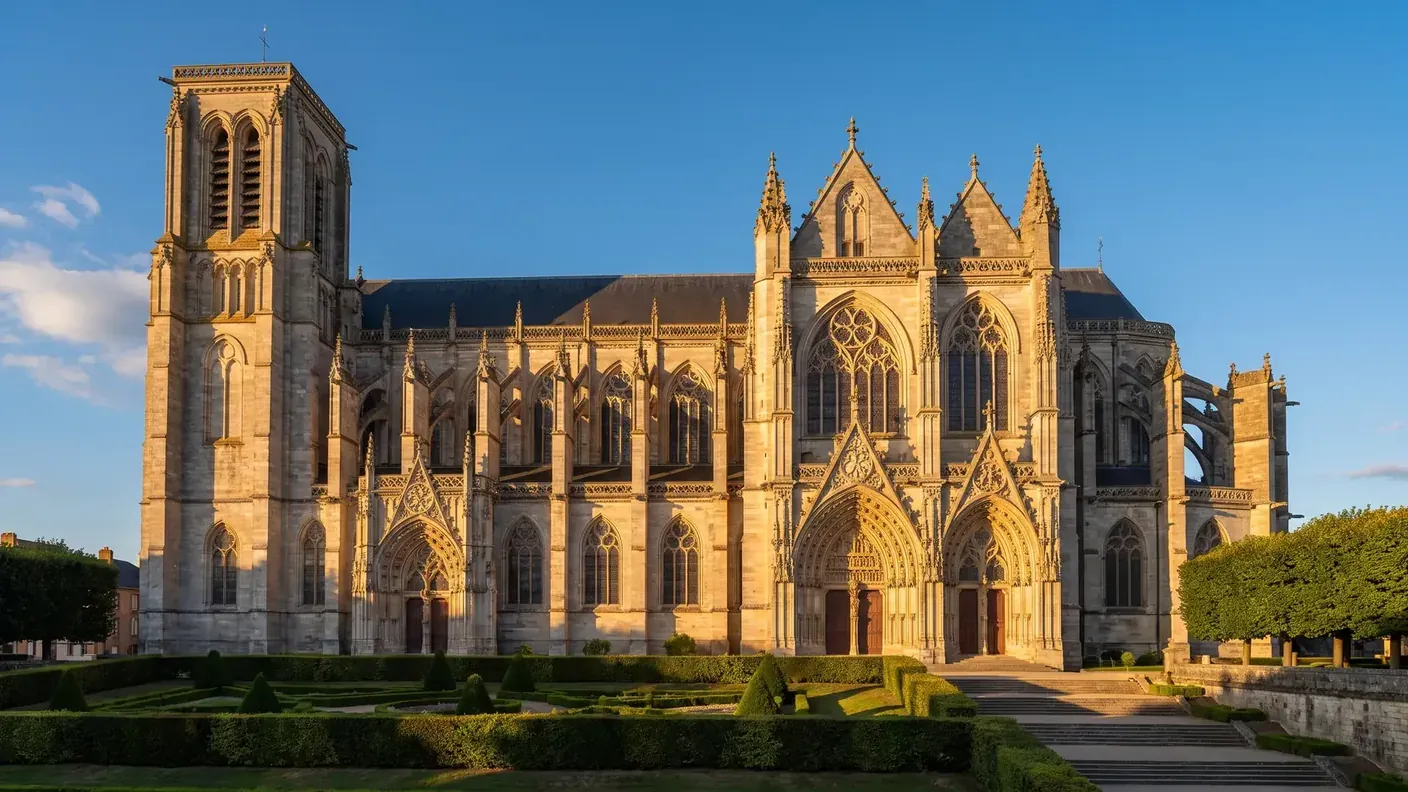
The architectural heritage of Limoges is centered around its Gothic cathedral, its basilica with its venerated relics, and the most picturesque of its old neighborhoods, Rue de la Boucherie. These three sites tell the story of the city’s medieval and religious past.
St. Stephen's Cathedral
Saint-Étienne Cathedral is the most prominent landmark of the former Episcopal City and the only entirely Gothic building in the Limousin region, an area otherwise known for its Romanesque art. Construction, which began in 1273 in the Rayonnant Gothic style, spanned more than six centuries: it was not completed until 1876–1888, while remaining faithful to the original Gothic design. Visitors can admire a magnificent Saint-Jean portal in the Flamboyant Gothic style (1516–1530), a carved Renaissance rood screen (1533–1536), and, as remnants of earlier structures, an 11th-century Romanesque crypt and bell tower. Designated a historic monument in 1862 (among the very first protected monuments in France), the cathedral overlooks the city and the Bishop’s Gardens, superb terraced French gardens above the Vienne River. It is the major landmark of Limoges, visible from every rooftop in the city.
Saint-Michel-des-Lions and the Butcher Shop
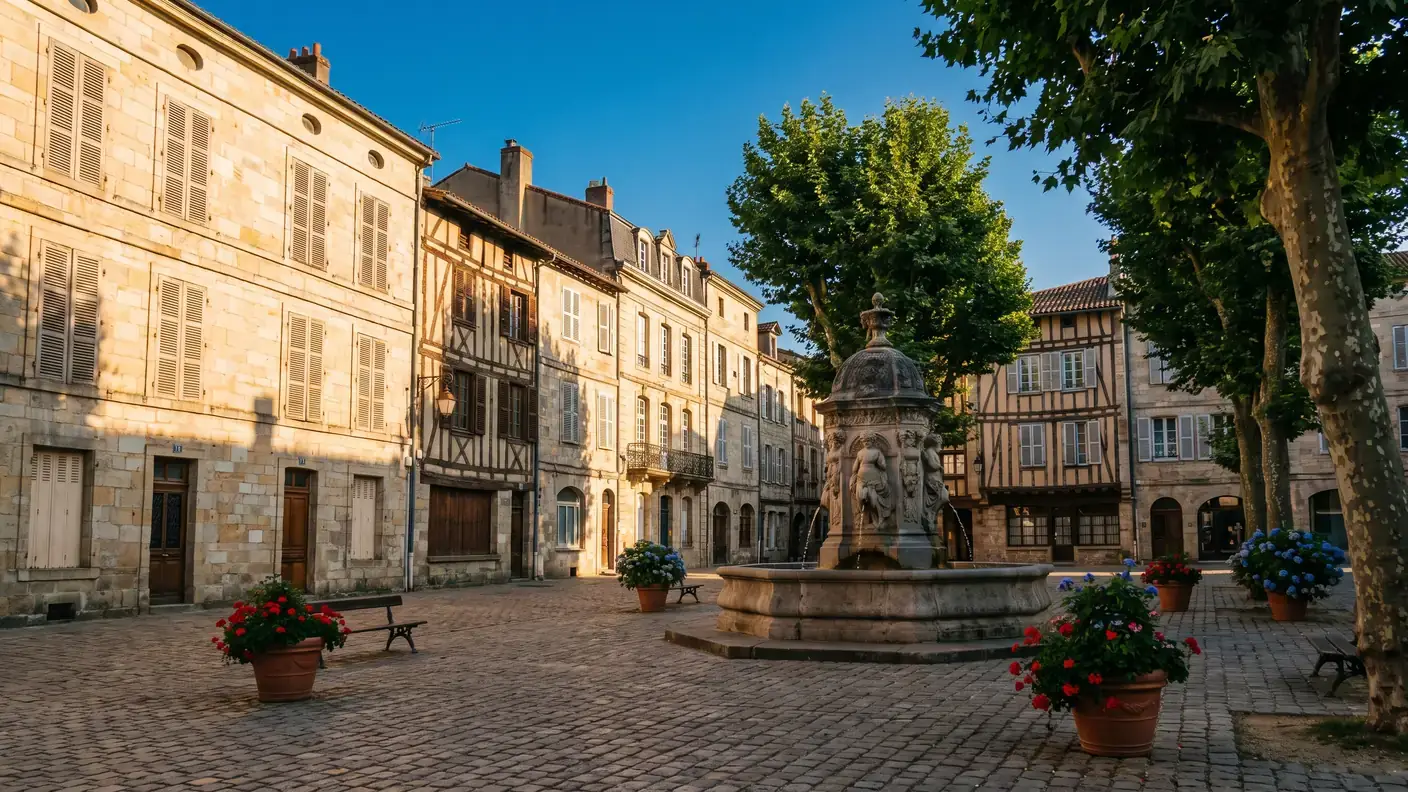
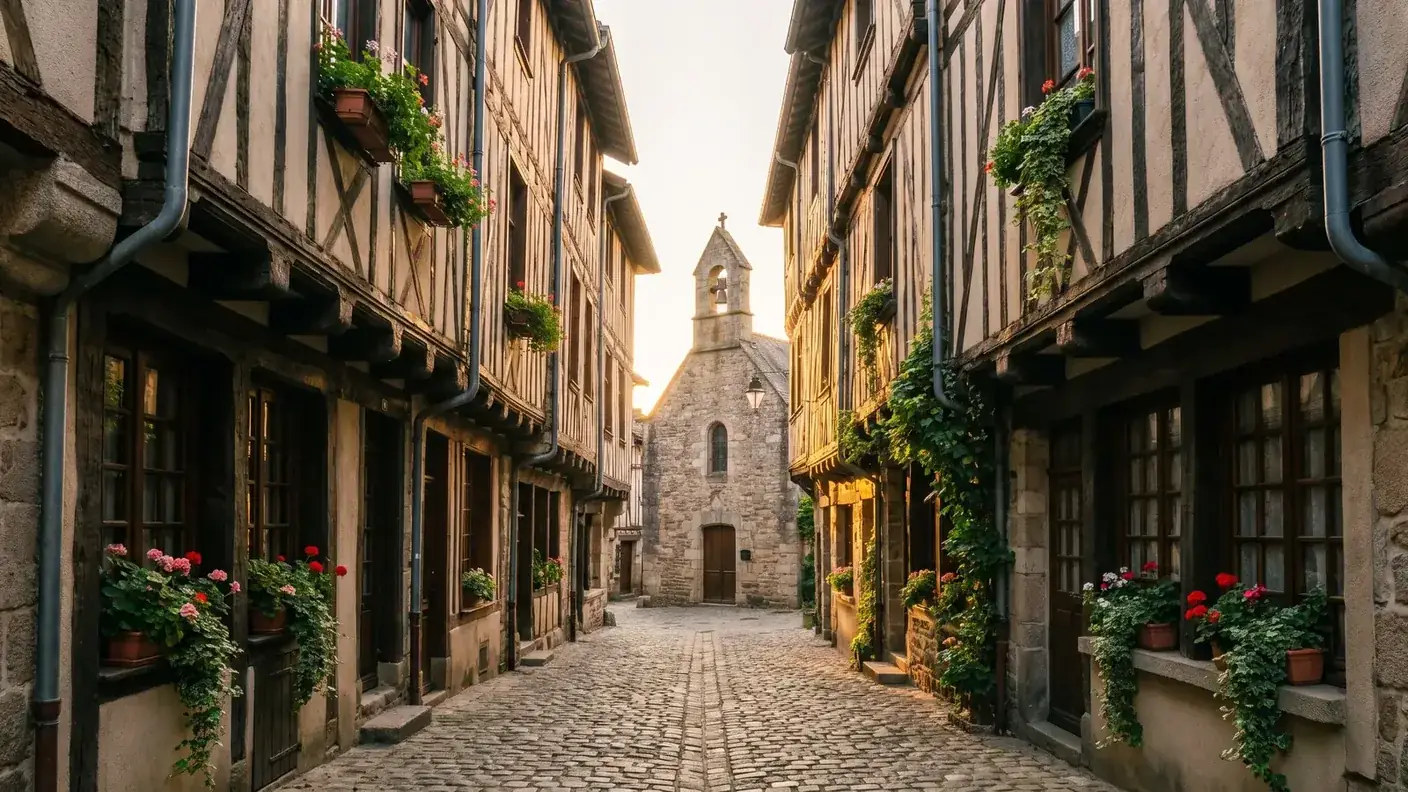
Two other sites are worth visiting. The Basilica of Saint-Michel-des-Lions, a Gothic church dating from the 14th to the 16th centuries, has housed the relics of Saint Martial—the first bishop and evangelizer of Limoges—since 1790: designated a historic monument in 1909, it was elevated to the rank of basilica by the pope in 2023 (the only one in the Limousin region). Nearby, Rue de la Boucherie is the most picturesque of the old neighborhoods: barely 130 meters long and lined with medieval half-timbered houses, it was for centuries the stronghold of the powerful butchers’ guild. Here you can visit the tiny Saint-Aurélien Chapel (built in 1475, listed as a historic monument in 1943), which is still owned by the brotherhood that succeeded the butchers. Every October, the street comes alive with the “Frairie des Petits Ventres,” a joyful food festival that keeps this tradition alive. A glimpse into medieval Limoges.
The Ostensions and Saint Martial
Limoges is also the center of a unique religious tradition—the Septennial Ostensions, recognized by UNESCO—and the birthplace of the veneration of Saint Martial, the apostle of Limousin. This popular devotion sets the pace of life in the city every seven years.
The Seven-Year Processions
The Limousine parades are large religious processions during which the relics of the saints of Limousin are “displayed” (hence the name “ostension”) for the faithful to venerate. They take place every seven years (the “septennales”), in about twenty municipalities in the Limousin region—the last one took place in 2023, and the next one will be held in 2030. In Limoges, these festivals feature lavish processions—combining brotherhoods, costumes, and music—centered around the relics of Saint Martial. This tradition, whose origins, according to legend, date back to the year 994 (during an outbreak of “mal des ardents,” or ergotism), has been listed since December 4, 2013: Added to UNESCO's Intangible Cultural Heritage of Humanity. Attending the Ostensions, when the schedule allows, is a captivating experience: a popular fervor and splendor inherited from the Middle Ages, still very much alive in the 21st century.
Saint Martial, Apostle of Limousin
At the heart of this tradition lies Saint Martial, traditionally regarded as the first bishop of LIMOGES and the evangelizer of the entire Limousin and Aquitaine regions—he has even sometimes been called the “Apostle of Gaul.” A figure from the 3rd century (a later tradition, now abandoned, dated him to the 1st century), he is celebrated on June 30, and his relics, preserved at the Basilica of Saint-Michel-des-Lions, are the central focus of the Ostensions. It was around his tomb that the powerful Abbey of Saint-Martial developed, giving rise to the town of “Château” and making Limoges, in the Middle Ages, a major religious and intellectual center (its music school, the “École de Saint-Martial,” is renowned among historians). The veneration of Saint Martial is thus inseparable from the very history and identity of Limoges—a millennium-old devotion that has shaped the city.
Oradour-sur-Glane and the surrounding area
Around Limoges, history and nature come together: the martyred village of Oradour-sur-Glane, a deeply moving memorial site, is very close by, in the heart of the green and peaceful Limousin region. This is an unmissable, solemn, and essential excursion that should be combined with a visit to the city.
Oradour-sur-Glane, a village that suffered a tragic fate
About 20 kilometres northwest of Limoges (about a 25-minute drive), Oradour-sur-Glane is one of France’s most poignant memorial sites. On June 10, 1944 (source), four days after D-Day, the SS Division “Das Reich” massacred nearly all of the residents who were present: the men were shot, while women and children were burned to death in the church. On General de Gaulle's orders, the ruined village was preserved as it stood from January 1945 as a testimony to the atrocity. Today, visitors walk its frozen streets, past gutted houses and a charred car, in striking silence. The Memory Centre, which opened in 1999, explains the tragedy and its context. This powerful and necessary visit takes half a day from Limoges: a duty of remembrance, so that we never forget.
Green Limousin
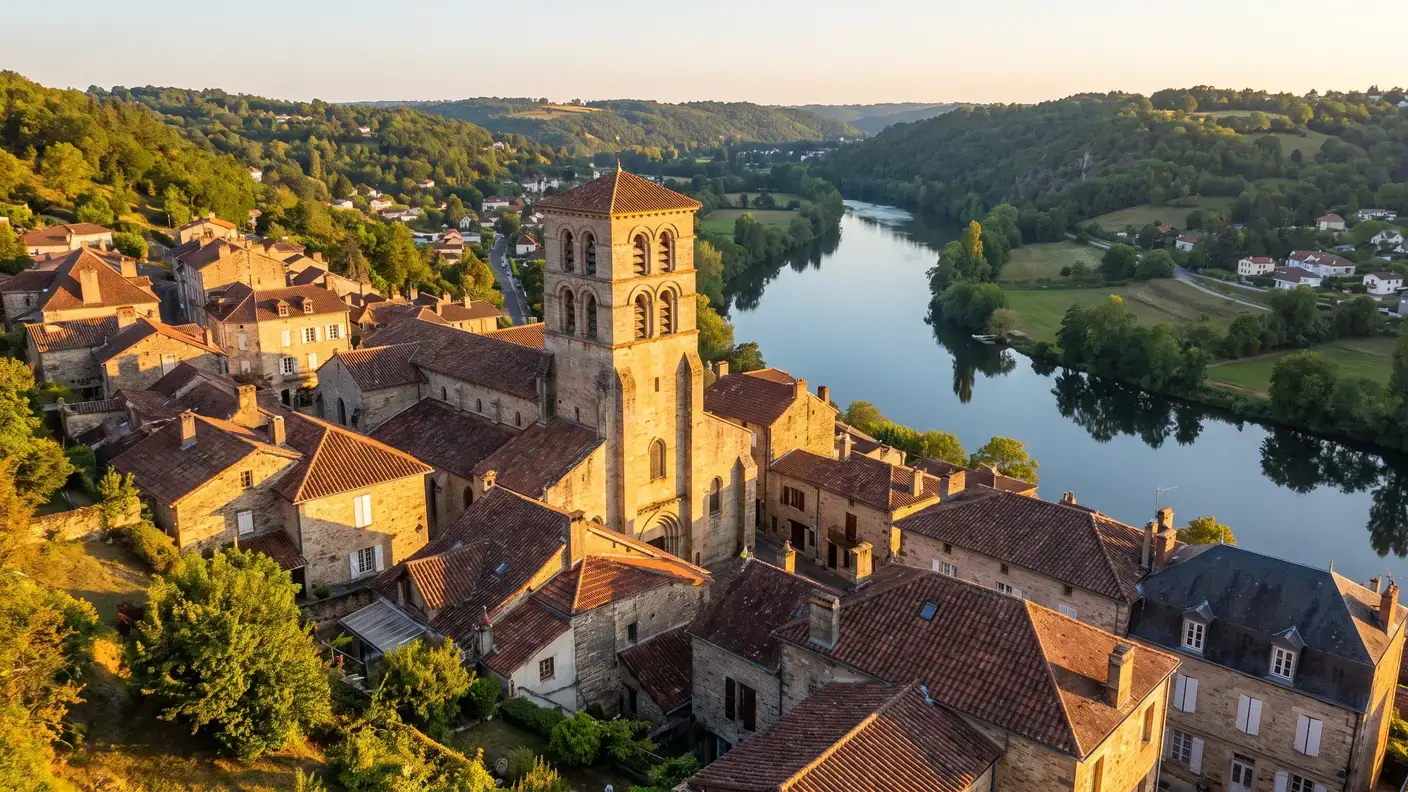
Beyond Oradour, the Limousin region unfolds with its lush, unspoiled landscapes, ideal for those who love nature and tranquility. All around Limoges, you’ll find wooded hills, valleys with fast-flowing rivers—the Vienne, the Gartempe, and the Briance—countless ponds, and vast forests, in one of the least densely populated areas of France. It is also the home of the famous Limousin beef and local cuisine (meat, apples, chestnuts, clafoutis, marzipan, and macarons). Heritage enthusiasts can venture as far as Saint-Léonard-de-Noblat (on the Camino de Santiago), Solignac and its Romanesque abbey church, or Lake Vassivière. An executive car service allows you to create a custom itinerary, combining the city, the memory of Oradour, and the serene Limousin countryside, at your own pace.
| Around Limoges | Distance | Interest |
|---|---|---|
| Oradour-sur-Glane | ~23 km | Martyr Village, Memorial Center |
| Saint-Léonard-de-Noblat | ~22 km | Medieval City of Santiago de Compostela (UNESCO) |
| Solignac | ~12 km | Romanesque abbey church with domes |
| Saint-Yrieix-la-Perche | ~40 km | The Birthplace of Kaolin, Collegiate Church |
When is the best time to visit Limoges?
Limoges is open to visitors year-round, but late spring and early fall, with their milder, sunnier weather, are the most pleasant seasons to visit, given the Limousin climate, which is cooler and more humid than that of the Bordeaux region. Spring (May–June) is ideal: the Évêché Gardens and the banks of the Vienne River are turning green and blooming, temperatures are mild, and the light highlights the stone of the monuments. It’s a wonderful time of year to stroll through Old Limoges, visit the museums, and enjoy the outdoor cafés before the heat sets in. Summer is pleasant and lively, with its festivals (such as Les Francophonies, a festival of Francophone literature) and often mild weather; every seven years, it is also the season of the Ostensions, when the city dresses up in its finest. Visits to the city and to Oradour are easy to arrange.
The fall (September–October) is a stunning time of year in this forested region: the foliage of the Limousin is ablaze with gold and crimson, morning mists shroud the valleys, and the city, quieter after the summer, is bathed in beautiful low-angled light—an ideal season for exploring the region’s heritage and local cuisine, as the chestnut and mushroom seasons approach. The winter, which is cooler and more humid—and sometimes snowy in the higher elevations of the nearby Millevaches Plateau—is ideal for indoor activities: the porcelain museum, the cathedral, art studios, and fine Limousin restaurants. The climate in Limoges, influenced by the Massif Central, is known to be rainier than that of Bordeaux: it’s best to bring an umbrella no matter the season. But this humidity also contributes to the lush greenery and gentle beauty of the landscapes, and in no way detracts from the charm of a stay in the capital of the arts of fire.
How to get to Limoges from Bordeaux
Limoges is located 222 km from Bordeaux by road, which is about a 2-hour, 56-minute drive. The route follows the A89 highway toward Périgueux and Brive, then continues along the N21 or the roads of the Limousin region. It takes you through the Périgord and Upper Limousin, a landscape of hills and forests. Travelers have several options. The train often passes through Périgueux, as there is no direct, fast route between Bordeaux and Limoges. The airplane is not very relevant at this distance, whereas the car directly connects the two cities. In Limoges, the Bénédictins train station and the Limoges-Bellegarde Airport provide transportation links.
The Long-Distance Chauffeured transfer
For this trip, a private chauffeur (professional chauffeur) offers a comfortable alternative for those looking for door-to-door service, without the hassles of taking the train (connections via Périgueux, luggage). The direct route from Bordeaux allows you to travel in comfort, with the option to take breaks along the way—in Périgueux or Brive-la-Gaillarde—and be dropped off right at your address in Limoges. We offer this long-distance transfer at a fixed price quoted in advance: expect to pay approximately €438 for the one-way trip, in a Mercedes sedan or a van seating up to 7 passengers, with a professional driver. The price, set at the time of booking, remains fixed: it is not affected by traffic, tolls, or any stops along the way. For a journey like this, comfort and peace of mind are our top priorities.
This option is ideal for those who prioritize comfort and convenience on long-distance trips: families with luggage, business travelers, or groups of up to 7 people. It’s also ideal for an emotionally charged visit, such as to Oradour-sur-Glane, without having to worry about driving. To book, provide the pickup address, destination, date, time, and number of passengers. You will then receive a fixed-price quote in writing. The driver will pick you up at the agreed-upon address and drop you off at Limoges. For a simple visit, the train is often more economical. A door-to-door car service is better suited for door-to-door travel without transfers.
| Route | Distance | Duration | Landmark |
|---|---|---|---|
| Bordeaux → Limoges (private car service) | about 222 km | about 2 hours and 56 minutes | Starting at ~379 € for a chauffeured car |
| Limoges → Oradour-sur-Glane | ~23 km | ~25 min | martyred village, memory |
| Limoges → Brive-la-Gaillarde | ~92 km | ~1 hour | Southwest Gate |
| Limoges → Limoges-Bellegarde Airport | ~10 km | ~15 min | domestic flights |
The Bénédictins train station, porcelain, the cathedral, historic Limoges, enamelware, and the Ostensions together form a rich cultural heritage. Oradour-sur-Glane adds a memorial tour to this trip to the heart of the Limousin region.
Whether you're planning a cultural getaway, a trip to honor a memory, or a long-distance transfer, book a driver from Bordeaux to Limoges. You can also explore all our destinations.
Frequently Asked Questions
Where is Limoges located?
Limoges is located in central-western France, on the Vienne River, in the Haute-Vienne department (87)—of which it is the prefecture—in the Nouvelle-Aquitaine region. It is the former capital of Limousin and, with a population of approximately 129,900, the 30th-largest city in France. Renowned for its porcelain, enamelware, and the Gare des Bénédictins train station, it is 222 km from Bordeaux, or about a 2-hour, 56-minute drive.
What is the distance between Bordeaux and Limoges?
The Bordeaux–Limoges route covers 222 km and takes approximately 2 hours and 56 minutes by road, via the A89 and then the N21 or the roads of the Limousin region. With an executive transfer, the listed rate starts at €379 for a one-way, door-to-door trip. The train often stops in Périgueux; the chauffeur-driven transfer offers a direct alternative for a trip without transfers.
Why is Limoges famous for its porcelain?
Because the discovery, around 1768, of a kaolin deposit (the white clay essential for hard porcelain) in Saint-Yrieix-la-Perche, very close by, enabled Limoges to produce a fine, translucent porcelain of world renown. The discovery is credited to the surgeon Jean-Baptiste Darnet (and not to Louis XV). The first factory opened in 1771, and the industry boomed in the 19th century. This art form can be admired at the Adrien-Dubouché National Museum, which houses the world’s most extensive collection of Limoges porcelain (~18,000 pieces). Limoges is known as the “capital of the arts of fire.”
What is the Limoges-Bénédictins train station?
This is the main train station in Limoges, considered one of the most beautiful in France and a favorite landmark among the people of Limoges. Contrary to popular belief, it dates from 1924–1929 (not the 19th century) and was designed by architect Roger Gonthier in an eclectic style. It is listed as a historic monument (though not officially classified). Its bell tower soars to a height of 67 meters—it is this tower, not the copper dome (31 m), that dominates the city. A technical feat, the station is built over ten railroad tracks. A true railway palace.
What to See in Limoges?
The Bénédictins train station and its bell tower; the Adrien-Dubouché National Museum (porcelain); the Gothic Saint-Étienne Cathedral and the Évêché Gardens; the Saint-Michel-des-Lions Basilica (relics of Saint Martial); the picturesque Boucherie district and its Saint-Aurélien Chapel; the art workshops (porcelain, enamels, stained glass). Nearby, the martyred village of Oradour-sur-Glane is a must-see. Allow at least one to two days to explore Limoges and its surroundings.
Who founded Limoges?
Limoges was founded by the Romans around 10 B.C. under the name Augustoritum (“Augustus’s Ford”), at the first passable ford on the Vienne River. It became the Gallo-Roman capital of the Lemovices, the Gallic tribe whose name gave rise to “Limoges” and “Limousin.” Contrary to popular belief, the city does not stand on the site of the Lemovices’ Gallic oppidum, which was located about twenty kilometers to the east: Augustoritum was built from scratch on a new site.
What are the Ostensions of Limoges?
The Limousin Ostensions are large religious processions during which the relics of the saints of Limousin are “displayed” (ostension) for the faithful to venerate. They take place every seven years (the “septennales”) in about twenty towns; the last one was held in 2023, and the next will take place in 2030. In Limoges, they honor Saint Martial, the city’s first bishop. According to legend, their origins date back to the year 994. They have been inscribed on UNESCO’s List of Intangible Cultural Heritage of Humanity since 2013.
Can we visit Oradour-sur-Glane from Limoges?
Yes, this is a must-see attraction, located about 23 km northwest of Limoges (a 25-minute drive). Oradour-sur-Glane is a village that suffered a terrible tragedy: on June 10, 1944 (source), the SS “Das Reich” Division massacred nearly all of the residents who were present. On the orders of General de Gaulle, the ruined village was preserved as a memorial site; visitors walk through its streets, frozen in a striking silence, and the Memorial Center (1999) sheds light on this tragedy. The visit, which is deeply moving and essential, takes half a day.
What is the difference between Limoges's enamelware and porcelain?
These are two distinct arts of fire. Limoges enamels are much older: champlevé enamels (“Œuvre de Limoges”), on gilded copper, first appeared in the mid-12th century and were exported throughout medieval Europe; after a long hiatus, painted enamel was revived around 1480 and flourished in the 16th century. Porcelain, on the other hand, did not emerge until the 18th century, thanks to the kaolin from Saint-Yrieix. Enamel, porcelain, and stained glass are the three “arts of fire” that have earned Limoges its nickname as the “capital of the arts of fire.”
How many people live in Limoges?
With approximately 129,900 residents (2023 municipal population), it is the 30th most populous municipality in France (not the 28th, which is an outdated ranking). Its residents are known as Limougeauds. The city’s population has been declining slightly since the mid-2010s, but its catchment area encompasses nearly 284,000 residents across 96 municipalities, making it a major urban center in the greater Southwest and the heart of the Limousin region, of which Limoges was long the regional capital.
Is the cathedral in Limoges designated as a historic monument?
Yes. Saint-Étienne Cathedral has been designated a historic monument since 1862, making it one of the very first protected monuments in France. It is the only entirely Gothic building in the Limousin region (an area primarily characterized by Romanesque architecture). Construction, which began in 1273 in the Rayonnant Gothic style, was not completed until 1876–1888. Visitors can admire a Flamboyant-style portal, a Renaissance rood screen, and a Romanesque crypt. It overlooks the Évêché Gardens, superb terraced French gardens above the Vienne River. Not to be confused with the train station, which is merely listed.
What is the best time of year to visit Limoges?
Late spring (May–June) and early fall (September–October) are the most pleasant times of year: mild temperatures, beautiful light, lush green gardens, and golden foliage in the fall in this forested region. Summer is lively (with festivals) and mild, and every seven years, it’s the season of the Ostensions. Winter, which is cooler and wetter (sometimes snowy in the higher elevations), is ideal for indoor visits (the porcelain museum, the cathedral, and workshops). The Limousin climate, influenced by the Massif Central, receives more rainfall than that of Bordeaux: be sure to bring an umbrella in any season.
Can I book a pre-booked car service from Bordeaux through Limoges?
Yes. This long-distance transfer covers 222 km and takes approximately 2 hours and 56 minutes. We offer it at a fixed price starting at €438 one-way, in a Mercedes sedan or a van seating up to 7 passengers, with door-to-door service. Stops in Périgueux or Brive are possible. The quote is confirmed in writing before departure.
Further Reading
- The Gateway to the Southwest: see the Brive-la-Gaillarde Guide (market, collegiate church, rugby), in Corrèze
- A village in Upper Limousin: see the Guide to Coussac-Bonneval (a medieval village in the Haute-Vienne department, with a castle)
- An island in the Atlantic: see the Guide to Portes-en-Ré (Trousse-Chemise, the bird sanctuary, and the Fier d'Ars)
- Plan your trip: Book a dedicated chauffeur from Bordeaux to Limoges or explore all our destinations
Sources and References
- City of Limoges — the arts of fire — porcelain, enamels, stained glass, and UNESCO recognition
- City of Limoges — A Stroll Through the City — History and Architecture of the Bénédictins Train Station
- Adrien-Dubouché National Museum — Limoges porcelain collection and the history of ceramics
- Wikipedia — Enamel from Limoges — medieval champlevé (12th century), painted enamel (from ca. 1480)
- INSEE — Municipality of Limoges (87085) — 2023 population (~129,900), catchment area
- Oradour-sur-Glane Memorial Center — History of the Massacre, the "Martyr Village," and Preparing for the Visit
Article updated in July 2026.
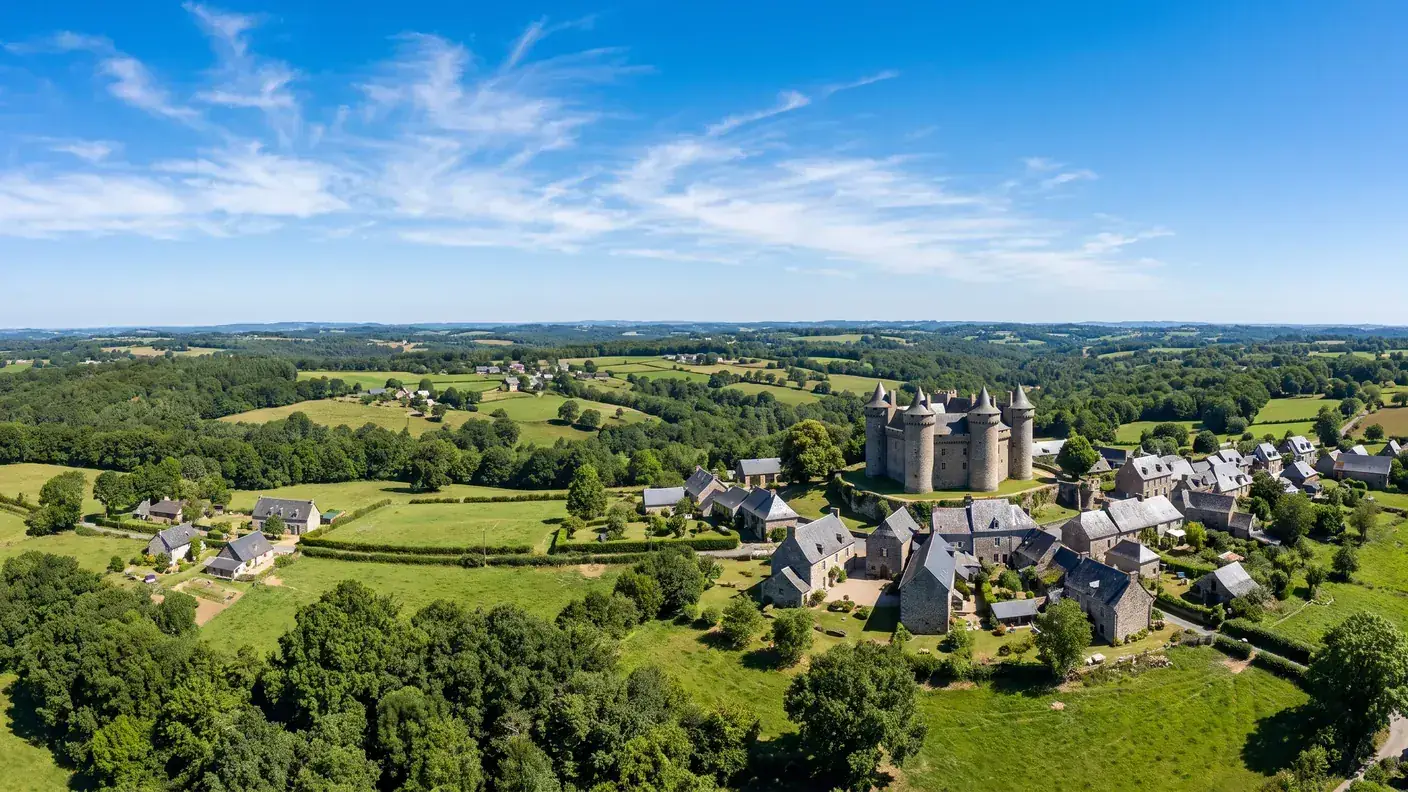
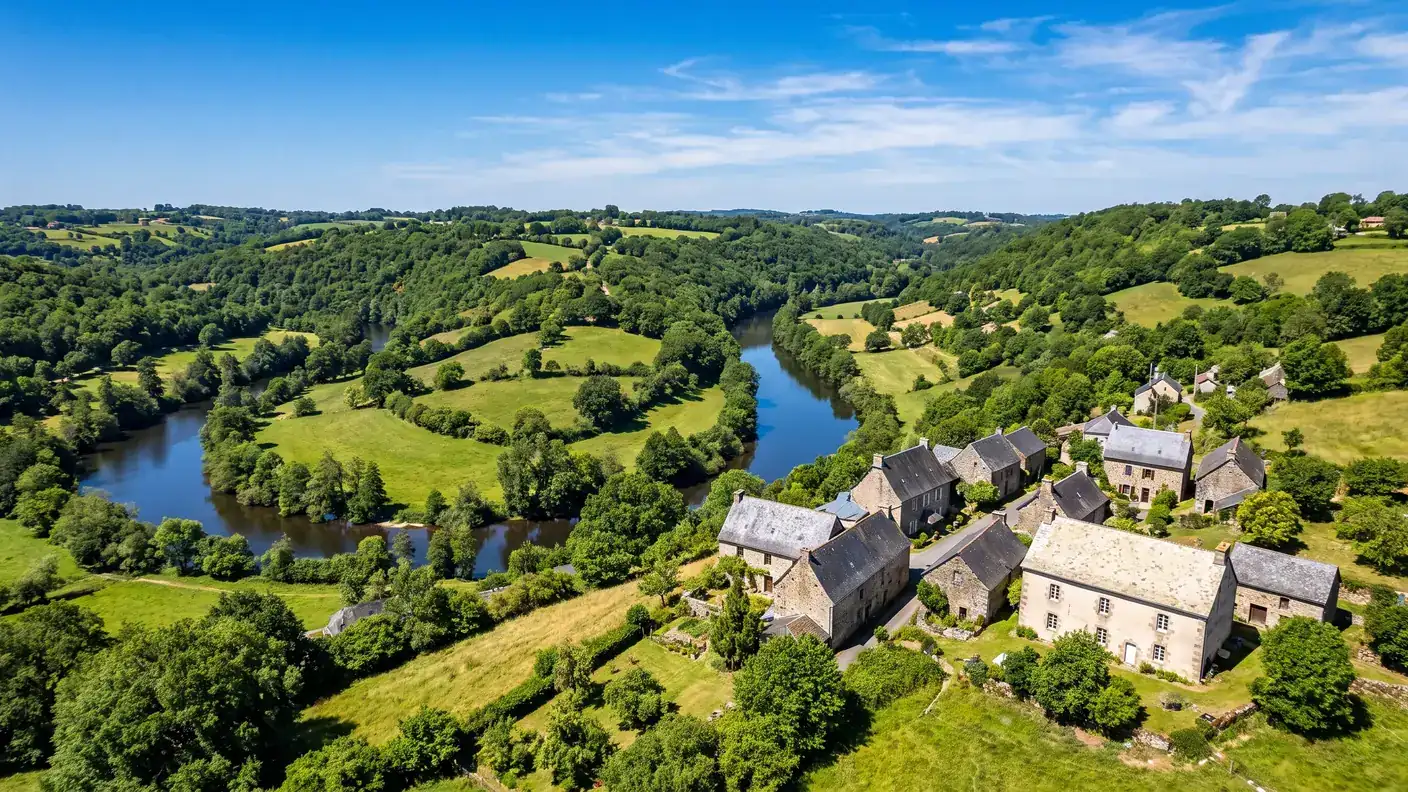
On the way to the capital of the fire arts
Long-distance transfer of 222 km from Bordeaux to Limoges, taking approximately 2 hours and 56 minutes. Door-to-door service, with possible stops in Périgueux or Brive. Fixed, written quote starting at €379.